Interviews are more than just a Q&A session—they’re a chance to prove your worth. This blog dives into essential Artificial Intelligence (AI) Basics interview questions and expert tips to help you align your answers with what hiring managers are looking for. Start preparing to shine!
Questions Asked in Artificial Intelligence (AI) Basics Interview
Q 1. What is the difference between supervised and unsupervised learning?
Supervised and unsupervised learning are two fundamental approaches in machine learning, distinguished primarily by the presence or absence of labeled data. In supervised learning, the algorithm learns from a labeled dataset, meaning each data point is tagged with the correct answer or outcome. Think of it like a teacher supervising a student’s learning process, providing feedback on every answer. The algorithm learns to map inputs to outputs based on this labeled data. Common supervised learning tasks include classification (predicting categories, e.g., spam/not spam) and regression (predicting continuous values, e.g., house prices).
Unsupervised learning, on the other hand, deals with unlabeled data. The algorithm explores the data to identify patterns, structures, and relationships without explicit guidance. It’s like giving a child a box of toys and letting them explore and discover relationships between them on their own. Common unsupervised learning tasks include clustering (grouping similar data points) and dimensionality reduction (simplifying data while preserving essential information).
Example: Imagine you’re building a model to predict customer churn (supervised). You’d use a dataset where each customer is labeled as ‘churned’ or ‘not churned’ along with their characteristics (e.g., usage, demographics). In contrast, if you want to segment customers into different groups based on their purchasing behavior (unsupervised), you’d use a dataset of customer purchases without any pre-defined group labels.
Q 2. Explain the bias-variance tradeoff.
The bias-variance tradeoff is a fundamental concept in machine learning that describes the relationship between a model’s ability to fit the training data (variance) and its ability to generalize to unseen data (bias). Bias refers to the error introduced by approximating a real-world problem, which might be complex, by a simplified model. High bias leads to underfitting, where the model is too simple to capture the underlying patterns in the data. Variance, on the other hand, refers to the model’s sensitivity to fluctuations in the training data. High variance leads to overfitting, where the model learns the training data too well, including its noise, and performs poorly on unseen data.
The goal is to find a balance: a model with low bias and low variance. A model with high bias will underperform consistently; a model with high variance will perform well on the training data but poorly on new data. This tradeoff is often visualized as a U-shaped curve where the total error is minimized at a point between high bias and high variance.
Example: Imagine fitting a straight line (high bias, low variance) to data with a complex, curved relationship. The model will underfit. Conversely, fitting a high-degree polynomial (low bias, high variance) to the same data might perfectly fit the training data but fail miserably on new data points because it’s essentially memorizing noise.
Q 3. What is overfitting and how can it be avoided?
Overfitting occurs when a machine learning model learns the training data too well, including its noise and outliers, resulting in poor generalization to unseen data. It’s like memorizing the answers to a test instead of understanding the underlying concepts; you’ll do well on that specific test but poorly on similar tests with different questions. The model essentially has ‘memorized’ the training set rather than learning its underlying patterns.
Several techniques can help avoid overfitting:
- Cross-validation: Dividing the data into multiple subsets (folds) to train and evaluate the model on different combinations, providing a more robust estimate of its performance.
- Regularization: Adding penalty terms to the model’s loss function to discourage overly complex models (discussed in more detail in question 6).
- Feature selection/engineering: Selecting relevant features and transforming them to reduce the dimensionality and noise in the data.
- Data augmentation: Artificially increasing the size of the training dataset by creating modified versions of existing data points (e.g., rotating images for image recognition).
- Dropout (for neural networks): Randomly ignoring neurons during training to prevent over-reliance on specific neurons.
- Early stopping: Monitoring the model’s performance on a validation set during training and stopping the training process when performance starts to decrease.
By employing these techniques, we can build models that generalize well to new data and avoid the pitfalls of overfitting.
Q 4. Describe different types of neural networks (e.g., CNN, RNN, MLP).
Neural networks are powerful machine learning models inspired by the structure and function of the human brain. Different types of neural networks are designed to handle different types of data and tasks:
- Multilayer Perceptrons (MLPs): The most basic type of neural network, consisting of an input layer, one or more hidden layers, and an output layer. MLPs are suitable for various tasks, including classification and regression, and are often used as a baseline model for many problems.
- Convolutional Neural Networks (CNNs): Specifically designed for processing grid-like data such as images and videos. They use convolutional layers to extract features from the input data, making them highly effective for image recognition, object detection, and image segmentation. The convolutional layers are particularly adept at identifying spatial patterns within the data.
- Recurrent Neural Networks (RNNs): Designed to process sequential data such as text, speech, and time series. RNNs have loops within their architecture that allow information to persist across time steps, making them suitable for tasks like natural language processing, machine translation, and speech recognition. Long Short-Term Memory (LSTM) and Gated Recurrent Units (GRUs) are advanced variants of RNNs that address the vanishing gradient problem often encountered in standard RNNs.
Each type of neural network has its strengths and weaknesses, making them suitable for different applications. The choice of network architecture depends largely on the nature of the data and the task at hand.
Q 5. What is a decision tree?
A decision tree is a supervised machine learning model that uses a tree-like structure to make decisions. Each internal node in the tree represents a test on an attribute, each branch represents the outcome of the test, and each leaf node represents a class label or decision. The tree is built recursively by partitioning the data based on the attributes that best separate the classes or predict the target variable. The algorithm uses metrics like Gini impurity or information gain to select the best attribute at each node.
Example: Imagine you’re trying to decide whether to go to the beach. A decision tree might start with a node asking ‘Is it sunny?’. If yes, it branches to another node asking ‘Is it hot?’. Based on the answers, it eventually leads to a leaf node recommending ‘Go to the beach’ or ‘Stay home’. Decision trees are intuitive, easy to interpret, and can handle both categorical and numerical data, making them a popular choice in many applications.
Q 6. Explain the concept of regularization in machine learning.
Regularization is a technique used to prevent overfitting in machine learning models. It works by adding a penalty term to the model’s loss function that discourages overly complex models. This penalty term penalizes large weights in the model, making the model less sensitive to noise and outliers in the training data. The goal is to find a balance between fitting the training data well and keeping the model simple enough to generalize well to unseen data.
Two common types of regularization are:
- L1 regularization (LASSO): Adds a penalty term proportional to the sum of the absolute values of the model’s weights. L1 regularization tends to produce sparse models, meaning many weights are shrunk to zero, effectively performing feature selection.
- L2 regularization (Ridge): Adds a penalty term proportional to the sum of the squares of the model’s weights. L2 regularization tends to shrink weights towards zero but doesn’t force them to be exactly zero.
The strength of the regularization is controlled by a hyperparameter (often denoted as λ or α). A higher value of the hyperparameter leads to stronger regularization (more penalty) and a simpler model. The optimal value is often determined through cross-validation.
Example: Imagine a linear regression model. L2 regularization would add a term like λ * Σ(w_i^2) to the loss function, where w_i are the model’s weights and λ is the regularization hyperparameter. This penalizes large weights, making the model less sensitive to individual data points and preventing overfitting.
Q 7. What are the different types of data used in machine learning?
Machine learning models utilize various types of data, each with its unique characteristics and requiring different processing techniques. These include:
- Numerical Data: Represents quantities and can be continuous (e.g., temperature, weight) or discrete (e.g., number of items, count). This is the most common type used in machine learning models like linear regression or support vector machines.
- Categorical Data: Represents qualities or characteristics that fall into distinct categories (e.g., color, gender, type). These can be nominal (unordered categories like colors) or ordinal (ordered categories like education levels). Categorical data often requires encoding techniques like one-hot encoding before being used in many machine learning algorithms.
- Text Data: Consists of sequences of words and sentences. Natural Language Processing (NLP) techniques are used to transform text into numerical representations suitable for machine learning algorithms. This involves techniques like tokenization, stemming, and word embeddings.
- Image Data: Consists of pixel arrays representing images. Convolutional Neural Networks (CNNs) are well-suited for processing image data, as they can learn hierarchical representations of features from the pixel data.
- Time Series Data: Represents data points collected over time, often showing trends and patterns. Recurrent Neural Networks (RNNs) are commonly used to model time series data due to their ability to handle sequential information.
- Audio Data: Represents sound waves. Audio data is typically converted into spectrograms or other numerical representations before being used in machine learning models.
The choice of model and preprocessing techniques heavily depends on the type of data being used. Effective data preprocessing is crucial for achieving accurate and reliable results in machine learning.
Q 8. What is the difference between accuracy, precision, and recall?
Accuracy, precision, and recall are crucial metrics for evaluating the performance of a classification model, particularly in scenarios with imbalanced datasets. They all assess how well the model’s predictions align with the actual values, but from different perspectives.
Accuracy represents the overall correctness of the model’s predictions. It’s the ratio of correctly predicted instances to the total number of instances. A high accuracy suggests the model performs well overall, but it can be misleading with imbalanced datasets (where one class significantly outweighs others). For example, if 90% of your data belongs to class A, a model predicting everything as class A might achieve high accuracy, even if it fails to identify other classes.
Precision focuses on the correctness of positive predictions. It’s the ratio of true positive predictions (correctly identified positive instances) to the total number of positive predictions (including false positives). High precision indicates that when the model predicts a positive class, it’s usually correct. Imagine a spam filter: high precision means few legitimate emails are wrongly classified as spam.
Recall (also known as sensitivity) focuses on the model’s ability to identify all positive instances. It’s the ratio of true positive predictions to the total number of actual positive instances (including false negatives). High recall means the model successfully identifies most, if not all, of the positive cases. In medical diagnosis, high recall is critical; we want to identify all patients with the disease, even if it means some false positives.
In summary:
- Accuracy: Overall correctness
- Precision: Correctness of positive predictions
- Recall: Ability to find all positive instances
The choice of which metric to prioritize depends on the specific application. A spam filter might prioritize precision to minimize false positives (annoyingly flagging legitimate emails), while a medical diagnosis system would likely prioritize recall to minimize missing actual cases of the disease.
Q 9. Explain the concept of a confusion matrix.
A confusion matrix is a visual representation of the performance of a classification model. It’s a table that summarizes the counts of true positives, true negatives, false positives, and false negatives. This allows for a detailed analysis beyond simple accuracy.
Let’s consider a binary classification problem (e.g., classifying emails as spam or not spam). The confusion matrix would look like this:
		Predicted
		Positive	Negative
Actual
Positive	True Positive (TP)	False Negative (FN)
Negative	False Positive (FP)	True Negative (TN)
True Positive (TP): Correctly predicted positive instances.
True Negative (TN): Correctly predicted negative instances.
False Positive (FP): Incorrectly predicted positive instances (Type I error).
False Negative (FN): Incorrectly predicted negative instances (Type II error).
From the confusion matrix, we can calculate various metrics such as accuracy, precision, recall, and F1-score. The matrix provides a granular view of the model’s performance, highlighting its strengths and weaknesses in identifying different classes.
For example, a high number of false positives might indicate a need to adjust the model’s threshold or features to reduce the number of incorrectly classified positive instances. A high number of false negatives might suggest the need to improve the model’s sensitivity to capture more positive instances. The confusion matrix is invaluable for diagnosing model biases and areas for improvement.
Q 10. What is cross-validation and why is it important?
Cross-validation is a resampling technique used to evaluate a machine learning model’s performance and prevent overfitting. It involves splitting the dataset into multiple subsets (folds), training the model on some subsets, and validating it on the remaining subset(s). This process is repeated multiple times, with different folds used for training and validation in each iteration. The results are then averaged to get a more robust estimate of the model’s generalization performance.
Why is it important?
- Prevents Overfitting: Training a model solely on one training set and testing it on a separate test set can be misleading. Cross-validation provides a more reliable assessment by evaluating the model on multiple subsets, reducing the risk of overfitting to a specific training set.
- Improved Generalization: Cross-validation helps ensure the model generalizes well to unseen data, which is the ultimate goal of machine learning.
- Parameter Tuning: Cross-validation is often used to tune hyperparameters (e.g., the learning rate or the number of trees in a random forest) by evaluating different parameter settings on the cross-validation folds and selecting the set that yields the best performance.
k-fold cross-validation is a common technique where the dataset is split into ‘k’ equal-sized folds. The model is trained on k-1 folds and tested on the remaining fold. This process is repeated k times, with each fold serving as the test set once. The average performance across all k iterations provides a robust estimate.
For instance, 10-fold cross-validation is widely used, offering a good balance between computational cost and reliability.
Q 11. What are some common evaluation metrics for machine learning models?
The choice of evaluation metrics depends heavily on the type of machine learning problem (classification, regression, clustering, etc.). Here are some common ones:
- Classification: Accuracy, precision, recall, F1-score, AUC (Area Under the ROC Curve), log loss
- Regression: Mean Squared Error (MSE), Root Mean Squared Error (RMSE), Mean Absolute Error (MAE), R-squared
- Clustering: Silhouette score, Davies-Bouldin index
Accuracy measures the overall correctness of predictions. Precision and recall focus on the correctness of positive predictions and the ability to identify all positive instances, respectively. The F1-score is the harmonic mean of precision and recall, providing a balanced measure. AUC represents the area under the Receiver Operating Characteristic (ROC) curve, summarizing the trade-off between true positive rate and false positive rate at various classification thresholds. MSE and RMSE measure the average squared and square root of squared differences between predicted and actual values in regression, respectively. MAE calculates the average absolute difference. R-squared indicates the proportion of variance in the dependent variable explained by the model. Silhouette score measures how similar a data point is to its own cluster compared to other clusters in clustering, while Davies-Bouldin index measures the average similarity between each cluster and its most similar cluster.
Selecting the appropriate metric(s) is crucial for a fair and insightful evaluation of the model’s performance in a given context.
Q 12. Explain the concept of feature scaling and its importance.
Feature scaling is a preprocessing technique used to standardize the range of independent variables or features of data. It involves transforming the data so that all features have a similar scale. This is crucial because many machine learning algorithms are sensitive to the scale of the features.
Why is it important?
- Improved Algorithm Performance: Algorithms like gradient descent, k-nearest neighbors, and support vector machines can converge faster and perform better when features have a similar scale. Features with larger values can disproportionately influence the algorithm’s output, leading to biased results.
- Faster Convergence: Gradient descent, a commonly used optimization algorithm, can converge faster with scaled features because the gradients are more balanced.
- Equal Weight to Features: Scaling prevents features with larger magnitudes from dominating others, ensuring all features contribute equally to the model.
Common scaling techniques include:
- Min-Max Scaling: Scales features to a range between 0 and 1.
- Z-score Standardization: Centers the data around a mean of 0 and a standard deviation of 1.
For example, if you have features representing height in centimeters and weight in kilograms, these have vastly different ranges. Scaling them to a similar range (e.g., 0-1) prevents the algorithm from inadvertently giving more weight to height simply because it has larger numerical values.
Q 13. What is dimensionality reduction and why is it used?
Dimensionality reduction is a technique used to reduce the number of features (variables) in a dataset while retaining most of the important information. High-dimensional data can lead to challenges like the curse of dimensionality (increased computational cost, overfitting, and difficulty in visualizing data). Dimensionality reduction addresses these challenges by transforming the data into a lower-dimensional space.
Why is it used?
- Reduced Computational Cost: Fewer features mean faster training and prediction times for machine learning models.
- Improved Model Performance: By removing irrelevant or redundant features, dimensionality reduction can prevent overfitting and improve model generalization.
- Data Visualization: Reducing the dimensionality to 2 or 3 dimensions allows for easier visualization and understanding of the data.
- Noise Reduction: Irrelevant features can be considered noise, and dimensionality reduction helps in removing this noise.
Dimensionality reduction techniques are particularly useful when dealing with large datasets with many features, some of which may be irrelevant or highly correlated.
Q 14. What are some common dimensionality reduction techniques?
Several dimensionality reduction techniques exist, each with its own strengths and weaknesses:
- Principal Component Analysis (PCA): A linear transformation that projects the data onto a lower-dimensional subspace while maximizing variance. It identifies the principal components, which are linear combinations of the original features that capture the most variance in the data.
- Linear Discriminant Analysis (LDA): A supervised technique that aims to find a linear combination of features that maximizes the separation between different classes. It’s particularly useful for classification problems.
- t-distributed Stochastic Neighbor Embedding (t-SNE): A non-linear technique that maps high-dimensional data to a low-dimensional space while preserving local neighborhood structures. It’s often used for visualization.
- Autoencoders: Neural networks trained to reconstruct their input, effectively learning compressed representations of the data in the hidden layers. They can be used for both linear and non-linear dimensionality reduction.
- Feature Selection: Instead of transforming the features, this approach selects a subset of the original features based on criteria like correlation with the target variable or feature importance scores from tree-based models. Examples include filter methods (e.g., correlation analysis) and wrapper methods (e.g., recursive feature elimination).
The choice of technique depends on factors like the type of data, the dimensionality reduction goal (visualization, feature extraction, noise reduction), and the computational resources available.
Q 15. What is gradient descent?
Gradient descent is an iterative optimization algorithm used to find the minimum of a function. Imagine you’re standing on a mountain and want to get to the bottom (the minimum). You can’t see the whole mountain, so you take small steps downhill, following the steepest path. Each step is guided by the gradient of the function, which indicates the direction of the steepest ascent. We take steps in the *opposite* direction of the gradient to descend.
In machine learning, this function is usually the loss function, which measures how well our model is performing. By iteratively adjusting the model’s parameters (weights and biases) in the direction of the negative gradient, we minimize the loss function and improve the model’s accuracy.
Mathematically, it’s represented as: θ = θ - α∇f(θ), where θ represents the model’s parameters, α is the learning rate (size of the step), and ∇f(θ) is the gradient of the loss function.
For example, in linear regression, we might use gradient descent to find the optimal slope and intercept of a line that best fits a dataset. Each iteration brings the line closer to a better fit.
Career Expert Tips:
- Ace those interviews! Prepare effectively by reviewing the Top 50 Most Common Interview Questions on ResumeGemini.
- Navigate your job search with confidence! Explore a wide range of Career Tips on ResumeGemini. Learn about common challenges and recommendations to overcome them.
- Craft the perfect resume! Master the Art of Resume Writing with ResumeGemini’s guide. Showcase your unique qualifications and achievements effectively.
- Don’t miss out on holiday savings! Build your dream resume with ResumeGemini’s ATS optimized templates.
Q 16. Explain the concept of backpropagation.
Backpropagation is an algorithm used to train artificial neural networks. It’s essentially how the network learns from its mistakes. Think of it as a reverse flow of information.
During the forward pass, input data flows through the network, and the network produces an output. The output is compared to the actual target value, and the difference (the error) is calculated. Backpropagation then uses this error to adjust the weights and biases of the network. It does this by calculating the gradient of the loss function with respect to each weight and bias. This gradient tells us how much each weight and bias contributed to the error.
The algorithm works backward, propagating the error from the output layer to the input layer, calculating the gradient at each layer and updating the weights and biases accordingly using gradient descent. The chain rule of calculus is fundamental to this process, enabling the calculation of gradients through multiple layers.
Imagine teaching a dog a trick. You show the dog the trick, and if it’s done correctly, you reward it (reduce error). If it’s incorrect, you correct it (adjust weights and biases). Backpropagation is similar – it corrects the network by adjusting the weights and biases based on the error.
Q 17. What is the difference between batch, stochastic, and mini-batch gradient descent?
These three variants of gradient descent differ in how much data they use to calculate the gradient at each iteration:
- Batch Gradient Descent: Calculates the gradient using the entire training dataset in each iteration. This gives a very accurate gradient but can be computationally expensive, especially with large datasets.
- Stochastic Gradient Descent (SGD): Calculates the gradient using only one data point at a time. This is very fast but introduces a lot of noise, making the convergence path erratic. Think of it as taking many small, potentially inaccurate, steps downhill.
- Mini-Batch Gradient Descent: A compromise between batch and stochastic. It calculates the gradient using a small random subset (mini-batch) of the training data. This balances the speed of SGD with the stability of batch gradient descent. It’s the most commonly used method.
Choosing the right method depends on the dataset size and computational resources. For very large datasets, mini-batch gradient descent is usually the most practical choice.
Q 18. What is a hyperparameter and how are they tuned?
A hyperparameter is a parameter whose value is set before the learning process begins. It’s not learned from the data; instead, it controls the learning process itself. Think of them as knobs you adjust to tune your model’s performance.
Examples of hyperparameters include:
- Learning rate (in gradient descent)
- Number of hidden layers and neurons in a neural network
- Regularization strength
- The number of clusters in k-means clustering
Hyperparameter tuning is the process of finding the optimal values for these hyperparameters. Common techniques include:
- Grid Search: Systematically trying out different combinations of hyperparameter values.
- Random Search: Randomly sampling hyperparameter values.
- Bayesian Optimization: Uses a probabilistic model to guide the search for optimal hyperparameters.
The best method depends on the complexity of the model and the computational resources available. Often, a combination of methods is used.
Q 19. What is a support vector machine (SVM)?
A Support Vector Machine (SVM) is a powerful and versatile supervised learning algorithm used for both classification and regression tasks. However, it’s primarily known for its effectiveness in classification.
The core idea behind an SVM is to find the optimal hyperplane that maximally separates data points of different classes. This hyperplane is chosen to maximize the margin – the distance between the hyperplane and the nearest data points of each class (the support vectors). A larger margin generally leads to better generalization to unseen data.
When data isn’t linearly separable (the classes can’t be separated by a straight line/hyperplane), SVMs use kernel functions to map the data into a higher-dimensional space where it might become linearly separable. Common kernel functions include linear, polynomial, and radial basis function (RBF) kernels.
Imagine separating apples and oranges on a table. An SVM would find the best line to separate them, maximizing the distance between the closest apple and orange to improve the accuracy of future classifications.
Q 20. Explain the concept of k-means clustering.
K-means clustering is an unsupervised learning algorithm used to partition data into k clusters, where k is a predefined number. The algorithm aims to group data points that are similar to each other into the same cluster, while separating dissimilar data points into different clusters.
The algorithm works iteratively:
- Initialization: Randomly select k centroids (cluster centers).
- Assignment: Assign each data point to the nearest centroid based on some distance metric (usually Euclidean distance).
- Update: Recalculate the centroids as the mean of all data points assigned to each cluster.
- Repeat: Steps 2 and 3 until the centroids no longer change significantly or a maximum number of iterations is reached.
Think of it as organizing a group of people into teams based on their shared interests. K-means would find the best team composition based on the similarity of individuals.
The choice of k (number of clusters) is a crucial hyperparameter that often requires experimentation and evaluation using metrics like silhouette score or Davies-Bouldin index.
Q 21. What is Principal Component Analysis (PCA)?
Principal Component Analysis (PCA) is a dimensionality reduction technique used to transform a dataset with many variables into a dataset with fewer variables (principal components) while retaining as much of the original data’s variance as possible.
It does this by identifying the directions (principal components) of greatest variance in the data. The first principal component captures the most variance, the second captures the second most, and so on. By keeping only the top few principal components, we can reduce the dimensionality of the data while minimizing information loss.
PCA is useful for:
- Data visualization: Reducing high-dimensional data to 2 or 3 dimensions for easier visualization.
- Noise reduction: By discarding principal components with low variance, we can remove noise from the data.
- Feature extraction: Creating new features that capture the most important aspects of the original data.
Imagine you have data on many different aspects of houses (size, number of bedrooms, location, etc.). PCA could help you identify the most important factors that determine a house’s price, allowing you to focus on those factors and simplify your analysis.
Q 22. What are some common challenges faced in implementing machine learning models?
Implementing machine learning models presents several challenges. One major hurdle is the availability and quality of data. Models are only as good as the data they’re trained on; insufficient, noisy, or biased data can lead to poor performance and inaccurate predictions. Think of trying to bake a cake with spoiled ingredients – the outcome won’t be good.
Another common challenge is model selection. Choosing the right algorithm for a specific task can be tricky. There’s no one-size-fits-all solution, and the optimal model depends on factors like the dataset’s size, characteristics, and the desired outcome. It’s like choosing the right tool for a job; a hammer won’t work for screwing in a screw.
Computational resources can also be a limiting factor. Training complex models, particularly deep learning models, often requires significant processing power and memory, which can be expensive and time-consuming. This is especially true for large datasets.
Finally, interpreting and explaining model predictions can be challenging, particularly for complex models like deep neural networks. Understanding why a model made a specific prediction is crucial for building trust and ensuring responsible use, especially in high-stakes applications like medical diagnosis or loan applications. This is often referred to as the ‘black box’ problem.
Q 23. Explain the difference between type I and type II errors.
Type I and Type II errors are both errors in statistical hypothesis testing. Imagine you’re testing a new drug; your null hypothesis is that the drug is ineffective.
A Type I error (false positive) occurs when you reject the null hypothesis when it’s actually true. In our drug example, this means concluding the drug is effective when it’s not. The probability of committing a Type I error is denoted by alpha (α).
A Type II error (false negative) occurs when you fail to reject the null hypothesis when it’s actually false. In our drug example, this means concluding the drug is ineffective when it actually is effective. The probability of committing a Type II error is denoted by beta (β).
The relationship between these errors is an inverse one; reducing the probability of one type of error often increases the probability of the other. Finding the right balance depends on the specific context and the costs associated with each type of error.
Q 24. How would you handle missing data in a dataset?
Handling missing data is a crucial step in data preprocessing. There are several strategies, and the best approach depends on the nature and extent of the missing data and the characteristics of the dataset.
- Deletion: This involves removing rows or columns with missing values. This is simple but can lead to significant information loss if many values are missing.
- Imputation: This involves replacing missing values with estimated values. Common techniques include:
- Mean/Median/Mode imputation: Replacing missing values with the mean, median, or mode of the respective column. Simple but can distort the distribution of the data.
- K-Nearest Neighbors (KNN) imputation: Replacing missing values based on the values of similar data points. More sophisticated but computationally expensive.
- Multiple imputation: Creating multiple plausible imputed datasets and combining the results. Handles uncertainty in imputation effectively.
- Prediction models: Training a model (e.g., regression or classification) to predict the missing values based on other features. More complex but can be effective if there are strong relationships between features.
The choice of method often involves a trade-off between simplicity, accuracy, and the potential for bias. It’s essential to carefully consider the potential impact of each technique on the downstream analysis and model performance.
Q 25. What is the difference between classification and regression?
Both classification and regression are supervised machine learning tasks where the goal is to predict an outcome based on input features. The key difference lies in the nature of the outcome variable.
Classification predicts a categorical outcome. For example, classifying emails as spam or not spam, or images as cats or dogs. The output is a discrete value from a predefined set of categories.
Regression predicts a continuous outcome. For example, predicting the price of a house based on its size and location, or forecasting the temperature for tomorrow. The output is a continuous numerical value.
Common classification algorithms include logistic regression, support vector machines (SVMs), and decision trees. Common regression algorithms include linear regression, polynomial regression, and support vector regression (SVR).
Q 26. Describe a time you had to debug a machine learning model.
During a project predicting customer churn for a telecom company, our initial model (a logistic regression) had unexpectedly low precision. We initially suspected data issues, but thorough checks revealed no significant problems with the dataset.
Our debugging process involved:
- Feature analysis: We examined feature importance scores to identify the most influential features. We discovered that some features, while seemingly relevant, were actually highly correlated, leading to multicollinearity and instability in the model.
- Model evaluation: We used various metrics beyond just accuracy (like precision, recall, F1-score, and AUC) to pinpoint the source of the issue. The low precision pointed towards a problem with false positives – the model was incorrectly predicting that customers would churn.
- Data transformation: We addressed the multicollinearity by applying Principal Component Analysis (PCA) to reduce the dimensionality and eliminate redundant features.
- Hyperparameter tuning: We systematically tuned the model’s hyperparameters (regularization strength) using cross-validation to improve its performance and generalizability.
By systematically investigating the model’s performance and the data, we identified and resolved the multicollinearity issue, leading to a substantial improvement in the model’s precision and overall predictive power.
Q 27. What are your preferred programming languages for AI/ML tasks?
My preferred programming languages for AI/ML tasks are Python and R.
Python offers a rich ecosystem of libraries specifically designed for AI/ML, such as TensorFlow, PyTorch, scikit-learn, and Keras. Its readability and extensive community support make it ideal for prototyping, development, and deployment.
R is particularly strong in statistical computing and data visualization. Its extensive statistical packages and capabilities for data manipulation make it a valuable tool for data analysis and model building, particularly for tasks involving statistical modeling and data exploration.
Q 28. Describe your experience with different AI/ML libraries (e.g., TensorFlow, PyTorch, scikit-learn).
I have extensive experience with several popular AI/ML libraries:
- scikit-learn: A comprehensive library for various machine learning algorithms, including classification, regression, clustering, and dimensionality reduction. I frequently use it for building and evaluating simpler models due to its ease of use and efficiency.
- TensorFlow/Keras: I use TensorFlow and its high-level API, Keras, extensively for building and training deep learning models, especially neural networks. Its flexibility and scalability make it suitable for large-scale projects and complex architectures.
- PyTorch: I utilize PyTorch for deep learning tasks requiring more dynamic computation graphs, particularly research-oriented projects where flexibility and debugging capabilities are crucial. Its intuitive design and strong community support make it a powerful alternative to TensorFlow.
My experience spans using these libraries for various applications, from building simple linear regression models to developing sophisticated convolutional neural networks for image recognition and recurrent neural networks for natural language processing. I’m comfortable working with both their APIs and implementing custom layers and architectures as needed.
Key Topics to Learn for Artificial Intelligence (AI) Basics Interview
- Supervised Learning: Understanding concepts like regression and classification, and their applications in areas such as image recognition and spam filtering. Consider exploring different algorithms like linear regression and logistic regression.
- Unsupervised Learning: Familiarize yourself with clustering techniques (k-means, hierarchical clustering) and dimensionality reduction (PCA). Think about applications in customer segmentation and anomaly detection.
- Reinforcement Learning: Grasp the core concepts of agents, environments, rewards, and policies. Explore examples like game playing AI and robotics control.
- Neural Networks: Understand the basic structure of a neural network, including layers, activation functions, and backpropagation. Explore different types of neural networks like feedforward and convolutional neural networks.
- Bias and Fairness in AI: Learn about potential biases in datasets and algorithms, and the importance of ethical considerations in AI development. Explore mitigation strategies and responsible AI practices.
- Data Preprocessing and Feature Engineering: Understand the importance of data cleaning, transformation, and feature selection for model performance. Explore techniques like handling missing values and scaling features.
- Model Evaluation Metrics: Learn about key metrics used to evaluate the performance of AI models, such as precision, recall, F1-score, and AUC. Understand the trade-offs between different metrics.
Next Steps
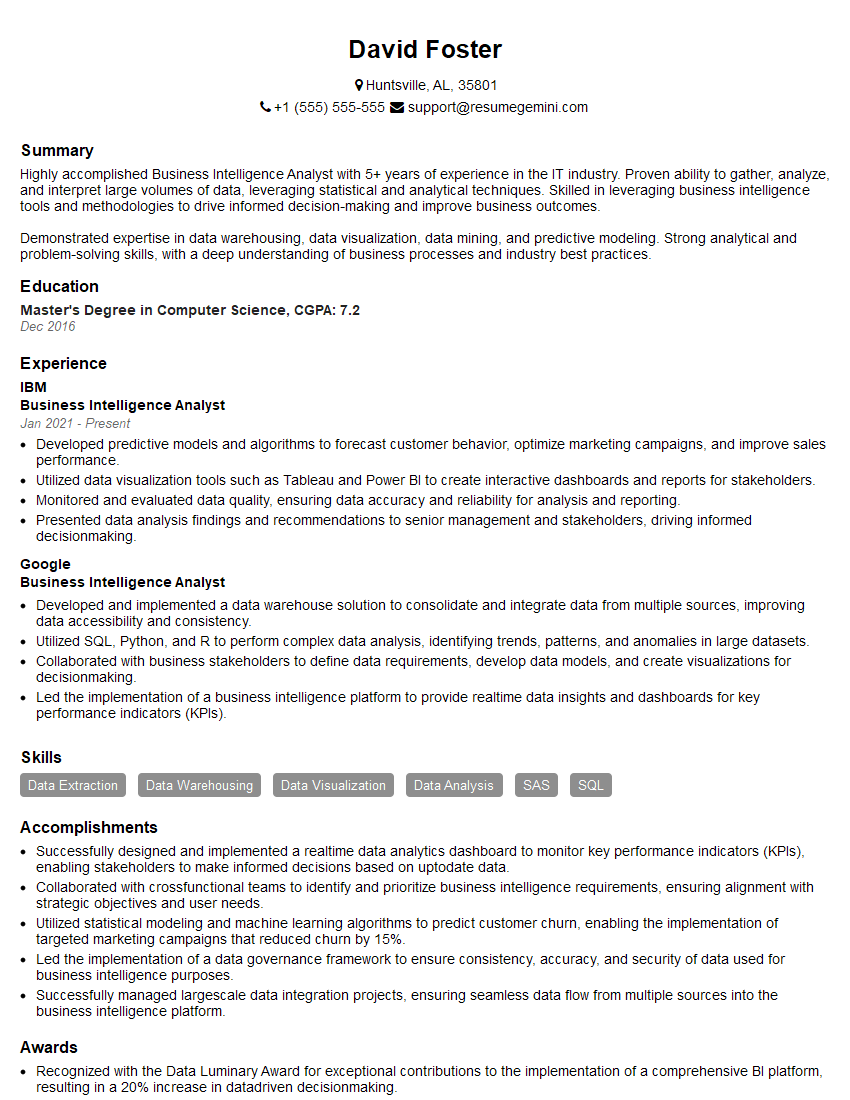
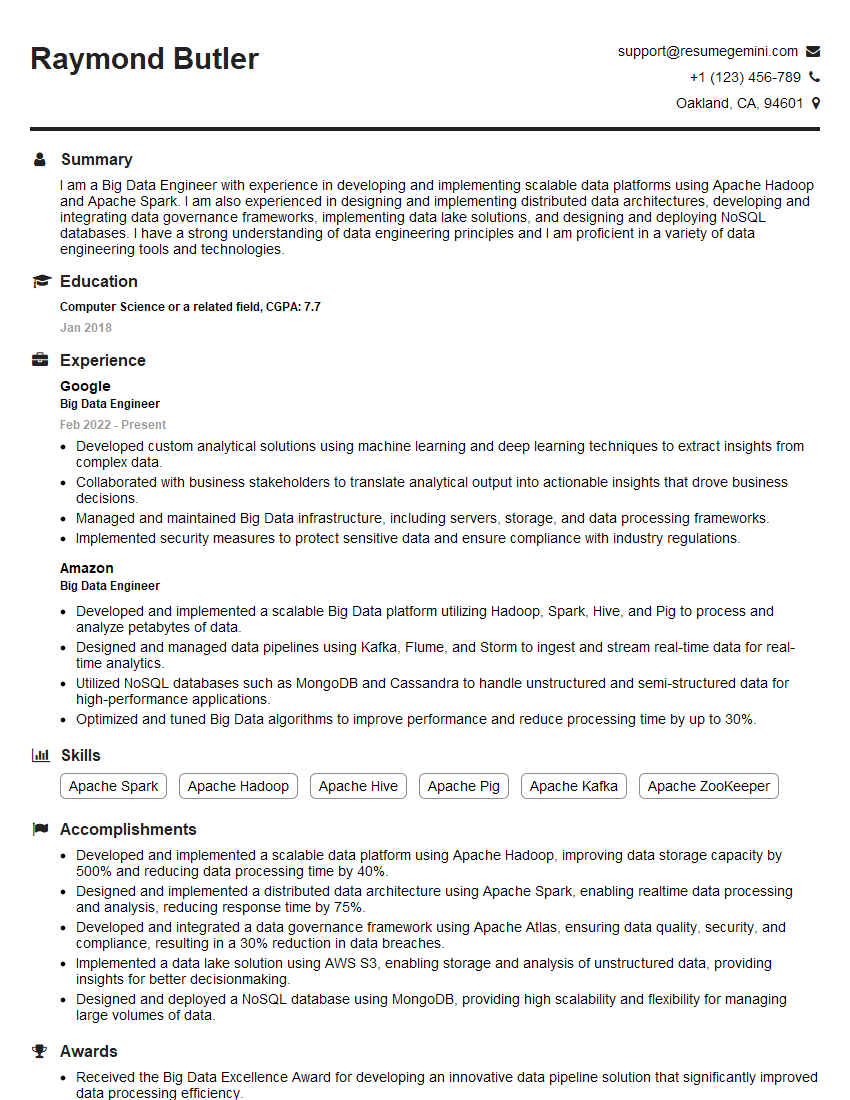
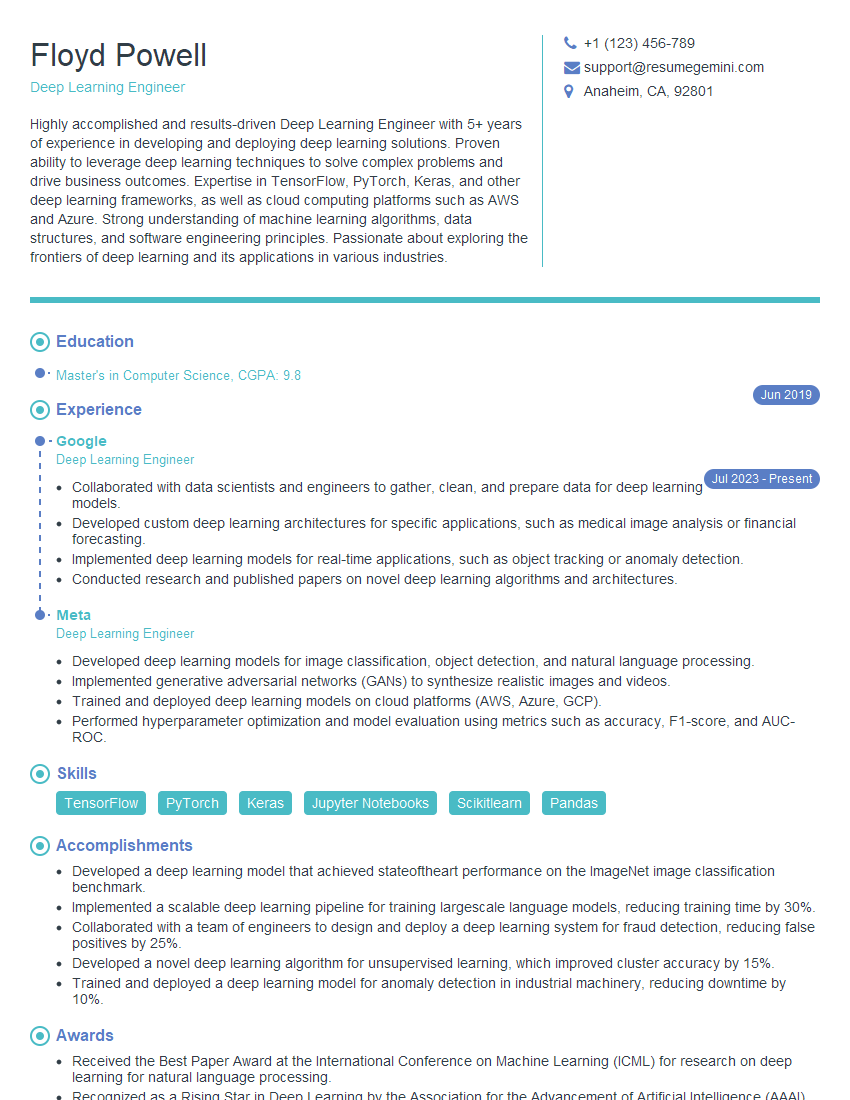
Mastering Artificial Intelligence basics is crucial for unlocking exciting career opportunities in a rapidly growing field. A strong understanding of these fundamental concepts will significantly improve your interview performance and open doors to a wider range of roles. To further enhance your job prospects, create a compelling and ATS-friendly resume that highlights your skills and experience effectively. ResumeGemini is a trusted resource that can help you build a professional resume tailored to the AI field. Examples of resumes tailored to Artificial Intelligence Basics are available to guide you through the process.





Explore more articles
Users Rating of Our Blogs
Share Your Experience
We value your feedback! Please rate our content and share your thoughts (optional).
What Readers Say About Our Blog
Very informative content, great job.
good