Feeling uncertain about what to expect in your upcoming interview? We’ve got you covered! This blog highlights the most important Artwork Registration interview questions and provides actionable advice to help you stand out as the ideal candidate. Let’s pave the way for your success.
Questions Asked in Artwork Registration Interview
Q 1. Explain the process of accessioning a new artwork.
Accessioning a new artwork is the formal process of adding it to a collection’s official records. Think of it like giving a new employee an official ID and adding them to the company’s database. It’s crucial for tracking, managing, and protecting the artwork’s history and value.
- Initial Documentation: This involves creating a detailed record, including the artwork’s title, artist, medium, dimensions, date of creation, provenance (ownership history), and acquisition details (how and when it was acquired).
- Physical Examination: A thorough visual inspection of the artwork’s condition is conducted, noting any pre-existing damage or deterioration. This is documented photographically and descriptively.
- Photography: High-resolution images are taken, ideally including a front view, back view, and details of any unique features or damage. These become part of the artwork’s permanent record.
- Assigning an Accession Number: A unique, sequential number is assigned to the artwork, permanently identifying it within the collection. This is often part of a robust database system.
- Database Entry: All the collected information is meticulously entered into the collection’s database, ensuring consistency and accuracy. This allows for efficient searching and retrieval of the artwork’s information.
- Storage or Display: The artwork is then appropriately stored or prepared for display according to its needs (environmental controls, security measures).
For example, when we received a newly donated painting, we meticulously documented its condition, noting a small crack in the varnish, photographed it from multiple angles, assigned it accession number 2023-045, and finally entered all the details into our Collection Management System.
Q 2. Describe your experience with art handling and its relationship to registration.
Art handling is intrinsically linked to registration. Proper handling ensures the artwork’s preservation, directly impacting the accuracy and longevity of its registration records. My experience involves everything from carefully unpacking newly acquired works to preparing artwork for loans and exhibitions.
For instance, during the unpacking of a delicate sculpture, I noted and photographed minor scuffs on its base, immediately updating the condition report in our database. This is vital because if the same damage was observed later, it could be easily misinterpreted as new damage.
Careful handling prevents damage, which minimizes the need for future condition updates and ensures the accuracy of the records throughout the artwork’s life within the collection.
Q 3. How do you ensure the accuracy and completeness of artwork records?
Accuracy and completeness are paramount in artwork registration. We achieve this through several key strategies:
- Standardized Procedures: Implementing strict protocols for documentation, photography, and database entry ensures consistency and minimizes errors. Every step follows a documented checklist.
- Cross-referencing: Information is cross-checked at various stages to eliminate inconsistencies. For example, dimensions recorded on the artwork itself are compared to measurements taken by the registrar.
- Regular Audits: Periodic reviews of the database and physical inventory help to detect and correct any discrepancies. This is akin to performing a financial audit to ensure balance sheet accuracy.
- Training and Expertise: Registrars receive ongoing training on best practices, new technologies, and updates to standards, which are fundamental for keeping expertise up-to-date.
- Multiple Data Sources: Leveraging multiple sources of information, such as auction records, artist’s statements, and scholarly articles, adds layers of verification and contextual information to the artwork’s record.
Imagine relying on an incomplete or inaccurate address; you would have trouble locating the artwork in storage or during loan! The same applies to the database.
Q 4. What database systems are you familiar with for artwork registration?
I am proficient in several database systems commonly used for artwork registration, including:
- TMS (The Museum System): A widely used, comprehensive system offering a range of features for managing collections.
- PastPerfect Museum Software: Another popular option with robust cataloging and reporting capabilities.
- CollectionSpace: An open-source system that is gaining traction for its flexibility and customization options.
My expertise extends beyond simple data entry. I understand how to design and implement custom database fields to accommodate the specific needs of a collection. For example, I helped tailor a database to include provenance research notes for a specific artist.
Q 5. Explain your experience with condition reporting of artworks.
Condition reporting is a critical aspect of artwork registration. It’s a detailed description of an artwork’s physical state, including any damage, deterioration, or restoration work. It provides a snapshot of the artwork’s health at a specific moment in time.
- Visual Examination: A thorough visual inspection to identify any visible damage like cracks, scratches, discoloration, or areas of loss.
- Documentation: Detailed written descriptions, accompanied by high-resolution photographs, accurately capturing the condition findings.
- Digital Imaging: Using UV or infrared imaging can reveal hidden damage or previous restorations not immediately visible to the naked eye.
- Data Storage: All condition reports are meticulously stored in the artwork’s database, allowing for easy tracking of changes over time.
During a recent condition report for a watercolour painting, I discovered subtle foxing (small spots of discoloration), which I documented with both descriptions and detailed photographs. This allowed us to monitor any progression of this common issue.
Q 6. How do you manage artwork loans and the associated documentation?
Managing artwork loans involves meticulous record-keeping and collaboration. The process is similar to managing a complex rental agreement, but with far higher stakes!
- Loan Agreement: A formal agreement is drafted outlining the terms of the loan, including duration, insurance requirements, handling procedures, and responsibilities of both the lending and borrowing institutions.
- Condition Reporting: Pre- and post-loan condition reports are essential to document the artwork’s state before and after transit. Any new damage during the loan period must be carefully documented.
- Insurance: Comprehensive insurance is crucial to protect the artwork during transit and the loan period. The insurance policy needs to be reviewed and updated as required.
- Packing and Transport: Secure packaging and specialized transportation are arranged, minimizing the risk of damage during transit. This often involves working with professional art handlers.
- Tracking: Accurate records are maintained throughout the entire process, from the initial loan request to the artwork’s safe return.
For example, when loaning a sculpture, we created a detailed loan agreement including insurance requirements, packing specifications, and a checklist for both institutions involved. We also made sure to have detailed photos taken before and after the loan period to ensure nothing had been damaged.
Q 7. Describe your experience with cataloging artworks and creating metadata.
Cataloging artworks and creating metadata are crucial for making collection information accessible and searchable. This involves creating structured descriptions that go far beyond a simple title and artist’s name.
- Descriptive Cataloging: This includes a thorough description of the artwork, using controlled vocabularies and standardized terminology to ensure consistency.
- Subject Indexing: Assigning subject terms helps organize the collection and allows for thematic searches.
- Metadata Creation: Creating structured metadata using schemas like Dublin Core or MODS allows for interoperability with other systems and databases.
- Controlled Vocabularies: Using established vocabularies like Getty AAT (Art & Architecture Thesaurus) ensures consistency in terminology and improves searchability.
- Digital Asset Management: Integrating digital images and other related documents, such as provenance research files, into the catalog record.
When cataloging a series of photographs, I ensured that each image had a detailed description, including the date, subject matter, technical specifications, and relevant keywords, all using standard vocabularies. This ensures they can be easily found whether searching by artist or subject matter.
Q 8. How do you handle discrepancies in artwork records?
Discrepancies in artwork records are a common challenge, but addressing them systematically is crucial for maintaining accurate information. My approach involves a multi-step process. First, I identify the nature of the discrepancy – is it a simple data entry error, a conflict between different sources, or a more complex issue like a missing piece of information? Then, I trace the source of the discrepancy. This might involve reviewing original documentation, comparing entries across multiple databases, or even contacting the artist or previous owner if necessary. For example, if there’s a conflict in the dimensions of a painting listed in two different records, I would cross-reference the information with any available photographs, physical examination if possible, or past documentation like invoices. Once the source is identified, I carefully verify the information using reliable sources, documenting each step of the process. Finally, I correct the discrepancy in the database and flag it for future review, ensuring data integrity.
For instance, I once encountered a discrepancy regarding the date of creation of a sculpture. One record listed 1985, another 1987. By reviewing the artist’s exhibition catalogue, which provided photographic evidence and contextual information, I verified the correct date to be 1987. This meticulous approach ensures accuracy and consistency across all our artwork records.
Q 9. Explain your understanding of copyright and intellectual property rights related to artworks.
Copyright and intellectual property rights are fundamental to artwork registration. Copyright, a legal right granted to the creator of an original work of authorship, protects the expression of an idea, not the idea itself. This means that while someone can’t copy the exact painting, they might create a work inspired by it without infringing copyright. Intellectual property rights encompass a broader range, including copyright, trademarks, patents, and trade secrets. In the context of artwork, this includes not only the copyright of the artwork itself, but also any associated rights, such as the right to reproduce, distribute, display, or create derivative works. Understanding these rights is critical when registering artwork. We must confirm ownership and ensure that the registration accurately reflects the rights associated with the artwork. This involves carefully reviewing contracts, provenance documentation and verifying the artist’s authorization. Failure to do so can result in legal complications.
For example, if we register a painting, we need to confirm the artist holds the copyright or has transferred the rights to the current owner. If the artwork is a limited edition print, we must be clear about the number of prints issued and the associated copyrights of the print and the original image. The registration process helps clarify and protect these rights.
Q 10. How do you prioritize tasks in a busy registration environment?
Prioritization in a busy registration environment requires a structured approach. I use a combination of methods to ensure efficiency and meet deadlines. Firstly, I utilize a task management system, prioritizing tasks based on urgency and importance. This might involve using a project management tool where tasks are assigned priorities (e.g., high, medium, low) and deadlines. Secondly, I consider the legal implications. Tasks with potential legal ramifications, like copyright clearance or urgent insurance updates, always take precedence. Thirdly, I break down large tasks into smaller, manageable steps. This makes the workflow less overwhelming and allows for more accurate time estimation and tracking of progress. For example, if we have to register a large collection of artworks, I’ll break it into smaller batches based on artist, medium or collection.
Finally, effective communication is key. Regularly communicating with colleagues and stakeholders keeps everyone informed about progress, potential roadblocks, and adjustments to the prioritization as needed. This ensures a collaborative and efficient workflow.
Q 11. Describe your experience with inventory management of artwork collections.
My experience with inventory management of artwork collections is extensive. It involves utilizing a robust database system that allows for detailed tracking of each artwork. This database should include comprehensive information: artist’s name, title of the work, creation date, dimensions, medium, acquisition date, current location, insurance details, and any relevant provenance documentation. Furthermore, regular physical inventory checks are crucial to verify the database’s accuracy and identify any discrepancies or losses. This physical process might involve photographing each piece, comparing its condition to prior documentation, and updating the database accordingly. Implementing a system of barcodes or RFID tags can significantly improve the efficiency and accuracy of inventory management. Such systems allow for quick identification and verification, streamlining the entire process.
I have successfully managed collections ranging in size from a few dozen pieces to over several thousand, employing different techniques based on the collection’s size and characteristics. For instance, while using spreadsheets might suffice for smaller collections, large collections necessitate specialized database software capable of handling extensive data, advanced search queries, and reporting capabilities.
Q 12. How familiar are you with different methods of artwork photography and documentation?
I am familiar with various methods of artwork photography and documentation. High-quality photographic documentation is paramount for accurate registration and preservation of the artwork’s condition. Techniques vary based on the artwork’s size, fragility, and three-dimensionality. For two-dimensional artworks like paintings and drawings, I’ve utilized high-resolution digital cameras, often with specialized lenses to minimize distortion and ensure accurate color reproduction. Appropriate lighting is critical to avoid glare and shadows. Metadata embedding is essential, including details like date, time, camera settings, and artwork identification. For three-dimensional sculptures, photogrammetry techniques are increasingly used to create 3D models, allowing for detailed documentation and virtual examination.
Beyond photography, I also employ techniques like UV documentation to detect restoration work or previous damage. Detailed condition reports are often generated, including descriptions of any existing flaws or damages. Video documentation can be utilized for particularly complex or delicate pieces to capture details that a single photograph might miss. The choice of method is always determined by the nature of the artwork and the specific needs of documentation.
Q 13. How do you ensure the security and preservation of artwork records?
Ensuring the security and preservation of artwork records is of utmost importance. My approach involves both physical and digital security measures. For physical records, this includes secure storage in climate-controlled environments, limiting access to authorized personnel, and maintaining regular backups. Digital security is equally critical. We employ strong passwords, encryption, access control lists, and regular data backups to cloud storage with redundancy. Moreover, we implement version control systems, so changes made to records are tracked, allowing for easy reversion if needed. For sensitive information, like provenance documents or financial details, additional layers of security are added, potentially involving specialized access systems and audit trails. Regular security audits and staff training are key components in mitigating potential risks.
The combination of physical and digital security protocols ensures that the artwork records are well-protected from loss, damage, or unauthorized access. This helps in safeguarding the institution’s legal, financial, and historical interests related to its artwork collection.
Q 14. Explain your experience with creating and maintaining an artwork database.
I have extensive experience creating and maintaining artwork databases. My approach begins with careful planning to determine the data fields necessary to adequately represent the artwork’s information. This might involve using a relational database system such as MySQL or PostgreSQL for managing large datasets efficiently. Key features would include customizable fields for artist details, artwork specifics (title, medium, dimensions, etc.), provenance information, photographic documentation, condition reports, insurance data, and location tracking. The database should allow for robust search and filtering capabilities, enabling efficient retrieval of information based on various criteria. It should also support the generation of reports and analytics, allowing us to gain insights into the collection’s composition, provenance, and condition.
Regular data maintenance, including updates, backups, and data cleansing, is crucial. I have used database management systems to create user-friendly interfaces for easier data entry and retrieval by various team members. Furthermore, database systems enable automated workflows such as generating labels, reports, and notifications for conservation needs. For example, in the past, I designed and implemented a database for a museum which simplified inventory management, helped in producing high quality exhibition catalogues and even generated automated reports about artwork condition that were used in prioritizing conservation efforts.
Q 15. How do you handle sensitive or confidential information related to artwork?
Handling sensitive artwork information requires a multi-layered approach prioritizing confidentiality and security. This starts with strict access control. Only authorized personnel with a legitimate need to know should have access to sensitive data like provenance details, valuation information, or the owner’s personal information. We utilize robust password management systems and multi-factor authentication to control access to our databases and digital archives.
Secondly, we employ data encryption both in transit and at rest. This means all data is encrypted during transmission over networks and is stored in an encrypted format on our servers. Think of this like using a locked box to protect important documents – only someone with the right key can access them. We also conduct regular security audits and penetration testing to identify and mitigate vulnerabilities.
Finally, we adhere to strict data privacy regulations (like GDPR or CCPA, depending on location and the nature of the data) ensuring compliance and transparency in data handling. This includes maintaining detailed records of data access, retention policies, and procedures for data breaches. In the event of a data breach, we have established protocols for immediate response and notification to relevant authorities and stakeholders.
Career Expert Tips:
- Ace those interviews! Prepare effectively by reviewing the Top 50 Most Common Interview Questions on ResumeGemini.
- Navigate your job search with confidence! Explore a wide range of Career Tips on ResumeGemini. Learn about common challenges and recommendations to overcome them.
- Craft the perfect resume! Master the Art of Resume Writing with ResumeGemini’s guide. Showcase your unique qualifications and achievements effectively.
- Don’t miss out on holiday savings! Build your dream resume with ResumeGemini’s ATS optimized templates.
Q 16. Describe your experience working with diverse teams and stakeholders.
Throughout my career, I’ve collaborated extensively with diverse teams including artists, collectors, gallery owners, insurers, conservators, and legal professionals. This necessitates effective communication and a deep understanding of each stakeholder’s perspective. For example, when working with a particularly private collector, I needed to develop a relationship built on trust and confidentiality before they felt comfortable sharing detailed provenance information. This involved careful listening and ensuring my communication was always transparent and sensitive to their needs.
In other instances, particularly during large-scale projects involving multiple stakeholders, I’ve relied on project management methodologies to ensure efficient communication and workflow. This has included using collaborative platforms like shared documents and project management software to keep everyone informed and ensure that everyone has access to the necessary information in a timely manner. Working effectively with diverse groups means being adaptable, patient, and focusing on achieving a shared goal – accurate and secure artwork registration.
Q 17. How do you deal with conflicting information about an artwork’s provenance?
Conflicting provenance information is a common challenge in artwork registration. My approach involves a systematic investigation to establish the most accurate and reliable account. This begins with careful review of all available documentation, including provenance records, exhibition catalogs, auction records, and any relevant scholarly publications. Each piece of evidence is critically evaluated for authenticity and reliability, considering the potential biases or limitations of each source.
When inconsistencies arise, I cross-reference information from multiple sources, looking for corroborating evidence. Expert opinions, such as those from art historians or conservators, might be sought to resolve uncertainties. In some cases, archival research might be necessary to uncover additional information. For instance, I once encountered conflicting information on the date of creation for a painting. By contacting the artist’s estate and reviewing historical sales catalogs, we were able to identify a previously unknown exhibition that clarified the creation date. The process often requires careful reasoning, meticulous record-keeping, and transparent documentation of the investigation’s findings.
Q 18. Explain your proficiency in using art-related software (e.g., TMS systems).
I am proficient in various art-related software applications, including several TMS (Collection Management System) platforms such as TMS (The Museum System), PastPerfect, and CollectionSpace. My experience encompasses data entry, data cleaning, report generation, and image management. These systems are essential for managing large collections effectively. For example, I am skilled in using these systems to track an artwork’s entire lifecycle from acquisition to loan and eventual disposal or sale.
Beyond TMS systems, I’m also adept at using image editing software (like Adobe Photoshop) for high-resolution digital photography for artwork documentation and archiving, along with database management systems (like SQL) for more complex data analysis and reporting. Proficiency in these tools ensures accurate and efficient management of artwork data, enhancing the reliability of records and facilitating informed decision-making. Knowing how to leverage the features of these programs ensures optimal organization and accessibility of the information.
Q 19. How do you track artwork movement and location?
Tracking artwork movement and location is paramount for security and accountability. We use a combination of methods to maintain precise records. Within our TMS, we record every movement: acquisition, loan to another institution, transfer to storage, or participation in an exhibition. Each movement is documented with a date, time, destination, and the responsible individual. We use barcodes or RFID tags attached to the artwork itself to facilitate efficient tracking through handheld scanners and integrated inventory management systems. This allows for quick identification and location tracking.
For high-value or exceptionally sensitive works, we might employ additional security measures, such as GPS tracking devices, especially during transit. Comprehensive documentation of insurance and transportation details is maintained in conjunction with the movement records, providing a complete audit trail of the artwork’s location history. The integration of these various tracking systems assures consistent, accurate, and up-to-date information about the location of each piece of artwork.
Q 20. What are your strategies for dealing with large volumes of artwork data?
Managing large volumes of artwork data demands efficient strategies. Our approach involves data standardization, employing consistent data fields and formats across all records. This ensures data integrity and facilitates efficient searching and retrieval. We use relational databases to organize and structure the data effectively. These systems are particularly well-suited for handling complex relationships between artwork, artists, owners, exhibitions, and other related data points.
Furthermore, we employ data cleaning processes regularly to identify and correct inconsistencies or errors, ensuring the accuracy of our records. We utilize data visualization tools and reporting features within the TMS to provide comprehensive overviews of our collection and identify trends or patterns. For very large datasets, we might leverage data mining techniques to extract valuable insights and improve management efficiency. This data-driven approach empowers better decision-making regarding conservation, exhibition planning, and overall collection management.
Q 21. How do you ensure the integrity of artwork records during digitization?
Ensuring the integrity of artwork records during digitization is crucial. Our approach emphasizes meticulous quality control at every stage. High-resolution images are captured using professional-grade equipment and calibrated lighting to guarantee accurate color reproduction. Image metadata – including details about the camera settings, date, and time – are carefully recorded and embedded into the image files. This helps maintain authenticity and traceability.
We use image file formats with minimal loss of data (such as TIFF) for archival purposes. We also employ a multi-tiered backup system to protect our digital assets from loss or damage. Regular checks for file corruption and data validation are performed to maintain data integrity and accuracy. We maintain a detailed chain of custody for the digital assets, documenting all actions taken on the images and their metadata, and the personnel responsible. This comprehensive approach ensures that the digital records accurately reflect the physical artworks and maintain their integrity over time.
Q 22. Describe your experience with creating reports and presentations based on artwork data.
Creating reports and presentations based on artwork data is a crucial aspect of my role. I’m proficient in using various data analysis techniques to extract meaningful insights and communicate them clearly to different stakeholders. This involves not only summarizing basic registration information – like artist, title, date, and dimensions – but also analyzing trends, identifying potential risks, and offering recommendations.
For instance, I might create a report analyzing the insurance costs associated with different types of artwork within a collection, highlighting those with the highest risk profiles and suggesting preventative measures. Another example would be designing a presentation for a board of directors, visualizing the collection’s growth over time, showing acquisition costs, and comparing it to market value trends. I use software like Excel, Access, and specialized museum collection management systems to create comprehensive reports and visually appealing presentations with charts, graphs, and images.
My experience also includes tailoring reports to the specific needs of the audience. A technical report for conservators might include detailed condition reports and material analysis data, whereas a report for donors might focus on the historical significance and value of specific pieces.
Q 23. How would you handle a situation where an artwork is damaged or lost?
Handling artwork damage or loss is a serious matter requiring immediate and decisive action. My approach involves a multi-step process, beginning with a thorough documentation of the incident. This includes taking detailed photographs, creating a written account of the circumstances, and involving appropriate personnel, such as security and conservators.
Next, I would initiate the claims process with the insurance provider, adhering strictly to their procedures and providing all necessary documentation. Simultaneously, I’d begin the process of assessing the damage or loss, determining its extent and value for insurance purposes. For damage, this might involve consulting conservators to explore options for repair or restoration.
In the case of loss, I’d work to establish the value of the artwork using various valuation methods (discussed in detail in a later response). This information is critical for the insurance claim. Finally, the entire process is documented meticulously, ensuring transparency and maintaining a record for future reference and preventative measures.
For example, if a painting was damaged during transit, I would immediately photograph the damage, document the events with witness statements, and then contact both the insurer and a conservator to assess the damage and facilitate the claim. The detailed records would become part of the artwork’s permanent history.
Q 24. How do you stay up-to-date with current best practices in artwork registration?
Staying current in artwork registration best practices is essential. I achieve this through a combination of methods:
- Professional Organizations: Active membership in organizations like the American Association of Museums (AAM) and the Art Libraries Society of North America (ARLIS/NA) provides access to conferences, publications, and networking opportunities that highlight the latest trends and technologies.
- Conferences and Workshops: Attending conferences focused on collection management, conservation, and art handling ensures I’m exposed to cutting-edge developments in the field. This also allows for interaction with peers and experts.
- Publications and Journals: Regularly reviewing professional journals and publications keeps me abreast of new research and best practices in documentation and registration methodologies. This includes staying updated on changes in legal and ethical standards.
- Online Resources and Training: Many online resources, including museum websites and educational platforms, offer webinars and online courses that are instrumental in staying informed about new techniques and technologies in the field.
Continuous learning is vital in this dynamic field. This ensures I’m always employing the most efficient and effective methods in my work.
Q 25. Describe your experience with insurance and risk management related to artworks.
My experience with insurance and risk management encompasses all facets of artwork protection. This includes understanding different insurance policies, their coverage, and limitations. I collaborate with insurance brokers to secure appropriate coverage for the collection, considering factors such as value, location, and vulnerability to loss or damage.
Risk management is a proactive process. I contribute to developing and implementing preventive measures to minimize potential risks. This may include environmental controls (temperature, humidity), security measures (alarms, surveillance), and proper handling and storage procedures. Regular inspections, thorough documentation of artwork condition, and appropriate environmental monitoring are all crucial elements. I understand the need for creating comprehensive documentation to support insurance claims in case of loss or damage.
For example, I might work with a security consultant to develop a security plan for a gallery, specifying alarm systems, security personnel, and access control measures, and ensure these are properly documented and maintained. I’d also review and update insurance policies annually to ensure they adequately protect the collection.
Q 26. How familiar are you with various ethical considerations in art handling and registration?
Ethical considerations are paramount in art handling and registration. My understanding encompasses several key areas:
- Provenance Research: I understand the importance of meticulous provenance research to ensure the artwork’s history is accurately documented and any potential ethical issues, such as looted art or stolen works, are investigated.
- Intellectual Property Rights: I’m aware of copyright laws and the rights of artists and their estates, ensuring proper attribution and respect for intellectual property in all documentation and publications.
- Confidentiality: Maintaining confidentiality of sensitive information, such as donor records or acquisition costs, is essential, and I adhere to strict privacy protocols.
- Transparency and Accuracy: I maintain the highest standards of transparency and accuracy in all records, ensuring all information is factual and properly documented.
- Cultural Sensitivity: When working with artwork from different cultures, I ensure respect for cultural values and traditions. I take the time to learn about the artwork’s background and cultural significance.
These ethical considerations guide my practices, ensuring responsible and ethical stewardship of the artworks under my care.
Q 27. How do you collaborate with conservators and curators in the registration process?
Collaboration with conservators and curators is integral to the artwork registration process. Conservators provide essential information regarding the artwork’s physical condition, material analysis, and conservation treatments, which is crucial for accurate documentation and risk assessment. This information is incorporated into the registration record and helps inform decisions about handling, storage, and display.
Curators provide historical context, provenance information, and insights into the artwork’s significance. Their expertise enriches the registration data, ensuring that the record is comprehensive and reflects the artwork’s full value. I often work closely with them to develop detailed condition reports, which include images and descriptions of the artwork’s condition and any damages. This information is essential for insurance purposes and for managing the artwork’s long-term preservation.
The collaboration is a continuous dialogue, ensuring that the registration record is a dynamic and comprehensive document that evolves alongside our understanding of the artwork and its needs.
Q 28. Explain your understanding of different valuation methods for artworks.
Artwork valuation is a complex process involving several methods, each with its own strengths and limitations. My understanding includes:
- Market Value: This method relies on comparable sales of similar artworks. It’s often used for insurance purposes and involves researching recent auction prices and sales records.
- Replacement Cost: This method focuses on the cost of replacing the artwork, considering factors such as materials, labor, and current market prices for similar works.
- Intrinsic Value: This considers factors beyond market value, including historical significance, artistic merit, and cultural importance. It’s more subjective and relies on expert opinion.
- Insurance Value: This typically considers the market value or replacement cost, taking into account the risk of damage or loss. It might be different from the market value to account for potential depreciation or other factors.
The choice of valuation method depends on the specific purpose and context. For insurance, market value and replacement cost are often used, while intrinsic value might be considered when assessing the overall value of a collection for a museum. A thorough understanding of each method is crucial for accurate and responsible valuation of artwork.
Key Topics to Learn for Artwork Registration Interview
- Metadata Standards and Best Practices: Understanding and applying metadata schemas like IPTC Core, XMP, and Dublin Core for accurate and consistent artwork description.
- Digital Asset Management (DAM) Systems: Familiarity with various DAM systems (e.g., Adobe Experience Manager, Canto, Bynder) and their workflows for artwork ingestion, organization, and retrieval. Practical application: Discuss experience with metadata tagging within a specific DAM system.
- Copyright and Licensing: Knowledge of copyright law, licensing agreements, and the implications for artwork registration and usage rights. Practical application: Explain how to ensure compliance with copyright regulations in a registration process.
- Workflow Optimization and Automation: Exploring strategies to streamline artwork registration processes using automation tools and techniques to improve efficiency. Practical application: Describe a scenario where you improved an artwork registration workflow.
- Image File Formats and Compression: Understanding various image file formats (JPEG, TIFF, PNG, etc.) and their suitability for different applications, along with effective compression techniques to maintain quality while optimizing file size.
- Quality Control and Assurance: Implementing processes to ensure the accuracy, completeness, and consistency of registered artwork data. Practical application: Describe a quality control check you’d implement for registered artwork.
- Troubleshooting and Problem-Solving: Developing strategies for identifying and resolving common issues related to artwork registration, such as metadata inconsistencies, file corruption, or system errors.
Next Steps
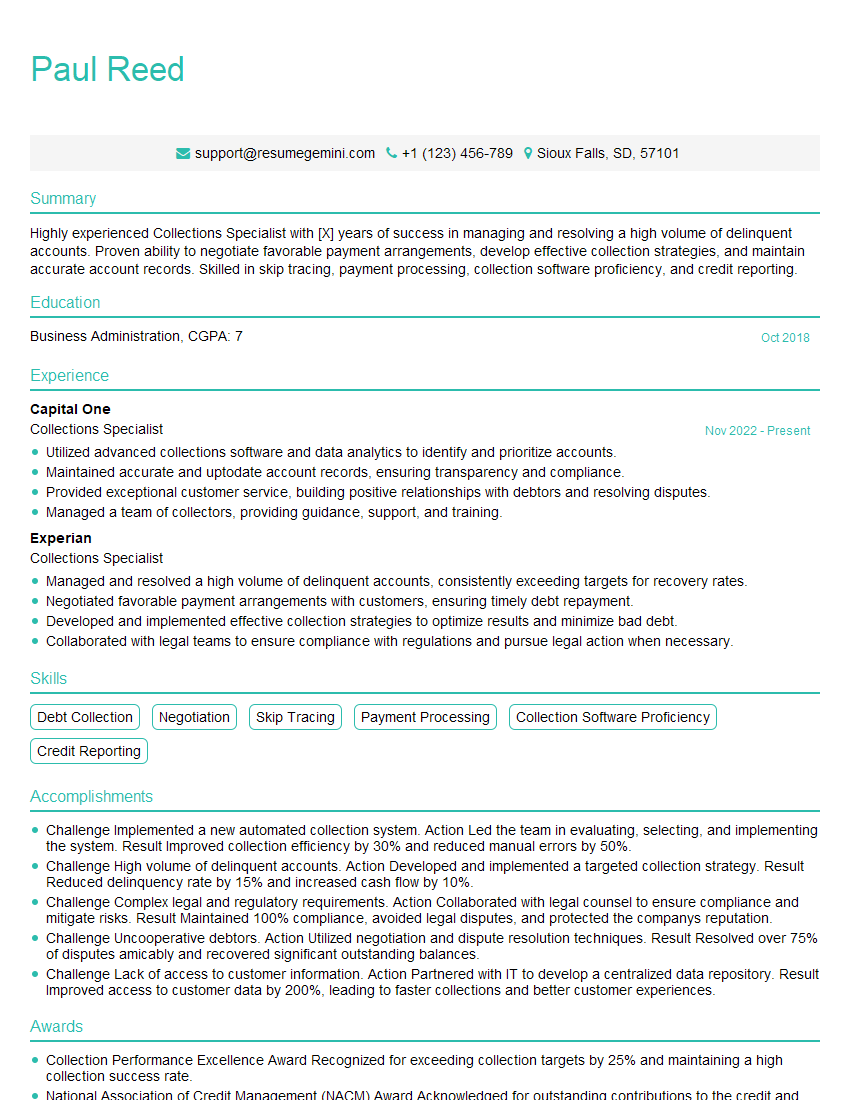
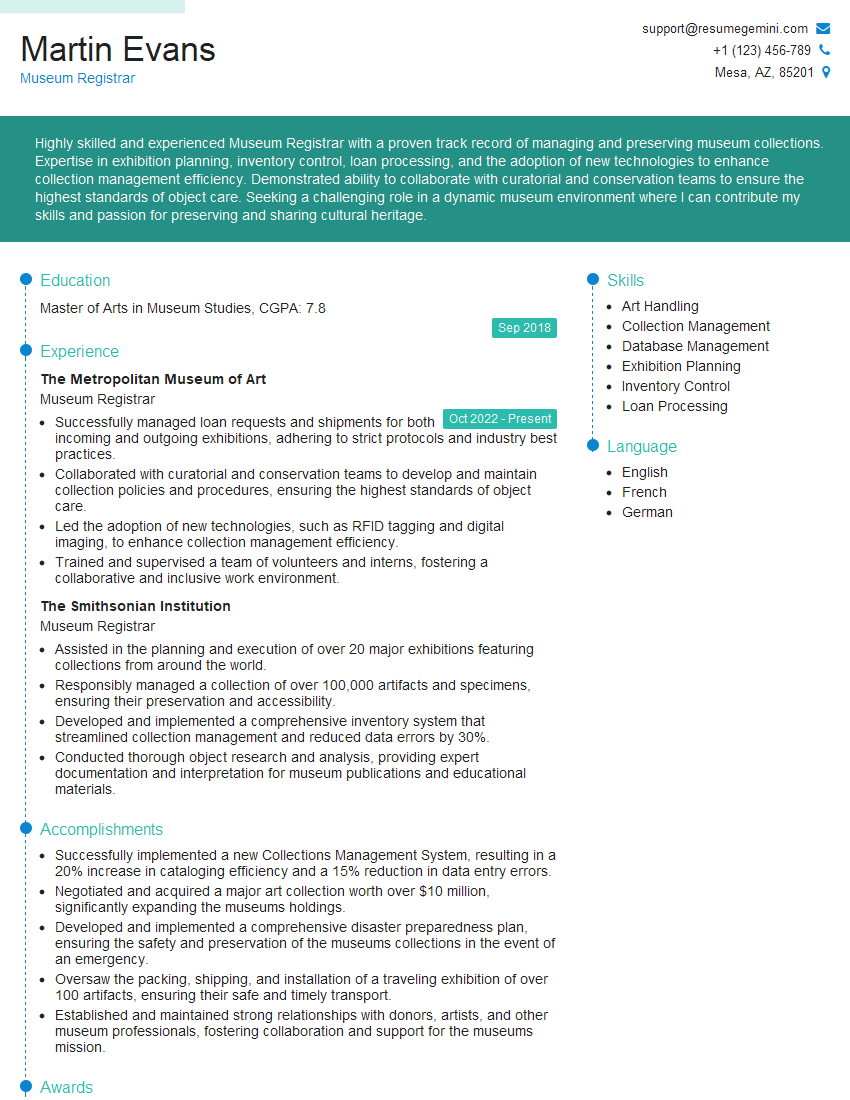
Mastering Artwork Registration is crucial for career advancement in creative industries, opening doors to exciting roles with increasing responsibility and compensation. A strong resume is your key to unlocking these opportunities. To maximize your job prospects, crafting an ATS-friendly resume is essential. ResumeGemini is a trusted resource that can help you build a professional and impactful resume tailored to the specific requirements of Artwork Registration roles. Examples of resumes optimized for Artwork Registration positions are available, providing you with valuable templates and guidance.
Explore more articles
Users Rating of Our Blogs
Share Your Experience
We value your feedback! Please rate our content and share your thoughts (optional).
What Readers Say About Our Blog
Very informative content, great job.
good