Preparation is the key to success in any interview. In this post, we’ll explore crucial ASHRAE Level 1 Energy Auditor interview questions and equip you with strategies to craft impactful answers. Whether you’re a beginner or a pro, these tips will elevate your preparation.
Questions Asked in ASHRAE Level 1 Energy Auditor Interview
Q 1. What are the key components of an ASHRAE Level 1 energy audit?
An ASHRAE Level 1 energy audit provides a preliminary assessment of a building’s energy performance. It focuses on readily accessible data and visual inspections to identify low-cost, no-cost, and quick-payback energy efficiency improvements. Key components include:
- Walkthrough Inspection: A visual inspection of the building’s envelope, HVAC systems, lighting, and appliances to identify obvious energy-wasting issues. This is like a quick health check for your building.
- Building Information Gathering: Collecting information about the building’s size, construction, systems, and energy bills. Think of it as gathering the patient’s medical history.
- Energy Use Analysis: Analyzing historical energy consumption data to establish a baseline and pinpoint areas with high energy usage. This is like analyzing the patient’s blood test results.
- Recommendations Report: Presenting a prioritized list of cost-effective energy efficiency measures, along with estimated savings. This is the doctor’s prescription.
For example, a Level 1 audit might reveal that replacing inefficient lighting fixtures with LEDs is a simple, cost-effective way to reduce energy consumption significantly.
Q 2. Explain the difference between a Level 1 and Level 2 energy audit.
The main difference lies in the depth and detail of the assessment. A Level 1 audit is a quick overview, focusing on readily observable issues and simple calculations. It’s like getting a general health checkup. A Level 2 audit, however, is much more in-depth. It involves detailed measurements, advanced calculations, and specialized equipment to pinpoint areas of energy loss with greater precision. Think of it as a comprehensive medical examination including tests.
- Level 1: Visual inspection, basic calculations, low cost, quick turnaround.
- Level 2: Detailed measurements (blower door, infrared thermography), advanced calculations, higher cost, longer turnaround time.
For instance, while a Level 1 audit might suggest improving window insulation, a Level 2 audit might use infrared thermography to precisely locate areas of heat loss through the windows and walls, guiding more targeted improvements.
Q 3. Describe the process of performing a blower door test.
A blower door test measures the airtightness of a building’s envelope. A large fan is installed in an exterior door, and it’s used to depressurize the building. The resulting pressure difference causes air to leak in through cracks and gaps in the building envelope. The volume of air leaking into the building is measured using an anemometer, and it is used to calculate the building’s air leakage rate in cubic feet per minute per square foot of building surface area (CFM/ft²).
- Fan Installation: A calibrated fan is securely installed in an exterior door opening.
- Building Depressurization: The fan is turned on, creating a negative pressure inside the building.
- Leakage Measurement: Air leakage is measured using an anemometer at various locations around the building envelope.
- Air Leakage Calculation: The measured leakage is converted to CFM/ft² using appropriate formulas. A lower CFM/ft² value indicates a tighter building envelope.
Imagine trying to blow air into a balloon with small holes – the more holes, the faster the air escapes. A blower door test quantifies this ‘air escape’ in a building.
Q 4. How do you calculate building envelope heat loss?
Building envelope heat loss is calculated by considering the various components of the building envelope (walls, roof, windows, doors, and foundation) and their respective thermal resistances (R-values). The formula is based on the principle of heat transfer through conduction.
The basic formula is:
Q = A * ΔT / RWhere:
Q= Heat loss (BTU/hr or Watts)A= Surface area (ft² or m²)ΔT= Temperature difference between inside and outside (ºF or ºC)R= Thermal resistance (R-value, hr·ft²·ºF/BTU or m²·K/W)
For each component, you calculate the heat loss and sum them up to obtain the total building envelope heat loss. You might need to use different R-values for different materials and construction methods and account for things like thermal bridges. Software tools or specialized calculations can help with this process.
For example, calculating heat loss through a wall requires knowing its area, the R-value of its insulation, and the temperature difference across the wall.
Q 5. What are the common methods for measuring air infiltration?
Common methods for measuring air infiltration include:
- Blower Door Test: As discussed earlier, this method measures the total air leakage rate of the building envelope.
- Tracer Gas Techniques: A known quantity of a tracer gas (like sulfur hexafluoride) is introduced into the building, and its concentration is measured over time to determine the air exchange rate.
- Airflow Measurement with Anemometers: Using anemometers to directly measure air movement through cracks and gaps in windows, doors, and other openings. This is more localized than the blower door test.
Each method has its advantages and disadvantages depending on the building’s characteristics and the level of detail required. Tracer gas is very accurate but expensive and requires specialized equipment. A blower door test is easier and cheaper but might miss localized leaks.
Q 6. Explain the concept of building thermal mass.
Building thermal mass refers to the ability of building materials to absorb, store, and release heat. Materials with high thermal mass, like concrete, brick, or stone, take longer to heat up and cool down compared to materials with low thermal mass, such as wood or drywall. This property can help to moderate indoor temperatures, reducing the need for heating and cooling.
Think of it like a large pot of water on a stove. It takes longer to heat up and cool down than a small cup of water. The large pot has a higher thermal mass.
Effective utilization of thermal mass involves strategically placing materials with high thermal mass within the building to maximize their temperature-buffering effects. It’s particularly beneficial in climates with large daily temperature swings.
Q 7. How do you identify and quantify energy waste in HVAC systems?
Identifying and quantifying energy waste in HVAC systems involves several steps:
- Visual Inspection: Checking for leaks in ductwork, dirty air filters, malfunctioning equipment, and inadequate insulation.
- Data Analysis: Analyzing energy consumption data to identify periods of unusually high energy use. This may point to system inefficiencies or equipment malfunctions.
- Performance Testing: Measuring the system’s airflow, temperature, and pressure to determine if it’s operating at peak efficiency. This often involves specialized equipment.
- Equipment Assessment: Evaluating the age and condition of HVAC equipment, checking for outdated technology or components in need of replacement.
For example, a significant increase in energy consumption during specific times of the day or year might suggest a problem with the HVAC system that needs further investigation. A poorly maintained system, with dirty filters or leaky ducts, will have higher operating costs and reduced efficiency. Analyzing the system’s performance against its rated capacity will highlight areas of underperformance.
Q 8. Describe different types of lighting systems and their energy efficiency.
Lighting systems significantly impact a building’s energy consumption. Different types vary greatly in efficiency. Let’s explore some common options:
- Incandescent Bulbs: These are the least efficient, converting only a small percentage of energy into light, with the rest wasted as heat. Think of them as inefficient, old-fashioned lightbulbs. They have a very short lifespan.
- Halogen Bulbs: Slightly more efficient than incandescent, halogens still generate substantial heat. They offer brighter light but are still relatively inefficient.
- Fluorescent Lamps (CFLs): Compact Fluorescent Lamps are considerably more efficient than incandescent and halogen, lasting much longer. However, they contain mercury, requiring careful disposal. They also have a slower startup time.
- Light-Emitting Diodes (LEDs): Currently the most energy-efficient option, LEDs convert a much higher percentage of energy into light, generating minimal heat. They boast a very long lifespan and are available in various color temperatures and brightness levels. They’re the clear winner for energy efficiency and longevity.
Energy Efficiency Comparison: A simple analogy is comparing cars: Incandescent bulbs are like a gas-guzzling SUV, while LEDs are like a fuel-efficient hybrid. The difference in energy consumption over time is substantial. When conducting an energy audit, I always recommend switching to LEDs wherever possible due to their superior energy efficiency and long-term cost savings.
Q 9. What are the benefits of using energy-efficient windows and doors?
Energy-efficient windows and doors are crucial for reducing a building’s energy consumption and improving comfort. Their benefits are multifold:
- Reduced Heat Loss/Gain: High-performance windows and doors with multiple panes of glass, low-e coatings, and gas fills (like argon or krypton) significantly minimize heat transfer, reducing the load on HVAC systems. Think of it like adding an extra layer of insulation to your building’s envelope.
- Improved Comfort: They help maintain a more consistent indoor temperature, reducing drafts and discomfort. This leads to a more pleasant and productive environment.
- Lower Energy Bills: By reducing heating and cooling demands, these improvements lead to significant cost savings over the life of the building.
- Reduced Carbon Footprint: Lower energy consumption translates to a smaller carbon footprint, contributing to environmental sustainability.
- Noise Reduction: Many energy-efficient windows and doors also offer improved sound insulation, creating a quieter interior.
For example, replacing old, single-pane windows with double- or triple-pane, low-e windows can dramatically reduce energy loss, especially in climates with significant temperature fluctuations.
Q 10. What are some strategies for improving building insulation?
Improving building insulation is vital for reducing energy waste. Several strategies can be employed:
- Adding Insulation to Walls: This can involve adding insulation batts or blown-in insulation to existing wall cavities, or installing exterior insulation and finish systems (EIFS).
- Insulating Attics and Roofs: Proper attic insulation is crucial for preventing heat loss in the winter and heat gain in the summer. This often involves adding more insulation or replacing existing insulation with a higher R-value material.
- Insulating Floors: Insulating floors, particularly in basements or crawl spaces, can significantly reduce heat loss. This can involve using rigid foam insulation, foam board, or spray foam.
- Air Sealing: This involves sealing air leaks around windows, doors, electrical outlets, and other penetrations in the building envelope. Air sealing is often just as important as adding more insulation.
- Using High-Performance Materials: Selecting materials with higher R-values (a measure of thermal resistance) is crucial. The higher the R-value, the better the insulation.
Imagine your house as a thermos. Good insulation is like the vacuum seal in the thermos, keeping the heat in during winter and out during summer. Air sealing is like ensuring the lid is tightly sealed, preventing heat from escaping.
Q 11. Explain the principles of energy modeling.
Energy modeling uses computer software to simulate a building’s energy performance. It’s a predictive tool that helps us understand how a building will use energy under various conditions. The principles involve:
- Input Data: Detailed information about the building’s geometry, construction materials, HVAC systems, lighting, and occupancy patterns is required.
- Simulation Engine: The software uses algorithms to calculate energy flows, taking into account factors like climate data, solar radiation, and internal heat gains.
- Output Analysis: The results provide insights into energy consumption patterns, peak demands, and the impact of different design choices or retrofits.
- Validation and Calibration: Where possible, the model’s predictions are often compared to actual energy usage data to ensure accuracy.
By creating a digital twin of the building, energy modeling allows us to test different scenarios (e.g., adding solar panels, upgrading insulation) before implementing them physically, saving time and money. Think of it as a virtual laboratory for building energy performance.
Q 12. How do you interpret energy audit results and generate recommendations?
Interpreting energy audit results involves a systematic approach. After gathering data through various methods (e.g., blower door tests, infrared thermography), I analyze the findings to identify areas of energy waste. This usually includes:
- Data Analysis: Reviewing energy bills, examining building systems, and assessing the results from various tests.
- Identifying Energy-Wasting Areas: Pinpointing specific areas with high energy consumption, such as poorly insulated walls, leaky windows, or inefficient HVAC systems.
- Prioritizing Recommendations: Ranking potential improvements based on their cost-effectiveness and impact on energy savings. Simple, cost-effective solutions are often addressed first.
- Generating Reports: Creating comprehensive reports detailing findings, recommendations, and estimated costs and savings for each suggested improvement. These reports are often presented visually to clients using charts, graphs, and images.
For example, if an infrared scan reveals significant heat loss around windows, I’d recommend window upgrades or sealing air leaks as a high-priority measure. The report would clearly lay out the problem, the proposed solution, and the potential return on investment.
Q 13. What software or tools do you use for energy audits?
Several software tools and instruments are crucial for conducting thorough energy audits. Commonly used tools include:
- Energy Modeling Software: Such as EnergyPlus, eQuest, or DesignBuilder, to simulate building energy performance.
- Blower Door Testing Equipment: To measure building airtightness.
- Infrared Cameras (Thermography Cameras): To detect areas of heat loss and gain.
- Data Loggers: To record temperature, humidity, and other relevant data over time.
- HVAC System Analyzers: To measure the efficiency of heating and cooling equipment.
- Spreadsheet Software (Excel): For data organization, analysis, and report generation.
The choice of software depends on the complexity of the audit and the specific needs of the project. I am proficient in using several of these tools and combine them to get a holistic view of the building’s energy performance.
Q 14. Describe your experience with infrared thermography.
Infrared thermography is a vital non-invasive technique used in energy audits. It involves using an infrared camera to detect temperature differences on a building’s surface. These differences reveal areas of heat loss (shown as cooler temperatures) or heat gain (shown as warmer temperatures).
My Experience: I have extensive experience using infrared thermography to identify insulation deficiencies, air leaks around windows and doors, and problems with HVAC systems. I’ve used this technology in hundreds of audits, ranging from residential homes to commercial buildings. For example, I once identified a significant air leak around a poorly sealed window in a commercial building using infrared thermography, leading to a recommendation to replace the window that saved the client substantial energy costs. The images clearly showed the temperature differences, making the problem easy to visualize for the client. The thermal images provided irrefutable evidence of the energy inefficiency, leading to the client’s swift approval of the remediation work.
Infrared thermography is more than just taking pictures; it requires an understanding of building science to correctly interpret the results and correlate thermal patterns with potential energy-wasting issues. The interpretation of the data is just as crucial as the image itself.
Q 15. How do you identify and address potential safety hazards during an energy audit?
Safety is paramount during an energy audit. Before I even begin an inspection, I conduct a thorough site survey to identify potential hazards. This includes looking for things like exposed wiring, damaged flooring, asbestos-containing materials (ACM), and the presence of hazardous chemicals. I always wear appropriate personal protective equipment (PPE), which might include safety glasses, gloves, and steel-toed boots, depending on the site conditions. I carefully check for trip hazards and ensure adequate lighting. For example, if I’m inspecting a rooftop, I’ll check the condition of the roof, ensure there’s a safe access point, and have a spotter if necessary. If I encounter any situation where I feel my safety is compromised, I immediately halt the inspection and contact the client to address the concerns before proceeding. Documentation of hazards and mitigation steps is crucial – I maintain a detailed safety log for every audit I perform.
Career Expert Tips:
- Ace those interviews! Prepare effectively by reviewing the Top 50 Most Common Interview Questions on ResumeGemini.
- Navigate your job search with confidence! Explore a wide range of Career Tips on ResumeGemini. Learn about common challenges and recommendations to overcome them.
- Craft the perfect resume! Master the Art of Resume Writing with ResumeGemini’s guide. Showcase your unique qualifications and achievements effectively.
- Don’t miss out on holiday savings! Build your dream resume with ResumeGemini’s ATS optimized templates.
Q 16. Explain the importance of data logging in energy audits.
Data logging is the backbone of a reliable energy audit. It provides the hard evidence needed to support recommendations and measure the effectiveness of implemented energy conservation measures (ECMs). We use various methods for data logging, including using specialized energy monitoring devices (EMDs) that measure real-time electricity consumption, gas usage, and even temperature and humidity. For example, I might install clamps on electrical circuits to measure power usage in real-time, or use data loggers to monitor temperature fluctuations over a period of days or weeks. These devices capture vast amounts of data, revealing consumption patterns that are often invisible to the naked eye. The data collected isn’t just about numbers; it paints a picture of the building’s energy performance. Analyzing this data allows us to pinpoint areas of high energy consumption, identify operational inefficiencies, and quantify the potential savings from proposed ECMs. Detailed data logging also provides a baseline for post-implementation monitoring, allowing us to verify the effectiveness of our recommendations.
Q 17. What are the key factors affecting building energy consumption?
Building energy consumption is a complex issue influenced by a multitude of interconnected factors. We can broadly categorize these factors into building characteristics, equipment performance, and occupant behavior. Building characteristics include things like the building’s envelope (insulation, windows, air sealing), size, orientation, and construction materials. A poorly insulated building, for example, will lose significant amounts of heat in the winter and gain excessive heat in the summer, leading to increased heating and cooling demands. Equipment performance plays a major role; inefficient heating, ventilation, and air conditioning (HVAC) systems, aging appliances, and improperly functioning lighting contribute significantly to energy waste. Occupant behavior is also critical; things like thermostat settings, lighting use patterns, and equipment operation significantly affect energy use. For example, leaving lights on in unoccupied rooms or setting thermostats too high or too low can greatly impact overall energy consumption.
- Building Envelope: Insulation levels, window efficiency, air leaks.
- HVAC Systems: Efficiency ratings, equipment age, maintenance.
- Appliances and Equipment: Energy efficiency of appliances, use patterns.
- Lighting: Type of lighting, usage patterns, occupancy sensors.
- Occupant Behavior: Thermostat settings, equipment operation, lighting usage.
Q 18. Describe your experience with different energy conservation measures (ECMs).
My experience spans a wide range of energy conservation measures (ECMs), encompassing both low-cost, no-cost options and more substantial capital investments. I’ve worked on projects involving building envelope improvements such as adding insulation to walls and attics, air sealing leaks around windows and doors, and replacing inefficient windows. I’m familiar with upgrading HVAC systems with higher efficiency models, optimizing their operation through commissioning, and implementing controls such as programmable thermostats. I also have experience with lighting upgrades, transitioning from inefficient incandescent or fluorescent lighting to energy-efficient LED lighting, often incorporating occupancy sensors to further reduce energy consumption. For example, in one project, we implemented a combination of LED lighting upgrades, HVAC system optimization, and improved building envelope air sealing, resulting in a 30% reduction in energy consumption for a small office building. I also regularly assess the potential for renewable energy integration, like solar photovoltaic (PV) systems, which I’ve successfully incorporated into several projects.
Q 19. How do you present energy audit findings to clients?
Presenting audit findings requires a clear and concise approach that caters to the client’s level of technical understanding. I typically begin with a summary of the audit’s scope and methodology, followed by a presentation of key findings, including the identified energy-consuming areas and potential energy savings from proposed ECMs. I use visuals extensively – charts, graphs, and images make data more accessible and impactful. I explain the cost-benefit analysis of each proposed ECM, detailing its projected return on investment (ROI). For example, I might present a table comparing the cost of implementing a new HVAC system against the projected energy savings over its lifespan. I always conclude with a comprehensive report that summarizes the findings, recommendations, and cost estimates. The presentation is tailored to the client; for a technically-savvy client, I might delve deeper into the technical aspects, while for a non-technical client, I’ll focus on the key takeaways and financial implications.
Q 20. What are your preferred methods for documenting energy audit findings?
My preferred documentation method employs a multi-pronged approach for comprehensive record-keeping. I use digital photography extensively to document building conditions, equipment details, and data logger placements. I maintain detailed spreadsheets to record data from energy monitoring devices, including timestamps and measurement units. The core of the documentation, however, is a comprehensive written report. This report includes an executive summary, detailed descriptions of the audit methodology, findings, energy consumption analysis, proposed ECMs, cost-benefit analysis, and appendices with supporting data. The report is formatted professionally, with clear headings, tables, and figures to ensure easy navigation and understanding. I utilize a software platform specifically designed for energy audit reporting; it helps me organize data, generate professional reports, and maintain a centralized database of all my projects. This ensures consistency and accuracy in my documentation.
Q 21. How do you prioritize energy conservation measures based on cost-effectiveness?
Prioritizing ECMs based on cost-effectiveness is a crucial step in maximizing the impact of energy conservation efforts. I typically employ a simple payback period (SPP) analysis and a return on investment (ROI) calculation. The SPP tells us how long it takes for the savings from an ECM to cover its initial cost. A lower SPP indicates a quicker return on the investment. The ROI calculation provides a more comprehensive picture by considering the initial investment, annual savings, and the lifetime of the ECM. ECMs with lower SPPs and higher ROIs are generally prioritized. For example, if installing low-cost LED lighting has a payback period of only six months compared to a more expensive HVAC upgrade with a payback period of five years, the LED lighting would typically be prioritized. This approach, however, considers both financial and operational factors. Sometimes, even if an ECM has a longer payback, its impact on long-term energy efficiency or building comfort may warrant its implementation despite its relatively lower cost-effectiveness. A thorough cost-benefit analysis always informs the decision-making process.
Q 22. What are the different types of energy efficiency rebates and incentives available?
Energy efficiency rebates and incentives are financial rewards offered by governments, utilities, or other organizations to encourage energy-saving upgrades. They come in various forms, each designed to incentivize different actions.
- Tax Credits: These are deductions from your income tax liability, reducing the overall cost of energy-efficient improvements. For example, a tax credit might cover a percentage of the cost of installing solar panels or high-efficiency HVAC systems.
- Rebates: These are direct cash payments from the utility company or government agency, usually issued after the completion of a qualifying energy-efficiency upgrade. For instance, you might receive a rebate for replacing old appliances with Energy Star certified models.
- Low-Interest Loans: These provide financing for energy-efficient upgrades at a lower interest rate than conventional loans, making projects more affordable. This is often seen with loans for energy-efficient home renovations.
- On-Bill Financing: This allows you to pay for upgrades through small monthly additions to your utility bill. This structure makes large upfront costs more manageable.
- Performance-Based Incentives: These incentives are tied to demonstrable energy savings achieved after the implementation of energy efficiency measures. This could involve payments based on the reduction in energy consumption verified through meter readings.
The availability and specifics of these incentives vary significantly based on location, the type of upgrade, and the sponsoring organization. It’s crucial to check with your local utility company and government agencies to identify all applicable programs.
Q 23. Explain the importance of building commissioning.
Building commissioning is a quality assurance process that ensures a building’s systems operate as intended and meet the owner’s project requirements. Think of it as a final, thorough check-up before the building opens its doors. It’s crucial because it identifies and rectifies problems before they impact building performance and energy efficiency.
The importance stems from several key factors:
- Enhanced Energy Efficiency: Commissioning helps ensure that HVAC, lighting, and other systems are correctly sized, installed, and calibrated to maximize energy efficiency, leading to lower operating costs.
- Improved Indoor Environmental Quality: It verifies that ventilation, temperature control, and other systems are functioning properly to provide a healthy and comfortable indoor environment.
- Reduced Operational Problems: By identifying and fixing issues early on, commissioning minimizes costly repairs and downtime in the future.
- Compliance with Codes and Standards: It helps ensure that the building meets all relevant energy codes and standards.
- Increased Asset Value: A well-commissioned building operates more efficiently and has a higher resale value.
A successful commissioning process involves several stages, including pre-design, design, construction, and post-construction phases, culminating in a comprehensive report outlining the findings and recommendations.
Q 24. What are the ethical considerations for an energy auditor?
Ethical considerations for energy auditors are paramount. Maintaining integrity and objectivity is essential to ensure the credibility of the audit and the trust placed in the auditor’s findings.
- Conflicts of Interest: Auditors must disclose any potential conflicts of interest, such as financial ties to contractors or manufacturers of energy-efficient products. Recommending products solely based on personal gain, rather than their suitability for the building, is unethical.
- Objectivity and Impartiality: Auditors must conduct audits with objectivity, presenting findings accurately, regardless of who is commissioning the audit. Avoid favoring specific solutions without proper justification.
- Confidentiality: Auditors handle sensitive information about a building’s energy use and operations. Maintaining client confidentiality is crucial.
- Competence: Auditors must only undertake tasks within their area of expertise, ensuring the accuracy and reliability of their work. If lacking expertise in a specific area, referring the work to a qualified professional is essential.
- Accuracy and Transparency: Auditors must use appropriate methodologies, document their work thoroughly, and clearly present their findings and recommendations to the client in an understandable format. Transparency fosters trust and ensures the client fully understands the audit’s implications.
Adhering to these ethical principles ensures the audit’s validity, protects the auditor’s reputation, and benefits the client by providing unbiased, credible information for informed decision-making.
Q 25. How do you stay up-to-date with the latest energy efficiency technologies and standards?
Staying current in the rapidly evolving field of energy efficiency requires a multi-pronged approach.
- Professional Organizations: Active membership in organizations like ASHRAE provides access to publications, conferences, and continuing education opportunities, keeping me abreast of the latest standards, technologies, and best practices.
- Industry Publications and Journals: Regularly reviewing industry publications and journals allows me to follow advancements in energy-efficient technologies and their applications.
- Online Resources and Webinars: Numerous online resources, including manufacturers’ websites and webinars, offer valuable information on the latest products and techniques.
- Conferences and Workshops: Attending conferences and workshops offers opportunities to network with other professionals and learn about cutting-edge technologies through hands-on experiences.
- Continuing Education: Participating in continuing education programs ensures that my skills and knowledge remain current and aligned with the latest standards and regulations. This may involve pursuing certifications beyond ASHRAE Level 1.
By actively engaging in these activities, I ensure I remain a knowledgeable and effective energy auditor, providing clients with the most up-to-date and relevant advice.
Q 26. Describe a situation where you had to overcome a technical challenge during an energy audit.
During an audit of a historic building, I encountered significant challenges in accurately assessing the building’s thermal envelope due to the presence of multiple layers of unknown materials within the walls. Standard thermal imaging proved insufficient to clearly define the composition of these layers.
To overcome this, I employed a multi-faceted approach:
- Invasive Testing: I performed small, carefully planned invasive tests in inconspicuous areas to obtain samples of the wall materials for laboratory analysis. This allowed for precise determination of thermal properties.
- Building Documentation Review: I thoroughly researched historical building records and construction plans (where available) to uncover information about original construction materials and subsequent renovations.
- Advanced Thermal Modeling: Using the data obtained from invasive testing and historical research, I developed a detailed thermal model of the wall sections using specialized software. This allowed me to estimate the overall thermal resistance and identify areas of significant heat loss more accurately.
This combined approach provided a comprehensive understanding of the building’s thermal properties despite the initial complexities. The detailed analysis enabled the generation of accurate energy-saving recommendations which addressed the underlying structural issues.
Q 27. How do you ensure the accuracy and reliability of your energy audit data?
Ensuring data accuracy and reliability is critical to the credibility of an energy audit. I employ several strategies to achieve this:
- Calibration of Equipment: All measurement equipment (e.g., infrared cameras, power meters, anemometers) is meticulously calibrated before each audit to ensure accurate readings. Calibration certificates are maintained as documentation.
- Multiple Measurements: Where feasible, multiple measurements are taken at each data point to account for variations and reduce the influence of random errors. Average values are then used in the analysis.
- Quality Control Checks: Data is regularly checked for consistency and plausibility. Any outliers or inconsistencies are investigated and resolved before proceeding with further analysis.
- Data Logging and Organization: All data is meticulously logged and organized using a standardized system. This includes clear identification of locations, measurement times, and equipment used.
- Use of Established Methodologies: Audits follow established methodologies, such as ASHRAE’s guidelines, to ensure consistency and comparability of results. This reduces the risk of bias or errors in the analysis.
- Peer Review (Where Applicable): In complex cases, a peer review of the data and analysis may be conducted to enhance the reliability and accuracy of findings. This provides an additional level of quality assurance.
By following these protocols, I minimize errors and ensure the energy audit’s results are reliable and form a solid foundation for informed decision-making.
Q 28. What are the key elements of a comprehensive energy audit report?
A comprehensive energy audit report should present findings in a clear, concise, and actionable manner. Key elements include:
- Executive Summary: A brief overview of the audit’s purpose, scope, key findings, and major recommendations.
- Building Description: Details about the building’s size, age, construction type, and major systems (HVAC, lighting, etc.). This provides context for the audit.
- Methodology: A description of the methods and equipment used during the audit, ensuring transparency and reproducibility.
- Data Analysis: Detailed presentation of energy consumption data, including graphs and charts illustrating patterns and trends. This includes energy use intensity (EUI) calculations.
- Findings and Recommendations: Specific identification of areas of energy inefficiency, with prioritized recommendations for improvement. This section often includes cost-benefit analyses of recommended upgrades.
- Appendices: Supporting documents such as raw data, equipment calibration certificates, and detailed calculations.
- Financial Analysis: This section details the estimated costs of implementation for each recommendation, along with potential energy savings, payback periods, and return on investment (ROI).
The report should be tailored to the client’s needs and easily understandable, facilitating informed decision-making regarding energy efficiency improvements.
Key Topics to Learn for ASHRAE Level 1 Energy Auditor Interview
- Building Envelope Fundamentals: Understanding heat transfer mechanisms (conduction, convection, radiation), insulation types and R-values, air leakage pathways, and window performance. Practical application: Analyzing building plans to identify areas of energy loss.
- HVAC Systems: Familiarize yourself with different HVAC system types (e.g., furnaces, heat pumps, air conditioners), their operating principles, and common efficiency metrics. Practical application: Diagnosing HVAC system inefficiencies and recommending upgrades.
- Energy Audits and Measurement Techniques: Learn about different energy auditing methodologies, including blower door testing, infrared thermography, and energy modeling. Practical application: Interpreting test results and generating energy savings recommendations.
- Lighting Systems: Understand different lighting technologies (e.g., incandescent, fluorescent, LED), their energy consumption characteristics, and lighting design principles. Practical application: Assessing lighting systems for energy efficiency and recommending upgrades.
- Energy Conservation Measures (ECMs): Familiarize yourself with a range of ECMs, including insulation upgrades, window replacements, HVAC system improvements, and lighting retrofits. Practical application: Evaluating the cost-effectiveness of different ECMs and developing comprehensive energy saving plans.
- ASHRAE Standards and Codes: Gain a working knowledge of relevant ASHRAE standards and codes related to energy efficiency. Practical application: Applying standards to evaluate building performance and identify code compliance issues.
- Data Analysis and Reporting: Learn how to collect, analyze, and present energy audit data effectively. Practical application: Creating clear and concise reports that communicate energy savings potential and recommendations.
Next Steps
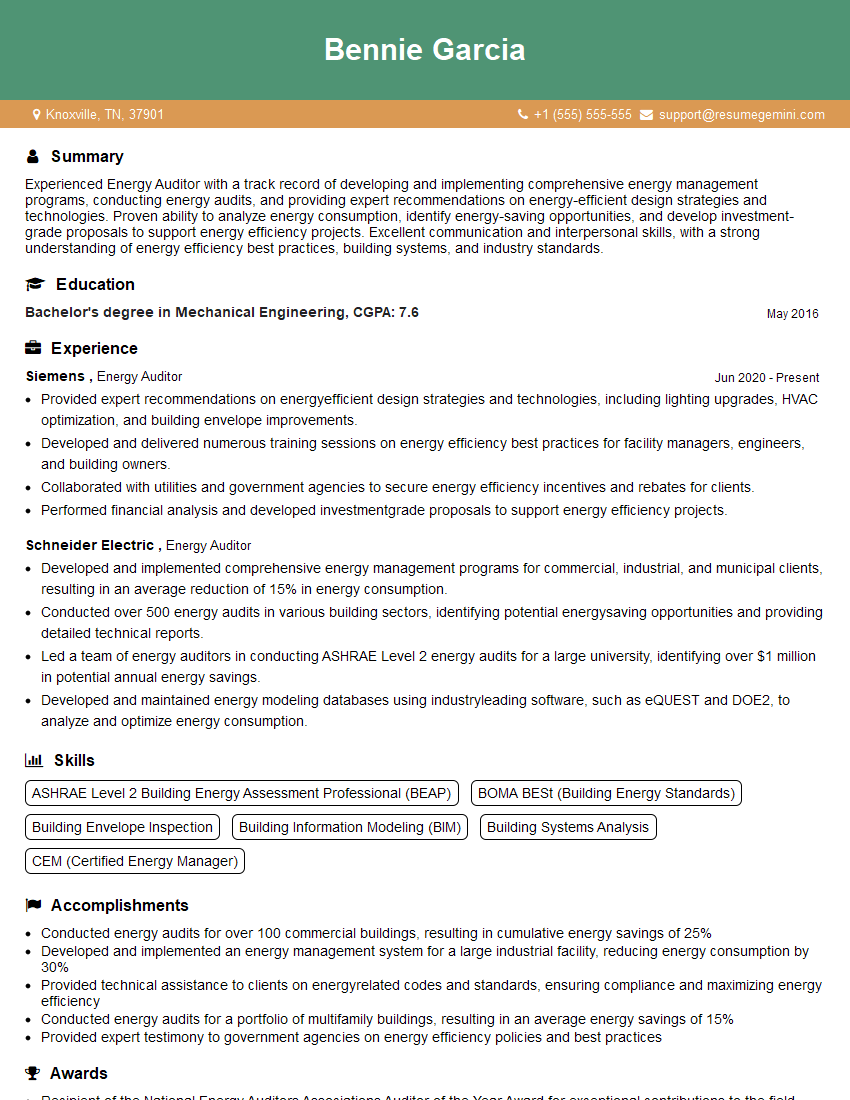
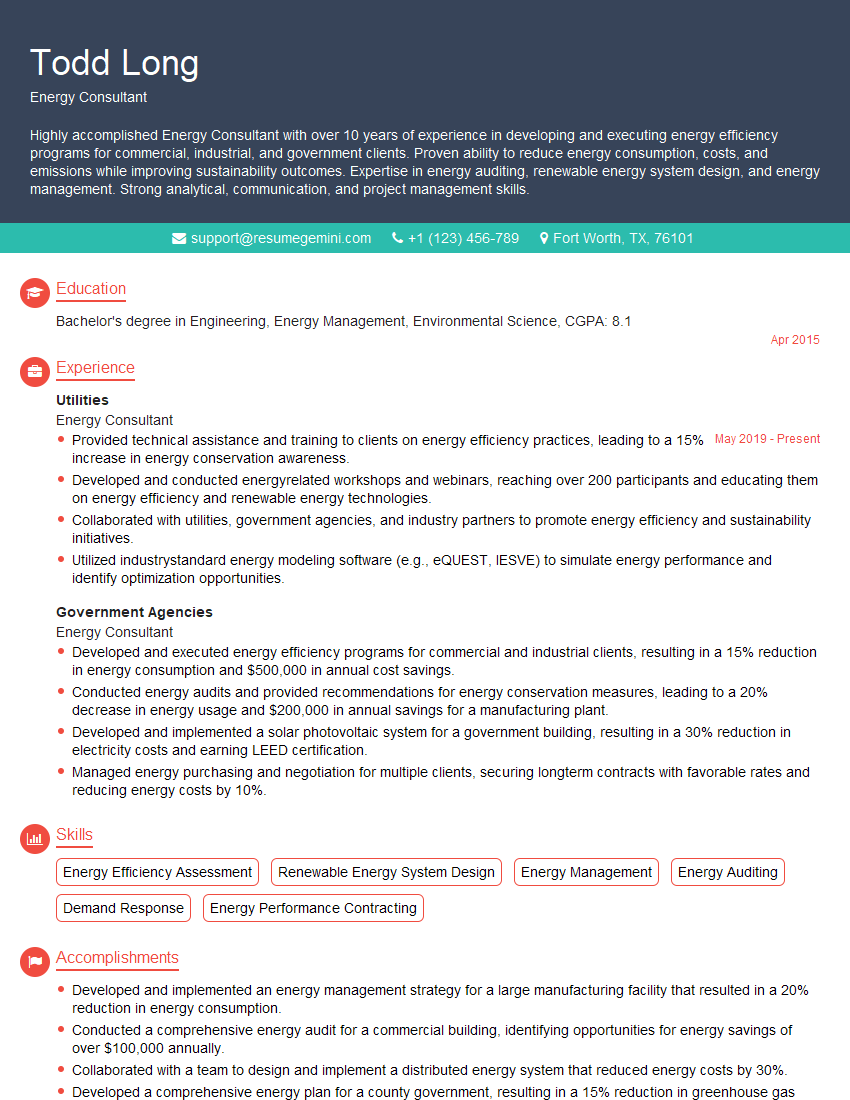
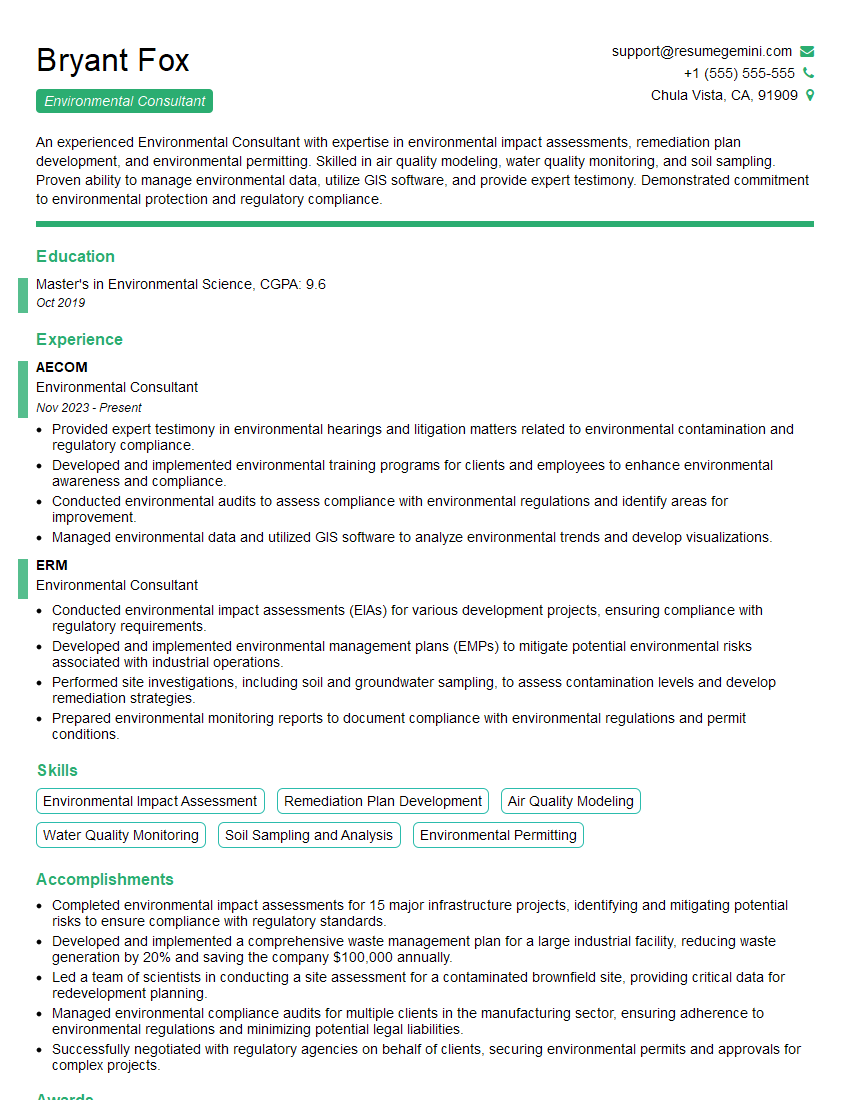
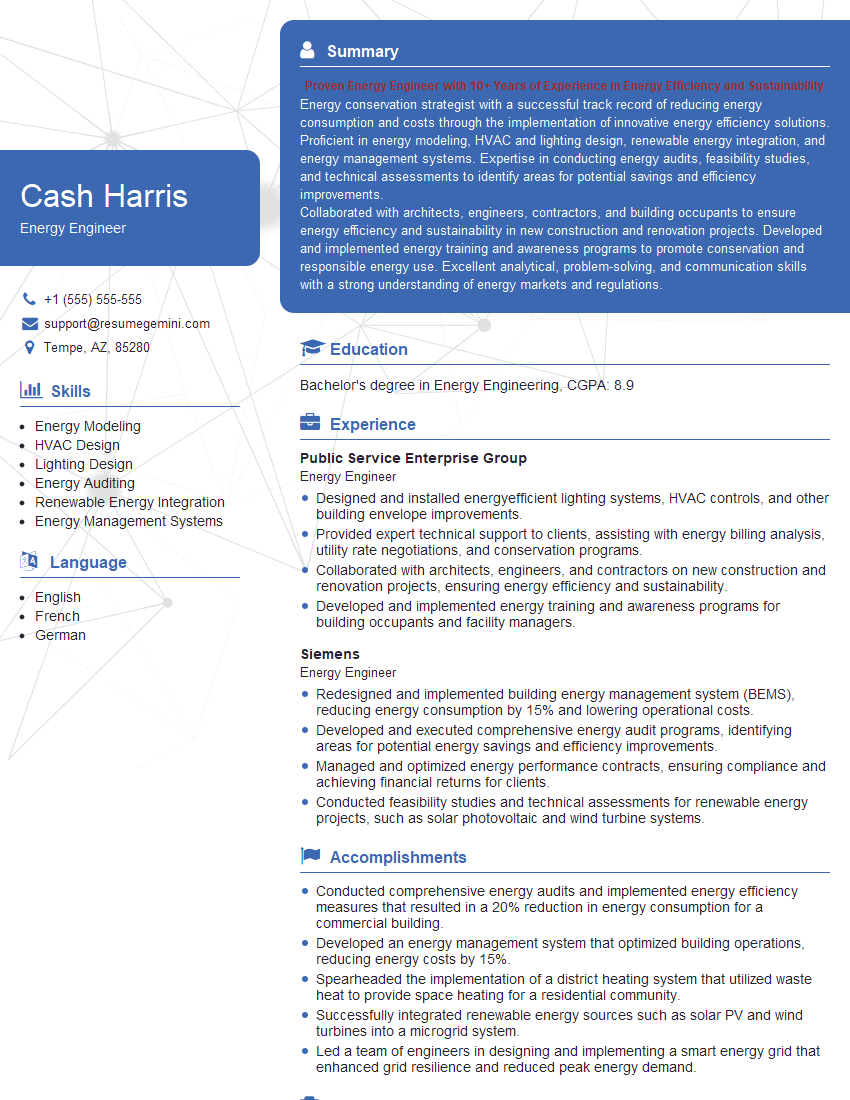
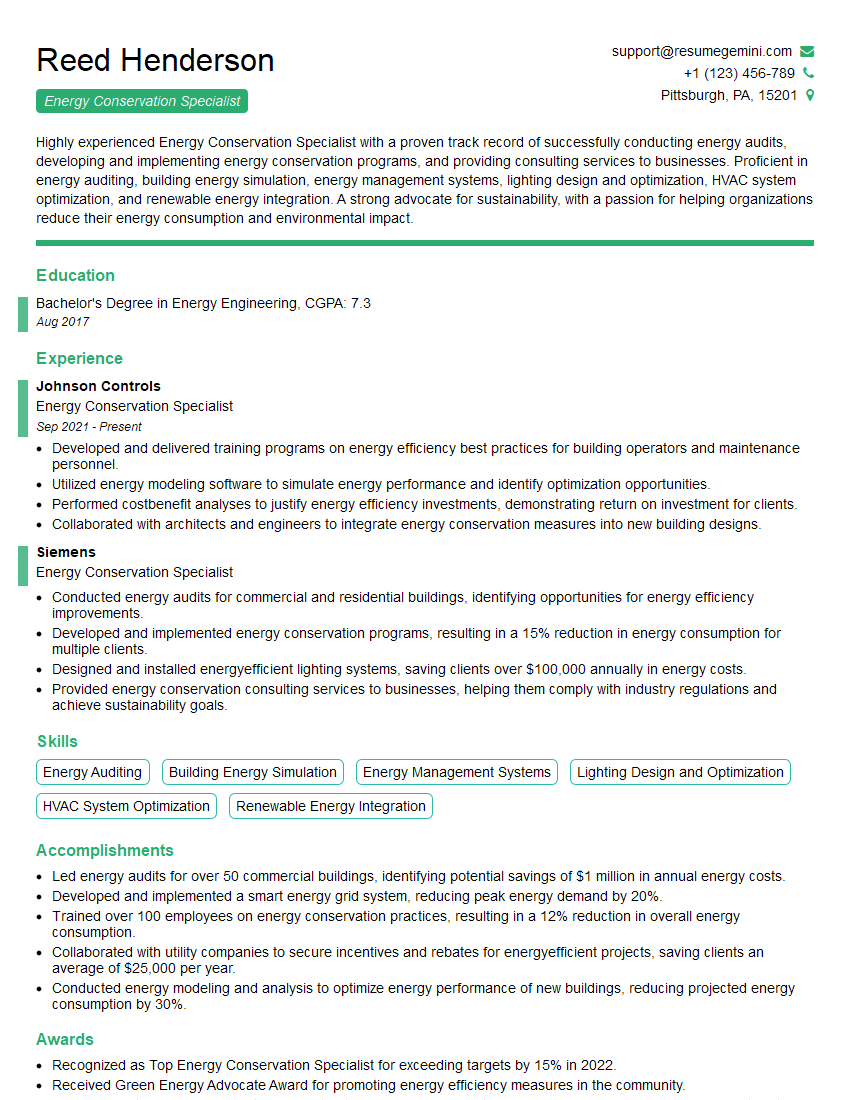
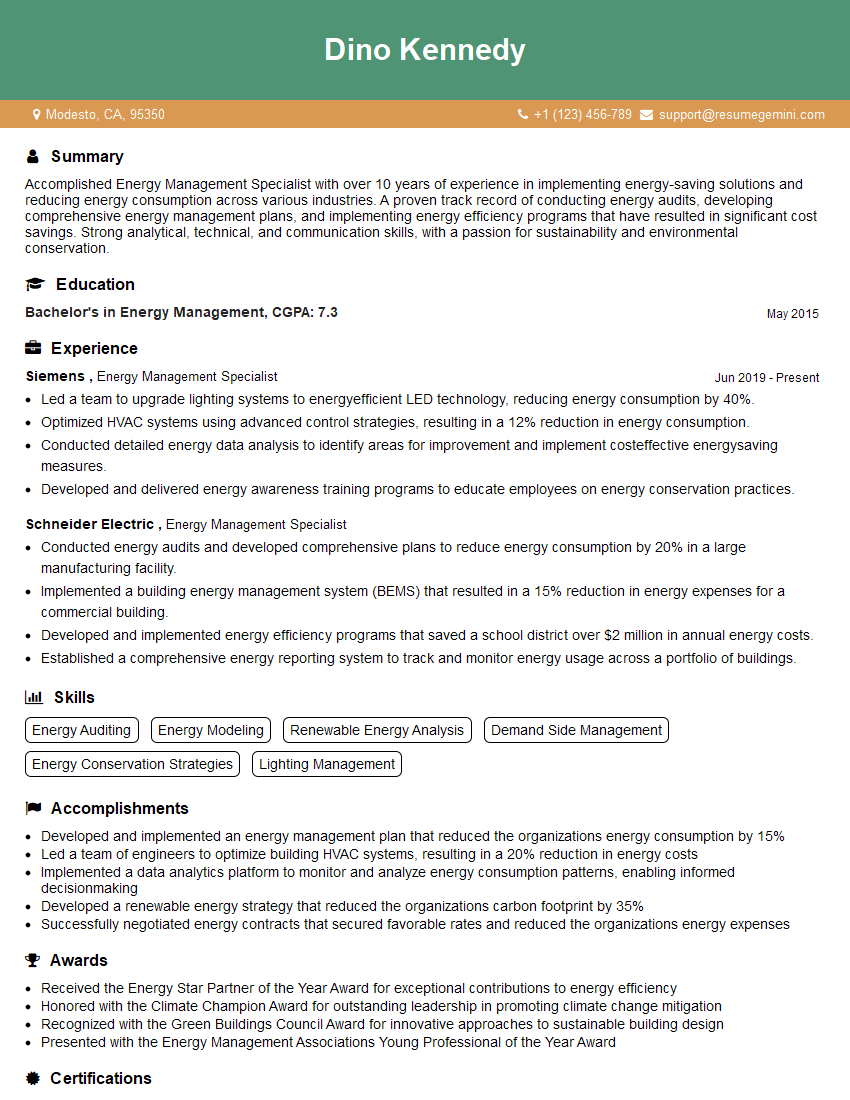
Mastering the ASHRAE Level 1 Energy Auditor certification significantly enhances your career prospects in the growing field of sustainable building practices. It opens doors to rewarding roles with increased earning potential and the opportunity to contribute to a greener future. To maximize your chances of landing your dream job, crafting a compelling and ATS-friendly resume is crucial. ResumeGemini is a trusted resource that can help you build a professional and impactful resume that showcases your skills and experience effectively. Examples of resumes tailored to ASHRAE Level 1 Energy Auditor professionals are available to guide you in this process.

Explore more articles
Users Rating of Our Blogs
Share Your Experience
We value your feedback! Please rate our content and share your thoughts (optional).
What Readers Say About Our Blog
Very informative content, great job.
good