Interviews are more than just a Q&A session—they’re a chance to prove your worth. This blog dives into essential ASME Certification in Boiler and Pressure Vessel Inspection interview questions and expert tips to help you align your answers with what hiring managers are looking for. Start preparing to shine!
Questions Asked in ASME Certification in Boiler and Pressure Vessel Inspection Interview
Q 1. Explain the difference between ASME Section VIII Division 1 and Division 2.
ASME Section VIII, dealing with pressure vessels, offers two distinct design approaches: Division 1 and Division 2. Division 1 is a rules-based approach, providing prescriptive design rules and readily available formulas. Think of it as a cookbook – you follow the recipes, and if you do so correctly, you’ll get a safe pressure vessel. It’s simpler to use and widely applied for common pressure vessel designs. Division 2, conversely, is a more performance-based approach. It allows for greater flexibility in design, enabling engineers to use advanced analysis techniques like Finite Element Analysis (FEA) to demonstrate the vessel’s structural integrity. This requires a deeper understanding of structural mechanics and engineering principles. It’s often preferred for complex geometries or demanding operating conditions where the limitations of Division 1’s rules might be restrictive. Imagine a bespoke tailor-made suit versus off-the-rack clothing; Division 2 provides that custom fit, but at a cost of increased design complexity and analysis effort.
In short: Division 1 is simpler, rules-based; Division 2 is more complex, performance-based. The choice depends on the project’s requirements and the designer’s expertise.
Q 2. Describe the process of a typical pressure vessel inspection.
A typical pressure vessel inspection is a multi-stage process aimed at ensuring continued safe operation. It begins with a thorough review of the vessel’s design documentation, operational history, and maintenance records. This helps identify potential areas of concern. Next, a visual inspection is performed, checking for obvious defects like corrosion, dents, or leaks. This often includes close-up examination of welds, nozzles, and supports. Then, Non-Destructive Testing (NDT) methods, such as ultrasonic testing (UT) or radiographic testing (RT), might be employed to detect internal flaws invisible to the naked eye. The extent of NDT depends on the vessel’s criticality and operating conditions. Following NDT, dimensional measurements are taken to verify that the vessel hasn’t undergone significant deformation. Finally, a detailed report is generated, summarizing the findings and recommending necessary repairs or maintenance actions. This entire process requires qualified inspectors with relevant ASME certifications, ensuring compliance with relevant codes and standards.
Imagine a doctor’s check-up: reviewing medical history, visual examination, advanced testing (like X-rays), and a final diagnosis with treatment recommendations. The pressure vessel inspection follows a similar systematic approach for ensuring safe operation.
Q 3. What are the key requirements for a pressure vessel’s safety relief valves?
Safety relief valves (SRVs) are crucial for protecting pressure vessels from overpressure. ASME Section VIII mandates specific requirements for their design, selection, and installation. Key requirements include:
- Capacity: SRVs must be sized to adequately relieve the vessel’s contents under all anticipated overpressure scenarios, preventing catastrophic failure.
- Set Pressure: The valve must open at a pressure below the vessel’s maximum allowable working pressure (MAWP) to provide sufficient safety margin.
- Testing: Regular testing, typically annually, is needed to verify valve functionality and proper operation. This might include lifting the valve manually or using a pressure test to ensure it opens at the correct set pressure.
- Location & Installation: Proper location and installation are critical to prevent blockages or interferences. The piping and discharge system must be designed to safely handle the released contents.
- Material Compatibility: The SRV materials must be compatible with the vessel’s contents to prevent corrosion or degradation.
Ignoring these requirements can lead to equipment damage, environmental hazards, and even serious injuries. Properly functioning SRVs are paramount for pressure vessel safety.
Q 4. How do you interpret and apply ASME Section IX welding codes?
ASME Section IX covers welding and brazing qualifications. It establishes procedures and qualifications for welders, welding processes, and materials used in pressure vessel fabrication. Interpreting and applying Section IX involves understanding the various welding processes (e.g., SMAW, GMAW, GTAW), selecting appropriate base metals and filler metals, and ensuring that welders possess valid certifications demonstrating their proficiency. This involves reviewing qualification records, procedure specifications (PQRs and WPSs), and the results of welder performance qualifications (WPQ).
For example, if a project requires welding carbon steel using the Gas Metal Arc Welding (GMAW) process, Section IX will specify the required welder qualifications (WPQ), the necessary procedure qualification record (PQR), and the corresponding welding procedure specification (WPS). These documents detail the specific parameters (e.g., voltage, current, shielding gas) that must be followed during welding to ensure acceptable weld quality. Failure to adhere to Section IX can result in substandard welds, leading to potential vessel failures. Thus, rigorous adherence to these codes is crucial.
Q 5. What are the common types of Non-Destructive Testing (NDT) used in boiler and pressure vessel inspection?
Several Non-Destructive Testing (NDT) methods are commonly used in boiler and pressure vessel inspections. These methods allow for the detection of flaws without damaging the component.
- Radiographic Testing (RT): Uses X-rays or gamma rays to reveal internal flaws. Think of it as a detailed X-ray of the vessel.
- Ultrasonic Testing (UT): Uses high-frequency sound waves to detect internal flaws. It’s excellent for detecting cracks and other discontinuities.
- Magnetic Particle Testing (MT): Uses magnetic fields to detect surface and near-surface cracks in ferromagnetic materials. It’s like using a magnet to find tiny cracks.
- Liquid Penetrant Testing (PT): Uses a dye to reveal surface-breaking cracks. This method is similar to using a colored liquid to highlight any visible breaks on the surface.
- Visual Inspection (VT): A fundamental method involving thorough visual examination to detect macroscopic defects.
The choice of NDT method depends on the type of flaw expected, the material being inspected, and the accessibility of the inspection area.
Q 6. Explain the importance of hydrostatic testing in pressure vessel integrity.
Hydrostatic testing is a crucial non-destructive examination method to verify the integrity of a pressure vessel. It involves filling the vessel with water (or another suitable liquid) and pressurizing it to a pressure exceeding its MAWP. This pressure is maintained for a specified duration to assess the vessel’s ability to withstand the designed pressure. Any leaks or deformations indicate weaknesses in the vessel’s structure, necessitating repairs or rejection. Hydrostatic testing provides a comprehensive assessment of the vessel’s overall strength and integrity, giving confidence in its ability to handle its intended operating pressures. It’s a critical step in ensuring safety and compliance.
Consider it like a stress test for the vessel; it pushes the vessel to its limits to detect any latent weaknesses before it enters service.
Q 7. What are the limitations of different NDT methods?
Each NDT method has its limitations:
- RT: Can be limited by material thickness (thicker materials are harder to penetrate) and can be expensive and time-consuming.
- UT: Can be challenging in complex geometries and requires skilled operators for accurate interpretation.
- MT: Only effective on ferromagnetic materials and primarily detects surface and near-surface defects.
- PT: Only detects surface-breaking cracks and requires careful cleaning and preparation.
- VT: Limited to detecting surface flaws readily visible to the naked eye, unable to detect internal defects.
Understanding these limitations is vital for selecting appropriate NDT methods and interpreting the results accurately. Often, a combination of NDT methods is used to provide a more comprehensive assessment of the pressure vessel’s condition.
Q 8. How do you handle discrepancies found during an inspection?
Handling discrepancies during an inspection is a crucial aspect of ensuring pressure vessel safety. My approach involves a systematic process starting with careful documentation. I meticulously record the nature, location, and severity of each discrepancy using photographs and detailed written descriptions. This detailed documentation is crucial for traceability and analysis.
Next, I classify the discrepancy based on its potential impact on safety. Minor discrepancies, like surface imperfections that don’t compromise structural integrity, might only require monitoring during subsequent inspections. More significant discrepancies, such as corrosion, cracks, or deformation, necessitate immediate action.
For critical discrepancies, I initiate a thorough investigation to determine the root cause. This may involve metallurgical testing, non-destructive examination (NDE) techniques like ultrasonic testing or radiography, and consultation with engineering experts. Based on the investigation, I propose corrective actions, which could range from localized repairs to complete component replacement. All actions taken are documented and reported to the owner/operator, with recommendations for further inspection and maintenance.
For example, discovering significant pitting corrosion in a boiler drum would lead to a detailed corrosion analysis to assess the remaining wall thickness and determine the extent of the damage. This would be followed by a repair strategy, perhaps involving weld repair and subsequent NDE verification, and adjustments to the inspection schedule. The entire process is documented and communicated transparently with the client to ensure complete understanding and compliance.
Q 9. Describe your experience with different types of pressure vessels.
Throughout my career, I’ve inspected a wide variety of pressure vessels, encompassing various designs, materials, and operating conditions. My experience includes:
- Horizontal and Vertical Pressure Vessels: These are commonly used for storage and processing in chemical, petrochemical, and oil & gas industries. I’ve inspected vessels ranging from small storage tanks to large reactors, focusing on issues like corrosion, weld integrity, and nozzle attachments.
- Air Receivers: These compressed-air storage tanks require careful inspection for internal corrosion and proper safety relief valve function. I’ve worked on inspections involving different materials and designs, focusing on the risk of catastrophic failure due to overpressure.
- Heat Exchangers: These vessels often experience thermal fatigue and corrosion due to temperature variations and chemical exposure. My experience includes inspecting tube-and-shell, plate-and-frame, and other types of heat exchangers, paying attention to tube integrity and fouling issues.
- Cryogenic Tanks: These specialized pressure vessels require particular attention to material compatibility at low temperatures. I’ve assessed the integrity of welds, insulation, and support structures in cryogenic tanks, emphasizing safety procedures and specialized NDE techniques.
My experience extends to vessels made from various materials, including carbon steel, stainless steel, and specialized alloys, each requiring different inspection methods and considerations.
Q 10. Explain the concept of allowable stress in pressure vessel design.
Allowable stress in pressure vessel design is a crucial concept that defines the maximum stress a material can withstand under specific operating conditions while maintaining a sufficient safety margin. It’s determined based on the material’s yield strength, ultimate tensile strength, and other material properties, as well as the operating temperature. The allowable stress is significantly lower than the yield strength to account for various factors like stress concentrations, potential imperfections, and uncertainties in the design and manufacturing process.
ASME Section VIII, Division 1, provides detailed formulas and tables to determine allowable stresses for different materials and temperatures. The allowable stress values are adjusted based on the joint efficiency and the applicable design code. For example, a weld joint will typically have a lower joint efficiency compared to a seamless vessel, resulting in a reduced allowable stress for the design.
Using a lower allowable stress is fundamental to ensuring a safety factor; it creates a buffer zone between normal operating stress and the material’s yield point, preventing yield and potential failure. This margin of safety is critical for ensuring long-term operational reliability and protecting against unforeseen circumstances such as overpressure events or unexpected stress fluctuations.
Q 11. What are the different types of boiler failures and their causes?
Boiler failures can have devastating consequences, so understanding their causes is critical. Different types of failures include:
- Tube Failures: Often caused by corrosion (e.g., pitting, caustic embrittlement), overheating due to insufficient water flow, or fatigue from thermal cycling. These can lead to leaks or explosions.
- Drum Failures: These are usually attributed to corrosion, overheating, or stress corrosion cracking. The failure mechanism might involve bulging, cracking, or catastrophic rupture.
- Weld Failures: Poor welding techniques, inadequate inspection, or stress concentration around welds can result in cracking or complete weld failure under pressure.
- Furnace Failures: These can involve structural failures due to overheating, corrosion, or improper maintenance, potentially leading to leaks or explosions.
- Safety Valve Malfunctions: Failure of the safety valve to open properly can lead to dangerous overpressure situations. Regular inspection and maintenance are critical to prevent this type of failure.
Root cause analysis is essential to prevent recurrence. It can involve metallurgical examination, reviewing operating logs, and examining inspection history. For instance, discovering multiple instances of tube failures might indicate a water treatment problem or a flow distribution issue within the boiler.
Q 12. How do you determine the appropriate inspection frequency for a pressure vessel?
Determining the appropriate inspection frequency for a pressure vessel depends on several factors, including:
- Vessel type and design: Complex designs or those subjected to harsh operating conditions may require more frequent inspections.
- Material of construction: Certain materials are more susceptible to corrosion or other degradation mechanisms than others.
- Operating conditions: High pressure, high temperature, or corrosive environments necessitate more frequent inspections.
- Inspection history: Previous findings of corrosion, cracking, or other defects would call for more frequent monitoring.
- Applicable Codes and Standards: ASME codes often provide guidelines for inspection frequencies, but they should be adapted based on the vessel’s specific circumstances.
A risk-based approach is often used. High-risk vessels, such as those in hazardous locations or handling toxic materials, will have much shorter inspection intervals. A detailed risk assessment should consider potential failure consequences, probability of failure, and the severity of its impact. This data is used to create a tailored inspection plan.
In practice, this involves careful consideration of all the factors above, often leading to a documented inspection plan outlining the frequency, scope, and methods for each inspection. Regular reviews and updates to the plan are crucial based on ongoing operational performance and the results of previous inspections.
Q 13. What are your experiences with different ASME codes and standards?
My experience encompasses a range of ASME codes and standards, primarily focusing on Section VIII, Division 1 and Division 2 for pressure vessels, and Section I for power boilers. I’m proficient in interpreting the requirements of these codes, including:
- ASME Section VIII, Division 1: Rules for Construction of Pressure Vessels. I have extensive experience applying the design rules, fabrication requirements, inspection procedures, and acceptance criteria outlined in this code.
- ASME Section VIII, Division 2: Alternative Rules for Construction of Pressure Vessels. This code uses a more analytical design approach and provides flexibility for advanced designs. I’ve applied this code in projects where a more sophisticated approach is required.
- ASME Section I: Power Boilers. My work with power boilers includes applying the code’s requirements for construction, inspection, and maintenance, with emphasis on safety and compliance.
- ASME B31.1: Power Piping. While not directly related to pressure vessel inspection, understanding this code is important for ensuring proper integration of pressure vessels into piping systems.
I understand the nuances between the different divisions and sections, and I can apply the appropriate code requirements based on the specific application and the client’s needs. This includes understanding the differences between design-by-rule and design-by-analysis approaches, and selecting the most appropriate methods for inspection and testing.
Q 14. Explain your understanding of fatigue and creep in pressure vessels.
Fatigue and creep are significant degradation mechanisms in pressure vessels, especially those operating under cyclical loading or high temperatures. Understanding these phenomena is crucial for predicting service life and preventing failure.
Fatigue is the progressive and localized structural damage that occurs when a material is subjected to cyclic loading. Each cycle induces microscopic damage, eventually leading to crack initiation and propagation. High-cycle fatigue occurs over numerous cycles at lower stress levels, while low-cycle fatigue occurs over fewer cycles at higher stress levels. In pressure vessels, fatigue can be caused by pressure fluctuations, thermal cycling, or vibrations.
Creep is the time-dependent deformation of a material under sustained stress at elevated temperatures. At high temperatures, the material’s microstructure changes, leading to permanent deformation even under constant load. Creep can result in gradual thinning of vessel walls, leading to eventual failure. This is particularly relevant for boilers and high-temperature pressure vessels.
Both fatigue and creep are accelerated by high temperatures and corrosive environments. During inspections, I consider these degradation mechanisms, employing NDE techniques such as ultrasonic testing to detect cracks and measuring wall thicknesses to assess creep damage. These assessments inform the determination of remaining service life and needed maintenance or replacement schedules.
Q 15. Describe your process for documenting inspection findings.
My process for documenting inspection findings is meticulous and follows a standardized format to ensure clarity, traceability, and legal compliance. It begins with a pre-inspection planning phase where I define the scope of work and the relevant ASME codes and standards. During the inspection, I use a combination of checklists, photographs, and detailed written observations to record all findings.
Specifically, I use a digital inspection reporting system that allows me to input data directly in the field. This system automatically creates a unique report number and timestamps each entry. The report includes:
- Detailed descriptions of any deficiencies or non-compliances: This includes the location, nature, and severity of the issue, referencing specific ASME sections when applicable. For example, I might note: “Section VIII, Division 1, paragraph UW-16(a) – Weld shows evidence of undercutting.”
- High-resolution photographs and/or sketches: Visual evidence is critical, providing irrefutable documentation of the inspection findings. I ensure images are properly labeled and included in the report.
- Measurements and dimensions: Precise measurements are recorded for any defects, such as crack lengths or corrosion depths. This allows for accurate assessment of the severity and potential risks.
- Recommendations for repair or corrective actions: Based on the findings, I provide specific recommendations for remediation, adhering to the requirements of ASME codes and standards. This section may also include suggested repair procedures and material specifications.
Finally, the report is reviewed and approved before being submitted to the client. A copy is maintained in my records and follows established record-keeping procedures to ensure long-term accessibility.
Career Expert Tips:
- Ace those interviews! Prepare effectively by reviewing the Top 50 Most Common Interview Questions on ResumeGemini.
- Navigate your job search with confidence! Explore a wide range of Career Tips on ResumeGemini. Learn about common challenges and recommendations to overcome them.
- Craft the perfect resume! Master the Art of Resume Writing with ResumeGemini’s guide. Showcase your unique qualifications and achievements effectively.
- Don’t miss out on holiday savings! Build your dream resume with ResumeGemini’s ATS optimized templates.
Q 16. How do you ensure the safety of personnel during an inspection?
Ensuring personnel safety during an inspection is paramount. My approach is proactive and multifaceted, focusing on hazard identification and risk mitigation. Before commencing any inspection, I conduct a thorough site-specific risk assessment, identifying potential hazards such as confined spaces, high-pressure systems, hot surfaces, and hazardous materials. This involves understanding the process operating conditions and reviewing any relevant Safety Data Sheets (SDS).
Based on the risk assessment, I implement control measures that include:
- Lockout/Tagout procedures: Ensuring that all energy sources are isolated and secured before accessing equipment for inspection.
- Personal Protective Equipment (PPE): Requiring and utilizing appropriate PPE, such as safety glasses, hard hats, safety shoes, and respirators, depending on the site conditions.
- Confined space entry permits: Adhering to strict procedures for entry into confined spaces, including atmospheric testing and having standby personnel.
- Emergency response plan: Ensuring familiarity with the client’s emergency response plan and having clear communication protocols.
- Training and competency: Verifying that all personnel involved in the inspection possess the necessary training and qualifications for the task.
I regularly review and update safety procedures to maintain compliance with best practices and relevant regulations. Safety is not an afterthought but an integral part of every inspection. I’ve personally prevented several potential incidents by noticing unsafe practices and immediately taking corrective actions, including stopping work until conditions were safe.
Q 17. What is your experience with pressure vessel repairs and modifications?
I have extensive experience with pressure vessel repairs and modifications, encompassing various types of repairs, including weld repairs, material replacements, and modifications to existing designs. My work has spanned numerous industries, including chemical processing, power generation, and food processing. I’m thoroughly familiar with the requirements of ASME Section VIII, Division 1 and Division 2, which govern pressure vessel construction and repair.
My experience includes:
- Evaluating the extent of damage: Assessing the severity of damage using non-destructive testing methods (NDT) such as radiography, ultrasonic testing, and liquid penetrant testing.
- Developing repair procedures: Creating detailed repair procedures that conform to ASME codes and are reviewed and approved by qualified engineers.
- Overseeing the repair process: Supervising the repair work, ensuring compliance with the approved procedures and maintaining accurate documentation.
- Post-repair inspections: Conducting thorough inspections after the repair to verify its effectiveness and compliance with ASME requirements.
For example, I was once involved in a repair project where a significant crack was discovered in a reactor vessel. After thorough investigation and testing, we developed a repair strategy that involved grinding out the crack, implementing pre-heating and post-weld heat treatment, and performing rigorous NDT inspections to ensure the integrity of the repair. The project was successfully completed, ensuring the vessel’s continued safe operation.
Q 18. Describe your understanding of corrosion and its impact on pressure vessels.
Corrosion is a significant threat to the integrity of pressure vessels, potentially leading to catastrophic failures. My understanding of corrosion encompasses various types, causes, and mitigation strategies. Corrosion is essentially the deterioration of a material due to a chemical or electrochemical reaction with its environment. There are many forms of corrosion, including uniform corrosion (even degradation across the surface), pitting corrosion (localized attack), stress corrosion cracking (corrosion under stress), and crevice corrosion (in confined spaces).
The impact on pressure vessels is severe; reduced wall thickness weakens the vessel, decreasing its pressure-containing capabilities. This can lead to leaks, and in extreme cases, catastrophic rupture. I assess corrosion by visual inspection, and sometimes employ NDT methods like ultrasonic testing to determine the depth and extent of corrosion. Factors influencing corrosion include the material of the vessel, the operating environment (temperature, pressure, and the presence of chemicals), and the vessel’s design.
Mitigation strategies are key and include:
- Material selection: Choosing corrosion-resistant materials is fundamental. Stainless steels, for example, offer excellent corrosion resistance in many environments.
- Protective coatings: Applying coatings such as paints or linings to create a barrier between the vessel and the corrosive environment.
- Corrosion inhibitors: Introducing chemicals into the operating environment to slow down corrosion processes.
- Regular inspections: Frequent and thorough inspections are critical to detect corrosion at an early stage before significant damage occurs.
Failing to address corrosion effectively can have devastating consequences, leading to costly repairs, production downtime, and potentially, serious accidents. Therefore, understanding corrosion mechanisms and implementing appropriate mitigation strategies is vital.
Q 19. How familiar are you with the requirements for pressure vessel certification?
I am intimately familiar with the requirements for pressure vessel certification, particularly those outlined in ASME Section VIII, Division 1 and Division 2. These codes provide detailed specifications for the design, fabrication, inspection, and testing of pressure vessels to ensure their safe operation. Understanding these codes is crucial for ensuring compliance and maintaining the integrity of pressure vessels. This includes knowledge of various design rules, material specifications, welding procedures, and inspection and testing requirements.
My familiarity extends to the documentation necessary for certification, including design calculations, material test reports, welding procedure specifications, inspection reports, and the final certification documents themselves. I understand the role of authorized inspectors in witnessing critical processes and verifying compliance. I have direct experience in assisting manufacturers in obtaining certification, ensuring the processes are meticulously followed to meet the rigorous standards set forth by ASME.
Furthermore, I’m also aware of the variations in requirements based on the specific application and industry, as well as the need to consider other relevant codes and regulations that may apply in conjunction with ASME. Staying updated on code revisions and interpretations is also essential for maintaining my professional competency and ensuring clients remain compliant.
Q 20. How do you handle pressure vessel inspection reports?
Pressure vessel inspection reports are handled with meticulous care, ensuring accuracy, completeness, and secure storage. After completion of an inspection, the report is thoroughly reviewed for accuracy and consistency. This includes verifying that all findings are documented clearly, photographs are appropriately labeled and included, and recommendations are well-defined and actionable.
Once approved, the report is distributed to the relevant parties, typically the client and any other stakeholders involved. The distribution method depends on the client’s preferences and may involve electronic delivery or hard copies. A copy is always archived according to the company’s record retention policies, ensuring its availability for future reference. For electronic reports, secure storage and access control measures are in place to prevent unauthorized modification or access.
Furthermore, I ensure that all reports are properly identified with unique report numbers and timestamps, facilitating easy retrieval and traceability. In case of identified discrepancies or clarifications needed, a formal amendment process is followed, ensuring that all revisions are clearly documented and version-controlled. The process of handling these reports emphasizes transparency and maintainability and contributes to the overall safety and integrity of the inspected pressure vessels.
Q 21. What is your experience with different types of pressure vessel materials?
My experience encompasses a wide range of pressure vessel materials, including carbon steels, low-alloy steels, stainless steels (austenitic, ferritic, and martensitic), nickel alloys, and other specialized materials. Each material has unique properties regarding strength, corrosion resistance, and weldability, which must be carefully considered during design and fabrication. I understand the importance of selecting the appropriate material based on the operating conditions of the pressure vessel.
For instance, carbon steels are commonly used for lower-pressure applications, while stainless steels are preferred where corrosion resistance is paramount. Nickel alloys are chosen for applications involving high temperatures or extremely corrosive environments. My knowledge extends to material specifications, mechanical properties, and the associated testing procedures to verify material compliance with ASME standards.
In practice, I utilize material test reports, which provide crucial information regarding the chemical composition, mechanical properties, and the results of various non-destructive tests conducted on the materials used in the construction of the pressure vessel. This information allows for verification of compliance with the specified material grades and assures that the material used is suitable for the intended application, thus contributing to overall safety and reliability of the vessel.
Q 22. Explain your experience with using inspection software or tools.
Throughout my career, I’ve extensively utilized various inspection software and tools, ranging from basic data logging applications to sophisticated 3D modeling and analysis programs. For example, I’ve used software like Inspire for creating detailed inspection reports, incorporating images and measurements directly into the documentation. This significantly streamlines the reporting process and reduces the risk of errors. Other tools I’m proficient in include ultrasonic testing (UT) software for analyzing flaw detection data, and specialized software for managing Non-Destructive Examination (NDE) results, ensuring that all data is accurately captured, analyzed, and stored in compliance with ASME standards. My experience extends to using mobile data collection apps in the field, improving efficiency by eliminating manual data entry and ensuring real-time access to inspection data.
In one project involving a large pressure vessel, using 3D modeling software allowed me to virtually inspect areas that were difficult to physically access, significantly improving the accuracy and thoroughness of the inspection. This led to early detection of a minor flaw that could have potentially escalated into a major issue if missed.
Q 23. How would you address a situation where a critical component fails inspection?
Discovering a critical component failure during inspection is a serious event demanding a structured and immediate response. My approach is based on a multi-step process prioritising safety and compliance. First, I would immediately isolate the failed component to prevent further damage or potential hazards. This might involve shutting down the system or isolating the affected section.
Second, I would meticulously document the failure, including detailed photographs, measurements, and any observed damage. This documentation would be crucial for root cause analysis and for communicating with the relevant stakeholders (operators, engineers, and regulatory bodies).
Third, I’d initiate a thorough root cause analysis, involving an investigation to identify the underlying causes of the failure. This could involve material testing, metallurgical analysis, and reviewing operational records. This step is vital to prevent similar failures in the future.
Fourth, depending on the severity of the failure, I would recommend appropriate corrective actions. This could range from simple repairs to complete component replacement. All repairs and replacements must adhere strictly to ASME standards and receive appropriate approvals.
Finally, I would ensure a comprehensive report is filed detailing the failure, the root cause analysis, and the corrective actions taken. This report is critical for regulatory compliance and for improving future inspection and maintenance practices. Think of it as a detailed case study for preventative maintenance.
Q 24. Describe your understanding of risk assessment in pressure vessel inspection.
Risk assessment in pressure vessel inspection is paramount. It’s a systematic process to identify potential hazards, analyze their likelihood, and determine the potential consequences. We use this to prioritize inspections and allocate resources effectively. For example, a pressure vessel operating at high temperature and pressure with a history of corrosion would receive a higher risk assessment than a vessel operating at low pressure and temperature in a less demanding environment.
A typical risk assessment involves identifying potential failure modes (e.g., corrosion, fatigue, cracking), assessing the likelihood of each failure mode occurring, and evaluating the consequences of failure (e.g., equipment damage, environmental release, personal injury). This information is then used to calculate a risk priority number (RPN), which helps prioritize inspections and maintenance activities. This helps allocate resources efficiently, focusing on the most critical areas first. We might use a risk matrix to visually represent the RPN and guide decision-making.
Consider a scenario where a risk assessment reveals high corrosion in a particular section of a pressure vessel. This would warrant immediate attention and possibly necessitate more frequent inspections, or even a scheduled replacement. This preventative approach minimizes risk and protects against catastrophic failures.
Q 25. Explain the importance of maintaining accurate records during inspections.
Maintaining accurate records is crucial for several reasons; it’s the backbone of ensuring compliance, managing risks, and improving future operations. Think of inspection records as a detailed history of the vessel’s health. Incomplete or inaccurate records can lead to costly mistakes, potential safety hazards, and even legal issues. ASME standards mandate thorough record keeping, and failing to adhere to these standards can result in serious consequences.
Accurate records include details about the inspection date, the inspector’s qualifications, the methods used, the findings, any repairs or replacements made, and the final inspection report. These records are essential for demonstrating compliance with regulations, for tracking the vessel’s condition over time, and for identifying potential problems before they escalate into major failures. Digital record keeping systems, when properly secured, offer advantages in terms of data organization, accessibility, and search capabilities. Imagine trying to search for a specific finding in a stack of paper records versus a few keystrokes in a database.
In a real-world scenario, a well-maintained record might show a gradual increase in corrosion in a specific area over several inspections. This early warning could lead to preventative maintenance, avoiding a catastrophic failure later on.
Q 26. How do you stay updated on changes in ASME codes and standards?
Staying current with ASME codes and standards is an ongoing process that demands commitment. I achieve this through a multifaceted approach. First, I am a member of ASME, ensuring I receive regular updates and notifications about changes and new publications. Second, I actively participate in industry conferences and workshops to learn about the latest advancements in pressure vessel inspection and best practices from leading experts. Third, I subscribe to relevant industry journals and publications that regularly publish articles about code updates and interpretations.
Furthermore, I engage in continuous professional development (CPD) activities. This includes attending training courses focused on code updates and relevant technical advancements. These courses often involve hands-on training with the latest inspection techniques and technologies. This continuous learning ensures I’m always abreast of evolving standards and technologies, enhancing my expertise and ensuring I’m adhering to the latest best practices.
In essence, keeping updated is not just a matter of reading documents; it’s about active engagement with the industry and continuous learning. This proactive stance safeguards against outdated practices and ensures safety and compliance.
Q 27. Describe your experience with working with regulatory bodies.
I have extensive experience working with various regulatory bodies, including [mention specific regulatory bodies relevant to your experience, e.g., OSHA, local boiler and pressure vessel inspectors]. This experience involves clear, concise and effective communication; ensuring all inspections and reports are fully compliant with their requirements, and facilitating prompt resolution of any issues that arise. Building a professional and trusting relationship with regulatory bodies is key to ensuring seamless compliance. The process always begins with a thorough understanding of their specific regulations and guidelines.
For instance, I’ve worked with regulatory bodies on several occasions where minor discrepancies were found during an inspection. Rather than simply reporting the issue, I would work collaboratively with them to understand the underlying cause and develop a plan for corrective actions. This collaborative approach fosters a positive working relationship and ensures that any concerns are addressed efficiently and effectively. This approach helps ensure smooth transitions and minimizes potential delays or setbacks.
Q 28. What are your salary expectations?
My salary expectations are commensurate with my experience, qualifications, and the demands of the role. Based on my extensive experience in ASME certified boiler and pressure vessel inspection, and my proven track record of successfully managing complex projects, my salary expectations fall within the range of $[mention salary range] annually. However, I am open to discussing this further based on the specific responsibilities and compensation package offered.
Key Topics to Learn for ASME Certification in Boiler and Pressure Vessel Inspection Interview
- ASME Section VIII, Division 1 & 2: Understand the design rules, construction requirements, and inspection procedures for pressure vessels according to these codes. Be prepared to discuss specific clauses and their practical implications.
- Non-Destructive Examination (NDE) Methods: Master the principles and applications of various NDE techniques like radiography, ultrasonic testing, magnetic particle testing, and liquid penetrant testing. Be ready to explain how these methods detect flaws and ensure vessel integrity.
- Pressure Vessel Failure Analysis: Develop a strong understanding of common failure modes in pressure vessels (e.g., fatigue, corrosion, creep) and the methods used to prevent them. Practice analyzing hypothetical scenarios and identifying potential causes of failure.
- Welding and Weld Inspection: Know the different welding processes, weld defects, and their detection. Be familiar with ASME Section IX and its relevance to pressure vessel construction and inspection.
- Code Interpretations and Addenda: Familiarize yourself with how ASME codes are interpreted and updated through addenda. Understanding this will demonstrate your commitment to staying current with industry best practices.
- Safety Regulations and Compliance: Demonstrate a thorough understanding of relevant safety regulations and compliance procedures related to boiler and pressure vessel inspection. This includes OSHA and other applicable regulations.
- Practical Application of Calculations: Be prepared to solve problems related to pressure vessel design parameters, stress analysis, and material selection. Review relevant formulas and calculation methods.
- Documentation and Reporting: Understand the importance of accurate and thorough documentation in boiler and pressure vessel inspection. Be prepared to discuss report writing and data management best practices.
Next Steps
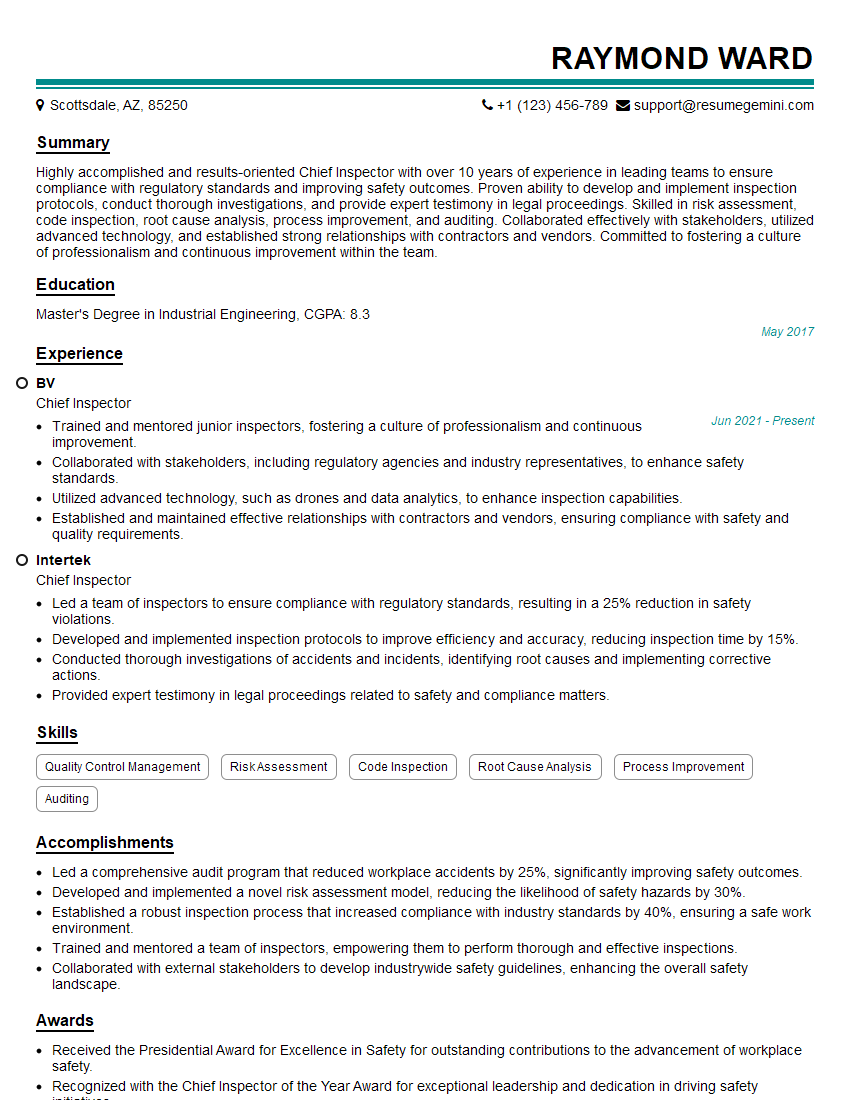
Mastering ASME Certification in Boiler and Pressure Vessel Inspection opens doors to exciting career advancements, offering higher earning potential and increased responsibility within the industry. To maximize your job prospects, it’s crucial to present your skills and experience effectively. Creating an ATS-friendly resume is key to getting your application noticed by recruiters. We highly recommend using ResumeGemini to build a professional and impactful resume that highlights your qualifications for ASME Certified Inspector positions. ResumeGemini offers examples of resumes tailored to ASME Certification in Boiler and Pressure Vessel Inspection to guide you through the process.
Explore more articles
Users Rating of Our Blogs
Share Your Experience
We value your feedback! Please rate our content and share your thoughts (optional).
What Readers Say About Our Blog
Very informative content, great job.
good