Every successful interview starts with knowing what to expect. In this blog, we’ll take you through the top Aspheric Fabrication interview questions, breaking them down with expert tips to help you deliver impactful answers. Step into your next interview fully prepared and ready to succeed.
Questions Asked in Aspheric Fabrication Interview
Q 1. Explain the challenges of fabricating aspheric lenses compared to spherical lenses.
Fabricating aspheric lenses presents significantly more challenges than spherical lenses due to their complex, non-uniform curvature. Spherical lenses have a constant radius of curvature, making their manufacturing relatively straightforward. Aspheric lenses, however, possess a continuously varying radius of curvature, demanding much higher precision and control throughout the manufacturing process.
The key challenges include:
- Precise surface generation: Achieving the desired aspheric surface profile with high accuracy and repeatability is difficult. Even minute deviations from the design can severely impact the optical performance.
- Complex tooling and machining: Specialized tools and equipment are needed, often custom-designed for the specific aspheric lens being manufactured. This drives up the cost and complexity of the process.
- Difficult metrology: Measuring the aspheric surface accurately and efficiently is more challenging than measuring a sphere, requiring advanced metrology techniques.
- Increased susceptibility to errors: Any errors in the fabrication process are amplified due to the complex surface shape, leading to larger deviations from the ideal design and potential performance degradation. For example, a small error in a spherical lens might result in a minor aberration, while the same error in an aspheric lens can lead to a significant distortion.
Q 2. Describe different aspheric fabrication techniques (e.g., diamond turning, grinding, polishing).
Several techniques exist for fabricating aspheric lenses, each with its own advantages and limitations. The choice of technique often depends on factors like the size, material, and required precision of the lens.
- Diamond Turning: This subtractive process uses a diamond tool to precisely machine the aspheric surface on a CNC lathe. It’s suitable for high-precision, relatively small aspheric lenses made from materials that can be easily machined. It offers excellent surface finish and form accuracy. Think of it like a highly precise lathe, but instead of simple shapes, it creates complex curves.
- Grinding and Polishing: This traditional method involves gradually shaping the lens through a series of grinding and polishing steps using progressively finer abrasives. It is versatile and can be used for a wider range of materials and lens sizes. However, achieving high accuracy and surface finish can be time-consuming and challenging.
- Molding/Replicating: This method uses a master aspheric mold to create multiple copies of the lens. It is cost-effective for high-volume production, but the accuracy of the replicated lenses is limited by the accuracy of the master mold. Imagine creating multiple copies of a cookie using a precisely cut cookie cutter.
- Ion Beam Figuring (IBF): A subtractive technique where a beam of ions is used to precisely remove material and create the desired aspheric surface. This method is suitable for creating extremely smooth and precise surfaces, but it can be relatively slow and expensive.
Q 3. What are the key metrology techniques used to inspect aspheric surfaces?
Accurate metrology is crucial for ensuring the quality of aspheric lenses. Several techniques are employed, often in combination:
- Interferometry: This technique uses interference patterns of light to measure the surface profile with nanometer-level accuracy. Different types of interferometry, such as Fizeau or Twyman-Green interferometers, are used depending on the specific needs.
- Profilometry: Techniques like confocal microscopy or stylus profilometry measure the surface topography by scanning a physical probe or using optical methods. These methods can provide high-resolution 3D surface maps.
- Scatterometry: This technique measures the scattered light from the surface to determine its profile and roughness. It’s a non-contact method and can be used for both in-situ and post-process inspection.
- Coordinate Measuring Machines (CMMs): These machines use a physical probe to measure points on the surface, allowing for the reconstruction of the 3D shape. They are suitable for large aspheric lenses but might not achieve the nanometer-level accuracy of interferometry.
Q 4. How do you ensure the accuracy and precision of aspheric fabrication processes?
Ensuring accuracy and precision in aspheric fabrication requires a multifaceted approach:
- Precise CNC machining: Advanced CNC machines with high-precision spindles, linear motors, and advanced control systems are essential. Regular calibration and maintenance are critical.
- High-quality tooling: The diamond tools used in diamond turning must be meticulously designed and maintained. Their wear and tear can significantly affect the surface quality.
- Process control and monitoring: Parameters like cutting speed, feed rate, and tool path must be carefully controlled and monitored during the fabrication process. Real-time feedback from sensors can help identify and correct deviations from the target profile.
- Rigorous metrology: Frequent metrology checks during and after fabrication are crucial to identify and correct any errors. This allows for iterative refinement and ensures the final product meets specifications.
- Material selection: Choosing the right optical material with appropriate mechanical and optical properties is vital. Materials must be homogenous and stable to minimize the impact of material inhomogeneities on the final lens quality.
Q 5. Explain the concept of surface roughness and its impact on aspheric lens performance.
Surface roughness refers to the microscopic irregularities on the surface of the lens. It’s typically measured using parameters like Ra (average roughness) or Rz (maximum peak-to-valley roughness). Even though seemingly small, surface roughness significantly impacts aspheric lens performance.
High surface roughness can lead to:
- Increased scattering of light: This reduces the transmission of light through the lens, decreasing efficiency and impacting image quality.
- Increased light absorption: Rougher surfaces can trap more light, increasing absorption and potentially leading to heating effects.
- Degradation of image quality: Scattering and absorption can introduce artifacts and reduce contrast in the final image.
- Reduced laser damage threshold: For lenses used in high-power laser applications, surface roughness can lower the damage threshold.
Q 6. What are the common defects encountered in aspheric fabrication, and how are they addressed?
Several defects can occur during aspheric fabrication, including:
- Form errors: Deviations from the desired aspheric surface profile. This could be caused by inaccuracies in the machining process or tooling wear.
- Surface roughness errors: Excessively rough surfaces, caused by improper grinding, polishing, or machining parameters.
- Microscopic defects: Scratches, digs, or pits on the surface, often caused by debris or improper handling.
- Material inhomogeneities: Variations in the optical material itself can cause variations in refractive index and impact performance.
Addressing these defects requires careful attention to detail throughout the fabrication process. Techniques such as polishing, ion beam figuring, or even remachining can be employed to correct some defects, depending on their severity and nature. Strict quality control procedures, including meticulous inspection and testing at various stages, are essential to minimize defects.
Q 7. Discuss the role of computer numerical control (CNC) machines in aspheric fabrication.
Computer Numerical Control (CNC) machines are indispensable in aspheric fabrication, especially for diamond turning. They provide the precision and repeatability needed to create complex aspheric surfaces.
CNC machines allow for:
- Precise control of tool path: The CNC machine follows a pre-programmed tool path, which is crucial for generating the desired aspheric surface profile. The path is often generated using specialized software based on the lens design.
- High-speed and efficient machining: CNC machines can machine aspheric lenses much faster than manual methods, leading to increased productivity.
- High precision and repeatability: The automated nature of CNC machining ensures high precision and repeatability, leading to consistent lens quality. This is critical for applications requiring high accuracy, such as high-resolution imaging systems.
- Complex surface generation: CNC machines can generate highly complex aspheric surfaces that would be impractical or impossible to create manually.
In essence, CNC machines represent a paradigm shift in aspheric fabrication, enabling the production of lenses with far greater precision and complexity than was previously achievable.
Q 8. How do you select appropriate materials for aspheric lens fabrication?
Selecting the right material for aspheric lens fabrication is crucial for achieving the desired optical performance and durability. The choice depends on several factors, including the application’s wavelength range, environmental conditions, and required mechanical strength.
- Transmission Range: For UV applications, materials like fused silica are preferred for their high transmission in the ultraviolet spectrum. For infrared applications, germanium or zinc selenide might be chosen.
- Refractive Index: The refractive index is a key factor in determining the lens’s focusing power. Higher refractive index materials allow for more compact designs. However, higher refractive index often comes with increased dispersion (chromatic aberration) and cost.
- Mechanical Properties: The material needs to withstand the stresses of the fabrication process itself and the operational environment. Hardness, scratch resistance, and thermal stability are crucial considerations. For example, silicon carbide is a great choice for applications requiring exceptional hardness and scratch resistance, but it’s also more challenging to fabricate.
- Cost and Availability: Naturally, budget and material availability significantly influence the decision. While some materials offer superior optical properties, their high cost may make them unsuitable for high-volume production.
For instance, if you are designing a high-precision lens for a space telescope operating in the visible and near-infrared spectrum, you might select a low-expansion glass ceramic for its dimensional stability and low thermal expansion coefficient to counter the harsh temperature fluctuations in space. Conversely, if designing a camera lens for mass production, a more cost-effective material with satisfactory optical properties would be the preferred choice.
Q 9. Explain the importance of environmental control during aspheric fabrication.
Environmental control is paramount during aspheric fabrication to ensure consistent and accurate results. Temperature and humidity fluctuations can lead to dimensional changes in the workpiece and tooling, causing errors in the final surface profile.
- Temperature Stability: Even minor temperature shifts can alter the shape of the optic and the polishing tool, leading to surface irregularities. Precise temperature control within a tightly regulated range (often ±0.1°C) is necessary.
- Humidity Control: High humidity can contribute to surface degradation and corrosion, particularly with certain materials. Maintaining a low and stable humidity level is essential to prevent these issues.
- Cleanroom Environment: A cleanroom environment minimizes particulate contamination which can scratch or otherwise damage the delicate aspheric surface during polishing. The cleanliness level required depends on the size and complexity of the aspheric lens.
- Vibration Control: Vibrations can introduce errors during the polishing process by causing the tool to move erratically across the surface. Vibration isolation systems are often employed to mitigate this problem.
Imagine polishing a very precise surface like a diffraction grating. Any tiny change in temperature or the introduction of even a microscopic dust particle can significantly degrade the quality of the final product. Therefore, meticulous environmental control is not just a good practice, but a necessity for precision aspheric manufacturing.
Q 10. Describe the process of figuring and polishing an aspheric surface.
Figuring and polishing are the crucial steps in shaping the aspheric surface to its final form. Figuring is the initial shaping process which removes significant amounts of material, while polishing refines the surface to achieve the required smoothness and accuracy.
Figuring: This involves using tools with progressively finer grits to remove material until the desired surface profile is approximately achieved. Techniques include grinding with diamond tools, magnetorheological finishing (MRF), and ion-beam figuring. The goal is to get close to the final shape, but with some surface roughness remaining.
Polishing: Polishing removes the remaining surface roughness, creating a smooth and accurate surface. This stage typically uses very fine abrasive particles (e.g., cerium oxide or polyurethane pads) in a controlled manner. Different polishing techniques such as computer-controlled polishing (CCP) or zonal polishing (discussed later) are employed for optimal control and accuracy.
The transition from figuring to polishing is gradual. The surface roughness continuously reduces until the desired surface quality (RMS roughness and form accuracy) is achieved. The choice of figuring and polishing methods depends on the material, the aspheric surface’s complexity, and the required level of accuracy.
Q 11. What are the limitations of different aspheric fabrication methods?
Different aspheric fabrication methods each have their strengths and limitations:
- Diamond Turning: High-speed machining with a diamond tool. Excellent for creating steep aspheres, but can introduce subsurface damage and may not be suitable for all materials.
- Grinding and Polishing: A traditional method that’s versatile but can be time-consuming and requires skilled operators for high-precision aspheres. Surface accuracy depends on the operator’s skill and the equipment’s precision.
- Ion Beam Figuring (IBF): Uses a beam of ions to precisely remove material. Suitable for high-precision aspheres but can be slow and expensive.
- Magnetorheological Finishing (MRF): Uses a magnetorheological fluid and a lap to polish the surface. Good for moderate-to-high precision and is relatively fast, but may not be suitable for all materials.
- Computer-Controlled Polishing (CCP): Uses a computer-controlled polishing machine that measures and corrects the surface form in real-time; ideal for very complex aspheres but requires high-precision sensors and software.
The selection of the best method always involves a trade-off. For example, diamond turning is fast and efficient for certain types of aspheres but might not achieve the extreme precision possible with IBF, particularly for large optics.
Q 12. How do you measure the surface form accuracy of an aspheric lens?
Measuring the surface form accuracy of an aspheric lens requires sophisticated metrology techniques. The most common method is interferometry.
Interferometry: An interferometer compares the wavefront of light reflected from the aspheric surface with a reference wavefront. The interference pattern created reveals deviations from the ideal surface profile. Different types of interferometers exist, such as Fizeau, Twyman-Green, and phase-shifting interferometers. Phase-shifting interferometry, for instance, allows for accurate and quantitative measurements of surface irregularities.
Other Methods: While interferometry is the most common method, other techniques such as stylus profilometry and coordinate measuring machines (CMMs) can be used to assess certain aspects of surface quality, such as roughness or localized deviations, particularly for larger optics where interferometry might be challenging.
The choice of the specific metrology technique depends on the size, shape, material and the required level of accuracy. For instance, large aspheres often require stitching interferometry where multiple measurements are combined to cover the entire surface. Ultimately, the goal is to obtain a detailed surface map which quantifies the deviation from the designed profile, expressed in terms of peak-to-valley (PV) and root-mean-square (RMS) values.
Q 13. Explain the concept of zonal polishing in aspheric fabrication.
Zonal polishing is an advanced polishing technique used to correct surface errors in aspheric lenses by polishing specific zones of the lens independently. Instead of uniformly polishing the entire surface, the polishing tool focuses on individual zones, selectively removing material where needed to correct localized deviations from the desired shape.
How it Works: Measurements from interferometry or other metrology techniques identify areas of the surface that deviate from the ideal profile. The polishing tool’s shape and pressure are adjusted to selectively remove material from these zones. This process is iterative: the surface is measured, corrections are planned, and the polishing is performed in zones identified as needing correction. This cycle repeats until the desired accuracy is achieved. This method is particularly effective for correcting high-order aberrations.
Advantages: Zonal polishing offers several advantages over conventional polishing, including increased accuracy, reduced polishing time, and better control of the final surface shape. It’s particularly beneficial for correcting complex aspheric surfaces with intricate deviations.
For example, a lens exhibiting significant spherical aberration would benefit from zonal polishing where the peripheral zones receive more aggressive polishing to adjust their curvature. The iterative nature of the process, coupled with precise control over the polishing tool, allows for remarkable accuracy and surface quality.
Q 14. What is the significance of aspheric surface testing using interferometry?
Aspheric surface testing using interferometry is paramount because it provides highly accurate and quantitative measurements of the surface form. It allows for the detection of even minute deviations from the ideal aspheric shape, enabling the assessment of surface quality and the identification of any manufacturing errors.
Significance: Interferometry provides a detailed surface map showing the deviation from the ideal design. This information is critical for:
- Quality Control: Ensuring the lens meets the required specifications and tolerances. A detailed interferogram helps identify and quantify any form errors, roughness, or irregularities.
- Process Optimization: Analyzing the interferometric data helps optimize the fabrication process, identifying areas for improvement in grinding, polishing, or other manufacturing steps.
- Performance Prediction: The measured surface profile is used to predict the optical performance of the lens, such as its wavefront error and modulation transfer function (MTF), which are critical performance parameters.
- Troubleshooting: If the lens doesn’t meet the required specifications, the interferometric data helps in identifying the source of the problem, like tooling imperfections, environmental issues, or errors in the manufacturing process.
In essence, interferometric testing provides a crucial link between design specifications, manufacturing processes, and the final performance of the aspheric lens, bridging the gap between theory and practice.
Q 15. How do you handle challenging aspheric geometries during fabrication?
Handling challenging aspheric geometries during fabrication requires a multi-faceted approach. The difficulty stems from the fact that aspheres deviate significantly from spherical surfaces, demanding precise control throughout the manufacturing process. We address this challenge through a combination of advanced manufacturing techniques and rigorous quality control.
Precision Grinding and Polishing: For highly demanding geometries, we utilize computer-controlled optical surfacing machines with advanced software that allows for sub-nanometer accuracy in surface form control. This ensures the final shape conforms precisely to the design specifications. This process often involves iterative steps of grinding and polishing, continuously monitoring surface profiles using interferometry.
Magnetorheological Finishing (MRF): MRF is a particularly powerful technique for achieving high-precision surface finishing. It utilizes a slurry of magnetically responsive particles to selectively remove material, allowing for the creation of very smooth and accurately shaped surfaces, even for complex aspheric designs. This minimizes the risk of introducing surface irregularities that might affect performance.
Ion Beam Figuring (IBF): IBF provides another very high-precision finishing capability, particularly suited for highly challenging geometries and challenging materials. This process uses a precisely controlled beam of ions to remove material at a very controlled rate, allowing fine sculpting of the optical surface.
Adaptive Optics Control: During the polishing process, real-time measurements from interferometry or other metrology systems are used to correct deviations from the target shape. This allows for immediate adjustments to the polishing process, significantly improving accuracy and minimizing rework.
The choice of technique depends on factors such as the material, the complexity of the asphere, and the required accuracy.
Career Expert Tips:
- Ace those interviews! Prepare effectively by reviewing the Top 50 Most Common Interview Questions on ResumeGemini.
- Navigate your job search with confidence! Explore a wide range of Career Tips on ResumeGemini. Learn about common challenges and recommendations to overcome them.
- Craft the perfect resume! Master the Art of Resume Writing with ResumeGemini’s guide. Showcase your unique qualifications and achievements effectively.
- Don’t miss out on holiday savings! Build your dream resume with ResumeGemini’s ATS optimized templates.
Q 16. Describe your experience with different types of aspheric lens designs (e.g., parabolic, elliptical).
My experience encompasses a wide range of aspheric lens designs, including parabolic, elliptical, and more complex freeform surfaces. Each design presents unique challenges and requires specific fabrication techniques.
Parabolic mirrors, for example, are frequently used in telescopes and other focusing applications. Their fabrication requires precise control of the parabolic curve to minimize aberrations and achieve optimal image quality. I’ve worked on numerous projects involving parabolic mirrors, utilizing both diamond turning and polishing techniques.
Elliptical lenses are often found in illumination systems, where they’re used to achieve uniform illumination of a target area. The challenge here lies in achieving the precise elliptical shape and surface smoothness necessary to prevent distortion. I’ve utilized both computer-controlled polishing and MRF for fabricating these types of lenses.
Other aspheres, defined by higher-order polynomials, require even more precise control during fabrication. We frequently use advanced software simulations to optimize the fabrication process and minimize the risk of errors. One example is a project involving a highly customized aspheric lens for a high-resolution imaging system, where sub-wavelength surface roughness was critical.
My experience also includes working with different materials, each requiring a unique approach to fabrication. For example, the challenges of polishing soft polymers differ significantly from those of polishing hard crystalline materials.
Q 17. What software or tools are you familiar with for aspheric lens design and fabrication?
I am proficient in several software packages for aspheric lens design and fabrication. These tools are essential for optimizing the design, predicting manufacturing challenges, and ensuring quality control.
Zemax OpticStudio: This is an industry-standard software package for optical design and analysis. I use it extensively to design and simulate aspheric lenses, optimizing the design for various performance parameters. It allows for precise modeling of the fabrication process and helps predict potential challenges.
Code V: Similar to Zemax, Code V is a powerful optical design software package used for simulating the performance of aspheric lenses and optimizing the fabrication parameters.
Computer-controlled machine software: I’m experienced with the proprietary software used to control various precision machining and polishing equipment. This software is crucial for programming the machines to achieve the desired aspheric surface shape and surface finish.
Data analysis software: I also use various data analysis tools like Matlab and Python to analyze metrology data from interferometry or other quality control measurements. This allows me to monitor progress during fabrication and make necessary adjustments.
The combination of these design and manufacturing tools is critical to achieving the required quality and precision in aspheric lens fabrication.
Q 18. Explain the concept of freeform optics and its relationship to aspheric fabrication.
Freeform optics represent the next level of complexity beyond aspheric lenses. While aspheric lenses have rotational symmetry around a single axis, freeform surfaces lack any symmetry, offering unparalleled design flexibility. This makes them particularly useful for applications requiring complex light shaping and aberration correction.
Aspheric fabrication forms a crucial foundation for freeform optics manufacturing. Many of the same techniques used for aspherics – such as computer-controlled polishing, MRF, and IBF – are adapted for freeform fabrication. However, the absence of symmetry poses unique challenges. The complexity necessitates even more sophisticated software for design and control, often requiring advanced algorithms and control strategies to ensure accurate surface generation.
A key difference is in the metrology; measuring freeform surfaces requires more advanced techniques than measuring aspheres. High-resolution 3D surface mapping techniques are needed to fully characterize the complex geometry and ensure quality control.
For instance, a freeform lens might be used to create a highly customized illumination pattern for a projector, achieving much better uniformity and efficiency than could be achieved with conventional optics.
Q 19. How do you manage tolerances and specifications during aspheric lens production?
Managing tolerances and specifications is paramount in aspheric lens production. These specifications define the acceptable range of variation from the ideal design. Tight tolerances translate to higher costs and manufacturing challenges but lead to superior optical performance.
We begin by establishing clear, detailed specifications for each lens, including surface shape, roughness, transmitted wavefront error, and other critical parameters. These specifications are defined collaboratively with the customer, balancing performance requirements with manufacturability. Tolerance budgeting is a crucial step; this involves carefully allocating tolerances to different aspects of the manufacturing process (e.g., grinding, polishing, coating). For example, a tighter tolerance on surface roughness might allow a slightly more relaxed tolerance on the overall shape of the lens.
We use sophisticated software modeling to simulate the manufacturing process and predict the final lens performance given various tolerances. This helps to optimize the process and identify potential challenges before they arise. Throughout the manufacturing process, we perform rigorous quality control checks using interferometry and other metrology tools to ensure that the actual lens meets the specified tolerances.
Q 20. How do you ensure the quality control of the aspheric fabrication process?
Quality control is implemented at every stage of the aspheric fabrication process, from raw material inspection to final testing. This ensures the final product meets stringent performance requirements.
Raw Material Inspection: We start by carefully inspecting the incoming raw materials (e.g., glass blanks, polymers) to ensure they meet the specified quality standards regarding homogeneity, refractive index, and other relevant properties.
In-Process Monitoring: Throughout the grinding and polishing stages, we use interferometry and other metrology techniques to monitor the surface shape and roughness. This allows for real-time adjustments to the manufacturing process to correct any deviations.
Final Testing: Once the lenses are finished, we conduct comprehensive testing to verify that they meet the specified performance criteria, including transmitted wavefront error, surface roughness, and other relevant parameters. This often involves the use of interferometers, profilometers, and other specialized optical testing equipment.
Statistical Process Control (SPC): We apply SPC methods to monitor the manufacturing process and identify any potential sources of variation or defects. This allows for proactive measures to improve process stability and consistency.
A comprehensive quality control system is crucial to ensure consistent, high-quality aspheric lenses.
Q 21. Describe your experience with different materials used in aspheric lens fabrication (e.g., glass, crystals, polymers).
My experience covers a wide range of materials used in aspheric lens fabrication, each with its own set of properties and manufacturing challenges.
Glass: Glass remains a widely used material due to its high refractive index, excellent optical homogeneity, and good durability. However, glass can be challenging to machine and polish, especially for complex aspheric shapes. I have extensive experience with various types of optical glass, including fused silica and borosilicate glass. The choice depends on the specific application and performance requirements.
Crystals: Crystals, such as calcium fluoride (CaF2) and zinc selenide (ZnSe), offer specific advantages in terms of transmission in the infrared or ultraviolet spectrum. However, they can be brittle and require specialized machining and polishing techniques. I have experience in fabricating aspheric lenses from various crystals, employing diamond turning and precision polishing methods.
Polymers: Polymers such as PMMA (polymethyl methacrylate) and polycarbonate are attractive for their lightweight properties and cost-effectiveness. However, they are softer than glass and crystals, posing unique challenges during machining and polishing to avoid scratching or deformation. Specific techniques are required for polishing polymers to achieve good optical quality. I have experience working with various polymers, adapting our techniques to accommodate their distinct characteristics.
The selection of the optimal material involves careful consideration of the application’s requirements (e.g., wavelength range, environmental conditions, cost constraints), along with the material’s inherent properties and the feasibility of fabricating it into the desired aspheric shape.
Q 22. What are the advantages and disadvantages of using diamond turning for aspheric fabrication?
Diamond turning is a subtractive manufacturing process that offers several advantages for aspheric fabrication, primarily its ability to create complex freeform surfaces with high precision and surface finish in a single step. Think of it like a highly sophisticated lathe, but instead of simple shapes, it can create incredibly precise curves.
- Advantages: High precision and accuracy, excellent surface finish (low roughness), relatively fast processing speeds for simple aspheres, capability to fabricate large-diameter components, cost-effective for high-volume production.
- Disadvantages: Limited material selection (primarily suitable for metals and some polymers), susceptibility to tool wear, challenging to achieve extremely high aspect ratios (deep and steep curves), potential for subsurface damage if not carefully controlled, relatively high initial investment in equipment.
For example, diamond turning excels in creating aspheric mirrors for astronomical telescopes, where high precision and surface quality are paramount. However, it might not be the best choice for creating extremely deep aspheric lenses in brittle materials like glass, where other techniques like molding or grinding/polishing might be more appropriate.
Q 23. How do you address issues related to scatter and ghosting in aspheric lenses?
Scatter and ghosting are significant issues in aspheric lenses, impacting image quality. Scatter arises from surface imperfections that diffuse incident light, while ghosting is caused by unwanted reflections from internal lens surfaces or coatings. Addressing them requires a multi-faceted approach:
- Minimizing Scatter: This involves achieving an exceptionally smooth surface finish through precise fabrication and polishing techniques. Careful control of the diamond turning process, or ion beam figuring for even finer control, can minimize surface roughness. Additionally, minimizing subsurface damage and using appropriate coatings can help reduce light scatter.
- Reducing Ghosting: Ghost images can be mitigated by optimizing lens design to minimize internal reflections, employing anti-reflection coatings (AR coatings) on all air-glass interfaces, and using specialized black coatings to absorb stray light.
Imagine a pristine mirror – no scatter means the reflection is clear and strong. Ghosting is like seeing a faint, blurry secondary image from a reflection you didn’t expect. Controlling both requires careful design and manufacturing precision.
Q 24. Explain the impact of temperature variations on aspheric lens performance.
Temperature variations significantly impact aspheric lens performance, primarily through thermal expansion and changes in refractive index. Materials expand or contract with temperature fluctuations, altering the lens shape and thus its focusing ability. The refractive index of the lens material also changes with temperature, further affecting the lens’s optical properties.
These changes can lead to:
- Shift in Focal Length: The lens may focus at a different distance than intended.
- Aberration Increase: Existing aberrations like spherical or coma may worsen.
- Image Quality Degradation: The overall image sharpness and clarity may decrease.
To mitigate these effects, materials with low thermal expansion coefficients are chosen, and designs may incorporate compensation mechanisms such as temperature-stable mounts or actively controlled temperature environments. In precision applications like satellite optics or high-power lasers, temperature control is crucial.
Q 25. How do you ensure the repeatability and reproducibility of the aspheric fabrication process?
Ensuring repeatability and reproducibility is critical for mass production. This involves meticulous control over all aspects of the fabrication process, including:
- Process Parameter Control: Precise control of cutting parameters in diamond turning (e.g., spindle speed, feed rate, depth of cut) and consistent polishing conditions.
- Material Characterization: Thoroughly characterizing the optical material’s properties (refractive index, thermal expansion, homogeneity) to account for variations in raw materials.
- Tooling and Equipment Calibration: Regular calibration and maintenance of diamond turning machines and metrology equipment are essential.
- Statistical Process Control (SPC): Implementing SPC methods to monitor process variations and identify potential issues proactively.
- Environment Control: Maintaining a stable manufacturing environment helps minimize temperature and humidity fluctuations.
Imagine baking a cake: consistent ingredients, temperature, and baking time guarantee a similar result each time. Similarly, careful control of all parameters in aspheric fabrication guarantees consistent product quality.
Q 26. Describe your experience with troubleshooting and resolving issues during aspheric lens manufacturing.
Troubleshooting in aspheric lens manufacturing often involves a systematic approach combining experience, diagnostic tools, and a detailed understanding of the fabrication process. I’ve encountered issues ranging from surface defects to inaccurate dimensions.
A common example is the appearance of unexpected surface irregularities. To diagnose the root cause, we’d analyze the manufacturing logs to identify anomalies in process parameters (e.g., tool wear, vibrations, variations in environmental conditions), examine the surface defects using microscopy and interferometry, and potentially conduct additional experiments to pinpoint the source.
Solutions vary: It might involve adjusting machine parameters, replacing a worn-out tool, optimizing the polishing process, or even revisiting the lens design to reduce sensitivity to particular manufacturing challenges. The key is careful investigation, data analysis, and systematic elimination of possible causes. A successful resolution often involves a collaborative effort between engineers, technicians, and metrologists.
Q 27. Explain the importance of surface figure and surface roughness in the performance of an aspheric lens.
Surface figure and surface roughness are critical parameters influencing aspheric lens performance. Surface figure refers to the overall shape accuracy of the lens surface, while surface roughness describes the microscopic texture of the surface.
- Surface Figure: Deviations from the ideal aspheric surface cause aberrations, leading to blurred or distorted images. Precise surface figure is crucial for achieving the desired optical performance.
- Surface Roughness: A rough surface scatters light, reducing the amount of light transmitted through the lens and degrading image contrast. A smooth surface minimizes scatter and maximizes transmission efficiency.
Imagine a perfectly smooth mirror versus one with scratches. The smooth mirror reflects a clear image; the scratched mirror produces a diffused, less clear reflection. Similarly, in aspheric lenses, precise surface figure and low roughness are essential for high image quality.
Q 28. How do you verify the final specifications of an aspheric lens after fabrication?
Verifying final specifications requires a suite of metrology techniques to ensure the aspheric lens meets the design requirements. These techniques can be broadly categorized as:
- Dimensional Measurements: Using coordinate measuring machines (CMMs) or non-contact optical profilers to verify the lens’s overall dimensions and shape.
- Surface Figure Measurement: Employing interferometry (e.g., Fizeau or Twyman-Green interferometers) to measure the deviation of the actual surface from the designed aspheric shape with high accuracy.
- Surface Roughness Measurement: Using atomic force microscopy (AFM) or optical profilometry to quantify the surface roughness.
- Optical Performance Testing: Measuring parameters such as focal length, wavefront error, modulation transfer function (MTF), and stray light to ensure the lens performs as intended.
Each technique provides a different level of detail about the lens’s quality and characteristics. By combining these methods, we can obtain a comprehensive assessment of the final product to guarantee it meets the specified tolerances and performance requirements.
Key Topics to Learn for Aspheric Fabrication Interview
- Aspheric Lens Design and Principles: Understanding the design parameters, advantages, and limitations of aspheric lenses compared to spherical lenses. This includes knowledge of conic constants and higher-order aspheric surfaces.
- Fabrication Techniques: Familiarity with various manufacturing methods such as diamond turning, grinding and polishing, molding, and computer numerical control (CNC) machining. Understanding the strengths and weaknesses of each technique and their suitability for different applications.
- Material Selection and Properties: Knowledge of optical materials commonly used in aspheric fabrication (e.g., glass, polymers, crystals) and their impact on performance, including refractive index, dispersion, and thermal stability.
- Testing and Metrology: Understanding the methods used to measure the surface quality and accuracy of aspheric components. This includes interferometry, profilometry, and other relevant techniques.
- Surface Figure and Finish: Deep understanding of surface roughness, waviness, and their effects on optical performance. Knowing how to interpret specifications related to these parameters.
- Tolerancing and Specifications: Ability to interpret and work with engineering drawings and specifications, including tolerance analysis and its impact on the manufacturing process.
- Quality Control and Assurance: Familiarity with quality control procedures and statistical process control (SPC) in the context of aspheric fabrication.
- Practical Applications: Understanding the diverse applications of aspheric optics, such as in cameras, microscopes, telescopes, and lithography systems.
- Troubleshooting and Problem-Solving: Ability to identify and diagnose issues related to aspheric fabrication, including surface defects, alignment problems, and performance deviations.
Next Steps
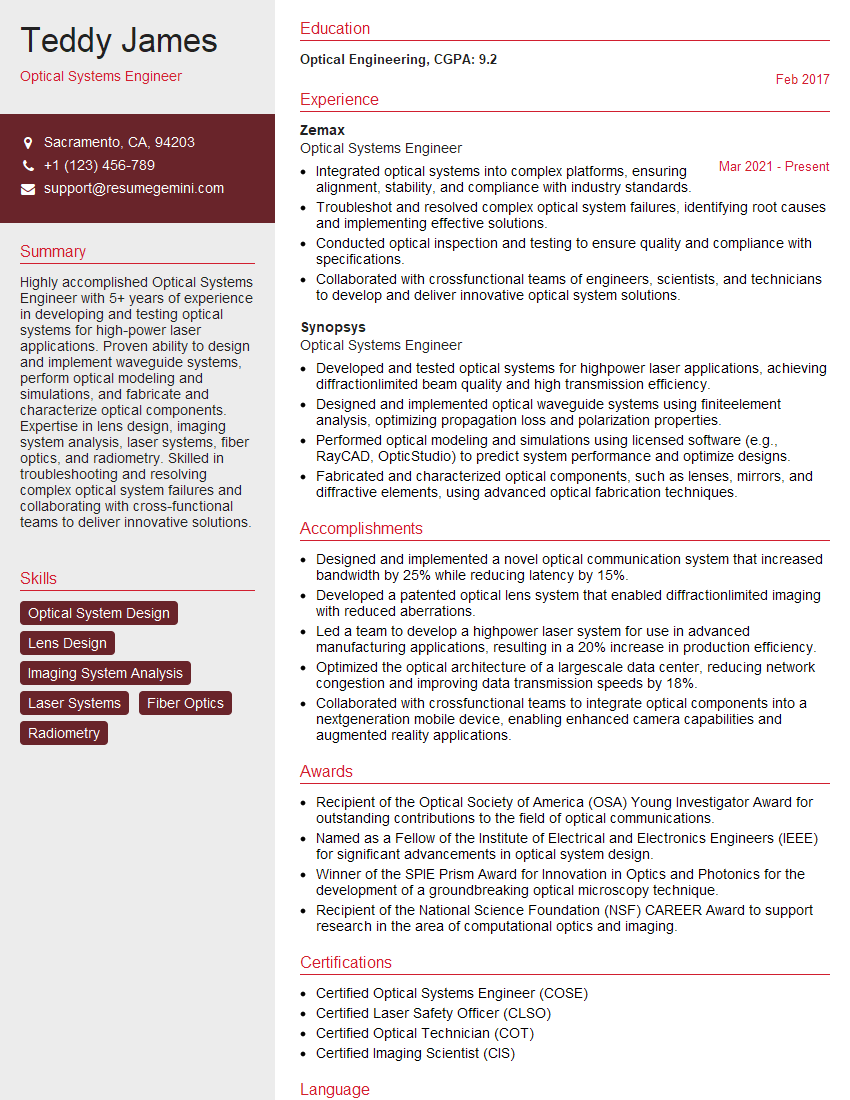
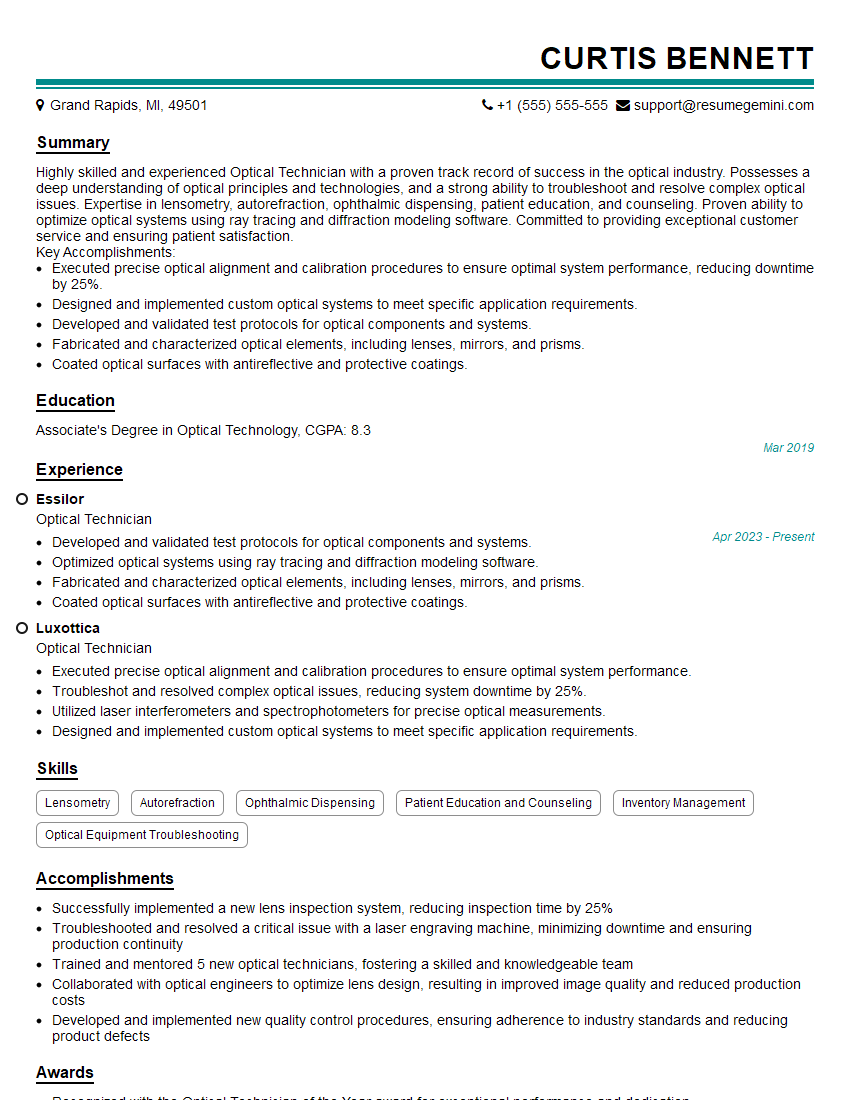
Mastering aspheric fabrication opens doors to exciting and rewarding careers in cutting-edge optical technologies. To significantly boost your job prospects, create a resume that’s both effective and easily parsed by Applicant Tracking Systems (ATS). ResumeGemini is a trusted resource to help you build a professional and impactful resume. They provide examples of resumes tailored to the Aspheric Fabrication field, ensuring your qualifications shine through to potential employers.
Explore more articles
Users Rating of Our Blogs
Share Your Experience
We value your feedback! Please rate our content and share your thoughts (optional).
What Readers Say About Our Blog
Very informative content, great job.
good