Are you ready to stand out in your next interview? Understanding and preparing for Assessment of Damage interview questions is a game-changer. In this blog, we’ve compiled key questions and expert advice to help you showcase your skills with confidence and precision. Let’s get started on your journey to acing the interview.
Questions Asked in Assessment of Damage Interview
Q 1. Explain the different methods used for assessing structural damage.
Assessing structural damage involves a multi-faceted approach combining visual inspection with advanced techniques. Methods vary depending on the type and extent of damage, but generally include:
- Visual Inspection: This is the foundational method, involving a thorough examination of the structure for cracks, settling, bowing, discoloration, and other visible signs of distress. I always start with a comprehensive visual walkthrough, noting everything from minor imperfections to major structural failures. For example, I might look for hairline cracks in foundation walls which could indicate settlement, or uneven flooring which might signal foundation problems.
- Non-Destructive Testing (NDT): These methods evaluate structural integrity without causing damage. Common techniques include ultrasonic testing (measuring sound wave transmission to detect internal flaws), ground-penetrating radar (mapping subsurface features), and infrared thermography (detecting temperature variations that can highlight moisture problems or structural weaknesses).
- Destructive Testing: In some cases, small samples may need to be extracted for laboratory analysis to determine material properties or the extent of damage. This is usually a last resort when NDT methods are inconclusive.
- Software Analysis: Sophisticated software can model structural behavior and assess the impact of observed damage. This is particularly useful for complex structures or extensive damage where manual calculations would be impractical.
The choice of methods depends on the specific circumstances, budget, and required level of detail. A simple residential property with minor water damage might only require visual inspection, while a large commercial building after an earthquake would likely involve a combination of visual, NDT, and potentially destructive testing, along with structural modelling software.
Q 2. Describe your experience with various types of damage, such as water, fire, or wind damage.
My experience encompasses a wide range of damage types. I’ve worked on claims involving:
- Water Damage: From minor leaks leading to mold growth to catastrophic flooding causing structural instability, I’ve assessed the extent of water intrusion, the resulting damage to building materials, and the potential for long-term issues like mold remediation and foundation repair. One memorable case involved a burst pipe that caused significant water damage to a historic building; the assessment required careful consideration of the age and materials of the structure.
- Fire Damage: Fire damage assessment involves evaluating structural integrity compromised by heat and smoke, determining the extent of charring and soot accumulation, and assessing the need for demolition or remediation. I consider the effects of thermal shock on materials, the potential for collapse, and the presence of hazardous materials. I once assessed a building after a significant fire, carefully documenting the extent of the damage to the structural framing, exterior walls and interior finishes, while simultaneously adhering to safety protocols due to the presence of asbestos.
- Wind Damage: Wind damage assessments range from minor roof leaks to complete structural failure. I evaluate the impact of wind forces on the structure, considering factors such as wind speed, building design, and material properties. A recent case involved a large commercial building that experienced roof damage due to a severe storm; the assessment involved drone surveys and close-up inspections of structural connections to determine the full extent of the damage and develop appropriate repair strategies.
In each case, I meticulously document the damage, considering the underlying causes and developing repair strategies that are both cost-effective and structurally sound.
Q 3. How do you determine the cause of damage in a claim?
Determining the cause of damage requires a systematic approach that combines physical evidence with an understanding of the building’s history and environmental conditions. I follow these steps:
- Thorough Inspection: A detailed on-site inspection is crucial. This includes looking for patterns of damage, identifying the location and extent of affected areas, and examining for any clues like water stains, burn marks, or signs of impact.
- Evidence Collection: This can involve taking photographs, video recordings, samples of damaged materials for laboratory testing (if necessary), and gathering environmental data (e.g., weather reports for wind or water damage). I always carefully document my findings.
- Review of Documentation: Reviewing building permits, maintenance records, and insurance policies can provide crucial context. For example, poorly maintained roof might be more susceptible to wind damage.
- Analysis of Findings: This involves careful interpretation of collected data, applying my understanding of building science and engineering principles to arrive at a likely cause. I consider various possibilities and develop a reasoned conclusion supported by the evidence.
- Expert Consultation: If needed, I consult with specialists like engineers, material scientists, or environmental experts to get a second opinion or confirm findings.
It’s important to avoid jumping to conclusions; I always strive to reach a scientifically sound determination based on a complete picture of the situation. For instance, a seemingly simple water stain might require careful investigation to identify the source of the leak which may involve examining plumbing systems or roofing elements.
Q 4. What software or tools do you use for damage assessment and reporting?
My toolkit includes a variety of software and tools, ranging from basic documentation to advanced modeling software. I use:
- Digital Photography and Videography: High-resolution images and videos are essential for documenting the damage accurately and comprehensively. I always include a scale for reference and notes on location.
- Drone Technology: Drones provide a safe and effective way to capture high-resolution aerial imagery of large structures, particularly after significant events like storms or fires.
- Measuring Tools: Laser measuring devices, rulers, and other tools enable precise measurements of damaged areas.
- Software for Reporting and Documentation: I use specialized software to create professional-looking reports that include images, diagrams, and detailed descriptions of the damage and its cause.
- Structural Analysis Software: For complex structures or significant damage, I utilize structural analysis software to model the building’s behavior and determine the extent of repair work required.
The selection of specific software depends on the type and complexity of the assessment. For instance, a simple residential claim might only require basic image editing and word processing software, while a complex commercial claim would involve sophisticated CAD software and specialized analysis tools.
Q 5. How do you handle discrepancies between the insured’s account and the physical evidence?
Discrepancies between the insured’s account and the physical evidence are common and require careful consideration. My approach involves:
- Open Communication: I start by engaging in open and respectful communication with the insured to understand their perspective and gather additional information. Often, misunderstandings or inaccurate recollections can cause discrepancies.
- Objective Verification: I meticulously review the physical evidence to confirm or refute the insured’s account. This might involve revisiting the site, conducting further testing, or consulting additional experts. The physical evidence always takes precedence.
- Documentation of Discrepancies: All discrepancies are clearly documented in my report, along with a detailed explanation of how I resolved them. This might involve a revised damage estimate or a supplementary report.
- Professional Judgement: Ultimately, I use my professional judgement to reconcile the conflicting information and reach a fair and accurate assessment. Sometimes, the cause of the damage is unclear, and I clearly state the uncertainties and my reasoning in the report.
Transparency and clear communication are crucial throughout this process. I maintain a professional and courteous demeanor while ensuring the integrity of the assessment. For example, if the insured claims extensive water damage but the physical evidence indicates only minor damage, I would investigate further to explore possible causes and document my findings clearly and impartially.
Q 6. Explain your process for documenting damage and creating reports.
My documentation process is thorough and systematic. It involves:
- Pre-Inspection Planning: Before the site visit, I review available documents (insurance policies, building plans, etc.). This ensures that I am prepared for the inspection and have a clear understanding of the scope of work.
- On-Site Inspection and Photography: During the on-site inspection, I take detailed notes, measurements, and numerous high-resolution photographs and videos. I use a systematic approach to document damage systematically.
- Data Compilation and Analysis: After the site visit, I compile the collected data and analyze it to determine the cause and extent of the damage. I use specific software for this purpose.
- Report Writing: Finally, I draft a comprehensive report that includes: a detailed description of the damage, a statement of the probable cause(s), supporting photographs and diagrams, a clear summary of findings, and cost estimates for repair or replacement.
The report is written in a clear and concise manner, avoiding technical jargon as much as possible, ensuring its accessibility to both technical and non-technical readers. All documentation, including photographs and measurements, is organized and easily referenced, so the entire assessment process is clearly documented and auditable.
Q 7. How do you calculate repair costs accurately?
Accurate cost calculation is crucial for fair and equitable claim settlements. My approach integrates several elements:
- Detailed Inventory: I start by creating a detailed inventory of all damaged components, including materials, labor, and any specialized equipment required for repair or replacement. This usually involves itemizing each damaged item and referencing the cost from reliable sources.
- Material Costs: I obtain current market prices for materials from reliable suppliers or databases to ensure accuracy. I consider factors like material quality and availability.
- Labor Costs: I calculate labor costs based on prevailing local rates for skilled tradespeople. I consider the complexity of the work and any specialized skills required.
- Contingency: I include a contingency factor to account for unexpected costs or delays. This usually ranges from 5% to 10%, depending on the complexity of the project.
- Software Estimation: I often use specialized estimation software to streamline the process and ensure consistency.
I strive for transparency in my cost calculations. My reports clearly show how I derived the costs, including sources of pricing information. I also carefully consider the actual repairs needed, avoiding overestimation or unnecessary expenses while ensuring proper restoration. For instance, if replacing a section of roofing, I will identify the specific materials, calculate the labor cost involved, and include the cost of disposal and material sourcing, creating a clear and detailed breakdown of the costs involved.
Q 8. How do you prioritize damage assessments in high-volume situations?
Prioritizing damage assessments in high-volume situations requires a systematic approach. Think of it like triage in a hospital – you need to identify the most critical cases first. My strategy involves a three-step process:
Initial Screening: A quick assessment of each case using readily available information (photos, brief descriptions) to identify those posing immediate safety hazards or significant financial losses. These are prioritized for immediate attention.
Risk Categorization: Cases are then categorized based on factors like potential liability, urgency of repair, and complexity of the damage. For example, a structural failure requiring immediate evacuation will take precedence over minor cosmetic damage.
Resource Allocation: Based on the categorization, I allocate resources – my time, personnel, or specialized equipment – efficiently. This might involve delegating simpler cases to junior assessors while I focus on the most complex or high-risk ones. Using specialized software can help track progress and manage workload effectively.
For example, after a major storm, I might prioritize assessments of properties showing signs of roof collapse before focusing on those with minor water damage. This ensures safety and addresses the most significant financial risks first.
Q 9. Describe your experience working with insurance companies or legal professionals.
I have extensive experience collaborating with both insurance companies and legal professionals. My work with insurance adjusters involves providing detailed, unbiased damage assessments that support fair claim settlements. I understand the importance of clear documentation, adherence to industry standards, and providing evidence that aligns with their specific needs. I frequently use industry-standard reporting software to ensure uniformity and clarity.
In legal contexts, I’ve provided expert witness testimony, presenting my findings in a clear and concise manner, explaining complex technical details in a way that is easily understood by non-experts. This requires a high level of attention to detail and the ability to effectively communicate under pressure. I’ve also prepared reports for legal proceedings, ensuring accuracy and adherence to legal requirements.
One memorable case involved a dispute over fire damage. My detailed assessment, including photographs, measurements and a clear explanation of the damage progression, helped resolve the conflict, demonstrating the crucial role of unbiased, detailed assessments in complex situations.
Q 10. How do you handle complex or ambiguous damage scenarios?
Complex or ambiguous damage scenarios require a methodical and investigative approach. It’s like solving a puzzle. My strategy involves:
Thorough Investigation: This involves going beyond a superficial examination. I’ll gather information from various sources: talking to the property owner, reviewing historical records, and employing advanced investigative techniques such as non-destructive testing methods (NDT) where appropriate.
Differential Diagnosis: I rule out alternative explanations for the damage, systematically comparing different possible causes and eliminating them based on evidence. This is akin to a doctor diagnosing an illness through a process of elimination.
Consultations: If needed, I consult with specialists in relevant fields, such as structural engineers, geotechnical engineers, or environmental consultants, to get expert opinions on the complex aspects of the damage. Collaboration is key in these situations.
Documentation and Reporting: My report clearly documents the uncertainties and assumptions made during the assessment. I highlight areas needing further investigation, providing a transparent and defensible conclusion.
For instance, if there’s unexplained water damage, I’d investigate potential sources like plumbing leaks, roof issues, or even ground water intrusion, documenting my findings systematically.
Q 11. How familiar are you with building codes and regulations relevant to damage assessment?
I am very familiar with building codes and regulations, understanding their crucial role in determining acceptable construction practices and assessing compliance. My knowledge covers various aspects, including structural requirements, fire safety standards, and accessibility guidelines. I regularly consult updated codes for my region, ensuring my assessments are compliant and legally sound.
This understanding is essential because it informs my assessment of the severity and cost of repairs. A violation of building codes will almost certainly influence the assessment in terms of both the necessity and cost of remediation. I incorporate this understanding into my reports, clearly indicating areas of non-compliance and their impact on the overall assessment.
For example, in assessing damage to a building, I would use the local building code to determine if the structural elements are damaged beyond acceptable limits and what the standards require for remediation.
Q 12. Explain your understanding of depreciation and its impact on claim settlements.
Depreciation is the reduction in value of an asset over time due to age, wear and tear, or obsolescence. In damage assessments, it’s crucial to consider depreciation when determining the cost of repairs or replacement. It impacts claim settlements by reducing the amount the insured receives.
There are different methods for calculating depreciation, including straight-line depreciation (equal reduction each year) and accelerated depreciation (higher reduction in earlier years). The appropriate method depends on the asset’s type and the applicable insurance policy. For instance, a 20-year-old roof will have significant depreciation compared to a new one, resulting in a lower settlement for repairs or replacement.
Understanding depreciation and applying the appropriate calculation method ensures a fair and accurate assessment. Failing to consider depreciation can lead to inflated claim amounts, causing disputes between insurers and insureds.
Q 13. What is your approach to negotiating settlements with insureds?
My approach to negotiating settlements with insureds is built on transparency, fairness, and professionalism. I aim to establish a collaborative relationship based on mutual understanding and respect. I present my findings clearly and objectively, explaining the basis for my assessment, including any depreciation calculations and supporting evidence. I am open to discussing the insured’s concerns and addressing their questions.
Negotiation involves listening carefully to their perspective, considering their needs, and finding a solution that is both fair and acceptable within the framework of the insurance policy. I avoid adversarial tactics and focus on finding common ground. I believe a well-documented, objective assessment forms the strong foundation for a successful negotiation.
If a consensus cannot be reached, I am prepared to provide further evidence or clarification to support my findings. The goal is to resolve the matter amicably, ensuring a fair settlement for all parties.
Q 14. How do you ensure the accuracy and reliability of your damage assessments?
Ensuring the accuracy and reliability of my damage assessments involves a multi-faceted approach:
Rigorous Methodology: I adhere to established industry standards and best practices, using consistent and validated methodologies for data collection and analysis.
Accurate Measurements and Documentation: Detailed measurements, high-quality photographs, and comprehensive written descriptions form the core of my assessments. I use calibrated equipment and document all procedures meticulously.
Peer Review: In complex cases, I seek peer review from other experienced assessors to validate my findings and ensure objectivity. This acts as a quality control mechanism.
Continuous Professional Development: I stay up-to-date with the latest technologies, techniques, and building codes through continuing education and professional development. This ensures that my assessments remain accurate and relevant.
Software and Technology: Utilizing specialized software for data analysis, report generation and record keeping ensures efficiency, consistency and traceability.
The ultimate aim is to provide assessments that are not only technically sound but also clearly documented and easily understood by all stakeholders, fostering trust and confidence in my work.
Q 15. Describe a situation where you had to deal with a challenging or difficult client.
One challenging client involved a homeowner who insisted the damage to their property after a hailstorm was far more extensive than the visual evidence suggested. They were emotionally distraught and very suspicious of my objectivity. My approach involved actively listening to their concerns, validating their feelings without compromising my professional assessment. I meticulously documented every step of my inspection, taking abundant photos and videos, and explaining my findings in clear, non-technical language. I emphasized the importance of factual data over emotional responses. Ultimately, providing a detailed, transparent report with irrefutable evidence helped alleviate their concerns, even if it wasn’t the outcome they initially hoped for. Building trust and demonstrating empathy were crucial in navigating this situation.
Career Expert Tips:
- Ace those interviews! Prepare effectively by reviewing the Top 50 Most Common Interview Questions on ResumeGemini.
- Navigate your job search with confidence! Explore a wide range of Career Tips on ResumeGemini. Learn about common challenges and recommendations to overcome them.
- Craft the perfect resume! Master the Art of Resume Writing with ResumeGemini’s guide. Showcase your unique qualifications and achievements effectively.
- Don’t miss out on holiday savings! Build your dream resume with ResumeGemini’s ATS optimized templates.
Q 16. What are some common mistakes to avoid when assessing damage?
Common mistakes in damage assessment include:
- Insufficient documentation: Failing to thoroughly document the damage with detailed notes, photographs, and measurements can lead to inaccurate assessments and disputes. Think of it like building a strong legal case; you need compelling evidence.
- Overlooking hidden damage: Not thoroughly investigating areas that might be concealed behind walls or flooring can result in underestimating the total cost of repairs. Water damage, for example, often extends far beyond the visible wet area.
- Bias and preconceived notions: Allowing personal opinions or assumptions to influence the assessment. Maintaining complete objectivity is paramount. It’s like being a judge; your opinion should be based solely on the evidence presented.
- Ignoring building codes and standards: Assessments must adhere to relevant building codes and industry standards for accurate costing and repair methods. Failure to do so can result in unsafe or substandard repairs.
- Lack of specialized knowledge: Not possessing adequate expertise in specific materials, construction methods, or types of damage can lead to significant errors in the assessment. For example, you’d need specific knowledge to assess damage to a complex roofing system compared to a simple drywall repair.
Q 17. How do you stay current with changes in building materials, construction techniques, and insurance regulations?
Staying current is vital in this field. I accomplish this through a multi-pronged approach:
- Continuing education courses and workshops: I regularly attend industry-specific training to stay abreast of new building materials, techniques, and insurance regulations. Many professional organizations offer these courses.
- Professional memberships and publications: I’m a member of relevant professional organizations that provide access to journals, newsletters, and conferences focused on damage assessment and related fields. These resources offer insights into the latest research and developments.
- Networking with peers and experts: Engaging with other professionals through conferences and online forums helps share knowledge and learn from collective experiences. A collaborative environment can be incredibly valuable.
- Monitoring insurance industry updates: I closely monitor changes in insurance policies, coverage, and claim procedures. This requires regularly reviewing insurer guidelines and industry news.
- Self-directed learning: I regularly research and learn about new materials and techniques independently using online resources and technical manuals.
Q 18. How do you manage your workload and prioritize tasks efficiently?
Effective workload management is critical. I utilize several strategies:
- Prioritization matrix: I use a system to prioritize tasks based on urgency and importance. Urgent and important tasks get immediate attention, while less urgent tasks are scheduled accordingly.
- Project management software: I use software to track projects, deadlines, and progress. This helps maintain organization and allows for efficient time allocation.
- Time blocking: I allocate specific time blocks for different tasks to maximize productivity and minimize distractions. This helps with focused work sessions.
- Delegation (where applicable): If possible, I delegate tasks to qualified team members to increase overall efficiency.
- Regular review and adjustment: I regularly review my schedule and adjust priorities based on changing needs or unforeseen circumstances. Flexibility is key.
Q 19. Describe your experience with different types of insurance policies and their coverage limits.
My experience encompasses a wide range of insurance policies, including homeowner’s insurance, commercial property insurance, flood insurance, and various specialized policies. I understand the nuances of each policy, such as dwelling coverage, personal property coverage, liability limits, deductibles, and specific exclusions. For example, understanding the difference between actual cash value (ACV) and replacement cost coverage is crucial when assessing losses and determining appropriate compensation. Each policy has specific documentation requirements for claims, and being familiar with them ensures a smooth and efficient assessment process. I am also familiar with the intricacies of various coverage limits – whether it’s the overall policy limit, per-occurrence limits, or sub-limits for specific types of damage (e.g., water damage).
Q 20. How do you handle situations where you suspect fraud or intentional damage?
Suspected fraud or intentional damage requires a thorough and methodical approach. My process involves:
- Detailed documentation: Meticulously document all observations, including any inconsistencies or suspicious circumstances. This includes photographic evidence of potential points of origin or evidence of staging.
- Expert consultation: When necessary, I consult with other experts, such as forensic investigators or engineers, to corroborate my findings and establish definitive conclusions.
- Maintaining objectivity: It is crucial to maintain objectivity and avoid making accusations without strong evidence. The focus remains on presenting a factual and thorough account of the findings.
- Clear reporting: The report clearly outlines any suspicion of fraud, providing a detailed account of the findings that support such concerns without making any definitive judgment, as it is the insurer’s role to make the legal decision.
- Compliance with legal requirements: I ensure strict adherence to legal and ethical guidelines when handling potential fraud cases.
Q 21. How familiar are you with various methods of mitigation and remediation?
My familiarity with mitigation and remediation methods is extensive. This encompasses a broad range of techniques depending on the type of damage. For example, water damage remediation requires prompt action to prevent mold growth and structural damage. This might involve extracting water, drying materials, and addressing any mold contamination. Fire damage remediation can involve demolition of severely damaged areas, cleaning and restoration of salvageable components, and specialized cleaning to remove smoke and soot. For structural damage, I understand methods of repair and reinforcement, including the use of specialized materials and techniques. I’m familiar with industry best practices for each type of damage and recognize the importance of employing qualified contractors for remediation work.
Q 22. How do you ensure the safety of yourself and others during damage assessments?
Safety is paramount in damage assessment. Before entering any site, I meticulously assess the immediate environment for potential hazards – unstable structures, downed power lines, hazardous materials, etc. This often involves consulting with emergency responders or site managers to understand pre-existing risks. I always wear appropriate personal protective equipment (PPE), which might include hard hats, safety glasses, high-visibility clothing, and sturdy work boots, adapting the PPE to the specific risks present. For example, if asbestos is suspected, specialized respiratory protection is crucial. I also utilize appropriate safety protocols like working with a partner for added safety and maintaining constant communication. If a situation is deemed unsafe, I immediately withdraw and report the concerns to the appropriate authorities before proceeding.
Q 23. How do you handle claims involving multiple parties or conflicting interests?
Handling claims with multiple parties or conflicting interests requires a neutral and objective approach. My first step is to thoroughly document all parties involved and their respective claims. This includes gathering statements, reviewing contracts, and collecting relevant evidence. I then meticulously analyze the evidence to identify the root cause of the damage and to determine the responsibility of each party. When conflicting narratives arise, I utilize fact-finding techniques, such as interviewing witnesses and obtaining independent expert opinions, to resolve discrepancies. Finally, I present my findings in a clear, unbiased report, highlighting areas of agreement and disagreement, and proposing solutions that are fair and equitable to all involved parties. One real-world scenario I encountered involved a flood affecting multiple businesses in a shared commercial building; it required careful consideration of insurance policies, lease agreements and the varying degrees of damage sustained by each tenant.
Q 24. Describe your experience with using photographic and video documentation in damage assessments.
Photographic and video documentation are indispensable tools in damage assessments. I utilize high-resolution cameras and drones (when appropriate and legally permissible) to capture comprehensive visual records of the damage. My approach is systematic, ensuring I cover all affected areas from multiple angles. I employ a combination of wide-angle shots to establish context and close-up shots to highlight specific details, such as cracks in a foundation, water stains on walls, or damage to specific components of a machine. For video documentation, I provide a narrated overview of the damage, pointing out key areas of concern and providing detailed descriptions. This allows for an in-depth, easily verifiable record of the situation. Metadata, such as date, time, and location, is meticulously documented and linked to each image and video file. This approach helps ensure the integrity and evidentiary value of the documentation throughout the assessment process and any subsequent legal proceedings.
Q 25. How do you communicate your findings clearly and concisely to both technical and non-technical audiences?
Communicating findings effectively to diverse audiences requires tailoring the information to their level of understanding. For technical audiences, I provide detailed reports with technical specifications, data analysis, and calculations. For non-technical audiences, I use clear, concise language, avoiding jargon and technical terms. Visual aids like diagrams, charts, and annotated photographs are critical. I often employ analogies or metaphors to explain complex concepts in simpler terms. For instance, when explaining structural damage, I might use the analogy of a weakened bridge to illustrate the implications. My reports always include a clear executive summary, which provides a high-level overview of the findings and recommendations. The goal is to ensure that everyone understands the key findings and recommendations, regardless of their technical background.
Q 26. What are your strengths and weaknesses in damage assessment?
My strengths lie in my methodical and detail-oriented approach, my ability to analyze complex situations and synthesize information from diverse sources. I possess a strong understanding of various building materials, structural engineering principles, and relevant building codes. I am also proficient in using various software and technologies to analyze data and generate reports. One area for improvement is time management in particularly complex and large-scale assessments; I’m currently implementing project management techniques to better allocate time and resources in such situations. I also continuously engage in professional development to enhance my knowledge of emerging technologies and assessment methodologies.
Q 27. How do you handle pressure and tight deadlines in high-stress situations?
High-stress situations requiring immediate action demand a calm and organized approach. I prioritize tasks by urgency and importance, focusing on immediate safety concerns first. I break down large tasks into smaller, manageable steps, allowing me to track progress and maintain focus. I leverage my strong problem-solving skills to quickly assess the situation and identify solutions. Maintaining open and clear communication with all stakeholders is vital to manage expectations and to prevent misunderstandings. Regular breaks and stress-management techniques, such as mindfulness exercises, help me maintain clarity and focus, even under pressure. I remember one instance where a building suffered significant damage during a storm, requiring immediate assessment to ensure safety and facilitate insurance claims. By prioritizing tasks and maintaining clear communication, I successfully completed the assessment under a tight deadline.
Q 28. Describe your experience with utilizing different types of measuring tools and equipment.
My experience encompasses a wide range of measuring tools and equipment. This includes basic tools like tape measures, levels, and plumb bobs for precise measurements of dimensions and alignments. I utilize laser distance meters for quick and accurate distance measurements, especially in challenging environments. I am proficient in using moisture meters to detect hidden water damage, infrared cameras for thermal imaging to detect concealed problems, and specialized tools like crack gauges and deflection meters for precise measurements of structural damage. When dealing with complex situations, I employ more sophisticated surveying equipment like total stations for detailed topographical surveys. My selection of tools always depends on the specific nature and scale of the damage. The key is to ensure the accuracy and reliability of the measurements to support my findings and conclusions.
Key Topics to Learn for Assessment of Damage Interview
- Types of Damage: Understanding different damage classifications (e.g., structural, content, functional) and their implications.
- Methodology & Techniques: Mastering various assessment methods, including visual inspection, data analysis, and specialized tools.
- Data Collection & Analysis: Learning how to effectively gather and interpret data to support damage assessments, including photographic evidence and reports.
- Reporting & Documentation: Developing clear, concise, and professional reports that accurately reflect findings and recommendations.
- Legal & Regulatory Frameworks: Familiarity with relevant legislation, standards, and best practices for damage assessment.
- Cost Estimation & Budgeting: Accurately estimating repair or replacement costs based on assessment findings.
- Risk Assessment & Mitigation: Identifying potential risks associated with damage and developing strategies for mitigation.
- Communication & Collaboration: Effectively communicating findings and recommendations to clients, stakeholders, and colleagues.
- Case Studies & Problem Solving: Analyzing real-world scenarios and applying theoretical knowledge to solve complex damage assessment problems.
- Software & Tools: Proficiency in relevant software and tools used for data analysis and report generation (mention general categories rather than specific software names).
Next Steps
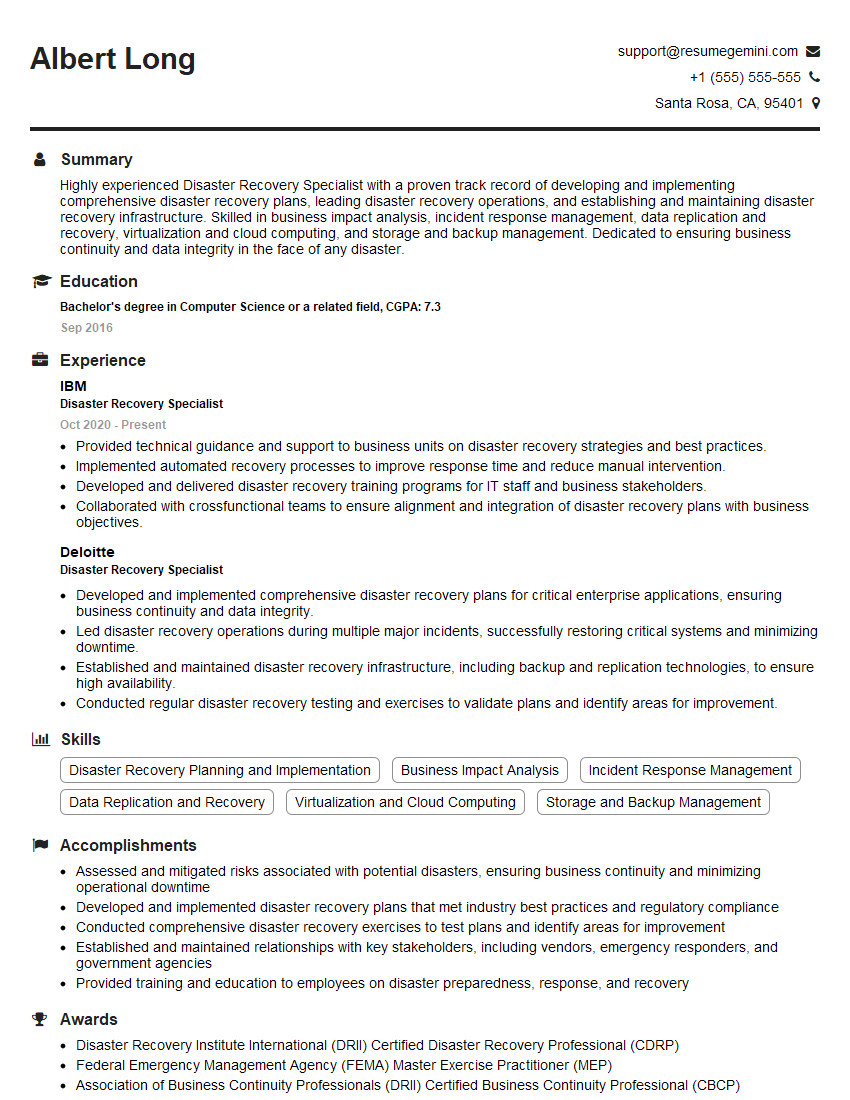
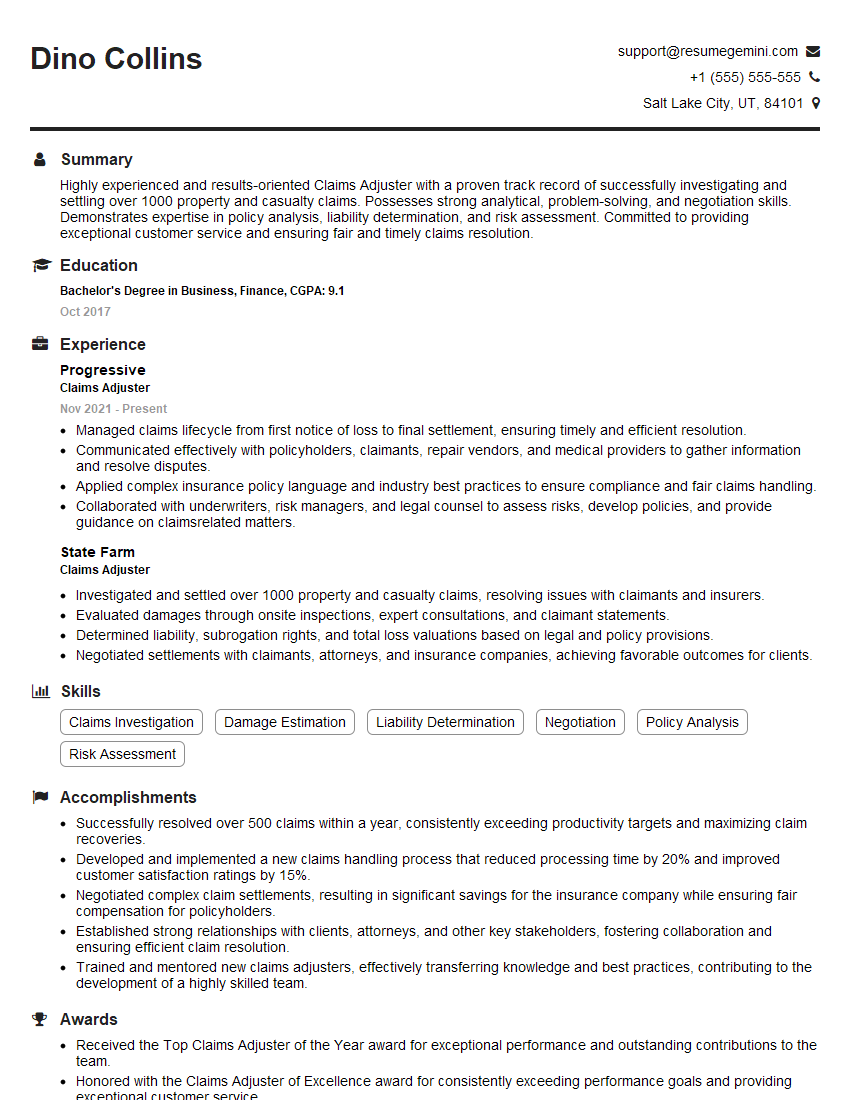
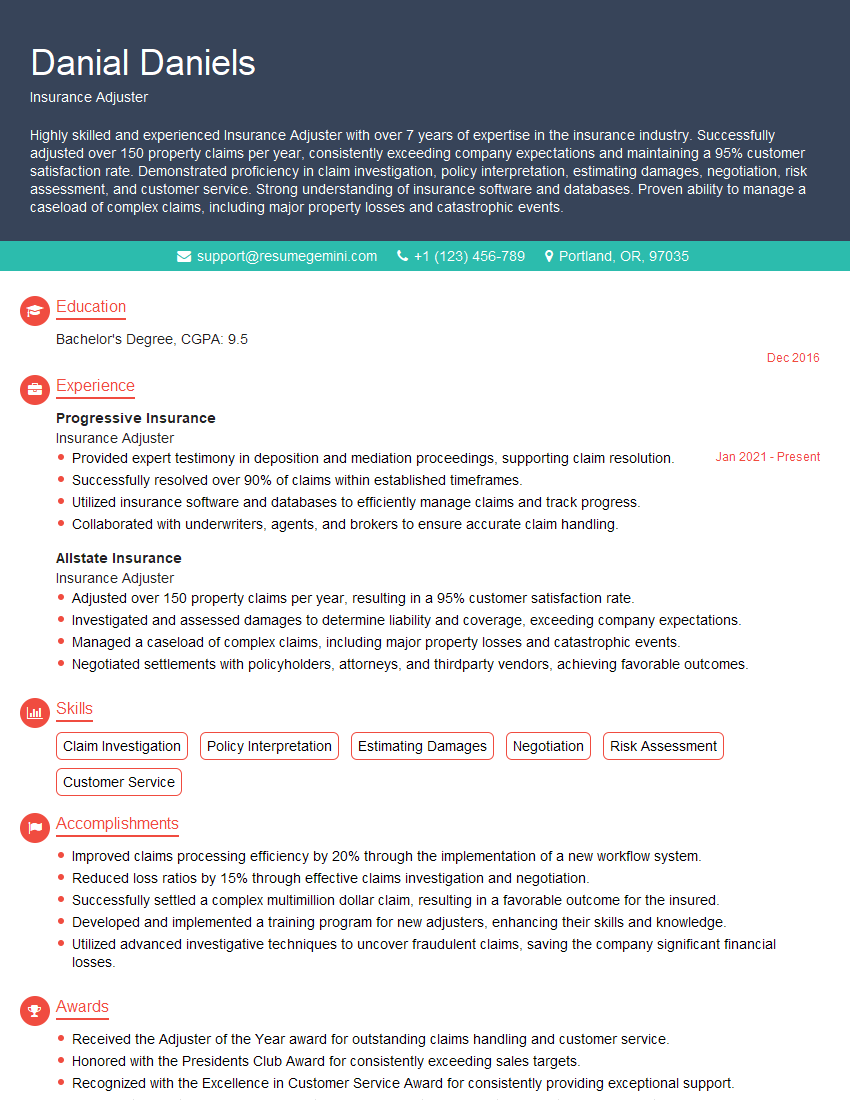
Mastering Assessment of Damage opens doors to exciting career opportunities in various sectors, offering significant growth potential and competitive salaries. A strong, ATS-friendly resume is crucial for showcasing your skills and experience to potential employers. To maximize your chances of securing your dream role, leverage the power of ResumeGemini to create a compelling and effective resume tailored to the Assessment of Damage field. ResumeGemini provides you with the tools and resources to build a professional resume that highlights your unique qualifications. Examples of resumes specifically designed for Assessment of Damage professionals are available to help guide you through the process.
Explore more articles
Users Rating of Our Blogs
Share Your Experience
We value your feedback! Please rate our content and share your thoughts (optional).
What Readers Say About Our Blog
Very informative content, great job.
good