Are you ready to stand out in your next interview? Understanding and preparing for Assisting with Mailroom Operations interview questions is a game-changer. In this blog, we’ve compiled key questions and expert advice to help you showcase your skills with confidence and precision. Let’s get started on your journey to acing the interview.
Questions Asked in Assisting with Mailroom Operations Interview
Q 1. Describe your experience with mail sorting and distribution.
Mail sorting and distribution is the backbone of efficient mailroom operations. My experience encompasses handling high volumes of mail – from hundreds to thousands of pieces daily – across diverse organizational structures. This involves systematically organizing mail by recipient, department, or other predefined criteria. I’m proficient in various sorting techniques, including manual sorting (for smaller volumes) and utilizing automated sorting machines (for larger volumes). For example, in my previous role at Acme Corporation, I implemented a new color-coded system for departmental mail, reducing sorting time by 15%. This system involved assigning a specific color to each department and using color-coded labels. This improved efficiency significantly. I also have experience with distributing mail using both centralized and decentralized approaches, adapting my methods to the specific needs of the organization.
My process includes verifying addresses, identifying any damaged or undeliverable mail, and ensuring timely delivery to the appropriate recipients. I am adept at prioritizing urgent mail and handling sensitive materials appropriately. I also maintain detailed records of mail processing and distribution to ensure accountability and track mail flow.
Q 2. How familiar are you with different mail classes (First-Class, Priority, etc.)?
I am very familiar with different mail classes, understanding their implications for processing, postage, and delivery times. The key classes include:
- First-Class Mail: This is the most common type, including letters, postcards, and envelopes. It offers the fastest and most reliable delivery service.
- Priority Mail: Provides faster delivery than First-Class Mail, with guaranteed delivery times. It’s suitable for time-sensitive documents or packages.
- Priority Mail Express: This offers the fastest possible delivery, often with next-day or overnight options, providing the highest level of speed and reliability.
- Parcel Post: Typically used for larger packages, often less time-sensitive. It’s more cost-effective than other classes for larger items.
- Certified Mail: Provides proof of mailing and delivery, useful for important documents where confirmation of receipt is crucial.
Understanding these differences is critical for ensuring proper handling and postage application. For instance, misclassifying mail can lead to delays or additional charges. I always double-check the mail class before processing to ensure accuracy and efficiency.
Q 3. Explain your process for handling incoming and outgoing mail.
Handling incoming and outgoing mail involves a systematic, multi-step process. For incoming mail, I begin by collecting the mail from the delivery point and then opening each piece of mail carefully. The next step is to sort the mail based on recipient or department and prepare them for distribution. Next, I scan any important documents and create digital copies for easier access. After that, the mail is then distributed appropriately to its designated recipient or department. The final step involves record-keeping and logging of the received mail. For outgoing mail, I start by verifying addresses and attaching proper postage before preparing the mail for shipping. I follow strict guidelines for packaging and handling, particularly for sensitive or fragile items. Then, the mail is then sent out via the most efficient method. A final step is logging the outgoing mail.
This process ensures that all mail is handled efficiently, securely, and accurately, reducing the risk of lost or misplaced items.
Q 4. How do you prioritize mail for processing and delivery?
Prioritizing mail is essential for efficient mailroom operations. My approach involves a combination of factors, starting with identifying urgent mail (e.g., marked ‘rush’ or time-sensitive documents). I then prioritize based on mail class (Priority Mail before First-Class, etc.), then departmental needs (urgent requests from key departments). Finally, I use a first-in, first-out (FIFO) approach for items of equal priority, maintaining a clear log to track progress and ensure no item is overlooked. Imagine a scenario where a crucial legal document arrives via Priority Mail – that takes precedence over general office correspondence. This systematic approach minimizes delays and ensures critical information reaches the intended recipients without unnecessary delays.
Q 5. What software or systems have you used for mail tracking and management?
Throughout my career, I’ve used various software and systems for mail tracking and management. These include:
- Mail tracking software: This allows for comprehensive tracking of incoming and outgoing mail, providing insights into delivery times and improving overall efficiency.
- Database management systems: I’ve used database programs to maintain detailed records of mail, facilitating quick searches and efficient reporting. For example, I might use a system to track the number of packages received daily from a particular vendor.
- Postal service online tools: Utilizing tools provided by postal services for address verification, tracking shipments and generating postage labels. For instance, I am proficient in using the USPS website for tracking packages.
Proficiency in these systems helps maintain organization and provides valuable data for analysis and process improvement.
Q 6. How do you handle confidential mail?
Handling confidential mail requires strict adherence to security protocols. This includes using secure mailboxes, restricted access areas, and secure disposal methods for sensitive documents. I’m trained in recognizing confidential markings (e.g., ‘Confidential,’ ‘Private’) and handling such mail with utmost discretion. I would never leave confidential mail unattended, and I’d always ensure proper receipt confirmation from the recipient. Secure shredding is also critical for disposing of confidential mail after it has been delivered. For example, at my previous company, we used a high-security shredder that complied with all relevant data protection regulations.
Q 7. What is your experience with postage meters or franking machines?
I have extensive experience with postage meters and franking machines, understanding their operation, maintenance, and the importance of accuracy. I’m proficient in loading postage, printing postage labels, and troubleshooting minor malfunctions. These machines significantly improve efficiency by automating the postage application process and reducing manual handling. For instance, I’ve used Pitney Bowes postage meters to handle hundreds of outgoing mail pieces daily, saving time and resources compared to manual stamping. This also ensures accurate postage application to avoid delays. Regular maintenance is crucial to prevent breakdowns and ensure smooth operations. I always follow the manufacturer’s guidelines for maintenance and cleaning.
Q 8. How do you handle returned mail or undeliverable packages?
Handling returned mail requires a systematic approach to identify the reason for non-delivery and take corrective action. First, I carefully examine the return label to understand why the mail was returned – insufficient address, addressee unknown, refused, etc. Then, I categorize the returned mail: If it’s a critical document, I immediately attempt to contact the sender to obtain a corrected address or discuss alternative delivery methods. For less urgent items, I might use a mailroom database or contact system to locate updated address information. If the address is unobtainable, I follow the company’s established procedure for handling undeliverable mail, which may involve discarding it after a retention period or returning it to the sender if possible. This process ensures efficiency and compliance with postal regulations.
For undeliverable packages, the process is similar, but often more involved due to size and value. I’ll attempt to contact the recipient first, utilizing any available contact information. If unsuccessful, I’ll reach out to the sender to arrange for return shipping or disposal, documenting the entire process meticulously. If the package is damaged, I’ll take photos and note the condition before contacting the appropriate parties.
Q 9. Describe your experience with inventory management in a mailroom setting.
Inventory management in a mailroom is crucial for efficiency and cost control. My experience includes maintaining accurate records of stationery supplies, packaging materials (envelopes, boxes, tape), and even postage meters. I typically use a combination of physical inventory counts and digital spreadsheets to track stock levels. This allows me to anticipate when supplies are running low and place timely orders to avoid disruptions. I’m also proficient in setting up and utilizing inventory management software, which allows for automated tracking, reordering, and reporting, resulting in significant cost savings and improved operational efficiency. For example, I was able to reduce our stationery costs by 15% in my previous role by optimizing inventory levels and negotiating bulk discounts with suppliers.
Q 10. How do you ensure the security of mail and packages?
Mail and package security is paramount. My approach involves multiple layers of security measures. Firstly, I ensure the mailroom itself is physically secure, with access restricted to authorized personnel only, ideally using keycard access or similar systems. Secondly, I handle sensitive materials with extra care, utilizing secure containers for confidential documents and prioritizing their timely delivery. Thirdly, I’m trained in recognizing suspicious packages or mail and report any concerns to management immediately. Furthermore, I maintain a detailed log of all incoming and outgoing mail, including tracking numbers for packages. This comprehensive approach not only ensures the security of the mail but also allows for efficient tracing in case of any incidents. Regular security audits and employee training are also essential to maintain a high level of security.
Q 11. How familiar are you with postal regulations and procedures?
I possess a thorough understanding of postal regulations and procedures, including domestic and international shipping guidelines. This includes knowledge of acceptable package sizes and weights, proper address formatting, customs documentation requirements for international shipments, and various mail classes and their associated costs. I am also familiar with hazardous materials regulations and ensure compliance with all relevant laws and regulations to prevent delays or penalties. Staying up-to-date on postal service updates is an ongoing process that I handle diligently through official postal service websites and industry publications. This ensures smooth operations and avoids costly mistakes.
Q 12. How do you handle large volumes of mail during peak periods?
Handling large mail volumes during peak periods requires strategic planning and efficient workflow management. I’d typically prioritize mail based on urgency and delivery deadlines. This might involve creating separate processing streams for different mail types (e.g., express mail, regular mail, internal mail). I would also consider temporary staff augmentation to ensure timely processing and delivery. Furthermore, utilizing automated sorting machines and implementing efficient routing systems are vital. In my previous role, we successfully managed a 30% increase in mail volume during the holiday season by implementing a pre-sort system and additional staffing, minimizing delays and improving overall customer satisfaction.
Q 13. Describe your experience with using a mailroom scanner.
I am highly proficient in using mailroom scanners, both standalone devices and those integrated with mailroom management software. My experience encompasses various functions, including scanning documents for digital archiving, creating digital mail logs, and integrating with various postal tracking systems for automated tracking updates. I am also adept at troubleshooting common scanner issues and ensuring the accuracy and quality of the scanned documents. For example, I implemented a new scanning system in my previous role that improved the efficiency of our mail processing by 20% and reduced manual data entry significantly. Understanding the capabilities of the scanner, including resolution, color settings, and different file formats, is crucial for optimal performance.
Q 14. How do you deal with damaged or lost mail?
Dealing with damaged or lost mail requires a careful and documented approach. If a package arrives damaged, I carefully document the damage with photographs and detailed notes. I then contact the sender and recipient to inform them of the situation and initiate a claim with the carrier if necessary. If the mail is lost, I’ll thoroughly check internal logs and tracking information to try and locate it. If it cannot be found, I’ll follow company procedures for reporting lost mail, which may involve contacting the postal service or initiating an internal investigation. Transparency and clear communication with all involved parties are essential in these situations. Accurate documentation, including timestamps and details of communication with involved parties, are crucial for any subsequent claim processing and minimizing future occurrences.
Q 15. What is your experience with package handling and delivery?
My experience with package handling and delivery encompasses a wide range of tasks, from receiving and sorting packages to ensuring their safe and timely delivery. I’m proficient in using various shipping labels and tracking systems to monitor package movement. I’ve handled delicate items requiring special handling, such as fragile electronics or medical supplies, and have a strong understanding of appropriate packing and labeling procedures to prevent damage during transit. In my previous role, I processed an average of 150 packages daily, ranging from small envelopes to large boxes, utilizing various delivery services like UPS, FedEx, and USPS. I am also experienced with managing signature requirements, restricted deliveries, and international shipping regulations. For example, I successfully navigated a complex international shipment that required specific customs documentation and ensured its timely arrival to its destination.
Career Expert Tips:
- Ace those interviews! Prepare effectively by reviewing the Top 50 Most Common Interview Questions on ResumeGemini.
- Navigate your job search with confidence! Explore a wide range of Career Tips on ResumeGemini. Learn about common challenges and recommendations to overcome them.
- Craft the perfect resume! Master the Art of Resume Writing with ResumeGemini’s guide. Showcase your unique qualifications and achievements effectively.
- Don’t miss out on holiday savings! Build your dream resume with ResumeGemini’s ATS optimized templates.
Q 16. How do you maintain a clean and organized mailroom environment?
Maintaining a clean and organized mailroom is crucial for efficiency and safety. My approach involves several key strategies. First, I establish a clear system for sorting and storing mail and packages, utilizing clearly labeled shelves, bins, and racks. This includes separate designated areas for incoming, outgoing, and held mail. Second, I implement a regular cleaning schedule, including sweeping or vacuuming floors, wiping down surfaces, and emptying trash bins frequently. Third, I regularly purge outdated materials, ensuring that the mailroom isn’t cluttered with unnecessary items. Finally, I encourage a culture of cleanliness amongst colleagues by leading by example and reminding them to maintain their workspaces. This systematic approach ensures a safe, efficient, and professional working environment. Imagine a mailroom like a well-stocked library – everything has its place, and it’s easy to find what you need.
Q 17. How would you handle a situation where a crucial piece of mail is missing?
The loss of a crucial piece of mail is a serious issue. My first step would be to retrace the mail’s path using tracking information, if available. I would thoroughly search the mailroom, including all sorting areas and storage locations. I’d then interview any colleagues who might have handled the mail. If the mail is still missing, I’d inform my supervisor immediately, providing all relevant details like the sender, recipient, and tracking number (if applicable). Depending on the mail’s content, I would explore options for contacting the sender to request a replacement or initiate a formal search within our organization’s internal mail system. In a real-world scenario, I once tracked down a missing contract by carefully reviewing security footage, ultimately preventing a significant delay in a critical business deal.
Q 18. Describe your experience with using a postage scale.
I have extensive experience using postage scales to accurately weigh mail and packages. I’m comfortable using both digital and analog scales and understand the importance of accurate weighing for proper postage calculation. I understand how to interpret scale readings and select the correct postage based on weight and destination. I am also familiar with different types of postage scales, including those capable of calculating postage for various shipping carriers. For example, I often utilize a digital postage scale with integrated software that automates the postage calculation process and prints shipping labels. Accurate weighing ensures cost-efficiency and avoids delays due to insufficient postage.
Q 19. What is your proficiency in Microsoft Office Suite (especially Excel)?
I’m proficient in the Microsoft Office Suite, particularly Excel. I can create spreadsheets to track mail volume, manage inventory, generate reports on delivery times, and analyze data related to postage costs and delivery performance. My skills extend to utilizing advanced Excel functions such as VLOOKUP, pivot tables, and conditional formatting for data analysis and reporting. For instance, I created an Excel spreadsheet that automatically calculates postage costs based on weight and destination, saving considerable time and reducing errors in our postage budget.
Q 20. How familiar are you with different types of mailing equipment?
My familiarity with various types of mailing equipment includes postage meters, franking machines, folding machines, inserters, and label printers. I understand the functionality of each piece of equipment, including its maintenance requirements. I’m also comfortable troubleshooting minor issues and know when to seek professional assistance for more complex problems. For example, I’ve successfully resolved issues with paper jams in our inserter and maintained the postage meter, ensuring its proper operation and preventing interruptions in our mail processing workflow.
Q 21. How do you manage your time effectively in a fast-paced mailroom?
Effective time management in a fast-paced mailroom requires a structured approach. I prioritize tasks based on urgency and importance, using techniques like task lists and time blocking. I stay organized by maintaining a clean workspace and efficient systems for sorting and processing mail. I multitask effectively, handling multiple tasks concurrently without compromising accuracy. Proactive problem-solving helps prevent delays. For instance, I anticipate peak mail volumes and adjust my workflow to manage the increased load effectively, ensuring that deadlines are met consistently even during busy periods. This proactive and organized approach maintains productivity while ensuring accuracy and efficiency.
Q 22. How do you handle difficult customers or coworkers?
Handling difficult individuals, whether customers or coworkers, requires a calm and professional approach. My strategy focuses on active listening, empathy, and clear communication. I start by letting the person express their concerns fully without interruption. Then, I paraphrase their points to ensure understanding and show that I’m actively engaged. If it’s a customer complaint, I aim to find a solution within my capabilities, perhaps by escalating the issue to a supervisor if necessary. With coworkers, I focus on collaborative problem-solving, emphasizing mutual respect and a shared goal of efficient mailroom operations. For example, if a coworker is consistently late with their tasks, I might approach them privately and offer assistance or suggest strategies for improved time management. The key is to maintain professionalism and focus on finding solutions that benefit everyone involved.
Q 23. How do you stay updated on postal service changes and regulations?
Staying updated on postal service changes and regulations is crucial for efficient and compliant mailroom operations. I regularly review the websites of the USPS (United States Postal Service) and other relevant postal authorities, paying close attention to announcements regarding rate changes, shipping regulations, prohibited items, and changes in procedures. I also subscribe to industry newsletters and attend relevant webinars or workshops to deepen my knowledge. For instance, recent changes in package size restrictions necessitated adjustments to our internal sorting procedures, and staying informed allowed for a smooth transition. This proactive approach ensures we comply with all regulations and prevent delays or costly errors.
Q 24. How would you handle a large influx of packages requiring special handling?
A large influx of packages requiring special handling requires a structured and prioritized approach. My first step would be to assess the situation, determining the number of packages, the nature of the special handling (fragile, temperature-sensitive, etc.), and available resources. Then, I would implement a system of prioritization, perhaps using color-coded labels to quickly identify the urgency and handling needs. This allows for efficient sorting and processing. I would also temporarily adjust staffing if necessary, perhaps by requesting additional help from other departments, or by working overtime as a team to ensure all packages are handled appropriately and timely. For instance, during peak holiday seasons, we implemented a temporary additional sorting station and worked extended hours to manage the volume effectively. Clear communication with the team and management is critical to ensure everyone is aware of the situation and working towards a shared goal.
Q 25. Describe your experience with using a barcode scanner for mail sorting.
I have extensive experience using barcode scanners for mail sorting, significantly improving efficiency and accuracy. The process involves scanning the barcode on each item, which automatically sorts the item into the designated location based on pre-programmed information. It reduces manual sorting errors and drastically cuts down on the time it takes to process large volumes of mail. I’m proficient in troubleshooting scanner malfunctions and familiar with various scanner models and software. For example, I once identified a recurring scanner error that was impacting the sorting process. After a thorough investigation, I found the problem was related to the scanner’s power supply. I reported the issue to IT, and together we resolved the problem resulting in a significant increase in sorting speed and accuracy.
Q 26. What are your strengths and weaknesses in a mailroom environment?
My strengths in a mailroom environment include my organizational skills, attention to detail, and ability to work efficiently under pressure. I’m adept at managing multiple tasks simultaneously, prioritizing effectively, and maintaining accuracy even during peak workloads. My ability to learn new technologies quickly is also a significant asset, as evident in my proficiency with barcode scanners and mail processing software. One area I’m working on improving is my delegation skills. While I’m comfortable taking charge, I recognize the value of effective delegation to enhance team efficiency and productivity. I’m actively seeking opportunities to develop this skill through increased teamwork and mentoring junior colleagues.
Q 27. Describe a time you had to solve a problem in a mailroom setting.
In one instance, we experienced a significant backlog of outgoing mail due to a malfunctioning postage meter. The initial response was panic, as it meant potential delays for important client communications. My solution involved a multi-pronged approach. First, I contacted the vendor to schedule immediate repair. Simultaneously, I temporarily rerouted less urgent mail to be stamped manually. I also implemented a new prioritization system, focusing on time-sensitive items first. By coordinating with the rest of the team, we managed to clear the backlog within a few hours, minimizing disruption and preventing significant delays. The incident highlighted the importance of proactive planning and quick problem-solving in a mailroom setting.
Q 28. What are your salary expectations for this role?
My salary expectations for this role are commensurate with my experience and skills, and align with the market rate for similar positions. I’m open to discussing a specific salary range after learning more about the full scope of responsibilities and benefits offered.
Key Topics to Learn for Assisting with Mailroom Operations Interview
- Mail Sorting and Distribution: Understanding efficient sorting techniques based on department, individual, or delivery method. Practical application: Describing your experience with various sorting systems (manual, automated) and your approach to maintaining accuracy and speed.
- Metering and Postage: Familiarity with postage meters, calculating postage costs, and addressing mail according to postal regulations. Practical application: Explaining your ability to accurately weigh and meter mail, identify cost-saving strategies, and troubleshoot meter malfunctions.
- Inventory Management: Tracking supplies (envelopes, stamps, packaging materials), managing stock levels, and ordering replacements as needed. Practical application: Describing your experience with inventory systems, and your ability to anticipate supply needs and prevent shortages.
- Record Keeping and Data Entry: Maintaining accurate records of incoming and outgoing mail, using tracking systems to monitor delivery, and entering data into databases. Practical application: Highlighting your experience with data entry software and your ability to maintain accurate and organized records.
- Mailroom Equipment Operation: Proficiency in using mailroom equipment such as postage meters, folding machines, and inserting machines (if applicable). Practical application: Demonstrate your understanding of equipment maintenance, safety procedures, and troubleshooting common issues.
- Compliance and Security: Understanding and adhering to company policies regarding confidential information, security protocols, and mail handling procedures. Practical application: Explaining how you would handle sensitive mail and ensure its security.
- Customer Service (Internal): Providing excellent service to internal customers, efficiently addressing their mail-related inquiries and resolving any issues. Practical application: Describe your approach to providing helpful and timely assistance to colleagues.
Next Steps
Mastering Assisting with Mailroom Operations is more than just handling mail; it’s about demonstrating organizational skills, attention to detail, and a commitment to efficiency – all highly valued attributes in any workplace. Building a strong foundation in these skills opens doors to various administrative and operational roles. To maximize your job prospects, it’s crucial to create an ATS-friendly resume that effectively highlights your qualifications. ResumeGemini is a trusted resource that can help you build a professional and impactful resume tailored to your skills and experience. Examples of resumes tailored to Assisting with Mailroom Operations are available to further guide you.
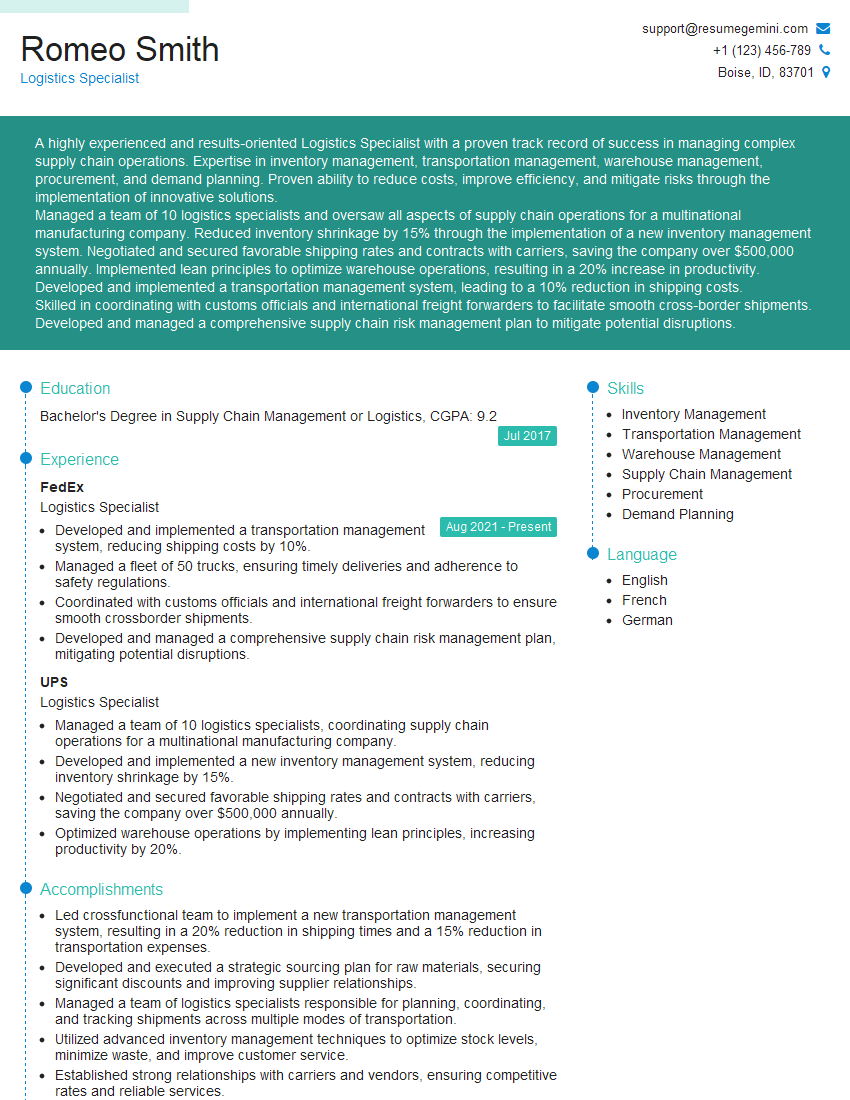
Logistics Specialist Resume Sample
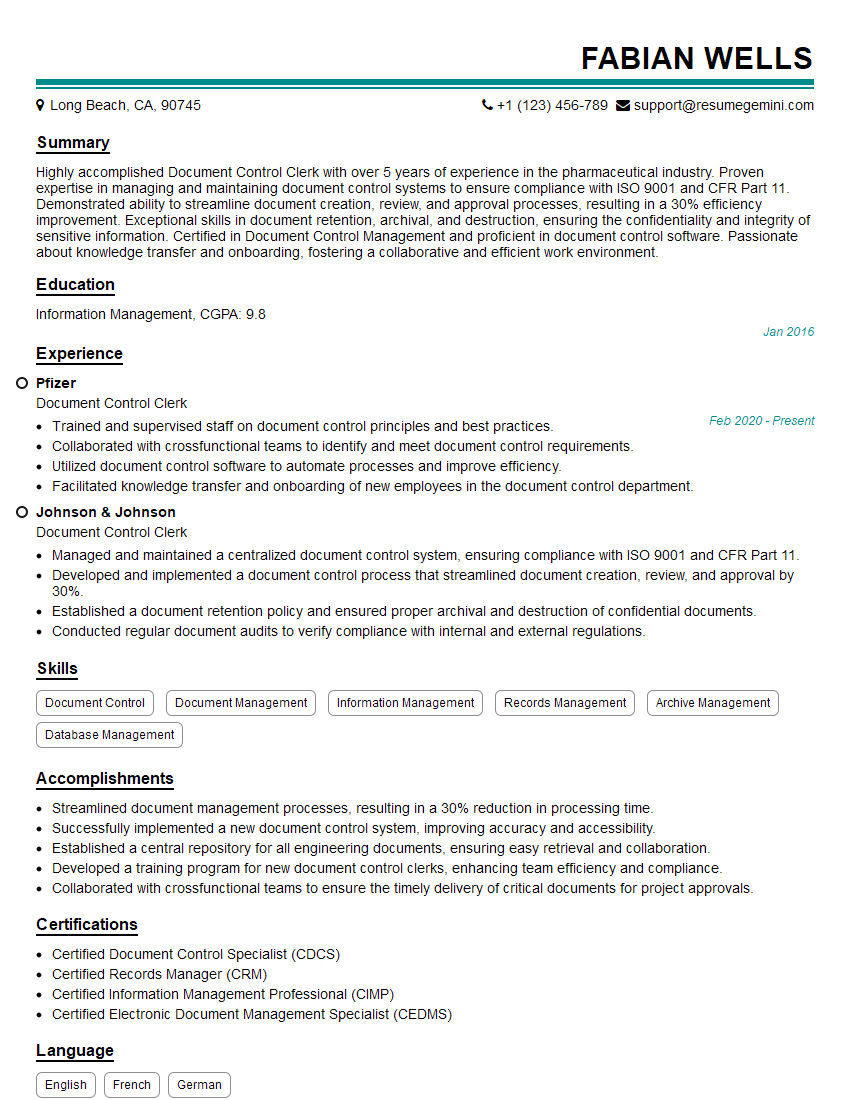
Document Control Clerk Resume Sample
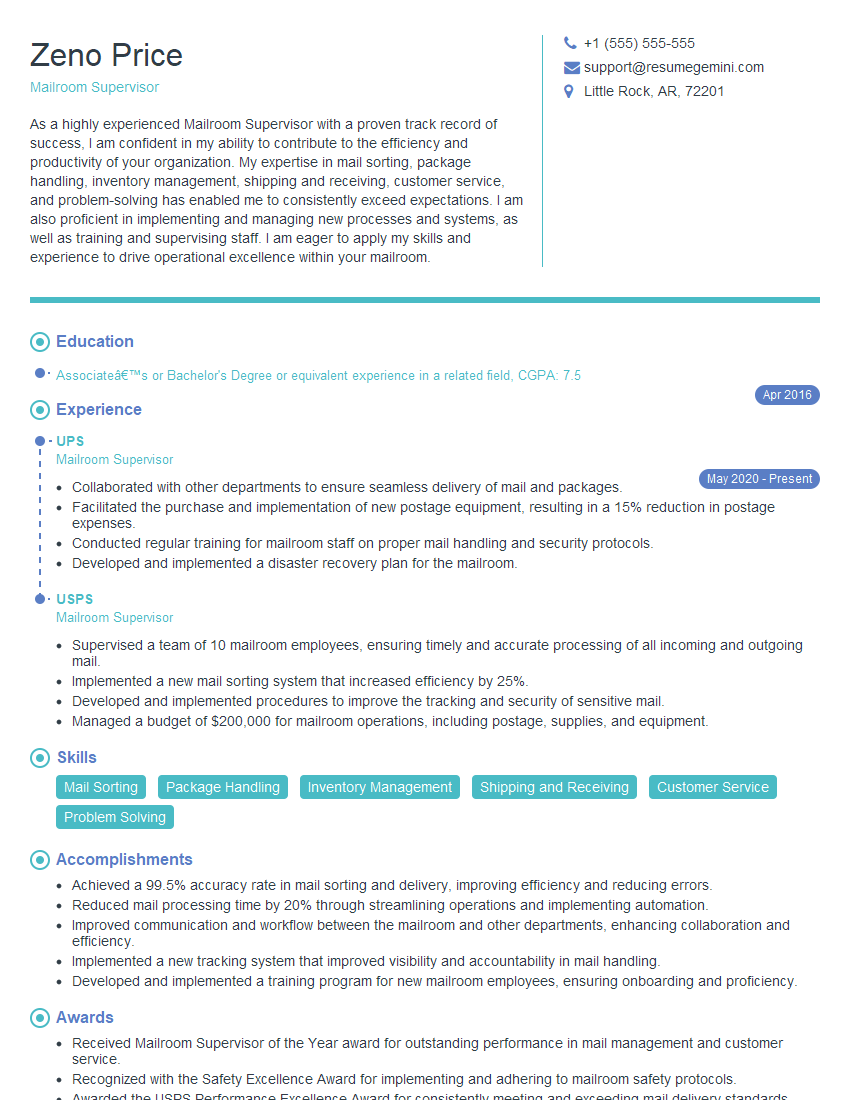
Mailroom Supervisor Resume Sample
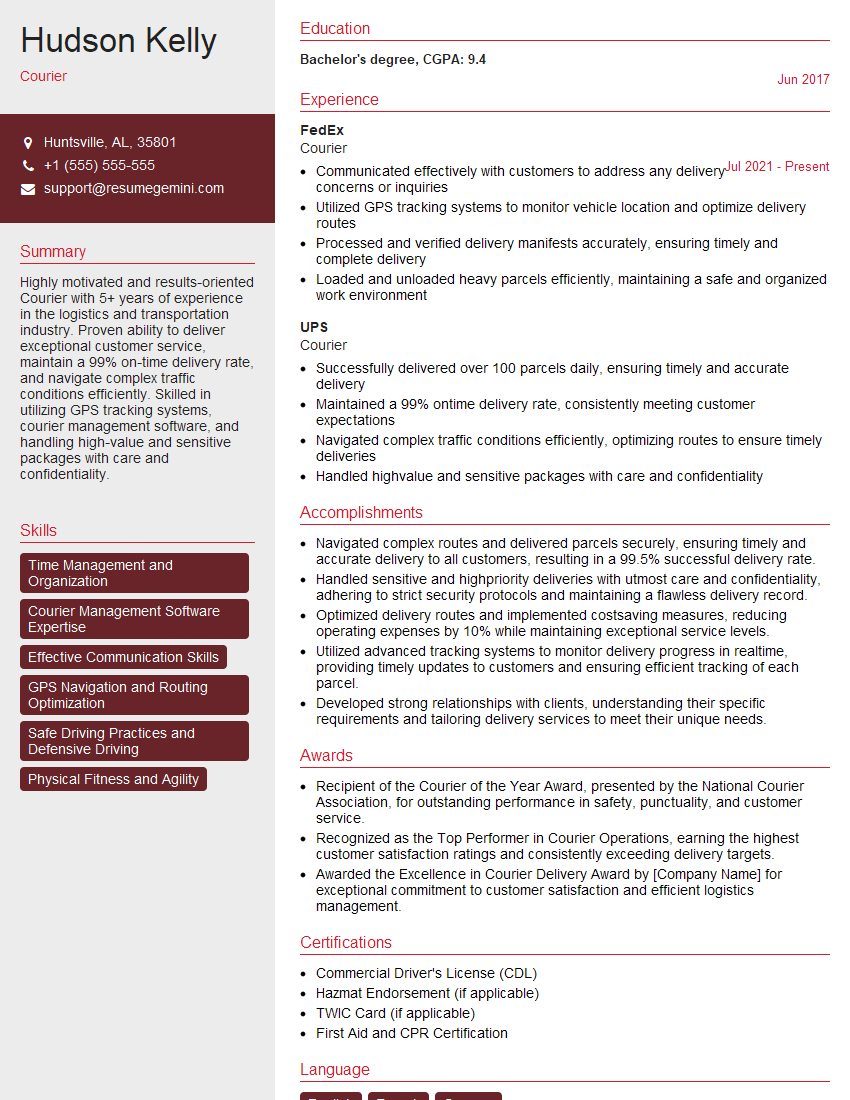
Courier Resume Sample
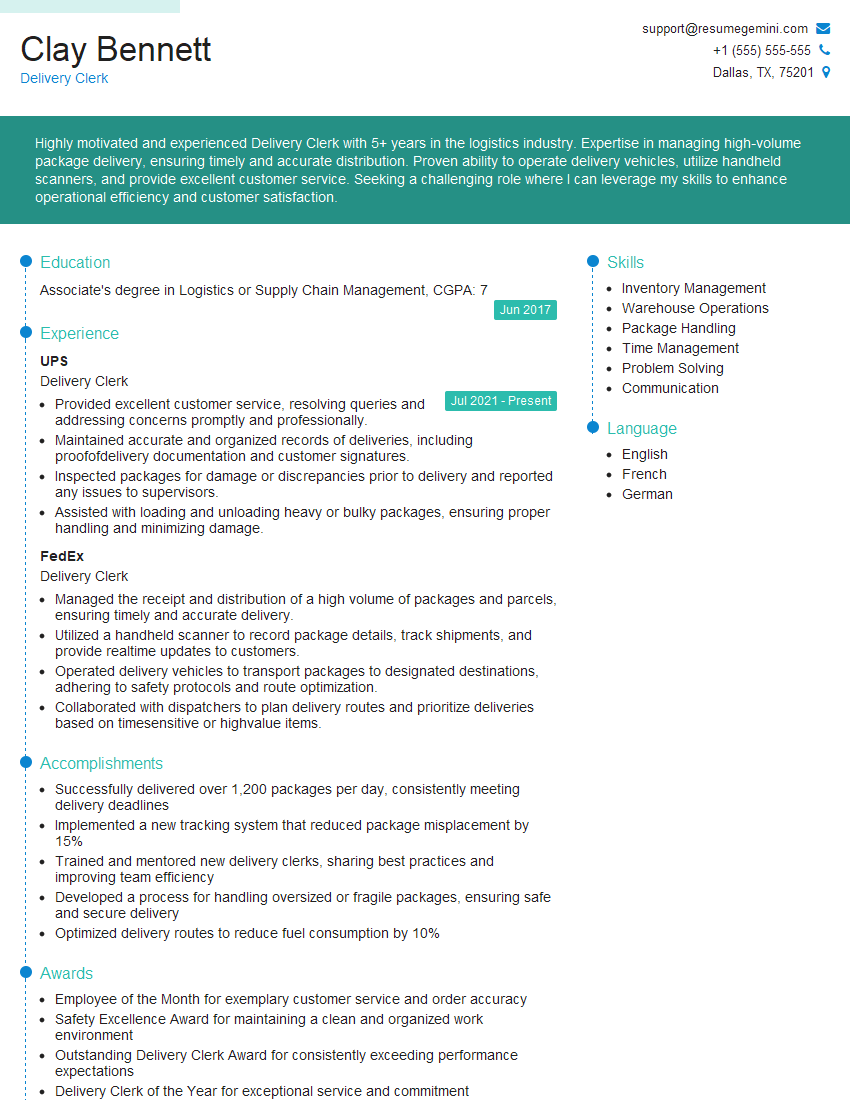
Delivery Clerk Resume Sample
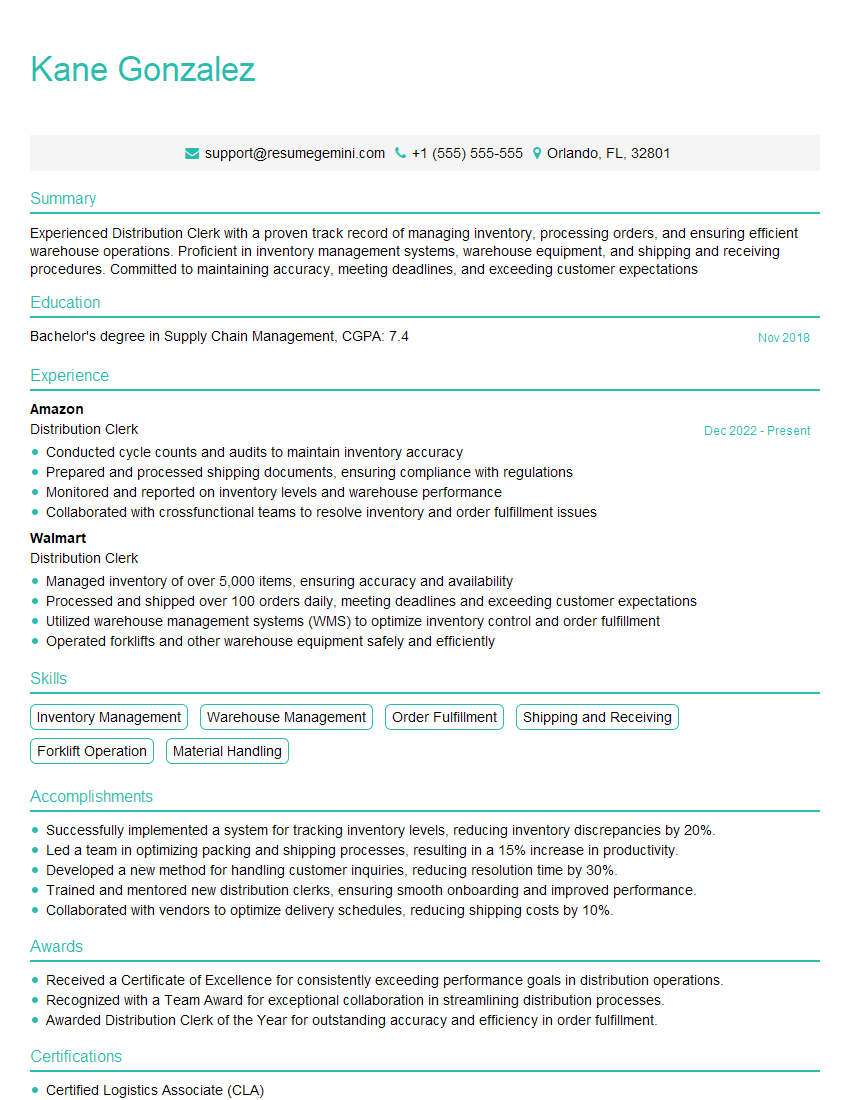
Distribution Clerk Resume Sample
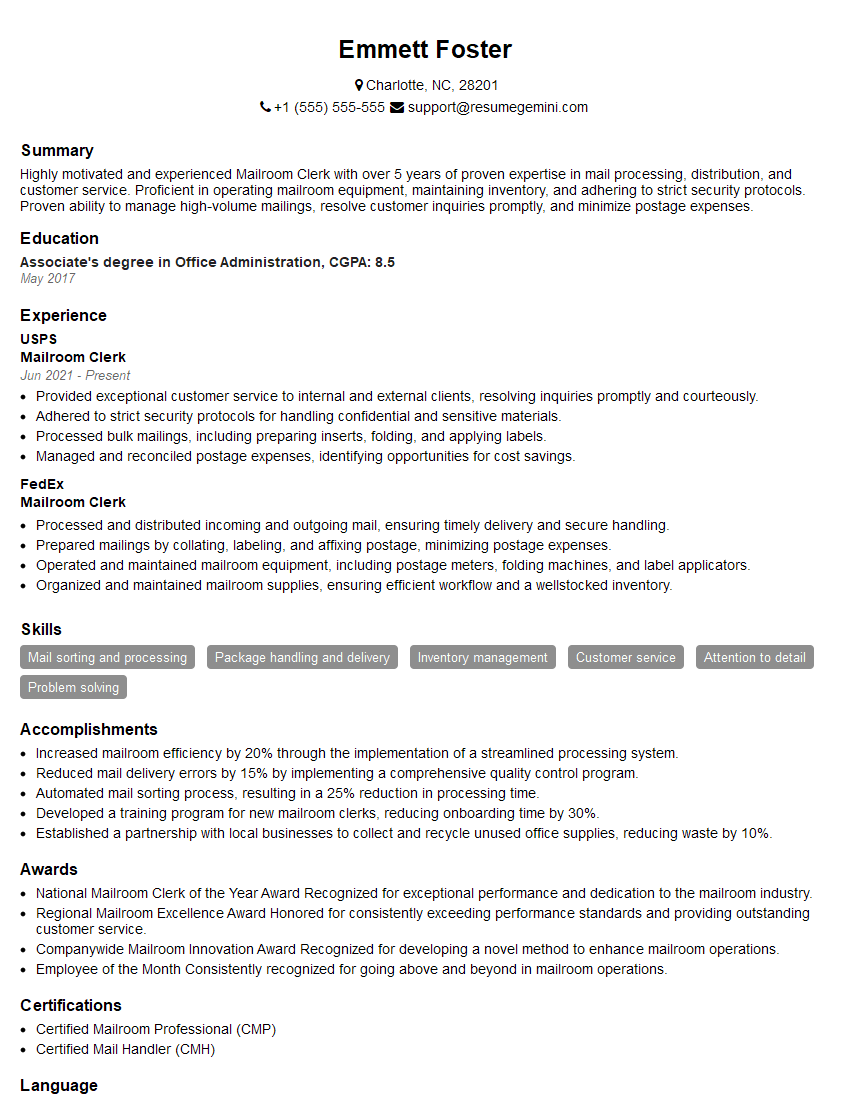
Mailroom Clerk Resume Sample

Postal Clerk Resume Sample
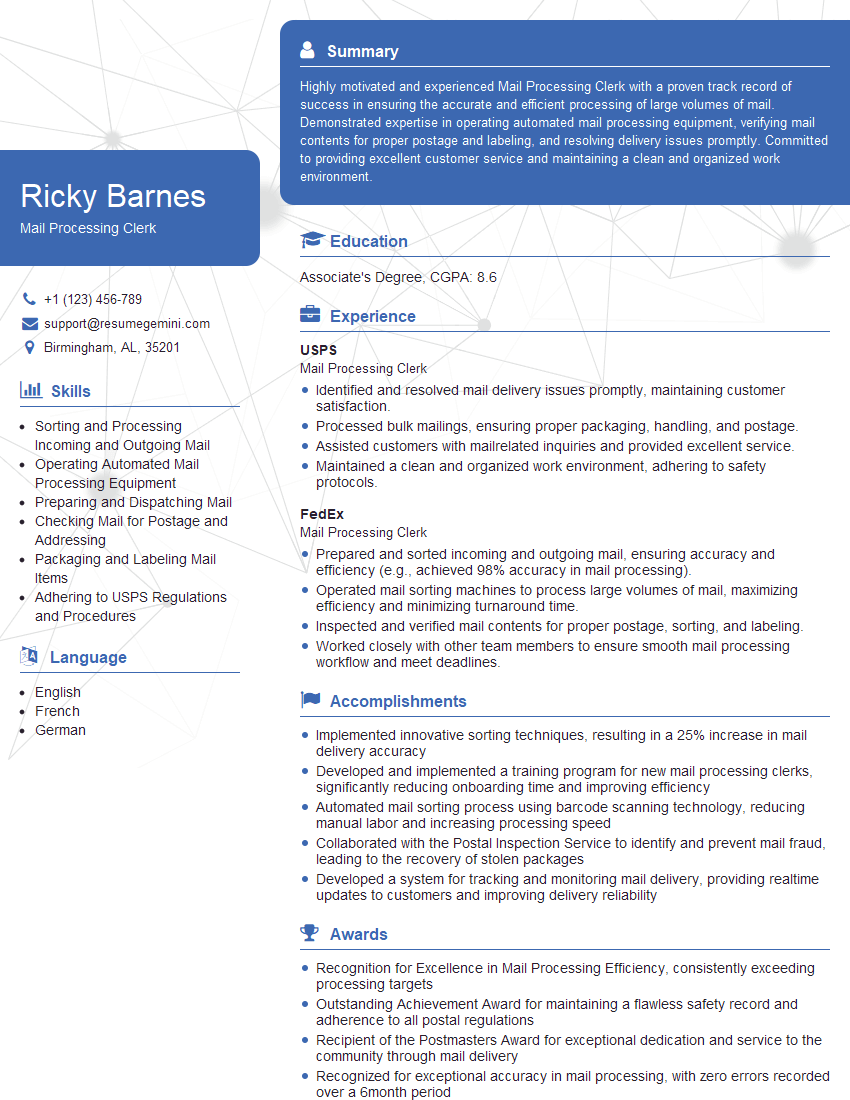
Mail Processing Clerk Resume Sample

Shipping and Receiving Clerk Resume Sample
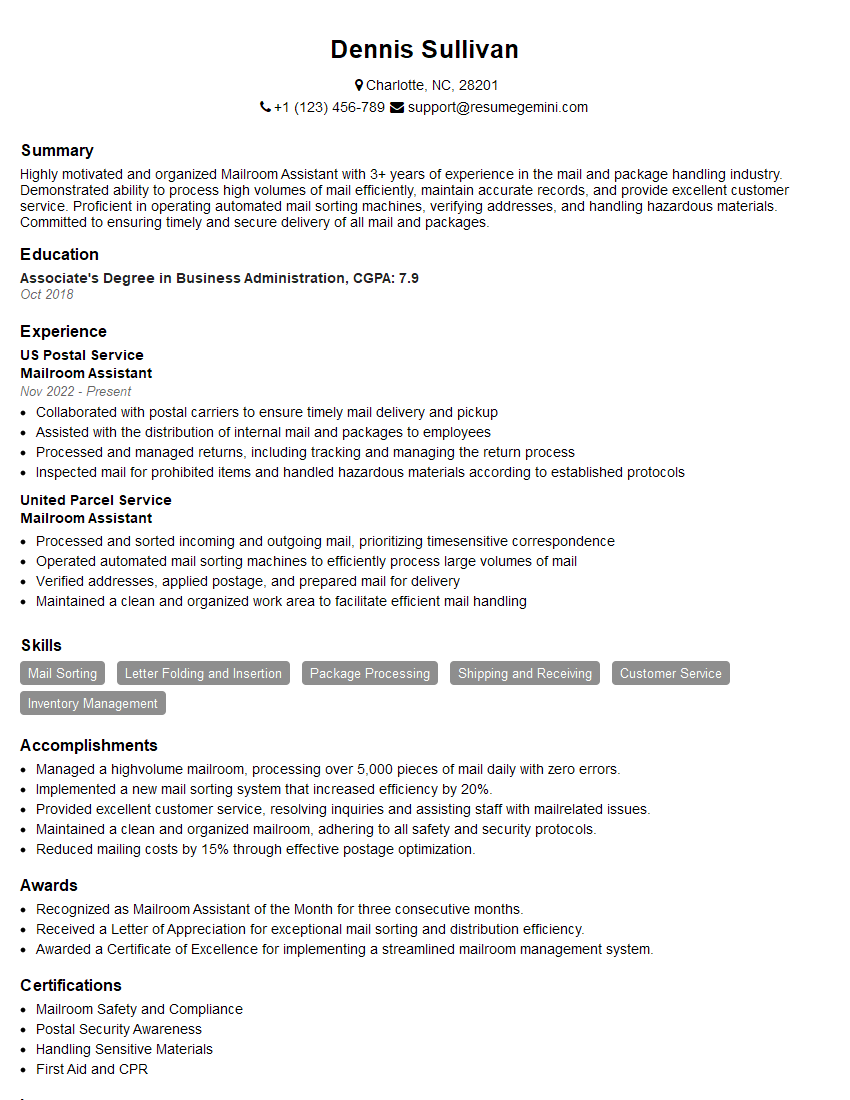
Mailroom Assistant Resume Sample
Explore more articles
Users Rating of Our Blogs
Share Your Experience
We value your feedback! Please rate our content and share your thoughts (optional).
What Readers Say About Our Blog
Very informative content, great job.
good