Interviews are opportunities to demonstrate your expertise, and this guide is here to help you shine. Explore the essential ASTM F899 Standard Practice for Pruning Trees interview questions that employers frequently ask, paired with strategies for crafting responses that set you apart from the competition.
Questions Asked in ASTM F899 Standard Practice for Pruning Trees Interview
Q 1. Define the key principles of ASTM F899 Standard Practice for Pruning Trees.
ASTM F899’s key principles revolve around maintaining tree health and safety while achieving specific pruning objectives. It emphasizes making cuts that minimize damage and promote proper healing, prioritizing the long-term structural integrity and aesthetic appeal of the tree. The standard promotes a proactive approach, focusing on preventing problems through proper pruning practices rather than solely reacting to existing issues. Key principles include: selecting appropriate pruning techniques based on the tree’s species, age, and condition; using sharp, clean tools to make precise cuts; and understanding the tree’s growth habits to make informed decisions about which branches to remove.
Think of it like this: just as a skilled surgeon uses precise techniques to minimize trauma and maximize healing in a patient, a skilled arborist uses the principles of ASTM F899 to perform tree surgery with minimal harm and maximum benefit.
Q 2. Explain the different pruning cuts detailed in ASTM F899.
ASTM F899 details several types of pruning cuts:
- Thinning Cuts: Removing entire branches back to a lateral branch or the trunk. This improves light penetration and air circulation within the crown. Imagine it like thinning out a forest—allowing more sunlight to reach the understory.
- Reduction Cuts: Shortening branches to reduce overall size or weight. This is often done to alleviate stress on the tree or to manage its height near structures. This is similar to trimming your hedge to maintain a desired shape and size.
- Heading Cuts: Cutting branches back to a stub. This is generally discouraged in ASTM F899 because it promotes weak growth and increases susceptibility to disease and decay. It’s like cutting off a plant stem with blunt scissors instead of a sharp blade—it leaves an uneven surface that is more prone to infection.
- Cleaning Cuts: Removing dead, diseased, or damaged branches. This improves the tree’s overall health and appearance. Removing dead limbs is similar to pruning away dead leaves from a houseplant, improving the plant’s health.
The choice of cut depends entirely on the specific situation and the objectives of the pruning operation. A qualified arborist will select the most appropriate technique based on the tree’s species and condition.
Q 3. Describe the proper techniques for crown cleaning as outlined in ASTM F899.
Crown cleaning, as defined in ASTM F899, involves the removal of dead, dying, diseased, damaged, and weakly attached branches from the crown of a tree. It’s about maintaining the tree’s health and structure, not about shaping or altering its form. The techniques emphasize making clean, precise cuts that minimize stress on the tree. It’s crucial to remove the branch back to a branch collar or the trunk, avoiding the creation of stubs. This allows for proper compartmentalization, the tree’s natural defense mechanism to seal off wounds.
Imagine you’re cleaning out a cluttered attic: you remove the broken items, the rotting wood, and anything unsafe to create a clean and safe space. Crown cleaning does the same for a tree’s canopy.
Proper crown cleaning involves careful assessment of each branch’s condition and selection of the appropriate cut, ensuring that any necessary cuts are made in a way that supports tree health.
Q 4. How does ASTM F899 address the selection of pruning tools?
ASTM F899 stresses the importance of using sharp, clean, and appropriately sized pruning tools. Dull tools cause ragged wounds, increasing the risk of infection and hindering the tree’s ability to heal. The standard recommends tools such as hand saws, loppers, and pole saws, chosen based on the size and location of the branches to be removed. Tools should be regularly sharpened and maintained to ensure efficient and safe cutting.
Think of it like using the right kitchen knife for the right task—a dull chef’s knife would be inefficient and dangerous for slicing vegetables, just as dull pruning shears would be inefficient and damaging for pruning a tree.
Selecting tools according to branch size and the location ensures that the arborist can achieve clean cuts while maintaining safety and efficiency.
Q 5. What are the safety precautions emphasized in ASTM F899?
Safety is paramount in ASTM F899. The standard emphasizes using appropriate personal protective equipment (PPE), including eye protection, gloves, and protective clothing. It also highlights the importance of assessing the work site for hazards, such as overhead power lines, unstable branches, and difficult terrain. Proper planning and safe work practices are critical to minimize risks, particularly for larger trees or complex pruning operations.
Before starting any pruning job, a thorough risk assessment needs to be conducted, just as a construction worker would do before beginning a project to ensure a safe working environment.
Working with others and employing safe work practices like using harnesses and proper climbing techniques are critical to safe pruning.
Q 6. Explain the importance of proper wound dressing according to ASTM F899.
ASTM F899 generally discourages the use of wound dressings on pruning cuts. Research has shown that properly made pruning cuts on most tree species heal effectively without them. In fact, wound dressings can sometimes trap moisture, creating an environment conducive to fungal growth and disease. The tree’s natural compartmentalization process is usually sufficient to protect the wound from infection. Exceptions might be made in specific cases involving large wounds or highly susceptible species, but this should be determined on a case-by-case basis by a qualified arborist.
Think of it like applying a bandage to a clean wound that is already healing well; the bandage may do nothing beneficial and might actually cause additional issues. A tree’s natural healing process is generally more effective than artificial wound dressings.
Proper wound management is mainly about making a clean cut to facilitate the tree’s natural ability to close and seal the wound.
Q 7. How does ASTM F899 guide the pruning of different tree species?
ASTM F899 doesn’t provide species-specific pruning guidelines in a prescriptive manner, but it emphasizes the importance of considering the unique characteristics of each species when developing a pruning plan. Different species have varying growth habits, branch structures, and susceptibility to diseases. For example, pruning a delicate flowering cherry would require a different approach than pruning a robust oak. Proper pruning techniques will vary considering the specific tree’s morphology and any disease susceptibility. The arborist’s knowledge of tree biology and growth patterns is crucial in adapting the general principles of ASTM F899 to each species.
Just like tailoring clothing to fit a person’s unique body shape and size, pruning needs to be adapted to each species’ unique features. A qualified arborist will have the knowledge to develop a suitable plan for different species.
Proper pruning recognizes that different tree species have different requirements and vulnerabilities and a good arborist will adapt pruning practices to these nuances.
Q 8. What are the limitations of using the ASTM F899 standard?
ASTM F899, while a valuable guide, isn’t a one-size-fits-all solution. Its limitations stem from the inherent variability of trees and environments. The standard provides best practices, but doesn’t account for every species, disease, or site-specific condition. For instance, it offers guidance on pruning techniques, but doesn’t cover the intricacies of dealing with unique diseases that might necessitate altered approaches. Furthermore, the standard relies heavily on the arborist’s professional judgment and experience; it’s not a replacement for skilled assessment and decision-making. It’s also important to note that the standard focuses primarily on tree health and safety, not on aesthetic preferences which can sometimes conflict with optimal pruning practices.
- Species-Specific Needs: Pruning a mature oak differs significantly from pruning a young maple, requiring adaptations beyond the general guidelines.
- Unforeseen Circumstances: Unexpected issues like severe storm damage or the discovery of internal decay necessitate deviations from standard procedures.
- Regional Variations: Climate, soil conditions, and prevalent pests all influence how a tree responds to pruning, adding another layer of complexity not fully captured in the standard.
Q 9. Describe the process for assessing tree risk and its relation to pruning as per ASTM F899.
Assessing tree risk is paramount before any pruning. ASTM F899 emphasizes a thorough visual inspection, taking into account factors like the tree’s species, age, overall health, structural integrity (presence of decay, cracks, etc.), and the surrounding environment (proximity to structures, power lines, etc.). This assessment helps identify potential hazards posed by deadwood, weak branches, or leaning limbs. The standard recommends using a risk assessment matrix that factors in both the probability of failure and the potential consequences of failure. Pruning then becomes a risk mitigation strategy. For instance, a large, dead branch overhanging a house presents a high-risk scenario necessitating immediate removal. Conversely, a minor, aesthetically displeasing branch might require only minimal pruning or no intervention if the risk is low.
The relationship between assessment and pruning is direct: the risk assessment dictates the extent and type of pruning needed. A high-risk assessment leads to more aggressive pruning to remove hazards, while a low-risk assessment may involve only minor corrective pruning or simply monitoring the tree’s condition.
Q 10. How does ASTM F899 address the impact of pruning on tree health and vigor?
ASTM F899 stresses minimizing the impact of pruning on tree health and vigor. It promotes the use of proper pruning cuts (clean cuts that avoid excessive wounding), selecting appropriate pruning times (avoiding periods of high stress like extreme heat or cold), and limiting the amount of pruning in any given year. The standard emphasizes the importance of making cuts that promote proper wound closure, avoiding creating stubs that can lead to decay. Improper pruning can lead to significant stress on the tree, increased susceptibility to disease, and even death. Think of it like surgery on a person – proper technique is crucial for a positive outcome. The standard advocates for pruning that reduces stress, enhances natural growth, and preserves the tree’s overall health and longevity.
Q 11. Explain the difference between thinning and reduction cuts as defined in ASTM F899.
Both thinning and reduction cuts are pruning techniques, but they achieve different goals. Thinning involves selectively removing branches to reduce density within the crown of the tree. It improves air circulation and light penetration, reducing the risk of disease and promoting stronger, more vigorous growth. Think of it like thinning the branches of a shrub to make it bushier. Reduction, on the other hand, aims to reduce the overall size of the tree or a specific part of the tree, often performed to reduce height or width. This typically involves removing larger branches. In many cases, both thinning and reduction cuts might be needed to address a particular situation. For example, a tree that is too large for its location might benefit from reduction cuts to reduce its overall size, but thinning cuts would also be beneficial to improve the crown’s structure and health.
Q 12. What are the potential consequences of improper pruning techniques?
Improper pruning can have several serious consequences. Excessive pruning can significantly stress the tree, making it more vulnerable to diseases, pests, and decay. Incorrect cut placement (e.g., leaving stubs) creates entry points for pathogens and insects, leading to decay. Over-pruning, particularly of leader branches, can alter the tree’s natural form, weaken its structure, and make it more susceptible to damage from wind or snow. Improper wound dressing can actually hinder wound closure. In extreme cases, improper pruning techniques can lead to the decline or death of the tree. Imagine cutting a person’s artery – the consequences are severe. Similarly, improper pruning can cause irreparable damage to the tree.
Q 13. How does ASTM F899 recommend addressing hazards during pruning operations?
ASTM F899 stresses hazard awareness and mitigation throughout the pruning process. This includes using appropriate personal protective equipment (PPE), such as helmets, eye protection, gloves, and high-visibility clothing. Proper rigging and the use of safe climbing techniques are essential when working at heights. The standard emphasizes the importance of assessing the work site for potential hazards, such as power lines, obstructions, and unstable ground. It’s crucial to have a clear communication plan with the team and potentially with any bystanders. A detailed risk assessment before commencing work helps in identifying and mitigating potential hazards. Regular equipment inspections and proper maintenance are also vital for ensuring worker safety.
Q 14. Describe a scenario where you had to adapt pruning techniques to specific tree conditions. Reference ASTM F899.
I once encountered a large oak with a significant lean due to previous wind damage and significant decay at the base of the trunk. A simple reduction cut to address the lean would have increased the risk of the tree falling, even though it was partially compensated for by structural roots. Applying the principles of ASTM F899, a multi-pronged approach was necessary. Instead of a simple reduction, we focused on carefully removing deadwood and structurally weak branches to decrease the crown weight. This was combined with cabling and bracing to support the weakened areas and improve structural integrity. Furthermore, we utilized thinning cuts to improve air circulation and light penetration within the crown, promoting healthier growth and further mitigating the risk of failure. This adapted approach, which deviated from a standard reduction strategy, was crucial for maintaining the tree’s health and minimizing the risk associated with its pre-existing conditions while referencing section 8 (Pruning Methods) and section 9 (Safety Precautions) of the ASTM F899 standard.
Q 15. Explain how you would determine the appropriate pruning strategy for a mature oak tree based on ASTM F899.
Determining the appropriate pruning strategy for a mature oak tree, according to ASTM F899, requires a thorough assessment. It’s not a one-size-fits-all approach; you must consider the tree’s overall health, structural integrity, and the specific goals of the pruning.
- Assess Tree Health: Begin by inspecting the tree for any signs of disease, pest infestation, or decay. This helps determine if pruning is needed for restorative purposes. For example, removing dead or diseased branches is crucial to prevent further damage.
- Structural Evaluation: Analyze the tree’s structure, identifying weak points, crossing branches, or areas susceptible to breakage. This is critical for ensuring long-term health and safety. Imagine a large branch overhanging a house – correct pruning can mitigate risks.
- Define Goals: Clarify the reasons for pruning. Are you aiming for improved structural integrity, increased sunlight penetration, aesthetic improvement, or a combination? This will guide the selection of pruning cuts.
- Select Pruning Techniques: Based on the assessment, decide on the appropriate techniques, such as thinning, raising, reduction, or cleaning. ASTM F899 provides detailed guidance on these techniques. For instance, thinning reduces density without altering the overall shape, while reduction aims to decrease the size of a branch.
- Proper Cut Placement: Every cut must be made at the branch collar – the slightly swollen area at the base of the branch – to promote proper healing and minimize damage.
By following these steps and adhering to the principles outlined in ASTM F899, you’ll create a pruning plan that enhances the tree’s health and longevity.
Career Expert Tips:
- Ace those interviews! Prepare effectively by reviewing the Top 50 Most Common Interview Questions on ResumeGemini.
- Navigate your job search with confidence! Explore a wide range of Career Tips on ResumeGemini. Learn about common challenges and recommendations to overcome them.
- Craft the perfect resume! Master the Art of Resume Writing with ResumeGemini’s guide. Showcase your unique qualifications and achievements effectively.
- Don’t miss out on holiday savings! Build your dream resume with ResumeGemini’s ATS optimized templates.
Q 16. How do you ensure compliance with ASTM F899 on a job site?
Ensuring compliance with ASTM F899 on a job site involves a multifaceted approach:
- Pre-work Planning: Before any pruning begins, a thorough assessment of the tree should be documented. This includes photographs, measurements, and a detailed pruning plan that explicitly references ASTM F899 guidelines. This documentation serves as proof of adherence to the standard.
- Qualified Personnel: Only certified arborists with demonstrable experience and knowledge of ASTM F899 should perform the work. This ensures the pruning is executed safely and correctly.
- Proper Equipment: Using sharp, appropriately sized tools is crucial to making clean cuts that promote healing. Dull tools can cause damage and increase the risk of infection.
- On-site Supervision: A qualified supervisor should oversee the work to ensure adherence to the plan and the safety of the crew. Regular checks help prevent deviations from the ASTM F899 recommendations.
- Post-Pruning Inspection: Following completion, a thorough inspection is necessary to verify that the work aligns with the plan and the ASTM F899 guidelines. Any discrepancies should be addressed immediately.
- Documentation: Detailed records of all aspects of the job, including the pre-work assessment, the pruning plan, photos of before and after, and post-work inspection results, should be maintained. This serves as evidence of compliance.
By implementing these procedures, compliance with ASTM F899 is ensured, minimizing risk and maximizing the positive outcomes of the tree pruning.
Q 17. Explain the role of the ANSI Z133 safety standard in relation to ASTM F899.
ANSI Z133 (Safety Requirements for Arboricultural Operations) is intrinsically linked to ASTM F899. While ASTM F899 focuses on the techniques of tree pruning, ANSI Z133 addresses the safety aspects of arboricultural operations. They work in tandem.
Think of it like this: ASTM F899 tells you how to prune correctly, while ANSI Z133 tells you how to do it safely. ANSI Z133 dictates safety measures like proper equipment use, fall protection, hazard identification and risk mitigation, and emergency response procedures. Following ANSI Z133 is mandatory for safe tree pruning, even when adhering to the best pruning techniques in ASTM F899. Failure to comply with ANSI Z133 can lead to serious injury or even death.
In essence, effective tree pruning requires adherence to both standards. They are complementary, not mutually exclusive.
Q 18. Discuss the ethical considerations involved in tree pruning based on ASTM F899.
Ethical considerations in tree pruning, as guided by ASTM F899, center on responsible stewardship of trees and the environment. This encompasses:
- Minimizing Harm: Pruning should be conducted in a way that minimizes stress and damage to the tree. Over-pruning, improper cuts, or the use of incorrect techniques can seriously harm or even kill a tree.
- Client Communication: Open and honest communication with clients about the proposed pruning plan, potential risks, and alternatives is crucial. Clients should understand the rationale behind the recommendations and the potential long-term effects.
- Prioritizing Tree Health: Aesthetic considerations should never outweigh the health and safety of the tree. Pruning should prioritize the tree’s long-term well-being, even if it means compromising some aesthetic preferences.
- Environmental Impact: Consider the potential impact of pruning on the surrounding environment. For instance, proper disposal of pruned material is crucial to prevent the spread of disease or pests.
- Professional Competence: Only qualified professionals should undertake tree pruning, ensuring competence and adherence to best practices.
Ethical tree pruning is about responsible care, not just skillful technique. It’s about making informed decisions that prioritize the health and longevity of the tree within its environment.
Q 19. How do you document pruning work according to industry best practices (referencing ASTM F899)?
Documenting pruning work, in line with industry best practices and ASTM F899, involves creating a comprehensive record. This includes:
- Pre-Pruning Assessment: Photographs of the tree’s overall condition, close-ups of any defects or areas needing attention, and measurements of significant branches should be included.
- Pruning Plan: A detailed plan outlining the proposed pruning techniques, target areas, and expected outcomes. This should be a visual plan with clear markings of the cuts.
- Work Log: A record of all work performed, including the date, time, crew members involved, and specific pruning operations undertaken. This helps track progress and address any potential discrepancies.
- Post-Pruning Inspection: Photographs showcasing the completed work, noting any significant changes. This provides a comparison with the pre-pruning assessment.
- Client Communication Records: Maintain records of all communications with the client, including project agreements and any discussions regarding the pruning plan or modifications.
- Waste Management: Documentation of the disposal method for the pruned materials, ensuring compliance with local regulations.
This comprehensive documentation provides a transparent and verifiable record of the work performed, demonstrating compliance with ASTM F899 and industry standards. It also allows for future monitoring of the tree’s health and growth.
Q 20. What are the key differences between pruning for structural integrity versus pruning for aesthetics as per ASTM F899?
While both structural integrity and aesthetics can be considered during pruning, the approaches differ significantly. ASTM F899 emphasizes that structural integrity should always take precedence.
- Structural Integrity Pruning: This focuses on removing weak, damaged, or diseased branches that pose a risk of failure. The goal is to enhance the long-term health and safety of the tree. Cuts are made to address specific structural problems – for example, removing crossing branches that could rub and cause damage.
- Aesthetic Pruning: This aims to enhance the visual appeal of the tree, typically by shaping or reducing the crown. While aesthetically pleasing, this type of pruning should not compromise the structural health of the tree. This could involve removing lower branches to allow more sunlight penetration.
The key difference lies in the primary objective. Structural pruning prioritizes the tree’s health and longevity, whereas aesthetic pruning is secondary and should never compromise structural integrity. In many cases, both aspects can be addressed concurrently, but structural concerns must always be the driving force.
Q 21. Explain the concept of ‘crown reduction’ as it applies to ASTM F899.
Crown reduction, as defined in ASTM F899, is a pruning technique aimed at decreasing the size of the tree’s crown. It is NOT about simply cutting the tops of branches. It’s a more complex procedure which should only be undertaken by experienced arborists.
Incorrect crown reduction can severely damage a tree. It should involve a reduction of the length of the major branches (laterals) and never the terminal leaders (tips of the branches), to maintain the natural shape and growth pattern of the tree. Improperly executed crown reduction can lead to major structural weaknesses, increased susceptibility to disease, and even death.
ASTM F899 emphasizes that crown reduction should be approached cautiously, and other methods should be considered first. It should only be employed when absolutely necessary and requires a detailed understanding of tree biology and mechanics. The goal is to decrease the size while maintaining the tree’s natural form and structural soundness, using techniques like thinning and shortening to reduce the crown’s overall volume.
Q 22. Describe how you would handle a situation where a client requests a pruning method that contradicts ASTM F899 guidelines.
Client requests often clash with best practices. When a client requests a pruning method contradicting ASTM F899, my approach is educational and collaborative. First, I calmly explain the standard’s guidelines and the rationale behind them – for example, why topping (removing the top of a tree) is detrimental to long-term health, increasing the risk of disease and structural weakness. I’ll use clear visuals, diagrams, or even case studies to demonstrate the potential negative consequences. I present alternative pruning methods that achieve the client’s desired outcome while adhering to ASTM F899. If compromise isn’t possible, I explain why I cannot fulfill the request, emphasizing my ethical and professional obligation to maintain tree health. In some situations, if safety is genuinely compromised, I might refuse the work. My priority is always the long-term health of the tree and the safety of the public.
For instance, if a client wants a tree severely topped for aesthetic reasons, I’ll explain how this leads to multiple weak stems, increased susceptibility to pests and diseases, and an overall decline in tree health. I’d then propose crown reduction, thinning, or raising the crown, showing how these techniques achieve a similar aesthetic result while adhering to the standard. Open communication and finding a balance between client desires and responsible tree care is crucial.
Q 23. What are the common misconceptions about tree pruning that you have encountered?
Several misconceptions about tree pruning are prevalent. One is the belief that ‘topping’ is a viable practice. As mentioned before, topping drastically weakens trees, leading to decay and potential failure. Another common misconception is that extensive pruning is beneficial, when in fact, less is often more. Over-pruning can stress the tree, making it susceptible to disease. Many believe that pruning only involves removing dead branches. While this is important, it’s just one aspect. Proper pruning also addresses structural issues, improves tree health, and manages growth to create a balanced and safe tree. Finally, some people believe that pruning can be done any time of year. In fact, the timing is critical, with some species being more sensitive to pruning during certain seasons, and dormant pruning usually being preferred.
Q 24. Explain how you would address a pruning situation involving conflicting objectives (e.g., preserving aesthetics and maintaining structural integrity).
Balancing aesthetics and structural integrity in pruning requires a nuanced approach. Imagine a situation where a large limb overhangs a house, posing a potential hazard, but its removal would significantly alter the tree’s aesthetic appeal. The priority here is safety, so removing the hazardous limb is paramount. However, I’d aim to minimize the visual impact by making the cut flush with the main branch or employing other techniques to blend the pruning cut seamlessly with the tree’s natural form. I might also consult with the client and present visuals to show alternative solutions, such as strategically placing smaller pruning cuts to redirect growth, which would address the safety issue while preserving as much aesthetic value as possible. Thorough communication and careful planning are key to resolving conflicting objectives.
Q 25. How do you stay updated on the latest practices and advancements related to ASTM F899?
Staying current with ASTM F899 and advancements in arboriculture involves several strategies. I actively participate in professional organizations like the International Society of Arboriculture (ISA), attending their conferences and workshops. These provide updates on the latest research, best practices, and changes in the standard. I subscribe to reputable arboricultural journals and publications, which keeps me informed about new techniques and technologies. Additionally, I regularly review the latest revisions of ASTM F899 and participate in continuing education courses specifically focused on tree pruning techniques. Maintaining a network with other experienced arborists is invaluable for exchanging knowledge and learning about real-world challenges and solutions.
Q 26. Discuss the importance of risk assessment before undertaking any pruning work.
Risk assessment before any pruning work is non-negotiable. It’s a systematic process to identify potential hazards and develop mitigation strategies. This involves evaluating factors such as the tree’s species, size, health, location (proximity to structures, power lines, etc.), weather conditions, and the complexity of the pruning task. I’d use a checklist to ensure comprehensive evaluation, considering the potential for limb failure, worker injury, property damage, and public safety. Based on this assessment, I’d determine the appropriate safety equipment (harness, helmet, etc.), employ suitable techniques (e.g., using ropes and rigging for large limbs), and ensure the worksite is properly secured. A thorough risk assessment not only protects workers but also minimizes liability and protects the client’s property.
Q 27. How do you determine the appropriate height and size for pruning cuts, considering tree species and overall tree health? Reference ASTM F899.
Determining the appropriate height and size for pruning cuts aligns directly with ASTM F899’s recommendations on pruning cuts, branch collar, and proper technique. The size and height are influenced by several factors: the tree species (some species are more tolerant of heavier pruning than others), the tree’s overall health (a weakened tree may need less aggressive pruning), and the specific pruning objective (e.g., crown reduction, thinning, or raising the crown). Generally, cuts should be made just outside the branch bark ridge (branch collar), the slightly swollen area where the branch joins the trunk. Cutting too close can damage the collar, hindering the tree’s ability to compartmentalize decay. I always follow the principles of creating clean cuts to prevent disease entry and avoid making cuts that leave stubs. This ensures that the cuts heal properly, minimizing stress on the tree and promoting its long-term health.
Q 28. Describe a situation where you had to make a difficult decision related to tree pruning and explain your rationale based on ASTM F899.
I once had to decide whether to remove a large, partially decaying limb from an old oak tree in a residential area. The limb showed signs of decay, and while structurally sound at the time, it posed a risk in the long term. Removal would alter the tree’s appearance, but leaving it risked severe damage or failure. After a thorough risk assessment, factoring in the tree’s age, species, and the proximity of the house, and referring to ASTM F899’s guidelines on decay management, I opted for removal. My rationale was based on prioritizing safety and preventing potential damage to the property or injury. I discussed my assessment and rationale clearly with the client, explaining why, despite the aesthetic impact, removing the limb was the responsible and safest course of action. Post-pruning, I implemented measures to minimize the visual impact by shaping the remaining branches.
Key Topics to Learn for ASTM F899 Standard Practice for Pruning Trees Interview
- Tree Growth and Structure: Understanding tree anatomy, growth patterns, and the impact of pruning on long-term health and structural integrity.
- Pruning Techniques and Cuts: Mastering various pruning techniques (e.g., thinning, reduction, heading) and understanding the proper execution of different types of cuts to minimize stress and promote healing.
- Selection of Pruning Tools and Equipment: Knowing the appropriate tools for different pruning tasks and their safe and efficient use, emphasizing safety procedures.
- Hazard Assessment and Risk Management: Identifying potential hazards during pruning operations (e.g., power lines, unstable branches) and implementing safe work practices to minimize risks.
- Pruning for Specific Tree Species: Recognizing the unique pruning requirements of different tree species based on their growth habits and vulnerabilities.
- Wound Protection and Management: Applying appropriate wound dressings and understanding the healing process of tree wounds. Understanding when wound dressing is necessary and when it isn’t.
- Compliance and Regulations: Familiarity with local, state, and federal regulations related to tree pruning and arboricultural practices.
- Practical Application: Developing the ability to assess a tree’s condition, plan a pruning strategy, and execute the plan safely and effectively.
- Problem-Solving: Applying knowledge of ASTM F899 to diagnose and solve common tree pruning problems, such as disease, insect infestation, and structural defects.
Next Steps
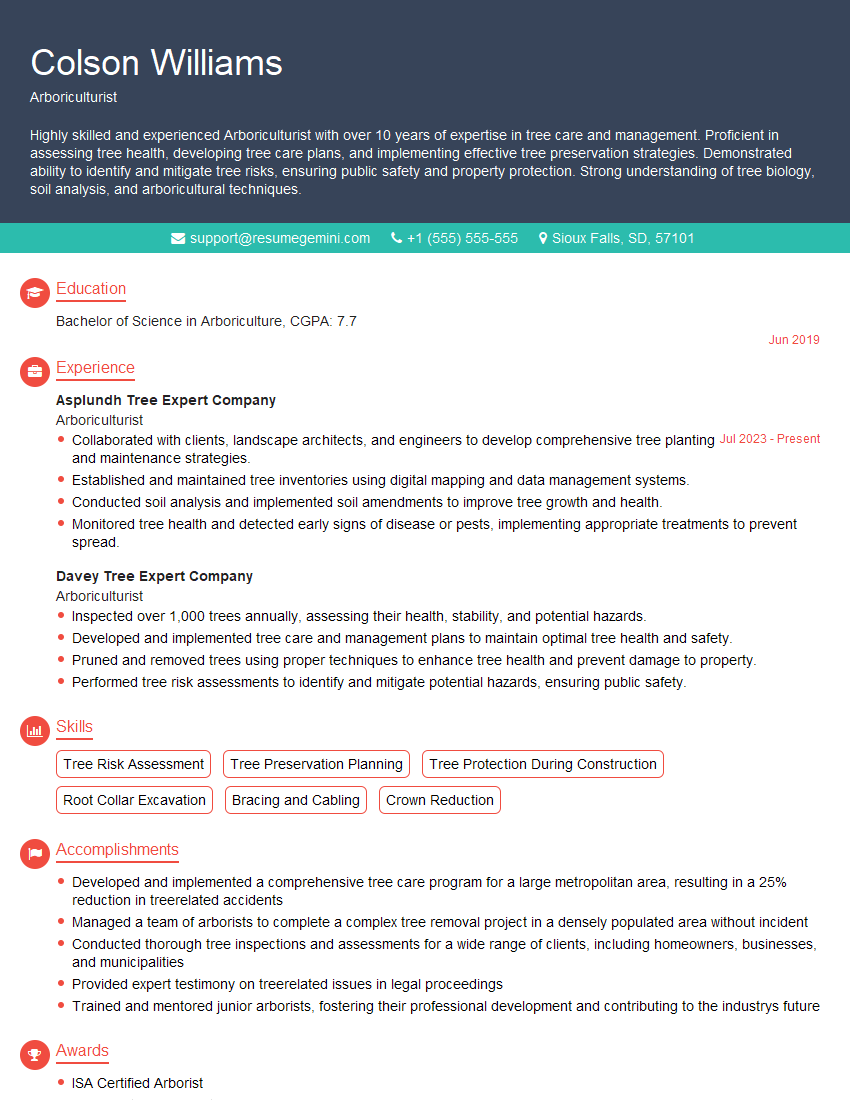
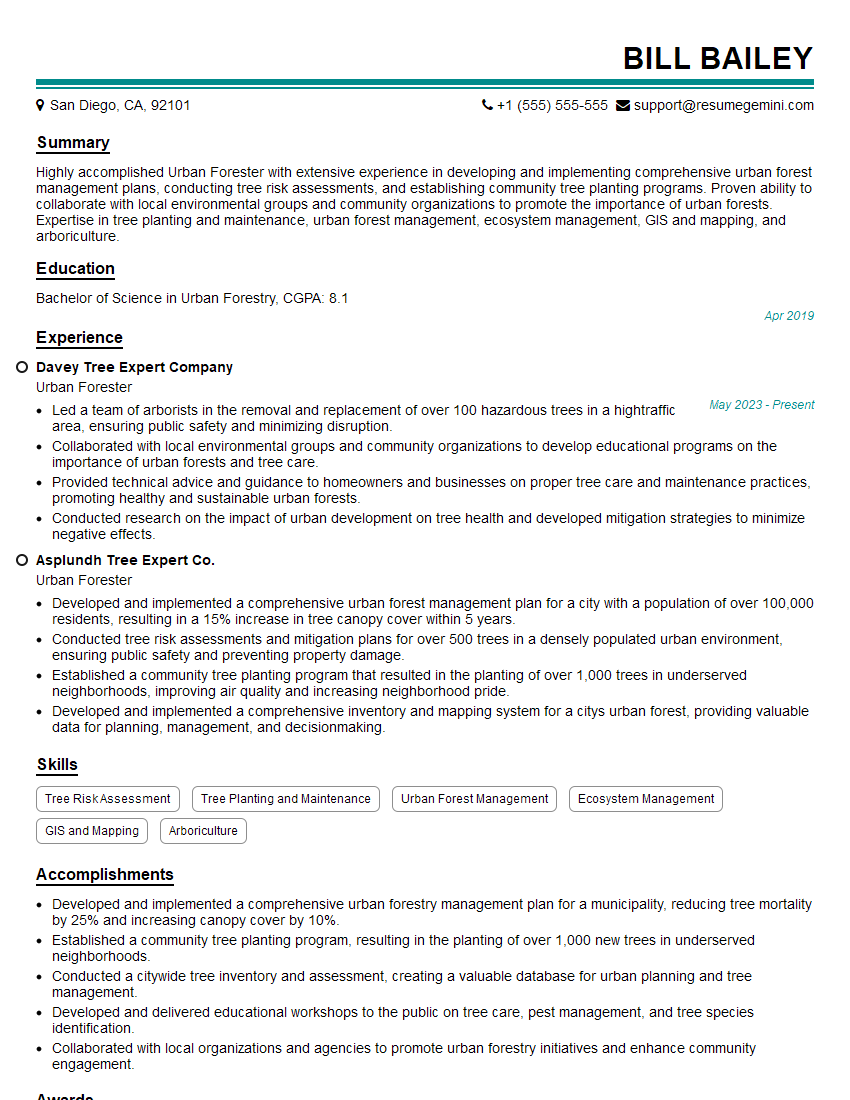
Mastering the ASTM F899 Standard Practice for Pruning Trees is crucial for career advancement in arboriculture and related fields. A strong understanding of this standard demonstrates your commitment to safe and effective tree care practices, enhancing your credibility and marketability. To maximize your job prospects, create an ATS-friendly resume that highlights your relevant skills and experience. ResumeGemini is a trusted resource that can help you build a professional and impactful resume. Examples of resumes tailored to ASTM F899 Standard Practice for Pruning Trees are available to guide you.

Explore more articles
Users Rating of Our Blogs
Share Your Experience
We value your feedback! Please rate our content and share your thoughts (optional).
What Readers Say About Our Blog
Very informative content, great job.
good