Interviews are more than just a Q&A session—they’re a chance to prove your worth. This blog dives into essential ATE Programming (Agilent, Teradyne) interview questions and expert tips to help you align your answers with what hiring managers are looking for. Start preparing to shine!
Questions Asked in ATE Programming (Agilent, Teradyne) Interview
Q 1. Explain the difference between parallel and serial testing in ATE.
The key difference between parallel and serial testing in Automated Test Equipment (ATE) lies in how many Units Under Test (UUTs) are tested simultaneously.
- Parallel Testing: Multiple UUTs are tested concurrently. Imagine it like an assembly line – several products are processed at the same time. This significantly increases throughput but requires more complex hardware and sophisticated synchronization mechanisms. It’s ideal for high-volume production environments where speed is paramount.
- Serial Testing: Only one UUT is tested at a time. Think of it as a single-lane road – only one car can pass through at a time. This is simpler to implement and debug, but it’s slower. It’s often preferred for low-volume production, complex tests, or situations where precise control over each UUT is necessary.
For example, in semiconductor testing, parallel testing might involve testing dozens of chips simultaneously on a single tester, while serial testing might be used for more complex devices requiring individual attention and specialized test setups.
Q 2. Describe your experience with Agilent V93000 or Teradyne UltraFLEX.
I have extensive experience with both Agilent V93000 and Teradyne UltraFLEX platforms. My work with the Agilent V93000 involved developing and maintaining test programs for various mixed-signal devices, focusing on optimizing test time and maximizing test coverage. I’m proficient in using the V93000’s powerful instrumentation and its integrated development environment (IDE). A recent project involved improving the accuracy of a specific test by leveraging the V93000’s advanced digital signal processing capabilities.
With Teradyne UltraFLEX, I’ve worked primarily on high-speed digital testing of complex integrated circuits. My experience includes using the UltraFLEX’s powerful pattern generation capabilities for functional tests and its built-in diagnostics for pinpointing hardware issues. A challenging project involved integrating a new high-speed digital interface into an existing test program, requiring meticulous timing analysis and careful consideration of signal integrity.
In both cases, I have a strong understanding of the hardware architecture and the underlying software frameworks, allowing me to troubleshoot efficiently and write optimized test programs.
Q 3. How do you troubleshoot a failing test program?
Troubleshooting a failing test program is a systematic process. I typically follow these steps:
- Reproduce the Failure: First, I ensure I can reliably reproduce the failure. This often involves carefully reviewing the test logs and attempting to isolate the conditions that lead to the failure.
- Analyze Test Logs and Diagnostics: The tester’s logs and built-in diagnostics provide crucial clues. I examine error messages, waveforms, and timing data to pinpoint the source of the problem.
- Isolate the Failing Test: Once the overall failure is identified, I systematically narrow down the problem to a specific test or sequence of tests within the program.
- Check Hardware: After examining the software, I verify that the hardware (fixtures, instruments) is functioning correctly and correctly connected. Sometimes a loose connection or a faulty instrument is the root cause.
- Examine Test Limits and Specifications: I often review the test limits and specifications to ensure they are accurate and realistic. Unexpectedly tight limits can cause false failures.
- Debug Using Instrumentation: I’ll utilize the ATE’s built-in instrumentation tools (oscilloscope, logic analyzer) to probe the signals at various points in the test sequence, observing actual behavior versus expected behavior.
- Review Test Code: Finally, I carefully examine the test program code itself, looking for syntax errors, logic flaws, or timing issues. This may involve stepping through the code line by line, using debugging tools within the ATE’s software environment.
For example, a recent issue involved a failing digital test. By using the logic analyzer and reviewing the waveforms, I discovered that a timing constraint was not properly configured in the test program. Correcting this timing resolved the issue.
Q 4. What are the common challenges in ATE programming?
ATE programming presents several common challenges:
- Timing Constraints: Precise timing control is critical. Meeting strict timing requirements while maintaining test accuracy can be challenging, especially with high-speed digital signals.
- Test Coverage: Achieving comprehensive test coverage without excessive test time is crucial. Balancing thorough testing with efficient throughput often requires careful planning and optimization.
- Debugging Complex Systems: Modern devices are complex. Debugging problems in these systems can be intricate, necessitating a systematic approach and effective debugging tools.
- Hardware Limitations: The ATE hardware itself can have limitations, such as signal integrity issues or resource constraints, which must be addressed during program development.
- Test Program Maintainability: Test programs need to be easily understood and maintained. Well-structured code with comprehensive documentation is essential for long-term success.
- Handling Variability: Manufacturing variations can lead to subtle differences in UUT behavior. Robust test programs need to account for this variability and identify genuine failures rather than marginal variations.
These challenges necessitate not only strong programming skills but also a deep understanding of the underlying hardware, device functionality, and test methodologies.
Q 5. Explain your experience with different test languages (e.g., TSP, Python, C++).
My experience spans several ATE programming languages. I am most proficient in TSP (Test Program Scripting language common to Agilent and Teradyne systems), which allows for efficient control of the ATE hardware and instrumentation. I use TSP to create and maintain test programs efficiently. I’ve worked with Python for tasks such as data analysis, report generation, and automating repetitive tasks associated with ATE test development, leveraging Python’s extensive libraries for data manipulation and visualization. I’ve also utilized C++ in more performance-critical sections of my programs, especially when integrating with custom hardware or requiring optimized signal processing algorithms.
For example, a recent project involved using Python to interface with a database to retrieve and manage test results from various ATE systems and generate comprehensive reports. The TSP language was used to control the specifics of running the ATE system, and C++ was incorporated for a specific high-speed data acquisition module. This approach maximized code efficiency and facilitated seamless data management.
Q 6. How do you handle timing constraints in ATE programming?
Handling timing constraints in ATE programming requires a precise and structured approach. Inaccurate timing can lead to false failures or undetected defects. Here’s how I address this:
- Precise Timing Specifications: I begin by meticulously defining the timing requirements based on device datasheets and specifications. This includes rise/fall times, setup/hold times, and clock frequencies.
- Timing Analysis Tools: I utilize the ATE’s built-in timing analysis tools to verify that the timing parameters within the test program are met. This involves using simulation and analysis features offered by the ATE software.
- Careful Code Design: I design the test program code with timing constraints in mind. This involves using appropriate timing functions and statements provided by the test language (e.g., `@wait`, `@delay` in TSP). I avoid unnecessary delays to enhance test speed without compromising accuracy.
- Hardware Synchronization: I also leverage the ATE’s hardware synchronization capabilities to ensure that signals are properly aligned and timed.
- Calibration and Compensation: In some cases, hardware calibration and compensation techniques are necessary to correct for slight timing variations in the ATE hardware itself.
For instance, in a high-speed digital test, a critical timing issue was found during debugging. Using the ATE’s timing analyzer, we identified a slight delay caused by a long cable length. Adding a timing compensation delay within the test program solved the problem, restoring the test accuracy.
Q 7. Describe your experience with digital and analog test techniques.
My experience encompasses both digital and analog test techniques. In digital testing, I’m proficient in functional tests, boundary scan, and high-speed digital pattern generation. This involves using various digital instruments like digital pattern generators, logic analyzers, and digital multimeters integrated into the ATE system. Functional tests validate the logic and functionality of the device’s digital sections by applying stimulus patterns and verifying the response.
Analog testing involves measurements like voltage, current, resistance, and impedance. I’m experienced in using instruments like oscilloscopes, source-measure units (SMUs), and precision multimeters. Techniques like DC parameter testing, AC parameter testing, and waveform analysis are essential here. This also includes testing analog-to-digital converters (ADCs) and digital-to-analog converters (DACs) to ensure linearity and accuracy.
For example, a recent project involved both digital and analog testing of a power management IC. Digital tests verified the control logic, while analog tests measured voltage and current levels under various operating conditions to ensure power efficiency and stability.
Q 8. How do you debug hardware issues in an ATE environment?
Debugging hardware issues in an ATE environment is a systematic process requiring a blend of hardware understanding, software expertise, and methodical troubleshooting. It’s like detective work, where you need to collect clues and systematically eliminate possibilities.
My approach typically starts with reviewing the error messages and logs generated by the ATE system (like Agilent V93000 or Teradyne UltraFLEX). This provides initial clues about the nature and location of the problem. Then, I’ll often employ these strategies:
- Visual Inspection: A careful examination of the DUT (Device Under Test), the test fixture, and the cabling connections. Loose connections, damaged components, or even dust can be the culprits. I once spent hours chasing an intermittent fault only to find a tiny piece of debris bridging two pins on a connector!
- Signal Tracing: Using oscilloscopes, logic analyzers, and multimeters to trace signals throughout the test path. This helps pinpoint where the signal deviates from the expected behavior. This is especially crucial for identifying timing issues or noise problems.
- Isolation and Substitution: If the problem is localized to a specific area, I systematically replace components (e.g., swapping out a suspected faulty relay in the fixture) or even the DUT itself to isolate the faulty element. This ‘divide and conquer’ method is very effective.
- Software Debugging: Checking the test program itself for errors in timing, voltage levels, or measurement sequences. This might involve using a simulator or stepping through the code line by line to see how the program interacts with the hardware.
- Calibration and Verification: Ensuring that all ATE instruments are properly calibrated and that the test fixture is functioning correctly. A miscalibrated instrument can produce erroneous results leading to incorrect diagnosis.
Documenting each step of the debugging process is crucial for reproducibility and for future reference. This helps in solving similar problems more efficiently down the line. Proper documentation also aids collaboration within a team.
Q 9. Explain your experience with different test fixtures and handlers.
My experience with test fixtures and handlers spans a wide range, from simple contact fixtures for discrete components to complex handlers for surface mount devices (SMDs) and integrated circuits (ICs). I’ve worked extensively with various technologies, including:
- Contact Fixtures: These are used for devices with easily accessible pins or pads. I’ve designed and modified several fixtures, including those requiring precision alignment and high-current handling. In one project, we used a custom-designed fixture with spring-loaded probes to reliably contact very small pitch devices.
- Vacuum Handlers: I’ve programmed ATE systems to interface with vacuum handlers for high-throughput testing of SMDs and wafers. This includes dealing with handler communication protocols and optimizing the test flow to minimize cycle time.
- Probe Cards: My experience extends to micro-probing applications, particularly using probe cards for high-speed memory testing. This involves understanding the intricate complexities of probe card design and the impact it has on signal integrity and test results.
- Load Boards: These boards interface with the DUT and provide additional test points or features. I’ve designed load boards for both simplifying test access and for implementing specialized test functionality.
I’m comfortable working with different handler communication protocols and integrating diverse handling systems into the ATE environment. Understanding the mechanical constraints and electrical characteristics of each handler is paramount to ensure efficient and reliable testing.
Q 10. How do you ensure the accuracy and reliability of test results?
Ensuring accurate and reliable test results is paramount in ATE programming. It’s not just about getting the numbers; it’s about ensuring those numbers accurately reflect the true performance of the DUT. My approach is multi-faceted:
- Calibration and Verification: Regular calibration of all instruments, including voltage sources, current sources, oscilloscopes, and other test equipment, is crucial. This minimizes the impact of instrument drift on measurement accuracy. We also perform periodic verification using known-good devices to confirm the accuracy of the entire test system.
- Statistical Process Control (SPC): Implementing SPC techniques allows continuous monitoring of test data. This involves tracking key parameters and using statistical analysis to identify trends and potential issues that could affect reliability. Control charts and other statistical tools are indispensable.
- Repeatability and Reproducibility Studies: Conducting these studies helps determine the consistency of our test results. It’s crucial to demonstrate that repeated measurements on the same device produce similar results and that the results are consistent across different ATE systems or operators. This ensures the test methodology is robust.
- Error Handling and Diagnostics: The test program should contain robust error handling mechanisms to detect and report issues during testing. This allows for the early identification of potential faults and prevents inaccurate data from being generated.
- Traceability: Maintaining comprehensive records of all calibration, verification, and testing activities. This ensures traceability throughout the testing process, facilitates debugging, and supports compliance requirements.
Ultimately, ensuring accuracy and reliability is an ongoing process requiring vigilance, meticulous attention to detail, and a commitment to quality.
Q 11. Describe your experience with data acquisition and analysis.
Data acquisition and analysis are core aspects of my ATE programming experience. It’s not simply about collecting data; it’s about extracting meaningful information from it to make informed decisions.
My experience includes:
- Data Acquisition: Utilizing various ATE system functionalities to acquire data from different instruments, including digital multimeters, oscilloscopes, and specialized test instruments. I’m proficient in configuring data logging parameters, sampling rates, and triggering mechanisms to capture relevant information.
- Data Formatting and Storage: Converting raw data into a usable format, typically CSV or other structured formats. Storing this data in a well-organized manner, often using database systems for easy retrieval and analysis.
- Data Analysis: Employing statistical methods and tools (e.g., spreadsheets, specialized data analysis software) to analyze the data. This might involve calculating statistical measures such as mean, standard deviation, and histograms to assess the performance of the DUTs. I’ve also used more advanced techniques such as regression analysis to model device behavior.
- Visualization: Presenting data in a clear and concise manner using graphs, charts, and other visual aids to facilitate understanding and communication of the results.
In one project, we used data analysis to identify a subtle correlation between a specific manufacturing process parameter and device failure rate. This allowed us to optimize the manufacturing process and improve product yield significantly.
Q 12. How do you manage large and complex test programs?
Managing large and complex test programs requires a structured and modular approach. Think of it like building a large house – you wouldn’t build it all at once! I utilize these strategies:
- Modular Programming: Breaking down the test program into smaller, self-contained modules, each with a specific function. This simplifies development, testing, and debugging. For example, one module might handle power supply control, another might handle data acquisition, and another might perform specific measurements.
- Version Control: Employing a version control system (like Git) to track changes, manage different program versions, and facilitate collaboration among team members. This ensures that the project remains well-organized even with multiple contributors.
- Code Documentation and Comments: Adding clear and concise comments to explain the purpose and functionality of each section of the code. This improves readability and maintainability, crucial when working with complex programs that may require modifications over time.
- Test Program Generators (TPGs): Leveraging TPGs to automatically generate portions of the test program, especially when dealing with repetitive tasks or numerous similar devices. This reduces development time and decreases the risk of errors.
- Test Program Libraries: Creating reusable libraries of commonly used functions and routines. This promotes consistency and reduces redundancy across different test programs.
A well-structured program, coupled with diligent use of version control and thorough documentation, enables efficient management, easy modifications, and quick problem-solving even within extensive test programs.
Q 13. What are your preferred methods for test program optimization?
Optimizing test programs is critical for maximizing throughput and minimizing test time. It’s about finding the right balance between thorough testing and efficient execution.
My preferred methods include:
- Code Profiling: Analyzing the test program to identify bottlenecks and areas for improvement. Profiling tools can pinpoint sections of code consuming excessive time or resources.
- Algorithmic Optimization: Improving the efficiency of algorithms used in data processing and analysis. Sometimes a simple change in the algorithm can drastically reduce execution time.
- Parallel Processing: Implementing parallel processing techniques where possible to perform multiple tests or operations concurrently. Modern ATE systems often support parallel execution, which significantly speeds up the overall test process.
- Hardware Acceleration: Leveraging specialized hardware, such as digital signal processors (DSPs) or field-programmable gate arrays (FPGAs), to accelerate time-critical operations. This is particularly useful in high-speed testing applications.
- Smart Test Strategies: Employing techniques like binning, adaptive testing, and early failure detection to shorten test time by focusing only on the necessary tests based on initial results. This is a powerful way to reduce overall test time without sacrificing thoroughness.
Optimization is an iterative process. I continually monitor and analyze test performance, identifying areas for improvement, and implementing changes to enhance efficiency without compromising accuracy or reliability.
Q 14. Explain your experience with different types of ATE hardware.
My experience with ATE hardware encompasses a broad range of instruments and systems, primarily from Agilent and Teradyne. This includes:
- Digital Multimeters (DMMs): I’m proficient in using DMMs for measuring voltage, current, and resistance. This involves understanding the different measurement modes and optimizing settings for accuracy and speed.
- Oscilloscopes: I use oscilloscopes for analyzing waveforms and timing characteristics, including identifying signal integrity issues and determining rise and fall times.
- Source-Measure Units (SMUs): I’ve extensively used SMUs for applying and measuring various voltages and currents with high precision. Understanding the limitations and capabilities of these instruments is key to designing accurate and reliable tests.
- Digital Pattern Generators (DPGs) and Digital Pattern Analyzers (DPAs): These instruments are essential for testing digital devices, including memory devices. Experience in configuring and using these instruments for high-speed pattern generation and analysis is critical.
- Power Supplies: I am adept at controlling and monitoring power supplies to accurately deliver the required power to the DUT. Precise power control is essential in many test procedures.
- ATE System Software and Hardware Interfaces: I am skilled in programming the ATE system software, configuring various instruments and handlers, and managing the overall hardware configuration. This includes utilizing GPIB, Ethernet, and other communication protocols.
Familiarity with different hardware types allows me to develop effective test strategies that leverage the capabilities of each instrument to ensure high-quality test results. This also enables me to troubleshoot hardware-related problems efficiently.
Q 15. How do you incorporate DFT principles into test program development?
Incorporating Design for Test (DFT) principles into test program development is crucial for creating efficient and effective test solutions. DFT involves designing the product from the start with testability in mind, leading to faster and more thorough testing later. This reduces the overall cost and time spent on testing.
How I do it:
- Scan Chain Implementation: I collaborate with design engineers to implement scan chains. This allows for easy access to internal nodes of the device, enabling comprehensive testing of the logic. For example, I might specify the placement of scan chains in a specific area of the chip to test critical registers more effectively.
- Built-in Self-Test (BIST): I utilize BIST structures to perform some self-testing, thereby reducing the reliance on external test equipment. This saves test time and reduces the complexity of the ATE program. A practical example is incorporating Linear Feedback Shift Registers (LFSRs) to generate test patterns and compress results within the chip.
- JTAG Boundary Scan: I leverage JTAG boundary scan testing for accessing and controlling the device’s pins and internal components, allowing for comprehensive testing of interconnects and external components without requiring direct physical probe access to all nodes.
- Test Access Ports (TAPs): I make use of TAPs to provide controlled access to the device’s internal components, simplifying the test program and improving testing accuracy.
By actively participating in the design review process and specifying DFT requirements early on, I help to ensure that the final product is highly testable, leading to efficient and cost-effective ATE programs.
Career Expert Tips:
- Ace those interviews! Prepare effectively by reviewing the Top 50 Most Common Interview Questions on ResumeGemini.
- Navigate your job search with confidence! Explore a wide range of Career Tips on ResumeGemini. Learn about common challenges and recommendations to overcome them.
- Craft the perfect resume! Master the Art of Resume Writing with ResumeGemini’s guide. Showcase your unique qualifications and achievements effectively.
- Don’t miss out on holiday savings! Build your dream resume with ResumeGemini’s ATS optimized templates.
Q 16. How do you manage test program version control?
Version control is paramount in ATE program development to track changes, manage revisions, and prevent conflicts. I employ a robust version control system like Git, coupled with a collaborative platform (e.g., GitLab, GitHub).
My approach involves:
- Centralized Repository: All test programs and related documentation are stored in a central repository, ensuring everyone works with the most up-to-date version.
- Branching and Merging: I utilize branching strategies (e.g., feature branches) to develop new features or bug fixes in isolation. This prevents conflicts and allows parallel development.
- Regular Commits with Meaningful Messages: Frequent commits with clear and concise descriptions of changes ensure traceability and facilitate debugging. This allows anyone to look back at the history and understand why and what change was implemented.
- Code Reviews: I participate in thorough code reviews to ensure code quality, adherence to standards, and efficient use of ATE resources.
- Tagging and Releases: I use tags to mark specific versions (e.g., releases), enabling easy rollback to previous stable versions if needed.
This systematic approach prevents version conflicts, guarantees proper documentation, and greatly improves collaboration during test program development and maintenance.
Q 17. Describe your experience with different test methodologies.
My experience encompasses a variety of test methodologies, including:
- Functional Test: This involves verifying the device’s functionality according to its specifications. For example, I’ve developed functional tests that verify the operation of digital communication interfaces (e.g., SPI, I2C) according to their defined timing diagrams and data protocols.
- Parametric Test: This examines the device’s electrical characteristics, such as voltage, current, and timing parameters. An example is measuring the voltage drop across a power supply and comparing it to its specification.
- In-Circuit Test (ICT): I’ve worked with ICT to test printed circuit boards (PCBs) to ensure proper connection between components and identify shorts or opens. This is crucial during manufacturing.
- Boundary Scan Test: As mentioned before, I’m proficient in using the JTAG standard and boundary scan for testing internal interconnects and components without needing to access all nodes physically.
- Analog Test: This involves using specialized instruments and techniques to measure analog signals, perform waveform analysis, and verify performance across different frequency ranges. A recent example includes testing the performance of an ADC (Analog-to-Digital Converter) using waveform analysis to check conversion accuracy and speed.
I adapt my methodology to the specific requirements of the device under test (DUT), always striving for optimal efficiency and coverage.
Q 18. How do you work with cross-functional teams in a test environment?
Effective collaboration with cross-functional teams (design, manufacturing, quality assurance) is key to successful ATE program development. I prioritize open communication, clear expectations, and a proactive approach.
My strategies include:
- Regular Meetings: Consistent communication through meetings is crucial to staying aligned on project goals, addressing challenges proactively, and resolving issues promptly.
- Collaborative Tools: Utilizing platforms such as shared documentation, issue tracking systems, and version control systems fosters seamless collaboration and transparent progress tracking.
- Active Listening and Feedback: I actively listen to input from other team members, incorporating their valuable perspectives to improve test program design and address potential bottlenecks.
- Clear Documentation: I maintain comprehensive documentation of test programs, test procedures, and results, ensuring all stakeholders have access to crucial information.
- Conflict Resolution: If conflicts arise, I facilitate productive discussions to find mutually agreeable solutions, focusing on common goals and technical solutions.
By embracing collaboration, I ensure that all stakeholders are informed, involved, and aligned towards a shared objective, leading to more effective and successful projects.
Q 19. What is your experience with statistical process control (SPC)?
Statistical Process Control (SPC) is essential for monitoring and improving the manufacturing process. I utilize SPC techniques to analyze test data, identify trends, and prevent defects.
My experience includes:
- Control Charts: I create and interpret control charts (e.g., X-bar and R charts) to monitor process variability and identify out-of-control conditions. This helps quickly pinpoint and address the source of any process drift.
- Process Capability Analysis: I perform process capability analyses (e.g., Cp, Cpk) to assess the ability of a process to meet specifications. This allows informed decisions on process improvements or adjustments.
- Data Analysis: I use statistical software and techniques to analyze large datasets, identify patterns, and draw meaningful conclusions about the manufacturing process. For example, if I see a pattern of failures linked to a specific component supplier, I can initiate a root cause analysis to address the problem.
By applying SPC principles, I contribute to identifying and resolving issues that may affect manufacturing yields and product quality, contributing to greater efficiency and higher quality.
Q 20. How do you document and maintain test programs?
Documentation and maintenance are crucial for ensuring the long-term usability and reliability of test programs. My approach involves:
- Comprehensive Documentation: I create detailed documentation that includes program descriptions, flowcharts, code comments, and test procedures. This documentation should be easily understandable by both experienced and less experienced engineers.
- Version Control: As previously stated, I utilize version control to track changes, maintain revision history, and manage different versions of the test programs.
- Code Comments: I use clear and concise comments in the code to explain its functionality and purpose. This makes maintenance easier and allows others to quickly understand the code’s logic.
- Test Reports: I generate detailed test reports that summarize test results, identify failures, and provide diagnostic information. This allows for efficient tracking of trends and quick identification of potential issues.
- Regular Reviews: I conduct regular reviews of the documentation and code to ensure its accuracy, completeness, and maintainability.
This meticulous approach makes the test programs easily maintainable, understandable and provides a reliable reference for future use and debugging.
Q 21. Explain your experience with test program simulation and verification.
Simulation and verification are essential steps in developing reliable and efficient ATE programs. Before deploying a program on actual hardware, I use simulation to verify its functionality and identify potential issues.
My approach includes:
- Test Program Simulation: I use dedicated simulators provided by Agilent and Teradyne ATE platforms to run the test program virtually, ensuring the program’s logic is correct and that there are no syntax or semantic errors before applying them to the actual hardware. This is very useful in identifying logical errors before they impact physical tests.
- Hardware-in-the-Loop (HIL) Simulation: For more complex DUTs, I incorporate HIL simulation. This involves simulating the DUT’s behavior and integrating it with the test program. This technique helps to test the interactions between the ATE system and the DUT in a controlled environment.
- Unit Testing: I break the test program into smaller units and test each individually to isolate and resolve specific issues. This modular approach simplifies debugging and reduces testing time.
- Integration Testing: Once the individual units are tested, I integrate them to verify the overall functionality of the entire test program.
Through simulation and verification, I greatly reduce the risk of errors and ensure that the ATE program functions correctly and efficiently on actual hardware, saving valuable time and resources.
Q 22. Describe your experience with failure analysis and root cause identification.
Failure analysis is a crucial part of ATE programming. When a unit under test (UUT) fails, my approach involves a systematic investigation to pinpoint the root cause. This often starts with analyzing the test results, looking for patterns or specific test points consistently failing. I’ll then use the diagnostic capabilities of the ATE system (like Agilent’s V93000 or Teradyne’s UltraFLEX) to gather more detailed information. This might include waveform analysis, probing internal nodes, or even using specialized instruments like oscilloscopes or logic analyzers connected to the ATE.
For example, if a power supply consistently fails its voltage regulation test, I might look at the waveforms to identify excessive noise or ripple. If the problem is intermittent, I might increase the test repetitions to improve the chances of capturing the failure. Once a potential failure area is identified, further investigation, including visual inspection and perhaps even destructive physical analysis (DPA) might be necessary. Documenting each step, including observations and hypotheses, is paramount for efficient troubleshooting and preventing future occurrences. This meticulous approach ensures that the root cause is identified and addressed, not just the symptoms.
Q 23. How do you balance development time and test coverage?
Balancing development time and test coverage is a constant challenge in ATE programming. It’s a trade-off between creating comprehensive tests (high coverage) and meeting project deadlines (short development time). My strategy involves prioritizing tests based on risk. Tests that cover critical functionalities and components with high failure rates are prioritized first. This risk-based approach, often using a Failure Modes and Effects Analysis (FMEA), helps to focus development efforts on the most important aspects.
Another technique is to use a modular test architecture. This allows you to develop and test individual modules independently and then combine them into a larger test program. This approach reduces complexity and enables parallel development, speeding up the process without compromising coverage. Furthermore, I leverage automated test generation tools whenever possible. These tools can generate tests automatically, based on specifications or models, significantly shortening the development time. Regular review meetings and clear communication with stakeholders ensure that scope creep is managed, and expectations are realistic.
Q 24. What are some best practices for designing robust test programs?
Designing robust test programs requires careful consideration of several factors. First, proper error handling is crucial. The program should gracefully handle unexpected events, such as short circuits or open circuits, without crashing. This usually involves incorporating checks and error-handling routines throughout the code. For example, a simple check might be to verify that a pin is within a specific voltage range before continuing with the test sequence.
Second, the tests should be designed to be repeatable and reliable. This means minimizing external factors that could influence the results, such as temperature variations or noise. Using shielded cables, proper grounding, and temperature-controlled chambers can help improve reliability. Finally, comprehensive documentation is essential. The program should include clear comments explaining the purpose of each test, and the expected results. Using a version control system for test program code ensures that modifications are tracked and easily reversible. A robust program also includes self-diagnostics to detect and report system faults. Think of it like building a strong foundation – ensuring that each part is well-designed and thoroughly tested leads to a reliable and maintainable system.
Q 25. Explain your experience with different types of test data formats.
My experience encompasses various test data formats, including standard formats like CSV, and specialized formats used by ATE systems. CSV (Comma Separated Values) files are commonly used for storing test data, because they are simple and easy to import into spreadsheets. Specialized formats are often vendor-specific. For instance, Agilent’s V93000 might use its proprietary format for storing waveform data and test results. Teradyne’s systems often use their own database structures for storing and managing large datasets.
Understanding these formats is critical for data analysis and reporting. I’m proficient in using scripting languages such as Python or LabVIEW to parse and process these data files. This enables me to perform custom analysis, generate reports, and integrate data from different sources. For instance, I might use Python to read data from a CSV file, perform statistical analysis, and then generate a custom report summarizing the test results. The ability to manipulate these data formats efficiently is key to providing valuable insights from test results.
Q 26. How do you prioritize test cases for maximum efficiency?
Prioritizing test cases is about maximizing efficiency while ensuring adequate coverage. I utilize a multi-faceted approach involving risk assessment and cost-benefit analysis. Tests that detect critical failures and have a high probability of occurrence are prioritized first. This is often determined through historical data, Failure Mode and Effects Analysis (FMEA), and risk assessment techniques. The Pareto principle (80/20 rule) can help identify the vital few tests that cover most of the potential failures.
Another factor is the cost of performing the tests, including time and resources. Expensive or time-consuming tests might be prioritized lower, unless they’re critical for safety or functionality. Test cases are organized into suites, categorized by functionality or importance, allowing for focused testing based on requirements or time constraints. Efficient test execution relies on strategic prioritization and intelligent test suite design. It’s like building a house – you wouldn’t start by installing the light fixtures before laying the foundation.
Q 27. Describe your experience with using test management software.
My experience with test management software includes using various systems such as TestRail, Jira, and HP ALM. These tools are essential for managing the entire test lifecycle, from planning and execution to reporting and analysis. They help to track requirements, manage test cases, and monitor progress. For example, in TestRail, I can create test plans, assign tests to team members, and track test execution results. The reporting features provide a comprehensive overview of the testing process, identifying areas that need attention.
Integration with ATE systems is crucial. Many test management software solutions offer interfaces to import test results automatically, eliminating manual data entry and reducing errors. This automated integration streamlines the entire process, allowing for more efficient tracking of progress and identification of potential issues. These systems not only improve the efficiency of test management but also enhance communication and collaboration among team members, fostering a smooth and organized testing process.
Q 28. How do you ensure your test programs meet industry standards?
Ensuring test programs meet industry standards is paramount. This involves adhering to relevant standards such as IPC (Institute for Printed Circuits) standards for board testing, and ISO 9001 (Quality Management Systems) standards for overall quality. The specific standards applicable will vary depending on the industry and product. For example, automotive electronics testing often requires compliance with ISO 26262 (Functional safety).
Meeting these standards requires a disciplined approach, including rigorous design reviews, thorough documentation, and rigorous testing procedures. Code reviews are critical to ensure that the code is well-written, efficient, and complies with coding standards. Traceability is also vital – ensuring that each test case can be linked back to the corresponding requirement. Regular audits and quality control checks help to monitor compliance and identify areas for improvement. Ultimately, it’s not just about following the rules; it’s about ensuring the highest level of quality and reliability in the products we test.
Key Topics to Learn for ATE Programming (Agilent, Teradyne) Interview
- Hardware & Software Interaction: Understanding the interplay between ATE hardware (handlers, testers, instruments) and the programming software (e.g., TestStand, VEE). This includes data acquisition, instrument control, and error handling.
- Test Program Development: Designing efficient and robust test programs, encompassing test sequence creation, data analysis, and report generation. Practical application involves optimizing test times and minimizing test costs.
- Digital & Analog Test Techniques: Familiarization with various test methodologies for digital and analog circuits, including DC parametric tests, AC measurements, and functional testing. This includes understanding limitations and choosing appropriate test methods.
- Debugging and Troubleshooting: Developing effective debugging strategies to identify and resolve issues in test programs and hardware setups. Practical skills involve using debugging tools and interpreting error messages.
- Data Analysis and Reporting: Analyzing test data to identify failures, trends, and yield improvements. This includes generating comprehensive reports to communicate test results effectively.
- ATE System Architecture: Understanding the overall architecture of Agilent and Teradyne ATE systems, including the various components and their functions. This forms the base for efficient troubleshooting and program design.
- Programming Languages & Scripting: Proficiency in relevant programming languages (e.g., LabVIEW, Python, C#) and scripting languages used in ATE programming environments.
- Test Limit and Specification Definition: Understanding how to define and interpret test limits and specifications based on product requirements and industry standards. This is crucial for effective test program development.
Next Steps
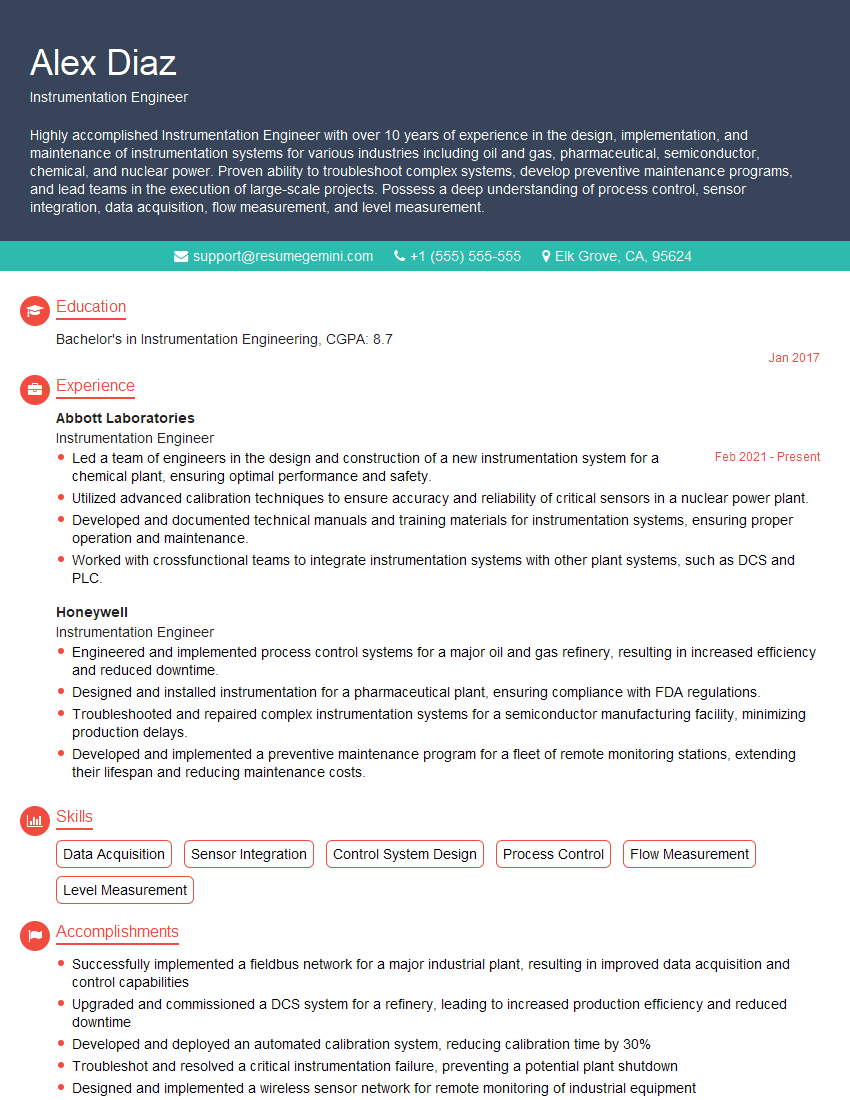
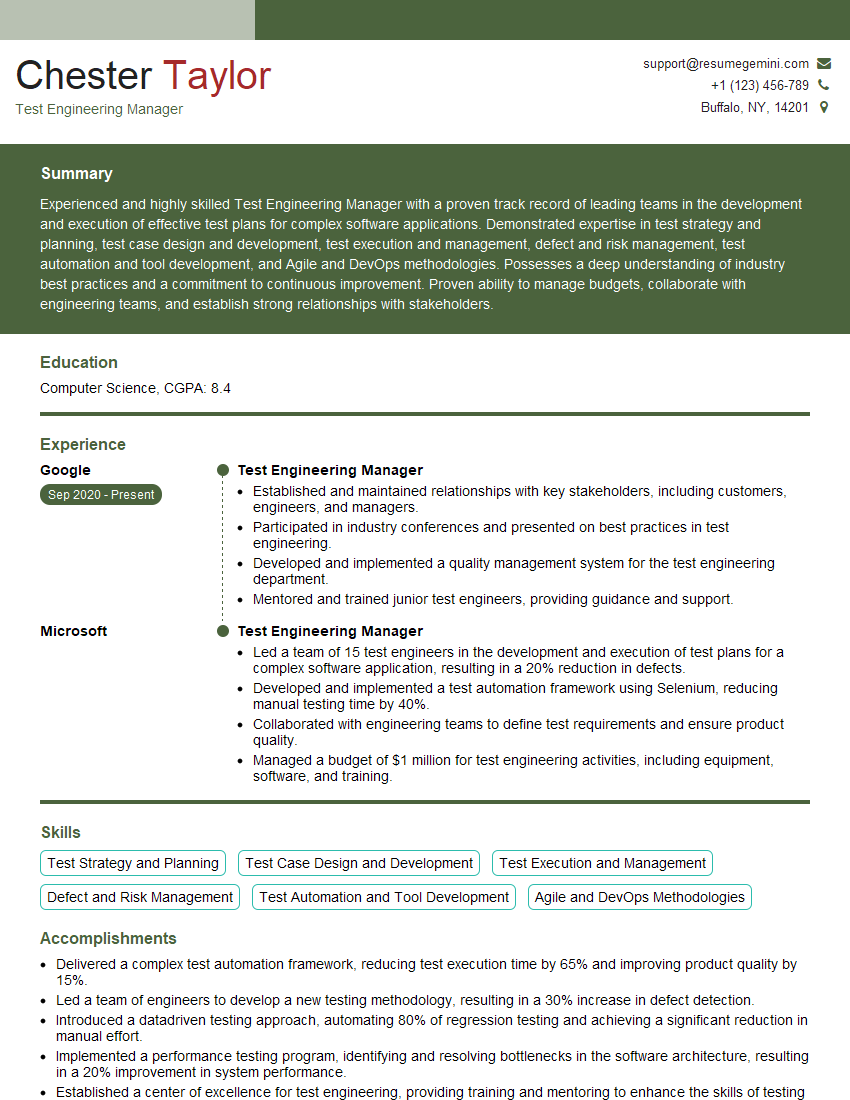
Mastering ATE programming with Agilent and Teradyne systems opens doors to exciting and rewarding career opportunities in the electronics manufacturing industry. These skills are highly sought after, leading to increased earning potential and career advancement. To maximize your job prospects, it’s crucial to present your qualifications effectively. Creating an ATS-friendly resume is paramount for getting your application noticed. We strongly encourage you to utilize ResumeGemini to build a compelling and professional resume. ResumeGemini offers a user-friendly platform and provides examples of resumes tailored to ATE Programming (Agilent, Teradyne) roles, helping you showcase your skills and experience effectively.
Explore more articles
Users Rating of Our Blogs
Share Your Experience
We value your feedback! Please rate our content and share your thoughts (optional).
What Readers Say About Our Blog
Very informative content, great job.
good