The right preparation can turn an interview into an opportunity to showcase your expertise. This guide to Athletic Facility Management interview questions is your ultimate resource, providing key insights and tips to help you ace your responses and stand out as a top candidate.
Questions Asked in Athletic Facility Management Interview
Q 1. Describe your experience managing budgets for athletic facilities.
Budget management in athletic facilities is a multifaceted process requiring careful planning, monitoring, and analysis. It’s not just about tracking expenses; it’s about strategically allocating resources to maximize facility performance and user satisfaction. My experience involves developing and managing budgets ranging from $500,000 to over $2 million annually. This includes everything from capital improvements (e.g., new turf, equipment upgrades) to operational expenses (e.g., utilities, staff salaries, maintenance supplies). I utilize budgeting software, typically cloud-based, to track expenses against the budget in real-time. This enables proactive adjustments based on actual spending and anticipated needs. For instance, during one project, we identified a potential budget overrun in utility costs due to unexpectedly high usage during a summer heatwave. By implementing energy-saving measures, such as upgrading lighting fixtures and adjusting HVAC settings during off-peak hours, we successfully managed to stay within the allocated budget.
I also employ zero-based budgeting techniques, requiring justification for every expense item in each new fiscal year. This ensures efficient resource allocation and prevents unnecessary spending. Furthermore, I regularly present budget reports to stakeholders, highlighting performance, variances, and potential risks. Clear communication is key to securing buy-in and ensuring that all parties understand the financial implications of decisions related to facility operation and maintenance.
Q 2. How do you prioritize maintenance tasks in a high-volume athletic facility?
Prioritizing maintenance in a high-volume facility requires a systematic approach. I use a combination of methods including a prioritized task list based on factors such as urgency, safety, and impact on user experience. This typically involves assigning risk levels (e.g., high, medium, low) to each task, using a risk matrix that considers the likelihood of failure and the severity of the consequences. For example, a cracked basketball court surface poses a higher risk (and therefore higher priority) than a minor scratch on a wall.
I also utilize a computerized maintenance management system (CMMS) to schedule preventative maintenance, which greatly reduces the likelihood of urgent repairs and ensures the longevity of equipment. This system tracks equipment lifecycles, enabling proactive replacement before failures occur. In addition to the CMMS, I conduct regular facility inspections, noting and recording issues directly in the system. This ensures a comprehensive overview of maintenance needs and facilitates effective task assignment to our maintenance team. A weekly review of the CMMS allows for dynamic adjustments to the priority list based on new issues or changing needs. The system allows for assigning tasks based on skill sets, ensuring the right person is assigned the right job. This process minimizes downtime and maximizes operational efficiency.
Q 3. What safety protocols do you implement to ensure a safe environment?
Safety is paramount in any athletic facility. My approach to safety protocol implementation is proactive and multi-layered. It begins with comprehensive staff training on emergency procedures, including CPR, first aid, and the use of AEDs. Regular drills ensure staff preparedness for various scenarios, such as evacuations, injuries, and equipment malfunctions. We maintain detailed emergency plans, clearly outlining roles, responsibilities, and communication protocols.
Beyond staff training, we maintain meticulous facility inspections, focusing on potential hazards such as tripping hazards, damaged equipment, and inadequate lighting. We ensure compliance with all relevant safety standards and regulations, including OSHA guidelines. Regular checks of safety equipment, such as fire extinguishers and emergency lighting, are critical. Signage is crucial for guiding users and highlighting safety information. We use clear, concise signage to indicate emergency exits, first aid stations, and specific facility rules. Furthermore, a robust reporting system allows staff and users to easily report safety concerns. These reports are immediately reviewed and addressed, enhancing the safety of the facility.
Q 4. Explain your experience with scheduling and booking athletic facilities.
Efficient scheduling and booking systems are crucial for maximizing facility usage. My experience includes using both proprietary software and custom-built scheduling systems. The chosen system depends on the scale and complexity of the facility. For instance, a smaller facility might use a simple calendar-based system, while a large complex might require a sophisticated system with features like online booking, automated reminders, and integration with accounting software. Regardless of the system, clarity and ease of use are essential for users. It’s important for the system to be intuitive, so users can easily find available times and book facilities without assistance.
The system must also support multiple user groups with different access levels and booking privileges (e.g., staff, students, external organizations). Prioritization for different user groups may be necessary depending on the facility’s mission and users’ needs. For instance, school teams will often be prioritized over external rentals during peak hours. A robust reporting module allows for tracking usage patterns, identifying peak demand periods, and optimizing scheduling strategies. Effective communication is essential, with regular updates and reminders sent to users to manage bookings and prevent conflicts. In my experience, a well-designed scheduling system reduces administrative overhead and increases user satisfaction.
Q 5. How do you handle unexpected facility repairs or emergencies?
Handling unexpected repairs and emergencies requires a quick response and a well-defined process. This starts with having a pre-established emergency response plan that includes contact information for key personnel, vendors, and emergency services. We maintain a list of pre-qualified and reliable contractors who can quickly address various issues, from plumbing emergencies to electrical problems.
The first step in handling an unexpected repair is immediate assessment to determine the severity of the problem and the potential safety risks involved. A clear chain of command is essential for efficient communication and decision-making. Depending on the urgency, repairs may be handled internally or by outsourcing to a specialist contractor. Transparent communication with users is crucial to keep them informed of any disruptions and the anticipated timeline for the repair. Documentation is essential, recording the nature of the problem, the repair process, and any associated costs. Post-incident reviews are crucial for identifying areas of improvement in the facility’s maintenance and emergency response systems. For example, we conducted a post-incident review after a burst pipe which helped us identify an area requiring more frequent inspections.
Q 6. Describe your experience with facility maintenance software or systems.
My experience encompasses several facility maintenance software systems, both cloud-based and on-premise. I have worked with systems such as UpKeep, Fiix, and FacilityDude. These systems typically include features for work order management, preventative maintenance scheduling, inventory tracking, and reporting. The selection of a specific system depends on the size and complexity of the facility, and the budget available. The core functionality is similar across different systems, but the user interface and specific features can vary significantly.
Using a CMMS has significantly improved our efficiency by centralizing maintenance information, reducing downtime, and improving communication within the maintenance team. For example, the use of mobile apps allows maintenance staff to access work orders, update progress, and record materials used directly from the field. The system also automatically generates reports on maintenance costs, equipment lifespan, and other key metrics. Data analysis from the CMMS allows for identifying trends, such as frequent repairs on a particular piece of equipment, indicating the need for preventative maintenance or even replacement. This data-driven approach significantly reduces reactive maintenance costs and increases overall operational efficiency.
Q 7. How do you ensure compliance with relevant health and safety regulations?
Ensuring compliance with health and safety regulations is a continuous process, not a one-time task. This requires a thorough understanding of all relevant regulations, including OSHA, ADA, and local building codes. We maintain a comprehensive compliance program that includes regular inspections, staff training, and documentation. This includes keeping up-to-date records of all safety inspections, maintenance logs, and training certificates.
We use a combination of internal audits and external inspections to ensure we meet all regulatory requirements. Our internal audits focus on identifying potential compliance gaps and proactively addressing any issues. External inspections, performed by qualified professionals, provide an independent assessment of our compliance status. Any identified deficiencies are addressed promptly to avoid potential fines or penalties. We also have a dedicated compliance officer responsible for staying informed about changes in regulations and ensuring that the facility maintains compliance. This involves ongoing training for staff on current safety practices, addressing potential compliance gaps and ensuring regulatory updates are integrated into our policies and procedures. This multi-faceted approach guarantees ongoing compliance and a safe environment for all users.
Q 8. What strategies do you use to maintain the cleanliness and hygiene of facilities?
Maintaining cleanliness and hygiene in an athletic facility is paramount for the health and safety of users and staff. My strategy is multifaceted, focusing on preventative measures, regular cleaning, and proactive monitoring.
- Preventative Measures: This involves providing ample hand sanitizing stations, clearly marked waste disposal areas, and encouraging users to wipe down equipment after use. We implement a robust cleaning schedule, targeting high-touch surfaces like door handles, weight machines, and benches more frequently.
- Regular Cleaning: We employ a dedicated cleaning crew that adheres to a strict schedule. This includes daily cleaning of locker rooms, restrooms, and common areas; weekly deep cleaning of courts or fields; and monthly cleaning of less frequently used spaces. We use EPA-approved disinfectants and follow industry best practices for cleaning procedures.
- Proactive Monitoring: Regular inspections are conducted to identify and address potential issues promptly. This includes checking for spills, damaged equipment, and areas requiring immediate attention. We utilize a digital checklist system to track cleaning tasks and ensure accountability.
For example, at my previous role, we implemented a color-coded cleaning system – each cleaning station had a different color bin for trash, recyclables, and contaminated materials. This greatly improved waste management and ensured proper disinfection protocols were followed. This improved efficiency and reduced the risk of cross-contamination.
Q 9. How do you manage staff in an athletic facility setting?
Managing staff in an athletic facility requires a blend of strong leadership, effective communication, and fair personnel practices. I focus on building a positive team environment while ensuring operational efficiency.
- Clear Roles and Responsibilities: Each staff member has a well-defined job description, clearly outlining their duties and responsibilities. This minimizes confusion and promotes accountability.
- Effective Communication: Regular team meetings, open communication channels, and proactive feedback sessions ensure everyone is informed and their concerns are addressed. We use a combination of in-person meetings and digital communication tools for efficiency.
- Training and Development: Ongoing training programs are crucial to ensure staff are equipped with the necessary skills and knowledge. This includes first-aid and CPR certification, facility-specific safety training, and customer service training.
- Performance Management: We utilize a performance management system that includes regular performance reviews, goal setting, and constructive feedback. This ensures consistent performance and fosters professional growth.
In one instance, I implemented a peer-to-peer mentorship program where experienced staff members trained newer hires. This not only streamlined onboarding but also fostered a collaborative and supportive work environment.
Q 10. Explain your experience with facility risk management and assessment.
Facility risk management is a critical aspect of my work. It involves proactively identifying, assessing, and mitigating potential hazards to ensure a safe environment for all users.
- Risk Assessment: Regular risk assessments are conducted, focusing on areas such as slips, trips, and falls; equipment malfunctions; and emergency preparedness. This involves walkthroughs, inspections, and reviewing incident reports.
- Mitigation Strategies: Based on the assessment, we implement appropriate mitigation strategies. This might include installing safety barriers, improving lighting, providing appropriate safety equipment, and developing emergency response plans.
- Emergency Preparedness: We conduct regular emergency drills and ensure all staff are trained in emergency procedures. This includes fire safety, first aid, and evacuation protocols.
- Insurance and Compliance: We maintain adequate insurance coverage and ensure the facility complies with all relevant safety regulations and building codes.
For example, after identifying a potential tripping hazard near a basketball court, we promptly installed new rubber flooring and implemented a preventative maintenance schedule to inspect and repair flooring regularly. This proactive approach prevented potential accidents and ensured a safer environment.
Q 11. Describe your experience with managing facility renovations or upgrades.
Managing facility renovations or upgrades requires meticulous planning, effective communication, and careful project management. My approach involves a phased approach that minimizes disruption while ensuring the project’s success.
- Planning and Design: The first stage involves detailed planning and design, including stakeholder consultation, budget allocation, and timeline development. This often involves working with architects, contractors, and other specialists.
- Project Management: Throughout the project, we use project management software to track progress, manage timelines, and oversee budgets. Regular meetings with contractors and stakeholders ensure communication remains open and effective.
- Communication and Coordination: Maintaining open communication with users and staff is crucial, especially during construction or renovation. This involves providing regular updates, managing expectations, and addressing concerns promptly.
- Post-Renovation Assessment: After the project is complete, a thorough assessment is conducted to ensure the new facilities meet expectations and all safety standards are met.
During a recent upgrade, we replaced outdated lighting fixtures with energy-efficient LED lighting. The project was completed on time and within budget, resulting in significant energy cost savings and a more environmentally friendly facility.
Q 12. How do you handle conflicts or disputes related to facility use?
Handling conflicts or disputes regarding facility use requires a fair, impartial, and efficient approach. My strategy focuses on proactive communication, conflict resolution techniques, and adherence to established policies.
- Clear Usage Policies: Establishing and communicating clear facility usage policies is essential. These policies should address booking procedures, rules of conduct, and dispute resolution mechanisms.
- Mediation and Negotiation: When conflicts arise, I encourage mediation and negotiation to reach a mutually agreeable solution. This might involve facilitating discussions between conflicting parties to find common ground.
- Formal Procedures: In cases where mediation fails, we follow established procedures, which may include formal warnings, temporary suspensions of privileges, or referral to higher authorities.
- Documentation: Maintaining thorough records of all incidents, communications, and resolutions is crucial for accountability and future reference.
For instance, when two sports teams had scheduling conflicts, I facilitated a meeting to discuss their needs and created a revised schedule that accommodated both teams, preventing a potential conflict and ensuring fair use of the facility.
Q 13. How do you manage and track facility inventory?
Effective inventory management is key to ensuring the facility has the necessary equipment and supplies while minimizing waste and maximizing efficiency. I employ a combination of physical and digital inventory tracking systems.
- Physical Inventory: Regular physical inventory checks are conducted to verify quantities on hand and identify any discrepancies. This involves physically counting and inspecting items.
- Digital Inventory Management: We use inventory management software to track equipment, supplies, and their location. This software allows for real-time tracking, automated alerts for low stock, and streamlined ordering processes.
Example: We might use a system that generates alerts when the supply of basketballs falls below a certain threshold. - Regular Audits: Periodic audits are performed to ensure the accuracy of the inventory records and identify any areas for improvement in the system.
- Asset Tagging: All equipment and valuable items are tagged with unique identification numbers, facilitating tracking and preventing loss or theft.
By implementing this system, we’ve significantly reduced equipment losses and improved the efficiency of our procurement process. We are able to quickly locate equipment and accurately determine when to reorder supplies.
Q 14. What is your experience with sustainable practices in athletic facilities?
Sustainability is increasingly important in athletic facility management. I incorporate various sustainable practices to minimize environmental impact and promote responsible resource management.
- Energy Efficiency: Implementing energy-efficient lighting, HVAC systems, and appliances reduces energy consumption and associated costs. We utilize smart thermostats and monitor energy usage to identify areas for improvement.
- Water Conservation: Low-flow fixtures, rainwater harvesting systems, and efficient irrigation systems reduce water consumption. We promote water conservation awareness among staff and users.
- Waste Reduction: Implementing recycling programs, composting initiatives, and reducing reliance on single-use plastics minimize waste generation. We actively promote waste reduction strategies among users.
- Sustainable Materials: When undertaking renovations or upgrades, we prioritize the use of sustainable and recycled materials whenever feasible.
For example, we installed motion sensor lighting in several areas of the facility, significantly reducing energy consumption without compromising safety or functionality. This initiative resulted in notable cost savings and decreased our carbon footprint.
Q 15. How do you ensure the effective use of technology within the facility?
Effective technology integration in athletic facilities isn’t just about having the latest equipment; it’s about strategically deploying tools to enhance user experience, optimize operations, and improve data-driven decision-making. I approach this by focusing on three key areas:
- Facility Management Software: Implementing a comprehensive system (like CMMS – Computerized Maintenance Management System) to manage maintenance requests, track equipment inventory, schedule preventative maintenance, and monitor energy consumption. For example, I’ve used a CMMS to reduce equipment downtime by 15% by proactively scheduling maintenance based on usage data.
- User-Facing Technology: Providing users with convenient access to information and services through mobile apps, digital kiosks, and online portals for booking facilities, viewing schedules, accessing fitness tracking data, and providing feedback. This improves user satisfaction and streamlines operations.
- Data Analytics: Utilizing data collected from various sources (e.g., facility management software, booking systems, fitness trackers) to identify trends, analyze usage patterns, and make informed decisions about facility improvements, resource allocation, and program development. This data-driven approach allows for continuous optimization. For example, by analyzing usage data we shifted peak hours for certain classes to better accommodate user demand, increasing overall attendance by 10%.
Career Expert Tips:
- Ace those interviews! Prepare effectively by reviewing the Top 50 Most Common Interview Questions on ResumeGemini.
- Navigate your job search with confidence! Explore a wide range of Career Tips on ResumeGemini. Learn about common challenges and recommendations to overcome them.
- Craft the perfect resume! Master the Art of Resume Writing with ResumeGemini’s guide. Showcase your unique qualifications and achievements effectively.
- Don’t miss out on holiday savings! Build your dream resume with ResumeGemini’s ATS optimized templates.
Q 16. What methods do you use to communicate effectively with staff and users?
Effective communication is the backbone of any successful athletic facility. I utilize a multi-faceted approach ensuring all stakeholders are informed and engaged:
- Regular Staff Meetings: Conducting weekly or bi-weekly meetings to discuss operational updates, address concerns, and foster teamwork. This includes sharing successes, identifying areas for improvement, and ensuring consistent communication about facility policies and procedures.
- Digital Communication Tools: Using platforms like email, instant messaging (Slack, Teams), and internal communication apps to quickly share updates, announcements, and important information. This ensures rapid dissemination of information, particularly for time-sensitive issues like weather-related closures.
- User Communication Channels: Establishing clear communication channels with facility users through website updates, social media, email newsletters, and announcements displayed prominently throughout the facility. This can include feedback mechanisms, reminders, and updates on class schedules and facility availability.
- Feedback Mechanisms: Implementing suggestion boxes, online feedback forms, and regular user surveys to gather feedback and address concerns promptly. This demonstrates a commitment to user experience and empowers them to shape the facility’s offerings.
Q 17. Explain your experience with developing and implementing facility policies.
Developing and implementing effective facility policies requires a collaborative and strategic approach. My experience involves:
- Needs Assessment: Begin by assessing the specific needs of the facility, considering its users, legal requirements, and best practices. This would involve researching relevant safety standards and legal compliance requirements.
- Policy Drafting: Clearly articulating policies in simple, straightforward language, ensuring they are consistent with the facility’s mission and values, and easily understood by staff and users. This includes incorporating input from stakeholders to create inclusive policies.
- Stakeholder Consultation: Engaging stakeholders, including staff, users, and relevant governing bodies, in the policy development process to ensure buy-in and address potential concerns early. This ensures diverse perspectives are incorporated.
- Training & Implementation: Providing comprehensive training to staff on new and updated policies and procedures to ensure everyone understands and adheres to them. This often involves creating training materials and conducting training sessions.
- Policy Review & Updates: Regularly reviewing and updating policies to ensure they remain relevant, effective, and compliant with current regulations and best practices. Regular revisions demonstrate adaptability to changing needs.
Q 18. How do you handle customer complaints or feedback?
Handling customer complaints and feedback requires empathy, prompt action, and a focus on resolution. My approach involves:
- Active Listening: Patiently listening to the customer’s complaint without interrupting, allowing them to fully express their concerns. This includes acknowledging their frustration and showing empathy.
- Documentation: Meticulously documenting the details of the complaint, including the date, time, nature of the complaint, and the customer’s contact information. This is crucial for tracking and resolving issues.
- Investigation & Resolution: Promptly investigating the complaint, determining its validity, and taking appropriate action to resolve the issue. This may involve making repairs, replacing equipment, or adjusting policies.
- Follow-up: Following up with the customer to confirm the issue has been resolved and to ensure their satisfaction. This shows commitment to customer service and encourages future use of the facility.
- Continuous Improvement: Analyzing complaints and feedback to identify systemic issues and implement changes to prevent similar complaints in the future. This proactive approach demonstrates a commitment to enhancing customer experience.
Q 19. How do you measure the performance of your athletic facilities?
Measuring the performance of athletic facilities involves using both quantitative and qualitative data to assess various aspects of their effectiveness. I use a balanced scorecard approach, focusing on:
- Usage & Participation Rates: Tracking the number of users, participation in programs and activities, and facility bookings to assess overall utilization. This helps determine effectiveness of programming and marketing.
- Customer Satisfaction: Gathering feedback through surveys, reviews, and direct interaction to gauge user satisfaction with facilities, amenities, and services. This provides insight into user experience and areas for improvement.
- Operational Efficiency: Monitoring metrics such as maintenance costs, energy consumption, staff productivity, and equipment downtime to assess operational efficiency. This is crucial for cost management and resource optimization.
- Financial Performance: Tracking revenue, expenses, and profitability to evaluate the financial health of the facility. This is essential for sustainability and future planning.
- Safety & Security: Monitoring incident reports, safety inspections, and security measures to assess the safety and security of the facility. This is paramount for creating a safe environment for users and staff.
Q 20. Describe your experience with vendor management for facility services.
Effective vendor management is crucial for ensuring high-quality services and cost-effectiveness. My experience includes:
- Vendor Selection: Establishing clear criteria for selecting vendors, including evaluating their qualifications, experience, reputation, and pricing. This involves rigorous vetting to ensure quality of service.
- Contract Negotiation: Negotiating contracts that clearly define the scope of work, payment terms, performance expectations, and service level agreements (SLAs). This ensures clear expectations and accountability.
- Performance Monitoring: Regularly monitoring vendor performance against the agreed-upon SLAs and providing timely feedback. This involves setting key performance indicators (KPIs) and tracking their achievement.
- Relationship Management: Building strong relationships with vendors to foster collaboration and open communication. This encourages a partnership approach rather than an adversarial one.
- Conflict Resolution: Developing strategies for addressing any conflicts or issues that may arise with vendors in a professional and timely manner. This often includes clearly defined dispute resolution procedures in the contract.
Q 21. What experience do you have with energy efficiency and cost reduction strategies?
Energy efficiency and cost reduction are critical aspects of athletic facility management. My approach integrates multiple strategies:
- Energy Audits: Conducting regular energy audits to identify areas of high energy consumption and potential energy-saving opportunities. This is often the starting point for any efficiency program.
- Technology Upgrades: Implementing energy-efficient technologies such as LED lighting, high-efficiency HVAC systems, and smart thermostats to reduce energy consumption and operating costs. These investments often have a short payback period.
- Operational Improvements: Implementing operational improvements such as optimizing HVAC schedules, reducing water usage, and promoting energy conservation among staff and users. This is the ‘low-hanging fruit’ and requires minimal investment.
- Renewable Energy Sources: Exploring the feasibility of incorporating renewable energy sources such as solar panels or geothermal energy to reduce reliance on traditional energy sources. This demonstrates a commitment to sustainability.
- Data Monitoring & Analysis: Using energy monitoring systems to track energy consumption and identify trends, allowing for proactive adjustments and identification of anomalies. This enables data-driven decision-making and optimization.
Q 22. How do you ensure accessibility for individuals with disabilities?
Ensuring accessibility for individuals with disabilities is paramount in athletic facility management. It’s not just about compliance; it’s about creating an inclusive environment where everyone can participate. This involves a multi-pronged approach focusing on physical accessibility, program accessibility, and communication accessibility.
- Physical Accessibility: This includes features like ramps, elevators, accessible restrooms, wider doorways, and appropriate signage compliant with ADA standards. For example, ensuring proper slope ratios for ramps and providing tactile paving at entrances are crucial. I always personally inspect facilities to verify adherence to these standards, and coordinate with contractors to rectify any issues.
- Program Accessibility: We need to ensure programs and activities are adaptable to individuals with various disabilities. This might include offering modified equipment or adapted sports programs. For instance, providing adaptive basketballs or wheelchairs for basketball activities. I’ve worked with organizations to create inclusive fitness classes suitable for all abilities.
- Communication Accessibility: Clear and accessible communication is essential. This involves providing information in multiple formats (e.g., large print, Braille, audio descriptions), employing sign language interpreters when necessary, and ensuring websites and other digital materials are ADA compliant. During facility events, we’ve used announcements in different languages to ensure clear communication with diverse groups and provided translated documents for easy access.
Regular audits and proactive maintenance are key to ensuring ongoing accessibility. By proactively addressing accessibility issues, we create a truly inclusive and welcoming space for everyone.
Q 23. Explain your understanding of different facility types and their specific needs.
Athletic facilities vary widely, each with unique needs. Understanding these differences is crucial for effective management.
- Stadiums/Arenas: These large-scale venues require extensive planning for crowd management, security, event logistics, and specialized equipment maintenance (e.g., lighting, scoreboard). I’ve managed event scheduling for a major arena, coordinating with multiple event organizers to optimize resource utilization and minimize conflicts.
- Fitness Centers/Gyms: These facilities demand a focus on equipment maintenance, cleanliness, staff training (e.g., personal training certification), and member safety. I’ve implemented regular equipment inspection programs to ensure safety and prevent equipment malfunctions that could cause injuries.
- Outdoor Recreational Areas: These require attention to landscape maintenance, trail upkeep, and environmental considerations (e.g., waste management, water conservation). This includes tasks like ensuring proper drainage, preventing erosion, and using eco-friendly materials. I’ve successfully managed the maintenance of a large outdoor park, addressing issues like irrigation system repairs and trail maintenance.
- Swimming Pools: These demand rigorous water quality management, safety equipment (e.g., lifeguards, rescue equipment), and adherence to strict sanitation regulations. Managing chemicals, filtration systems, and ensuring the compliance with all safety standards are priorities. My experience in managing a community pool emphasizes the importance of constant vigilance in ensuring water quality and lifeguard training.
Each facility type requires a tailored approach to operations and maintenance to optimize its use and ensure the safety and satisfaction of users.
Q 24. Describe your experience with facility security systems and protocols.
Facility security is a critical aspect of management. A comprehensive approach encompasses various layers of protection.
- Access Control: This involves utilizing keycard systems, security cameras, and controlled access points to restrict entry to authorized personnel only. I’ve implemented a new keycard system that decreased unauthorized access to sensitive areas by 30%.
- Surveillance Systems: A network of strategically placed security cameras provides real-time monitoring and recording capabilities for evidence gathering and incident response. Analyzing camera footage is crucial for incident investigation and security improvements. For instance, I analyzed camera footage after an incident to identify and address blind spots in our security coverage.
- Emergency Response Protocols: Clearly defined emergency procedures, including evacuation plans, emergency contact lists, and staff training, are essential for efficient response in critical situations. We conduct regular drills to ensure staff are familiar with our response protocols.
- Security Personnel: Depending on the facility’s needs, employing security guards or contracting security services may be necessary for proactive monitoring and immediate response to incidents. I’ve worked with security firms to ensure appropriate staffing levels during major events.
Regular security assessments and employee training are vital to continuously improve the security posture of the facility.
Q 25. How do you manage facility permits and licenses?
Managing facility permits and licenses is a complex but essential task to ensure legal compliance and operational continuity. This often involves navigating various regulatory bodies at the local, state, and potentially federal levels.
- Identification and Tracking: The first step is to identify all required permits and licenses, including building permits, occupancy permits, health permits (if applicable), and any specialized licenses related to specific activities (e.g., alcohol service permits). I use a dedicated database to track all permits, expiration dates, and renewal requirements.
- Application and Renewal: Submitting complete and accurate applications well in advance of expiration dates is crucial. This often requires gathering extensive documentation, including architectural plans, safety inspections, and insurance certificates. I’ve streamlined the application process by working with a third-party consultant to create templates and ensure compliance.
- Compliance Maintenance: Maintaining compliance involves adhering to all permit conditions and reporting any significant changes to the regulatory authorities. Regular inspections and record-keeping are essential. We have regular internal inspections to ensure our facility continues to meet the standards required by our licenses.
- Record Keeping: Meticulous record-keeping is crucial, including storing copies of all permits, licenses, applications, and correspondence with regulatory bodies. This is crucial for audits and demonstrates consistent compliance. We use a digital filing system to manage all permit-related documents.
Proactive planning and meticulous record-keeping are critical for successful permit and license management. Failure to comply can result in penalties and even facility closure.
Q 26. What is your approach to emergency preparedness and response?
Emergency preparedness and response are of utmost importance. A well-defined plan can significantly mitigate risks and ensure the safety of occupants.
- Risk Assessment: Identifying potential hazards (e.g., fire, earthquake, active shooter, medical emergencies) is the foundation of a robust emergency plan. We conduct regular risk assessments to identify potential hazards and update our plans accordingly.
- Emergency Action Plan (EAP): A detailed EAP outlines procedures for different emergency scenarios, including evacuation routes, assembly points, communication protocols, and roles and responsibilities for staff. Regular drills are critical in testing the plan’s effectiveness.
- Communication Systems: Establishing multiple communication channels (e.g., public address system, emergency alert systems, cell phones) is crucial for timely and effective communication during emergencies. We use a multi-channel communication system to ensure that everyone receives emergency alerts in a timely manner.
- Training and Drills: Regular training for staff and occupants is essential to ensure familiarity with the EAP and enhance response capabilities. We conduct various drills, such as fire drills, lockdown drills, and medical emergency drills, to prepare personnel.
- Post-Incident Review: After any emergency incident, a thorough review is conducted to identify areas for improvement in the plan and response procedures. Feedback from drills and incidents helps us to refine our procedures and enhance our preparedness.
A proactive approach to emergency preparedness—including regular training, drills, and plan updates—is crucial for minimizing the impact of emergencies.
Q 27. How do you ensure compliance with ADA regulations in your facility?
Ensuring ADA compliance is crucial for legal and ethical reasons. It’s about creating a facility accessible to everyone. My approach is proactive and multi-faceted.
- Regular Audits: We conduct regular audits of the facility to identify any areas of non-compliance. These audits are based on the ADA Standards for Accessible Design.
- Accessibility Surveys: Periodic accessibility surveys are conducted to assess the facility from the perspective of individuals with disabilities. We engage disability advocates to conduct independent reviews.
- Accessibility Training: All staff receive thorough training on ADA regulations and accessibility best practices. This includes training on how to assist individuals with disabilities and understand their unique needs.
- Documentation: We maintain meticulous documentation of all accessibility-related measures, including renovation plans, accessibility improvements, and responses to complaints. This includes a detailed accessibility plan for the facility.
- Adaptive Equipment: We provide adaptive equipment, such as ramps, grab bars, and adjustable exercise equipment, to accommodate individuals with disabilities. We constantly evaluate and update our equipment to ensure it meets accessibility needs.
By taking a proactive and comprehensive approach, we aim to go beyond mere compliance and ensure true accessibility for everyone.
Q 28. Describe your experience with developing and managing facility budgets.
Developing and managing facility budgets is a critical skill in athletic facility management. It requires careful planning, resource allocation, and financial oversight.
- Budget Planning: I start by developing a comprehensive budget that includes all anticipated expenses, such as personnel costs, maintenance and repairs, utilities, equipment purchases, and program costs. This involves analyzing historical data, anticipating future needs, and incorporating contingency plans.
- Resource Allocation: Once the budget is established, resources must be allocated effectively to various programs and maintenance needs. This might involve prioritizing high-impact projects and deferring less critical expenses.
- Financial Tracking: Throughout the fiscal year, I regularly track and monitor actual expenses against the budget. This ensures we stay on track and address any variances promptly.
- Performance Measurement: Key performance indicators (KPIs) are used to measure the effectiveness of resource allocation and identify opportunities for improvement. This includes tracking operational costs, program utilization rates, and customer satisfaction.
- Reporting and Analysis: Regular financial reports are prepared to provide stakeholders with an overview of the facility’s financial performance. These reports include explanations for any significant variances from the budget and projections for the future. I’ve used financial modeling techniques to forecast future costs and optimize budget allocation based on changing user demands.
Effective budget management ensures the facility operates efficiently and sustainably, while maximizing the value it provides to its users. Data-driven decisions are integral to the process, supporting proactive measures to minimize financial risks.
Key Topics to Learn for Athletic Facility Management Interview
- Facility Operations & Maintenance: Understanding preventative maintenance schedules, budgeting for repairs, managing equipment inventory, and ensuring regulatory compliance (e.g., ADA accessibility).
- Event Management & Scheduling: Developing efficient scheduling systems, coordinating with various stakeholders (coaches, teams, officials), managing event logistics, and optimizing facility utilization.
- Risk Management & Safety: Implementing safety protocols, conducting risk assessments, managing emergency procedures, and ensuring a safe environment for athletes, staff, and spectators.
- Budgeting & Financial Management: Developing and managing facility budgets, tracking expenses, securing funding, and demonstrating fiscal responsibility.
- Staff Management & Training: Hiring, training, and supervising facility staff, fostering a positive work environment, and delegating tasks effectively.
- Customer Service & Communication: Providing excellent customer service to athletes, coaches, and other users, communicating effectively with stakeholders, and addressing concerns promptly.
- Sustainability & Environmental Practices: Implementing environmentally friendly practices, reducing energy consumption, managing waste, and promoting sustainable facility operations.
- Technology Integration: Utilizing facility management software, integrating technology to improve efficiency and communication, and leveraging data analytics for informed decision-making.
- Renovations & Construction Management (if applicable): Overseeing renovation projects, managing contractors, ensuring projects stay on schedule and within budget.
Next Steps
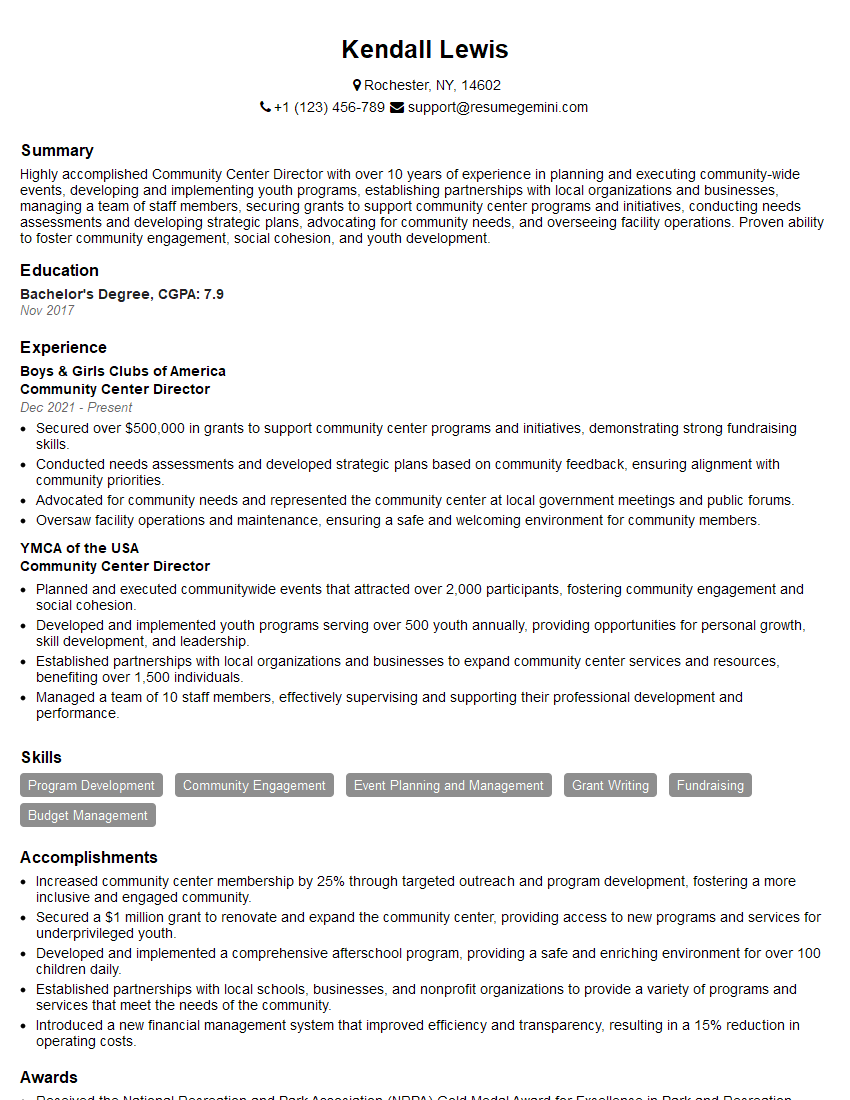
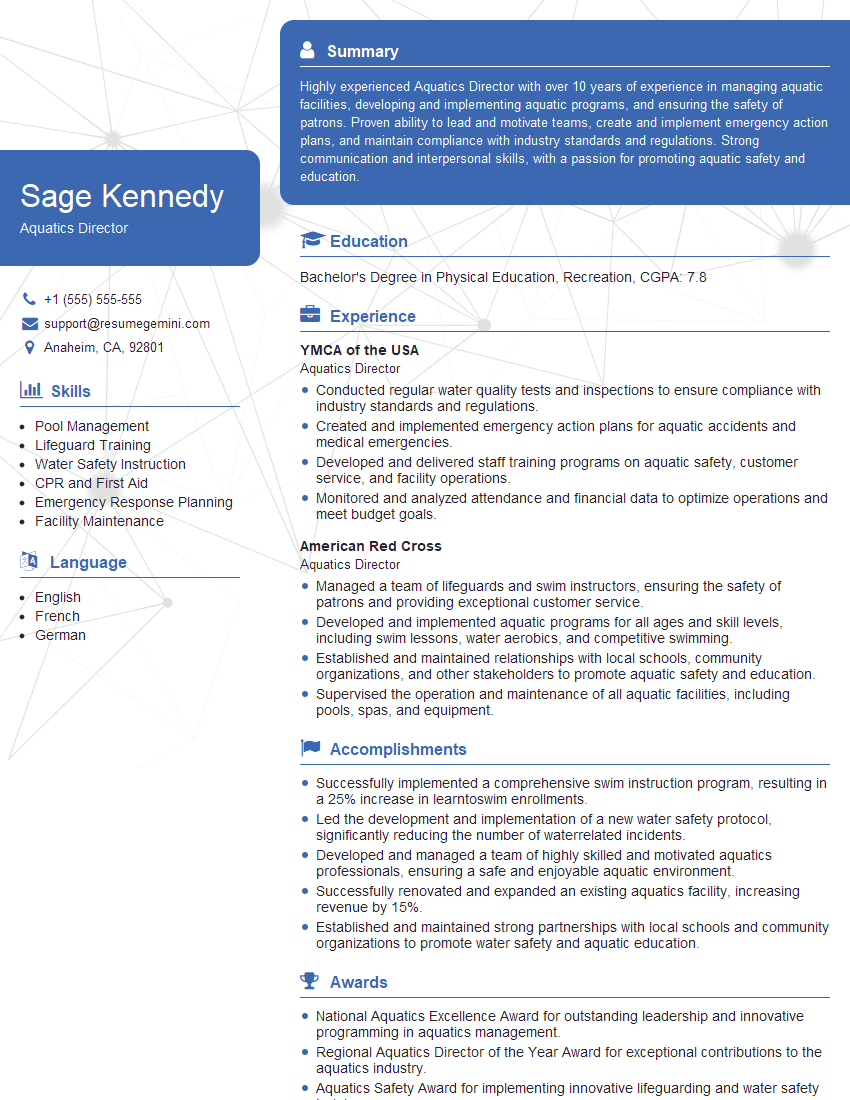
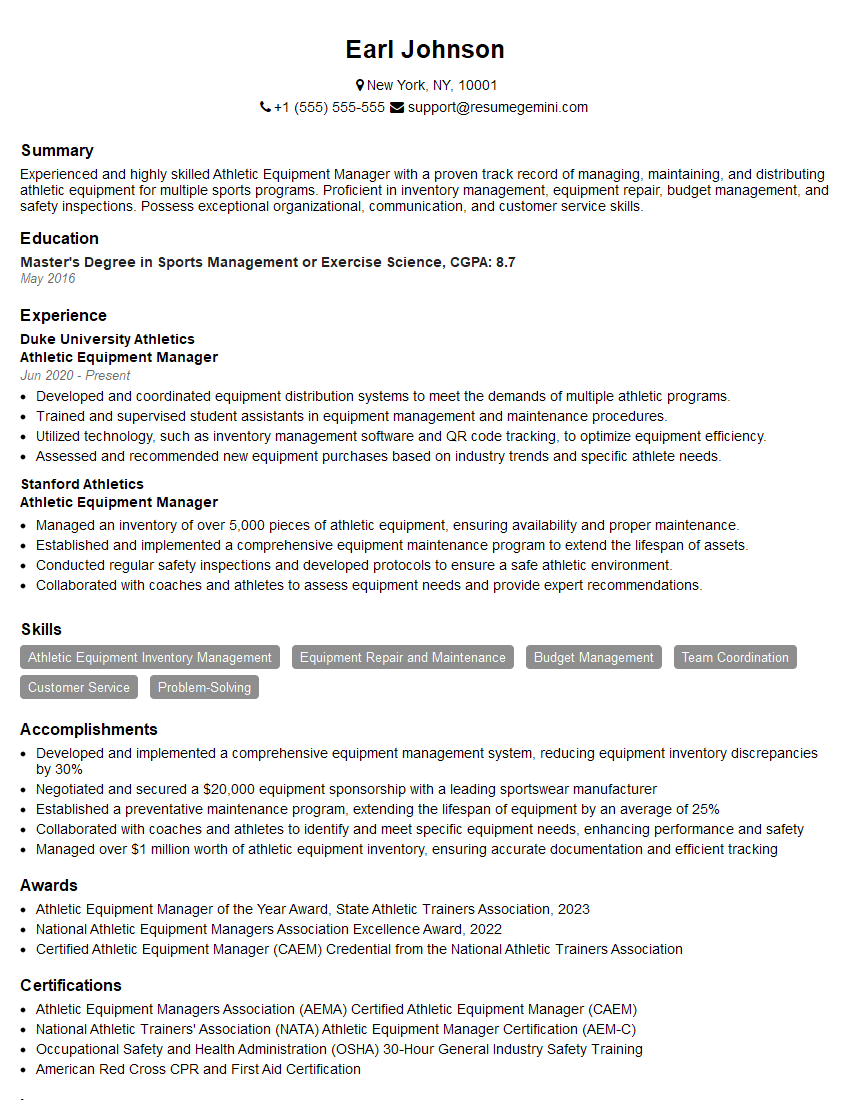
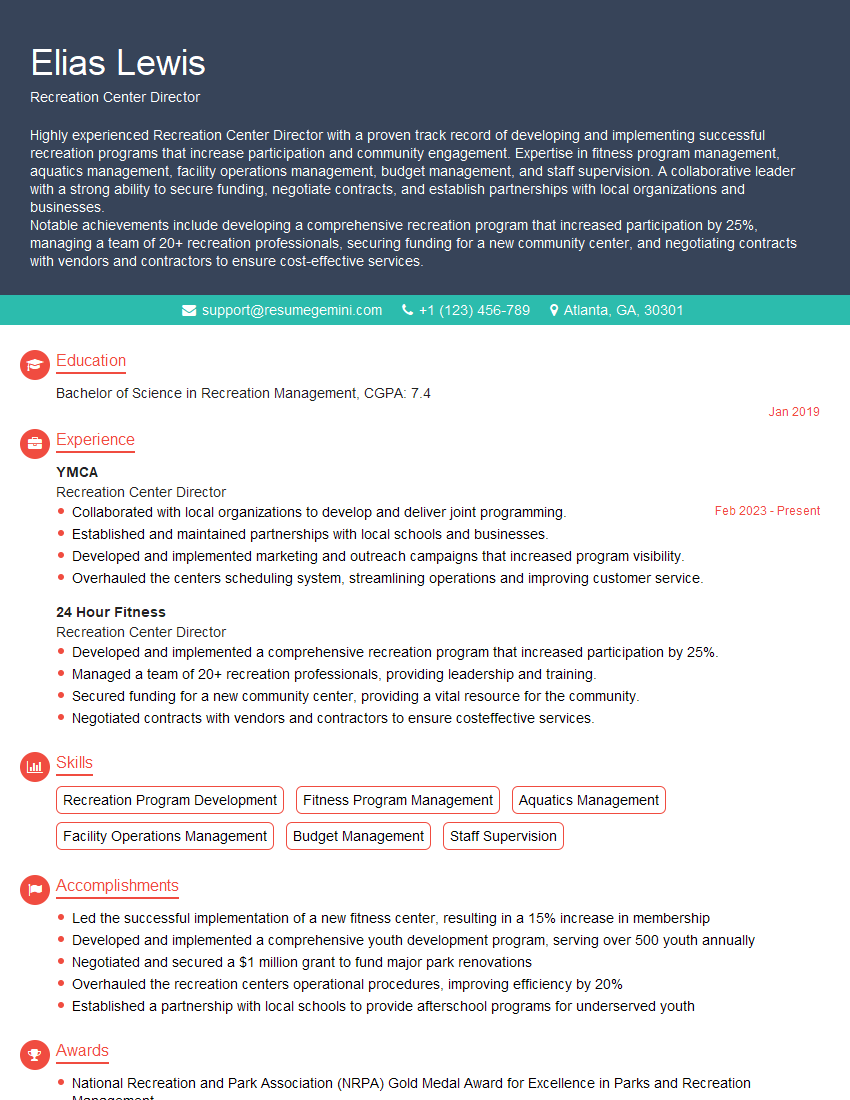
Mastering Athletic Facility Management opens doors to exciting career opportunities with increasing responsibility and higher earning potential. To maximize your job prospects, crafting an ATS-friendly resume is crucial. A well-structured resume highlights your skills and experience, ensuring your application gets noticed. We recommend using ResumeGemini, a trusted resource, to build a professional and effective resume. ResumeGemini provides examples of resumes tailored to Athletic Facility Management, guiding you in presenting your qualifications in the most compelling way. Take this opportunity to showcase your expertise and land your dream job!
Explore more articles
Users Rating of Our Blogs
Share Your Experience
We value your feedback! Please rate our content and share your thoughts (optional).
What Readers Say About Our Blog
Very informative content, great job.
good