Feeling uncertain about what to expect in your upcoming interview? We’ve got you covered! This blog highlights the most important Audience Engagement and Development interview questions and provides actionable advice to help you stand out as the ideal candidate. Let’s pave the way for your success.
Questions Asked in Audience Engagement and Development Interview
Q 1. Describe your experience building and engaging online communities.
Building and engaging online communities requires a multifaceted approach focusing on fostering a sense of belonging, encouraging participation, and providing value to members. My experience encompasses several key strategies. I’ve successfully launched and managed communities on platforms like Facebook Groups, Discord, and Reddit, tailoring the approach to each platform’s unique features and audience. For instance, on Facebook, I’ve leveraged targeted advertising to attract initial members, followed by curated content and interactive polls to increase engagement. On Discord, the focus was on creating dedicated channels for various interests within the community, facilitating a more niche-based connection. In each case, success hinged on understanding the community’s needs and proactively addressing them. I actively monitor community sentiment, responding to questions, resolving conflicts, and identifying emerging themes to shape the ongoing direction. This includes establishing clear community guidelines to ensure a positive and respectful environment.
- Content Strategy: Consistent, high-quality content is crucial. This could range from blog posts and videos to interactive quizzes and Q&A sessions.
- Member Interaction: Proactively engaging with members through comments, replies, and personalized messages is paramount.
- Community Events: Organizing online events like webinars, AMAs (Ask Me Anything sessions), or contests can significantly boost engagement and create a sense of community.
Q 2. How do you measure the success of an audience engagement campaign?
Measuring the success of an audience engagement campaign goes beyond simple vanity metrics like follower count. A holistic approach is necessary, incorporating both quantitative and qualitative data. Key performance indicators (KPIs) should align with the campaign’s overall goals. For example, if the goal is to increase brand awareness, metrics like reach, impressions, and website traffic are crucial. If the goal is to drive sales, then conversion rates and revenue generated become paramount. Qualitative data, such as sentiment analysis of social media comments and feedback from surveys, provides valuable insights into the audience’s perception of the campaign.
- Quantitative Metrics: Website traffic, social media engagement (likes, shares, comments), reach, impressions, conversion rates, sales generated.
- Qualitative Metrics: Brand sentiment, customer feedback, survey responses, social listening data.
For example, a successful campaign might show a significant increase in website traffic from social media, alongside positive sentiment expressed in online comments and a higher-than-expected conversion rate.
Q 3. What metrics do you prioritize when assessing audience growth and engagement?
When assessing audience growth and engagement, I prioritize metrics that reflect both the size and the activity of the audience. Simply having a large audience isn’t enough; it needs to be an engaged one. Therefore, a balanced approach incorporating both breadth and depth metrics is crucial. I also look at how these metrics evolve over time to identify trends and understand the effectiveness of ongoing strategies.
- Growth Metrics: Website traffic, follower count across social media platforms, email subscriber growth, app downloads.
- Engagement Metrics: Likes, shares, comments, retweets, time spent on site/app, click-through rates, conversion rates, customer lifetime value (CLTV).
- Retention Metrics: Customer churn rate, returning visitors, repeat purchases.
For instance, a high follower count with low engagement suggests that the audience may not be genuinely interested in the content being shared. Conversely, a smaller, highly engaged audience can be more valuable than a large, passive one.
Q 4. Explain your approach to identifying and targeting specific audience segments.
Identifying and targeting specific audience segments involves a multi-step process that combines data analysis and strategic thinking. It starts with a deep understanding of the overall target audience, breaking it down into smaller, more homogeneous groups based on shared characteristics. This process leverages various data sources to create detailed audience personas.
- Demographic Data: Age, gender, location, income, education.
- Psychographic Data: Interests, values, lifestyle, attitudes, personality traits.
- Behavioral Data: Website activity, purchase history, social media engagement.
Once these segments are defined, tailored messaging and content can be created to resonate with each group’s specific needs and preferences. This approach ensures that marketing efforts are more effective and efficient, leading to higher engagement and conversion rates. For example, a company selling skincare products might segment its audience into those concerned with anti-aging, those focusing on acne treatment, and those prioritizing sensitive skin solutions, each requiring a different marketing approach.
Q 5. How do you utilize data analytics to inform your audience engagement strategies?
Data analytics plays a crucial role in informing my audience engagement strategies. It allows me to understand audience behavior, measure campaign performance, and continuously optimize my approach. I use a variety of tools and techniques to collect, analyze, and interpret data.
- Web Analytics (Google Analytics): To track website traffic, user behavior, and conversion rates.
- Social Media Analytics: To monitor engagement metrics, reach, and sentiment across different platforms.
- CRM Data: To understand customer behavior, preferences, and lifetime value.
- A/B Testing: To compare different versions of content or campaigns and determine which performs best.
For example, if web analytics shows a high bounce rate on a particular landing page, I can use this information to redesign the page, improving user experience and increasing conversion rates. Similarly, if social media analytics reveal that a certain type of content resonates better with the audience, I can adjust my content strategy accordingly.
Q 6. Describe your experience with social listening and its impact on your strategies.
Social listening is an indispensable tool for understanding audience sentiment and identifying emerging trends. It involves actively monitoring online conversations about a brand, industry, or topic. This allows for proactive identification of potential issues and opportunities. Tools like Brandwatch, Sprout Social, and Talkwalker are invaluable in this process.
My experience shows that social listening provides real-time feedback on the effectiveness of strategies, enabling swift adjustments. For example, identifying negative sentiment surrounding a specific product feature allowed us to proactively address customer concerns through targeted communication and product improvements, mitigating potential damage to brand reputation. By actively listening, we’re able to anticipate potential crises, understand unmet needs, and identify new opportunities for engagement.
Q 7. How do you handle negative feedback or criticism from your audience?
Handling negative feedback or criticism is an essential aspect of audience engagement. Instead of ignoring or dismissing negative comments, I view them as valuable opportunities for improvement and engagement. My approach is based on empathy, transparency, and proactive problem-solving.
- Acknowledge and Respond: Publicly acknowledge the feedback and express gratitude for their input.
- Emphasize Understanding: Show that you understand their perspective and concerns.
- Offer Solutions: Provide concrete solutions or steps to address their concerns.
- Engage in Private Conversation: If needed, engage in a private conversation to further address their issues.
For example, if a customer posts a negative review about a product, I would publicly acknowledge their experience, express empathy, offer a potential solution (e.g., refund, replacement), and privately follow up to ensure their satisfaction. Handling negative feedback effectively can demonstrate your commitment to customer satisfaction and foster stronger relationships with your audience.
Q 8. How do you adapt your communication style to different audience demographics?
Adapting communication style to different demographics is crucial for effective audience engagement. It’s about understanding the unique characteristics of each group and tailoring your message to resonate with their values, preferences, and communication styles. This involves considering factors such as age, cultural background, level of education, and online behavior.
- Age: Younger audiences respond well to visual content, short-form videos, and informal language on platforms like TikTok and Instagram. Older demographics might prefer longer-form content, detailed articles, and a more formal tone on platforms like Facebook or email.
- Culture: Understanding cultural nuances is vital. Humor, imagery, and even color choices can vary significantly across cultures. What’s considered appropriate in one culture might be offensive in another. Thorough research and cultural sensitivity training are essential.
- Education Level: Adjust your vocabulary and the complexity of your information accordingly. A highly technical audience might appreciate detailed explanations and specialized terminology, while a more general audience would benefit from simpler language and illustrative examples.
- Platform: The platform itself dictates communication style. A tweet needs to be concise, while a blog post allows for more detail. The tone and language should match the platform’s norms and your audience’s expectations there.
For example, when launching a new product for teenagers, I’d focus on vibrant visuals, short videos on platforms like TikTok and Instagram, and use slang and trending language. For a professional audience, I’d opt for a more formal tone, detailed white papers, webinars, and LinkedIn engagement.
Q 9. What tools and technologies do you use for audience engagement and management?
My toolkit for audience engagement and management encompasses a variety of tools and technologies, categorized for clarity.
- Social Media Management Platforms: Platforms like Hootsuite or Buffer streamline scheduling, monitoring, and analyzing social media activity across different channels. They provide valuable insights into audience demographics, engagement metrics, and campaign performance.
- CRM (Customer Relationship Management) Systems: Salesforce or HubSpot are examples of CRMs that facilitate audience segmentation, personalized communication, and tracking customer interactions. This allows for targeted campaigns and improved customer service.
- Marketing Automation Platforms: Marketo or Pardot enable automated email campaigns, lead nurturing, and personalized content delivery. This helps scale engagement efforts and deliver relevant content at the right time.
- Analytics Tools: Google Analytics and similar tools provide data-driven insights into website traffic, user behavior, and content performance. This informs strategy adjustments and optimization of engagement tactics.
- Survey and Feedback Tools: Typeform, SurveyMonkey, or even simple Google Forms allow for gathering direct audience feedback, understanding preferences, and measuring satisfaction. This ensures continuous improvement.
- Collaboration Tools: Slack or Microsoft Teams facilitate communication and collaboration within my team, allowing for efficient content creation and campaign management.
The specific tools I utilize depend on the project and the audience I’m targeting. I always prioritize integrating tools that offer seamless data flow and provide actionable insights.
Q 10. Explain your experience with content creation and its role in audience engagement.
Content creation is the cornerstone of successful audience engagement. It’s about providing valuable, relevant, and engaging material that resonates with the audience’s needs and interests. Without high-quality content, no engagement strategy will truly succeed.
My experience spans various content formats, including:
- Blog posts: In-depth articles addressing audience questions and providing valuable information.
- Videos: Short, engaging clips for platforms like YouTube, TikTok, and Instagram, demonstrating product use, offering tutorials, or providing behind-the-scenes looks.
- Infographics: Visually appealing data representations that simplify complex information.
- Social media posts: Short, engaging updates and interactions across various platforms.
- Ebooks and white papers: More in-depth resources for specific topics, often acting as lead magnets.
- Webinars and online events: Interactive sessions that allow for real-time audience interaction and engagement.
The key is to create a content calendar that aligns with the audience’s interests and the overall engagement goals. I prioritize creating content that provides value to the audience, rather than simply promoting products or services. This builds trust and fosters long-term relationships.
For example, when working with a non-profit organization, I focused on creating emotionally resonant video stories showcasing the impact of their work. This generated far greater engagement than any traditional marketing materials could have achieved.
Q 11. Describe a time you had to pivot an audience engagement strategy due to unforeseen circumstances.
During a campaign promoting a new fitness app, we experienced a major server outage just days before the launch. This was an unforeseen circumstance that threatened to derail our entire strategy.
Our initial plan relied heavily on a large-scale social media campaign showcasing the app’s features and functionality. The outage meant we couldn’t fulfill the core promise of the campaign. We had to pivot quickly.
Our solution involved a three-pronged approach:
- Transparency and Communication: We immediately addressed the issue on all social media platforms, being transparent about the outage and apologizing for the inconvenience. This built trust and prevented negative speculation.
- Shift in Messaging: We repurposed our social media content to focus on the behind-the-scenes efforts of our team to resolve the issue. This showed our commitment and resilience.
- Alternative Engagement Tactics: We shifted focus to other engagement strategies that didn’t rely on app functionality, like blog posts detailing the app’s design philosophy, interviews with the development team, and engaging Q&A sessions on social media.
While the launch was delayed, our transparent communication and agile response prevented a major PR crisis and preserved audience trust. The pivot allowed us to maintain engagement and build anticipation for the app’s eventual launch.
Q 12. How do you foster a sense of community and belonging among your audience?
Fostering a sense of community and belonging requires creating a space where audience members feel connected, valued, and heard. This is achieved through multiple strategies:
- Interactive Content: Encouraging comments, questions, and discussions on social media and through blog posts, fostering a sense of two-way communication.
- Online Forums and Communities: Creating dedicated spaces (e.g., Facebook groups, online forums) where audience members can connect with each other, share their experiences, and support one another.
- User-Generated Content: Encouraging audience members to create and share their own content related to the brand or topic. This empowers them and makes them feel like active participants.
- Personalized Communication: Addressing audience members by name, remembering their preferences, and acknowledging their contributions fosters a sense of individual value.
- Contests and Giveaways: These can create excitement and encourage interaction, strengthening bonds within the community.
- Regular Engagement: Consistent communication and interaction keep the community active and engaged, preventing feelings of neglect.
For instance, a successful example involved creating a private Facebook group for customers of a crafting supply company. The group fostered a supportive community where members shared projects, tips, and advice, leading to increased brand loyalty and advocacy.
Q 13. How do you balance organic and paid audience engagement strategies?
Balancing organic and paid audience engagement strategies is about maximizing reach and impact while optimizing resources. Organic strategies focus on building relationships and engagement through non-paid channels, while paid strategies accelerate reach and target specific demographics.
A successful approach involves a synergistic strategy:
- Content Pillars: Develop high-quality organic content around key themes that resonate with the target audience. This content forms the foundation for all engagement activities.
- Targeted Paid Campaigns: Use paid advertising (e.g., social media ads, Google Ads) to boost the reach of the best performing organic content, targeting specific demographics and interests identified through analytics.
- A/B Testing: Experiment with different content formats, messaging, and targeting parameters for both organic and paid campaigns to continuously optimize performance.
- Tracking and Analysis: Monitor key metrics (e.g., engagement rates, website traffic, conversions) for both organic and paid campaigns to measure ROI and inform future strategies. Adjust the balance based on the results.
- Cross-Promotion: Promote organic content through paid channels, and vice-versa, creating a cohesive and amplified message.
For example, a blog post on sustainable living (organic) could be promoted through targeted Facebook ads (paid) to reach environmentally conscious individuals. The paid campaign boosts the reach of the valuable organic content, creating a synergistic effect.
Q 14. Describe your experience working with influencers or brand ambassadors.
Collaborating with influencers and brand ambassadors significantly enhances audience engagement by leveraging their established credibility and reach. It’s about selecting the right partners whose values align with the brand and whose audience aligns with the target demographic.
My approach involves:
- Identifying Relevant Influencers: Researching and identifying influencers who have a genuine connection with their audience and whose content aligns with the brand’s message and values. Authenticity is key.
- Developing Strategic Partnerships: Collaborating with influencers to develop content that is authentic and resonates with their audience, avoiding overly promotional content that feels forced.
- Campaign Monitoring and Measurement: Tracking key metrics such as reach, engagement, website traffic, and conversions to measure the success of the collaboration. This data informs future partnerships and campaign optimizations.
- Building Long-Term Relationships: Nurturing relationships with key influencers to foster ongoing collaborations and brand loyalty.
- Compliance and Disclosure: Ensuring full transparency and compliance with all relevant advertising regulations and disclosure requirements.
In one project, partnering with a micro-influencer specializing in sustainable fashion generated significant engagement and brand awareness within a niche target audience. This targeted approach yielded higher quality leads compared to broader, less focused influencer campaigns.
Q 15. Explain your process for identifying and addressing audience pain points.
Identifying and addressing audience pain points is crucial for effective engagement. My process begins with active listening. This involves analyzing various data sources to understand audience needs and frustrations. This includes:
- Social media monitoring: Tracking mentions, comments, and conversations on platforms like Twitter, Facebook, and Instagram to gauge sentiment and identify recurring concerns.
- Surveys and questionnaires: Employing structured surveys to gather direct feedback on specific aspects of our offerings or experiences.
- Focus groups and interviews: Conducting in-depth discussions with representative audience segments to uncover deeper insights and understand underlying motivations.
- Analyzing website analytics: Tracking bounce rates, time on page, and conversion rates to pinpoint areas where users struggle or abandon the process.
Once pain points are identified, I prioritize them based on their impact and feasibility of addressing them. Solutions might range from improving website usability to creating more targeted content addressing specific concerns. For example, if website analytics reveal a high bounce rate on a specific product page, we might redesign the page for better clarity or create more engaging visuals. If social media monitoring reveals dissatisfaction with customer service, we can implement improved processes and communication strategies.
Career Expert Tips:
- Ace those interviews! Prepare effectively by reviewing the Top 50 Most Common Interview Questions on ResumeGemini.
- Navigate your job search with confidence! Explore a wide range of Career Tips on ResumeGemini. Learn about common challenges and recommendations to overcome them.
- Craft the perfect resume! Master the Art of Resume Writing with ResumeGemini’s guide. Showcase your unique qualifications and achievements effectively.
- Don’t miss out on holiday savings! Build your dream resume with ResumeGemini’s ATS optimized templates.
Q 16. How do you measure the ROI of your audience engagement efforts?
Measuring the ROI of audience engagement is vital. I employ a multi-faceted approach, going beyond simple vanity metrics like follower count. Key metrics I focus on include:
- Website traffic and conversions: Tracking referral traffic from social media campaigns and measuring conversion rates (e.g., purchases, sign-ups) to assess campaign effectiveness.
- Engagement rate: Analyzing metrics such as likes, shares, comments, and retweets to understand how effectively our content is resonating with the audience. A higher engagement rate suggests a stronger connection.
- Customer lifetime value (CLTV): Assessing the long-term value of engaged customers. Engaged audiences tend to be more loyal and generate higher revenue over time.
- Brand awareness and sentiment: Tracking mentions and sentiment analysis to gauge the overall impact on brand perception. Positive sentiment indicates successful engagement.
By combining these metrics, I can build a holistic picture of ROI. For instance, a campaign might not directly generate immediate sales but significantly improve brand awareness, leading to increased sales in the future. This long-term impact needs to be considered when evaluating ROI.
Q 17. Describe your understanding of different audience engagement platforms (e.g., Facebook, Twitter, Instagram).
My understanding of audience engagement platforms is nuanced, recognizing each platform’s unique characteristics and target demographics.
- Facebook: Ideal for building communities, sharing long-form content, and running targeted advertising campaigns. It allows for detailed audience segmentation and facilitates strong customer interaction through groups and pages.
- Twitter: Excellent for real-time communication, breaking news, and engaging in quick, concise conversations. Its focus on brevity demands compelling messaging and rapid response times.
- Instagram: Perfect for visually driven content, showcasing products or services, and fostering a sense of brand personality. Its emphasis on high-quality imagery requires a strong visual strategy.
I tailor content and engagement strategies according to each platform’s strengths. For example, I’d use Instagram for visually stunning product shots and behind-the-scenes glimpses, while Facebook might host longer-form blog posts and customer testimonials. Twitter can be used for quick announcements and responding to customer queries in real-time.
Q 18. How do you ensure your audience engagement activities align with overall marketing objectives?
Alignment between audience engagement and overall marketing objectives is paramount. I begin by clearly defining the overarching marketing goals – whether it’s increasing brand awareness, driving sales, or generating leads. Then, I develop audience engagement strategies that directly support these goals.
For example, if the marketing objective is to increase brand awareness, engagement activities might focus on creating viral-worthy content, running contests, and collaborating with influencers. If the goal is to drive sales, engagement would center on product promotions, targeted advertising, and showcasing customer testimonials. Each engagement campaign has specific, measurable, achievable, relevant, and time-bound (SMART) objectives that directly contribute to the larger marketing strategy.
Q 19. What is your experience with A/B testing in audience engagement campaigns?
A/B testing is a cornerstone of my approach. I regularly A/B test various elements of audience engagement campaigns to optimize performance. This includes testing different:
- Content formats: Comparing the effectiveness of videos versus images versus text-based posts.
- Call-to-actions (CTAs): Experimenting with different phrasing and placement of CTAs to improve conversion rates.
- Posting times: Determining optimal times to post for maximum reach and engagement.
- Visual elements: Testing different image styles, colors, and designs.
For example, I might test two versions of a Facebook ad – one with a headline emphasizing price and another emphasizing benefits. By analyzing the results, we determine which version drives better engagement and conversion.
Q 20. How do you leverage user-generated content to enhance audience engagement?
User-generated content (UGC) is invaluable for boosting audience engagement and building authenticity. I encourage UGC by:
- Running contests and giveaways: Incentivizing users to share photos, videos, or stories related to our brand or product.
- Creating branded hashtags: Providing users with a simple way to connect their content to our brand.
- Reposting and featuring UGC: Showcasing user-created content on our own channels, giving users recognition and building community.
- Engaging with user comments and posts: Responding to users directly, showing appreciation for their participation.
For example, a clothing brand might encourage customers to post photos of themselves wearing their clothes using a branded hashtag. This not only increases brand visibility but also generates authentic content showcasing the product in real-world scenarios.
Q 21. Describe your approach to building long-term relationships with your audience.
Building long-term relationships with the audience requires consistent effort and genuine connection. My approach involves:
- Providing valuable and consistent content: Offering engaging content that provides value to the audience, keeping them informed and entertained.
- Personalized communication: Using data to segment the audience and deliver targeted messages that resonate with their specific needs and interests.
- Active community building: Fostering a sense of community through interactive content, contests, and opportunities for engagement.
- Transparency and authenticity: Building trust by being open and honest with the audience.
- Regular communication: Staying in touch with the audience through regular updates and interactions.
I view the audience not just as consumers but as partners. Building a strong, lasting relationship requires consistent communication, genuine interactions, and a commitment to providing value over time. This fosters loyalty, advocacy, and ultimately, long-term success.
Q 22. Explain your understanding of audience segmentation and personalization.
Audience segmentation and personalization are crucial for effective engagement. Segmentation involves dividing your audience into smaller, more manageable groups based on shared characteristics like demographics (age, location, gender), psychographics (interests, values, lifestyle), behavior (past purchases, website activity), and engagement level. This allows for targeted messaging that resonates more deeply. Personalization takes this a step further by tailoring the message and experience to the individual within a segment. Imagine a clothing retailer; they might segment their audience by age and style preference. Then, they personalize emails by recommending products aligned with individual browsing history, creating a more relevant and engaging experience. This leads to increased conversion rates and customer loyalty.
For example, a news website might segment its audience into ‘politics enthusiasts,’ ‘sports fans,’ and ‘technology followers.’ They can then personalize the content each segment sees on the homepage and in their newsletters, showing them relevant articles and advertisements. This is far more effective than sending a generic newsletter to everyone.
Q 23. How do you track and analyze key performance indicators (KPIs) for audience engagement?
Tracking and analyzing KPIs is essential for understanding audience engagement. Key metrics include website traffic (unique visitors, page views), social media engagement (likes, shares, comments, retweets), email open and click-through rates, conversion rates (purchases, sign-ups), and customer satisfaction scores. We use analytics platforms like Google Analytics, social media analytics dashboards, and email marketing platforms to collect this data. Analyzing these KPIs helps us understand what’s working, what’s not, and how to optimize our strategies.
For instance, a significant drop in email open rates might signal a problem with subject lines or email frequency. Conversely, high engagement on a specific social media post might indicate a successful content strategy. By regularly reviewing and analyzing these metrics, we can make data-driven decisions to improve audience engagement.
Q 24. Describe your experience with audience feedback mechanisms (e.g., surveys, polls).
I have extensive experience using various audience feedback mechanisms. Surveys (both online and offline) provide quantitative and qualitative data on audience satisfaction, preferences, and needs. Polls are great for quick feedback on specific topics. Focus groups offer in-depth insights through moderated discussions. Feedback forms on websites and social media allow for immediate, less structured feedback. I also utilize A/B testing to compare different approaches and see which resonates better with the audience. Analysis of this feedback helps to refine strategies and ensure content aligns with audience needs and expectations. For instance, using customer surveys post-event to gauge satisfaction can inform future event planning.
A recent project involved using a post-webinar survey to identify key areas of improvement. The results showed a need for more interactive elements and clearer explanations of certain concepts. Based on this feedback, we redesigned future webinars to include polls, Q&A sessions, and more concise explanations, which significantly increased audience engagement.
Q 25. How do you identify and mitigate potential risks associated with audience engagement?
Potential risks in audience engagement include negative feedback, brand reputation damage, privacy breaches, legal issues, and security vulnerabilities. Mitigation strategies include establishing clear communication guidelines, proactive monitoring of social media, implementing robust security measures to protect data, having a crisis communication plan in place, actively addressing negative feedback, and ensuring compliance with relevant regulations. A strong ethical framework and responsible data handling are fundamental to minimizing these risks.
For example, having a pre-approved process for responding to negative comments on social media helps prevent escalation and protects the brand’s reputation. Similarly, clear privacy policies and data security measures minimize the risk of data breaches and legal issues.
Q 26. How do you stay up-to-date with the latest trends in audience engagement and development?
Staying current in audience engagement requires continuous learning. I regularly attend industry conferences and webinars, follow industry thought leaders and influencers on social media, subscribe to relevant newsletters and publications, participate in professional development courses, and actively engage in online communities related to audience engagement and marketing. I also analyze competitor strategies and benchmark best practices to stay informed about new trends and technologies.
For example, I recently completed a course on utilizing AI-powered tools for audience segmentation and personalization, which has significantly improved my efficiency and effectiveness. Keeping abreast of changes in social media algorithms and emerging platforms is equally crucial.
Q 27. What is your preferred approach to crisis communication with your audience?
My approach to crisis communication prioritizes transparency, empathy, and speed. I follow a structured process: 1) Acknowledge the issue promptly and empathetically; 2) Provide accurate information; 3) Take responsibility where appropriate; 4) Outline steps being taken to address the issue; 5) Maintain open communication channels; 6) Monitor the situation closely and adapt the communication strategy as needed.
It’s crucial to have a pre-defined crisis communication plan with designated roles and responsibilities. This ensures a coordinated and effective response. The goal is to regain trust and confidence, minimizing damage to the brand’s reputation.
Q 28. Describe your understanding of ethical considerations in audience engagement.
Ethical considerations are paramount in audience engagement. Transparency about data collection and usage is essential. Respecting audience privacy and obtaining informed consent are non-negotiable. Avoiding manipulative or misleading tactics is crucial for building trust. Ensuring inclusivity and avoiding discriminatory practices are key to fostering a positive and respectful relationship with the audience. Ethical considerations guide every aspect of my work, from data collection and analysis to content creation and communication strategies. This builds long-term trust and fosters positive relationships with the audience.
For example, clearly outlining data usage in a privacy policy and obtaining explicit consent for marketing communications are fundamental ethical practices. Equally important is being mindful of cultural sensitivities and avoiding stereotypes in content.
Key Topics to Learn for Audience Engagement and Development Interview
- Understanding Your Audience: Developing detailed audience personas, including demographics, psychographics, and media consumption habits. Practical application: Conducting thorough audience research using analytics and surveys.
- Content Strategy & Planning: Creating engaging content calendars aligned with audience needs and organizational goals. Practical application: Developing a content strategy that balances organic and paid content approaches to maximize reach and impact.
- Digital Engagement Tactics: Utilizing social media, email marketing, and other digital channels to foster community and drive interaction. Practical application: A/B testing different content formats and approaches to optimize engagement rates across various platforms.
- Community Management: Building and nurturing online communities, responding to comments and feedback, and fostering positive relationships with your audience. Practical application: Developing a crisis communication plan and strategies for handling negative feedback constructively.
- Measurement & Analytics: Tracking key metrics to assess the effectiveness of engagement strategies and make data-driven decisions. Practical application: Using analytics dashboards to identify areas for improvement and demonstrate the ROI of engagement efforts.
- Budget Management & Resource Allocation: Effectively managing budgets and resources to maximize the impact of audience engagement initiatives. Practical application: Creating proposals and justifying budget requests based on data and projected outcomes.
- Collaboration & Teamwork: Working effectively with cross-functional teams, including marketing, sales, and product development, to create a cohesive and impactful engagement strategy. Practical application: Demonstrating experience in collaborative project management and conflict resolution.
Next Steps
Mastering Audience Engagement and Development is crucial for career advancement in today’s dynamic media landscape. It demonstrates a valuable skillset highly sought after by organizations across various industries. To maximize your job prospects, create a compelling and ATS-friendly resume that effectively showcases your skills and experience. ResumeGemini is a trusted resource that can help you build a professional resume that stands out. Take advantage of the examples of resumes tailored to Audience Engagement and Development available to help you craft a winning application.
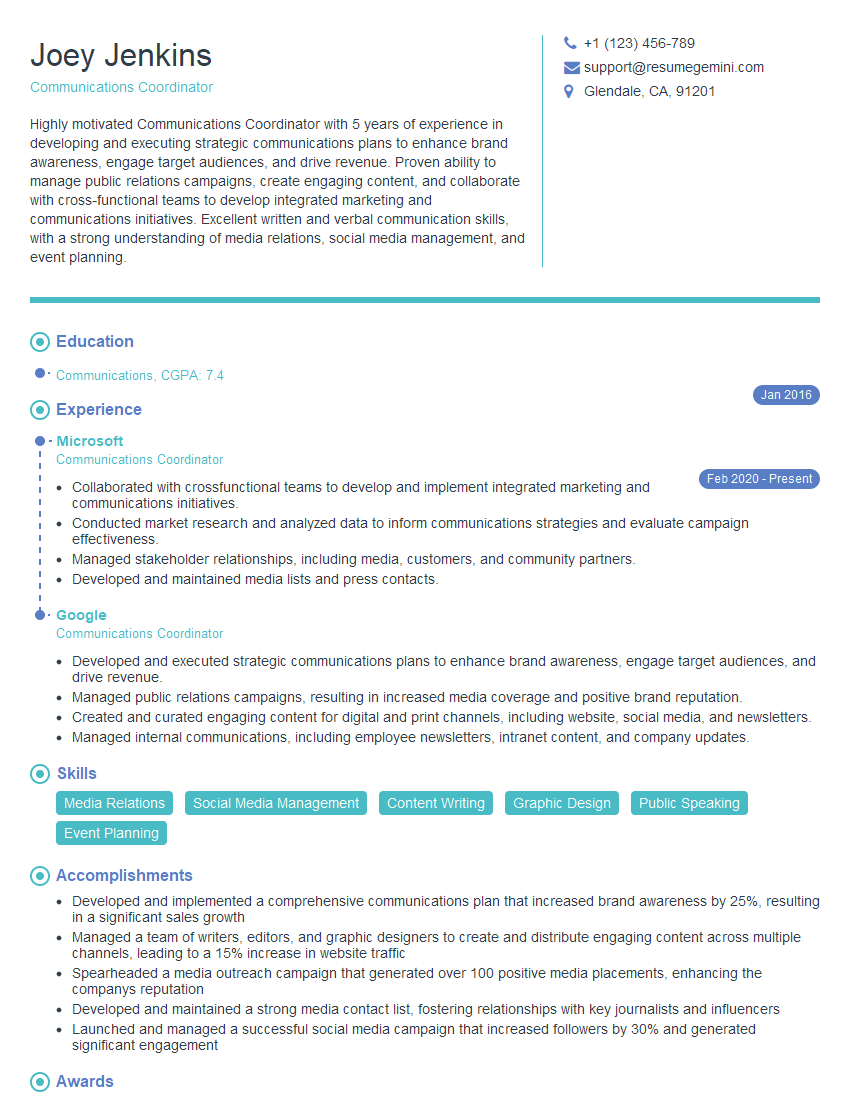
Communications Coordinator Resume Sample

Marketing Communications Manager Resume Sample
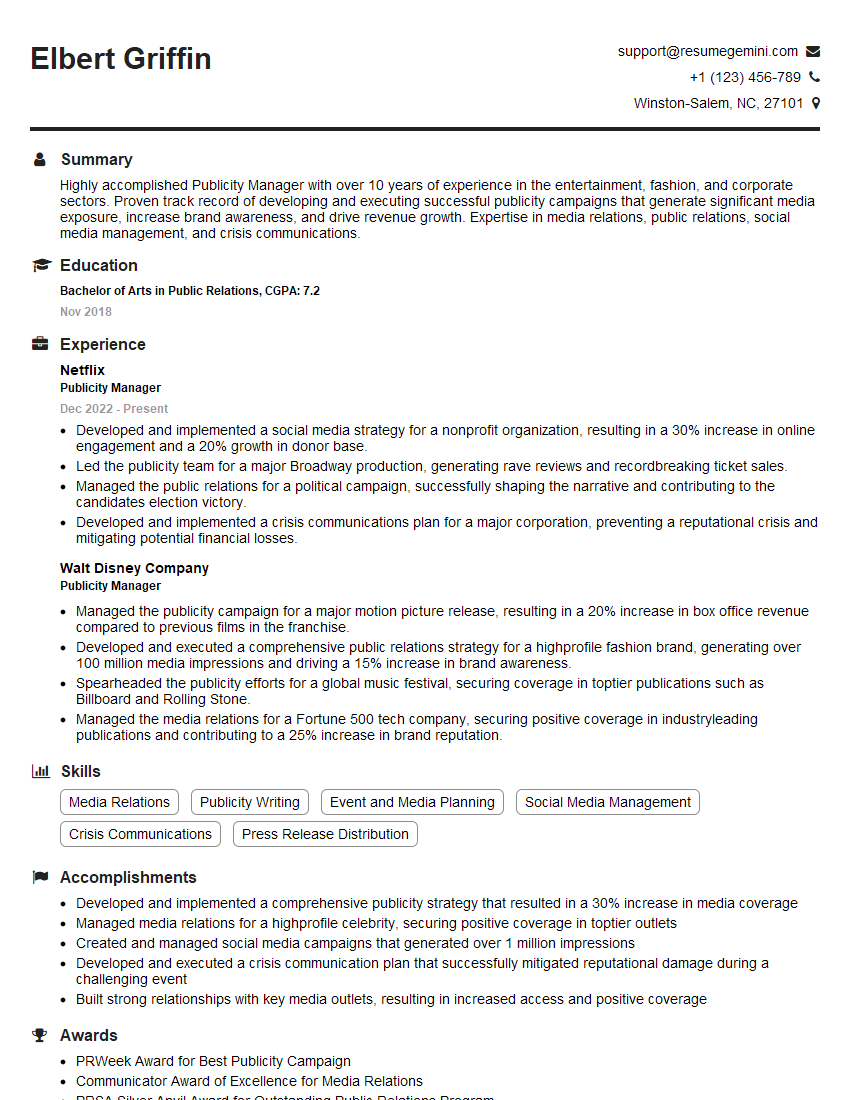
Publicity Manager Resume Sample
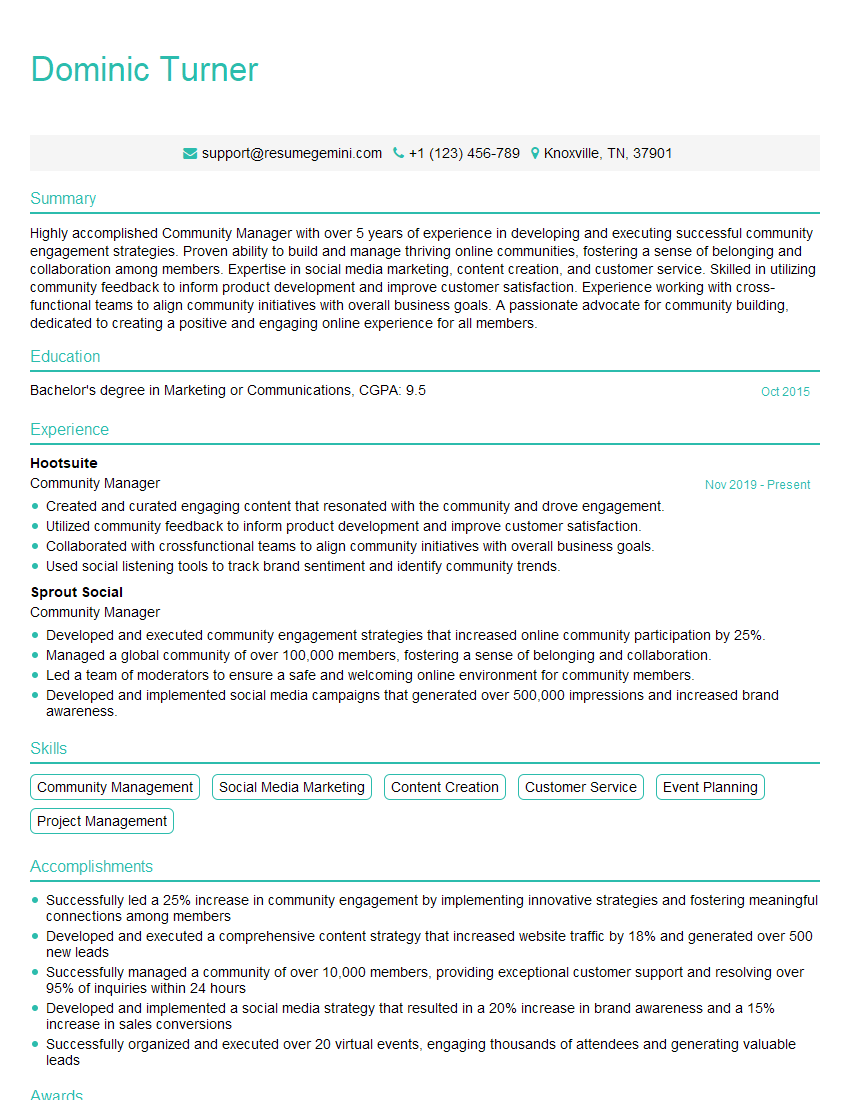
Community Manager Resume Sample
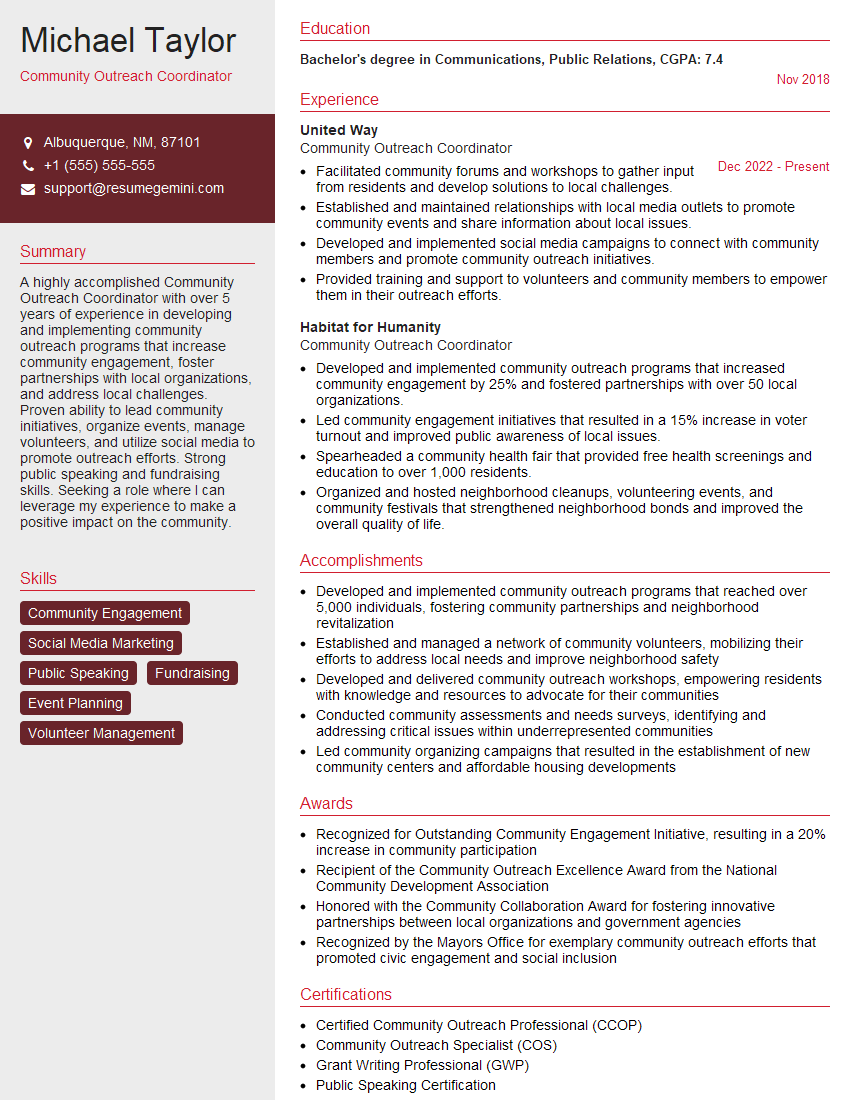
Community Outreach Coordinator Resume Sample
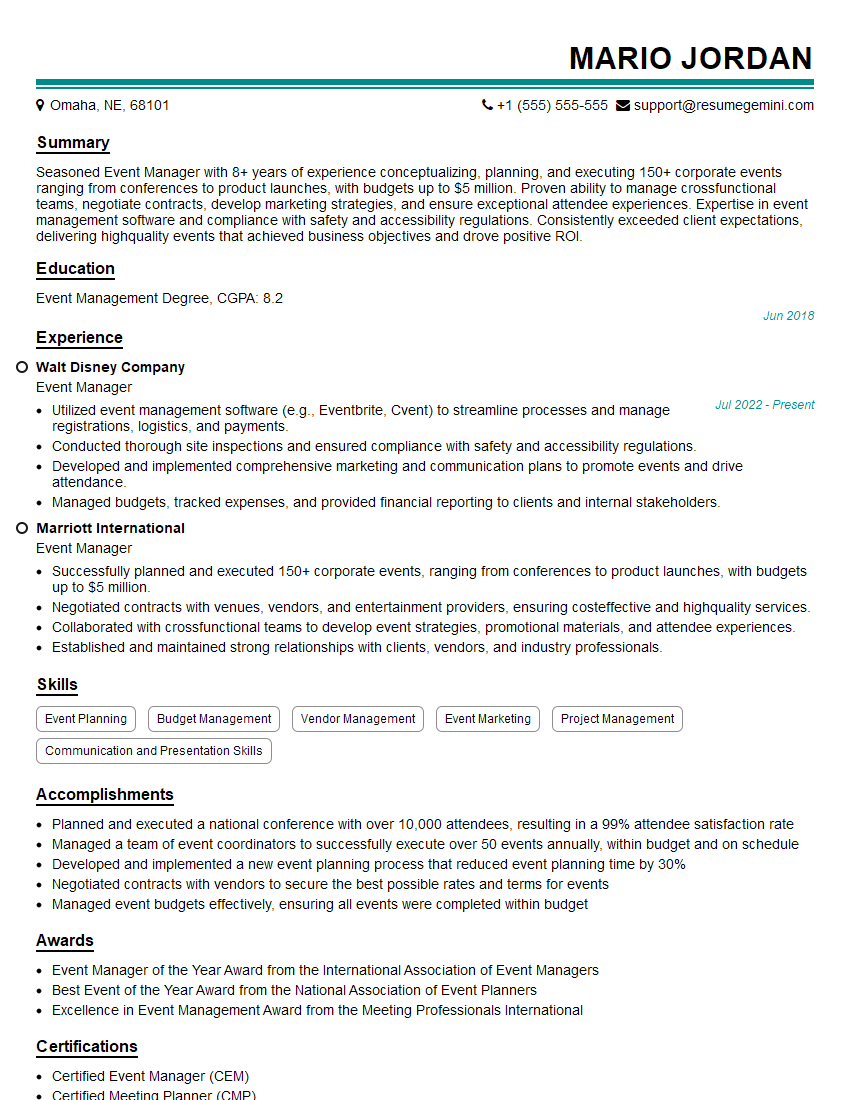
Event Manager Resume Sample
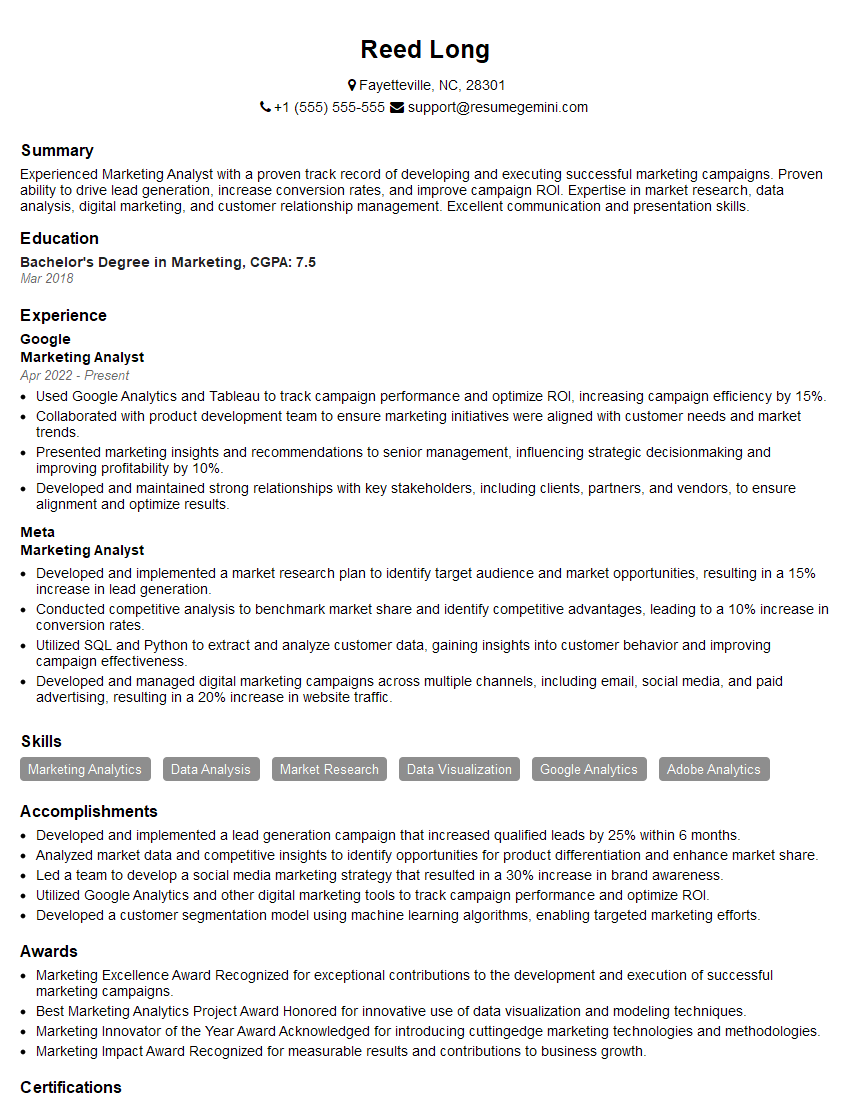
Marketing Analyst Resume Sample
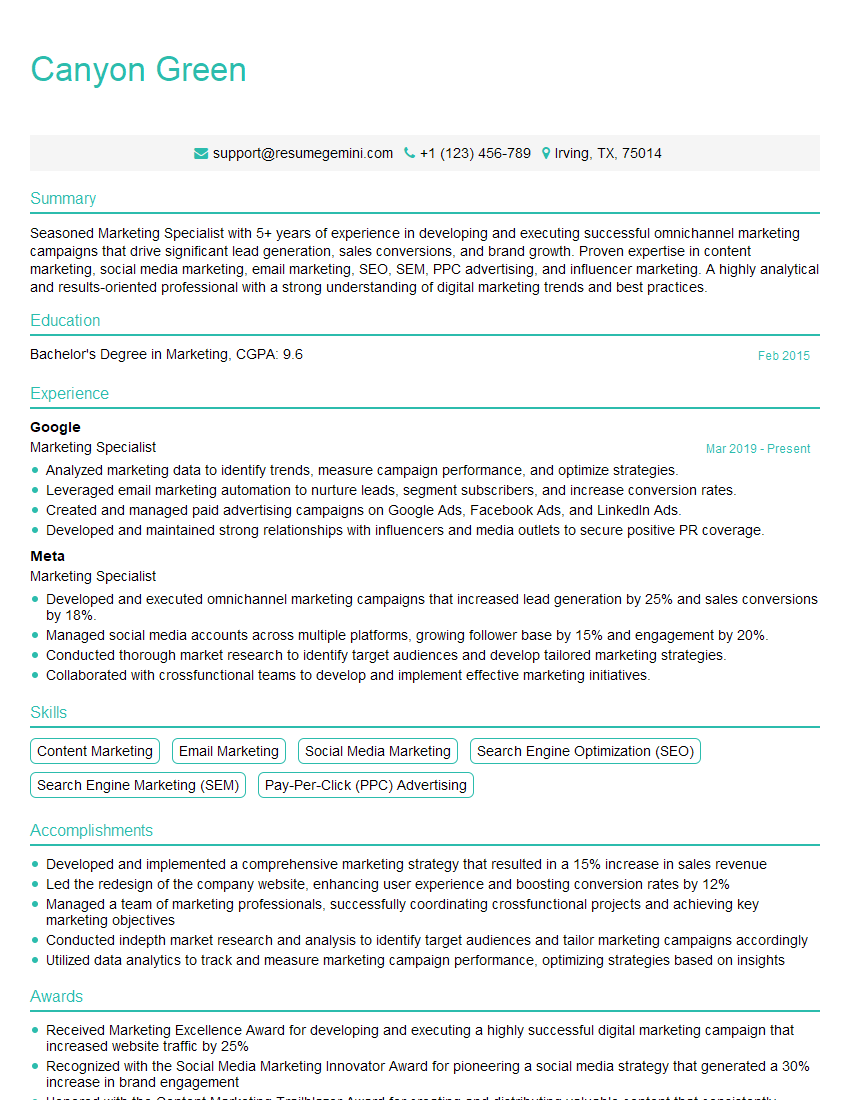
Marketing Specialist Resume Sample

Social Media Manager Resume Sample
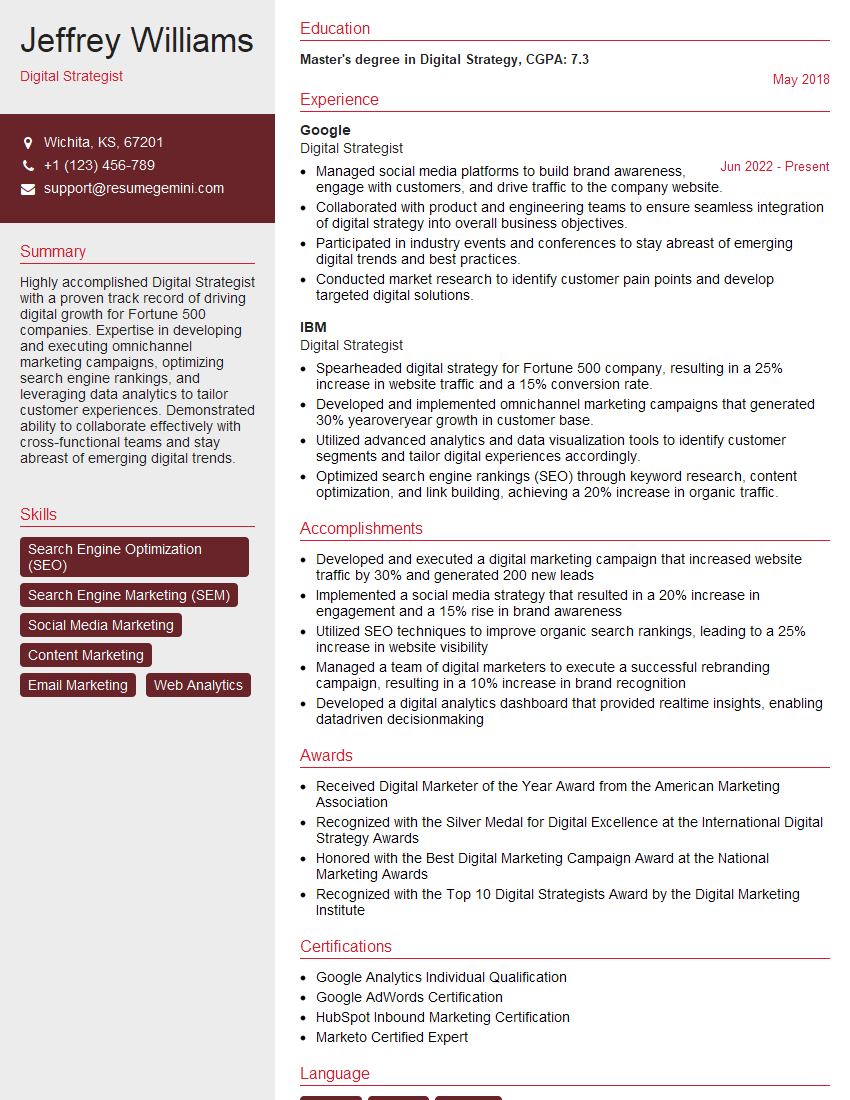
Digital Strategist Resume Sample
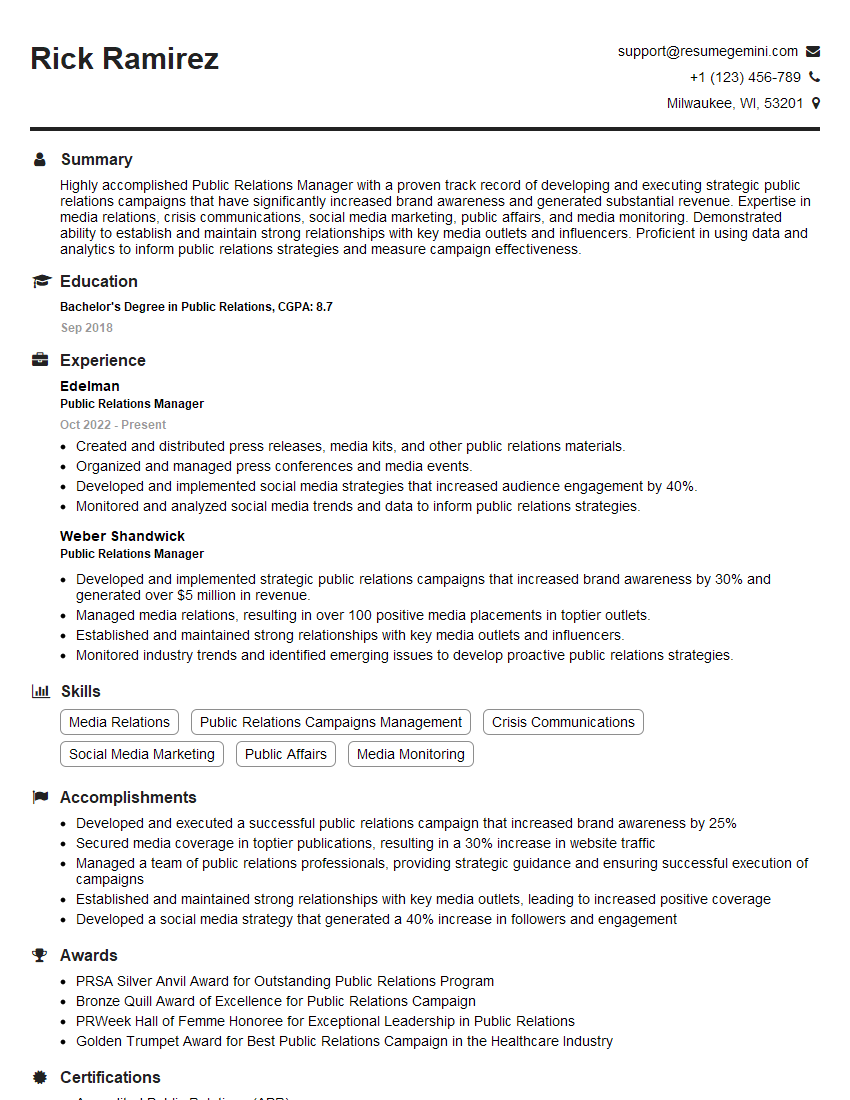
Public Relations Manager Resume Sample
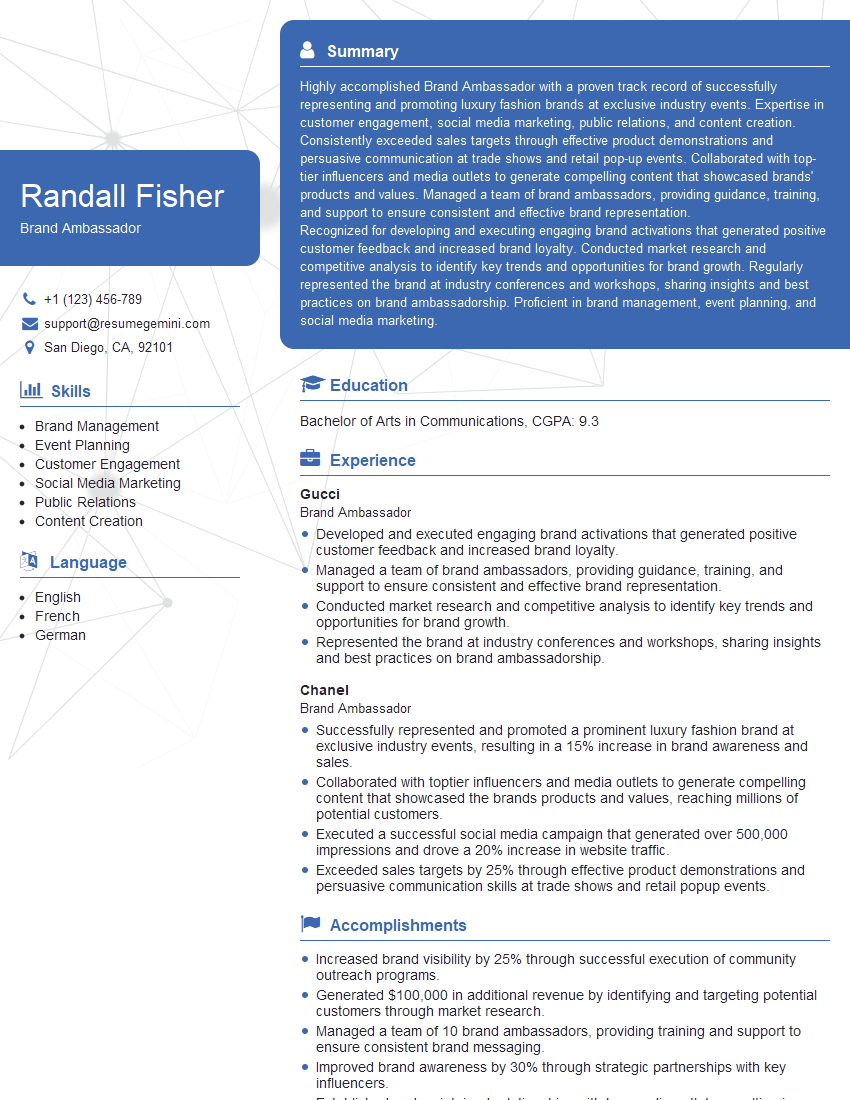
Brand Ambassador Resume Sample

Growth Hacker Resume Sample
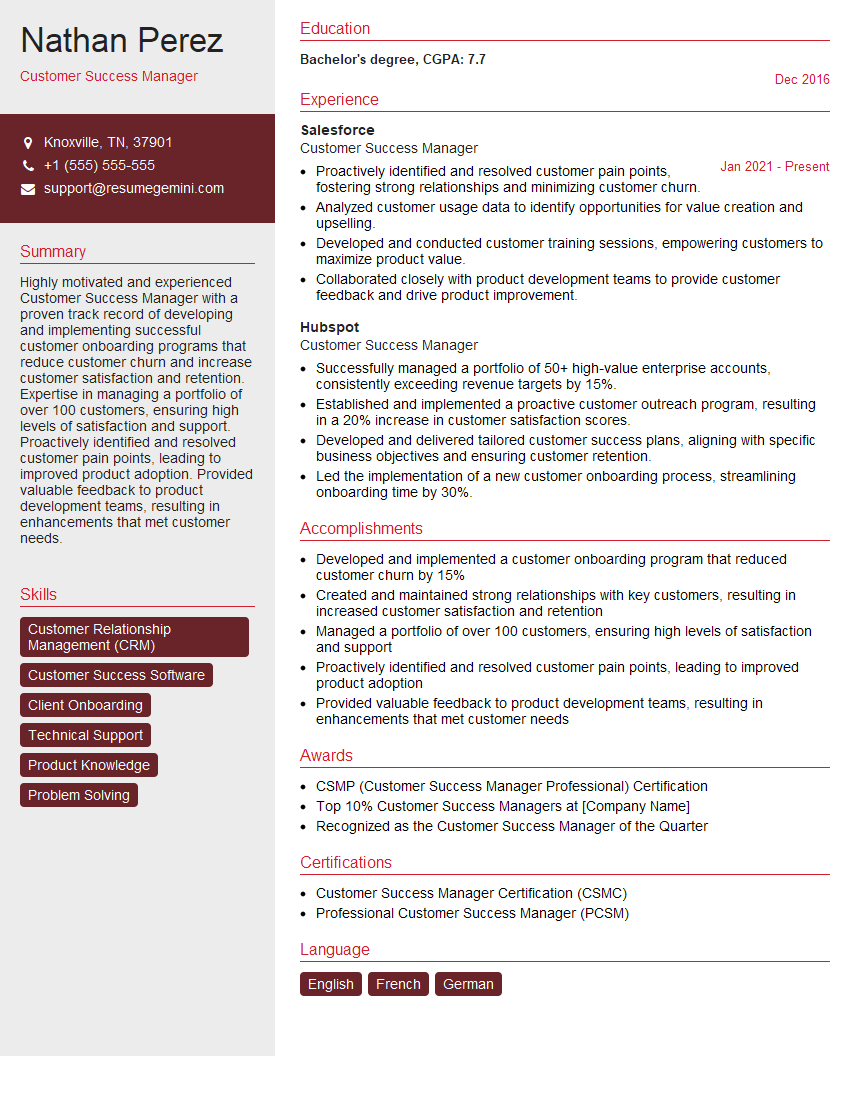
Customer Success Manager Resume Sample

Content Creator Resume Sample
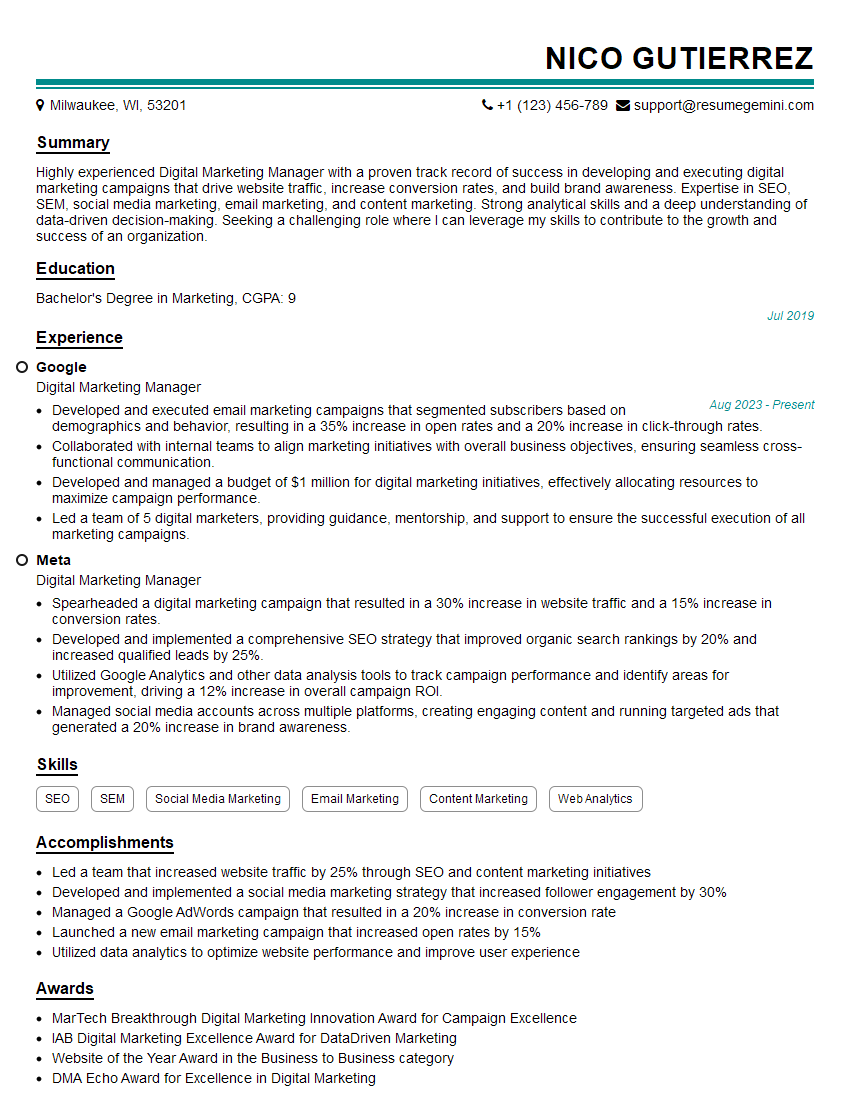
Digital Marketing Manager Resume Sample
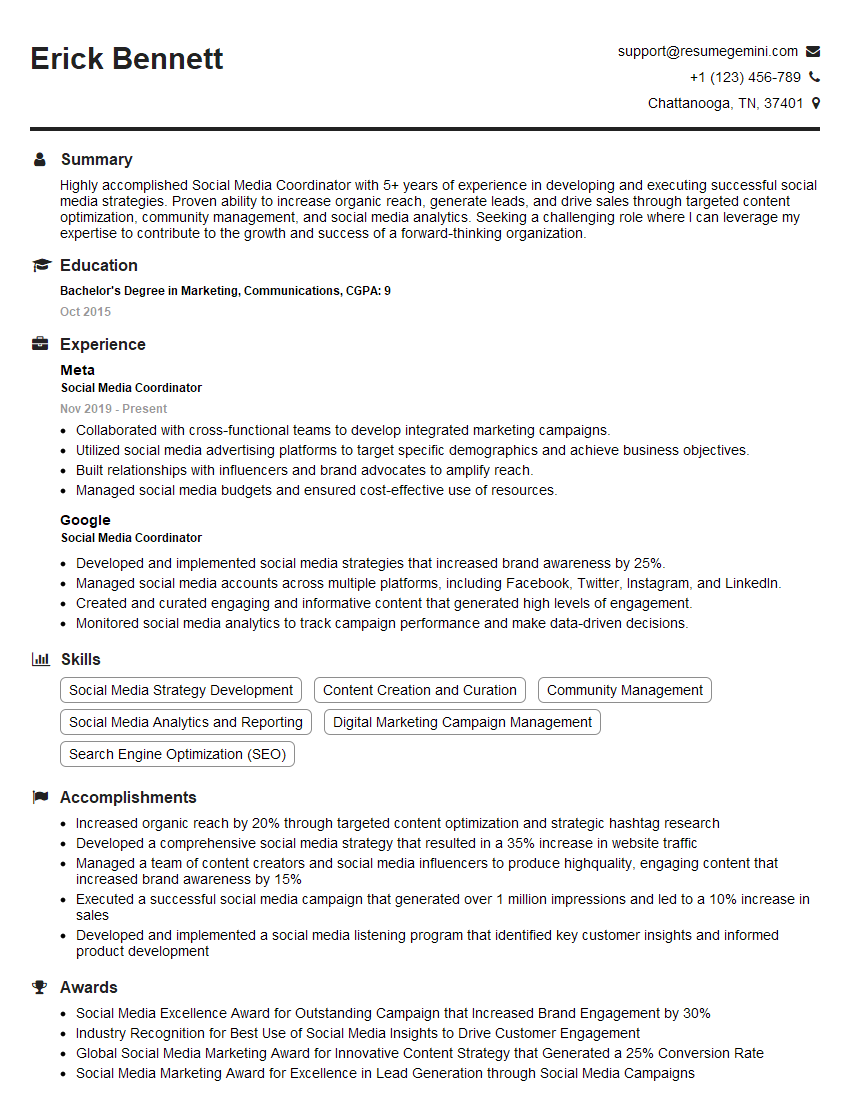
Social Media Coordinator Resume Sample
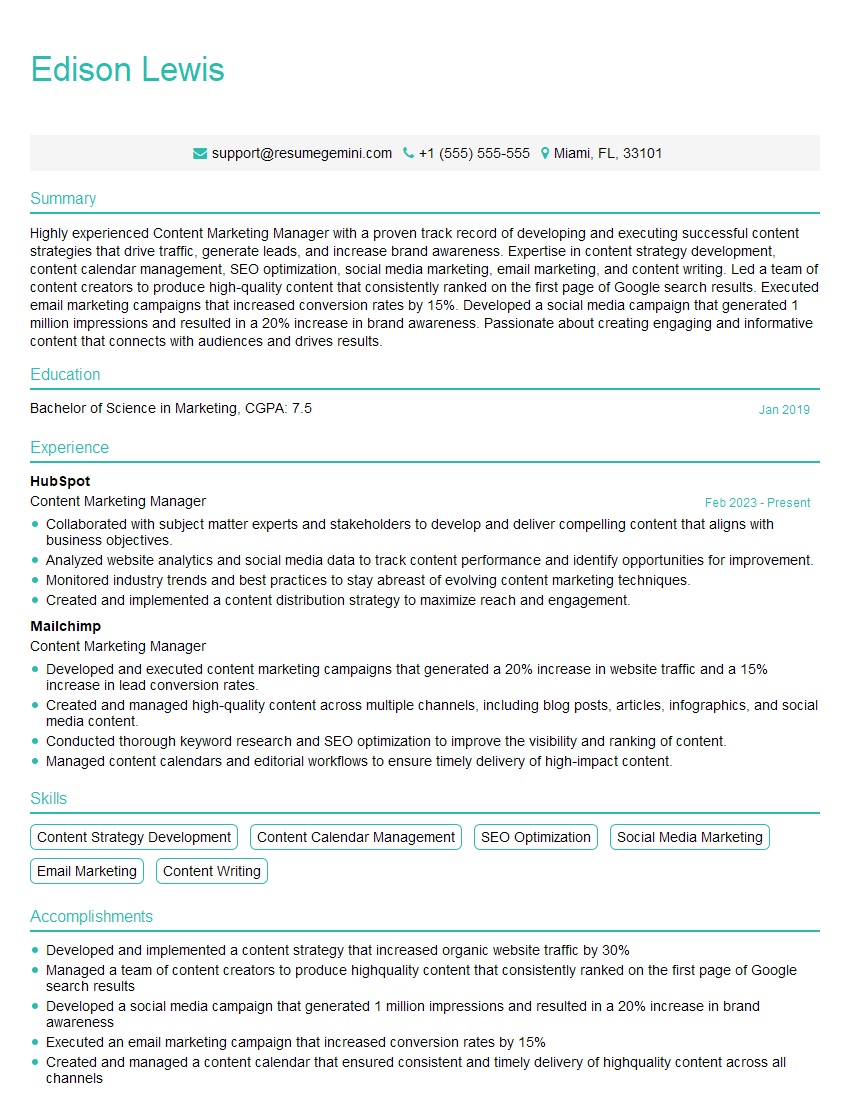
Content Marketing Manager Resume Sample
- Communications Coordinator
- Marketing Communications Manager
- Publicity Manager
- Community Manager
- Community Outreach Coordinator
- Event Manager
- Marketing Analyst
- Marketing Specialist
- Social Media Manager
- Digital Strategist
- Public Relations Manager
- Brand Ambassador
- Growth Hacker
- Customer Success Manager
- Content Creator
- Digital Marketing Manager
- Social Media Coordinator
- Content Marketing Manager
Explore more articles
Users Rating of Our Blogs
Share Your Experience
We value your feedback! Please rate our content and share your thoughts (optional).
What Readers Say About Our Blog
Very informative content, great job.
good