Interviews are more than just a Q&A session—they’re a chance to prove your worth. This blog dives into essential Audition Management interview questions and expert tips to help you align your answers with what hiring managers are looking for. Start preparing to shine!
Questions Asked in Audition Management Interview
Q 1. Describe your experience managing audition schedules and logistics.
Managing audition schedules and logistics is the backbone of a smooth casting process. It requires meticulous planning and attention to detail to ensure every actor gets their opportunity and the production stays on track. My approach involves several key steps:
- Utilizing scheduling software: I leverage scheduling tools like Calendly or Acuity Scheduling to allow actors to self-schedule auditions, minimizing back-and-forth emails. This provides transparency and efficiency.
- Creating a master schedule: I develop a comprehensive master schedule that includes all audition slots, actor names, agent contacts, and any special requirements (like scene breakdowns or costume instructions). This schedule is a living document, regularly updated and shared with relevant parties.
- Accounting for time zones and travel: When working with actors and creatives in different time zones, I carefully consider time differences and any potential travel issues, factoring in sufficient buffer time. For example, for international actors, I’d schedule auditions with a significant time window to accommodate delays or unexpected technical difficulties.
- Confirming appointments and sending reminders: Automated reminder systems (email or text) are employed to minimize no-shows and keep communication lines open. Customizable reminders are particularly helpful, ensuring actors have everything they need.
- Managing audition spaces and resources: Securing and preparing audition spaces (either physical or virtual) is crucial. This includes arranging equipment, ensuring a professional setup, and managing any necessary permits or permissions.
For instance, during the casting process for a recent independent film, I used Calendly to manage over 150 auditions, optimizing scheduling efficiency and minimizing conflicts.
Q 2. How do you handle conflicting audition schedules for actors?
Conflicting audition schedules are a common challenge. My approach involves a multi-pronged strategy focused on clear communication, prioritization, and flexibility.
- Prioritizing auditions based on project deadlines and actor importance: When conflicts arise, I work closely with agents to understand their client’s priorities and the deadlines for each project. This allows for informed decision-making regarding which audition to prioritize.
- Open communication with agents: I proactively communicate with agents to discuss conflicting schedules and find mutually agreeable solutions. This might involve rescheduling, offering alternative audition times, or exploring options like self-tapes if time constraints are tight.
- Negotiating with production teams: I sometimes work with the production teams to adjust audition times based on actor availability, showcasing the value of securing the right talent. This collaborative effort fosters productive relationships.
- Maintaining a waitlist: In case a favored actor is unavailable, I maintain a waitlist of other talented actors. This ensures a backup plan, guaranteeing the timely completion of the casting process.
I remember one instance where two high-profile actors had a scheduling conflict. By working closely with both agents and production, we managed to create a modified schedule, finding a slot that worked for both actors, and ensuring that neither project lost out on valuable talent.
Q 3. Explain your process for organizing and tracking audition materials.
Organizing and tracking audition materials is paramount for efficient casting. My system involves a combination of digital and physical organization.
- Centralized digital database: I use a cloud-based system (like Google Drive or Dropbox) to store all audition materials – headshots, resumes, self-tapes, and casting director notes. This ensures easy access and facilitates collaboration among the casting team.
- Clear folder structure: I employ a logical folder structure for easy navigation. For example, projects are organized by project name, then actors, and then specific audition materials. This makes finding specific information quick and simple.
- Metadata tagging: Each file is meticulously tagged with relevant keywords (e.g., actor name, role, project name, date). This allows for quick search and filtering within the system.
- Regular backups: Data loss can be catastrophic. Regular backups of the entire database are crucial to prevent data loss and ensure the security of the audition materials.
- Physical file organization (if necessary): If physical copies are needed, I maintain a clear filing system with proper labeling and cross-referencing with the digital database.
This methodical approach prevents chaos and allows me to retrieve any piece of information instantly, irrespective of the sheer volume of data.
Q 4. What methods do you use to effectively communicate with actors and agents?
Effective communication with actors and agents is fundamental. I use a combination of methods to ensure clear, timely, and professional communication.
- Professional email correspondence: Email remains the primary communication method, ensuring a written record of all interactions. I maintain a formal and professional tone, confirming appointments, providing updates, and delivering feedback.
- Phone calls for complex issues or urgent matters: For intricate issues or time-sensitive situations, phone calls facilitate direct interaction and problem-solving. This is particularly useful for addressing conflicts or clarifying expectations.
- Casting software communication modules: Many casting platforms offer integrated messaging systems. I use these modules to share audition details, provide feedback, and maintain a central point of communication.
- Regular updates: I provide timely updates to actors and agents regarding their audition status and the overall casting timeline, keeping them informed at every stage.
- Personalized approach: I endeavor to personalize communication whenever possible, remembering individual actors’ preferences and styles to enhance the interaction.
For example, I always send a thank-you note after an audition, regardless of the outcome. This builds rapport and professionalism.
Q 5. How do you ensure a positive and efficient audition environment?
Creating a positive and efficient audition environment is crucial for obtaining the best performances from actors. I focus on the following:
- Professional and welcoming atmosphere: I create a relaxed yet professional atmosphere. This includes ensuring a comfortable waiting area, providing refreshments, and establishing a friendly and respectful environment.
- Clear instructions and expectations: I provide clear and concise instructions, outlining expectations regarding attire, scenes to prepare, and any specific requirements for the audition.
- Prompt and respectful feedback: Timely feedback is provided, ensuring actors know the outcome and have the opportunity to learn from the experience. Feedback should be constructive and respectful.
- Efficient scheduling and time management: The audition process should run smoothly and efficiently, respecting the time of both the actors and the casting team. Minimize unnecessary delays.
- Appropriate technology and equipment: For virtual auditions, ensuring stable internet connection, high-quality audio and video, and a professional background are key to a positive experience. For in-person auditions, ensure the audition space is well-lit and equipped with necessary props.
Creating a positive audition experience helps actors perform at their best and contributes to a strong, positive reputation for the production.
Q 6. Describe your experience with different audition formats (self-tapes, in-person, etc.).
My experience encompasses various audition formats, each with its own set of considerations.
- In-person auditions: These offer the most immediate feedback and allow for direct observation of actors’ physical presence and interactions. Careful preparation of the audition space, ensuring appropriate equipment and a welcoming atmosphere are critical.
- Self-tapes: Self-tapes are increasingly common, offering flexibility and cost savings. Clear instructions and guidance are essential. I provide specific technical requirements (camera quality, sound, background), scene breakdowns, and feedback guidelines for successful self-tapes.
- Virtual auditions (via video conferencing): Virtual auditions offer similar benefits to self-tapes with the added advantage of real-time interaction. Technical glitches need to be accounted for. It’s essential to ensure a stable connection and clear communication regarding technical issues.
- Callback auditions: Callback auditions usually involve a smaller pool of actors and a more focused process. These auditions often involve reading scenes from the script, and offer a more in-depth assessment of the actors’ talent and suitability for the role.
Adaptability to different formats is key. Each method offers unique challenges and advantages which require understanding and careful planning.
Q 7. How do you manage feedback from casting directors and producers?
Managing feedback from casting directors and producers is crucial for optimizing the casting process. My approach involves:
- Documentation: I meticulously document all feedback received, noting specific comments about individual actors, their performances, and any other relevant observations. This creates a comprehensive record for future reference.
- Clear communication: I ensure that feedback is clearly communicated to actors and agents, delivering the information in a sensitive and professional manner. The specific details of the feedback should be balanced with appropriate encouragement.
- Collaboration and discussion: I encourage collaboration among the casting team to synthesize feedback and identify common themes or trends. This ensures a consistent approach to decision-making.
- Actionable steps: I use the feedback to inform further steps in the casting process. This might involve rescheduling auditions, requesting additional materials, or refining the search criteria for future actors.
- Data analysis: I analyze feedback trends to identify areas of strength and weakness in the audition process, allowing for continuous improvements and optimization of casting strategies.
Feedback, both positive and negative, is invaluable. Using it effectively ensures continuous learning and improvement for future casting endeavors.
Q 8. How do you identify and resolve potential conflicts during the audition process?
Identifying and resolving potential conflicts during auditions requires proactive planning and clear communication. Think of it like orchestrating a complex event – you need to anticipate potential clashes and have contingency plans in place.
- Scheduling Conflicts: I utilize a sophisticated scheduling system to avoid overlapping audition times for the same actor. For example, I might use a color-coded calendar to visually identify potential conflicts and ensure actors aren’t double-booked.
- Role Conflicts: If an actor is ideal for multiple roles, I carefully assess their suitability and potential for commitment to each. This often involves discussions with the director and casting team to determine the best fit. We might prioritize roles based on script significance or production timeline.
- Personality Conflicts: While less directly manageable, I aim to create a positive and respectful audition environment. If I sense friction between actors or with the production team, I intervene immediately, fostering open communication and ensuring everyone feels valued and respected. A quiet word to each party separately may be all that is needed.
- Conflict Resolution: My approach to conflict resolution is collaborative. I facilitate open dialogue, encourage empathy, and strive to find mutually agreeable solutions. This might involve adjusting audition times, offering alternative roles, or politely declining participation if a conflict is unresolvable.
For example, in a recent project, I discovered a scheduling conflict between two leading actors. Instead of causing delays, I communicated with both, presented alternative audition slots, and ultimately found a solution that worked for everyone.
Q 9. What software or tools do you use for audition management?
Effective audition management relies heavily on specialized software and tools. I’ve worked extensively with several, tailoring my choices to the project’s scale and specific needs.
- Casting Software (e.g., Casting Networks, Casting Frontier): These platforms streamline the entire process from posting auditions to managing submissions, scheduling, and communication with actors. They often include features for tracking auditions, generating reports, and managing callbacks.
- Spreadsheet Software (e.g., Microsoft Excel, Google Sheets): I also use spreadsheets for detailed record-keeping, particularly for smaller projects where dedicated casting software might be overkill. Customizable spreadsheets allow me to track specific criteria, such as actor experience, availability, and feedback from the director.
- Calendar Software (e.g., Google Calendar, Outlook Calendar): This is crucial for coordinating audition schedules, avoiding conflicts, and sending reminders to both actors and the production team. Color-coding and shared calendars help maintain clear oversight.
- Communication Tools (e.g., Email, Slack): Efficient communication is paramount. I utilize email for formal communication and instant messaging platforms like Slack for quick updates and discussions within the team.
My choice of tools depends on the project size and budget, but efficient data management and seamless communication are my top priorities.
Q 10. How do you prioritize tasks and manage time effectively during busy audition periods?
Managing time effectively during peak audition periods requires strategic planning and prioritization. It’s like conducting a marathon – you need to pace yourself and conserve energy for the crucial moments.
- Prioritization Matrix: I employ a prioritization matrix to categorize tasks based on urgency and importance. This allows me to focus on time-sensitive tasks and delegate or reschedule lower-priority items.
- Time Blocking: I allocate specific time blocks for different activities, such as reviewing submissions, scheduling auditions, and conducting callbacks. This minimizes context switching and promotes focused work.
- Batching Similar Tasks: I group similar tasks together to improve efficiency. For example, I might review all actor submissions at once instead of interrupting the process with other activities.
- Delegation: Where possible, I delegate tasks to assistants or team members, freeing up my time to focus on strategic decisions and high-priority activities.
- Efficient Communication: Clear and concise communication prevents misunderstandings and saves time. I utilize templates for common correspondence and regularly update team members on progress.
For instance, during a particularly busy period for a musical theater production, I used time-blocking to dedicate specific mornings to reviewing vocal auditions and afternoons to choreography auditions. This allowed me to maintain focus and manage the significant volume of submissions efficiently.
Q 11. Describe your experience with audition callbacks and follow-up processes.
Callbacks and follow-up are critical stages in the audition process. They are like the final stretch of a race – the opportunity to refine the selection and finalize decisions.
- Callback Process: After the initial auditions, I select actors for callbacks based on the criteria established by the director and casting team. Callbacks allow for a more in-depth assessment of their skills and suitability for the role.
- Callback Communication: I notify actors promptly about callbacks via email or phone, providing clear instructions and details about the process. I am mindful of the time and effort involved in attending callbacks.
- Follow-up Communication: Whether an actor is cast or not, I always provide timely feedback and communicate respectfully. For those not cast, I express my appreciation for their time and effort. For those cast, I offer a contract, provide further information, and ensure a smooth transition into the production.
- Record Keeping: Detailed notes from callbacks are essential. I meticulously record my observations, the director’s feedback, and any other relevant information.
In one instance, a seemingly less experienced actor impressed the director during a callback, ultimately landing a principal role due to their unexpected talent and remarkable stage presence. This highlights the importance of the callback process.
Q 12. How do you maintain accurate records of auditions and casting decisions?
Maintaining accurate records is crucial for responsible audition management. It is like keeping a well-organized library – ensuring easy access to essential information at any time.
- Digital Database: I primarily utilize digital databases (often integrated within casting software) to store all audition-related information. This includes actor profiles, audition dates, feedback notes, casting decisions, and contact information.
- Organized File System: A well-organized file system ensures easy retrieval of information. I typically organize files by project name, actor name, and audition date.
- Data Backup: Regular data backups safeguard against data loss and ensure business continuity.
- Confidentiality: I maintain strict confidentiality of all audition-related information, adhering to data privacy regulations.
For example, in a recent historical drama, I kept meticulous records of each actor’s costume fitting, their audition notes, and their final casting decision. This allowed us to effectively manage the production and maintain a smooth workflow.
Q 13. How do you handle last-minute changes or cancellations to audition schedules?
Handling last-minute changes and cancellations requires adaptability and quick thinking. It’s like navigating an unexpected detour – you must react swiftly and effectively.
- Flexible Scheduling: I strive to create flexible schedules to accommodate unforeseen circumstances. Building buffer time into the schedule provides some leeway for changes.
- Efficient Communication: If there is a change, I immediately communicate with all relevant parties (actors, directors, production team) via email, phone, or text, clearly outlining the adjustments.
- Contingency Planning: I always have a list of standby actors, especially for high-profile roles. This ensures a smooth replacement if necessary.
- Transparency: Open and honest communication minimizes confusion and maintains trust.
For instance, during a high-pressure commercial shoot, the leading actor fell ill at the last minute. Due to my proactive approach to contingency planning, I had a pre-screened actor ready, minimizing disruption to the shoot.
Q 14. How do you ensure compliance with legal and ethical standards in casting?
Ensuring compliance with legal and ethical standards in casting is paramount. It’s like upholding the rule of law in a court of justice – fair, just, and unbiased.
- Equal Opportunity: I adhere strictly to equal opportunity employment principles, ensuring that all actors are considered fairly, regardless of race, gender, age, religion, or any other protected characteristic. This includes implementing blind auditions to reduce bias.
- Data Privacy: I handle all personal data with the utmost care, complying with all relevant data protection laws (e.g., GDPR, CCPA). This includes securing actor information and obtaining consent before using their data.
- Contractual Obligations: I ensure that all contracts with actors are legally sound, clearly outlining terms and conditions.
- Professional Conduct: I maintain professional conduct at all times, fostering a respectful and safe environment for all participants.
I always ensure our casting practices align with the latest legal and ethical guidelines to uphold fairness and prevent discrimination.
Q 15. How do you assess the suitability of actors based on their audition performances?
Assessing actor suitability goes beyond just talent; it’s about finding the perfect fit for the role and the production. I evaluate several key aspects during auditions.
- Technical Skills: This includes vocal quality, diction, physicality, and acting technique. Does the actor demonstrate the necessary skills to portray the character convincingly? I look for evidence of training and adaptability.
- Interpretation and Characterization: How effectively does the actor understand and embody the character? Do they convey the emotions, motivations, and nuances required? I assess their ability to create a believable persona.
- On-Camera Presence (if applicable): For screen roles, I assess screen presence, charisma, and ability to connect with the camera. It’s about more than just good acting; it’s about captivating the audience through the lens.
- Chemistry and Collaboration: If the role involves interaction with other characters, I observe how well the actor interacts with others during the audition, particularly scene work. Do they demonstrate good collaborative skills?
- Professionalism: Punctuality, preparedness, and respectful demeanor are also crucial factors. A positive and professional attitude can make a significant difference.
For example, in a recent audition for a comedic role, one actor flawlessly delivered the lines, but lacked the comedic timing crucial for the character. Another, though less technically polished, had superb comedic instincts and a natural stage presence that made them a more suitable choice.
Career Expert Tips:
- Ace those interviews! Prepare effectively by reviewing the Top 50 Most Common Interview Questions on ResumeGemini.
- Navigate your job search with confidence! Explore a wide range of Career Tips on ResumeGemini. Learn about common challenges and recommendations to overcome them.
- Craft the perfect resume! Master the Art of Resume Writing with ResumeGemini’s guide. Showcase your unique qualifications and achievements effectively.
- Don’t miss out on holiday savings! Build your dream resume with ResumeGemini’s ATS optimized templates.
Q 16. What strategies do you use to streamline the audition process?
Streamlining the audition process is key to efficiency and fairness. I employ several strategies:
- Clear and Concise Audition Materials: Providing actors with clear instructions, sides (portions of the script), and specific requirements ensures everyone is on the same page and prepares effectively.
- Efficient Scheduling and Communication: Utilizing online scheduling tools allows for quick and easy appointment booking and reminders, minimizing no-shows and scheduling conflicts. Clear communication with actors about the audition process and expectations is crucial.
- Pre-screening Materials: Requesting headshots, resumes, and demo reels upfront allows for initial filtering and helps to prioritize those best suited to the roles. This saves time in the long run.
- Organized Audition Sessions: Structuring auditions to follow a specific format ensures consistency in evaluation. This can include set times, consistent instructions and prompt feedback.
- Digital Tools and Platforms: Utilizing online platforms for self-tapes or remote auditions greatly expands the pool of potential actors, reducing geographic limitations and associated costs. This also facilitates easy storage and sharing of audition recordings.
For instance, implementing an online scheduling system reduced our admin time by 40%, allowing us to focus more on evaluating the performances.
Q 17. Describe a time you had to manage a challenging audition situation.
During a musical theatre audition, our lead actress fell ill the day before the callbacks. This was a significant challenge, as we had already confirmed the set and other actors were expecting to work with her.
My immediate response was threefold:
- Quick Problem Assessment: I immediately contacted our understudy and the director to assess the understudy’s readiness and the potential for adjustments to the callback process.
- Contingency Planning: We quickly organized a rehearsal with the understudy, focusing on the critical scenes involving the lead role. We also prepared an alternate format for the callbacks, should the understudy require additional support.
- Communication and Collaboration: I maintained transparent communication with all stakeholders – actors, the director, and the production team – keeping everyone informed and updated on the situation and the plan of action. This ensured minimal disruption to the scheduling.
Although it was a stressful situation, our proactive response minimized the disruption and we successfully completed the callbacks within a short time frame with limited disruption to the project timelines.
Q 18. How do you maintain confidentiality related to audition materials and actor information?
Maintaining confidentiality is paramount in audition management. This is about respecting the actors’ privacy and protecting the integrity of the production.
- Secure Storage of Materials: All audition materials, including scripts, recordings, and actor information, are stored securely, using password-protected systems and encrypted files. Access is strictly limited to authorized personnel.
- Confidentiality Agreements: Actors are often asked to sign confidentiality agreements prior to the audition, outlining their commitment to protecting sensitive information about the production and other actors.
- Data Protection Protocols: I adhere to all relevant data protection regulations and best practices. This includes limiting data collection to what is essential and ensuring compliance with policies like GDPR (if applicable).
- Secure Communication Channels: All communication with actors, including audition invitations and feedback, are conducted through secure channels, such as encrypted email or private messaging systems.
Our commitment to confidentiality builds trust with actors, encouraging them to give their best performances without fear of their ideas or information being misused.
Q 19. What is your experience with diverse casting and inclusivity efforts?
Diverse casting and inclusivity are not just ethical considerations; they enrich productions and create authentic representations of the world. I actively promote diversity in all aspects of the casting process.
- Expanding the Talent Pool: We actively reach out to and collaborate with diverse casting agencies and talent networks to broaden the range of actors considered.
- Blind Auditions (where appropriate): In some instances, I utilize blind auditions, where actor names and identifying information are removed from submissions during the initial screening to focus purely on talent.
- Inclusive Casting Calls: Our casting calls specifically encourage applications from actors of all backgrounds, ethnicities, genders, abilities, and orientations, ensuring a wide representation of talent.
- Avoiding Stereotyping: I work closely with the production team to ensure that characters are not cast based on stereotypes, and that roles are written with diversity in mind.
For example, in a recent period drama, we held an open call specifically targeting actors with a range of ethnic backgrounds, resulting in a production cast that authentically reflected the multiculturalism of the historical setting.
Q 20. How do you collaborate effectively with other team members during the casting process?
Effective collaboration is crucial for a successful casting process. I foster a collaborative environment by:
- Clear Communication and Shared Goals: I maintain open lines of communication with the director, producers, and other team members, ensuring everyone understands the casting goals, the criteria for the roles, and the process involved.
- Shared Decision-Making: I encourage collaborative decision-making, involving relevant team members in the evaluation of actors and the final selection process.
- Regular Feedback and Updates: I provide regular updates and feedback to the team, ensuring everyone is informed about the progress of the audition process and the status of the candidates.
- Respectful and Inclusive Discussions: I maintain a respectful and inclusive discussion environment where all team members feel comfortable voicing their opinions and raising concerns.
For example, in a recent project, the director and I disagreed on a particular actor’s suitability for a role. By openly discussing our perspectives and understanding each other’s rationale, we collaboratively chose an actor who fit both our creative visions.
Q 21. What metrics do you use to track the success of your audition management efforts?
Tracking the success of audition management involves analyzing several key metrics.
- Time to Fill Roles: This metric tracks the time taken to fill each role, indicating the efficiency of the process. A shorter time-to-fill suggests a well-organized and effective system.
- Actor Satisfaction: Feedback surveys and informal communications with actors provide insights into their experience with the audition process. High satisfaction levels indicate a positive and inclusive process.
- Production Success: The overall success of the production (e.g., critical acclaim, box office performance for films or plays) can be an indirect but important indicator of the effectiveness of the casting process.
- Diversity Metrics: Tracking the demographic representation of the cast helps to assess the success of inclusivity efforts. This data allows for refinement of strategies and ensures ongoing improvement.
- Cost-Effectiveness: Tracking the costs associated with the audition process (e.g., advertising, venue rental, administrative costs) and comparing them to the overall production budget allows for assessing the efficiency of resource allocation.
By regularly monitoring these metrics, we can identify areas for improvement and fine-tune our strategies to ensure a consistently successful and efficient casting process.
Q 22. How do you handle difficult actors or agents during the audition process?
Handling difficult actors or agents requires a calm, professional, and firm approach. It’s crucial to remember that maintaining a respectful and courteous demeanor is paramount, even in challenging situations. My strategy involves proactive communication and clear boundary setting.
- Proactive Communication: I always aim to clearly communicate expectations upfront, both in the audition invitation and during any pre-audition interactions. This minimizes misunderstandings and sets a professional tone. For example, I might clearly outline the audition process, including the time allotted, the required materials, and any specific instructions.
- Clear Boundaries: If an actor or agent crosses a professional boundary – for example, becoming excessively demanding or disrespectful – I address the issue directly and firmly, but politely. I might say something like, “I understand your concern, however, we have a schedule to adhere to for all auditionees.” If the behavior continues, I would involve my supervisor.
- Documentation: Thorough documentation of any problematic interactions is crucial. This protects both the production and myself. I maintain detailed records of all communications, including emails and notes from phone calls.
- Mediation (If Necessary): In extreme cases, involving a more senior member of the production team or a casting director might be necessary to mediate the situation. It’s important to de-escalate the situation before it impacts the smooth running of auditions.
Ultimately, my goal is to manage the situation effectively while ensuring a respectful and efficient audition process for everyone involved.
Q 23. Describe your experience using casting software such as Casting Networks or similar platforms.
I have extensive experience utilizing casting software like Casting Networks and similar platforms. These tools are indispensable for streamlining the audition process, improving organization, and efficiently managing a large volume of submissions.
- Casting Call Creation and Distribution: I’m proficient in creating detailed casting calls, specifying all necessary information—role descriptions, audition requirements, deadlines, and submission guidelines—and distributing these calls via the platform’s features.
- Applicant Management: These platforms allow me to efficiently manage the influx of applications, reviewing submitted materials (headshots, resumes, reels), and organizing them effectively. I can create custom filters and searches to find specific actor profiles based on various criteria.
- Communication and Scheduling: I use the platform’s internal messaging and scheduling features to communicate with actors and agents, scheduling auditions and providing updates efficiently.
- Data Analysis: Many platforms offer data analysis tools that provide valuable insights into the casting process, such as the number of submissions received, the demographics of applicants, and the success rate of various outreach strategies. This data helps optimize future casting calls.
For instance, on Casting Networks, I’ve successfully managed casting calls for projects ranging from independent films to large-scale television productions, receiving and processing hundreds of submissions effectively through the platform’s organizational tools.
Q 24. How do you manage the budget for auditions and related expenses?
Budget management for auditions is crucial to ensure the production stays within financial constraints. I begin by creating a detailed budget encompassing all anticipated expenses before commencing the casting process.
- Identifying Expenses: This includes costs associated with audition space rental (if applicable), reader fees, travel expenses for actors (per diem, transportation), and any materials needed for auditions (scripts, props).
- Allocating Funds: I allocate funds based on the project’s scale and the anticipated number of auditions. This requires careful consideration of the number of actors to be seen and the type of audition format (in-person, self-tape, virtual).
- Tracking Expenditures: Throughout the process, meticulous record-keeping is essential. I maintain detailed records of every expense, ensuring all invoices are received and processed correctly.
- Negotiation and Value Assessment: I look for opportunities to negotiate fees with vendors, while ensuring that the selected options provide value for money. For example, I might opt for a virtual audition format if it significantly reduces costs associated with travel and venue rental.
For example, when budgeting for a low-budget independent film, I might prioritize cost-effective solutions such as utilizing free or low-cost online audition platforms instead of renting a dedicated space.
Q 25. How do you maintain a database of actors and their materials?
Maintaining a well-organized actor database is key to efficient casting. I typically use a combination of specialized casting software and a spreadsheet system.
- Casting Software Integration: Casting platforms like Casting Networks inherently contain actor profiles with associated media, reducing the need for a separate database in some cases.
- Spreadsheet Database: For actors not found on casting platforms, I utilize a spreadsheet program to maintain a database that includes essential information such as name, contact details, headshots, reels, resumes, and relevant notes from past auditions. Fields include role preferences, special skills, and availability.
- Regular Updates: Consistent updating is essential. This includes adding new actors, updating contact information, and adding notes about their past performances.
- Data Security: Security and privacy are critical. I ensure the database is password-protected and stored securely.
This allows me to quickly search for actors based on specific criteria, saving time and improving the efficiency of the casting process.
Q 26. What is your experience working with different types of productions (film, television, theatre)?
My experience spans various production types – film, television, and theatre – each presenting unique challenges and demands in audition management.
- Film: Film auditions often involve a larger pool of applicants and a more rigorous selection process. The focus is on finding actors who can convincingly portray specific characters within a tight timeframe.
- Television: Television projects can range from single-camera dramas to multi-camera sitcoms, each demanding different audition approaches. Series casting often involves callbacks and extensive chemistry reads.
- Theatre: Theatre auditions frequently emphasize live performance and interaction, requiring careful consideration of stage presence and the ability to deliver lines convincingly.
I’ve adapted my audition management techniques based on the specific needs of each production type. For example, I might use self-tape auditions more extensively for film projects due to geographical limitations, whereas theatre auditions might necessitate in-person readings.
Q 27. How do you stay updated on industry best practices in casting and audition management?
Staying current with industry best practices is vital in this dynamic field.
- Industry Publications: I regularly read industry publications such as Variety, The Hollywood Reporter, and Backstage for updates on casting trends and new technologies.
- Conferences and Workshops: Attending conferences and workshops provides opportunities to learn from experienced casting professionals and network with peers.
- Online Resources: I actively follow industry blogs, podcasts, and online forums dedicated to casting and auditioning.
- Networking: Networking with other casting professionals and filmmakers provides insights into current practices and challenges.
For example, I’ve recently learned about the increasing use of AI in casting, prompting me to research the benefits and drawbacks of incorporating such technologies into my workflows.
Q 28. Describe your experience with different types of audition formats (in-person, self-tapes, virtual auditions).
I have experience with a range of audition formats, each with its own advantages and challenges.
- In-Person Auditions: These offer the benefit of direct interaction with actors, allowing for immediate feedback and assessment of their performance and chemistry. They require careful planning of logistics including venue booking, scheduling, and managing waiting lists.
- Self-Tapes: Self-tapes provide geographical flexibility and can be cost-effective for both the production and the actor. However, they require clear instructions and careful attention to technical quality from the actor’s end.
- Virtual Auditions: Virtual auditions utilize video conferencing platforms, offering similar advantages to self-tapes but with the possibility for more real-time interaction with the casting team. This requires attention to technical aspects such as internet connectivity and software compatibility.
My approach involves adapting the format based on the project’s budget, timeline, and the specific requirements of the roles. I always provide clear, comprehensive instructions and technical support to ensure a fair and efficient process regardless of the format.
Key Topics to Learn for Audition Management Interview
- Scheduling and Calendar Management: Understanding efficient scheduling techniques, conflict resolution, and managing multiple calendars for different projects and personnel.
- Candidate Tracking and Communication: Mastering the process of tracking applicants, maintaining clear communication (email, phone, etc.), and efficiently managing communications throughout the audition process.
- Audition Process Optimization: Developing and implementing streamlined audition procedures, from initial application to final selection, to maximize efficiency and minimize bottlenecks.
- Data Management and Reporting: Understanding the importance of accurate data entry, generating insightful reports on audition metrics (e.g., applicant numbers, acceptance rates, feedback analysis), and using data to inform future processes.
- Software Proficiency: Demonstrating competency with relevant audition management software, including familiarity with its features and functionalities. This may include specific software mentioned in job descriptions.
- Problem-Solving & Decision-Making: Preparing for scenarios requiring quick problem-solving, such as managing scheduling conflicts, addressing candidate concerns, or handling unexpected events during auditions.
- Teamwork & Collaboration: Highlighting experience working effectively within a team, collaborating with casting directors, producers, and other relevant personnel.
Next Steps
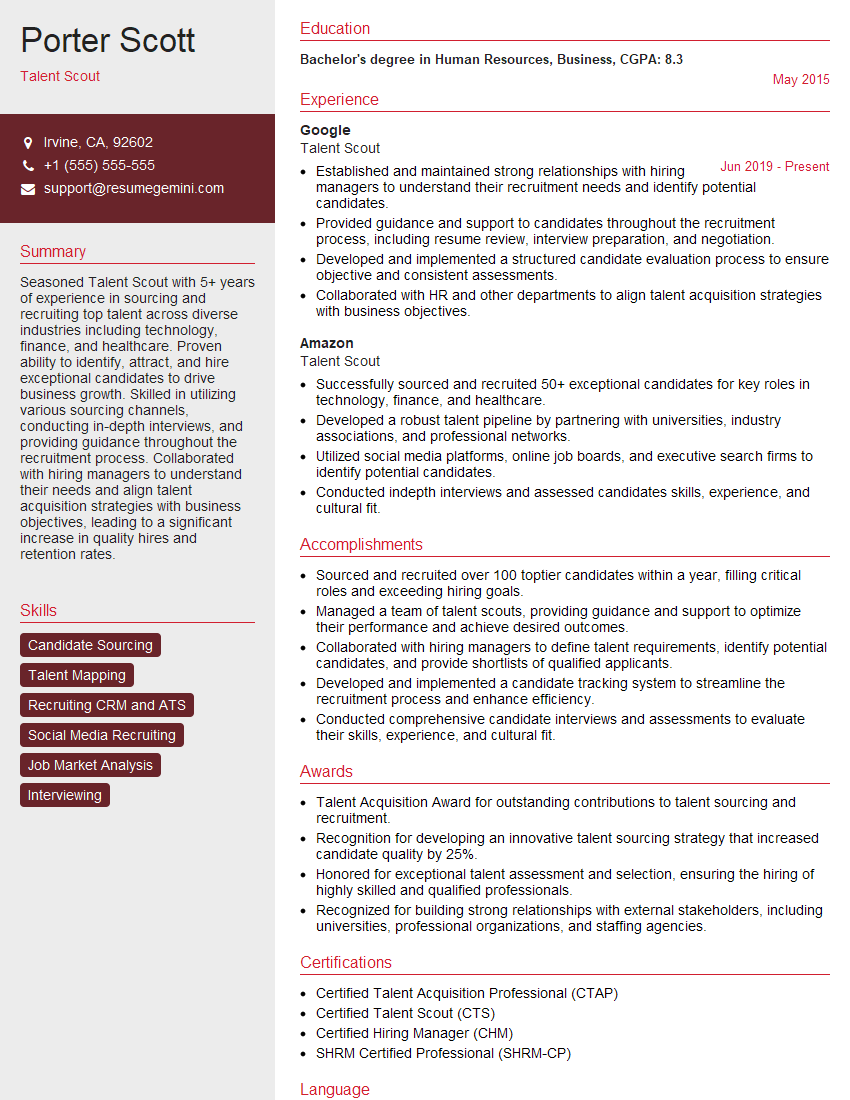
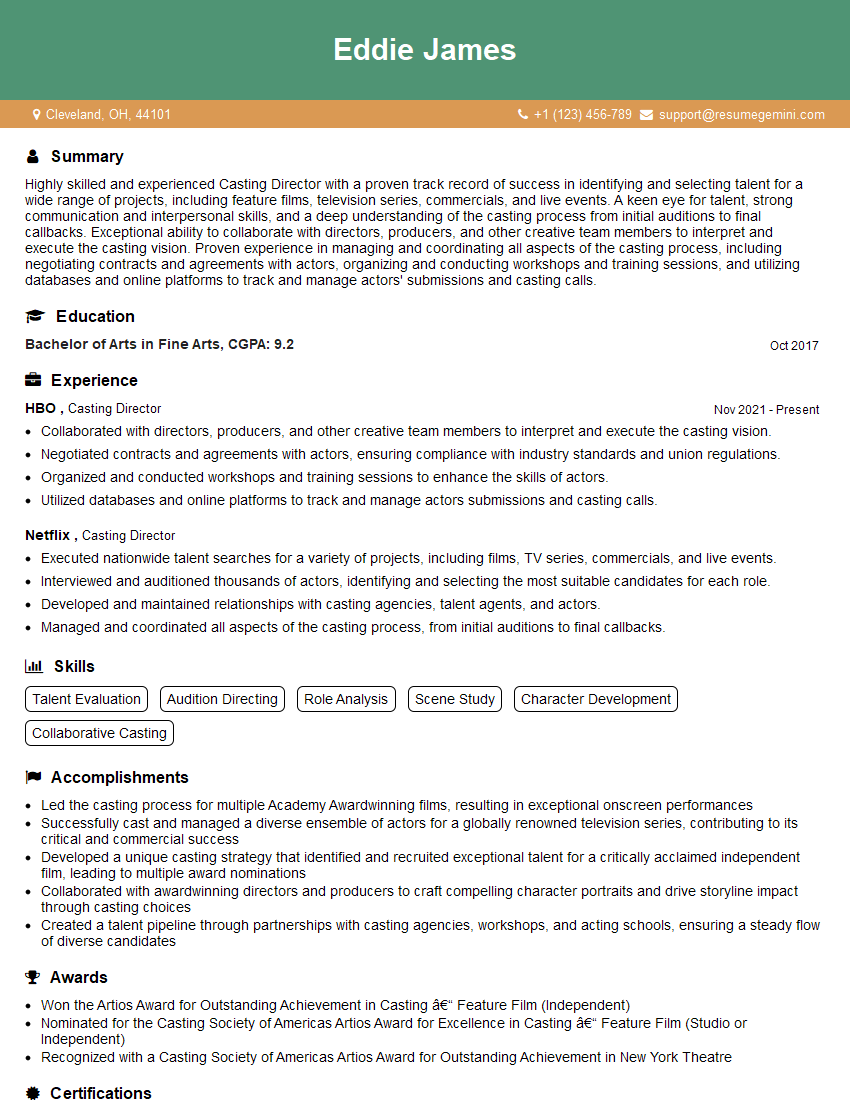
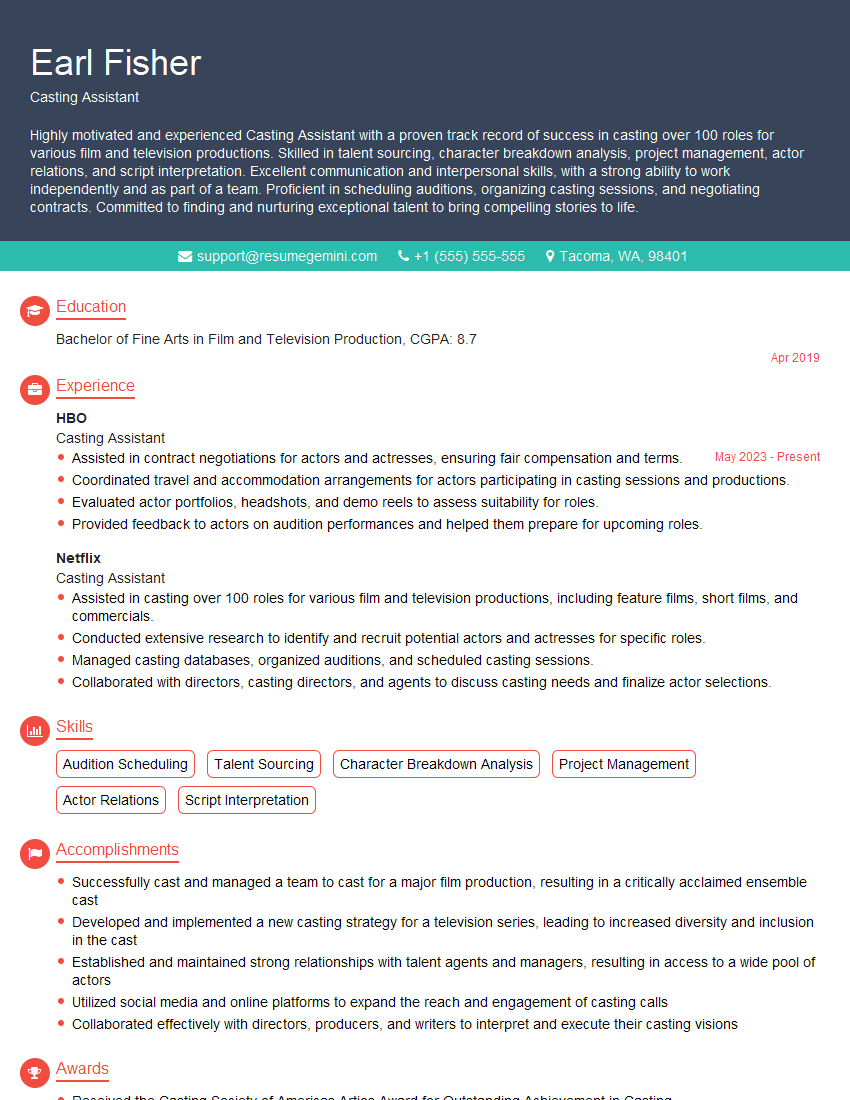
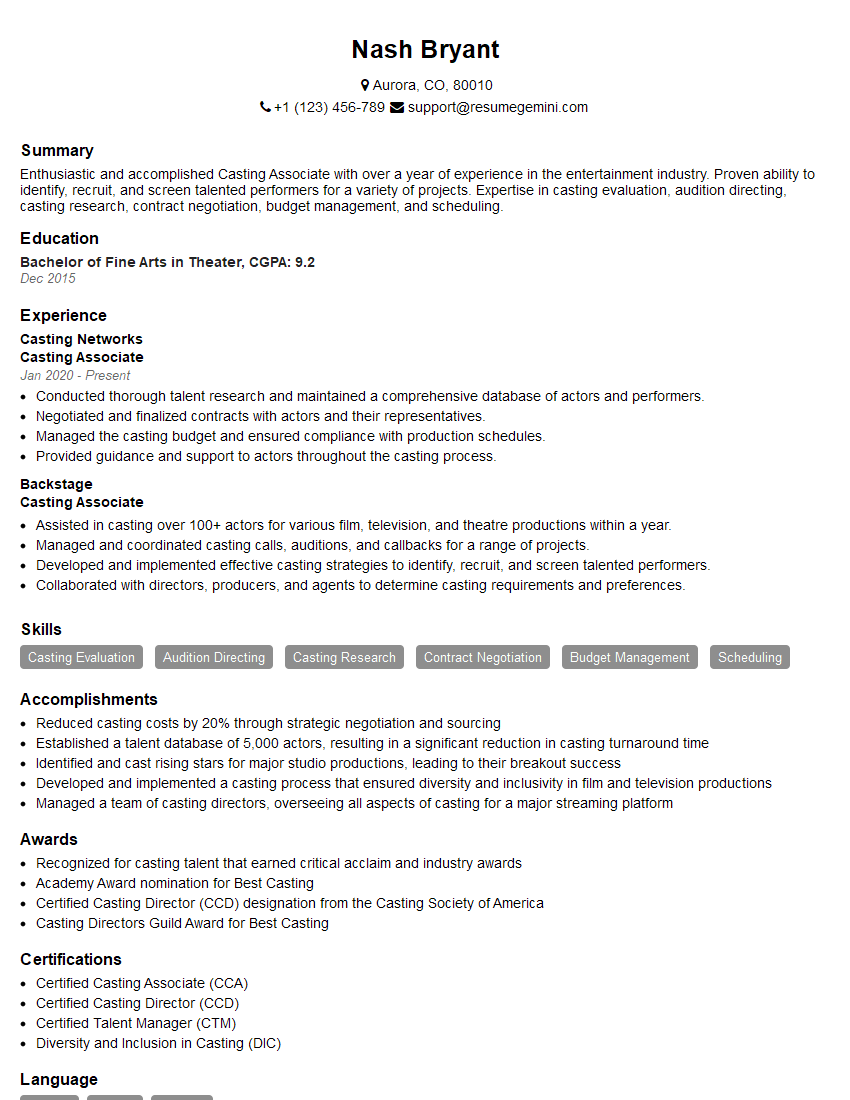
Mastering Audition Management is crucial for career advancement in the entertainment industry, opening doors to roles with increased responsibility and higher earning potential. A strong resume is your first impression – make it count! Building an ATS-friendly resume significantly increases your chances of getting noticed by recruiters. Leverage ResumeGemini, a trusted resource for crafting professional resumes, to enhance your job prospects. Examples of resumes tailored to Audition Management are available to help guide you.
Explore more articles
Users Rating of Our Blogs
Share Your Experience
We value your feedback! Please rate our content and share your thoughts (optional).
What Readers Say About Our Blog
Very informative content, great job.
good