Feeling uncertain about what to expect in your upcoming interview? We’ve got you covered! This blog highlights the most important Automated Machinery interview questions and provides actionable advice to help you stand out as the ideal candidate. Let’s pave the way for your success.
Questions Asked in Automated Machinery Interview
Q 1. Explain the difference between a PLC and a PAC.
While both PLCs (Programmable Logic Controllers) and PACs (Programmable Automation Controllers) are industrial computing devices used to automate machinery, they differ significantly in their capabilities and applications. Think of a PLC as a specialized muscle – incredibly strong at controlling simple, repetitive tasks like switching valves or controlling motors. A PAC, on the other hand, is more like a brain and brawn combined; it handles complex automation tasks while also providing advanced data processing and networking capabilities.
- PLC (Programmable Logic Controller): Primarily focused on discrete control tasks, using ladder logic programming. Excellent for simple on/off operations, timing sequences, and basic process control. They are generally less expensive and easier to program for simpler applications.
- PAC (Programmable Automation Controller): Provides more integrated capabilities, incorporating features such as motion control, advanced process control, data acquisition, and networking protocols (like Ethernet/IP or PROFINET). They’re ideal for complex systems needing sophisticated data analysis and integration with broader enterprise systems. They are often more powerful and expensive than PLCs.
For example, a PLC might control a simple conveyor belt system, while a PAC might manage a complex robotic assembly line, collecting and analyzing real-time data on production efficiency and quality.
Q 2. Describe your experience with different types of industrial robots (e.g., SCARA, articulated, delta).
My experience encompasses a wide range of industrial robots. I’ve worked extensively with SCARA, articulated, and delta robots, each suited for specific tasks.
- SCARA (Selective Compliance Assembly Robot Arm): These robots excel at assembly tasks requiring high speed and precision in a two-dimensional plane. Their parallel-link structure offers good repeatability, making them perfect for applications like pick-and-place operations within a limited workspace. I used one in an automotive parts assembly line, where it accurately placed small components onto larger assemblies.
- Articulated Robots (Revolute Robots): These are the most common type of industrial robot, with multiple rotary joints mimicking a human arm. They offer a wide range of motion and are highly versatile, suitable for tasks such as welding, painting, and material handling. In a previous project, I integrated an articulated robot into a palletizing system, significantly improving efficiency and reducing manual labor.
- Delta Robots (Parallel Robots): These robots use three arms connected to a common base, offering extremely high speed and precision, ideal for high-throughput applications like food packaging or picking objects from a conveyor belt. I implemented a delta robot in a pharmaceutical packaging line, where its speed was crucial in meeting high production demands.
My experience extends beyond just operation; I’ve also been involved in programming, integrating, and troubleshooting these robots in various industrial settings.
Q 3. What programming languages are you proficient in for automated machinery?
Proficiency in programming languages is crucial for automated machinery. My expertise includes:
- Ladder Logic: The standard programming language for PLCs. I’m adept at designing and troubleshooting ladder logic programs for a wide range of applications, from simple on/off controls to complex sequencing systems.
- Structured Text (ST): A high-level programming language used in PLCs and PACs, offering a more structured and readable approach than ladder logic, particularly for complex tasks. I use ST for more advanced process control and data manipulation.
- Function Block Diagram (FBD): A graphical programming language, particularly useful for visualizing complex control systems and for representing reusable functions.
- C/C++: I often use C/C++ for lower-level programming tasks, such as interfacing with robotic control systems or developing custom algorithms for motion control.
- Python: I utilize Python for data analysis, system integration and creating custom user interfaces or scripts to automate tasks.
My skills are not limited to just these languages; I’m able to learn and adapt to new languages as needed. The ability to adapt to new programming languages is essential in this ever-evolving field.
Q 4. How do you troubleshoot a malfunctioning automated system?
Troubleshooting a malfunctioning automated system requires a systematic and methodical approach. My process generally involves these steps:
- Safety First: Always prioritize safety. Isolate the system to prevent further damage or injury.
- Gather Information: Identify the nature of the malfunction. What is the system doing (or not doing)? Are there any error messages? Speak to operators to understand the timeline and sequence of events.
- Review System Documentation: Check the PLC program, wiring diagrams, and system manuals to understand the intended functionality and identify potential points of failure.
- Check Inputs/Outputs: Verify that all inputs (sensors, switches) are providing correct signals and outputs (actuators, motors) are responding as expected. Use test equipment such as multimeters and oscilloscopes where appropriate.
- Inspect Hardware: Physically inspect the system for loose connections, damaged components, or any signs of mechanical wear.
- Isolate the Problem: Use systematic methods to narrow down the source of the malfunction. Consider breaking the system into smaller modules and testing each one individually.
- Implement and Verify Solution: Once the problem is identified, implement the necessary correction (repair, reprogramming, replacement). Thoroughly test the solution to ensure it functions as intended before returning the system to operation.
- Document the Fix: Keep a detailed record of the problem, diagnostic steps, and the solution implemented. This assists future troubleshooting efforts and helps to prevent similar issues from occurring.
For example, if a robotic arm stops unexpectedly, I’d start by checking the emergency stop button, power supply, then the robot’s programming and sensor inputs. My systematic approach ensures efficient and effective troubleshooting, minimizing downtime.
Q 5. Explain your experience with safety protocols in automated machinery.
Safety is paramount in automated machinery. My experience includes working with and implementing a variety of safety protocols, focusing on risk assessment, hazard mitigation, and emergency response. This involves:
- Risk Assessments: Performing thorough risk assessments to identify potential hazards and prioritize safety measures, according to standards like ISO 13849 and ISO 14121.
- Safety Instrumented Systems (SIS): Implementing SIS using PLCs and specialized safety relays to detect and respond to hazardous situations, ensuring a rapid and safe shutdown of the machinery.
- Emergency Stop Systems: Ensuring compliance with emergency stop regulations, including redundant systems and appropriate safety devices. I’ve worked on systems with both single and dual-channel emergency stop circuits, ensuring maximum safety.
- Light Curtains, Safety Scanners, and Interlocks: Designing and implementing safety devices like light curtains and proximity sensors to prevent access to hazardous areas during operation.
- Lockout/Tagout Procedures: Establishing and enforcing lockout/tagout procedures to prevent accidental energization during maintenance or repair. This involves clear documentation and training to ensure personnel safety.
A recent project involved designing a system with multiple safety layers, including an emergency stop, light curtains, and interlocks, ensuring that the system met all the relevant safety standards for a high-speed robotic cell.
Q 6. Describe your experience with HMI design and implementation.
My experience with HMI (Human-Machine Interface) design and implementation involves creating user-friendly interfaces for operators to interact with automated systems. This entails:
- Requirement Gathering: Understanding the operator’s needs and tasks to design an intuitive and efficient interface.
- Interface Design: Utilizing HMI software such as FactoryTalk View SE or WinCC to create a clear, visually appealing, and easily navigable interface, using graphics, alarms, and trend displays.
- Data Visualization: Designing effective data displays to provide operators with a comprehensive overview of the system’s status and performance, using charts, graphs, and numerical indicators.
- Alarm Management: Implementing an effective alarm system to alert operators to critical events and ensure timely responses to potential problems.
- User Testing: Conducting user testing to evaluate the effectiveness and usability of the HMI, ensuring its suitability for operators with varying levels of experience.
In a recent project, I developed an HMI for a complex packaging line, incorporating real-time data visualization, alarm management, and interactive controls, significantly improving operator efficiency and reducing errors.
Q 7. How do you ensure the accuracy and reliability of automated systems?
Ensuring the accuracy and reliability of automated systems is critical. My approach involves a multi-faceted strategy:
- Robust Design: Implementing a system design that is inherently reliable, considering factors such as component selection, redundancy, and fault tolerance.
- Regular Maintenance: Establishing a preventative maintenance schedule to detect and address potential issues before they escalate into failures. This might include regular lubrication, calibration checks, and component replacements.
- Quality Control: Implementing rigorous quality control checks throughout the manufacturing and assembly process to ensure components meet the required specifications.
- Testing and Validation: Rigorous testing procedures, including factory acceptance testing (FAT) and site acceptance testing (SAT), to verify the system’s performance and functionality before deployment. This often includes simulated scenarios to test the system’s response under various conditions.
- Data Logging and Analysis: Implementing data logging systems to monitor the system’s performance over time and identify trends that might indicate developing problems. This allows for proactive intervention and prevents unexpected failures.
- Continuous Improvement: Regularly reviewing the system’s performance and making adjustments based on data analysis and feedback, to identify areas for improvement and enhance both accuracy and reliability.
For example, we regularly analyze production data from our automated systems to detect trends in downtime or quality issues. This information helps us refine our maintenance schedules and improve the overall reliability of the system.
Q 8. What is your experience with different types of sensors used in automation?
My experience with sensors in automation is extensive, encompassing a wide range of technologies crucial for effective machine operation and process monitoring. I’ve worked with numerous sensor types, each with its own strengths and applications. For instance, proximity sensors (inductive, capacitive, photoelectric) are frequently used for detecting the presence or absence of objects, crucial for tasks like part feeding and collision avoidance. I’ve utilized these extensively in robotic cell deployments to ensure safe operation. Temperature sensors (thermocouples, RTDs, thermistors) are vital for monitoring process temperatures in applications like ovens, injection molding machines, and heat treating systems. Precise temperature control is often critical for maintaining product quality. Pressure sensors play a key role in fluid power systems, hydraulic and pneumatic circuits, monitoring pressures and triggering actions based on pressure levels. I’ve worked with these in systems requiring precise control of robotic arms or clamping forces. Furthermore, I have experience integrating vision sensors (cameras with image processing capabilities) which provide sophisticated data for object recognition, dimensional inspection, and guidance in complex assembly processes. Finally, force/torque sensors help in tasks requiring precise force control, such as robotic assembly or material handling. Choosing the right sensor type always depends on the specific application, required accuracy, and environmental conditions.
Q 9. Explain your understanding of machine vision systems.
Machine vision systems are the eyes of automated systems, enabling machines to ‘see’ and interpret their environment. They combine cameras, lighting, and sophisticated image processing software to analyze images and extract meaningful information. This information is then used to control the machine’s actions, enabling tasks such as part inspection, object recognition, and robotic guidance. I have significant experience designing and implementing machine vision systems. A common application I’ve worked on is automated quality inspection. Imagine an assembly line producing circuit boards. A machine vision system can accurately identify defects such as missing components or solder bridges, significantly improving quality control and reducing the need for manual inspection. Another application is robotic guidance. Robots can use vision systems to identify and locate parts in a bin, even if the parts are randomly oriented. This eliminates the need for precise part feeding mechanisms, increasing flexibility and efficiency. The core components include a camera (CCD or CMOS), appropriate lighting (to ensure good image contrast), and powerful software capable of image processing tasks such as thresholding, edge detection, feature extraction, and pattern matching. Programming these systems often involves tools like LabVIEW, HALCON, or OpenCV, depending on the complexity and requirements.
Q 10. Describe your experience with network communication protocols (e.g., Ethernet/IP, Profinet).
My experience with industrial network communication protocols is crucial for integrating different components of automated systems. I’m proficient with both Ethernet/IP and Profinet, two leading fieldbus technologies. Ethernet/IP (Ethernet Industrial Protocol) is an open, widely adopted standard, especially prevalent in North America. It allows for high-speed data transmission and supports various device types. I’ve used it extensively in large-scale automation projects involving Programmable Logic Controllers (PLCs), HMIs (Human-Machine Interfaces), and various sensors and actuators. One project involved integrating a robotic arm with a vision system and PLC using Ethernet/IP to enable precise pick-and-place operations. Profinet, on the other hand, is commonly used in Europe and offers similar high-speed capabilities with strong focus on real-time performance and determinism, making it ideal for complex motion control systems. I’ve used Profinet in projects involving synchronized movements of multiple axes, demanding precise timing and coordination. Understanding these protocols extends beyond simple data exchange; it requires a deep understanding of network configuration, addressing, and troubleshooting network issues. Proper configuration of network settings, addressing, and the use of appropriate network topologies are critical to achieving reliable and efficient communication. Troubleshooting includes diagnosing network problems, analyzing communication errors, and resolving network conflicts.
Q 11. How do you perform preventative maintenance on automated equipment?
Preventative maintenance is crucial for maximizing the uptime and longevity of automated equipment. My approach is systematic and proactive, focusing on minimizing unexpected downtime and ensuring optimal performance. It begins with a thorough understanding of the equipment’s specifications and manufacturer’s recommendations. I typically follow a structured checklist, tailored to the specific machine and its components. This includes regularly inspecting mechanical components for wear and tear (belts, gears, bearings), checking electrical connections and wiring for damage or loose connections, and testing sensor functionality to ensure accuracy. Lubrication is a key aspect, ensuring proper lubrication of moving parts according to the manufacturer’s specifications. Regular cleaning of the equipment is crucial to remove dust, debris, and other contaminants that can hinder performance and cause premature wear. Beyond scheduled maintenance, I also incorporate condition monitoring techniques. This might involve analyzing vibration data from motors and bearings to detect early signs of wear. It also involves data logging of machine parameters (temperature, pressure, current) to identify trends and predict potential failures before they occur. Documentation of all maintenance activities is vital, creating a detailed history for future reference and troubleshooting. This proactive approach minimizes downtime, extends the lifespan of equipment, and ensures consistent production quality.
Q 12. Explain your experience with motion control systems.
Motion control systems are the brains behind the movement in automated machinery. My experience involves designing, implementing, and troubleshooting systems that precisely control the speed, position, and acceleration of various mechanical components. This often involves working with PLCs (Programmable Logic Controllers), servo drives, stepper motors, and encoders. I’ve worked with both open-loop and closed-loop control systems. Open-loop systems rely on pre-programmed instructions without feedback, while closed-loop systems utilize feedback sensors (encoders) to monitor the actual position and adjust the control signals accordingly, providing precise control. A key area of my expertise is in the use of advanced control algorithms, such as PID (Proportional-Integral-Derivative) control, to optimize the performance of motion systems. For instance, tuning PID controllers to achieve optimal settling time, minimal overshoot, and accurate positioning is critical in applications requiring high precision. I’ve also worked with motion control software packages, where programming involves defining motion profiles (trajectories, speed changes, accelerations) to meet specific application requirements. The programming requires careful consideration of factors such as acceleration ramps, jerk limits, and safety considerations to prevent overloads or jerky movements.
Q 13. What is your experience with different types of actuators?
Actuators are the muscles of automated systems, converting energy into motion. I have extensive experience with several types, each with unique characteristics suited for different applications. Pneumatic actuators, using compressed air, are known for their simplicity, affordability, and high power-to-weight ratio. I’ve used them in applications requiring fast actuation, such as clamping mechanisms or grippers in robotic systems. Hydraulic actuators, using pressurized fluids, offer higher force and torque capabilities than pneumatic ones. They’re frequently utilized in heavy-duty machinery, such as presses or large robotic arms. Electric actuators, driven by electric motors, provide precise control and are suitable for a wide range of applications. I have significant experience integrating electric motors (servo and stepper motors) into precise motion control systems. The choice of actuator depends on the specific application, considering factors such as required force, speed, precision, cost, and environmental conditions. For example, a delicate assembly task might require a precise electric actuator, while a heavy-duty stamping press would necessitate a powerful hydraulic actuator. In my experience, selecting the right actuator and properly integrating it into the overall system is crucial for the success of the automation project.
Q 14. Describe your experience with robotic programming languages (e.g., RAPID, KRL).
My experience with robotic programming languages is substantial. I am proficient in both RAPID (used with ABB robots) and KRL (used with Kuka robots), two dominant languages in the industry. RAPID is a powerful, structured language with features like modular programming, allowing for the creation of reusable code blocks. I’ve used RAPID to develop complex robot programs, including advanced path planning and coordination of multiple robots in collaborative workspaces. KRL (Kuka Robot Language) shares similarities but has its own syntax and functionalities. I’ve leveraged KRL to program robots for various tasks such as welding, painting, and material handling. The programming of industrial robots often involves defining robot movements (points, paths), controlling I/O signals (sensors, actuators), and incorporating error handling and safety mechanisms. For instance, a robotic welding application requires precise control of the welding torch’s position and speed, while also monitoring safety conditions and implementing emergency stops. Beyond these two, I also have familiarity with other robotic programming languages and frameworks, making me adaptable to different robotic systems and control architectures. My approach always prioritizes structured code, clear documentation, and thorough testing to ensure robustness and reliability.
Q 15. How do you manage project timelines and budgets in automation projects?
Managing project timelines and budgets in automation projects requires a structured approach combining meticulous planning, proactive risk management, and consistent monitoring. I typically begin with a detailed Work Breakdown Structure (WBS) that decomposes the project into manageable tasks, assigning realistic durations and resource requirements to each. This feeds directly into a Gantt chart, visually representing the project schedule and highlighting dependencies between tasks. Budgeting involves a thorough estimation of all costs – hardware, software, labor, testing, and contingency – using established cost models and historical data. Regular progress meetings track actuals against the plan, allowing for early identification of potential deviations. If slippage occurs, we implement corrective actions such as resource re-allocation or scope adjustments, always documenting these changes and their impact on the budget and schedule.
For instance, in a recent project involving the automation of a packaging line, we used Agile methodologies, breaking the project into two-week sprints. This allowed us to adapt to changing requirements and identify potential budget overruns early, enabling us to negotiate with suppliers and adjust our resource allocation to stay on track. Transparency with stakeholders is key; regular reporting, using dashboards visualizing progress and budget consumption, keeps everyone informed and engaged.
Career Expert Tips:
- Ace those interviews! Prepare effectively by reviewing the Top 50 Most Common Interview Questions on ResumeGemini.
- Navigate your job search with confidence! Explore a wide range of Career Tips on ResumeGemini. Learn about common challenges and recommendations to overcome them.
- Craft the perfect resume! Master the Art of Resume Writing with ResumeGemini’s guide. Showcase your unique qualifications and achievements effectively.
- Don’t miss out on holiday savings! Build your dream resume with ResumeGemini’s ATS optimized templates.
Q 16. Explain your understanding of different types of control systems (e.g., open-loop, closed-loop).
Control systems are the brains of automated machinery, dictating how processes operate. Open-loop systems rely solely on pre-programmed instructions, without feedback from the process itself. Think of a simple timer-based system – it operates according to a set time, regardless of whether the actual output matches the intended outcome. They are simple and inexpensive but lack accuracy and adaptability. Closed-loop systems, on the other hand, incorporate feedback mechanisms. A sensor monitors the process output, comparing it to the desired setpoint. Any deviation triggers corrective actions from a controller, maintaining the process within the desired range. Think of a thermostat controlling room temperature: the sensor measures the temperature, and the controller adjusts the heating/cooling accordingly.
Another important type is a hybrid control system that combines open-loop and closed-loop control. For example, an automated welding system might use an open-loop control system to move the welding head along a pre-defined path, while a closed-loop system monitors and adjusts the weld parameters based on sensor feedback to ensure consistent quality.
Q 17. How do you handle unexpected downtime in automated systems?
Unexpected downtime is a major concern in automation, impacting productivity and potentially causing significant financial losses. My approach involves a multi-layered strategy. First, proactive measures are crucial: regular preventive maintenance, robust design, and thorough testing significantly reduce the likelihood of failures. Second, a robust troubleshooting process is essential, involving clearly defined procedures, readily accessible documentation, and well-trained technicians. This often includes remote diagnostics capabilities, allowing engineers to diagnose problems remotely and guide on-site personnel.
Third, data acquisition systems play a critical role. Sensors constantly monitoring key parameters can help identify anomalies before they lead to failures, enabling predictive maintenance. Finally, a well-defined recovery plan is necessary, outlining steps to minimize downtime and prioritize repairs based on criticality. For example, in a food processing plant, addressing a jammed conveyor belt would be prioritized over a minor sensor fault.
Q 18. Describe your experience with data acquisition and analysis in automation.
Data acquisition and analysis are fundamental to optimizing automated systems. My experience encompasses utilizing various sensors (temperature, pressure, flow, vibration, etc.), PLC data, and SCADA systems to collect real-time process data. This data is then processed and analyzed using statistical methods, machine learning algorithms, and visualization tools. This allows us to identify trends, predict potential failures, optimize parameters for improved efficiency, and ensure product quality. For example, in a pharmaceutical manufacturing process, we analyzed sensor data to identify correlations between temperature fluctuations and product yield, leading to process optimization and a 15% increase in output.
I’m proficient in using tools like MATLAB, Python (with libraries like Pandas and Scikit-learn), and specialized industrial software packages for data analysis and visualization. This allows us to create detailed reports, dashboards, and predictive models to guide decision-making and drive continuous improvement.
Q 19. Explain your understanding of cybersecurity in industrial automation.
Cybersecurity in industrial automation is paramount, given the potential consequences of a successful attack. My understanding encompasses various aspects, including network security, system hardening, access control, and incident response. This involves implementing firewalls, intrusion detection/prevention systems, and robust authentication mechanisms to protect control systems from unauthorized access. Regular vulnerability assessments and penetration testing are vital to identify and mitigate potential weaknesses. Moreover, implementing secure coding practices and adhering to industry standards like IEC 62443 are crucial in building secure automation systems.
A key element is the concept of network segmentation: separating critical control systems from the corporate network reduces the attack surface. Employee training on cybersecurity best practices is equally important. Incident response planning, outlining steps to detect, contain, and recover from security breaches, should be regularly reviewed and updated.
Q 20. How do you ensure compliance with industry safety standards in automation?
Ensuring compliance with industry safety standards is non-negotiable in automation. This involves a thorough understanding of relevant regulations, such as OSHA (in the US), and international standards like ISO 13849 and IEC 61508. This includes designing safety into systems from the outset, using safety-rated components, and implementing redundant safety systems. Regular safety audits and risk assessments are critical, identifying potential hazards and implementing mitigation strategies. Documentation is essential, including safety manuals, risk assessments, and machine safety files, which are crucial for demonstrating compliance.
For example, in a robotic welding cell, we implemented light curtains and emergency stop buttons, along with a safety PLC monitoring the system’s operation and initiating emergency shutdowns if necessary. Regular safety training for operators and maintenance personnel ensures everyone understands and adheres to safety procedures.
Q 21. What is your experience with various types of automated assembly systems?
My experience encompasses various automated assembly systems, including: robotic assembly cells using SCARA, six-axis, and delta robots for tasks such as part placement, fastening, and welding; automated guided vehicles (AGVs) for material handling and transport within a facility; conveyor systems with integrated robotic arms for in-line assembly; and vision-guided robotic systems for precise part handling and assembly. I’m familiar with different assembly techniques, such as palletizing, kitting, and batching, and have experience integrating various sensors and software systems to control and monitor the assembly processes.
For instance, I worked on a project involving the automation of a printed circuit board (PCB) assembly line. This involved integrating a vision system to guide a robotic arm for precise component placement, ensuring high accuracy and throughput. This project required coordinating with multiple vendors, selecting appropriate hardware and software, and developing control algorithms to ensure efficient and reliable operation.
Q 22. Describe your understanding of servo and stepper motor control.
Servo and stepper motors are both used for precise motion control in automated machinery, but they differ significantly in their operating principles and applications. Stepper motors operate by moving in discrete steps, receiving a series of pulses to rotate a specific angle. Think of it like a digital clock – it moves in distinct increments. Servo motors, on the other hand, provide continuous rotation and are controlled by feedback mechanisms that ensure they reach and maintain a precise position or speed. This is analogous to an analog clock – it moves smoothly and can be precisely positioned.
Stepper Motors: Ideal for applications needing precise positioning in a step-wise manner, such as 3D printers where the print head needs to move in precise increments along the X, Y, and Z axes. They’re simpler to control but lack the speed and accuracy of servo motors in continuous motion applications.
Servo Motors: Superior for applications demanding precise speed and position control over a continuous range of motion, like robotic arms that need to move smoothly and accurately through complex trajectories. They are more complex to control due to the feedback loop but offer higher precision and speed.
In my experience, I’ve extensively used both in robotic assembly lines. Stepper motors were employed for precise part placement in a pick-and-place application, while servo motors drove the robotic arm’s joints, ensuring smooth and accurate movements.
Q 23. Explain your experience with pneumatic and hydraulic systems in automation.
Pneumatic and hydraulic systems are powerful actuators used in automation for generating force and motion. Pneumatics utilize compressed air, while hydraulics utilize pressurized liquids (typically oil). Both systems have advantages and disadvantages depending on the application.
- Pneumatics: Offer advantages like cleanliness, lower cost, simpler maintenance, and faster response times. However, they generally have lower force output compared to hydraulics and are susceptible to environmental temperature changes.
- Hydraulics: Provide significantly higher force and torque capabilities, making them suitable for heavy-duty applications. They also offer better precision at lower speeds. However, hydraulic systems are more expensive, require specialized maintenance, and pose potential environmental hazards due to oil leaks.
In my work, I’ve extensively used pneumatic systems for smaller automation tasks such as clamping, gripping, and sorting operations. A recent project involved implementing a hydraulic press for forming metal components – a task that demands the high force capabilities only hydraulics could provide.
Q 24. How do you integrate new equipment into existing automated systems?
Integrating new equipment into existing automated systems requires a systematic approach that prioritizes safety, compatibility, and minimal disruption. The process typically involves several key steps:
- Assessment and Planning: Thoroughly analyze the existing system’s architecture, communication protocols, safety features, and available interfaces. Define clear integration requirements and objectives for the new equipment.
- Hardware Integration: Physically integrate the new equipment, ensuring proper mechanical connections, power supply, and grounding. This may include modifications to the existing system’s physical layout.
- Software Integration: Configure the new equipment’s software and parameters, ensuring compatibility with the existing system’s control system, HMI (Human Machine Interface), and communication protocols. This may involve custom programming or integration with existing software applications.
- Testing and Validation: Rigorously test the integrated system to verify its functionality, performance, and safety. This includes thorough unit testing, integration testing, and system testing, often using simulated scenarios.
- Documentation and Training: Document the entire integration process, including wiring diagrams, software configurations, and operational procedures. Provide comprehensive training to operators and maintenance personnel.
For example, integrating a new robotic arm into a packaging line requires careful consideration of its interface with the conveyor system, PLC programming for coordinated movement, and safety interlocks to prevent accidents.
Q 25. What is your experience with different types of automated material handling systems?
My experience encompasses a variety of automated material handling systems, each with its strengths and weaknesses. These include:
- Conveyor Systems: Used extensively for transporting materials between different processing stages, offering flexibility in layout and capacity. I’ve worked with roller, belt, and chain conveyors in various industrial settings.
- Automated Guided Vehicles (AGVs): Autonomous vehicles used for transporting materials within a larger facility, offering flexibility and efficiency in material flow. I’ve helped implement AGVs in warehouse environments for efficient order picking and delivery.
- Robotics for Material Handling: Robots play crucial roles in tasks like palletizing, depalletizing, and picking and placing items. I’ve programmed and implemented robotic systems for various material handling tasks in manufacturing plants.
- Automated Storage and Retrieval Systems (AS/RS): These high-density storage systems automatically retrieve and store materials, maximizing storage space and retrieval efficiency. I’ve been involved in the integration and optimization of AS/RS systems in warehouses and distribution centers.
Choosing the right system depends on factors like material type, throughput requirements, space constraints, and budget. A key consideration is the integration with the overall production process to ensure seamless material flow.
Q 26. Describe your approach to problem-solving in a complex automated system failure.
Troubleshooting complex automated system failures requires a methodical approach. My strategy typically involves:
- Safety First: Prioritize safety by isolating the failed system and de-energizing it to prevent further damage or injury. Implement lockout/tagout procedures.
- Data Collection: Gather all available data, including error messages, sensor readings, and historical operational data. This helps identify patterns and potential causes of the failure.
- Systematic Diagnosis: Use a structured approach to investigate potential causes, starting with the most likely points of failure, based on my knowledge of the system’s components and their potential vulnerabilities. I often use flowcharts or fault trees for efficient diagnosis.
- Component Verification: Test individual components to identify faulty hardware. This may involve using diagnostic tools, multimeters, or specialized equipment.
- Software Debugging: If software is suspected, I use debugging techniques to pinpoint errors in the code. This might include examining log files, using a debugger, or tracing code execution.
- Corrective Action: Once the root cause is identified and verified, implement corrective action, which may involve repairing or replacing faulty components, modifying software, or reconfiguring the system.
- Validation: After implementing the fix, thoroughly test the system to ensure it functions correctly and the problem is resolved. Document all troubleshooting steps and the implemented solution.
For instance, when a robotic arm stopped functioning, I systematically checked power supply, motor operation, sensor feedback, and the control program. This led to identifying a faulty encoder, which was subsequently replaced.
Q 27. How do you stay up-to-date with the latest advancements in automated machinery?
Staying current in the rapidly evolving field of automated machinery is crucial. My approach combines several methods:
- Industry Publications and Journals: I regularly read industry publications and journals like IEEE Transactions on Automation Science and Engineering, and Automation. This keeps me informed about cutting-edge research and technological developments.
- Conferences and Workshops: Attending industry conferences and workshops provides exposure to the latest technologies and best practices. Networking with other professionals also expands my knowledge base and access to new ideas.
- Online Courses and Webinars: Utilizing online platforms for continuous learning provides access to specialized training and updates on specific technologies relevant to my expertise. Many vendors also offer training on their specific equipment.
- Vendor Engagement: Direct engagement with equipment vendors keeps me abreast of new product releases and technological advancements. These vendors often provide training and technical support.
- Professional Organizations: Membership in professional organizations like the Association for Advancing Automation (A3) provides access to resources, networking opportunities, and ongoing education programs.
This multi-faceted approach helps me acquire knowledge from diverse sources and remain at the forefront of automation advancements.
Key Topics to Learn for Automated Machinery Interview
- PLC Programming and Control Systems: Understanding PLC architectures, programming languages (Ladder Logic, Function Block Diagram), troubleshooting techniques, and safety protocols is crucial. Consider exploring different PLC brands and their specific functionalities.
- Robotics and Automation: Familiarize yourself with robotic systems (industrial robots, collaborative robots), their applications in automated machinery (e.g., welding, painting, assembly), and programming methods (e.g., teach pendants, offline programming). Practice problem-solving scenarios involving robotic malfunctions or integration challenges.
- Sensors and Actuators: Gain a solid understanding of various sensor types (proximity, photoelectric, pressure, temperature) and their integration with automated systems. Learn about different actuator types (pneumatic, hydraulic, electric) and their role in controlling machinery. Explore applications and troubleshooting scenarios related to sensor inaccuracies or actuator failures.
- Industrial Networking and Communication Protocols: Master industrial communication protocols like Ethernet/IP, Profibus, Profinet, and their importance in data acquisition and control within automated systems. Understand network architectures and troubleshooting network connectivity issues.
- Motion Control Systems: Explore servo and stepper motor control, closed-loop feedback systems, and motion profiling techniques used in high-precision automated machinery. Practice calculating motion parameters and understanding the dynamics of motion control systems.
- Safety and Regulations: Familiarize yourself with relevant safety standards and regulations (e.g., OSHA, ISO) related to automated machinery. Understanding safety interlocks, emergency stops, and risk assessment methodologies is critical.
- Troubleshooting and Maintenance: Develop your skills in diagnosing and resolving faults in automated systems. This includes understanding preventative maintenance schedules and techniques for optimizing machine uptime.
Next Steps
Mastering Automated Machinery principles opens doors to exciting and rewarding careers in a rapidly growing field. To significantly increase your job prospects, it’s vital to present your skills effectively. Creating a well-structured, ATS-friendly resume is your first step towards landing your dream role. ResumeGemini is a trusted resource to help you craft a compelling resume that highlights your expertise in Automated Machinery. Examples of resumes tailored to this field are available to further guide you in this process. Invest time in building a strong resume—it’s your key to unlocking career success.
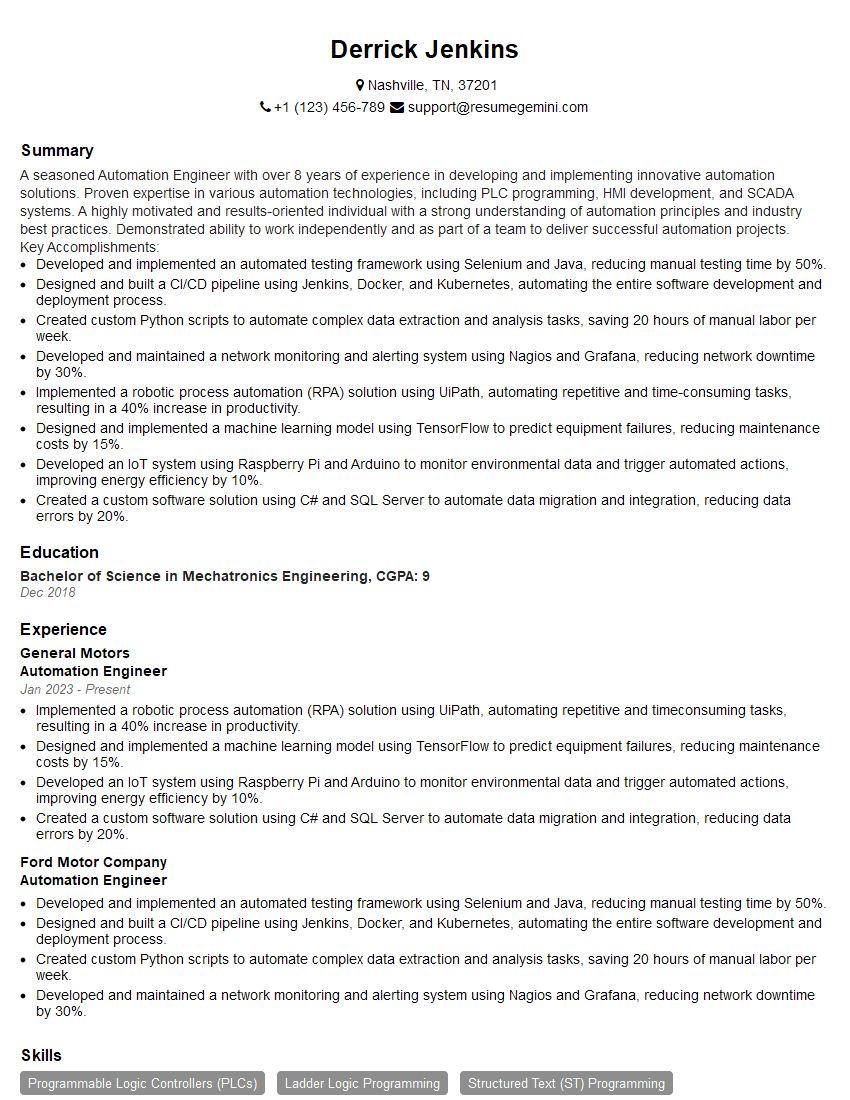
Automation Engineer Resume Sample
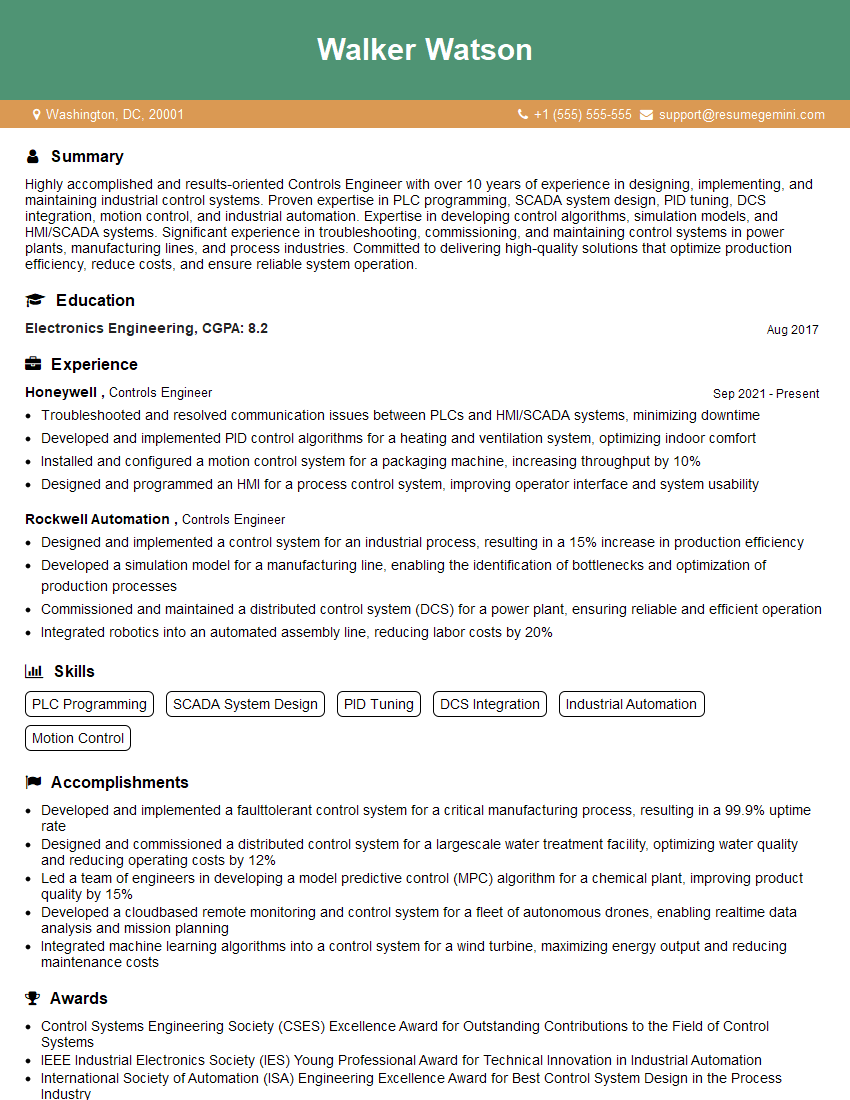
Controls Engineer Resume Sample
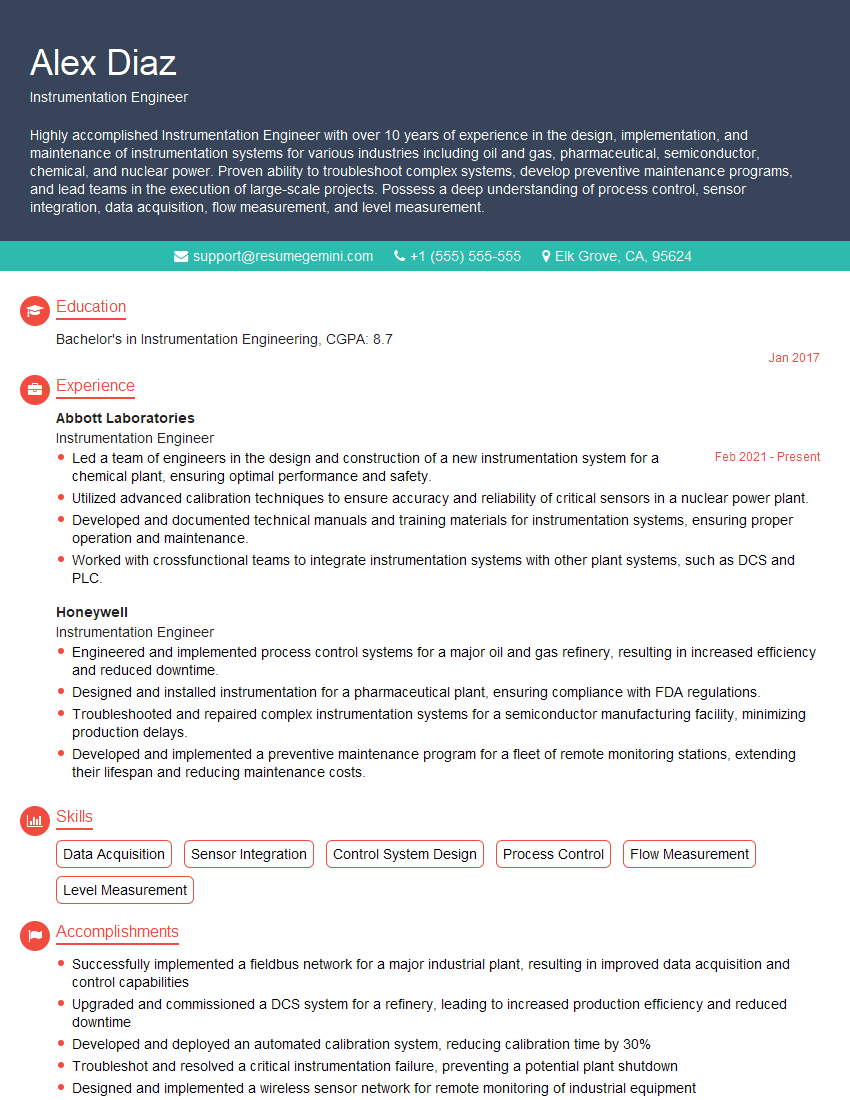
Instrumentation Engineer Resume Sample
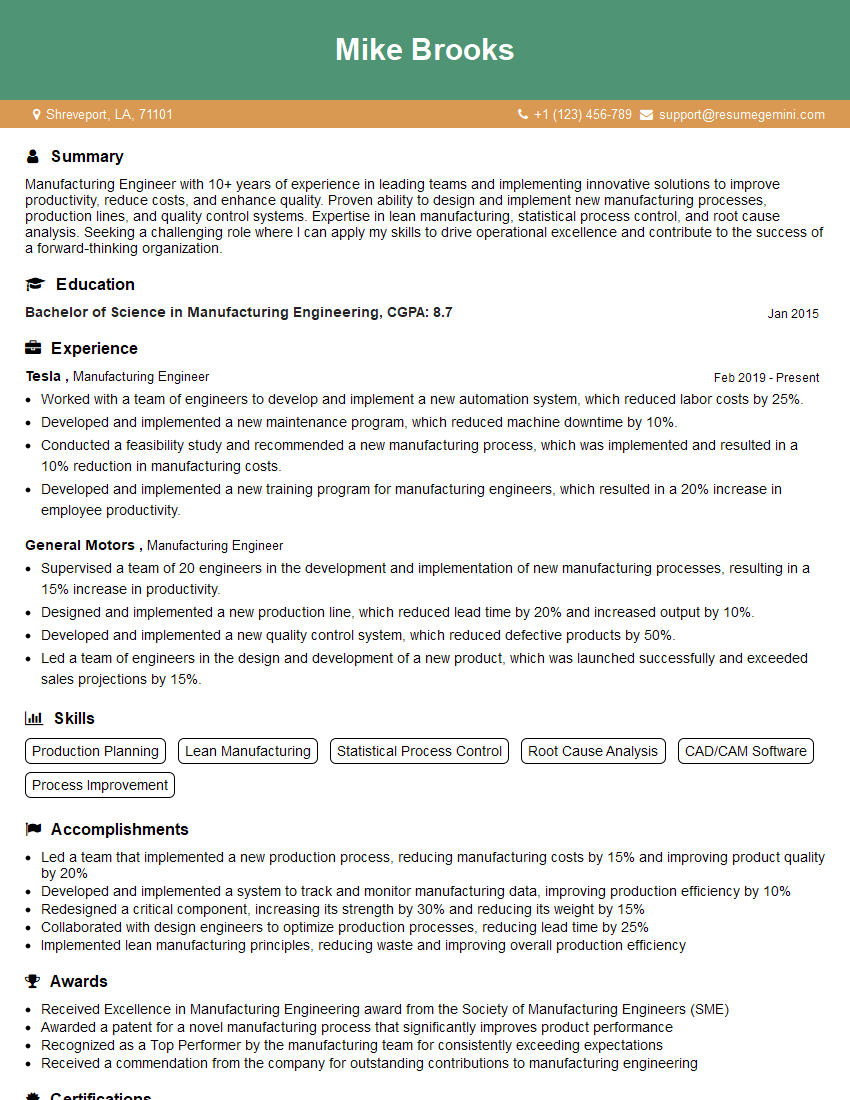
Manufacturing Engineer Resume Sample
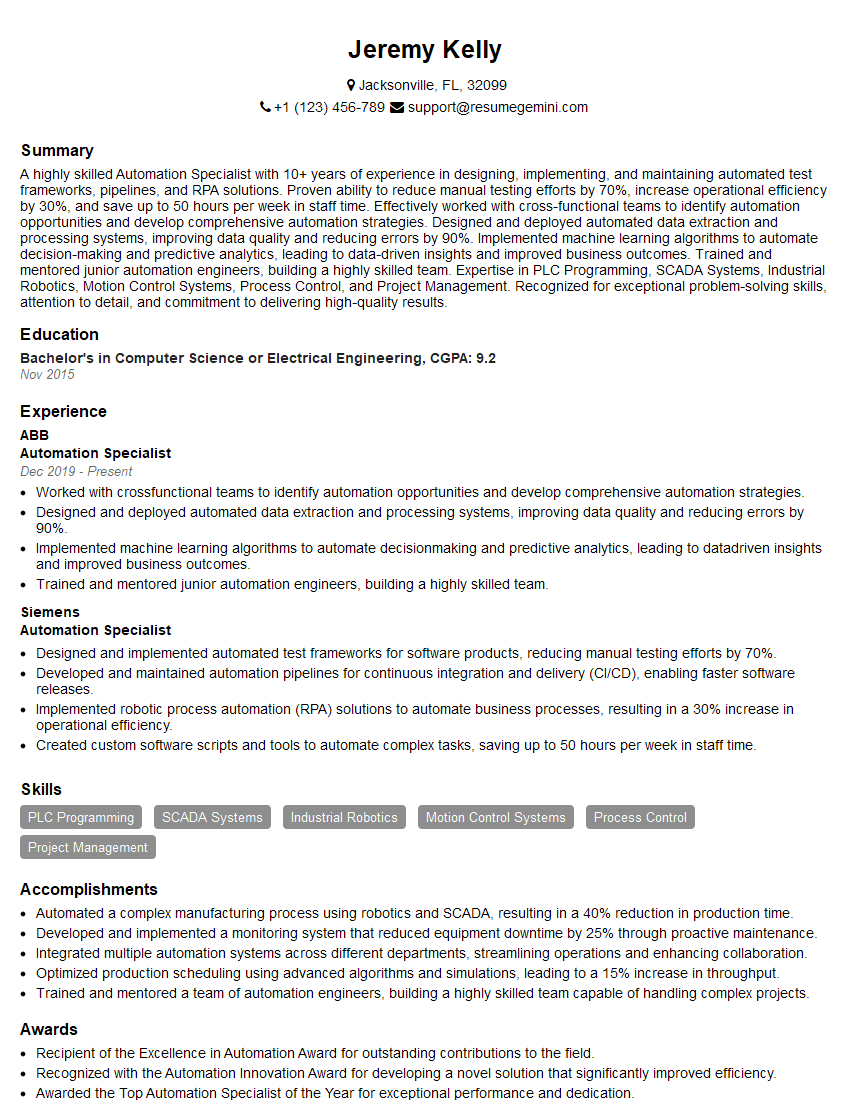
Automation Specialist Resume Sample

Control Systems Engineer Resume Sample
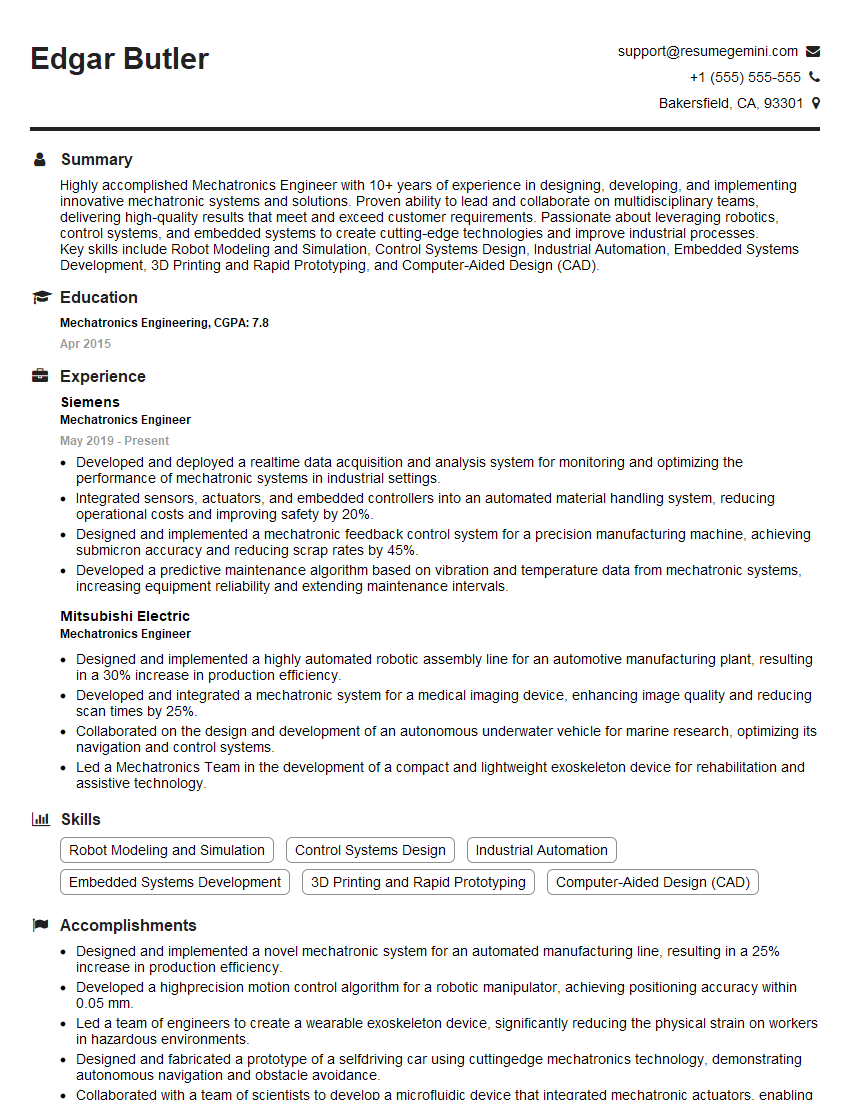
Mechatronics Engineer Resume Sample
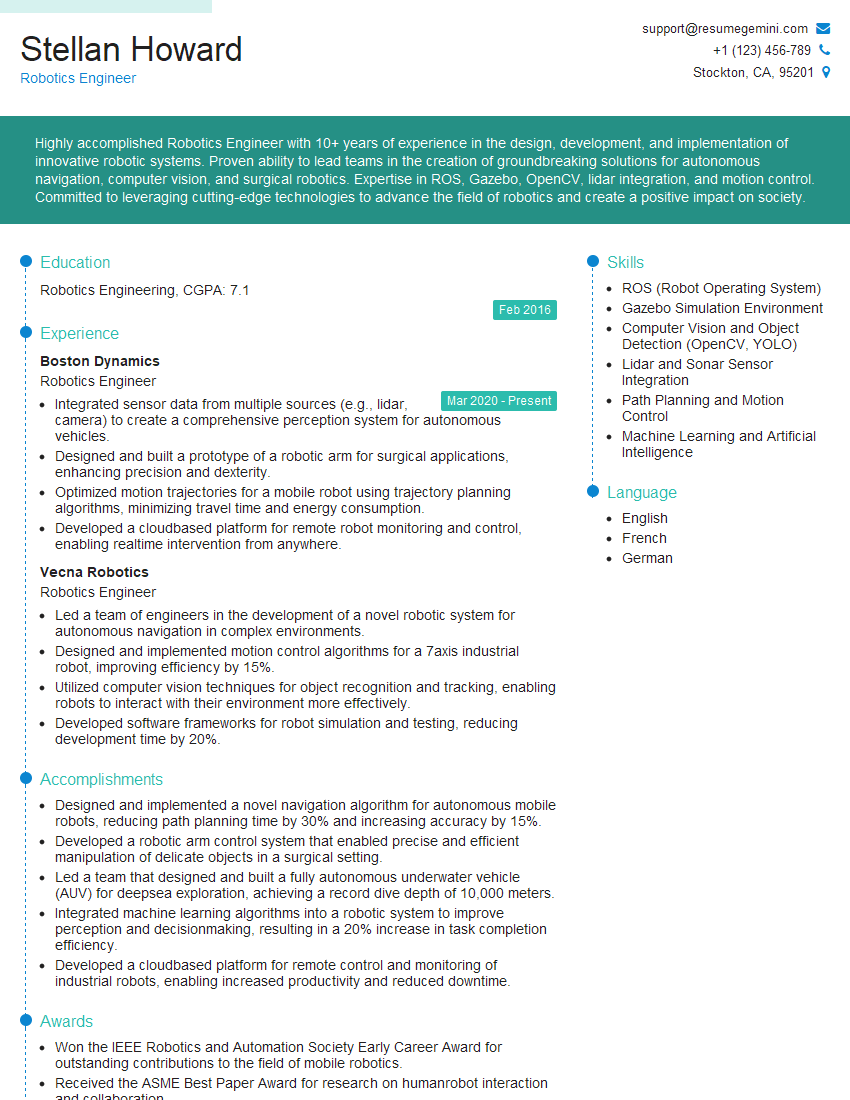
Robotics Engineer Resume Sample
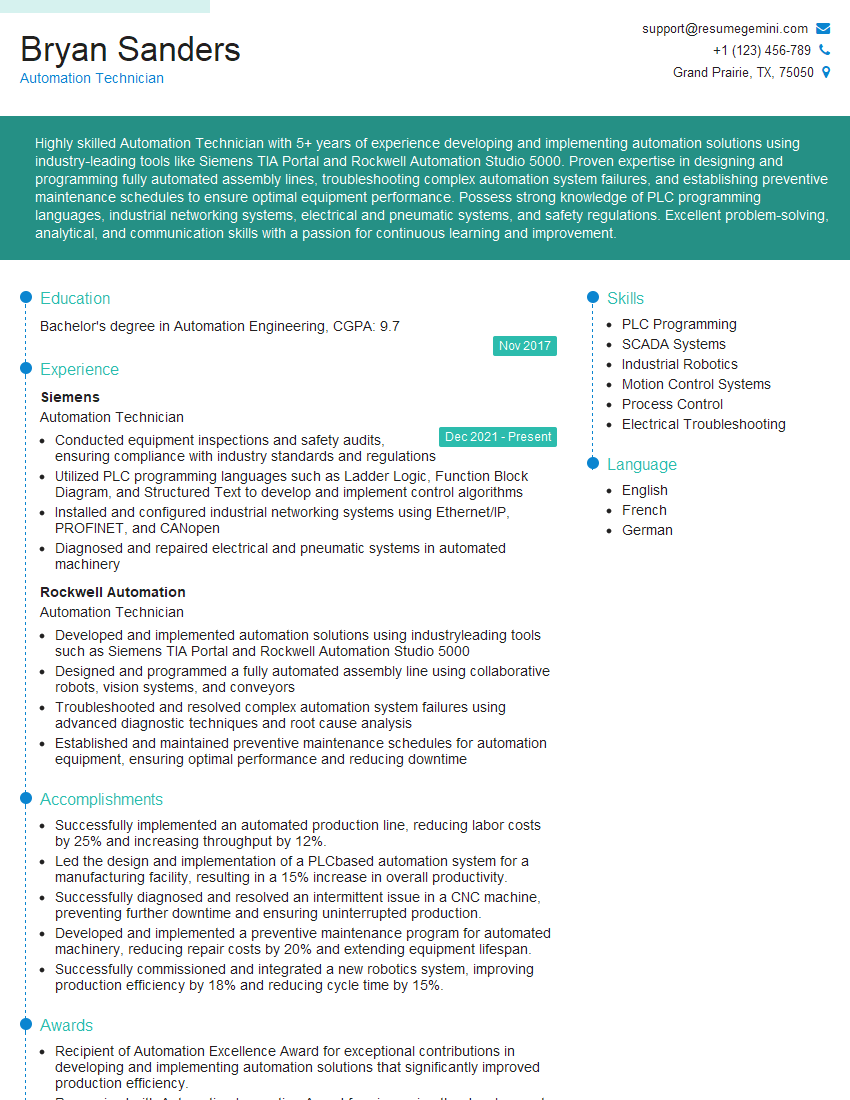
Automation Technician Resume Sample
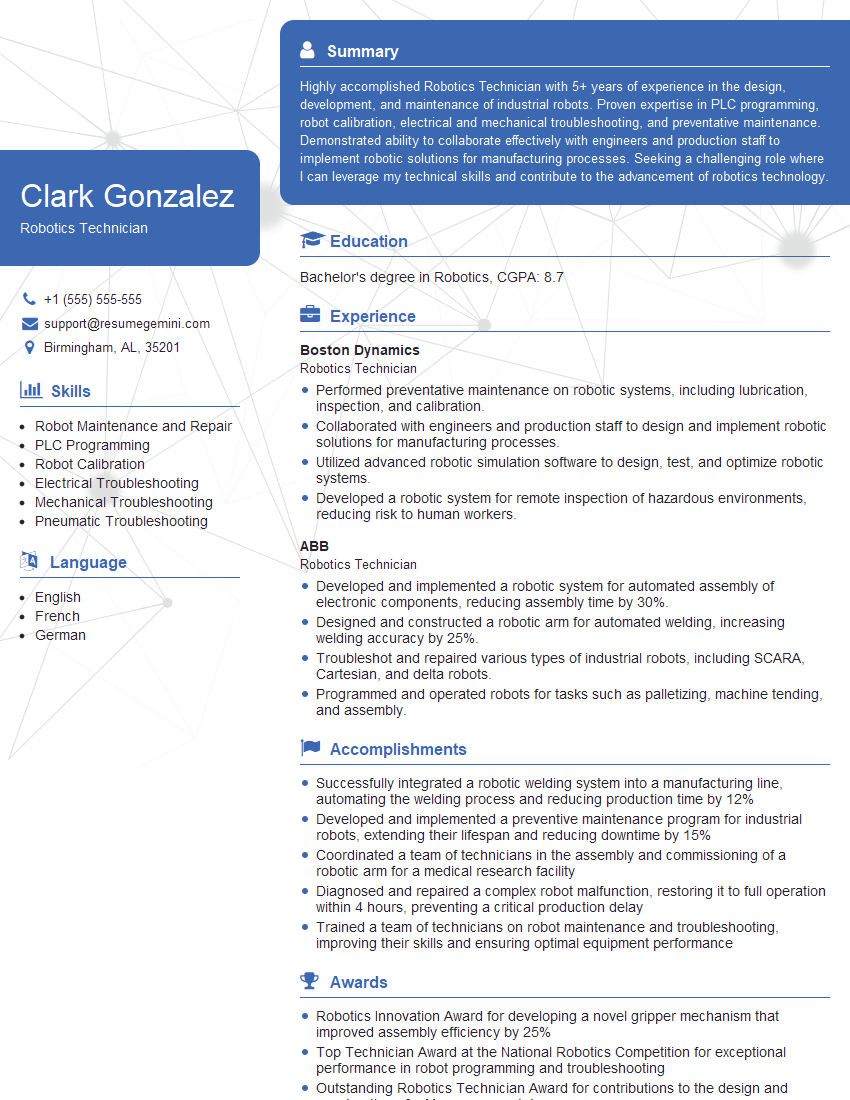
Robotics Technician Resume Sample
Explore more articles
Users Rating of Our Blogs
Share Your Experience
We value your feedback! Please rate our content and share your thoughts (optional).
What Readers Say About Our Blog
Very informative content, great job.
good