Interviews are opportunities to demonstrate your expertise, and this guide is here to help you shine. Explore the essential Automation and Control Systems Knowledge interview questions that employers frequently ask, paired with strategies for crafting responses that set you apart from the competition.
Questions Asked in Automation and Control Systems Knowledge Interview
Q 1. Explain the difference between open-loop and closed-loop control systems.
The core difference between open-loop and closed-loop control systems lies in their feedback mechanisms. An open-loop system operates without feedback; it simply executes a pre-determined action without monitoring its effect. Think of a toaster: you set the time, it runs for that duration, and the outcome (toast level) depends solely on the pre-set time and doesn’t adjust based on the actual toast’s condition. It’s a one-way street.
A closed-loop system, on the other hand, incorporates feedback. It constantly monitors the output and compares it to a desired setpoint. Any deviation triggers a corrective action to bring the output back to the setpoint. Imagine a cruise control system in a car: the system monitors the car’s speed, and if it deviates from the set speed, it adjusts the throttle accordingly. It’s a continuous feedback loop ensuring the desired outcome.
In essence, open-loop systems are simpler and cheaper but less accurate and robust. Closed-loop systems are more complex but provide much greater precision and adaptability to changes in the environment. They’re much more common in industrial automation where precision is vital.
Q 2. Describe your experience with Programmable Logic Controllers (PLCs).
I have extensive experience with PLCs, spanning over seven years. I’ve worked with various PLC brands including Allen-Bradley (specifically using RSLogix 5000 and Studio 5000), Siemens (TIA Portal), and Schneider Electric (Unity Pro). My experience encompasses the entire lifecycle, from designing and programming PLC logic to commissioning, troubleshooting, and maintaining systems in diverse industrial settings like manufacturing plants, water treatment facilities, and building automation systems.
I’m proficient in ladder logic programming, function block diagrams (FBD), structured text (ST), and sequential function charts (SFC). I’ve implemented complex control algorithms, including PID control loops for temperature regulation and advanced sequencing logic for automated assembly lines. For example, in one project, I used a PLC to optimize the production line speed by dynamically adjusting the conveyor belt speed based on real-time sensor data, resulting in a 15% increase in throughput.
Beyond programming, I’m skilled in PLC hardware configuration, network communication setup (using protocols like Ethernet/IP and Profibus), and integrating PLCs with other industrial automation components like HMIs and SCADA systems. I am comfortable working with both analog and digital I/O modules.
Q 3. What are the different types of sensors used in automation systems?
Automation systems utilize a wide array of sensors, each tailored to measure specific physical quantities. They can be broadly categorized as:
- Temperature Sensors: Thermocouples, RTDs (Resistance Temperature Detectors), thermistors.
- Pressure Sensors: Piezoresistive, capacitive, and strain gauge-based sensors.
- Flow Sensors: Ultrasonic, turbine, vortex, and orifice plate flow meters.
- Level Sensors: Ultrasonic, capacitive, float-type, and radar-based sensors.
- Proximity Sensors: Inductive, capacitive, photoelectric, and ultrasonic sensors.
- Position Sensors: Potentiometers, encoders (rotary and linear), and LVDTs (Linear Variable Differential Transformers).
- Force/Torque Sensors: Strain gauge-based load cells.
- Light Sensors: Photodiodes, phototransistors, and photoresistors.
The choice of sensor depends heavily on the specific application, required accuracy, operating environment, and cost considerations. For instance, a high-precision temperature measurement in a furnace might necessitate a thermocouple, while detecting the presence of an object on a conveyor belt could simply require a photoelectric sensor.
Q 4. Explain the function of a Supervisory Control and Data Acquisition (SCADA) system.
A Supervisory Control and Data Acquisition (SCADA) system is a centralized system used to monitor and control industrial processes. Think of it as the central nervous system of a large-scale industrial operation. It collects data from various field devices (like PLCs and sensors) spread across a wide geographical area, processes this data, and presents it to operators via an HMI. This allows operators to oversee the entire process, make informed decisions, and remotely control equipment.
SCADA systems typically include the following components:
- RTUs (Remote Terminal Units): These are small computers that collect data from field devices and transmit it to the SCADA master.
- PLCs: Often integrated with SCADA to handle lower-level control logic.
- Communication Networks: Various communication protocols (like Modbus, Profibus, Ethernet/IP) are used to connect all the components.
- SCADA Master: The central computer that receives data, performs calculations, and provides the HMI interface.
- HMI (Human-Machine Interface): The software interface that allows operators to monitor and control the process.
SCADA systems are used extensively in power generation, oil and gas pipelines, water distribution networks, and manufacturing plants to enhance efficiency, safety, and reliability.
Q 5. How do you troubleshoot a malfunctioning PLC program?
Troubleshooting a malfunctioning PLC program requires a systematic approach. My process typically involves:
- Understanding the problem: Precisely define the malfunction. What is not working as expected? When did the problem start? Were there any recent changes to the program or hardware?
- Reviewing the PLC program: Carefully examine the ladder logic or other programming code to identify potential errors. Look for logic errors, incorrect addressing, and timing issues.
- Checking the I/O: Verify that all inputs and outputs are functioning correctly. Use the PLC’s diagnostic tools to check for any I/O module faults. Test sensors and actuators to confirm their proper operation.
- Utilizing PLC diagnostic tools: Most PLCs have built-in diagnostic features like status bits, error logs, and force/unforce functions. These tools can help identify the root cause of the problem.
- Using simulation tools: Simulate parts of the program to isolate the faulty section, reducing the search area.
- Testing incrementally: Make small changes to the program, testing after each change, to ensure you don’t introduce further problems.
- Documentation: Thorough documentation of the troubleshooting process is crucial for future reference and collaboration.
For instance, if a conveyor belt fails to stop when a sensor detects an object, I’d first verify sensor functionality, then check the PLC program’s logic for the correct response to the sensor signal, and finally ensure the output to the motor controller is functioning correctly. This methodical approach minimizes downtime and ensures a swift resolution.
Q 6. What are the different communication protocols used in industrial automation?
Industrial automation utilizes a variety of communication protocols, each with its strengths and limitations. The choice of protocol depends on factors like speed, distance, reliability, and cost.
- Modbus: A widely used, open, serial communication protocol; simple and reliable, suitable for shorter distances.
- Profibus: A fieldbus protocol offering higher speeds and more advanced features compared to Modbus; commonly used in process automation.
- Ethernet/IP: An Ethernet-based protocol, providing high speed and flexibility; well-suited for large, complex systems.
- Profinet: Another Ethernet-based protocol, often used with Siemens PLCs; known for its high performance and robust error handling.
- CANopen: Often used in embedded systems and robotics due to its real-time capabilities and deterministic behavior.
- DeviceNet: A CAN-based fieldbus, used for connecting sensors and actuators in real-time industrial control.
In many systems, you might find a combination of these protocols, with a higher-level protocol (like Ethernet) used for communication between PLCs and HMIs and a lower-level protocol (like DeviceNet) handling communication with sensors and actuators directly connected to a PLC.
Q 7. Describe your experience with HMI (Human-Machine Interface) design and implementation.
I have significant experience in HMI design and implementation, using various software packages, including Rockwell Automation’s FactoryTalk View SE and Siemens’ WinCC. My focus is always on creating intuitive and user-friendly interfaces that enhance operator efficiency and improve safety. I follow a user-centered design approach, considering factors such as ergonomic considerations, information hierarchy, and alarm management.
My work includes developing HMIs for various applications, from simple machine control panels to sophisticated SCADA systems overseeing complex industrial processes. In one project, I redesigned the HMI for a bottling plant, improving the clarity of process displays and simplifying alarm handling, leading to a significant reduction in operator errors and improved overall production efficiency.
I am familiar with various HMI design best practices, including the use of clear and consistent visual elements, effective alarm management strategies (prioritization and acknowledgment), and the incorporation of trending and historical data visualization. I also have experience integrating HMIs with other systems, including MES (Manufacturing Execution Systems) and ERP (Enterprise Resource Planning) systems. Beyond design, my expertise also includes deploying and maintaining HMI systems, ensuring their smooth operation and providing ongoing technical support.
Q 8. Explain the concept of PID control and its tuning methods.
PID control, or Proportional-Integral-Derivative control, is a widely used feedback control loop mechanism. Imagine you’re trying to maintain a specific temperature in your oven. A PID controller constantly measures the current temperature and adjusts the heating element to minimize the difference between the setpoint (desired temperature) and the actual temperature.
It achieves this through three terms:
- Proportional (P): This term reacts to the current error (difference between setpoint and actual value). A larger error results in a larger corrective action. Think of it as the immediate response – like quickly turning up the heat when the oven is far too cold.
- Integral (I): This term addresses persistent errors. If there’s a constant difference between the setpoint and actual value (e.g., the oven is consistently slightly too cold), the integral term accumulates this error over time and adds a corrective action to eliminate the offset. This is like slowly adjusting the heat to compensate for a persistent slight under-heating.
- Derivative (D): This term anticipates future errors based on the rate of change of the error. If the temperature is changing rapidly, the derivative term will react strongly to prevent overshoot. Imagine you’re getting close to the desired temperature but approaching it too quickly; the derivative term helps slow things down to avoid overshooting the mark.
Tuning Methods: Finding the optimal P, I, and D gains is crucial. Common methods include:
- Ziegler-Nichols Method: This is a quick, empirical approach involving finding the ultimate gain (Ku) and ultimate period (Pu) by pushing the system to instability. The P, I, and D gains are then calculated based on these values.
- Trial and Error: A practical approach, especially for simpler systems. Manually adjusting the gains and observing the system’s response. It requires patience and experience.
- Auto-tuning: Many modern controllers offer auto-tuning features that use algorithms to find optimal gains automatically. This is efficient but might not always produce perfect results depending on system complexity.
In practice, I’ve used all these methods. For example, I once tuned a PID controller for a robotic arm’s position control using Ziegler-Nichols for initial settings, followed by fine-tuning through trial and error to achieve optimal precision and minimal overshoot.
Q 9. What are the safety considerations in designing and implementing automation systems?
Safety is paramount in automation systems. Poorly designed safety measures can lead to equipment damage, production downtime, and even injuries or fatalities. Key safety considerations include:
- Emergency Stop (EStop): Implementing easily accessible and reliable EStops that immediately shut down hazardous operations.
- Interlocks: Using mechanical, electrical, or software interlocks to prevent hazardous operations from starting unless all safety conditions are met.
- Safety PLCs and Relays: Employing safety-rated PLCs and relays that are designed to fail-safe, ensuring that safety functions remain active even in the event of component failure.
- Redundancy: Incorporating redundant safety systems to ensure a backup system is operational if the primary system fails.
- Risk Assessment: Conducting a thorough hazard and risk assessment to identify potential hazards and determine appropriate mitigation strategies. This often follows a standardized methodology like HAZOP (Hazard and Operability Study).
- Safety Instrumented Systems (SIS): Utilizing SIS to manage critical safety functions with defined safety integrity levels (SILs). SILs quantify the level of risk reduction needed.
- Regular Maintenance and Testing: Implementing a preventative maintenance program and conducting regular testing of safety systems to verify their operational effectiveness.
For example, in a robotic welding cell, I incorporated light curtains to stop the robot if a worker enters the danger zone, combined with EStops and interlocks on the welding equipment itself to prevent accidental operation during maintenance.
Q 10. Describe your experience with industrial networking protocols (e.g., Ethernet/IP, Profinet).
I have extensive experience with industrial networking protocols, particularly Ethernet/IP and Profinet. Both are widely used for high-speed communication in industrial automation.
Ethernet/IP (Industrial Ethernet Protocol): This is an open, widely adopted standard, mainly in North America. I’ve used it for integrating various devices like PLCs, HMIs, drives, and sensors on a single network, enabling efficient data exchange and control. For example, I’ve used Ethernet/IP to connect a system of PLCs controlling a high-speed packaging line, enabling centralized monitoring and control of the entire production process.
Profinet: Predominantly used in Europe, Profinet offers high-speed, deterministic communication. Its strengths lie in its real-time capabilities, crucial for applications demanding precise synchronization, like motion control systems. I’ve utilized Profinet to integrate servo drives into a complex manufacturing system, achieving precise and coordinated motion control of multiple axes.
My experience also includes troubleshooting network issues, configuring network devices, and optimizing network performance for both protocols. Understanding the strengths and weaknesses of each protocol allows for informed decisions based on the specific needs of the project. For instance, in an application requiring precise timing, Profinet would be the more suitable choice.
Q 11. How do you ensure the reliability and maintainability of automation systems?
Ensuring reliability and maintainability is achieved through a structured approach encompassing design, implementation, and ongoing maintenance.
- Modular Design: Systems should be designed with modularity in mind, allowing for easier troubleshooting and component replacement. This reduces downtime and simplifies maintenance.
- Redundancy: Implementing redundant components like PLCs, power supplies, and network connections ensures system uptime even in case of failures.
- Standardized Components: Using standardized components and protocols simplifies procurement, maintenance, and troubleshooting. This reduces reliance on specialized parts and expertise.
- Comprehensive Documentation: Meticulous documentation including wiring diagrams, logic diagrams, and configuration files is crucial for troubleshooting and future modifications. This is often overlooked but is vital for long-term maintainability.
- Preventive Maintenance: Implementing a scheduled preventive maintenance program minimizes unexpected downtime and extends the lifespan of equipment.
- Remote Monitoring and Diagnostics: Utilizing remote monitoring tools enables proactive identification of potential issues, reducing downtime and improving overall efficiency.
In a recent project involving a large-scale automated warehouse system, we utilized a modular design with redundant PLCs and a comprehensive remote monitoring system to achieve a 99.9% uptime. This was made possible by using standardized hardware and clear documentation. This resulted in minimal downtime and improved maintenance efficiency.
Q 12. What is your experience with different types of actuators (e.g., pneumatic, hydraulic, electric)?
My experience encompasses a wide range of actuator technologies, each with its own strengths and weaknesses.
- Pneumatic Actuators: These use compressed air to generate motion. They are relatively inexpensive, simple to maintain, and provide high power-to-weight ratios, but are less precise than other types and can be susceptible to leaks.
- Hydraulic Actuators: These utilize pressurized hydraulic fluid for power. They offer high force and precise control, but are generally more expensive and complex, requiring specialized maintenance.
- Electric Actuators: These use electric motors to generate motion. They provide precise control, high efficiency, and cleaner operation, making them increasingly popular. However, they might not always offer the same level of raw power as pneumatic or hydraulic systems.
In one project, I selected pneumatic actuators for a simple gripping mechanism due to their low cost and robustness. In another, precise control of a robotic arm necessitated the use of electric actuators with servo drives for precise motion.
The choice of actuator depends heavily on the application’s specific requirements— factors like required force, precision, environmental conditions, and cost considerations all play a role.
Q 13. Explain your experience with motion control systems.
Motion control systems are essential in many automation applications, ensuring precise and synchronized movement of machinery. My experience includes designing and implementing motion control systems using various techniques and technologies.
I’ve worked with:
- Servo Systems: These use closed-loop feedback control to achieve high-precision motion. I’ve implemented servo systems for applications like robotic arms, CNC machines, and pick-and-place robots, requiring precise positioning and speed control.
- Stepper Motors: These are suitable for applications needing precise positioning at lower speeds. I’ve utilized them in simpler applications such as conveyor belt systems or indexing tables.
- Motion Control Software and Programming: I’m proficient in programming motion control using languages like ladder logic (PLC programming) and dedicated motion control languages. This often involves complex motion profiles such as trapezoidal or S-curve profiles to optimize motion performance.
- CAM (Computer-Aided Manufacturing): I have experience integrating motion control systems with CAM software to automate machining operations. This involves coordinating the movement of multiple axes to achieve complex machining paths.
A recent project involved implementing a high-speed pick-and-place robot system using servo motors and a high-performance motion control PLC. This required careful tuning of the motion control algorithms to optimize speed, precision, and cycle time while minimizing vibration and wear.
Q 14. What programming languages are you proficient in for automation applications?
My proficiency in programming languages for automation applications is extensive. I’m highly experienced in:
- Ladder Logic (IEC 61131-3): This is the primary programming language for PLCs. I’m adept at designing and troubleshooting ladder logic programs for various automation applications.
- Structured Text (IEC 61131-3): I use structured text for more complex logic and algorithms, offering better readability and maintainability compared to ladder logic for larger programs.
- C/C++: I use C/C++ for developing low-level control applications, real-time systems, and custom device drivers for specific hardware.
- Python: Python is a valuable tool for data analysis, scripting, and system integration. I frequently use it for tasks like data logging, visualization, and communication with other systems.
My experience often involves integrating these languages within a single project. For example, I might use ladder logic for the core PLC program, structured text for implementing advanced control algorithms, and Python for data analysis and reporting.
Q 15. Describe your experience with database management systems used in industrial automation.
In industrial automation, databases are crucial for storing, retrieving, and analyzing vast amounts of process data. My experience spans several systems, including SQL Server, MySQL, and more specialized industrial databases like OSI PI. I’ve worked with these systems to design and implement historical data archiving solutions, real-time data logging for process monitoring, and advanced analytics for performance optimization. For example, in a large-scale oil refinery project, I used SQL Server to create a robust data warehouse that stored years of operational data, enabling detailed analysis of equipment performance and predictive maintenance scheduling. This involved designing efficient database schemas, optimizing queries for speed, and ensuring data integrity through appropriate constraints and validation rules. In another project involving a smart factory, we used a NoSQL database to handle high-volume, high-velocity data streams from various sensors and machines, enabling real-time monitoring and control. The choice of database system often depends on factors like data volume, velocity, variety, veracity, and value (the 5 Vs of big data) as well as the specific requirements of the automation system.
Career Expert Tips:
- Ace those interviews! Prepare effectively by reviewing the Top 50 Most Common Interview Questions on ResumeGemini.
- Navigate your job search with confidence! Explore a wide range of Career Tips on ResumeGemini. Learn about common challenges and recommendations to overcome them.
- Craft the perfect resume! Master the Art of Resume Writing with ResumeGemini’s guide. Showcase your unique qualifications and achievements effectively.
- Don’t miss out on holiday savings! Build your dream resume with ResumeGemini’s ATS optimized templates.
Q 16. How do you handle unexpected events or failures in an automation system?
Handling unexpected events and failures is paramount in automation. My approach is multi-layered and involves proactive measures alongside reactive responses. Proactive measures include rigorous testing, robust error handling in code, and implementation of redundancy and fail-safe mechanisms. For instance, implementing a dual-channel sensor system ensures that if one sensor fails, the other continues to provide data. Reactive measures involve implementing comprehensive alarm systems, logging detailed error information, and developing procedures for rapid fault detection and recovery. I leverage supervisory control and data acquisition (SCADA) systems to monitor the entire process, enabling quick identification of problems. Imagine a robotic welding cell: a sudden power outage is handled through an uninterruptible power supply (UPS) providing a brief window for safe shutdown and data saving. If a robot malfunction occurs, the SCADA system triggers an alarm, logs the error, and stops the process to prevent damage. Post-incident analysis is crucial, allowing us to identify root causes and improve system robustness. We utilize root cause analysis tools like the 5 Whys to systematically investigate incidents and prevent recurrence.
Q 17. Explain your understanding of cybersecurity in industrial automation.
Cybersecurity in industrial automation is critical. It’s not just about protecting data; it’s about protecting the entire operation and potentially preventing significant physical damage or safety hazards. My experience involves implementing various security measures, including network segmentation, firewalls, intrusion detection systems (IDS), and intrusion prevention systems (IPS) to isolate critical control systems from external networks. We utilize strong password policies, multi-factor authentication (MFA), and regular security audits. I also have experience with implementing secure coding practices to minimize vulnerabilities in PLC (Programmable Logic Controller) programs and other automation software. Furthermore, regular vulnerability scans and penetration testing are key to proactively identifying and mitigating potential weaknesses. For example, ensuring that all devices connected to the industrial network are patched with the latest security updates is crucial. Understanding the potential threats—such as malware or sophisticated attacks aiming to manipulate control systems—is fundamental. The concept of defense-in-depth is employed, with multiple layers of security to provide resilience against various threats. A strong security culture, including regular training for personnel on best practices, is also essential.
Q 18. Describe your experience with different types of control valves.
My experience encompasses various control valve types, including globe valves, ball valves, butterfly valves, and diaphragm valves. The selection depends heavily on the specific application and its demands. Globe valves, known for their precise flow control, are suitable for applications requiring throttling. Ball valves are ideal for on/off operations due to their fast response times. Butterfly valves are often chosen for their simple design and low cost in larger diameter lines. Diaphragm valves are excellent for handling corrosive or abrasive fluids. Each valve type has its own characteristics in terms of flow capacity, pressure drop, response time, and maintenance requirements. For example, in a chemical process, the aggressive nature of some chemicals would dictate using corrosion-resistant diaphragm valves, whereas in a water distribution system, cost-effective butterfly valves might be appropriate for on/off service. I also have experience specifying and selecting valves based on factors such as pressure ratings, temperature limits, material compatibility, and actuator selection (pneumatic, electric, hydraulic). Proper valve sizing and selection are critical to ensure optimal process control and prevent equipment damage.
Q 19. What is your experience with industrial robots and robotic control systems?
I have extensive experience with industrial robots and their control systems, encompassing both collaborative robots (cobots) and traditional industrial robots. My work includes programming robots using various languages such as RAPID (ABB), KRL (KUKA), and others. I am proficient in robot path planning, trajectory generation, and integrating robots into larger automation systems. I’ve worked on applications such as welding, painting, material handling, and assembly. For instance, in an automotive assembly line, I programmed robots to perform precise welding operations with high repeatability and accuracy. In a warehouse automation project, I integrated robots with conveyor systems and automated guided vehicles (AGVs) to optimize material flow. Robot control systems often involve advanced techniques such as vision systems for part recognition, force sensors for adaptive control, and safety systems to protect human workers. The programming and integration process usually involves offline simulation to minimize errors and downtime during implementation. Proper safety considerations, including risk assessments and the implementation of safety protocols, are crucial in any robotic application.
Q 20. Explain the concept of process control and its application in different industries.
Process control is the art and science of maintaining a process at a desired setpoint, despite disturbances. It involves measuring process variables, comparing them to setpoints, and manipulating control elements to minimize deviations. This applies across various industries. In the chemical industry, process control ensures consistent product quality and prevents dangerous runaway reactions. In power generation, it maintains stable power output and efficiency. In manufacturing, it ensures consistent product quality and production rate. A simple analogy is a thermostat: it measures the room temperature (process variable), compares it to the setpoint (desired temperature), and turns the heating/cooling system on or off (control element) to maintain the desired temperature. Advanced process control techniques involve using more sophisticated algorithms and models such as PID (Proportional-Integral-Derivative) controllers, model predictive control (MPC), and advanced process control (APC) to achieve better control performance. These algorithms provide mechanisms for handling disturbances, optimizing performance, and ensuring stability even under challenging conditions. The implementation often includes advanced sensors, actuators, and software to achieve the necessary precision and speed of response.
Q 21. How do you design and implement a control system for a specific industrial process?
Designing and implementing a control system for a specific industrial process follows a structured approach. It begins with a thorough understanding of the process, including its dynamics, constraints, and objectives. This involves process modeling, which may be based on first-principles analysis, empirical data, or a combination thereof. Next, control objectives are defined, such as maintaining temperature, pressure, flow rate, or level within specified limits. Then, appropriate sensors and actuators are selected to measure and manipulate the process variables. The control strategy is developed, typically involving selecting an appropriate control algorithm (PID, MPC, etc.). The system is then designed, taking into account factors such as hardware selection, software development, safety considerations, and maintainability. Simulation plays a vital role in verifying the design and fine-tuning the control parameters before implementation. Implementation involves installing the hardware, configuring the software, and integrating the system into the existing plant infrastructure. Finally, rigorous testing and commissioning are performed to ensure the system meets performance requirements and functions safely and reliably. Throughout this process, documentation is crucial, providing clear instructions and operational information for maintenance and troubleshooting. Consider the design of a temperature control system for a chemical reactor: we might use a thermal sensor, a valve to control the flow of coolant, a PID controller implemented on a PLC, and a human-machine interface (HMI) for monitoring and control. Rigorous testing would involve subjecting the system to various disturbances and verifying the effectiveness of the control strategy under different operating conditions.
Q 22. What is your experience with simulation software for automation systems?
My experience with simulation software for automation systems is extensive. I’ve worked extensively with tools like MATLAB/Simulink, Rockwell Automation’s FactoryTalk Simulation, and Siemens PLCSIM. These tools are crucial for designing, testing, and optimizing automation systems before deploying them in real-world environments. For instance, in a recent project involving a robotic arm for automated assembly, we used Simulink to model the arm’s kinematics and dynamics, allowing us to virtually test different control algorithms and optimize trajectory planning before physically building the system. This significantly reduced development time and costs by identifying and rectifying potential problems in the simulation phase, avoiding costly physical modifications later. I’m also proficient in using simulation to analyze system behavior under various fault conditions, enabling proactive design of robust and reliable systems.
Using simulation software not only reduces risk, but also enhances collaboration. By sharing simulation models with clients and other stakeholders, everyone gains a common understanding of the system’s functionality and performance. I find that this shared understanding greatly facilitates effective communication and minimizes misunderstandings during the project lifecycle.
Q 23. Describe your experience with version control systems for automation projects.
Version control is paramount in automation projects to manage code changes, track revisions, and ensure team collaboration. I have extensive experience with Git, and I’m comfortable using various Git platforms, such as GitHub and GitLab. In my previous role, we implemented a robust Git workflow that included branching, merging, pull requests, and code reviews. This ensured that all code changes were properly documented, reviewed, and tested before being integrated into the main project branch. Consider a scenario where multiple engineers are working concurrently on a PLC program. Using a version control system prevents conflicts and ensures everyone is working on the latest, stable version of the code. Moreover, if an error occurs, it’s straightforward to revert to a previous stable version. This practice substantially reduces the risk of deployment failures and improves system reliability.
Example commit message: "Fixed bug in PID controller tuning for temperature regulation"Beyond code, I also use version control systems to manage configuration files, documentation, and test scripts, thereby creating a comprehensive and auditable history of the entire project.
Q 24. How do you ensure data integrity in an automation system?
Data integrity is crucial for the reliability and safety of any automation system. To ensure data integrity, I employ a multi-layered approach. First, I use robust data validation techniques at every stage of data acquisition and processing. This involves implementing checks for data type, range, and plausibility. For example, if a sensor is measuring temperature, I’ll check if the reading falls within the sensor’s specified range. Out-of-range values trigger alerts, preventing inaccurate data from propagating through the system. Second, I leverage redundant sensors and data acquisition systems where critical data is concerned. If one sensor fails, the other can provide a backup, ensuring continuous operation and preventing system downtime. Third, regular data backups are crucial. I utilize automated backup procedures with versioning to safeguard against data loss due to hardware failures or software errors. Finally, I implement rigorous cybersecurity measures to prevent unauthorized access and modification of data.
Think of a pharmaceutical manufacturing process. Data integrity is essential for quality control and compliance. A single corrupted data point could compromise the entire batch, leading to costly recalls and reputational damage. My approach ensures consistent and reliable data, which is critical for maintaining the highest quality standards.
Q 25. Explain your experience with system integration and testing methodologies.
My experience with system integration and testing methodologies is broad. I follow a structured approach that encompasses various stages. Starting with requirements gathering and system architecture design, I then move into the implementation phase. This typically involves integrating different hardware and software components, including PLCs, HMIs, sensors, actuators, and SCADA systems. I utilize a combination of top-down and bottom-up integration methods, tailoring the approach to the specific project requirements.
Rigorous testing is an integral part of the process. I employ a variety of testing methods, including unit testing, integration testing, system testing, and user acceptance testing. Unit tests verify the functionality of individual components. Integration tests assess the interaction between different components. System tests evaluate the overall system performance, while user acceptance tests ensure that the system meets the end-user’s requirements. I also use simulation extensively to test the system under various operating conditions, including fault scenarios. For example, in a recent project involving a large-scale water treatment plant, we conducted extensive simulation testing to validate the system’s response to various equipment failures and unexpected events. Documentation is crucial throughout the integration and testing process. Detailed test plans, test cases, and test reports provide a clear and auditable record of the testing activities.
Q 26. What are the advantages and disadvantages of different control strategies?
Different control strategies offer various advantages and disadvantages depending on the specific application. Let’s consider some common strategies:
- PID Control: Simple to implement and tune, widely used in various applications. However, it can be less effective for systems with significant non-linearities or time delays.
- On-Off Control: Easy to implement, suitable for simple applications with less stringent requirements on accuracy. However, it can lead to oscillations and wear and tear on the actuators due to its switching nature.
- Model Predictive Control (MPC): Offers optimal control performance by predicting future system behavior. It is more complex to implement and requires a good model of the system. However, it’s highly effective for systems with constraints and multiple inputs/outputs.
- Fuzzy Logic Control: Handles uncertainty and vagueness effectively, suitable for systems with complex, ill-defined relationships. However, it can be difficult to design and tune, requiring extensive expert knowledge.
The choice of control strategy depends on factors like system complexity, performance requirements, cost considerations, and available computational resources. For instance, a simple temperature control system might use PID control, while a complex chemical process might require MPC to handle multiple interacting variables and constraints.
Q 27. Describe your experience with different types of feedback sensors.
My experience encompasses a wide range of feedback sensors, each with its strengths and weaknesses. These include:
- Temperature Sensors: Thermocouples, RTDs, and thermistors are commonly used for measuring temperature. Thermocouples are robust and have a wide temperature range, while RTDs offer high accuracy.
- Pressure Sensors: Strain gauge-based pressure sensors, piezoresistive sensors, and capacitive sensors are employed to measure pressure. The choice depends on factors like pressure range, accuracy, and cost.
- Flow Sensors: Various flow sensors such as ultrasonic, Coriolis, and differential pressure flow meters are used to measure fluid flow rates. Each sensor type has unique characteristics, suitable for different flow ranges and fluids.
- Position Sensors: Potentiometers, encoders (incremental and absolute), and LVDTs measure the position and displacement of mechanical components. Encoders are prevalent in robotics and motion control applications.
- Level Sensors: Ultrasonic, radar, capacitive, and float-type level sensors are used to measure the level of liquids or solids in tanks or containers.
Selecting the appropriate sensor is critical for accurate and reliable system operation. This decision depends on the specific application, considering factors like accuracy requirements, environmental conditions, cost, and maintenance needs. For example, in a high-temperature environment, a thermocouple might be preferred over an RTD. Similarly, for applications requiring high precision, LVDTs might be used for position sensing instead of potentiometers.
Q 28. Explain your understanding of advanced control techniques (e.g., predictive control, model predictive control).
Advanced control techniques, such as predictive control and model predictive control (MPC), offer significant advantages over traditional PID control for complex systems. Predictive control algorithms anticipate future system behavior by using a model of the system to predict the effects of control actions. This allows for proactive adjustments to maintain optimal performance. MPC, a particular type of predictive control, optimizes control actions over a defined prediction horizon, considering constraints on inputs and outputs. It’s particularly useful for multivariable systems with constraints and complex interactions.
For instance, in a chemical process, MPC can be used to control multiple variables like temperature, pressure, and flow rates simultaneously while adhering to operational constraints. Traditional PID controllers would struggle to manage this effectively. The key advantage of MPC is its ability to handle constraints and optimize performance even when faced with disturbances or changes in operating conditions. However, implementing MPC requires a good system model, which can be challenging to obtain for some systems. I have successfully implemented MPC in several industrial automation projects, leveraging my experience in system modeling and simulation to develop accurate models for control design. The resulting systems demonstrate enhanced efficiency, improved product quality, and reduced energy consumption.
Key Topics to Learn for Automation and Control Systems Knowledge Interview
- Control System Fundamentals: Understand basic control strategies (PID, On-Off, etc.), transfer functions, block diagrams, and system stability analysis. Consider exploring different types of controllers and their applications.
- Industrial Automation Components: Familiarize yourself with Programmable Logic Controllers (PLCs), SCADA systems, Human-Machine Interfaces (HMIs), sensors, actuators, and fieldbuses. Be prepared to discuss practical applications and their integration.
- Process Control: Learn about process modeling, process control strategies for various industrial processes (e.g., temperature, pressure, flow control), and techniques for optimization and troubleshooting.
- Robotics and Automation: Explore different types of robots and their applications in automation. Understand robot kinematics, control algorithms, and programming concepts.
- Networking and Communication Protocols: Become familiar with industrial communication protocols (e.g., Profibus, Ethernet/IP, Modbus) and their role in connecting various automation components. Understand network topologies and security considerations.
- Troubleshooting and Problem-Solving: Practice diagnosing and resolving common issues in automation systems. This includes using diagnostic tools and interpreting system data to identify and fix malfunctions.
- Safety and Standards: Understand relevant safety standards and regulations (e.g., IEC 61131-3) and their importance in designing and implementing safe and reliable automation systems.
- Advanced Control Techniques: Depending on the role, you may need to understand more advanced control strategies like Model Predictive Control (MPC), Adaptive Control, or Fuzzy Logic Control. Research what’s relevant to the specific job description.
Next Steps
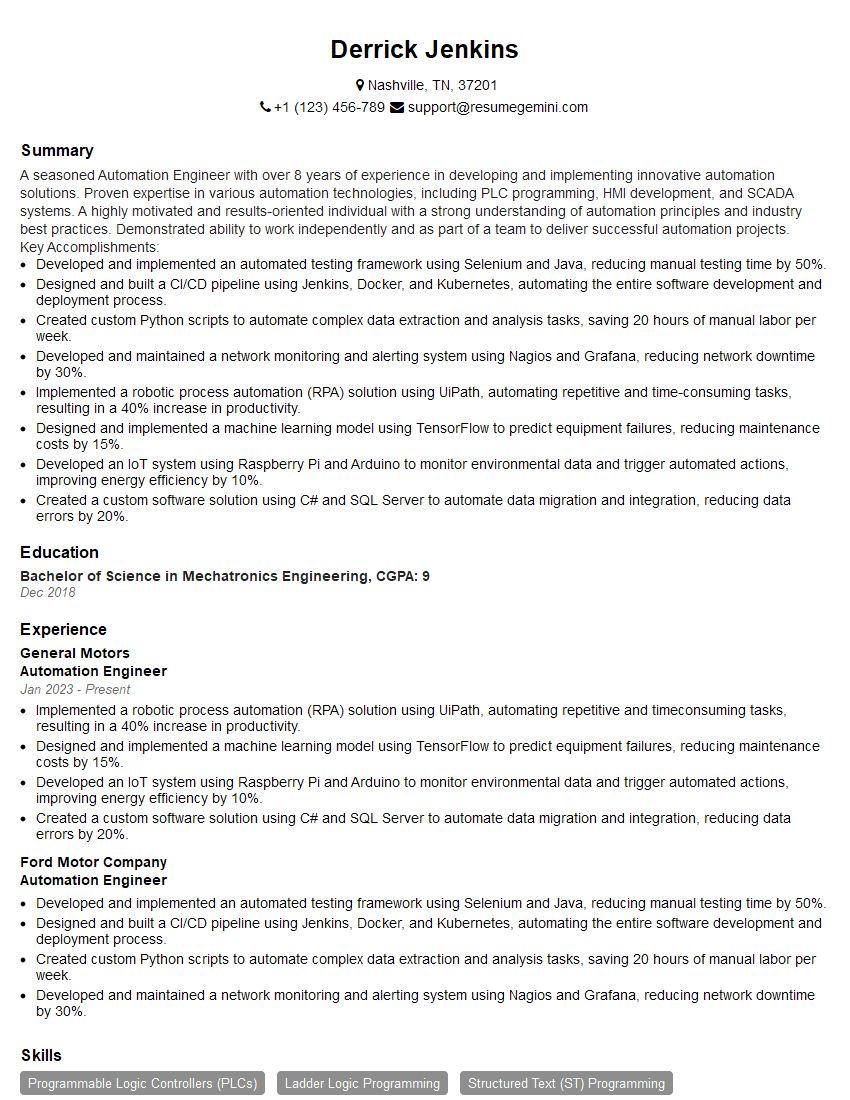
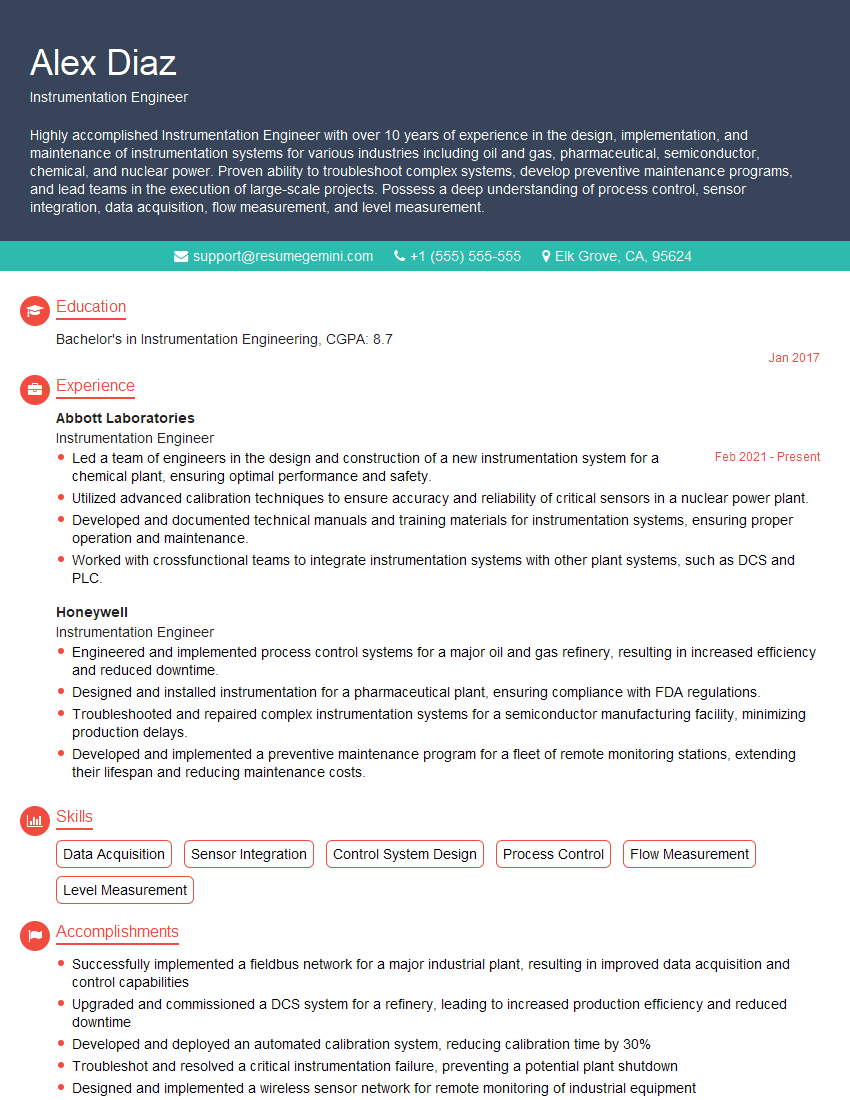
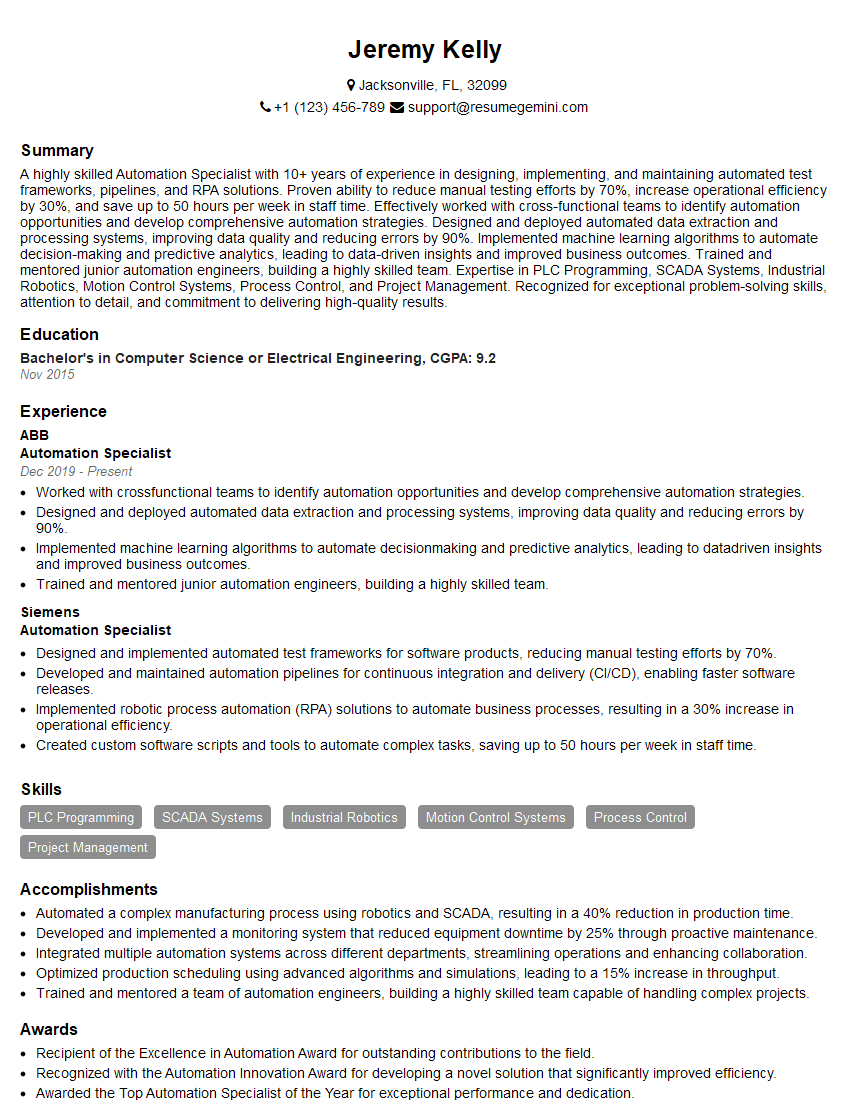
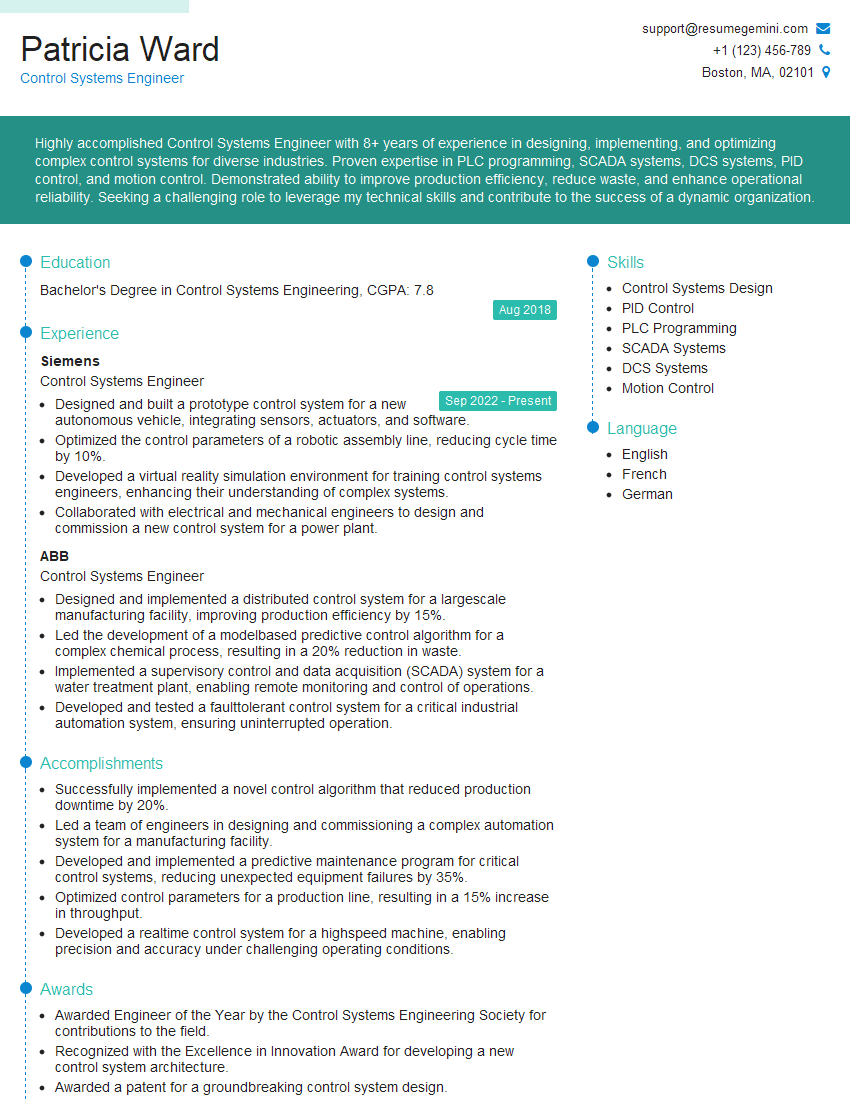
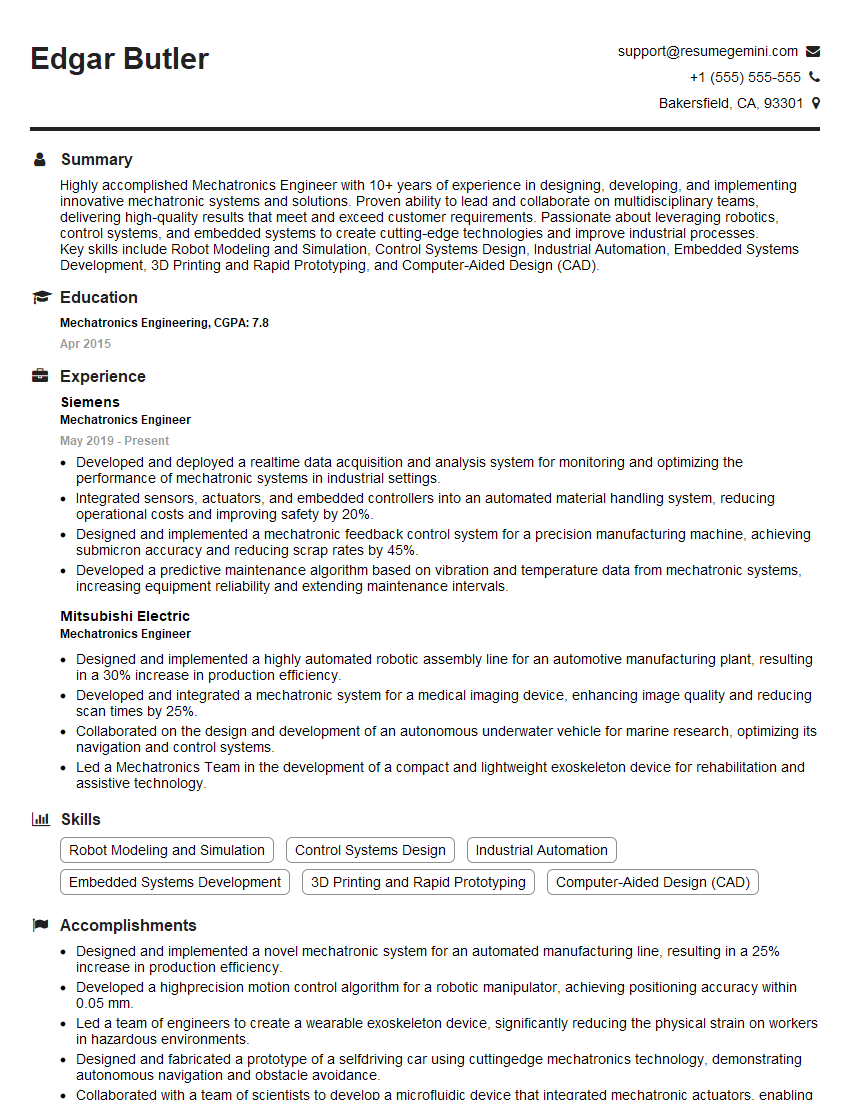
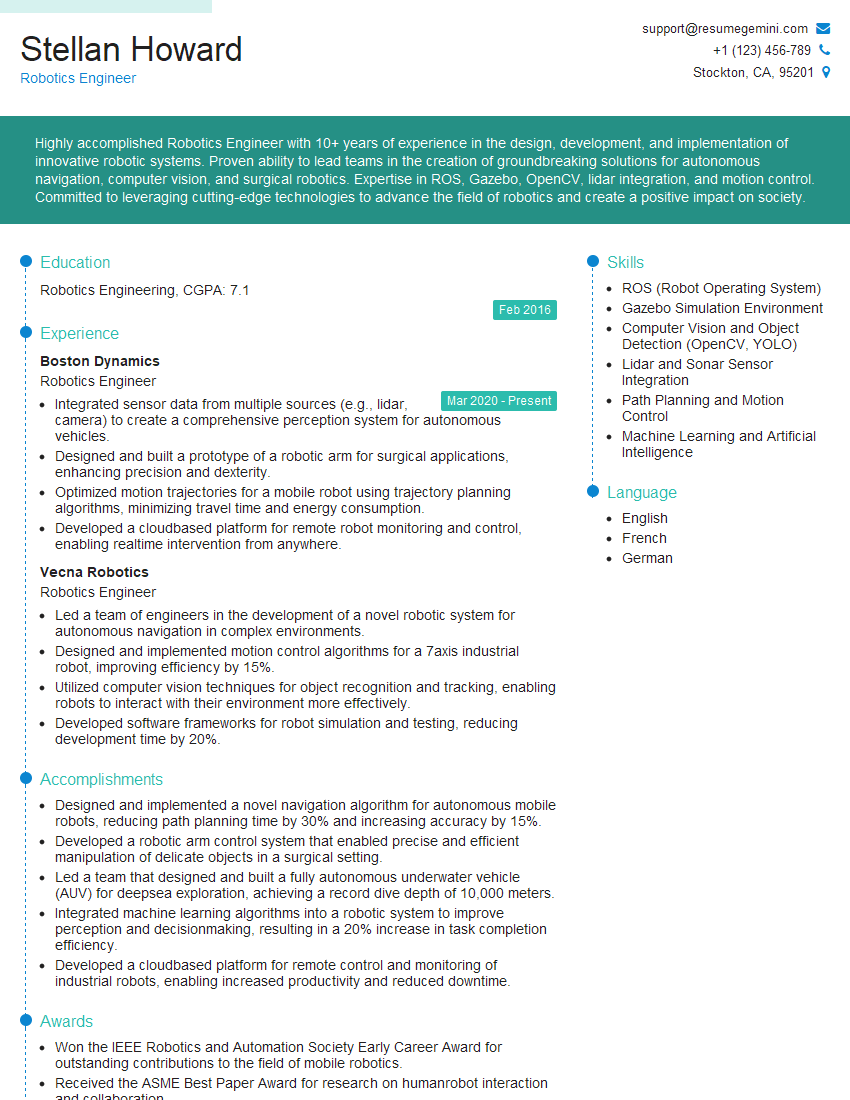
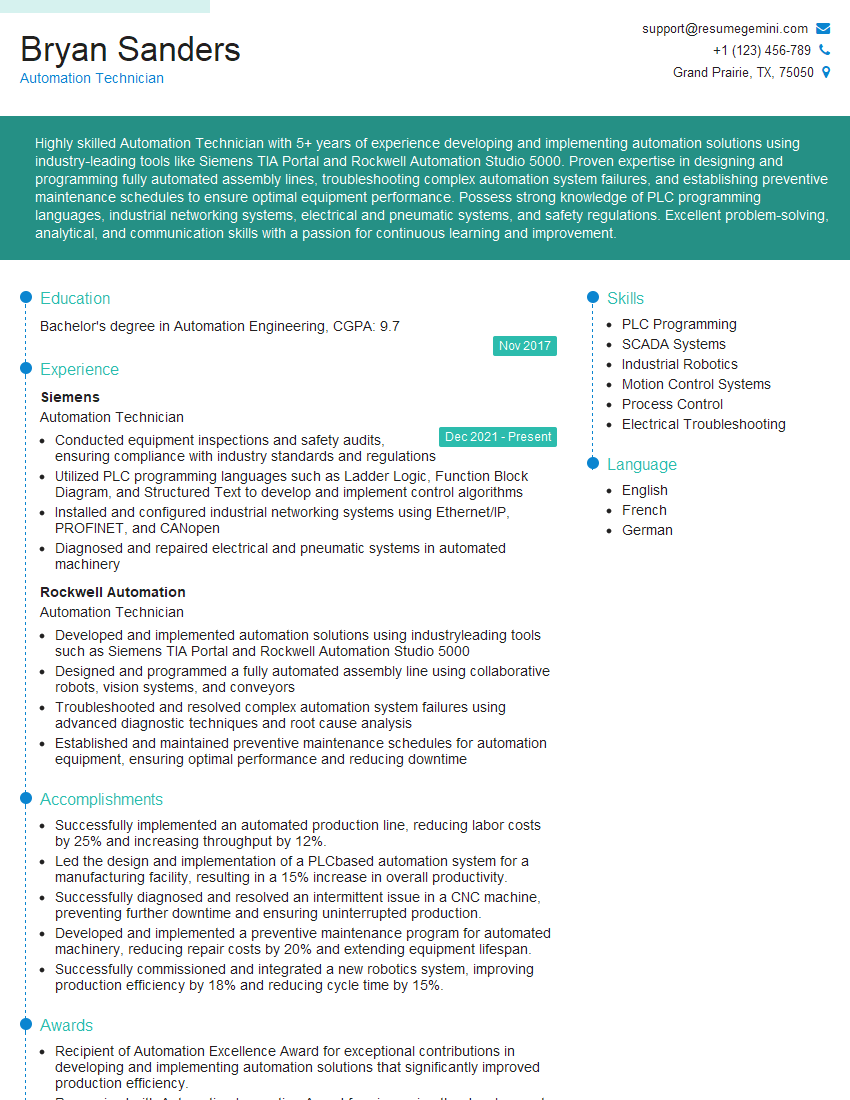
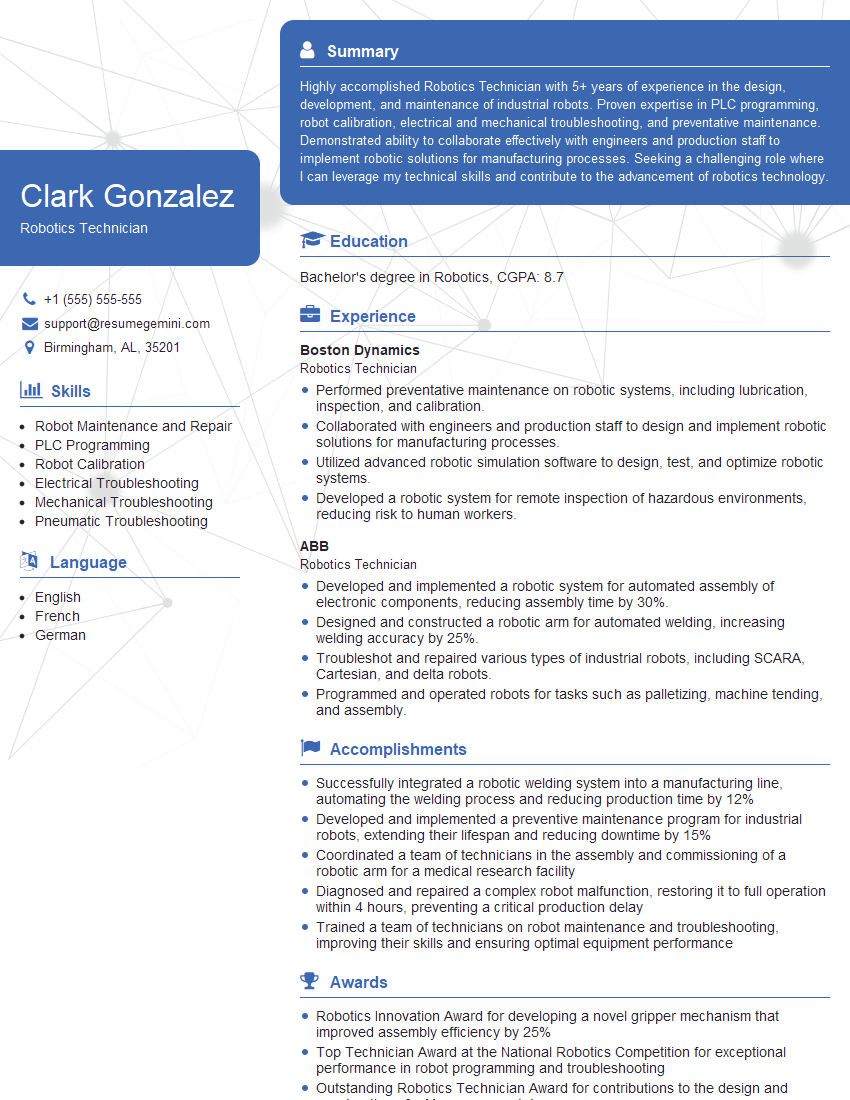
Mastering Automation and Control Systems Knowledge is crucial for career advancement in this rapidly evolving field. A strong understanding of these concepts opens doors to exciting opportunities and higher earning potential. To maximize your job prospects, create an ATS-friendly resume that highlights your skills and experience effectively. ResumeGemini is a trusted resource to help you build a professional and impactful resume that gets noticed. Examples of resumes tailored to Automation and Control Systems Knowledge are available to guide you in crafting your perfect application. Invest the time to showcase your abilities – your future self will thank you!
Explore more articles
Users Rating of Our Blogs
Share Your Experience
We value your feedback! Please rate our content and share your thoughts (optional).
What Readers Say About Our Blog
Very informative content, great job.
good