Interviews are opportunities to demonstrate your expertise, and this guide is here to help you shine. Explore the essential Automotive Electronics Design Tools (Altium Designer, Mentor Graphics) interview questions that employers frequently ask, paired with strategies for crafting responses that set you apart from the competition.
Questions Asked in Automotive Electronics Design Tools (Altium Designer, Mentor Graphics) Interview
Q 1. Explain your experience with Altium Designer’s schematic capture and PCB layout features.
Altium Designer’s schematic capture and PCB layout capabilities are integral to my workflow. Schematic capture involves creating the circuit diagram, defining components, and establishing their interconnections. I’m proficient in using Altium’s library management to source components, create custom parts, and manage design revisions effectively. This includes leveraging Altium’s powerful schematic rules checking features to catch errors early in the design process, such as incorrect component placement or missing connections. For instance, I’ve used this to identify a missing ground connection in a high-speed CAN bus design before fabrication, preventing a costly rework.
In PCB layout, I’m skilled in efficient board routing, considering signal integrity, thermal management, and manufacturability. Altium’s features, such as differential pair routing, impedance-controlled tracing, and automated routing tools, are heavily utilized. I regularly employ constraint management to define critical parameters like clearance distances and trace widths, ensuring the design meets the specifications. A recent project involved designing a high-density automotive ECU board, and Altium’s layer stacking management was crucial for optimizing space and achieving the desired signal quality.
Q 2. Describe your proficiency in Mentor Graphics’ PADS or other relevant tools.
My experience extends to Mentor Graphics PADS, specifically PADS VX.2. I’ve used it extensively for both schematic capture and PCB layout, particularly on projects involving legacy designs or designs requiring specific component libraries readily available within the PADS ecosystem. PADS’ strength lies in its robust library management and its ability to handle complex, high-layer-count PCBs efficiently. While Altium offers more advanced features in some areas, PADS excels in its straightforward approach to routing and its reliable DRC engine. For example, I successfully migrated a complex legacy automotive power distribution board from an older CAD system into PADS, ensuring full functionality and compatibility with existing manufacturing processes.
Furthermore, I have familiarity with other tools like Eagle, but my expertise in Altium and PADS allows me to easily adapt to different platforms. I understand the core principles of PCB design remain consistent across various software packages, and my focus is always on delivering high-quality, functional designs.
Q 3. How do you manage complex PCB designs using hierarchical design methodologies in Altium?
Managing complex PCB designs necessitates a hierarchical approach in Altium. This involves breaking down the design into smaller, more manageable sheets or sub-projects. Think of it like building a house: you wouldn’t design every brick individually; instead, you’d focus on sections like the foundation, walls, and roof. Similarly, I use Altium’s hierarchical design features to create functional blocks, each representing a specific aspect of the system. For instance, in an automotive infotainment system, I’d create separate sheets for the processor module, the display interface, and the audio amplifier. Each sheet can be independently designed and verified before integrating them into the complete PCB.
This approach simplifies design review, facilitates parallel work among team members, and improves the overall design maintainability. Altium’s sheet symbols and design hierarchy management features ensure seamless communication and data integrity across sheets. This strategy drastically reduces the chances of errors when dealing with thousands of components and interconnections.
Q 4. What are your preferred methods for signal integrity analysis in high-speed automotive designs?
Signal integrity analysis is crucial for high-speed automotive designs, especially in applications like CAN bus, Ethernet, and high-speed serial communication. My preferred methods involve a combination of simulation and physical measurements. Simulation tools, often integrated or interfaced with Altium or standalone software such as HyperLynx, allow for predicting signal reflections, crosstalk, and impedance mismatches before manufacturing. I use these tools to optimize trace routing, select appropriate termination schemes, and identify potential noise sources.
I employ simulations like time-domain reflectometry (TDR) and frequency-domain analysis (S-parameters) to assess signal quality. Following simulation, physical measurements on prototypes using oscilloscopes and network analyzers are critical to validate the simulation results and fine-tune the design for optimal performance. For instance, in a recent project involving a 100BASE-T1 automotive Ethernet design, I used these techniques to minimize signal attenuation and ensure reliable communication over long cable lengths.
Q 5. Explain your experience with constraint management in Altium Designer or Mentor Graphics.
Constraint management is critical for ensuring design integrity and manufacturability. In both Altium and Mentor Graphics tools, constraints define the rules that govern the PCB layout process. This includes setting design rules, such as clearance distances between traces, trace widths, minimum via sizes, and impedance control. In Altium, these constraints are managed through Design Rules and the use of constraint managers. These define parameters such as keep-out zones around sensitive components, ensuring sufficient space for heat dissipation and preventing accidental shorts.
Properly defining these constraints from the outset significantly improves the design process and reduces the iterative design cycles needed to meet manufacturing requirements. A poorly constrained design can lead to significant rework and delays. I always prioritize setting up comprehensive constraints early in the design process to prevent issues down the line. In a recent project involving an automotive power supply, careful constraint management ensured the PCB met stringent EMI/EMC regulations.
Q 6. How do you ensure design rule checking (DRC) compliance in your PCB designs?
Design Rule Checking (DRC) is a crucial step in ensuring the PCB design meets the manufacturing specifications and avoids any potential fabrication issues. Both Altium and Mentor Graphics provide robust DRC engines capable of checking against a wide range of parameters. My approach involves setting up comprehensive DRC rules that align with the chosen manufacturing process and assembly capabilities. These checks include verifying clearances, trace widths, via sizes, and other critical parameters.
I typically run a DRC check after every major design modification, including component placement and routing. This proactive approach allows for identifying and resolving potential violations early, avoiding costly mistakes during manufacturing. Furthermore, I regularly review the DRC reports, not just for errors, but also to understand potential design improvements. This iterative process, combined with careful constraint management, leads to a clean, robust, and manufacturable design. I consider this a crucial step in delivering a high-quality product.
Q 7. Describe your experience with thermal analysis and mitigation strategies in PCB design.
Thermal analysis and mitigation strategies are paramount, especially in high-power automotive applications. Overheating can cause component failure, performance degradation, and even safety hazards. My approach to thermal management begins with careful component selection, considering their thermal characteristics and power dissipation. I use thermal simulation tools, such as those integrated within Altium or third-party software, to predict temperature distributions across the PCB.
These simulations inform my design decisions, such as component placement, heat sink design, and the use of thermal vias. Strategies like using copper pours strategically to act as heat spreaders, employing thermal vias to conduct heat away from components, and selecting components with suitable thermal properties are all integral parts of my process. For instance, in designing a motor driver circuit for an electric vehicle, I used thermal simulations to design a custom heat sink to ensure safe operating temperatures under peak loads. Careful thermal planning resulted in a reliable and robust design.
Q 8. What are your strategies for managing design revisions and version control in Altium or Mentor Graphics?
Managing design revisions and version control is crucial in collaborative projects. In Altium Designer, I heavily rely on its integrated version control system, which allows for easy check-in/check-out of design files. This prevents conflicts and maintains a clear history of changes. I establish a robust branching strategy, creating separate branches for different features or bug fixes, merging them back into the main branch only after thorough testing. For larger projects, we integrate with external version control systems like Git, utilizing Altium’s Vault or similar solutions for better collaboration and centralized management.
Mentor Graphics’ Expedition offers similar capabilities. Its built-in version control allows for parallel design work while preventing accidental overwrites. I employ a similar branching strategy here, ensuring all team members are working on defined versions and changes are meticulously tracked. Regular code reviews are performed to ensure code quality and design integrity. Think of it like a well-organized library – every book (design file) has its place and a clear record of who borrowed it and when. This prevents chaos and ensures we can easily track down older revisions if needed.
Q 9. Explain your experience with component selection and library management.
Component selection is a critical process that affects the entire design. I begin by creating a comprehensive component library, ensuring all components are verified and meet the design requirements. This often involves using manufacturer provided data sheets to validate parameters like tolerance, operating temperature range, and power dissipation. Altium’s library management features are invaluable here; I leverage its integrated search and filtering capabilities to quickly find and add components. For components not readily available, I create new library entries, meticulously documenting all relevant parameters and creating 3D models for better visualization. In Mentor Graphics, similar processes apply, utilizing the library management tools provided within the software. To maintain accuracy, I utilize parameterized components where appropriate; this allows for easier modification and reuse of components across multiple projects. Think of a well-stocked toolbox – you need the right tools (components) for the job, and you need to know where to find them quickly.
Q 10. How do you handle EMI/EMC compliance requirements during the design phase?
EMI/EMC compliance is paramount for automotive electronics. I proactively address these concerns throughout the design process, not just as an afterthought. This starts with careful component selection – choosing components with low EMI emissions and good shielding capabilities. I utilize simulation tools like Altium’s integrated signal integrity and power integrity analyzers to predict potential EMI issues early in the design cycle. In Mentor Graphics, HyperLynx provides similar capabilities. Layout strategies are crucial; I use techniques such as controlled impedance routing, proper ground plane design, and strategic placement of decoupling capacitors to minimize EMI. I also incorporate shielding measures, such as using conductive enclosures or specialized coatings. Finally, I ensure the design adheres to relevant automotive EMC standards (like CISPR 25), preparing for verification testing, and iterating on the design based on simulation and testing results. It’s like building a house that is resistant to earthquakes; you need careful planning and construction techniques.
Q 11. Describe your experience with manufacturing considerations in PCB design.
Manufacturing considerations are integrated throughout my design process. From the start, I choose components with readily available packaging options and consider their manufacturability. I follow design rules that align with the chosen PCB fabrication processes. This includes adhering to minimum trace widths and clearances, proper via placement, and using manufacturable geometries. I also generate detailed manufacturing documentation, including Gerber files and assembly drawings. In Altium and Mentor Graphics, I utilize their built-in design rule checking (DRC) tools to verify my design against the chosen fabrication specifications. This helps to prevent issues during manufacturing and ensures a smooth transition from design to production. I also collaborate closely with the manufacturing team, providing them with clear instructions and addressing any concerns early on to minimize potential delays. This collaborative approach ensures a successful and efficient manufacturing process – just like working with a construction crew; clear communication and plans are crucial.
Q 12. What are your preferred methods for debugging and troubleshooting PCB designs?
Debugging and troubleshooting involve a systematic approach. I begin by thoroughly reviewing the design files, looking for obvious errors, and comparing simulation results to measured data. I utilize in-circuit emulation (ICE) for early debugging and testing of embedded systems. Specialized test equipment, such as oscilloscopes and logic analyzers, are employed to analyze signals and identify potential problems. For complex issues, I use Altium’s signal tracing and probing tools to isolate faulty components or connections. In Mentor Graphics, similar diagnostic tools aid in identifying the root cause of design problems. Working with the testing team, we run rigorous tests and systematically rule out possibilities until the problem is identified and resolved. It’s like detective work; you need to systematically find the clues to understand the problem.
Q 13. How do you use simulation tools to verify your designs?
Simulation plays a vital role in verifying designs before physical prototyping. I use Altium’s built-in simulation tools to analyze signal integrity, power integrity, and electromagnetic compatibility. These simulations help identify potential issues early on, saving time and costs. Mentor Graphics’ suite of simulation tools, including HyperLynx, provides similar functionality. I create realistic models of the design and simulate various operating conditions to assess performance and stability. Specifically, I use SPICE simulation for circuit-level analysis and finite element analysis (FEA) for electromagnetic modeling. The results of simulations are carefully analyzed and compared to design requirements. If discrepancies exist, the design is iterated upon until satisfactory results are achieved. Simulations are like a trial run before the actual production, allowing for early problem detection and correction.
Q 14. What is your experience with different PCB fabrication technologies?
My experience encompasses various PCB fabrication technologies, including standard FR4, high-frequency materials like Rogers, and flexible circuits. I’m familiar with different surface finishes (e.g., HASL, ENIG, immersion gold), and understand their impact on signal integrity and reliability. I have worked with different manufacturing processes, including surface mount technology (SMT) and through-hole technology (THT). The choice of technology depends on the specific design requirements, cost constraints, and performance considerations. Understanding the capabilities and limitations of each technology is essential for making informed design decisions. For example, using high-frequency materials may be necessary for high-speed signal applications, but it can increase costs. Choosing appropriate technologies is crucial for a cost-effective and efficient design. This is akin to choosing the right building materials for a project; each material has its advantages and disadvantages.
Q 15. Describe your familiarity with different types of automotive electronic components.
My experience encompasses a wide range of automotive electronic components, from microcontrollers and sensors to actuators and power management ICs. I’m familiar with the specific challenges and requirements of the automotive environment, such as temperature extremes, vibration, and electromagnetic interference (EMI).
- Microcontrollers (MCUs): I’ve worked extensively with MCUs from various manufacturers like Renesas, Infineon, and NXP, selecting the optimal MCU based on processing power, peripherals, and power consumption for specific applications. For example, I chose a low-power ARM Cortex-M0+ MCU for a tire pressure monitoring system to maximize battery life.
- Sensors: I have experience integrating various sensors, including accelerometers, gyroscopes, pressure sensors, and environmental sensors. Understanding the sensor’s specifications and signal conditioning is crucial for accurate data acquisition. For instance, I’ve worked on calibrating an accelerometer for accurate crash detection in an airbag system.
- Actuators: My work includes integrating motors, solenoids, and other actuators, paying close attention to drive circuitry design and power requirements. A recent project involved designing the control circuitry for a linear actuator used in a seat adjustment system.
- Power Management ICs (PMICs): I’m proficient in selecting and designing with PMICs to ensure efficient power distribution and management within the system, considering factors like voltage regulation, power sequencing, and thermal management. A key aspect is ensuring the system can handle load dumps and other power transients typical in automotive environments.
Career Expert Tips:
- Ace those interviews! Prepare effectively by reviewing the Top 50 Most Common Interview Questions on ResumeGemini.
- Navigate your job search with confidence! Explore a wide range of Career Tips on ResumeGemini. Learn about common challenges and recommendations to overcome them.
- Craft the perfect resume! Master the Art of Resume Writing with ResumeGemini’s guide. Showcase your unique qualifications and achievements effectively.
- Don’t miss out on holiday savings! Build your dream resume with ResumeGemini’s ATS optimized templates.
Q 16. How do you manage the complexities of high-speed differential signaling on a PCB?
Managing high-speed differential signaling requires meticulous attention to detail throughout the design process. The key is minimizing signal degradation and maintaining signal integrity. This involves careful consideration of several factors:
- Controlled Impedance Routing: Using controlled impedance traces (e.g., microstrip or stripline) is paramount to prevent signal reflections and ensure proper signal propagation. Altium Designer and Mentor Graphics offer tools to define and control impedance, allowing me to maintain the required impedance throughout the entire trace length.
- Differential Pair Routing: Maintaining consistent spacing and length between differential pairs is critical. I use specialized routing tools to ensure the pairs are routed close together and have minimal skew. Proper length matching minimizes differential mode to common mode conversion.
- EMI/EMC Considerations: High-speed signals can radiate electromagnetic interference, so proper shielding and grounding techniques are essential. I use ground planes effectively and incorporate shielding where necessary to minimize EMI emission and susceptibility.
- Termination: Proper termination at the source and destination of differential pairs is crucial to prevent reflections. The termination scheme (e.g., series termination, parallel termination) depends on the specific application and signal characteristics. I often simulate different termination schemes in Altium Designer or Mentor Graphics before choosing the best solution.
- Via Placement: Vias can introduce impedance discontinuities, so their placement must be carefully considered. I minimize the number of vias in differential pairs and use vias with controlled impedance to minimize signal reflections.
For example, in a recent project involving high-speed CAN communication, I meticulously controlled impedance, using simulation software to verify signal integrity and ensuring the signal’s integrity was maintained across the PCB’s layers, ultimately leading to robust and reliable communication.
Q 17. What are your strategies for optimizing PCB layout for manufacturability and cost-effectiveness?
Optimizing PCB layout for manufacturability and cost-effectiveness is crucial. My strategies include:
- Design for Manufacturing (DFM) Rules: I always incorporate DFM rules into my design process early on, ensuring that the design is manufacturable and meets the requirements of the chosen PCB manufacturer. This involves using the built-in DFM rules checkers in Altium Designer and Mentor Graphics, verifying minimum trace widths, clearances, and via sizes.
- Component Placement: Optimizing component placement for thermal management, signal routing, and manufacturability is essential. I place components strategically to minimize trace lengths, ensure adequate clearance for soldering, and optimize thermal dissipation.
- Layer Stackup: Selecting the right layer stackup is critical for signal integrity, cost, and manufacturability. I optimize the stackup for signal speed and impedance control while considering the number of layers required for cost-effectiveness.
- Standardization: Using standard component footprints and keeping the design simple reduces manufacturing costs and risks. This enables easier assembly and reduces potential defects and rework.
- Material Selection: Choosing cost-effective PCB materials without compromising performance is key. This involves selecting appropriate substrate materials based on the design’s thermal and electrical requirements.
For example, in one project, I successfully reduced the PCB size by 15% by optimizing component placement and layer stackup, leading to significant cost savings in materials and manufacturing.
Q 18. Explain your understanding of different signal routing techniques (e.g., microstrip, stripline).
Microstrip and stripline are two common transmission line structures used in high-speed PCB design. They differ primarily in how the signal is confined and the way they interact with the ground plane:
- Microstrip: A microstrip line consists of a single conductor placed above a ground plane, separated by a dielectric substrate. It’s characterized by a relatively easy-to-implement structure, making it suitable for high-frequency applications. However, it has a larger radiation loss compared to stripline. Its impedance is determined by trace width, substrate thickness, and dielectric constant.
- Stripline: A stripline is embedded between two ground planes, symmetrically positioned within the dielectric substrate. This configuration offers superior EMI/EMC shielding and less radiation loss than microstrip. It’s more challenging to design due to the complexity of multilayer routing. Its impedance is highly dependent on trace width, substrate thickness and dielectric constant, but less sensitive to surrounding objects.
The choice between microstrip and stripline depends on the specific application requirements. For instance, high-speed signals requiring excellent EMI/EMC performance might benefit from stripline, whereas microstrip might be preferred for simplicity and easier routing in applications where shielding requirements are less stringent. In Altium Designer and Mentor Graphics, I’d use the impedance calculation tools and 3D electromagnetic simulation to verify my design choice.
Q 19. How do you address impedance matching and control in your designs?
Impedance matching and control are critical for signal integrity in high-speed designs. Mismatched impedances lead to signal reflections, which can cause signal distortion and data corruption. My approach involves:
- Impedance Calculation and Control: I use specialized software tools within Altium Designer and Mentor Graphics to calculate and control the impedance of traces and transmission lines. This ensures the impedance is consistent throughout the signal path. I carefully define trace widths and layer stackup to achieve the target impedance.
- Simulation: I use simulation tools (e.g., IBIS-AMI models, electromagnetic simulators) to verify impedance matching and identify potential reflection points. Simulations allow me to identify and fix potential issues before fabrication, saving time and cost.
- Termination: I employ appropriate termination techniques (e.g., series termination, parallel termination) at the source and load to minimize reflections. The choice of termination depends on the signal speed, characteristic impedance, and load characteristics.
- Manufacturing Tolerance Consideration: I account for manufacturing tolerances in trace dimensions during design to ensure that the impedance remains within acceptable limits. This prevents signal integrity issues due to variations in manufacturing processes.
For instance, in a high-speed data bus design, improper impedance matching would cause signal reflections, leading to data errors and unreliable communication. By carefully controlling the impedance and using appropriate termination, I ensure reliable data transmission.
Q 20. Describe your experience working with CAN, LIN, or other automotive communication protocols.
I have extensive experience with automotive communication protocols, including CAN, LIN, and FlexRay. My expertise extends to both hardware and software aspects.
- CAN (Controller Area Network): I understand CAN bus architecture, physical layer characteristics (e.g., differential signaling), and the CAN protocol stack. I’ve designed and implemented CAN interfaces using CAN controllers from various manufacturers. My work has involved ensuring electromagnetic compatibility, proper termination, and fault tolerance for CAN communication.
- LIN (Local Interconnect Network): I’m familiar with LIN’s master-slave architecture and its low-cost, low-speed data communication capabilities, commonly used for less critical functions in vehicles. I have experience designing and implementing LIN interfaces, considering issues like wake-up and synchronization.
- FlexRay: I also have some experience with the deterministic, high-bandwidth FlexRay protocol, which is particularly important for safety-critical applications. This experience includes understanding its unique features such as redundancy and clock synchronization.
In a recent project, I designed a CAN-based system for communication between an engine control unit (ECU) and several sensors. This involved careful consideration of EMC, noise immunity, and reliable data transmission. The design was validated through rigorous testing using simulation tools and lab equipment.
Q 21. How do you incorporate functional safety requirements (e.g., ISO 26262) into your designs?
Incorporating functional safety requirements as defined in ISO 26262 is crucial in automotive electronic design. My approach ensures compliance by:
- Hazard Analysis and Risk Assessment (HARA): I participate in the HARA process to identify potential hazards and assess associated risks. This helps prioritize safety requirements and determine the Automotive Safety Integrity Level (ASIL).
- Fault Tree Analysis (FTA): FTA helps identify potential system failures and their causes. I use FTA to understand and mitigate single-point failures, such as short circuits and open circuits that could cause system malfunctions.
- Design for Safety: The design process itself is driven by safety requirements. I use redundant components where necessary to achieve the required ASIL level. I also consider design techniques like fault detection, fault tolerance, and safety mechanisms. For example, implementing watchdog timers, parity checks, and error detection codes.
- Verification and Validation: Rigorous verification and validation are performed throughout the design process, including simulations, code reviews, and hardware-in-the-loop (HIL) testing, ensuring that the design meets all safety requirements.
- Documentation: Detailed documentation, including safety plans, FMEA (Failure Mode and Effects Analysis), and traceability matrices are maintained, demonstrating that design decisions fulfill safety requirements.
For example, in a recent project involving an electronic braking system, we used a dual-core microcontroller with fault detection and error correction capabilities to meet the demanding ASIL D requirements. Comprehensive testing and documentation were integral parts of the process to ensure compliance and safety.
Q 22. Explain your experience with using design for manufacturing (DFM) principles.
Design for Manufacturing (DFM) is crucial in automotive electronics to ensure a product is manufacturable, cost-effective, and reliable. It involves considering manufacturing constraints early in the design process to avoid costly revisions later. My experience encompasses applying DFM principles throughout the entire design lifecycle, from schematic capture to PCB layout.
- Component Selection: I prioritize components with readily available stock, considering factors like lead times, package types (avoiding obsolete or hard-to-solder packages), and environmental compliance (RoHS).
- PCB Layout: I follow DFM rules for trace widths and spacing, ensuring manufacturability using specific fabrication techniques like surface mount technology (SMT). This includes appropriate clearance between components, thermal vias, and controlled impedance routing for high-speed signals.
- Manufacturing Process Awareness: I actively involve myself with manufacturing teams, attending design reviews, and actively seeking feedback based on my design. I understand the implications of various manufacturing methods (e.g., through-hole vs. surface mount, different soldering techniques) on design decisions.
- Testing and Analysis: I use design analysis tools within Altium Designer and Mentor Graphics to perform Design Rule Checks (DRCs) and signal integrity analysis, anticipating manufacturing issues like shorts, opens, and impedance mismatches before they occur.
For instance, in a recent project involving a high-speed CAN bus, I carefully analyzed the trace length and impedance to ensure signal integrity, using specialized routing techniques to minimize reflections and crosstalk, adhering to manufacturing capabilities and reducing signal attenuation during manufacturing.
Q 23. How do you manage design changes and maintain traceability throughout the design lifecycle?
Managing design changes and maintaining traceability is paramount in automotive electronics, which is a highly regulated industry. We utilize a robust system combining version control within Altium Designer and Mentor Graphics, along with change management tools.
- Version Control: Every design revision is carefully tracked, including schematic and PCB changes, enabling us to easily revert to previous versions if needed. We use version control systems that can incorporate comments and justification for changes.
- Change Management System: Formal change requests are submitted, reviewed, and approved before implementation. This includes detailed descriptions, impact assessments, and approvals from relevant stakeholders (engineering, manufacturing, quality).
- Revision Control in Designs: We systematically employ designators such as revision letters (A, B, C…) within the design files themselves to clearly indicate changes and revisions.
- Documentation: Thorough documentation, including design specifications, test results, and manufacturing records, is maintained to establish clear traceability. This documentation should link to specific revisions in the version control system.
Imagine a scenario where a component becomes obsolete. Our traceability system ensures we can quickly identify all instances of that component, assess the impact of the change, implement the modification, and fully document the entire process, minimizing risks and ensuring compliance.
Q 24. What are the key differences between Altium Designer and Mentor Graphics?
Altium Designer and Mentor Graphics (specifically, PADS and Expedition) are both leading PCB design tools, but they cater to different needs and workflows. The key differences lie in their user interface, strengths in specific areas, and overall philosophy.
- User Interface: Altium Designer is known for its more unified and intuitive interface, particularly suitable for smaller teams. Mentor Graphics tools, especially Expedition, can feel more complex, especially for larger projects with extensive libraries and multiple engineers collaboratively working on a single project. This makes them best suited to larger teams with well-defined processes.
- Schematic Capture: Both are robust, but Altium Designer’s schematic editor is often considered more user-friendly and visually appealing.
- PCB Layout: Mentor Graphics tools excel in handling high-density designs and complex routing tasks for high-speed applications common in automotive electronics. Altium offers good capabilities here, but Mentor Graphics generally has a stronger reputation for very complex designs.
- Libraries: Both provide extensive component libraries; however, the ease of managing and customizing libraries can differ. Mentor Graphics excels in managing large, complex libraries.
- Collaboration: Mentor Graphics tools often have better integration with larger team workflows and configuration management tools, a critical advantage for complex automotive projects.
Choosing between them often depends on team size, project complexity, and existing infrastructure. For smaller, less complex projects, Altium Designer’s user-friendliness and ease of use may be preferred. For larger, high-density projects demanding advanced routing capabilities and robust collaboration tools, Mentor Graphics tools would likely be favored.
Q 25. Describe a challenging PCB design project you completed and how you overcame the obstacles.
One challenging project involved designing a high-speed data acquisition system for an autonomous vehicle. The key challenge was routing high-speed differential pairs alongside sensitive analog signals, minimizing electromagnetic interference (EMI) and ensuring signal integrity across a high-layer-count PCB.
- EMI Mitigation: We employed techniques like controlled impedance routing, proper grounding schemes (including multiple ground planes), and shielding of sensitive analog circuitry to minimize EMI. Shielding can be costly and adds weight, so effective simulation and planning are essential.
- Signal Integrity Analysis: We used simulation tools within Mentor Graphics Expedition to analyze signal reflections, crosstalk, and jitter, optimizing trace lengths and routing to meet stringent specifications. This often involved iterative design and redesign processes.
- Thermal Management: The high-speed components generated significant heat, demanding careful thermal management strategies. We utilized thermal vias and copper pours to distribute heat effectively. We used simulation to ensure temperatures stayed within acceptable ranges.
- Collaboration: The project required close collaboration between mechanical, hardware, and software engineers, which emphasized the importance of consistent communication and rigorous testing.
By carefully analyzing the electromagnetic field characteristics with simulation, using advanced routing techniques, and implementing robust thermal management, we successfully overcame the initial challenges and delivered a functional, reliable system that met the demanding requirements of the autonomous driving application.
Q 26. How do you stay current with advancements in automotive electronics design tools and technologies?
Keeping up-to-date in the rapidly evolving field of automotive electronics requires a multifaceted approach.
- Industry Publications and Conferences: I regularly read publications like IEEE Xplore, SAE International papers, and attend conferences such as the Electronica trade fair to understand emerging trends and new technologies. The automotive sector is particularly quick to adopt new technologies like AI/ML, and staying updated on these is crucial for my work.
- Online Courses and Webinars: Platforms like Coursera, edX, and industry-specific webinars offered by tool vendors keep me abreast of the latest software features and design methodologies.
- Professional Networks: Engaging with peers and experts through online communities and professional organizations fosters knowledge sharing and provides valuable insights into real-world design challenges and best practices.
- Tool Vendor Training: Altium and Mentor Graphics offer regular training courses on their software, focusing on new features and advanced techniques. These courses are very valuable and ensure I am proficient in the newest functionalities of the tools.
Staying informed about technological advancements enables me to design more efficient, reliable, and cost-effective automotive electronics systems that leverage the latest advancements in the field.
Q 27. What are your preferred methods for documenting and communicating your design decisions?
Effective communication and documentation are essential for success in any design project. My preferred methods involve a combination of both visual and textual documentation.
- Detailed Design Specifications: I create comprehensive design specifications documenting all functional and non-functional requirements, including detailed electrical specifications, mechanical constraints, and environmental considerations. I always include a design revision system.
- Schematic and PCB Documentation: The schematic and PCB layout themselves serve as critical visual documentation. I ensure clear labeling, annotation, and design rules are followed.
- Design Reviews and Meetings: Formal design reviews are conducted regularly to ensure the team is aligned, providing opportunities for feedback and collaborative problem-solving.
- Formal Reports and Presentations: For complex design choices or significant changes, I prepare formal reports or presentations that clearly articulate the rationale behind the decisions made.
- Version Control System: I ensure any documentation changes are linked to the revision history of the design files. Any comments or notes within a design file should also be detailed and easy to understand.
A well-documented design not only facilitates collaboration but also significantly simplifies troubleshooting, maintenance, and future design revisions. It’s like providing a detailed roadmap of your design so anyone can easily understand your thought process.
Q 28. Explain your experience with creating and managing Bill of Materials (BOMs).
Creating and managing a Bill of Materials (BOM) is a critical task in automotive electronics, as it directly impacts manufacturing, procurement, and cost. I have experience using both manual and automated BOM generation methods.
- Automated BOM Generation: Altium Designer and Mentor Graphics offer tools for automated BOM generation directly from the PCB design files. This ensures accuracy and reduces manual errors.
- BOM Structure and Data: I adhere to standardized BOM formats that include all necessary information, such as part number, manufacturer, description, quantity, cost, and any special ordering requirements. Using consistent formats makes the BOM easier to use and maintain.
- BOM Management Software: For large projects, I use BOM management software to track BOM revisions, manage component sourcing, and monitor costs throughout the product lifecycle.
- Cross-referencing: My BOMs always include cross-referencing to the PCB design files. This makes it easy to trace any part on the BOM directly to the schematic and PCB layout.
- Regular Updates: BOMs are regularly updated to reflect any design changes or component substitutions.
An accurate and well-managed BOM is fundamental for smooth manufacturing and procurement processes. Without a properly managed BOM, even the best-designed circuit could be rendered unmanufacturable due to missing or incorrect components.
Key Topics to Learn for Automotive Electronics Design Tools (Altium Designer, Mentor Graphics) Interview
- Schematic Capture & Design Rules: Understanding the fundamentals of creating and managing schematics, including component placement, net labeling, and adhering to design rules for robust and manufacturable designs. Practical application: Designing a simple automotive sensor circuit within Altium or Mentor Graphics.
- PCB Layout & Routing: Mastering PCB layout techniques, including component placement optimization, efficient routing strategies (e.g., minimizing EMI/EMC), and layer management. Practical application: Creating a high-speed differential pair trace in Altium or Mentor Graphics and understanding the implications of trace length and impedance.
- Component Libraries & Management: Familiarity with creating and managing component libraries, including accurate parameter definition and symbol creation. Practical application: Adding a new automotive-specific component to an existing library, ensuring compliance with industry standards.
- Signal Integrity & Power Integrity Analysis: Understanding the importance of signal integrity and power integrity analysis in automotive applications, and the use of simulation tools to identify and mitigate potential issues. Practical application: Performing a simple signal integrity simulation using Mentor Graphics or Altium’s built-in tools.
- Design for Manufacturing (DFM) Considerations: Understanding the constraints and considerations of manufacturing automotive PCBs, including tolerances, component placement restrictions, and assembly processes. Practical application: Analyzing a PCB design for manufacturability and identifying potential issues.
- Automotive Specific Standards & Requirements (e.g., ISO 26262): Knowledge of relevant automotive standards and functional safety requirements, and how they influence the design process. Practical application: Discussing how design choices impact the safety and reliability of an automotive electronic system.
- Version Control & Collaboration: Understanding the importance of version control systems (e.g., Git) in collaborative design projects. Practical application: Describing your workflow for managing changes and collaborating with others on a PCB design.
Next Steps
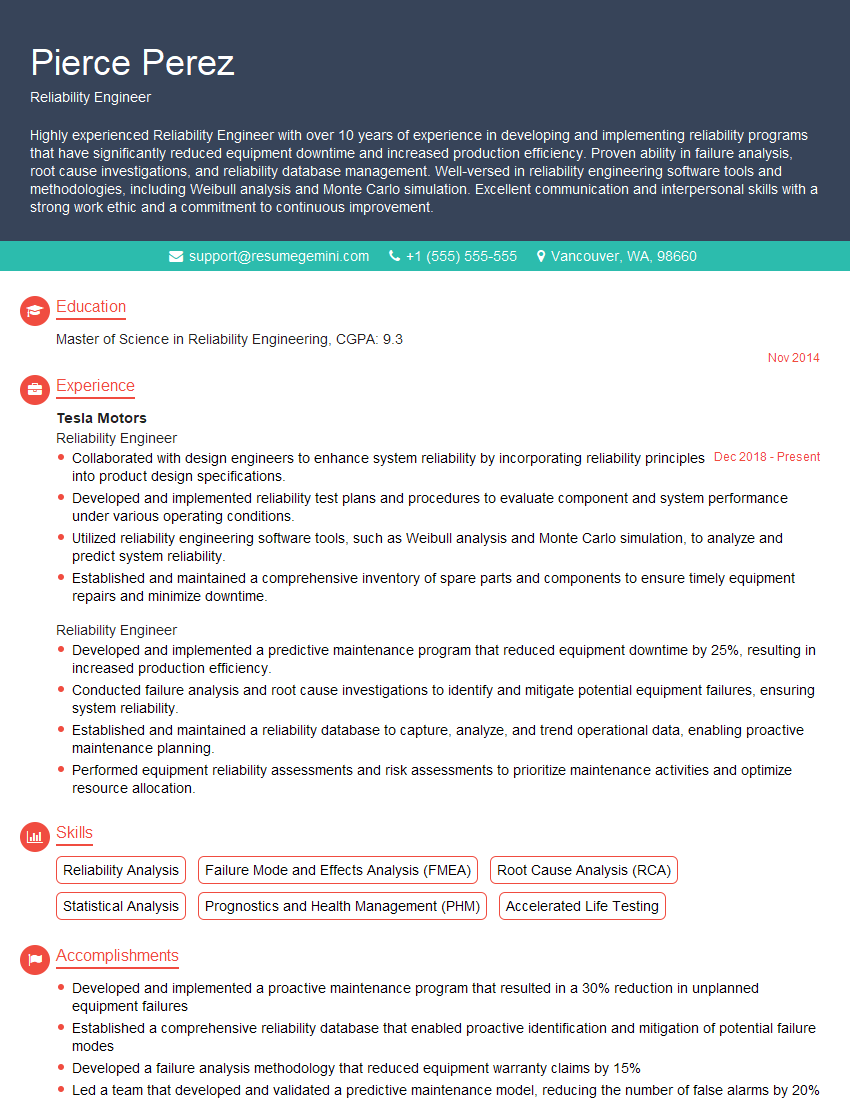
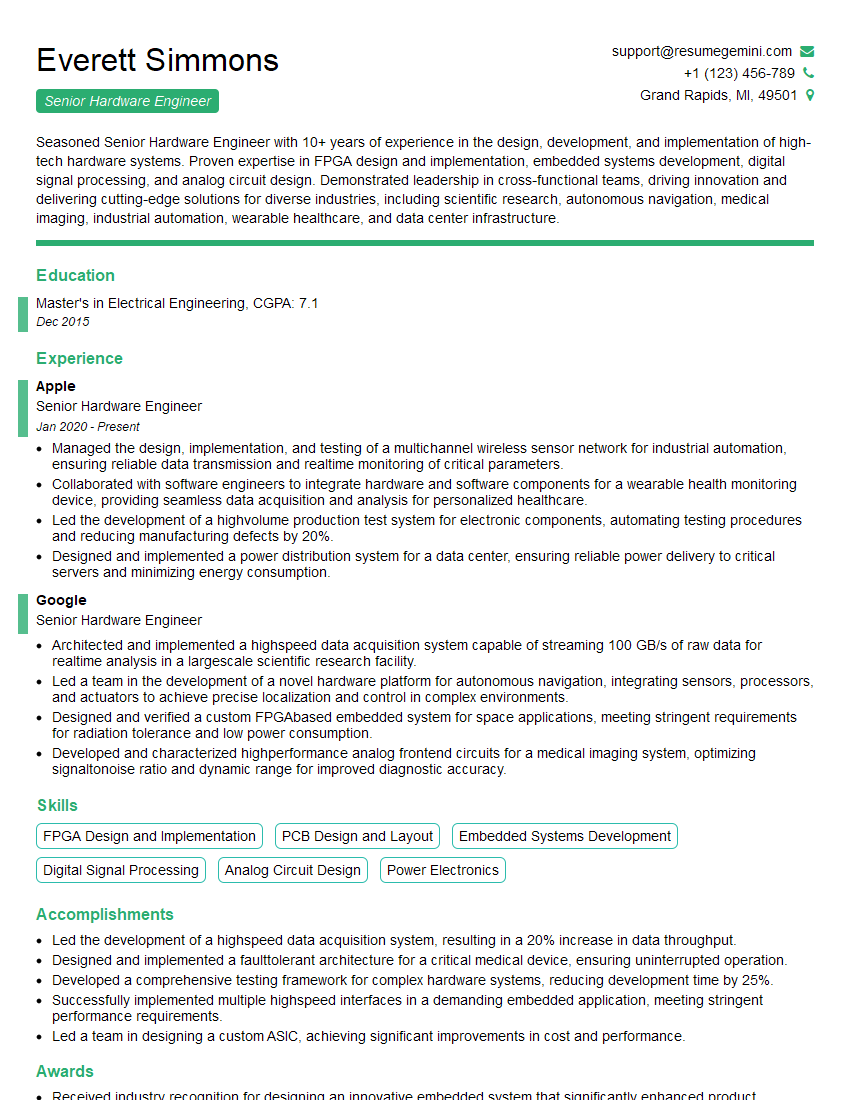
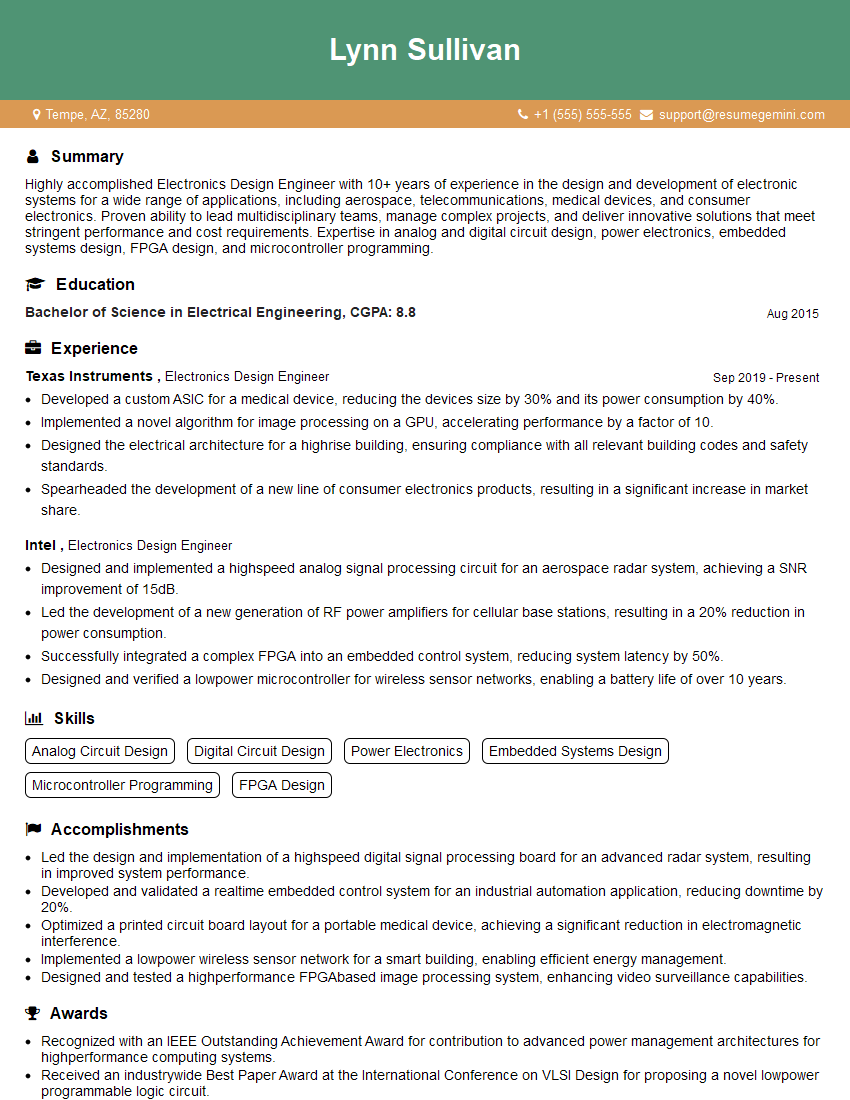
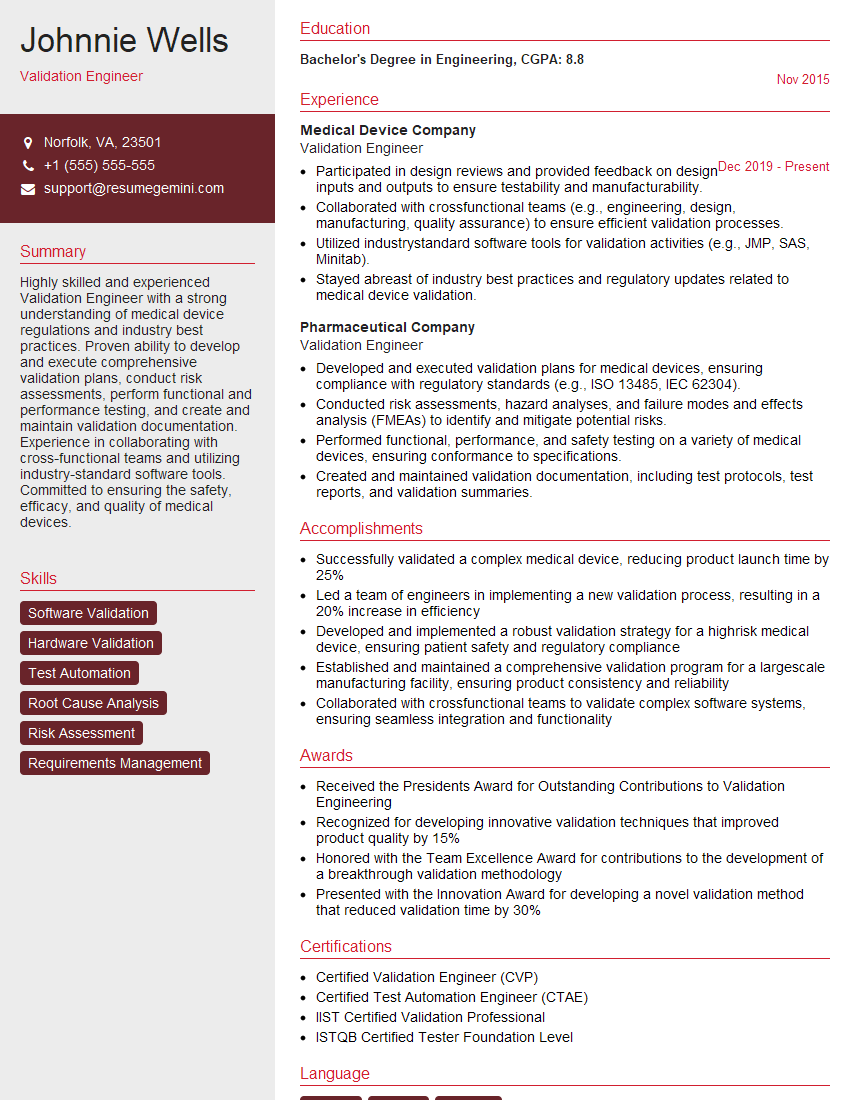
Mastering Automotive Electronics Design Tools like Altium Designer and Mentor Graphics is crucial for a successful career in this rapidly growing field. Proficiency in these tools demonstrates valuable skills highly sought after by employers. To significantly improve your job prospects, it’s essential to craft an ATS-friendly resume that highlights your expertise effectively. ResumeGemini is a trusted resource that can help you build a professional and impactful resume. Examples of resumes tailored to showcasing your expertise in Automotive Electronics Design Tools (Altium Designer & Mentor Graphics) are available to further guide your preparation.
Explore more articles
Users Rating of Our Blogs
Share Your Experience
We value your feedback! Please rate our content and share your thoughts (optional).
What Readers Say About Our Blog
Very informative content, great job.
good