Cracking a skill-specific interview, like one for Automotive Standards (ISO 26262, ASIL), requires understanding the nuances of the role. In this blog, we present the questions you’re most likely to encounter, along with insights into how to answer them effectively. Let’s ensure you’re ready to make a strong impression.
Questions Asked in Automotive Standards (ISO 26262, ASIL) Interview
Q 1. Explain the concept of Automotive Safety Integrity Levels (ASILs).
Automotive Safety Integrity Levels (ASILs) are a classification scheme used in ISO 26262 to define the required safety integrity level for a given automotive function. Think of it as a grading system for safety, ranging from A to D, with ASIL A being the lowest and ASIL D the highest. The higher the ASIL, the more stringent the safety requirements.
ASIL is determined by analyzing the potential hazards associated with a function failing. A higher probability of a hazard causing serious injury or death, coupled with a higher likelihood of that function failing, results in a higher ASIL. For example, a malfunctioning headlight (ASIL A) poses less risk than a malfunctioning braking system (potentially ASIL D).
- ASIL A: Low risk of hazardous situations.
- ASIL B: Medium-low risk of hazardous situations.
- ASIL C: Medium-high risk of hazardous situations.
- ASIL D: High risk of hazardous situations.
Q 2. Describe the different ASIL decomposition methods.
ASIL decomposition is the process of breaking down a high-ASIL system into smaller, more manageable subsystems with lower ASIL levels. This simplifies development and verification while ensuring the overall system still meets the required safety integrity. There are several methods:
- Hierarchical Decomposition: Breaking the system into a hierarchy of subsystems, each with its own ASIL, working from the top down. This is commonly used for complex systems. For example, an Advanced Driver-Assistance System (ADAS) might be decomposed into subsystems like object detection, path planning, and actuation, each with its own ASIL based on the impact of failure on safety.
- Functional Decomposition: Breaking down the system based on its functionalities. Each function is then assigned an ASIL based on its individual contribution to safety. Imagine a cruise control system; the speed control function might be ASIL B, while the emergency brake function would likely be ASIL D.
- Data Decomposition: This method focuses on the data flow within the system. High-ASIL data is treated with more stringent safety requirements throughout its lifecycle. This is particularly relevant when dealing with sensor data that is crucial for safety-critical functions.
The choice of method depends on the complexity of the system and the engineering judgment of the team.
Q 3. How do you determine the ASIL level for a given system?
Determining the ASIL level involves a systematic hazard analysis and risk assessment process, as described in ISO 26262. This process typically includes these steps:
- Hazard Identification: Identify all potential hazards related to the system’s functions.
- Hazard Analysis: Analyze each identified hazard, determining the severity, probability of occurrence, and controllability.
- Risk Assessment: Combine the severity, probability, and controllability to determine the risk level associated with each hazard.
- ASIL Determination: Based on the risk assessment, assign the appropriate ASIL (A, B, C, or D) to each hazard. This often involves a risk matrix that maps risk levels to ASILs.
Consider a lane departure warning system. Identifying hazards might include failing to warn the driver when the vehicle is about to leave the lane. Analyzing its severity (e.g., potential accident), probability (e.g., depends on camera quality and environment), and controllability (e.g., driver still has control of the vehicle), allows for a proper ASIL determination, likely ASIL B or C.
Q 4. What are the key differences between ISO 26262 and other functional safety standards?
ISO 26262 is specifically tailored to the automotive industry, addressing the unique challenges and requirements of automotive systems. While other functional safety standards like IEC 61508 (for general industrial applications) provide a foundation, ISO 26262 builds upon it with automotive-specific considerations.
- Focus: ISO 26262 focuses on automotive electrical/electronic (E/E) systems and software, while IEC 61508 has a broader scope.
- Requirements: ISO 26262 includes more stringent requirements related to the automotive environment (e.g., electromagnetic compatibility, temperature variations, and aging). The safety lifecycle processes are also more detailed in ISO 26262.
- ASIL concept: The ASIL concept is central to ISO 26262, providing a structured approach to risk assessment and safety requirements management.
In essence, ISO 26262 provides a more refined and industry-specific approach compared to generic functional safety standards, offering a clearer framework for developing and verifying the safety of automotive systems.
Q 5. Explain the hazard analysis and risk assessment process according to ISO 26262.
The hazard analysis and risk assessment process in ISO 26262 is crucial for determining the ASIL level of a system. It’s an iterative process typically involving these steps:
- Hazard Identification: Systematically identify all potential hazards that could result from malfunctions within the system (e.g., unintended acceleration, brake failure). Techniques like brainstorming, HAZOP (Hazard and Operability Study), and FMEA are often employed.
- Hazard Classification: Characterize each hazard based on severity (S), probability of occurrence (P), and controllability (C). Severity refers to the potential harm; probability refers to likelihood; and controllability represents the ease of mitigating the hazard.
- Risk Assessment: Combine the severity, probability, and controllability assessments to determine the risk level for each hazard. This often uses a risk matrix to assign an ASIL level (A to D).
- Risk Reduction: Define safety requirements and design measures to reduce the risk associated with each hazard. This can include using redundant components, implementing safety mechanisms, or adding warnings.
This process necessitates careful consideration of both hardware and software components, their interaction, and potential failure modes. Imagine a faulty sensor causing a braking system malfunction. The hazard analysis would identify the potential accident, assess its severity, probability (considering sensor failure rate), and controllability (driver intervention), culminating in an ASIL determination for the braking system.
Q 6. What are the different safety mechanisms used in automotive systems?
Various safety mechanisms are employed in automotive systems to mitigate hazards and ensure functional safety. These can be categorized as:
- Redundancy: Using multiple components to perform the same function. If one fails, another takes over (e.g., dual-channel braking systems). This is a common approach to achieve a higher ASIL.
- Diversity: Using different technologies or methods to achieve the same function. This reduces the likelihood of common-mode failures (e.g., using both software and hardware for a critical function).
- Diagnostics: Implementing self-checking mechanisms to detect and diagnose faults. These diagnostics can then trigger safety responses, such as switching to a backup system or issuing warnings to the driver.
- Protective Measures: Implementing hardware or software mechanisms that prevent hazards from occurring in the first place (e.g., limiting the maximum speed, implementing software locks to prevent unauthorized access).
- Safety Timeouts: Setting time limits for operations; if an operation doesn’t complete within the limit, a safety mechanism intervenes (e.g., automatic braking if a signal is lost).
The specific safety mechanisms employed depend on the ASIL level and the system’s function. A higher ASIL typically requires more robust and redundant safety mechanisms.
Q 7. Describe the role of Fault Tree Analysis (FTA) and Failure Modes and Effects Analysis (FMEA) in ISO 26262.
Fault Tree Analysis (FTA) and Failure Modes and Effects Analysis (FMEA) are crucial tools in ISO 26262 for systematic hazard analysis and risk assessment.
- Fault Tree Analysis (FTA): A top-down approach that starts with an undesired event (top event) and works backward to identify the various fault combinations that could lead to that event. It uses Boolean logic to represent fault relationships, helping identify the critical failure combinations that need to be addressed.
- Failure Modes and Effects Analysis (FMEA): A bottom-up approach that examines each component or function individually, identifying potential failure modes and their effects on the system. It then assesses the severity, probability of occurrence, and detectability of each failure mode. It helps prioritize design improvements and mitigation strategies.
FTA is particularly useful in identifying complex combinations of failures, while FMEA provides a more comprehensive understanding of individual component failures. Together, they provide a comprehensive analysis of system vulnerabilities and inform the design of safety mechanisms.
For example, in analyzing a braking system, FTA could reveal how a combination of sensor failure, software bug, and actuator malfunction could lead to brake failure. FMEA, on the other hand, could assess the individual failure rates of the sensor, software, and actuator, along with their potential effects and detectability.
Q 8. How do you manage safety requirements throughout the entire development lifecycle?
Managing safety requirements throughout the automotive development lifecycle requires a systematic approach, starting from initial concept and continuing through production and even post-market surveillance. We employ a V-model development process, ensuring that safety requirements are meticulously defined, verified, and validated at each stage. This involves a robust Requirements Management process, leveraging tools like DOORS or Jama, to track, manage, and trace requirements throughout the entire lifecycle. For example, a safety requirement might specify that the braking system must respond within a certain timeframe under specific conditions. This requirement would be traced from initial hazard analysis and risk assessment all the way through to testing and validation activities. We use a combination of techniques including reviews, inspections, and testing to ensure that these safety requirements are met at each stage.
Crucially, we also incorporate a feedback loop. Any deviations discovered during testing or in the field are fed back into the system to refine and improve our processes. This continuous improvement is key to maintaining high safety standards. We also utilize change management processes to handle modifications, ensuring that all changes to requirements are thoroughly analyzed for their safety implications and that appropriate updates are made throughout the system.
Q 9. Explain the concept of safety goals and how they are derived.
Safety goals are high-level statements that define the intended level of safety for a system. They’re derived from a thorough hazard analysis and risk assessment (HARA). The HARA systematically identifies potential hazards – things that could go wrong – and evaluates their severity, probability of occurrence, and controllability. Imagine designing an automatic emergency braking (AEB) system. A hazard could be a collision with another vehicle. The HARA would determine the severity of such a collision (potentially fatal), the probability (depending on traffic conditions and driver behavior), and the controllability (how much the system can mitigate the risk). Based on this assessment, a safety goal might be stated as: “The AEB system shall reduce the probability of a collision resulting in serious injury by 80%”. This goal sets a clear target for the entire development team to strive for, guiding all subsequent design and development activities.
Q 10. What are the key verification and validation methods used in ISO 26262?
ISO 26262 mandates a combination of verification and validation methods to ensure functional safety. Verification focuses on confirming that the system conforms to its specifications, while validation checks if the system meets its intended purpose. Key methods include:
- Reviews and Inspections: Formal reviews of documents (requirements, designs, code) by independent teams to identify errors and inconsistencies.
- Static Analysis: Automated tools that analyze the code without executing it, detecting potential faults such as buffer overflows or memory leaks.
- Dynamic Analysis: Testing techniques like unit testing, integration testing, system testing, and simulation, to verify the system’s behavior under various conditions.
- Fault Injection Testing: Deliberately introducing faults into the system to observe its response and robustness.
- Software-in-the-Loop (SIL), Hardware-in-the-Loop (HIL), and Vehicle-in-the-Loop (VIL) Simulation: Simulating different driving scenarios to test the system’s behavior in a controlled environment.
The choice of methods depends on the Automotive Safety Integrity Level (ASIL) assigned to a specific function. Higher ASIL levels necessitate more rigorous and extensive verification and validation activities. For instance, an ASIL D system (highest level) would require far more comprehensive testing than an ASIL A system.
Q 11. How do you ensure traceability of safety requirements?
Traceability of safety requirements is crucial for demonstrating compliance with ISO 26262. We establish traceability links between all artifacts throughout the lifecycle, using a requirements management tool. This ensures that each requirement can be traced back to its origin (hazard analysis), its implementation in the design and code, and the evidence demonstrating that it has been verified and validated. A typical traceability matrix documents these relationships. For instance, a specific requirement for the AEB system’s response time might be linked to a design document describing the algorithm implementation, specific test cases verifying this response time, and test results showing that the requirement is met. Breaking traceability is a significant risk, making rigorous management an absolute necessity.
This traceability is vital not only for demonstrating compliance during audits but also for efficient debugging and maintenance. If a problem arises in the field, traceability allows us to quickly pinpoint the root cause and make necessary corrections.
Q 12. Describe the different safety lifecycle phases and their deliverables.
The ISO 26262 safety lifecycle typically consists of several phases:
- Concept Phase: Definition of system requirements, initial hazard analysis and risk assessment (HARA), and preliminary safety concept.
- System Design Phase: Detailed system architecture, safety requirements specification, and safety mechanisms design.
- Hardware and Software Architectural Design: Specifies the architecture of hardware and software components, considering safety aspects.
- Hardware and Software Unit Design and Implementation: Detailed design and implementation of hardware and software components.
- Hardware and Software Integration and Verification: Integration of components and verification through testing and analysis.
- System and acceptance testing: Verification of the complete system.
- Production phase: Manufacturing, deployment, and monitoring of the system.
- Operational phase: Continued monitoring, maintenance, and updates to address potential safety issues.
Deliverables for each phase include documentation such as safety requirements specifications, design documents, test plans and reports, safety cases, and evidence of compliance.
Q 13. What is the significance of safety cases and how are they constructed?
A safety case is a structured argument demonstrating that a system is adequately safe. It provides evidence that the risks associated with the system are acceptably low. It’s not merely a collection of documents, but a structured and systematic argument, using evidence to show that the system meets its safety goals. The construction of a safety case involves:
- Identifying hazards and risks: This is done through the HARA.
- Defining safety requirements: These requirements specify the measures to mitigate the identified risks.
- Describing the safety architecture: This outlines the safety mechanisms incorporated in the system.
- Presenting evidence of verification and validation: This includes test results, analysis reports, and other evidence demonstrating compliance with safety requirements.
- Assessing the residual risk: Even with safety measures, some risk always remains. The safety case must demonstrate that this residual risk is acceptable.
The safety case is a crucial element for demonstrating compliance with ISO 26262 and gaining certification. It serves as a compelling, organized argument that assures stakeholders, regulatory bodies, and customers that the system is safe for its intended use.
Q 14. Explain the concept of software architectural design for functional safety.
Software architectural design for functional safety prioritizes safety mechanisms and fault tolerance. Key aspects include:
- Separation of Concerns: Dividing the software into independent modules to minimize the impact of faults. If one module fails, others can continue operating correctly.
- Redundancy: Implementing multiple independent channels or components performing the same function. If one fails, others can take over, ensuring continued operation.
- Watchdog Timers: Mechanisms that monitor the operation of software components. If a component fails to respond within a certain time, the watchdog triggers a safety action, such as a system shutdown.
- Error Detection and Handling: Implementing mechanisms to detect and handle errors, preventing them from propagating and causing catastrophic failures.
- Diagnostic Coverage: The ability to detect faults within the system. Higher ASIL levels demand higher diagnostic coverage.
These architectural patterns are carefully chosen based on the ASIL level. Higher ASIL levels often require more complex and redundant architectures to achieve the necessary safety integrity. The architecture must be thoroughly documented and verified to ensure that it effectively supports the safety goals of the system. A well-designed software architecture is a cornerstone of achieving functional safety in automotive systems.
Q 15. How do you handle safety-related software errors and defects?
Handling safety-related software errors and defects begins with a robust development process adhering to ISO 26262. We employ a layered approach, starting with preventing errors through rigorous coding guidelines, static analysis tools, and code reviews. Think of it like building a house – you wouldn’t skip laying a solid foundation. We use MISRA C guidelines to enforce coding standards that minimize common errors.
If errors are detected, we use debugging tools and techniques to pinpoint their root cause. Traceability is crucial; we need to understand how a defect could lead to a hazardous situation. Once identified, we implement corrective actions, rigorously testing the fix to ensure it doesn’t introduce new problems. This is often followed by regression testing to validate the functionality of the system as a whole. For example, a simple error in calculating braking force could have catastrophic consequences. This means extensive testing and validation are essential. We use techniques such as unit testing, integration testing, and system testing to ensure the safety and robustness of the software. Thorough documentation of all defects, their resolution, and related testing is critical for auditability and future reference.
Furthermore, we maintain a defect tracking system to monitor trends and identify potential weaknesses in the development process. This allows for proactive improvements to prevent similar issues in the future.
Career Expert Tips:
- Ace those interviews! Prepare effectively by reviewing the Top 50 Most Common Interview Questions on ResumeGemini.
- Navigate your job search with confidence! Explore a wide range of Career Tips on ResumeGemini. Learn about common challenges and recommendations to overcome them.
- Craft the perfect resume! Master the Art of Resume Writing with ResumeGemini’s guide. Showcase your unique qualifications and achievements effectively.
- Don’t miss out on holiday savings! Build your dream resume with ResumeGemini’s ATS optimized templates.
Q 16. Describe the role of safety-related hardware in achieving functional safety.
Safety-related hardware plays a critical role in achieving functional safety by providing the physical foundation upon which the safety functions are implemented. Imagine a car’s braking system: the software controls the braking force, but the physical components (brake calipers, master cylinder, etc.) are essential for the system to function. Hardware faults can directly lead to hazardous situations, so ensuring its reliability is paramount.
The role of safety-related hardware includes:
- Reliable operation: Hardware components must function as specified within their intended operating conditions and meet their required reliability targets.
- Fault detection and tolerance: Hardware needs to incorporate mechanisms to detect and handle faults to prevent hazardous situations. This might include redundancy, self-checks, or error detection codes.
- Appropriate design and selection: Components must be chosen and designed to meet the required Automotive Safety Integrity Level (ASIL).
- Protection against environmental conditions: Hardware must withstand extreme temperatures, vibrations, and electromagnetic interference (EMI).
ISO 26262 provides guidelines on the selection and verification of hardware components, including considerations for aging effects and the potential for wear and tear. The hardware’s quality and performance are continuously monitored and validated throughout the vehicle’s life cycle.
Q 17. Explain the different techniques for hardware fault tolerance.
Hardware fault tolerance techniques aim to mitigate the impact of hardware failures on system safety. They work on the principle of redundancy and independent verification. Think of it like having a backup system ready to take over in case the primary system fails. Several techniques exist:
- Redundancy: This involves having multiple instances of a hardware component performing the same function. If one fails, the others can take over. Examples include triple modular redundancy (TMR) where three identical units run concurrently, and their outputs are compared to detect faults. Another example is N-modular redundancy (NMR) where N units are employed.
- Watchdog timers: These are timers that monitor the operation of a critical component. If the component fails to signal the watchdog within a specified time, the watchdog initiates a safety action, such as a system shutdown.
- Self-tests: Built-in self-tests (BIST) allow hardware components to periodically check their own health and report any detected faults. This allows for early fault detection before they impact the system.
- Error detection codes (e.g., checksums, parity bits): These codes detect errors during data transmission or storage by adding redundant bits that can reveal inconsistencies. They can be used to detect corruption in data.
- Diverse redundancy: Employing different types of components, designed and manufactured independently, to perform the same task. This reduces the likelihood of a common cause failure.
The choice of technique depends on the ASIL level and the specific application requirements. Higher ASIL levels typically require more sophisticated and redundant mechanisms to ensure safety.
Q 18. How do you manage safety risks during system integration?
Managing safety risks during system integration is crucial as this is where individual components come together to form a complete system. It’s like assembling a complex puzzle; if one piece doesn’t fit correctly, the entire picture is compromised. A phased integration approach, with rigorous testing at each step, is key.
Key strategies include:
- Interface definition and verification: Clear specifications of how different components communicate and interact with each other. Verification should be performed to ensure the correct functioning of the interfaces.
- Integration testing: Thoroughly testing the interaction between different components to identify issues that might not be apparent in individual component testing. This includes both functional and safety-related tests.
- System-level fault injection: Simulating various faults in the system to assess its robustness and resilience. This could involve introducing faults in individual components and observing their impact on the overall system.
- Safety requirements traceability: Tracing safety requirements from the system level to individual components to ensure that all safety-related requirements are met during integration.
- Configuration management: Carefully managing the configuration of the integrated system, including software and hardware versions, to maintain traceability and reproducibility.
We typically use a combination of hardware-in-the-loop (HIL) and software-in-the-loop (SIL) simulation to test integrated systems under various conditions, including fault scenarios. This allows early identification and mitigation of potential safety risks.
Q 19. What are the key considerations for safety during testing and validation?
Safety during testing and validation is paramount, as it directly validates the effectiveness of safety mechanisms. It’s the final check to ensure the system can withstand real-world challenges. We employ a multi-layered approach:
- Test planning: Defining a comprehensive test plan that covers all aspects of the system and addresses various scenarios, including fault injection and boundary conditions. The plan must be aligned with the defined ASIL levels.
- Test case development: Creating detailed test cases that specify the inputs, expected outputs, and pass/fail criteria for each test. This ensures consistent and repeatable testing.
- Test execution: Carefully executing the test cases, documenting all results, and analyzing any discrepancies. This often involves both automated and manual testing techniques.
- Test coverage analysis: Determining the extent to which the tests cover the system’s functionality and safety requirements. Aiming for high coverage ensures that most potential failures are identified.
- Fault injection testing: Deliberately injecting faults into the system to assess its resilience and fault tolerance capabilities. This helps to identify weaknesses and ensure that safety mechanisms function correctly.
- Verification and validation: Ensuring that the system meets its specified safety requirements and that it behaves as intended under various conditions. This includes static and dynamic analysis of code, and validation of safety-related hardware.
Throughout the testing and validation process, we maintain meticulous records, documenting every test case, result, and any identified issues. This documentation is essential for regulatory compliance and future audits.
Q 20. How do you ensure compliance with ISO 26262 throughout the development process?
Ensuring compliance with ISO 26262 requires a systematic approach integrated throughout the entire development lifecycle. It’s not just a checklist at the end; it’s a mindset that guides every decision. Compliance is demonstrated through rigorous documentation, process adherence, and verification of results.
Key aspects of maintaining compliance include:
- Safety requirements specification: Defining clear and measurable safety requirements based on the intended functionality and hazard analysis. This involves identifying potential hazards and assigning appropriate ASIL levels.
- Safety concept: Developing a safety concept that outlines the mechanisms and strategies used to address the identified safety requirements. This includes describing the architecture, redundancy, and fault tolerance techniques.
- Safety architecture design: Designing the system architecture with safety in mind, including considerations for fault tolerance, redundancy, and safety mechanisms.
- Verification and validation activities: Conducting a comprehensive set of verification and validation activities to demonstrate that the system meets its safety requirements. This includes software and hardware tests, as well as fault injection testing.
- Audits: Undergoing regular audits to assess compliance with ISO 26262 standards and identify potential areas for improvement.
Using tools that support traceability and facilitate documentation is essential. For example, Requirements Management tools and defect tracking systems help ensure that all safety requirements are fulfilled and all issues are properly addressed.
Q 21. Explain the concept of safety requirements management.
Safety requirements management is the process of defining, documenting, tracking, and verifying safety requirements throughout the entire vehicle development lifecycle. It’s like a project manager, ensuring that all safety aspects are considered and addressed effectively. It forms the backbone of functional safety. A poorly managed safety requirement can lead to inadequate safety mechanisms and ultimately safety hazards.
Key aspects include:
- Hazard analysis and risk assessment (HARA): Identifying potential hazards and assessing the associated risks to determine the required ASIL levels. This typically involves techniques like Failure Modes and Effects Analysis (FMEA).
- Safety goal definition: Defining specific, measurable, achievable, relevant, and time-bound (SMART) safety goals based on the results of the HARA. These goals provide the basis for deriving safety requirements.
- Safety requirement specification: Formally documenting the safety requirements, ensuring that they are clear, unambiguous, and traceable to the safety goals. This often involves using requirements management tools.
- Safety requirement verification: Demonstrating that the safety requirements are met throughout the development process. This typically involves testing and analysis activities.
- Traceability: Maintaining traceability between safety requirements, design elements, test cases, and test results. This demonstrates the link between safety goals and the implemented safety mechanisms.
Effective safety requirements management is crucial for demonstrating compliance with ISO 26262 and ensuring the safety of the final product. It also aids in the identification of safety issues early in the development cycle, reducing the cost and time required to address them.
Q 22. What tools and techniques are used for safety analysis and verification?
Safety analysis and verification in automotive development, particularly under ISO 26262, relies on a robust suite of tools and techniques. The goal is to systematically identify and mitigate hazards that could lead to accidents. This process is iterative and involves multiple stages.
Hazard Analysis and Risk Assessment (HARA): This initial step uses techniques like Fault Tree Analysis (FTA) and Failure Mode and Effects Analysis (FMEA) to identify potential hazards and assess their severity, probability, and controllability. For example, we might use FTA to trace back the failure of a braking system to its root causes, like a sensor malfunction or software bug.
Safety Requirements Specification: Once hazards are identified, safety requirements are defined to mitigate them. These requirements are then translated into technical specifications for software and hardware components.
Software and Hardware Verification and Validation: This involves rigorous testing and analysis to ensure that the implemented systems meet their safety requirements. Methods include:
- Static Analysis: Automated tools that check code for potential errors without executing it.
- Dynamic Analysis: Testing the system through simulation and real-world testing to observe its behavior.
- Model Checking: Formal methods to mathematically prove that the system fulfills its safety requirements.
- Code Reviews: Manual inspection of code by peers to identify potential flaws.
Safety Cases: Comprehensive documentation that justifies the safety of the system and demonstrates compliance with ISO 26262. This includes evidence from all the previous stages.
In my experience, tools like MATLAB/Simulink for modeling and simulation, static analysis tools like Polyspace Bug Finder, and requirements management tools like DOORS are frequently used. The choice of tools depends on the complexity of the system and the ASIL level.
Q 23. How do you handle changes in requirements during the development lifecycle?
Managing changes in requirements is crucial in any automotive project, especially when dealing with safety-critical systems. We use a formal change management process that typically involves the following steps:
Impact Assessment: Any change request is carefully evaluated to determine its impact on existing safety requirements and the overall system architecture. This involves revisiting the HARA and assessing the potential for new or exacerbated hazards.
Risk Re-assessment: If the change introduces new risks or alters the risk profile, a new risk assessment is performed. This might involve updating the FTA or FMEA to incorporate the modifications.
Verification and Validation Update: The verification and validation plan needs to be updated to account for the change. New testing may be required to ensure that the system continues to meet its safety goals.
Documentation Update: All relevant documentation, including safety cases and design documents, needs to be updated to reflect the change.
Change Approval: The change is reviewed and approved by the relevant stakeholders, ensuring that it doesn’t compromise safety.
For instance, a late change request requiring a new feature might necessitate a complete re-evaluation of the system’s ASIL level, potentially leading to significant delays and increased costs if insufficient attention is given to risk management.
Q 24. Describe your experience with safety reporting and documentation.
Safety reporting and documentation are paramount for demonstrating compliance with ISO 26262. Every identified safety issue, from minor deviations to critical failures, is meticulously recorded and tracked. We utilize a robust system for tracking, reporting, and managing safety-related events:
Issue Tracking System: We utilize dedicated software to track issues, assign responsibilities, and monitor their resolution. This typically includes details about the issue, its severity, the assigned personnel, and the status of its resolution.
Safety Reports: Periodic reports summarize the safety status of the project, including identified issues, their mitigation strategies, and the overall risk assessment. These reports are shared with stakeholders and regulatory bodies.
Safety Case: The culmination of all safety-related documentation, including hazard analyses, safety requirements, test results, and evidence of mitigation strategies. The safety case serves as irrefutable proof of the system’s safety.
Traceability Matrix: A document that links requirements to design, implementation, and verification activities. This helps ensure that each safety requirement is addressed through the development process.
In a recent project, a minor software bug detected during testing was reported, investigated, corrected, and documented, all within our safety reporting and issue management system. The corrective action, test verification, and updated documentation were carefully audited and included in the final safety case.
Q 25. Explain the concept of a safety plan and how it’s used in a project.
A safety plan is a proactive document that outlines the approach to managing safety-related aspects throughout the entire lifecycle of an automotive project. It’s essentially a roadmap for achieving functional safety.
Scope and Objectives: It clearly defines the scope of the safety activities and the overall objectives, aligning them with ISO 26262 requirements and the project’s specific goals.
Safety Requirements: It specifies the safety requirements that the system must meet, outlining the ASIL levels for different functionalities.
Methods and Tools: It details the tools and techniques to be used for safety analysis, verification, and validation. This might include specific software tools, testing methods, and documentation templates.
Responsibilities and Roles: It defines the responsibilities of individuals and teams involved in safety activities. This ensures clear accountability for safety-related tasks.
Review and Audit Plan: It specifies a plan for regular reviews and audits to monitor progress and ensure compliance with the safety requirements.
Think of it as a comprehensive project management plan, but specifically focused on safety. A well-defined safety plan is essential for preventing safety-related problems, managing risks effectively, and ensuring compliance with ISO 26262. Without a safety plan, there’s a significant risk of overlooking crucial safety aspects and potentially compromising the safety of the final product.
Q 26. How do you address safety concerns in collaboration with other engineering teams?
Addressing safety concerns requires close collaboration between various engineering teams. Effective communication and a shared understanding of safety goals are paramount. We typically use:
Cross-functional Teams: Establishing teams with representatives from software, hardware, and systems engineering ensures a holistic approach to safety. This fosters collaboration and shared ownership of safety responsibilities.
Regular Meetings and Communication: We hold regular meetings to discuss safety-related issues, share progress, and identify potential risks early. This helps resolve conflicts and prevent delays.
Shared Tools and Processes: Using common tools and processes for requirements management, issue tracking, and documentation ensures consistency and avoids confusion.
Formal Communication Channels: Established channels for reporting safety-related issues and communicating decisions ensure that information is disseminated effectively.
For example, if a hardware team identifies a potential weakness in a component, they immediately communicate it to the software team, so they can develop appropriate mitigation strategies in the software. This cross-functional approach ensures that potential safety hazards are identified and addressed proactively.
Q 27. Describe your experience with safety audits and reviews.
Safety audits and reviews are crucial for identifying potential safety hazards and ensuring compliance with ISO 26262. These are performed throughout the development lifecycle, from early design phases to the final product. My experience involves:
Design Reviews: Formal reviews of the system design, focusing on its safety-related aspects. This involves checking for potential hazards, evaluating the effectiveness of safety mechanisms, and identifying areas for improvement.
Code Reviews: Peer reviews of software code to identify potential errors or vulnerabilities that could affect safety. Static analysis tools are also employed to automate this process.
Test Reviews: Reviews of the testing process to ensure that it adequately covers all safety-critical aspects of the system. This includes the test cases, test procedures, and the results obtained.
Safety Audits: Independent audits conducted by external experts to assess the overall safety of the system and ensure compliance with ISO 26262. This provides an unbiased evaluation of the safety-related activities.
During a recent project, an external safety audit uncovered a minor deficiency in our documentation process. This led to improvements in our documentation and a strengthened commitment to meticulous record-keeping throughout the lifecycle.
Q 28. What are some common challenges encountered when implementing ISO 26262?
Implementing ISO 26262 presents several challenges. These include:
High Costs and Time-to-Market: The rigorous processes and extensive documentation required increase development costs and can extend time-to-market.
Complexity and Expertise: Understanding and applying the standard requires specialized knowledge and expertise, which can be a significant hurdle for companies.
Tool Selection and Integration: Choosing and integrating the appropriate tools for safety analysis, verification, and validation can be complex and time-consuming.
Collaboration and Communication: Effective collaboration and communication between various engineering teams is crucial for successful implementation. Lack of coordination can lead to delays and inefficiencies.
Keeping Up with Changes: ISO 26262 is an evolving standard. Keeping up with changes and adapting to new requirements can be challenging.
Overcoming these challenges requires careful planning, investment in training and resources, selection of appropriate tools, and a strong commitment to collaboration and communication.
Key Topics to Learn for Automotive Standards (ISO 26262, ASIL) Interview
Ace your Automotive Standards interview by mastering these key concepts. Remember, practical application and problem-solving are key!
- ISO 26262 Overview: Understand the standard’s purpose, scope, and the Automotive Safety Integrity Level (ASIL) concept. Focus on its impact on the entire automotive development lifecycle.
- ASIL Decomposition and Determination: Learn how to analyze hazard scenarios and determine the appropriate ASIL level for different system components. Practice applying hazard analysis and risk assessment techniques.
- Safety Requirements Engineering: Understand how to derive safety requirements from hazard analysis and translate them into verifiable specifications. Explore methods for safety requirement management.
- Safety Case Development: Learn how to build a comprehensive safety case that demonstrates compliance with ISO 26262. This involves documenting evidence and justifications for design choices.
- Safety-Related Design and Architecture: Explore techniques for designing safe and reliable automotive systems, including fault tolerance mechanisms and redundancy strategies. Understand the importance of architectural design for safety.
- Verification and Validation Techniques: Become familiar with various verification and validation methods used to ensure the safety of automotive systems, such as testing, analysis, and simulation. Consider different levels of testing and their effectiveness.
- Software Safety: Understand the specific requirements for software development within the ISO 26262 framework, including coding guidelines, testing methodologies, and tool qualification.
- Safety Management: Understand the organizational aspects of safety management within an automotive company, including roles, responsibilities, and processes.
Next Steps
Mastering Automotive Standards like ISO 26262 and ASIL is crucial for career advancement in the automotive industry. It demonstrates a commitment to safety and a deep understanding of critical development processes. This expertise is highly sought after, opening doors to exciting opportunities and higher earning potential.
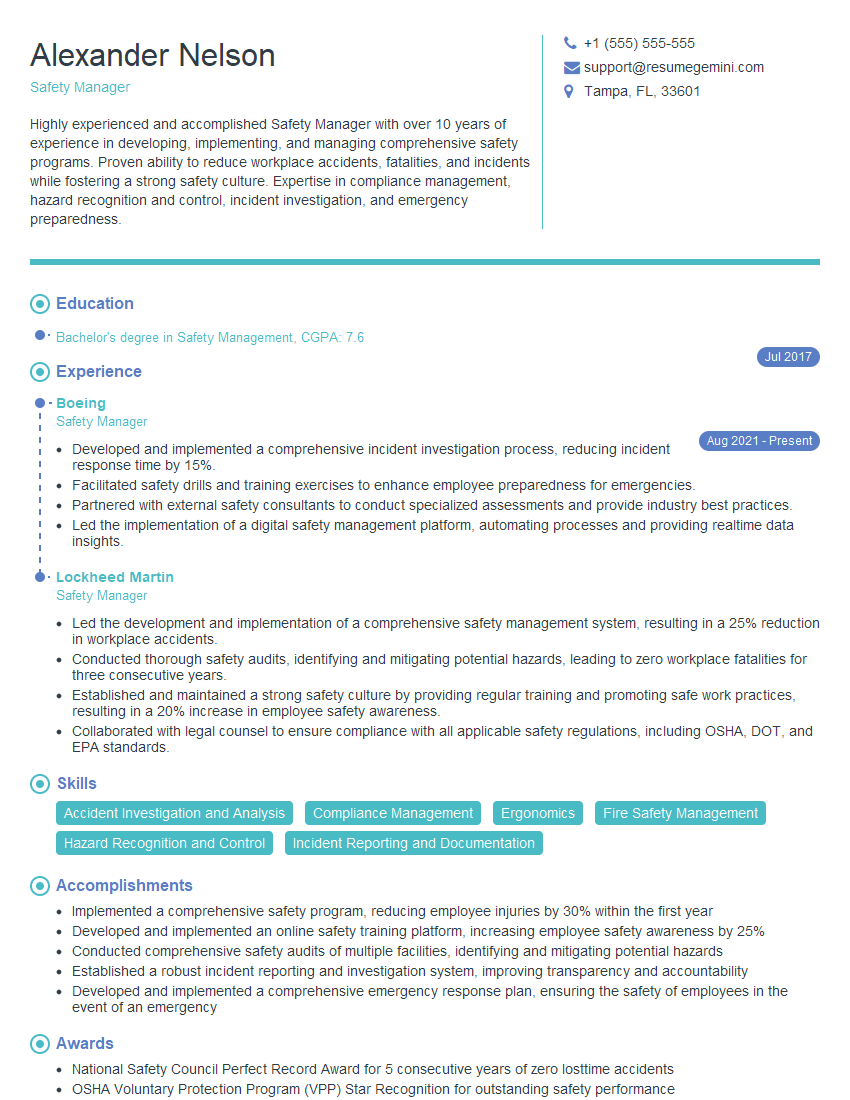
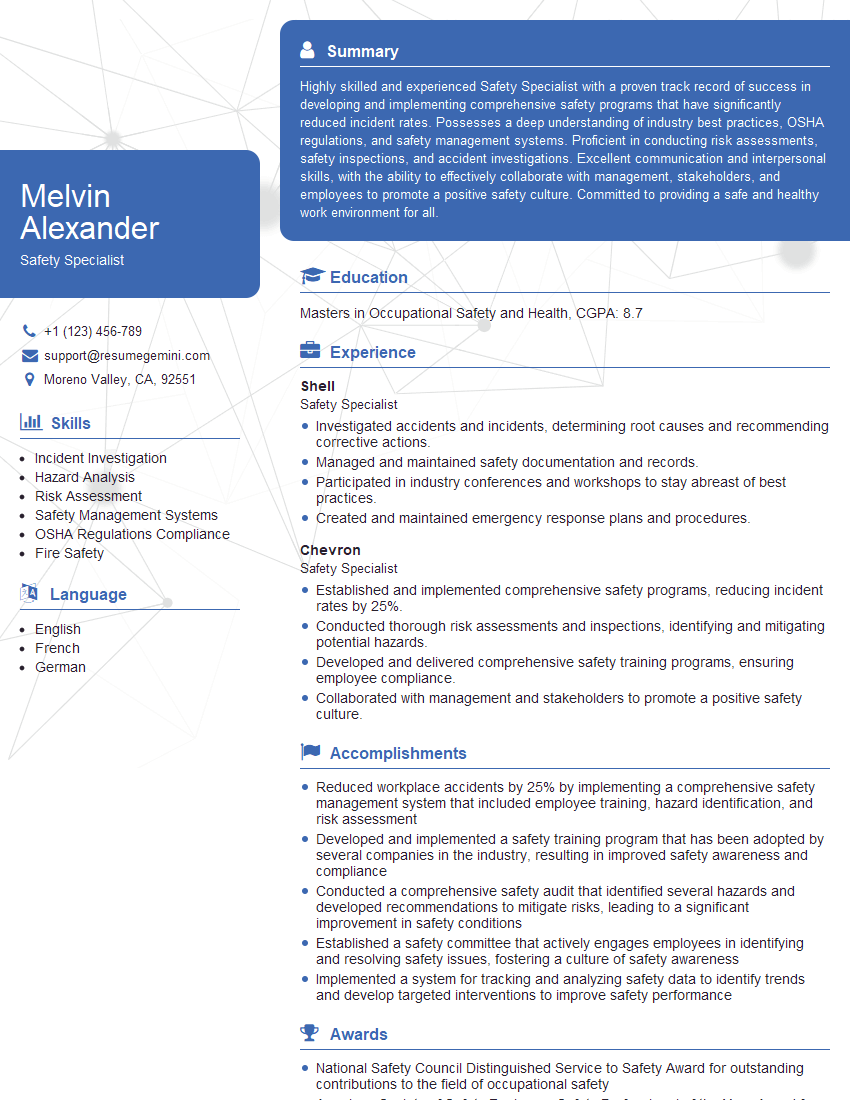
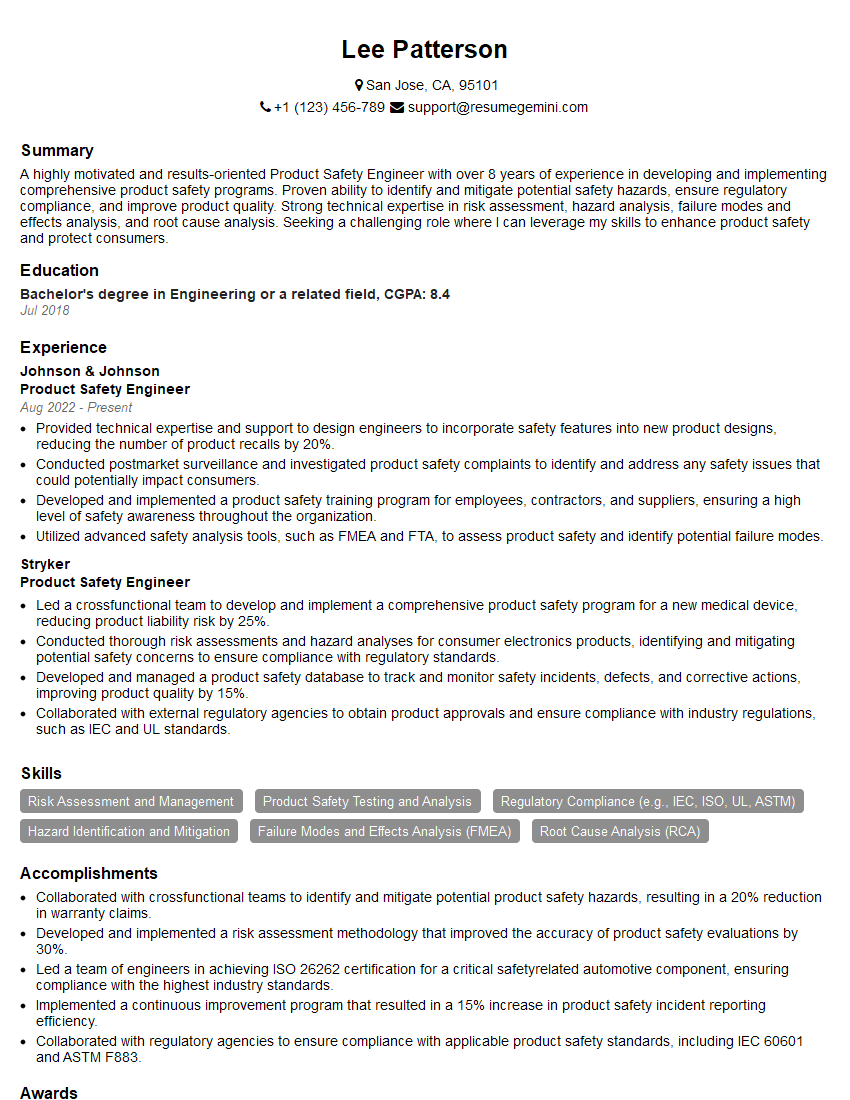
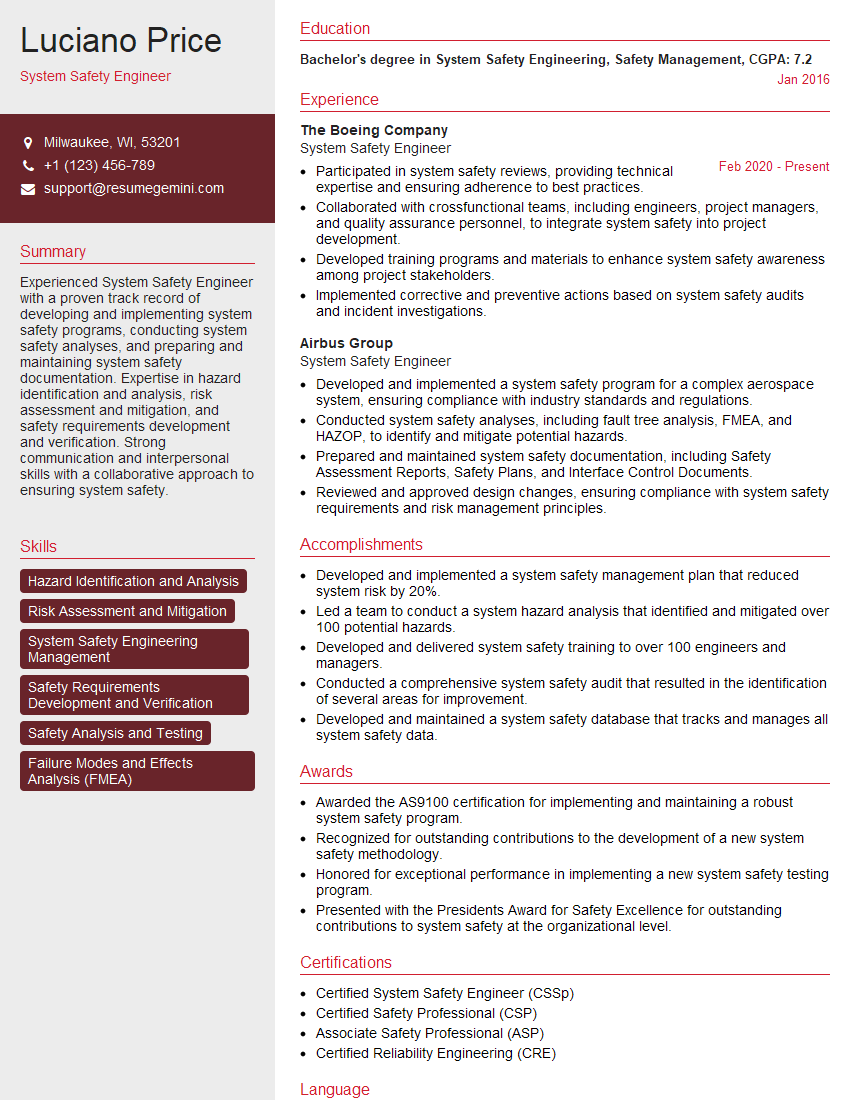
To significantly boost your job prospects, create an ATS-friendly resume that highlights your skills and experience effectively. ResumeGemini can help you build a professional and impactful resume tailored to the automotive industry. They offer examples of resumes specifically designed for candidates with expertise in Automotive Standards (ISO 26262, ASIL), providing a valuable template to help you showcase your qualifications.
Explore more articles
Users Rating of Our Blogs
Share Your Experience
We value your feedback! Please rate our content and share your thoughts (optional).
What Readers Say About Our Blog
Very informative content, great job.
good