The right preparation can turn an interview into an opportunity to showcase your expertise. This guide to Aviation Management interview questions is your ultimate resource, providing key insights and tips to help you ace your responses and stand out as a top candidate.
Questions Asked in Aviation Management Interview
Q 1. Explain your understanding of the International Civil Aviation Organization (ICAO) Annexes.
ICAO Annexes are a set of 19 documents that form the foundation of international air navigation. Think of them as the rulebook for global aviation, covering everything from licensing and airworthiness to air traffic management and environmental protection. Each Annex addresses a specific area, ensuring consistency and safety across international flights.
- Annex 1 (Personnel Licensing): Defines the standards for pilot, air traffic controller, and other aviation personnel licensing.
- Annex 6 (Operation of Aircraft): Covers operational aspects like flight crew qualifications, aircraft maintenance, and airworthiness standards.
- Annex 8 (Airworthiness of Aircraft): Specifies the requirements for designing, manufacturing, maintaining, and certifying aircraft for safe operation.
- Annex 10 (Aeronautical Telecommunications): Outlines the standards and procedures for communication systems used in aviation.
- Annex 14 (Aerodromes): Sets out the design, construction, and operational standards for airports.
Understanding the ICAO Annexes is crucial for any aviation professional to ensure compliance with international regulations and promote global aviation safety. For example, an airline must adhere to Annex 6 requirements when scheduling flights to ensure adequate crew rest and aircraft maintenance, while an airport operator must comply with Annex 14 for safe airport operations.
Q 2. Describe your experience with flight scheduling and crew resource management.
My experience in flight scheduling involves optimizing flight routes, crew assignments, and aircraft utilization to maximize efficiency and profitability while adhering to safety regulations. I’ve used sophisticated scheduling software to generate optimal schedules, considering factors like aircraft availability, crew limitations (flight time restrictions, rest periods), and passenger demand. I’m also experienced in resolving scheduling conflicts and managing disruptions, including unexpected delays or cancellations.
Crew Resource Management (CRM) is a vital component of my work. CRM focuses on utilizing all available resources – human, technical, and organizational – effectively to improve safety. My experience includes conducting CRM training for pilots and cabin crew, emphasizing teamwork, communication, and decision-making in high-pressure situations. For instance, I’ve facilitated simulations of emergency scenarios to improve crew coordination and problem-solving skills. Effective CRM reduces errors and improves safety by fostering a collaborative environment where everyone feels empowered to speak up and contribute to safe operations.
Q 3. How would you handle a significant aircraft delay due to unforeseen circumstances?
Handling a significant aircraft delay requires a systematic approach. My first step would be to identify the cause of the delay – was it a mechanical issue, weather, air traffic congestion, or something else? Once the cause is known, I would immediately activate our contingency plans.
- Communication: Immediately inform affected passengers, crew, ground handling staff, and relevant stakeholders (air traffic control, connecting airlines) of the delay and the projected new arrival time. Transparency and proactive communication minimize frustration.
- Problem Solving: Work with the maintenance team (if mechanical) or air traffic control (if congestion) to expedite the resolution. Explore alternate solutions, such as rerouting or deploying a replacement aircraft, if feasible.
- Passenger Care: Provide passengers with necessary assistance: refreshments, hotel accommodations (if needed), and updates on the situation. Consider offering compensation for the inconvenience, depending on the cause and length of the delay.
- Documentation: Meticulously document all steps taken, the cause of the delay, and communication with relevant parties. This documentation is crucial for future analysis, learning, and potential insurance claims.
Throughout this process, maintaining calm and professional communication with all stakeholders is paramount. A well-executed response minimizes disruption and maintains passenger satisfaction despite an unavoidable setback.
Q 4. What are your strategies for improving airport security protocols?
Improving airport security requires a multi-faceted approach focusing on technology, personnel training, and procedural enhancements. My strategies would include:
- Enhanced Technology: Implementing advanced screening technologies like advanced imaging technology (AIT) and explosive trace detection (ETD) to improve detection rates and reduce wait times. Integrating intelligent video analytics for real-time threat assessment is also crucial.
- Improved Personnel Training: Providing comprehensive and ongoing training for security personnel on threat identification, passenger interaction, and emergency procedures. Regular drills and simulations are vital to maintain preparedness.
- Strengthened Procedures: Revising security protocols to incorporate best practices and address vulnerabilities identified through risk assessments. This might involve implementing stricter baggage screening procedures, improving access control, and enhancing the vetting of airport employees.
- Collaboration and Information Sharing: Working closely with law enforcement agencies, intelligence services, and other airports to share information about potential threats and best practices in security management. This collaborative approach strengthens overall security across the aviation industry.
A layered security approach, combining technology, training, and procedures, is essential to create a robust and adaptable security system that can mitigate emerging threats.
Q 5. Outline the key performance indicators (KPIs) you would monitor in an airport operations role.
In an airport operations role, I would monitor several key performance indicators (KPIs) to assess efficiency, safety, and customer satisfaction. These include:
- On-Time Performance (OTP): Percentage of flights departing and arriving on schedule.
- Aircraft Turnaround Time: Time taken to prepare an aircraft for its next flight.
- Passenger Processing Time: Average time taken for passengers to complete security checks and boarding procedures.
- Baggage Handling Efficiency: Percentage of bags delivered on time and without damage.
- Security Breach Rate: Number of security breaches or incidents per passenger.
- Customer Satisfaction Scores: Measured through surveys and feedback mechanisms.
- Airport Capacity Utilization: Effectiveness in managing peak demand periods.
- Operational Costs: Tracking expenses against budget to manage resources efficiently.
Regularly tracking these KPIs enables proactive identification of areas for improvement, allowing for data-driven decision-making to enhance operational efficiency and passenger experience.
Q 6. Explain your understanding of aviation safety management systems (SMS).
An Aviation Safety Management System (SMS) is a proactive and systematic approach to managing safety risks within an aviation organization. It’s a holistic framework that goes beyond simply reacting to incidents; it aims to prevent them in the first place. Think of it as a continuous cycle of identifying hazards, assessing risks, implementing controls, and monitoring effectiveness.
A robust SMS comprises four key elements:
- Safety Policy: A formal commitment by senior management to prioritize safety.
- Safety Risk Management: A systematic process for identifying, analyzing, and mitigating safety hazards.
- Safety Assurance: Monitoring the effectiveness of safety controls and measuring safety performance.
- Safety Promotion: Encouraging a positive safety culture and empowering employees to report safety concerns.
A well-implemented SMS significantly reduces accidents and incidents by fostering a culture of safety awareness and continuous improvement. For example, a proactive SMS might involve regular safety audits, hazard reporting systems, and proactive training programs to address identified risks.
Q 7. Describe your experience with budget management within an aviation context.
My experience with budget management in aviation involves developing, monitoring, and controlling budgets for various operational areas. This includes forecasting revenue and expenses, allocating resources effectively, and tracking performance against the budget. I’m proficient in using budgeting software and financial reporting tools to analyze spending patterns, identify cost savings opportunities, and ensure compliance with financial regulations.
In my previous role, I was responsible for managing a multi-million dollar budget for airport ground handling operations. This involved developing detailed budgets for various departments, tracking actual spending against allocated funds, and reporting variances to management. I successfully identified and implemented cost-cutting measures, resulting in significant savings without compromising operational efficiency or safety. For instance, I negotiated better contracts with suppliers and optimized staffing levels based on seasonal demand, ultimately improving the overall financial performance of the ground handling operations.
Q 8. How do you ensure compliance with FAA or EASA regulations?
Ensuring compliance with FAA (Federal Aviation Administration) or EASA (European Union Aviation Safety Agency) regulations is paramount in aviation. It’s not just about avoiding penalties; it’s about ensuring the safety and security of passengers, crew, and the public. My approach is multifaceted and proactive.
- Establish a robust Safety Management System (SMS): This involves identifying potential hazards, assessing risks, implementing controls, and continuously monitoring effectiveness. Think of it as a living document constantly updated based on operational data and regulatory changes.
- Dedicated Compliance Department/Team: A specialized team is crucial for staying abreast of ever-evolving regulations, conducting regular audits, and ensuring all documentation is up-to-date and accurate. This includes meticulous record-keeping of maintenance logs, flight data, and safety reports.
- Training and Education: All personnel, from pilots and mechanics to ground crew and management, must receive regular training on relevant regulations and procedures. This ensures everyone understands their role in maintaining compliance.
- Proactive Monitoring and Reporting: Regular internal audits, coupled with proactive reporting of incidents and deviations, allow for timely corrective actions. This prevents minor issues from escalating into major safety concerns. For example, if a maintenance discrepancy is identified, it’s immediately addressed and documented, preventing further issues.
- Staying Updated on Regulatory Changes: The aviation regulatory landscape is constantly changing. Continuous professional development and subscription to relevant publications are crucial for keeping up with the latest updates and applying them to our operational procedures.
In short, compliance isn’t a checklist; it’s a continuous process demanding vigilance, dedication, and a commitment to safety as the highest priority.
Q 9. What are your strategies for managing risk in aviation operations?
Risk management in aviation is critical. A single oversight can have catastrophic consequences. My strategies are based on a systematic approach using a framework like the SHELL model (Software, Hardware, Environment, Liveware, Liveware-Environment interaction).
- Hazard Identification and Risk Assessment: We systematically identify potential hazards across all operations – from flight operations to ground handling. We use various methods including checklists, brainstorming sessions, and analyzing historical data. For example, we might assess the risk of bird strikes at a specific airport based on its location and history.
- Risk Mitigation Strategies: Once hazards are identified, we develop and implement mitigation strategies. This might involve implementing new procedures, investing in new technologies, or providing additional training. For example, to mitigate the risk of bird strikes, we might implement bird-scaring techniques or adjust flight schedules.
- Safety Reporting and Investigation: We encourage a culture of open and honest reporting. All incidents and near-misses are investigated thoroughly to understand the root cause and prevent recurrence. We utilize tools like Flight Data Recorders (FDR) and Cockpit Voice Recorders (CVR) to analyse data.
- Continuous Improvement: Risk management is an ongoing process. We regularly review our risk assessment and mitigation strategies, adapting them as necessary based on operational experience and feedback.
- Redundancy and Backup Systems: In critical systems, we implement redundancy to prevent cascading failures. For instance, having backup power systems for critical ground equipment ensures operational continuity.
By employing a proactive, systematic, and data-driven approach, we minimize risks and maintain a high safety standard.
Q 10. Describe your experience with aircraft maintenance scheduling and tracking.
Aircraft maintenance scheduling and tracking is a complex undertaking requiring precision and efficiency. My experience includes using computerized maintenance management systems (CMMS).
- CMMS Utilization: I’m proficient in utilizing CMMS software to schedule preventative and corrective maintenance tasks, track aircraft maintenance history, manage parts inventory, and generate reports. This software allows for efficient scheduling, minimizing downtime and ensuring compliance with regulations.
- Predictive Maintenance: I advocate for predictive maintenance strategies, utilizing data analytics and sensor technologies to anticipate potential issues before they occur. This minimizes unexpected downtime and reduces overall maintenance costs. For example, using data from engine sensors to predict potential engine failures allows us to schedule maintenance proactively.
- Compliance with Regulations: All maintenance activities are meticulously documented and tracked to ensure compliance with regulatory requirements, such as those outlined by the FAA or EASA. This includes maintaining accurate records of inspections, repairs, and part replacements.
- Effective Communication: Maintaining effective communication between maintenance personnel, pilots, and operations teams is crucial. Clear and timely updates on maintenance status prevent delays and ensure operational safety.
- Resource Management: Efficient resource allocation, including personnel and parts, is essential to optimize maintenance operations. This involves forecasting maintenance needs and managing inventory effectively.
Efficient maintenance scheduling and tracking are not only crucial for operational safety but also for cost-effectiveness and regulatory compliance.
Q 11. How do you handle conflict resolution within a team?
Conflict resolution within a team is an essential skill for any manager. My approach emphasizes collaboration and communication.
- Active Listening: I begin by actively listening to all parties involved, allowing them to express their perspectives without interruption. This ensures that everyone feels heard and understood.
- Identifying the Root Cause: I focus on identifying the root cause of the conflict rather than simply addressing the symptoms. This helps prevent future conflicts from arising from the same issue.
- Finding Common Ground: I help the team identify common goals and objectives, emphasizing the importance of teamwork and collaboration to achieve shared success. I focus on win-win solutions.
- Mediation and Facilitation: I act as a neutral mediator, facilitating a constructive dialogue between team members. I guide them towards finding a mutually acceptable solution.
- Follow-up: After resolving the conflict, I follow up with the team members to ensure the solution is working and that any lingering issues are addressed. This reinforces the importance of open communication.
I believe that conflicts, when handled constructively, can lead to improved communication and stronger team dynamics.
Q 12. Explain your understanding of different aircraft types and their operational characteristics.
My understanding of different aircraft types and their operational characteristics is extensive. I have experience with various aircraft, from narrow-body jets like the Airbus A320 and Boeing 737 to wide-body aircraft like the Airbus A380 and Boeing 777, as well as regional jets and turboprops.
- Performance Characteristics: I understand the performance characteristics of each aircraft type, including their range, speed, fuel efficiency, and payload capacity. This knowledge is crucial for optimal route planning and scheduling.
- Operational Procedures: I’m familiar with the specific operational procedures for different aircraft types, including takeoff and landing procedures, emergency procedures, and normal operating limitations.
- Maintenance Requirements: I understand the unique maintenance requirements for different aircraft types and the importance of adhering to strict maintenance schedules to ensure safety and reliability.
- Technology Differences: I am aware of the differences in technology and avionics systems across various aircraft types and how these impact operations.
- Economic Considerations: I consider the economic factors related to each aircraft type, including operating costs, maintenance costs, and passenger capacity, when making operational decisions.
This broad understanding of aircraft types ensures I can make informed decisions regarding aircraft selection, scheduling, and operational planning, maximizing efficiency and safety.
Q 13. How would you optimize passenger flow in a busy airport terminal?
Optimizing passenger flow in a busy airport terminal requires a multi-pronged approach focusing on efficiency, technology, and passenger experience.
- Improved Signage and Wayfinding: Clear, concise, and multilingual signage is essential for guiding passengers efficiently to their gates, baggage claim, and other facilities. Digital signage with real-time information helps reduce confusion.
- Efficient Check-in and Security Processes: Self-service kiosks, automated baggage drop-off systems, and advanced security screening technologies can significantly speed up passenger processing. Optimized queuing systems can further mitigate bottlenecks.
- Real-time Information Systems: Providing real-time flight information, gate changes, and wait times via digital displays and mobile applications keeps passengers informed and reduces anxiety.
- Strategic Gate Assignments: Efficient gate assignments minimize walking distances for passengers and optimize aircraft turnaround times. This involves careful consideration of aircraft size and passenger numbers.
- Staff Training and Deployment: Well-trained staff are essential for providing assistance and guidance to passengers. Effective staff deployment can address congestion points and improve overall passenger flow.
- Data Analytics: Utilizing passenger flow data to identify bottlenecks and areas for improvement is crucial. This allows for data-driven decision-making, optimizing the passenger experience and reducing congestion.
By implementing these strategies, we can create a smoother, more efficient, and less stressful experience for passengers navigating a busy airport terminal.
Q 14. Describe your approach to improving customer service in an aviation setting.
Improving customer service in an aviation setting requires a holistic approach that prioritizes passenger needs and expectations.
- Proactive Communication: Providing timely and accurate information to passengers about flight changes, delays, and other relevant updates is crucial. This reduces uncertainty and minimizes frustration.
- Empathetic and Responsive Staff: Training staff to be empathetic, responsive, and capable of handling passenger inquiries and complaints effectively is essential. Empowering staff to resolve issues quickly and efficiently contributes to positive customer experiences.
- Personalized Service: Offering personalized services, such as expedited check-in or priority boarding, can enhance the passenger experience and create a sense of value. Loyalty programs and tailored communication can further foster a sense of appreciation.
- Feedback Mechanisms: Establishing effective feedback mechanisms, such as surveys, comment cards, and online platforms, allows for collecting valuable customer input. This feedback can be used to identify areas for improvement and enhance service quality.
- Technology Integration: Leveraging technology, such as mobile applications and online portals, can provide passengers with easy access to information and self-service options, enhancing convenience and control.
- Continuous Improvement: Regularly reviewing customer feedback and operational data allows for continuous improvement of customer service processes and procedures. This cyclical approach is vital for maintaining a high standard of service.
By prioritizing passenger needs and investing in staff training and technology, we can create a superior customer experience that fosters loyalty and positive brand perception.
Q 15. What are your strategies for improving fuel efficiency in airline operations?
Improving fuel efficiency is paramount for airline profitability and environmental responsibility. My strategies focus on a multi-pronged approach encompassing operational, technological, and strategic elements.
Optimized Flight Planning: This involves utilizing advanced flight planning software that considers wind patterns, air traffic congestion, and optimal altitudes to minimize fuel burn. For example, leveraging data from weather forecasts to choose routes that capitalize on tailwinds can significantly reduce fuel consumption.
Aircraft Maintenance: Regular and meticulous maintenance is crucial. Properly maintained engines and airframes operate more efficiently, reducing drag and improving fuel economy. This includes adhering to strict manufacturer guidelines and implementing predictive maintenance programs based on data analytics.
Crew Training: Pilots and flight crew play a significant role. Training programs focused on fuel-efficient flight techniques, such as smooth acceleration and deceleration, optimized climb and descent profiles, and efficient use of thrust, are essential. This includes implementing simulators for realistic training scenarios.
Weight Management: Reducing unnecessary weight onboard significantly impacts fuel consumption. This involves optimizing cargo loading, implementing weight-reduction strategies for in-flight services, and regularly reviewing the necessity of all onboard items.
Technological Advancements: Investing in fuel-efficient aircraft and incorporating technologies like aerodynamic improvements (e.g., winglets) and lighter-weight composite materials are long-term strategies with substantial impact.
Career Expert Tips:
- Ace those interviews! Prepare effectively by reviewing the Top 50 Most Common Interview Questions on ResumeGemini.
- Navigate your job search with confidence! Explore a wide range of Career Tips on ResumeGemini. Learn about common challenges and recommendations to overcome them.
- Craft the perfect resume! Master the Art of Resume Writing with ResumeGemini’s guide. Showcase your unique qualifications and achievements effectively.
- Don’t miss out on holiday savings! Build your dream resume with ResumeGemini’s ATS optimized templates.
Q 16. Explain your understanding of the impact of weather on flight operations.
Weather significantly impacts flight operations, potentially leading to delays, diversions, and cancellations. My understanding encompasses several key aspects:
Safety: Adverse weather conditions, such as thunderstorms, heavy snow, fog, and strong winds, can create hazardous flying conditions, posing serious risks to flight safety. Pilots must adhere to strict weather minimums, and flights may be delayed or cancelled to ensure passenger and crew safety.
Operational Efficiency: Weather impacts flight schedules and routing. Headwinds increase flight time and fuel consumption, while turbulence can cause discomfort for passengers and increase wear and tear on the aircraft. Flight planning must carefully consider weather forecasts and potential disruptions.
Ground Operations: Snow, ice, and strong winds can affect ground operations, causing delays in aircraft turnaround times, baggage handling, and passenger boarding. This necessitates robust ground support systems and contingency plans for adverse conditions.
Air Traffic Management: Air traffic controllers must manage air traffic flow effectively in the face of weather disruptions. Delays and diversions may lead to cascading effects, affecting overall efficiency and passenger satisfaction.
Effective weather management involves real-time monitoring of weather forecasts, utilizing advanced weather radar and satellite imagery, and implementing robust contingency plans to mitigate weather-related disruptions.
Q 17. How would you manage a crisis situation, such as an aircraft incident?
Managing a crisis, such as an aircraft incident, requires a calm, decisive, and coordinated approach. My strategy follows a structured framework:
Immediate Response: Activate the airline’s emergency response plan. This involves contacting emergency services, initiating communication with passengers and their families, and securing the incident site.
Information Gathering: Gather information from all available sources, including pilots, air traffic control, emergency responders, and eyewitnesses, to understand the nature and extent of the incident.
Damage Assessment: Assess the damage to the aircraft and the extent of injuries to passengers and crew.
Communication: Establish clear and consistent communication channels with passengers, families, the media, and regulatory authorities. Transparency and accurate information are crucial in managing public perception.
Investigation: Initiate a thorough investigation to determine the cause of the incident. This will involve cooperating fully with regulatory bodies like the NTSB (in the US) or similar international agencies.
Support for Passengers and Crew: Provide support to passengers and crew affected by the incident, including medical care, counseling, and travel arrangements.
Post-Incident Review: Conduct a post-incident review to identify areas for improvement in safety procedures, emergency response protocols, and risk management.
Effective crisis management relies on pre-planned procedures, well-trained personnel, and a clear chain of command.
Q 18. Describe your experience with airport capacity planning.
Airport capacity planning involves forecasting future demand and ensuring that the airport infrastructure can handle that demand efficiently and safely. My experience includes:
Demand Forecasting: Utilizing historical data, population growth projections, economic forecasts, and airline schedules to predict future passenger and aircraft movements.
Infrastructure Planning: Designing and implementing infrastructure improvements to accommodate projected growth. This includes runways, taxiways, terminals, gates, baggage handling systems, and parking facilities.
Air Traffic Management: Collaborating with air traffic control authorities to optimize airspace capacity and reduce delays. This could involve implementing new technologies or procedures to increase efficiency.
Ground Transportation: Planning and coordinating ground transportation systems, such as roads, public transport, and parking, to ensure seamless passenger flow to and from the airport.
Environmental Considerations: Integrating environmental considerations into the planning process, including noise reduction measures and strategies to minimize the airport’s carbon footprint.
Effective airport capacity planning requires a collaborative approach involving airlines, air traffic controllers, airport operators, and local authorities. It is an iterative process involving constant monitoring and adjustments.
Q 19. What are your strategies for reducing environmental impact in aviation?
Reducing the environmental impact of aviation is a critical goal. My strategies focus on several key areas:
Fuel Efficiency: Implementing strategies to improve fuel efficiency, as discussed earlier, directly reduces greenhouse gas emissions.
Sustainable Aviation Fuels (SAFs): Transitioning to SAFs, which are produced from sustainable sources like algae or waste products, significantly lowers carbon emissions compared to conventional jet fuel. This requires investing in SAF production infrastructure and incentivizing their use.
Aircraft Technology: Investing in next-generation aircraft with improved aerodynamics and more fuel-efficient engines. This includes researching and developing electric or hydrogen-powered aircraft for the future.
Operational Efficiency: Optimizing flight routes, reducing taxiing time, and implementing efficient ground operations all contribute to lowering emissions.
Carbon Offsetting: Investing in carbon offset projects to compensate for unavoidable emissions. This requires careful selection of reputable offset programs with verifiable environmental benefits.
Noise Reduction: Implementing noise reduction technologies on aircraft and optimizing flight procedures to minimize noise pollution around airports.
A holistic approach, combining technological advancements, operational improvements, and policy changes, is necessary to achieve significant reductions in aviation’s environmental footprint.
Q 20. Explain your understanding of aviation revenue management strategies.
Aviation revenue management (ARM) focuses on optimizing revenue by effectively managing and pricing airline seats and ancillary services. My understanding encompasses several key strategies:
Forecasting Demand: Accurately predicting passenger demand based on historical data, market trends, and external factors. This involves sophisticated statistical models and market research.
Pricing Optimization: Setting optimal prices for airfares based on demand, competition, and cost factors. This involves dynamic pricing strategies that adjust fares in real-time based on market conditions.
Inventory Control: Managing the availability of seats and other services to maximize revenue. This involves allocating seats to different fare classes strategically to balance yield and occupancy.
Ancillary Revenue: Generating revenue from ancillary services such as baggage fees, seat selection, in-flight meals, and other add-ons. This involves strategic pricing and marketing of these services.
Overbooking Management: Strategically overbooking flights to mitigate the impact of no-shows, while balancing the risk of denied boarding compensation.
Effective ARM requires sophisticated software systems, skilled personnel, and a deep understanding of market dynamics.
Q 21. How would you implement new technologies to improve aviation efficiency?
Implementing new technologies is vital for improving aviation efficiency and safety. My approach involves a phased implementation based on thorough evaluation and integration:
Data Analytics: Leveraging big data analytics to gain insights from flight data, weather patterns, passenger preferences, and maintenance records to optimize operations, improve decision-making, and enhance predictive maintenance.
Automation: Automating processes like flight planning, air traffic management, baggage handling, and check-in to improve efficiency and reduce human error. This includes exploring the potential of AI and machine learning.
Digitalization: Implementing digital solutions for passenger services, including online check-in, mobile boarding passes, and personalized travel experiences.
Improved Communication Systems: Investing in advanced communication systems for seamless communication between pilots, air traffic control, and ground crews, enhancing safety and efficiency.
Next Generation Aircraft: Adopting fuel-efficient aircraft equipped with advanced technologies for improved performance, safety, and environmental impact.
Successful technology implementation requires careful planning, thorough training, and strong collaboration between technology providers and aviation stakeholders. A phased rollout allows for continuous evaluation and refinement.
Q 22. Describe your understanding of different air traffic control procedures.
Air Traffic Control (ATC) procedures are the standardized methods used to manage the flow of air traffic safely and efficiently. These procedures vary based on the type of airspace (e.g., controlled airspace around airports versus uncontrolled airspace), the type of aircraft (e.g., general aviation versus large commercial jets), and the prevailing weather conditions.
- Instrument Flight Rules (IFR): Used in low visibility conditions, IFR procedures rely heavily on instrument navigation and communication with ATC. Pilots follow pre-approved flight plans and receive precise instructions from controllers on altitude, heading, and speed to maintain separation from other aircraft.
- Visual Flight Rules (VFR): Used in good visibility conditions, VFR procedures allow pilots to navigate visually, referencing landmarks and other visual cues. While ATC still provides advisories and coordinates traffic flow, pilots have more autonomy in their flight path.
- Departure Procedures: Standardized routes and altitudes used by departing aircraft to safely and efficiently leave the airport and integrate into the broader air traffic system. These often involve specific climbs and turns to avoid obstacles and other traffic.
- Arrival Procedures: Similar to departure procedures, these routes guide aircraft as they approach an airport, ensuring a smooth descent and safe landing. They often involve descending to specific altitudes, tracking assigned headings and navigating using instrument approaches (like ILS or RNAV).
- Enroute Procedures: Procedures used during the cruise portion of a flight, focusing on maintaining separation between aircraft and facilitating efficient routing within designated airways and routes.
For example, a pilot flying IFR might receive instructions from ATC to maintain a specific altitude, such as ‘FL350 (Flight Level 350)’, and a heading of ‘360 degrees’ while approaching a major city to avoid congested airspace. In VFR conditions, the pilot might be advised of other traffic in the area but would have more freedom in choosing their flight path within the legal framework.
Q 23. How do you ensure effective communication across different teams within an airport or airline?
Effective communication across teams in aviation requires a multi-faceted approach, focusing on clear channels, consistent processes, and a culture of open communication. This is especially critical considering the high-stakes nature of the industry and the numerous interdependent teams involved – from ground handling and maintenance to flight operations and air traffic control.
- Established Communication Protocols: Clear and well-defined communication protocols, using standardized terminology, are essential. For example, utilizing aviation-specific terminology and avoiding ambiguity is paramount to prevent misinterpretations.
- Technology Integration: Leveraging technology like flight operational control systems (FOCS), airport operational databases (AODB), and communication platforms such as ACARS (Aircraft Communications Addressing and Reporting System) streamlines information sharing and reduces potential for human error.
- Regular Briefings and Meetings: Consistent briefings and team meetings are vital for coordinating activities, disseminating information and addressing any potential issues proactively. These sessions should encourage open communication and feedback.
- Incident Reporting and Feedback Mechanisms: Implementing a robust incident reporting system ensures that safety concerns are addressed quickly and efficiently. Feedback mechanisms, allowing all team members to voice their opinions, build trust and identify areas for improvement.
- Cross-Training and Team Building: Cross-training initiatives improve team cohesion by allowing members to understand the responsibilities and challenges of others. Team building activities further enhance collaboration and communication.
For instance, a delayed baggage claim might require effective communication between ground handling agents, airline customer service representatives, and the passenger. A properly functioning communication system ensures rapid problem solving and maintains passenger satisfaction.
Q 24. What are your strategies for improving employee morale and productivity?
Improving employee morale and productivity involves a holistic approach focusing on both individual well-being and team dynamics. In aviation, where safety is paramount, motivated and engaged employees are essential.
- Recognition and Rewards: Implementing a system that acknowledges and rewards excellent performance fosters a positive work environment. This can include verbal praise, bonuses, promotions or other forms of appreciation.
- Training and Development: Providing opportunities for professional development, such as specialized training courses or advanced certifications, demonstrates a commitment to employee growth and enhances job satisfaction. It also enhances their skill set, benefiting the organization.
- Work-Life Balance: In a demanding industry like aviation, fostering a healthy work-life balance is crucial for employee well-being. This might involve flexible scheduling options or generous vacation time.
- Open Communication and Feedback: Regular feedback sessions create an environment where employees feel heard and valued. Open communication channels enable employees to voice their concerns and suggestions which shows the management values their input.
- Team Building and Social Events: Organizing team-building activities or social gatherings improves team cohesion and fosters a sense of community. This contributes positively to morale and reduces stress.
For example, recognizing a flight attendant for exceptional customer service not only boosts their morale but also serves as a positive example for others. Similarly, offering training on new safety procedures not only enhances skill-sets but also demonstrates that management is investing in the growth of their employees.
Q 25. How would you address potential safety concerns raised by a pilot or crew member?
Addressing safety concerns raised by a pilot or crew member requires a prompt, thorough, and unbiased investigation. Safety is paramount in the aviation industry, and any potential safety concern deserves immediate attention.
- Immediate Action: The first step involves immediately addressing the immediate concern to mitigate any immediate risk. This may involve grounding an aircraft or implementing temporary procedural changes.
- Formal Reporting Mechanism: The concern should be formally documented through the appropriate channels, typically a safety reporting system, and assigned a unique identifier for tracking purposes.
- Thorough Investigation: A comprehensive investigation should be initiated, potentially involving representatives from various departments, such as maintenance, operations, and flight safety. This includes collecting evidence, interviewing witnesses, and reviewing relevant data.
- Root Cause Analysis: The investigation aims to determine the root cause of the concern to prevent recurrence. This may involve analyzing maintenance records, flight data recorders (FDR), and other relevant information.
- Corrective Actions: Based on the findings of the investigation, corrective actions should be implemented to prevent similar issues from arising in the future. This might involve changes to procedures, maintenance protocols, or training programs. These changes should be clearly documented and communicated.
- Feedback to the Reporter: The pilot or crew member who raised the concern should be informed of the investigation’s findings and the corrective actions taken.
For example, if a pilot reports a malfunctioning instrument, the investigation may involve reviewing the aircraft’s maintenance logs, testing the instrument itself and implementing a temporary flight restriction until the issue is rectified. This demonstrates the importance of prioritizing safety concerns reported by operational personnel.
Q 26. Describe your experience with negotiating contracts with suppliers in the aviation industry.
Negotiating contracts with suppliers in the aviation industry requires a strategic approach that considers both cost and quality. The industry is characterized by highly specialized products and services with demanding safety and reliability standards.
- Clear Requirements and Specifications: Begin by clearly defining the needs and requirements of the contract, including technical specifications, quantity, delivery timelines, and payment terms. This forms the basis of the negotiation.
- Market Research: Thorough market research helps in understanding the competitive landscape and the prevailing prices for similar products or services. This aids in defining realistic expectations during negotiations.
- Supplier Selection: Choosing the right suppliers involves evaluating multiple options based on factors like reputation, financial stability, technical capabilities, and past performance. References and due diligence are essential.
- Negotiation Strategy: A clear negotiation strategy is crucial. This involves identifying key priorities, determining the desired outcome, and developing a flexible approach that allows for compromise.
- Contractual Terms: Closely examine all contractual terms, including liability clauses, warranty provisions, and dispute resolution mechanisms. Consult legal counsel if necessary to ensure compliance and risk mitigation.
- Relationship Building: Building strong relationships with suppliers can lead to long-term benefits, including preferential pricing, priority service, and quicker problem resolution.
For example, negotiating a contract for aircraft maintenance involves carefully specifying the scope of work, the required certifications of the maintenance personnel, the acceptable quality standards, and the penalty clauses for delays or substandard work. A strong negotiating position is supported by clear requirements, market intelligence and the ability to identify alternative suppliers.
Q 27. Explain your understanding of the principles of airworthiness and aircraft certification.
Airworthiness and aircraft certification are fundamental to ensuring the safe operation of aircraft. Airworthiness refers to the condition of an aircraft meeting the required safety standards for flight, while certification is the formal process of verifying this condition.
- Airworthiness Directives (ADs): Issued by aviation authorities, ADs mandate specific actions to address known safety issues or design deficiencies in aircraft. Compliance with ADs is mandatory for continued airworthiness.
- Maintenance Programs: Regular maintenance programs, following established guidelines and using certified parts, are essential to maintain an aircraft’s airworthiness. These programs include scheduled inspections, repairs, and overhauls.
- Certification Process: Aircraft manufacturers must demonstrate compliance with airworthiness standards through rigorous testing and documentation before an aircraft can receive a type certificate, permitting production. Individual aircraft receive a certificate of airworthiness after initial inspection and registration.
- Continuing Airworthiness Management (CAM): This systematic approach ensures ongoing airworthiness through proactive risk management and efficient documentation. It entails tracking maintenance activities, parts replacement, and modifications.
- Regulations and Standards: Various national and international regulations and standards, such as those established by the FAA (Federal Aviation Administration) or EASA (European Union Aviation Safety Agency), define the requirements for airworthiness and certification. These standards are regularly updated to reflect evolving safety knowledge and technology.
For example, a new aircraft model must undergo extensive testing and flight trials to demonstrate its airworthiness before receiving type certification from the regulatory authority. Similarly, airlines must maintain rigorous maintenance records and comply with all ADs to ensure their aircraft remain airworthy.
Key Topics to Learn for Aviation Management Interview
- Airline Operations & Management: Understanding airline scheduling, fleet planning, revenue management, and crew scheduling. Practical application: Analyzing the impact of fuel price fluctuations on airline profitability.
- Airport Management & Operations: Knowledge of airport infrastructure, passenger processing, security protocols, and ground handling. Practical application: Developing strategies to improve passenger flow and reduce congestion at an airport.
- Aviation Safety & Security: Familiarity with safety regulations, risk management, and security procedures. Practical application: Proposing solutions to enhance security measures at a specific airport.
- Air Traffic Management (ATM): Understanding the principles of air traffic control, navigation systems, and communication protocols. Practical application: Evaluating the efficiency of different ATM systems.
- Aviation Law & Regulation: Knowledge of national and international aviation regulations, including safety and environmental regulations. Practical application: Analyzing the impact of a new aviation regulation on airline operations.
- Aviation Economics & Finance: Understanding financial statements, budgeting, cost analysis, and investment appraisal techniques within the aviation industry. Practical application: Developing a financial plan for a new airline route.
- Leadership & Teamwork: Demonstrating skills in effective communication, conflict resolution, and team management within a high-pressure environment. Practical application: Describe a situation where you successfully led a team to achieve a challenging goal.
- Strategic Planning & Decision Making: Ability to analyze market trends, forecast demand, and develop strategic plans for growth and profitability. Practical application: Developing a business plan for a new low-cost airline.
Next Steps
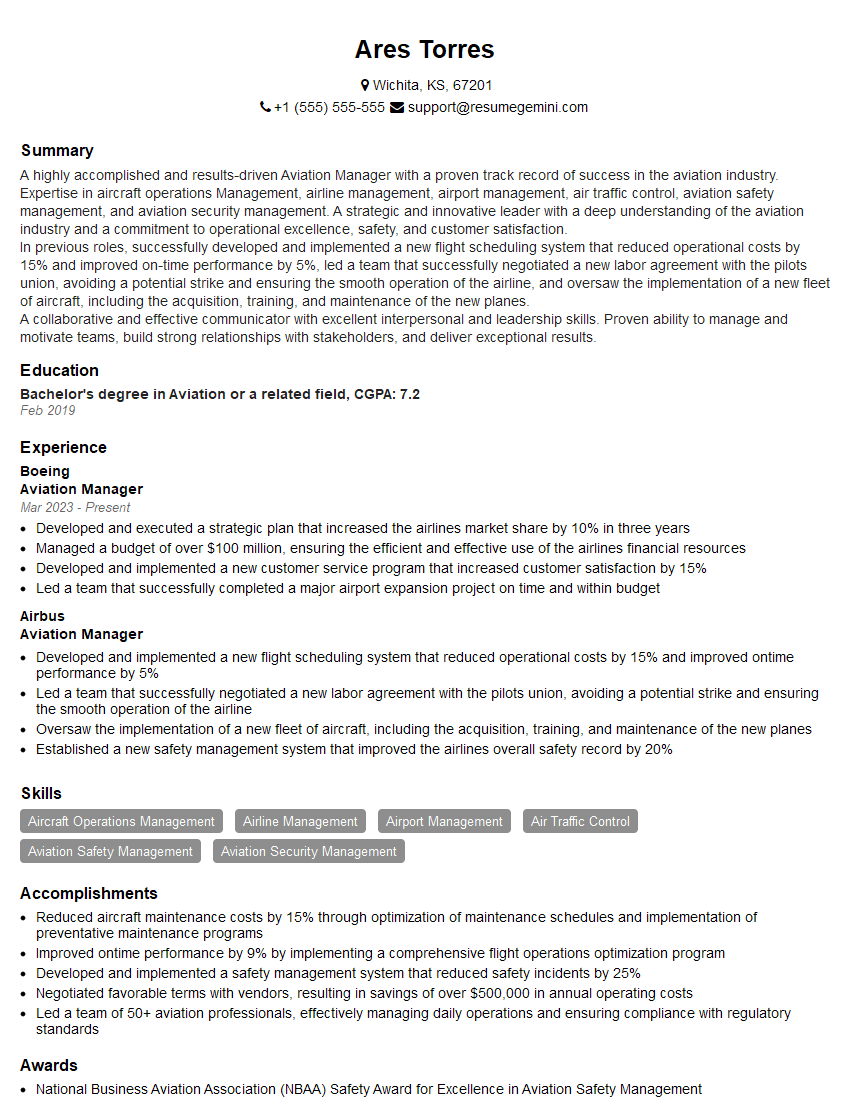
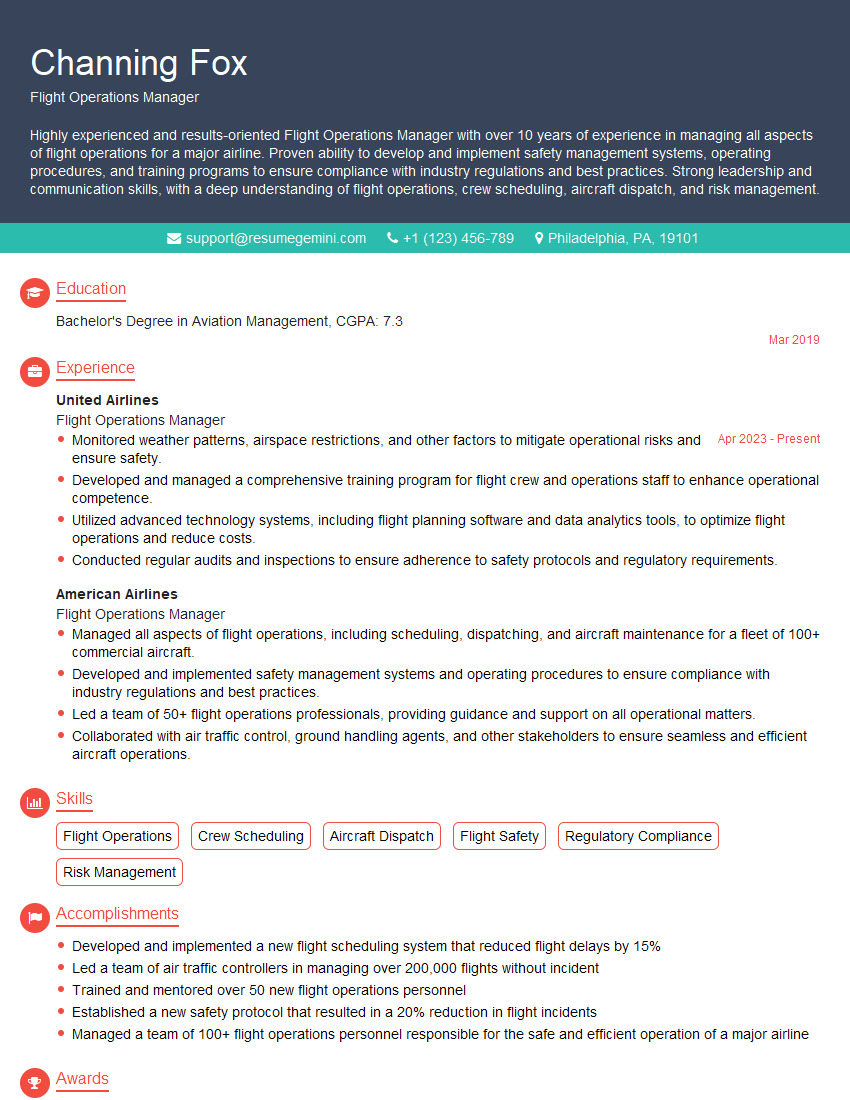
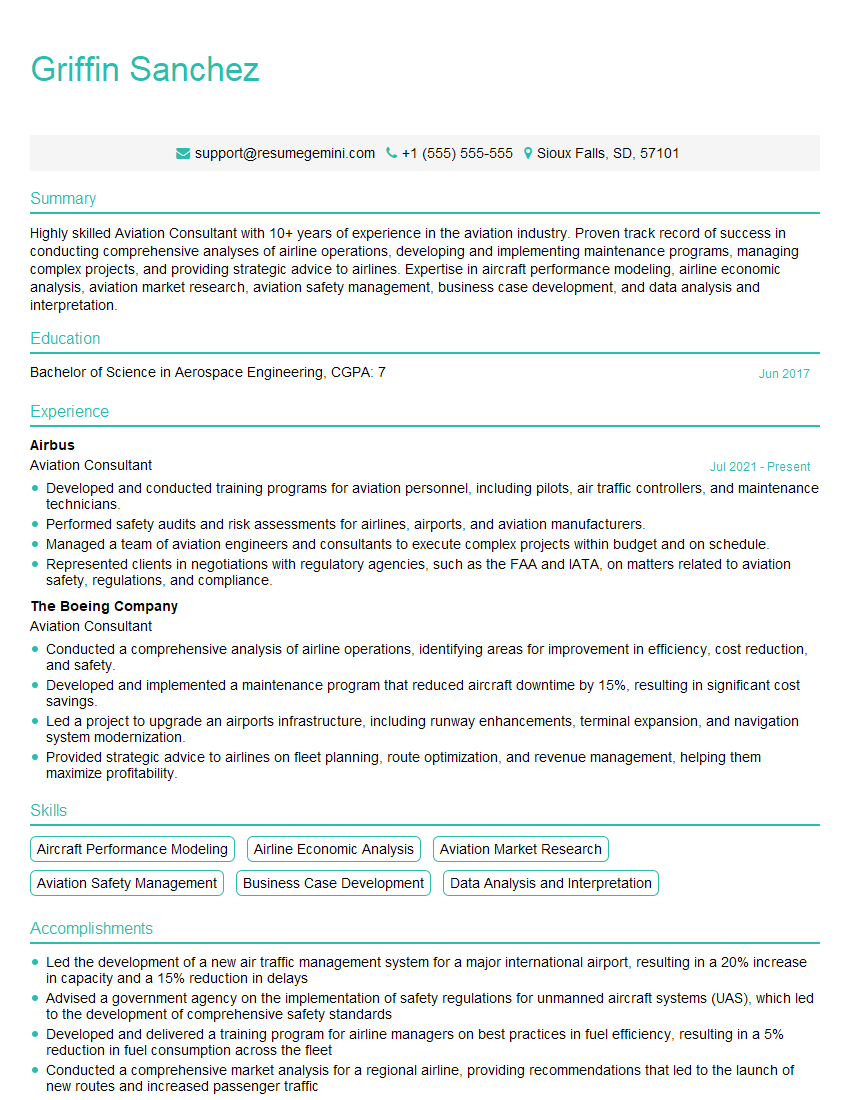
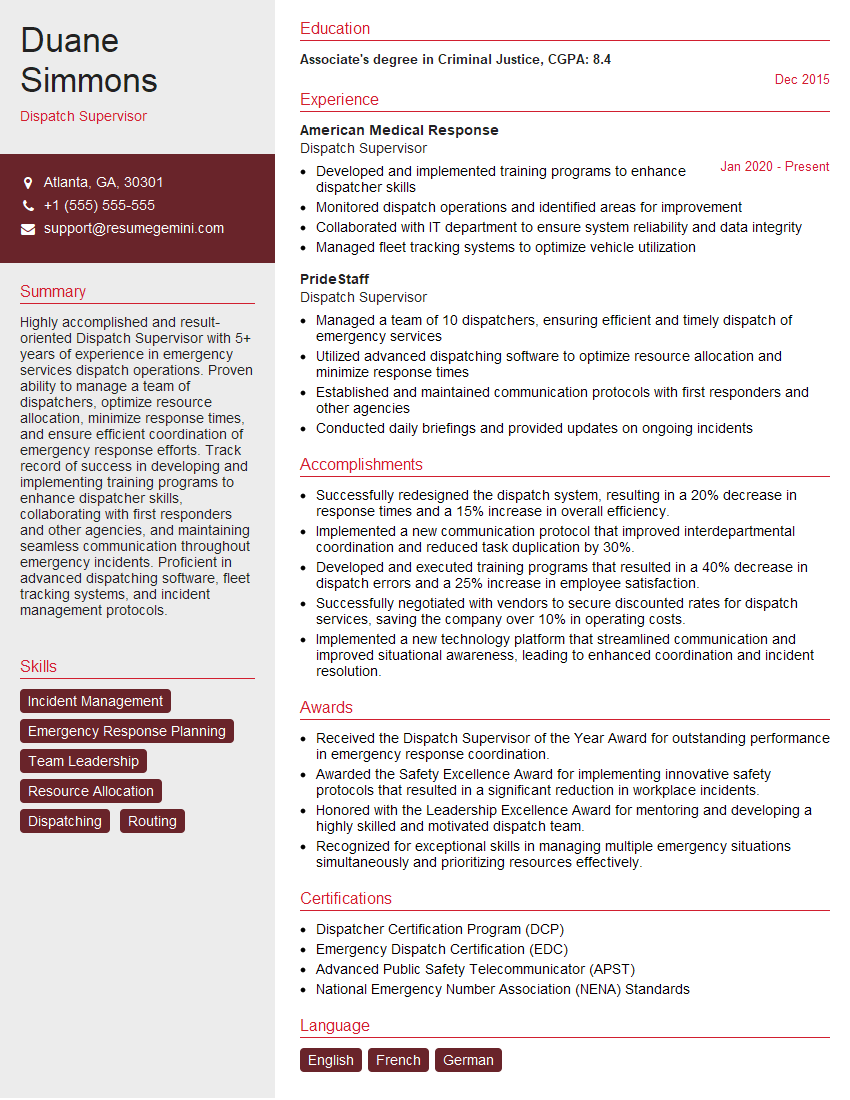
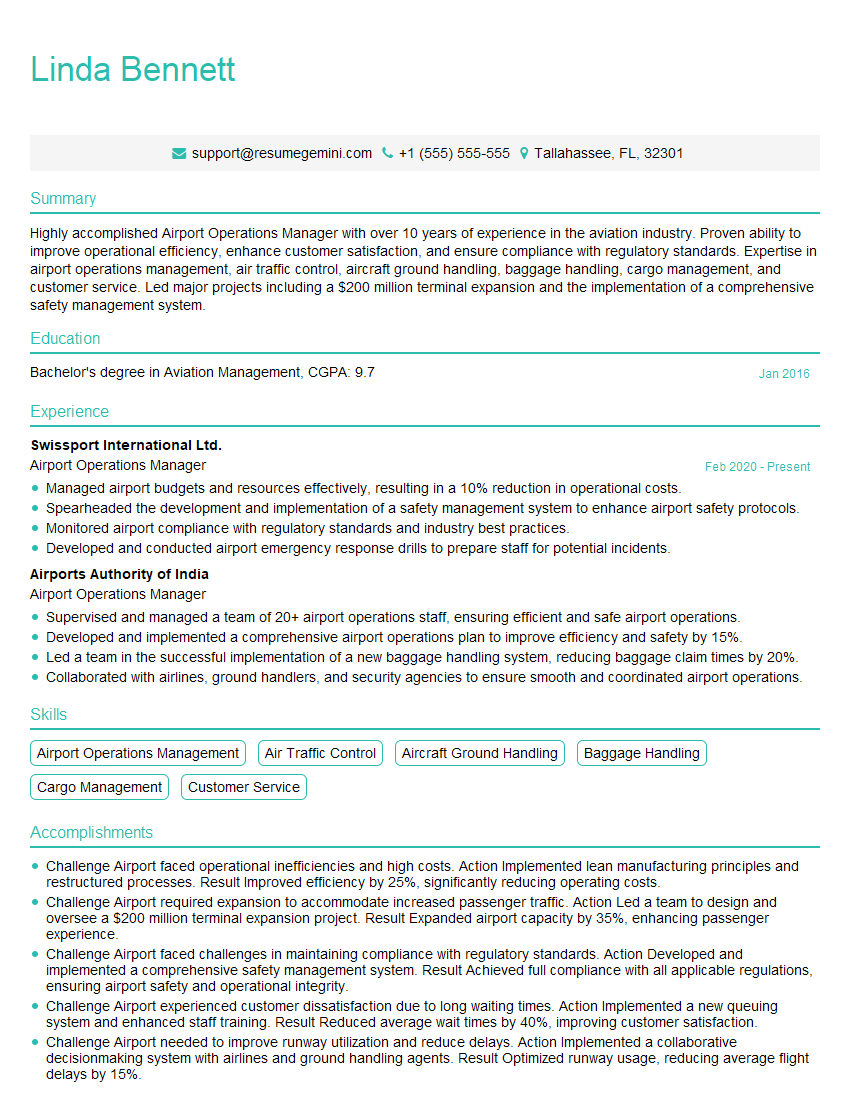
Mastering Aviation Management opens doors to exciting and impactful careers in a dynamic industry. To maximize your job prospects, it’s crucial to present your skills and experience effectively through a well-crafted, ATS-friendly resume. ResumeGemini is a trusted resource to help you build a professional and compelling resume that stands out. We offer examples of resumes tailored specifically to Aviation Management to guide you through the process. Invest time in crafting a strong resume – it’s your first impression on potential employers.
Explore more articles
Users Rating of Our Blogs
Share Your Experience
We value your feedback! Please rate our content and share your thoughts (optional).
What Readers Say About Our Blog
Very informative content, great job.
good