Cracking a skill-specific interview, like one for Avionics and Electrical System Maintenance, requires understanding the nuances of the role. In this blog, we present the questions you’re most likely to encounter, along with insights into how to answer them effectively. Let’s ensure you’re ready to make a strong impression.
Questions Asked in Avionics and Electrical System Maintenance Interview
Q 1. Explain the principles of aircraft electrical power generation and distribution.
Aircraft electrical power generation relies on several key components working in concert. The primary source is usually AC generators, driven by the aircraft’s engines. These generators produce three-phase alternating current (AC) electricity. This AC power then undergoes transformation and regulation. Constant-speed drives (CSDs) maintain a consistent generator speed regardless of engine speed, ensuring stable voltage output. Transformers convert the high-voltage AC to lower voltages suitable for various aircraft systems. Finally, a sophisticated system of circuit breakers, bus bars, and power distribution units ensures power reaches all necessary components. Think of it like a mini power grid within the aircraft. For example, a modern airliner might have multiple generators, each capable of powering a significant portion of the aircraft, ensuring redundancy in case of failure. The system also includes sophisticated monitoring and protection systems to detect faults and prevent damage.
Q 2. Describe different types of aircraft batteries and their maintenance requirements.
Aircraft batteries are crucial for starting the engines and powering essential systems during engine shutdown or emergency situations. Common types include Nickel-Cadmium (NiCd), Nickel-Metal Hydride (NiMH), and Lithium-ion (Li-ion) batteries. NiCd batteries, though durable, require regular discharge/charge cycles and careful monitoring to prevent memory effect and cell imbalance. NiMH batteries offer higher energy density and lower maintenance but still require periodic discharge cycles. Li-ion batteries are the latest generation, providing the highest energy density, and require a sophisticated Battery Management System (BMS) for monitoring voltage, current, and temperature to prevent overheating and ensure safe operation. Maintenance involves regular voltage and specific gravity checks (for NiCd and NiMH), load testing to assess capacity, and careful monitoring of the BMS data for Li-ion batteries. Neglecting maintenance could lead to premature battery failure, potentially resulting in an aircraft being grounded and requiring costly repairs or replacement.
Q 3. How do you troubleshoot intermittent electrical faults in an aircraft?
Troubleshooting intermittent electrical faults requires a systematic approach. It begins with a thorough understanding of the affected system and its associated wiring diagrams. I’d start by documenting the symptoms—when the fault occurs, what systems are affected, and any preceding events. Then, using a combination of multimeters, oscilloscope, and specialized test equipment, I would systematically check for voltage drops, continuity, and shorts along the circuit. Intermittent faults can be challenging because they’re not consistently present. In such situations, I might employ techniques like vibration testing or thermal cycling to trigger the fault for better diagnosis. Proper documentation of each step and the results is essential to avoid repeating testing and to provide a clear record for future reference. For example, a flickering navigation light might point towards a loose connection or a failing component in the wiring harness. The exact problem can only be found through careful testing and elimination of possibilities.
Q 4. What are the safety procedures for working on aircraft electrical systems?
Safety is paramount when working on aircraft electrical systems. Always start with a thorough pre-flight inspection of the aircraft and the work area. Lockout/Tagout (LOTO) procedures are critical to prevent accidental energization of the system during maintenance. This involves physically isolating the power source and attaching tags to indicate the work in progress. Personal protective equipment (PPE) is essential, including safety glasses, insulated gloves, and appropriate clothing. Awareness of potential hazards like high voltages and arcing is vital. Adhering to the aircraft’s maintenance manual and following all relevant regulations and procedures are non-negotiable. Furthermore, working with a partner and regularly communicating about the tasks enhances overall safety. Ignoring safety protocols can lead to severe electrical shocks, injuries, or even fatal accidents. Always prioritize safe work practices over speed or efficiency.
Q 5. Explain the function of a standby power unit (SPU).
A Standby Power Unit (SPU) provides emergency electrical power in case of main power failure. Think of it as a backup generator for the aircraft. It’s typically a self-contained unit with its own battery and power inverter, supplying essential power to critical systems like flight controls, navigation equipment, and emergency lighting. The SPU activates automatically when the main power fails, ensuring continued operation of crucial systems for a defined period, giving the crew time to address the primary power failure and possibly land safely. Regular maintenance and testing of the SPU, including battery checks and functional testing, are vital to ensure its readiness for an emergency.
Q 6. Describe your experience with aircraft wiring diagrams and schematics.
I have extensive experience interpreting and utilizing aircraft wiring diagrams and schematics. These documents are crucial for troubleshooting and maintenance. I’m proficient in reading schematic symbols, tracing wiring paths, and understanding the relationships between different components within the electrical system. My experience encompasses various aircraft types and their associated documentation, from simpler general aviation aircraft to complex airliners. I’m comfortable using both physical diagrams and digital versions. For instance, recently I used wiring diagrams to trace a faulty signal in a flight control system, quickly isolating the problem to a damaged connector. This resulted in a faster repair time and prevented potential flight delays.
Q 7. How do you identify and resolve problems with aircraft lighting systems?
Troubleshooting aircraft lighting systems involves a methodical approach. I’d begin by identifying which light is malfunctioning – is it a landing light, taxi light, or an interior cabin light? Then I’d check the relevant circuit breakers and switches to confirm they are correctly activated. If the light is still inoperative, I would then proceed to measure the voltage at the light’s connector. A lack of voltage indicates a problem further upstream in the circuit, possibly a faulty wire, switch, or connector. A voltage reading at the connector implies the problem resides with the light itself, such as a burnt-out bulb or a faulty connection within the lamp assembly. The aircraft’s wiring diagrams would be invaluable in tracing the wiring path and isolating the problem area. For example, a non-functioning taxi light could be due to a faulty bulb, a corroded connector, or a break in the wiring itself. Proper testing will reveal the root cause.
Q 8. What are the common causes of aircraft electrical system overheating?
Aircraft electrical system overheating is a serious issue that can lead to component failure, fire, and even catastrophic accidents. It’s often caused by a combination of factors, rather than a single culprit. Let’s break down the common causes:
- Loose Connections and High Resistance: Poorly connected wires or terminals create resistance, leading to heat buildup. Think of it like a kink in a garden hose – the water flow is restricted, and the hose heats up. This is extremely common and often overlooked during routine inspections.
- Overloaded Circuits: Drawing more current than a circuit is designed to handle causes excessive heat. This is analogous to overloading a household electrical circuit – you shouldn’t plug too many high-wattage appliances into one outlet. In aircraft, this could be due to added equipment or faulty components drawing excessive power.
- Faulty Wiring: Damaged or deteriorated wiring can increase resistance and generate heat. Think of it like fraying wires in a household appliance – it’s a potential fire hazard.
- Component Failure: Malfunctioning components like generators, alternators, or voltage regulators can overheat due to internal faults. These are sophisticated pieces of equipment, and even minor internal damage can cause significant heat generation.
- Insufficient Cooling: Inadequate airflow or cooling systems can also contribute to overheating. If the cooling fans aren’t working efficiently, or if there’s a blockage, the heat won’t dissipate properly.
- Environmental Factors: Extreme ambient temperatures can exacerbate existing problems, pushing components beyond their operating limits.
Identifying the root cause requires meticulous inspection, testing of individual components, and often the use of specialized diagnostic equipment like thermal imaging cameras.
Q 9. Explain your experience with troubleshooting and repairing aircraft instruments.
My experience with troubleshooting and repairing aircraft instruments spans over [Number] years, encompassing a wide variety of instruments from traditional analog gauges to modern, integrated glass cockpits. I’ve worked on everything from altimeters and airspeed indicators to more complex systems like navigation displays and engine instrumentation.
A typical troubleshooting process starts with a thorough understanding of the system’s functionality and the reported malfunction. This usually involves reviewing the aircraft’s maintenance logs, consulting the instrument’s technical manual, and running pre-flight checks. For example, I once worked on a situation where an airspeed indicator was reading inconsistently. Through systematic testing, I traced the fault to a faulty pitot tube, which was blocked by ice. Another time, a faulty attitude indicator was found to be caused by a loose connection inside the instrument case.
Repair techniques vary based on the instrument and the nature of the fault. This can range from replacing faulty components (like sensors or vacuum pumps) to calibrating the instrument using specialized test equipment ensuring compliance with relevant standards and regulations.
Q 10. Describe your experience with avionics testing equipment.
I’m proficient in using a wide range of avionics testing equipment, including:
- Multi-meters: For measuring voltage, current, and resistance.
- Oscilloscope: For analyzing waveforms and identifying signal anomalies.
- Signal generators: For simulating inputs to test components.
- Avionics test sets: Specialized equipment for testing specific avionics components, such as transponders or GPS receivers.
- Aircraft specific test equipment: Each aircraft might have proprietary testing equipment that is needed to test components correctly.
My experience extends to using both manufacturer-specific test equipment and more general-purpose tools, making me adaptable to various aircraft types and avionics systems. Knowing how to interpret the data provided by this equipment is just as crucial as using the tools themselves, and this is a skill honed through years of experience and training.
Q 11. How familiar are you with FAA regulations regarding aircraft maintenance?
I’m intimately familiar with FAA regulations pertaining to aircraft maintenance, specifically Part 43, which covers maintenance, preventive maintenance, rebuilding, and alteration. I understand the requirements for maintaining accurate maintenance records, performing inspections according to prescribed intervals, and adhering to the required documentation processes. I also understand the importance of complying with Airworthiness Directives (ADs), which are mandatory actions issued by the FAA to address safety concerns. Failure to comply with these regulations can result in serious penalties.
My knowledge extends to the specific regulations related to avionics maintenance, including the meticulous procedures for calibration and testing. I’m also well-versed in the required documentation and reporting procedures for any maintenance performed on an aircraft.
Q 12. Explain your experience with different types of avionics systems (e.g., GPS, transponders, autopilot).
My experience with various avionics systems is extensive, covering a range of technologies and applications. Here are a few examples:
- GPS (Global Positioning System): I’ve worked on troubleshooting GPS receivers, ensuring accurate positioning data, and understanding the complexities of WAAS (Wide Area Augmentation System) integration. I’ve encountered issues such as antenna problems, signal interference and software glitches.
- Transponders: I’m familiar with both Mode S and older transponder technologies, including their testing and maintenance procedures ensuring proper communication with air traffic control.
- Autopilot Systems: I’ve worked on various autopilot systems, ranging from simple flight directors to sophisticated autopilots with integrated navigation capabilities. These systems require detailed knowledge of flight control surfaces and their interaction with sensors and actuators.
- Communication and Navigation Radios: I have experience maintaining and repairing both VHF and HF communication radios, as well as VOR/ILS navigation systems. The nuances of frequency selection, signal strength and antenna tuning are critical for safety and effective flight operations.
This broad experience allows me to effectively troubleshoot and repair a wide range of avionics systems, ensuring the safety and reliability of aircraft operations.
Q 13. How do you ensure the accuracy of avionics system calibrations?
Accuracy in avionics system calibrations is paramount for safe and efficient flight operations. To ensure accuracy, I follow a rigorous process:
- Using Certified Equipment: Calibrations are performed using specialized test equipment that is itself calibrated and certified traceable to national standards. This ensures the accuracy of the measurements taken.
- Following Manufacturer’s Instructions: Each avionics system has specific calibration procedures outlined in its maintenance manual. Adhering to these instructions is critical for achieving accurate results.
- Employing Standard Test Procedures: These procedures include specific test signals, reference values, and tolerance limits. Deviation outside these limits indicates the need for adjustment or repair.
- Maintaining Traceable Records: All calibration activities are meticulously documented, including the equipment used, the results obtained, and the date of the calibration. This documentation is essential for audit trails and regulatory compliance.
- Regular Calibration Checks: Avionics equipment is subject to wear and tear and can drift over time. Regular calibration checks, at intervals specified in the maintenance manual, help to identify potential problems early.
Through this systematic approach, we can maintain the integrity and accuracy of the avionics systems and ensure safe and reliable aircraft operations.
Q 14. Describe your experience with troubleshooting and repairing flight control systems.
Troubleshooting and repairing flight control systems demands a high level of expertise and precision. These systems are critical for the safe operation of an aircraft. My experience involves a thorough understanding of flight mechanics, hydraulics, pneumatics, and electrical systems as they relate to flight control.
Troubleshooting typically begins with a careful review of the aircraft’s maintenance log and a thorough inspection of the flight control surfaces, linkages, actuators, and associated sensors. I then utilize diagnostic tools to pinpoint the problem, which may include pressure gauges, signal analyzers, and specialized flight control system testers.
Repair methods range from simple adjustments and lubrication to the replacement of damaged components or even the complete overhaul of a system. For example, I’ve had to diagnose a problem in which an erratic yaw response was linked to a faulty sensor within the autopilot system. Another instance involved a complex hydraulic leak traced to a hairline crack in a critical hydraulic line in the flight control system. Each situation demands a systematic approach, deep understanding of aircraft systems, and meticulous attention to detail. Safety is always the primary concern.
Q 15. What are the different types of aircraft communication systems?
Aircraft communication systems are crucial for safe and efficient flight operations. They allow pilots to communicate with air traffic control (ATC), other aircraft, and ground stations. Different systems cater to various needs and frequencies.
- Very High Frequency (VHF) Communications: This is the primary system for communication with ATC and other aircraft within line-of-sight. It uses amplitude modulation (AM) and is essential for air traffic management.
- High Frequency (HF) Communications: Used for long-range communication beyond VHF’s line-of-sight limitations, often over oceans. HF communications are susceptible to atmospheric conditions and require sophisticated signal processing.
- Satellite Communications (SATCOM): Provides global communication coverage, even over remote areas where VHF and HF are unreliable. SATCOM systems are commonly used for data transmission, voice communication, and internet access in flight.
- Automatic Dependent Surveillance-Broadcast (ADS-B): A surveillance technology that uses GPS and satellite links to broadcast an aircraft’s position, altitude, speed, and other data. This information is received by ground stations and other aircraft, enhancing situational awareness.
- ACARS (Aircraft Communications Addressing and Reporting System): A data link system used for exchanging messages between the aircraft and ground stations, including maintenance reports, flight plans, and weather information. It typically uses VHF or SATCOM links.
Each system has its own strengths and weaknesses, and modern aircraft often employ a combination of these for redundancy and comprehensive communication capabilities. For example, during a transoceanic flight, HF and SATCOM might be used in conjunction for reliable communication with ATC.
Career Expert Tips:
- Ace those interviews! Prepare effectively by reviewing the Top 50 Most Common Interview Questions on ResumeGemini.
- Navigate your job search with confidence! Explore a wide range of Career Tips on ResumeGemini. Learn about common challenges and recommendations to overcome them.
- Craft the perfect resume! Master the Art of Resume Writing with ResumeGemini’s guide. Showcase your unique qualifications and achievements effectively.
- Don’t miss out on holiday savings! Build your dream resume with ResumeGemini’s ATS optimized templates.
Q 16. How do you perform a pre-flight inspection of the aircraft’s electrical systems?
A pre-flight inspection of an aircraft’s electrical systems is a critical safety check. It ensures that all systems are functioning correctly before flight, preventing potential electrical failures that could compromise safety.
My procedure typically involves:
- Visual Inspection: Checking for any visible damage to wires, connectors, panels, and components. This includes looking for chafing, corrosion, loose connections, or any signs of overheating.
- Battery Check: Verifying the battery voltage and ensuring it’s within the specified range. This often involves using a multimeter to measure the voltage. Low voltage can indicate a problem needing attention.
- Generator/Alternator Check: Checking the output voltage and frequency of the generator or alternator, usually with specialized test equipment, to ensure they are producing sufficient power. If an aircraft is equipped with more than one generator, their individual and combined functionality should be checked.
- Circuit Breaker Check: Inspecting circuit breakers to confirm that they are all in the correct position and haven’t tripped. Tripped breakers signal a potential fault somewhere in the circuit.
- Lighting Check: Testing all interior and exterior lights, including navigation lights, landing lights, and cabin lights. This confirms that the lighting systems are functional.
- Instrument Check: Testing all electrically powered instruments, such as the flight instruments, communication radios, and navigation systems, to confirm they are receiving adequate power and functioning properly.
Throughout the inspection, I meticulously document any discrepancies found, using standardized forms to ensure complete and accurate record-keeping. Any issues identified are then addressed before the aircraft is cleared for flight, following established maintenance procedures.
Q 17. Explain your understanding of aircraft bonding and grounding.
Aircraft bonding and grounding are essential for safety and preventing damage from static electricity and lightning strikes. They create a low-impedance path to dissipate electrical charges, protecting both the aircraft and its occupants.
Bonding: This involves connecting metallic parts of the aircraft together to ensure electrical continuity. The goal is to create a single equipotential surface, preventing voltage differences that could cause sparks or damage. This helps to equalize potential throughout the airframe.
Grounding: This involves connecting the aircraft’s structure to the earth during maintenance or on the ground through a dedicated ground wire. Grounding provides a path for stray electrical charges to dissipate harmlessly into the earth, preventing the build-up of static electricity.
Improper bonding or grounding can lead to several problems, including:
- Static electricity discharge: Causing sparks that could ignite flammable materials.
- Lightning strike damage: Leading to damage to electronic components or causing fire.
- RF interference: Affecting the performance of communication and navigation systems.
Regular inspections and maintenance of the bonding and grounding system are critical to ensure its effectiveness. During maintenance, proper grounding procedures are strictly followed to protect personnel and equipment.
Q 18. What is your experience with aircraft data acquisition and analysis?
I have extensive experience with aircraft data acquisition and analysis using various systems and software. This includes troubleshooting complex system malfunctions and identifying potential problems before they become major issues. My experience encompasses:
- Data Acquisition: Using onboard data acquisition units (DAQ) to collect data from various aircraft systems, including engine parameters, flight controls, and avionics systems. This data is often recorded during flight for post-flight analysis.
- Data Analysis: Using specialized software to analyze collected data, identifying trends, anomalies, and potential problems. This can involve comparing data to baseline values and identifying deviations.
- Troubleshooting: Utilizing data analysis to identify the root cause of malfunctions and inform maintenance actions. This often involves correlating data from multiple sources to pinpoint the fault.
- Predictive Maintenance: Analyzing data to predict potential failures and schedule preventative maintenance to mitigate risks, improving operational efficiency and safety.
For example, I was involved in an investigation where abnormal engine vibrations were detected. By analyzing the data from the engine’s DAQ, we were able to identify a specific component’s deterioration before it led to a catastrophic failure. This proactive approach prevented an expensive and potentially dangerous in-flight incident.
Q 19. Describe your experience with the maintenance of aircraft fire detection and suppression systems.
Maintaining aircraft fire detection and suppression systems is crucial for flight safety. These systems are designed to detect and extinguish fires quickly, minimizing damage and preventing catastrophic events.
My experience includes:
- Inspection and Testing: Performing regular inspections of fire detection sensors (smoke detectors, heat detectors, etc.) and suppression systems (halon, CO2, or fire extinguisher systems). This involves checking for damage, corrosion, and proper functionality.
- Functional Tests: Conducting routine functional tests to ensure that the systems are working correctly. This may involve simulating a fire scenario to verify the system’s response.
- Component Replacement: Replacing faulty components such as sensors, actuators, and suppression bottles according to manufacturer specifications and maintenance manuals.
- Agent Replenishment: Refilling suppression agents such as halon or CO2 as per the aircraft’s maintenance schedule.
- Documentation: Maintaining detailed and accurate records of all maintenance actions and test results, ensuring compliance with regulatory requirements.
A real-world example involved a situation where a smoke detector in the engine bay showed a false positive. Through systematic troubleshooting, we found a faulty wiring harness causing the issue. Replacing the harness resolved the problem, preventing unnecessary maintenance and potential safety concerns stemming from a wrongly interpreted alert.
Q 20. How do you handle discrepancies found during an avionics system check?
Handling discrepancies found during an avionics system check requires a systematic approach to ensure safety and airworthiness. The process begins with careful documentation and progresses through a series of steps.
My approach typically follows these steps:
- Identify and Document: Clearly identify the discrepancy, noting its nature, severity, and any relevant circumstances. Detailed documentation is crucial for traceability and regulatory compliance.
- Isolate the Problem: Attempt to isolate the root cause of the discrepancy. This may involve using built-in test equipment (BITE), specialized test sets, or diagnostic software.
- Consult the Maintenance Manual: Refer to the aircraft’s maintenance manual for troubleshooting procedures and recommended solutions. This provides guidance on appropriate corrective actions.
- Implement Corrective Action: Perform the necessary repairs or replacements according to the maintenance manual. This step may involve replacing faulty components, adjusting settings, or reconfiguring software.
- Verify Correction: After implementing the corrective action, thoroughly verify that the discrepancy has been resolved. This includes retesting the system and ensuring it’s functioning correctly.
- Document Completion: Document all actions taken, including the findings, corrective actions, and verification results. This ensures a clear and auditable record of the maintenance performed.
- Escalate if Necessary: If the discrepancy cannot be resolved using established procedures, escalate the issue to a more experienced technician or maintenance supervisor for further assistance.
It’s vital to prioritize safety. If the discrepancy affects flight safety, the aircraft will be grounded until the problem is resolved, ensuring the aircraft remains airworthy.
Q 21. Explain your understanding of electromagnetic interference (EMI) and its effects on avionics.
Electromagnetic interference (EMI) is a significant concern in avionics. It refers to unwanted electromagnetic energy that can disrupt the operation of electronic systems. This can come from various sources both internal and external to the aircraft.
Sources of EMI include:
- Internal Sources: Electrical motors, generators, and other onboard equipment can generate EMI. Poorly shielded wiring can also contribute to interference.
- External Sources: Ground-based radar, radio transmitters, and lightning strikes can all be sources of external EMI.
The effects of EMI on avionics can range from minor glitches to complete system failures. These effects can include:
- Malfunctions: Incorrect readings on instruments, erratic behavior of electronic systems, and temporary loss of functionality.
- Data Corruption: Loss or corruption of data transmitted between systems.
- System Failures: Complete failure of critical avionics systems, potentially leading to loss of control or navigation capabilities.
Mitigation strategies include:
- Shielding: Using conductive materials to shield sensitive electronic components from external EMI.
- Filtering: Using filters to reduce the amount of EMI that reaches sensitive systems.
- Grounding: Proper grounding of electronic systems helps dissipate stray electrical currents.
- Cable Management: Properly routing and securing cables minimizes the potential for EMI coupling between wires.
Addressing EMI is a critical aspect of avionics system design and maintenance, ensuring the reliable and safe operation of the aircraft.
Q 22. What are the common types of aircraft sensors and their applications?
Aircraft sensors are the eyes and ears of the aircraft, providing crucial data for flight control, navigation, and engine monitoring. They come in various types, each designed for a specific application. Here are some common examples:
- Air Data Sensors: These measure parameters like airspeed, altitude, and outside air temperature (OAT). Examples include pitot-static systems and temperature probes. These are critical for navigation and flight control.
- Angle of Attack (AOA) Sensors: Measure the angle between the aircraft’s longitudinal axis and the oncoming airflow. Crucial for stall warning systems and flight envelope protection.
- Accelerometers and Gyroscopes (Inertial Measurement Units – IMUs): Measure acceleration and angular rates, providing data for navigation and flight control systems, particularly in inertial navigation systems (INS).
- Engine Sensors: Monitor various engine parameters, such as temperature, pressure, fuel flow, and vibration. This data is vital for engine health monitoring and performance assessment. Examples include Exhaust Gas Temperature (EGT) probes and oil pressure sensors.
- Position Sensors: Provide information about the position of control surfaces (like ailerons, elevators, and rudder) or other mechanical components. These are vital for flight control system monitoring and feedback.
The proper functioning of these sensors is paramount to safe flight. Regular calibration and maintenance are crucial to ensure their accuracy and reliability.
Q 23. How do you ensure the integrity of aircraft wiring harnesses?
Maintaining the integrity of aircraft wiring harnesses is crucial for safe and reliable aircraft operation. A compromised harness can lead to malfunctions, electrical shorts, or even fires. My approach involves a multi-faceted strategy:
- Regular Inspections: Visual inspections are performed regularly, looking for chafing, abrasion, cuts, or signs of overheating. This is often done during routine maintenance checks.
- Proper Routing and Bundling: Ensuring harnesses are properly routed and secured prevents movement and stress that can lead to damage. This includes using appropriate clamps, straps, and ties.
- Strain Relief: Proper strain relief at connection points prevents stress on wires, which can cause breaks. This is critical near connectors and other points where movement is possible.
- Moisture Protection: Aircraft wiring harnesses are susceptible to moisture damage, leading to corrosion and short circuits. Sealing and protective coatings are essential, along with proper drainage in the aircraft structure.
- Traceability and Documentation: Meticulous documentation of harness routing, repairs, and modifications is essential for troubleshooting and future maintenance. This often involves diagrams and detailed records.
- Testing: Continuity and insulation resistance tests are performed regularly to ensure the integrity of the wiring. Specialized testing equipment is used to identify any breaks or shorts in the system.
In essence, maintaining harness integrity is about proactive prevention and meticulous attention to detail, treating each wire and connection as a critical component of the overall aircraft system.
Q 24. Describe your experience with the maintenance of aircraft environmental control systems.
Aircraft Environmental Control Systems (ECS) are responsible for maintaining a comfortable and safe cabin environment for passengers and crew. My experience encompasses the maintenance of various ECS components, including:
- Pack Units: I’ve performed routine inspections, troubleshooting, and repairs on air cycle machines and vapor cycle systems, ensuring proper cooling and pressurization.
- Ducts and Distribution System: I have experience in inspecting, cleaning, and repairing the complex network of ducts and vents that distribute conditioned air throughout the aircraft. Leaks and blockages can significantly impact cabin comfort and pressurization.
- Temperature and Pressure Controls: I’m proficient in diagnosing and resolving issues with temperature sensors, pressure switches, and control valves that maintain the desired cabin conditions.
- Ice Protection Systems: I have experience with the maintenance of anti-ice and de-ice systems, crucial for safe operation in icing conditions. These systems ensure the integrity of critical surfaces like wings and control surfaces.
My work always prioritizes safety and compliance with regulatory requirements. I’ve successfully resolved various ECS malfunctions, ranging from minor component replacements to complex system diagnoses, using systematic troubleshooting techniques and utilizing the aircraft’s built-in monitoring systems.
Q 25. What is your experience with troubleshooting and repairing avionics displays?
Troubleshooting and repairing avionics displays involves a combination of technical skills and systematic problem-solving. My experience includes:
- Visual Inspections: I start with a thorough visual inspection to check for physical damage, loose connections, or signs of overheating.
- Power and Ground Checks: Ensuring proper power and ground connections is the first step to isolating the problem. Using multimeters, I verify voltage and continuity.
- Signal Tracing: If the problem isn’t with the power supply, I trace the signal path from the source to the display using schematics and test equipment. This allows me to pinpoint the faulty component.
- Component Level Repair: Depending on the issue, repairs might range from replacing a faulty backlight to repairing damaged circuitry. This often requires specialized tools and knowledge of electronics.
- Software Diagnostics: Many modern displays have built-in diagnostics, which provide valuable information for identifying the source of the problem. I am proficient in using these diagnostic tools.
- Calibration: In many cases, the display may require calibration to ensure the accuracy of the information displayed.
One memorable case involved a malfunctioning flight director display. After systematically checking power, signal integrity, and utilizing the built-in diagnostics, I discovered a loose connection within the display unit itself. A simple repair quickly restored the system’s functionality, highlighting the importance of methodical troubleshooting.
Q 26. Explain your understanding of aircraft bus architecture.
Aircraft bus architecture is a crucial aspect of modern avionics systems. It’s a method for distributing power and data efficiently throughout the aircraft. Think of it like a sophisticated highway system for electrical signals.
Common types include:
- ARINC 429: A digital data bus used for transmitting data between avionics systems. It’s a high-speed, point-to-point system, which offers good reliability.
- AFDX (Avionics Full Duplex Switched Ethernet): A high-speed, switched Ethernet network that provides a flexible and scalable data communication infrastructure. It’s widely used in modern aircraft for its superior bandwidth and fault tolerance.
- 1553B: A military standard data bus known for its robustness and reliability, often used in high-criticality systems.
Understanding the specific architecture of an aircraft’s bus system is crucial for troubleshooting and maintenance. Each bus has its own protocols, message formats, and error detection mechanisms. A faulty bus can cascade failures, impacting multiple aircraft systems.
My experience encompasses working with various bus architectures, understanding their limitations, and effectively diagnosing faults by utilizing specialized testing equipment and analyzing bus traffic.
Q 27. Describe your experience with fault isolation and diagnosis techniques for avionics systems.
Fault isolation and diagnosis in avionics systems are critical for maintaining airworthiness. My approach is systematic and combines several techniques:
- Built-in Test Equipment (BITE): Modern avionics systems incorporate BITE, which provides self-diagnostic capabilities. I use these built-in capabilities to identify the source of a fault.
- Schematic Diagrams and Technical Manuals: I use these documents to trace signals, identify components, and understand the system architecture.
- Specialized Test Equipment: I utilize multimeters, oscilloscopes, logic analyzers, and other specialized equipment to measure voltages, signals, and other critical parameters.
- Troubleshooting Software: Modern avionics systems often have associated software for fault diagnostics and data analysis. I am proficient in using these tools.
- Line Replaceable Units (LRUs): If a fault can’t be isolated to a specific component, replacing an LRU (a modular unit) is a common strategy. This allows for quicker repair, but proper testing and fault analysis must still be performed.
A systematic, step-by-step approach, paired with a deep understanding of avionics systems, ensures the most efficient and accurate fault isolation and diagnosis. I approach each situation with patience and attention to detail, verifying each step and considering various possible causes before concluding the source of the malfunction.
Q 28. How do you stay current with advancements in avionics technology?
Staying current with advancements in avionics technology is essential for any avionics professional. My approach involves:
- Continuing Education: I actively participate in industry conferences, workshops, and training courses to learn about new technologies and maintenance techniques.
- Industry Publications and Journals: I regularly read industry publications and journals to stay informed on the latest developments in avionics systems and maintenance practices.
- Manufacturer Training: I participate in manufacturer-sponsored training programs to gain in-depth knowledge of specific aircraft systems and their maintenance requirements.
- Online Resources: I utilize online resources, including technical forums, manufacturer websites, and online courses to access the latest information and updates.
- Collaboration with Colleagues: I actively network and collaborate with colleagues in the industry to share knowledge and best practices.
Staying abreast of these advancements is crucial not only for professional development but also for ensuring the safe and efficient maintenance of modern aircraft. The aviation industry is constantly evolving, and keeping up with these changes is essential for maintaining my skills and expertise.
Key Topics to Learn for Avionics and Electrical System Maintenance Interview
- Aircraft Electrical Power Systems: Understanding AC and DC power generation, distribution, and control systems; troubleshooting power interruptions and voltage irregularities.
- Avionics Systems Integration: Knowledge of how different avionic systems (navigation, communication, flight control) interact and the impact of potential failures on overall aircraft operation. Practical experience with system diagnostics and fault isolation.
- Wiring and Cabling Systems: Familiarity with aircraft wiring diagrams, harness identification, troubleshooting short circuits and open circuits, and proper repair techniques. Understanding wire routing and harness management best practices.
- Aircraft Instruments and Sensors: Knowledge of various aircraft instruments (altimeters, airspeed indicators, etc.) and their associated sensors; understanding sensor calibration and troubleshooting malfunctioning instruments.
- Troubleshooting and Problem-Solving: Developing systematic approaches to fault diagnosis using logical reasoning, schematics, and troubleshooting tools (multimeters, oscilloscopes). Experience with root cause analysis and preventative maintenance.
- Safety Regulations and Procedures: Thorough understanding of relevant aviation safety regulations (FAA, EASA, etc.) and standard operating procedures for maintenance tasks; emphasis on safety protocols and hazard identification.
- Electronic and Digital Systems: Understanding the principles of digital electronics within avionics systems, including data buses, digital signal processing, and embedded systems. Experience with troubleshooting digital components and circuits.
- Maintenance Documentation and Reporting: Properly documenting maintenance procedures, repairs performed, and parts used. Understanding the importance of accurate and detailed record-keeping for compliance and traceability.
Next Steps
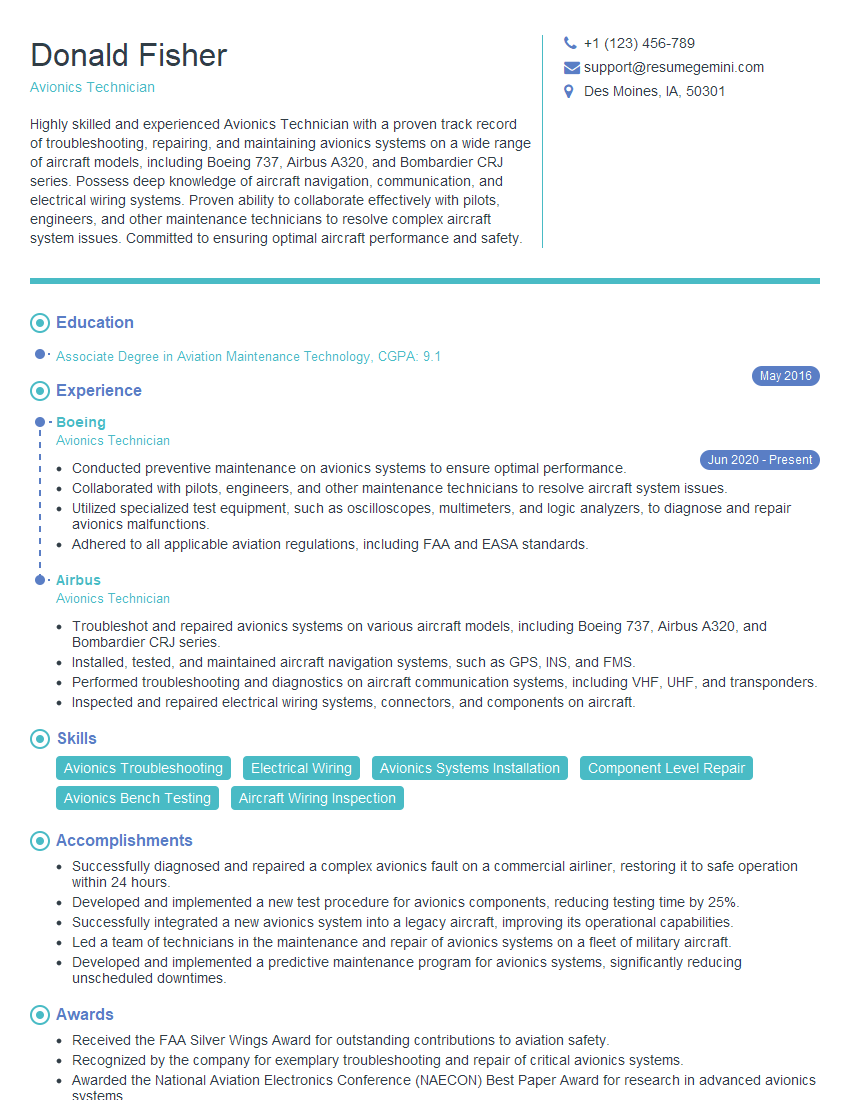
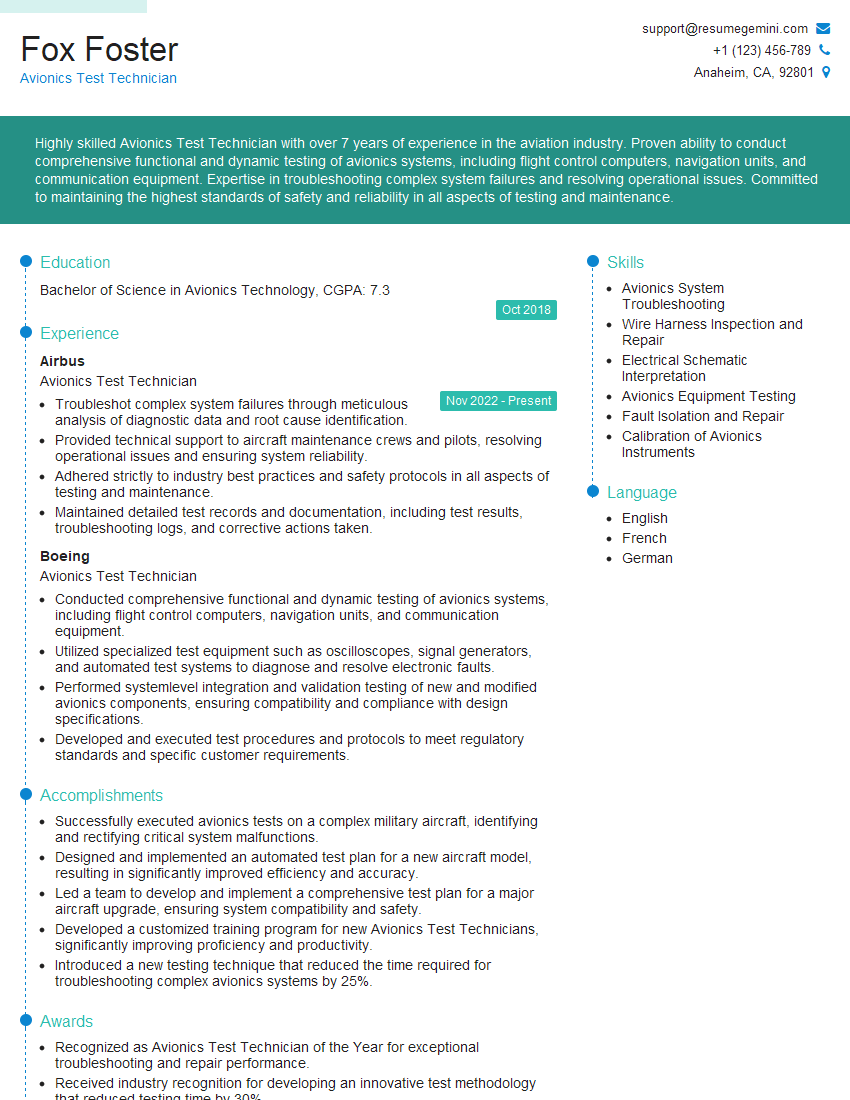
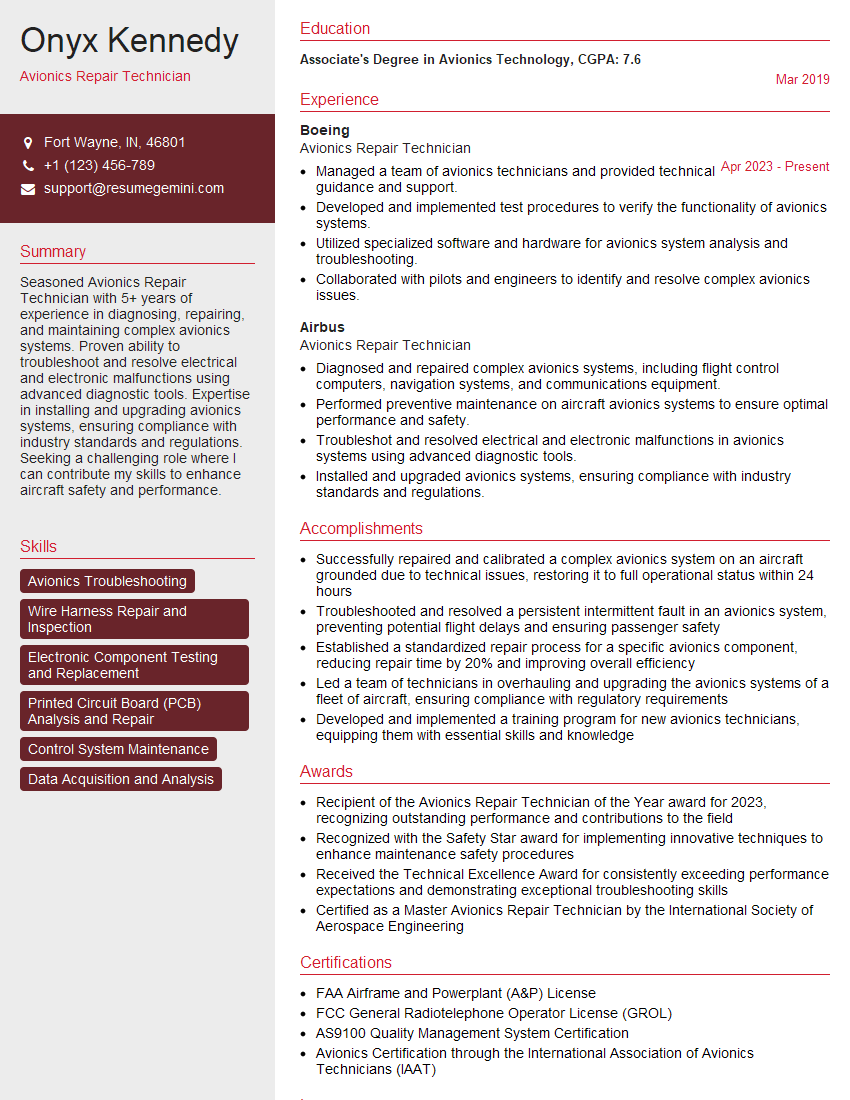
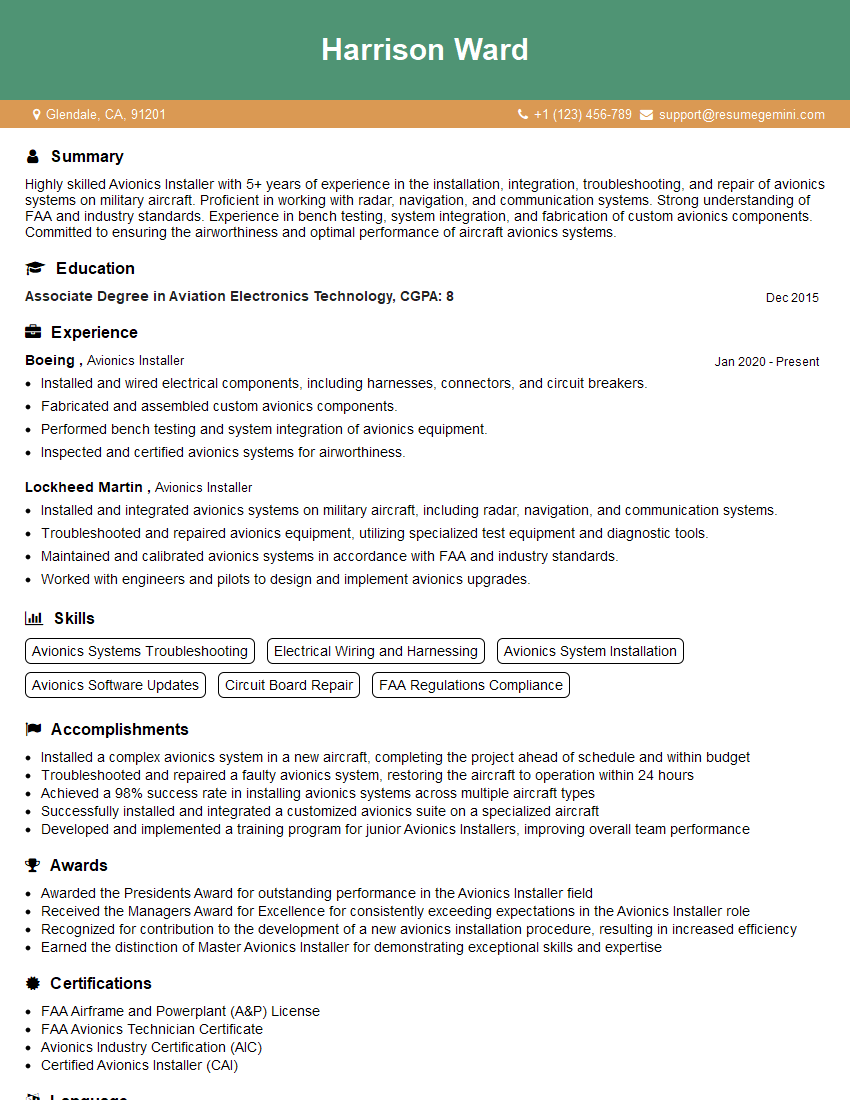
Mastering Avionics and Electrical System Maintenance opens doors to a rewarding and dynamic career path within the aviation industry, offering opportunities for advancement and specialization. A strong resume is crucial for showcasing your skills and experience to potential employers. Creating an ATS-friendly resume will significantly increase your chances of getting your application noticed. ResumeGemini is a trusted resource to help you build a professional, impactful resume that highlights your qualifications effectively. Examples of resumes tailored to Avionics and Electrical System Maintenance are available to guide you through the process.
Explore more articles
Users Rating of Our Blogs
Share Your Experience
We value your feedback! Please rate our content and share your thoughts (optional).
What Readers Say About Our Blog
Very informative content, great job.
good