Interviews are opportunities to demonstrate your expertise, and this guide is here to help you shine. Explore the essential Avionics Maintenance and Troubleshooting interview questions that employers frequently ask, paired with strategies for crafting responses that set you apart from the competition.
Questions Asked in Avionics Maintenance and Troubleshooting Interview
Q 1. Explain the process of troubleshooting a failed GPS receiver.
Troubleshooting a failed GPS receiver involves a systematic approach, starting with the simplest checks and progressing to more complex diagnostics. Think of it like a detective investigating a crime scene – you need to gather clues to pinpoint the culprit.
Visual Inspection: Begin by visually inspecting the GPS antenna for damage, loose connections, or obstructions. A simple crack in the dome or a loose cable can be the source of the problem. I once spent hours troubleshooting a GPS issue only to find a bird’s nest blocking the antenna!
Power and Connections: Check the power supply to the GPS receiver. Is there power at the input? Are there any loose or corroded connections? Use a multimeter to verify voltage and continuity.
Internal Diagnostics: Many modern GPS receivers have built-in self-test capabilities. Consult the unit’s manual to access and interpret these diagnostics. They often provide error codes that pinpoint the specific issue.
Signal Strength: Use a GPS signal analyzer or software to assess the strength and quality of the GPS signal being received. Weak signals can indicate antenna issues or interference.
Software/Firmware: Check for software or firmware updates. Outdated software can cause compatibility problems or introduce bugs.
Component-Level Diagnostics: If the problem persists, more advanced diagnostics might be required, possibly involving checking individual components on the circuit board with specialized test equipment like oscilloscopes and logic analyzers. This requires a deep understanding of electronics and safety procedures.
Remember to always follow the manufacturer’s maintenance manual and safety procedures. Document each step of your troubleshooting process. This detailed record is crucial for future reference and regulatory compliance.
Q 2. Describe your experience with interpreting avionics schematics and diagrams.
Interpreting avionics schematics and diagrams is fundamental to my work. It’s like reading a map for an airplane’s electrical system. I’m proficient in reading and understanding both single-line and multi-line diagrams, as well as block diagrams and wiring harness layouts. My experience spans various aircraft models and avionics systems, including those employing ARINC standards.
I’ve successfully used schematics to trace circuits, identify components, troubleshoot faults, and plan repairs. For example, during a recent maintenance check, a faulty transponder was causing intermittent failures. Using the schematic, I was able to trace the power and signal paths, identify a faulty capacitor, and replace it, resolving the issue. I’m also experienced in using specialized software for schematic interpretation and circuit simulation, which enhances troubleshooting efficiency.
Q 3. How familiar are you with different types of avionics test equipment?
I’m very familiar with a wide range of avionics test equipment. My experience includes using:
Multimeters: For basic voltage, current, and resistance measurements.
Oscilloscope: To analyze waveforms and identify signal integrity issues. I’ve used this extensively to diagnose intermittent communication problems between avionics units.
Signal Generators: To simulate signals and test the response of avionics components.
Logic Analyzers: To capture and analyze digital signals for troubleshooting complex digital systems.
Specialized Avionics Test Sets: These include devices specifically designed to test individual avionics components like transponders, GPS receivers, and radios. These often perform built-in tests and provide detailed diagnostic reports.
Aircraft Interface Units (AIUs): For simulating aircraft bus systems and troubleshooting communication issues.
Understanding the capabilities and limitations of each piece of equipment is crucial for effective troubleshooting. The choice of equipment depends heavily on the specific avionics system and the nature of the fault.
Q 4. What are the common causes of transponder malfunctions?
Transponder malfunctions can stem from a variety of causes. These often fall into a few key categories:
Power Supply Issues: Intermittent or insufficient power can lead to erratic behavior or complete failure. This can be due to faulty wiring, connectors, or even the aircraft’s main power system.
Component Failures: Capacitors, integrated circuits, and other components can fail due to age, wear, or environmental factors like vibration and temperature extremes. I once saw a transponder failure caused by a single, cracked solder joint.
Antenna Problems: A damaged or poorly connected antenna can prevent the transponder from transmitting or receiving properly. This can include water ingress or physical damage.
Software/Firmware Glitches: Software or firmware bugs can cause unexpected behavior or crashes. Keeping the transponder software up-to-date is crucial for reliability.
Environmental Factors: Extreme temperatures, humidity, or even electromagnetic interference can impact transponder performance.
Troubleshooting requires a methodical approach, starting with visual inspection, followed by power checks, and then moving on to more in-depth testing using specialized equipment.
Q 5. Explain the process of performing a pre-flight avionics check.
A pre-flight avionics check is a critical safety procedure. It ensures all systems are functioning correctly before takeoff. It’s essentially a quick health check for the airplane’s electronic ‘brain’.
My typical pre-flight avionics check includes:
Visual Inspection: Inspecting all avionics panels and equipment for any visible damage or loose connections.
Power-Up Test: Powering up all avionics systems and verifying that they are displaying correct indications. This is often done with the help of a checklist.
Functional Checks: Testing the functionality of each system by following established procedures. This can include testing the navigation radios, transponder, GPS, autopilot, and other relevant systems.
Communication Checks: Verifying communication with air traffic control and other aircraft.
Warning/Alert System Check: Ensuring that all warning and alert systems are functioning as expected.
The exact procedures vary depending on the aircraft type and the specific avionics equipment installed. A detailed checklist is always used to ensure a comprehensive and consistent check.
Q 6. How do you troubleshoot intermittent avionics failures?
Troubleshooting intermittent avionics failures can be challenging because the problem doesn’t consistently occur. It’s like trying to catch a mischievous ghost. A systematic approach is vital.
My strategies include:
Detailed Logging: Meticulously document when the failure occurs, the conditions under which it happens (e.g., temperature, altitude, maneuvers), and any preceding events.
Data Acquisition: Utilize data loggers or onboard systems to capture relevant data during flights, helping to identify patterns or triggers. This can include flight parameters and avionics system data.
Controlled Reproduction: Attempt to reproduce the failure under controlled conditions to narrow down the possible causes.
Stress Testing: Subject the system to stress tests, such as varying temperatures or power inputs, to induce the failure and observe its behavior.
Component Isolation: If possible, isolate suspected components and test them individually to pinpoint the faulty part. This might involve temporarily disconnecting components or using specialized test equipment.
Intermittent failures often point towards loose connections, failing components nearing the end of their life, or even problems with wiring harnesses experiencing flexing or vibration issues. Careful investigation is necessary to uncover the root cause.
Q 7. Describe your experience with repairing damaged avionics wiring.
Repairing damaged avionics wiring demands precision and adherence to strict safety regulations. It’s not just about fixing a wire; it’s about maintaining the integrity of the aircraft’s electrical system. Improper repairs can lead to serious consequences.
My experience includes:
Identifying the Damage: Thoroughly inspecting the wiring harness to determine the extent of the damage, identifying any breaks, chafing, or shorts.
Preparing the Repair: Following manufacturer’s instructions, preparing the area for repair, including proper grounding and isolation.
Repair Techniques: Using appropriate techniques for splicing, crimping, soldering, and using heat-shrink tubing to ensure a durable and reliable repair. I always use wire of the correct gauge and material as specified in the wiring diagrams.
Testing and Documentation: Thoroughly testing the repaired wiring for continuity, shorts, and proper insulation resistance before returning the system to service. All repairs are meticulously documented.
Working on avionics wiring requires specialized tools, a detailed understanding of electrical schematics, and a commitment to meticulous workmanship. Safety is paramount, and adherence to industry standards and regulations is non-negotiable.
Q 8. What safety procedures do you follow when working on avionics systems?
Safety is paramount in avionics maintenance. My approach begins with a thorough pre-flight check of the aircraft’s systems, ensuring all power sources are isolated before commencing any work. I always follow the manufacturer’s maintenance manuals meticulously, referencing specific procedures for each task. This includes using proper grounding techniques to prevent static discharge damage to sensitive electronics and wearing appropriate personal protective equipment (PPE), such as anti-static wrist straps, safety glasses, and gloves. Before handling any components, I double-check that all power is off and visually verify the absence of voltage using a multimeter. I also maintain a clean and organized workspace to avoid accidental damage or short circuits. Furthermore, I never work alone; a second technician is always present for safety and to provide another set of eyes on the procedure. This collaborative approach helps mitigate human error, a significant factor in aviation accidents. We regularly conduct toolbox talks to reinforce safety procedures and discuss potential hazards.
For example, when working on a transponder, I wouldn’t just rely on the power switch being off. I’d use a multimeter to confirm the absence of voltage at critical points before touching any internal components. Similarly, when replacing a circuit breaker, I’d ensure the power is off, then use a properly insulated tool to avoid accidental contact.
Q 9. Explain your understanding of FAA regulations related to avionics maintenance.
My understanding of FAA regulations concerning avionics maintenance is comprehensive. I’m intimately familiar with Part 43, which outlines the requirements for maintaining aircraft and their components. This includes understanding the regulations concerning airworthiness directives (ADs), which mandate specific maintenance actions to address known safety issues. I am also well-versed in the requirements for maintaining accurate maintenance records, using the approved forms and ensuring that all work is meticulously documented, including the parts used and the technicians involved. I know the importance of adhering to the FAA’s rules regarding the certification and licensing of maintenance personnel and the proper use of approved parts. Understanding these regulations is critical not only for ensuring the airworthiness of the aircraft but also for complying with the law and maintaining my professional certification.
For instance, if an AD is issued for a specific transponder model, I must immediately ground the affected aircraft and follow the AD’s instructions precisely to ensure compliance and maintain the aircraft’s airworthiness. Failure to do so could result in severe penalties, including fines and suspension of my maintenance license.
Q 10. How do you document your avionics maintenance and troubleshooting activities?
Documentation is a cornerstone of avionics maintenance. I use a combination of digital and paper-based methods to ensure complete and accurate records. All work is meticulously recorded in the aircraft’s logbook, using standardized forms and entries that include the date, time, nature of the work performed, parts used (with part numbers), and the technician’s signature and certification. We utilize a digital maintenance tracking system that allows for easy access to historical data, facilitating proactive maintenance scheduling and preventing redundant tasks. The system maintains a complete audit trail, ensuring traceability and accountability. In addition to formal logbook entries, I maintain detailed work orders that include troubleshooting steps, test results, and any deviations from the standard procedures. Photographs and videos are also used to document complex repairs or modifications, especially for later reference. This detailed approach helps ensure continuity and consistency of maintenance, reducing the risk of errors and providing a transparent record for regulatory audits.
Q 11. Describe your experience working with different avionics communication systems.
My experience encompasses a wide range of avionics communication systems, including VHF, UHF, HF, and satellite communication systems. I’ve worked on various models of transponders, navigation radios (VOR, ILS, GPS), and communication radios. This includes troubleshooting, repairing, and installing these systems in various aircraft types. For example, I’ve worked extensively with the troubleshooting and repair of ARINC 429 data buses, a critical component of many modern aircraft communication systems. I am familiar with the different protocols and data formats used in these systems, and I understand how to diagnose and resolve communication issues. Furthermore, I have experience with testing and calibrating these systems using specialized test equipment to ensure they meet the required performance specifications. I’ve also worked on integrating new communication systems into older aircraft, requiring a detailed understanding of both the new technology and the existing aircraft architecture.
Q 12. How familiar are you with the principles of aircraft electrical systems?
My understanding of aircraft electrical systems is fundamental to my avionics expertise. I am proficient in AC and DC electrical theory and have experience working with various aircraft electrical power systems, including generators, batteries, inverters, and distribution networks. I understand the principles of circuit analysis, including voltage, current, resistance, and power calculations. I’m familiar with different types of wiring, connectors, and bus systems used in aircraft. I also understand the importance of grounding and bonding in aircraft electrical systems to prevent electromagnetic interference and ensure safety. This understanding is vital for troubleshooting any electrical problems that might affect avionics systems. For example, a seemingly simple avionics malfunction might actually stem from a faulty wire or connector, requiring a deep understanding of the aircraft’s electrical architecture to track down the issue.
Q 13. Explain your experience with performing avionics system upgrades and modifications.
I have significant experience performing avionics system upgrades and modifications. This involves a comprehensive process that starts with careful planning and ends with thorough testing and documentation. The process typically involves reviewing the proposed modifications, ensuring compliance with all relevant regulations and airworthiness directives. Then, I carefully remove the old systems, ensuring all power is isolated and using proper grounding techniques. The new systems are then installed, followed by meticulous testing to ensure functionality and compliance with specifications. Thorough documentation, including photos and detailed records, is maintained throughout the process, and the aircraft’s logbook is updated accordingly. For instance, I recently worked on upgrading an older aircraft’s navigation system from a legacy VOR/ILS system to a modern GPS-based system, which required careful planning for integration with the existing avionics suite and significant testing to ensure the new system was correctly communicating with other components.
Q 14. How do you handle a situation where you encounter an unfamiliar avionics problem?
Encountering an unfamiliar avionics problem requires a systematic and methodical approach. My first step is to gather as much information as possible. This includes consulting the aircraft’s maintenance manuals, reviewing any available troubleshooting guides, and talking to other experienced technicians. I then use a combination of diagnostic tools and techniques to identify the root cause of the problem. This might involve using specialized test equipment to measure voltage, current, and other electrical parameters, or it might involve systematically checking individual components to isolate the faulty part. If my initial efforts don’t yield results, I leverage online resources and technical databases to research the specific issue. I also reach out to manufacturers or other experts in the field for assistance. Finally, I document the entire troubleshooting process, including the steps taken, test results, and the final solution, ensuring a detailed record for future reference and to share with the maintenance team.
For example, if I encounter a problem with a relatively new avionics system, I might consult the manufacturer’s website or contact their technical support team. This approach combines both practical skills and a collaborative effort to tackle challenging situations effectively and safely.
Q 15. What is your experience with using diagnostic software for avionics systems?
My experience with avionics diagnostic software is extensive. I’m proficient in using a variety of software packages, from manufacturer-specific tools like those provided by Honeywell, Rockwell Collins, and Airbus, to more general-purpose diagnostic systems. These tools allow me to interface with aircraft systems, retrieve fault codes, analyze data logs, and run built-in tests. For example, I’ve used the integrated diagnostic systems on Boeing 737 NG and Airbus A320 aircraft families to pinpoint intermittent issues with the flight management system, ultimately resolving problems related to GPS signal reception and inertial reference unit malfunctions. The process typically involves connecting the diagnostic software to the aircraft’s data bus via a specialized interface, selecting the system under scrutiny, and then reviewing the displayed data to identify anomalies. Beyond simply reading fault codes, I’m adept at interpreting the underlying data to understand the root cause of a problem, rather than just treating the symptom.
This often involves comparing data from multiple sources, analyzing trends over time, and applying my understanding of avionics systems to form a comprehensive diagnosis. For instance, I recently used diagnostic software to isolate a faulty component within the air data system on a Cessna Citation. The software helped me identify a specific sensor reading outside of tolerances, leading to its replacement and the subsequent resolution of a persistent altitude reporting error.
Career Expert Tips:
- Ace those interviews! Prepare effectively by reviewing the Top 50 Most Common Interview Questions on ResumeGemini.
- Navigate your job search with confidence! Explore a wide range of Career Tips on ResumeGemini. Learn about common challenges and recommendations to overcome them.
- Craft the perfect resume! Master the Art of Resume Writing with ResumeGemini’s guide. Showcase your unique qualifications and achievements effectively.
- Don’t miss out on holiday savings! Build your dream resume with ResumeGemini’s ATS optimized templates.
Q 16. Describe your experience with maintaining flight data recorders (FDRs).
Maintaining Flight Data Recorders (FDRs) involves meticulous procedures focused on data integrity and regulatory compliance. My experience includes handling both the physical aspects of FDR maintenance, like ensuring proper cable connections and environmental protection, and the digital aspects, such as downloading and analyzing flight data. Regular inspections are critical to check for physical damage, corrosion, or loose connections. We also perform periodic functional tests to verify data recording capabilities. This often involves simulating flight conditions using specialized equipment to check data accuracy.
Downloading flight data requires specialized software and expertise to ensure data is not corrupted or lost during transfer. After downloading, the data must be handled according to strict regulatory guidelines and stored securely. This includes maintaining detailed records of all maintenance actions, calibration data, and any detected anomalies. I am thoroughly familiar with the relevant FAA and EASA regulations regarding FDR maintenance and data handling. For example, I have been responsible for ensuring that the FDR data is securely archived and available for accident investigations, complying with all safety requirements and regulatory compliance.
Q 17. How do you ensure the accuracy of your avionics maintenance work?
Ensuring accuracy in avionics maintenance is paramount for safety. My approach is multi-faceted and relies on a combination of careful procedures, thorough documentation, and verification steps. Every step, from initial fault diagnosis to final system testing, is meticulously documented. This documentation serves as an audit trail, allowing for review and verification of the entire maintenance process. I use standardized checklists and follow manufacturer’s maintenance manuals precisely.
Beyond following procedures, I always cross-reference data from multiple sources whenever possible. This might involve comparing readings from different sensors, checking against historical data, or using built-in test equipment to validate system performance. After completing any repair or replacement, I perform rigorous testing to verify that the system is functioning correctly and within specified tolerances. For example, after replacing a faulty component, I use built-in test equipment to check for correct voltage, current and signal levels. Then, I would perform a functional test, simulating real-world scenarios to ensure the system’s performance.
Finally, and critically, I embrace a culture of continuous learning and improvement, always seeking to stay up to date with the latest technologies and best practices in avionics maintenance. Regular training and participation in industry forums ensure my skills are current and that I’m aware of emerging trends.
Q 18. What is your understanding of avionics system redundancy and its importance?
Avionics system redundancy is the incorporation of duplicate or backup systems to ensure continued operation even if one system fails. It’s crucial for flight safety. Redundancy can be implemented at various levels, from having backup sensors and computers to completely separate systems performing the same function. For example, a modern airliner might have three independent flight control computers, each capable of flying the aircraft. If one fails, the others continue to operate, maintaining control.
The importance of redundancy cannot be overstated. In critical systems like flight controls, navigation, and communication, a single point of failure could have catastrophic consequences. Redundancy mitigates this risk, providing a safety net that enhances the reliability and safety of the aircraft. Understanding the specific redundancy architecture of an aircraft system is essential for effective troubleshooting and maintenance. For instance, identifying which specific channel or backup system is active is crucial for diagnosing a fault. This allows technicians to isolate the problem and perform repairs without impacting flight safety.
Q 19. Describe your experience with working on different aircraft types and their avionics systems.
My experience spans a variety of aircraft types and their avionics systems, including both narrow-body and wide-body airliners like the Boeing 737, Airbus A320 family, and Boeing 777, as well as regional jets such as the Embraer ERJ and Bombardier CRJ series. I also have experience working on general aviation aircraft, ranging from smaller single-engine planes to larger turboprops. This broad exposure has provided me with a comprehensive understanding of different avionics architectures and troubleshooting techniques specific to each platform.
Working on diverse aircraft types has sharpened my problem-solving skills and adaptability. Each aircraft has its own unique characteristics, and understanding these nuances is critical for effective maintenance. For instance, the avionics systems on a Boeing 737 differ significantly from those on an Airbus A320, requiring a different approach to troubleshooting and diagnostics. I’ve found that this exposure to a wide range of aircraft platforms has made me a more versatile and skilled avionics technician.
Q 20. How familiar are you with the principles of digital signal processing as applied to avionics?
Digital signal processing (DSP) is fundamental to modern avionics. My understanding encompasses the principles of signal acquisition, filtering, transformation (like Fourier transforms), and signal analysis, all as they apply to avionics systems. I understand how these techniques are used to process signals from various sensors, such as accelerometers, gyroscopes, and GPS receivers, to extract meaningful information and improve system performance.
For example, I understand how digital filters are used to remove noise from sensor signals, improving the accuracy of navigation and flight control systems. I also grasp the principles behind data compression algorithms used to reduce the volume of data transmitted within the aircraft’s communication networks. My practical experience involves diagnosing issues related to the processing of digital signals, for example, analyzing data from the Air Data Computer (ADC) to identify any errors in the processing of pitot and static pressure data which can lead to inaccurate airspeed and altitude readings.
Q 21. Explain your experience with troubleshooting problems related to air data computers.
Troubleshooting air data computers (ADCs) requires a systematic approach combining theoretical understanding with practical skills. ADCs are critical for providing accurate airspeed, altitude, and other vital flight parameters. Problems with an ADC can range from simple sensor failures to complex software glitches. My approach involves a structured troubleshooting process.
Firstly, I would gather data from various sources – the ADC itself, other relevant sensors (pitot tubes, static ports), and any available diagnostic logs. I then compare this data against expected values and look for inconsistencies. This often involves using specialized test equipment to verify sensor readings and check for signal integrity. Once the problem area is identified, I’ll consult the relevant maintenance manuals and schematics to determine the most appropriate course of action. This might involve replacing a faulty sensor, repairing damaged wiring, or even addressing a software issue within the ADC itself.
For example, I once encountered a situation where an aircraft was experiencing erratic airspeed readings. By systematically checking the sensors, wiring, and the ADC itself using diagnostic software, I was able to isolate the fault to a failing pitot tube. Replacing the tube resolved the issue and ensured the aircraft’s airspeed data was accurate and reliable. I understand the implications of inaccurate air data readings are critical to flight safety and always prioritize a methodical troubleshooting approach to ensure the reliability of the ADCs
Q 22. Describe your experience with maintaining inertial navigation systems (INS).
My experience with Inertial Navigation Systems (INS) spans over eight years, encompassing both troubleshooting and preventative maintenance. INS are critical for aircraft navigation, providing precise position, velocity, and attitude information even without external references like GPS. My work has involved:
- Routine inspections and calibrations: This includes checking for alignment errors, verifying gyroscope and accelerometer performance, and ensuring proper sensor data outputs. I’ve worked with various INS types, from ring laser gyros to fiber-optic gyros, understanding their unique characteristics and maintenance requirements.
- Troubleshooting malfunctions: I’ve successfully diagnosed and repaired issues ranging from minor alignment drifts to major sensor failures. This involved utilizing built-in test equipment (BITE), analyzing error codes, and interpreting sensor data to pinpoint the root cause. For instance, I once resolved a navigation accuracy issue by identifying a faulty accelerometer through a systematic process of elimination using the INS’s self-diagnostic capabilities.
- System alignment and initialization: Proper alignment is crucial for accurate INS performance. I’m proficient in aligning INS using various techniques, including coarse alignment using external references and fine alignment through internal algorithms. I’ve also handled system initialization procedures, ensuring the system is ready for flight operation.
- Software updates and configuration: Modern INS often have updatable software. I have experience updating INS software, configuring parameters, and ensuring compatibility with the aircraft’s overall system architecture. This involves adhering strictly to manufacturer guidelines and safety procedures to avoid data corruption or system instability.
My experience emphasizes a thorough understanding of INS principles, coupled with a practical approach to maintaining and troubleshooting these complex systems, ensuring safe and reliable aircraft navigation.
Q 23. What are your troubleshooting skills when dealing with communication system issues?
Troubleshooting communication system issues requires a systematic approach. My strategy involves a combination of logical deduction, methodical testing, and the use of specialized equipment. The process usually begins with:
- Identifying the symptom: Is it complete communication failure, intermittent loss of signal, garbled audio, or data corruption? Understanding the specific problem is the first step.
- Isolating the fault: This might involve checking individual components—antennas, transceivers, data buses, and control units—to determine where the break in communication is occurring. I’ll use test equipment like spectrum analyzers, oscilloscopes, and network analyzers to pinpoint the problem.
- Checking power and cabling: Simple problems often stem from loose connections or power failures. Visually inspecting cables, connectors, and power supplies is vital.
- Using built-in test equipment (BITE): Most modern avionics systems have self-diagnostic capabilities. BITE codes can provide valuable clues about the location and nature of the fault.
- Consulting technical documentation: Manufacturer’s manuals and troubleshooting guides are essential for understanding system architecture and potential failure points. This is crucial, especially with complex systems like satellite communications.
For example, I once resolved an intermittent VHF radio failure by identifying a corroded connector within the antenna system. This seemingly minor issue was the cause of significant communication problems that could have had severe consequences.
My approach emphasizes methodical fault isolation, leveraging diagnostic tools and documentation to efficiently and effectively resolve communication system issues.
Q 24. How would you handle a situation where a critical avionics system fails during flight?
A critical avionics system failure during flight is a serious situation demanding immediate and decisive action. My response would be guided by the following principles:
- Prioritize safety: The immediate priority is to ensure the safety of the passengers and crew. This often involves following established emergency procedures and checklists.
- Identify the affected system and its impact: Quickly determine which system has failed and its impact on flight safety. Is it navigation, communication, or flight control? This assessment informs the subsequent actions.
- Implement appropriate backups or workarounds: Many critical avionics systems have backups. Switching to backups or utilizing alternative navigation methods is crucial. For example, if the primary GPS fails, relying on inertial navigation systems or VOR/DME might be necessary.
- Communicate with air traffic control (ATC): ATC needs to be informed of the situation immediately so they can provide necessary guidance and support. This includes reporting the nature of the failure and the aircraft’s status.
- Follow emergency procedures: This might involve declaring an emergency, diverting to the nearest suitable airport, or taking other appropriate actions based on the specifics of the failure.
- Post-flight analysis: After landing safely, a detailed investigation will be carried out to determine the root cause of the failure, preventing future occurrences. This often involves reviewing flight data recorders, maintenance logs, and system logs.
Effective communication, quick thinking, and a thorough understanding of emergency procedures are critical in such scenarios. My experience has equipped me with the skills and confidence to manage such situations effectively and safely.
Q 25. What experience do you have with avionics system calibration procedures?
Avionics system calibration is essential for maintaining accuracy and reliability. My experience encompasses a wide range of calibration procedures, including:
- Attitude and Heading Reference Systems (AHRS): I’m experienced in aligning and calibrating AHRS units to ensure accurate attitude and heading information. This involves using specialized alignment equipment and following manufacturer procedures meticulously.
- GPS Receivers: GPS receivers require regular calibration to maintain optimal accuracy. This often involves performing alignment checks, evaluating signal quality, and correcting for any observed errors.
- Transponders: Transponder calibration ensures accurate altitude and identity reporting, which is crucial for air traffic control communications. This involves using specialized test equipment and following strict safety protocols.
- Radio Altimeters: Regular calibration of radio altimeters is essential for precise altitude information during landing. I’m experienced in using specialized test equipment to ensure accurate altitude readings.
- Inertial Navigation Systems (INS): As mentioned earlier, INS calibration is vital for maintaining navigational accuracy. This often includes initial alignment, periodic recalibration and drift compensation.
Calibration procedures vary depending on the specific system and its manufacturer. I meticulously follow the manufacturer’s guidelines and utilize the appropriate test equipment to guarantee accurate and reliable performance. Failure to properly calibrate systems can lead to significant safety hazards, highlighting the importance of rigorous adherence to procedures.
Q 26. Describe your experience with different types of aircraft instruments and their maintenance.
My experience with aircraft instruments and their maintenance is extensive, encompassing various types and technologies. This includes:
- Flight Instruments: Airspeed indicators, altimeters, vertical speed indicators, and attitude indicators are fundamental to safe flight. I’m proficient in their maintenance, calibration, and troubleshooting.
- Navigation Instruments: VOR, ILS, GPS, and ADF receivers require understanding of their functionality and intricacies for maintenance and repair. I’m familiar with troubleshooting signal acquisition issues, calibration and data interpretation.
- Engine Instruments: Engine gauges, fuel flow indicators, and oil pressure gauges provide critical information about engine performance. I have experience with their maintenance and diagnostics, working closely with mechanical engineers and mechanics.
- Electrical Instruments: Voltmeters, ammeters, and other electrical gauges require expertise in electrical systems and troubleshooting. I’m familiar with diagnosing and fixing electrical issues within the avionics system.
- Other Instruments: This includes various other instruments like transponders, autopilot systems, and weather radar. I’m comfortable working on these systems, understanding their functions and implementing required maintenance.
For example, I’ve tackled issues with a faulty airspeed indicator by first performing a thorough visual inspection, checking the pitot-static system, and then proceeding to more involved diagnostics and eventual sensor replacement if necessary. My approach is methodical and always prioritize safety.
Q 27. Explain your understanding of the principles of electromagnetic interference (EMI) and how it affects avionics systems.
Electromagnetic Interference (EMI) is the disruption of the operation of electronic equipment caused by unwanted electromagnetic radiation. In avionics, EMI can significantly affect system performance and safety. My understanding includes:
- Sources of EMI: Various sources can generate EMI, including other avionics systems, ignition systems, lightning strikes, and external radio frequency (RF) transmissions. Modern aircraft have numerous electronic systems operating at different frequencies; understanding their potential to cause EMI is crucial.
- Effects on Avionics Systems: EMI can manifest in various ways, from minor glitches and data errors to complete system failures. It can affect communication, navigation, and flight control systems, posing serious safety risks.
- Mitigation Techniques: Many strategies are used to mitigate EMI. These include shielding sensitive components, using filtering circuits, and employing proper grounding techniques. Aircraft design and avionics system integration carefully consider EMI to prevent such problems.
- Compliance Standards: Avionics systems must comply with strict EMI emission and susceptibility standards (e.g., DO-160). Understanding these standards and ensuring compliance is critical throughout the design, installation, and maintenance of avionics systems.
For instance, I have participated in troubleshooting incidents where EMI from a faulty alternator caused erratic readings on various flight instruments. The solution involved implementing effective shielding and filtering to isolate the alternator from the sensitive avionics equipment. A deep understanding of EMI’s effects and mitigation techniques is vital for maintaining safe and reliable aircraft operation.
Q 28. How do you stay current with the latest advancements and technologies in avionics?
Staying current with the latest advancements in avionics requires a multi-pronged approach:
- Professional Development Courses: I regularly attend workshops, seminars, and training courses offered by manufacturers and industry organizations. These courses cover new technologies, maintenance procedures, and regulatory updates.
- Industry Publications and Journals: I actively read industry publications, journals, and technical papers to keep abreast of the latest developments in avionics technology. This includes publications from organizations like SAE International and AIAA.
- Manufacturer Publications: Staying updated with manufacturer service bulletins, technical manuals, and software updates is essential to maintain aircraft and system compliance.
- Conferences and Trade Shows: Attending industry conferences and trade shows provides opportunities to learn about the latest technologies and network with other professionals in the field.
- Online Resources and Webinars: Online resources, webinars, and manufacturer websites provide valuable information on new technologies and maintenance procedures.
Continuous learning is vital in this rapidly evolving field. By staying informed and utilizing available resources, I can maintain my expertise and ensure I’m applying the best practices to my work, ultimately contributing to safe and efficient aircraft operation.
Key Topics to Learn for Avionics Maintenance and Troubleshooting Interview
- Aircraft Systems Fundamentals: Understanding the interconnectedness of various aircraft systems (electrical, hydraulic, pneumatic) and their impact on avionics operation. This includes knowledge of system schematics and wiring diagrams.
- Avionics Troubleshooting Methodology: Mastering systematic troubleshooting techniques, including fault isolation, using logic and diagnostic tools (e.g., multimeters, oscilloscopes) to pinpoint and rectify malfunctions.
- Specific Avionics Components: In-depth knowledge of common avionics components like GPS, transponders, communication systems (VHF, HF), and flight management systems (FMS). This includes understanding their principles of operation and maintenance procedures.
- Avionics Software and Databases: Familiarity with avionics software, databases, and their troubleshooting. This could include understanding how to interpret fault codes and utilize diagnostic software.
- Regulatory Compliance: Understanding relevant aviation regulations (FAA, EASA, etc.) and their impact on maintenance procedures and documentation. This includes knowledge of airworthiness directives and maintenance logs.
- Safety Procedures and Practices: Demonstrating a strong understanding of safety protocols and best practices within the avionics maintenance environment, including lockout/tagout procedures and hazard identification.
- Practical Application: Be prepared to discuss real-world scenarios where you’ve applied your knowledge to solve avionics problems. Highlight your problem-solving skills and decision-making abilities in challenging situations.
Next Steps
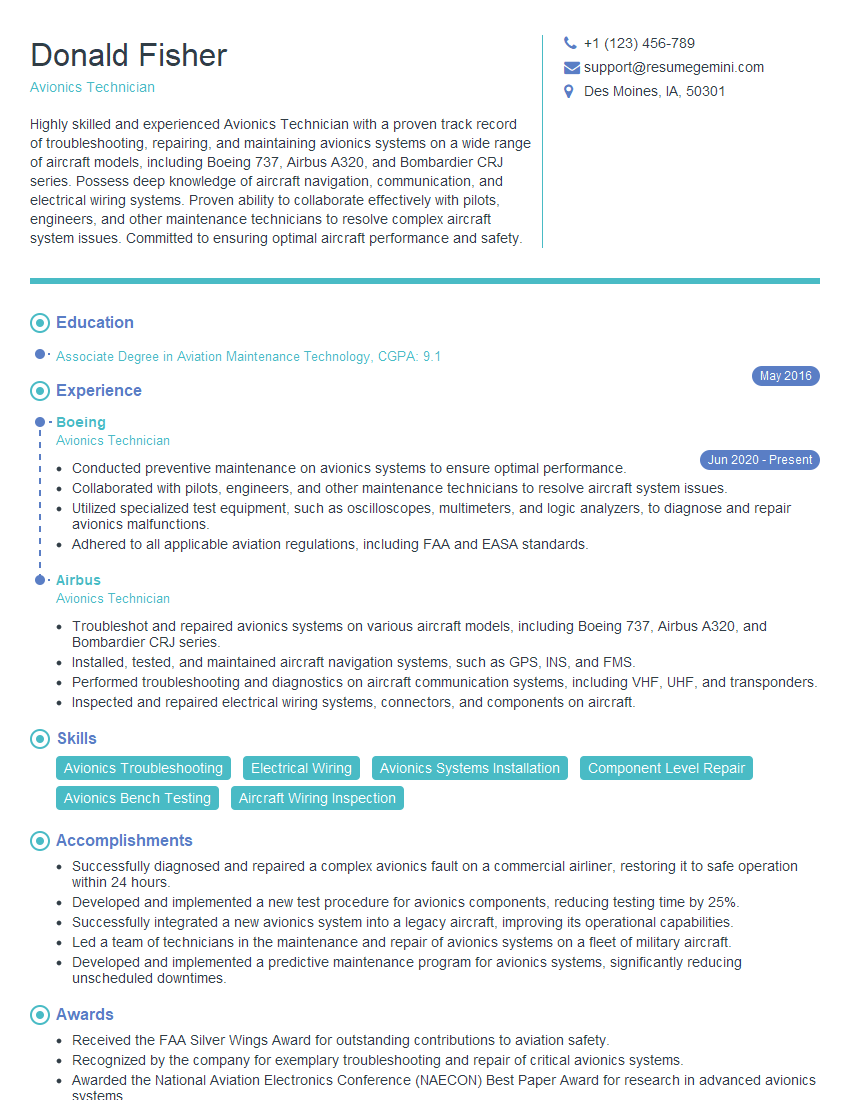
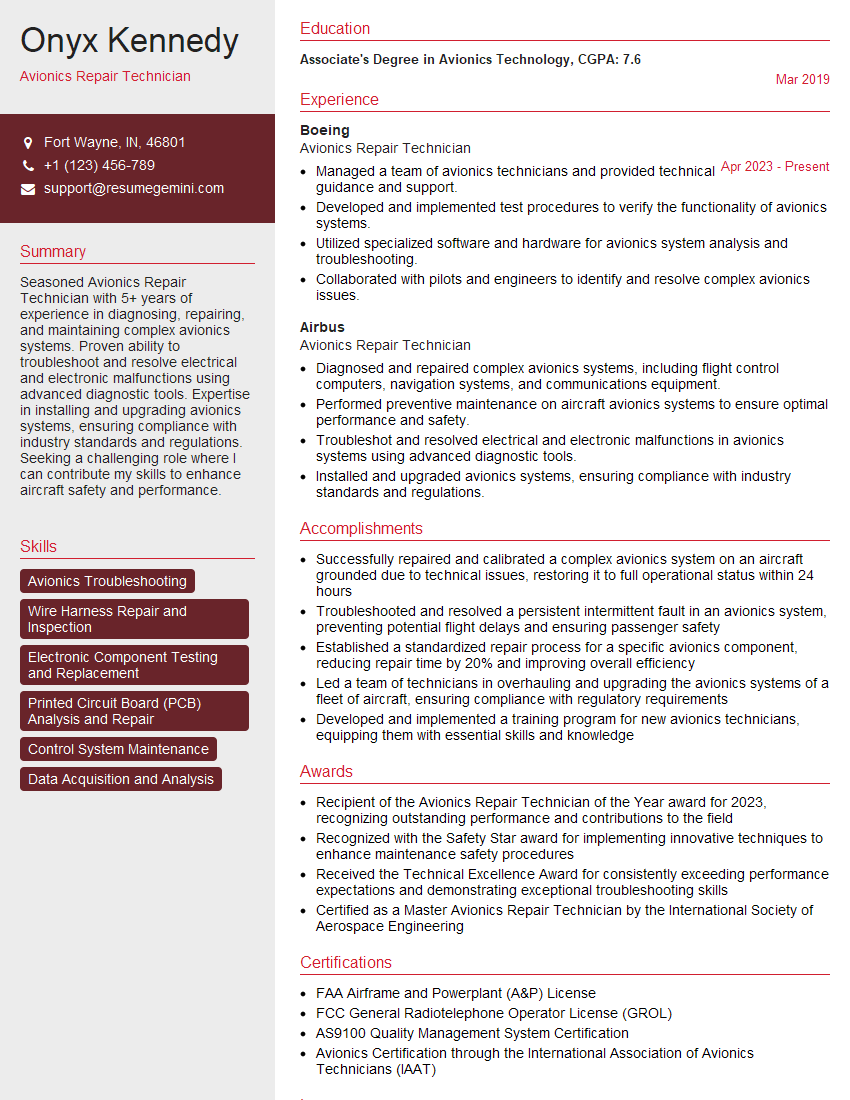
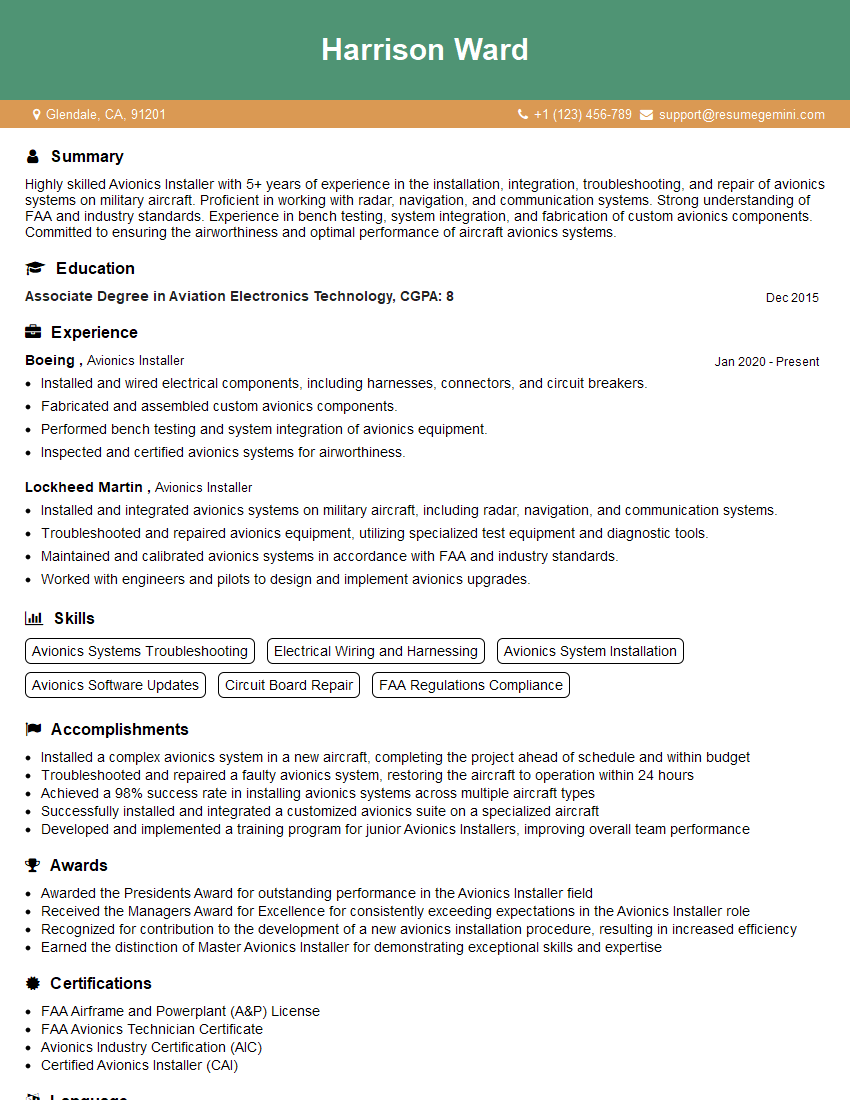
Mastering Avionics Maintenance and Troubleshooting is crucial for a rewarding and successful career in aviation. This specialized skillset opens doors to diverse roles with excellent growth potential, offering opportunities for advancement and specialization within the industry. To significantly increase your job prospects, invest time in creating an ATS-friendly resume that showcases your skills and experience effectively. ResumeGemini is a trusted resource that can help you build a professional and impactful resume tailored to the aviation industry. Examples of resumes specifically tailored for Avionics Maintenance and Troubleshooting are available to guide you through the process.
Explore more articles
Users Rating of Our Blogs
Share Your Experience
We value your feedback! Please rate our content and share your thoughts (optional).
What Readers Say About Our Blog
Very informative content, great job.
good