Cracking a skill-specific interview, like one for Backcountry Navigation and Orienteering, requires understanding the nuances of the role. In this blog, we present the questions you’re most likely to encounter, along with insights into how to answer them effectively. Let’s ensure you’re ready to make a strong impression.
Questions Asked in Backcountry Navigation and Orienteering Interview
Q 1. Explain the process of orienting a map using a compass.
Orienting a map means aligning it with the real world so that north on the map points to north in the terrain. This is crucial for accurate navigation. To orient a map using a compass, you need to follow these steps:
- Find North on the Map: Most maps have a north arrow indicating magnetic north.
- Place the Compass on the Map: Lay your compass flat on the map, aligning its long edge with the map’s north arrow.
- Turn the Map and Compass: Rotate the map and compass together until the compass needle aligns with the compass’s north arrow (or the orienting arrow on some compasses). This action synchronizes the map’s orientation with the earth’s magnetic field.
- Verify Orientation: Double-check to ensure that all other map features match the surrounding terrain. This is often confirmed through landmark identification.
Imagine you’re using a map of a park. After completing these steps, the map’s layout should accurately reflect where the trail, lake, or specific trees actually are in relation to you.
Q 2. Describe three different methods for determining your location without a GPS device.
Determining your location without a GPS relies on traditional land navigation skills. Here are three methods:
- Using a Compass and Map: This involves taking bearings to identifiable features (like peaks or trails), plotting those bearings on your map, and identifying your location at the intersection of those bearings. This is known as resection.
- Landmark Recognition: If you have a good quality map and are familiar with the area, identifying landmarks (such as a distinctive rock formation, a specific bend in a river, or a known building) can pinpoint your location relative to its map position.
- Back Bearing and Intersection (Triangulation): This more complex method involves taking a back bearing from a known point to another identified feature, and then taking another bearing to a second identifiable feature. The intersection of these bearings, plotted on the map, indicates your location.
For instance, imagine you’re lost in a forest. If you can see a distinctive mountain peak on your map, taking a bearing to it with your compass, plotting it on the map, will help you determine your position.
Q 3. What are the limitations of using a GPS device in backcountry navigation?
While GPS devices are invaluable tools, they have limitations in backcountry navigation:
- Battery Life: GPS devices require power, and batteries can fail, leaving you without navigation support.
- Signal Interference: Dense forests, deep canyons, or electromagnetic interference can disrupt or block GPS signals, leading to inaccurate readings or a complete loss of signal.
- Inaccurate Readings: GPS accuracy can vary, particularly in challenging terrain or near tall structures. A minor error in GPS location can significantly impact navigation accuracy, especially in complex terrain.
- User Error: Incorrectly setting the device’s parameters, failing to account for GPS drift, or misinterpreting the information can lead to navigational errors.
Always have a backup navigation plan – compass, map, and the skills to use them – in case your GPS fails. This is crucial for safety, especially in remote areas.
Q 4. How do you compensate for magnetic declination when using a compass?
Magnetic declination is the angle between true north (geographic north) and magnetic north (where your compass needle points). This angle varies by location. To compensate for magnetic declination:
- Identify the Declination: Consult your map; it typically shows the declination angle for the area covered.
- Determine the Correction: The map will specify whether the correction is ‘east’ or ‘west’. ‘East’ means you must add the angle to your compass reading; ‘west’ means you must subtract it.
- Apply the Correction: Adjust your compass bearing by the declination angle before taking a bearing or plotting a course.
For example, if the declination is 10° East and your compass shows a bearing of 30°, your corrected bearing for true north would be 40° (30° + 10°). Remember to consistently apply this correction throughout your navigation.
Q 5. Explain the concept of contour lines on a topographic map.
Contour lines on a topographic map connect points of equal elevation. They depict the shape and slope of the land. Closely spaced contour lines indicate a steep slope; widely spaced lines indicate a gentle slope.
Think of them as the slices of a cake; each line represents a specific elevation, allowing us to visualize three-dimensional terrain in two dimensions. The change in elevation between consecutive contour lines is called the contour interval, usually indicated on the map.
Q 6. How do you interpret elevation changes from a topographic map?
Elevation changes are interpreted by analyzing the spacing and pattern of contour lines.
- Closer Spacing = Steeper Slope: The closer the contour lines are together, the steeper the slope.
- Wider Spacing = Gentler Slope: Widely spaced contour lines indicate a more gradual, gentle slope.
- Concentric Circles = Hill/Summit: Concentric circles (nested circles) denote a hill or summit. The lines become smaller towards the center, representing the peak’s location.
- V-shaped Lines = Valley/Stream: A V-shaped pattern, with the point of the V pointing uphill, indicates a valley or stream; the point of the V shows the direction of water flow.
By carefully observing the contour line patterns, you can determine whether a route is uphill, downhill, or relatively flat.
Q 7. Describe how to calculate pace count for accurate distance estimation.
Pace count is a method for estimating distance by counting your steps. To calculate it:
- Determine Your Average Pace Length: Walk a measured distance (e.g., 100 meters) at your normal walking pace. Count the number of steps you take. Divide the distance by the number of steps to find your average pace length in meters per step (or feet per step).
- Count Your Steps: While walking, carefully count your steps over a given period or route.
- Calculate Distance: Multiply the total number of steps by your average pace length to get the approximate distance traveled.
For example, if you take 70 steps to walk 100 meters, your pace length is roughly 1.43 meters per step. If you take 1000 steps on a trail, your estimated distance is around 1430 meters (1000 steps x 1.43 meters/step).
Accuracy improves with practice. Factors like terrain, and whether you are going uphill or downhill, will affect pace length, so consider these variables for more precise estimation.
Q 8. What are the key factors to consider when planning a route using a map and compass?
Planning a backcountry route using map and compass requires a methodical approach. It’s not just about plotting a line from point A to point B; it’s about anticipating challenges and ensuring a safe and efficient journey. Key factors include:
- Understanding the Terrain: Carefully study the map’s contour lines to identify elevation changes, steep slopes, potential obstacles (rivers, cliffs, dense vegetation), and terrain features that might affect travel speed.
- Assessing Environmental Conditions: Consider weather forecasts, daylight hours, and potential hazards specific to the season (e.g., snow, ice, flooding). This informs decisions about route selection and gear.
- Selecting a Route: Choose a route that balances the shortest distance with the safest and most manageable terrain. Avoid overly ambitious routes, especially for beginners. Consider alternative routes in case of unforeseen obstacles.
- Estimating Travel Time: Factor in the terrain’s difficulty, your fitness level, and potential delays. It’s always better to overestimate travel time than underestimate it.
- Establishing Checkpoints: Plan regular checkpoints along your route, which you can identify on the map and confirm with your compass. This helps track your progress and prevent getting lost.
- Emergency Considerations: Identify potential escape routes or emergency shelters in case of unforeseen events. Knowing your options is crucial in a crisis.
For example, planning a hike in mountainous terrain might involve choosing a less steep, longer route to avoid excessive elevation gain, potentially reducing fatigue and the risk of injury. If the forecast predicts thunderstorms, you would choose a route that avoids exposed summits.
Q 9. How do you identify potential hazards on a map before embarking on a journey?
Identifying hazards on a map is crucial for safe backcountry travel. This involves a thorough map reading, paying close attention to specific symbols and features:
- Water Features: Rivers, streams, and lakes can be challenging to cross. Note their width, depth (if indicated), and current speed (if available). Swift-flowing rivers present a significant risk.
- Elevation Changes: Steep slopes and cliffs pose significant dangers. Assess the angle of the slope and potential for rockfalls or slips.
- Vegetation: Dense forests or thick undergrowth can slow progress and hinder navigation. Observe the vegetation symbols on the map.
- Landforms: Note prominent landforms like cliffs, canyons, and ravines that could block your progress or pose risks.
- Weather-Related Hazards: Identify areas exposed to wind, lightning, or avalanche risk, particularly in mountainous regions. Consider if there are potential shelter spots.
- Man-Made Hazards: Note roads, power lines, or any man-made structures that could present a danger.
For instance, I once planned a route that seemed straightforward on the map, but closer examination revealed a steep, rocky descent that required significant technical skills. By identifying this hazard ahead of time, I was able to adjust the route and choose a safer alternative.
Q 10. What are the signs of getting lost in the backcountry?
Recognizing the signs of being lost is critical for quick recovery. While panic is a natural reaction, it’s crucial to remain calm and systematically assess the situation. Signs you might be lost include:
- Unfamiliar Surroundings: If the terrain looks significantly different from what’s depicted on your map, you might have veered off course.
- Missed Checkpoints: Failing to reach planned checkpoints at the expected times indicates a navigational error.
- Inability to Relocate Yourself on the Map: If you can’t use your map and compass to pinpoint your location, you’re likely lost.
- Lack of Landmarks: Not recognizing familiar landmarks confirms that you are off your planned route.
- Time Management Issues: Significant delays compared to your estimated travel time suggest you might be lost or your original estimation is inaccurate.
- Changing Weather: Rapid changes in weather, especially in dangerous conditions, can increase the urgency of finding shelter or a safer location.
For example, if I noticed that the surrounding vegetation doesn’t match my map, or if I consistently fail to find my planned checkpoints, I would immediately stop to re-orient myself and assess my situation.
Q 11. Explain your procedure for taking a bearing and back bearing.
Taking bearings and back bearings is fundamental for navigation. A bearing is the direction to a specific point, while a back bearing is the direction back to your original location.
Taking a Bearing:
- Identify the target point (e.g., a peak, a distinctive rock).
- Hold the compass level and align the direction-of-travel arrow with the target.
- Rotate the bezel until the orienting arrow aligns with the magnetic needle.
- Read the bearing off the bezel, which indicates the direction to your target in degrees.
Taking a Back Bearing:
- Once at your target, orient your compass in the same way as you did for a forward bearing.
- Rotate the bezel 180 degrees.
- Read the new bearing from the bezel. This is your back bearing which should bring you back to your starting point.
For accurate bearings, ensure your compass is free from metal interference and that you are holding it horizontally.
Q 12. How do you use triangulation to determine your location?
Triangulation is a powerful technique for determining your location when you’re unsure where you are. It involves taking bearings to at least two identifiable features on your map (three are better for accuracy):
- Identify Features: Locate at least two clearly identifiable features visible from your location (e.g., prominent peaks, intersections of trails, etc.).
- Take Bearings: Using your compass, take bearings to each of the identified features. Record these bearings accurately.
- Plot Bearings on Map: On your map, place the compass edge on the feature, align the compass direction with the bearing you took, and draw a line in that direction. Repeat this for each feature.
- Determine Intersection: The point where the lines intersect is your approximate location. Three bearings will produce a more accurate triangle location than two.
Triangulation is especially useful when you’re lost or unsure of your position. The more distinct the features and the more bearings you take, the more accurate your location will be.
Q 13. Describe your experience with various types of GPS devices.
My experience with GPS devices spans various models, from basic handheld units to advanced mapping devices. Each type offers different capabilities:
- Handheld GPS Receivers: These are rugged, reliable, and require minimal power. They are ideal for basic navigation but often lack detailed mapping capabilities.
- GPS Watches: These provide convenient wrist-mounted navigation, ideal for activities where keeping hands free is important. They often integrate heart rate monitoring and other fitness features.
- Smartphone GPS Apps: Convenient and readily available, these apps offer robust mapping, often integrated with route planning and online features. However, they rely on battery life and cellular service. Battery power is often a critical factor.
- Dedicated Mapping GPS Devices: These devices combine precise GPS data with high-resolution topographic maps and advanced route planning tools. They are commonly used for backcountry navigation and outdoor sports where accurate mapping is crucial.
I’ve found that the choice of GPS device depends on the specific needs of the activity. For example, a basic handheld GPS receiver is sufficient for simple hikes, while a dedicated mapping device is preferred for complex backcountry treks.
Q 14. How do you troubleshoot a malfunctioning GPS device?
Troubleshooting a malfunctioning GPS device requires a systematic approach:
- Check Battery Power: Low battery power is the most common cause of GPS malfunctions. Replace batteries or charge the device.
- Ensure Clear Satellite Signal: Obstructions such as dense tree cover, tall buildings, or canyons can interfere with the signal. Move to a location with a clearer view of the sky.
- Restart the Device: A simple restart often resolves minor software glitches.
- Check GPS Settings: Ensure that the GPS is turned on and set to the correct mode (e.g., high-accuracy mode). Verify that the GPS signal is being received properly.
- Update Firmware/Software: Outdated firmware can cause various issues. Check the manufacturer’s website for updates.
- Examine the Antenna: Check for any damage to the device’s antenna.
- Check for Water Damage: If your GPS device has been exposed to water, allow for sufficient time for proper drying. If water damage is possible, contact the manufacturer.
- Contact Manufacturer: If the problem persists despite these steps, contact the GPS device manufacturer’s customer support for assistance.
Remember to always have backup navigation tools, such as a map and compass, even when relying on a GPS device. This ensures you are never completely reliant on a potentially malfunctioning technology. A map and compass should be considered an essential backup strategy.
Q 15. What are the advantages and disadvantages of using different map scales?
Map scale dictates the ratio between the distance on the map and the corresponding distance on the ground. Choosing the right scale is crucial for effective navigation. Larger scales (e.g., 1:25,000) show more detail, ideal for intricate terrain and precise route planning. However, they cover a smaller area. Smaller scales (e.g., 1:100,000) show less detail but cover a wider area, useful for long-distance planning and overview.
- Advantages of large-scale maps: Precise route planning, detailed terrain features visible, easier to spot subtle changes in elevation.
- Disadvantages of large-scale maps: Limited area coverage, can be cumbersome to carry multiple maps for long trips.
- Advantages of small-scale maps: Wide area coverage, easier for long-distance planning, lighter and more compact.
- Disadvantages of small-scale maps: Less detail, can be difficult to identify smaller features like trails or streams, less precise route planning.
Example: A 1:25,000 map is great for navigating a complex trail system in a forest, while a 1:100,000 map is better suited for planning a multi-day trek across a large mountain range.
Career Expert Tips:
- Ace those interviews! Prepare effectively by reviewing the Top 50 Most Common Interview Questions on ResumeGemini.
- Navigate your job search with confidence! Explore a wide range of Career Tips on ResumeGemini. Learn about common challenges and recommendations to overcome them.
- Craft the perfect resume! Master the Art of Resume Writing with ResumeGemini’s guide. Showcase your unique qualifications and achievements effectively.
- Don’t miss out on holiday savings! Build your dream resume with ResumeGemini’s ATS optimized templates.
Q 16. How do you select appropriate clothing and gear for backcountry navigation in varying weather conditions?
Clothing and gear selection for backcountry navigation hinges on the principle of layering and adaptability to changing weather conditions. The goal is to regulate body temperature efficiently.
- Base Layer: Moisture-wicking materials (synthetic or merino wool) to move sweat away from the skin.
- Mid Layer: Insulating layer (fleece or down jacket) for warmth; can be added or removed as needed.
- Outer Layer: Waterproof and windproof shell to protect from precipitation and wind.
Gear essentials: A sturdy backpack with adequate capacity, a reliable map and compass, a GPS device or satellite messenger (for backup), head lamp or flashlight, first-aid kit, extra food and water, sun protection, and emergency shelter.
Example: For a winter expedition, you’d prioritize heavy insulation (down or synthetic), waterproof and windproof outerwear, and potentially snowshoes or skis. In summer, you might use lighter-weight clothing and hiking boots, with a focus on sun protection and hydration.
Q 17. Describe your experience with different types of compasses (e.g., baseplate, lensatic).
I’ve extensively used both baseplate and lensatic compasses. Baseplate compasses are generally preferred for their ease of use and accuracy in typical backcountry navigation. They offer a clear sighting mechanism and are more versatile for map work. Lensatic compasses, known for their durability and robustness, are particularly valuable in challenging environments due to their built-in magnifying lens. However, their sighting mechanism is less precise than baseplate compasses.
- Baseplate Compasses: Easy to use, accurate bearings, readily available, versatile for map work.
- Lensatic Compasses: Highly durable, built-in magnifying lens ideal for smaller maps, useful in extreme conditions, but sighting can be slightly less precise.
Example: I prefer a baseplate compass for most of my navigation, but I always carry a lensatic compass as a backup, particularly on rugged terrain or when weight is less of a concern.
Q 18. How do you use a compass and map to navigate in low-visibility conditions?
Navigating in low-visibility conditions requires meticulous planning and precise compass and map usage. The key is to rely on your compass bearings and meticulously track your progress on the map.
- Determine your location: Use any available landmarks or clues to estimate your position on the map.
- Establish a bearing: Using your map, identify a landmark or point that is visible even in low visibility (such as a significant ridge or river), determine the compass bearing to that point.
- Follow the bearing: Maintain a consistent pace and direction, using your compass to ensure you don’t drift from your chosen bearing.
- Regularly check your map: If you suspect you’re off course, re-establish your position, and adjust your bearing as necessary.
- Stay aware of terrain: Even in poor visibility, pay attention to changes in elevation and underfoot conditions to avoid hazards.
Example: While navigating through dense fog, I would orient my map, identify a distant peak on my map, find the bearing to that peak using my compass, and follow the bearing until I reach that feature, then use that new position to plan my next move.
Q 19. How do you choose a suitable route based on terrain features and environmental conditions?
Route selection is crucial for safe and efficient backcountry travel. This involves analyzing terrain features and anticipating environmental challenges.
- Study the map: Identify potential obstacles (steep slopes, dense vegetation, water crossings), evaluate elevation changes, and assess the overall difficulty of different routes.
- Consider environmental conditions: Account for weather forecasts, daylight hours, potential hazards (wildlife, avalanche risk), and your own physical limitations.
- Choose the safest and most efficient route: Balance your desired route with the prevailing conditions. A seemingly shorter route could be much more challenging and risky than a slightly longer but safer alternative.
- Plan alternative routes: Always have backup plans in case of unexpected issues or changes in weather conditions.
Example: When planning a mountain hike, I would avoid steep, exposed slopes in bad weather and instead opt for a longer, less challenging route through the forest, minimizing risk.
Q 20. How do you manage risks associated with adverse weather conditions during navigation?
Managing risks associated with adverse weather is paramount. This includes preparation, monitoring, and decisive action.
- Pre-trip planning: Check weather forecasts meticulously, pack appropriate clothing and gear, and inform someone about your route and expected return time.
- Real-time monitoring: Regularly check for weather updates during your trip, assess the current conditions and their impact on your safety and progress.
- Decision-making: Be prepared to adjust your plans or turn back if weather conditions deteriorate. Safety always takes precedence over reaching a destination.
- Emergency procedures: Know how to use your emergency equipment and have a plan for seeking shelter or contacting help if necessary.
Example: If a sudden thunderstorm threatens during my hike, I would immediately seek shelter in a safe place (e.g., under a rocky outcrop or dense trees), avoid exposed ridges, and wait for the storm to pass before continuing.
Q 21. Explain the importance of maintaining situational awareness during backcountry navigation.
Maintaining situational awareness is the cornerstone of safe and effective backcountry navigation. It’s about constantly assessing your surroundings, your physical condition, and your progress against your plan.
- Regularly check your position: Use your compass and map to verify your location, accounting for potential errors.
- Observe your surroundings: Be aware of terrain changes, weather patterns, and potential hazards (wildlife, changing light).
- Monitor your physical state: Assess your fatigue, hydration, and overall well-being. Adjust your pace or take breaks as needed.
- Anticipate changes: Consider how conditions might change and make proactive adjustments to your plan.
Example: While hiking, I regularly check my location on my map, scan the horizon for any approaching storms, and pay attention to my energy levels. This enables me to make informed decisions and adjust my route if needed.
Q 22. Describe your experience using altimeters or barometers for navigation.
Altimeters and barometers are invaluable tools for backcountry navigation, primarily by providing elevation data. An altimeter measures altitude directly, while a barometer measures atmospheric pressure, which can be converted to altitude. The difference lies in their accuracy and reliance on external factors. Altimeters are generally more accurate for measuring the absolute altitude, especially modern electronic ones using GPS. However, barometers are more useful for tracking changes in elevation, as they show immediate pressure shifts indicating ascent or descent, which is valuable in navigating complex terrain or in areas with poor GPS reception.
In my experience, I’ve relied on both. For example, I once used a barometric altimeter to track my ascent up a steep mountain slope in cloudy conditions where GPS signals were unreliable. The barometer precisely showed my progress toward my target elevation, preventing me from unintentionally traversing a dangerous cliff band. Conversely, I’ve used a GPS altimeter for precise map referencing in a location where a specific elevation was critical to identifying a landmark or trail junction. Understanding the strengths and limitations of both is crucial for accurate navigation.
Q 23. How do you interpret and use other navigational aids such as cairns or blazes?
Cairns (man-made piles of stones) and blazes (marks on trees or rocks) are artificial trail markers used to guide hikers. Their interpretation is straightforward but requires caution. Cairns, usually pyramidal stacks of rocks, indicate the direction of a trail, especially in areas lacking distinct paths. Blazes, commonly painted markings like dashes, circles, or arrows, are more often used on established trails. They help to keep you on the correct route and guide you through dense forests or areas with limited visibility.
However, it’s crucial to remember that cairns can be moved or even accidentally destroyed by weather or other hikers. They shouldn’t be relied upon exclusively; it’s vital to cross-reference them with a map and compass. Similarly, blazes can fade, become obscured by vegetation, or be entirely missing in some sections. Always maintain situational awareness and utilize multiple navigational aids. During a challenging navigation scenario involving multiple forks in the trail, I once relied on both blazes and cairns, using them in conjunction with my map and compass to ensure I stayed on course, ultimately preventing a potentially dangerous detour.
Q 24. Explain your understanding of the different types of terrain and their impact on navigation.
Understanding terrain is fundamental to safe and efficient backcountry navigation. Different terrains present unique challenges and require different navigational strategies. For example:
- Open terrain (like meadows or plains) is generally easy to navigate using map and compass but can be challenging in poor visibility due to a lack of distinctive features.
- Closed terrain (like dense forests) obstructs visibility, making navigation more difficult. This requires careful attention to trail markers, compass bearings, and pacing.
- Mountainous terrain demands an understanding of contour lines on maps and careful elevation management. It involves navigating steep slopes, ridges, and valleys, posing risks of falls and exposure.
- Water terrain requires knowledge of river currents, water levels, and safe crossing techniques. It presents dangers like hypothermia and requires specific safety considerations.
Experience navigating various terrain types teaches you to adapt your techniques and anticipate challenges. For instance, in navigating a mountainous area during a sudden blizzard, I switched from relying primarily on visual cues to using my compass and altimeter, relying on precise bearings and elevation data for progress, while remaining extremely aware of the risks of falling and hypothermia.
Q 25. How do you perform a ‘terrain association’ to confirm your location?
Terrain association is the process of verifying your location by comparing the features you observe in the real world with the corresponding features on your map. It’s a crucial step in navigation, especially when GPS signals are weak or unavailable.
The process involves:
- Identifying key features: Look around for prominent landmarks like peaks, rivers, valleys, or changes in vegetation.
- Locating these features on your map: Use your map to identify these features and their relative positions.
- Comparing observations: Carefully compare the direction, distance, and relative elevation of the features you observe with those shown on your map.
- Triangulation (if needed): If you can’t pinpoint your position based on a single feature, use multiple landmarks to narrow down your location through triangulation. This involves using bearings to intersecting points on your map.
For example, while hiking I observed a distinctive rock formation and a river bend. By identifying these features on my map and comparing their relative positions, I accurately determined my location. It was this terrain association that alerted me to the fact that I was several hundred meters off the marked path.
Q 26. What are the best practices for leaving no trace while navigating in the backcountry?
Leave No Trace (LNT) principles are paramount in backcountry navigation. They ensure the preservation of the natural environment for future generations. Best practices include:
- Plan ahead and prepare: Know your route, pack appropriately, and be aware of weather conditions. This minimizes your environmental impact.
- Travel and camp on durable surfaces: Avoid sensitive areas like wetlands. Stick to established trails and campsites.
- Dispose of waste properly: Pack out everything you pack in. Properly dispose of human waste (at least 200 feet from water sources and trails) and bury it at least 6 inches deep.
- Leave what you find: Don’t collect rocks, plants, or other natural items. Respect wildlife and observe them from a distance.
- Minimize campfire impacts: Use established fire rings or stoves. Never leave a fire unattended and ensure it is completely extinguished before leaving.
- Respect wildlife: Observe animals from a distance. Never feed them, and maintain a safe distance.
- Be considerate of other visitors: Yield to other hikers, cyclists, or horseback riders and be mindful of noise levels.
I always adhere to these principles rigorously in my adventures. For instance, during a multi-day backpacking trip, I meticulously packed out all trash, used a portable stove instead of a campfire, and maintained a responsible distance from wildlife, ensuring minimal environmental disturbance.
Q 27. Describe your experience with emergency procedures in the backcountry (lost/injured).
Emergency procedures in the backcountry are critical to survival. My experience has taught me that preparedness and a calm, systematic approach are essential. If lost, the first steps involve:
- Stop: Avoid panic and assess your situation.
- Think: Review your last known good position. Try to retrace your steps mentally.
- Observe: Look for landmarks, changes in terrain, or any clues that could help determine your location.
- Plan: Decide on a course of action based on your resources and the available information (e.g., follow a stream downhill).
- Act: Implement your plan systematically. Conserve energy and stay positive.
If injured, the priority is to:
- Assess the injury: Determine the severity and provide appropriate first aid.
- Stay warm and dry: Hypothermia is a significant threat. Find shelter if possible.
- Signal for help: Use a whistle, mirror, or bright clothing to signal rescuers. If you have a satellite communication device, activate it immediately.
- Conserve energy: Stay as comfortable as possible while awaiting rescue.
During one expedition, I became disoriented in thick fog. Following the aforementioned steps, I used my compass to find a stream bed and follow it downhill to an easier to navigate area, eventually rejoining the trail.
Q 28. Explain your approach to safety planning for backcountry navigation.
Safety planning for backcountry navigation is paramount. My approach involves:
- Trip planning: Thoroughly research the route, considering difficulty, weather conditions, and potential hazards. This includes having backup plans.
- Gear check: Ensure all essential equipment is in good working order—navigation tools (map, compass, GPS, altimeter), first-aid kit, sufficient food and water, emergency shelter, communication devices, and appropriate clothing for the weather conditions.
- Share itinerary: Inform someone reliable about your planned route, expected return time, and emergency contacts.
- Weather monitoring: Check forecasts regularly, adapting plans as needed. Be prepared for sudden changes in weather.
- Physical preparation: Maintain good physical fitness. Train for the type of terrain you will encounter.
- Skill assessment: Honestly assess your navigational skills and abilities. Seek professional training if necessary.
- Contingency plans: Develop plans for different scenarios—getting lost, injury, sudden weather changes, or equipment failure.
Before a recent climb, I meticulously reviewed the weather forecast, checked my equipment multiple times, shared my itinerary with a friend, and practiced using my GPS and compass. My preparedness enabled me to handle a sudden change in weather effectively, ultimately ensuring a safe expedition.
Key Topics to Learn for Backcountry Navigation and Orienteering Interview
- Map and Compass Skills: Understanding map symbols, scale, contour lines, and proficient use of a compass for bearing and triangulation. Practical application: Planning a route on a map and following it accurately in the field, including correcting for errors.
- GPS Navigation: Using GPS devices effectively, including understanding GPS limitations, error sources, and waypoint management. Practical application: Navigating to specific locations using GPS coordinates and utilizing various GPS features.
- Route Planning and Decision Making: Developing safe and efficient routes considering terrain, weather conditions, and potential hazards. Practical application: Evaluating different route options and making informed decisions based on risk assessment and time constraints.
- Land Navigation Techniques: Utilizing natural features for navigation such as sun, stars, and landmarks. Practical application: Navigating without relying solely on maps or GPS in challenging conditions.
- Emergency Procedures: Knowledge of emergency signaling techniques, first aid, and survival skills relevant to backcountry navigation. Practical application: Developing a plan for emergency situations and the ability to implement it effectively.
- Safety and Risk Management: Understanding and mitigating risks associated with backcountry navigation, including weather forecasting, and awareness of potential hazards. Practical application: Identifying and addressing potential hazards to ensure a safe navigation experience.
Next Steps
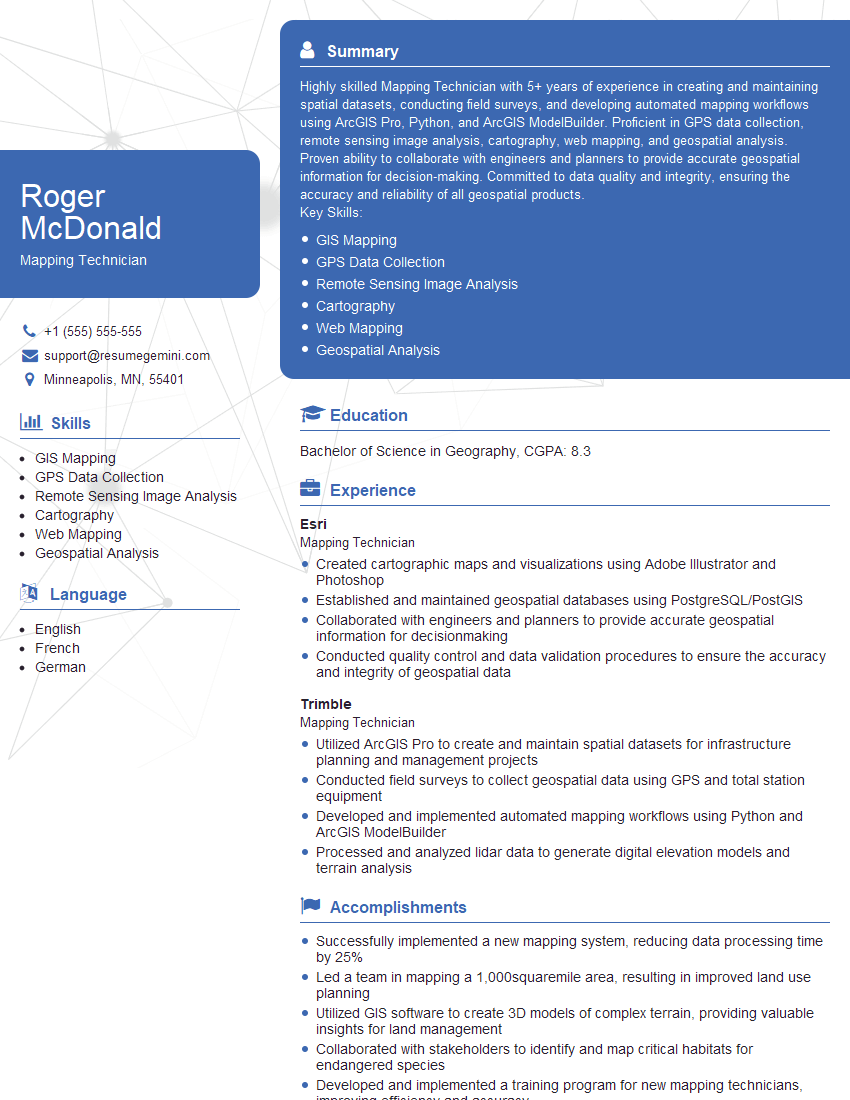
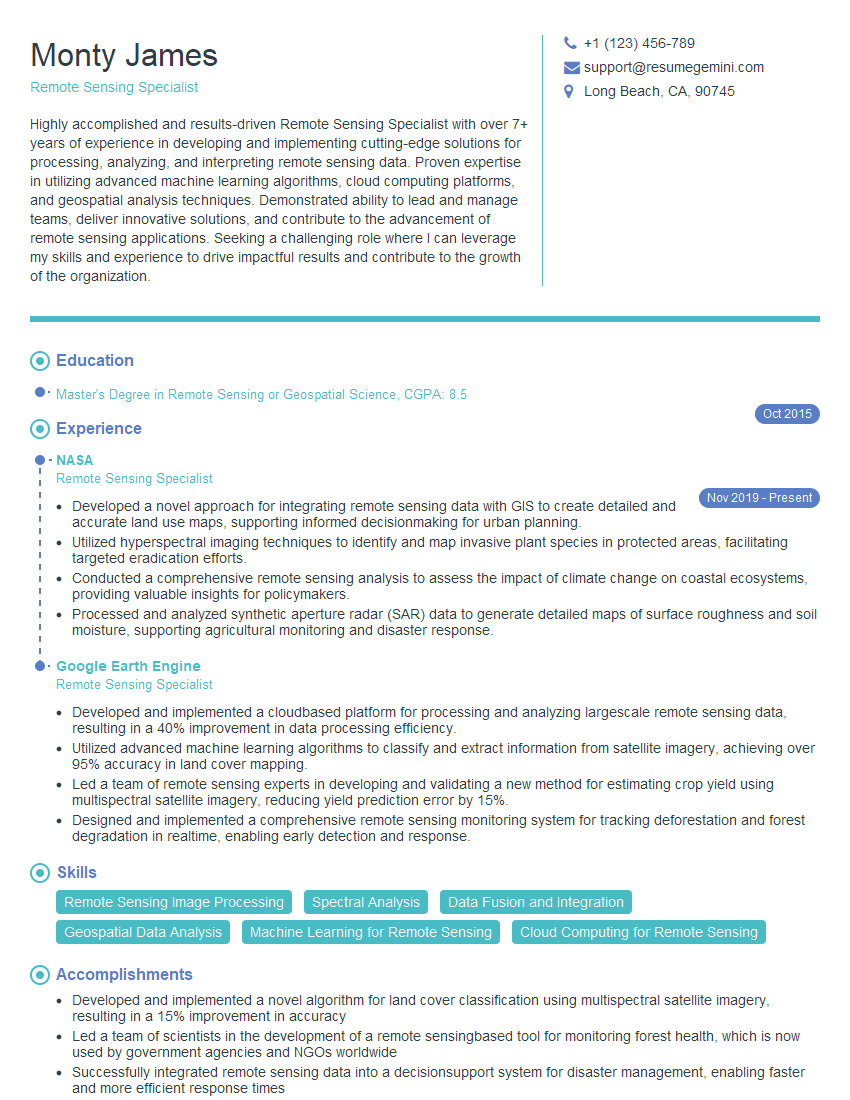
Mastering backcountry navigation and orienteering significantly enhances your value in fields requiring outdoor expertise, problem-solving under pressure, and a strong sense of responsibility. To boost your job prospects, creating a compelling and ATS-friendly resume is crucial. ResumeGemini can help you craft a professional and effective resume that highlights your skills and experience. We provide examples of resumes tailored to the Backcountry Navigation and Orienteering field to guide you through the process. Take advantage of this resource to present yourself as the ideal candidate.
Explore more articles
Users Rating of Our Blogs
Share Your Experience
We value your feedback! Please rate our content and share your thoughts (optional).
What Readers Say About Our Blog
Very informative content, great job.
good