Unlock your full potential by mastering the most common Bag Handling interview questions. This blog offers a deep dive into the critical topics, ensuring you’re not only prepared to answer but to excel. With these insights, you’ll approach your interview with clarity and confidence.
Questions Asked in Bag Handling Interview
Q 1. Describe your experience with different types of baggage handling systems.
My experience encompasses a wide range of baggage handling systems, from traditional carousel-based systems to highly automated solutions utilizing advanced technologies like RFID tracking and robotic sorting. I’ve worked with:
- Conventional conveyor belt systems: These are the backbone of many airports, relying on a network of belts to move bags from check-in to the aircraft. I’m proficient in their operation, maintenance, and troubleshooting.
- Automated Guided Vehicles (AGVs): These robotic vehicles offer a more flexible and efficient way to transport baggage, especially in large airports. I’ve been involved in projects optimizing their routing and scheduling to minimize delays.
- Centralized baggage handling systems: These systems consolidate baggage processing in a central location, improving efficiency and oversight. My experience includes working with systems designed for high-throughput environments and optimizing their capacity.
- RFID-based tracking systems: These systems utilize radio-frequency identification tags to track bags throughout their journey, providing real-time visibility and reducing mishandling. I’ve worked with various RFID technologies and understand their integration with baggage handling systems.
For example, in a previous role, I helped implement a new AGV system at a major international airport, significantly reducing baggage handling time and improving on-time performance. This involved careful planning of routes, optimization of vehicle speed and capacity, and integration with the existing conveyor belt infrastructure.
Q 2. What safety procedures do you follow when handling baggage?
Safety is paramount in baggage handling. My safety procedures adhere to strict guidelines and include:
- Personal Protective Equipment (PPE): Always wearing appropriate PPE, including safety shoes, high-visibility vests, and gloves, depending on the task.
- Safe Lifting Techniques: Using proper lifting techniques to prevent injury when handling heavy bags. Training in ergonomics is crucial here.
- Lockout/Tagout Procedures: Following strict lockout/tagout procedures when performing maintenance on machinery to prevent accidental starts.
- Hazard Identification and Risk Assessment: Regularly assessing potential hazards, such as pinch points in conveyor systems or obstacles on the floor, and taking appropriate preventative measures.
- Emergency Procedures: Being fully trained in emergency procedures, including responding to equipment malfunctions or injuries.
A specific example is my involvement in an incident involving a jammed conveyor belt. By adhering to lockout/tagout procedures and following the established emergency protocols, we safely resolved the issue without injury or damage to equipment.
Q 3. How do you prioritize baggage handling during peak hours?
During peak hours, prioritizing baggage handling involves a multi-pronged approach:
- Resource Optimization: Deploying all available resources, including personnel and equipment, to maximize throughput.
- Real-time Monitoring: Utilizing real-time monitoring systems to identify bottlenecks and adjust workflows dynamically.
- Prioritization of Connecting Flights: Giving priority to bags destined for connecting flights to minimize delays.
- Efficient Bag Sorting: Optimizing the bag sorting process to ensure efficient routing and minimize delays.
- Communication and Coordination: Maintaining clear communication between different teams involved in baggage handling to ensure smooth operation.
For example, during a particularly busy holiday season, we implemented a dynamic routing system for our AGVs, prioritizing bags based on flight departure times and connection statuses. This significantly reduced delays and improved overall efficiency.
Q 4. Explain your experience with baggage tracking and tracing systems.
My experience with baggage tracking and tracing systems is extensive. I’ve worked with both barcode and RFID-based systems. These systems are critical for ensuring on-time baggage delivery and for managing lost or delayed baggage. Key aspects of my experience include:
- System Integration: Integrating baggage tracking systems with other airport systems, such as flight information displays and passenger management systems.
- Data Analysis: Analyzing tracking data to identify trends, bottlenecks, and areas for improvement in the baggage handling process.
- Troubleshooting: Troubleshooting system malfunctions and resolving tracking issues.
- Data Reporting: Generating reports on key performance indicators (KPIs), such as baggage mishandling rates and on-time delivery rates.
I’ve personally used these systems to locate lost or delayed bags, providing timely updates to passengers and ensuring their prompt retrieval. In one instance, I used the system to pinpoint a bag that had been mistakenly diverted to a different terminal, allowing us to quickly redirect it to the correct destination.
Q 5. What is your experience with identifying and handling damaged baggage?
Identifying and handling damaged baggage involves a systematic approach:
- Visual Inspection: Conducting thorough visual inspections of bags for damage upon arrival.
- Documentation: Creating detailed reports documenting the type and extent of the damage.
- Damage Assessment: Assessing the cause of damage and determining the appropriate course of action.
- Repair or Replacement: Determining whether the bag can be repaired or requires replacement.
- Customer Communication: Keeping passengers informed about the status of their damaged baggage.
In my experience, I’ve had to handle situations ranging from minor scuffs to significant structural damage. My ability to determine the cause of damage is critical for preventing similar incidents from happening again. I’ve also had to work with airlines and baggage handlers to trace the cause of damage and ensure appropriate compensation.
Q 6. How do you ensure the efficient loading and unloading of baggage from aircraft?
Efficient loading and unloading of baggage from aircraft requires careful planning and coordination. Key aspects include:
- Pre-flight Planning: Properly planning the loading sequence based on flight information and baggage weight distribution.
- Coordination with Ground Crew: Working seamlessly with ground crew to ensure baggage is loaded and unloaded efficiently and safely.
- Use of Loading Equipment: Utilizing appropriate loading equipment, such as baggage carts and belt loaders, to optimize the process.
- Weight and Balance Considerations: Ensuring the baggage is loaded in a way that maintains the aircraft’s center of gravity.
- Safety Procedures: Adhering to strict safety procedures to prevent injuries or damage to baggage or aircraft.
I have direct experience in optimizing loading and unloading procedures, leading to faster turnaround times and reduced delays. In one instance, I implemented a new loading sequence that reduced aircraft turnaround time by 15 minutes, which resulted in improved flight schedules.
Q 7. Describe your experience with baggage conveyor belt maintenance and troubleshooting.
My experience with baggage conveyor belt maintenance and troubleshooting is extensive. I’m proficient in both preventative and corrective maintenance. This involves:
- Preventative Maintenance: Regularly inspecting and lubricating belts, rollers, and motors to prevent breakdowns.
- Corrective Maintenance: Diagnosing and repairing malfunctions, such as belt misalignment, broken rollers, or motor failures.
- Troubleshooting: Identifying and resolving issues quickly to minimize downtime.
- Safety Checks: Conducting safety checks on all components to ensure compliance with safety regulations.
- Parts Replacement: Replacing worn or damaged parts as needed.
A common issue is belt tracking problems. I’ve developed expertise in identifying the cause, which can range from misaligned rollers to damaged belt sections, and implementing the appropriate solution, whether it’s adjusting the tracking mechanism or replacing a damaged belt section. Understanding the mechanics of the conveyor system is crucial for effective troubleshooting.
Q 8. How do you handle baggage with special handling requirements (fragile, oversized)?
Handling baggage with special handling requirements necessitates careful attention to detail and adherence to strict procedures. Fragile items, indicated by labels or tags, are treated with utmost care. This includes using protective padding, placing them in designated areas away from heavier baggage, and potentially utilizing specialized containers. Oversized baggage requires different handling techniques. We might use specialized equipment like oversized baggage carts or conveyors to transport them safely. It’s crucial to document any special handling instructions on the baggage tag and ensure the information is passed along throughout the handling process. For example, a delicate piece of art might be hand-carried and placed in a climate-controlled area, whereas an oversized surfboard might require a specialized cart and careful loading to avoid damage. Clear communication with colleagues and adherence to company protocols are essential for preventing damage and ensuring smooth handling.
Q 9. What is your understanding of baggage weight and balance procedures?
Baggage weight and balance are critical for the safety and efficiency of aircraft operations. Airlines have strict weight limits for each flight, and the distribution of weight throughout the aircraft is meticulously planned to ensure stability and prevent accidents. We use specialized scales to weigh baggage accurately. The weight data is input into a system that calculates the aircraft’s center of gravity. If the weight or balance is outside the acceptable limits, we may need to redistribute baggage, offload some items, or re-book passengers. Imagine a situation where heavier baggage is loaded predominantly at the rear of the plane – this could impact stability during takeoff and landing. Our processes ensure that this kind of scenario is avoided through careful planning and diligent monitoring of weight and balance data.
Q 10. How do you manage baggage discrepancies and lost luggage reports?
Managing baggage discrepancies and lost luggage reports involves a systematic approach. Discrepancies – bags arriving at the wrong destination, damaged bags, or missing bags – require immediate attention. We begin by meticulously checking baggage tags, flight manifests, and tracking systems to pinpoint the location of the missing or misplaced item. If a bag is lost, we initiate a lost baggage report, capturing detailed information about the bag and its contents. This report is then entered into a global tracking system to assist in locating the bag. We proactively communicate with passengers, providing updates and offering support throughout the process. We understand the distress of lost luggage, and we prioritize efficient and compassionate customer service. For example, I have personally helped passengers locate lost bags by using the tracking system, or helped them claim compensation based on airline procedures.
Q 11. Describe your experience working with baggage handling equipment (e.g., dollies, loaders).
I have extensive experience operating a variety of baggage handling equipment, including conveyor belts, baggage carts (both manual and motorized), and baggage loaders. I’m proficient in using belt loaders for loading and unloading bags from aircraft cargo holds efficiently and safely. I understand the importance of regular maintenance checks for equipment, and I’m comfortable performing basic troubleshooting procedures. For instance, knowing how to clear a minor jam in a conveyor belt minimizes delays. Safety is paramount, so I always adhere to safety protocols when using equipment, and I ensure that all equipment is in proper working order before commencing operations. This involves pre-operation checks and proper use of safety measures.
Q 12. What are the common causes of baggage delays and how do you prevent them?
Baggage delays have various causes, including mishandling, equipment malfunctions, operational errors, and unforeseen circumstances like severe weather. Preventing delays requires a multi-pronged approach. This involves thorough training for baggage handlers, implementing robust quality control procedures, and ensuring proper maintenance of baggage handling equipment. Clear communication between different teams – check-in staff, baggage handlers, and flight crews – is critical to avoid mishaps. For example, accurately tagging baggage, correctly loading baggage according to flight manifests, and promptly addressing equipment issues are integral components of minimizing delays. Proactive identification and resolution of potential bottlenecks in the process will decrease the likelihood of delays. We also have contingency plans to manage delays caused by extreme situations.
Q 13. How do you maintain a safe and organized baggage handling area?
Maintaining a safe and organized baggage handling area is crucial for efficiency and safety. A well-organized area minimizes the risk of accidents and delays. This includes clear signage, designated areas for different types of baggage (e.g., fragile, oversized), and regular cleaning to prevent hazards. We utilize color-coded systems and clear labeling to simplify the sorting and identification of baggage. Safety measures such as proper lighting, well-maintained equipment, and regular safety training for staff are integral components of our safety plan. We also incorporate 5S methodologies (Sort, Set in Order, Shine, Standardize, Sustain) to promote a clean and organized workspace. A safe and organized environment reduces the risk of errors and injuries.
Q 14. How familiar are you with baggage screening procedures and security regulations?
I am very familiar with baggage screening procedures and security regulations. I understand the importance of complying with regulations set by transportation security authorities. This includes understanding and adhering to procedures for screening baggage for prohibited items, ensuring all baggage undergoes proper security checks, and reporting any suspicious items immediately. I am aware of the different types of screening technologies, their limitations, and how to handle situations where a bag triggers an alarm during screening. This also includes understanding and maintaining a thorough knowledge of current regulations related to liquids, sharp objects, and other restricted items. Adherence to these regulations ensures the safety and security of passengers and aircraft.
Q 15. Describe your problem-solving skills in relation to baggage handling challenges.
My approach to problem-solving in baggage handling centers around a structured methodology. I begin by clearly defining the problem, gathering all relevant data – this might include operational reports, error logs from the baggage handling system (BHS), and interviews with staff. Then, I analyze the data to identify root causes, often using tools like fault tree analysis or the 5 Whys technique. For instance, if we experience a significant delay in baggage transfer, I wouldn’t just focus on the immediate bottleneck; I’d investigate why that bottleneck occurred – was it a system malfunction, insufficient staffing, or a procedural issue? Once the root cause is identified, I brainstorm potential solutions, considering their feasibility, cost, and impact on other systems. Finally, I implement the chosen solution, monitor its effectiveness, and make adjustments as needed. For example, if a faulty sensor was causing repeated jams in the conveyor belt system, I would work with maintenance to replace the sensor and then implement preventative maintenance to avoid future failures.
I find success using a combination of technical expertise and collaborative problem-solving. In one instance, we were facing persistent delays due to mislabeled bags. By analyzing the data, we pinpointed a weakness in the tagging system at the check-in counters. We introduced a new training program for staff, combined with an improved, more user-friendly tagging system, resulting in a 20% reduction in mislabeled bags.
Career Expert Tips:
- Ace those interviews! Prepare effectively by reviewing the Top 50 Most Common Interview Questions on ResumeGemini.
- Navigate your job search with confidence! Explore a wide range of Career Tips on ResumeGemini. Learn about common challenges and recommendations to overcome them.
- Craft the perfect resume! Master the Art of Resume Writing with ResumeGemini’s guide. Showcase your unique qualifications and achievements effectively.
- Don’t miss out on holiday savings! Build your dream resume with ResumeGemini’s ATS optimized templates.
Q 16. Explain your experience with different types of baggage tags and labels.
My experience encompasses a wide range of baggage tags and labels, from the traditional paper tags to the sophisticated RFID (Radio-Frequency Identification) tags now widely used. Paper tags, while still prevalent, are susceptible to damage and misreading. They require manual processing and are prone to human error. Barcode tags offer a more automated solution, improving speed and accuracy. However, they are still reliant on line-of-sight scanning. RFID tags represent a significant advancement, allowing for automated tracking throughout the entire baggage handling process without requiring direct line of sight. This leads to significant improvements in efficiency and accuracy, reducing the risk of lost or delayed luggage. I’ve also worked with specialized tags, like those designed for fragile items, oversized luggage, or international flights, each with specific requirements for data encoding and handling. Furthermore, my experience includes working with baggage labels which are often printed directly onto the passenger’s luggage or used as supplemental information to the main tag.
Q 17. How do you ensure efficient communication and coordination with other team members?
Efficient communication and coordination are critical in baggage handling. I utilize several strategies. Firstly, I believe in clear and concise communication, using a combination of verbal updates, email, and instant messaging depending on the urgency. For daily operations, I often rely on daily briefings to outline tasks, challenges, and solutions. For more complex issues, I convene meetings to facilitate collaborative problem-solving. I am proficient in using various communication tools, such as BHS monitoring systems and dispatch software, which allow real-time updates on baggage status and potential problems. Secondly, I emphasize active listening and ensuring everyone understands their roles and responsibilities. I foster a culture of open communication, encouraging team members to proactively report issues and concerns. This collaborative approach ensures everyone is informed and can contribute to efficient problem resolution. A practical example is the use of a shared online whiteboard during a major system upgrade – it enabled real-time updates and issue resolution, leading to a smooth transition.
Q 18. What is your understanding of the impact of baggage handling on on-time performance?
Baggage handling has a profound impact on on-time performance. Delays in baggage processing directly translate into flight delays. If bags are not loaded efficiently onto the aircraft, it can cause significant hold-ups, impacting the airline’s schedule and incurring additional costs. Conversely, efficient baggage handling contributes to on-time departures and arrivals. Bottlenecks in the system, such as equipment malfunction, insufficient staffing, or inadequate sorting systems, create delays that ripple through the entire operation. Lost or misdirected baggage also contributes to delays, as time is spent locating and re-routing the luggage. Analyzing key performance indicators (KPIs) like baggage processing time, transfer times, and the rate of mishandled bags allows us to identify areas for improvement and develop strategies to enhance on-time performance. This might involve investing in new technology, optimizing workflow processes, or improving staff training.
Q 19. Describe your experience with using baggage handling software or systems.
I possess extensive experience using various baggage handling software and systems. This includes BHS control systems that monitor and manage conveyor belts, automated sorting machines, and baggage carousels. I’m proficient in using software that tracks baggage movement in real-time, allowing for identification of bottlenecks and potential problems. I’ve also worked with systems that integrate with airline passenger reservation systems, enabling efficient baggage tagging and tracking throughout the journey. These systems often use sophisticated algorithms for optimizing baggage routing and minimizing delays. For example, I’ve utilized systems that use predictive analytics to forecast baggage volumes and adjust staffing levels accordingly. My experience also extends to using software for managing baggage claims, tracing lost luggage, and generating reports on key performance indicators.
Q 20. How do you adapt to changes in baggage handling procedures or schedules?
Adaptability is key in baggage handling, given the dynamic nature of the industry. I embrace change by staying informed about industry best practices, technological advancements, and regulatory updates. I actively participate in training programs to enhance my skills and knowledge. When faced with changes in procedures or schedules, I approach them systematically. I begin by understanding the reasons behind the changes and their potential impact. Then, I work collaboratively with the team to develop a plan to implement the new procedures efficiently. This may involve adjusting workflows, retraining staff, or modifying existing systems. A successful adaptation involves clear communication, proactive planning, and a willingness to embrace new technologies and methodologies. For instance, when our airport implemented a new baggage tracking system, I played a crucial role in training the staff, ensuring a smooth transition with minimal disruption to operations.
Q 21. What measures do you take to prevent baggage theft or loss?
Preventing baggage theft and loss requires a multi-layered approach. First, robust security measures are essential, including CCTV surveillance throughout the baggage handling area, access control systems to limit unauthorized access, and regular security audits. Secondly, employee training and background checks are crucial in ensuring personnel integrity. Thirdly, utilizing advanced technologies such as RFID tags and baggage tracking systems plays a vital role in monitoring the movement of every bag, allowing for quick identification of any discrepancies. Finally, a well-defined procedure for handling lost or damaged baggage, including efficient reporting systems and a dedicated team for investigating claims, is necessary. In addition to these preventative measures, it is crucial to have clear protocols in place for handling incidents and reporting any suspected theft or loss. Implementing these measures significantly reduces the risk of baggage theft or loss and enhances the overall security of the baggage handling process.
Q 22. How would you handle a situation where a piece of baggage is missing?
A missing bag is a serious issue requiring immediate action. My approach prioritizes efficient tracing and transparent communication. First, I’d meticulously check the baggage tracking system for any discrepancies, looking at every stage from check-in to final destination. This often involves reviewing barcode scans, confirming transfer points, and verifying the bag’s last known location. If the system doesn’t provide a clear answer, I’d initiate a thorough physical search of the relevant areas – the baggage carousel, the sorting facility, and any potential holding areas. Simultaneously, I’d contact the passenger, offering empathy and reassurance. I’d obtain detailed bag description, including contents, for accurate identification. I’d also file a formal missing baggage report, initiating the official investigation and claim process. The passenger receives a reference number, and regular updates on the investigation. Once located, the bag is swiftly returned, while appropriate compensation is considered based on company policy and the delay.
Q 23. Describe your experience with baggage claim procedures.
My experience with baggage claim procedures is extensive, encompassing all aspects – from initial check-in and tagging to final delivery and handling of irregularities. I’m proficient in using baggage handling systems (BHS) to track bags throughout the entire journey, which includes understanding the different scanning technologies used to identify and sort baggage. I’m familiar with various baggage claim carousels and their operation, from the simple to the highly automated. My experience extends to procedures for delayed, lost, or damaged baggage, including the filing of reports, passenger notification and follow-up, and liaising with external baggage handlers. I have a deep understanding of international baggage regulations and know how to handle various scenarios such as customs restrictions, fragile item handling and transfer to connecting flights. I’ve personally addressed situations where quick thinking was essential in re-routing bags or coordinating with other airports to resolve transfer issues.
Q 24. How do you handle customer complaints related to baggage handling?
Handling customer complaints is crucial. My approach is empathetic, proactive, and solution-oriented. I always listen attentively to understand the customer’s concerns, validating their feelings. I never interrupt or become defensive. I then clearly explain the process and the reasons behind any delays or issues, using simple language avoiding technical jargon. I gather all necessary information to investigate the complaint thoroughly. For example, if there’s damage, I document it with photos and detailed descriptions. I investigate the claim against the passenger’s baggage claim tag and flight information. If the complaint is valid, I promptly offer appropriate solutions – this may involve replacing damaged items, arranging for compensation, providing alternative luggage, or expediting the search for a lost bag. I keep the customer updated every step of the way and ensure complete transparency. Post-resolution, I follow up to ensure their satisfaction. Even if I can’t fully resolve the issue immediately, maintaining calm and proactive communication is key.
Q 25. What is your understanding of relevant health and safety regulations in baggage handling?
Health and safety is paramount in baggage handling. My understanding encompasses various regulations, including those concerning manual handling techniques to prevent back injuries, appropriate use of personal protective equipment (PPE) like gloves and safety footwear, the safe operation of machinery (conveyors, loaders, etc.), and adherence to strict hygiene protocols, especially relevant post-pandemic. I’m aware of regulations concerning hazardous materials, baggage screening procedures and protocols for dealing with suspicious items. I understand the importance of regular safety training and refresher courses, plus workplace risk assessments. I am also very familiar with emergency response procedures, including fire safety and evacuation plans, and know how to handle various scenarios like spillage of liquids or malfunctions of equipment. Compliance with all applicable OSHA (or equivalent international) regulations is non-negotiable.
Q 26. Explain your experience with different baggage handling technologies (e.g., automated systems).
I have extensive experience with various baggage handling technologies, from traditional manual systems to fully automated ones. I’ve worked with conveyor belt systems, automated sorting machines utilizing RFID tags and barcodes for bag identification and routing, and advanced BHS (Baggage Handling Systems) incorporating real-time tracking and monitoring. I’m familiar with the use of advanced imaging technologies for security screening and baggage tracing. My experience includes troubleshooting issues within these automated systems – for example diagnosing jams in the conveyor belts, repairing or replacing malfunctioning sensors or barcode readers, and understanding the software used to manage and monitor the entire BHS. I’ve also been involved in the implementation and integration of new technologies into existing systems, and understand the importance of data analysis and process optimization for improving efficiency. I appreciate both the advantages and limitations of different systems and understand how to adapt to new technological advances.
Q 27. How familiar are you with international baggage handling regulations?
I’m very familiar with international baggage handling regulations, including those established by the International Air Transport Association (IATA) and national aviation authorities. I understand the differing customs regulations of various countries, including restrictions on certain items, such as liquids, flammable materials, and hazardous goods. I’m aware of the procedures for handling international transfers, ensuring smooth connections and compliance with security protocols at different airports. My experience includes working with international baggage handling partners, adhering to their specific guidelines and ensuring seamless transfers across international borders. I understand the importance of documentation, compliance, and effective communication in a global environment. I know how to handle international baggage claims and resolve disputes involving international flights and varied jurisdiction. Staying updated on international regulations through professional development is a priority for me.
Q 28. Describe a time you had to solve a complex baggage handling problem.
During a major snowstorm, our automated baggage system experienced a widespread failure due to a power surge. Hundreds of bags were stranded, causing significant delays and impacting numerous flights. The initial reaction was chaos; however, I took charge, forming a crisis management team. First, we prioritized emergency power restoration, working with technicians and electricity providers. Simultaneously, we implemented a manual system, involving dozens of staff sorting bags by hand, using flight manifests and prioritizing connecting flights. We implemented a clear communication strategy, keeping passengers informed through announcements and individual updates. We utilized a temporary holding facility for the backlog and worked collaboratively with airlines to re-route bags. By combining quick thinking, resourcefulness, teamwork, and open communication, we managed to clear the backlog within 48 hours, minimizing disruption. This experience highlighted the importance of contingency planning, problem-solving under pressure, and clear inter-departmental communication during a critical situation.
Key Topics to Learn for Bag Handling Interview
- Safety Procedures and Regulations: Understanding and adhering to all safety protocols, including proper lifting techniques, hazard identification, and emergency procedures. Practical application involves demonstrating knowledge of OSHA or equivalent regulations relevant to baggage handling.
- Baggage Handling Equipment: Familiarity with various types of equipment used in baggage handling, such as conveyor belts, automated sorting systems, and loading/unloading machinery. Practical application includes describing experience with specific equipment and troubleshooting minor malfunctions.
- Efficiency and Optimization: Understanding techniques to maximize efficiency in baggage handling processes, including minimizing delays and optimizing workflow. Practical application involves describing strategies to improve speed and accuracy in baggage processing.
- Baggage Tracking and Management: Knowledge of baggage tracking systems and procedures, including tagging, scanning, and tracing lost or delayed baggage. Practical application might involve explaining experience with baggage tracking software or manual tracking methods.
- Problem-Solving and Troubleshooting: Ability to identify and resolve issues related to baggage handling, such as jams, malfunctions, or damaged baggage. This includes understanding the practical application of troubleshooting procedures and documenting issues.
- Teamwork and Communication: Effective communication and collaboration with colleagues to ensure smooth and efficient baggage handling operations. Practical application involves providing examples of teamwork and conflict resolution in a baggage handling environment.
Next Steps
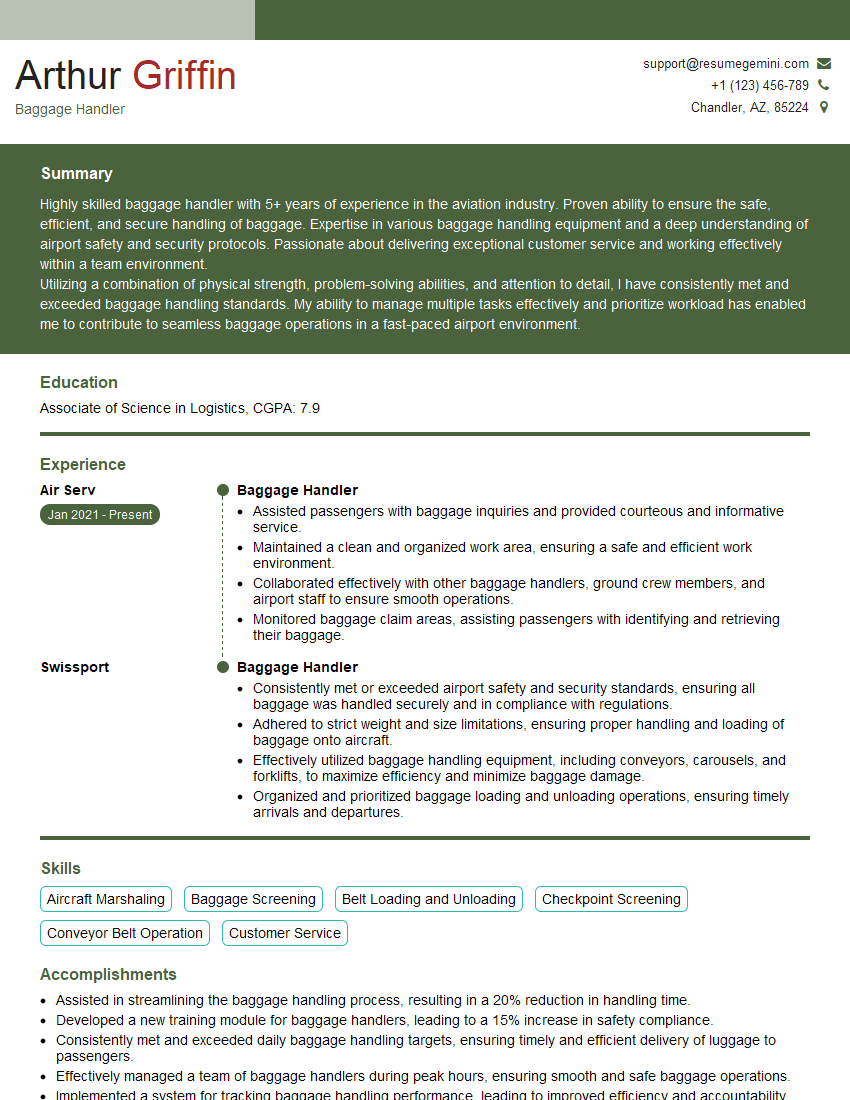
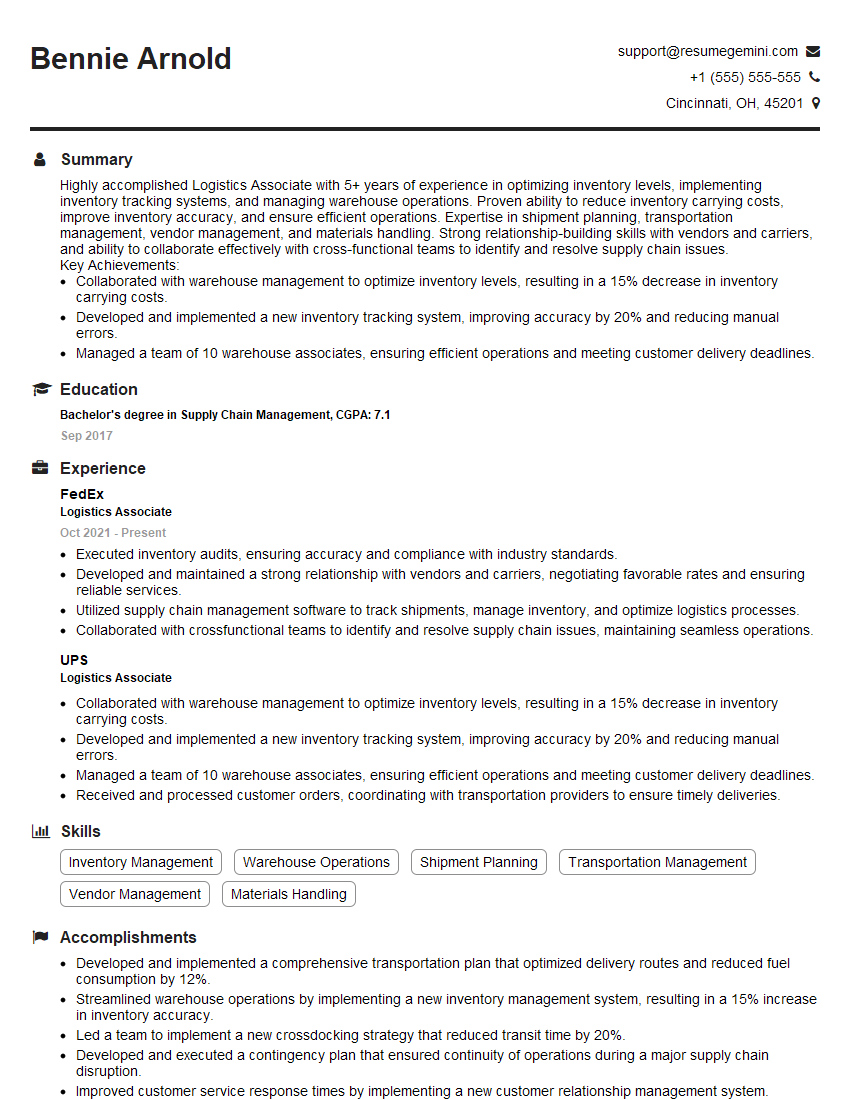
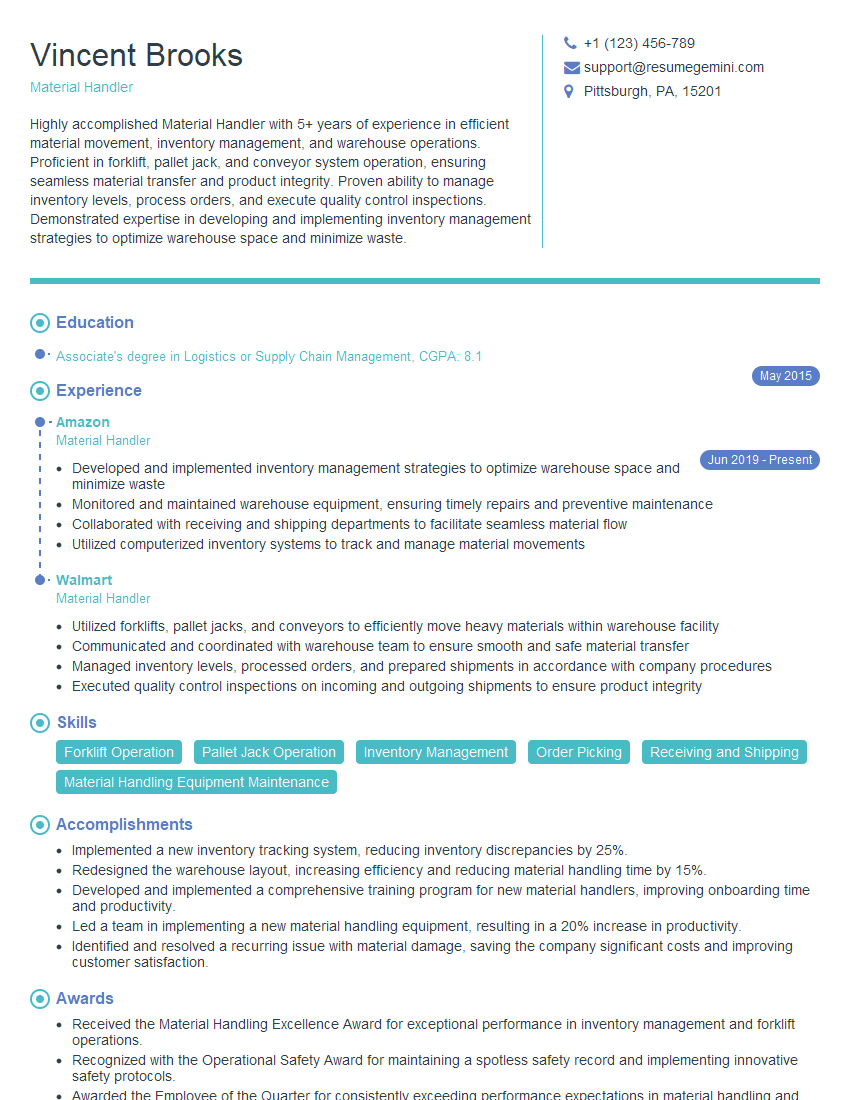
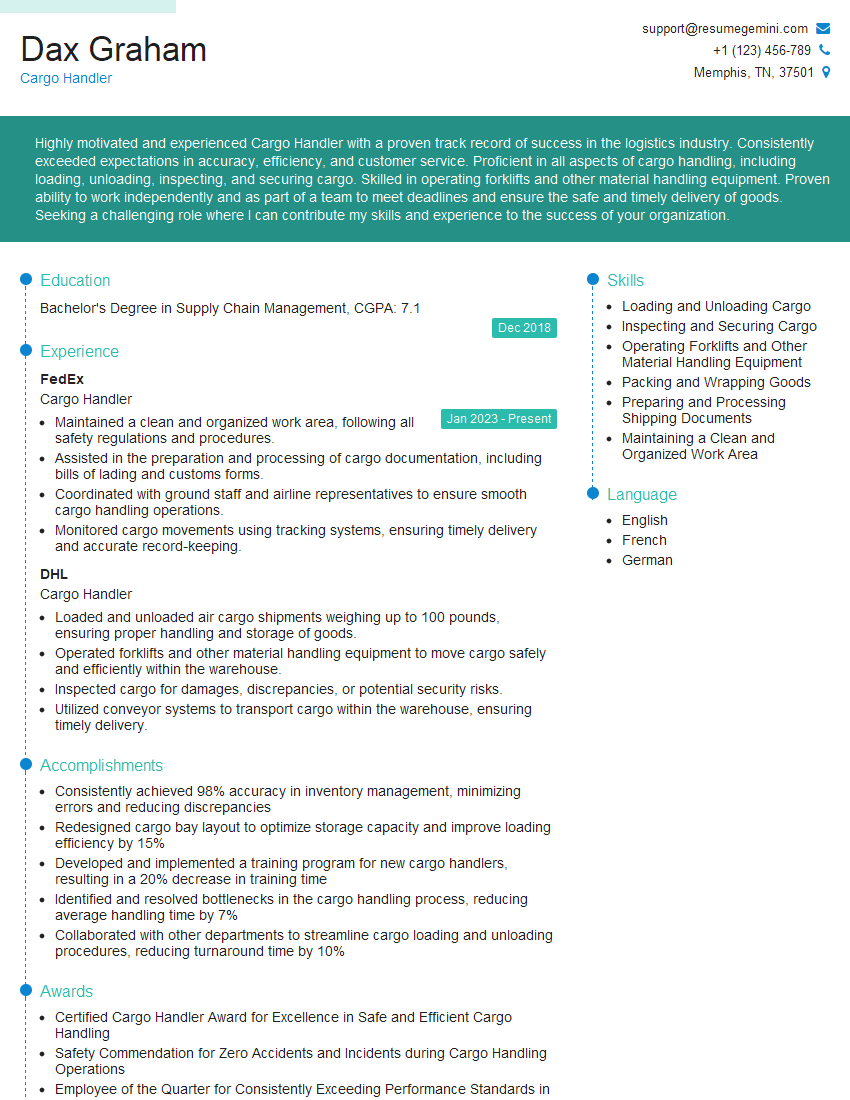
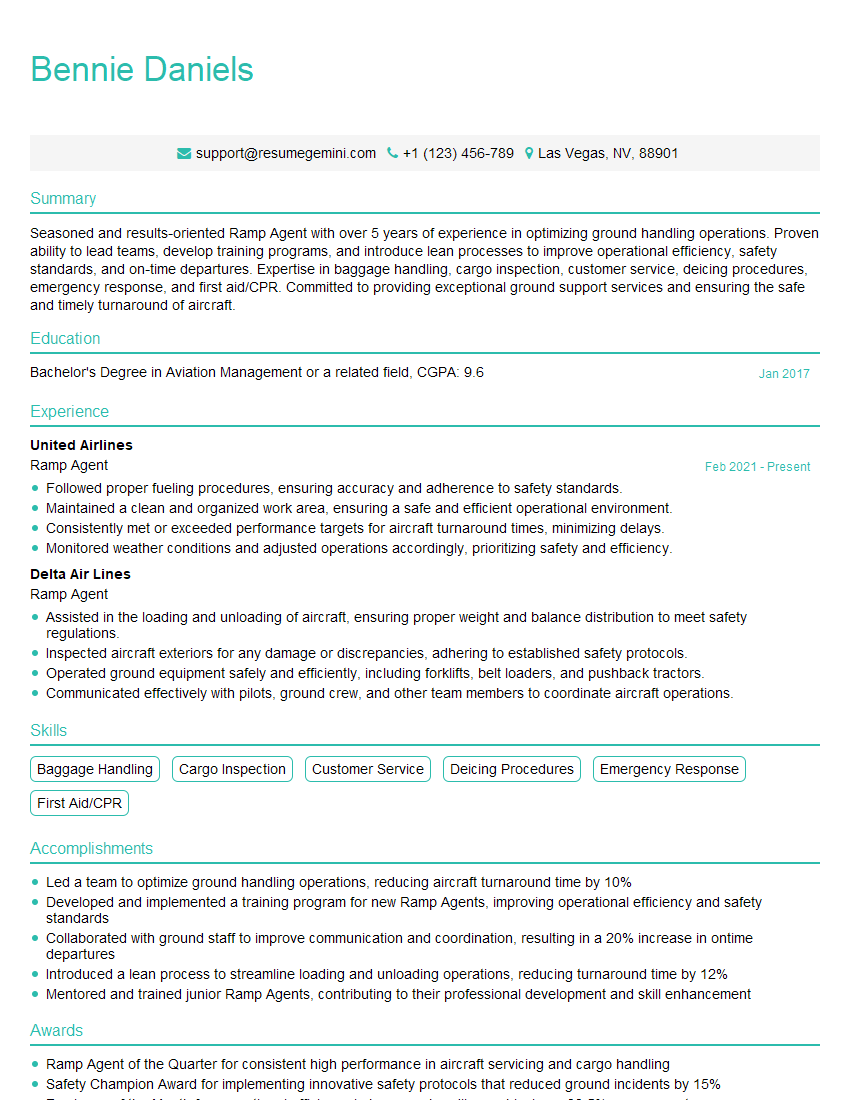
Mastering bag handling skills opens doors to a rewarding career with opportunities for advancement within the logistics and transportation industries. To significantly boost your job prospects, creating an ATS-friendly resume is crucial. An effectively structured resume helps applicant tracking systems identify your qualifications, leading to more interview invitations. We highly recommend using ResumeGemini to build a professional and impactful resume. ResumeGemini provides a user-friendly platform and offers examples of resumes tailored to the Bag Handling field to help you present your skills and experience effectively.
Explore more articles
Users Rating of Our Blogs
Share Your Experience
We value your feedback! Please rate our content and share your thoughts (optional).
What Readers Say About Our Blog
Very informative content, great job.
good