Cracking a skill-specific interview, like one for Baking and Pastry Arts Certificate, requires understanding the nuances of the role. In this blog, we present the questions you’re most likely to encounter, along with insights into how to answer them effectively. Let’s ensure you’re ready to make a strong impression.
Questions Asked in Baking and Pastry Arts Certificate Interview
Q 1. Explain the difference between the creaming and the reverse creaming methods.
Creaming and reverse creaming are two distinct methods for combining fats and sugars in baking, resulting in different textures. Creaming involves creaming together softened butter and sugar until light and fluffy, incorporating air for a tender crumb. Think of it like whipping air into the butter. This is ideal for cakes and cookies where a light, airy texture is desired. Reverse creaming, on the other hand, incorporates the sugar into the butter *after* the butter has been creamed with the dry ingredients. This method minimizes gluten development, leading to a more tender crumb. It’s often preferred for muffins and scones where a slightly less airy, more tender texture is desired.
- Creaming: Butter + Sugar → Fluffy mixture → Add eggs, then dry ingredients.
- Reverse Creaming: Dry ingredients + Butter → Mix until combined → Add sugar, then wet ingredients (eggs, milk).
For example, a classic pound cake uses the creaming method for its light and airy texture, while a delicate scone benefits from the more tender crumb produced by reverse creaming.
Q 2. Describe the proper technique for making puff pastry.
Making puff pastry is a labor of love, requiring patience and precision. The key is creating numerous layers of butter and dough through repeated folding and rolling. This process traps steam during baking, creating the characteristic flaky layers. Here’s a breakdown:
- Prepare the dough: Combine flour, water, and salt to create a simple dough.
- Prepare the butter block: This needs to be cold and firm, ideally chilled until solid. Shape the butter into a rectangle, slightly smaller than the dough.
- Enclose the butter: Place the butter block in the center of the dough rectangle. Fold the dough over the butter, sealing the edges completely to prevent leakage.
- First turn (single fold): Gently roll the dough into a rectangle, ensuring the butter remains evenly distributed. Fold the dough into thirds, like a letter. Chill for 30 minutes.
- Second and subsequent turns (double folds): Repeat the rolling and folding process 2-3 more times, chilling after each turn. Each turn creates more layers of butter and dough.
- Final rolling and shaping: Roll out the dough to your desired thickness and shape, ready for cutting and baking.
Remember, keeping the butter cold throughout the process is crucial to prevent it from melting and ruining the layered structure. Think of it as a delicate dance between warm dough and cold butter.
Q 3. What are the key ingredients in a classic French croissant?
A classic French croissant relies on a few key ingredients to achieve its signature flaky, buttery texture and rich flavor:
- Strong Bread Flour: Provides the structure and chewiness.
- Water: Hydrates the flour and activates the gluten.
- Yeast: Causes the dough to rise, creating air pockets.
- Salt: Enhances the flavor and controls the yeast activity.
- Sugar: Adds a touch of sweetness and feeds the yeast.
- Butter (high-quality): The star ingredient! Provides the layers, richness, and flavor. Unsalted butter is generally preferred to allow control over the final salt content.
The precise ratios of these ingredients determine the final product’s characteristics. Experimentation is encouraged, but respecting the balance is key.
Q 4. How do you prevent sugar from crystallizing in candy making?
Sugar crystallization in candy making is a common problem that leads to a grainy, unpleasant texture. Several techniques can prevent this:
- Use an accurate thermometer: Reaching the correct temperature range is crucial for preventing crystallization. Using a candy thermometer ensures accuracy.
- Incorporate an inhibitor: Adding ingredients like corn syrup, glucose, or invert sugar helps prevent crystallization by interfering with the sugar molecules’ ability to form crystals. These ingredients are called anti-crystallization agents.
- Proper cooling techniques: Cooling the candy slowly and evenly prevents rapid crystallization. Stirring gently during cooling can also help disperse any forming crystals.
- Clean equipment: Make sure all utensils are clean and free of any sugar crystals that can act as nuclei for crystal formation.
Imagine sugar crystals as tiny magnets; they attract each other to form larger crystals. The inhibitors act like spacers, preventing the magnets from connecting effectively. Proper cooling prevents the sudden drop in temperature that promotes rapid crystal growth.
Q 5. Explain the importance of proper dough temperature in bread baking.
Dough temperature is paramount in bread baking, influencing gluten development, yeast activity, and the final product’s texture. Yeast works best within a specific temperature range; too cold, and it becomes sluggish, delaying fermentation; too hot, and it can be killed, preventing proper rise. Similarly, gluten development, responsible for bread’s structure, is temperature-sensitive. A colder dough will develop gluten more slowly, resulting in a softer crumb, while a warmer dough develops gluten more rapidly, leading to a chewier crumb.
For instance, using excessively cold water can result in poor fermentation, a dense loaf and possible lack of rise. Conversely, excessively warm water will over-activate the yeast, potentially producing a sour taste and a fast rise with poor structure. Therefore, monitoring and maintaining the dough temperature throughout the process is vital for optimal results.
Q 6. What are the signs of a properly proofed bread dough?
Properly proofed bread dough exhibits several key characteristics indicating readiness for baking:
- Increased in volume: The dough should have noticeably increased in size, typically doubling or even tripling, depending on the recipe and fermentation time.
- Light and airy texture: When gently poked, the dough should spring back slowly. It shouldn’t feel heavy or dense.
- Slightly domed surface: The top of the dough might show some gentle rising and doming.
- A slightly springy feel: The dough has a subtle give and resilience without being sticky.
- The finger-poke test: Gently press a finger into the dough; if the indentation springs back slowly, it’s ready. If the indentation remains, the dough needs more time to proof.
Think of it like a souffle; it needs to be just right – not under-proofed (dense) or over-proofed (collapsed).
Q 7. How do you troubleshoot a cake that has sunk in the center?
A cake that has sunk in the center usually points to a problem during baking or cooling. Here’s how to troubleshoot:
- Oven temperature: An oven that’s too hot can cause the outside to cook too quickly, leaving the inside undercooked and leading to a collapse as it cools and settles. Check your oven temperature with a thermometer.
- Insufficient baking time: Underbaked cakes often sink. The interior needs to set fully before removal from the oven.
- Too much leavening: An excess of baking powder or baking soda can produce excessive gas, leading to a quick initial rise followed by collapse.
- Incorrect mixing: Overmixing can develop too much gluten, resulting in a tough cake that’s less likely to hold its shape.
- Opening the oven door too soon: Opening the oven prematurely can cause the cake to deflate during the crucial setting phase.
- Cooling improperly: Rushing the cooling process by removing the cake immediately can cause settling. Let it cool completely in the pan.
Think of it like a soufflé again – too much heat and it deflates, not enough and it’s undercooked. A good cake requires a delicate balance.
Q 8. Describe different types of yeast and their applications.
Yeast is a crucial leavening agent in baking, responsible for the rise in bread and other fermented goods. Different types offer varying characteristics and are suited to different applications.
- Active Dry Yeast: This is the most common type, requiring rehydration in warm water before use. It’s versatile and suitable for a wide range of recipes, from basic loaves to more complex pastries. Think of it as your all-purpose yeast.
- Instant Yeast (Rapid Rise): This yeast doesn’t require separate rehydration. It can be directly added to the dry ingredients. It’s faster-acting than active dry yeast, ideal for quick breads or recipes where time is of the essence.
- Fresh Yeast (Cake Yeast): This is a moist, compressed yeast with a shorter shelf life. It offers a rich flavour and is often preferred by bakers who prioritize flavour complexity. It needs to be carefully handled and stored appropriately to maintain its potency.
- Sourdough Starter: This isn’t technically a ‘type’ of yeast, but a culture of wild yeasts and bacteria that provides a unique tangy flavour. It requires careful nurturing and feeding over time, but the results are well worth the effort in terms of flavour and texture.
The choice of yeast depends on the recipe and desired outcome. For example, a rustic sourdough loaf would benefit from a sourdough starter for its complex flavour profile, while a quick dinner roll might use instant yeast for convenience and speed.
Q 9. What are the stages of chocolate tempering and why is it crucial?
Chocolate tempering is a crucial process for achieving a glossy, crisp snap, and preventing bloom (a whitish, unsightly coating) in chocolate. It involves carefully controlling the chocolate’s temperature to achieve a stable, crystalline structure.
- Melting: The chocolate is melted gently, typically using a double boiler or microwave, avoiding overheating. Overheating can damage the chocolate’s crystalline structure, leading to bloom.
- Seeding: Once melted, tempered chocolate is seeded with a small amount of previously tempered chocolate or chocolate buttons. This introduces the correct crystals and helps stabilize the rest of the melted chocolate.
- Cooling: The chocolate is then cooled slowly, stirring constantly, to a specific temperature range. This temperature varies depending on the type of chocolate used (milk, dark, white). A thermometer is essential here.
- Working Temperature: Once cooled, the chocolate is brought back up to its ideal working temperature, again constantly stirring to maintain even temperature.
Why is tempering crucial? Improperly tempered chocolate will have a dull appearance, a soft, waxy texture, and it’s prone to blooming. Imagine spending hours meticulously decorating a cake, only to have the chocolate decorations look unattractive due to improper tempering. It’s a detail that truly impacts the final product’s professional look and feel.
Q 10. How do you calculate baking percentages?
Baking percentages are a baker’s tool used to create consistent and scalable recipes. They express each ingredient as a percentage of the total flour weight. This allows for easy adjustments and scaling of recipes up or down.
Here’s how it works:
- Assign flour 100%: The weight of the flour in your recipe is considered 100%.
- Calculate other percentages: The weight of each other ingredient is calculated as a percentage of the flour weight. For example, if you have 500g of flour and 250g of water, the water percentage is (250g/500g) * 100% = 50%.
- Express as a formula: You create a formula expressing all the ingredients in percentage form. For example:
Flour: 100%
Water: 50%
Sugar: 20%
Salt: 2%
This system provides consistency, allowing bakers to easily adapt recipes to different needs. For example, if you need to double the recipe, simply double all the percentages and convert back to weights.
Q 11. Explain the difference between pâte à choux and pâte brisée.
Both pâte à choux and pâte brisée are fundamental pastry doughs, but they differ significantly in their composition, method, and final product.
- Pâte à choux (pronounced pat-ah-shoo): This is a light and airy dough used to make cream puffs, éclairs, and profiteroles. It’s unique because it’s cooked on the stovetop before baking. The steam created during baking causes the dough to puff up dramatically. It’s basically a cooked dough which is then baked.
- Pâte brisée (pronounced pat-bree-zay): This is a simple, buttery, and crumbly dough used for tart shells and other pastries that require a crisp base. It’s made using flour, fat (usually butter), and water. It’s a cold dough.
The key difference lies in their cooking method and the resulting texture. Pâte à choux is cooked before baking to create steam, leading to its airy texture. Pâte brisée, however, requires a cold handling method to keep the butter from melting and hindering the dough’s characteristic crumbliness. Think of it like this: Pâte à choux is like a delicate balloon, while pâte brisée is like a firm, but delicate, cookie crust.
Q 12. What are the common causes of gluten development issues?
Gluten development issues can significantly affect the texture and structure of baked goods. Several factors contribute to problems:
- Incorrect flour type: Using a low-protein flour (like cake flour) in a recipe requiring high gluten development (like bread) will result in a weak dough.
- Over-mixing: Over-mixing develops too much gluten, leading to a tough and chewy product.
- Under-mixing: Under-mixing doesn’t develop enough gluten, leading to a weak structure.
- Incorrect hydration: Too much or too little water can significantly impact gluten development. Too little will make it crumbly, while too much could produce an overly sticky or gummy dough.
- Improper kneading techniques: In bread making, incorrect kneading techniques will either not sufficiently develop the gluten network or, in a reverse, will over-develop it.
- Temperature: Very cold or very hot water affects the yeast’s performance and alters gluten development.
Troubleshooting involves careful attention to the recipe and technique. For example, if your bread is too tough, you might have over-mixed the dough. If it’s too crumbly, you might need to adjust the hydration (add more water).
Q 13. How do you adjust baking times and temperatures based on altitude?
Altitude significantly affects baking because the lower air pressure at higher altitudes causes liquids to boil and evaporate more quickly. This can lead to dry baked goods and uneven rising.
Adjustments are necessary to compensate:
- Increase baking time: The reduced air pressure means the oven heats less effectively, so increase baking time by 5-10%, depending on the altitude. Start with a small increase and check for doneness.
- Reduce baking powder or baking soda: Since liquids evaporate faster, there is less time for leavening agents to work. Decrease by about 25% at higher elevations.
- Increase liquid slightly: Due to faster evaporation, slightly increase the liquid amount by 1-2 teaspoons.
- Increase oven temperature slightly: A slight increase in temperature can sometimes improve oven performance, especially if using a conventional oven.
These adjustments are rough guidelines, and the optimal modifications will depend on the specific recipe and altitude. It’s always best to start with small adjustments and carefully monitor the results.
Q 14. Describe various types of icings and frostings and their uses.
Icings and frostings add flavour, decoration, and moisture to baked goods. They differ significantly in their consistency and application:
- Buttercream Frosting: A rich and creamy frosting made from butter, powdered sugar, and often flavourings like vanilla or chocolate. It’s excellent for cakes and cupcakes, offering a smooth, elegant finish.
- Cream Cheese Frosting: Similar to buttercream but incorporates cream cheese for a tangy flavour and slightly softer consistency. Ideal for cheesecakes and carrot cakes.
- Meringue Frosting: Made from whipped egg whites and sugar, it’s light, airy, and often used as a decorative topping on pies or cakes.
- Royal Icing: A stiff, glossy icing made from egg whites and powdered sugar. Perfect for intricate decorating on cookies and cakes, as it holds its shape well.
- Ganache: A luxurious mixture of chocolate and cream, used as a filling, topping, or glaze. The ratio of chocolate to cream determines its consistency.
- Simple Glaze: A quick and easy icing often made by combining powdered sugar with milk or juice. Useful for a light, delicate coating on cakes or cookies.
The choice depends on the desired texture, flavour, and application. For instance, a delicate cake might benefit from a light meringue frosting, while a bold chocolate cake would pair beautifully with a rich ganache.
Q 15. Explain the importance of sanitation in a baking environment.
Sanitation is paramount in a baking environment to prevent foodborne illnesses and maintain product quality. Think of it as building a strong foundation for your baked goods – if the foundation is contaminated, the entire structure crumbles. This involves a multi-pronged approach encompassing personal hygiene, equipment cleaning, and workspace maintenance.
Personal Hygiene: Handwashing is crucial, especially after handling raw ingredients or touching your face. Clean aprons and hairnets are essential to prevent hair and other contaminants from falling into the food. Regular nail cleaning is also vital as bacteria can easily hide under long nails.
Equipment Cleaning: All equipment, from mixing bowls and whisks to ovens and work surfaces, must be thoroughly cleaned and sanitized after each use. This involves washing with hot, soapy water followed by a sanitizing solution. Equipment should also be inspected regularly for cracks or damage that could harbor bacteria.
Workspace Maintenance: The baking environment itself needs to be kept clean and organized. Regular sweeping and mopping are necessary, and spills should be cleaned immediately. Proper waste disposal is crucial to prevent pest infestations and maintain a hygienic workspace. Think about it like this: your kitchen is a reflection of your products; a clean kitchen produces clean and safe products.
Career Expert Tips:
- Ace those interviews! Prepare effectively by reviewing the Top 50 Most Common Interview Questions on ResumeGemini.
- Navigate your job search with confidence! Explore a wide range of Career Tips on ResumeGemini. Learn about common challenges and recommendations to overcome them.
- Craft the perfect resume! Master the Art of Resume Writing with ResumeGemini’s guide. Showcase your unique qualifications and achievements effectively.
- Don’t miss out on holiday savings! Build your dream resume with ResumeGemini’s ATS optimized templates.
Q 16. How do you store baked goods to maintain freshness and quality?
Storing baked goods correctly is essential for maintaining their freshness, texture, and overall quality. Proper storage methods prevent staleness, mold growth, and undesirable flavor changes. The storage method depends on the type of baked good.
Cakes and pastries with delicate fillings or icings: These should be refrigerated to prevent spoilage and maintain their integrity. For instance, a delicate mousse cake should be refrigerated immediately to maintain the airy consistency of the mousse. Airtight containers are ideal to prevent moisture loss and flavor changes.
Cookies and crackers: These are generally stored in airtight containers at room temperature in a cool, dry place. This preserves their crispness and prevents them from becoming soft.
Bread: Bread should ideally be stored in a bread box or airtight container at room temperature. Freezing is another good option for longer-term storage. Freezing bread, however, can alter its texture slightly upon thawing.
Frozen storage: For longer shelf life, many baked goods, particularly breads and pastries, can be successfully frozen. Wrap them tightly in plastic wrap and then in aluminum foil or freezer bags to protect against freezer burn. This is especially useful when preparing baked goods ahead of time for events.
Q 17. What are some common decorating techniques?
Cake decorating is an art form that offers a wide range of techniques to create visually appealing and delicious desserts. The possibilities are endless!
Piping: Using different piping tips and techniques, you can create intricate designs, borders, and flowers with frosting, buttercream, or ganache. The pressure and angle of the piping bag greatly influence the outcome.
Fondant: A sugar paste that can be rolled out and draped over cakes to create smooth, even surfaces, perfect for intricate designs. Fondant work often incorporates modelling tools and techniques, allowing for very detailed creations.
Buttercream flowers: Buttercream can be sculpted and formed to create realistic-looking flowers. This requires some experience and practice in shaping and coloring techniques.
Glazes and drizzles: Adding a simple glaze or drizzle of chocolate, caramel, or fruit preserves can instantly enhance the visual appeal of a cake or pastry. This method is quick and adds a nice touch.
Fruit and chocolate decorations: Fresh or candied fruits and high-quality chocolate add visual interest and complementary flavors. Their natural beauty often requires minimal added embellishment.
Q 18. Describe your experience working with different types of ovens.
My experience with various ovens spans both conventional and convection models, as well as deck ovens and proofing cabinets. Understanding the nuances of each type is crucial for consistent baking results.
Conventional ovens: These utilize radiant heat from the bottom and top elements, requiring careful attention to baking times and rotation. I’ve become adept at adjusting baking times based on oven temperature variations and the specific recipe.
Convection ovens: These ovens use fans to circulate hot air evenly, resulting in more uniform baking. This leads to even browning and faster cooking times, but requires adjustments to recipes. This reduced baking time can make the difference between a perfectly baked cake and one that’s burnt.
Deck ovens: Used primarily in professional settings, deck ovens provide intense, direct heat. Understanding the relationship between heat intensity, baking time, and product placement is key for achieving optimal results. For example, placement on the bottom deck usually provides more intense heat.
Proofing cabinets: These cabinets maintain a controlled temperature and humidity level, creating the perfect environment for dough to rise. Consistent proofing is essential for developing proper texture and flavor in bread and other yeast-leavened goods. It is the perfect environment to ensure a nice, airy texture in bread.
Q 19. What are some common pastry and baking tools and their functions?
Baking and pastry arts rely on a diverse range of tools, each serving a specific function. Having a strong understanding of these tools and their applications is essential.
Measuring cups and spoons: Accurate measurement is paramount in baking. Using the correct measuring tools is crucial for consistent results.
Mixing bowls: From small bowls for whisking to large bowls for mixing batters and doughs, various sizes are needed for efficient workflow. Stainless steel or glass bowls are ideal for their durability and ease of cleaning.
Whisk: Used to incorporate air into ingredients, such as egg whites or cream. A balloon whisk is generally preferred for its efficiency.
Spatulas: Rubber spatulas are essential for scraping down the sides of bowls and ensuring all ingredients are fully incorporated. Offset spatulas are invaluable for frosting and spreading fillings.
Rolling pins: Used to roll out dough for pies, cookies, and pastries. The size and material of the rolling pin can significantly affect the outcome.
Pastry bags and tips: Used for decorating cakes and pastries, creating intricate designs and smooth finishes. This is similar to learning a new form of writing or drawing!
Parchment paper and baking sheets: Parchment paper prevents sticking and makes cleanup easier. Baking sheets are essential for baking cookies, cakes, and other pastries.
Q 20. How do you read and interpret baking recipes?
Reading and interpreting baking recipes requires careful attention to detail. Precision is key in baking, as even small deviations from the recipe can significantly impact the final product.
Understanding measurements: Baking recipes often utilize weight measurements (grams) for precision, as volume measurements (cups, teaspoons) can be less consistent. This often means using a food scale.
Following instructions carefully: Each step in a recipe is important. Skipping steps or altering the order can affect the texture and taste of the final product.
Recognizing terminology: Familiarize yourself with baking terminology, such as “creaming,” “folding,” and “whisking,” to execute the recipe accurately.
Adapting recipes (with caution): While it’s sometimes possible to adapt recipes, alterations should be made with careful consideration of the impact on the overall result. For instance, substituting ingredients can dramatically change the final product and you must consider this before doing so.
Q 21. How do you manage inventory and ordering in a bakery setting?
Efficient inventory and ordering management is essential for a bakery’s smooth operation. This involves careful tracking of ingredients, supplies, and finished goods to avoid shortages and minimize waste.
Regular inventory checks: Conduct regular inventory checks to monitor stock levels. This can be done manually or using inventory management software. Doing so frequently allows you to spot any trends or possible waste in specific ingredients.
Par stock levels: Establish par stock levels (ideal inventory levels) for each ingredient to ensure adequate supplies without overstocking. This can often be found through your POS system or through your business practices.
Ordering system: Implement a system for ordering ingredients and supplies, considering lead times, minimum order quantities, and vendor reliability. This is often based on your par levels to ensure proper stock on hand.
FIFO (First-In, First-Out) method: Use the FIFO method for inventory rotation to ensure that older ingredients are used before newer ones, reducing waste and spoilage. Older ingredients can sometimes be found at the very back of your pantry. Ensure that your staff understand this policy to maintain proper stock rotation.
Waste management: Track waste to identify areas for improvement in inventory management and reduce costs. Waste management is crucial to keeping your profit margin high, as well as keeping your business sustainable.
Q 22. Describe your experience working under pressure in a fast-paced environment.
Working in a high-volume bakery during peak hours, like the holiday season, is a whirlwind! I thrive under pressure because I’m organized and methodical. I’ve learned to prioritize tasks, using a ‘first-in, first-out’ approach for orders and efficiently managing my time. For example, during a rush, I might prep ingredients ahead of time, like measuring out flour and sugar for multiple batches, so I can focus on the baking and finishing touches. I also utilize time-saving techniques, such as using a stand mixer for larger batches, and I’m adept at multitasking, smoothly transitioning between tasks without compromising quality. My ability to stay calm and focused, even when things get hectic, allows me to consistently deliver high-quality products on time.
Q 23. How do you adapt recipes for dietary restrictions (e.g., gluten-free, vegan)?
Adapting recipes for dietary restrictions requires a deep understanding of ingredient functionality. For example, replacing wheat flour with gluten-free alternatives like almond flour or a blend of rice flour and tapioca starch isn’t just a simple swap; it impacts texture and moisture levels. I compensate by adjusting liquid amounts, adding binding agents (like xanthan gum for gluten-free baking), or substituting fat to improve texture. Vegan baking involves replacing eggs with flax eggs (flaxseed meal mixed with water), applesauce, or commercial vegan egg replacements. Dairy is easily swapped for plant-based milks or alternatives like soy yogurt. I always thoroughly test adapted recipes to ensure they meet both the dietary requirement and the desired quality. For instance, when developing a vegan chocolate cake, I experimented with different vegan butter alternatives until I achieved the perfect richness and moisture.
Q 24. Explain your knowledge of different types of flours and their properties.
Different flours have unique properties that significantly influence the final product.
- All-purpose flour: A versatile blend suitable for many applications, providing a balance of gluten development and tenderness.
- Bread flour: High in protein, ideal for breads needing strong gluten structure for rise and chewiness.
- Cake flour: Low in protein, yielding tender and delicate cakes. Its lower gluten content prevents excessive toughness.
- Whole wheat flour: Contains the entire wheat kernel, offering a nutty flavor and denser texture, higher in fiber.
- Almond flour: Made from blanched and ground almonds, it’s naturally gluten-free and adds a subtle almond flavor; it requires careful moisture adjustment in recipes.
Q 25. How do you maintain food safety standards and HACCP guidelines?
Maintaining food safety is paramount. I strictly adhere to HACCP (Hazard Analysis and Critical Control Points) principles and follow all relevant health codes. This involves
- Proper handwashing: Frequent and thorough handwashing is essential, particularly after handling raw ingredients.
- Temperature control: Maintaining safe temperatures throughout the baking process, from ingredient storage to finished product cooling, is critical to prevent bacterial growth. I regularly monitor temperatures with calibrated thermometers.
- Cross-contamination prevention: I use separate cutting boards and utensils for raw and cooked ingredients to prevent cross-contamination.
- Cleaning and sanitizing: Work surfaces and equipment are thoroughly cleaned and sanitized regularly.
- FIFO (First In, First Out) system: I always use the oldest ingredients first to minimize waste and prevent spoilage.
Q 26. Describe your experience with quality control procedures in baking.
Quality control is integral to my baking process. It begins with ingredient inspection—checking for freshness and quality. I carefully follow recipes, ensuring precise measurements and techniques. During baking, I visually inspect products for proper rise, color, and texture. I regularly taste-test batches to ensure flavor profiles meet standards. If inconsistencies arise, such as uneven baking or undercooked centers, I investigate the cause, which may include oven temperature fluctuations, incorrect ingredient ratios, or improper mixing techniques. Documenting these findings and implementing corrective actions are vital for continuous improvement.
Q 27. Explain your experience with cost control and waste reduction in a bakery.
Cost control and waste reduction are crucial for bakery profitability. I achieve this through careful ingredient ordering based on accurate sales projections, minimizing overstocking. I also implement strategies to reduce waste, such as creatively using leftover ingredients in other recipes. For instance, stale bread can be transformed into bread pudding or croutons. Precise portion control prevents excess dough or batter usage, and meticulously tracking inventory helps identify and address areas of waste. Regularly cleaning equipment prevents spoilage and extends the lifespan of machinery. This integrated approach significantly reduces costs and enhances profitability.
Q 28. How would you handle a situation where a recipe fails during production?
If a recipe fails, my first step is to remain calm and systematically troubleshoot. I’d retrace my steps, checking for any deviations from the recipe, potential ingredient issues (spoilage, incorrect measurements), or equipment malfunctions (oven temperature inconsistencies, mixer speed). I meticulously analyze the outcome – what went wrong, the appearance, and texture of the failed product – to identify the point of failure. Then, I would research potential solutions – consulting recipe resources, collaborating with colleagues, or experimenting with adjustments. Depending on the severity of the issue and time constraints, I might adapt a similar recipe or, if necessary, inform my supervisor immediately. Learning from mistakes is part of the process, and I always document the issue, corrective actions, and outcomes for future reference.
Key Topics to Learn for Your Baking & Pastry Arts Certificate Interview
Ace your interview by mastering these key areas. Remember, showcasing your practical skills and problem-solving abilities is just as important as theoretical knowledge.
- Baking Fundamentals: Understand yeast, leavening agents, mixing methods (creaming, creaming-shortening, sponge, etc.), and oven spring. Be prepared to discuss troubleshooting common baking issues like collapsed cakes or tough crusts.
- Pastry Fundamentals: Mastering different doughs (puff pastry, pie crust, choux pastry) and their variations. Explain your understanding of lamination techniques and the science behind flaky textures. Discuss common challenges and solutions in pastry making.
- Sugar Work & Confectionery: Demonstrate knowledge of various candies (fondant, caramel, nougat), icings, glazes, and chocolate tempering techniques. Be ready to explain the importance of temperature control and the impact on final product texture and appearance.
- Dessert Construction & Plating: Discuss your approach to building complex desserts, considering structural integrity and visual appeal. Understand the principles of balance, color, and texture in plating.
- Ingredient Selection & Quality Control: Explain your knowledge of different types of flour, sugars, fats, and their impact on final product quality. Discuss your approach to ingredient sourcing and quality control measures to ensure consistent results.
- Food Safety & Sanitation: Demonstrate a strong understanding of food safety regulations and best practices in a professional kitchen environment. Discuss your experience with HACCP principles.
- Kitchen Management & Teamwork: If applicable, discuss your experience with recipe costing, inventory management, and working effectively within a team environment. Highlight your ability to follow instructions precisely and manage your time efficiently.
Next Steps: Launch Your Baking Career!
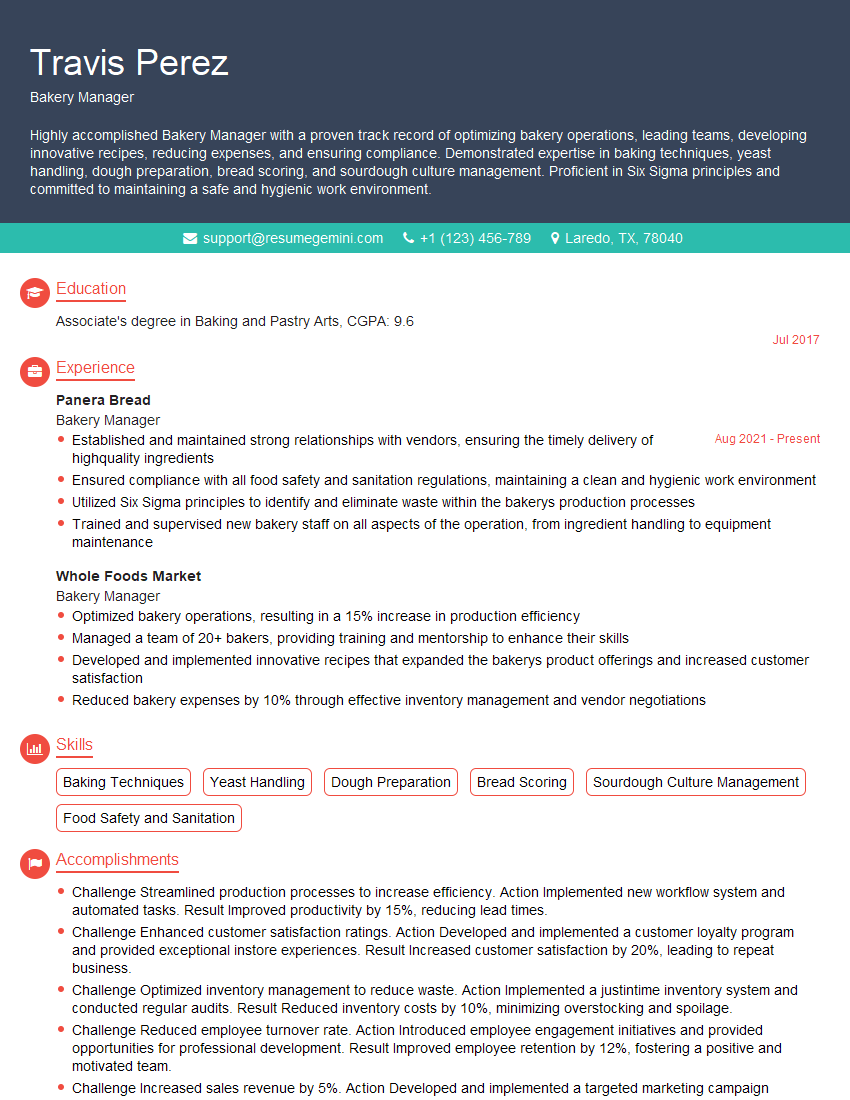
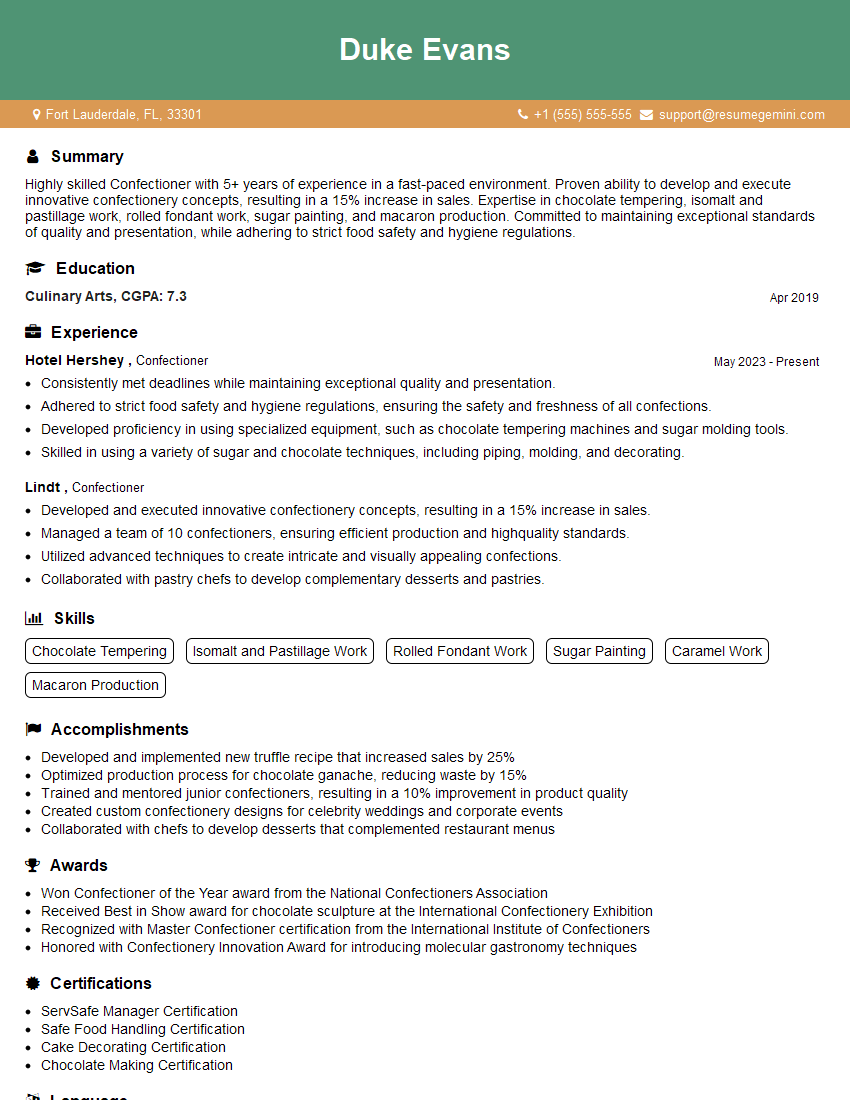
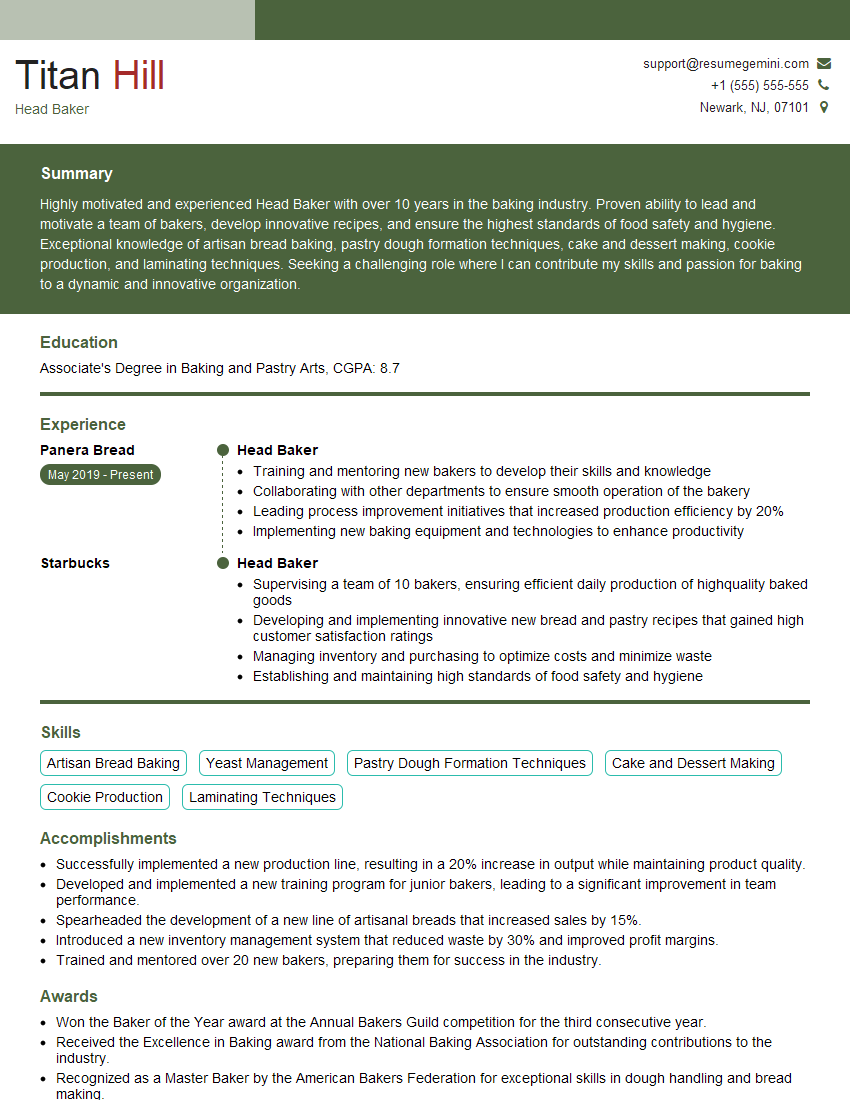
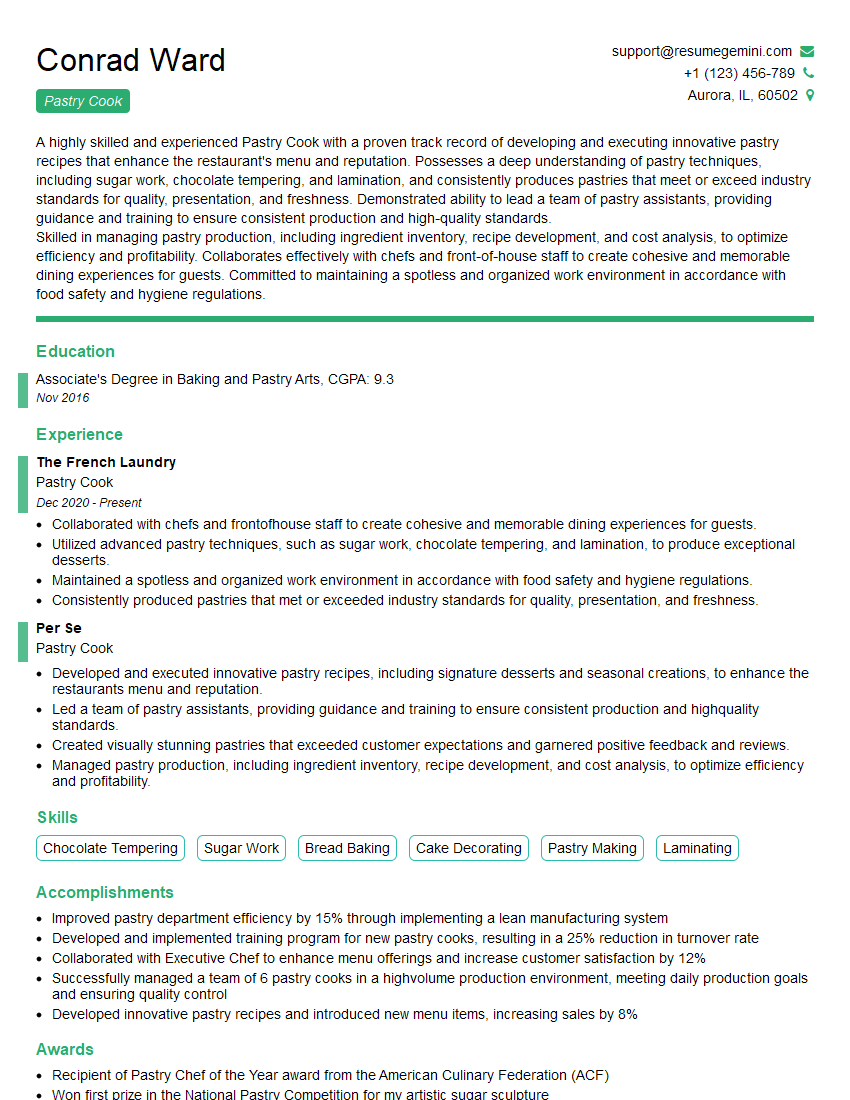
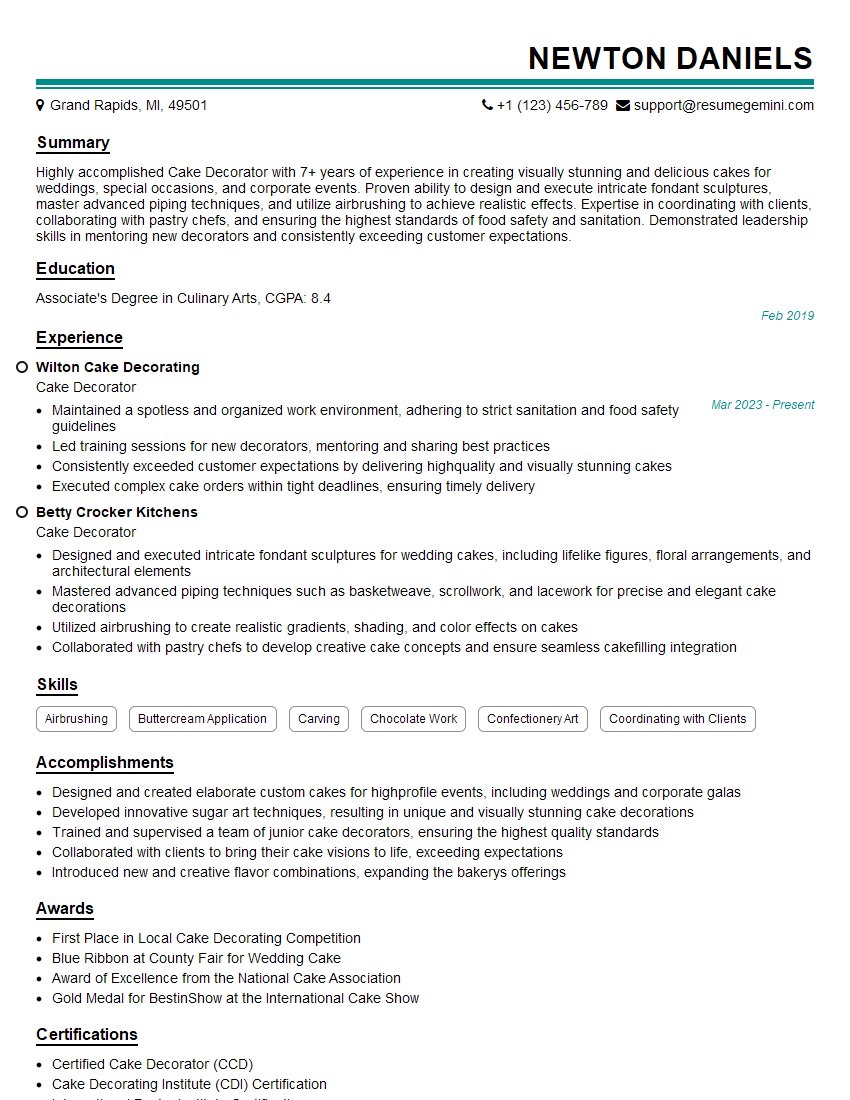
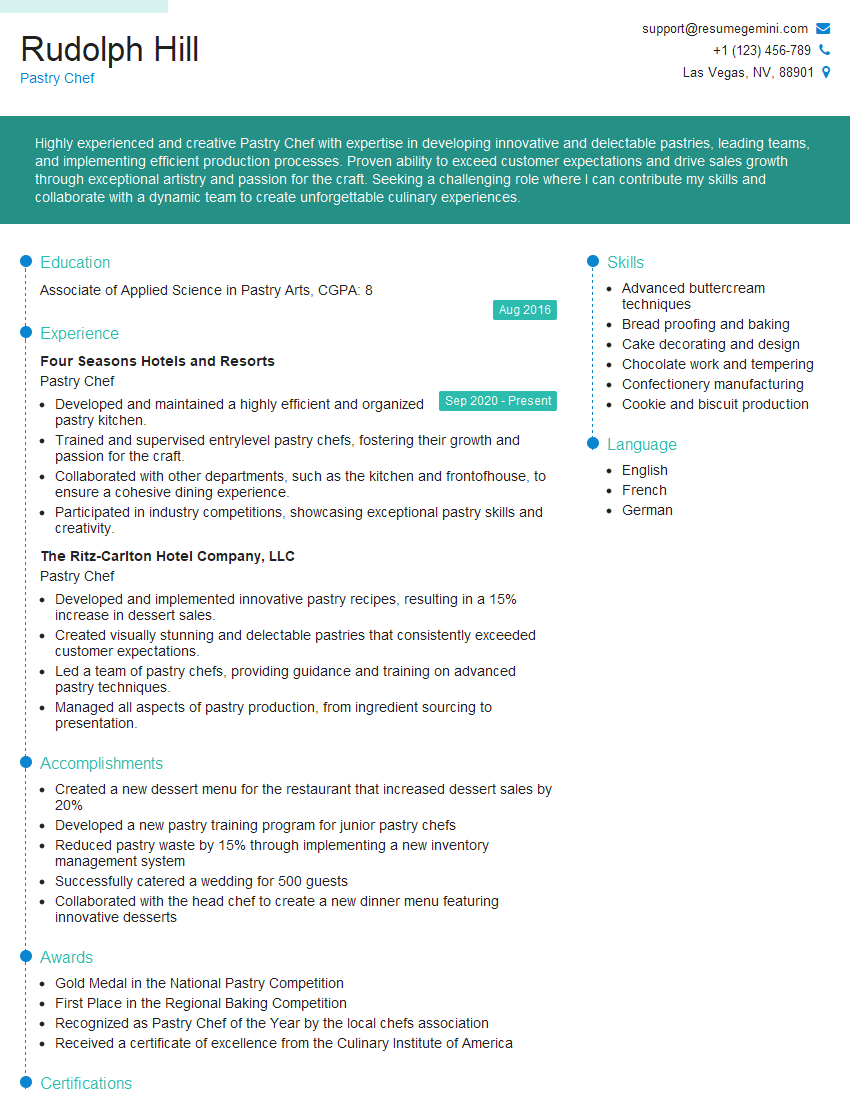
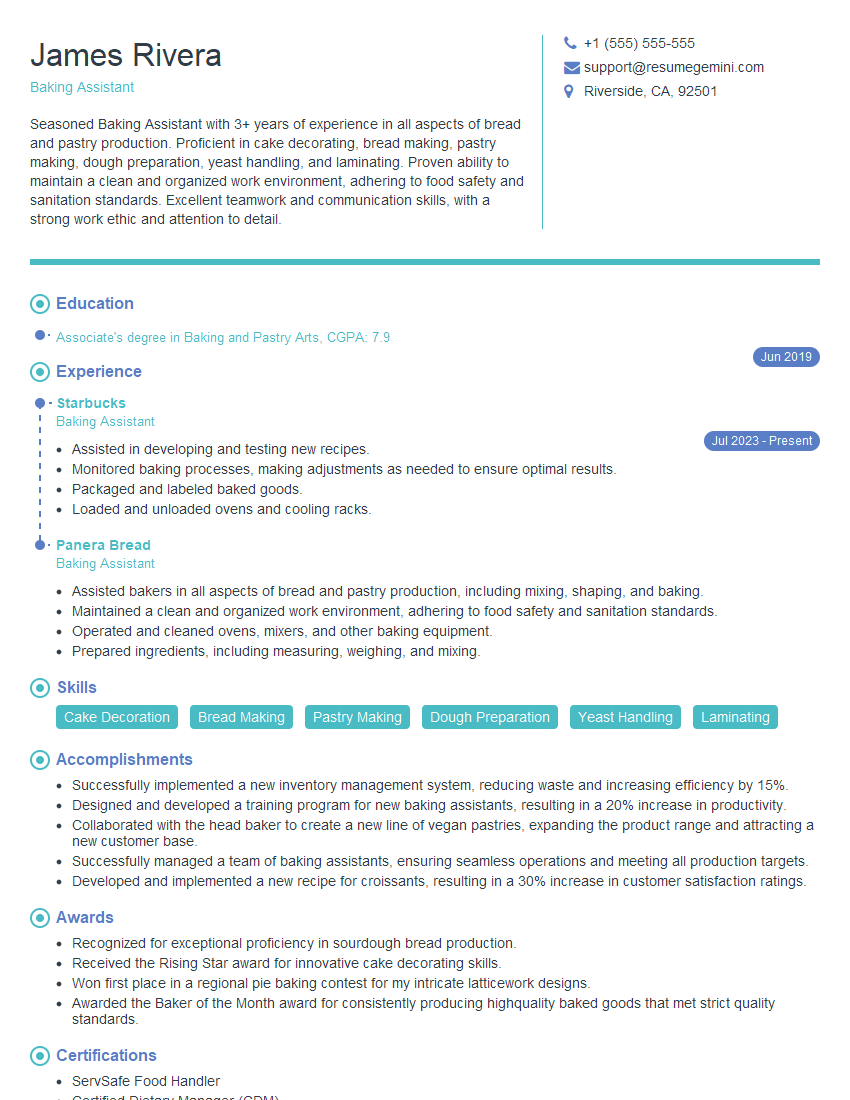
Your Baking and Pastry Arts Certificate is a powerful stepping stone to a rewarding career. To maximize your job prospects, a strong, ATS-friendly resume is crucial. ResumeGemini is a trusted resource to help you craft a compelling resume that highlights your skills and experience effectively. They offer examples of resumes tailored specifically to the Baking and Pastry Arts Certificate, ensuring your application stands out.

Explore more articles
Users Rating of Our Blogs
Share Your Experience
We value your feedback! Please rate our content and share your thoughts (optional).
What Readers Say About Our Blog
Very informative content, great job.
good