Unlock your full potential by mastering the most common Basic understanding of sewing machine mechanics interview questions. This blog offers a deep dive into the critical topics, ensuring you’re not only prepared to answer but to excel. With these insights, you’ll approach your interview with clarity and confidence.
Questions Asked in Basic understanding of sewing machine mechanics Interview
Q 1. Describe the function of the feed dogs on a sewing machine.
The feed dogs are small, tooth-like mechanisms located under the needle plate of a sewing machine. Their primary function is to grip and move the fabric forward consistently as you sew, ensuring even stitch spacing and preventing puckering or uneven feeding. Think of them as tiny conveyor belts for your fabric.
Imagine trying to sew without feed dogs – it would be nearly impossible to keep the fabric moving smoothly under the needle! The feed dogs are crucial for even feeding, particularly when working with thicker or multiple layers of fabric.
Q 2. Explain the difference between a straight stitch and a zigzag stitch.
The straight stitch and the zigzag stitch are fundamental stitch types, each with distinct applications. A straight stitch forms a simple, straight line of stitches, ideal for seams, topstitching, and creating strong, durable joins. It’s the workhorse of most sewing projects.
A zigzag stitch, in contrast, creates a pattern of alternating stitches that form a zig-zag line. Its versatility lies in its ability to overlock raw edges, preventing fraying, and in decorative stitching. Think of it as a flexible and adaptable stitch, perfect for finishing and adding flair.
For example, straight stitch is used for seams in trousers while a zigzag stitch is used to finish off the raw edge of that same seam.
Q 3. How do you adjust the stitch length on a sewing machine?
Adjusting stitch length controls the distance between each stitch. A shorter stitch length creates a denser, more durable seam, ideal for areas under stress, like a trouser inseam. A longer stitch length provides a looser stitch, suitable for basting or gathering. Most machines have a dial or lever usually marked with numbers (e.g., 0-4 or 0-6), that control the length. A ‘0’ typically represents the shortest stitch, and the highest number denotes the longest. Experiment with different lengths to find what’s best for your project and fabric.
Q 4. How do you adjust the stitch width on a sewing machine?
Stitch width adjustments primarily affect zigzag and other decorative stitches. It dictates the horizontal distance between the rightmost and leftmost points of each stitch. A narrow stitch width creates a tight zigzag, useful for finishing seams, while a wider width allows for wider zigzags and decorative effects. You’ll typically find a dial or lever labeled ‘width’ or with a similar designation, often with numerical markings. Remember to check your machine’s manual for its specifics, as the exact location and marking can vary.
Q 5. What is the purpose of the bobbin in a sewing machine?
The bobbin is a small, cylindrical spool that holds the lower thread in a sewing machine. It works in conjunction with the upper thread, creating the interlocking stitch that holds fabric together. The bobbin’s smooth and consistent thread delivery is crucial for achieving even stitches. Without a properly filled and correctly positioned bobbin, your stitches will be inconsistent and prone to breakage. Think of it as the partner to the upper thread – they work together to create a beautiful and strong stitch.
Q 6. How do you wind a bobbin?
Winding a bobbin involves transferring thread from a larger spool to the smaller bobbin. Most machines have a bobbin winder – a small spindle separate from the main sewing mechanism. Place the thread on the winder, and often there is a small lever which needs to be engaged. Then turn the hand wheel (or press the foot pedal on electronic models) to wind the thread onto the bobbin. The process is typically stopped automatically once the bobbin is full. Consult your machine’s manual for specifics as the location and design of the bobbin winder varies considerably across different models.
Q 7. How do you thread a sewing machine?
Threading a sewing machine involves guiding the upper thread through a specific path from the spool to the needle. It involves several steps; there is a path that includes the thread guides, tension discs, and take-up lever. The exact sequence and location of each component differs based on the sewing machine model. It’s crucial to follow your machine’s manual precisely to ensure proper threading. Incorrect threading can result in broken stitches, skipped stitches, or tangled thread. It is beneficial to visualize the process, and in this way, you’ll learn where the thread should go. The most common path includes the spool pin, tension control, take-up lever, and finally the needle.
Q 8. Explain the importance of proper needle selection for different fabrics.
Choosing the right needle is crucial for achieving clean, even stitches and preventing damage to your fabric. Different fabrics have different thicknesses and textures, requiring needles with varying sizes and points. Think of it like choosing the right tool for the job – you wouldn’t use a hammer to screw in a screw!
- Lightweight fabrics (silk, chiffon): These delicate fabrics require a very fine needle, such as a size 60/8 or 70/10, with a sharp point to minimize holes. A ballpoint needle can also be used to avoid snagging.
- Medium-weight fabrics (cotton, linen): These fabrics work well with a universal needle, size 75/11 or 80/12. A universal needle is a good all-purpose option.
- Heavyweight fabrics (denim, canvas): These robust materials demand a stronger needle, like a size 90/14 or even larger, with a strong point that can pierce thick layers. Jeans needles are specifically designed for denim and will minimize skipped stitches.
- Knit fabrics (jersey, rib knit): Knit fabrics need a ballpoint needle (sizes vary depending on fabric weight) to glide between the loops without piercing them and causing runs. Using the wrong needle will create holes and ruin the knit.
Using the incorrect needle size can lead to broken needles, skipped stitches, and damaged fabric. Always consult your sewing machine manual and fabric type to determine the appropriate needle size and type.
Q 9. What are the common causes of skipped stitches?
Skipped stitches are a frustrating but common sewing machine problem. Several factors can contribute to this issue:
- Incorrect needle for fabric: As discussed previously, using a needle that’s too fine for a heavy fabric or too thick for a light fabric will result in skipped stitches.
- Bent or damaged needle: Even a slightly bent needle can cause skipped stitches. The needle might not be able to fully penetrate the fabric.
- Improper thread tension: If the upper or lower thread tension is too tight or too loose, the threads won’t interlock properly, leading to skipped stitches. You might also have a problem with thread buildup on the tension discs.
- Incorrect stitch length: Setting the stitch length too long can cause the stitches to be loose and uneven, while too short can lead to skipped stitches.
- Dirty machine components: Lint, dust, and thread scraps can build up in the hook assembly and the feed dogs, obstructing proper stitch formation.
- Poor fabric quality: Some fabrics, especially those with a loose weave, might be more prone to skipped stitches, regardless of needle selection.
Troubleshooting skipped stitches often involves systematically checking each of these factors. Start by inspecting the needle and thread, then adjust tension and stitch length. Finally, give your machine a good cleaning.
Q 10. How do you troubleshoot a broken needle?
A broken needle is a common sewing mishap, usually resulting from hitting a pin, hitting a hard object, or using an incorrect needle for the fabric. Here’s how to troubleshoot:
- Safety First: Unplug the sewing machine before attempting any repairs.
- Remove the broken needle: Use needle nose pliers to carefully remove the broken needle fragment, being cautious not to scratch or damage the needle plate or machine components. Often a broken piece will remain lodged in the needle clamp.
- Inspect the needle plate and hook: Check for any dents or damage to the needle plate or the hook assembly. If damaged, these need to be repaired or replaced before continuing.
- Replace the needle: Insert a new needle of the correct type and size for your fabric.
- Test the machine: Run a test stitch to ensure the new needle is working correctly.
If the problem persists after replacing the needle and checking for damage, consult a professional sewing machine technician.
Q 11. How do you change the sewing machine needle?
Changing a sewing machine needle is a straightforward but essential procedure. It’s important to use the correct needle type and size for your project and to do it safely.
- Turn off and unplug the sewing machine. This is crucial for safety.
- Loosen the needle clamp screw. Usually, there is a small screw at the top of the needle clamp; use a screwdriver to loosen it gently.
- Remove the old needle. Gently pull the old needle straight out from the needle clamp. Do not twist.
- Insert the new needle. Insert the new needle into the clamp with the flat side of the needle shank facing the back of the machine. The needle should go in until it is at the correct height, usually indicated in the machine’s manual.
- Tighten the needle clamp screw. Securely tighten the screw to hold the needle firmly in place. Do not overtighten.
- Test the machine. Before you begin stitching, always run a test stitch with a scrap piece of fabric to ensure that everything works correctly.
Remember to always consult your sewing machine manual for specific instructions, as needle clamp mechanisms can vary between models.
Q 12. What are some safety precautions to take when operating a sewing machine?
Safety should always be your top priority when using a sewing machine. Here are some essential safety precautions:
- Always unplug the machine before changing needles, cleaning, or making any adjustments. This prevents electric shock.
- Keep your fingers away from the needle and moving parts while the machine is running. Use a finger guard or thimble to protect your fingers.
- Avoid loose clothing or jewelry that could get caught in the machine. Tie back long hair.
- Use the machine on a stable, flat surface. This prevents the machine from tipping or falling.
- Keep the work area well-lit and free of clutter. This reduces the risk of accidents.
- Never leave a running sewing machine unattended.
- Be mindful of your posture and take breaks to prevent fatigue and injury.
- Learn the functions of all safety mechanisms. Most machines have a safety switch or presser foot control that will prevent it from working with the needle down.
Following these simple precautions can significantly reduce the risk of injury.
Q 13. How do you clean and maintain a sewing machine?
Regular cleaning and maintenance are essential for keeping your sewing machine running smoothly and preventing costly repairs. A clean machine also sews more accurately.
- Unplug the machine: Always unplug your sewing machine before cleaning.
- Remove lint and dust: Use a soft brush or a compressed air duster to remove lint and dust from all accessible areas, paying particular attention to the bobbin case area, feed dogs, and hook assembly.
- Clean the bobbin case and shuttle: Wipe these parts with a soft cloth slightly dampened with sewing machine oil. Make sure all oil is wiped off.
- Lubricate moving parts: Apply a small amount of high-quality sewing machine oil to any moving parts indicated in your machine’s manual. Avoid over-lubrication.
- Clean the feed dogs: Use a small brush to clean any lint or debris from the feed dogs. This ensures that the fabric is fed smoothly.
- Check and replace the needle: Replace your needle regularly, even if it does not seem broken.
- Replace the belt: Check the sewing machine belt to make sure it is in good condition. A worn belt will slip and cause issues with motor power.
The frequency of cleaning depends on usage, but it’s a good idea to perform a thorough cleaning at least once a month, more often for heavy use. Refer to your machine’s manual for specific cleaning and maintenance instructions.
Q 14. Explain the function of the presser foot.
The presser foot is a crucial component of a sewing machine; it holds the fabric firmly against the feed dogs, ensuring even feeding and stitch formation. Think of it as the sewing machine’s grip.
Its primary functions are:
- Holding the fabric in place: It keeps the fabric from shifting or bunching while the needle is penetrating and stitching.
- Controlling fabric feed: Working in conjunction with the feed dogs, the presser foot helps regulate the movement of the fabric, resulting in consistent stitching.
- Providing even stitch length: By providing consistent pressure on the fabric, it contributes to an even stitch length and prevents skipped stitches.
- Supporting different sewing techniques: Different presser feet are available for various tasks, such as zippers, buttons, and decorative stitching. They assist the user in successfully completing various projects.
Without a properly functioning presser foot, your stitches would be uneven, the fabric would shift, and you would struggle to produce clean and accurate sewing. Different presser feet have unique features enabling specific operations.
Q 15. What is the purpose of the tension dial?
The tension dial on a sewing machine controls the upper thread tension. Think of it as a delicate balancing act between the upper and lower threads. It’s a crucial adjustment that ensures both threads interlock correctly to create a strong, even stitch.
The dial itself is usually a numbered knob or wheel, allowing for fine adjustments. A higher number means tighter tension on the upper thread, while a lower number means looser tension. Finding the perfect balance is key to beautiful stitches!
Career Expert Tips:
- Ace those interviews! Prepare effectively by reviewing the Top 50 Most Common Interview Questions on ResumeGemini.
- Navigate your job search with confidence! Explore a wide range of Career Tips on ResumeGemini. Learn about common challenges and recommendations to overcome them.
- Craft the perfect resume! Master the Art of Resume Writing with ResumeGemini’s guide. Showcase your unique qualifications and achievements effectively.
- Don’t miss out on holiday savings! Build your dream resume with ResumeGemini’s ATS optimized templates.
Q 16. How does the tension dial affect stitch quality?
The tension dial dramatically impacts stitch quality. Incorrect tension leads to several visible problems. Too much upper tension (high number on the dial) can cause the fabric to pucker, the stitches to be tight and uneven, or even break the upper thread. You’ll see the stitches pulled to the top of the fabric. Conversely, too little upper tension (low number) results in loose, uneven stitches that may appear on the underside of the fabric, and the lower thread might loop or show on the top.
Imagine a rope bridge: Both sides (upper and lower threads) need to share the weight (fabric) equally for stability. The tension dial is your tool to adjust this balance to create a visually appealing and structurally sound stitch.
Q 17. What are the different types of sewing machine feet?
Sewing machine feet are interchangeable attachments that sit beneath the needle and guide the fabric. There’s a wide variety, each designed for a specific purpose. Here are a few common types:
- General Purpose Foot: Used for most sewing tasks. It’s the workhorse of your sewing machine.
- Zipper Foot: Allows you to sew close to the zipper teeth with precision.
- Buttonhole Foot: Creates perfectly sized buttonholes.
- Blind Hem Foot: Creates nearly invisible hems.
- Walking Foot: Especially helpful for sewing multiple layers of fabric or difficult-to-handle materials by feeding them evenly.
- Overcast Foot: Used for creating neat overlock or serged edges.
Choosing the right foot is like choosing the right tool for a specific job. It significantly impacts the quality and efficiency of your sewing.
Q 18. Name three common sewing machine problems and their solutions.
Here are three common sewing machine problems and their solutions:
- Problem: Broken Needle. Solution: Carefully remove the broken needle fragment (using pliers if needed), then install a new needle of the correct size and type for your fabric and project. Always lower the needle to its lowest position before changing it.
- Problem: Skipped Stitches. Solution: Check the needle for bending or damage, ensure the thread is properly threaded, and adjust the tension. Clean the bobbin case and make sure the bobbin is correctly wound and inserted. Also check the feed dogs are clean and functioning correctly.
- Problem: Machine Won’t Sew. Solution: Start with the basics: Check the power cord, ensure the power switch is on. Verify that the needle is correctly inserted, the thread is properly threaded, and the presser foot is down. Check the bobbin case for any obstructions. If all else fails, consult the machine’s manual or seek professional help.
Q 19. Describe the differences between domestic and industrial sewing machines.
Domestic and industrial sewing machines differ significantly in their design, capabilities, and intended use. Domestic machines are designed for home use, handling lighter-duty tasks. They’re generally smaller, lighter, and easier to use but have less power and slower speeds. They often have a wider range of decorative stitches.
Industrial sewing machines are built for heavy-duty commercial use. They’re far more robust, with powerful motors for continuous operation, high sewing speeds, and specialized feet for specific tasks (like leather or denim). They’re typically larger, heavier, and require more skill and maintenance. Think of it like comparing a family car to a heavy-duty truck; both serve the purpose of transportation, but their capabilities and durability are very different.
Q 20. Explain the process of properly oiling a sewing machine.
Properly oiling a sewing machine is crucial for its longevity and smooth operation. Use only high-quality sewing machine oil – never use household oil. Always refer to your machine’s manual for specific oiling points and frequency. Generally, the process involves these steps:
- Unplug the machine.
- Wipe down the machine with a soft cloth to remove dust and lint.
- Using a few drops of oil at a time, lubricate the designated points. These points often include the shuttle race, the hook area, and the rotating parts. Avoid over-oiling; excess oil can attract dirt and slow down the machine.
- Run the machine slowly for a few minutes to distribute the oil.
- Wipe away any excess oil.
Regular oiling prevents friction and wear, keeping your machine running smoothly and efficiently.
Q 21. What are the different types of sewing machine needles?
Sewing machine needles come in various types, each suited for different fabric weights and types. The most common distinctions are based on the needle point and shaft:
- Sharp Needles: For woven fabrics like cotton, linen, and silk.
- Ballpoint Needles: For knit fabrics to prevent snagging or piercing the loops.
- Stretch Needles: Similar to ballpoint but designed for extra stretch fabrics like jersey.
- Jeans Needles: Stronger needles with a reinforced point for heavy-duty fabrics like denim.
- Leather Needles: Have a wedge-shaped point to pierce thick materials like leather.
Selecting the right needle is essential for achieving quality stitches and preventing needle breakage. Always check your needle’s size and type to match your fabric type.
Q 22. How do you identify a broken needle?
Identifying a broken needle is crucial for preventing further damage to your sewing machine and fabric. A broken needle often manifests in several ways. You might notice a bent tip, a noticeable crack along the shaft, or even a completely snapped needle. Sometimes, the breakage is less obvious; you might experience consistent thread breakage, skipped stitches, or a noticeable change in the sound of the machine – a sort of ‘clunking’ or ‘thumping’ sound instead of a smooth hum.
Always visually inspect your needle before starting a sewing project, and especially after any unusual happenings during a sewing session. A quick glance can save you significant frustration later.
- Bent Tip: A bent tip will snag the fabric and produce uneven stitches, potentially causing thread breakage.
- Cracked Shaft: A crack weakens the needle significantly, making it susceptible to snapping during operation. This can be hard to see and may require very careful inspection.
- Snapped Needle: A completely snapped needle is immediately apparent and will require immediate replacement.
Q 23. How to adjust the bobbin tension?
Adjusting bobbin tension is essential for achieving balanced, even stitches. Too much tension will cause the top thread to pull tightly, creating puckers and difficulty in feeding the fabric. Too little tension results in loose, uneven stitching, where the bobbin thread is visible on the top of the fabric. Most sewing machines have a small dial or screw on the bobbin case that controls tension.
Step-by-step adjustment:
- Access the bobbin case: Usually, this is located beneath the needle plate.
- Locate the tension screw or dial: It’s typically marked with a ‘T’ or has numbered markings.
- Test adjustments incrementally: Turn the screw or dial slightly – a quarter turn at a time is often sufficient.
- Test sew a few stitches: See how the stitching appears. If it is still too tight, slightly loosen the tension. If it’s too loose, tighten it.
- Repeat the process: Continue adjusting until you achieve a balanced stitch where the top and bottom threads intertwine evenly.
Remember to always use the correct type and quality of bobbin thread for optimal results.
Q 24. What are the common reasons for thread breakage?
Thread breakage is a common sewing frustration with many potential causes. Let’s break down some frequent culprits.
- Incorrect Tension: Improperly adjusted needle tension or bobbin tension will almost always cause thread breaks. The threads fight against each other, ultimately snapping.
- Damaged Needle: A bent, dull, or damaged needle will snag the thread, leading to breakage.
- Low-Quality Thread: Using low-quality, thin or damaged thread increases the risk of breakage, especially when sewing thick fabrics.
- Improper Threading: Missed steps in threading the needle or machine can also cause thread breakage.
- Fabric Type: Sewing particularly tightly woven or abrasive fabrics can cause undue stress on the thread.
- Needle Size Mismatch: Using a needle size inappropriate for the fabric type will cause the needle to struggle and likely break the thread.
Addressing these issues systematically is key. Start by checking the tension, then inspect the needle and thread, and lastly examine your threading. If the problem persists, consider switching to a needle size more suitable for your chosen fabric.
Q 25. What fabrics are best suited for a straight stitch?
The straight stitch, a fundamental stitch in sewing, is best suited for a wide range of fabrics, depending on the weight and type of the fabric. Lighter to medium weight fabrics are particularly well-suited to a straight stitch.
- Cotton: Works great for straight stitching, particularly quilting cotton and linen blends.
- Linen: The texture of linen benefits from a simple, clean straight stitch.
- Silk: Delicate silks, though requiring fine needles and a gentle touch, also take a straight stitch beautifully, especially when using a walking foot.
- Lightweight Wovens: Fabrics like chambray, poplin, and voile are all excellent choices for straight stitching.
For heavier fabrics, a straight stitch might require more attention to needle size and stitch length to avoid puckering or stress on the needle and the thread. A walking foot can also be beneficial for many heavier weight fabrics.
Q 26. What fabrics are best suited for a zigzag stitch?
The zigzag stitch, known for its versatility, is ideal for various fabrics and sewing tasks. It excels in applications requiring flexibility and strength, making it a great choice for several fabric types.
- Knit Fabrics: Zigzag stitching prevents the edges of knit fabrics from unraveling. It is a must-have for finishing seams.
- Stretch Fabrics: The flexibility of a zigzag stitch allows for movement without breaking the stitching.
- Edges & Seams: Zigzag stitch is excellent for preventing fraying along the edges of fabric pieces and helps to reinforce seams, particularly on heavy fabrics.
- Appliqué: Securely attaching decorative fabric pieces using a zigzag stitch creates a very strong and decorative seam.
While a zigzag stitch works well on various fabrics, heavier materials might require a wider stitch width and slower sewing speeds to ensure strong, reliable stitching. Experimentation with stitch settings is critical to find the best combination for your project and specific fabric.
Q 27. How to resolve problems with inconsistent stitch length?
Inconsistent stitch length is a frustrating problem, but usually easily resolved. Several factors can contribute to this issue. Let’s tackle the common causes.
- Speed Control: Sewing too fast can lead to inconsistent stitch length. Slow down your sewing speed for more precise results.
- Feed Dogs: Ensure your feed dogs (the toothed mechanism that moves the fabric) are clean and free of obstructions. Clogged feed dogs often create uneven fabric feeding, resulting in inconsistent stitching.
- Tension: Both needle and bobbin tension play a role. If they are out of balance, the stitch length may appear inconsistent.
- Needle Plate Damage: Check that your needle plate is not damaged or bent. A damaged plate can interfere with the smooth movement of the fabric and needle.
Troubleshooting: First, check your sewing speed. If it’s too fast, reduce it. Next, clean your feed dogs thoroughly. If the problem persists, adjust your needle and bobbin tension, making small adjustments until you achieve consistent stitch length. If all else fails, check the needle plate and consult your sewing machine manual for more specific guidance.
Q 28. How do you determine the correct needle size for a specific fabric?
Choosing the correct needle size is critical for quality sewing. Using the wrong needle size can cause broken needles, skipped stitches, fabric damage, and inconsistent stitching. Needle sizes are typically denoted by numbers, often ranging from 8 to 18. The number indicates the needle’s thickness. Smaller numbers indicate thinner needles; larger numbers indicate thicker needles.
Fabric Weight and Type Guidance:
- Lightweight fabrics (silk, chiffon): Use thinner needles like sizes 8 or 11.
- Medium-weight fabrics (cotton, linen): Use needles in the size 12-14 range.
- Heavyweight fabrics (denim, canvas): Employ thicker needles, such as sizes 16-18.
Always consult your fabric’s care instructions. This may provide guidance on the appropriate needle size. If the instructions are unclear, start with a needle on the lighter side and increase the needle size if needed to maintain appropriate stitch quality.
Experimentation is key; you may find that slightly adjusting the needle size for a given fabric yields even better results.
Key Topics to Learn for Basic Understanding of Sewing Machine Mechanics Interview
- Sewing Machine Anatomy: Understanding the different parts of a sewing machine (needle, feed dogs, presser foot, bobbin, etc.) and their functions. This includes knowing how to identify and name key components.
- Stitch Formation: Knowing how the interaction between the needle, bobbin, and feed dogs creates different types of stitches. Be able to explain the process of stitch formation from a mechanical perspective.
- Tension Adjustment: Understanding how to adjust the upper and lower tension to achieve balanced stitches. Explain the impact of improper tension on stitch quality and fabric handling.
- Feed Dog Mechanisms: Understanding how the feed dogs move the fabric, and how different feed dog types (e.g., straight feed, walking foot) affect fabric handling and stitch quality. Be prepared to discuss the advantages and disadvantages of each type.
- Troubleshooting Common Problems: Be prepared to discuss common sewing machine issues (skipped stitches, broken needles, thread jams) and how to diagnose and solve them. Focus on practical, hands-on solutions.
- Types of Sewing Machines: Familiarity with different types of sewing machines (e.g., industrial, domestic, serger) and their applications. Highlight the differences in functionality and capabilities.
- Basic Maintenance: Understanding basic maintenance procedures, such as oiling, cleaning, and changing needles. Explain why regular maintenance is crucial for machine longevity and optimal performance.
Next Steps
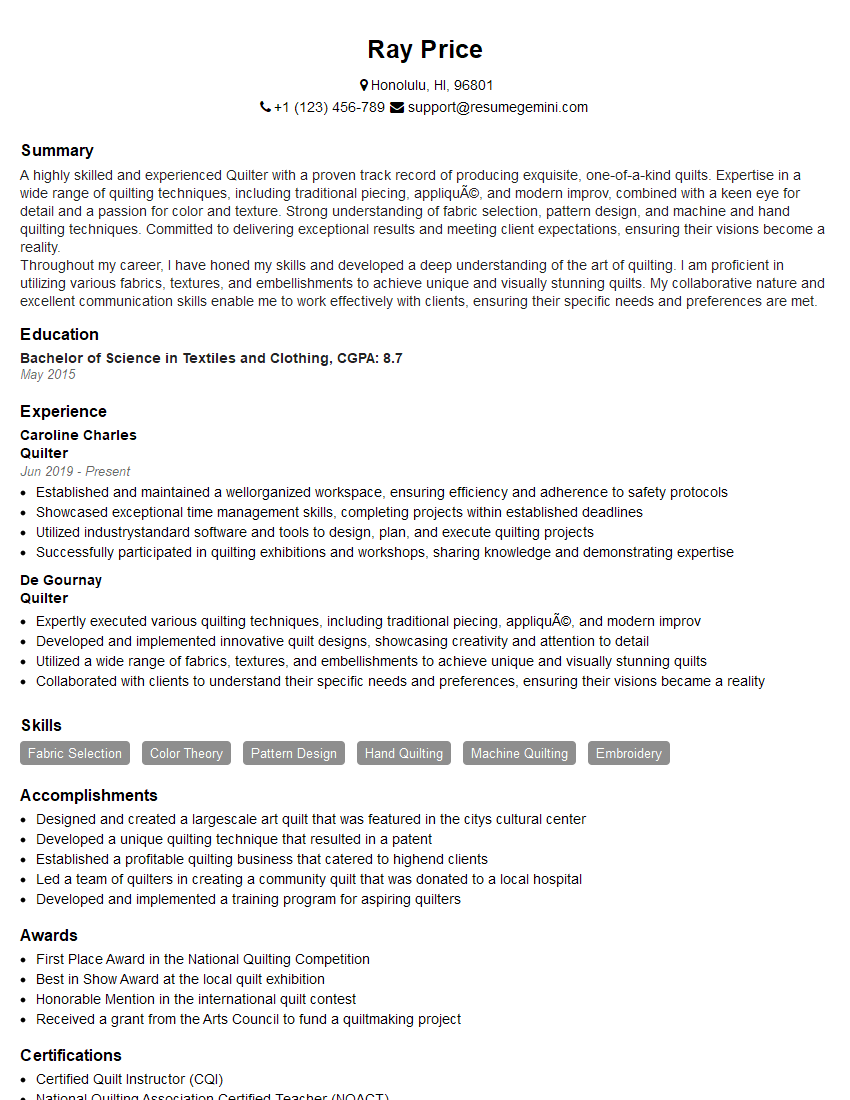
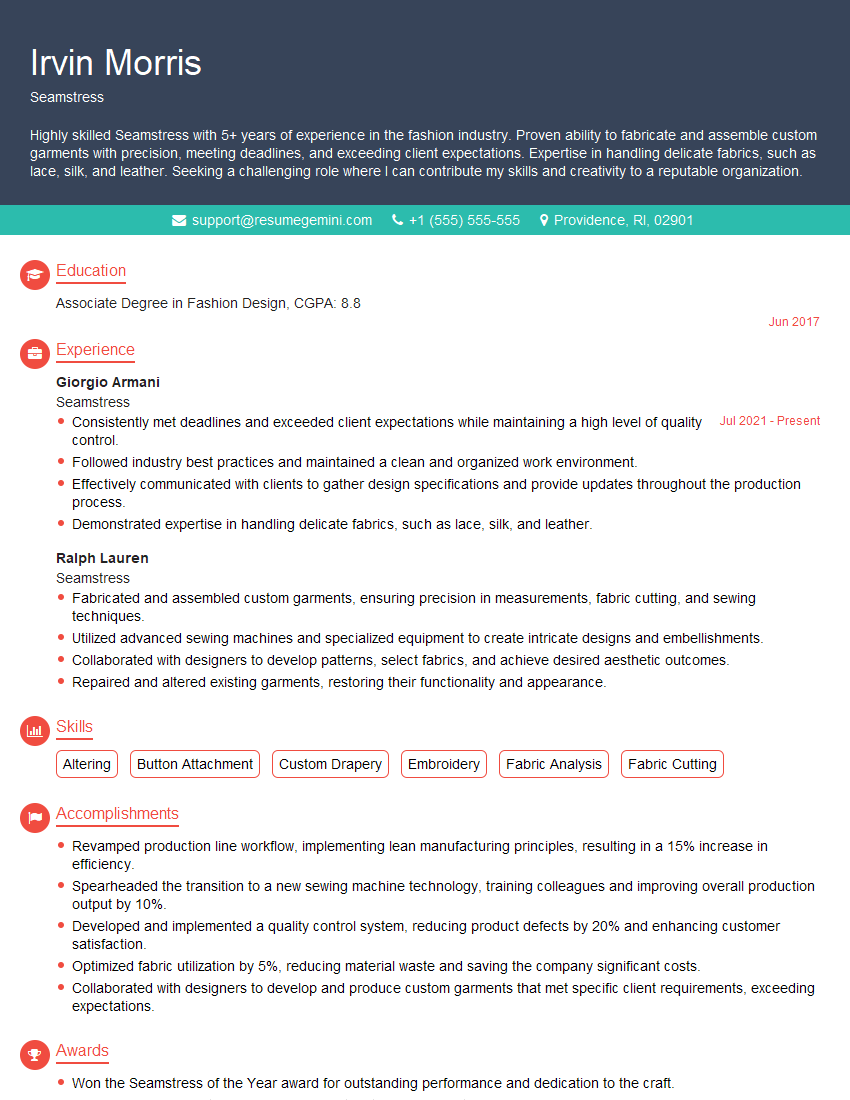
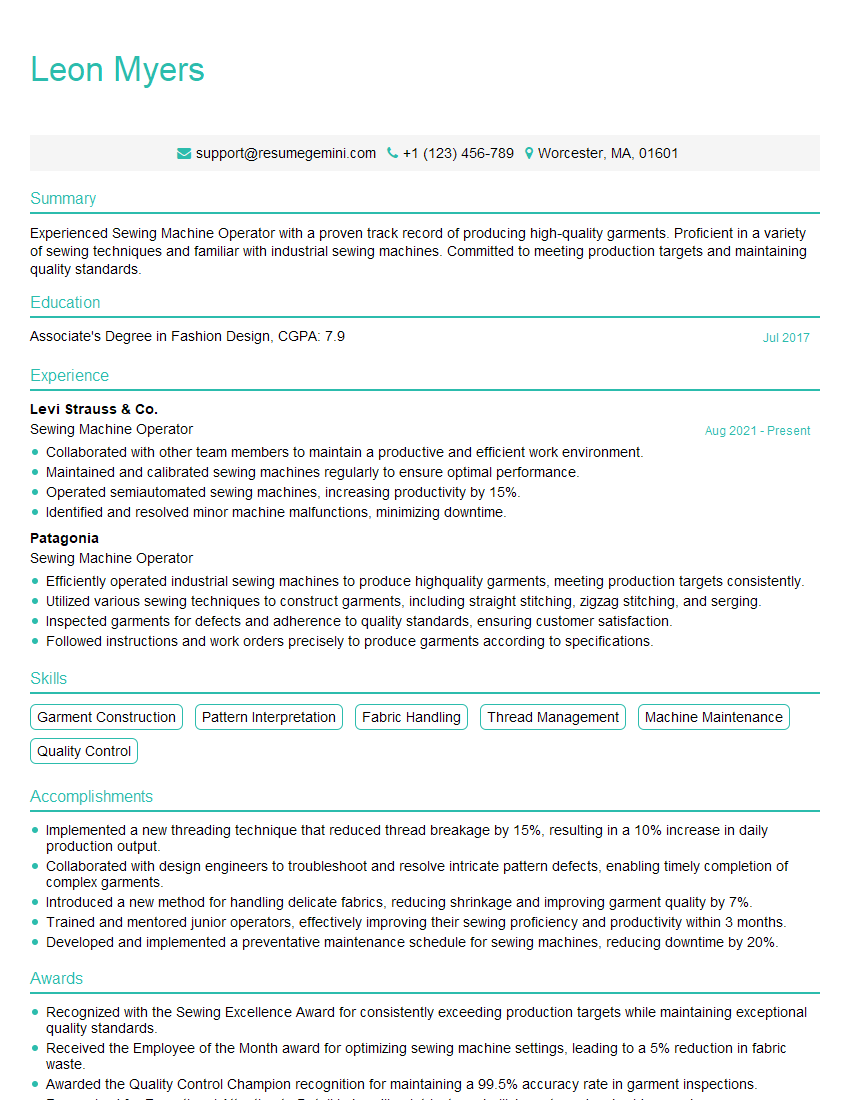
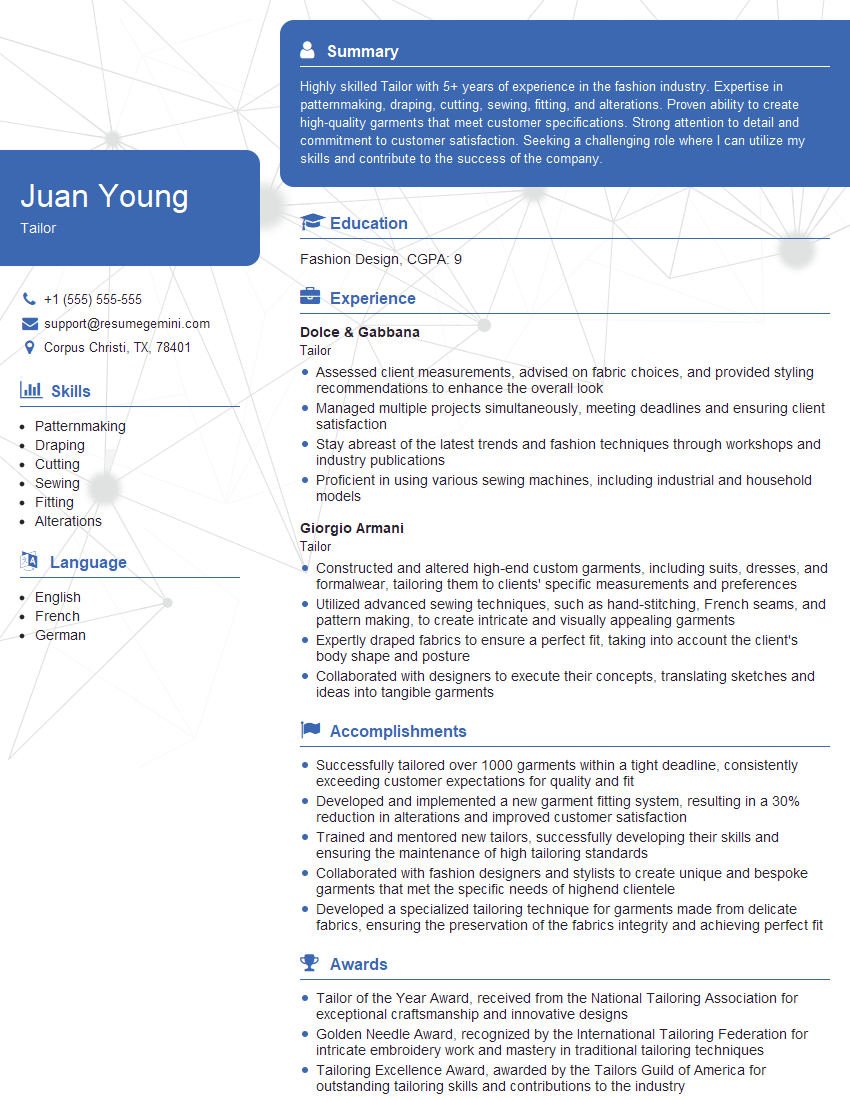
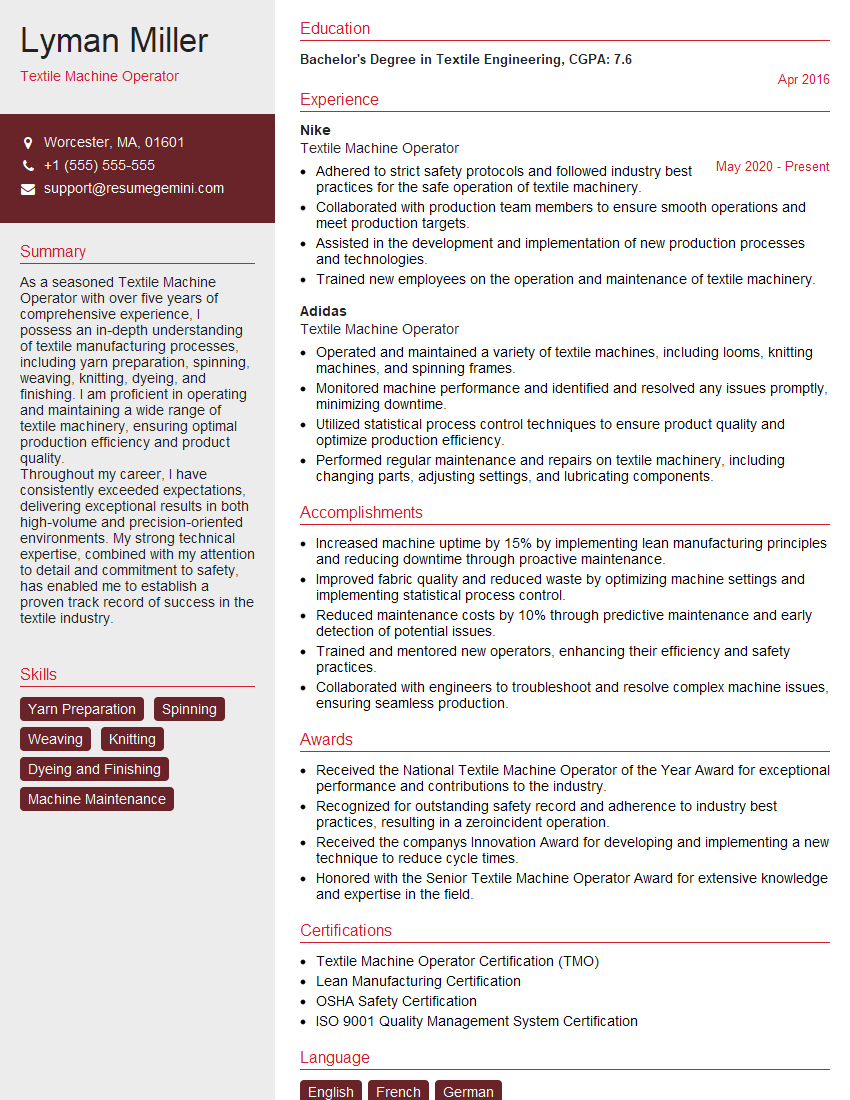
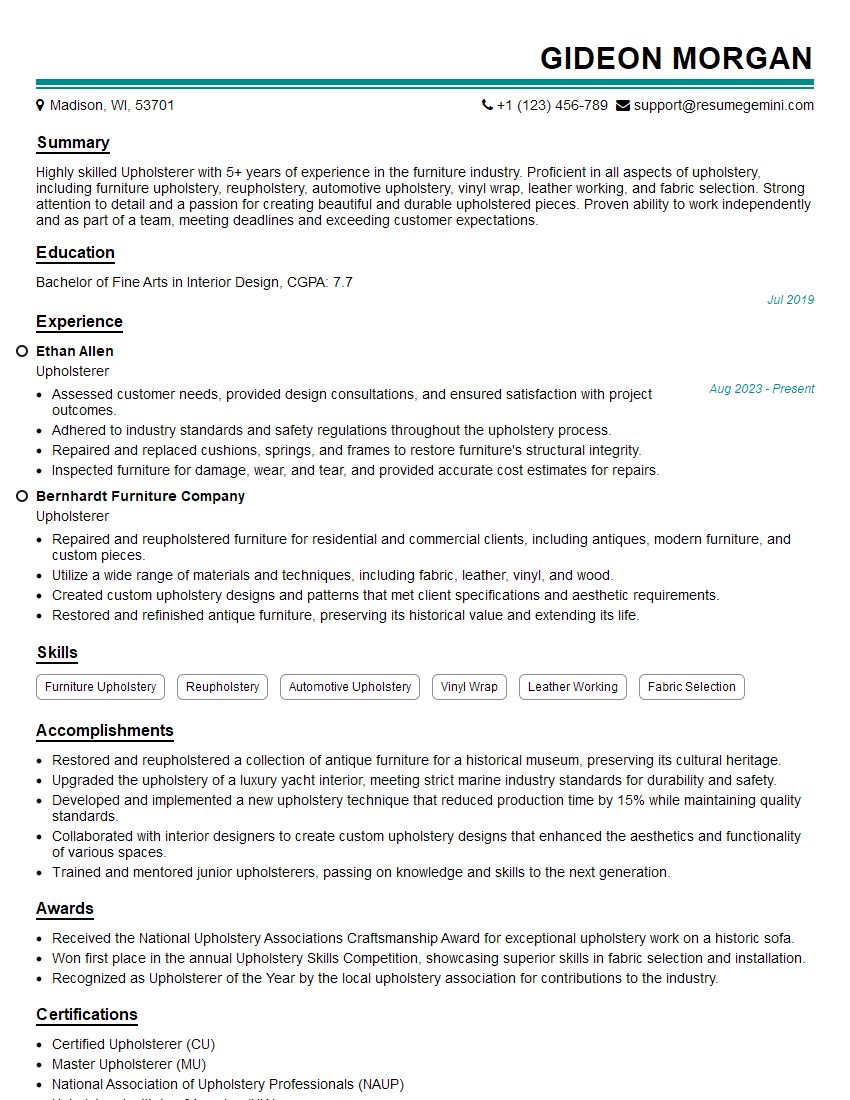
Mastering the basics of sewing machine mechanics opens doors to exciting career opportunities in fashion, textiles, and manufacturing. A strong understanding of these principles demonstrates valuable technical skills and problem-solving abilities highly sought after by employers. To maximize your job prospects, focus on creating a professional and ATS-friendly resume that highlights your expertise. ResumeGemini is a trusted resource to help you build a compelling resume that showcases your skills effectively. We provide examples of resumes tailored to roles requiring a basic understanding of sewing machine mechanics to guide you through the process.

Explore more articles
Users Rating of Our Blogs
Share Your Experience
We value your feedback! Please rate our content and share your thoughts (optional).
What Readers Say About Our Blog
Very informative content, great job.
good