Interviews are opportunities to demonstrate your expertise, and this guide is here to help you shine. Explore the essential Bearings Maintenance interview questions that employers frequently ask, paired with strategies for crafting responses that set you apart from the competition.
Questions Asked in Bearings Maintenance Interview
Q 1. What are the common types of bearings?
Bearings are crucial mechanical components that reduce friction and support rotating shafts. They come in many types, each designed for specific applications and load conditions. Some common types include:
- Ball Bearings: Use spherical balls rolling between inner and outer rings. These are very common and are good for high speeds and moderate loads. Think of the bearings in your bicycle wheels.
- Roller Bearings: Utilize cylindrical, tapered, or spherical rollers for better load capacity than ball bearings, particularly radial loads. These are frequently used in heavier machinery like conveyor systems.
- Plain Bearings (or Sleeve Bearings): These consist of a shaft rotating within a sleeve or bushing made of a softer material like bronze or plastic. They are simple in design and are well-suited for lower speeds and heavier loads where lubrication is readily available. An example would be some engine connecting rod bearings.
- Thrust Bearings: Designed to primarily handle axial loads (forces pushing or pulling along the shaft axis). They often utilize multiple balls or rollers arranged to carry these loads effectively. Think of the bearings that stop a rotor from moving up or down in a motor.
- Angular Contact Bearings: Can support both radial and axial loads simultaneously, making them versatile. They’re common in applications like high-speed spindles.
The choice of bearing type depends heavily on the specific application’s requirements for speed, load, cost, and maintenance needs.
Q 2. Explain the difference between rolling element and sliding bearings.
The key difference lies in how they manage friction:
- Rolling Element Bearings: These utilize balls or rollers to minimize friction. Instead of sliding, the elements roll along the raceways (inner and outer rings), significantly reducing friction and wear. This allows for higher speeds and longer lifespans, although they might be less tolerant of shock loads.
- Sliding Bearings (Plain Bearings): Rely on a thin lubricating film between the moving surfaces to minimize friction. The shaft directly slides against the bearing material, so friction is inherently higher. They are typically more tolerant of shock loads but are generally less efficient at high speeds and require consistent lubrication.
Think of it this way: rolling element bearings are like wheels on a cart, making movement easier. Sliding bearings are more like two wooden blocks rubbing against each other; while they might work, more friction leads to greater wear and requires more frequent maintenance.
Q 3. Describe the different types of bearing failures and their causes.
Bearing failures can be catastrophic and lead to significant downtime and repair costs. Common failure types include:
- Fatigue: This is the most frequent type of failure, caused by repeated stress cycles that eventually lead to cracks and spalling (chipping) of the rolling elements or raceways. Think of repeatedly bending a paperclip until it breaks.
- Corrosion: Moisture, chemicals, or improper lubrication can cause corrosion, pitting, and degradation of the bearing surfaces. This is especially problematic in harsh environments.
- Lubrication Failure: Insufficient or improper lubrication leads to increased friction, heat generation, and premature wear. This can manifest as scoring (grooves) or scuffing on bearing surfaces.
- Contamination: Dust, dirt, or other foreign particles can introduce abrasive wear and damage. This is why proper sealing is crucial.
- Improper Installation: Incorrect mounting can induce misalignment, stress concentrations, and early failure.
- Overloading: Exceeding the bearing’s load capacity can cause immediate damage or accelerate fatigue failure.
Identifying the root cause is critical for implementing effective preventative measures and avoiding recurrence. A thorough investigation, including visual inspection, material analysis, and operational data review, is often necessary to pinpoint the cause.
Q 4. How do you perform a bearing inspection?
Bearing inspection is a crucial preventative maintenance task. A thorough inspection involves:
- Visual Inspection: Check for obvious signs of damage like cracks, pitting, corrosion, or unusual wear patterns. Look for any signs of leakage from the bearing housing.
- Play/Clearance Check: Assess the radial and axial clearance using a feeler gauge or dial indicator to check for excessive play (looseness) that indicates wear.
- Temperature Measurement: Use a non-contact infrared thermometer to check bearing temperature. Elevated temperatures suggest increased friction and potential problems.
- Vibration Analysis: Analyze bearing vibration using specialized equipment (vibration meter or spectrum analyzer) which can detect subtle changes indicating early-stage defects before they lead to failure. This is a more advanced method but very effective for early fault detection.
- Lubrication Check: Inspect the lubrication level and condition. Check for signs of contamination or degradation.
The frequency of inspection depends on the application, operating conditions, and criticality of the equipment. Regular inspections are key to preventing catastrophic failures.
Q 5. What are the signs of a failing bearing?
Failing bearings often exhibit several tell-tale signs:
- Unusual Noise: Grinding, growling, squealing, or rumbling sounds indicate friction, wear, or damage within the bearing. This is often one of the first noticeable signs.
- Increased Vibration: Excessive vibration, noticeable through touch or with vibration monitoring equipment, suggests imbalance, misalignment, or bearing damage.
- Elevated Temperature: Higher-than-normal operating temperature is indicative of increased friction and potential problems.
- Stiffness or Binding: Difficulty in rotating the shaft or a noticeable increase in resistance signals bearing wear or damage.
- Leakage: Leakage of lubricant from the bearing housing indicates a seal failure, allowing contaminants to enter and accelerate wear.
- Performance Degradation: A decrease in equipment efficiency or speed can be related to bearing wear.
The combination of these symptoms will help diagnose a problem. Never ignore even seemingly minor changes in behavior.
Q 6. What lubrication methods are used for bearings?
Lubrication is critical for extending bearing lifespan and performance. Common methods include:
- Oil Lubrication: Suitable for high-speed applications and those requiring good cooling. Oil can be delivered through oil baths, drip feed systems, or circulating systems. This works well for many rotating equipment.
- Grease Lubrication: Provides longer lubrication intervals compared to oil, offering good protection against dust and moisture. It’s a more common approach for many industrial applications. Grease is convenient but can also cause premature bearing failures if not selected correctly.
- Oil Mist Lubrication: A fine mist of oil is delivered to the bearing, ideal for high-speed, high-temperature applications where precise lubrication control is needed. This is used for high-speed situations where the risk of over-lubrication is high.
- Solid Lubrication: Utilizes materials like molybdenum disulfide or graphite, especially for extreme conditions where conventional lubricants may fail. Solid lubrication is used for situations where traditional lubricants are not feasible due to high temperatures or other severe environments.
The best method depends on factors like bearing type, operating speed, temperature, and environmental conditions.
Q 7. How do you select the appropriate lubricant for a bearing?
Selecting the correct lubricant is crucial for optimal bearing performance and lifespan. Several factors influence this decision:
- Bearing Type: Different bearings have varying lubrication requirements. Ball bearings, for instance, often perform well with grease, while plain bearings may necessitate oil.
- Operating Speed: High-speed bearings may require low-viscosity lubricants to reduce friction and heat generation. Low-speed bearings can tolerate higher-viscosity lubricants.
- Temperature: The lubricant’s operating temperature range must align with the bearing’s expected operating temperature. Extreme temperatures can cause lubricant breakdown.
- Load: Heavy loads may require lubricants with higher viscosity and extreme pressure (EP) additives to provide a stronger lubricating film.
- Environmental Conditions: The presence of dust, moisture, or chemicals may necessitate lubricants with specific additives to protect against contamination and corrosion.
Always consult the bearing manufacturer’s recommendations and lubricant supplier’s data sheets to ensure compatibility and optimal performance. Using the wrong lubricant can seriously shorten bearing life and lead to failures.
Q 8. What is the importance of proper bearing alignment?
Proper bearing alignment is crucial for extending bearing lifespan and ensuring smooth, efficient operation of rotating machinery. Misalignment introduces forces that aren’t accounted for in the bearing’s design, leading to premature wear, increased vibration, noise, and ultimately, failure. Think of it like trying to roll a wheel on a bumpy road – the wheel (bearing) will experience uneven stress and wear out much faster than if it were on a smooth, flat surface (properly aligned shaft).
Misalignment can be axial (shaft is not parallel), radial (shafts are not concentric), or angular (shaft angles are off). These misalignments can cause uneven load distribution on the bearing elements, leading to increased friction, heat generation, and potential damage to the raceways and rolling elements. The severity of the problem depends on the type and magnitude of misalignment, the bearing type, and the operating speed.
In a real-world scenario, consider a large industrial fan. Misalignment of the fan’s motor shaft and the fan blade shaft will lead to excessive vibration and noise, potentially causing damage to the fan, motor, and even nearby structures. Regular alignment checks and corrections are essential to prevent such costly failures.
Q 9. How do you measure bearing play?
Measuring bearing play, also known as end-play or radial clearance, involves determining the amount of movement allowed between the rotating components (inner ring and rolling elements) and the stationary component (outer ring). This measurement is crucial for assessing the bearing’s condition and ensuring it is within the manufacturer’s specified limits.
The method used depends on the bearing type and size. For smaller bearings, a simple dial indicator or a feeler gauge can be used. The dial indicator is attached to a fixed surface, and the bearing is gently moved to measure the amount of radial movement. Feeler gauges are used to check for axial play by inserting them between the shaft and the bearing housing.
Larger bearings might require more specialized tools like a micrometer or electronic measuring devices. It’s vital to follow the manufacturer’s instructions for the specific bearing and always ensure the bearing is properly supported to avoid inducing any false readings. Excessive play indicates wear and tear, while zero play could mean excessive preload and risk seizure.
Q 10. Explain the concept of bearing preload.
Bearing preload is a controlled amount of interference or axial force applied during installation to eliminate clearance between the bearing components. It’s not about squeezing the bearing tightly but rather setting a slight compression to increase stiffness, reduce vibrations, and enhance accuracy. Think of it like tightening the spokes on a bicycle wheel – slight tension makes the wheel stronger and more stable.
Preload isn’t always necessary or beneficial. Some applications require a certain level of free play, particularly when dealing with thermal expansion or shock loads. The correct preload depends on factors like bearing type, operating speed, and application requirements. Incorrect preload can lead to premature bearing failure due to increased stress and heat generation, or to excessive vibration and noise due to insufficient stiffness.
In high-speed applications, like those found in machine tools or robotics, preload can improve accuracy and reduce vibrations, which is crucial for smooth operation and precision.
Q 11. What are the safety precautions when working with bearings?
Working with bearings requires meticulous safety procedures to prevent injury and damage. The key precautions include:
- Eye Protection: Always wear safety glasses to protect against flying debris during installation and removal.
- Gloves: Use appropriate gloves to prevent cuts and abrasions from sharp edges and to maintain cleanliness.
- Proper Lifting Techniques: Use lifting aids for heavier bearings to avoid strains and injuries.
- Cleanliness: A clean work area prevents contaminants from entering the bearing, which can lead to early failure. This includes the use of clean tools and lubricants.
- Avoid dropping bearings: Dropping bearings can damage them. Handle them with care.
- Protective Clothing: Wear appropriate clothing to protect against cuts and scrapes.
Failure to adhere to these safety precautions can result in serious injury or damage to equipment.
Q 12. How do you handle bearing installation and removal?
Bearing installation and removal are critical processes that demand precision to avoid damage to the bearing or the surrounding components. Improper handling can lead to premature failure and costly downtime.
Installation: Often involves using specialized tools like hydraulic presses, bearing pullers, or specialized sockets to ensure even force distribution and avoid damage to the bearing or shaft. Heating the outer ring slightly (carefully!) can help with press fits, while chilling the shaft can help with interference fits. It’s vital to follow the manufacturer’s guidelines for specific installation methods to ensure proper seating and alignment.
Removal: Removal generally requires bearing pullers which engage the inner or outer race of the bearing. It is essential to choose the correct puller for the bearing type to prevent damage. Excessive force should always be avoided. For press-fit bearings, using a proper hydraulic press is critical.
In both cases, cleanliness is paramount. Any debris or damage introduced during installation or removal can dramatically shorten the bearing’s operational life.
Q 13. Describe the process of bearing lubrication.
Bearing lubrication is essential for reducing friction, heat generation, and wear. The type and frequency of lubrication depend on various factors, including the bearing type, operating speed, temperature, and environmental conditions. Imagine a car engine without oil – it would quickly seize up. Lubrication plays a similar role for bearings.
The lubrication method can involve grease or oil. Grease is often preferred for slow-speed applications, offering long-term lubrication. Oil lubrication is suitable for high-speed applications where heat dissipation is critical, often requiring a continuous oil supply.
Over-lubrication can be as harmful as under-lubrication. Excess lubricant can lead to churning, increased heat generation, and contamination. It is important to follow the manufacturer’s recommendations for lubricant type, quantity, and application method to ensure optimal performance and longevity. Regular lubrication intervals are critical for maintaining bearing health and preventing premature wear.
Q 14. What is the significance of bearing temperature monitoring?
Bearing temperature monitoring is a critical aspect of predictive maintenance. Elevated bearing temperatures are often an early indicator of problems like insufficient lubrication, misalignment, excessive load, or impending failure. Think of a fever as a sign of illness; similarly, elevated bearing temperature signifies a potential issue.
Regular temperature monitoring can be done using various methods, including contact temperature sensors (thermocouples or RTDs), non-contact infrared thermometers, or vibration analysis which can indirectly indicate temperature changes. Establishing a baseline temperature for each bearing under normal operating conditions is important to identify deviations that might indicate a developing problem.
By tracking bearing temperatures, you can catch potential problems early, schedule maintenance proactively, avoid costly downtime, and prevent catastrophic failures. A slight increase in temperature might require investigation and lubrication checks, while a significant jump indicates a serious issue that necessitates immediate action.
Q 15. Explain the concept of bearing vibration analysis.
Bearing vibration analysis is a predictive maintenance technique used to assess the health of rotating equipment, primarily bearings, by analyzing the vibrations they produce. Healthy bearings produce predictable vibrations, while faulty bearings exhibit characteristic changes in vibration patterns. These changes can indicate various problems, such as wear, damage, or impending failure, allowing for proactive maintenance rather than reactive repairs.
The analysis involves using sensors to measure vibrations at various frequencies. This data is then processed and analyzed using specialized software to identify anomalies. For example, a sudden increase in high-frequency vibrations might point to a developing surface defect on the bearing raceway, whereas a low-frequency vibration might indicate imbalance or misalignment issues. By identifying these patterns early, costly downtime and catastrophic failures can be prevented.
Think of it like listening to a car engine. A healthy engine runs smoothly with minimal noise. If you hear unusual knocking or rumbling, it indicates a problem that needs attention. Vibration analysis for bearings is analogous to that – it allows us to ‘listen’ to the bearings and identify potential issues before they lead to a complete breakdown.
Career Expert Tips:
- Ace those interviews! Prepare effectively by reviewing the Top 50 Most Common Interview Questions on ResumeGemini.
- Navigate your job search with confidence! Explore a wide range of Career Tips on ResumeGemini. Learn about common challenges and recommendations to overcome them.
- Craft the perfect resume! Master the Art of Resume Writing with ResumeGemini’s guide. Showcase your unique qualifications and achievements effectively.
- Don’t miss out on holiday savings! Build your dream resume with ResumeGemini’s ATS optimized templates.
Q 16. What are the common causes of bearing noise?
Bearing noise is often a symptom of underlying problems. Common causes include:
- Wear and tear: As bearings age and components wear, friction increases, leading to noise. Imagine the sound of two rough surfaces rubbing against each other; that’s similar to the noise generated by worn bearing elements.
- Lubrication issues: Insufficient or contaminated lubricant causes increased friction and noise. This is like trying to ride a bicycle with a dry chain – it makes a lot of noise and is inefficient.
- Damage: Impacts, cracks, or pitting in the bearing components can generate noise. This can be like throwing a stone in a smooth pond, causing ripples – the damage disrupts the smooth operation of the bearing, producing noise.
- Improper installation: Misalignment or loose fit can cause excessive vibration and noise. Imagine trying to fit a square peg into a round hole – it just won’t work smoothly and will make noise.
- Defective bearings: Bearings may be manufactured with inherent defects causing noise from the start. This is like buying a faulty product that doesn’t work as expected right from the beginning.
Q 17. How do you troubleshoot bearing problems?
Troubleshooting bearing problems involves a systematic approach:
- Identify the symptom: Is the problem noise, vibration, increased temperature, or performance degradation?
- Collect data: Gather information on the bearing type, operating conditions, load, speed, and lubrication.
- Inspect visually: Check for obvious signs of damage, such as cracks, pitting, or excessive wear. Note any leakage or contamination.
- Vibration analysis: Conduct vibration analysis to identify frequency patterns indicative of specific faults.
- Temperature monitoring: Check bearing temperature to detect overheating caused by friction or inadequate lubrication.
- Oil analysis: Analyze lubricant samples for contaminants or degradation products that can indicate bearing wear.
- Bearing disassembly and inspection: If necessary, disassemble the bearing and inspect individual components for wear, damage, or defects. This may involve microscopic examination.
- Root cause analysis: Determine the underlying cause of the problem, not just the symptoms. Was it improper lubrication, excessive load, or a manufacturing defect?
Remember, a methodical approach is crucial. Jumping to conclusions can lead to incorrect diagnoses and unnecessary repairs.
Q 18. What are the different types of bearing seals?
Bearing seals prevent contaminants from entering and lubricant from escaping. Common types include:
- Contact seals: These seals rely on physical contact between the sealing element and the shaft or housing to create a barrier. Examples include lip seals (common in automotive applications) and O-rings.
- Non-contact seals: These seals create a barrier without direct contact, often using labyrinth seals or magnetic seals. Labyrinth seals use a series of grooves and chambers to create a tortuous path for contaminants, while magnetic seals use magnetic forces to repel contaminants.
- Combination seals: Some bearings use a combination of contact and non-contact seals for optimal protection. This provides both a primary and a backup seal in case one fails.
The choice of seal depends on factors such as the operating environment, speed, temperature, and the type of lubricant used. For instance, a high-speed application might require a non-contact seal to minimize friction, whereas a harsh environment might call for a robust contact seal.
Q 19. What is the importance of bearing cleanliness?
Bearing cleanliness is paramount because contaminants, even microscopic ones, can significantly accelerate wear and shorten bearing lifespan. Think of sand in a watch’s gears; even small particles can cause grinding and ultimately, failure. Contaminants act as abrasives, causing scratches and pitting on the bearing surfaces, increasing friction, and generating heat. This can lead to premature failure, increased maintenance costs, and potential equipment damage.
Maintaining cleanliness requires careful handling during installation and operation. Cleanliness procedures must include using appropriate cleaning solvents, avoiding contact with contaminants, and employing clean handling techniques. Implementing appropriate filtration of lubricants is also crucial.
Q 20. How do you prevent bearing corrosion?
Bearing corrosion is a major cause of failure, especially in humid or corrosive environments. Prevention involves several strategies:
- Proper lubrication: Using high-quality lubricants with anti-corrosion additives creates a protective barrier against moisture and other corrosive agents.
- Protective coatings: Applying specialized coatings to the bearing surfaces can further enhance corrosion resistance. These coatings act like a shield against chemical attack.
- Encapsulation: Enclosing the bearing in a sealed housing prevents exposure to moisture and other corrosive elements. This is like keeping a valuable item in a protective case.
- Material selection: Choosing corrosion-resistant materials for bearings and housings can significantly reduce the risk of corrosion. Stainless steel is a common choice for corrosive environments.
- Environmental control: In some cases, controlling the environment – for example, by reducing humidity or using inert gases – can be essential to minimize corrosion.
Q 21. What is the difference between predictive and preventive maintenance for bearings?
Predictive and preventive maintenance are both crucial for extending bearing life, but they differ significantly in their approach:
- Preventive maintenance (PM): This is a scheduled approach where bearings are replaced or inspected at predetermined intervals, regardless of their actual condition. Think of it as changing your car’s oil every 3,000 miles, even if it doesn’t seem necessary. It’s proactive but might lead to unnecessary replacements.
- Predictive maintenance (PdM): This data-driven approach uses techniques like vibration analysis, oil analysis, and thermography to assess the actual condition of the bearings and predict when they’re likely to fail. This allows for timely interventions only when needed, minimizing unnecessary replacements and maximizing bearing lifespan. It’s like checking your car’s oil level frequently and only changing it when necessary, based on the actual condition of the oil.
Ideally, a combination of both strategies is employed. PM provides a baseline level of protection, while PdM ensures that maintenance efforts are focused on bearings that genuinely require attention, optimizing maintenance efficiency and minimizing downtime.
Q 22. How do you interpret bearing condition monitoring data?
Interpreting bearing condition monitoring data involves analyzing vibration, temperature, and acoustic emissions to assess the bearing’s health. We look for trends and anomalies. For example, a sudden increase in vibration amplitude at a specific frequency could indicate a developing defect like a localized spalling of the raceway. Similarly, an elevated temperature suggests increased friction, potentially due to inadequate lubrication or misalignment. Acoustic emission monitoring can detect subtle changes in the bearing’s sound signature, helping to pinpoint early-stage damage.
The analysis usually involves comparing the current data to baseline readings, using sophisticated software to identify patterns and predict future behaviour. We utilize various diagnostic techniques such as spectral analysis (FFT) to isolate specific frequencies associated with different fault types. For example, a high-energy peak around 1x running speed might indicate a problem with the outer race, while a peak at 2x indicates an inner race defect. We also employ statistical process control (SPC) charts to monitor data over time, helping us anticipate potential failures before they happen. A clear shift from the established baseline often warrants further investigation and potential preventative maintenance.
Q 23. Describe your experience with different bearing brands and manufacturers.
Throughout my career, I’ve worked extensively with various bearing brands including SKF, Timken, NSK, and Schaeffler. Each manufacturer has its own strengths and specialties. For instance, SKF is known for its wide range of products and robust engineering capabilities, while Timken excels in producing high-capacity bearings for heavy-duty applications. NSK often provides bearings with superior precision and longevity, especially for high-speed applications. Schaeffler is particularly strong in automotive and industrial automation sectors. My experience includes selecting the right bearing based on application demands (load, speed, environment) and comparing their performance metrics like fatigue life and reliability predictions from their respective manufacturer catalogues.
Beyond brand selection, understanding manufacturer specifications and quality control processes is crucial. I’ve worked with manufacturers directly to discuss quality issues, trace potential root causes of failures, and implement corrective actions. This includes collaborating on failure analysis investigations to pinpoint reasons for premature bearing failures, leading to better procurement and maintenance strategies.
Q 24. What software or tools do you use for bearing maintenance?
My work utilizes a suite of software and tools for bearing maintenance. Condition monitoring software packages are essential, enabling data acquisition, analysis, and reporting. These often include features for spectral analysis (FFT), time-waveform analysis, and order tracking to identify specific bearing faults. We employ dedicated data acquisition systems (DAQ) to collect vibration, temperature, and acoustic emission data from sensors strategically placed on the equipment. I use specialized diagnostic software to filter noise, interpret results, and ultimately generate predictive maintenance schedules.
Beyond software, I use various handheld instruments, including vibration analyzers, ultrasonic detectors, and infrared thermometers, for on-site assessments. These provide real-time data for quick evaluations and allow for immediate identification of potential issues. Furthermore, we employ Computerized Maintenance Management Systems (CMMS) to track bearing history, maintenance schedules, and spare parts inventory. These CMMS integrate with our diagnostic software for seamless data flow and efficient management of our bearing maintenance program. Data visualization dashboards help stakeholders understand the overall health of our bearing assets.
Q 25. Explain your experience with different bearing materials.
Experience with various bearing materials is critical for selecting the right bearing for a specific application. Common materials include steel alloys (chrome steel, high-speed steel), ceramics (silicon nitride, silicon carbide), and various polymer materials. Steel alloys are the most common due to their strength, durability, and relatively low cost. However, their limitations lie in their susceptibility to corrosion and fatigue at high temperatures or speeds.
Ceramic bearings offer advantages in higher speeds and temperatures, reduced friction and wear, and increased corrosion resistance. However, they are more brittle and more expensive. Polymer bearings, such as those made of PTFE or nylon, are excellent for low-speed, low-load applications, providing good wear resistance and quiet operation but lacking strength for high-stress environments. The selection process considers factors such as operating temperature, load type, speed, lubricant compatibility, and cost. For example, in a high-temperature application, a ceramic bearing may be preferred, while a food processing environment may necessitate stainless steel or polymer bearings for hygiene reasons.
Q 26. How do you assess the remaining useful life of a bearing?
Assessing the remaining useful life (RUL) of a bearing relies on several methods. One approach is using the bearing’s manufacturer’s data sheets and applying relevant load and speed factors to estimate fatigue life. However, this is often limited by the assumptions embedded within these models and may not accurately reflect real-world operating conditions.
More accurate RUL estimation comes from condition monitoring data. By analyzing trends in vibration, temperature, and acoustic emissions, we can build predictive models using machine learning algorithms or other statistical methods to forecast when a bearing is likely to fail. We compare the current condition indicators against established degradation patterns and thresholds defined through historical data and failure analyses. This often involves utilizing advanced signal processing techniques and probabilistic models. It’s crucial to understand the limitations of any RUL estimation – inherent uncertainty always exists.
Q 27. Describe a situation where you had to troubleshoot a complex bearing problem.
In one instance, a critical pump bearing unexpectedly failed, causing significant production downtime. Initial analysis revealed abnormally high vibration levels. The usual suspects – misalignment, lubrication issues, or excessive loads – were all ruled out after thorough inspection. The problem was much more subtle. Through advanced vibration analysis (specifically using high-frequency spectral analysis and enveloping techniques), we discovered a subtle defect in the inner race, hidden beneath the dominant frequencies. This defect was too small to be visually identified initially.
Troubleshooting involved replacing the bearing, then implementing stricter quality control procedures during installation and regular condition monitoring to detect similar issues early on. We also reviewed the pump’s operating parameters and adjusted them slightly to reduce stress on the bearings. This incident highlighted the importance of detailed vibration analysis and the limitations of visual inspection alone when diagnosing complex bearing problems. The root cause was pinpointed only through advanced signal processing techniques and a thorough investigation of the entire system, not simply the bearing itself.
Q 28. What are your strategies for improving bearing reliability?
Improving bearing reliability involves a multi-pronged approach. Firstly, proper bearing selection is crucial, ensuring the chosen bearing is fit for the specific operating conditions. This involves careful consideration of load, speed, temperature, and environmental factors. We often utilize bearing selection software to assist in this process.
Secondly, robust installation practices are essential. This includes proper alignment, adequate lubrication, and the avoidance of contamination during installation. Training technicians on correct procedures is critical here. Thirdly, a comprehensive condition monitoring program is vital, enabling early detection of developing defects through regular vibration, temperature, and acoustic emission monitoring. This allows for proactive maintenance rather than reactive repairs, minimizing downtime and improving overall reliability. Finally, continuous improvement of maintenance practices, including regular review of our processes, and the use of failure analysis to uncover root causes and improve future selection and maintenance are paramount.
Key Topics to Learn for Bearings Maintenance Interview
- Bearing Types and Applications: Understanding different bearing types (ball, roller, tapered, etc.) and their suitability for various applications in different machinery.
- Lubrication Techniques: Mastering proper lubrication methods, selecting appropriate lubricants based on bearing type and operating conditions, and recognizing signs of improper lubrication.
- Bearing Failure Analysis: Identifying common causes of bearing failure (wear, fatigue, contamination, misalignment), and utilizing diagnostic techniques to pinpoint the root cause.
- Installation and Removal Procedures: Safe and efficient methods for installing and removing bearings, minimizing the risk of damage to bearings and surrounding components.
- Preventive Maintenance Strategies: Developing and implementing effective preventative maintenance schedules to extend bearing lifespan and reduce downtime. This includes understanding vibration analysis and other predictive maintenance techniques.
- Troubleshooting and Repair: Diagnosing and resolving bearing-related issues, including cleaning, repairing, or replacing damaged bearings. Practical experience with common repair tools and techniques is invaluable.
- Safety Procedures: Understanding and adhering to all relevant safety regulations and procedures when working with bearings and machinery. This includes proper use of personal protective equipment (PPE).
- Bearing Selection and Specifications: Understanding bearing load ratings, speed capabilities, and other critical specifications to select the appropriate bearing for a given application. Knowledge of relevant industry standards is crucial.
- Maintenance Documentation and Reporting: Accurately documenting maintenance activities, including inspections, repairs, and replacements. Clear and concise reporting is essential for effective maintenance management.
Next Steps
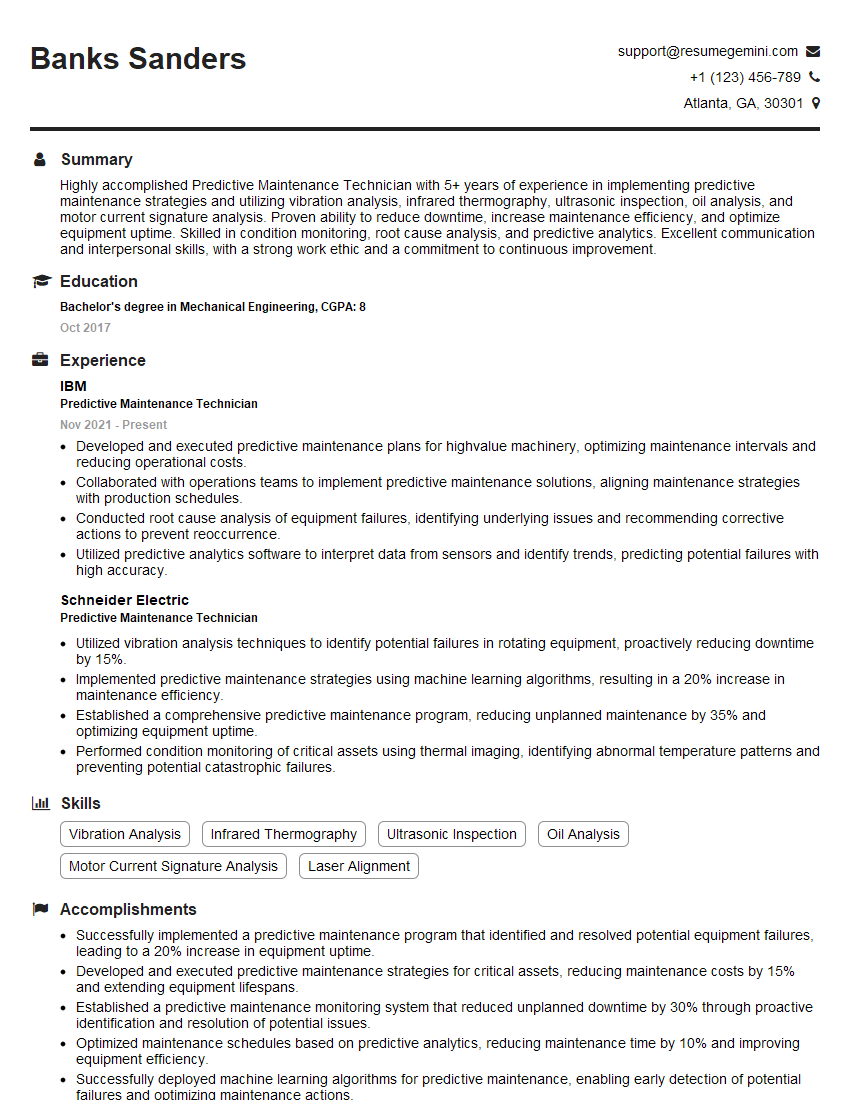
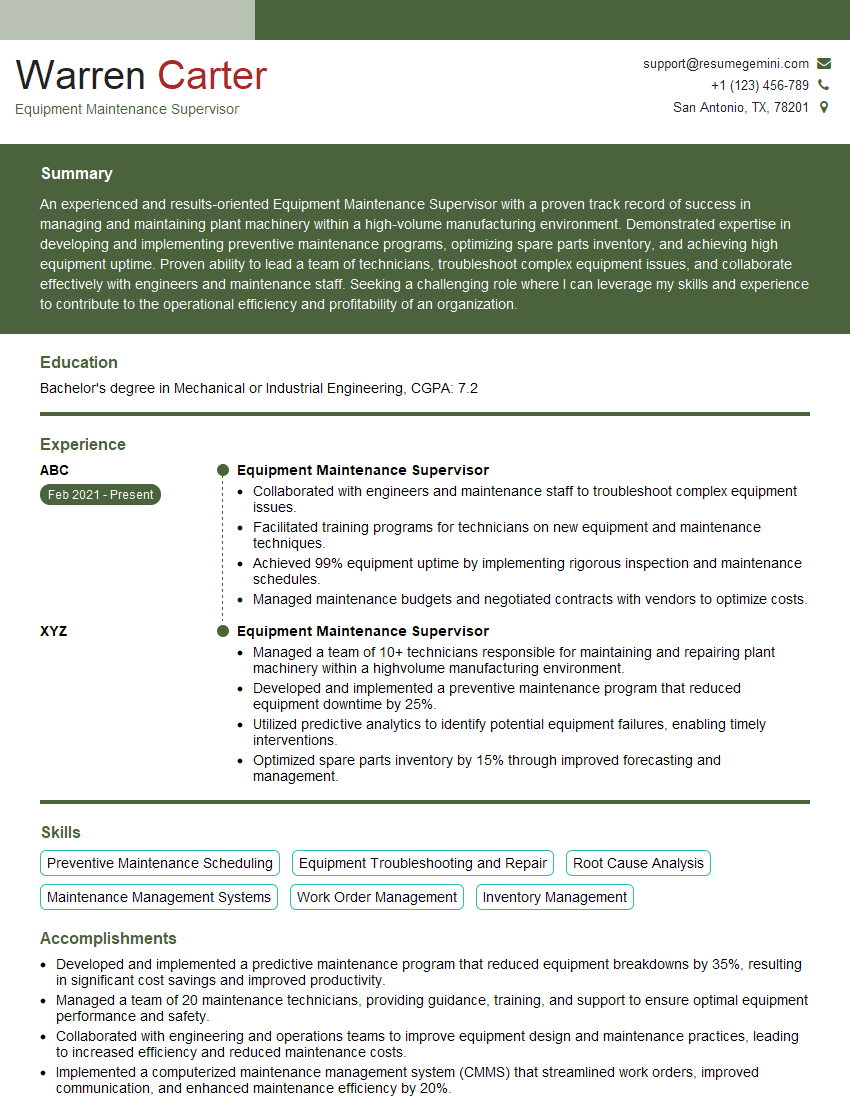
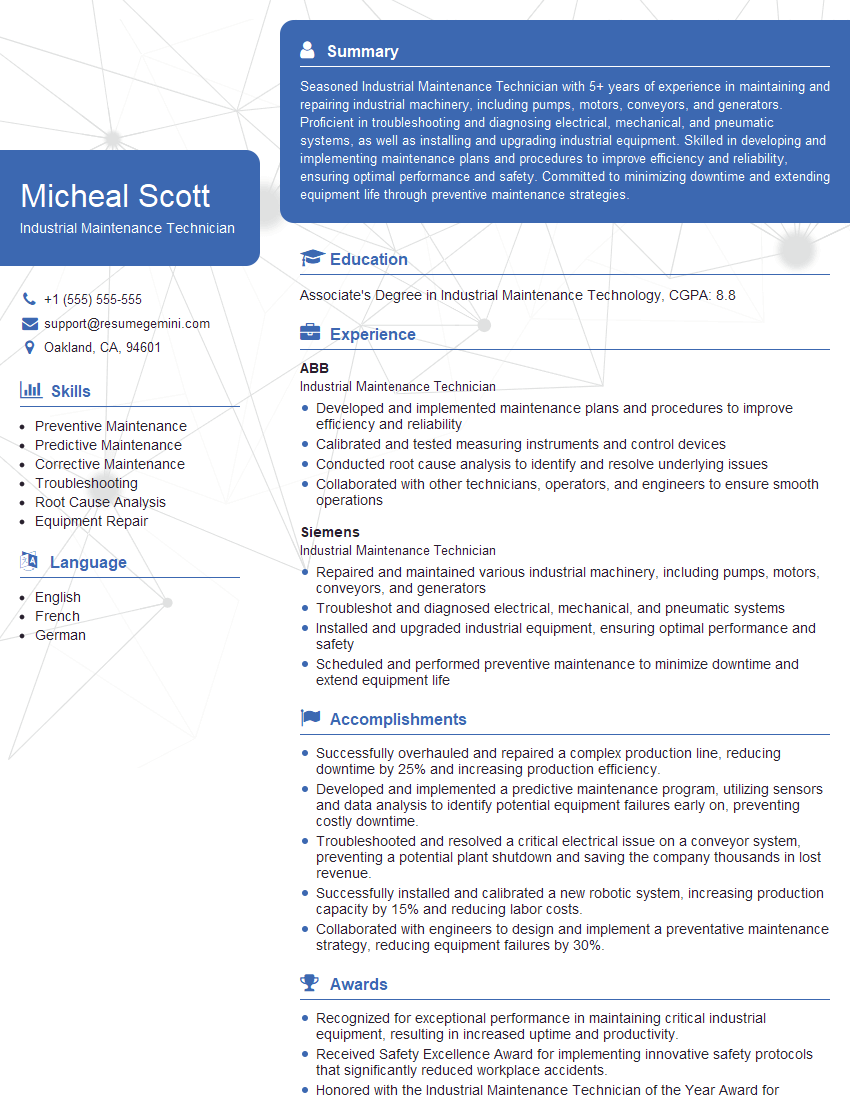
Mastering Bearings Maintenance is crucial for a successful and rewarding career in a variety of industries. Proficiency in this area demonstrates valuable technical skills and problem-solving abilities, opening doors to advancement and higher earning potential. To maximize your job prospects, create an ATS-friendly resume that highlights your skills and experience effectively. ResumeGemini is a trusted resource for building professional and impactful resumes. We provide examples of resumes tailored to the Bearings Maintenance field to help you showcase your qualifications effectively. Take the next step towards your dream career – build a winning resume with ResumeGemini today!


Explore more articles
Users Rating of Our Blogs
Share Your Experience
We value your feedback! Please rate our content and share your thoughts (optional).
What Readers Say About Our Blog
Very informative content, great job.
good