Cracking a skill-specific interview, like one for Beekeeping Practices, requires understanding the nuances of the role. In this blog, we present the questions you’re most likely to encounter, along with insights into how to answer them effectively. Let’s ensure you’re ready to make a strong impression.
Questions Asked in Beekeeping Practices Interview
Q 1. Describe the life cycle of a honeybee.
The honeybee life cycle is a fascinating journey, starting from a tiny egg and culminating in a fully functional adult bee. It’s broadly divided into four stages: egg, larva, pupa, and adult.
- Egg Stage: The queen lays a tiny, pearly white egg in a hexagonal cell of the honeycomb. These eggs are incredibly small, about the size of a grain of rice. Fertilized eggs develop into female bees (workers or queens), while unfertilized eggs become drones (males).
- Larva Stage: After three days, the egg hatches into a legless larva. Nurse bees diligently feed the larva royal jelly initially, then a mixture of pollen and honey, ensuring its growth. This stage lasts around six days for workers and queens, a little longer for drones. The larva molts several times as it grows rapidly.
- Pupa Stage: Once fully fed, the larva spins a cocoon within its cell and enters the pupal stage. During this transformative phase, lasting approximately 12 days for workers, the larva undergoes metamorphosis, developing its wings, legs, and other adult structures. Imagine it like a butterfly in its chrysalis.
- Adult Stage: Finally, the adult bee emerges from its cell, ready to perform its specific role within the colony. This stage varies greatly in lifespan, with worker bees living for several weeks to months, drones for a few weeks, and the queen for several years, sometimes up to five!
Understanding this life cycle is crucial for beekeepers, as it allows us to predict colony development and address potential issues promptly.
Q 2. Explain the different types of honeybees within a colony.
A honeybee colony is a highly organized society with three distinct types of bees:
- Queen Bee: The mother of the colony, she’s the only fertile female, responsible for laying all the eggs. Her primary role is reproduction, ensuring the colony’s continuation. Think of her as the CEO of the hive.
- Worker Bees: These are all female bees, and they constitute the vast majority of the colony’s population. Their roles change as they age: young workers are nurse bees, caring for the brood; older workers become foragers, collecting nectar, pollen, and water. They also build and maintain the honeycomb, clean the hive, and defend it from intruders. They are the backbone of the operation.
- Drone Bees: These are the male bees, their sole purpose is to mate with the queen. They don’t have stingers, don’t collect pollen, and are essentially reliant on the workers for their survival. After mating, drones usually die. They are the ‘investors’ in the colony’s future.
The harmonious interaction between these three types ensures the colony’s survival and productivity.
Q 3. What are the key components of a healthy beehive?
A thriving beehive hinges on several key components:
- A healthy queen: A productive, young queen is essential for consistent egg-laying and colony growth. A failing queen can lead to a decline in the population and ultimately, colony collapse.
- Abundant food stores: Sufficient honey and pollen reserves are crucial for the colony’s survival, especially during winter or periods of poor foraging conditions. Adequate food ensures the colony can nourish itself and raise brood.
- Sufficient space: The hive needs enough space to accommodate the growing population and store honey. Overcrowding can trigger swarming, a natural behavior where the colony splits to create a new hive. Proper hive management involves providing sufficient space as the colony expands.
- Disease and pest-free environment: Regular inspections and appropriate treatments are necessary to prevent and control common bee diseases and pests, like varroa mites and American foulbrood. This ensures the colony’s health and productivity.
- Protection from weather elements: The hive needs adequate protection from extreme weather conditions, such as rain, wind, and intense heat or cold. A well-situated hive and appropriate hive coverings help safeguard the bees.
Maintaining these components requires careful observation, proactive management, and a deep understanding of bee biology.
Q 4. How do you prevent swarming in your beehives?
Swarming is a natural instinct for honeybees, but it can be detrimental to the beekeeper’s honey production. It’s a way for the colony to reproduce, where the old queen leaves with a portion of the workers to establish a new hive. Here’s how I prevent it:
- Regular hive inspections: Regularly checking the hive allows me to identify signs of overcrowding, such as excessive brood production and queen cell development (the cups where new queens are raised). Early detection is key.
- Providing ample space: Adding extra supers (honey storage boxes) or brood boxes gives the bees more room to expand, reducing the urge to swarm.
- Splitting the hive: Proactively splitting a crowded hive creates two smaller colonies, thereby relieving congestion. This involves carefully dividing the brood, bees, and resources between two new hives, with each receiving a queen or a queen cell.
- Clipping the queen’s wings: This method prevents the queen from flying away with the swarm, as she can’t take off if her wings are clipped. However, this is a more invasive technique and requires careful consideration.
- Swarm traps: Placing swarm traps (empty hives with frames) near the apiary can lure swarms away from your main hives. These should be treated with old honeycomb to attract the bees.
A combination of these methods provides a comprehensive approach to swarming prevention. Prevention is always easier than trying to recover a lost swarm!
Q 5. Describe your methods for controlling common bee diseases and pests.
Controlling bee diseases and pests is vital for maintaining healthy hives. My approach is multifaceted:
- Regular inspections: Frequent inspections allow me to identify signs of disease or pest infestation early on. This includes checking for unusual brood patterns, mite infestations, and signs of disease such as foulbrood.
- Integrated Pest Management (IPM): I prioritize non-chemical methods where possible, such as screen bottom boards to help control varroa mites by allowing mites to fall through the screen.
- Oxalic acid treatment: For varroa mite control, I use oxalic acid dribble or sublimation, which is an organic acid treatment effective against mites within the broodless period. Always follow safety guidelines carefully when using oxalic acid.
- Formic acid treatment: Another organic acid treatment often used for varroa mite control is formic acid, also used during the brood rearing period.
- Proper hygiene: Maintaining clean hives and replacing old, damaged comb prevents the buildup of pathogens and pests.
It is crucial to correctly identify the disease or pest before treating the hive and choosing the appropriate method. Using the right treatment at the right time greatly increases the chance of recovery. Consulting with an experienced beekeeper or a local bee inspector can be extremely helpful.
Q 6. Explain the process of honey extraction from the hive.
Honey extraction is a delicate process that requires care to avoid damaging the honey or harming the bees. My process involves several steps:
- Harvesting the frames: I carefully remove frames filled with capped honey from the hive, avoiding excessive jarring to prevent damaging the combs.
- Uncapping the honey: I use an uncapping knife or fork to carefully remove the wax cappings that seal the honeycombs. The cappings can be rendered down for beeswax.
- Extraction: I then use a honey extractor, a centrifugal machine that spins the frames, forcing the honey out of the combs. This preserves the combs for reuse.
- Filtering the honey: The extracted honey is then filtered to remove any remaining wax particles or debris. I use a double filter for a clean and clear product.
- Bottling and storage: Once filtered, the honey is carefully bottled and stored in a cool, dark place. Honey continues to crystallize or granulate over time, which is a natural process.
Careful handling and a gentle approach are vital to ensure both honey quality and the well-being of the bees.
Q 7. What are the different types of beehives and their advantages and disadvantages?
Several types of beehives are used worldwide, each with its advantages and disadvantages:
- Langstroth Hive: This is the most common type in many countries. It’s modular, allowing for easy expansion and management, and frames are easily inspected. However, it can be more expensive initially.
- Top Bar Hive: This hive has horizontal bars instead of frames, making it simpler and cheaper to construct. It mimics natural beehive construction, but honey extraction is more difficult and less efficient than Langstroth hives. It may be less amenable to commercial-scale operations.
- Warre Hive: A vertical hive with smaller boxes, it encourages natural comb building and is considered more natural. However, it’s less easily managed and inspected than a Langstroth, making it a less practical choice for commercial beekeeping.
- Flow Hive: A relatively new design with an ingenious system allowing honey extraction from the hive without opening the hive. It’s convenient, but initial investment can be significant, and some beekeepers find that it reduces the observation of colony health.
The best hive type depends on the beekeeper’s experience, budget, scale of operation, and personal preference. Each type has its own strengths and weaknesses, and what suits one beekeeper might not be suitable for another.
Q 8. How do you assess the health of a bee colony?
Assessing the health of a bee colony is crucial for successful beekeeping. It’s like giving your bees a thorough check-up! I look at several key indicators:
- Population Size and Brood Pattern: A strong colony will have a large, actively growing population. I inspect the brood frames (where the queen lays eggs) for a consistent, healthy pattern. Gaps or irregularities can signal problems like queen issues or disease.
- Queen Presence and Quality: Locating the queen is important; a healthy queen lays consistently and her presence ensures colony continuity. I look for her characteristic larger size and the presence of fresh eggs.
- Food Stores: Sufficient honey and pollen reserves are vital, especially going into winter. I assess the amount and quality of stored food to ensure the colony can survive lean times. Low stores necessitate supplemental feeding.
- Disease and Pest Inspection: I carefully examine the bees and combs for any signs of pests (like Varroa mites or wax moths) or diseases (like American foulbrood or chalkbrood). Early detection is critical for effective treatment.
- Overall Behavior: A healthy colony is busy and active. Listlessness, excessive fighting, or unusual buzzing can indicate problems. I observe the bees’ behavior both inside and outside the hive.
By regularly monitoring these factors, I can identify potential problems early on and take appropriate action to maintain colony health and productivity. For example, a patchy brood pattern might prompt me to investigate queen health, while signs of Varroa mites would trigger treatment with approved miticides.
Q 9. What safety measures do you take when working with bees?
Safety is paramount when working with bees. They’re beneficial insects but can sting, and that’s not a pleasant experience! My safety measures include:
- Protective Gear: I always wear a bee suit, including a veil, gloves, and boots. This protects me from stings and allows me to work calmly.
- Calm Demeanor: Bees are sensitive to vibrations and sudden movements. I work slowly and deliberately, avoiding jerky actions that might agitate them.
- Smoke: I use a smoker to gently puff smoke into the hive. This masks alarm pheromones and makes the bees less likely to sting.
- Timing: I inspect hives during the warmest part of the day when bees are most active and less likely to cluster in cold temperatures.
- Hive Tool: I use a hive tool to carefully separate frames and prevent damaging the comb. This helps avoid crushing bees.
- Awareness of Surroundings: I’m mindful of where I’m working and ensure there are no tripping hazards. I also avoid working near water sources which can attract bees away from the hive.
It’s all about being prepared and respectful. Think of it as a collaboration; I need to access the hive, and they need to continue their vital work without undue stress.
Q 10. Describe your experience with queen rearing.
Queen rearing is a specialized skill requiring patience and attention to detail. I’ve used several methods, including the Miller method and the Jenter method. The Miller method involves grafting larvae into queen cups, while the Jenter method uses a special frame to raise queens in a controlled environment. My experience has taught me that success hinges on several factors:
- Timing: Queen rearing is best done during the main honey flow when the colony is strongest and has ample resources.
- Larvae Selection: The quality of the larvae directly impacts the quality of the queens. I select healthy, young larvae of the right age.
- Nurse Bees: A sufficient number of young nurse bees are essential for feeding and caring for the developing queens.
- Environmental Control: Temperature and humidity play a significant role. I ensure the optimal conditions within the rearing environment.
- Disease Prevention: Maintaining sanitary conditions throughout the process minimizes disease risks and maximizes queen survival.
I’ve had both successes and setbacks—some queens fail to mate properly, some colonies reject new queens. But with practice and careful observation, the success rate increases. It’s a fulfilling aspect of beekeeping, allowing for genetic improvement within the apiary and the ability to replace failing or aging queens.
Q 11. How do you manage winter bee colonies?
Winter management is crucial for colony survival. The goal is to ensure the bees have enough food and are protected from harsh weather conditions. My strategies include:
- Food Stores: I assess honey stores in the fall and supplement with sugar syrup if needed. Bees need a substantial food supply to last through winter.
- Varroa Mite Treatment: A late-season treatment for Varroa mites is critical. These mites weaken colonies, making them vulnerable to winter losses.
- Hive Insulation: I wrap my hives with insulation materials to protect them from extreme cold and wind. This helps maintain a stable internal temperature.
- Windbreaks: Placing hives in sheltered locations helps reduce wind chill and maintain a more stable hive environment.
- Ventilation: Ensuring adequate ventilation is essential to prevent moisture buildup within the hive, which can lead to mold and disease.
- Mouse Guards: Installing mouse guards prevents mice from entering the hive and damaging the comb during winter.
Winter is a period of inactivity, but regular monitoring is still crucial to ensure hive stability. A quick check for excessive dead bees at the hive entrance can signal potential issues that need attention.
Q 12. Explain the importance of pollination in agriculture.
Pollination is absolutely vital in agriculture; it’s the cornerstone of food production. Bees, and other pollinators, are responsible for transferring pollen between flowers, enabling fertilization and fruit/seed production. Without efficient pollination:
- Reduced Crop Yields: Many crops would experience significantly reduced yields, leading to food shortages and price increases.
- Lower Quality Fruits and Vegetables: Poor pollination can result in smaller, misshapen fruits and vegetables with lower nutritional value.
- Impact on Biodiversity: Pollination is essential for the reproduction of many wild plants, maintaining biodiversity and ecosystem health.
It’s not just about honey; the economic value of bee pollination far surpasses the value of honey production. A significant portion of our food supply depends on the tireless work of these amazing insects. Their contribution to agriculture and ecosystem health is invaluable.
Q 13. What are the different types of honey and how do they differ?
Honey varies greatly depending on the nectar source. The flavor, color, and texture are all influenced by the floral origin. Some examples include:
- Clover Honey: Usually light-colored and mild in flavor.
- Wildflower Honey: A blend of various nectar sources, resulting in a complex flavor profile that varies regionally.
- Buckwheat Honey: Dark-colored and strong-flavored with a slightly bitter aftertaste.
- Orange Blossom Honey: Light-colored with a delicate floral aroma and sweet flavor.
The differences can be dramatic. Consider the intense dark color and robust taste of buckwheat honey compared to the delicate floral notes of orange blossom honey. These variations in flavor, aroma, and color make honey a diverse and exciting product.
Q 14. How do you market and sell your honey products?
Marketing and selling honey involves several strategies that combine traditional and modern approaches. My methods include:
- Farmers’ Markets and Local Events: Direct interaction with consumers allows for building relationships and showcasing product quality.
- Online Sales: An online store or presence on platforms like Etsy allows for reaching a wider customer base.
- Local Businesses and Restaurants: Partnering with local businesses to sell my honey as a retail item or ingredient creates exposure and revenue streams.
- Branding and Packaging: Attractive labeling and packaging enhances the product’s appeal and reflects its quality.
- Storytelling: Sharing my beekeeping journey and the unique aspects of my honey adds a personal touch and builds brand loyalty.
- Word-of-Mouth Marketing: Happy customers are my best advocates. High-quality products and exceptional customer service foster positive word-of-mouth marketing.
Marketing is about more than just selling; it’s about building a connection with consumers and educating them about the importance of honeybees and the value of natural, locally-sourced products.
Q 15. What are the legal requirements for beekeeping in your area?
Beekeeping regulations vary significantly by location. In my area, we’re required to register our apiaries with the state Department of Agriculture. This involves providing the location of our hives and the number of colonies we maintain. Registration helps track bee populations and assists in disease monitoring and control. Furthermore, we must adhere to strict guidelines regarding transportation of bees – ensuring proper containment to prevent escapes. We also have to follow specific protocols related to treating for diseases like American Foulbrood (AFB), which is a highly contagious bacterial infection that can wipe out entire colonies. Failure to report AFB is a serious offense. Finally, there are zoning regulations that impact where I can locate my hives, usually requiring a certain distance from neighboring properties to minimize potential disturbances.
Career Expert Tips:
- Ace those interviews! Prepare effectively by reviewing the Top 50 Most Common Interview Questions on ResumeGemini.
- Navigate your job search with confidence! Explore a wide range of Career Tips on ResumeGemini. Learn about common challenges and recommendations to overcome them.
- Craft the perfect resume! Master the Art of Resume Writing with ResumeGemini’s guide. Showcase your unique qualifications and achievements effectively.
- Don’t miss out on holiday savings! Build your dream resume with ResumeGemini’s ATS optimized templates.
Q 16. Describe your experience with using beekeeping equipment.
My experience with beekeeping equipment is extensive. I’ve worked with everything from traditional wooden Langstroth hives to more modern variations, including those made from polystyrene for better insulation. I’m proficient in using hive tools for manipulating frames, smokers for calming bees, and extractors for harvesting honey. I also regularly utilize protective gear, including suits, gloves, and veils, to minimize stings. I’ve found that the quality of equipment significantly impacts ease of use and bee health. For instance, well-built frames prevent warping and make inspections much easier. I’ve also experimented with different types of feeders, comparing gravity feeders with entrance feeders to find the most efficient methods for supplementary feeding during periods of nectar scarcity. Regular maintenance of the equipment, including cleaning and replacing worn parts, is crucial for ensuring its longevity and preventing the spread of diseases.
Q 17. How do you maintain accurate beekeeping records?
Maintaining accurate beekeeping records is vital for tracking colony health, productivity, and overall apiary management. I use a combination of digital and paper records. A detailed logbook documents each hive inspection, noting things like the queen’s presence and laying pattern, the amount of brood, honey stores, signs of disease or pests, and any treatments administered. I also record the weight of honey harvested from each hive, along with the date and any other relevant information like the weather conditions. I use a spreadsheet program to collate this data, allowing for easy analysis of trends over time. For example, tracking honey production year over year can help identify factors influencing yield, such as weather patterns or the overall health of my colonies. Accurate record-keeping is essential for making informed decisions about hive management and identifying potential problems early on.
Q 18. How do you handle aggressive bee colonies?
Dealing with aggressive bee colonies requires careful planning and a methodical approach. The first step is identifying the cause of the aggression. Sometimes, it’s simply a matter of the time of day – bees are naturally more defensive in the late afternoon or evening. Other factors include lack of resources, queenlessness, or even genetics. If the colony consistently displays excessive aggression despite attempts to manage the situation through gentle handling and proper protective gear, requeening is usually the most effective solution. This involves replacing the existing queen with a calmer queen from a known gentle strain. This process requires careful technique to avoid stressing the colony further. In extreme cases, if the colony remains severely aggressive and poses a safety risk, it might be necessary to eliminate the hive while taking appropriate safety precautions. However, this is a last resort. Prevention is key; choosing gentle breeds and providing adequate resources for the bees can significantly reduce the likelihood of encountering aggressive colonies.
Q 19. What are the common signs of a diseased bee colony?
Recognizing the signs of a diseased bee colony is critical for timely intervention and preventing the spread of infection. Common signs include unusual levels of dead bees in front of the hive, sluggish or disoriented bees, reduced brood production, and abnormal brood patterns (e.g., sunken or perforated cappings on brood cells). The presence of unusual pests like Varroa mites or tracheal mites is another clear indicator. Dysentery, manifested by dark feces staining the hive entrance, can also signal underlying issues. Specific diseases display unique symptoms; for instance, American Foulbrood (AFB) is characterized by a ropey consistency of infected larvae, while European Foulbrood (EFB) shows a more watery and discolored appearance. Regular hive inspections, coupled with a keen eye for subtle changes in bee behavior and hive condition, are essential for early disease detection. Suspected cases should be immediately reported to the relevant authorities to prevent wider spread and enable prompt, effective treatment.
Q 20. What is your experience with different bee breeds?
My experience encompasses several bee breeds, each with distinct characteristics. I’ve worked extensively with Italian bees (Apis mellifera ligustica), known for their gentleness and high honey production. They’re a popular choice for beginners and commercial operations alike. I’ve also kept Carniolan bees (Apis mellifera carnica), which are renowned for their thriftiness, overwintering ability, and relatively calm temperament. These are well-suited to colder climates. I have limited experience with more aggressive breeds like Africanized honey bees, but I’m aware of the considerable safety concerns they present and the specialized management techniques they require. Breed selection depends on many factors, including the local climate, the desired honey yield, and the beekeeper’s experience level. Understanding the strengths and weaknesses of different breeds is crucial for choosing the best fit for a particular apiary and its surroundings.
Q 21. Describe your knowledge of bee nutrition and feeding strategies.
Bee nutrition is paramount for colony health and productivity. Bees require a balanced diet consisting primarily of nectar and pollen. Nectar provides carbohydrates for energy, while pollen supplies proteins, fats, vitamins, and minerals necessary for brood development and overall colony growth. During times of nectar scarcity, supplementary feeding is crucial. I use sugar syrup, a simple mixture of sugar and water, to provide carbohydrates. Pollen patties or substitutes can be used to supplement pollen intake, especially during periods of low pollen availability. The quality of the feed is important. Using high-quality sugar is vital, while pollen supplements should be from reputable sources to avoid introducing diseases or toxins. Careful observation of the bees’ feeding habits and the amount of stores they accumulate can help determine the need and type of supplementary feeding required. This is an integral part of successful beekeeping, contributing to strong, healthy colonies capable of thriving through varying environmental conditions.
Q 22. What are your methods for harvesting propolis and beeswax?
Harvesting propolis and beeswax requires careful techniques to minimize stress on the bees and maximize product quality. Propolis, a resinous mixture collected by bees, is often harvested using propolis traps. These are typically small, screened inserts placed within the hive, enticing the bees to deposit propolis to seal gaps. After several weeks, the traps are carefully removed, and the hardened propolis is scraped off. It’s important to do this gently to avoid damaging the hive.
Beeswax harvesting, on the other hand, usually involves rendering old or damaged combs. We carefully remove these combs from the hive, ensuring not to harm the bees. Then, we melt the wax using a double boiler or solar wax melter. This process separates the wax from other hive debris. The melted wax is then strained through cheesecloth or a similar filter to remove impurities, resulting in a clean, usable product. The key is to maintain hygienic practices throughout the entire process to prevent contamination and ensure the best quality wax.
Q 23. How do you deal with bee stings and allergic reactions?
Bee stings are an occupational hazard, but we take precautions to minimize risks. Protective gear, including suits, gloves, and veils, is essential. However, stings sometimes happen despite precautions. Knowing how to remove a stinger quickly is crucial. We use a scraping motion with a fingernail or a tool, never squeezing the stinger, as that releases more venom.
For allergic reactions, carrying an epinephrine auto-injector (like an EpiPen) is vital. We also maintain a readily available first aid kit and have emergency contact numbers on hand. Recognizing the signs of anaphylaxis – such as difficulty breathing, swelling, or dizziness – requires immediate action, and prompt medical attention is paramount.
Q 24. Explain your understanding of sustainable beekeeping practices.
Sustainable beekeeping focuses on the long-term health of the bees and the environment. It’s about minimizing our impact while maximizing honey production. Key practices include using natural pest and disease control methods over harsh chemicals, avoiding excessive honey harvesting to ensure the bees have ample food reserves, and promoting biodiversity within the apiary by planting diverse flowering plants to provide a varied pollen and nectar source throughout the seasons. We also select bee strains that are well-adapted to the local climate and disease-resistant. We strongly believe in regularly inspecting our hives to identify any potential problems early.
Q 25. Describe your experience with integrated pest management in beekeeping.
Integrated Pest Management (IPM) in beekeeping involves a holistic approach to pest and disease control. We prioritize preventative measures, like maintaining strong colonies, good hive hygiene, and providing ample ventilation. This reduces the need for interventions. If pests or diseases do arise, we utilize a range of strategies. This might include using oxalic acid treatment for Varroa mites (under strict guidelines and only when necessary), providing screened bottom boards to improve hive ventilation, and promoting beneficial insect populations by planting suitable habitats. We avoid relying solely on chemical treatments and aim to maintain balance in the beehive ecosystem.
We carefully monitor hive health regularly, using visual inspections and sometimes employing diagnostic tools to detect and address problems early.
Q 26. What are the challenges of urban beekeeping?
Urban beekeeping presents unique challenges. Space is often limited, requiring careful hive placement. Access to diverse forage can be restricted, potentially requiring supplemental feeding. Pesticide exposure from neighboring gardens or parks can pose a threat. Public perception is also critical; we address neighbors’ concerns proactively and educate the community about the benefits of urban beekeeping. Furthermore, securing appropriate permits and navigating local regulations are essential in urban environments.
Q 27. How do you handle the transportation of beehives?
Transporting beehives requires careful planning and execution to ensure the safety of the bees and the driver. We secure the hives tightly within a vehicle, preferably one that can maintain a stable temperature. Moving bees on hot days is best avoided as overheating can be fatal; cooler times of the day are preferred. We also need to minimize vibrations and sudden movements. Before transport, we make sure all entrances are appropriately secured to prevent the bees from escaping. A thorough inspection after transportation is vital to verify the well-being of the colonies.
Q 28. What is your experience with bee venom harvesting?
Bee venom harvesting is a specialized process that requires expertise and precise equipment. It involves using a mild electrical current to stimulate the bees to sting a specialized membrane. The venom is then collected and carefully processed. This is a more advanced practice and requires specific knowledge and equipment to ensure both the safety of the bees and the quality of the venom collected. I’ve worked with experienced professionals in this area and have a sound understanding of the process, but it’s not something we undertake routinely at our apiary. Ethical and humane harvesting practices are, of course, paramount.
Key Topics to Learn for Beekeeping Practices Interview
- Honeybee Biology and Behavior: Understanding honeybee castes, their roles within the colony, communication methods (e.g., pheromones, dances), and life cycle stages is crucial. Consider the implications of these behaviors on hive management.
- Hive Management Techniques: This includes practical skills like inspecting hives, identifying diseases and pests, queen rearing, swarm prevention and control, and various methods for honey extraction. Be ready to discuss your experience with different hive types and management styles.
- Apiary Site Selection and Setup: Discuss factors influencing apiary location (e.g., forage availability, water sources, proximity to neighbors), hive placement, and overall apiary design for efficient management and bee health.
- Bee Health and Disease Management: Know common honeybee diseases (e.g., Varroa mites, American foulbrood), their symptoms, and integrated pest management strategies. Be prepared to discuss preventative measures and treatment options.
- Honey Production and Harvesting: Detail the process from honey ripening to extraction, filtration, and packaging. Understanding honey quality assessment and different honey types is also valuable.
- Pollination Services and Their Economic Impact: Discuss the crucial role of bees in pollination and the economic value of beekeeping services for agriculture. This demonstrates a broader understanding of the industry.
- Regulations and Best Practices: Familiarity with local and national regulations regarding beekeeping, safe handling practices, and ethical considerations is essential.
- Record Keeping and Data Analysis: Discuss the importance of maintaining accurate records of hive inspections, treatments, honey yields, and other relevant data for informed decision-making and demonstrating efficient management practices.
Next Steps
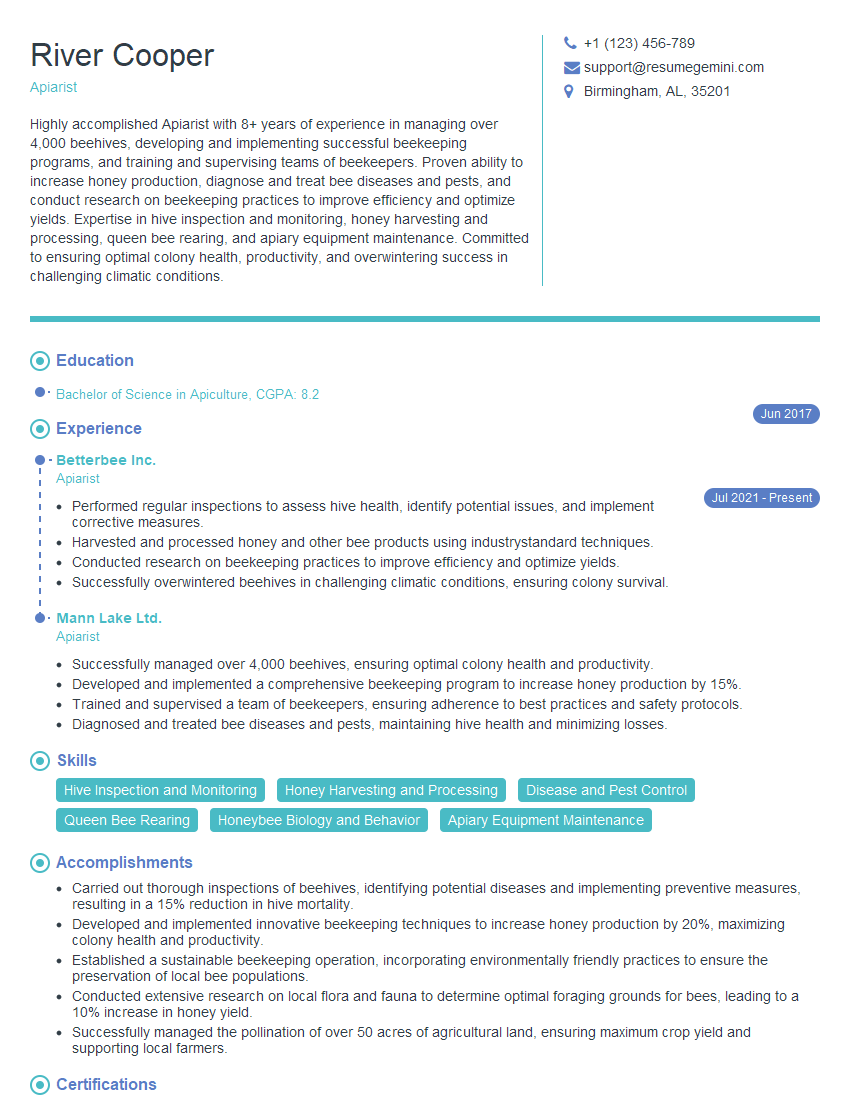
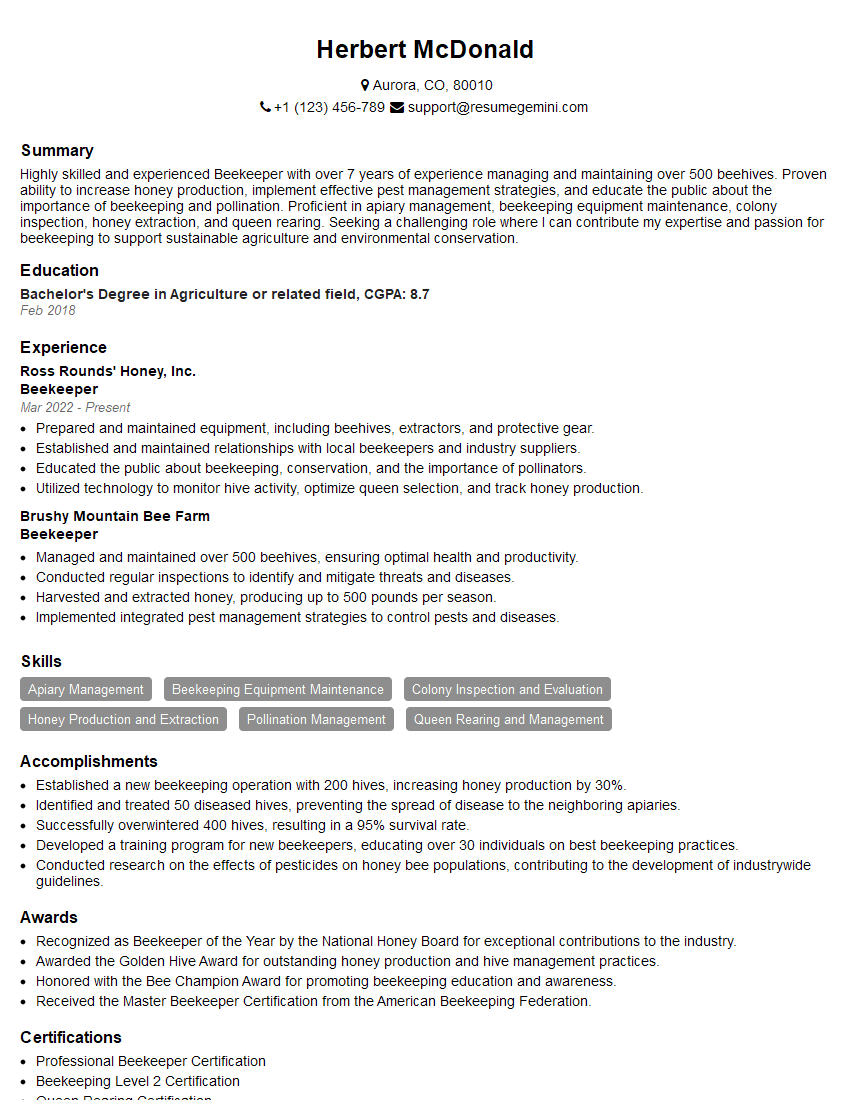
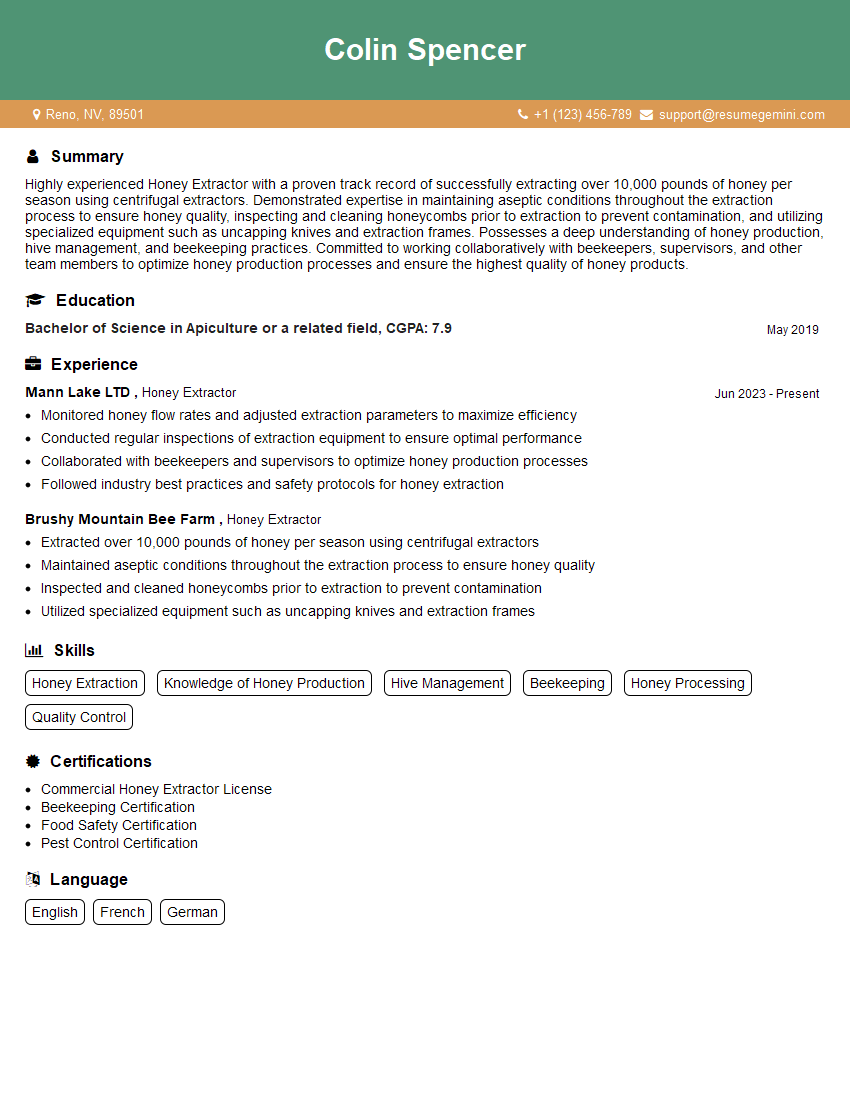
Mastering beekeeping practices significantly enhances your career prospects in this growing field, opening doors to diverse roles from apiarist to research scientist or beekeeping educator. To stand out, create a compelling, ATS-friendly resume that showcases your skills and experience effectively. ResumeGemini is a trusted resource for building professional resumes that grab recruiters’ attention. They offer examples of resumes tailored to Beekeeping Practices to help you craft the perfect application. This will make sure your qualifications shine and increase your chances of landing your dream job.
Explore more articles
Users Rating of Our Blogs
Share Your Experience
We value your feedback! Please rate our content and share your thoughts (optional).
What Readers Say About Our Blog
Attention music lovers!
Wow, All the best Sax Summer music !!!
Spotify: https://open.spotify.com/artist/6ShcdIT7rPVVaFEpgZQbUk
Apple Music: https://music.apple.com/fr/artist/jimmy-sax-black/1530501936
YouTube: https://music.youtube.com/browse/VLOLAK5uy_noClmC7abM6YpZsnySxRqt3LoalPf88No
Other Platforms and Free Downloads : https://fanlink.tv/jimmysaxblack
on google : https://www.google.com/search?q=22+AND+22+AND+22
on ChatGPT : https://chat.openai.com?q=who20jlJimmy20Black20Sax20Producer
Get back into the groove with Jimmy sax Black
Best regards,
Jimmy sax Black
www.jimmysaxblack.com
Hi I am a troller at The aquatic interview center and I suddenly went so fast in Roblox and it was gone when I reset.
Hi,
Business owners spend hours every week worrying about their website—or avoiding it because it feels overwhelming.
We’d like to take that off your plate:
$69/month. Everything handled.
Our team will:
Design a custom website—or completely overhaul your current one
Take care of hosting as an option
Handle edits and improvements—up to 60 minutes of work included every month
No setup fees, no annual commitments. Just a site that makes a strong first impression.
Find out if it’s right for you:
https://websolutionsgenius.com/awardwinningwebsites
Hello,
we currently offer a complimentary backlink and URL indexing test for search engine optimization professionals.
You can get complimentary indexing credits to test how link discovery works in practice.
No credit card is required and there is no recurring fee.
You can find details here:
https://wikipedia-backlinks.com/indexing/
Regards
NICE RESPONSE TO Q & A
hi
The aim of this message is regarding an unclaimed deposit of a deceased nationale that bears the same name as you. You are not relate to him as there are millions of people answering the names across around the world. But i will use my position to influence the release of the deposit to you for our mutual benefit.
Respond for full details and how to claim the deposit. This is 100% risk free. Send hello to my email id: [email protected]
Luka Chachibaialuka
Hey interviewgemini.com, just wanted to follow up on my last email.
We just launched Call the Monster, an parenting app that lets you summon friendly ‘monsters’ kids actually listen to.
We’re also running a giveaway for everyone who downloads the app. Since it’s brand new, there aren’t many users yet, which means you’ve got a much better chance of winning some great prizes.
You can check it out here: https://bit.ly/callamonsterapp
Or follow us on Instagram: https://www.instagram.com/callamonsterapp
Thanks,
Ryan
CEO – Call the Monster App
Hey interviewgemini.com, I saw your website and love your approach.
I just want this to look like spam email, but want to share something important to you. We just launched Call the Monster, a parenting app that lets you summon friendly ‘monsters’ kids actually listen to.
Parents are loving it for calming chaos before bedtime. Thought you might want to try it: https://bit.ly/callamonsterapp or just follow our fun monster lore on Instagram: https://www.instagram.com/callamonsterapp
Thanks,
Ryan
CEO – Call A Monster APP
To the interviewgemini.com Owner.
Dear interviewgemini.com Webmaster!
Hi interviewgemini.com Webmaster!
Dear interviewgemini.com Webmaster!
excellent
Hello,
We found issues with your domain’s email setup that may be sending your messages to spam or blocking them completely. InboxShield Mini shows you how to fix it in minutes — no tech skills required.
Scan your domain now for details: https://inboxshield-mini.com/
— Adam @ InboxShield Mini
Reply STOP to unsubscribe
Hi, are you owner of interviewgemini.com? What if I told you I could help you find extra time in your schedule, reconnect with leads you didn’t even realize you missed, and bring in more “I want to work with you” conversations, without increasing your ad spend or hiring a full-time employee?
All with a flexible, budget-friendly service that could easily pay for itself. Sounds good?
Would it be nice to jump on a quick 10-minute call so I can show you exactly how we make this work?
Best,
Hapei
Marketing Director
Hey, I know you’re the owner of interviewgemini.com. I’ll be quick.
Fundraising for your business is tough and time-consuming. We make it easier by guaranteeing two private investor meetings each month, for six months. No demos, no pitch events – just direct introductions to active investors matched to your startup.
If youR17;re raising, this could help you build real momentum. Want me to send more info?
Hi, I represent an SEO company that specialises in getting you AI citations and higher rankings on Google. I’d like to offer you a 100% free SEO audit for your website. Would you be interested?
Hi, I represent an SEO company that specialises in getting you AI citations and higher rankings on Google. I’d like to offer you a 100% free SEO audit for your website. Would you be interested?