The thought of an interview can be nerve-wracking, but the right preparation can make all the difference. Explore this comprehensive guide to Beekeeping interview questions and gain the confidence you need to showcase your abilities and secure the role.
Questions Asked in Beekeeping Interview
Q 1. Describe the different types of beehives and their advantages and disadvantages.
Beehives come in various designs, each with its own set of pros and cons. The choice often depends on factors like beekeeper experience, budget, and the specific needs of the apiary.
- Langstroth Hive: This is the most common type, characterized by its movable frames within a rectangular box. Advantages: Easy to inspect, manage, and harvest honey from. Disadvantages: Can be more expensive initially, requires more maintenance.
- Top-Bar Hive: This hive consists of a single long box with top bars for comb attachment. Advantages: Natural comb building, relatively inexpensive to build. Disadvantages: More challenging to inspect and manage, honey harvesting is less efficient.
- Warre Hive: A vertical hive with smaller boxes stacked on top of each other. Advantages: Mimics natural bee behavior, allows for natural comb expansion. Disadvantages: Difficult to inspect, less efficient honey harvesting.
- Observation Hive: Designed for educational purposes, allowing for close observation of bee activity. Advantages: Excellent for learning and demonstrations. Disadvantages: Not suitable for large-scale honey production, bees can be stressed by constant observation.
For instance, a beginner beekeeper might start with a Langstroth hive for its ease of use, while an experienced beekeeper might opt for a Top-Bar hive for its more natural approach.
Q 2. Explain the life cycle of a honeybee.
The honeybee life cycle is a fascinating process with three main stages: egg, larva, and pupa, culminating in the adult bee. It varies slightly depending on the caste (queen, worker, or drone).
- Egg Stage: The queen lays an egg in a cell, which hatches in about three days.
- Larva Stage: The larva is fed royal jelly initially, then a mixture of pollen and honey. This stage lasts about six days for workers, and longer for drones and queens. The larva grows rapidly and molts several times.
- Pupa Stage: The larva spins a cocoon and enters the pupa stage, where it undergoes metamorphosis. This stage lasts around 12 days for workers, longer for drones and queens. During this stage, the adult bee develops.
- Adult Stage: The adult bee emerges, taking on its specific role: the queen lays eggs, worker bees perform various tasks within and outside the hive (cleaning, nursing, foraging, guarding), and drones mate with the queen. Adult life spans range from several weeks (drones) to several months (worker bees) to several years (queen).
Think of it like a perfectly orchestrated production line, with each stage essential for the colony’s survival.
Q 3. How do you identify and treat common bee diseases and pests?
Identifying and treating bee diseases and pests is crucial for apiary health. Early detection is key.
- Varroa Mites: These are microscopic mites that feed on bee hemolymph (blood). Identification: Visible on adult bees, often clustered near the abdomen. Treatment: Formic acid, oxalic acid, thymol, or integrated pest management strategies.
- American Foulbrood (AFB): A bacterial disease that affects bee larvae. Identification: Larvae turn brown and become ropey. Treatment: Burning infected combs, antibiotic treatment (in some jurisdictions), and strict hygiene practices.
- European Foulbrood (EFB): Another bacterial disease, less severe than AFB. Identification: Larvae appear discolored and watery. Treatment: Oxytetracycline (in some jurisdictions), and good hygiene.
- Chalkbrood: A fungal disease. Identification: Mummified larvae appear chalky white. Treatment: Improving ventilation, removing affected brood.
Regular hive inspections, including checking for symptoms and mite counts, are vital for early intervention. Always consult with a local beekeeping expert or veterinarian for diagnosis and treatment options as regulations and efficacy vary geographically.
Q 4. What are the best practices for honey extraction and processing?
Honey extraction and processing involves careful steps to ensure the highest quality honey while protecting the bees.
- Uncapping: Removing the wax cappings from the honeycombs using an uncapping knife or fork.
- Extraction: Using a honey extractor (centrifugal) to spin the honey out of the combs. This minimizes damage to the combs.
- Filtering: Filtering the honey to remove any beeswax or other debris.
- Bottling: Bottling the honey, ideally within a few days of extraction to prevent fermentation.
Hygiene is paramount during this process to prevent contamination. After extraction, the combs are carefully returned to the hive for the bees to clean and reuse. For instance, I always ensure my equipment is meticulously cleaned and sanitized between uses.
Q 5. Describe your experience with queen rearing and grafting.
Queen rearing and grafting are advanced beekeeping techniques. I have extensive experience in both.
Queen Rearing: This involves creating new queens, often to replace aging or failing queens or to increase colony numbers. Methods include the use of queen cups and grafting, allowing for the selection of desirable traits from the best performing colonies. I often use a combination of techniques.
Grafting: This is a more precise method involving carefully transferring young larvae into artificial queen cups. This allows for better control over the process and ensures a higher success rate in queen production. Requires a steady hand and a keen eye for detail, it has proven very effective in selecting for specific traits such as honey production or disease resistance. The success rate improves with practice.
Over the years, I’ve refined my techniques to optimize the queen rearing process, increasing the success rates and producing high-quality queens for my own apiaries and for other beekeepers.
Q 6. How do you manage swarming behavior in your apiaries?
Swarming is a natural bee behavior where the colony splits, with the old queen leaving with a portion of the bees to establish a new colony. Effective swarm management is critical to prevent colony loss.
- Regular Hive Inspections: Identifying queen cells (indicative of impending swarming) during regular inspections is key.
- Providing Ample Space: Ensuring sufficient space within the hive, including adding extra boxes or supers, reduces the likelihood of swarming.
- Splitting Hives: Proactively splitting a colony before it swarms, creating two separate colonies with a new queen in each, is an effective management strategy.
- Clipping the Queen’s Wings: This prevents the queen from flying away with the swarm, making it easier to retrieve the swarm.
My approach involves a combination of these methods, adapted to the specific needs of each colony. For instance, if I detect queen cells, I’ll often split the hive to prevent a swarm altogether. By being proactive, I minimize colony losses and can often expand my apiary with new, thriving colonies.
Q 7. What are the key factors to consider when selecting an apiary location?
Selecting an appropriate apiary location is crucial for bee health and productivity. Key factors to consider include:
- Water Source: A clean, reliable water source within easy reach of the bees is essential. Bees can dehydrate quickly.
- Foraging Resources: Diverse and abundant plant life within a reasonable flight distance (around a 3-mile radius) is vital for sufficient nectar and pollen collection.
- Sunlight Exposure: Adequate sunlight is needed for hive warmth, especially during colder months.
- Protection from Wind and Extreme Temperatures: A location shielded from strong winds and extremes in temperature is preferred.
- Accessibility: Choose a location that is easily accessible for regular hive inspections and honey harvesting.
- Legal Considerations: Always check local regulations and zoning laws regarding beekeeping in your area.
A good apiary location is a significant investment that directly impacts bee health and honey production. I always take the time to thoroughly evaluate potential locations before establishing an apiary.
Q 8. Explain the importance of maintaining proper hive ventilation.
Proper hive ventilation is crucial for the health and productivity of a bee colony. Think of a beehive like a house – it needs good airflow to regulate temperature, humidity, and prevent the buildup of harmful gases like carbon dioxide and moisture. Poor ventilation leads to a range of problems, including:
- Overheating: Bees generate a lot of heat through their activity, and without adequate ventilation, the hive can become dangerously hot, particularly during summer months. This can lead to brood mortality and potentially, the swarming of the colony.
- Condensation and Mold: Excess moisture from the bees’ metabolic processes, combined with poor ventilation, can lead to condensation and the growth of mold within the hive. Mold can contaminate honey, weaken the immune system of the bees and damage the hive itself.
- Reduced Honey Production: Bees work harder in poorly ventilated hives, diverting energy from honey production to temperature regulation. This directly impacts honey yields.
- Increased Disease Risk: Poor air quality increases the risk of various bee diseases and pests thriving within the hive.
To ensure proper ventilation, beekeepers use various techniques, including providing sufficient entrance space, using screened bottom boards (allowing air to circulate under the hive), and incorporating top ventilation (often in the form of vents in the inner cover or a quilt box above the brood nest). The specific ventilation needs will vary depending on the climate, hive design, and time of year.
Q 9. How do you monitor the health of your bee colonies?
Monitoring bee colony health is an ongoing process requiring regular inspections. I typically conduct inspections every 7-10 days during the active season. My approach involves a combination of visual checks and practical assessments:
- Visual Inspection: I look for signs of disease, pests (like varroa mites), or queenlessness. This involves examining the brood pattern for irregularities, checking for signs of disease in larvae or pupae, and assessing the overall activity level of the colony.
- Assessing Population: I evaluate the colony’s size and strength, noting the number of bees, the amount of brood (developing bees), and the presence of sufficient food stores (honey and pollen).
- Honey and Pollen Stores: I check the quantity and quality of honey and pollen reserves to ensure the bees have sufficient food for survival, especially going into winter.
- Queen Sighting: While not always necessary at each inspection, regularly confirming the presence of a healthy, laying queen is important for colony vitality.
- Varroa Mite Monitoring: I regularly check for the presence of varroa mites, a significant bee pest, using methods like alcohol washes or sticky boards. High mite counts necessitate treatment.
Keeping detailed records of my inspections is vital. This allows me to track changes over time, spot trends, and intervene promptly when issues arise. Think of it as keeping a medical history for each colony.
Q 10. Describe different methods for feeding bees.
Beekeepers use several methods to feed their bees, depending on the situation and the type of food needed:
- Sugar Syrup: This is the most common method for supplementing a colony’s energy stores. It’s a simple solution of sugar and water, often in a 1:1 or 2:1 ratio (sugar to water). It’s fed using various feeders like internal feeders (placed inside the hive), top feeders, or entrance feeders.
- Fondant: A thick sugar paste, fondant is particularly useful in winter feeding because it provides a solid food source that doesn’t easily ferment or attract pests. It’s often placed directly on top of the frames.
- Pollen Patties: Commercial pollen substitutes or patties made from natural pollen are used to supplement pollen stores, which are essential for brood development and bee health. These are placed on top of the frames or in a dedicated pollen feeder.
- Candy Boards: These provide a slow release of sugar for overwintering colonies and contain a mixture of sugar and water. They prevent fermentation and provide a sustained source of energy.
The type of feeder used depends on the colony’s needs and the beekeeper’s preference. It’s crucial to ensure feeders are properly secured and do not pose a risk to the bees or create an environment conducive to pests or disease.
Q 11. What are the legal requirements for beekeeping in your area?
Legal requirements for beekeeping vary considerably depending on location. In my area, some key regulations include:
- Registration: Beekeepers often need to register their apiaries with the local agricultural authorities. This helps track bee populations and enables faster response to potential disease outbreaks.
- Siting Restrictions: There are typically regulations concerning the location of beehives to ensure they do not pose a nuisance to neighbours, especially near schools or public spaces. Setbacks from property lines are often mandated.
- Disease Management: I’m required to actively monitor and manage bee diseases such as American Foulbrood or European Foulbrood. Failure to report or treat these diseases can result in penalties.
- Transportation of Bees: Strict regulations often govern the transportation of bees, requiring permits and adherence to certain protocols to prevent the spread of diseases.
- Pest Control: There might be regulations regarding the use of pesticides and other treatments to control varroa mites and other pests.
It’s vital to familiarize oneself with all local ordinances and regulations before starting a beekeeping operation. Contacting the local agricultural extension office is the best way to stay compliant.
Q 12. How do you handle aggressive bees?
Dealing with aggressive bees requires a cautious and measured approach. Aggression can stem from various factors like genetics, stress, lack of resources, or queenlessness. I emphasize preventive measures:
- Gentle Handling: Calm movements and minimizing vibrations near the hive reduce the chance of provoking bees. Wearing appropriate protective gear is crucial.
- Hive Placement: Locating hives away from high-traffic areas reduces the likelihood of human-bee interactions.
- Requeening: If aggression is a recurring problem, replacing the queen with a calmer one can dramatically improve the colony’s temperament. This is a standard beekeeping practice.
- Addressing Underlying Issues: Ensure the colony has adequate resources (food and space), and address any issues that might be contributing to stress.
If a hive is exceptionally aggressive and other methods have failed, relocation or professional assistance might be necessary. It is crucial to prioritize safety for both bees and humans.
Q 13. Explain the process of harvesting propolis and beeswax.
Harvesting propolis and beeswax are distinct processes:
Propolis Harvesting: Propolis, a resinous mixture collected by bees, is typically scraped from the hive components or collected using special propolis traps. These traps are placed within the hive, and the bees deposit propolis into designated areas for easier removal. After removal, the propolis can be cleaned and processed further, often by freezing it to break it down and make processing easier.
Beeswax Harvesting: Beeswax is harvested primarily from old or damaged honeycomb frames. These frames can be cut out and the wax rendered using a variety of methods. The most common method involves melting the wax using heat (either in a double boiler or using a solar wax extractor), filtering the melted wax to remove debris, and then pouring it into molds to solidify.
In both cases, care must be taken to ensure that the harvested material is clean and free from contaminants. The tools and equipment used must be sanitized to avoid spreading diseases.
Q 14. What are the different types of honey and their characteristics?
Honey’s characteristics vary considerably depending on the floral sources the bees utilize. This leads to a wide array of flavors, colours, and textures:
- Wildflower Honey: A blend of nectars from various flowers, creating a complex and often unpredictable flavor profile. The colour and texture can vary widely.
- Clover Honey: Mild, light-colored honey with a delicate sweetness. It’s generally considered a good all-purpose honey.
- Acacia Honey: Light-colored, almost water-clear honey with a subtle, delicate flavor. It’s known for its slow crystallization.
- Buckwheat Honey: Dark-colored, robust honey with a strong, distinctive flavor. It is often more viscous than lighter honeys.
- Manuka Honey: Honey from New Zealand, prized for its unique antimicrobial properties attributed to the presence of methylglyoxal (MGO).
These are just a few examples. The unique characteristics of each honey type — colour, viscosity, crystallizing properties, and flavour profile — reflect the bees’ foraging patterns and the floral diversity of the surrounding environment.
Q 15. What are the challenges of sustainable beekeeping?
Sustainable beekeeping faces multifaceted challenges. It’s not just about honey production; it’s about the long-term health of the bees and the environment. Key challenges include:
- Varroa mites and other diseases: These pests are a major threat, requiring vigilant monitoring and responsible management strategies. Treating with harsh chemicals can harm the bees and the environment, so finding sustainable solutions is crucial.
- Habitat loss and pesticide use: Bees need diverse foraging areas with abundant wildflowers and a lack of pesticides. Modern agricultural practices often conflict with bee needs, leading to dwindling bee populations. Sustainable beekeeping advocates for protecting and restoring bee habitats and promoting sustainable agricultural practices.
- Climate change: Changing weather patterns, extreme temperatures, and unpredictable rainfall disrupt bee colonies and their foraging behavior. Adapting beekeeping practices to mitigate climate change impacts is vital for long-term sustainability.
- Economic viability: The cost of beekeeping supplies, labor, and losses due to disease can make it difficult for beekeepers, particularly small-scale operations, to make a profit sustainably. Finding market niches and diversifying bee products beyond honey can help ensure economic sustainability.
Successfully navigating these challenges requires a holistic approach that prioritizes bee health, environmental protection, and economic viability. This might involve adopting integrated pest management, supporting pollinator-friendly farming, and engaging in community-based conservation efforts.
Career Expert Tips:
- Ace those interviews! Prepare effectively by reviewing the Top 50 Most Common Interview Questions on ResumeGemini.
- Navigate your job search with confidence! Explore a wide range of Career Tips on ResumeGemini. Learn about common challenges and recommendations to overcome them.
- Craft the perfect resume! Master the Art of Resume Writing with ResumeGemini’s guide. Showcase your unique qualifications and achievements effectively.
- Don’t miss out on holiday savings! Build your dream resume with ResumeGemini’s ATS optimized templates.
Q 16. How do you prevent the spread of diseases between hives?
Preventing disease spread between hives is paramount. It’s like preventing an epidemic in a human population – proactive measures are key. My approach involves:
- Maintaining strong, healthy colonies: Strong colonies are better equipped to resist diseases. This involves providing adequate nutrition, proper hive management, and regular inspections.
- Regular hive inspections: I carefully inspect each hive for signs of disease, such as unusual brood patterns, dead bees, or unusual behaviors. Early detection is critical for effective treatment.
- Quarantine: Any suspected diseased hive is immediately isolated to prevent the spread of infection to other colonies. This involves physically separating the hive and treating it separately.
- Hygiene practices: Clean tools and equipment are essential. I thoroughly disinfect my tools between each hive inspection to avoid cross-contamination. This includes using a flame or disinfectant solutions.
- Selecting disease-resistant bees: I prioritize using bee stocks known to be more resistant to common diseases. Genetic selection plays a significant role in preventing disease outbreaks.
- Strategic hive placement: Spacing hives appropriately can reduce the chance of bees from different colonies interacting and spreading diseases.
Remember, prevention is always better than cure. By combining these practices, I aim to minimize the risk of disease spread and maintain healthy bee populations.
Q 17. Describe your experience with integrated pest management in beekeeping.
Integrated Pest Management (IPM) in beekeeping is about minimizing pest and disease damage using a combination of strategies that are environmentally friendly. It’s not about eradication, but about keeping pest populations below economically damaging levels. My approach focuses on:
- Monitoring: Regular inspections to detect pests early. I look for Varroa mites, tracheal mites, small hive beetles, and other potential threats.
- Cultural control: Strengthening the bee colony’s natural defenses through good hive management and nutrition. A strong colony is more resilient to pests.
- Mechanical control: Using methods like screened bottom boards to remove mites or traps for small hive beetles.
- Biological control: Utilizing natural enemies of pests. For example, certain predatory mites can help control Varroa mites.
- Chemical control (used sparingly): Only resorting to chemical treatments as a last resort, using the least toxic options available and strictly following label instructions. I always prefer non-chemical methods first.
IPM requires careful observation and a flexible approach. It’s a continuous process of assessment and adjustment to find the most effective and sustainable way to manage pests while protecting the bees and the environment.
Q 18. How do you market and sell your honey and other bee products?
Marketing honey and other bee products requires a multi-pronged approach. It’s about building a brand and connecting with customers. I use a combination of:
- Farmers’ markets and local events: Direct interaction with customers allows for building relationships and showcasing the quality of my products.
- Online sales: An e-commerce website or presence on platforms like Etsy allows me to reach a wider audience.
- Local partnerships: Collaborating with local businesses, restaurants, or shops to sell my products.
- Branding and storytelling: Creating a strong brand identity that highlights the unique qualities of my honey and its origin helps distinguish my products from mass-produced options.
- Educational outreach: Conducting workshops or beekeeping demonstrations can increase interest in my products and build trust.
Successful marketing emphasizes the quality, origin, and story behind the products. It’s about connecting with customers who value natural, locally produced goods.
Q 19. What are the benefits of using natural beekeeping methods?
Natural beekeeping methods prioritize the health and well-being of the bees above all else. It’s about working *with* nature rather than against it. The benefits include:
- Healthier bees: Reducing or eliminating the use of chemicals promotes stronger immune systems in bees. This leads to fewer disease outbreaks and a healthier colony.
- Higher quality honey: Honey produced without chemical treatments tends to retain more of its natural flavors and beneficial properties.
- Environmental benefits: Minimizing chemical use reduces the environmental impact of beekeeping, contributing to a more sustainable ecosystem.
- Increased biodiversity: Natural beekeeping often supports the diversity of bee species and the flora they pollinate.
- Greater resilience to environmental changes: Natural, healthier colonies may be better equipped to cope with climate change and other environmental stressors.
While natural methods may require more hands-on management, the long-term benefits to bee health and environmental sustainability are significant.
Q 20. Explain your understanding of pollination and its importance.
Pollination is the process by which pollen is transferred from the male part (stamen) of a flower to the female part (pistil), enabling fertilization and seed production. Bees are crucial pollinators, responsible for a significant portion of the world’s food supply.
Importance: Pollination is essential for the reproduction of a vast number of plants, including many fruits, vegetables, nuts, and flowering plants. Without effective pollination, agricultural yields would plummet, leading to food shortages and impacting biodiversity.
Bees, through their foraging behavior, inadvertently transfer pollen between flowers, facilitating plant reproduction. This is incredibly important for ecosystem health and human food security. Many crops rely heavily on bee pollination, and the decline in bee populations poses a significant threat to global food production.
Q 21. How do you handle a bee sting emergency?
Bee sting emergencies require prompt action. My approach involves:
- Removing the stinger: Carefully scrape the stinger away with a straight edge, like a credit card, avoiding squeezing the venom sac.
- Clean the area: Wash the sting site with soap and water.
- Apply a cold compress: This helps reduce swelling and pain. I would recommend applying an ice pack wrapped in a thin cloth for about 10-15 minutes.
- Pain relief: Over-the-counter pain relievers like ibuprofen or acetaminophen can help manage pain and inflammation.
- Monitor for allergic reactions: Watch for signs of allergic reaction such as difficulty breathing, swelling of the face or throat, dizziness, or hives. If any of these occur, immediately seek medical attention – this is a life-threatening emergency.
Carrying an EpiPen if you have a known bee sting allergy is crucial. Knowing your own reaction and having a plan in place is key to handling a bee sting emergency effectively.
Q 22. What safety equipment do you use when working with bees?
Beekeeping safety is paramount. My standard safety equipment includes a full-length bee suit, preferably white or light-colored to avoid attracting bees, with a ventilated hood and gloves that extend to my forearms. I always wear closed-toe shoes to protect my feet. A smoker is essential to calm the bees before any hive manipulation, producing a gentle smoke that masks alarm pheromones. I also use a hive tool, a versatile metal tool for gently prying apart hive components. Finally, I always check for signs of aggression before approaching a hive; if the bees seem agitated, it’s best to postpone work until later.
For example, I once had a hive that was unusually aggressive. I delayed my inspection and instead focused on calming them with additional smoke and a slow approach. This prevented a potentially painful situation.
Q 23. How do you maintain accurate records of your beekeeping operations?
Maintaining accurate records is crucial for tracking hive health, honey production, and overall apiary management. I utilize a combination of physical and digital methods. Each hive has a numbered identification tag, and I keep a detailed notebook recording daily observations. This includes entries on weather conditions, hive inspections (queen presence, brood patterns, disease signs, honey stores), treatments applied, and honey harvests. For example, I carefully record the weight of each honey frame before and after extraction to track production. I also use a spreadsheet software to collate data from all my hives, helping to identify trends, assess the success of different management strategies, and make informed decisions.
My spreadsheet includes columns for hive number, date, queen status, brood pattern score, Varroa mite levels, treatments used, honey yield, and any other relevant observations.
Q 24. Describe your experience with different types of beekeeping equipment.
Over the years, I’ve used a wide array of beekeeping equipment. Langstroth hives are my mainstays, due to their modular design and ease of management. I’ve also worked with top-bar hives, which provide a more natural beekeeping experience, though they require slightly different management techniques. I’ve found that quality equipment makes a significant difference. Durable frames are essential to prevent warping and honey leakage. A strong extractor is key for efficient honey harvesting. I’ve experimented with different types of smokers, preferring ones that produce a cool, consistent smoke. Choosing the right equipment depends on your beekeeping style and preferences, the scale of your operation, and the specific needs of your bees.
For instance, I initially used a less-expensive extractor, which broke down frequently and resulted in significantly more wasted time. Upgrading to a higher-quality model was a smart investment that improved my efficiency.
Q 25. What is your experience with using beekeeping software or technology?
I’ve embraced beekeeping software and technology to enhance my efficiency and data analysis. I utilize a dedicated beekeeping app to record hive inspections and treatments. This app syncs with my spreadsheet, providing real-time data on hive health across my apiary. The data visualization features of the app are particularly helpful for identifying patterns, such as sudden drops in weight that may suggest disease or a swarming event. I am exploring integrating smart hive technology like sensors that track internal temperature and humidity. This data would further refine my management strategies and allow for early detection of potential problems. Technology is revolutionizing beekeeping, providing greater precision and enabling better informed decisions.
For example, the app sent me a notification about a significant weight loss in one of my hives, prompting me to investigate and discover a queen failure that I was able to address promptly.
Q 26. How do you ensure the quality and purity of your honey?
Maintaining honey quality and purity involves meticulous practices at every stage, from hive management to extraction and packaging. I prioritize sustainable beekeeping techniques, avoiding the use of chemicals that might contaminate the honey. I carefully inspect honeycombs for any signs of disease or contamination before extraction. My honey extraction process is gentle to avoid damaging the honey or introducing unwanted materials. I use food-grade equipment and thoroughly clean and sterilize all tools to prevent cross-contamination. Finally, honey is stored in clean, dry containers in a cool, dark place to preserve its quality and prevent crystallization.
For example, I regularly test my honey for moisture content to ensure it meets the standards for long-term storage and avoids fermentation. This helps me maintain a consistently high-quality product.
Q 27. What are your long-term goals in beekeeping?
My long-term goals in beekeeping extend beyond honey production. I aim to contribute to the conservation of pollinators through sustainable beekeeping practices and community outreach programs. I plan to expand my apiary while maintaining the health and well-being of my bees. I’m interested in experimenting with different honey varietals and exploring potential partnerships with local businesses to market my honey and other bee products. Ultimately, I hope to build a thriving business that benefits both the environment and the community.
I’m also exploring educational initiatives to raise awareness about the importance of bees and their role in our ecosystem.
Q 28. Describe a time you had to troubleshoot a problem in your apiary.
One time, I noticed a significant decrease in honey production from one of my strongest hives. Initial inspections revealed no obvious problems like disease or a lack of nectar sources. I systematically checked for potential issues: I examined the queen, brood pattern, and honey stores. I found the problem wasn’t inside the hive, but outside. There had been a significant increase in the local wasp population, which were raiding the hive and stealing the honey. I addressed the issue by installing wasp traps around the hive, effectively reducing the wasp activity and allowing my bees to rebuild their honey reserves.
This experience taught me the importance of considering external factors when troubleshooting hive problems. It’s crucial to have a systematic approach, looking at both internal and external elements for a complete diagnosis.
Key Topics to Learn for Beekeeping Interview
- Bee Biology and Behavior: Understand honeybee castes, their roles within the colony, lifecycle stages, and communication methods. Consider practical applications like recognizing queenlessness or identifying disease symptoms.
- Hive Management Techniques: Mastering hive inspections, swarm prevention, and queen rearing. Explore practical applications such as understanding the impact of different hive configurations on colony health and productivity.
- Honeybee Health and Disease Management: Learn to identify common honeybee pests and diseases (e.g., Varroa mites, American foulbrood), and apply appropriate treatment and preventative measures. Explore practical application such as understanding integrated pest management strategies.
- Apiary Setup and Location: Understand the factors influencing apiary site selection (e.g., forage availability, water sources, sunlight). Consider practical applications such as optimizing hive placement for maximum sunlight and protection from the elements.
- Honey Extraction and Processing: Learn the techniques involved in honey extraction, filtration, and bottling. Consider the practical application of quality control measures and honey grading standards.
- Beekeeping Equipment and Tools: Familiarize yourself with the various tools and equipment used in beekeeping (e.g., smoker, hive tool, extractor). Understand their proper use and maintenance. Consider the practical application of selecting the right equipment for specific tasks.
- Regulations and Best Practices: Understand local, regional, and national regulations related to beekeeping. Explore best practices for sustainable beekeeping and environmental stewardship. Consider how legal compliance and ethical considerations affect daily operations.
- Honey and Bee Product Marketing and Sales: Develop an understanding of marketing strategies for honey and other bee products, including understanding consumer preferences and regulatory requirements for labeling and sale. Explore practical application of pricing strategies and sales channels.
Next Steps
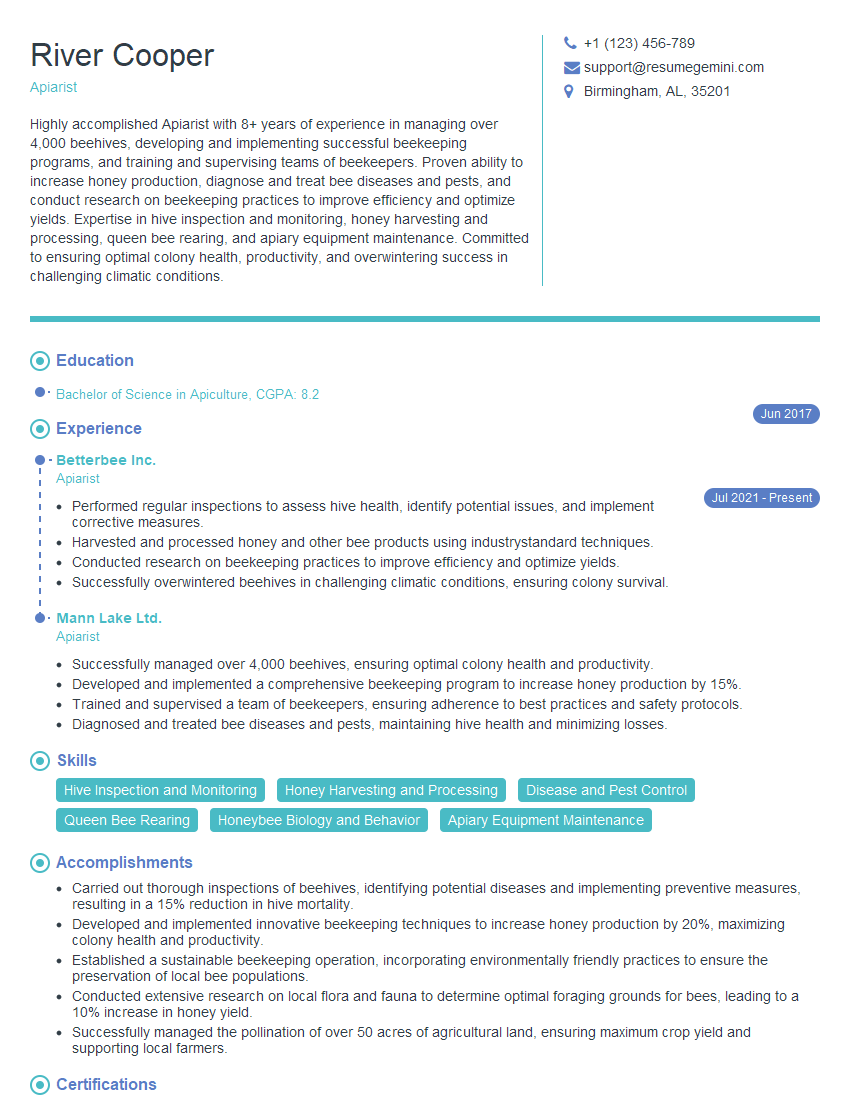
Mastering beekeeping is a pathway to a fulfilling and rewarding career, offering opportunities in diverse sectors such as commercial beekeeping, apiary management, research, education, and even entrepreneurship. To significantly enhance your job prospects, crafting a professional and ATS-friendly resume is crucial. ResumeGemini is a trusted resource that can help you build a compelling resume that highlights your skills and experience effectively. Examples of resumes tailored specifically to the beekeeping industry are available to guide you. Take the next step towards your dream beekeeping career today!
Explore more articles
Users Rating of Our Blogs
Share Your Experience
We value your feedback! Please rate our content and share your thoughts (optional).
What Readers Say About Our Blog
Very informative content, great job.
good