Feeling uncertain about what to expect in your upcoming interview? We’ve got you covered! This blog highlights the most important Bend Allowance Calculation interview questions and provides actionable advice to help you stand out as the ideal candidate. Let’s pave the way for your success.
Questions Asked in Bend Allowance Calculation Interview
Q 1. Define bend allowance and its significance in sheet metal fabrication.
Bend allowance is the length of the arc along the neutral bend line of a sheet metal part during a bending operation. It’s crucial in sheet metal fabrication because it represents the amount of material needed to compensate for the curvature introduced when bending. Accurate bend allowance calculation ensures the final part’s dimensions match the design specifications. Without proper allowance, the finished part will be either too short or too long, leading to scrap and rework.
Imagine trying to make a bracelet by bending a wire. You need to add extra wire length to account for the curve; otherwise, it will be too short to close properly. Bend allowance is that extra length in sheet metal fabrication.
Q 2. Explain the relationship between bend radius, bend allowance, and material thickness.
Bend radius, bend allowance, and material thickness are intrinsically linked. The bend radius is the radius of the bend’s inner surface. A larger bend radius results in a larger bend allowance, and vice-versa. The material thickness significantly influences the bend allowance calculation because it determines the location of the neutral bend line – the line that neither stretches nor compresses during bending. Thicker materials generally require a larger bend allowance for the same bend radius.
Think of bending a thick piece of cardboard versus a thin sheet of paper. The cardboard needs more material to bend into the same radius because its neutral axis is further from the inner radius.
Q 3. What is the K-factor and how does it affect bend allowance calculation?
The K-factor (also known as the bend deduction factor) is an empirical constant that represents the location of the neutral bend line within the material’s thickness. It varies depending on the material, bend radius, and bending process. It’s a crucial factor in calculating bend allowance because it directly impacts the length of the neutral bend line. A K-factor of 0.5 indicates that the neutral bend line lies exactly in the middle of the material thickness. Values typically range from 0.3 to 0.5, with 0.5 being common for air bending with a smaller bend radius relative to thickness.
Using the wrong K-factor leads to inaccuracies in the bend allowance calculation, resulting in parts that are too large or too small. Therefore, accurate K-factor determination through experimentation or material-specific data is vital for precision in fabrication.
Q 4. Describe different methods for calculating bend allowance (e.g., inside, outside, neutral bend line).
Several methods exist for calculating bend allowance, each with its own approach to determining the neutral bend line:
Inside Bend Line Method: This method uses the inner radius of the bend to calculate the allowance. It’s simple but less accurate, particularly for smaller bend radii and thicker materials.
Outside Bend Line Method: This method uses the outer radius of the bend, again less accurate for tighter bends and thick materials.
Neutral Bend Line Method: This is the most accurate method and is based on the location of the neutral bend line (determined by the K-factor and material thickness). It provides the most precise bend allowance calculation.
The formula for the neutral bend line method is often expressed as: Bend Allowance = (Bend Radius + (K-factor * Material Thickness)) * Bend Angle (in radians)
Q 5. How do material properties (e.g., Young’s modulus, yield strength) influence bend allowance?
Material properties, particularly Young’s modulus (a measure of stiffness) and yield strength (a measure of material’s resistance to permanent deformation), indirectly influence bend allowance calculations. These properties affect the material’s response to bending forces and the location of the neutral bend line. Materials with higher Young’s modulus are stiffer and thus their neutral axis might be closer to the outer radius. Yield strength is related to springback, that is, the tendency for the material to partially unbend after being released from the tooling. Springback can significantly affect the final bend angle and must be accounted for during bend allowance calculations.
In practice, these factors are usually implicitly considered through the K-factor, which needs to be calibrated for specific materials and processes.
Q 6. What are the common units used for bend allowance?
Common units for bend allowance include millimeters (mm) and inches (in). The choice depends on the units used for material thickness, bend radius, and other dimensional parameters of the part. Consistency is key; you need to use the same unit throughout your calculations to avoid errors.
Q 7. Explain the difference between bend allowance and bend deduction.
Bend allowance and bend deduction are closely related but represent different aspects of sheet metal bending. Bend allowance, as discussed earlier, is the extra length of material required along the bend to account for the curvature. Bend deduction, on the other hand, is the amount of material that needs to be subtracted from the flat blank length to achieve the desired final dimensions after bending. Bend deduction accounts for both the bend allowance and the material used within the bend itself (material consumed in the bend). While bend allowance adds material, bend deduction subtracts it to get the required blank length.
Imagine making a U-shaped part. Bend allowance tells you how much material to add to make the bend. Bend deduction tells you how much to deduct from a straight piece of metal to end up with that U shape after bending.
Q 8. How do you account for springback in bend allowance calculations?
Springback is the elastic recovery of a material after bending. It causes the final bend angle to be slightly smaller than the intended angle. To account for springback, we need to compensate during the initial bend planning. This is typically done by using a bend compensation factor or by employing specialized software that incorporates springback prediction models. The exact correction depends on several factors, including the material’s properties (Young’s modulus and yield strength), bend radius, and material thickness. In practice, this often involves either iterative bending with adjustments or pre-bending the material to a slightly sharper angle than the desired final angle. Experienced technicians often build up a knowledge base of springback values for commonly used materials and bend geometries, but accurate prediction often relies on empirical data or simulation.
Example: If your desired bend angle is 90°, and you know from previous experience (or through testing) that a specific material and bend radius combination results in a 5° springback, you would program the press brake to bend to approximately 95° to achieve the final 90° angle.
Q 9. What are the limitations of simplified bend allowance formulas?
Simplified bend allowance formulas, often found in handbooks or quick reference guides, assume ideal conditions that are rarely met in real-world scenarios. These limitations include:
- Ignoring material properties: They often don’t accurately account for the material’s elastic and plastic properties, which significantly influence bend allowance.
- Constant bend radius assumption: Real-world bends rarely have perfectly consistent radii across the entire bend length. Variations can introduce error.
- Neglecting springback: As discussed earlier, springback is a crucial factor that simplified formulas frequently overlook, leading to inaccurate results.
- Oversimplification of the neutral axis: The location of the neutral axis (discussed in detail below) is assumed, when in reality it can shift slightly based on bending parameters.
- Ignoring bending process variations: Different bending processes (air bending, press brake, etc.) lead to varying bend radii and neutral axis locations, affecting the accuracy of simplified formulas.
The resulting inaccuracies can cause significant errors in part dimensions, leading to scrap or rework. For precision applications, more sophisticated methods are necessary.
Q 10. Describe how to calculate bend allowance for different bend angles (e.g., 90°, 180°).
Bend allowance calculation differs slightly depending on the bend angle, mainly due to the changing shape of the bent section. The fundamental principle remains the same: calculating the length of the material along the neutral axis.
90° Bend: The simplest case, often using a simplified formula like Bend Allowance ≈ 0.01745 * R * (90 + K), where R is the bend radius and K is a material-dependent constant (often close to 0 for sharp bends). The formula is an approximation and more precise methods might be necessary.
180° Bend: Here, the bend allowance is approximately equal to π * R (pi times the bend radius), where R is the inside bend radius. However, this still does not account for material properties or springback. More accurate calculations would incorporate the material’s thickness and springback characteristics, again potentially requiring iterative adjustments or simulation.
In reality, accurate calculations use more robust formulas or software that considers the exact geometry and material properties. The above formulas are rough estimates.
Q 11. How does the choice of bending process (e.g., air bending, press brake) affect bend allowance?
The bending process significantly impacts bend allowance. The difference is primarily due to the way the material is deformed during bending.
- Air Bending: Involves bending the material using a punch and die, with the material deforming plastically only in a localized area. The bend radius is largely determined by the die opening, and the neutral axis location is relatively predictable. This process is often associated with more predictable springback behavior.
- Press Brake Bending: Similar to air bending, but the press brake typically offers more precise control over bending pressure and tooling. The chosen tooling, the press brake’s performance, and even operator skill impact springback and bend allowance. Press brakes can achieve tighter bend radii.
Other bending processes, such as rotary draw bending, also have unique characteristics that impact bend allowance. These require specialized knowledge and often rely on software simulations for accurate prediction.
Q 12. Explain the concept of the neutral bending axis.
The neutral bending axis is an imaginary line within the cross-section of the material that doesn’t undergo any stretching or compression during bending. Imagine bending a thick piece of paper—the middle layer remains virtually unchanged in length. That middle layer represents the neutral axis. Its location depends on the material’s properties and the bend radius. For a thin sheet of metal with a large bend radius, it’s close to the geometric center, but for thick sections or sharp bends it shifts towards the inside of the bend. Accurate determination of the neutral axis’s position is crucial for precise bend allowance calculation.
Analogy: Think of it as the ‘hinge’ point of a flexible ruler when you bend it. The axis location affects the amount of material length added or subtracted due to the bending.
Q 13. How do you handle complex shapes or multiple bends in bend allowance calculations?
Handling complex shapes or multiple bends requires a more sophisticated approach. Simplified formulas are inadequate. Typically, this involves decomposing the complex shape into a series of simpler bends, and calculating the bend allowance for each individual bend. The overall part length is then calculated by summing up the straight lengths and the bend allowances for each bend, considering their interrelationship. This often includes considering the influence of one bend on the next, in terms of material stress and orientation. Advanced software tools are invaluable in these situations.
Practical Example: Designing a chassis with several bends of differing angles and radii would require a detailed breakdown of each bend, carefully considering the sequence of bending operations to minimize distortions.
Q 14. What software or tools are commonly used for bend allowance calculation?
Several software packages and tools are available for bend allowance calculations. These range from simple spreadsheets with built-in formulas to sophisticated CAD/CAM systems and specialized sheet metal design software.
- Spreadsheets (Excel, Google Sheets): Can be used for basic calculations, but require manual input and may lack sophistication for complex geometries.
- CAD/CAM Software (AutoCAD, SolidWorks, Inventor): Many CAD/CAM packages incorporate bend allowance calculation tools, often integrated with their sheet metal design modules.
- Specialized Sheet Metal Software: Some software applications are specifically designed for sheet metal design and fabrication, with advanced features for bend allowance calculation, springback prediction, and flat pattern development.
The choice of tool depends on the complexity of the project and the required level of accuracy. For simple designs, a spreadsheet might suffice, but for complex shapes or high-precision parts, specialized software is essential.
Q 15. Describe a situation where you had to troubleshoot an issue related to inaccurate bend allowance.
During a project involving the fabrication of a complex sheet metal chassis, we encountered significant discrepancies between the designed dimensions and the actual part produced. The problem stemmed from inaccurate bend allowance calculations. The chassis, intended to house sensitive electronics, had misaligned mounting points, rendering it unusable. To troubleshoot, we first reviewed our initial calculations, focusing on the K-factor used, material properties, and the bend radius. We realized we had incorrectly used a K-factor value that didn’t account for the specific material thickness and the press brake tooling used. We then conducted a series of physical tests on sample parts using various K-factors to establish an empirically determined, accurate value. Finally, we revised our CAD model, incorporating the corrected bend allowance, and successfully produced a functional chassis.
Career Expert Tips:
- Ace those interviews! Prepare effectively by reviewing the Top 50 Most Common Interview Questions on ResumeGemini.
- Navigate your job search with confidence! Explore a wide range of Career Tips on ResumeGemini. Learn about common challenges and recommendations to overcome them.
- Craft the perfect resume! Master the Art of Resume Writing with ResumeGemini’s guide. Showcase your unique qualifications and achievements effectively.
- Don’t miss out on holiday savings! Build your dream resume with ResumeGemini’s ATS optimized templates.
Q 16. How do you verify the accuracy of your bend allowance calculations?
Verifying bend allowance accuracy is crucial for consistent and reliable results. My approach involves a multi-pronged strategy:
- Comparison with Physical Measurements: I always fabricate sample parts and precisely measure their final dimensions. This allows for direct comparison with calculated values, enabling quick detection of inaccuracies.
- Multiple Calculation Methods: I utilize various bend allowance formulas, such as the neutral axis method and the inside radius method. Comparing the results from different methods provides additional confirmation and helps detect errors in individual methods.
- Simulation Software: Using specialized sheet metal bending simulation software allows me to visualize the process and predict the final dimensions. This offers a virtual proof of concept and can flag potential issues before actual fabrication.
- Statistical Process Control (SPC): For high-volume production, I monitor bend allowance parameters using SPC charts to identify and correct potential drifts or inconsistencies in the process.
This combined approach enhances confidence in the accuracy of the bend allowance calculation and aids in creating a robust and reliable manufacturing process.
Q 17. What are some common errors in bend allowance calculation and how to avoid them?
Common errors in bend allowance calculations often arise from:
- Incorrect K-factor selection: Using a generalized K-factor instead of one specific to the material, thickness, and tooling results in significant errors. For instance, using a K-factor of 0.33 for all materials irrespective of their properties is inaccurate and prone to errors.
- Ignoring material properties: The material’s elasticity and springback significantly affect the final bend angle and dimensions. Neglecting springback can lead to incorrect part dimensions.
- Incorrect bend radius measurement: The bend radius greatly influences the bend allowance. Imprecise measurement of the die’s bend radius will lead to calculation errors.
- Using wrong units of measurement: Inconsistent units (millimeters vs. inches) is a common mistake that can easily lead to errors.
- Neglecting bend deduction: When calculating the flat blank size, the bend deduction must be accounted for. Overlooking this leads to parts that are too small.
To avoid these errors, it’s essential to:
- Use appropriate and specific K-factors. Consult material data sheets and tooling specifications.
- Precisely measure and consider material properties.
- Verify the bend radius using accurate measuring tools.
- Maintain consistency in the units of measurement throughout the calculation.
- Include bend deduction in the flat blank calculation.
Q 18. Discuss the impact of material variations on bend allowance.
Material variations significantly influence bend allowance. Different materials exhibit varying levels of springback and elasticity. For instance, stainless steel shows significantly more springback than mild steel. Material thickness variations within the same batch also contribute to inconsistencies. Thicker material requires a greater bend allowance, whereas thinner materials will exhibit different springback behavior. To account for material variations, it’s crucial to:
- Use precise material data: Consult material specifications to obtain accurate values for yield strength, tensile strength, and elastic modulus. This information is critical for accurate calculations.
- Conduct material testing: Whenever possible, conduct bend tests on the actual material to determine the springback and obtain an empirically derived K-factor.
- Implement quality control measures: Maintain stringent quality control measures to ensure consistent material properties throughout the production process, minimizing variations.
By understanding and addressing material variations, you can improve the accuracy of bend allowance calculations and minimize part discrepancies.
Q 19. Explain the role of tooling in accurate bend allowance calculation.
Tooling plays a pivotal role in bend allowance accuracy. The punch and die geometry directly influences the bend radius and consequently the bend allowance. Different tooling designs (V-die, air bending, etc.) lead to variations in the bend radius. Moreover, tooling wear also impacts accuracy. Worn tooling can result in inconsistent bend angles and dimensions. To ensure accurate bend allowance calculations, it’s necessary to:
- Specify tooling details: Clearly define the die’s bend radius, punch and die geometry, and tooling type in the calculations. This ensures that the chosen bend allowance formula matches the manufacturing process.
- Regular tooling inspection: Regularly inspect tooling for wear and tear. Worn tooling should be replaced or repaired to maintain consistency and precision.
- Consider tooling influence on K-factor: The K-factor can be influenced by the tooling used. Appropriate K-factor adjustments may be necessary depending on the tooling employed.
Thorough understanding and meticulous consideration of tooling parameters are essential for improving the precision and reliability of the bend allowance calculations.
Q 20. How do you select appropriate K-factor values for different materials and processes?
Selecting appropriate K-factors is a crucial step in bend allowance calculations. The K-factor represents the position of the neutral bending axis. A common misconception is to use a single universal K-factor, which can lead to significant inaccuracies. The K-factor varies depending on material properties, thickness, and the bend radius. For instance, a K-factor of 0.33 is often used as a general approximation for air bending mild steel, but it isn’t universally applicable.
To select appropriate K-factor values:
- Consult material data sheets: Begin by checking the material’s specification sheet. This may provide recommended K-factors or appropriate ranges for specific materials and thicknesses.
- Use empirical data: Conduct bending tests on sample materials to determine the actual K-factor experimentally. This is the most accurate approach for specific applications.
- Utilize software and online resources: Software packages and online calculators help to determine K-factors based on material characteristics and tooling parameters.
- Consider the bending process: Different bending processes (air bending, bottom bending, etc.) yield different K-factors, so this must be considered.
By following these guidelines, it is possible to select the most suitable K-factor, thus improving the precision and repeatability of the bend allowance calculation.
Q 21. Describe how bend allowance calculations are integrated into the overall manufacturing process.
Bend allowance calculations are seamlessly integrated throughout the manufacturing process. They form the foundation of the entire process, starting from design to production.
- Design phase: Accurate bend allowance calculations are essential during the design phase to accurately determine the flat pattern dimensions. This ensures that the final part meets the desired specifications.
- NC programming: The calculated bend allowance is incorporated into CNC (Computer Numerical Control) programming for press brakes. Precise bend allowance is essential for automated part production.
- Manufacturing phase: During the manufacturing phase, accurate bend allowance ensures consistent and repeatable results. This minimizes waste and rework, ultimately improving efficiency and quality.
- Quality control: Verification of the final product against the calculated dimensions is an integral part of quality control. Accurate bend allowance calculations will lead to reduced errors and increased efficiency in this step.
In essence, precise bend allowance calculations are critical for a smooth, efficient, and high-quality manufacturing process. They bridge the gap between the design intent and the final product, ensuring the product’s accuracy and functionality. Without it, there is a high risk of scrap, rework, and delays.
Q 22. What is the difference between air bending and bottom bending regarding bend allowance?
The key difference between air bending and bottom bending lies in how the bend is formed and, consequently, how we calculate the bend allowance. In air bending, the punch pushes the material into the die, creating a bend without fully forming it in the bottom of the die. The bend radius is largely determined by the punch radius and material properties. Bend allowance in air bending is typically smaller compared to bottom bending because the material isn’t fully compressed at the bend. In contrast, bottom bending uses a die that fully forms the material against its bottom, resulting in a sharper bend with a tighter radius. This results in a larger bend allowance because more material is compressed into the bend area. Think of it like folding a piece of paper: air bending is like gently folding it, while bottom bending is like sharply creasing it, requiring more material to accommodate the crease.
Example: Consider bending a 1mm thick sheet metal. The bend allowance for a 10mm radius air bend might be 15mm, while a bottom bend with the same radius might require a bend allowance closer to 17mm. This difference is important for accurate part design.
Q 23. How does the die opening affect the bend allowance?
The die opening significantly impacts bend allowance. A wider die opening leads to a larger bend radius and a greater bend allowance. Conversely, a narrower die opening results in a smaller bend radius and a reduced bend allowance. This is because the material is compressed more severely in a narrower die, requiring less added length to achieve the same bend angle. This is directly related to the relationship between bend radius and bend allowance. A larger radius needs more material to form the bend.
Example: Let’s imagine we’re bending a piece of aluminum. Using a die with a 5mm opening might give us a bend allowance of ‘x’, while using a die with a 10mm opening would likely result in a larger bend allowance ‘y’ where ‘y’ > ‘x’ for the same bend angle.
Q 24. Explain how to determine the flange length required for a specific bend.
Determining the flange length (the straight section of material before and after the bend) requires a careful calculation involving the bend allowance, bend deduction, and desired bend angle. The formula is typically:
Flange Length = (2 * material thickness * K-factor) + bend allowance + bend radius * (1 - cos(bend angle/2))
Where:
- Material thickness is the thickness of the sheet metal.
- K-factor is a material-dependent constant related to the springback effect.
- Bend allowance accounts for the added length needed to accommodate the bend.
- Bend radius is the radius of the bend.
- Bend angle is the angle of the bend.
It is crucial to accurately measure the material thickness and choose the right K-factor for your material. For simpler bends, the bend deduction might be a significant factor, affecting the final flange length. Many CAD software packages automatically calculate this, but understanding the underlying principles is vital for troubleshooting and optimizing designs.
Example: For a 90-degree bend in 2mm thick steel with a 5mm bend radius and a K-factor of 0.33, the formula will calculate a specific flange length. It’s critical to double-check all measurements and factors for precision.
Q 25. How do you handle tolerances in bend allowance calculations?
Tolerances in bend allowance calculations are crucial to ensuring the final part meets design specifications. These tolerances account for variations in material properties, manufacturing processes, and measurement accuracy. We typically apply tolerances to all input parameters: material thickness, bend radius, and bend angle. This might be a plus or minus value (e.g., ±0.1mm for material thickness).
We incorporate these tolerances into the bend allowance calculation using statistical methods or worst-case scenarios. For example, a worst-case approach assumes the maximum deviation for all parameters that would increase the required flange length, creating a larger part that will always be within tolerance.
Example: If the material thickness tolerance is ±0.1mm, we might use the maximum thickness (the upper bound of the tolerance range) in the calculation to ensure the bend allowance is sufficient even with variations. Proper tolerance analysis ensures a robust design that accommodates real-world variations.
Q 26. What are some advanced techniques or considerations for complex bend allowance calculations?
Complex bend allowance calculations arise when dealing with multiple bends, complex shapes, or challenging materials. Advanced techniques include:
- 3D modeling and FEA (Finite Element Analysis): For intricate shapes, using 3D CAD software and FEA simulations can accurately predict the bend allowance, accounting for material behavior and stress distribution.
- Springback compensation: Springback is the tendency of a bent material to partially recover its original shape after the bending process. Advanced techniques predict and compensate for springback during design to improve accuracy.
- Material modeling: Advanced constitutive models can better represent the material’s elastic-plastic behavior, improving the accuracy of bend allowance prediction, especially for anisotropic materials.
- Consideration of bend sequence: When performing multiple bends, the order of bending operations greatly influences the final dimensions; this requires careful planning and simulation to predict the allowance.
These advanced considerations ensure the accurate prediction of bend allowance even under challenging circumstances, and prevent costly mistakes in production.
Q 27. How can you improve the accuracy of your bend allowance calculations using simulations?
Simulations significantly improve the accuracy of bend allowance calculations. Software packages using FEA can model the bending process, accounting for material behavior, tool geometry, and friction. This allows for accurate prediction of bend allowance, including springback effects, which are difficult to predict accurately through traditional formulas. By comparing simulation results with experimental data from test bends, the model can be calibrated for even greater precision.
Example: A simulation can account for the non-uniform stress distribution during bending, which a simplified formula might ignore, leading to a more accurate bend allowance prediction. This ultimately reduces the need for excessive material and minimizes waste.
Q 28. Discuss the importance of proper material selection for minimizing errors in bend allowance.
Proper material selection is paramount for minimizing errors in bend allowance calculations. Different materials exhibit varying degrees of springback, elasticity, and work hardening. Choosing a material with predictable behavior and low springback minimizes calculation errors and ensures consistent results. The material datasheet provides essential properties to calculate the K-factor and other parameters required for accurate predictions. Moreover, using a material with consistent properties across a batch reduces variability and improves accuracy.
Example: Aluminum alloys typically exhibit less springback than steel, making them easier to bend and model accurately. Choosing an aluminum alloy might be preferred over a steel with similar mechanical properties in scenarios where very high accuracy is required.
Key Topics to Learn for Bend Allowance Calculation Interview
- Understanding Bend Radius and its Impact: Grasp the fundamental definition of bend radius and its crucial role in accurate bend allowance calculations. Explore the relationship between bend radius and material properties.
- Different Bend Allowance Formulas: Familiarize yourself with various formulas used to calculate bend allowance, including those considering different bend angles and material thicknesses. Understand the assumptions and limitations of each formula.
- Material Properties and their Influence: Learn how material properties such as Young’s modulus, tensile strength, and ductility affect the bend allowance calculation. Practice calculating allowances for various materials (e.g., steel, aluminum).
- K-Factor and its Application: Master the concept of the K-factor and its use in refining bend allowance calculations. Understand how to determine the appropriate K-factor for different bending processes and materials.
- Practical Applications in Manufacturing: Explore real-world scenarios where precise bend allowance calculations are critical, such as sheet metal fabrication, piping, and other manufacturing processes. Be prepared to discuss practical challenges and solutions.
- Software and Tools for Calculation: Become familiar with software and tools commonly used for bend allowance calculations. This could involve CAD software or specialized engineering calculators. Understand their capabilities and limitations.
- Troubleshooting and Error Analysis: Develop your ability to identify potential sources of error in bend allowance calculations and implement corrective measures. Understand how to interpret and analyze results.
- Advanced Concepts (for Senior Roles): For more advanced positions, explore topics like springback compensation, bend deduction, and the impact of different bending techniques on the final part geometry.
Next Steps
Mastering bend allowance calculation is crucial for success in many engineering and manufacturing roles, showcasing your practical skills and theoretical understanding. A strong understanding of this topic significantly enhances your employability and opens doors to exciting career opportunities. To further strengthen your job application, focus on building an ATS-friendly resume that highlights your relevant skills and experience. ResumeGemini is a trusted resource to help you create a professional and impactful resume. We provide examples of resumes tailored to Bend Allowance Calculation expertise to guide you.
Operations Manager Resume Sample

Supply Chain Manager Resume Sample

Project Engineer Resume Sample
Process Engineer Resume Sample
Automation Engineer Resume Sample
Technical Specialist Resume Sample
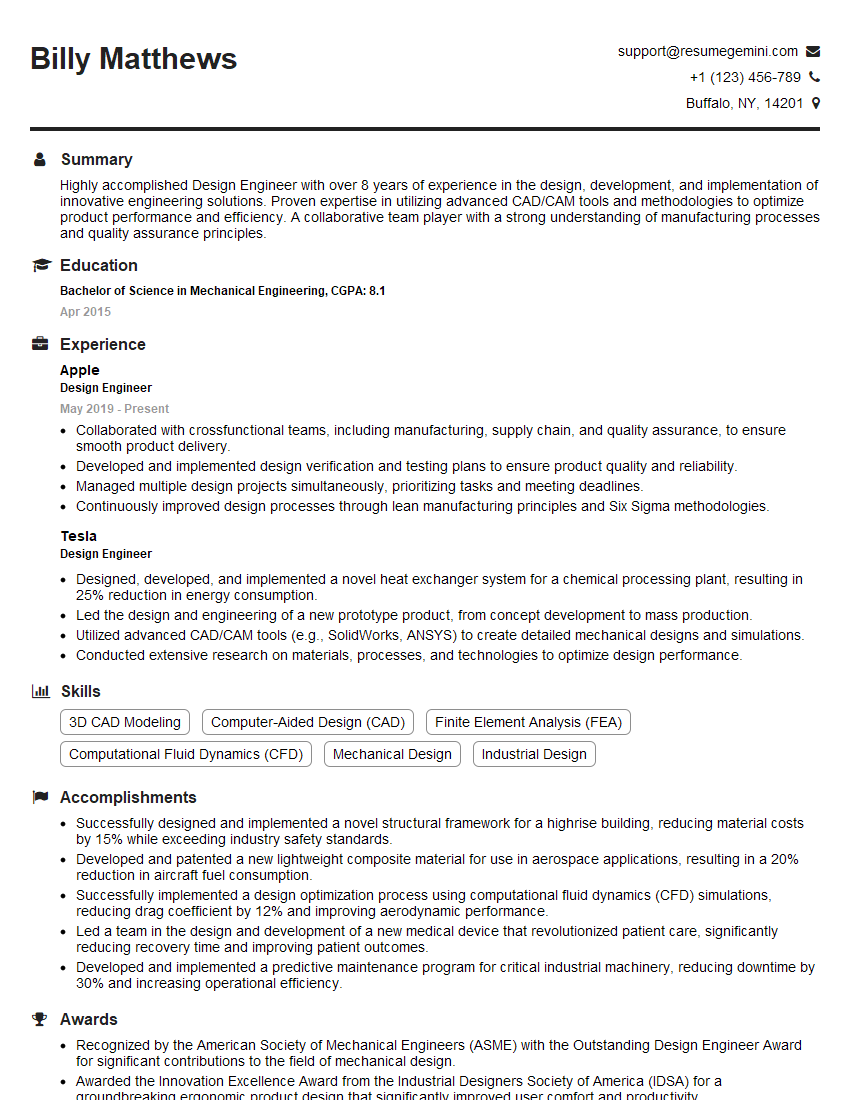
Design Engineer Resume Sample

Drafting Technician Resume Sample
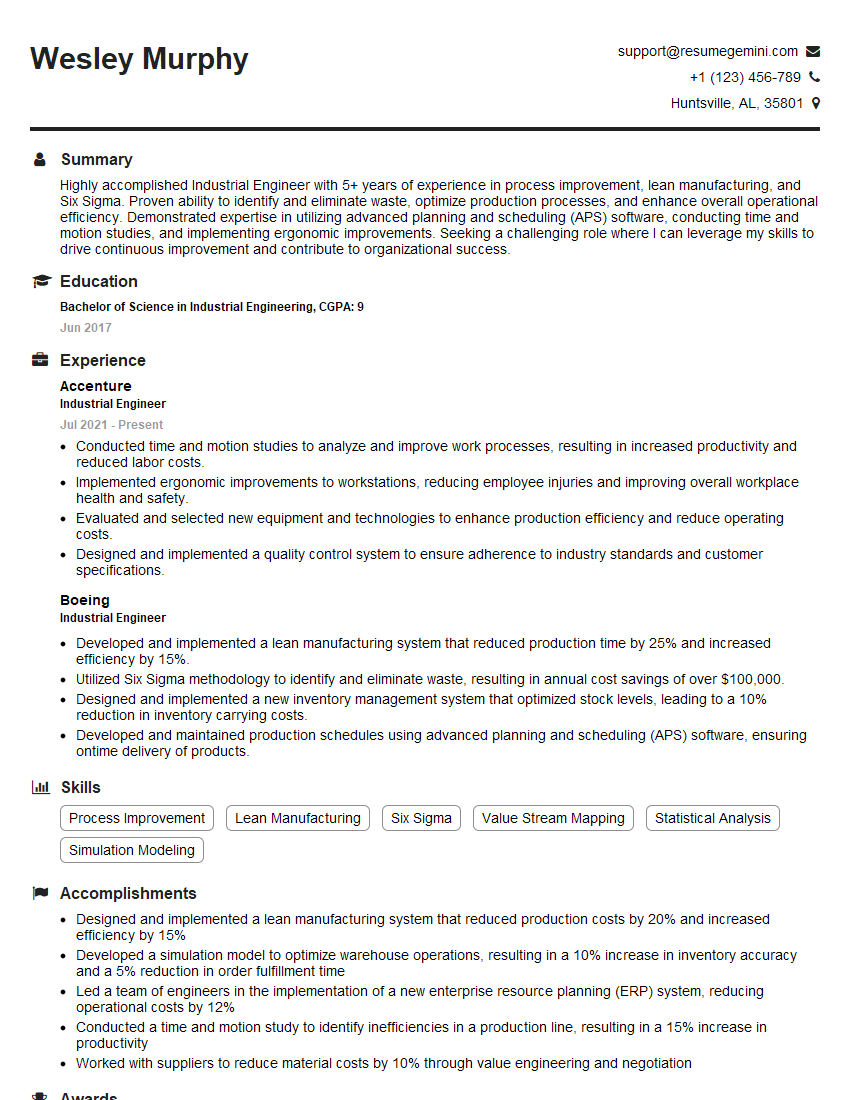
Industrial Engineer Resume Sample
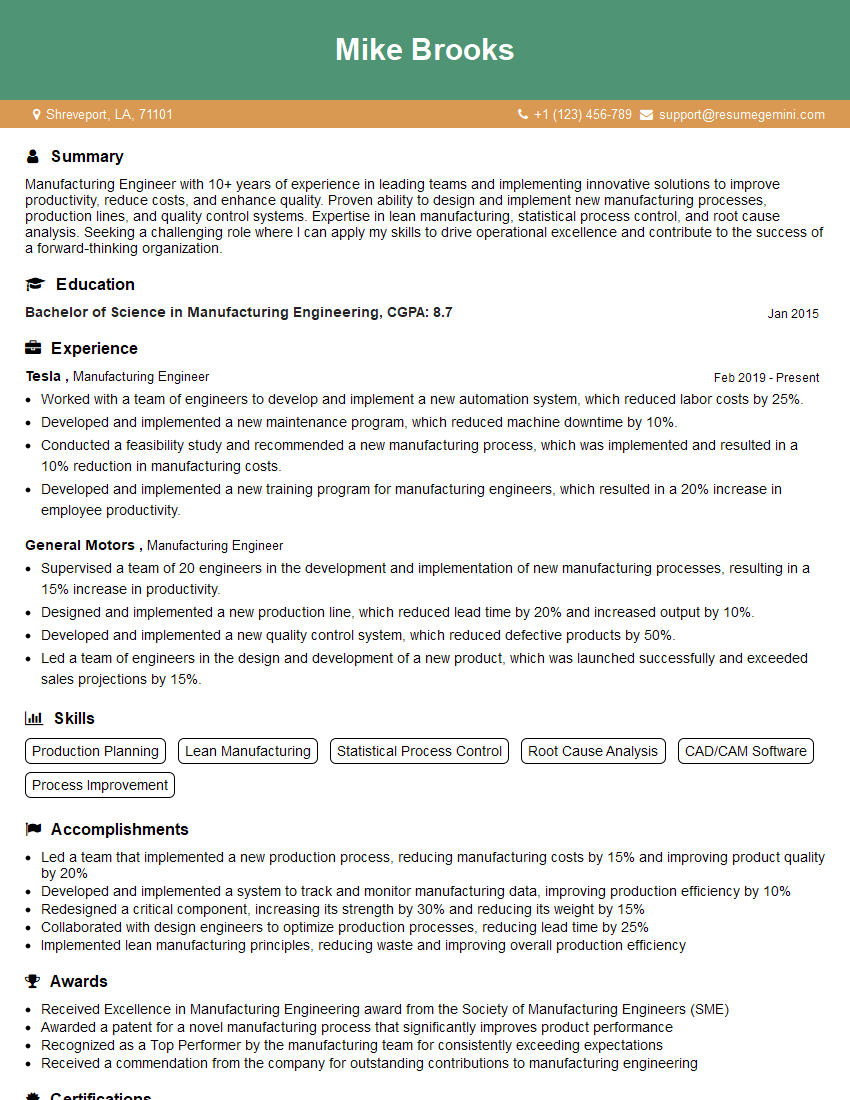
Manufacturing Engineer Resume Sample
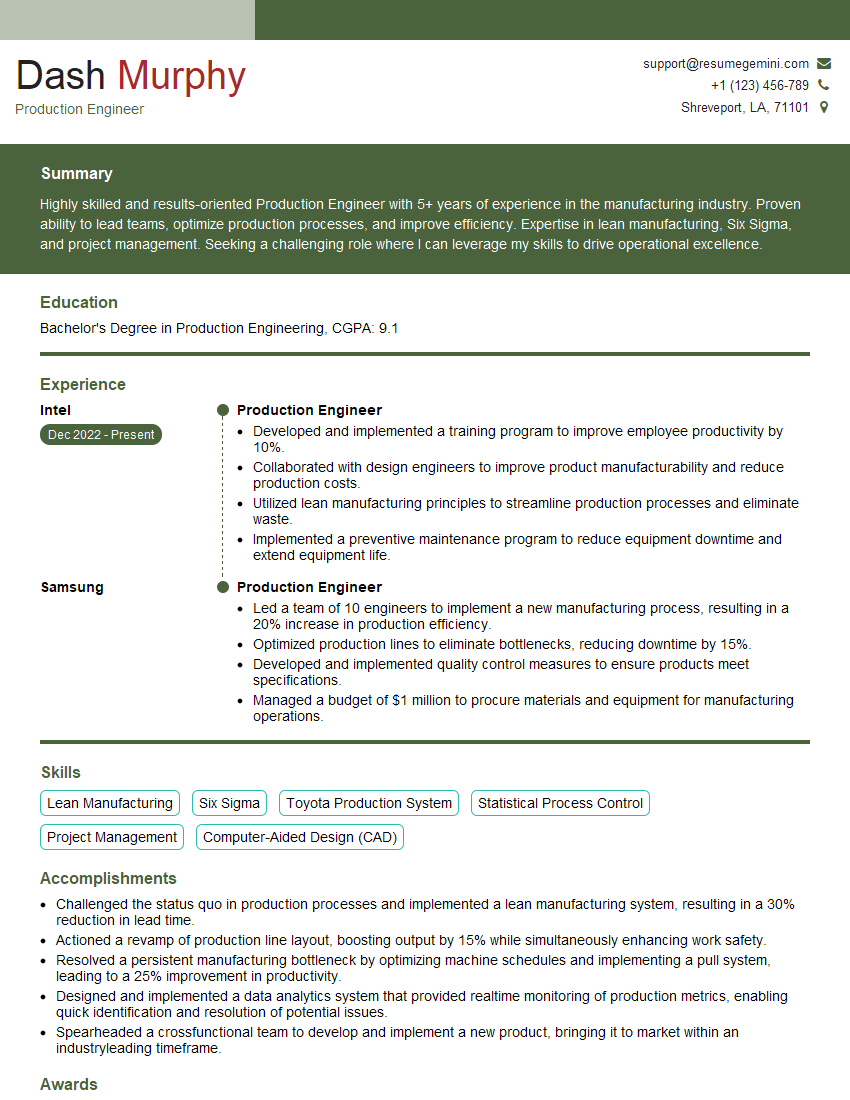
Production Engineer Resume Sample

Materials Engineer Resume Sample

Metallurgist Resume Sample

Welding Engineer Resume Sample
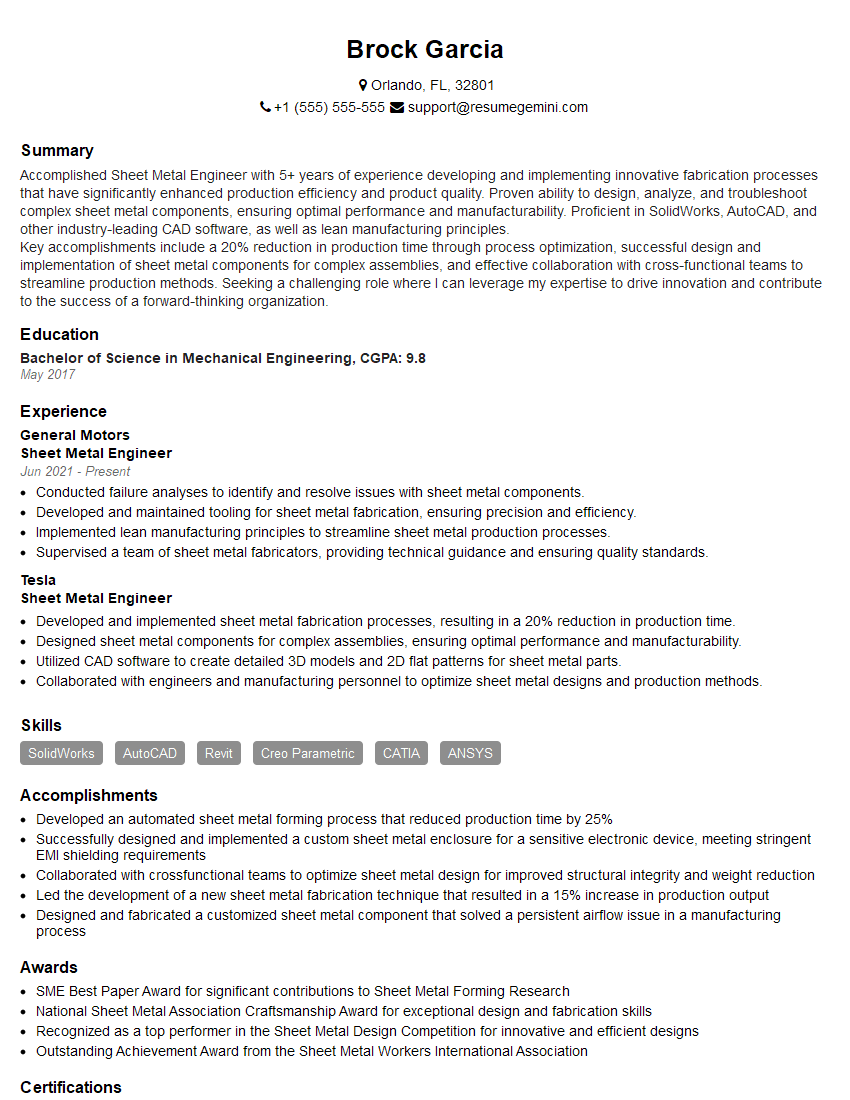
Sheet Metal Engineer Resume Sample

Quality Assurance Engineer Resume Sample

Robotics Engineer Resume Sample
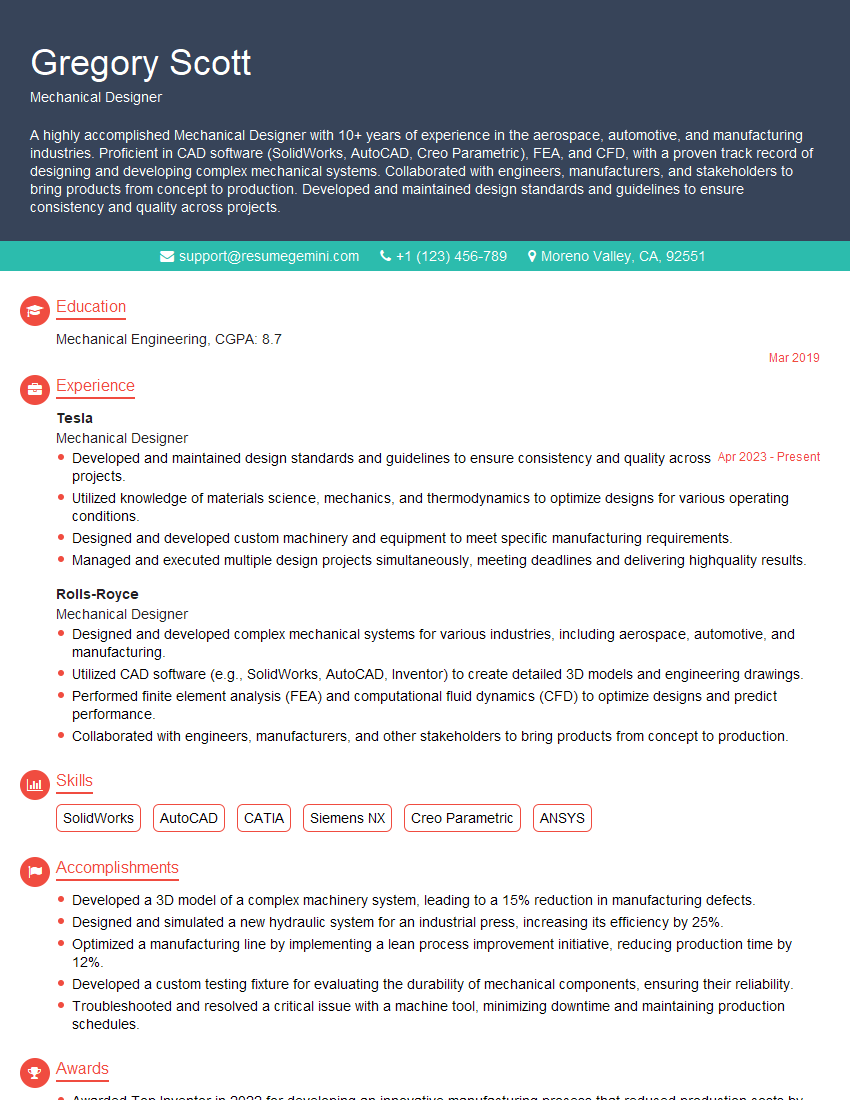
Mechanical Designer Resume Sample
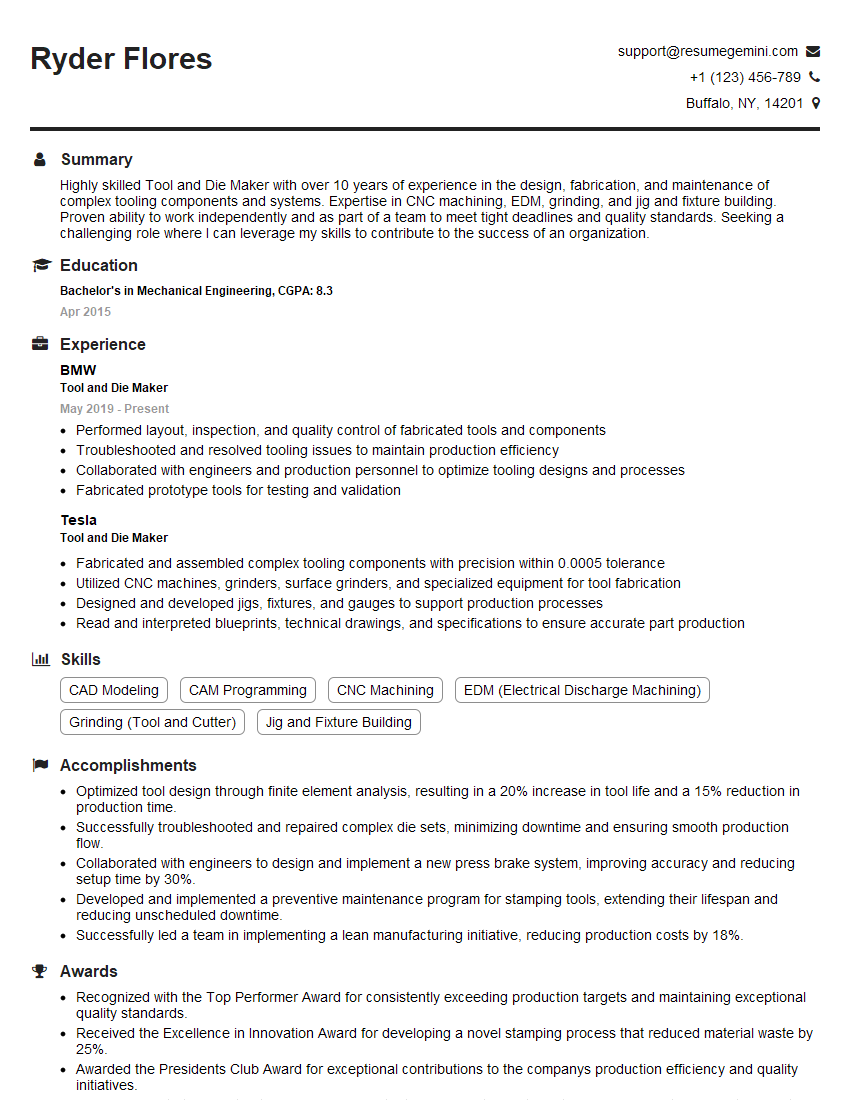
Tool and Die Maker Resume Sample

Quality Control Inspector Resume Sample
- Operations Manager
- Supply Chain Manager
- Project Engineer
- Process Engineer
- Automation Engineer
- Technical Specialist
- Design Engineer
- Drafting Technician
- Industrial Engineer
- Manufacturing Engineer
- Production Engineer
- Materials Engineer
- Metallurgist
- Welding Engineer
- Sheet Metal Engineer
- Quality Assurance Engineer
- Robotics Engineer
- Mechanical Designer
- Tool and Die Maker
- Quality Control Inspector
Explore more articles
Users Rating of Our Blogs
Share Your Experience
We value your feedback! Please rate our content and share your thoughts (optional).
What Readers Say About Our Blog
Very informative content, great job.
good