Interviews are more than just a Q&A session—they’re a chance to prove your worth. This blog dives into essential Bindery and Finishing Processes interview questions and expert tips to help you align your answers with what hiring managers are looking for. Start preparing to shine!
Questions Asked in Bindery and Finishing Processes Interview
Q 1. Describe the process of perfect binding.
Perfect binding, also known as adhesive binding, is a popular method for creating books and publications with a soft cover. It’s ideal for projects with a higher page count, typically more than 48 pages. The process begins with the book’s pages being collated and then glued along the spine. A crucial step involves roughening the spine to ensure the adhesive properly adheres. Once the glue is applied, the spine is pressed and then trimmed, creating a clean, finished edge. A cover is then wrapped around the glued spine and the whole thing is pressed again, firmly securing the cover to the text block. Think of it like a nicely bound paperback novel – that’s perfect binding in action.
The entire process is automated in larger print shops, using sophisticated machinery that ensures consistent results and speed. However, smaller runs might utilize a more manual approach.
Q 2. Explain the difference between saddle stitch and wire-O binding.
Saddle stitch and wire-O binding are both common finishing methods, but they differ significantly in their application and resulting product. Saddle stitch is a simple, cost-effective method suitable for magazines, brochures, or booklets with a relatively low page count (typically under 48 pages). It involves folding the pages in half and then stapling them through the fold, creating a booklet that opens easily and lays relatively flat.
Wire-O binding, on the other hand, uses double-loop wire to hold the pages together. The pages are punched with holes, and then the wire is inserted and crimped to securely bind the document. This results in a professional-looking, durable product that can lay completely flat, making it perfect for calendars, notebooks, and high-quality presentations. It’s more expensive than saddle stitch but provides superior durability and a superior aesthetic.
In short, choose saddle stitch for budget-friendly, low-page-count projects where flat lay isn’t paramount. Opt for wire-O for higher-end projects needing durability and a flat lay. Imagine a simple newsletter versus a professional planner – the binding choice would be very different.
Q 3. What are the common issues encountered during folding and how are they resolved?
Folding is a critical step in bindery, and several issues can arise. Incorrect folding can lead to misaligned pages, creases in the wrong place, or even tears. Common problems include:
- Misfeeds: Pages not feeding correctly into the folding machine, leading to skips or double folds.
- Creasing issues: Uneven or inconsistent creasing, leading to unattractive folds.
- Registration problems: Pages not aligning correctly after folding, leading to misaligned content.
- Paper jams: Paper becoming stuck within the folding machine.
Resolving these issues often involves adjusting machine settings (such as speed, pressure, and paper guides), ensuring the paper stock is appropriate for the folding machine, and meticulously checking the machine for any mechanical issues. Regular maintenance and cleaning of the equipment are crucial for preventing problems. In the case of misfeeds, checking the paper path and ensuring correct paper size and orientation is vital. For creasing, carefully adjusting the pressure rollers is needed. A thorough understanding of the equipment is key to troubleshooting.
Q 4. How do you ensure the quality of a finished product?
Ensuring the quality of a finished product requires a multi-faceted approach, starting from the initial design and extending through to the final inspection. Quality control checks should be performed at every stage of the process. This includes verifying the accuracy of printed content, checking for any flaws or imperfections in the printing, such as smudges or ink inconsistencies, ensuring correct folding and binding, and examining the overall presentation of the final product.
Visual inspection is crucial, but using calibrated instruments can help to maintain objective standards. For example, measuring thickness consistency, color accuracy with spectrophotometers, and checking spine dimensions for uniformity are all aspects of comprehensive quality control.
Regular maintenance of bindery equipment and staff training are essential in preventing defects and maintaining consistent quality. A well-defined quality control protocol, incorporating both visual and instrumental checks and a well-trained workforce, is vital to meet high standards and customer expectations. Finally, random sample checks of the finished product help to detect potential issues early before they become widespread.
Q 5. What are the different types of laminating films and their applications?
Laminating films enhance the durability and appearance of printed materials. Several types exist, each suited to different applications:
- Gloss Laminate: Provides a high-gloss, shiny finish, enhancing the vibrancy of colors. Ideal for projects requiring a premium feel, such as brochures or product packaging.
- Matte Laminate: Offers a smooth, non-reflective finish, reducing glare and providing a more subtle look. Suitable for projects requiring a sophisticated, less shiny look, such as business cards or high-quality reports.
- Satin Laminate: Falls between gloss and matte, offering a slight sheen and reduced glare. A versatile option providing a balance between the two extremes.
- UV (Ultraviolet) Coating: Not technically a film laminate but a liquid coating that provides a glossy finish, extra protection and durability. It’s frequently used in situations needing a very high level of abrasion resistance.
The choice of laminate depends on the project’s specific requirements and aesthetic goals. Consider the intended use, desired finish, and budget when making your selection. For example, a glossy laminate would be suitable for a colorful product catalogue aimed to attract attention, while a matte laminate might be preferred for a professional business report.
Q 6. Explain the process of die-cutting.
Die-cutting is a process that uses a sharp, custom-made die to cut intricate shapes or designs from paper, cardstock, or other materials. The die is usually made of hardened steel and is precisely engineered to create the desired shape. The material to be cut is placed under the die, and a powerful press forces the die through the material, cleanly cutting the shape. Think of cookie cutters, but on a much larger and more precise scale, often used for creating custom shapes for packaging, business cards or promotional materials.
The process requires specialized equipment and expertise. The dies themselves are carefully designed and constructed, often using computer-aided design (CAD) software to ensure accuracy. The resulting cut pieces can be used as is or further processed. A common example is creating custom shaped business cards, window cut-outs in promotional displays, or creating unique packaging elements. Die-cutting allows for exceptional design flexibility and enables creating custom shapes impossible through other methods.
Q 7. What safety precautions are essential when operating bindery equipment?
Safety is paramount in any bindery operation. Bindery equipment can be powerful and potentially dangerous if not used correctly. Essential safety precautions include:
- Proper training: All operators must receive thorough training on the safe operation of all equipment before use.
- Personal Protective Equipment (PPE): Always wear appropriate PPE, including safety glasses, gloves, and hearing protection.
- Machine guards: Ensure all machine guards are in place and functioning correctly before operating any equipment.
- Lockout/Tagout procedures: Follow lockout/tagout procedures when performing maintenance or repairs on any equipment to prevent accidental start-ups.
- Proper handling of materials: Use proper lifting techniques to avoid injury when handling heavy materials.
- Cleanliness: Maintain a clean and organized workspace to prevent accidents. Ensure no debris is left on the floor near machinery.
- Emergency procedures: Be familiar with emergency procedures and know where the nearest fire extinguisher and first aid kit are located.
Regular safety inspections and adherence to all safety guidelines are essential to maintain a safe working environment and minimize risks.
Q 8. How do you troubleshoot jams in a folding machine?
Troubleshooting folding machine jams requires a systematic approach. Think of it like detective work – you need to identify the culprit before you can fix the problem. First, safety first! Always turn off and unplug the machine before attempting any repairs. Then, I’d follow these steps:
- Visual Inspection: Carefully examine the paper path for any obvious obstructions, such as crumpled sheets, staples, or foreign objects. I often start at the infeed and work my way through to the output tray.
- Paper Type and Condition: Check the paper’s weight, moisture content, and quality. Damp or wrinkled paper is a frequent culprit. Sometimes, the paper simply isn’t the right type for the folding machine’s specifications.
- Roller and Belt Condition: Inspect rollers and belts for wear, damage, or misalignment. Worn or dirty rollers can cause slippage and jams. I’ve seen many jams cleared simply by cleaning the rollers with a lint-free cloth.
- Sensor Check: Many modern folding machines use sensors to detect paper. A faulty sensor might prevent the machine from properly registering or feeding the paper. Refer to the machine’s manual for sensor testing procedures.
- Adjustments: Sometimes, minor adjustments to the paper feed, folding plates, or output tray are needed. This often requires familiarity with the specific machine’s controls and settings. I always consult the machine’s operational manual for precise adjustment instructions.
- Call for Service: If the jam persists despite these steps, it’s time to call in a qualified technician. Attempting complex repairs without proper training can cause further damage.
For example, I once had a recurring jam caused by a tiny piece of plastic lodged near a roller. A simple visual inspection and removal solved the problem. In another case, inconsistent paper moisture led to numerous jams, requiring adjustments to the machine’s settings and a change in paper stock.
Q 9. Describe your experience with different types of paper and their suitability for various finishing techniques.
Paper selection is crucial for successful finishing. Different papers behave differently in various processes. My experience encompasses a wide range of papers:
- Coated Papers: These are excellent for high-quality printing and offer vibrant colors but can be challenging to fold due to their stiffness. They work well with perfect binding, but can be problematic with some saddle stitching methods.
- Uncoated Papers: These are more absorbent and offer a natural feel. They fold well but are more susceptible to ink bleed. They are suitable for a variety of binding methods.
- Cardstock: Thicker than paper, cardstock is ideal for covers and business cards. It can be challenging to fold and may require specialized equipment. It pairs well with case binding.
- Specialty Papers: This category encompasses textured, recycled, and other unique papers with varying properties that must be considered for finishing. Texture can affect the quality of folding and binding.
For instance, I once worked on a project requiring a high-gloss finish. We chose a heavy coated paper which performed beautifully in perfect binding but needed careful attention to avoid creasing during the folding process. In another project with a rustic theme, we opted for a textured, uncoated paper, and this worked flawlessly with wire-o binding.
Q 10. What are the advantages and disadvantages of different binding methods?
Choosing the right binding method depends on factors like document length, budget, and desired aesthetic. Each method has its own strengths and weaknesses:
- Perfect Binding: Cost-effective for longer documents. Pages are glued to a spine, and a cover is wrapped around. Advantage: Economical. Disadvantage: Spine can be bulky.
- Saddle Stitch Binding: Suitable for shorter documents with a smaller page count. Pages are folded and stapled through the spine. Advantage: Simple and inexpensive. Disadvantage: Limited page capacity.
- Wire-O Binding: Allows for pages to lay flat. Pages are punched and bound with metal wire. Advantage: Durable and pages lay flat. Disadvantage: Relatively expensive.
- Case Binding: High-quality method used for hardback books. Sections are sewn together, and a cover is glued on. Advantage: Durable and professional. Disadvantage: Most expensive method.
Consider a project with a short newsletter – saddle stitch is ideal. A high-quality novel would benefit from case binding, while a report might be best suited for perfect binding.
Q 11. How do you calculate the cost of finishing a project?
Calculating finishing costs involves considering several factors:
- Material Costs: This includes the cost of paper, ink, adhesives, and binding materials. These vary greatly depending on the quality and quantity.
- Labor Costs: The time spent on each finishing step, such as cutting, folding, collating, and binding, contributes to the overall labor cost. Hourly rates and job complexity impact this.
- Equipment Costs: The cost of running and maintaining finishing equipment, including power consumption and potential repairs, must be factored in, often calculated per use or project.
- Waste and Spoilage: Account for potential paper waste during cutting, folding, or binding. This is especially important in high-volume projects.
- Overhead Costs: Include rent, utilities, and other administrative costs.
A detailed cost breakdown per project is essential. For instance, if the project involves 1000 copies, we’d calculate material costs per copy, multiply by 1000, and then add labor, equipment, waste, and overhead costs. This allows us to create accurate quotes and maintain profitability.
Q 12. Explain your experience with automated finishing systems.
My experience with automated finishing systems spans several years and various manufacturers. These systems drastically improve efficiency and precision compared to manual processes. I’m proficient in operating and troubleshooting automated equipment, including:
- High-speed Folders: These machines can process thousands of pages per hour with high accuracy, allowing for complex folding patterns.
- Automated Collators: They accurately collate pages from multiple sources, ensuring perfect order for binding. I’ve worked with systems that handle both small and large document quantities.
- Perfect Binding Machines: Automated systems apply glue and trim pages with precision, producing a professional finish. I understand different types of glue and their settings in these machines.
- Finishing Lines: I am familiar with integrated finishing lines that combine multiple processes, such as folding, collating, and binding into a single automated workflow. This is key to high-volume operations.
For example, in a previous role, we transitioned from manual collating to an automated system, increasing our output by over 50% and reducing errors significantly. The automated systems also decreased manual labor, resulting in cost savings and increased efficiency.
Q 13. How do you maintain and clean bindery equipment?
Regular maintenance is crucial for maximizing the lifespan and efficiency of bindery equipment. My maintenance routine includes:
- Daily Cleaning: Removing paper dust, debris, and excess adhesive from rollers, belts, and other components. This prevents jams and ensures smooth operation. I use appropriate cleaning agents and follow manufacturer recommendations.
- Weekly Inspections: Checking for wear and tear on belts, rollers, and other moving parts. Tightening loose screws and identifying potential issues early. I also keep a log of my weekly findings.
- Monthly Service: More thorough inspections and cleaning, including lubrication of moving parts and replacement of worn components. I typically adhere to the manufacturer’s scheduled maintenance procedures.
- Preventative Maintenance: Proactive measures, such as scheduling regular inspections and replacing parts before they fail completely. I plan this in order to avoid disruptive breakdowns during production runs.
- Documentation: Maintaining detailed records of all maintenance activities, including the date, the service performed, and any parts replaced. This helps track equipment health and potential issues.
Neglecting maintenance can lead to costly repairs and production delays. A well-maintained machine is a productive machine.
Q 14. Describe your experience with different types of adhesives used in binding.
Various adhesives are used in different binding methods. My experience includes:
- Hot Melt Glue: Used in perfect binding and other high-speed applications. It requires specialized equipment to melt and apply the glue. The setting time is fast, enhancing productivity. I am proficient in managing glue temperature and viscosity for optimal results.
- PUR (Polyurethane Reactive) Adhesive: A strong and flexible adhesive often used in perfect binding and case binding. It bonds well to various materials and offers excellent durability. PUR glues require careful handling and specific application techniques to achieve the right bond strength and setting time.
- EVA (Ethylene Vinyl Acetate) Adhesive: A thermoplastic adhesive used in various binding applications. It provides a good balance between cost and performance. I find it easier to use than PUR adhesives for general binding.
The choice of adhesive depends on factors such as the binding method, paper type, and desired durability. For example, PUR glue is preferred for high-quality books requiring a strong, flexible bond, whereas EVA might be suitable for less demanding applications. Using the wrong adhesive can result in poor binding quality or even damage to the equipment.
Q 15. How do you handle rush jobs or urgent orders?
Handling rush jobs requires a calm and systematic approach. It’s not just about speed, but about maintaining quality under pressure. My strategy involves prioritizing the order immediately, assembling the best team available, and streamlining the process. This might involve optimizing the workflow, perhaps eliminating less critical steps if quality isn’t compromised. I’d also communicate transparently with the client, setting realistic expectations regarding turnaround time, given the urgency and complexity of the job. For example, if a client needs 1000 brochures printed and bound within 24 hours, I’d assess machine capacity, personnel availability, and material stock to create a feasible schedule. We’d run multiple machines concurrently where possible and utilize overtime if absolutely necessary, while ensuring quality checks are maintained at each stage.
Open communication throughout the process is key. Regular updates to the client, outlining progress and addressing any potential delays, are crucial for maintaining trust and managing expectations. This proactive approach prevents surprises and helps to navigate any unforeseen challenges that inevitably arise in high-pressure situations.
Career Expert Tips:
- Ace those interviews! Prepare effectively by reviewing the Top 50 Most Common Interview Questions on ResumeGemini.
- Navigate your job search with confidence! Explore a wide range of Career Tips on ResumeGemini. Learn about common challenges and recommendations to overcome them.
- Craft the perfect resume! Master the Art of Resume Writing with ResumeGemini’s guide. Showcase your unique qualifications and achievements effectively.
- Don’t miss out on holiday savings! Build your dream resume with ResumeGemini’s ATS optimized templates.
Q 16. What are your experience with quality control checks in the finishing process?
Quality control is integral to every stage of the bindery and finishing process. It’s not an afterthought, but rather a continuous process integrated into every step. My experience involves implementing a multi-layered QC system, starting with pre-press checks of the digital files to ensure proper bleeds, margins, and imposition. Then, during production, spot checks are performed at key points, such as after cutting, folding, and binding. This might involve checking sheet counts, verifying color accuracy, and ensuring consistent binding quality.
At the final stage, a thorough inspection of a statistically significant sample of the finished product takes place, checking for any imperfections such as misaligned images, crooked folds, or loose binding. We maintain detailed records of these checks, identifying any defects and their root causes, which helps us refine processes and prevent similar issues in the future. For example, if we encounter consistent misalignment in folded brochures, we would investigate the folding machine settings, potentially adjusting the knives or the paper feed mechanism.
Q 17. How do you manage waste materials in the bindery?
Waste management in a bindery is critical, both environmentally and economically. We employ a multi-pronged approach. First, we focus on minimizing waste by optimizing the imposition of printed sheets and employing efficient cutting and folding techniques. This reduces the amount of material that ends up as scrap. Second, we meticulously separate different types of waste materials – paper, cardboard, plastics, and metals – for appropriate recycling or disposal. We work with certified recycling facilities and adhere to all relevant environmental regulations.
Third, we regularly review our waste generation data to identify areas for improvement. This might involve exploring more efficient cutting dies, adjusting the settings on our machines, or even switching to more sustainable materials. For instance, we may analyze the scrap generated from a particular type of booklet to determine if changes in the cutting die design or paper size would significantly reduce waste. We strive for continuous improvement in this area, as reducing waste is both an environmental responsibility and a cost-saving measure.
Q 18. Describe your experience with different types of cutting tools.
My experience encompasses a wide range of cutting tools, each suited for specific applications. These include:
- Rotary Cutters: These are commonly used for high-volume cutting, ideal for paper, board, and other materials. They are efficient and precise, offering clean cuts. I’m proficient in using various rotary cutters with different blade configurations for specific thickness and material types.
- Die Cutters: These allow for intricate shapes and designs. I have extensive experience using both flatbed and rotary die cutters, working with custom-made dies to achieve complex cuts and perforations. This is frequently used for unique packaging and promotional materials.
- Guillotine Cutters: These are heavy-duty tools for large-format materials and precise straight cuts. Understanding safety protocols and proper blade maintenance is crucial when working with guillotines. I’ve operated and maintained guillotines of various sizes.
- Creasing Wheels: These are used for pre-breaking the paper fibers to allow for sharp, clean folds without cracking. This is essential for high-quality folding, particularly on heavier stocks.
Regular maintenance and sharpening of all cutting tools is vital for ensuring consistent, clean cuts and preventing accidents.
Q 19. How do you ensure the accuracy of the cutting and folding processes?
Accuracy in cutting and folding is paramount. We achieve this through several methods. First, precision is built into the equipment itself—regular calibration and maintenance of our cutting and folding machines is critical. Second, we use precise measurements and templates during the setup process, ensuring accurate positioning of the material prior to cutting and folding. We utilize digital measuring tools and verification systems to guarantee accuracy at each step.
Third, we perform regular test runs, examining the first few pieces produced for any signs of misalignment or errors. If discrepancies are detected, the machine settings are adjusted to correct the problem, ensuring that subsequent pieces are accurate. This proactive approach prevents significant waste and rework. For example, we might use a pre-flight program to check the imposition for potential issues before initiating the cutting process, and then visually examine a small sample after cutting to ensure accuracy before processing the entire stack.
Q 20. Explain your experience with different types of finishing materials (e.g., covers, boards).
My experience encompasses a broad spectrum of finishing materials, and understanding their properties is crucial for successful bindery work. This includes:
- Cover Boards: I’ve worked with various board types, including coated, uncoated, and textured boards in different thicknesses, weights, and finishes. I understand the considerations for selecting appropriate boards based on the final product’s intended use and aesthetic.
- Cover Stocks: This covers a wide range of papers specifically designed for book covers, brochures, and other applications, varying in thickness, texture, and print capabilities. Knowledge of their properties is important for selecting the right stock for specific printing techniques and finishing processes.
- Specialty Papers: My experience includes working with textured papers, metallic papers, and other unique papers to create visually appealing and high-quality products. Understanding the handling requirements for these materials is key to avoiding damage and ensuring proper finishing.
- Bindery Adhesives: I’m familiar with various adhesives used in different binding methods, including PUR (polyurethane reactive) adhesives, hot melt adhesives, and perfect binding adhesives. The choice of adhesive is dictated by the type of binding and the material being used.
Choosing the right materials is crucial for the final product’s durability, aesthetics, and cost-effectiveness.
Q 21. What is your experience with pre-flighting files for finishing?
Preflighting files for finishing is a critical step in preventing costly errors and delays. It’s like a thorough pre-flight check for an airplane before takeoff—you want to catch any problems *before* they become major issues. My experience includes using preflight software to check for various issues, such as:
- Correct bleed and margin settings: Ensuring that images and elements extend beyond the trim line, and that content is positioned correctly within the safe margins.
- Color profiles: Verifying that color spaces are correctly set to prevent color shifts during printing and finishing.
- Font embedding: Confirming that all necessary fonts are included, so that the text renders correctly after finishing.
- Image resolution: Checking that image resolution is sufficiently high to avoid pixelation or poor quality when printed and finished.
- Imposition: Ensuring the pages are arranged correctly for the chosen finishing method.
A preflight check allows me to catch and rectify these problems before the job goes into production, saving time and resources in the long run. Identifying and correcting issues at this early stage is much more efficient than fixing them after the material is already printed and bound.
Q 22. How do you identify and resolve common issues in the finishing process?
Identifying and resolving issues in the finishing process begins with a thorough understanding of the entire workflow. It’s like troubleshooting a complex machine; you need to systematically check each component. Common problems include misaligned pages, incorrect folding, jamming in the machines, and quality defects like smudging or creasing.
- Misaligned pages: This often points to issues with the imposition (the arrangement of pages before printing) or problems with the feeding mechanism of the folding or binding equipment. I’d check the imposition settings in the software, inspect the feeders for jams or misfeeds, and ensure proper registration on the printing press.
- Incorrect folding: This could be due to incorrect settings on the folder, damaged folding knives, or improperly sized sheets. I would review the folding machine’s settings, check the knives for wear and tear, and verify the sheet size matches the job specifications.
- Machine jams: These usually stem from paper jams, misfeeds, or sensor malfunctions. My approach would involve carefully clearing the jam, checking the rollers and sensors for debris, and adjusting the paper feed settings as needed.
- Quality defects: Smudging, creasing, or inconsistencies in finishing often necessitate examining the paper quality, the pressure settings of the machines, and the overall condition of the equipment.
Troubleshooting requires a combination of experience, knowledge of the machines, and meticulous attention to detail. I often use a checklist to systematically eliminate possibilities and document the issue, resolution, and any preventative measures.
Q 23. Describe your problem-solving approach in a high-pressure finishing environment.
In a high-pressure environment, a calm and systematic approach is key. Think of it like a firefighter; you need to prioritize and act quickly but intelligently. My problem-solving strategy follows these steps:
- Assessment: Quickly assess the situation – identify the problem, its severity, and its impact on the overall schedule.
- Prioritization: Prioritize the most pressing issues; often, this means addressing problems that halt the entire production line first.
- Communication: Immediately communicate the problem to the relevant team members and management. Clear and concise communication prevents misunderstandings and ensures everyone is on the same page.
- Troubleshooting: Systematically troubleshoot the issue using my knowledge and experience. If the problem is beyond my immediate capabilities, I escalate it to the appropriate technician.
- Solution Implementation: Once a solution is identified, implement it quickly and efficiently, paying close attention to safety procedures.
- Post-mortem: After resolving the problem, conduct a brief post-mortem analysis to identify root causes and prevent similar incidents in the future. Documentation is crucial.
Experience has taught me that remaining calm under pressure, coupled with a clear plan of action, is essential to effectively handling emergencies in a busy finishing department.
Q 24. How do you stay updated with the latest technologies and trends in the bindery and finishing industry?
Staying current in the bindery and finishing industry is crucial for maintaining a competitive edge. I employ several strategies:
- Industry Publications and Websites: I regularly read trade publications such as [mention relevant industry publications] and follow industry websites and blogs to stay abreast of the latest technologies and trends.
- Trade Shows and Conferences: Attending trade shows and conferences, such as [mention relevant trade shows], provides invaluable opportunities to see new equipment in action, network with other professionals, and learn about new techniques.
- Professional Organizations: Membership in professional organizations, like [mention relevant professional organizations], provides access to educational resources, networking opportunities, and industry insights.
- Manufacturer Websites and Training: I actively check the websites of equipment manufacturers to learn about product updates, new features, and training opportunities.
- Online Courses and Webinars: Many online platforms offer courses and webinars on advanced bindery and finishing techniques. This allows for continuous learning at my own pace.
This multi-faceted approach keeps my knowledge sharp and allows me to adapt to the ever-evolving landscape of the bindery and finishing industry.
Q 25. What is your understanding of different finishing specifications (e.g., bleed, trim size)?
Understanding finishing specifications is paramount to producing high-quality printed materials. They are essentially the blueprints for the finishing process.
- Bleed: Bleed refers to extending the printed image beyond the final trim size. This is crucial because printers cannot always print precisely to the edge of the paper. A typical bleed is 1/8 inch (3mm) on each side. Without bleed, the final trimmed piece might have unsightly white borders where the image ends.
- Trim Size: This is the final size of the printed piece after it’s been trimmed. It’s the crucial dimension that the client will receive. For example, a brochure might have a trim size of 8.5 x 11 inches.
- Other Important Specifications: Other critical finishing specifications include gutter (the space between pages in a booklet), fold lines, perforation lines, scoring lines (for easy folding), and binding specifications (e.g., saddle stitch, perfect bind, wire-o).
Accurate interpretation of these specifications prevents costly reprints and ensures client satisfaction. I always meticulously review these details before initiating any finishing process.
Q 26. Explain your experience with using different types of software related to finishing operations (e.g., imposition software).
My experience with finishing-related software is extensive. I’m proficient in various imposition software packages such as [mention specific software, e.g., Esko, imposition software from a specific printer]. These programs allow me to efficiently arrange pages for printing and create imposition sheets which optimize paper usage and minimize waste.
For example, I’ve used Esko Automation Engine to automate the imposition process for large-scale projects, dramatically reducing production time and errors. I’m also familiar with prepress software that helps prepare files for finishing operations, ensuring the correct bleed, trim size, and other specifications are applied before printing.
My understanding of these software tools extends beyond simply using them; I understand their underlying principles and can effectively troubleshoot issues that may arise during the imposition or prepress stages. This expertise ensures smooth and efficient workflow integration from prepress through to the final finished product.
Q 27. How would you handle a situation where a machine malfunctions during a critical production run?
A machine malfunction during a critical production run is a serious situation requiring immediate action. My response would be:
- Safety First: Ensure the safety of myself and other personnel. Immediately turn off the machine if necessary and clear the area to prevent injury.
- Assessment and Diagnosis: Try to identify the source of the malfunction. If I can identify a simple fix, I’ll proceed. Otherwise, I’ll gather information about the error (error codes, unusual sounds, etc.).
- Communication: Contact the appropriate maintenance personnel or the vendor for support. Clearly communicate the problem, the impact on production, and any relevant information gathered.
- Contingency Planning: If the repair will take time, I will explore contingency plans, such as rerouting the job to a different machine or temporarily suspending the affected part of the production while waiting for the repair.
- Documentation: Thoroughly document the incident, including the time of the malfunction, the problem, the solution, and any downtime incurred. This documentation is essential for improving future workflows and preventing similar incidents.
The key is to remain calm, act swiftly, and efficiently communicate with the appropriate parties to minimize production disruption.
Q 28. Describe your experience with training or supervising other bindery and finishing personnel.
I have significant experience training and supervising bindery and finishing personnel. My approach centers on a blend of practical training and mentorship.
I start with clear and concise instruction. I demonstrate the correct techniques and procedures, emphasizing safety protocols. I then provide hands-on training, allowing individuals to practice under my supervision. I provide regular feedback, offering constructive criticism and celebrating successes. I find that a supportive and encouraging environment fosters learning and skill development.
Beyond technical skills, I also focus on instilling a sense of responsibility and teamwork. I encourage them to be proactive in identifying potential problems and maintaining a high standard of quality in their work. I’ve successfully mentored junior staff to become proficient and confident operators, often taking on more responsibilities.
My goal is to empower my team, fostering a culture of continuous improvement and high-quality output. I believe in fostering a collaborative environment where everyone can contribute their expertise.
Key Topics to Learn for Bindery and Finishing Processes Interview
- Paper Handling and Preparation: Understanding different paper types, weights, and finishes; techniques for efficient paper feeding and handling to prevent jams and misfeeds; quality control measures during this stage.
- Folding Techniques: Familiarity with various folding methods (e.g., parallel, half, letter, gate-fold); understanding the impact of paper type and design on foldability; troubleshooting common folding issues.
- Binding Methods: In-depth knowledge of different binding types (e.g., saddle stitch, perfect binding, wire-o, case binding); understanding the strengths and limitations of each method; selecting the appropriate binding for different projects.
- Cutting and Trimming: Operation and maintenance of cutting and trimming equipment; precision cutting techniques to ensure accurate dimensions and clean edges; quality control to minimize waste and errors.
- Finishing Techniques: Experience with various finishing options (e.g., lamination, embossing, die-cutting, UV coating); understanding the effects of different finishes on the final product; choosing appropriate finishes to enhance the visual appeal and durability.
- Equipment Operation and Maintenance: Practical experience operating bindery and finishing machinery; understanding preventative maintenance procedures; troubleshooting common equipment malfunctions; safety protocols related to machinery operation.
- Quality Control and Inspection: Implementing quality control checks at each stage of the process; identifying and correcting defects; understanding industry standards and specifications.
- Production Planning and Scheduling: Understanding the workflow involved in bindery and finishing; optimizing production schedules to meet deadlines; efficient job management and prioritization.
- Problem-Solving and Troubleshooting: Analytical skills to diagnose and resolve issues related to equipment malfunctions, material handling, and quality control; proactive approach to preventing problems.
Next Steps
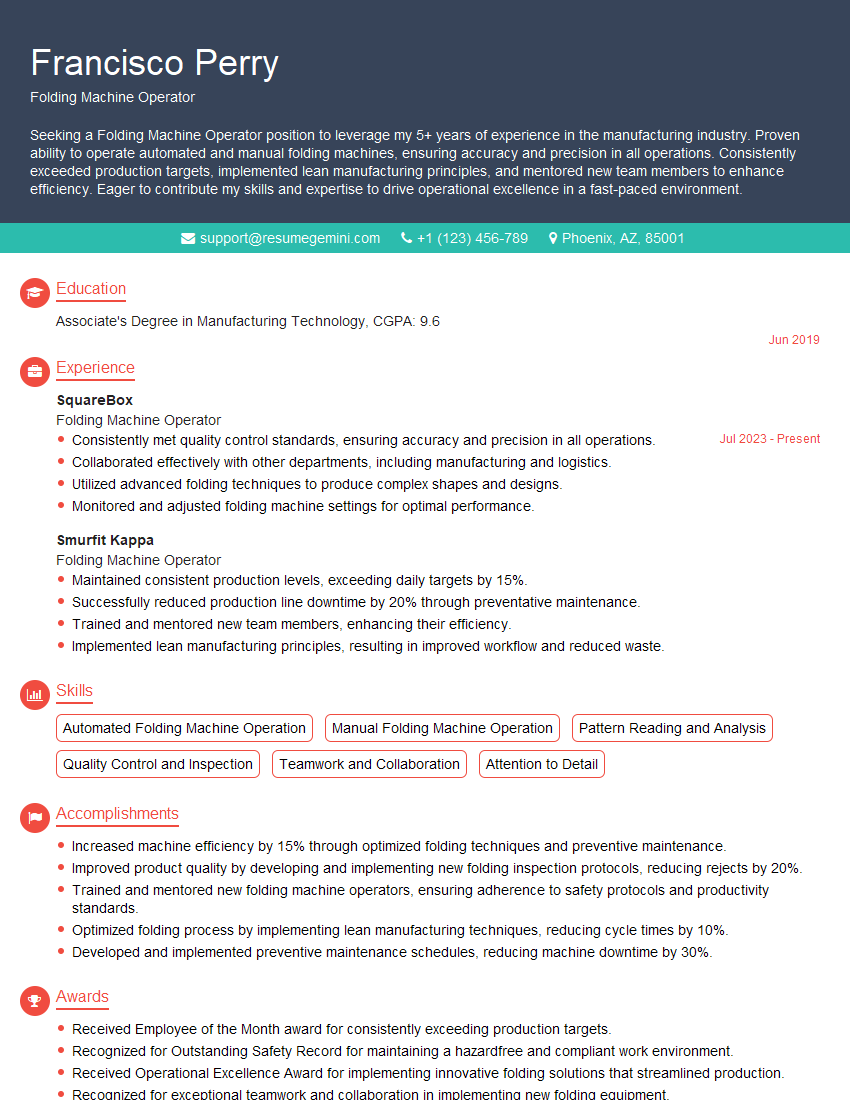
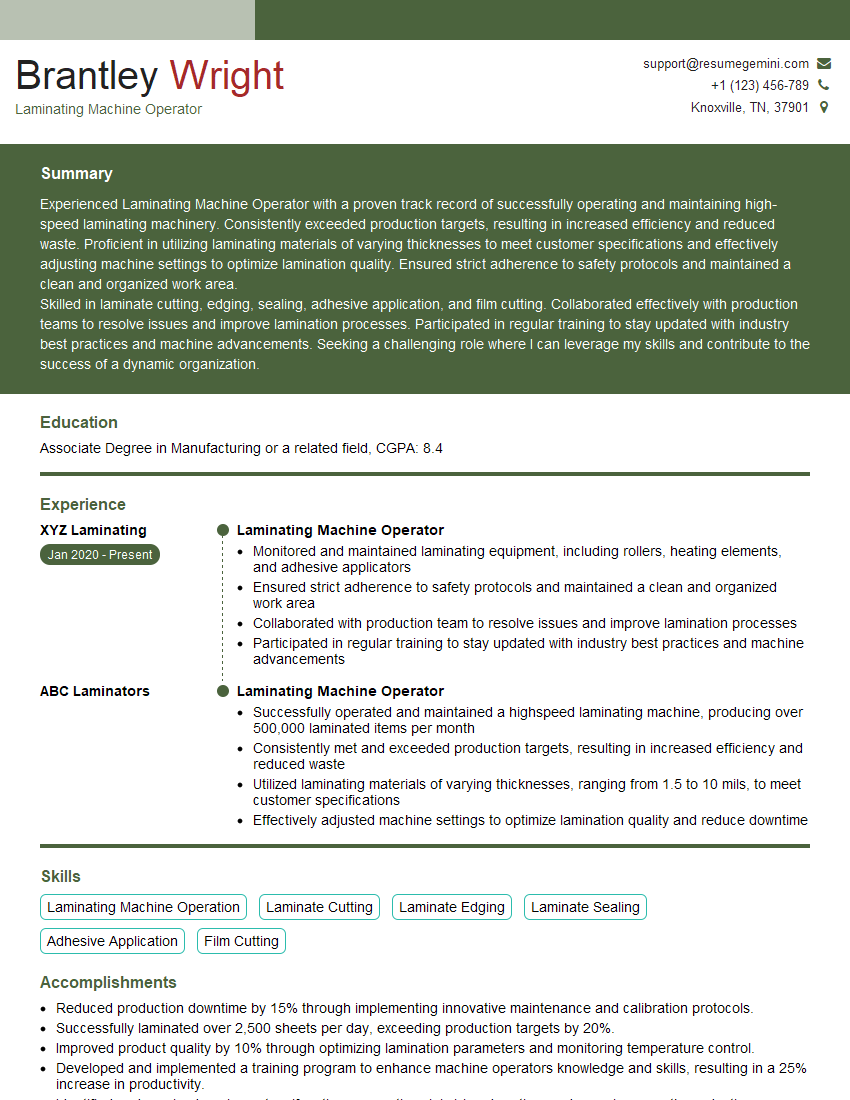
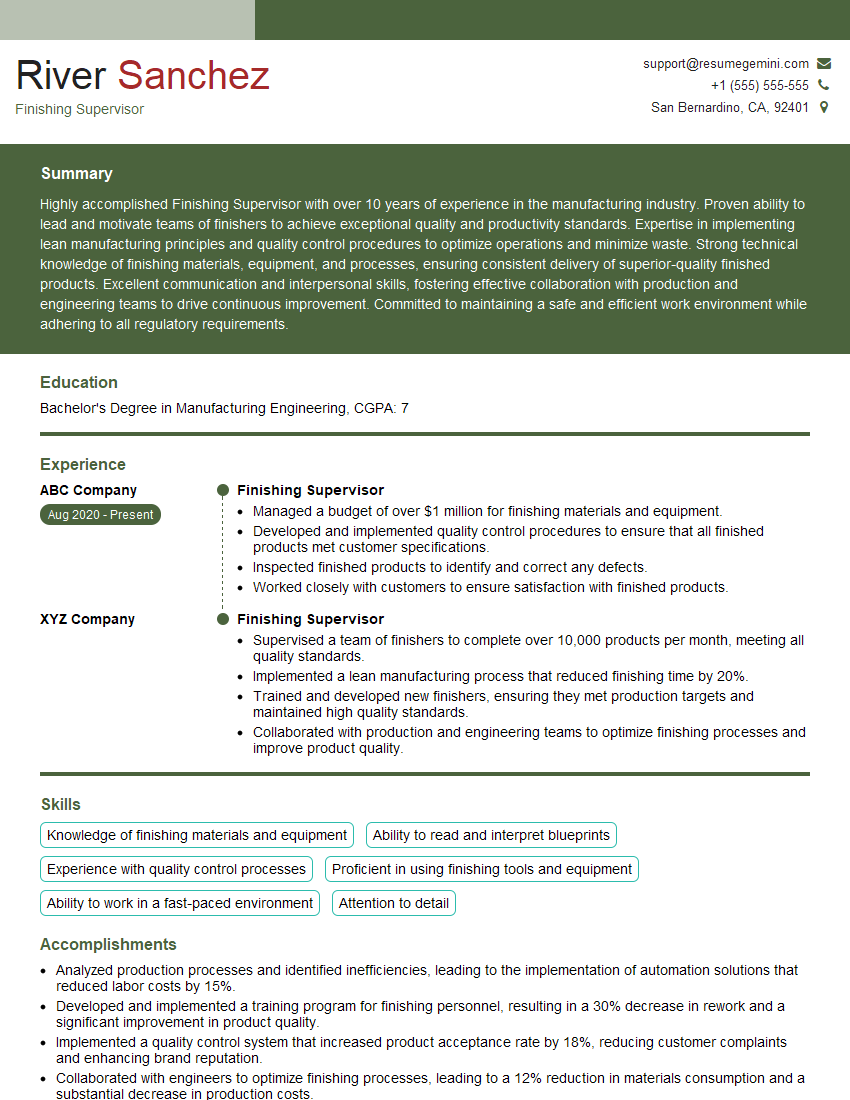
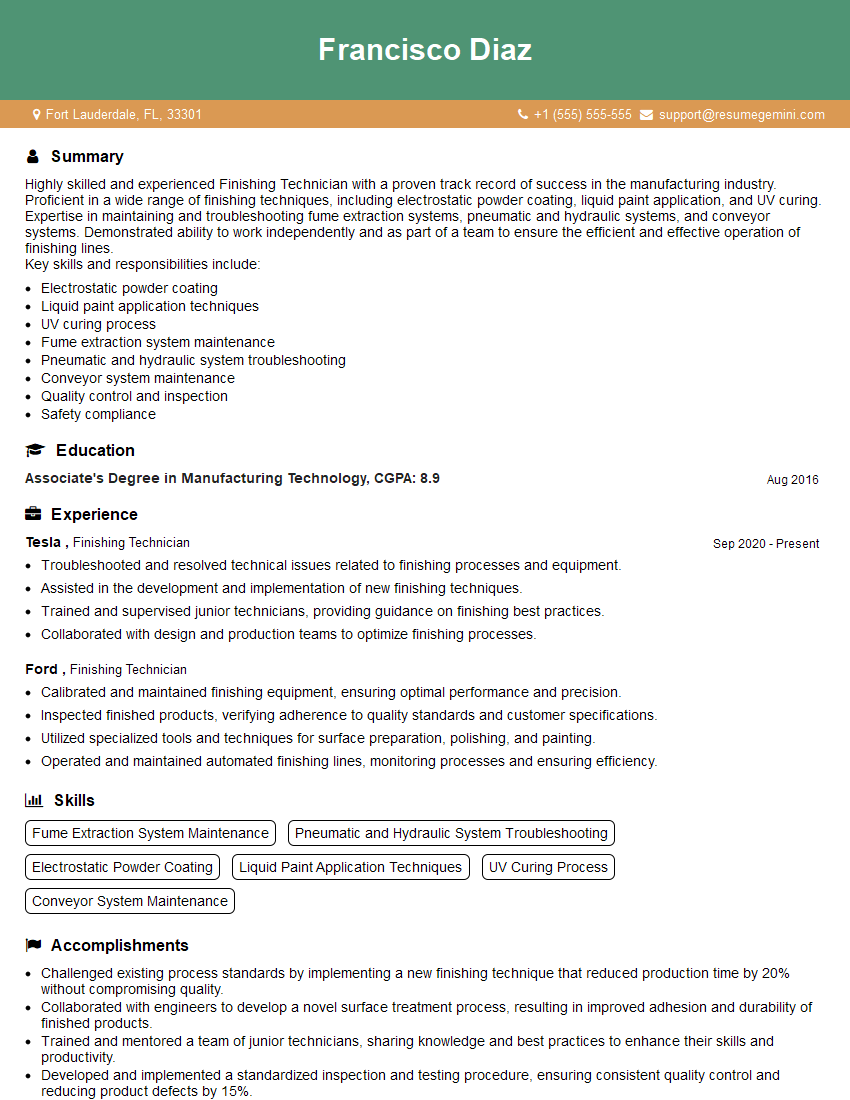
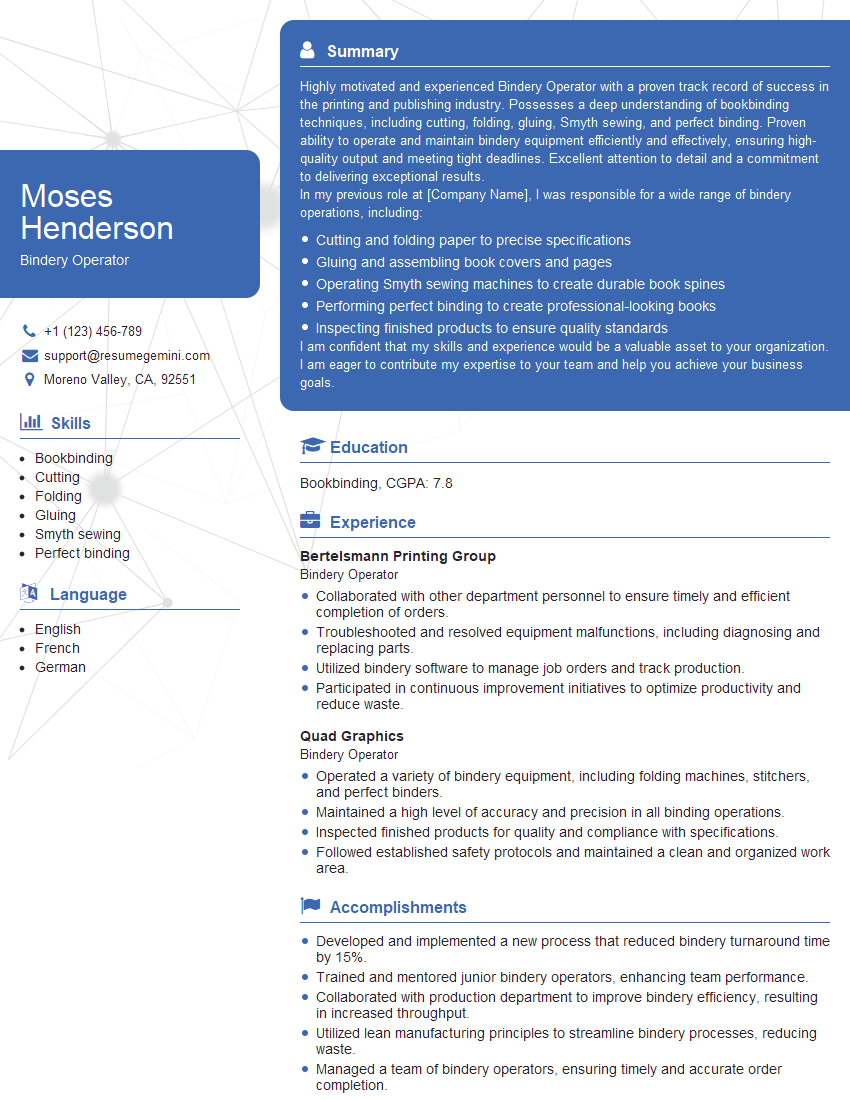
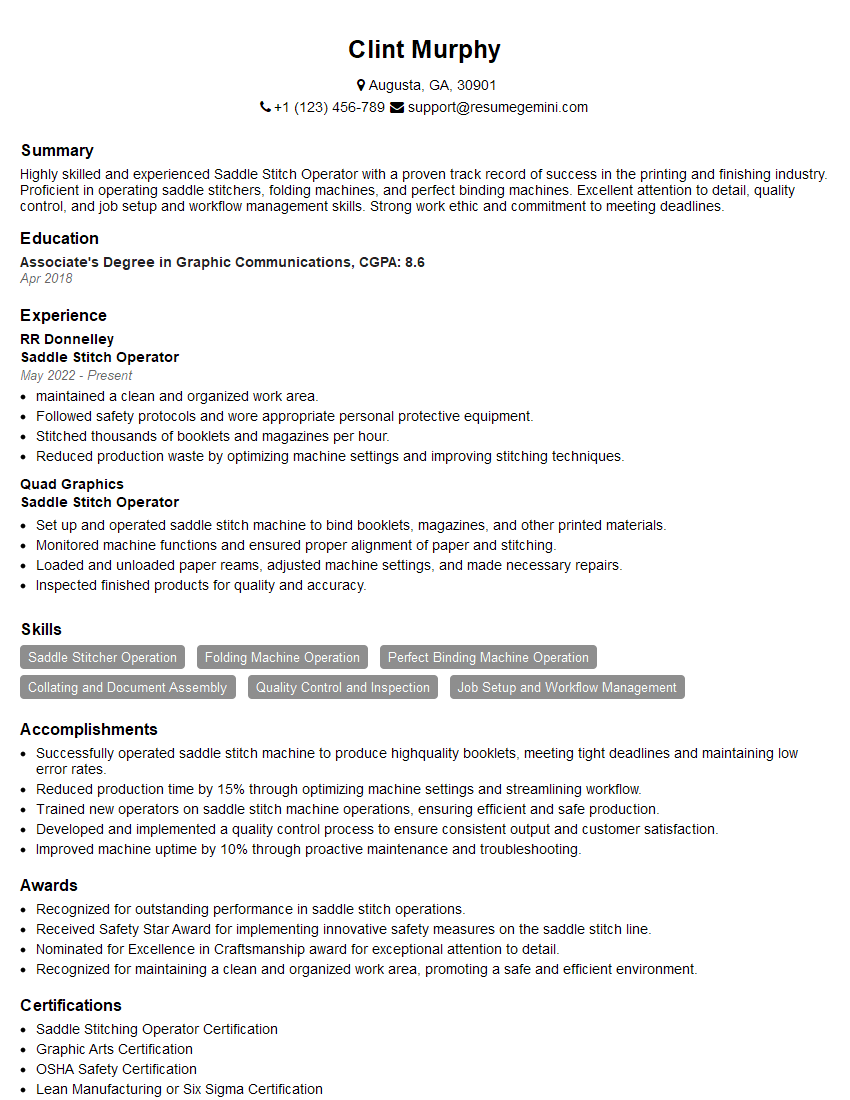
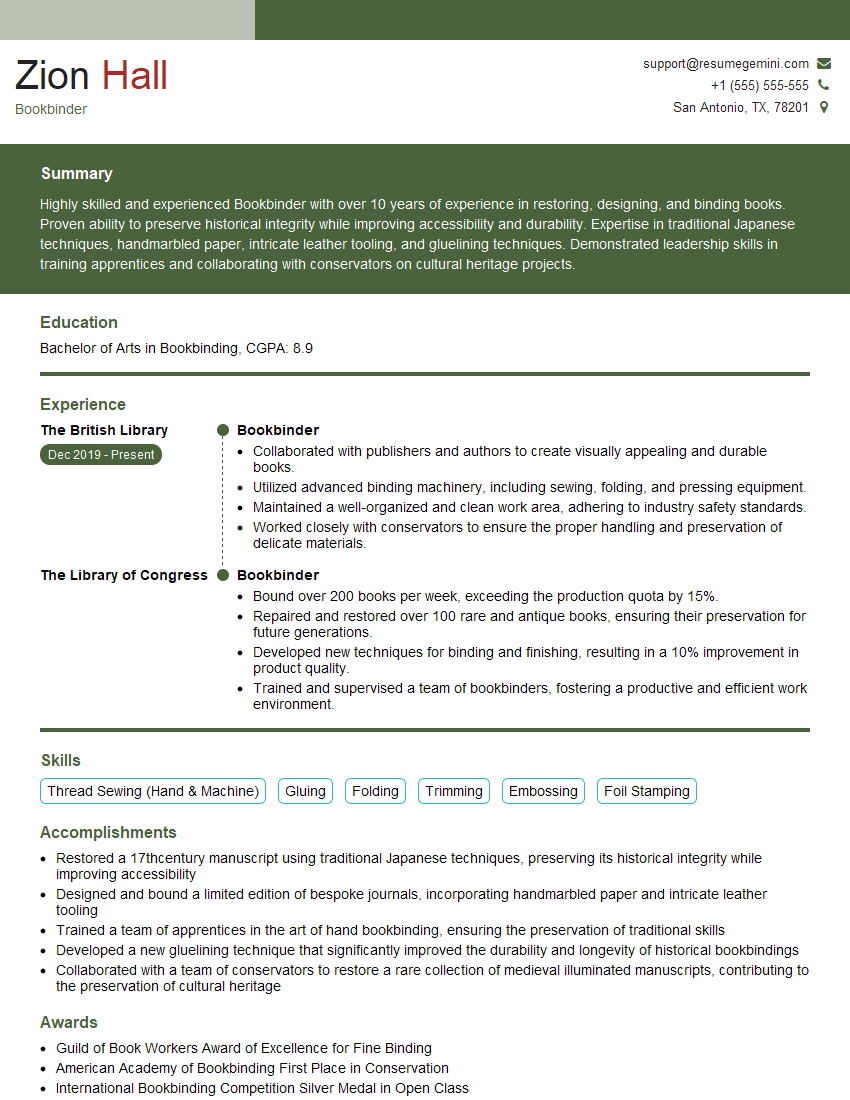
Mastering Bindery and Finishing Processes opens doors to diverse and rewarding career opportunities within the printing and publishing industries. A strong understanding of these processes showcases valuable technical skills and problem-solving abilities highly sought after by employers. To maximize your job prospects, focus on building an ATS-friendly resume that effectively highlights your qualifications. ResumeGemini is a trusted resource to help you create a professional and impactful resume. Examples of resumes tailored to Bindery and Finishing Processes are available to guide you.
Explore more articles
Users Rating of Our Blogs
Share Your Experience
We value your feedback! Please rate our content and share your thoughts (optional).
What Readers Say About Our Blog
Very informative content, great job.
good