Cracking a skill-specific interview, like one for Biomedical Equipment Calibration and Maintenance, requires understanding the nuances of the role. In this blog, we present the questions you’re most likely to encounter, along with insights into how to answer them effectively. Let’s ensure you’re ready to make a strong impression.
Questions Asked in Biomedical Equipment Calibration and Maintenance Interview
Q 1. What are the different types of calibration methods used for biomedical equipment?
Biomedical equipment calibration employs various methods depending on the device and its function. We primarily use two main approaches: comparison calibration and in-situ calibration.
- Comparison Calibration: This involves comparing the readings of the biomedical device under test against a known standard, often a higher-accuracy instrument that has been recently calibrated by a national metrology institute or a certified calibration laboratory. For example, calibrating a thermometer would involve comparing its readings to a calibrated reference thermometer. The comparison is performed across a range of values, and any discrepancies are recorded.
- In-situ Calibration: This method involves calibrating the equipment while it remains in its operational environment. It’s particularly useful for large or complex systems that are difficult to move. Instead of comparing against a standard, the calibration process might involve injecting known signals or using simulated patient data and observing the equipment’s responses. This is commonly used for electrosurgical units or infusion pumps.
Other methods, such as traceability calibration (ensuring calibration standards are linked to national or international standards), are also vital to ensure accuracy and reliability across the entire process.
Q 2. Explain the importance of preventive maintenance in biomedical equipment.
Preventive maintenance (PM) is paramount for biomedical equipment. It’s essentially proactive healthcare for your machines, significantly reducing downtime, improving accuracy and safety, and extending equipment lifespan. Imagine a car – regular oil changes and checkups prevent major breakdowns down the road. Similarly, regular PM on biomedical equipment minimizes the risk of malfunction during crucial procedures.
PM schedules vary depending on equipment complexity and usage, but typically include:
- Visual inspections: Checking for wear and tear, loose connections, and any signs of damage.
- Functional testing: Verifying that all functions of the equipment are working as intended.
- Cleaning and lubrication: Maintaining the equipment’s cleanliness and ensuring smooth operation of mechanical components.
- Software updates: Ensuring the equipment’s software is up-to-date with the latest bug fixes and performance improvements.
The benefits are manifold: reduced repair costs, increased patient safety by preventing unexpected failures, improved operational efficiency, and compliance with regulatory standards.
Q 3. Describe your experience with troubleshooting malfunctioning biomedical equipment.
Troubleshooting malfunctioning biomedical equipment requires a systematic approach. My experience involves a combination of technical expertise, diagnostic tools, and a methodical process. I begin by gathering information: what happened, when, and what error messages (if any) are displayed.
For instance, I once dealt with an anesthesia machine that wouldn’t deliver the correct gas mixture. My approach was:
- Safety first: I ensured the machine was powered off and gas supplies were disconnected before proceeding.
- Visual inspection: I carefully examined the machine for any obvious problems like loose connections or leaks.
- Diagnostic testing: I used the machine’s built-in diagnostic tools and external test equipment (such as multimeters and pressure gauges) to identify the faulty component. In this case, it turned out to be a malfunctioning sensor.
- Repair/replacement: Once the faulty component was identified, I either repaired it if feasible or replaced it with a new part. This required detailed knowledge of the machine’s schematics and components.
- Verification: After the repair, I thoroughly tested the machine to ensure it was functioning correctly before returning it to service.
Thorough documentation of the entire troubleshooting process is crucial for tracking repairs, improving future maintenance strategies, and meeting regulatory requirements.
Q 4. What safety precautions do you take when working with biomedical equipment?
Safety is paramount when handling biomedical equipment. My approach to safety involves adhering to a strict protocol, including:
- Proper Personal Protective Equipment (PPE): Always wearing appropriate PPE such as gloves, safety glasses, and lab coats depending on the task.
- Electrical safety: Ensuring all equipment is properly grounded and using appropriate isolation techniques to prevent electrical shocks. This includes regular checks of power cords and connections.
- Gas safety: Being mindful of potential hazards associated with medical gases such as oxygen, nitrous oxide, and anesthetic agents. Proper ventilation and adherence to gas handling procedures are essential.
- Radiation safety: For equipment emitting ionizing radiation (e.g., X-ray machines), I follow strict radiation safety protocols, including minimizing exposure time, maintaining a safe distance, and using appropriate shielding.
- Infection control: Following strict infection control procedures to prevent the transmission of infectious agents. This includes proper hand hygiene, using disinfectant solutions, and wearing appropriate PPE.
Regular safety training and awareness are crucial to maintaining a safe working environment. I always follow the manufacturer’s safety guidelines and our institution’s safety policies.
Q 5. How do you ensure the accuracy and reliability of calibration procedures?
Ensuring the accuracy and reliability of calibration procedures is achieved through a multi-faceted approach. This includes:
- Using traceable standards: Calibrations must be traceable to national or international standards, providing a clear chain of custody for accuracy.
- Employing calibrated instruments: The instruments used for calibration must themselves be regularly calibrated and have valid certifications.
- Following standardized procedures: Adhering to established protocols and manufacturers’ recommendations ensures consistency and minimizes errors.
- Regular training and competency checks: Technicians must be well-trained and their skills regularly assessed to ensure they are capable of performing calibrations correctly.
- Maintaining accurate records: Detailed documentation of each calibration, including dates, results, and any deviations, is essential for traceability and auditing purposes.
- Regular quality control checks: Implementing a robust quality control program to monitor the accuracy and reliability of the entire calibration process is essential. This includes periodic internal audits.
Ultimately, the goal is to ensure that the calibrated equipment consistently delivers accurate and reliable results, contributing to the quality of patient care and safety.
Q 6. What documentation is required for biomedical equipment calibration and maintenance?
Comprehensive documentation is critical for compliance and maintaining a history of the equipment’s performance. This includes:
- Calibration records: These records detail the date of calibration, the equipment calibrated, the results obtained, and any adjustments made. These must include the serial number of the equipment and the calibration equipment used, along with technician signatures and certifications.
- Preventive maintenance records: These records document the date of each PM, the tasks performed, any parts replaced, and the technician’s signature.
- Repair records: These records contain information about malfunctions, troubleshooting steps, repairs carried out, parts replaced, and the technician’s signature. They should also include any relevant error codes or diagnostic messages.
- Equipment inventory list: This list contains details of all biomedical equipment, including serial numbers, model numbers, purchase dates, and manufacturers.
- Safety inspection reports: These documents record any safety issues identified during inspections and corrective actions taken.
All documentation must be stored securely and readily accessible for audits and regulatory inspections. Electronic systems are increasingly used to manage this documentation efficiently.
Q 7. How do you handle emergency repairs of critical biomedical equipment?
Emergency repairs of critical biomedical equipment demand immediate action and a structured response. My approach combines speed, safety, and precision. It follows these steps:
- Assess the situation: Determine the nature of the failure, its impact on patient care, and any immediate safety risks.
- Prioritize safety: Secure the area, address any immediate hazards (e.g., electrical risks, gas leaks), and ensure patient safety is paramount.
- Attempt immediate repair: If the problem is readily identifiable and can be fixed quickly and safely, I’ll attempt the repair using available resources. This might involve simple troubleshooting such as checking connections or replacing fuses.
- Seek expert assistance if needed: If I cannot resolve the issue quickly, I’ll immediately contact the appropriate support team, including a more experienced biomedical engineer or the equipment manufacturer. For critical situations, a qualified on-call engineer may be immediately dispatched.
- Implement contingency plans: If the equipment is unusable, I’ll initiate contingency plans, which might include using backup equipment or transferring patients to another location.
- Document everything: Detailed documentation of the event, including the nature of the failure, steps taken, and the outcome, is crucial for analysis and improving future responses.
Effective communication with clinicians and hospital management is also crucial during emergency situations to ensure patient safety and the efficient allocation of resources. Regular drills and training scenarios are essential to prepare for such contingencies effectively.
Q 8. What software or tools are you proficient in using for biomedical equipment maintenance?
My proficiency in biomedical equipment maintenance software and tools is extensive. I’m highly skilled in using Computerized Maintenance Management Systems (CMMS) such as eMaint and UpKeep, which are crucial for scheduling preventative maintenance, tracking calibration due dates, and generating reports. These systems allow for efficient management of multiple devices and streamline the entire maintenance process. Beyond CMMS, I’m adept at using specialized software for specific equipment, such as the diagnostic software bundled with many modern ventilators or infusion pumps. This software provides detailed information about the equipment’s operational parameters and flags potential issues. Finally, I’m proficient with a variety of diagnostic tools, including multimeters, oscilloscopes, and signal generators, all essential for troubleshooting and repair.
For example, in a recent scenario, I used UpKeep to schedule the preventative maintenance of several defibrillators across different hospital wards. The CMMS allowed me to track the maintenance history of each device, ensuring compliance with regulatory requirements and preventing potential downtime.
Q 9. Explain your understanding of different types of biomedical equipment and their functions.
Biomedical equipment encompasses a vast range of devices, each with unique functions and complexities. Think of it like the human body; it has many systems working together. Similarly, hospitals rely on an interconnected network of machines. Here are a few key categories:
- Patient Monitoring Systems: These include electrocardiograms (ECGs) that monitor heart rhythm, pulse oximeters measuring blood oxygen levels, and blood pressure monitors. These are critical for immediate patient care.
- Respiratory Support: Ventilators, which support breathing, and CPAP/BiPAP machines are essential in critical care and respiratory therapy.
- Anesthesia Equipment: This encompasses anesthetic delivery machines, monitoring systems specifically for anesthesia procedures, and related accessories, requiring extremely precise calibration for patient safety.
- Laboratory Equipment: Centrifuges, autoclaves, analyzers – these devices are crucial for accurate diagnosis and treatment. They demand rigorous calibration for reliable test results.
- Surgical Equipment: Electrosurgical units, surgical lasers, and other specialized instruments demand meticulous calibration and maintenance to ensure safety and effectiveness during procedures.
Understanding the function of each piece of equipment is fundamental to effective maintenance and calibration. A malfunction in one system can have cascading effects on others.
Q 10. Describe your experience with different calibration instruments and their applications.
My experience with calibration instruments is extensive. I’ve used a wide array of equipment depending on the specific device being calibrated. Some examples include:
- Multi-meters: Used to verify voltage, current, and resistance in various circuits and components.
- Oscilloscope: Measures and displays waveforms, crucial for diagnosing issues in electronic circuits and ensuring accurate signal transmission.
- Function Generators: Produce various waveforms for testing the response of equipment to different inputs.
- Pressure Calibrators: Vital for accurate calibration of blood pressure monitors, infusion pumps, and other pressure-sensitive devices.
- Temperature Calibrators: Used to verify the accuracy of thermometers, autoclaves, and other temperature-sensitive equipment.
- Weight and Mass Calibrators: For calibrating analytical balances and scales used in the laboratory.
The choice of calibration instrument is always dictated by the specific requirements of the biomedical equipment being tested. For instance, calibrating a sophisticated ultrasound machine would require a different set of instruments and a more rigorous process than calibrating a simple thermometer.
Q 11. How do you interpret calibration results and identify deviations from acceptable standards?
Interpreting calibration results involves comparing the measured values against the manufacturer’s specifications or accepted standards. Deviations outside the acceptable range indicate a need for adjustment or repair. I typically use the following steps:
- Compare Results: The calibration data is systematically compared against the manufacturer’s specifications or relevant industry standards. This is often presented in a structured report.
- Analyze Deviations: Any deviation from the accepted range is carefully analyzed to determine its magnitude and potential cause. Is it a minor drift, or a significant error?
- Identify Trends: Repeated deviations over time may point towards a recurring problem with the equipment or its environment, such as a faulty component or environmental factors.
- Document Findings: All findings, including deviations and corrective actions, are meticulously documented in the calibration report.
- Recommend Actions: Based on the analysis, I recommend necessary actions, ranging from minor adjustments to major repairs or replacements. If the device is outside acceptable tolerances, it will need to be removed from service.
For example, a small drift in the temperature reading of a refrigerator used for storing medications might be addressed with minor adjustments, while a significant deviation in the accuracy of a blood gas analyzer would require a major service call and a full recalibration.
Q 12. What are the regulatory requirements for biomedical equipment calibration and maintenance?
Regulatory requirements for biomedical equipment calibration and maintenance are crucial for patient safety and accurate treatment. These requirements vary by jurisdiction but generally adhere to principles of safety and quality. Key regulations and standards often referenced include:
- Joint Commission (JC): Accredits healthcare organizations, setting standards for equipment maintenance and safety.
- FDA (Food and Drug Administration): Regulates medical devices in the US, impacting the maintenance and safety of biomedical equipment.
- ISO (International Organization for Standardization): Offers a number of relevant standards, such as ISO 9001 (quality management) and ISO 13485 (medical device quality management system), which influence calibration practices.
- National and Regional Regulations: Many countries and regions have specific regulations that must be followed.
These regulations often mandate regular calibration and preventative maintenance schedules, detailed record-keeping, and thorough documentation of any repairs or malfunctions. Failure to comply can result in significant penalties, including fines and even the suspension of a healthcare facility’s license.
Q 13. How do you manage and track calibration records for multiple pieces of equipment?
Managing and tracking calibration records for multiple pieces of equipment is best achieved through a robust CMMS. These systems provide features to:
- Schedule Calibration: Automate reminders for upcoming calibrations based on equipment type and manufacturer recommendations.
- Track Equipment: Maintain a comprehensive inventory of all biomedical equipment, including its location, manufacturer, model, and serial number.
- Record Calibration Data: Store all calibration data electronically, eliminating the need for manual record-keeping and providing an easily searchable database.
- Generate Reports: Create custom reports to track calibration compliance, identify overdue calibrations, and monitor equipment performance.
- Alert System: Set up alerts to notify relevant personnel when calibrations are due or if equipment is past its due date.
A well-organized CMMS ensures that calibration records are readily accessible and compliant with regulatory requirements. This prevents costly downtime and potential risks to patient safety.
Q 14. Describe a time you had to troubleshoot a complex biomedical equipment problem. What was your approach?
I once encountered a situation where a critical care ventilator displayed an intermittent alarm related to its oxygen sensor. Initial troubleshooting steps, like checking for loose connections and obvious physical damage, yielded no results. My approach was systematic and followed these steps:
- Gather Information: I carefully documented the alarm’s characteristics and the circumstances surrounding its occurrence. I spoke with the clinical staff to understand the context of the alarm’s occurrence.
- Review Documentation: I checked the ventilator’s maintenance logs and calibration records to look for any previous issues or trends.
- Test and Inspect: I carefully inspected the oxygen sensor and its connection points. I used a multimeter to check the sensor’s output signal and compared it to the expected values according to the ventilator’s manual.
- Isolate the Problem: After careful examination, I identified a small crack in the sensor’s protective casing, causing it to intermittently malfunction. This was not immediately evident visually.
- Implement Solution: The solution was a straightforward replacement of the oxygen sensor. After the replacement, I performed a thorough calibration of the ventilator and ran diagnostic tests to confirm the resolution of the problem.
- Document Resolution: The issue, its resolution, and post-repair testing were documented in detail.
This case highlights the importance of a methodical approach to troubleshooting and the use of both theoretical and practical knowledge to successfully resolve complex issues.
Q 15. What is your experience with different types of medical imaging equipment?
My experience with medical imaging equipment spans a wide range, encompassing several modalities. I’ve worked extensively with X-ray systems, including both general radiography and fluoroscopy units. I’m proficient in the calibration and maintenance of these systems, focusing on factors like kVp accuracy, mAs linearity, and image quality. Furthermore, I possess significant experience with ultrasound machines, covering both diagnostic and therapeutic applications. This includes troubleshooting issues with transducer performance, image optimization, and system software. My expertise also extends to CT scanners, where I have handled preventative maintenance, performance testing (e.g., slice thickness, spatial resolution), and troubleshooting hardware and software malfunctions. Finally, I have some experience with MRI systems, though my expertise here is more focused on the safety protocols and environmental considerations associated with these powerful magnets, rather than deep technical maintenance.
For example, during my time at City Hospital, I was instrumental in resolving a recurring artifact issue on their primary CT scanner. Through systematic troubleshooting, we identified a faulty data acquisition card, leading to swift repairs and minimizing patient downtime. In another instance, I developed a preventative maintenance program for their ultrasound department, resulting in a 20% reduction in repair calls and enhanced system longevity.
Career Expert Tips:
- Ace those interviews! Prepare effectively by reviewing the Top 50 Most Common Interview Questions on ResumeGemini.
- Navigate your job search with confidence! Explore a wide range of Career Tips on ResumeGemini. Learn about common challenges and recommendations to overcome them.
- Craft the perfect resume! Master the Art of Resume Writing with ResumeGemini’s guide. Showcase your unique qualifications and achievements effectively.
- Don’t miss out on holiday savings! Build your dream resume with ResumeGemini’s ATS optimized templates.
Q 16. How do you ensure the safety of patients and staff during biomedical equipment maintenance?
Patient and staff safety is paramount in biomedical equipment maintenance. My approach is built upon a layered safety protocol. First, I always begin with a thorough risk assessment, identifying potential hazards associated with the specific equipment and the maintenance procedures involved. This might include identifying potential exposure to ionizing radiation (in X-ray or CT maintenance), electrical hazards, or exposure to infectious agents (in sterilization equipment maintenance).
Next, I rigorously adhere to established safety procedures, including proper lockout/tagout procedures to prevent accidental energization of equipment during maintenance. I utilize appropriate personal protective equipment (PPE), such as radiation safety badges, insulated tools, and gloves as needed.
Furthermore, I emphasize the importance of clear communication and proper training. Staff members are briefed on the maintenance procedures and any potential safety concerns before any work commences. Finally, comprehensive documentation of maintenance activities, including any safety-related incidents or near misses, is crucial for continuous improvement and ongoing safety enhancement. This documentation helps identify potential risks and refine our safety protocols.
Q 17. What are your knowledge of electrical safety standards (e.g., NFPA 99)?
I have a comprehensive understanding of electrical safety standards, particularly NFPA 99 (Standard for Health Care Facilities). NFPA 99 provides detailed guidelines for the safe design, construction, operation, and maintenance of electrical systems in healthcare facilities. Key areas of this standard include grounding and bonding, equipment grounding, circuit protection, and the use of Ground Fault Circuit Interrupters (GFCIs). I’m well-versed in the requirements for electrical safety testing of biomedical equipment, including visual inspections, insulation resistance testing, ground continuity checks, and leakage current measurements.
I’m familiar with the different classes of equipment (Class I, Class II, and Class III) and the associated safety requirements. Understanding these standards is essential in preventing electrical shocks, fires, and other hazards to both patients and staff. For example, I routinely ensure that all equipment undergoes regular electrical safety testing to comply with NFPA 99, using calibrated testing equipment and meticulously documenting all results.
Q 18. Describe your experience with different types of sterilization equipment and their maintenance.
My experience with sterilization equipment encompasses various types, including steam sterilizers (autoclaves), ethylene oxide (EO) sterilizers, and plasma sterilizers. Maintenance of these devices involves regular preventative maintenance tasks such as cleaning, lubrication of moving parts, and checking for leaks (particularly critical in autoclaves). I understand the importance of validating the sterilization cycle parameters – temperature, pressure, and exposure time – to guarantee effective sterilization. This often involves using biological indicators (spores) and chemical indicators to verify that the sterilization process has achieved the required sterility assurance level (SAL).
For EO sterilizers, for example, I am aware of the specific safety precautions required due to the toxicity of EO gas, including appropriate ventilation and personal protective equipment. I am also familiar with the maintenance of plasma sterilizers, which necessitates regular checks of plasma generation systems and the integrity of the vacuum system.
Q 19. How familiar are you with the principles of biomedical engineering?
My understanding of biomedical engineering principles is foundational to my work. I’m well-versed in the application of engineering principles to solve problems in a biological or medical context. This includes a strong understanding of anatomy, physiology, and pathophysiology, allowing me to comprehend how medical devices interact with the human body. My knowledge extends to various engineering disciplines, including electrical engineering (circuit analysis, signal processing), mechanical engineering (design, materials science), and software engineering (control systems, data analysis).
For instance, I understand the underlying principles of image formation in medical imaging systems, allowing me to troubleshoot issues related to image quality and system performance. This knowledge of underlying principles is crucial for effective diagnosis and repair.
Q 20. What is your experience with quality assurance and quality control procedures in biomedical equipment maintenance?
Quality assurance (QA) and quality control (QC) are integral to my work. QA focuses on preventing defects by establishing a robust system of procedures and standards. In my work, this involves using standardized maintenance procedures, employing calibrated test equipment, and adhering to regulatory guidelines. QC, on the other hand, involves monitoring the quality of work performed. This includes regular calibration checks of test equipment, thorough documentation of maintenance activities, and the use of check lists to ensure consistent execution of procedures.
For example, I implemented a system for tracking equipment calibration and maintenance records, which has greatly improved our compliance with regulatory requirements and facilitated proactive maintenance scheduling. Regular review of these records allows us to identify trends, predict potential failures, and optimize maintenance schedules.
Q 21. How do you stay current with the latest advancements and technologies in biomedical equipment maintenance?
Staying current in this rapidly evolving field requires continuous learning. I actively participate in professional organizations such as the Association for the Advancement of Medical Instrumentation (AAMI), attending conferences and workshops to learn about new technologies and best practices. I subscribe to relevant journals and online resources, keeping abreast of the latest research and regulatory updates. Furthermore, I participate in continuing education courses to expand my knowledge and maintain my certifications. Manufacturer-provided training on new equipment is another crucial aspect of my professional development.
For example, recently I completed a course on the latest advancements in MRI technology, expanding my knowledge of safety procedures and maintenance requirements. I also actively engage with colleagues through professional networks, exchanging knowledge and best practices.
Q 22. Describe your experience with working with different medical device manufacturers.
Throughout my career, I’ve worked extensively with a diverse range of medical device manufacturers, including giants like GE Healthcare, Philips, and Siemens, as well as smaller, specialized companies. This experience encompasses various modalities, from sophisticated imaging equipment like MRI and CT scanners to vital sign monitors, ventilators, and surgical tools. My work has involved understanding their unique operational characteristics, maintenance requirements, and troubleshooting procedures. For example, with GE’s MRI systems, I’ve gained expertise in gradient coil diagnostics and cryogen management, while working with Philips ventilators demanded a deep understanding of pressure and flow parameters and alarm systems. This breadth of experience has given me a strong foundation in the nuances of various manufacturers’ designs and best practices. It’s crucial to know that each manufacturer has its own service manuals, diagnostic tools, and specific repair techniques, so adaptability and continuous learning are paramount.
Q 23. How would you handle a situation where a piece of biomedical equipment fails during a critical procedure?
Equipment failure during a critical procedure is a high-stakes scenario demanding immediate, decisive action. My protocol begins with prioritizing patient safety. First, I would immediately activate the hospital’s emergency response system, ensuring the presence of a senior physician and additional support staff. Second, depending on the nature of the equipment failure and its impact on the procedure, I would attempt to use a backup device or implement a temporary workaround if feasible and safe. Simultaneously, I’d begin a thorough assessment of the failed equipment, noting any error codes or malfunction indicators to provide crucial data for subsequent troubleshooting and investigation. After stabilizing the patient and the procedure, a detailed report will be filed, including the cause of failure, the actions taken, and lessons learned. This information will inform preventive maintenance schedules and training updates to mitigate similar risks in the future. It’s critical to have a clear, practiced protocol for these types of events, ensuring a collaborative approach that puts patient safety first.
Q 24. Explain your understanding of risk management in the context of biomedical equipment.
Risk management in biomedical equipment is a systematic process of identifying, analyzing, and mitigating potential hazards to ensure patient safety and equipment reliability. This involves several key steps. First, a thorough risk assessment identifies potential risks, such as equipment malfunction, power outages, or human error. Second, risk analysis involves quantifying the likelihood and severity of each identified risk. This helps prioritize mitigation efforts. Third, the implementation of control measures focuses on minimizing risks through regular preventive maintenance, staff training, and the establishment of robust safety protocols. This might include creating a checklist for daily pre-use inspections, implementing a comprehensive maintenance program following manufacturer recommendations, or investing in redundancy systems. Lastly, ongoing monitoring and review are vital to identify and address emerging risks or deficiencies in the existing system. Imagine a scenario with an aging defibrillator – risk management would dictate prioritizing its replacement or repair based on its failure rate, the potential severity of consequences (patient death), and the associated costs of inaction. A robust risk management program is not merely a set of rules, but a culture of safety embedded in daily operations.
Q 25. Describe your experience in managing a team or working collaboratively on biomedical equipment projects.
I have extensive experience leading and collaborating within teams on complex biomedical equipment projects. In my previous role, I led a team of five technicians in implementing a new computerized maintenance management system (CMMS). This involved not only training my team on the software but also developing and implementing standardized processes for preventative maintenance and tracking equipment performance. We faced challenges in migrating existing data and standardizing work processes across the different hospital departments. We addressed these challenges through regular team meetings, clear communication strategies, and a collaborative problem-solving approach. I believe in fostering a supportive and collaborative team environment where everyone feels valued and empowered to contribute their expertise. Open communication and mutual respect are key to successful teamwork, particularly in a field that requires both technical expertise and problem-solving skills under pressure.
Q 26. What are your salary expectations?
My salary expectations are commensurate with my experience and skills in the field of biomedical equipment calibration and maintenance. Considering my years of experience, my demonstrated expertise in diverse medical equipment, and my proven leadership capabilities, I am targeting a salary range of [Insert Salary Range]. However, I am open to discussing this further based on the complete compensation package and the specifics of the role.
Q 27. What are your career goals in the field of biomedical equipment maintenance?
My career goals focus on continuing to expand my knowledge and expertise in biomedical equipment maintenance and management. I aim to leverage my experience to contribute to a hospital’s improved efficiency and patient safety. In the long term, I aspire to take on a leadership role overseeing a larger team or department within a healthcare setting, or to become a certified biomedical equipment specialist. My commitment to continuous learning includes staying abreast of technological advancements, emerging regulations, and best practices within the field through professional development courses and certifications.
Q 28. Why are you interested in this position?
I’m highly interested in this position because it offers a unique opportunity to apply my extensive experience in biomedical equipment maintenance within a highly regarded institution. The description aligns perfectly with my skills and career aspirations. I’m particularly drawn to [mention something specific about the position or the company that interests you, e.g., the hospital’s commitment to advanced technologies, the team’s collaborative culture, or the opportunity to work with specific types of equipment]. I am confident that my dedication to patient safety, my technical skills, and my collaborative work style would make me a valuable asset to your team.
Key Topics to Learn for Biomedical Equipment Calibration and Maintenance Interview
- Safety Procedures and Regulations: Understanding and adhering to relevant safety protocols, including those related to electrical safety, radiation safety, and infection control, is paramount. Practical application involves demonstrating knowledge of specific safety standards and their implementation in your work.
- Calibration Techniques: Mastering various calibration methods for different biomedical equipment (e.g., ECG machines, defibrillators, infusion pumps). This includes understanding the principles of measurement uncertainty and traceability to national standards. Practical application involves describing your experience with specific calibration instruments and procedures.
- Preventative Maintenance: Knowing how to perform routine preventative maintenance tasks to extend equipment lifespan and minimize downtime. This includes understanding manufacturer’s recommendations and developing a preventative maintenance schedule. Practical application involves explaining your experience developing and implementing preventative maintenance plans.
- Troubleshooting and Repair: Developing the skills to diagnose and solve common equipment malfunctions. This involves a strong understanding of circuit diagrams, schematics, and troubleshooting techniques. Practical application involves detailing your experience troubleshooting specific equipment failures and resolving them effectively.
- Documentation and Record Keeping: Meticulous documentation of calibration, maintenance, and repair procedures is critical. Understanding regulatory requirements for record-keeping is essential. Practical application includes describing your experience maintaining accurate and comprehensive equipment logs.
- Quality Assurance and Control: Understanding the principles of quality assurance in biomedical equipment maintenance, including proficiency in using quality control tools and interpreting results. Practical application includes explaining your role in ensuring equipment meets regulatory standards.
- Specific Equipment Knowledge: Familiarize yourself with the common types of biomedical equipment found in hospitals and clinics, including their functionalities and maintenance requirements. Consider focusing on equipment you have experience with.
Next Steps
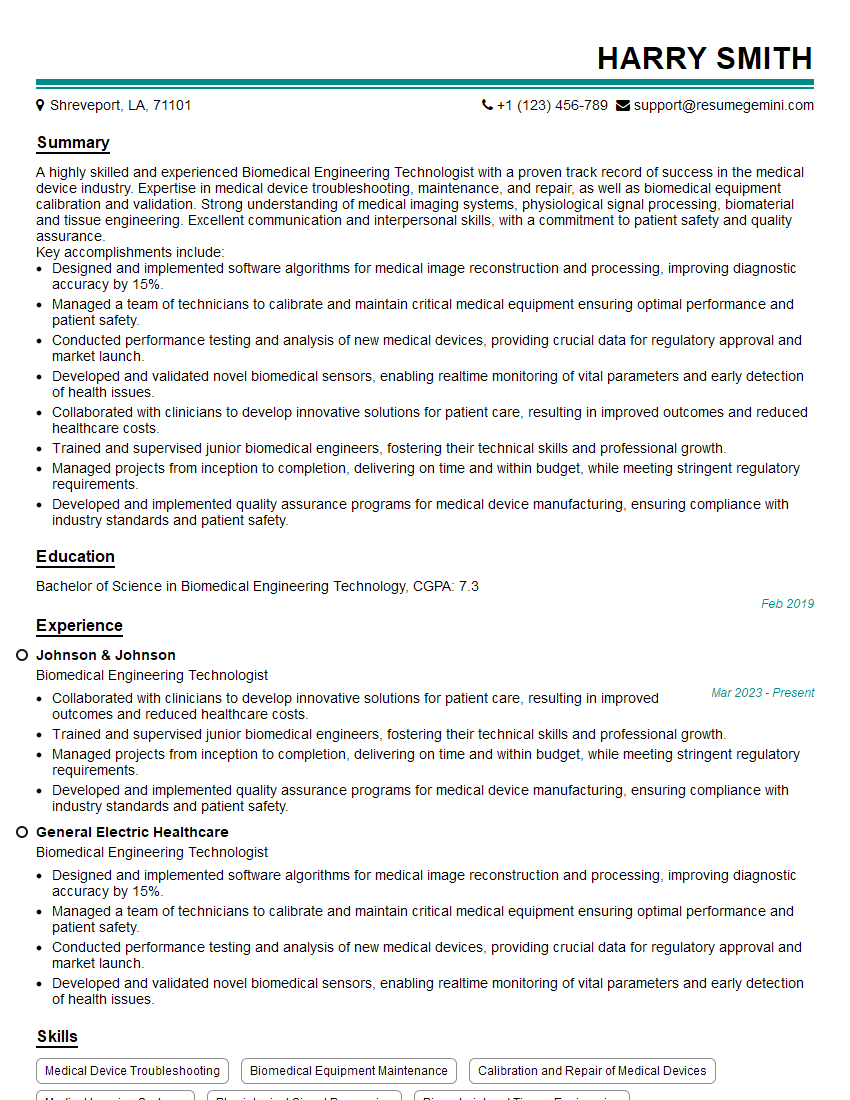
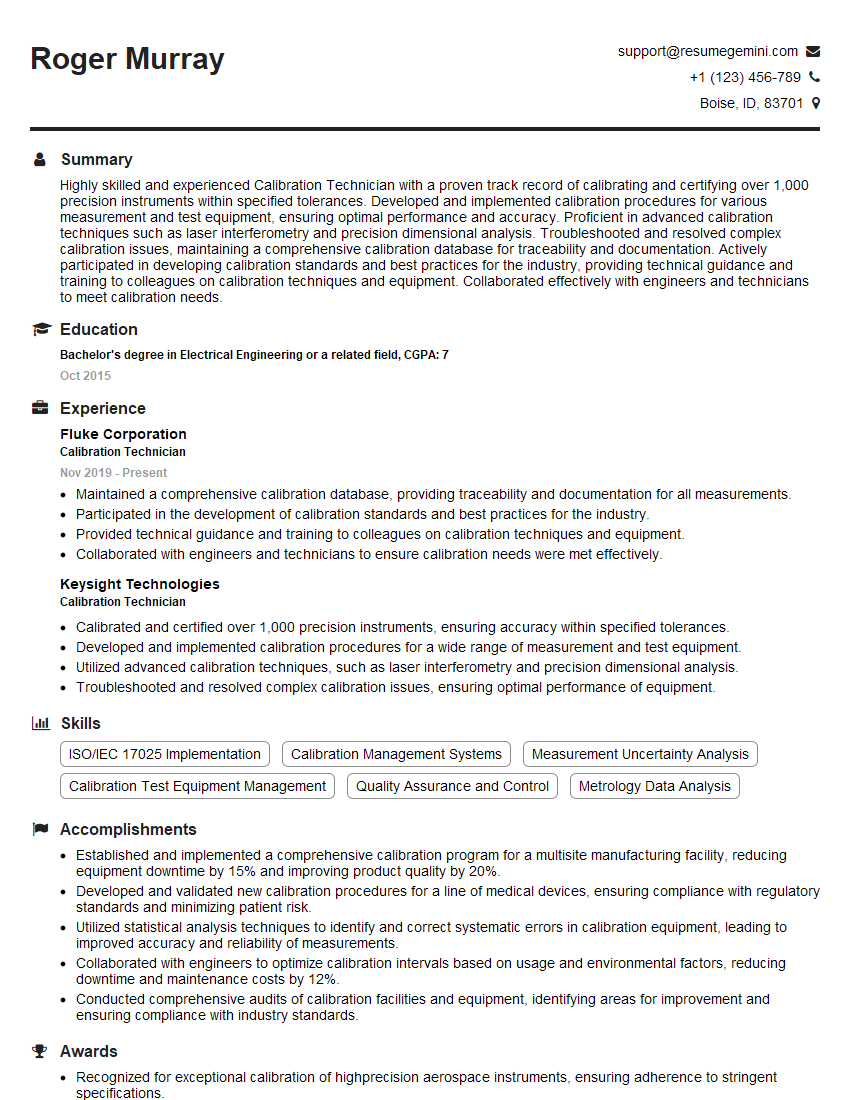
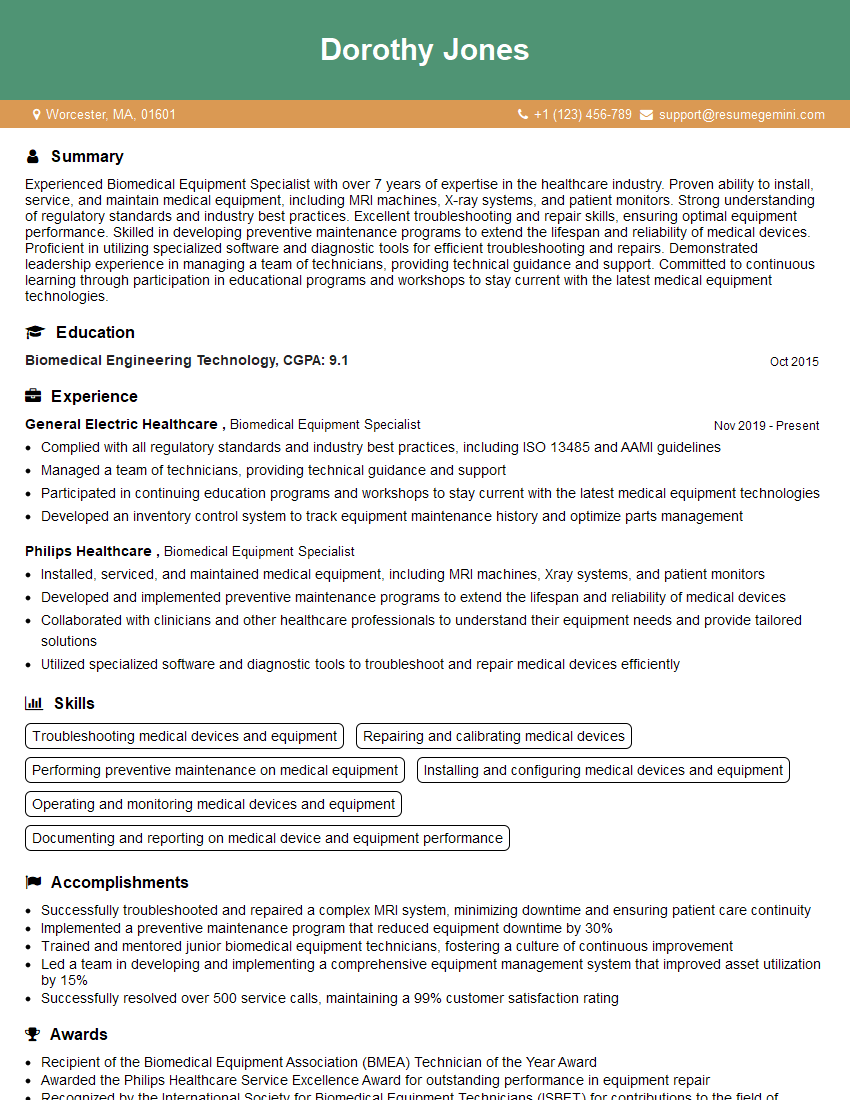
Mastering Biomedical Equipment Calibration and Maintenance opens doors to a rewarding career with excellent growth potential. Proficiency in this field is highly sought after, offering opportunities for specialization and advancement within healthcare settings. To maximize your job prospects, creating a strong, ATS-friendly resume is crucial. ResumeGemini is a trusted resource to help you build a professional and impactful resume that highlights your skills and experience effectively. Examples of resumes tailored specifically to Biomedical Equipment Calibration and Maintenance are available to guide you. Invest in your career – invest in a well-crafted resume.
Explore more articles
Users Rating of Our Blogs
Share Your Experience
We value your feedback! Please rate our content and share your thoughts (optional).
What Readers Say About Our Blog
Very informative content, great job.
good