Interviews are opportunities to demonstrate your expertise, and this guide is here to help you shine. Explore the essential Bioreactor Control Systems interview questions that employers frequently ask, paired with strategies for crafting responses that set you apart from the competition.
Questions Asked in Bioreactor Control Systems Interview
Q 1. Explain the different types of bioreactors and their applications.
Bioreactors are vessels designed to support biological reactions, primarily cell growth and product formation. Different types cater to specific needs and applications. Think of them as specialized containers for cultivating living organisms under precisely controlled conditions.
- Stirred Tank Bioreactors (STRs): These are the workhorses of the industry, using impellers to mix the contents ensuring uniform conditions. They’re versatile and suitable for a wide range of cell types and applications, from producing pharmaceuticals to cultivating microorganisms.
- Airlift Bioreactors: These rely on air bubbles for mixing, making them simpler and less prone to shear stress – ideal for delicate cells. Imagine blowing bubbles in a glass of water; the rising bubbles create mixing. They are often used in wastewater treatment or for cultivating sensitive plant cells.
- Photobioreactors: Designed for photosynthetic organisms like algae and cyanobacteria, these reactors allow controlled light exposure. Think of them as greenhouses for microorganisms, optimizing light intensity for maximum productivity. They’re increasingly used for biofuel production and high-value compounds.
- Fluidized Bed Bioreactors: In these, the cells are immobilized on small particles, which are kept suspended by an upward flow of liquid. This high surface area-to-volume ratio allows high cell density cultures, frequently used in wastewater treatment or for enzyme production.
- Fixed-bed Bioreactors: These reactors utilize immobilized cells packed into a column. They offer high cell density and easy harvesting, suited for continuous processes and large-scale production of specific biomolecules.
The choice of bioreactor depends heavily on the specific application, the organism being cultivated, and the desired product. For example, delicate mammalian cells might thrive in an airlift bioreactor, while robust bacterial cultures may be more suitable for a stirred tank bioreactor.
Q 2. Describe the role of sensors and actuators in bioreactor control.
Sensors and actuators are the eyes and hands of the bioreactor control system. Sensors monitor critical parameters, while actuators adjust conditions to maintain optimal growth and product formation. Imagine a skilled chef carefully checking temperature and adding ingredients – the sensors are the chef’s senses, the actuators their actions.
- Sensors: These measure various parameters like pH, temperature, dissolved oxygen (DO), carbon dioxide (CO2), cell density (optical density, biomass), nutrient concentrations (glucose, ammonia), and foam levels. Different sensor types are used depending on the parameter and application. For example, electrochemical sensors may be used for pH and DO measurements.
- Actuators: Based on sensor readings, these adjust the bioreactor environment. Examples include pumps (for adding nutrients or removing waste), valves (for controlling gas flow), heaters/coolers (for temperature control), and stirrers (for mixing). Actuators take actions according to control signals to maintain setpoints.
The interplay between sensors and actuators is crucial for maintaining a stable and productive bioreactor environment. For instance, if the DO sensor detects low oxygen levels, an actuator will increase the air supply to correct the deviation.
Q 3. What are the key parameters monitored and controlled in a bioreactor?
Controlling a bioreactor is like orchestrating a complex symphony. Many parameters must be precisely monitored and controlled to ensure optimal cell growth and product yields. The specific parameters will vary based on the organism and product, but some key ones are:
- Temperature: Maintaining the optimal temperature is vital for enzyme activity and cell viability.
- pH: pH affects enzyme function and cell metabolism; it needs to be carefully controlled within a narrow range.
- Dissolved Oxygen (DO): Cells require oxygen for respiration; adequate DO levels are crucial for growth.
- Carbon Dioxide (CO2): Monitoring CO2 levels helps assess metabolic activity and potentially control the process based on CO2 evolution.
- Substrate/Nutrient concentrations: Sufficient nutrients are essential for cell growth; their levels must be carefully managed through feeding strategies.
- Cell density/Biomass: Tracking cell concentration allows for monitoring growth and determining harvest time.
- Foam levels: Excess foam can negatively impact oxygen transfer and cell viability; anti-foaming agents may be added as needed.
These parameters are continuously monitored, and any deviations from setpoints trigger control actions to maintain optimal conditions. The choice of which parameters are monitored and controlled is critical to bioprocess success. For example, in mammalian cell cultures, the control of temperature and pH is often paramount.
Q 4. Explain the principles of feedback control in a bioreactor system.
Feedback control is the cornerstone of bioreactor operation. It involves continuously measuring a process variable (e.g., pH), comparing it to a desired setpoint, and making adjustments to bring the process back to the setpoint. It’s a continuous cycle of monitoring, comparing, and adjusting, much like a thermostat maintaining room temperature.
The process typically works as follows: a sensor measures the process variable (e.g., pH), a controller compares the measured value to the setpoint, and if a deviation exists, the controller calculates an error signal. The error signal is then used to adjust the actuator (e.g., acid/base addition pump) to reduce the error and bring the process variable back to the setpoint. This closed-loop system ensures continuous adjustment and maintenance of the desired operating condition.
For example, if the pH drops below the setpoint, the controller will activate the base addition pump to increase the pH back to the target value. The system constantly monitors, compares, and adjusts to maintain stability. This is fundamentally a negative feedback loop; the system’s response is always in opposition to the deviation from the setpoint.
Q 5. How do you handle deviations from setpoints in a bioreactor?
Handling deviations from setpoints involves a multi-pronged approach focused on understanding the cause of deviation and implementing appropriate corrective actions. This is critical, as unchecked deviations could lead to decreased yields or cell death.
The first step is to identify the source of deviation. Is it a sensor malfunction? A change in the cell culture behavior? An issue with the equipment? Data analysis and troubleshooting are often crucial at this stage. Once the root cause is identified, the next step is to implement appropriate corrective actions.
- Minor deviations: Small deviations are often managed automatically by the feedback control system. The controller will adjust the actuator settings to bring the parameter back to the setpoint.
- Significant deviations: Larger deviations might require manual intervention. This could involve adjusting setpoints, checking equipment, investigating media composition or troubleshooting. In extreme cases, the process might even need to be paused to address the problem.
- Alarm Systems: Implementing alarm systems are critical for alerting operators to any deviations beyond acceptable limits. They trigger alerts and can facilitate rapid intervention before irreversible damage occurs.
Documentation and analysis of deviations are vital for continuous improvement. Recording the nature, cause, and corrective action taken helps improve processes and prevent similar occurrences in the future. It’s like learning from past mistakes to improve performance over time.
Q 6. Describe your experience with different control strategies (PID, cascade, etc.).
My experience encompasses a wide range of control strategies, each suited to different situations. Selecting the appropriate control strategy requires careful consideration of the process dynamics and the desired performance characteristics. Each has its strengths and weaknesses.
- Proportional-Integral-Derivative (PID) control: This is the most common control strategy. It uses proportional, integral, and derivative terms to adjust the controller output based on the error, the accumulated error, and the rate of change of the error, respectively. This allows for a balance between speed of response, accuracy, and stability. It’s highly tunable and versatile, applicable to many bioprocesses. The tuning of the gains (Kp, Ki, Kd) is often done empirically or through optimization algorithms.
- Cascade control: This involves using multiple control loops, where the output of one loop is the setpoint for another. For example, the temperature of the jacket might be controlled to regulate the bioreactor temperature. This is effective when one parameter significantly affects another. This offers tighter control and better stability in complex systems.
- Feedforward control: This approach anticipates disturbances and makes adjustments before they affect the process variable. For example, if a change in the feed flow rate is anticipated, adjustments can be made to maintain the desired substrate concentration. This is particularly effective in mitigating the impact of predictable disturbances.
- Model Predictive Control (MPC): MPC is a more advanced strategy that uses a mathematical model of the bioprocess to predict future behavior and optimize control actions accordingly. This is highly efficient for managing complex interactions in a bioreactor.
The selection of the best control strategy often involves a trade-off between complexity and performance. Simpler strategies like PID control are often sufficient for many bioprocesses, while more advanced strategies like MPC are better suited for complex, highly dynamic systems where precise control is paramount.
Q 7. What are the common challenges in maintaining sterile conditions in a bioreactor?
Maintaining sterile conditions in a bioreactor is paramount to prevent contamination and ensure the success of the bioprocess. Contamination can lead to decreased yields, product degradation, and even complete loss of the culture. Sterility is critical and it’s not easy to achieve and maintain. Imagine a surgeon preparing for an operation; every step is carefully designed to eliminate risk of contamination.
- Sterilization of equipment and media: All equipment (bioreactor vessel, tubing, sensors, etc.) must be meticulously sterilized before use, typically using autoclaving (high-pressure steam sterilization) or filtration (for heat-sensitive components). Media preparation needs to follow similarly stringent protocols.
- Aseptic techniques: Operators must follow strict aseptic techniques during all operations (e.g., media addition, sampling). This includes wearing appropriate protective gear (gloves, gowns, masks), using sterile equipment and procedures, and minimizing the exposure of the culture to the environment.
- Monitoring and detection: Continuous monitoring of the culture for signs of contamination is crucial, frequently through visual inspection and potentially microbial assays. Rapid detection of any contamination is critical for effective mitigation.
- Bioreactor design: Bioreactor design features (e.g., efficient sterilization ports, minimized dead spaces, robust sealing) are critical in minimizing contamination risk. Dead spaces, where media can accumulate and potentially support microbial growth, must be minimized through effective bioreactor design.
- Environmental control: Controlling the environmental conditions of the bioreactor room (temperature, humidity, air filtration) to maintain a clean environment is crucial.
Any lapse in these measures can compromise sterility, highlighting the need for rigorous attention to detail and meticulous adherence to established protocols throughout the bioprocess.
Q 8. Explain your experience with bioreactor cleaning and sterilization procedures.
Bioreactor cleaning and sterilization are critical for preventing contamination and ensuring consistent, high-quality results. The process typically involves several steps, beginning with a thorough rinse to remove any residual media or product. This is followed by cleaning-in-place (CIP) which uses automated systems to circulate cleaning agents like detergents and acids through the bioreactor. The effectiveness of the CIP is validated by microbial testing. Finally, sterilization is carried out, usually using steam-in-place (SIP) under high pressure and temperature to eliminate all microorganisms.
In my experience, I’ve worked with various bioreactor types, from single-use systems to stainless steel vessels. Each requires a tailored approach. For instance, single-use bioreactors are disposed of after use, simplifying the process, while stainless steel systems require meticulous cleaning and validation. I’ve personally developed and validated CIP/SIP procedures for several different bioreactors, including those used in mammalian cell culture and microbial fermentation. We use a combination of chemical indicators and biological indicators to verify the efficacy of the sterilization process, ensuring that all surfaces reach the required sterilization conditions.
One memorable instance involved troubleshooting a recurring contamination issue in a large-scale bioreactor. By meticulously reviewing the CIP/SIP logs and implementing an enhanced rinsing procedure, we identified a residue buildup in a hard-to-reach area. We modified the cleaning cycle to include a longer soak time and improved agitation, successfully resolving the problem.
Q 9. How do you troubleshoot common bioreactor malfunctions?
Troubleshooting bioreactor malfunctions requires a systematic approach. I start by carefully reviewing the process parameters – temperature, pH, dissolved oxygen (DO), agitation speed, and nutrient levels – looking for deviations from the established setpoints. I then check the sensor readings and calibrations, ensuring the instruments are functioning correctly. This often involves comparing the readings from multiple sensors to cross-validate the data. If the issue persists, I investigate the control system itself, checking for software glitches, faulty wiring, or problems with the actuators.
For example, a sudden drop in DO could indicate either a problem with the aeration system (e.g., blocked sparger) or an unexpectedly high metabolic activity in the culture. A systematic check of pressure sensors, air flow meters, and the impeller speed would help pinpoint the root cause. I have extensive experience using diagnostic tools and software to analyze the data logs and identify patterns suggesting malfunctions. I also work closely with engineering teams to resolve complex hardware issues, focusing on root-cause analysis to prevent recurrences.
Q 10. Describe your experience with SCADA systems in bioreactor operation.
SCADA (Supervisory Control and Data Acquisition) systems are crucial for monitoring and controlling bioreactor operations. My experience involves using SCADA systems to oversee multiple bioreactors simultaneously, displaying real-time data on process parameters, alarms, and historical trends. This allows for proactive intervention and prevents deviations from the optimal operating conditions. We utilize these systems for data logging, reporting, and regulatory compliance.
I’m proficient in configuring and troubleshooting SCADA systems, including programming alarm thresholds, creating custom reports, and integrating with other lab information management systems (LIMS). For example, I’ve used SCADA systems to automatically adjust the feed rate of nutrients based on real-time DO measurements, optimizing cell growth and productivity. I also have experience working with various SCADA platforms and protocols ensuring seamless data integration and system reliability. Effective training and documentation are crucial to maintain operator understanding and skill.
Q 11. What are the safety considerations in operating a bioreactor?
Bioreactor operation involves several safety considerations, primarily focused on preventing contamination, explosions, and exposure to hazardous materials. Strict adherence to aseptic techniques during operation and maintenance is paramount. This includes proper personal protective equipment (PPE) – lab coats, gloves, safety glasses – and controlled access to the bioreactor facility.
The pressure and temperature within the bioreactor must be carefully monitored and controlled to prevent explosions or vessel damage. Emergency shutdown procedures are essential and regularly practiced. Furthermore, bioreactor systems often handle hazardous chemicals and biological agents, requiring proper training, handling procedures, and waste disposal protocols. Proper ventilation and containment systems are crucial to minimize exposure risks. Regular safety audits and risk assessments are crucial to identify and mitigate potential hazards.
For instance, we’ve implemented emergency pressure release valves and automatic shutdown systems in all bioreactors to prevent accidents. We also maintain detailed safety protocols and conduct regular training to ensure all personnel are aware of potential risks and appropriate response procedures.
Q 12. Explain your understanding of GMP (Good Manufacturing Practices) in bioreactor operation.
GMP (Good Manufacturing Practices) are a set of guidelines designed to ensure consistent product quality and safety. In bioreactor operations, GMP compliance involves meticulous documentation of all processes, including media preparation, inoculation, fermentation conditions, harvesting, and cleaning. This includes detailed records of all equipment calibrations, cleaning validations, and personnel training.
Strict adherence to SOPs (Standard Operating Procedures) is fundamental to GMP compliance. These procedures detail every step of the bioreactor operation, ensuring consistency and reproducibility. Regular audits and inspections are conducted to verify compliance with GMP guidelines. Traceability is another important aspect, ensuring that all materials and processes can be tracked throughout the entire production lifecycle. Data integrity is ensured through careful documentation, regular system validation, and audit trails. Any deviation from SOP must be documented and investigated.
I’ve personally been involved in the implementation and maintenance of GMP compliant systems in multiple bioprocessing facilities. My experience includes developing and validating SOPs, conducting internal audits, and implementing corrective actions based on audit findings. This ensures our products consistently meet regulatory requirements and maintain the highest quality standards.
Q 13. How do you ensure data integrity in bioreactor operations?
Data integrity is crucial in bioreactor operations, both for regulatory compliance and for ensuring the reliability of experimental results. We achieve data integrity through several measures. First, all data is electronically recorded using validated software systems, eliminating manual transcription errors. Second, we employ robust data security measures, including access controls and audit trails, to prevent unauthorized changes or deletions. Third, regular system backups and validation procedures are implemented to safeguard data against loss or corruption.
Furthermore, we use electronic signatures to authenticate data entries, providing a clear record of who made changes and when. We also implement regular checks on data consistency and accuracy to identify and correct errors. Finally, we adhere to ALCOA+ principles (Attributable, Legible, Contemporaneous, Original, Accurate + Complete, Consistent, Enduring) to ensure high data quality. This detailed approach minimizes discrepancies and assures the integrity of the data generated across all processes.
Q 14. Describe your experience with different types of bioreactor probes (pH, DO, etc.).
Bioreactor probes are essential for monitoring critical process parameters. I have experience with a wide range of probes, including pH probes, dissolved oxygen (DO) probes, and various optical sensors. pH probes measure the acidity or alkalinity of the culture media, while DO probes measure the amount of dissolved oxygen available for cellular respiration. Optical sensors can measure cell density, metabolites, and other relevant parameters.
Proper calibration and maintenance are crucial for accurate readings. For example, pH probes require regular calibration using standard buffer solutions. DO probes need to be cleaned and maintained to prevent fouling and ensure accurate measurements. The choice of probe type depends on the specific application and the type of bioreactor. Sterilizability is also a key consideration. We regularly evaluate the performance of probes and replace them as needed to ensure data accuracy and maintain experimental integrity. I’ve worked with both invasive and non-invasive probes, selecting the optimal type based on the sensitivity and requirements of the specific bioprocess.
Q 15. How do you calibrate and maintain bioreactor sensors?
Calibrating and maintaining bioreactor sensors is crucial for accurate process control and reliable data. This involves a multi-step process, starting with regular sensor checks for physical damage or fouling. Different sensors require different calibration methods.
pH Sensors: These are typically calibrated using two-point calibration with standard buffer solutions (e.g., pH 4.01 and 7.00). I always follow a strict protocol, ensuring thorough rinsing between buffer solutions and recording the calibration data. Drift is a common issue, so frequent calibration (daily or more frequently depending on usage) is necessary.
Dissolved Oxygen (DO) Sensors: DO sensors require calibration using air saturation and zero-point calibration with sodium sulfite solution. Membrane integrity is critical; I visually inspect the membrane regularly and replace it when necessary. Calibration frequency depends on sensor usage and stability but is typically weekly.
Temperature Sensors: Temperature sensors are generally more stable and require less frequent calibration. However, I always perform a comparison check against a known accurate thermometer before each critical run. This ensures consistency in readings, as variations can affect the culture.
Maintaining sensors involves cleaning procedures specific to each sensor type. For example, pH sensors might require cleaning with dilute acid, while DO sensors need gentle cleaning to prevent membrane damage. Regular preventative maintenance prevents unexpected downtime and ensures the accuracy of the data generated.
Career Expert Tips:
- Ace those interviews! Prepare effectively by reviewing the Top 50 Most Common Interview Questions on ResumeGemini.
- Navigate your job search with confidence! Explore a wide range of Career Tips on ResumeGemini. Learn about common challenges and recommendations to overcome them.
- Craft the perfect resume! Master the Art of Resume Writing with ResumeGemini’s guide. Showcase your unique qualifications and achievements effectively.
- Don’t miss out on holiday savings! Build your dream resume with ResumeGemini’s ATS optimized templates.
Q 16. What is your experience with bioreactor modelling and simulation?
Bioreactor modelling and simulation are essential for process optimization and scale-up. My experience encompasses both empirical and mechanistic modelling approaches. I’ve used software like COMSOL and Aspen Plus to develop models based on mass and energy balances, considering factors like cell growth kinetics, substrate consumption, and product formation.
For example, in one project, we used a Monod model to simulate cell growth in a fed-batch bioreactor. We calibrated the model using experimental data from small-scale bioreactors and then used the validated model to predict the performance of a larger bioreactor, preventing expensive and time-consuming experiments. This approach significantly reduced the risk associated with scale-up.
//Example Monod equation: μ = μmax * S / (Ks + S)Simulation helps optimize operational parameters like feed rate, temperature, and pH profiles to achieve desired process outcomes. I’ve used these simulations for exploring different strategies and anticipating potential problems before they occur in the actual bioreactor.
Q 17. Describe your experience with data logging and analysis in bioreactor operation.
Data logging and analysis are crucial for understanding bioreactor performance and troubleshooting issues. In my experience, I’ve used various data acquisition systems and software to collect data from multiple sensors in real-time. This data includes pH, DO, temperature, pressure, stirrer speed, and nutrient levels.
The collected data is then analyzed using statistical methods and software such as MATLAB, Python (with libraries like Pandas and SciPy), and specialized bioprocess software. For instance, I’ve used statistical process control (SPC) charts to monitor process parameters and identify potential deviations from normal operating conditions. This proactive approach allows for timely interventions, preventing problems from escalating.
Furthermore, I have experience in developing custom scripts to process and visualize large datasets to uncover trends and patterns in the data that might not be immediately apparent. Trend analysis helps in identifying optimal operational strategies and predicting potential issues, leading to improved process efficiency and yield.
Q 18. Explain your understanding of process analytical technology (PAT) in bioreactors.
Process Analytical Technology (PAT) involves applying analytical methods to monitor and control bioprocesses in real-time. This enables better understanding and control of critical quality attributes (CQAs) during bioreactor operation. My experience with PAT involves implementing and interpreting various online and at-line analytical techniques.
For example, I’ve worked with in-line sensors for measuring biomass concentration (e.g., optical density, near-infrared spectroscopy), metabolite concentrations (e.g., glucose, lactate), and critical process parameters (CPPs) such as dissolved oxygen. In addition to in-line sensors, I am also proficient in the use and interpretation of at-line techniques like HPLC (high-performance liquid chromatography) for detailed analysis of cell culture components during sampling.
Using PAT data, I have helped optimize feeding strategies to improve product quality, reduce variability, and increase process efficiency. The real-time feedback provided by PAT greatly reduces the reliance on end-point analysis and allows for more precise control of the bioprocess.
Q 19. How do you validate bioreactor control systems?
Validating bioreactor control systems ensures they operate as intended and produce reliable results. This involves a comprehensive process that complies with regulatory guidelines (e.g., GMP). The validation process usually includes several steps:
Design Qualification (DQ): Verifying the design of the system meets specifications and requirements.
Installation Qualification (IQ): Verifying the system’s proper installation and components are correctly assembled.
Operational Qualification (OQ): Verifying the system performs within specified limits under defined operating conditions. This often involves testing various parameters and their control ranges.
Performance Qualification (PQ): Verifying the system consistently produces expected results under real-world operating conditions. This frequently involves several production runs under normal conditions and potentially under stress conditions.
Throughout the validation process, comprehensive documentation is crucial. This documentation includes protocols, test results, and deviations. Proper documentation ensures traceability and compliance with regulatory requirements. A well-validated system helps maintain consistent product quality and reduces the risk of manufacturing errors.
Q 20. What are your experiences with different types of bioreactor software?
My experience with bioreactor software includes both proprietary and open-source solutions. I’ve worked with industry-standard software packages such as BioProcess Systems, Sartorius Stedim, and other custom-built systems based on LabVIEW or similar platforms.
Each software package offers unique features and capabilities. Some are highly specialized for specific bioreactor types or applications, while others offer a broader range of functionalities. I’m proficient in using these systems for data acquisition, process control, recipe management, and report generation. The selection of software depends on project requirements, budget considerations, and the need for integration with existing systems. I’ve always prioritized user-friendly interfaces to ensure efficient operation and data management.
Q 21. How do you manage alarms and alerts in a bioreactor system?
Managing alarms and alerts in a bioreactor system is crucial for preventing deviations and ensuring process safety. The system should be configured to generate alerts for critical process parameters that exceed pre-defined thresholds. These could include high or low temperature, pressure, pH, DO, or nutrient levels. The alerts should be clear, concise, and specific, and I’ve found that a tiered approach to alarms is effective.
A tiered system provides different levels of urgency, allowing operators to prioritize responses. For example, a critical alarm might trigger an automatic shutdown, while a warning alarm might simply notify the operator to check the system. Detailed logs of all alarms and their timestamps are kept for analysis and troubleshooting. Regular reviews of alarm settings are essential to ensure appropriate sensitivity and reduce false alarms, without compromising safety.
In my experience, clear communication protocols are paramount. This ensures that the appropriate personnel are notified of any issues, and timely actions can be taken. This can include email alerts, SMS notifications, and integration with a central monitoring system for easy review and efficient problem-solving.
Q 22. Explain your experience with designing and implementing control strategies for specific cell cultures.
Designing and implementing control strategies for cell cultures requires a deep understanding of cellular physiology and process engineering. My experience spans various cell lines, from mammalian cells producing therapeutic proteins to microbial cultures for biofuel production. For example, in a recent project involving CHO cells producing a monoclonal antibody, we implemented a sophisticated cascade control system. This involved a primary loop controlling dissolved oxygen (DO) concentration using airflow and agitation speed, a secondary loop regulating pH via the addition of acid or base, and a tertiary loop maintaining temperature. The control algorithms were carefully tuned using model predictive control (MPC) techniques to optimize cell growth and product yield while minimizing oscillations and maintaining culture stability. We also incorporated online monitoring of critical process parameters like glucose, lactate, and ammonia to further refine the control strategy and proactively address potential deviations. Another example involves the use of fuzzy logic controllers for managing nutrient feeding in fed-batch cultures, adapting to dynamic changes in cell metabolism more effectively than traditional PID controllers.
Q 23. Describe your experience with troubleshooting and resolving complex bioreactor control issues.
Troubleshooting bioreactor control issues often involves a systematic approach. Imagine a scenario where DO levels repeatedly plummet despite the control system’s attempts to increase airflow. My initial steps would involve checking sensor calibration and integrity, examining the gas flow system for blockages or leaks, and inspecting the impeller’s functionality to ensure adequate mixing. I’d then investigate the culture’s health, assessing cell viability and metabolic activity. Perhaps the cells are consuming oxygen at a higher rate due to unexpected growth or stress. Data logging and analysis are crucial. Reviewing historical trends helps identify patterns and pinpoint the root cause. For instance, by plotting DO, pH, and glucose levels over time, we might discover a correlation indicating nutrient limitation that is driving increased oxygen consumption. Once the root cause is identified, appropriate corrective actions can be taken, ranging from adjusting control parameters to replacing faulty equipment or modifying the culture medium composition. Documenting the troubleshooting process is essential for future reference and improvement of the overall system design.
Q 24. How do you ensure the accuracy and reliability of bioreactor data?
Ensuring accurate and reliable bioreactor data is paramount for process optimization and product quality. This relies on a multi-faceted approach. First, regular calibration and validation of sensors are essential. We use standardized procedures and traceable calibration standards to ensure accuracy. Second, data integrity is maintained through redundant sensors and data logging systems. Should one sensor fail, a backup system ensures continuous data acquisition. Third, advanced analytics and statistical process control (SPC) are used to detect outliers and anomalies in the data, flagging potential issues early on. For example, if a sudden shift in a particular parameter is detected, the system can automatically trigger an alert, prompting immediate investigation. Furthermore, rigorous cleaning and sterilization protocols for sensors and sampling systems prevent contamination that can lead to erroneous readings. Finally, data analysis software provides quality control metrics such as accuracy, precision, and consistency reports, further enhancing the reliability of the acquired data.
Q 25. What are your experiences with different types of bioreactor automation systems?
My experience encompasses a wide range of bioreactor automation systems, from basic programmable logic controllers (PLCs) to sophisticated distributed control systems (DCS). I’ve worked with both proprietary systems and open-source platforms, integrating various sensors, actuators, and software packages. For smaller-scale bioreactors, PLCs are often sufficient, providing automated control of basic parameters like temperature, pH, and agitation. Larger-scale operations frequently employ DCS platforms, allowing for greater scalability, integration, and real-time data management. In one project, we integrated a DCS with a laboratory information management system (LIMS), enabling seamless data transfer and reporting. This integration streamlined our workflows, enhanced data traceability, and improved regulatory compliance. Furthermore, experience with supervisory control and data acquisition (SCADA) systems provides a comprehensive overview of the entire bioprocess, facilitating proactive interventions and improving overall process efficiency.
Q 26. Explain your understanding of batch, fed-batch, and perfusion bioreactor operation.
Batch, fed-batch, and perfusion are distinct bioreactor operation modes, each with its own advantages and disadvantages. In batch culture, all nutrients are added at the beginning, and the culture grows until resources are depleted. This is simple to operate but may result in suboptimal yields. Fed-batch culture involves the gradual addition of nutrients over time, extending the culture’s lifespan and increasing productivity. This requires precise control of nutrient feed rates, often guided by real-time monitoring of key metabolites. Think of it like feeding a growing child – you don’t give them all their food at once. Perfusion culture is a continuous process where cells are continuously fed with fresh medium while products and waste are removed, leading to much higher cell densities and product yields than batch or fed-batch. This mode is more complex to operate, requiring sophisticated control systems to maintain a stable cell density and avoid washout.
Q 27. Describe your experience with bioreactor scale-up and scale-down.
Bioreactor scale-up and scale-down are crucial aspects of bioprocess development. Scale-up involves transitioning a process from a small-scale bioreactor to a larger one for commercial production. This requires careful consideration of several factors, including geometric similarity, power input per unit volume, and mass transfer coefficients. Maintaining consistent mixing and oxygen transfer is particularly challenging during scale-up. We often employ computational fluid dynamics (CFD) simulations to optimize bioreactor design and operation at different scales. Scale-down, on the other hand, involves reducing the process scale to facilitate rapid experimentation and process optimization. Microfluidic devices and smaller bioreactors can be used for this purpose, allowing for faster screening of different parameters and conditions. Successful scale-up and scale-down depend on a thorough understanding of the underlying process kinetics and the ability to maintain consistent process parameters across different scales. A key challenge is to ensure that the process remains robust and reproducible despite changes in scale.
Key Topics to Learn for Bioreactor Control Systems Interview
- Process Monitoring and Instrumentation: Understanding sensors (pH, DO, temperature, pressure), their limitations, and calibration techniques. Practical application: Troubleshooting sensor malfunctions and interpreting sensor data to adjust control parameters.
- Control Strategies and Algorithms: PID control, cascade control, feedforward control, and advanced control strategies (e.g., model predictive control). Practical application: Designing and implementing control strategies for specific bioprocesses (e.g., optimizing oxygen transfer rate, maintaining consistent pH).
- Sterilization and Bioreactor Design: Understanding different sterilization methods and their impact on bioreactor operation. Practical application: Analyzing bioreactor design parameters to optimize process control and prevent contamination.
- Data Acquisition and Analysis: Working with SCADA systems and data logging software to monitor and analyze process data. Practical application: Identifying trends, anomalies, and process deviations using statistical process control (SPC) techniques.
- Safety and Regulatory Compliance: Understanding safety protocols and regulatory requirements related to bioreactor operation. Practical application: Implementing safety measures to prevent accidents and ensure compliance with industry standards (e.g., GMP).
- Troubleshooting and Problem Solving: Developing systematic approaches to identify and resolve process issues. Practical application: Diagnosing and resolving problems related to sensor failures, control system malfunctions, or unexpected process deviations.
- Bioprocess Modeling and Simulation: Understanding the use of models to predict and optimize bioreactor performance. Practical application: Utilizing simulations to test different control strategies before implementation.
Next Steps
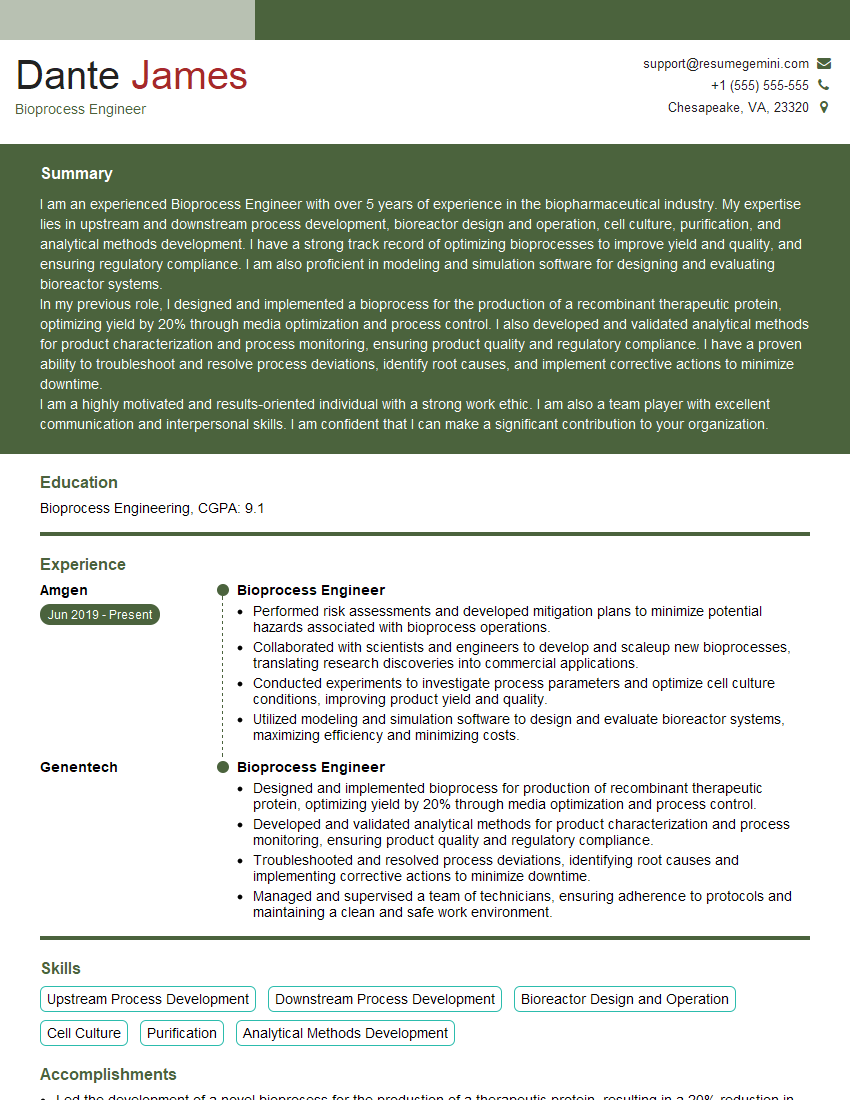
Mastering Bioreactor Control Systems is crucial for advancement in the bioprocessing industry, opening doors to leadership roles and specialized projects. A strong resume is key to showcasing your expertise and securing your dream position. Creating an ATS-friendly resume is essential to ensure your application gets noticed by recruiters. We highly recommend leveraging ResumeGemini, a trusted resource for building professional and effective resumes. ResumeGemini provides examples of resumes tailored specifically to Bioreactor Control Systems roles, helping you present your qualifications in the most compelling way. Take the next step in your career journey and build a resume that reflects your expertise and ambition.
Explore more articles
Users Rating of Our Blogs
Share Your Experience
We value your feedback! Please rate our content and share your thoughts (optional).
What Readers Say About Our Blog
Very informative content, great job.
good