Are you ready to stand out in your next interview? Understanding and preparing for Bioreactors interview questions is a game-changer. In this blog, we’ve compiled key questions and expert advice to help you showcase your skills with confidence and precision. Let’s get started on your journey to acing the interview.
Questions Asked in Bioreactors Interview
Q 1. Explain the difference between batch, fed-batch, and continuous bioreactor operation modes.
Bioreactors operate in different modes depending on how substrates are added and products are removed. Think of it like cooking: batch is a single pot, fed-batch is adding ingredients throughout, and continuous is a constantly flowing stream.
- Batch: All components are added at the beginning, the culture grows, and then the process is complete. It’s like baking a cake – you mix everything, bake it, and then it’s done. This is simple to operate but has limitations in terms of productivity and consistency. An example is the production of some antibiotics.
- Fed-batch: Nutrients are added incrementally during the process to extend the culture time and increase productivity. Imagine adding more flour to a bread dough as it rises. This approach allows for higher cell densities and product yields than batch culture. It’s commonly used in monoclonal antibody production.
- Continuous: Nutrients are continuously fed into the bioreactor, and products are continuously removed. This is like a constantly flowing river; fresh water enters, and water flows out. This mode achieves high productivity and steady-state operation. It’s often employed in wastewater treatment and some industrial fermentations.
Q 2. Describe the various types of bioreactors and their applications.
Various bioreactor designs cater to different cell types and applications. The choice depends on factors like scale, oxygen transfer requirements, shear sensitivity, and the nature of the product.
- Stirred-tank bioreactors (STRs): These are the workhorses of the industry, utilizing impellers to mix the culture. They’re highly versatile and suitable for a wide range of applications, from microbial fermentations to mammalian cell cultures. Their ability to control parameters like pH and DO makes them suitable for many applications.
- Airlift bioreactors: These use air bubbles to mix the culture, resulting in lower shear stress compared to STRs. They are well-suited for shear-sensitive cells like plant or animal cells.
- Photobioreactors: Designed for photosynthetic organisms like algae, they provide controlled light exposure for optimal growth. They’re becoming increasingly important for biofuel production and other applications. Think of these as greenhouses for microscopic organisms.
- Fluidized-bed bioreactors: These are used for immobilized cells or enzymes, where cells are attached to a carrier material. The carrier material is suspended in the bioreactor by upward-flowing liquid. This system improves the longevity of the cells. This is particularly useful for applications where high cell concentrations are desired, along with reduced shear forces.
- Fixed-bed bioreactors: Similar to fluidized-bed reactors, but the support material remains stationary. This minimizes shear forces but offers less flexibility in the operational parameters compared to other reactors.
Q 3. What are the critical parameters to monitor and control in a bioreactor?
Precise monitoring and control of various parameters are crucial for successful bioreactor operation. Think of it as monitoring a patient’s vital signs in a hospital – any deviation can have serious consequences.
- Temperature: Optimal temperature is crucial for cell growth and metabolic activity.
- pH: Maintaining the correct pH is essential for enzyme activity and cell viability.
- Dissolved Oxygen (DO): Sufficient DO is needed for aerobic organisms.
- Substrate concentration: Monitoring the levels of nutrients ensures adequate supply for growth.
- Product concentration: Tracking product formation allows for harvesting at the optimum time.
- Foam: Excessive foaming can cause issues with mixing and oxygen transfer.
- Cell density: Monitoring cell growth provides insights into the culture’s health and productivity.
Deviations from optimal ranges can trigger automated adjustments or alarms, preventing damage to the cells and ensuring consistent product quality.
Q 4. How do you ensure sterility in a bioreactor system?
Sterility is paramount in bioreactor operation to prevent contamination that could ruin a batch or compromise the final product. It’s like performing surgery – any contamination can have devastating consequences.
- Sterilization of components: Bioreactors, media, and instruments are sterilized using autoclaving (high-pressure steam), filtration (using filters with pore sizes small enough to trap bacteria), or gamma irradiation.
- Aseptic techniques: Strict protocols are followed during the entire process to prevent contamination introduction.
- In-situ sterilization: Some bioreactors have features for sterilizing components in place, further minimizing the risk of contamination.
- Continuous monitoring: Regular checks for sterility help detect contamination early.
Implementing these methods creates a sterile environment where cells can grow without competition from unwanted microorganisms.
Q 5. Explain the importance of dissolved oxygen (DO) control in cell culture.
Dissolved oxygen (DO) is critical for aerobic cell cultures; they need oxygen for respiration and energy production. Think of it as the air we breathe – without it, we can’t survive.
Insufficient DO leads to reduced cell growth, metabolic changes, and potentially cell death. Conversely, excessive DO can generate damaging reactive oxygen species (ROS). Therefore, maintaining optimal DO levels is crucial for maximizing cell productivity and maintaining cell viability. Control is typically achieved through sparging (introducing sterile air), agitation (mixing the culture), and potentially oxygen enrichment.
Q 6. Describe different methods for controlling pH in a bioreactor.
pH control is crucial for enzyme activity and cell growth. Different cell types have optimal pH ranges; deviations can hinder growth and product formation. Think of it as maintaining the right soil pH for a plant to thrive.
- Acid/base addition: Automatic systems add acid (e.g., HCl) or base (e.g., NaOH) to maintain the desired pH. This is the most common method.
- pH-controlled feeding strategies: The addition of nutrients can be adjusted based on pH to indirectly control pH.
- Gas sparging: CO2 can be added to lower the pH, while air or O2 sparging may slightly increase it.
These methods allow for precise pH control, ensuring optimal conditions for cell growth and product formation.
Q 7. What are the common methods for cell harvesting?
Cell harvesting is the process of separating cells from the culture broth. This is the final step in the bioprocess. Methods chosen depend on cell type, downstream processing, and scale. Imagine it as picking ripe fruit from a tree or harvesting a field of wheat.
- Centrifugation: A common method utilizing centrifugal force to separate cells from the liquid. This is ideal for relatively high cell concentrations.
- Microfiltration and ultrafiltration: Membrane-based techniques capable of separating cells based on size. These are effective for delicate cells and large-scale processes.
- Flocculation: Chemical addition to encourage cells to clump together. This facilitates easier separation, but it’s not always suitable for all cell types.
- Sedimentation: Letting cells settle naturally, suitable for high-density cell cultures, but it’s relatively slow.
The choice of method depends on multiple factors, including cell fragility, cost, and desired product purity.
Q 8. Explain the principles of scale-up and scale-down in bioreactor operations.
Scale-up and scale-down in bioreactor operations refer to the processes of increasing or decreasing the size of a bioreactor while maintaining consistent process performance. Think of it like baking a cake: you can scale up a recipe to make a larger cake, but you need to adjust baking time and oven temperature to ensure it doesn’t burn or remain undercooked. Similarly, scaling up a bioreactor requires careful consideration of various parameters to ensure consistent cell growth, product yield, and quality.
Scale-up involves transitioning from a small-scale bioreactor (e.g., lab-scale, 1-liter) to a larger-scale bioreactor (e.g., pilot-scale, 100-liters or industrial-scale, 10,000-liters). This often requires adjustments to parameters like power input per unit volume (P/V), impeller tip speed, gas flow rate, and oxygen transfer rate (OTR) to maintain similar mixing, oxygen transfer, and heat transfer characteristics. Geometric similarity is often targeted, maintaining the same ratios of height to diameter, impeller diameter to tank diameter, etc.
Scale-down is the reverse process, often used for process development or troubleshooting issues observed in larger bioreactors. It allows researchers to recreate challenges in a smaller, more manageable system. This is beneficial for cost-effectiveness and faster experimentation.
Both processes require a thorough understanding of the bioprocess, rigorous experimental design, and careful monitoring of key process parameters.
Q 9. What are the challenges associated with scaling up a bioreactor process?
Scaling up a bioreactor process presents several challenges. One major hurdle is maintaining consistent mixing and oxygen transfer. In larger bioreactors, ensuring uniform distribution of nutrients and oxygen to all cells becomes increasingly difficult. This can lead to cell death in poorly mixed regions and reduced overall productivity.
- Mass Transfer Limitations: Oxygen transfer, a crucial aspect for aerobic cultures, can become limited as the bioreactor volume increases. The surface area to volume ratio decreases, impacting the efficiency of oxygen transfer.
- Heat Transfer Limitations: Large-scale bioreactors generate more heat, requiring efficient cooling systems to maintain optimal temperature. Inadequate heat removal can lead to cell damage and reduced product quality.
- Shear Stress: Increased impeller speed in larger bioreactors may lead to excessive shear stress on cells, damaging them and reducing viability.
- Scale-Dependent Phenomena: Some phenomena, like cell aggregation or foaming, may be more pronounced in larger bioreactors and require specific mitigation strategies.
- Cost and Complexity: Larger bioreactors are significantly more expensive to construct and operate, necessitating meticulous planning and optimization.
Successfully scaling up requires careful consideration of these challenges and often involves the use of computational fluid dynamics (CFD) modeling and rigorous experimental validation.
Q 10. Describe your experience with different types of sensors used in bioreactors.
My experience encompasses a wide range of sensors used in bioreactors, each offering unique capabilities for monitoring and controlling the bioprocess. These include:
- pH sensors: Essential for maintaining optimal pH levels, crucial for cell growth and product formation. We frequently use both potentiometric and ISFET-based pH sensors, comparing their accuracy and response times.
- Dissolved Oxygen (DO) sensors: Crucial for aerobic cultures, these sensors monitor the oxygen concentration in the broth. Clark-type electrodes and optical DO sensors are commonly used, each with its own advantages and disadvantages regarding response time and sterilizability.
- Temperature sensors: Used to monitor and control the bioreactor temperature, often utilizing thermocouples or resistance temperature detectors (RTDs).
- Optical sensors: These sensors, including those based on fluorescence and absorbance spectroscopy, provide real-time measurements of various parameters such as cell density, biomass, metabolite concentrations, and product formation. I have extensive experience using these for on-line monitoring and process control.
- Conductivity sensors: These sensors measure the ionic strength of the broth, providing information about the nutrient levels and overall process conditions.
- Foam sensors: These sensors detect foam formation, which can negatively impact the bioprocess. Ultrasonic sensors and conductivity probes are commonly employed.
The choice of sensor depends on the specific application and process requirements, considering factors such as accuracy, response time, sterilizability, and cost.
Q 11. How do you troubleshoot common problems encountered in bioreactor operation?
Troubleshooting bioreactor operations requires a systematic approach. I typically follow these steps:
- Identify the problem: Clearly define the deviation from the expected performance. This might include decreased cell growth, reduced product yield, abnormal pH, or unexpected foaming.
- Analyze process data: Examine historical process data, including sensor readings, media composition, and operational parameters. Look for trends or correlations that might pinpoint the root cause.
- Inspect the system: Visually inspect the bioreactor, tubing, and other components to identify any physical damage or blockages. Check for contamination or leaks.
- Investigate potential causes: Based on the available data and inspection, develop a list of potential causes. This might involve nutrient limitations, contamination, sensor malfunction, or process parameter issues.
- Test hypotheses: Design and conduct experiments to test the proposed hypotheses. This may involve changing process parameters or performing specific analyses.
- Implement corrective actions: Based on the results of the testing, implement corrective actions to restore normal operation. This might include adjusting parameters, replacing sensors, or addressing contamination.
- Document findings: Meticulously document the problem, troubleshooting steps, and corrective actions taken. This information is crucial for preventing future occurrences.
For instance, if we observe decreased cell growth, we might investigate nutrient levels, pH, temperature, and dissolved oxygen levels. A systematic approach ensures a timely and effective resolution.
Q 12. What are the key considerations for designing a bioreactor system?
Designing a bioreactor system involves several key considerations:
- Scale: Determine the appropriate scale based on the intended application (lab-scale, pilot-scale, or industrial-scale).
- Process requirements: Consider the specific needs of the bioprocess, including the type of cells being cultivated, required oxygen transfer rate, and sensitivity to shear stress.
- Sterilization: The design must incorporate effective sterilization methods to prevent contamination.
- Material selection: Choose materials compatible with the cells, media, and process conditions. Stainless steel is common, but other materials may be necessary for specific applications.
- Mixing: Ensure adequate mixing to provide uniform distribution of nutrients and oxygen. This involves selecting appropriate impellers and designing the tank geometry.
- Aeration and gas sparging: Design an efficient aeration system to provide sufficient oxygen to aerobic cultures. This typically involves the use of spargers and appropriate airflow control.
- Monitoring and control: Integrate appropriate sensors and control systems to monitor key parameters and maintain optimal process conditions.
- Automation: Incorporate automation features to reduce manual intervention and improve reproducibility.
- Safety: Design the system with safety features in mind to prevent accidents and ensure operator safety.
A well-designed bioreactor system will be efficient, reliable, and easy to operate and maintain, maximizing productivity while minimizing costs.
Q 13. Explain your experience with different types of bioreactor impellers.
My experience includes working with various bioreactor impellers, each designed for specific mixing characteristics and cell-culture requirements. The choice of impeller significantly impacts mixing efficiency, shear stress, and oxygen transfer.
- Rushton turbine: A classic radial impeller, effective for high-viscosity cultures and creating strong turbulence. However, it can generate high shear stress, potentially damaging sensitive cells.
- Marine impeller: A pitched-blade impeller providing axial flow, ideal for low-shear applications and minimizing cell damage. However, it may not be as efficient for high-viscosity cultures.
- Hydrofoil impeller: Offers a balance between radial and axial flow, providing good mixing efficiency with relatively low shear stress.
- Intermig impeller: Designed to minimize dead zones and improve mixing homogeneity in larger vessels.
- Helical ribbon impeller: Specifically designed for highly viscous cultures, efficiently mixing the entire broth.
The selection process often involves computational fluid dynamics (CFD) modeling to simulate flow patterns and optimize impeller design for the specific cell line and process conditions. For example, I’ve used CFD to determine the optimal impeller speed and design for a high-density mammalian cell culture to minimize shear stress while maintaining adequate oxygen transfer.
Q 14. What are the regulatory requirements for bioreactor operations (e.g., GMP)?
Bioreactor operations are subject to stringent regulatory requirements, particularly those adhering to Good Manufacturing Practices (GMP). GMP guidelines aim to ensure the consistent production of high-quality, safe products. Specific requirements vary depending on the application and regulatory bodies (e.g., FDA in the US, EMA in Europe). Key aspects include:
- Documentation: Meticulous documentation of all aspects of the process, including raw materials, procedures, and results, is crucial. This includes batch records, cleaning validation, equipment maintenance logs, and personnel training records.
- Validation: Processes and equipment must be validated to ensure they consistently perform as intended. This involves rigorous testing and documentation.
- Calibration and maintenance: Regular calibration of sensors and equipment, coupled with scheduled maintenance, are essential to ensure accuracy and reliability.
- Quality control: Regular quality control testing is necessary throughout the process to ensure the product meets specifications. This might involve sterility testing, purity analysis, and potency assays.
- Personnel training: Operators must receive adequate training on GMP principles and standard operating procedures (SOPs).
- Facility design and construction: Bioreactor facilities must be designed and constructed to meet GMP standards, ensuring appropriate environmental control, cleanliness, and safety.
Compliance with GMP is not merely a regulatory requirement but a critical aspect of ensuring product safety and quality. Non-compliance can result in significant consequences, including regulatory actions, product recalls, and reputational damage.
Q 15. Describe your experience with data acquisition and analysis in bioreactor systems.
My experience with data acquisition and analysis in bioreactor systems spans over a decade, encompassing various scales from benchtop to industrial-scale bioreactors. I’m proficient in using various sensors and analytical instruments to monitor key parameters such as pH, dissolved oxygen (DO), temperature, cell density (e.g., using optical density or cell counting), nutrient levels (glucose, lactate, ammonium), and metabolite concentrations. This data is crucial for optimizing cell growth and product formation.
Data acquisition usually involves sophisticated software that integrates with the bioreactor’s control system, automatically logging data at specified intervals. I have extensive experience with platforms like BioPAT MFCS/WIN, GE's Akta and other custom built systems. After data acquisition, I employ statistical process control (SPC) techniques, and advanced analytics such as multivariate analysis (e.g., PCA) and machine learning algorithms to identify patterns, trends, and outliers, helping to predict potential issues and improve process efficiency. For example, by analyzing historical data, we successfully identified a correlation between subtle changes in DO and subsequent drops in product yield, enabling us to proactively adjust the aeration strategy.
Furthermore, I’m comfortable with data visualization and reporting, using software like Excel, Spotfire, and JMP to create clear and informative reports for process characterization and regulatory submissions.
Career Expert Tips:
- Ace those interviews! Prepare effectively by reviewing the Top 50 Most Common Interview Questions on ResumeGemini.
- Navigate your job search with confidence! Explore a wide range of Career Tips on ResumeGemini. Learn about common challenges and recommendations to overcome them.
- Craft the perfect resume! Master the Art of Resume Writing with ResumeGemini’s guide. Showcase your unique qualifications and achievements effectively.
- Don’t miss out on holiday savings! Build your dream resume with ResumeGemini’s ATS optimized templates.
Q 16. How do you validate a bioreactor process?
Bioreactor process validation is a critical step to ensure consistent production of high-quality biopharmaceuticals. It’s a rigorous process designed to demonstrate that the bioreactor system and its operational parameters consistently deliver the desired product attributes within predetermined specifications. This is usually done through a series of tests including process and equipment qualifications.
The validation process typically involves three stages:
- Installation Qualification (IQ): Verification that the bioreactor system is installed correctly, according to the manufacturer’s specifications and design documents. This includes checking for proper installation, calibration, and documentation.
- Operational Qualification (OQ): Demonstration that the bioreactor system operates correctly across its designed operational range. This often involves testing the functionality of all control systems, sensors, and safety features under various controlled conditions.
- Performance Qualification (PQ): Confirmation that the bioreactor system consistently performs as intended, producing the desired product with consistent quality attributes over multiple batches. This involves running multiple production-scale batches under normal operating conditions, monitoring all critical parameters and analyzing the final product to verify that it meets predefined quality standards.
Throughout this process, comprehensive documentation is vital, including protocols, data logs, and deviations. The validation results should be documented thoroughly and submitted to regulatory authorities (e.g., FDA) to demonstrate compliance with Good Manufacturing Practices (GMP).
Q 17. Explain the concept of critical quality attributes (CQAs) in biopharmaceutical manufacturing.
Critical Quality Attributes (CQAs) in biopharmaceutical manufacturing are the physical, chemical, biological, or microbiological properties of a drug product that should be within an appropriate limit, range, or distribution to ensure the safety and efficacy of the product. They are the characteristics that directly influence the product’s safety, purity, and potency.
For example, in monoclonal antibody production, CQAs might include:
- Purity: The percentage of the desired antibody compared to other proteins or contaminants.
- Potency: The biological activity of the antibody, often measured by its ability to bind to its target.
- Aggregation level: The proportion of antibody molecules that have formed aggregates, which can impact efficacy and immunogenicity.
- Glycosylation profile: The type and extent of glycosylation (sugar modifications) on the antibody, which can influence its stability and function.
- Host cell protein (HCP) levels: The amount of residual proteins from the cells used to produce the antibody.
Careful control of the bioreactor process parameters directly impacts the CQAs. Effective monitoring and control allow for consistent production of a biopharmaceutical product meeting stringent quality standards.
Q 18. What are the different types of cell lines used in bioreactors?
A wide variety of cell lines are used in bioreactors, each with its own advantages and disadvantages. The choice of cell line depends on several factors, including the desired product, production scale, and regulatory requirements. Some common types include:
- CHO (Chinese Hamster Ovary) cells: These are widely used for producing therapeutic proteins due to their high productivity, ease of genetic manipulation, and proven safety profile.
- HEK (Human Embryonic Kidney) cells: Another popular choice for producing recombinant proteins, known for their ability to produce correctly folded and glycosylated proteins.
- NS0 (Mouse myeloma) cells: Often used for antibody production, offering high productivity and robust growth characteristics.
- Insect cells (e.g., Sf9, High Five): Used for producing proteins that require specific post-translational modifications, and are frequently used for viral vector production.
- Hybridoma cells: These are fusion cells created by fusing antibody-producing B-cells with myeloma cells, mainly used to generate monoclonal antibodies.
The selection of the cell line is a crucial decision with significant implications for the overall bioprocess efficiency and product quality.
Q 19. Describe your experience with single-use bioreactors.
I have significant experience with single-use bioreactors (SUBs), which are disposable bioreactors made from flexible film materials. My experience encompasses various scales, from small-scale research systems to large-scale manufacturing bioreactors.
The advantages of SUBs are numerous: reduced cleaning and sterilization costs, minimized risk of cross-contamination, reduced cleaning validation burden, and faster turnaround times between batches. This leads to improved process flexibility and faster time to market. I’ve been involved in process development and optimization studies within single-use systems, evaluating their performance for various cell lines and products. For example, we successfully transferred a CHO cell line process from a stainless steel bioreactor to a single-use system, achieving comparable product yields while reducing overall production time and costs.
However, there are also challenges associated with SUBs. These include the need to carefully select appropriate materials to ensure compatibility with cell culture media and product, ensuring the integrity of the single-use system, and managing potential leaching of extractables. Careful validation and quality control are essential when using single-use bioreactors.
Q 20. How do you prevent contamination in a bioreactor?
Preventing contamination in a bioreactor is paramount for successful biopharmaceutical production. It requires a multi-faceted approach that encompasses rigorous aseptic techniques, robust process controls, and thorough monitoring.
Key strategies include:
- Aseptic processing: Implementing strict aseptic procedures during media preparation, inoculum preparation, and bioreactor operation. This involves using sterile equipment, employing laminar flow hoods, and adhering to strict personnel hygiene protocols.
- Sterilization: Thorough sterilization of the bioreactor, media, and components before use, typically through autoclaving or filtration. The validation of sterilization processes is critical.
- Environmental monitoring: Regular monitoring of the bioreactor environment for microbial contamination using various methods such as air sampling and surface swabs. This helps identify potential sources of contamination and enable timely corrective action.
- Process controls: Implementing robust process control strategies to maintain optimal growth conditions that minimize the risk of contamination. This may involve maintaining appropriate pH, temperature, and dissolved oxygen levels.
- Real-time monitoring and alarms: Employing online sensors and monitoring systems with automated alarms that can detect potential contamination events promptly. Examples include particle counters and automated microbial detection systems.
Proactive and meticulous attention to these aspects is crucial in maintaining a contamination-free bioreactor environment.
Q 21. What are the advantages and disadvantages of different types of media used in cell culture?
The choice of cell culture media significantly impacts cell growth, product yield, and overall process efficiency. Different media types have their own advantages and disadvantages.
Defined Media:
- Advantages: Precise control of composition, reduced variability, enhanced reproducibility, better characterization of the product, and simplified downstream processing.
- Disadvantages: Can be more expensive than undefined media, and may not always support optimal growth for all cell lines.
Undefined Media (e.g., serum-supplemented media):
- Advantages: Often supports superior cell growth, particularly for more sensitive cell lines, less expensive than defined media.
- Disadvantages: Batch-to-batch variability, potential for contamination, presence of undefined components that may impact product quality, increased complexity for downstream processing and purification.
Chemically Defined Media: These media fall between defined and undefined media. They contain known components but may include complex mixtures like hydrolysates.
The selection of media is a critical decision that should consider factors such as cell line-specific requirements, cost-effectiveness, and regulatory compliance. For example, defined media are preferred for clinical production to reduce the risk of contamination and improve product consistency.
Q 22. Explain your experience with bioreactor automation and control systems.
My experience with bioreactor automation and control systems is extensive, encompassing both design and operational aspects. I’ve worked with various systems, from simple, manually controlled bioreactors to highly sophisticated, automated systems incorporating SCADA (Supervisory Control and Data Acquisition) and advanced process control strategies like model predictive control (MPC). In a previous role, I was responsible for integrating a new automated system for a 2000L bioreactor, which involved selecting appropriate sensors (pH, DO, temperature, foam detection), configuring the PLC (Programmable Logic Controller), and validating the entire system to ensure GMP (Good Manufacturing Practice) compliance. This included developing and executing detailed validation protocols covering aspects like accuracy, precision, and linearity of the sensors and control algorithms.
A key aspect of my work involves developing and implementing control strategies for maintaining optimal culture conditions. For instance, I designed a cascade control loop to precisely regulate dissolved oxygen levels by manipulating both the agitation speed and the airflow. This allowed for maintaining consistent oxygen transfer rates despite fluctuations in cell density and metabolic activity. I’m also proficient in troubleshooting automated systems and possess experience resolving issues ranging from sensor malfunctions to software glitches, minimizing downtime and ensuring consistent process performance. My experience spans various software platforms and control systems, making me adaptable to a wide range of industrial settings.
Q 23. How do you perform a risk assessment for a bioreactor process?
Performing a risk assessment for a bioreactor process is crucial to ensure product safety, process efficiency, and compliance with regulations. My approach is systematic and follows a structured methodology, typically adhering to a HAZOP (Hazard and Operability Study) or FMEA (Failure Mode and Effects Analysis) framework. It begins with identifying all potential hazards associated with the process, considering all stages from media preparation to harvest. This includes hazards related to equipment failure (e.g., sensor malfunction, pump failure), human error (e.g., incorrect media preparation, contamination during sampling), and environmental factors (e.g., power outages, temperature fluctuations).
For each identified hazard, I then assess the likelihood of occurrence and the severity of the consequences if the hazard materializes. This involves evaluating potential impacts on product quality, operator safety, and environmental impact. Based on these assessments, risks are prioritized, and appropriate control measures are implemented to mitigate the risks to an acceptable level. This might involve implementing redundant systems, alarm systems, process safeguards, operator training, or a combination of these approaches. Finally, the risk assessment is documented thoroughly, reviewed regularly, and updated as necessary to reflect any process changes or new information.
For example, in one project involving the production of a therapeutic protein, a major risk identified was contamination from the environment. To mitigate this, we implemented a stringent cleaning and sanitization protocol, validated HEPA filters on the bioreactor, and enforced strict aseptic techniques during all operations. This comprehensive risk assessment not only ensured product safety but also significantly reduced the likelihood of costly process interruptions.
Q 24. What is your experience with bioreactor cleaning and sanitization procedures?
Bioreactor cleaning and sanitization are critical for preventing contamination and ensuring consistent product quality. My experience covers a wide range of cleaning techniques and validation methodologies for both single-use and reusable bioreactors. For reusable systems, I’m adept at developing and implementing Cleaning-in-Place (CIP) procedures, often involving sequential steps such as rinsing, detergent washing, acid cleaning, and final rinsing with sterile water (WFI). This often requires optimizing cleaning parameters (e.g., temperature, concentration, contact time) to effectively remove cell debris, media components, and any potential contaminants while minimizing wear and tear on the equipment.
For single-use systems, the process focuses on proper disposal and waste management. I’m familiar with the regulations and best practices surrounding the disposal of biohazardous materials. Regardless of the bioreactor type, validation of the cleaning and sanitization procedures is crucial, requiring thorough testing to ensure effective removal of microbial contaminants and residues. This often involves microbiological analysis and residue testing to demonstrate efficacy. I’ve overseen the validation of numerous cleaning and sanitization processes, ensuring they meet the stringent requirements of GMP and regulatory bodies. In a recent project, we improved our CIP cycle efficiency by 20% by optimizing the detergent concentration and contact time, leading to significant cost and time savings without compromising cleaning effectiveness.
Q 25. Describe your experience with different types of cell culture techniques.
My experience with cell culture techniques is extensive, encompassing various types of cell lines (mammalian, insect, microbial) and culture methods (suspension, adherent, perfusion). I am proficient in various techniques including:
- Suspension culture: This involves cultivating cells in a liquid medium, where cells grow freely suspended in the medium. I have experience optimizing parameters such as agitation speed, dissolved oxygen levels, and nutrient feeding strategies to achieve high cell densities and productivity.
- Adherent culture: This method involves cultivating cells that adhere to a surface, such as a microcarrier or a flask. My experience includes working with various surface coatings and optimizing cell seeding densities to achieve optimal growth and product formation.
- Perfusion culture: This advanced technique involves continuously removing spent media and adding fresh media to maintain optimal culture conditions, allowing for high cell densities and prolonged cultures. I have worked with various perfusion systems and have expertise in controlling nutrient supply, waste removal, and cell retention.
- Microcarrier cultures: I’ve successfully scaled-up adherent cell cultures using microcarriers to achieve high cell densities and consistent yields in large-scale bioreactors.
Understanding the specific requirements of each cell line is crucial. For example, while optimizing a CHO (Chinese Hamster Ovary) cell line for antibody production, I needed to precisely control the dissolved oxygen level and pH to maximize protein expression while avoiding cell stress. My approach always prioritizes maintaining optimal culture conditions to enhance cell viability, productivity, and product quality.
Q 26. How do you maintain accurate records and documentation for bioreactor operations?
Maintaining accurate records and documentation is paramount in bioreactor operations, ensuring traceability, reproducibility, and regulatory compliance. My approach to record-keeping is meticulous and follows strict GMP guidelines. All operational parameters, including media preparation, inoculation, process parameters (temperature, pH, DO, agitation), feed additions, sampling data, and cleaning and sanitization records, are meticulously documented in real-time using electronic data capture systems. This approach minimizes the risk of errors and facilitates efficient data analysis.
We utilize a combination of electronic logging systems, batch records, and standard operating procedures (SOPs) to ensure complete and auditable records. Data is stored securely and backed up regularly, ensuring data integrity and accessibility. All deviations from established SOPs are thoroughly investigated, documented with corrective and preventive actions (CAPA), and reviewed by relevant personnel. I am proficient in using various data analysis tools to track key process parameters and identify trends, enabling proactive problem-solving and process optimization. This rigorous documentation process enables us to meet regulatory requirements, ensure product quality, and troubleshoot problems effectively.
Q 27. Explain your understanding of process analytical technology (PAT) in bioreactor systems.
Process Analytical Technology (PAT) plays a vital role in enhancing the understanding and control of bioreactor processes. My understanding encompasses the application of various PAT tools for real-time monitoring and control, enabling improved process understanding, enhanced product quality, and reduced manufacturing costs. I’ve worked with various PAT tools, including:
- Spectroscopic techniques: Near-infrared (NIR) spectroscopy, Raman spectroscopy, and UV-Vis spectroscopy can provide real-time information on cell density, metabolite concentrations, and product quality attributes.
- Chromatographic techniques: Online HPLC and other chromatographic methods can be utilized to monitor critical process parameters such as substrate concentration and product formation.
- Electrochemical sensors: These sensors measure parameters like dissolved oxygen, pH, and redox potential, providing valuable insights into the metabolic activity of the cells.
By implementing PAT, we can move towards a more proactive and less reactive approach to bioprocessing. Real-time data allows us to optimize feed strategies, identify and address potential problems early on, and make informed decisions to enhance the overall efficiency and productivity of the bioreactor. For instance, using online NIR spectroscopy to continuously monitor glucose levels enabled us to implement a feedback control system that automatically adjusted the feed rate, optimizing the substrate concentration and maximizing the cell growth and product yield. This demonstrates how PAT can lead to significant improvements in bioreactor performance and manufacturing efficiency.
Q 28. What are your strategies for optimizing bioreactor performance?
Optimizing bioreactor performance involves a multifaceted approach, combining scientific understanding with practical implementation. My strategies focus on enhancing several key aspects:
- Improved Media Formulation: I carefully evaluate the composition of the media to ensure optimal nutrient availability and to minimize the presence of inhibitory compounds. This often involves testing different media formulations and additives to identify those that maximize cell growth and product yields.
- Process Parameter Optimization: Precise control of critical parameters such as temperature, pH, dissolved oxygen, and agitation speed is crucial. I leverage advanced control strategies, such as MPC (Model Predictive Control), to maintain optimal conditions throughout the culture, maximizing cell growth and product formation. This is particularly relevant in high-density cell culture scenarios.
- Improved Cell Line Engineering: Improving the cell line itself, by genetic engineering or other techniques, can enhance productivity and robustness. My experience includes working with genetically engineered cell lines that produce higher yields of the desired product.
- Data-driven Decision Making: Detailed process data analysis using statistical methods and machine learning techniques is essential to identifying areas for improvement. This includes evaluating the impact of individual process parameters on cell growth and product yields, leading to more informed process optimization decisions.
- Scale-up and Down-Scaling Strategies: I am experienced in efficiently scaling bioreactor processes from small to large volumes while maintaining consistency in cell growth and product formation. Understanding scale-up challenges, like oxygen transfer rates and mixing efficiency, is crucial for success.
In one project, by systematically optimizing media components and process parameters, we achieved a 30% increase in product titer and a 15% reduction in manufacturing costs. This optimization involved the use of Design of Experiments (DOE) to efficiently evaluate multiple parameters and determine optimal operating conditions. My approach to optimization is iterative and data-driven, continually striving for improved efficiency and productivity.
Key Topics to Learn for Bioreactors Interview
- Bioreactor Design and Types: Understand the different types of bioreactors (stirred tank, airlift, photobioreactors, etc.), their design principles, and the selection criteria based on specific applications.
- Sterilization and Aseptic Techniques: Master the methods for sterilizing bioreactors and maintaining a sterile environment to prevent contamination, crucial for successful cell culture and product yield.
- Process Control and Monitoring: Familiarize yourself with the parameters monitored during bioreactor operation (pH, temperature, dissolved oxygen, etc.) and the control strategies employed to maintain optimal conditions.
- Mass and Energy Balances: Develop a strong understanding of mass and energy transfer principles within bioreactors, essential for optimizing process efficiency and product output.
- Scale-up and Scale-down: Learn the challenges and methodologies involved in scaling bioreactor processes from laboratory to industrial settings, a key aspect of biopharmaceutical manufacturing.
- Cell Culture Techniques: Gain proficiency in various cell culture techniques relevant to bioreactor operation, including cell line selection, media formulation, and cell growth monitoring.
- Downstream Processing: Understand the basic principles of downstream processing, including cell harvesting, product purification, and formulation, to appreciate the complete biopharmaceutical production process.
- Troubleshooting and Problem-Solving: Develop your ability to identify and troubleshoot common issues encountered during bioreactor operation, including contamination, low cell density, and process deviations.
- Bioreactor Applications: Be prepared to discuss applications across various industries, such as pharmaceuticals, food processing, and biofuels, demonstrating your breadth of knowledge.
- Process Validation and GMP: Understand Good Manufacturing Practices (GMP) and the importance of process validation in ensuring the safety and quality of biopharmaceutical products.
Next Steps
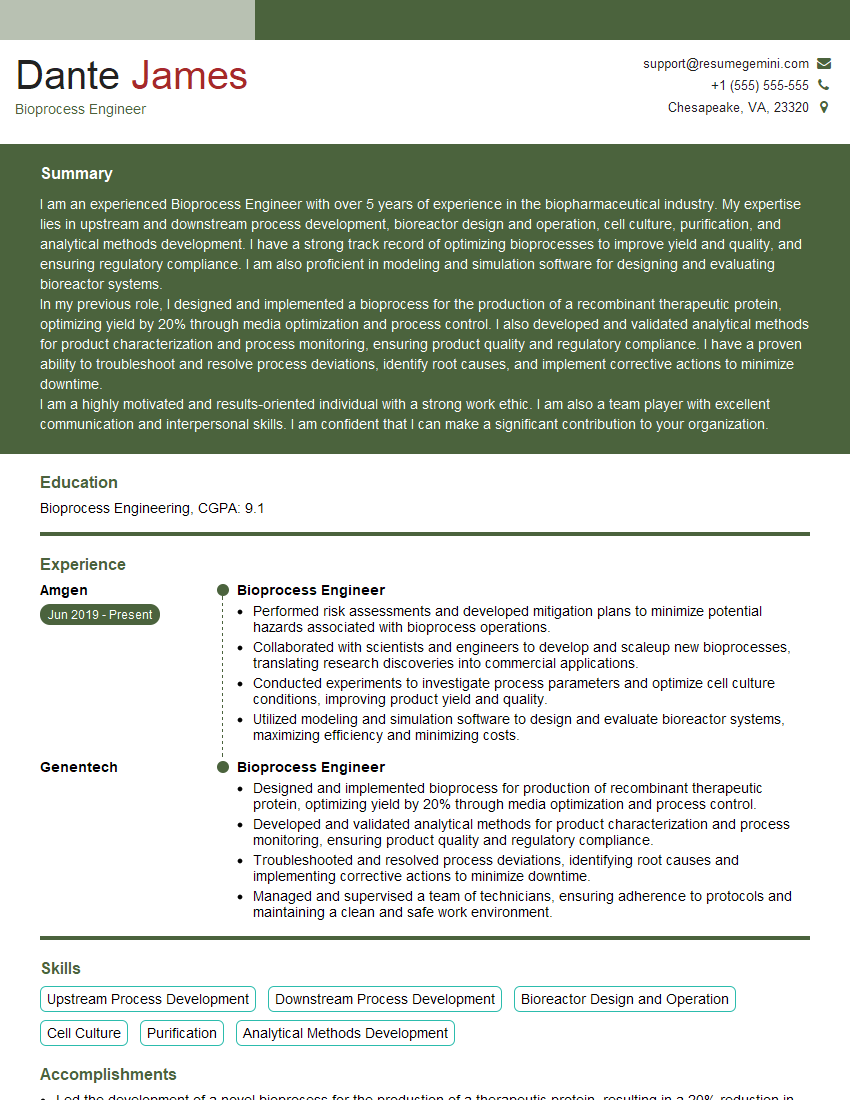
Mastering bioreactor principles is paramount for career advancement in the burgeoning fields of biotechnology and biopharmaceutical manufacturing. A strong understanding of these concepts will significantly enhance your interview performance and open doors to exciting opportunities. To increase your chances of landing your dream role, focus on creating a compelling and ATS-friendly resume that highlights your skills and experience effectively. ResumeGemini is a trusted resource that can help you build a professional and impactful resume tailored to the specific requirements of the bioreactor industry. Examples of resumes tailored to Bioreactors are provided to help guide you. Invest in your future – invest in your resume.
Explore more articles
Users Rating of Our Blogs
Share Your Experience
We value your feedback! Please rate our content and share your thoughts (optional).
What Readers Say About Our Blog
Very informative content, great job.
good