Cracking a skill-specific interview, like one for Box Making, requires understanding the nuances of the role. In this blog, we present the questions you’re most likely to encounter, along with insights into how to answer them effectively. Let’s ensure you’re ready to make a strong impression.
Questions Asked in Box Making Interview
Q 1. What types of box-making machinery are you familiar with?
My experience encompasses a wide range of box-making machinery, from the simplest hand-fed folder-gluers to fully automated, high-speed production lines. I’m proficient with various types of equipment, including:
- Die-cutting machines: These are crucial for creating intricate shapes and precise cuts in the cardboard.
- Folder-gluers: These machines automatically fold and glue the cut cardboard sheets into finished boxes.
- Rotary die-cutters: These high-speed machines offer increased efficiency for large-scale production.
- Printing presses: Many box-making operations involve printing directly onto the cardboard, and I have experience operating various printing presses, including flexographic and offset presses.
- Automatic erecting machines: These machines automatically set up flat-packed boxes into their three-dimensional form.
This diverse experience allows me to optimize production processes for different box designs and volumes.
Q 2. Describe your experience with die-cutting machines.
My experience with die-cutting machines spans several years and various models. I’m adept at setting up the dies, adjusting machine parameters for different materials and thicknesses, and troubleshooting common issues. For example, I once had a situation where the die-cut wasn’t cleanly separating from the board, resulting in wasted material. Through careful examination, I discovered a slight misalignment in the die and adjusted it using precision shims. This improved efficiency and reduced waste considerably. I’m comfortable working with both flatbed and rotary die-cutters and understand the importance of proper die maintenance to ensure accuracy and prolong the life of the tooling.
Understanding the nuances of pressure, speed, and blade sharpness is crucial for achieving clean, accurate cuts and minimizing waste. A slight adjustment can often make the difference between a perfect cut and a costly mistake.
Q 3. Explain the process of setting up a box-making machine for a specific job.
Setting up a box-making machine for a specific job involves a meticulous process. It starts with a thorough understanding of the job specifications – dimensions, material type, quantity, and print requirements. The steps typically include:
- Die setup: Installing the correct die in the machine and ensuring proper alignment.
- Material loading: Loading the appropriate grade and thickness of cardboard into the machine’s feeder.
- Machine parameter adjustment: Setting the speed, pressure, and other machine parameters based on the material and design requirements. This might involve adjusting the speed of the rollers, the pressure of the cutting blades, or the timing of the folding mechanism.
- Test run: Producing a small batch of boxes to check for any defects and adjust the settings as needed. This is crucial to catch errors early and prevent costly mistakes.
- Quality control checks: Regularly monitoring the quality of the output during production to ensure consistency.
Think of it like baking a cake; the recipe (job specifications) is essential, but precise adjustments to oven temperature (machine settings) ensure the perfect result. Experience allows for efficient setup and minimal adjustments during the run.
Q 4. How do you ensure the quality of the boxes being produced?
Quality control is paramount in box making. We employ a multi-pronged approach, beginning with the incoming materials inspection. We carefully check the cardboard for defects, ensuring consistency in weight, thickness, and print quality. During production, we conduct regular checks at various stages: after die-cutting, folding, and gluing. We use precision measuring instruments to ensure dimensional accuracy. Statistical process control (SPC) charts help us track trends and identify potential issues proactively. Finally, a 100% inspection of the finished product is often performed to identify and remove any defective boxes before they leave the facility. Any deviations from the specifications are documented and addressed to prevent recurrence.
Imagine building a house – you wouldn’t skip checking the foundation before putting up walls. Similarly, consistent quality checks ensure a flawless final product.
Q 5. What are common quality control issues in box making, and how do you address them?
Common quality control issues include dimensional inaccuracies (boxes being too big or too small), misaligned printing, improper gluing, and damaged or creased cardboard. Addressing these issues requires a systematic approach:
- Dimensional inaccuracies: Check die accuracy, machine settings, and material consistency.
- Misaligned printing: Verify proper registration marks and printing press settings.
- Improper gluing: Examine the glue application, machine settings, and drying time.
- Damaged cardboard: Inspect incoming materials thoroughly, adjust machine settings to reduce stress on the material.
Root cause analysis is crucial; simply fixing the immediate problem without understanding the cause could lead to recurring issues. We use data analysis and problem-solving techniques to get to the root of the problem and prevent its recurrence.
Q 6. What are the different types of folding carton constructions?
Folding carton constructions vary widely, each suited to different applications and requirements. Some common types include:
- Straight tuck top (STT): A simple and cost-effective construction with straight flaps that tuck in to close the box.
- Reverse tuck top (RTT): Similar to STT but with flaps that tuck in the opposite direction.
- Auto bottom: A design where the bottom is automatically formed during the erecting process.
- Rigid setup box: A sturdy box construction with a rigid base and lid, often used for high-end products.
- Booklet style: A specialized construction used for creating folded leaflet or booklet inserts.
The choice of construction depends on factors like product weight, shape, and required protection, as well as cost considerations.
Q 7. How do you troubleshoot common machine malfunctions?
Troubleshooting machine malfunctions requires a systematic approach. It starts with identifying the problem – is the machine not feeding material correctly? Are there jams? Is the output flawed? Once the problem is identified, we follow these steps:
- Safety first: Always ensure the machine is turned off and locked out before attempting any repairs or adjustments.
- Visual inspection: Carefully examine the machine for any obvious issues like loose parts, blockages, or damaged components.
- Check machine settings: Verify that all settings are correct and appropriate for the job.
- Check the material: Ensure the material is compatible with the machine and free of defects.
- Consult manuals and documentation: Manufacturer manuals often contain troubleshooting guides.
- Seek expert help if needed: If the problem persists, contacting a qualified technician is advisable.
Think of it like diagnosing a car problem; you need a systematic process to pinpoint the cause and fix it efficiently. Experience allows for faster problem identification and resolution, minimizing downtime.
Q 8. What safety procedures do you follow when operating box-making machinery?
Safety is paramount in box-making. Before operating any machinery, I always ensure I’ve received proper training and understand the specific safety protocols for each machine. This includes wearing appropriate personal protective equipment (PPE) like safety glasses, hearing protection, and cut-resistant gloves. I regularly inspect the machinery for any signs of damage or malfunction before starting.
For example, before using a die-cutting machine, I meticulously check the blades for sharpness and proper alignment, ensuring there are no loose parts or obstructions. If anything seems amiss, I immediately report it to my supervisor and do not operate the machine until it’s repaired. Lockout/Tagout procedures are strictly followed when performing maintenance or repairs on any machinery. Regular cleaning of the machinery and the work area prevents accidents caused by clutter or debris.
I also understand and adhere to emergency shutdown procedures for each machine and the location of the nearest emergency exits and first-aid kits. Safety is not just a rule; it’s a mindset that guides every action I take.
Q 9. How do you calculate the amount of material needed for a specific box design?
Calculating material needs depends heavily on the box design. It’s a process that combines geometry and practical considerations like material waste. Let’s break it down. First, you need precise dimensions of the box: length, width, and height. Then you determine the number of panels required for the box style (e.g., a simple box needs six panels, a more complex one may have more). For each panel, calculate its area (length x width). Summing the areas of all panels gives the total surface area.
However, this is not the final amount. You need to account for material loss due to cutting, scoring, and folding. This varies depending on the cutting method and material thickness. Often, we use a percentage to account for waste. For instance, a 10% waste factor means you add 10% to the total surface area calculated above. Finally, if you are using a roll of material, you’ll need to consider the width of the roll and calculate how many boxes can be cut from each sheet.
Example: Let’s say we have a simple box measuring 10cm x 10cm x 5cm. The surface area is 2(10*10) + 4(10*5) = 300cm². With a 10% waste factor, the required material becomes 330cm². If our roll is 100cm wide, we need to consider the layout to minimize waste during cutting.
Q 10. What is your experience with different types of cardboard and paperboard?
My experience encompasses a broad range of cardboard and paperboard types. I’m familiar with different grades of corrugated board, ranging from single-wall (suitable for lighter items) to triple-wall (used for heavy-duty packaging). I understand the properties of each, including its stiffness, burst strength, and printability. I’ve also worked with solid board, often used in rigid set-up boxes. The choice of material depends significantly on the product it will protect.
Beyond corrugated and solid board, I’m experienced with coated and uncoated paperboards, often used for folding cartons or specialized packaging applications. I understand how different coatings affect the board’s durability, printability, and water resistance. I’m also proficient in selecting materials based on factors such as sustainability, recyclability, and specific customer requirements. I know the difference between various paper grades like kraft, linerboard, and fluting.
For example, a fragile electronic device might require a box made of double-wall corrugated board with extra cushioning, while a heavier item might need a triple-wall board or a solid board design. Choosing the correct material involves assessing factors like weight, shape, and shipping conditions to ensure adequate product protection.
Q 11. Explain the importance of proper material handling in box making.
Proper material handling is essential for efficiency and safety in box making. Poor material handling can lead to damaged materials, production delays, and workplace injuries. It starts with proper storage – keeping materials dry, clean, and protected from damage. We use appropriate racking and shelving systems to prevent crushing or bending, particularly important for larger sheets of cardboard. Materials are clearly labeled and organized to ensure quick and easy retrieval.
During the manufacturing process, we use techniques that minimize material waste and maximize efficiency. For instance, careful planning of cutting layouts helps to reduce scrap. We also employ lifting aids and material handling equipment like forklifts or pallet jacks to move heavy materials safely and efficiently. Regular maintenance and inspection of our material handling equipment are a priority.
A practical example is preventing damage to corrugated board. By keeping it in a dry environment and properly stacked to avoid crushing, we ensure that the quality of the finished boxes remains high. If the board is damaged, the resulting boxes will be weak and unfit for their intended purpose.
Q 12. How do you maintain a clean and organized work area?
Maintaining a clean and organized work area is crucial for safety, efficiency, and overall productivity. Our approach involves regular cleaning routines and designated storage areas for tools, materials, and finished goods. We regularly sweep and mop the floor to remove debris that could cause tripping hazards. Tools are properly stored after each use to prevent damage and loss.
We use 5S methodology, a system which focuses on organizing the workplace: Seiri (Sort), Seiton (Set in order), Seisō (Shine), Seiketsu (Standardize), and Shitsuke (Sustain). This involves regularly decluttering, improving workflow, and creating a standardized cleaning system. Regularly scheduled deep cleaning ensures that the work area remains sanitary and free from dust and other contaminants.
In practice, this means everything has its place, tools are readily accessible, and materials are stored in a way that prevents damage or confusion. This significantly reduces the time spent searching for items and prevents accidents.
Q 13. Describe your experience with different box-making techniques.
My experience covers a variety of box-making techniques, both manual and automated. I’m proficient in using various types of box-making machinery, including die-cutting machines, folder-gluers, and stitching machines. I understand how to set up and operate these machines effectively, making necessary adjustments for different box designs and materials. I also have experience with manual techniques like hand-folding and gluing for smaller production runs or specialized box designs.
For example, I can efficiently set up a folder-gluer for high-volume production of standard boxes, ensuring proper alignment and glue application. I also know how to adjust the settings for complex box designs with multiple flaps and partitions. I’m experienced with various die-cutting techniques, including rotary and flat-bed die-cutting, understanding the trade-offs between speed and precision. With manual techniques, I can create bespoke and intricate box designs requiring a delicate touch.
My knowledge extends to different box styles, including regular slotted cartons (RSC), full overlap boxes, and many specialty boxes. This diverse range of skills allows me to adapt to different production needs and customer requirements.
Q 14. How do you handle production deadlines and prioritize tasks?
Handling production deadlines and prioritizing tasks involves effective planning and execution. I use project management techniques to break down large projects into smaller, manageable tasks. I create a detailed schedule, allocating resources effectively to ensure timely completion. I also identify potential bottlenecks or delays and proactively seek solutions to mitigate their impact. I use tools like Gantt charts or Kanban boards for visualization and tracking of progress.
Prioritization involves identifying tasks crucial to meeting the deadline and focusing on those first. I use methods like MoSCoW analysis (Must have, Should have, Could have, Won’t have) to prioritize tasks based on their importance and urgency. Regular communication with the team and supervisors ensures everyone is on the same page and any roadblocks are addressed swiftly.
For example, if a rush order comes in, I would re-evaluate the schedule, identify tasks that can be postponed without major impact, and re-allocate resources to prioritize the urgent order. This requires a balance of flexibility and adherence to the overall production plan. Regular progress monitoring allows me to identify and address any potential delays early on.
Q 15. What are your skills in using measuring tools and calipers?
Accurate measurements are fundamental in box making. My proficiency extends to using a variety of measuring tools, from simple rulers and tape measures to precision instruments like dial calipers and vernier calipers. I’m comfortable measuring both internal and external dimensions, ensuring accuracy to within fractions of a millimeter. For instance, when working with intricate designs or small boxes, using a vernier caliper to precisely measure the thickness of cardboard ensures consistent box construction and avoids material wastage. I can also quickly identify and correct measurement discrepancies, optimizing the production process and minimizing errors.
My experience includes using digital calipers for rapid measurement recording and data transfer into production software for automated cutting and scoring machines. This streamlining ensures precision and speed, crucial for meeting deadlines.
Career Expert Tips:
- Ace those interviews! Prepare effectively by reviewing the Top 50 Most Common Interview Questions on ResumeGemini.
- Navigate your job search with confidence! Explore a wide range of Career Tips on ResumeGemini. Learn about common challenges and recommendations to overcome them.
- Craft the perfect resume! Master the Art of Resume Writing with ResumeGemini’s guide. Showcase your unique qualifications and achievements effectively.
- Don’t miss out on holiday savings! Build your dream resume with ResumeGemini’s ATS optimized templates.
Q 16. How familiar are you with different types of adhesives used in box making?
My knowledge of adhesives spans various types commonly used in box making, each with its own strengths and weaknesses depending on the application. This includes hot melt adhesives, known for their speed and high bond strength, ideal for high-volume production lines. Water-based adhesives are often preferred for their environmentally friendly nature and suitability for certain paperboard types. I’m also experienced with pressure-sensitive adhesives, particularly for self-adhesive boxes, and understand the importance of selecting an adhesive that is compatible with both the box material and the intended contents. I know how to consider factors like open time, tack, and final bond strength when making this selection. For example, selecting a hot melt adhesive with a slower setting time might be necessary for more complex box designs requiring precise alignment before bonding.
Q 17. Describe your experience with automated box-making systems.
I have extensive experience operating and maintaining automated box-making systems, including both fully automated lines and semi-automated stations. This experience encompasses machines such as automatic die-cutters, folder-gluers, and printing presses, often integrated through a sophisticated control system. I’m proficient in troubleshooting malfunctions, performing routine maintenance, and optimizing settings to maximize output and quality. For example, I’ve worked with systems that use barcode readers to automatically adjust cutting and folding parameters based on the specific box design. This level of automation reduces manual intervention, increases efficiency, and lowers the risk of errors.
Q 18. How do you improve efficiency in the box-making process?
Improving efficiency in box making requires a multi-faceted approach. It starts with process optimization – analyzing each step from material handling to quality control and identifying bottlenecks. This often involves using lean manufacturing principles. For example, implementing a ‘5S’ system (Sort, Set in Order, Shine, Standardize, Sustain) in the workspace can significantly reduce downtime spent searching for materials or tools. Reducing setup times between different box designs, through efficient die-changing procedures and using pre-programmed settings on automated machinery, is also crucial. Additionally, regular maintenance of equipment minimizes downtime and improves overall efficiency. A well-trained team familiar with preventative maintenance and capable of quickly addressing minor issues significantly contributes to this goal.
Q 19. How do you work effectively as part of a team?
Effective teamwork is essential in a fast-paced box-making environment. I believe in open communication, active listening, and mutual respect. I’m adept at collaborating with colleagues from different departments – design, production, and quality control – to achieve common goals. For example, in one project, I worked closely with the design team to identify and address potential production challenges early on in the design process, saving time and resources later. I also proactively contribute to team brainstorming sessions, sharing my expertise to find innovative solutions and improve overall performance. I am comfortable both leading and assisting team members, adapting my approach based on the situation and the needs of the team.
Q 20. How do you adapt to changes in production requirements?
Adaptability is key in this industry. I’m comfortable handling changes in production requirements, whether it’s a shift in order volume, a change in box design, or the introduction of new materials. My approach involves first understanding the nature of the change, then reassessing the production plan accordingly. This might involve adjusting machine settings, re-sequencing tasks, or retraining team members on new procedures. For example, when we faced a sudden increase in demand for a specific box design, I quickly collaborated with the team to optimize the production line, and we met the increased order volume without compromising quality.
Q 21. What is your understanding of Lean Manufacturing principles in relation to box making?
Lean manufacturing principles are integral to efficient box making. My understanding of concepts like value stream mapping, eliminating waste (muda), and continuous improvement (kaizen) allows me to identify and address inefficiencies throughout the production process. Value stream mapping helps visualize the entire workflow, allowing us to pin-point areas where time or materials are wasted. By systematically eliminating these wastes – whether it’s excess inventory, unnecessary movement, or defects – we can streamline operations, reduce costs, and enhance overall productivity. I also actively participate in kaizen events, suggesting improvements and implementing changes to further optimize processes and contribute to continuous improvement. This includes suggesting small changes in workflow, implementing new tools or techniques to improve quality or speed, or even suggesting modifications to the equipment itself to make it more efficient.
Q 22. Explain your experience with different types of box designs (e.g., RSC, FEFCO).
My experience encompasses a wide range of box designs, focusing primarily on the most common types used in various industries. I’m proficient with Regular Slotted Containers (RSC), which are the workhorse of the industry due to their simple, cost-effective design and excellent stacking properties. I also have extensive experience with Full Overlap Slotted Containers (FEFCO 0201), offering superior strength and protection, ideal for heavier or more fragile products. Beyond these, I’ve worked with various other FEFCO styles, including those with added features like partitions, inserts, and handles to meet specific product requirements. For example, I’ve designed FEFCO 0211 (Half-Slotted Container) for applications needing easy opening and FEFCO 0427 (Telescopic Boxes) for applications requiring adjustable height.
- RSC (Regular Slotted Container): Think of the ubiquitous Amazon shipping box; this is a classic example of an RSC, offering a simple, efficient, and cost-effective solution.
- FEFCO 0201 (Full Overlap Slotted Container): If you need a box that can withstand significant weight or impact, a FEFCO 0201 provides robust protection due to its increased overlap. Imagine shipping electronics or delicate glassware.
My understanding extends to the design considerations for each type, including material selection, board thickness, and dimensions to optimize performance and cost while complying with customer specifications and industry best practices. I also possess a solid understanding of other box types, including trays, book-style boxes and specialty packaging, and the appropriate machinery for their production.
Q 23. How do you ensure compliance with industry regulations and standards?
Ensuring compliance is paramount. This involves adhering to several key regulations and standards, including those related to material safety (e.g., ensuring compliance with FDA food-grade certifications if packaging food products), dimensional stability (meeting customer-defined size tolerances), and strength testing (verifying the box’s ability to withstand stacking and transit conditions). We regularly use testing equipment like compression testers and Mullen testers to confirm that our boxes meet the required strength and bursting standards. We also maintain a rigorous documentation system, tracking material certifications, production records, and quality control checks to guarantee traceability and transparency.
We stay updated on industry best practices by actively participating in industry associations and workshops and keeping abreast of any changes in the regulations. For instance, we’re always aware of changes in the international standards for packaging, ensuring that our products consistently meet the latest requirements to avoid any shipment delays or problems.
Q 24. Describe your experience with preventative maintenance of box-making equipment.
Preventative maintenance is crucial for maximizing equipment uptime and minimizing production disruptions. My experience includes a comprehensive approach incorporating regular lubrication schedules, thorough inspections for wear and tear (especially on cutting blades, scoring wheels, and glue application systems), and timely replacement of worn parts. We use a computerized maintenance management system (CMMS) to track maintenance activities, enabling proactive scheduling and reducing the risk of unexpected breakdowns.
For example, I’ve implemented a daily lubrication schedule for our folder-gluers, significantly reducing friction and extending the lifespan of critical components. We also conduct regular calibrations to ensure consistent box dimensions and quality. This includes regular checks of the alignment and precision of the various mechanical parts involved in the box-making process, such as the perforating and creasing units. A well-maintained machine results in consistently high-quality boxes and reduces the likelihood of production delays due to equipment failure.
Q 25. How do you handle damaged or defective materials?
Handling damaged or defective materials requires a systematic approach to minimize waste and ensure quality control. First, a thorough inspection is conducted to identify the extent and cause of the damage (e.g., moisture damage, contamination, or manufacturing defects). Depending on the severity and type of damage, we may segregate the affected materials for different purposes. Minor defects may be salvaged by re-cutting or using them for less demanding applications. For example, slightly damaged sheets could be used for prototyping or internal packaging where external presentation is not crucial.
Materials deemed unsalvageable are documented and disposed of according to environmental regulations. A detailed record is kept to identify any recurring issues in our supply chain or during the material handling process to implement corrective measures and prevent future occurrences.
Q 26. What are your skills in using software for box design or production planning?
I’m proficient in several software applications used in box design and production planning. My expertise includes CAD software (AutoCAD, SolidWorks) for creating precise box designs and generating cut-and-crease diagrams. I also utilize specialized box design software to optimize box dimensions, material usage, and structural integrity, reducing material waste while improving box performance. Additionally, I’m comfortable using ERP (Enterprise Resource Planning) and MRP (Material Requirements Planning) systems for production scheduling and inventory management, ensuring efficient resource allocation and timely order fulfillment. This includes software that allows me to accurately calculate the number of boxes that can be created from a given sheet size and material, minimizing unnecessary waste.
Q 27. How do you ensure the boxes meet the required specifications?
Ensuring boxes meet specifications involves a multi-stage process, starting with careful design based on customer requirements and product characteristics. This includes specifying the correct material, board thickness, and dimensions to provide appropriate protection and durability. Throughout the production process, rigorous quality checks are conducted at various stages, using calibrated measuring instruments to verify dimensions and strength tests to confirm structural integrity. Statistical Process Control (SPC) charts are used to monitor key parameters, allowing for immediate detection and correction of any deviations from the required specifications.
We also conduct regular audits to ensure compliance with quality standards (e.g., ISO 9001), documenting our procedures and findings meticulously. This comprehensive approach minimizes defects and ensures our output consistently meets the required standards.
Q 28. Describe a time you solved a problem related to box production.
We had a recurring issue with inconsistent glue application on our automated folder-gluer, resulting in boxes that didn’t seal properly. This led to a significant increase in rejected boxes. Initially, we thought the problem stemmed from the glue itself, so we experimented with different types and viscosity settings. However, this didn’t solve the problem.
After systematically investigating the issue, I focused on the glue application rollers. Through a thorough inspection, I identified that the rollers were worn unevenly, leading to inconsistent glue distribution. Replacing the rollers completely resolved the problem. This experience highlighted the importance of regular preventative maintenance and the value of a systematic approach to troubleshooting, combining observation, testing, and iterative problem-solving.
Key Topics to Learn for Your Box Making Interview
- Box Design & Engineering: Understanding different box types (e.g., corrugated, rigid), material properties, and design considerations for strength, durability, and cost-effectiveness. Practical application: Analyzing existing box designs for potential improvements or identifying flaws.
- Manufacturing Processes: Familiarity with various box-making machinery (e.g., die-cutters, folder-gluers) and their operation. Practical application: Troubleshooting common equipment malfunctions and optimizing production workflows.
- Quality Control & Assurance: Implementing quality checks at each stage of the manufacturing process to ensure adherence to specifications and standards. Practical application: Developing and executing quality control protocols to minimize defects and waste.
- Materials Science: Knowledge of different paperboard grades, coatings, and adhesives used in box manufacturing. Practical application: Selecting appropriate materials based on product requirements and environmental considerations.
- Production Planning & Scheduling: Understanding production planning principles, scheduling techniques, and inventory management to meet customer demands efficiently. Practical application: Developing a production schedule that optimizes resource utilization and minimizes lead times.
- Safety & Compliance: Adherence to safety regulations and industry best practices in a manufacturing environment. Practical application: Identifying and mitigating potential workplace hazards.
- Cost Optimization: Identifying opportunities to reduce material costs, improve efficiency, and minimize waste in the box-making process. Practical application: Analyzing production data to identify areas for cost reduction.
Next Steps
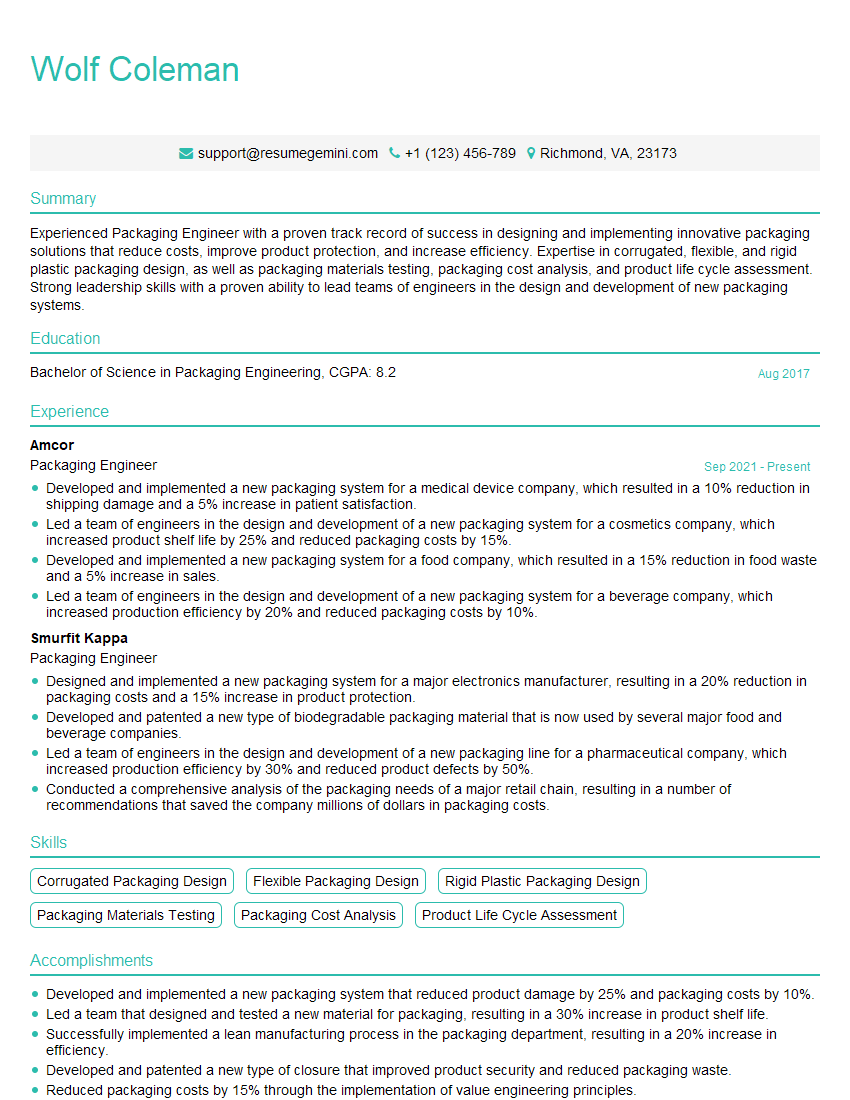
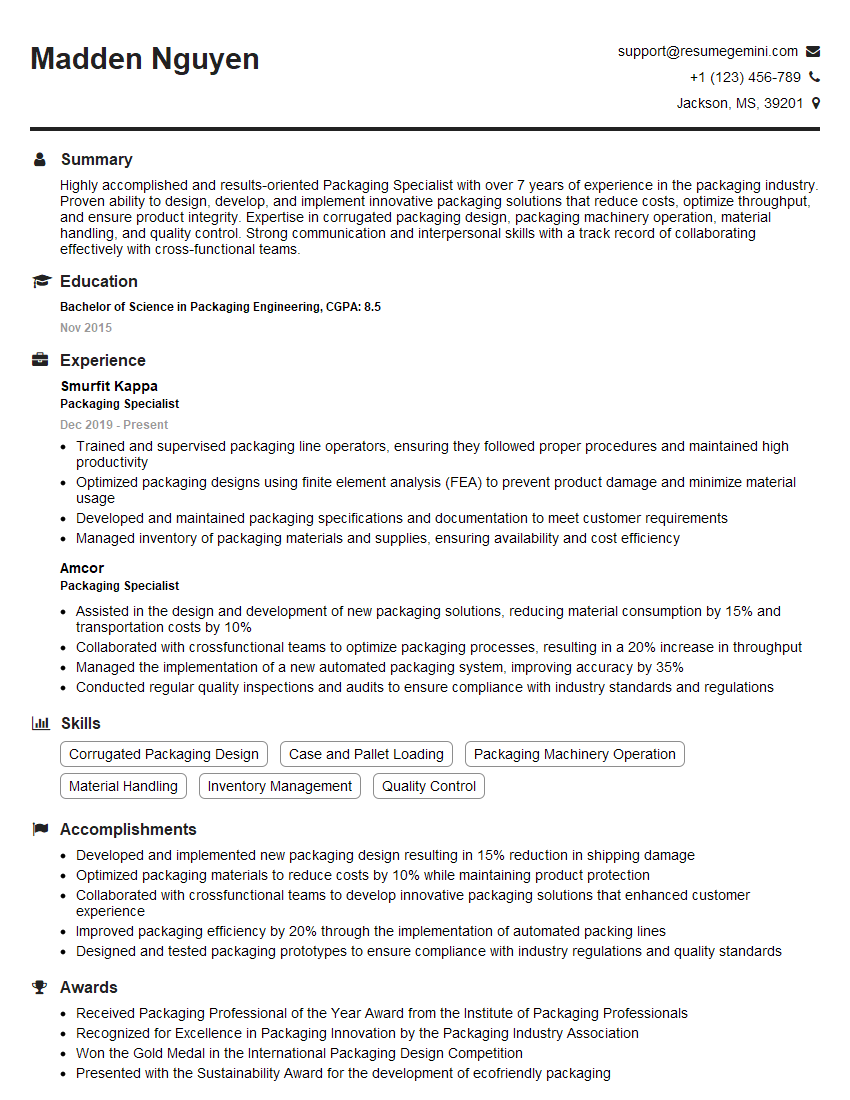
Mastering box making opens doors to a rewarding career with opportunities for advancement in manufacturing, logistics, and packaging engineering. A strong resume is crucial for showcasing your skills and experience to potential employers. Creating an ATS-friendly resume is vital to ensure your application gets noticed. We highly recommend using ResumeGemini to build a professional and effective resume that highlights your qualifications. ResumeGemini offers examples of resumes tailored to the Box Making industry, helping you craft a compelling application that stands out from the competition.
Explore more articles
Users Rating of Our Blogs
Share Your Experience
We value your feedback! Please rate our content and share your thoughts (optional).
What Readers Say About Our Blog
Very informative content, great job.
good