Feeling uncertain about what to expect in your upcoming interview? We’ve got you covered! This blog highlights the most important Brake System Fault Diagnosis interview questions and provides actionable advice to help you stand out as the ideal candidate. Let’s pave the way for your success.
Questions Asked in Brake System Fault Diagnosis Interview
Q 1. Explain the components of a typical anti-lock braking system (ABS).
An Anti-lock Braking System (ABS) prevents wheel lockup during braking, maintaining steering control. It’s comprised of several key components working in concert:
- Wheel Speed Sensors: These sensors, typically located near each wheel, monitor the rotational speed of each wheel. Think of them as the ABS’s eyes, constantly reporting back to the control unit.
- Hydraulic Control Unit (HC): The brain of the operation. This unit receives data from the wheel speed sensors and, based on that information, determines if a wheel is about to lock up.
- Hydraulic Valves: These valves, controlled by the HC, modulate the hydraulic pressure to individual wheels. If a wheel is about to lock, the valve reduces pressure to that wheel, allowing it to spin again.
- Brake Control Module (BCM): This is the central processing unit that takes in data from the sensors, and dictates the hydraulic pressure in the system. It’s constantly analyzing and making adjustments based on your braking habits.
- Pump (in some systems): Some ABS systems include an electric pump to help quickly restore hydraulic pressure after a wheel lockup is detected.
Imagine driving on ice. Without ABS, you’d likely lock your wheels and lose control. ABS prevents this by allowing the wheels to continue rotating, maintaining steering control even in slippery conditions.
Q 2. Describe the function of the brake master cylinder.
The brake master cylinder is the heart of the braking system. It’s a hydraulic pump that converts the force you apply to the brake pedal into hydraulic pressure. When you press the brake pedal, the master cylinder pushes brake fluid through the lines to the wheels, applying the brakes.
Think of it like a syringe. The brake pedal is the plunger, the brake fluid is the liquid, and the lines and calipers are the pathway to the effect (slowing or stopping of the vehicle). A faulty master cylinder can lead to a complete loss of braking power, making it a critical component to maintain. A low fluid level in the master cylinder will activate your brake warning light, a very important indicator of a problem needing immediate attention.
Q 3. How do you diagnose a spongy brake pedal?
A spongy brake pedal indicates a problem with the hydraulic system. Several potential causes exist:
- Air in the brake lines: This is a common culprit. Air compressibility means the pedal feels soft and sinks low. Bleeding the brakes is necessary to remove this air.
- Worn brake master cylinder: Internal seals within the master cylinder can wear out, causing fluid leakage and a spongy pedal.
- Leaking brake calipers or wheel cylinders: Internal seals in these components could be leaking fluid, reducing pressure and creating a soft pedal.
- Low brake fluid: A low level of brake fluid means the system is not properly pressurized.
Diagnosis involves a visual inspection for leaks, checking brake fluid level, and testing for air in the lines. A pressure test of the brake system might be required to pinpoint the exact location of a leak.
Q 4. What are the common causes of brake pulsation?
Brake pulsation, a rhythmic vibration in the brake pedal when braking, typically indicates a problem with the rotors or calipers:
- Warped brake rotors: Overheating or uneven wear can warp rotors, causing the pulsation. This is commonly felt during braking.
- Sticky caliper pistons: If a caliper piston is sticking, it can cause uneven pressure on the brake pads, leading to pulsation. This could be caused by rust, corrosion, or damage to seals.
- Uneven pad wear: Significant wear on one brake pad compared to others can also lead to pulsation.
It’s crucial to address brake pulsation promptly, as it can worsen and lead to reduced braking performance. A mechanic will usually inspect the rotors, calipers and pads to find the cause, then replace or repair as necessary.
Q 5. How do you troubleshoot a brake warning light?
A brake warning light indicates a problem within the braking system. The troubleshooting steps are:
- Check brake fluid level: Low fluid is the most common cause, often due to a leak. Top off if needed, but a persistent low level requires immediate investigation of the leak.
- Inspect brake lines and components: Look for any visible leaks or damage to the brake lines, calipers, or wheel cylinders.
- Check for ABS system issues: Some systems illuminate the brake warning light when the ABS system is malfunctioning. A diagnostic scan tool may be required here to find out what the fault codes are.
- Inspect the parking brake: An improperly engaged parking brake can sometimes trigger the warning light.
If the problem persists after these checks, professional diagnosis is necessary using a scan tool to determine the exact nature of the fault.
Q 6. Explain the process of bleeding brakes.
Bleeding brakes removes air trapped in the brake lines, restoring proper hydraulic pressure. The process typically involves:
- Gathering supplies: You’ll need a wrench to loosen the bleed valves on each caliper, a clear tube to collect the fluid, and a helper to pump the brake pedal.
- Positioning the container: Place the clear tube over the bleed valve nipple.
- Opening the bleed valve: Crack open the valve slowly and have your helper pump the pedal several times. Watch for air bubbles in the fluid. Close the valve after several pumps, and continue for each wheel, until there are no more bubbles.
- Repeating process for each wheel: Repeat this process for each wheel, starting with the furthest wheel from the master cylinder.
- Checking fluid level: Make sure the brake fluid level in the master cylinder reservoir doesn’t get too low during the process.
Proper bleeding is vital for safe braking. If unsure, consult a professional.
Q 7. Describe the different types of brake calipers and their functions.
Brake calipers are responsible for squeezing the brake pads against the rotor, slowing or stopping the wheel. There are several types:
- Fixed Caliper: This type has multiple pistons that push the pads against the rotor simultaneously. They are relatively simple and robust.
- Floating Caliper: This design has one or more pistons that push on one brake pad, and a sliding part holding the other brake pad. It allows for even wear on the pads.
- Caliper with integrated parking brake: This is a fixed-style caliper with a mechanism included for the parking brake operation.
The choice of caliper depends on the vehicle’s design and performance requirements. Floating calipers are commonly used due to their compact size and ease of maintenance. Fixed calipers offer higher clamping force in certain applications. The function of all types is the same: to efficiently and safely stop the vehicle.
Q 8. How do you diagnose a brake fluid leak?
Diagnosing a brake fluid leak involves a systematic approach combining visual inspection and leak detection methods. First, you visually inspect the entire brake system, looking for wet spots, stains, or dripping fluid around brake lines, calipers, wheel cylinders, master cylinder, and connections. Look for discoloration of components that might indicate a slow leak over time.
If a visual inspection is inconclusive, you might employ pressure testing. This involves pressurizing the brake system with a specialized tool and carefully monitoring for pressure loss. Any significant pressure drop indicates a leak, and the location of the leak can be determined by observing where the fluid escapes. You can also use a dye tracer added to the brake fluid to pinpoint leaks more easily, especially in hard-to-see areas. Remember to always use safety glasses and gloves when handling brake fluid, as it is corrosive.
For example, I once diagnosed a leak in a master cylinder by noticing a small, persistent wet spot on the firewall behind the pedal assembly. The pressure test confirmed the location and allowed for the replacement of the faulty master cylinder.
Q 9. What are the signs of worn brake pads?
Worn brake pads exhibit several tell-tale signs. The most common is a noticeably reduced thickness of the friction material. You should be able to visually see the wear indicators, small metal tabs embedded in the pad, which will make contact with the rotor when the pads are worn down to the minimum safe thickness and produce a scraping sound.
- Thin Friction Material: Pads should have a substantial thickness of friction material remaining; if you can easily see the backing plate, they need replacement.
- Sharp Edges: New brake pads have a relatively square edge; worn pads often have rounded, beveled edges.
- High-Pitched Squeaking or Squealing: While not always indicative of worn pads alone, it is a strong clue they may be getting close to the end of their life.
- Reduced Braking Performance: A spongy or less effective brake pedal can indicate worn pads and is a major safety concern.
Think of brake pads like the treads on a tire; when they’re worn, the braking effectiveness diminishes significantly, putting your safety at risk.
Q 10. How do you inspect brake rotors for wear and damage?
Inspecting brake rotors for wear and damage requires both visual and tactile examination. Using a dial indicator or feeler gauge, you can precisely measure the rotor thickness at multiple points. Comparison to the manufacturer’s specifications will determine if the minimum thickness has been reached. Additionally, a visual inspection will uncover any irregularities.
- Thickness Measurement: Use a dial indicator or caliper to measure the rotor thickness at several points around the rotor’s circumference. Compare this measurement to the manufacturer’s minimum thickness specifications found in a repair manual. Exceeding the wear limit necessitates replacement.
- Runout: Check for runout, the lateral movement of the rotor’s surface. Excessive runout indicates warping or uneven wear and will result in brake pulsation. Use a dial indicator to measure runout.
- Scoring/Grooves: Inspect the rotor’s braking surface for any deep scoring, grooves, or pitting. These imperfections can cause brake noise and reduced braking efficiency.
- Cracks or Damage: Carefully examine the rotor for cracks, particularly around the mounting holes. Any cracks signify structural damage and immediate replacement is required.
For example, a rotor with excessive runout would cause a noticeable pulsation in the brake pedal while braking, a clear indicator of rotor problems.
Q 11. Explain the principles of brake proportioning valves.
Brake proportioning valves are crucial for ensuring balanced braking force distribution between the front and rear axles. They regulate hydraulic pressure, preventing wheel lockup under heavy braking, particularly in vehicles with different brake configurations (e.g., disc brakes in the front, drum brakes in the rear). The valve’s primary function is to reduce brake pressure to the rear wheels as needed, based on factors such as vehicle weight distribution and road conditions.
A common type is a pressure-sensing valve. This valve measures the pressure in the front brakes. If the pressure exceeds a certain threshold (meaning the front wheels are at risk of locking up), the valve will reduce the pressure to the rear brakes, preventing the rear wheels from locking and ensuring better vehicle control during emergency braking. Other types adjust pressure based on the difference in pressure between the front and rear brakes, or use a mechanical sensing system.
The valve’s principles revolve around maintaining optimal braking effectiveness while preventing loss of vehicle control by ensuring balanced braking across the axles. It acts as a safety mechanism to prevent skidding, especially when braking hard.
Q 12. Describe the diagnostic process for a dragging brake.
Diagnosing a dragging brake, where a wheel continues to rotate slowly even when the brake pedal is released, requires a systematic approach. The issue stems from insufficient brake release. The steps for diagnosing a dragging brake are as follows:
- Visual Inspection: Start by inspecting the brake caliper for signs of sticking or binding. Look for corrosion or damage to the caliper piston and sliding pins. The caliper might be seized due to rust or a lack of lubrication.
- Wheel Rotation Check: Rotate each wheel individually, noting any resistance or unusual drag. A dragging brake will feel noticeably stiff and hard to turn compared to a freely rotating wheel.
- Brake Caliper Test: Check the caliper piston by trying to push it back manually. A difficult-to-move piston usually indicates a sticking caliper.
- Brake Hose Check: Ensure the brake hose is not kinked or damaged, as this can also cause a dragging brake. Kinks can restrict fluid flow and reduce braking release.
- Parking Brake Check: Verify the parking brake is completely disengaged. If it’s partially engaged, it may be the cause of the issue.
For example, I recently diagnosed a dragging brake caused by a seized caliper piston due to corrosion. After cleaning and lubricating the piston, or replacing the caliper, the problem was resolved. Remember that a dragging brake can lead to overheating and brake failure, so it’s crucial to identify and address the problem quickly.
Q 13. What are the common causes of brake noise?
Brake noise is a common complaint, often caused by a variety of issues, from minor wear to more serious problems. Identifying the type and source of the noise is key to pinpointing the issue.
- Squealing or High-Pitched Noise: Often indicates worn brake pads. The wear indicators on the brake pads may be scraping against the rotors.
- Grinding or Scraping Noise: Usually points to severely worn brake pads, where the metal backing plate is making contact with the rotor. This requires immediate attention.
- Low-Pitched Rumbling or Humming Noise: Can be a sign of warped brake rotors. This uneven surface causes the brake pads to vibrate, creating the rumbling noise.
- Metallic Clicking or Clacking Noise: Often suggests a loose component in the braking system, such as a worn or damaged caliper bracket, guide pin, or anti-rattle clip.
- Squeaking that changes with braking force: Might point to a problem with the caliper sliding pins (these need lubrication).
For instance, a high-pitched squeal, often the first warning of brake pad wear, can be avoided by regular brake inspections and timely replacements. Always address brake noise promptly, as ignoring it can lead to costly damage to the rotors and other components.
Q 14. How do you diagnose a faulty brake pressure sensor?
Diagnosing a faulty brake pressure sensor involves checking its output signal using a scan tool or multimeter. These sensors provide data on the brake pressure within the hydraulic system to the ABS (Anti-lock Braking System) module and other control units. Malfunctioning sensors may lead to ABS system errors, inaccurate pressure readings, or even brake malfunctioning indicators.
The diagnostic procedure typically involves these steps:
- Retrieve Diagnostic Trouble Codes (DTCs): Use a scan tool to retrieve DTCs from the ABS/brake control module. The DTCs will likely indicate a fault with the pressure sensor.
- Visual Inspection: Inspect the sensor wiring and connector for any damage, corrosion, or loose connections.
- Voltage Measurement: Use a multimeter to measure the voltage output from the brake pressure sensor. Compare the reading with the manufacturer’s specifications; deviations suggest a faulty sensor.
- Pressure Testing (optional): In some cases, you may need to use a pressure testing gauge to directly measure brake system pressure and verify the sensor’s readings. This will confirm the accuracy of the sensor’s output.
- Sensor Replacement: If all the above checks confirm a faulty sensor, replacement is necessary. Always ensure to follow the manufacturer’s instructions for proper installation.
For example, I encountered a case where a faulty brake pressure sensor caused the ABS warning light to illuminate. By carefully checking the sensor’s output voltage and comparing it to the specifications, and by reviewing relevant DTC codes, the faulty sensor was identified and subsequently replaced, resolving the problem.
Q 15. Explain the operation of an electronic brake control system.
Electronic Brake Control Systems (EBCs) are sophisticated systems that go beyond traditional hydraulic braking. They utilize sensors, electronic control units (ECUs), and actuators to enhance braking performance, stability, and safety. Think of it as a highly advanced brain managing your brakes.
Here’s a breakdown of the operation:
- Sensors: Wheel speed sensors, yaw rate sensors, and others monitor vehicle dynamics. They constantly feed data to the ECU.
- Electronic Control Unit (ECU): The ECU is the ‘brain’ of the system. It processes sensor data, determining the optimal brake pressure for each wheel based on driving conditions and driver input.
- Actuators: These are typically hydraulic actuators (though some systems utilize electro-mechanical actuation), controlled by the ECU to apply the correct brake pressure at each wheel independently. This allows for precise control, essential for features like ABS and Electronic Stability Control (ESC).
Example: Imagine you’re braking hard on a slippery surface. A traditional system might lock up the wheels, causing a skid. An EBC, however, will rapidly pulse the brakes (ABS) to maintain wheel contact and steering control, preventing a skid. This precise control is achieved through the continuous interaction between sensors, ECU, and actuators.
Career Expert Tips:
- Ace those interviews! Prepare effectively by reviewing the Top 50 Most Common Interview Questions on ResumeGemini.
- Navigate your job search with confidence! Explore a wide range of Career Tips on ResumeGemini. Learn about common challenges and recommendations to overcome them.
- Craft the perfect resume! Master the Art of Resume Writing with ResumeGemini’s guide. Showcase your unique qualifications and achievements effectively.
- Don’t miss out on holiday savings! Build your dream resume with ResumeGemini’s ATS optimized templates.
Q 16. How do you diagnose an ABS malfunction?
Diagnosing an ABS malfunction involves a systematic approach. It’s not just about replacing parts; it’s about understanding the system.
- Check the ABS warning light: The first step is always to check if the ABS warning light is illuminated. This is often the primary indication of a problem.
- Scan Tool Diagnosis: Use an OBD-II scan tool (or a more specialized scan tool for the vehicle’s specific system) to retrieve diagnostic trouble codes (DTCs). These codes pinpoint the potential problem area – e.g., a faulty wheel speed sensor, a malfunctioning ABS module, or hydraulic problems within the system.
- Visual Inspection: Inspect wiring harnesses, connectors, and the ABS module itself for any signs of damage, corrosion, or loose connections. Pay close attention to the wheel speed sensors and their proximity to the wheel’s reluctor ring (the toothed wheel that the sensor reads).
- Component Testing: Based on the DTCs and visual inspection, specific components might need testing. For example, you might test wheel speed sensors with a multimeter, or check the ABS hydraulic unit for leaks or proper operation with specialized tools.
- Road Test: A road test can help confirm the diagnosis. If the ABS fails to function correctly during hard braking, it confirms an ABS problem. It’s imperative to perform the test in a safe and controlled environment.
Important Note: ABS systems are complex. Improper diagnosis or repair can compromise safety. If you lack the necessary expertise and tools, consult a qualified technician.
Q 17. What are the safety precautions when working on brake systems?
Safety is paramount when working on brake systems. A failure can have catastrophic consequences. Here are crucial precautions:
- Secure the Vehicle: Always use wheel chocks and engage the parking brake to prevent unintended vehicle movement.
- Personal Protective Equipment (PPE): Wear safety glasses, gloves, and appropriate clothing to protect yourself from potential hazards like cuts, abrasions, and brake fluid.
- Proper Lifting and Support: Use jack stands to support the vehicle properly when working underneath. Never rely solely on a jack.
- Brake Fluid Handling: Brake fluid is corrosive. Avoid skin contact and use appropriate containers and cleaning agents if spills occur. Always use the correct type of brake fluid for the vehicle.
- Compressed Air Caution: When using compressed air for cleaning, be aware of the potential for injury from high-pressure air blasts. Avoid pointing it at yourself or others.
- Bleeding Procedure: If bleeding the brakes, understand the correct bleeding sequence to prevent air from entering the system. This usually involves starting with the wheel furthest from the master cylinder.
- Component Replacement: Use only high-quality replacement parts that meet or exceed manufacturer’s specifications.
Remember, if you are unsure about any aspect of brake system repair, consult a qualified mechanic. It’s better to be safe than sorry.
Q 18. Describe the different types of brake drums and their characteristics.
Brake drums are a key component in drum brake systems. Different types offer varying performance and durability:
- Cast Iron Drums: These are the most common type, known for their relatively low cost, good heat dissipation, and acceptable durability. However, they are prone to rust and can be more susceptible to wear and tear.
- Steel Drums: Steel drums are generally lighter than cast iron and offer superior corrosion resistance. They are often found in higher-performance applications, although their heat dissipation properties may be slightly inferior to cast iron.
- Aluminum Drums: Less common, aluminum drums provide excellent weight reduction, leading to improved fuel efficiency. However, their cost is usually higher, and they might have lower heat dissipation capabilities compared to cast iron.
Characteristics to Consider: The key characteristics for selecting a brake drum include:
- Material: Influences weight, corrosion resistance, heat dissipation, and cost.
- Diameter and Width: Directly affect braking performance and fade resistance.
- Ventilation: Internal cooling fins improve heat dissipation to reduce brake fade.
- Surface Finish: A smooth surface reduces noise and improves brake pad contact.
Choosing the right brake drum depends on the specific vehicle application and its performance requirements. For example, a heavy-duty truck might require robust cast iron drums with good heat dissipation capacity, whereas a small car might use lighter steel or even aluminum drums.
Q 19. How do you diagnose a brake booster problem?
A brake booster assists the driver in applying brake pressure, making it easier to stop the vehicle. Diagnosing a booster problem requires careful investigation.
- Check for Hard Pedal: The most common symptom of a failing booster is a hard brake pedal. It requires significantly more effort to stop the car, indicating a lack of assistance.
- Listen for Leaks: Listen for hissing sounds near the booster, which could signal a vacuum leak in the system.
- Vacuum Test: A vacuum gauge can be connected to the booster’s vacuum line to measure vacuum levels. Low readings indicate a leak, potentially in the booster itself, hoses, or the engine vacuum system.
- Visual Inspection: Inspect the booster for any external damage, cracks, or leaks. Check all vacuum hoses for cracks, kinks, or loose connections.
- Engine Vacuum Test: Ensure that the engine is providing sufficient vacuum to operate the booster. A failing engine vacuum pump or other issues within the engine can also lead to brake booster problems.
Example: If the vacuum gauge shows low vacuum and you hear hissing sounds around the booster, this strongly suggests a leak in the booster or its associated vacuum lines requiring repair or replacement. A hard pedal with no obvious leaks might require further investigation to pinpoint whether the booster itself has failed internally.
Q 20. What are the common causes of brake fade?
Brake fade is a reduction in braking effectiveness, usually due to overheating of the brake components.
- Overheating: Prolonged or severe braking, especially during downhill driving or high-speed situations, generates excessive heat. This can lead to brake fluid vaporization (boiling), reducing brake pressure and effectiveness.
- Brake Fluid Contamination: Moisture or air contamination in the brake fluid can lower its boiling point, making it more susceptible to vaporization under heat.
- Worn Brake Pads or Shoes: Worn brake components are less effective at dissipating heat, leading to greater temperature buildup and potential fade.
- Insufficient Brake Cooling: Inadequate ventilation around the brakes, especially in poorly-designed or modified brake systems, can prevent effective heat dissipation.
- Brake System Leaks: Leaks in the hydraulic system can reduce brake pressure, further exacerbating overheating problems.
Example: Driving down a long steep mountain road, continuous braking causes the brake system to overheat. This heat reduces the effectiveness of the brakes, resulting in a longer stopping distance and what is known as brake fade.
Q 21. How do you use a brake lathe?
A brake lathe is a machine used to resurface brake rotors or drums to restore their original flatness and improve braking performance. The process requires skill and precision.
- Mounting the Rotor or Drum: Securely mount the rotor or drum onto the lathe’s chuck, ensuring proper alignment and stability. This is crucial to achieve an even surface finish.
- Setting the Cutting Tool: Adjust the cutting tool to the correct depth and angle, based on the manufacturer’s recommendations and the rotor/drum’s minimum thickness requirements. The goal is to remove only the minimum necessary material to achieve a smooth surface.
- Cutting Process: Gradually engage the cutting tool and rotate the rotor or drum at a steady speed. Maintain a consistent feed rate to ensure an even surface finish.
- Monitoring the Process: Closely monitor the cutting process for any vibrations or unevenness. Address these promptly to avoid damaging the component.
- Inspection and Finishing: After the cutting process, inspect the surface for any irregularities or imperfections. Some lathes have built-in measuring capabilities. Then clean the component thoroughly, typically using a brake cleaner.
Safety Precautions: Always wear appropriate safety glasses and gloves when operating a brake lathe. The high-speed rotation of the rotor/drum and the cutting tools present significant hazards. Remember to consult the lathe’s operating manual for detailed instructions and safety guidelines. Improper use can lead to severe injury or damage.
Q 22. Explain the importance of proper brake fluid maintenance.
Proper brake fluid maintenance is paramount for ensuring the safe and reliable operation of your vehicle’s braking system. Brake fluid is hygroscopic, meaning it absorbs moisture from the air. This moisture lowers the fluid’s boiling point, leading to vapor lock. Vapor lock occurs when the brake fluid boils under pressure, creating air bubbles that compromise braking power. This can result in a spongy brake pedal, reduced braking efficiency, or even complete brake failure.
Regular fluid changes, as recommended by your vehicle’s manufacturer (typically every 2-3 years), are essential. During a fluid change, old, contaminated fluid is flushed out and replaced with fresh, dry fluid. This helps prevent corrosion in the brake lines and calipers, extending the life of your brake system and ensuring consistent braking performance. Think of it like this: old, dirty motor oil wouldn’t be good for your engine; similarly, old, moisture-laden brake fluid is detrimental to your braking system. Ignoring fluid maintenance is akin to driving with compromised brakes – a serious safety risk.
Q 23. Describe different methods for checking brake pad thickness.
There are several methods for checking brake pad thickness, each with its own advantages and disadvantages:
- Visual Inspection: This is the simplest method, involving removing the wheel and visually inspecting the brake pads. You can compare the pad thickness to a minimum thickness specification found in your vehicle’s repair manual or online. However, this method can be inaccurate as visual estimations can be subjective.
- Caliper Measurement: Using a caliper, you can accurately measure the remaining thickness of the brake pads. This method provides a precise measurement, but requires access to the brake pads, usually requiring wheel removal. This is considered the most accurate method.
- Brake Pad Wear Sensors: Many modern vehicles are equipped with brake pad wear sensors. These sensors emit a warning light or noise on the dashboard when the brake pads are nearing the minimum thickness. This is a convenient method, but it only indicates when the pads are very worn, not their exact thickness.
It’s crucial to note that brake pads should be replaced in pairs, even if only one pad is worn. Uneven wear can indicate a more significant problem with the braking system, such as a seized caliper.
Q 24. What tools and equipment are essential for brake system diagnosis?
Effective brake system diagnosis requires a range of tools and equipment:
- Brake fluid tester: Measures the moisture content of the brake fluid.
- Pressure gauge: Checks brake system pressure and identifies leaks.
- Scan tool: Reads diagnostic trouble codes (DTCs) from the vehicle’s computer, providing clues about potential problems.
- Caliper: Measures brake pad thickness and other components.
- Torque wrench: Ensures that bolts are tightened to the manufacturer’s specifications, preventing damage and leaks.
- Wheel chocks and jack stands: Essential for safely raising and supporting the vehicle.
- Wrench set: Used to remove and install components.
- Brake bleeder: Removes air from the brake lines.
Beyond the tools, a systematic approach, coupled with a strong understanding of braking system theory and experience are crucial components for effective diagnosis. Safety should always be the priority; proper training and adherence to safety procedures are essential.
Q 25. Describe a time you successfully diagnosed a complex brake system issue.
I once encountered a vehicle exhibiting a pulsating brake pedal and a pulling sensation during braking. Initial inspection revealed no obvious leaks or worn components. The scan tool revealed no DTCs. However, after carefully inspecting the brake rotors, I noticed minor surface imperfections that were not immediately apparent. I suspected these imperfections were causing the pulsation. After carefully measuring the rotor run-out using a dial indicator, this suspicion was confirmed. I determined the rotors were warped, and replacing them resolved the pulsating pedal and pulling sensation. This case highlighted the importance of thorough inspection and the use of specialized diagnostic tools for accurate assessment, even when initial symptoms aren’t immediately obvious.
Q 26. How would you explain a complex brake repair to a non-technical customer?
Explaining complex brake repairs to a non-technical customer requires clear and simple language, avoiding jargon. For example, if a caliper needs replacing, I would say something like, “Your brake caliper is like a clamp that squeezes the brake pads against the rotor to stop the car. It’s become damaged and needs to be replaced to ensure your brakes function safely and reliably.”
I would then visually show them the damaged part and explain the process in simple terms, emphasizing the importance of safety and the benefits of the repair. I would also provide a clear cost breakdown and timeline. Using visuals and analogies helps greatly in making the explanation understandable and reassuring to the customer. Building trust and transparency is key, to alleviate any customer anxieties surrounding the repair.
Q 27. Explain your understanding of brake system safety standards and regulations.
Brake system safety standards and regulations are crucial for ensuring road safety. They vary depending on the region and country but generally cover aspects like brake performance requirements (minimum stopping distances), brake fluid specifications, brake component design and manufacturing standards, and regular inspection and maintenance schedules. Regulations are often established by governmental agencies and industry bodies, aiming to prevent brake failures and reduce accidents. These regulations frequently mandate periodic brake system inspections as part of vehicle safety checks (MOT in the UK, for instance), enforcing adherence to the standards set. Staying up to date with these regulations is a fundamental aspect of my work, ensuring that repairs and maintenance meet or exceed legal requirements and, most importantly, prioritize safety.
Q 28. What are your strengths and weaknesses related to brake system diagnosis?
Strengths: My strengths lie in my methodical approach to diagnosis, my strong understanding of braking system theory and mechanics, and my proficiency in utilizing diagnostic equipment. I am adept at troubleshooting complex issues and possess excellent problem-solving skills. I am also committed to continuous professional development, staying up-to-date on advancements in brake system technology and safety regulations.
Weaknesses: Like any skilled professional, I occasionally face challenges when dealing with rare or unusual brake system failures that fall outside my usual experience. However, I actively seek to overcome this by consulting technical documentation, discussing the issues with colleagues, and engaging in further training to expand my knowledge base. My commitment to continuous learning mitigates this weakness and ensures I am equipped to tackle even the most unusual scenarios.
Key Topics to Learn for Brake System Fault Diagnosis Interview
- Hydraulic Systems: Understanding brake fluid properties, pressure regulation, and common hydraulic component failures (e.g., master cylinder, wheel cylinders, calipers). Practical application: Diagnosing brake pedal feel issues and identifying leaks.
- Electronic Brake Control Systems (EBC): Familiarization with ABS, ESC, and other electronic brake assist systems. Practical application: Troubleshooting ABS warning lights and diagnosing malfunctions in electronic brake control modules.
- Mechanical Systems: Knowledge of brake rotor/drum wear, pad/shoe wear indicators, and the role of various mechanical components (e.g., brake lines, hoses, calipers). Practical application: Identifying brake noise, vibration, and reduced braking efficiency due to mechanical wear or damage.
- Diagnostics Tools and Procedures: Proficiency in using diagnostic scanners (OBD-II and manufacturer-specific tools) to read and interpret trouble codes. Practical application: Systematically isolating brake system faults using diagnostic data and interpreting fault codes.
- Safety Procedures: Understanding safe practices when working on brake systems, including proper jacking and safety precautions. Practical application: Demonstrating knowledge of safe working procedures and hazard identification.
- Troubleshooting Methodologies: Applying systematic troubleshooting approaches (e.g., logical deduction, elimination) to identify and resolve brake system malfunctions. Practical application: Explaining your step-by-step approach to resolving a complex brake system problem.
- Brake System Components and their Interactions: Understanding the intricate relationship between various components and how a failure in one area can affect other parts of the system. Practical application: Analyzing the cascading effects of a single component failure.
Next Steps
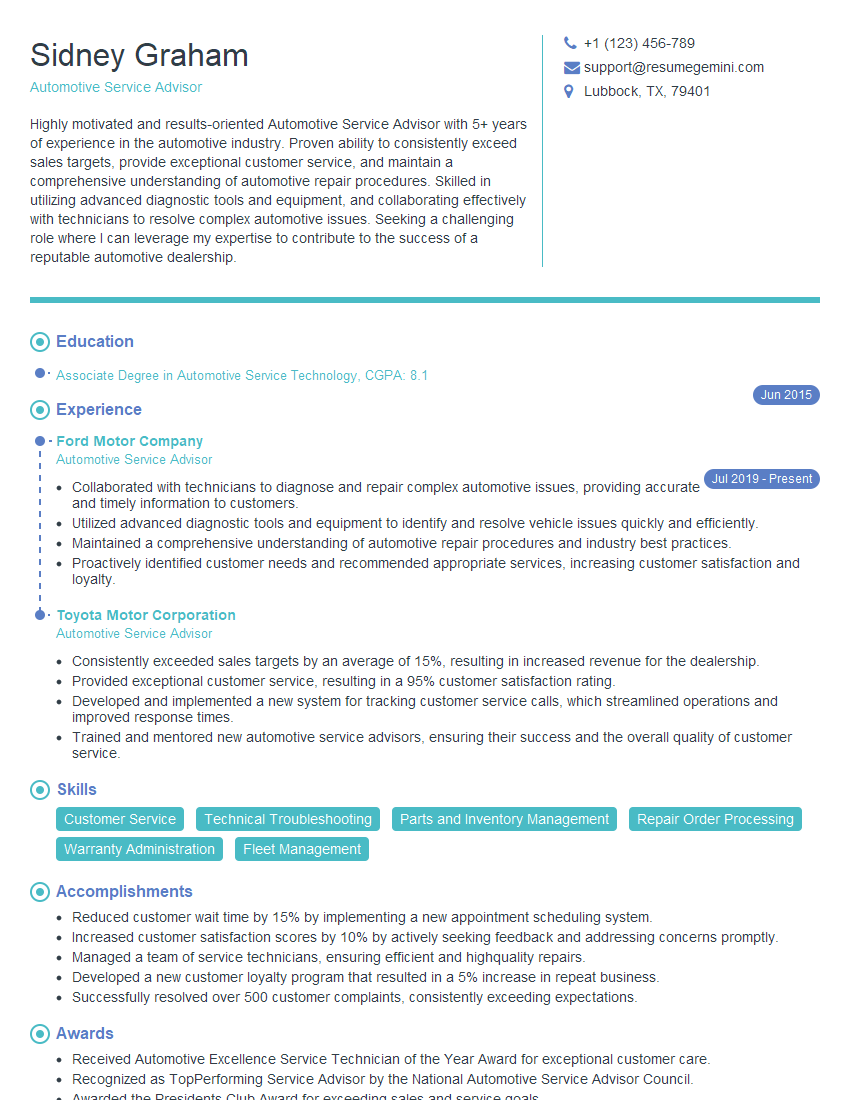
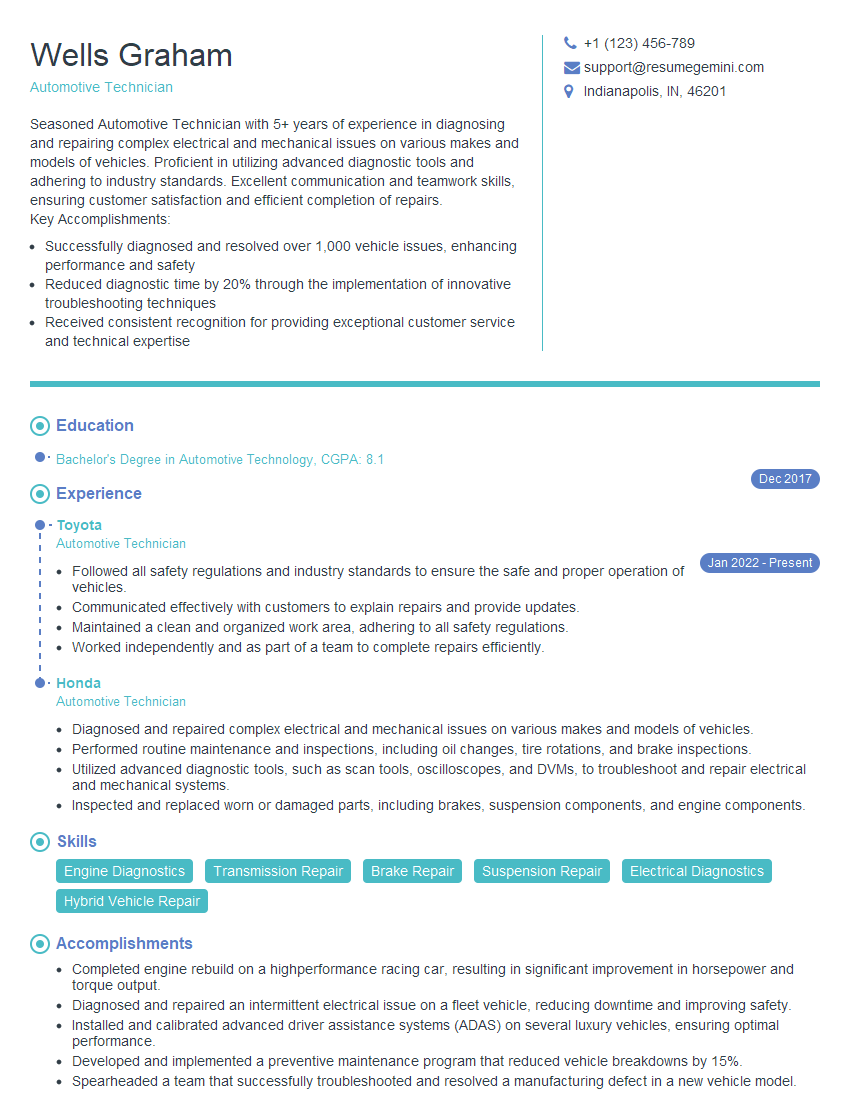
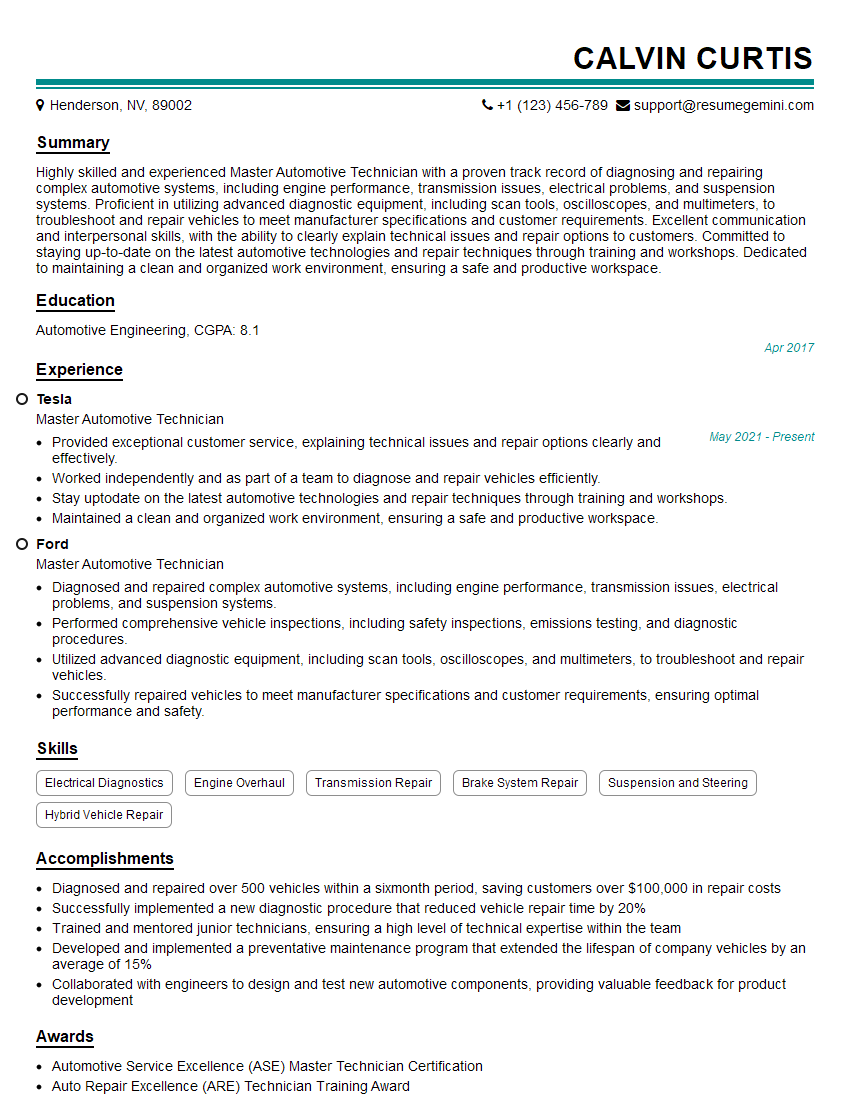
Mastering Brake System Fault Diagnosis is crucial for career advancement in automotive repair and maintenance. A strong understanding of these systems demonstrates your expertise and elevates your value to potential employers. To maximize your job prospects, crafting an ATS-friendly resume is essential. ResumeGemini is a trusted resource to help you build a professional and impactful resume that highlights your skills and experience effectively. Examples of resumes tailored to Brake System Fault Diagnosis are available to further assist you in this process.
Explore more articles
Users Rating of Our Blogs
Share Your Experience
We value your feedback! Please rate our content and share your thoughts (optional).
What Readers Say About Our Blog
Very informative content, great job.
good