Feeling uncertain about what to expect in your upcoming interview? We’ve got you covered! This blog highlights the most important Brand Partnerships and Collaborations interview questions and provides actionable advice to help you stand out as the ideal candidate. Let’s pave the way for your success.
Questions Asked in Brand Partnerships and Collaborations Interview
Q 1. Describe your experience in developing and managing brand partnership strategies.
Developing and managing brand partnership strategies is a multifaceted process that requires a deep understanding of both your own brand and the potential partner’s. It’s about creating a synergistic relationship where 1+1 equals 3, or even more. This involves a strategic planning phase, followed by execution and ongoing monitoring.
- Strategic Planning: This includes defining clear objectives for the partnership (increased brand awareness, lead generation, market expansion, etc.), identifying ideal partners who align with your brand values and target audience, and developing a comprehensive partnership plan outlining the activities, timelines, and budget.
- Execution: This stage focuses on implementing the plan – negotiating contracts, creating joint marketing materials, executing the agreed-upon activities, and managing communications between both teams.
- Monitoring and Optimization: This involves tracking key metrics (discussed later) to assess the partnership’s success, identifying areas for improvement, and making adjustments to optimize performance.
For example, in a previous role, I developed a successful partnership between a sustainable fashion brand and an eco-tourism company. We aligned our values (sustainability) and created joint campaigns featuring travel experiences and clothing styles that resonated with our shared audience. This resulted in a significant increase in brand awareness and customer engagement for both companies.
Q 2. How do you identify and evaluate potential brand partnership opportunities?
Identifying and evaluating potential brand partnerships involves a thorough process of research, analysis, and due diligence. It’s like finding the perfect puzzle piece for your brand’s bigger picture.
- Market Research: Identify brands whose target audiences overlap with yours and whose values align with your brand’s. This helps you focus your efforts on collaborations that make sense.
- Brand Alignment: Ensure the potential partner’s brand reputation, values, and target audience are compatible with yours. A mismatch can damage both brands.
- Audience Engagement: Look for partners with an engaged audience and a strong social media presence. This indicates potential for effective cross-promotion.
- Financial Stability: Assess their financial health to ensure they can fulfil their commitments. A struggling partner can negatively impact your brand.
- Legal Compliance: Review their legal compliance history to avoid any potential risks or reputational damage.
I use a scoring system to quantitatively evaluate potential partners. Each criterion, like brand alignment, audience engagement, and financial stability, receives a score, and the total score helps prioritize potential collaborations. This ensures objectivity and reduces bias.
Q 3. Explain your process for negotiating contracts and agreements with brand partners.
Negotiating contracts and agreements requires clear communication, legal expertise, and a win-win approach. It’s about finding common ground and ensuring both parties are protected.
- Define Objectives and Scope: Clearly outline the goals, responsibilities, and deliverables for each party. Ambiguity can lead to conflicts.
- Intellectual Property Rights: Carefully define ownership and usage rights for all creative assets and intellectual property involved.
- Payment Terms and Conditions: Clearly specify payment schedules, methods, and any performance-based incentives.
- Confidentiality and Exclusivity: Address confidentiality concerns and define exclusivity terms if applicable.
- Dispute Resolution: Include a clause outlining the process for resolving any disputes that might arise.
I always seek legal counsel to review and finalize contracts to mitigate potential risks. In my experience, clear, detailed contracts prevent misunderstandings and facilitate smoother collaborations.
Q 4. How do you measure the success of a brand partnership initiative?
Measuring the success of a brand partnership initiative requires a multi-faceted approach that goes beyond simple sales figures. We need to look at overall brand health and value generated.
- Brand Awareness: Track changes in website traffic, social media engagement (likes, shares, comments), and brand mentions.
- Lead Generation: Monitor the number of leads generated through the partnership, and their conversion rate into customers.
- Sales Revenue: Measure the incremental sales revenue directly attributed to the partnership.
- Customer Acquisition Cost (CAC): Analyze if the partnership led to a lower CAC compared to other marketing channels.
- Customer Satisfaction: Assess customer feedback through surveys and reviews to understand the impact on brand perception.
For example, we might track website referrals originating from the partner’s site. A significant increase in such referrals strongly suggests a successful partnership.
Q 5. What metrics do you use to track the ROI of brand collaborations?
Tracking the ROI of brand collaborations requires careful attribution and measurement of both costs and benefits. It’s about demonstrating the financial value of the partnership.
- Marketing Investment: Calculate all costs associated with the partnership, including marketing materials, creative fees, and partner payments.
- Incremental Revenue: Identify and quantify the additional revenue generated as a direct result of the partnership.
- Cost Per Acquisition (CPA): Compare the CPA of leads/customers acquired through the partnership with other channels.
- Brand Lift Studies: Conduct surveys or focus groups to measure changes in brand awareness and perception.
- Return on Investment (ROI): Calculate the overall ROI using a formula such as:
(Incremental Revenue - Marketing Investment) / Marketing Investment * 100%
This helps justify the investment and inform future partnership decisions. We might also compare the ROI of this collaboration to similar partnerships to benchmark success.
Q 6. Describe a time you had to resolve a conflict or disagreement with a brand partner.
In one instance, a disagreement arose with a partner over creative control of a joint marketing campaign. They wanted to deviate significantly from the agreed-upon creative brief, which risked diluting our brand message.
My approach was to:
- Open Communication: I initiated a calm and professional discussion to understand their concerns and perspectives.
- Collaborative Problem-Solving: We jointly reviewed market research and customer data to find common ground and identify mutually acceptable creative solutions that aligned with both brand identities.
- Compromise and Flexibility: I demonstrated flexibility while firmly advocating for our brand’s messaging strategy and protecting our core values. We reached a compromise that satisfied both parties’ needs.
- Documentation: The revised creative brief was documented clearly and approved by both parties to avoid further misunderstandings.
The outcome was a successful campaign that maintained both brand identities while still achieving our shared marketing goals. It taught me the importance of proactive communication and a commitment to finding mutually agreeable solutions.
Q 7. How do you manage multiple brand partnerships simultaneously?
Managing multiple brand partnerships simultaneously requires a structured and organized approach. It’s akin to conducting multiple orchestras at once – each requires attention and coordination.
- Project Management Tools: Utilize project management software like Asana or Trello to track timelines, deliverables, and communication across all partnerships.
- Dedicated Team Members: Assign specific team members to manage individual partnerships to ensure accountability and efficient execution.
- Regular Communication: Maintain clear and consistent communication with all partners through regular meetings and progress reports.
- Prioritization: Prioritize partnerships based on strategic objectives and potential ROI to ensure resources are allocated effectively.
- Reporting and Analysis: Track key metrics for each partnership to assess performance and identify areas for improvement.
A well-defined framework and clear communication are crucial. This ensures that each partnership receives the necessary attention without creating chaos.
Q 8. What are some common challenges in managing brand partnerships, and how have you overcome them?
Managing brand partnerships presents several common challenges. One significant hurdle is misaligned goals. Partners may have differing objectives, leading to conflict and ultimately, a less successful collaboration. For example, one partner might prioritize brand awareness while the other focuses solely on sales. Another challenge is managing expectations. Both internal and external stakeholders may have unrealistic expectations regarding the partnership’s outcomes. Finally, measuring success can be difficult. Defining clear, measurable KPIs (Key Performance Indicators) from the outset is critical, but even with well-defined metrics, accurately attributing success solely to the partnership can be challenging.
I’ve overcome these challenges through meticulous planning and proactive communication. Before any partnership begins, I ensure a comprehensive agreement outlining clear objectives, roles, responsibilities, and KPIs. Regular progress meetings with all stakeholders, including the partner, allow for early identification and resolution of potential problems. I also utilize robust analytics platforms to track key metrics and transparently share data with all involved parties. For instance, in a past partnership with a wellness brand, we encountered difficulties in aligning our social media campaigns. By using a shared project management tool and holding weekly check-in calls, we were able to maintain transparency and successfully launch a collaborative campaign that exceeded expectations.
Q 9. How do you ensure brand consistency and alignment across different partnership initiatives?
Maintaining brand consistency across partnerships is crucial for preserving brand equity. Inconsistent messaging or imagery can confuse consumers and damage the brand’s reputation. To ensure alignment, I use a Brand Partnership Style Guide. This document outlines all key brand elements—logo usage, color palettes, voice and tone, messaging guidelines, and approved imagery—providing a centralized resource for all partners and internal teams. It also includes examples of successful past collaborations that demonstrate the desired brand aesthetic and tone.
Furthermore, I implement a rigorous approval process for all partnership materials. All marketing assets, whether digital or print, must be reviewed and approved by both the brand’s marketing team and the partner before launch. This ensures all creative elements adhere to the established brand guidelines and messaging. Regular audits of partner campaigns further ensure ongoing consistency and prevent any drift from the established brand guidelines.
Q 10. Explain your experience with legal and compliance aspects of brand partnerships.
Legal and compliance are paramount in brand partnerships. I possess significant experience navigating the complexities of partnership agreements, including intellectual property rights, liability clauses, confidentiality agreements, and data privacy regulations. I work closely with our legal team to ensure all partnerships comply with relevant laws and regulations.
For example, I ensure all contracts clearly define ownership of intellectual property created during the collaboration. We also specify how the brands will be represented, mitigating potential risks related to brand reputation and legal liabilities. I’ve personally handled negotiations for several high-profile partnerships, ensuring all legal aspects were addressed efficiently and effectively. In one particular instance, we navigated the intricacies of GDPR (General Data Protection Regulation) compliance when partnering with a European company, meticulously documenting data usage and ensuring all necessary consent procedures were in place.
Q 11. Describe your experience with budgeting and financial management within brand partnerships.
Budgeting and financial management are critical components of successful brand partnerships. I develop detailed budgets that outline all anticipated costs associated with a partnership, including marketing expenses, production costs, agency fees, and partner fees (if applicable). These budgets are reviewed and approved by the relevant stakeholders before the partnership commences. I then meticulously track expenses against the budget, ensuring we stay on track and avoid cost overruns.
I utilize financial management software to track all financial transactions related to partnerships. This helps to maintain accurate records, which are essential for reporting and analysis. I also develop detailed financial reports that track ROI (Return on Investment) for each partnership. These reports are used to assess the financial success of each initiative and inform future strategy. For instance, I once utilized a spreadsheet-based system which allowed for granular tracking and reporting; moving to project management software enabled collaboration, accountability, and better overall performance tracking.
Q 12. How do you build and maintain strong relationships with brand partners?
Building and maintaining strong relationships with brand partners is essential for long-term success. I believe in fostering open and transparent communication, actively listening to the partner’s needs and concerns, and consistently demonstrating mutual respect. I also prioritize regular communication, utilizing various methods—from email updates to in-person meetings—to keep partners informed of progress and address any issues promptly.
Furthermore, I actively seek opportunities to build personal connections with partner representatives. This often involves informal meetings or social events, creating a more collaborative and trusting atmosphere. I also strive to add value beyond the initial scope of the partnership, demonstrating our commitment to their success. In one instance, I helped a partner re-evaluate their overall market strategy which yielded significant growth in their area. This further solidified our partnership and led to several subsequent collaborative campaigns.
Q 13. How do you manage expectations with both internal and external stakeholders in a brand partnership?
Managing expectations with both internal and external stakeholders requires proactive communication and clear goal setting. I regularly communicate project updates to all stakeholders, keeping them informed of progress and any challenges encountered. This helps to avoid misunderstandings and maintain transparency. I also establish clear communication channels and processes, making it easy for stakeholders to raise concerns or ask questions.
It’s crucial to set realistic expectations from the outset. By clearly defining achievable goals and KPIs, I mitigate the risk of unmet expectations and disappointment. I also proactively manage any potential issues that may arise, addressing them quickly and decisively. For instance, if a key milestone is missed, I communicate the situation transparently and propose a revised plan, outlining how we can still achieve the partnership’s overall objectives. This proactive approach helps to build trust and confidence among all stakeholders.
Q 14. What is your experience with influencer marketing and brand ambassador programs?
I have extensive experience with influencer marketing and brand ambassador programs. I understand the importance of selecting the right influencers—those whose audience aligns with the target demographic and whose values resonate with the brand. I use a combination of quantitative (reach, engagement) and qualitative (authenticity, alignment with brand values) metrics when selecting influencers.
In addition to influencer selection, I develop strategic influencer campaigns that clearly define the campaign’s goals, target audience, and key messages. I also track campaign performance using analytics dashboards, carefully analyzing data to assess the ROI and make adjustments as needed. We also incorporate robust reporting to show overall success and impact for brand ambassador programs and campaigns. For example, in one recent campaign, I collaborated with micro-influencers for a more targeted approach, producing higher engagement rates and improved conversion compared to traditional macro-influencer campaigns.
Q 15. Describe your experience with co-branding and joint marketing campaigns.
Co-branding and joint marketing campaigns involve two or more brands collaborating to create a mutually beneficial marketing initiative. This often results in increased brand awareness, market reach, and customer engagement. Think of it like a powerful team-up – each brand brings its strengths to the table, creating something bigger than the sum of its parts.
In my experience, I’ve successfully managed numerous co-branding projects. For example, I orchestrated a campaign for a sustainable clothing brand and an eco-friendly travel company. We created a limited-edition clothing line inspired by travel destinations, marketed through a joint social media campaign and influencer collaborations. This resulted in a significant boost in sales for both brands and strengthened our respective brand identities by associating them with shared values.
Another example involved a food company and a fitness app. We launched a joint campaign offering exclusive recipes and workout plans, leveraging the expertise of both companies to engage a health-conscious target audience. Success was measured through increased app downloads, website traffic, and social media engagement.
Career Expert Tips:
- Ace those interviews! Prepare effectively by reviewing the Top 50 Most Common Interview Questions on ResumeGemini.
- Navigate your job search with confidence! Explore a wide range of Career Tips on ResumeGemini. Learn about common challenges and recommendations to overcome them.
- Craft the perfect resume! Master the Art of Resume Writing with ResumeGemini’s guide. Showcase your unique qualifications and achievements effectively.
- Don’t miss out on holiday savings! Build your dream resume with ResumeGemini’s ATS optimized templates.
Q 16. How do you leverage data and analytics to inform brand partnership decisions?
Data and analytics are crucial for making informed decisions in brand partnerships. I use a data-driven approach to identify potential partners, assess campaign performance, and optimize strategies for maximum ROI. This involves analyzing market trends, competitor activity, customer demographics, and engagement metrics.
For instance, I utilize website analytics (like Google Analytics) to assess the traffic driven by a partnership, focusing on metrics such as referral traffic, conversion rates, and bounce rates. Social media analytics are equally important, revealing audience engagement (likes, shares, comments), reach, and sentiment. CRM data helps understand the customer lifetime value associated with partnerships and their impact on overall customer loyalty. This holistic approach provides a comprehensive picture of a partnership’s success.
Before selecting a partner, I thoroughly analyze their audience demographics to ensure alignment with our target market. Post-campaign, I use A/B testing to optimize creative assets and messaging to improve engagement and conversion. This iterative process allows for continuous improvement and ensures that future campaigns yield better results.
Q 17. Explain your experience with different types of brand partnerships (e.g., affiliate, sponsorship, licensing).
My experience spans various brand partnership models, each with its own unique characteristics and benefits.
- Affiliate Marketing: I’ve worked on numerous affiliate programs, leveraging influencers and bloggers to promote our products or services in exchange for a commission on sales. This is particularly effective for generating targeted traffic and driving conversions.
- Sponsorships: I’ve secured sponsorships for events, podcasts, and online content creators, enhancing brand visibility and associating our brand with relevant activities and audiences. This builds brand credibility and enhances reach among the sponsor’s existing audience.
- Licensing: I’ve managed licensing agreements, allowing other companies to use our brand’s intellectual property (like logos and characters) on their products. This expands market reach and generates additional revenue streams while carefully preserving brand image and integrity.
The choice of partnership model depends on the specific marketing objectives, budget, and the nature of the brands involved. A well-defined strategy ensures that the chosen model aligns seamlessly with the overall marketing goals.
Q 18. How do you ensure that brand partnerships align with the overall marketing strategy?
Brand partnerships must align strategically with the overall marketing objectives. I ensure alignment by integrating partnership initiatives into the broader marketing plan, establishing clear goals and KPIs, and defining roles and responsibilities for all parties involved.
For instance, if the overarching marketing strategy aims to increase brand awareness among a younger demographic, partnerships will be chosen and executed with that specific audience in mind. All campaign materials will also reflect the brand’s core values and messaging, maintaining brand consistency across all channels. Regular monitoring and reporting are essential to track progress toward objectives and make necessary adjustments along the way.
Aligning partnerships with marketing strategy isn’t just about creating a cohesive campaign; it’s about building long-term brand equity and establishing meaningful connections with the target audience.
Q 19. How do you identify and mitigate potential risks associated with brand partnerships?
Potential risks in brand partnerships include brand misalignment, negative publicity from partner actions, and disputes over campaign execution. My approach to risk mitigation involves thorough due diligence, clear contractual agreements, and continuous monitoring.
Before entering into a partnership, I perform a comprehensive brand audit of potential partners, evaluating their reputation, target audience, and past marketing activities. Contractual agreements clearly define roles, responsibilities, and liabilities to protect both parties. Regular communication and progress reporting are critical to resolving issues promptly.
For example, I might include clauses in the contract addressing potential reputational damage scenarios, outlining the actions to be taken should a partner engage in undesirable behavior or face negative media coverage. Having a well-defined crisis management plan in place is essential for quickly addressing and minimizing the impact of unexpected events.
Q 20. Describe your experience in developing and executing a comprehensive partnership marketing plan.
Developing and executing a comprehensive partnership marketing plan requires a structured approach. It begins with defining clear objectives and KPIs, identifying ideal partners, and developing a detailed campaign strategy. This includes outlining the target audience, key messages, marketing channels, and budget allocation.
I typically follow a phased approach:
- Phase 1: Planning & Research – Define goals, target audience, budget, and identify potential partners.
- Phase 2: Partner Selection & Negotiation – Screen partners, negotiate agreements, and secure approvals.
- Phase 3: Campaign Development & Execution – Create campaign assets (marketing materials, social media posts, etc.), coordinate with the partner, and launch the campaign.
- Phase 4: Monitoring & Evaluation – Track campaign performance, analyze data, and report results.
- Phase 5: Optimization & Iteration – Analyze results to identify areas for improvement and plan future iterations.
For example, I recently led a partnership project for a tech company and an educational institution. We developed a joint online learning program, marketed through targeted social media campaigns and email marketing. The success was measured through increased enrollment numbers, student engagement, and positive brand sentiment.
Q 21. What is your experience with CRM systems and partnership management software?
I have extensive experience using CRM systems (like Salesforce) and partnership management software (such as PartnerStack or Impact Radius) to manage and track partnerships effectively. These tools help streamline communication, automate tasks, and provide comprehensive data analysis.
CRM systems are invaluable for managing partner relationships, organizing contact information, tracking communication, and maintaining detailed records of each interaction. Partnership management software specifically designed for these collaborations allows for easier tracking of performance metrics, commission payouts, and overall campaign performance.
Using these tools, I can easily track key performance indicators (KPIs) for each partnership, identify high-performing partners, and promptly address any challenges. This ensures efficiency and transparency throughout the entire partnership lifecycle, from initial outreach to ongoing management and reporting.
Q 22. How do you handle a situation where a brand partner fails to meet their obligations?
Handling a brand partner’s failure to meet obligations requires a systematic approach prioritizing open communication and a clear understanding of the partnership agreement. First, I’d initiate a direct conversation with the partner to understand the reasons behind the shortfall. Is it a logistical issue, a resource constraint, or something else? This dialogue is crucial to finding a collaborative solution.
Depending on the severity and nature of the breach, the response might range from renegotiating timelines and deliverables to implementing performance-based incentives or, as a last resort, invoking clauses within the contract concerning penalties or termination. For example, if a partner promised a specific level of social media engagement and falls significantly short, I’d review the contract, analyze the reasons for the underperformance (e.g., poor campaign execution), and potentially negotiate a revised campaign or explore compensation for the unmet targets.
Maintaining open communication throughout the process is key. Documenting all interactions, agreed-upon solutions, and any modifications to the initial agreement is essential for transparency and legal protection. Transparency builds trust and helps prevent future issues.
Q 23. Describe a time you had to adapt a brand partnership strategy due to unforeseen circumstances.
During a campaign with a sustainable fashion brand, we partnered to launch a limited-edition clothing line. Our initial strategy focused heavily on influencer marketing and online advertising. However, unforeseen supply chain disruptions due to global events significantly delayed the product launch.
Instead of abandoning the partnership, we quickly pivoted. We leveraged the delay to enhance the pre-launch anticipation by creating more engaging content highlighting the brand’s ethical and sustainable practices. We shifted the marketing focus to storytelling, emphasizing the craftsmanship and the journey of creating the collection. We also secured collaborations with relevant publications that focused on sustainability. This allowed us to build anticipation while addressing the supply chain challenges. As a result, while the launch was delayed, the overall campaign’s success was undiminished, with strong engagement and sales upon launch.
Q 24. How familiar are you with legal and regulatory compliance requirements for brand partnerships?
I’m extremely familiar with legal and regulatory compliance requirements for brand partnerships. This includes understanding FTC guidelines regarding endorsements and disclosures, data privacy regulations like GDPR and CCPA, and intellectual property rights. I’m well-versed in contract law, ensuring that all agreements are legally sound and protect the interests of both parties.
My approach involves proactively researching relevant regulations for each partnership. This includes checking for specific industry-related compliance requirements, for example, if the partner operates in a regulated sector like pharmaceuticals or finance. Furthermore, I always ensure legal review of all contracts before they’re finalized and work closely with our legal department to address any potential compliance risks. This meticulous approach minimizes legal exposure and maintains the integrity of our collaborations.
Q 25. How do you ensure that brand partnerships maintain the integrity and reputation of your company?
Maintaining brand integrity and reputation during partnerships requires a rigorous due diligence process and ongoing monitoring. Before initiating any partnership, we thoroughly vet potential partners to ensure their values align with ours and their reputation is sound. This involves researching their history, examining their customer reviews, and assessing their marketing practices.
Once a partnership begins, we actively monitor the campaign’s performance and messaging to ensure alignment with our brand guidelines. This includes reviewing all marketing materials and social media posts for compliance with our brand voice and values. We also establish clear communication channels to promptly address any concerns or issues that might arise during the collaboration. By setting clear expectations and maintaining transparent communication, we ensure our company’s reputation remains unaffected and that any potential issues are handled proactively and efficiently.
Q 26. What are your salary expectations for this role?
My salary expectations for this role are in the range of $120,000 to $150,000 annually, depending on the specific benefits package and the overall responsibilities of the position. This range reflects my extensive experience and proven track record of success in brand partnerships and collaborations.
Q 27. What are your long-term career goals related to brand partnerships?
My long-term career goals center around leading and building high-performing brand partnership teams. I envision myself eventually heading a department or leading strategic partnerships for a major corporation. I’m passionate about developing innovative and impactful partnership strategies that drive significant growth and brand awareness. I’m also eager to explore new partnership models and technologies to continuously improve the effectiveness and efficiency of collaborations.
Q 28. Why are you interested in this specific brand partnership opportunity?
I’m particularly interested in this specific brand partnership opportunity because of [Company Name]’s commitment to [mention specific company values or initiatives that resonate with you]. The opportunity to contribute to [mention specific project or campaign] and work alongside your talented team is incredibly exciting. I believe my experience in [mention relevant experience] aligns perfectly with your needs, and I’m confident I can make significant contributions to your success.
Key Topics to Learn for Brand Partnerships and Collaborations Interview
- Understanding Brand Alignment: Defining brand values, target audiences, and identifying compatible partners. Consider how brand synergy drives successful collaborations.
- Partnership Strategy & Development: Developing a strategic framework for identifying, approaching, and negotiating with potential partners. Explore different partnership models (e.g., co-branding, affiliate marketing, influencer collaborations).
- Negotiation & Contract Management: Mastering negotiation techniques to secure favorable terms and conditions. Understanding key legal aspects of partnership agreements and managing contract lifecycles.
- Campaign Planning & Execution: Developing integrated marketing campaigns that leverage partnership assets. Tracking key performance indicators (KPIs) and analyzing campaign effectiveness.
- Budget Management & ROI Analysis: Developing and managing budgets for partnership initiatives. Demonstrating a clear understanding of ROI calculation and reporting.
- Relationship Management: Building and maintaining strong relationships with partners. Proactive communication and conflict resolution are crucial skills to highlight.
- Data Analysis & Reporting: Utilizing data analytics to track campaign performance, measure ROI, and inform future partnership strategies. Presentation of findings to stakeholders is vital.
- Legal and Ethical Considerations: Understanding relevant laws and regulations related to brand partnerships and collaborations. Maintaining ethical practices throughout the partnership lifecycle.
Next Steps
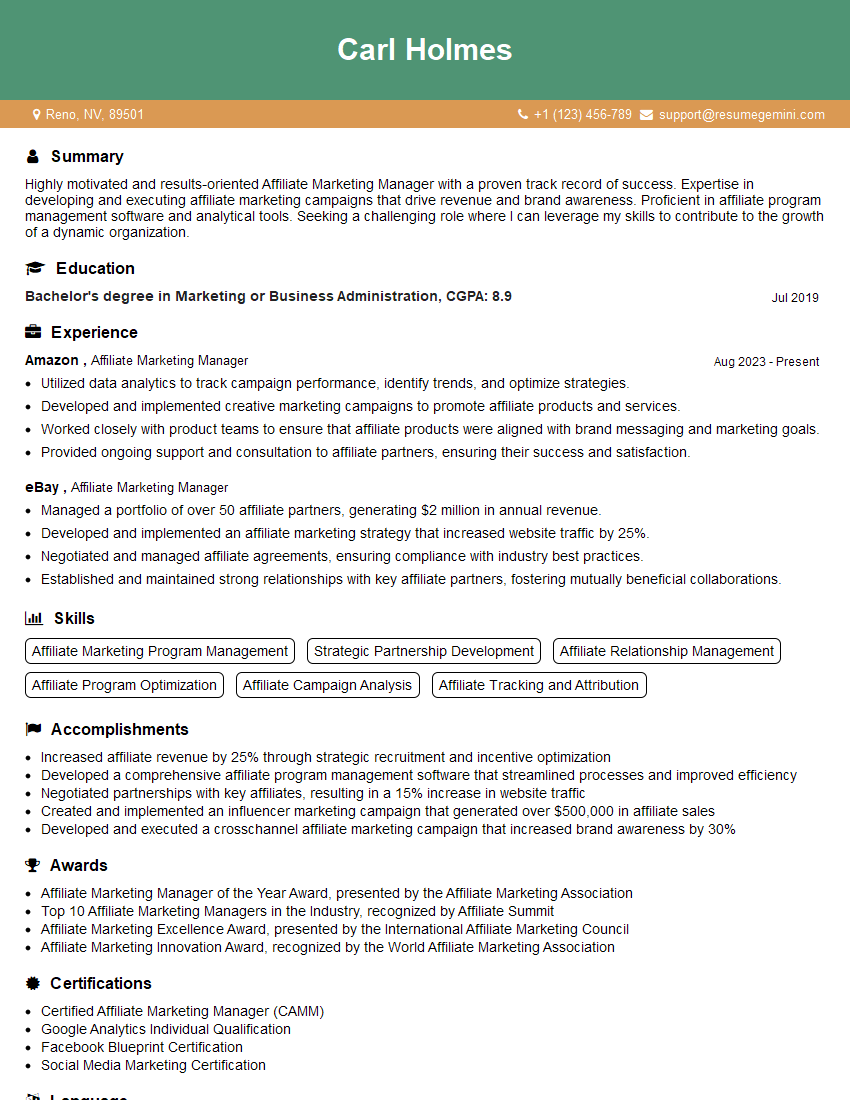
Mastering Brand Partnerships and Collaborations is crucial for career advancement in today’s competitive marketing landscape. It demonstrates strategic thinking, negotiation skills, and a deep understanding of brand building. To significantly enhance your job prospects, focus on creating a compelling and ATS-friendly resume that highlights your relevant skills and experience. ResumeGemini is a trusted resource to help you build a professional and impactful resume that showcases your capabilities effectively. Examples of resumes tailored to Brand Partnerships and Collaborations are available within ResumeGemini to help guide you.
Explore more articles
Users Rating of Our Blogs
Share Your Experience
We value your feedback! Please rate our content and share your thoughts (optional).
What Readers Say About Our Blog
Very informative content, great job.
good