The thought of an interview can be nerve-wracking, but the right preparation can make all the difference. Explore this comprehensive guide to Brushwork and Painting Techniques interview questions and gain the confidence you need to showcase your abilities and secure the role.
Questions Asked in Brushwork and Painting Techniques Interview
Q 1. Describe your experience with different brush types and their applications.
My experience with brushes spans decades and encompasses a wide variety of types, each chosen for its specific application. Think of brushes like tools in a carpenter’s toolbox – each serves a unique purpose. For example, a flat brush, with its broad, even edge, is excellent for laying down large areas of color quickly, like blocking in a sky or painting a wall. I often use these for initial washes or underpaintings. Round brushes, with their pointed tips, are incredibly versatile, allowing for precise detail work such as fine lines, leaves on a tree, or delicate facial features. Their shape allows for both fine lines and thicker strokes, depending on the pressure applied. Filbert brushes, a happy medium between flat and round, offer a soft, blending edge, ideal for creating subtle gradations and soft textures. They’re perfect for blending colors smoothly. I also utilize fan brushes for creating textured effects like grass or foliage, and liner brushes for incredibly thin, controlled lines. The bristle type—natural hog bristle for oil paints, synthetic for acrylics or watercolors—also influences the texture and application. The choice of brush is a crucial decision based on the desired effect, the paint medium, and the stage of the painting process.
Q 2. Explain the difference between oil and acrylic painting techniques.
Oil and acrylic painting techniques differ significantly, primarily in drying time, blending capabilities, and cleanup. Oil paints dry very slowly, often over days or even weeks, allowing for extensive blending and manipulation even after initial application. This slow drying time is a blessing and a curse; it allows for amazing detail and blending but demands more patience and careful planning. Clean-up involves solvents like turpentine or mineral spirits. Acrylics, conversely, dry rapidly, usually within minutes. This allows for quick work and easy layering, but it also limits blending opportunities once the paint has dried. Water is used for cleaning up acrylics, which makes it a far more convenient medium for many artists. The differences in techniques often translate to the style of the painting. Oil paintings often possess a luminous quality due to the blending and layering, while acrylics can offer a bolder, more decisive feel, depending on the technique used. I personally adjust my approach depending on the desired final look; sometimes the slow building of layers in oils suits my vision, and other times the immediacy of acrylics is more appealing.
Q 3. How do you achieve smooth gradations of color in your work?
Achieving smooth color gradations is all about controlled blending. For oil paints, the slow drying time is an advantage. I use a process called wet-on-wet blending where I apply adjacent colors while they are still wet, gently blending the edges with a clean brush or a soft rag. For acrylics, where the drying time is short, I often use the wet-on-dry technique, layering thin washes of color and blending with a damp brush or a water spray bottle between layers. Glazing is another effective technique, applying thin, transparent layers of color over a dried underpainting. The key is to work in thin layers to avoid muddying the colors and to gradually build up the desired intensity. Sometimes, I use a palette knife for larger areas of color graduation, creating soft, broad strokes and blends. Thinking of it as a slow dance between colors is helpful, avoiding abrupt transitions.
Q 4. What techniques do you use to create texture in your paintings?
Creating texture is where I really get to play! A number of techniques can be employed, and often I combine several for a richer effect. Using impasto, a thick application of paint, allows the brushstrokes or palette knife marks to become integral to the texture. This works beautifully in oil painting. For a more subtle texture, I might use a variety of brushes, some stiff, some soft, to vary the mark-making. Another option is to apply the paint in layers, varying the thickness and direction. Adding mediums like gel or paste also alters the texture, creating a thicker or more matte surface. Adding textural elements like sand, fabric, or other materials into the paint itself before it dries is another way to create a truly unique three-dimensional effect. Even the canvas itself can contribute to texture if it’s a roughly-woven material.
Q 5. How do you approach color mixing for realistic skin tones?
Mixing realistic skin tones is a complex process that requires careful observation and understanding of color theory. I start by establishing a base of warm hues, usually a mix of cadmium red light, yellow ochre, and titanium white. I then introduce subtle hints of cool colors like alizarin crimson and ultramarine blue to create depth and shadows. The proportions are crucial; a small amount of cool color can significantly affect the overall tone. The key is to avoid creating a flat, one-dimensional color. I pay close attention to how light reflects off different areas of the skin – the highlights will be lighter and warmer, while the shadows will be cooler and deeper. I work in layers, gradually building up the complexity of the tone. Observing real life references (photos or a live model) is essential in capturing the nuances of skin tone, which is unique to each individual, subject to light conditions and even their emotional state. I often refer back to a color chart I have developed over years for consistent color mixing.
Q 6. Describe your process for preparing a canvas before painting.
Canvas preparation is a crucial step, often overlooked, that significantly impacts the final painting. I begin by ensuring the canvas is taut and firmly attached to the stretcher bars. Any bumps or imperfections will show through in the final piece. I then apply a sizing layer, usually an acrylic gesso, which seals the canvas and provides a good base for the paint to adhere to. This prevents the paint from being absorbed unevenly. I apply multiple thin coats, allowing each coat to dry completely before the next. This process also creates a slightly textured surface, which aids in the application and adhesion of the paint. The gesso can be toned with a subtle color to act as an underpainting, creating a harmonious base, although I often prefer to use a clear gesso. After the gesso is dry, the canvas is ready to receive the paint, with a smooth, even surface that is perfectly primed for the artwork.
Q 7. Explain your understanding of paint consistency and its impact on brushstrokes.
Paint consistency significantly impacts the final look and feel of the brushstrokes. Thick paint, or impasto, leads to heavy, textured strokes that maintain their form and dimension. Thin paint, on the other hand, allows for smoother, more blended effects and subtle gradations. The consistency is controlled by adding mediums; for oil paints, linseed oil will thin the paint, while mediums like stand oil or liquin will enhance the gloss and flow. Acrylics can be thinned with water, but acrylic mediums also offer different levels of viscosity and sheen. Knowing how to control the consistency is crucial for controlling brushstrokes. A thick paint allows for strong visible brushwork, while thin paint may result in smoother application with less noticeable brush marks. For example, a highly thinned paint might be suitable for glazing techniques, while a thick consistency might be used for building up a textured impasto effect. This adaptability is why I find the interplay of paint consistency and brushstrokes so fascinating.
Q 8. How do you clean and maintain your brushes to prolong their life?
Proper brush cleaning is paramount to extending their lifespan and maintaining their performance. Think of your brushes like cherished tools – neglecting them will dull their effectiveness.
- Immediate Cleaning: After each painting session, immediately rinse your brushes under lukewarm water. For oil paints, use a gentle brush soap or odorless mineral spirits. For water-based paints like acrylics or watercolors, plain water usually suffices. Gently work the soap or water into the bristles, ensuring all paint is removed.
- Thorough Cleaning: Once the bulk of the paint is gone, reshape the brush and gently squeeze out excess water. Repeat this process until the water runs clear. For stubborn paint, you might need to use a brush comb to remove paint trapped deeper in the bristles.
- Drying: Reshape the brush and lay it flat to dry, avoiding standing it upright, which can warp the handle or damage the ferrule (the metal part connecting the bristles to the handle). Never leave brushes soaking in water for extended periods; this can weaken the glue holding the bristles together.
- Storage: Store your brushes in a cool, dry place, ideally in a brush holder or case that keeps the bristles protected and prevents them from bending or becoming misshapen.
For example, I once had a set of sable brushes I meticulously cleaned after each use, and they lasted me over 15 years! It’s an investment in your art practice.
Q 9. Describe your experience with various painting mediums (e.g., watercolor, gouache).
My experience spans a variety of painting mediums, each possessing its unique characteristics and demands on brushwork.
- Watercolor: Watercolor’s transparency requires delicate brushstrokes. I favor soft, absorbent brushes (sable or synthetic) for creating washes and fine details. The challenge lies in controlling the water-to-pigment ratio to achieve the desired effects. I often use a variety of techniques such as wet-on-wet and wet-on-dry to create different textures and transitions.
- Gouache: Gouache, with its opaque nature, allows for bolder strokes and layering. I find stiffer brushes are suitable for crisp lines and details. The opacity allows for greater flexibility in correcting mistakes and building up layers of color.
- Acrylics: Acrylics offer versatility, drying quickly and allowing for layering and blending. I use synthetic brushes often for acrylics due to their durability and ability to withstand the somewhat harsh nature of the paint. The quick drying time necessitates swiftness and planning.
- Oils: Oils are slower drying, which gives a lot of time for blending and manipulating paint. The heavier consistency of oil paint necessitates using stiffer brushes or those with greater bristle density. It’s crucial to thoroughly clean oil brushes to prevent the paint from drying and hardening within the bristles.
Understanding the properties of each medium allows me to select the appropriate brushes and techniques for achieving specific artistic effects.
Q 10. How do you handle unexpected challenges or mistakes during a painting project?
Mistakes are inevitable in the creative process; they are opportunities for learning and growth. My approach to handling unexpected challenges involves a combination of adaptability and problem-solving.
- Assessment: I calmly assess the nature of the problem. Is it a minor imperfection or a more significant issue?
- Strategic Correction: If it’s minor, I might use a small, fine brush to make subtle corrections or blend the problematic area. For larger mistakes, I might strategically introduce additional elements to the painting to incorporate the unintended feature or repaint the section entirely.
- Embrace the Unexpected: Sometimes, what initially seems like a failure can evolve into an unexpected artistic element. I’ve found that embracing these accidents can often lead to a more dynamic and expressive outcome.
- Layering and Glazing: Using glazes or layering thin washes of paint is a great way to correct issues subtly, rather than overworking a problem area and potentially making it worse.
I once accidentally spilled water onto a nearly finished watercolor, creating an unplanned blotch. Instead of panicking, I incorporated it into the painting as a rain effect, significantly altering the narrative but improving the piece’s overall visual interest.
Q 11. What is your preferred method for creating highlights and shadows?
Creating compelling highlights and shadows is crucial for establishing form and depth. My approach involves a nuanced understanding of light and its interaction with surfaces.
- Value Contrast: I begin by establishing a strong value contrast between light and shadow. This involves using a range of tones, from the brightest highlights to the darkest darks.
- Brushstroke Direction: The direction of my brushstrokes plays a significant role. I might use short, delicate strokes for highlighting fine details or longer, broader strokes to define larger forms.
- Color Temperature: The temperature of the colors used in highlights and shadows also significantly impacts the overall effect. Highlights often utilize cooler colors (blues and violets), while shadows may contain warmer tones (reds and oranges).
- Blending and Layering: Often I blend the edges of highlights and shadows softly to create a smoother transition, or I may leave them sharper for a stronger contrast.
For example, when painting a portrait, I’ll use a delicate brush with a lighter, cool-toned paint to create the catchlight in the eye and then use deeper tones for the shadows under the brow bone, paying close attention to the direction of light.
Q 12. Explain your understanding of perspective and how it impacts brushwork.
Perspective is the art of representing three-dimensional objects on a two-dimensional surface, and it deeply influences brushwork. Understanding perspective allows for creating depth, space, and realism within a painting.
- Linear Perspective: This involves using converging lines to create the illusion of depth. My brushstrokes would be smaller and finer in the background, gradually increasing in size as they approach the foreground, reinforcing the sense of distance.
- Atmospheric Perspective: This uses color and value to suggest depth. Objects further away appear lighter, less detailed, and bluer. My brushwork would be softer and less defined in the distant elements, focusing on color washes instead of sharp details.
- Perspective and Brushstroke Direction: The direction of my brushstrokes can also enhance perspective. For instance, in a landscape, I might use horizontal brushstrokes to represent a flat plane and vertical strokes to depict towering objects.
Ignoring perspective will result in a flat, unconvincing image. Conversely, a masterly grasp of perspective allows me to create paintings that draw the viewer in and create a sense of presence within the artwork itself.
Q 13. Describe your experience with impasto technique.
Impasto is a painting technique where thick layers of paint are applied to the canvas, creating texture and a three-dimensional effect. It’s a powerful technique for conveying energy and emotion.
- Palette Knife: I often use a palette knife rather than a brush for impasto work. The knife provides better control over the volume and shape of the paint applications.
- Brush Selection: If using brushes, I’d choose stiff bristle brushes capable of holding and applying substantial quantities of thick paint.
- Paint Consistency: The paint needs to be thick and pasty. I might add more pigment or medium to achieve the desired consistency.
- Controlled Application: The application is deliberate and controlled, to carefully build form and texture without losing control over the painting’s cohesion.
For example, when painting a still life, I might use impasto to create the weighty texture of a fruit or the roughness of a piece of fabric, resulting in a richly tactile image.
Q 14. How do you achieve a specific level of detail in your brushwork?
Achieving a specific level of detail involves a thoughtful approach, combining brush technique, color mixing, and observation skills.
- Brush Size and Shape: Choosing the right brush is crucial. Fine-detail brushes like riggers, liners, or very fine sable brushes are essential for delicate work.
- Precision and Control: Patience and a steady hand are key. I work slowly, taking time to place each brushstroke precisely.
- Color Mixing: Accurate color mixing is paramount for creating believable details. The subtleties of color can significantly impact the realism and persuasiveness of the detail.
- Layering: Building up detail gradually through multiple layers of paint is essential for creating depth and nuance. This avoids overworking the surface and losing the vibrancy and freshness of the colors.
For instance, painting realistic eyes requires meticulous attention to detail. I’d use fine brushes to render the subtle gradations of color in the iris and carefully place individual highlights to create a sense of luminosity. This process often takes many hours, but the result is a level of realism that captivates the viewer.
Q 15. What are some common problems encountered in painting, and how do you resolve them?
Common painting problems often stem from poor preparation or a lack of understanding of materials. For example, cracking can result from using incompatible paints or applying layers too thickly. Another issue is uneven color application, often caused by insufficient blending or using the wrong brush for the task. Poor adhesion, where the paint peels or flakes, is often a result of applying paint to a dirty or improperly primed surface.
- Cracking Solution: Use a flexible medium to increase the paint’s elasticity, or employ a suitable primer to create a more stable base. Ensure proper drying time between layers.
- Uneven Color Solution: Employ wet-on-wet blending techniques (for oils or acrylics) or use a variety of brushes (e.g., large flat brushes for laying down base color, small round brushes for details) to achieve smooth transitions. Consider using glazes for subtle color shifts.
- Poor Adhesion Solution: Properly clean and prepare the surface before painting. A thorough cleaning followed by the application of a suitable primer specifically designed for the surface material (canvas, wood, metal, etc.) significantly improves paint adhesion.
Career Expert Tips:
- Ace those interviews! Prepare effectively by reviewing the Top 50 Most Common Interview Questions on ResumeGemini.
- Navigate your job search with confidence! Explore a wide range of Career Tips on ResumeGemini. Learn about common challenges and recommendations to overcome them.
- Craft the perfect resume! Master the Art of Resume Writing with ResumeGemini’s guide. Showcase your unique qualifications and achievements effectively.
- Don’t miss out on holiday savings! Build your dream resume with ResumeGemini’s ATS optimized templates.
Q 16. Describe your experience with different painting styles (e.g., Impressionism, Realism).
My experience spans various painting styles, each demanding a unique approach to brushwork and color application. In Impressionism, I focus on capturing the fleeting effects of light and atmosphere using short, visible brushstrokes, often applying paint directly from the tube. Think of Monet’s water lilies – the visible brushstrokes themselves contribute to the overall impression of movement and light. Conversely, Realism necessitates meticulous detail and precision. I utilize finer brushes, layered glazes, and careful observation to render subjects with photographic accuracy. A portrait painted in the style of a 17th-century Dutch Master exemplifies this precision, with each brushstroke carefully placed to achieve lifelike detail.
The difference isn’t just in brush technique; it extends to color mixing and composition. Impressionists often work with bold, unmixed colors, juxtaposing them to create optical mixing. Realists, on the other hand, might spend significant time achieving accurate color mixing through meticulous blending.
Q 17. How do you adapt your brushwork to different surfaces (e.g., canvas, wood, metal)?
Adapting brushwork to different surfaces is crucial for achieving optimal results. The absorbency and texture of each surface influence paint behavior and the choice of brushes. For example, canvas, being relatively absorbent, can benefit from stiffer brushes that can push paint into the weave without getting bogged down. This helps create a nice texture and avoids the paint becoming overly diluted. With smoother surfaces like wood or metal, I may use softer brushes to achieve a smoother finish or employ different techniques like dry brushing for textural effects.
- Canvas: Stiff hog bristle brushes for impasto (thick paint application), softer sable brushes for fine details.
- Wood: Fine synthetic brushes for smooth finishes, possibly using a sanding block between coats for a perfectly smooth surface before painting. Wire brushes may be used for unique textural effects.
- Metal: Durable synthetic brushes, often smaller ones for detail, or specialized brushes for metal painting depending on the finish desired. Preparation of the surface, including cleaning and priming, is vital to ensure proper paint adhesion.
Q 18. Explain your understanding of color theory and its application in painting.
Color theory is fundamental to my work. Understanding the color wheel – primary, secondary, and tertiary colors – allows me to create harmonious or contrasting palettes. I use complementary colors (those opposite each other on the wheel) to create vibrant contrasts, analogous colors (those adjacent to each other) for a sense of calm, and triadic colors (equally spaced on the wheel) for a balanced and visually interesting palette.
Furthermore, I consider the temperature of colors (warm versus cool), value (lightness and darkness), and saturation (intensity). Applying these principles, I can manipulate the mood and atmosphere of a painting. For instance, using a cool palette with desaturated colors might convey a serene, tranquil feeling, while warm, saturated colors might evoke energy and excitement.
Q 19. How do you create depth and dimension in your paintings?
Creating depth and dimension involves manipulating several artistic elements. First is perspective – using linear perspective (converging lines) and atmospheric perspective (softening colors and details in the distance) helps create the illusion of space. Then, value plays a key role. Objects closer to the viewer are typically lighter and more detailed, while those further away are darker and less defined. This is known as chiaroscuro, the use of light and shadow to create three-dimensionality.
Overlapping shapes, strategically placed highlights and shadows, and the use of warm and cool colors also contribute to depth. Warm colors tend to advance, appearing closer to the viewer, while cool colors recede. A well-painted landscape, for example, will use all these techniques to portray a believable and engaging space.
Q 20. What is your process for planning a large-scale painting project?
Planning a large-scale painting requires a methodical approach. It begins with thorough research and sketching, often including multiple smaller studies to refine the composition and details. I create detailed preliminary sketches, sometimes incorporating digital tools to refine the layout and color palette. This stage ensures a well-defined vision before committing to the large canvas.
Next, I prepare a detailed material list, including the type and amount of paint, brushes, canvas, and any other necessary materials. This careful planning minimizes interruptions during the actual painting process. Finally, I establish a realistic timeline, breaking down the project into manageable stages. This allows for effective progress tracking and prevents feeling overwhelmed by the scale of the project.
Q 21. Describe your experience with airbrushing techniques.
My experience with airbrushing is limited, but I understand its capabilities in creating smooth gradients and fine details. It’s a technique I wouldn’t typically use for traditional fine art painting, as its precise control can sometimes lack the expressive qualities of brushwork. However, I recognize its value in specific applications, such as creating backgrounds, subtle textures, or highly detailed elements in illustrations or graphic design where seamless transitions are essential. I would consider incorporating it strategically as a supplementary technique, but it doesn’t form the core of my painting practice.
The precision and speed of airbrushing are advantageous for certain tasks, but the potential for errors requires careful masking and planning. The technique demands a mastery of air pressure control and paint consistency for optimal results.
Q 22. How do you manage your time effectively when working on a painting project?
Effective time management is crucial in painting, especially for large projects. I employ a phased approach, breaking down the project into manageable tasks. For instance, I might begin with a detailed sketch and color study, followed by underpainting, then focusing on specific areas like the background or a central figure. This prevents feeling overwhelmed and allows for focused attention on each stage. I also set realistic deadlines for each phase and stick to a schedule, allocating specific time blocks for painting. Tracking my progress visually, perhaps using a checklist or even a simple timeline, helps me stay on track and maintain momentum. Importantly, I build in buffer time to account for unexpected delays or creative detours, which are common in the artistic process. Finally, prioritizing self-care—sufficient breaks, proper sleep—is essential to maintaining focus and creativity throughout the project.
Q 23. Explain your understanding of the principles of composition in painting.
Composition is the art of arranging elements within a painting to create a visually pleasing and impactful image. It’s about guiding the viewer’s eye, creating a sense of balance, and conveying meaning or emotion. Key principles include: Rule of Thirds: Instead of placing the subject in the center, positioning it along imaginary lines that divide the canvas into thirds often creates a more dynamic composition. Leading Lines: Using lines—roads, rivers, fences—to draw the eye towards the focal point is a powerful technique. Balance: This could be symmetrical (formal balance) or asymmetrical (informal balance), achieved by distributing visual weight evenly across the canvas. Unity and Variety: Using similar colors, shapes, or textures creates unity, while introducing contrasting elements adds visual interest. Emphasis: Creating a clear focal point—the most important element—draws the viewer’s attention and sets the narrative. In my work, I consciously apply these principles. For example, in a landscape, I might use the rule of thirds to place the horizon, and leading lines to guide the eye towards a distant mountain, the painting’s focal point.
Q 24. How do you ensure the longevity and preservation of your artwork?
Ensuring the longevity of my artwork involves several crucial steps. First, I use high-quality, archival-grade materials. This includes paints, canvases, and primers that are designed to resist fading, cracking, and deterioration over time. Proper canvas preparation is also critical. I apply several layers of gesso to create a smooth, stable surface for the paint. After completion, I apply a protective varnish—specifically, a UV-resistant varnish—to shield the artwork from harmful sunlight and environmental factors. This varnish acts as a barrier against dust, dirt, and moisture. The painting should be displayed away from direct sunlight and extreme temperature fluctuations. Regular cleaning, using soft, dry brushes or lint-free cloths, helps to prevent the accumulation of dust. Finally, storing the artwork in a climate-controlled environment minimizes the risk of damage. For particularly valuable works, professional conservation framing is recommended, ensuring proper support and protection.
Q 25. Describe your experience with working from photographs or life models.
I’ve worked extensively from both photographs and life models, each offering unique advantages. Photographs are readily available, allowing me to work on a subject at any time, and they are helpful for capturing fleeting moments or precise details. However, they often lack the vibrancy and spontaneity of live subjects. Working from life models, on the other hand, offers an unparalleled understanding of form, light, and movement. The three-dimensionality of the subject and the subtle changes in light are invaluable for developing observational skills. I often combine both approaches; a photograph might serve as a reference for composition, while I use a life model to capture nuances of expression or texture. Recently, I painted a portrait using a combination of photography for the initial pose and a live model to refine the expression and details of the subject’s hands.
Q 26. How do you incorporate different brushstrokes to achieve a desired effect?
Brushstrokes are fundamental to achieving diverse effects in painting. The type of brush, the amount of paint loaded on the brush, and the manner in which it’s applied all contribute to the final result. For example, long, sweeping strokes can convey a sense of movement and fluidity, such as in depicting flowing water or windswept hair. Short, choppy strokes can create a textured effect, ideal for depicting rough surfaces or foliage. Impasto—applying thick layers of paint—creates a three-dimensional texture, adding visual depth and interest. Scumbling—applying thin, broken layers of paint over a dry underpainting—allows for the underlying color to show through, creating a luminous effect. I often use a variety of brushstrokes within a single painting, adjusting my technique to create visual harmony and contrast. For example, in a still life, I might use smooth strokes for the polished surface of a vase, while employing short, broken strokes to depict the texture of a rough piece of fruit.
Q 27. What software or tools do you use for digital painting (if applicable)?
While I primarily work with traditional media, I also utilize digital painting software for concept art, exploration, and sometimes final pieces. My preferred software is Procreate, known for its intuitive interface and powerful brush engine. It allows me to experiment with different brush styles, colors, and textures with ease, and offers various layers and blending modes for intricate work. I use a variety of stylus pens for precision and control. The digital medium complements my traditional practice, particularly for quick sketches and experimenting with color palettes before committing to a physical painting. It is also invaluable for client presentations and for sharing my work online.
Q 28. Describe your experience with restoring or repairing damaged paintings.
Restoring damaged paintings is a specialized area that requires careful attention to detail and a thorough understanding of the painting’s materials and techniques. My experience in this area involves assessing the damage, identifying the cause (e.g., cracking, flaking, discoloration), and then developing a tailored conservation plan. This often begins with careful cleaning, using appropriate solvents to remove dirt and grime without damaging the paint layer. Cracks and flaking paint might require consolidation or inpainting using pigments that match the original colors as closely as possible. The goal is not to obliterate signs of age but to stabilize the artwork and prevent further deterioration. For severe damage, I would consult with a professional art conservator. Recently, I restored a 19th-century oil painting where the canvas had stretched and the paint layer was cracked. Through careful cleaning, relining the canvas, and inpainting, I was able to restore the artwork to its original aesthetic appeal while respecting its history.
Key Topics to Learn for Brushwork and Painting Techniques Interview
- Brush Handling and Control: Understanding different brush types, their uses, and achieving various effects like impasto, glazing, and washes. Consider the impact of brush size, shape, and bristle type on the final result.
- Color Mixing and Theory: Mastering color harmony, value, and temperature. Discuss practical application in achieving specific moods or effects within a painting, including understanding underpainting and layering techniques.
- Paint Application Techniques: Explore various methods such as dry brushing, scumbling, stippling, and blending. Analyze how these techniques affect texture, opacity, and visual impact. Be prepared to discuss the advantages and disadvantages of each.
- Understanding Paint Mediums: Discuss the properties and effects of different mediums like oils, acrylics, watercolors, and their impact on brushwork and drying times. Explain how choices in medium influence the final outcome.
- Composition and Design Principles: Demonstrate your understanding of visual balance, focal points, and leading lines. Explain how brushwork contributes to the overall composition and visual storytelling of a piece.
- Problem-Solving and Troubleshooting: Be ready to discuss common challenges encountered during the painting process, such as correcting mistakes, achieving desired textures, and managing unexpected issues with paint consistency or application.
- Artistic Styles and Influences: Showcase your knowledge of various painting styles and the unique brushwork characteristics associated with each. Discuss how masters of the past and present have utilized brushstrokes to create specific effects.
Next Steps
Mastering brushwork and painting techniques is crucial for career advancement in the visual arts. A strong understanding of these fundamentals showcases your skill and professionalism to potential employers. To significantly boost your job prospects, focus on crafting a compelling and ATS-friendly resume that highlights your abilities. ResumeGemini is a trusted resource to help you build a professional and impactful resume. Examples of resumes tailored to the Brushwork and Painting Techniques field are available to guide you through the process. Take the next step towards your dream career by investing time in crafting a superior resume—it’s your first impression!
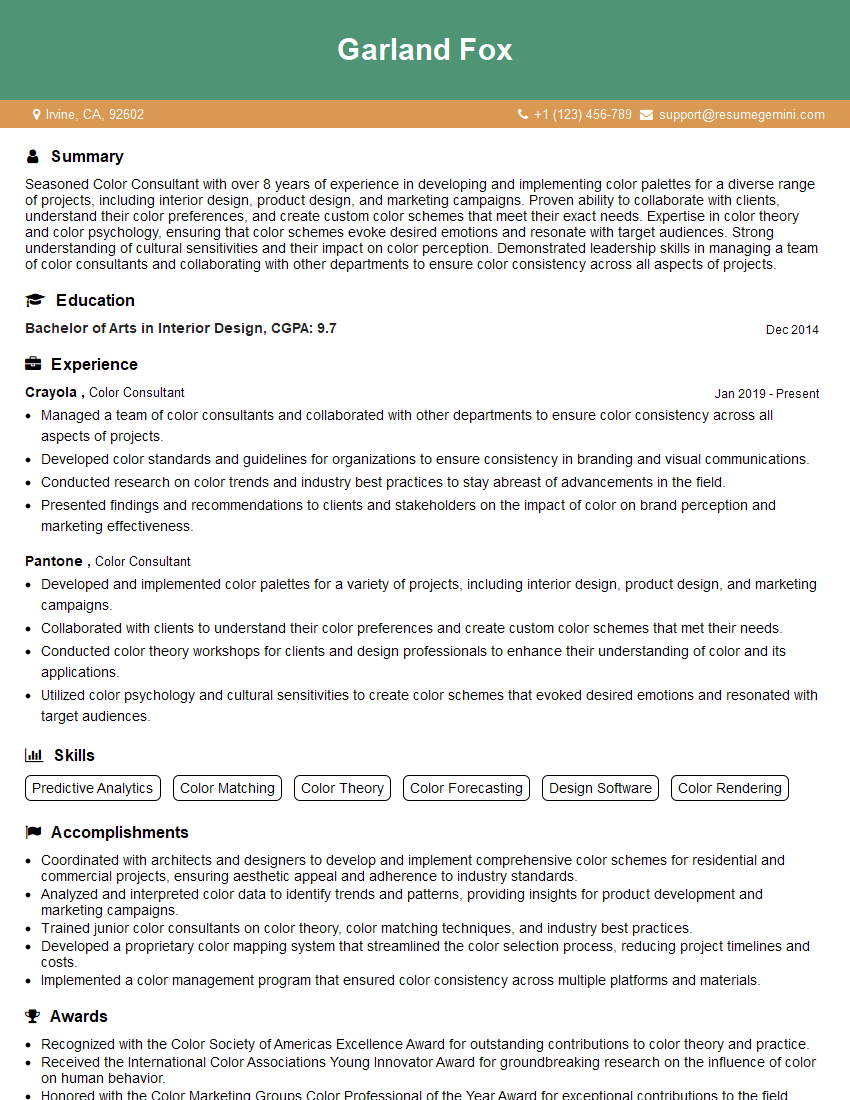
Color Consultant Resume Sample
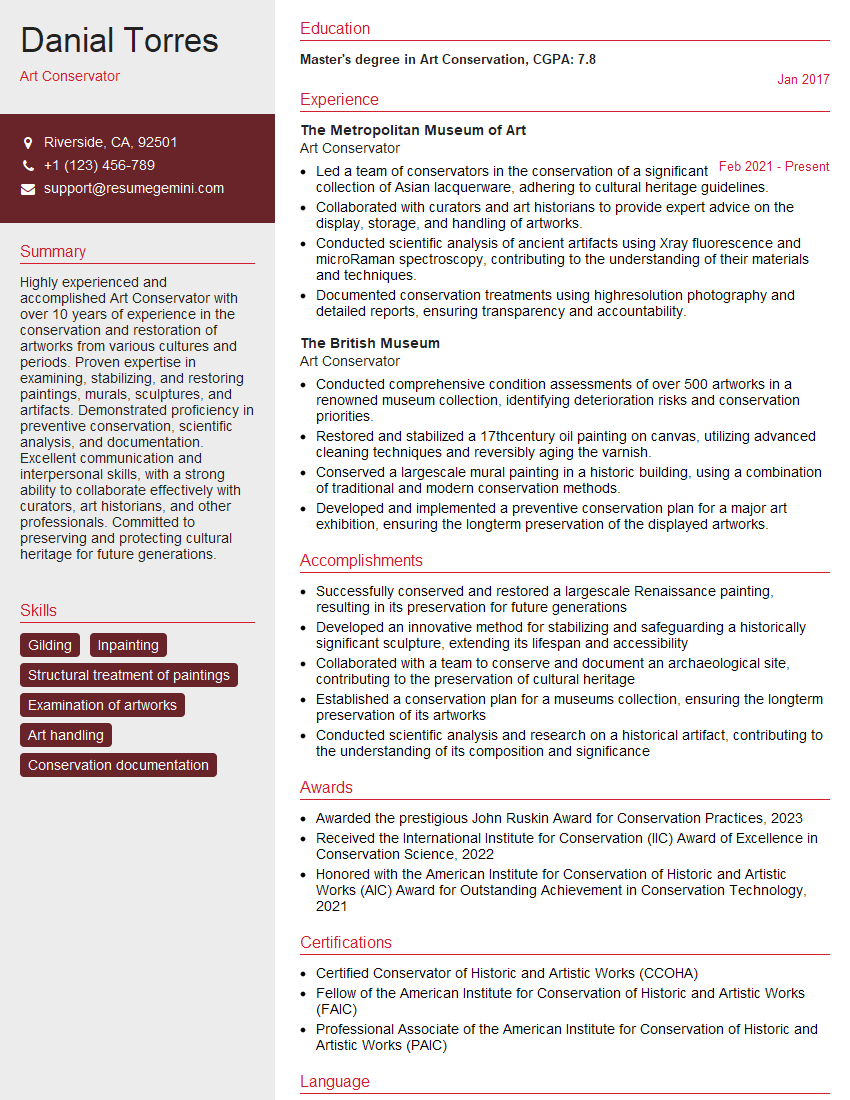
Art Conservator Resume Sample
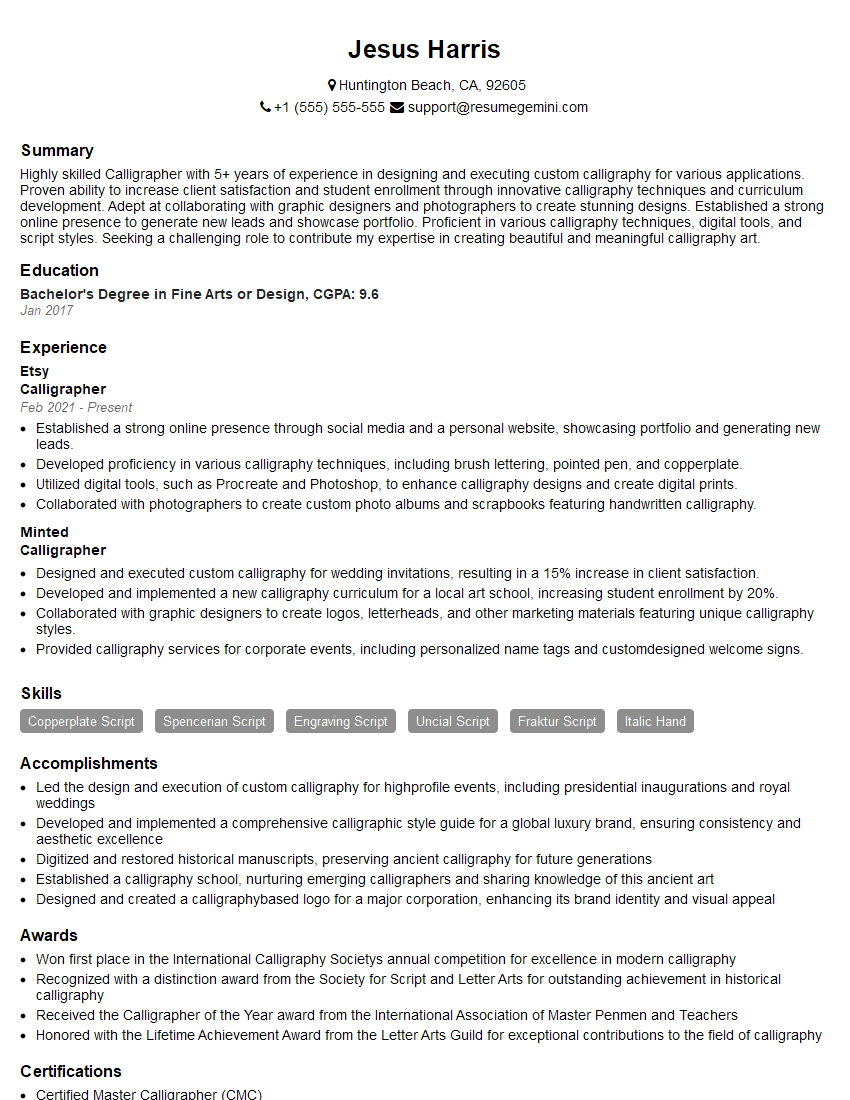
Calligrapher Resume Sample
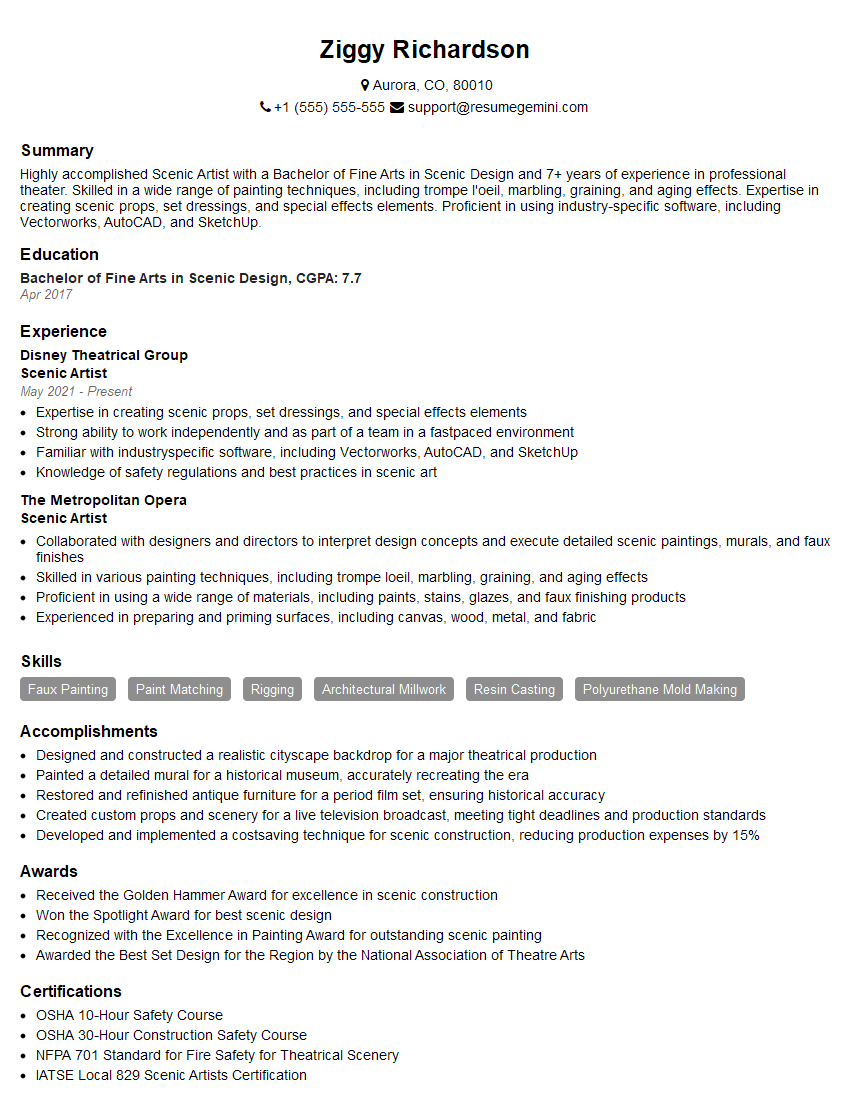
Scenic Artist Resume Sample
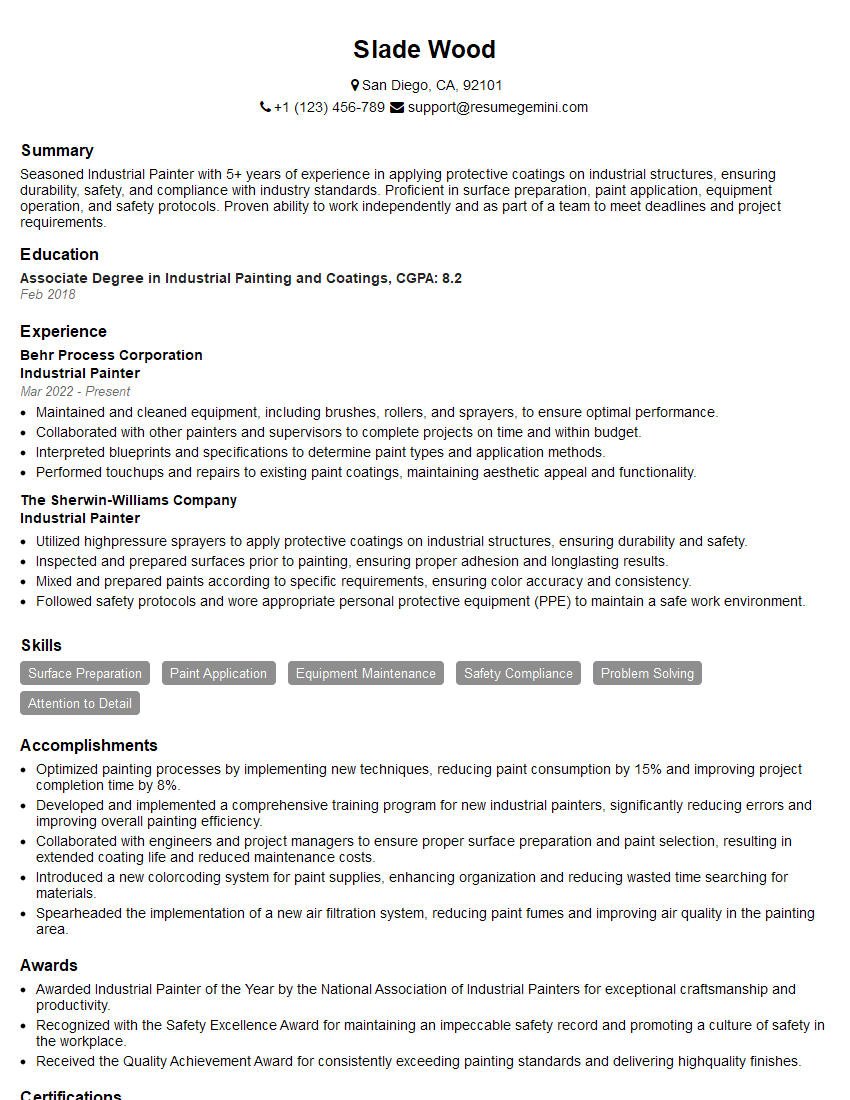
Industrial Painter Resume Sample
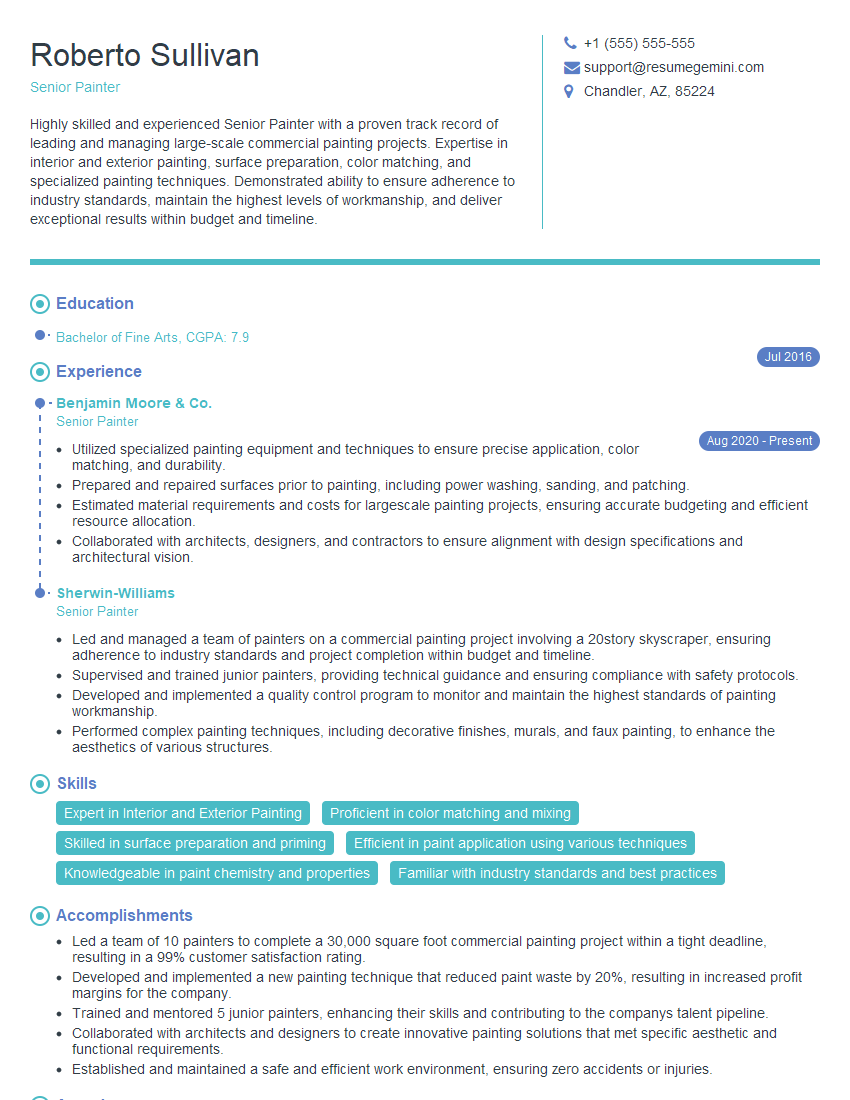
Senior Painter Resume Sample
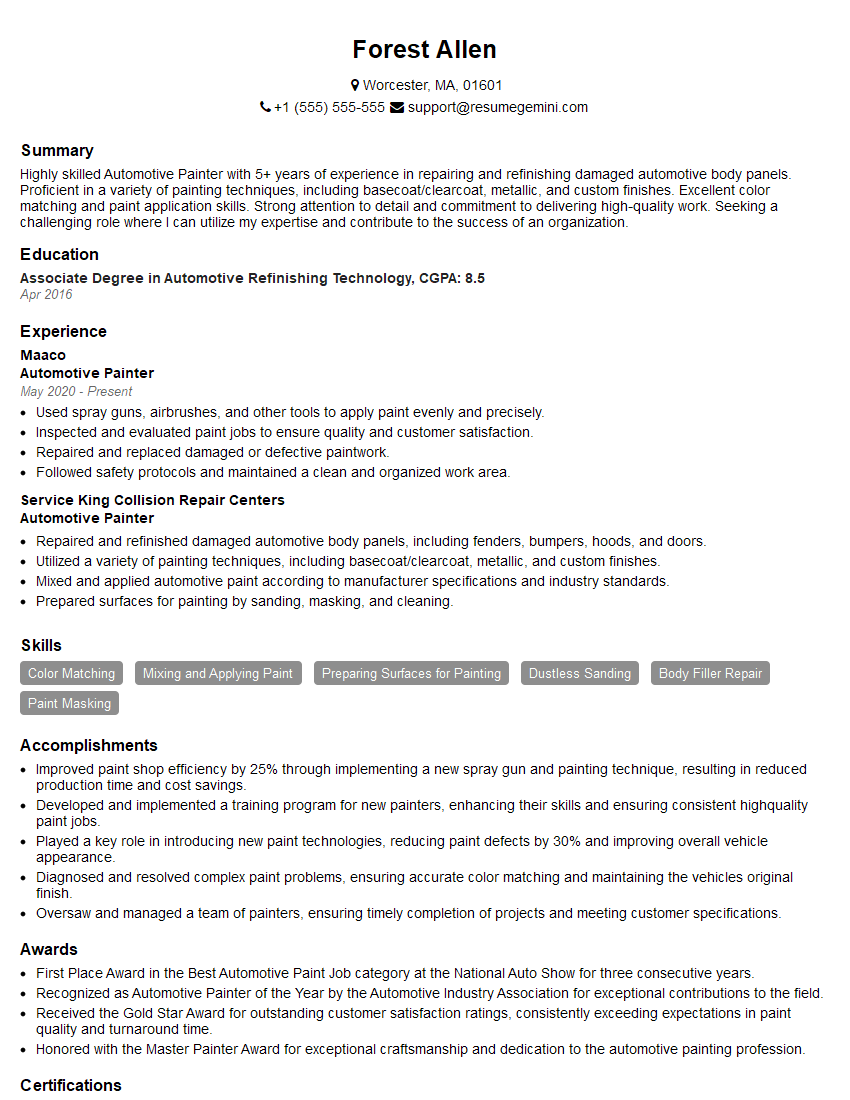
Automotive Painter Resume Sample
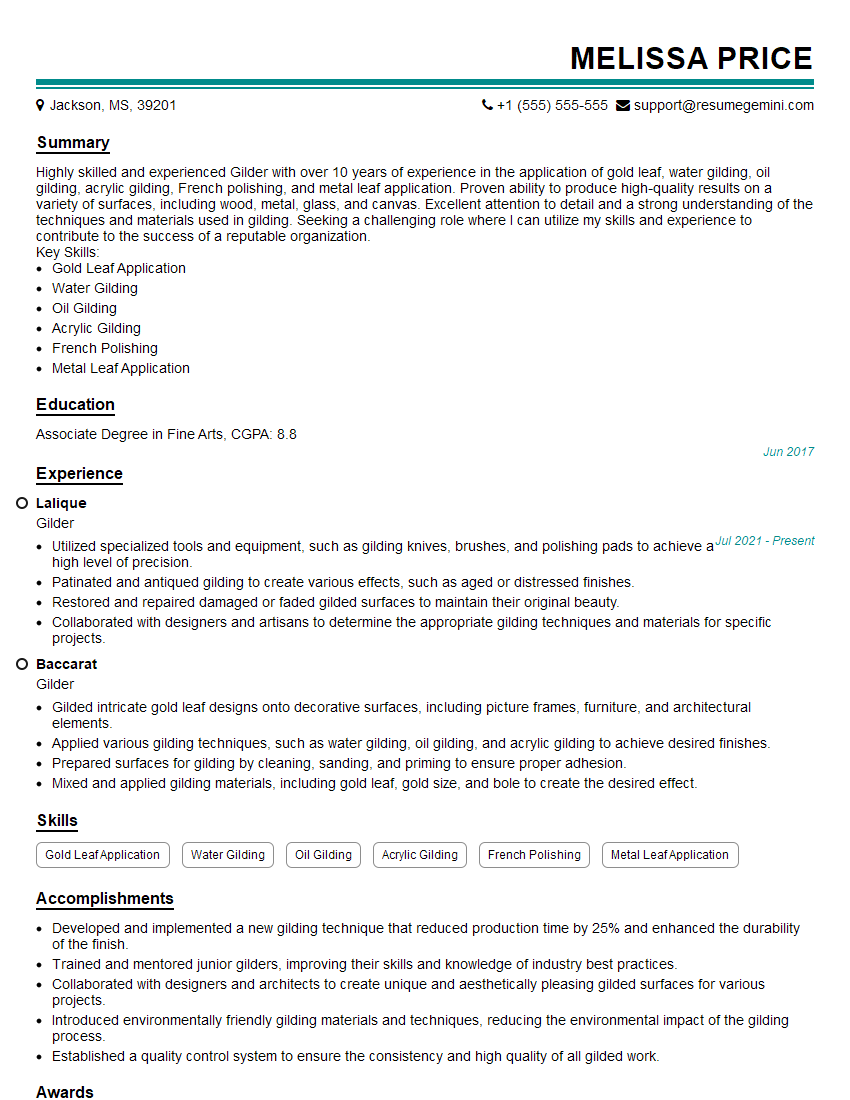
Gilder Resume Sample
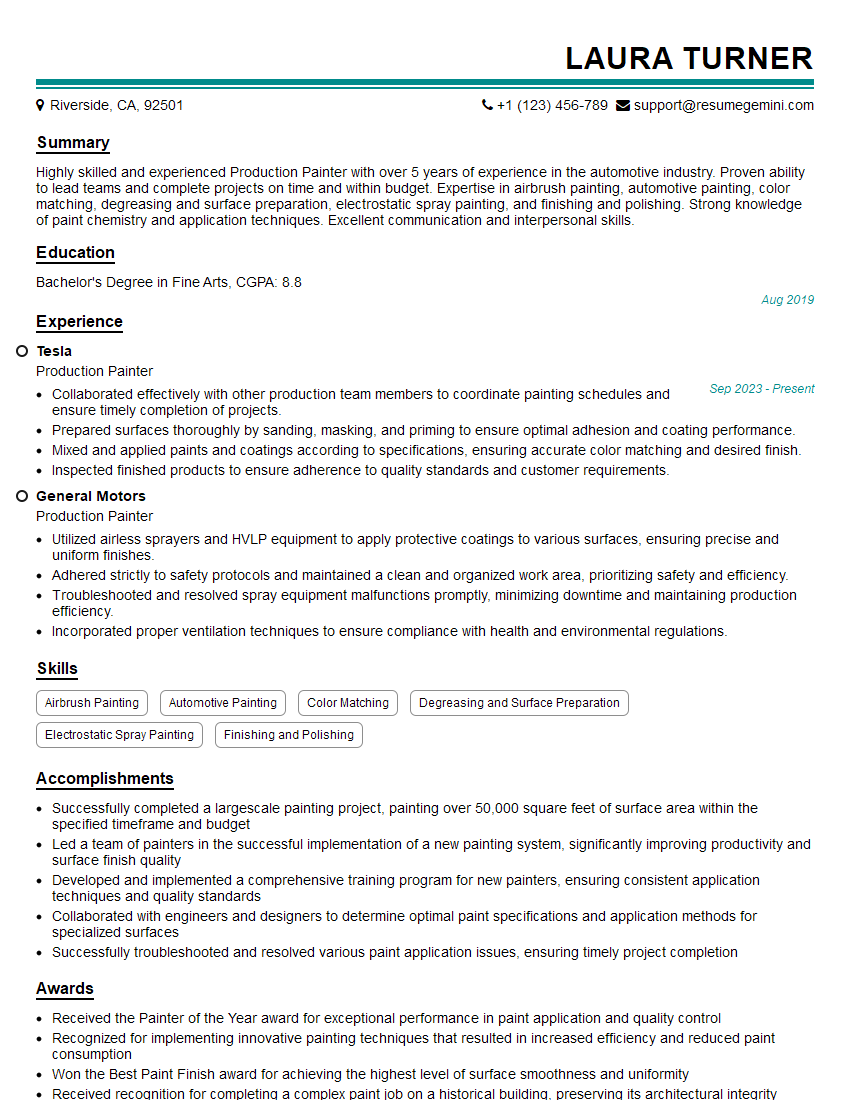
Production Painter Resume Sample
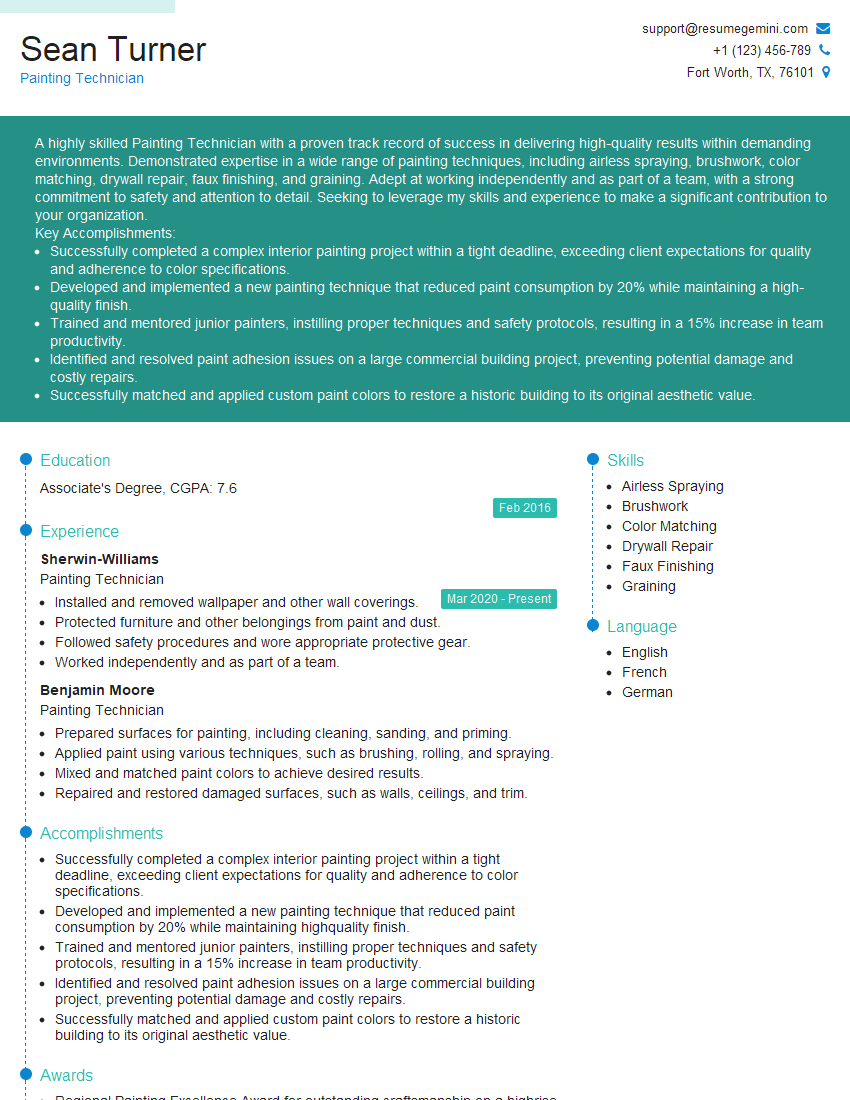
Painting Technician Resume Sample
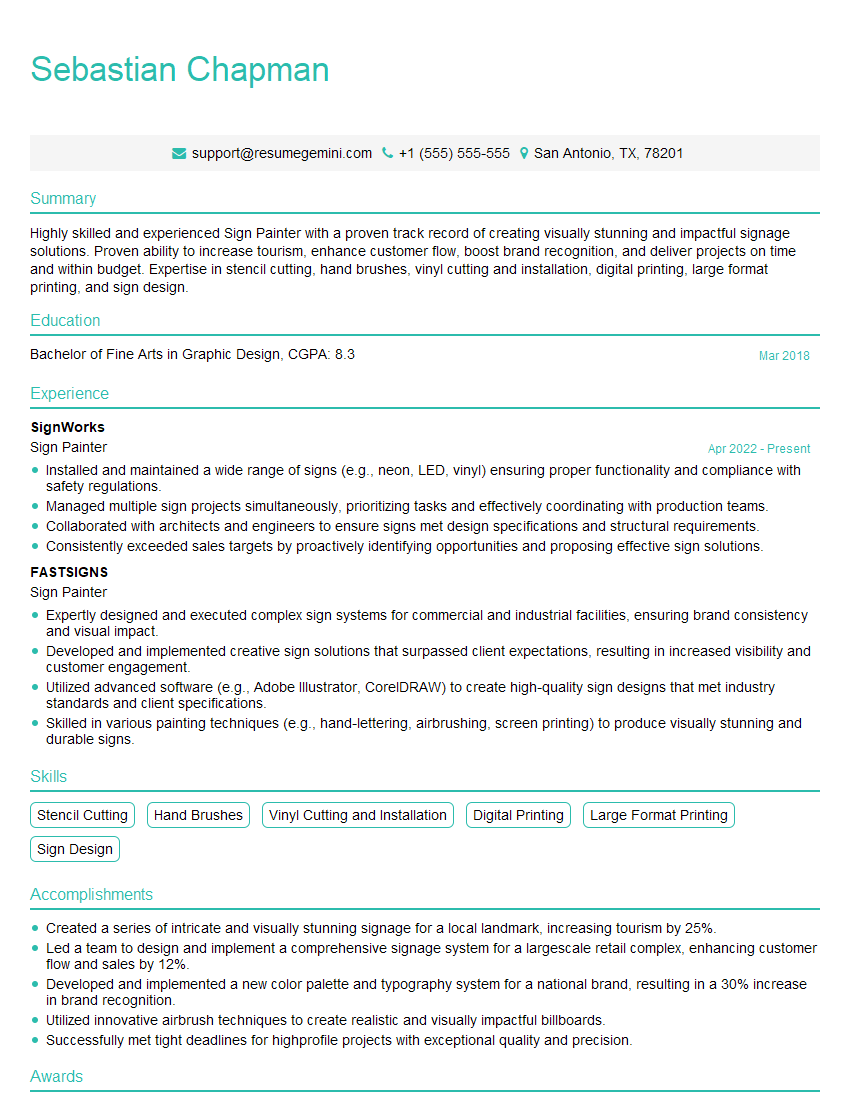
Sign Painter Resume Sample
Explore more articles
Users Rating of Our Blogs
Share Your Experience
We value your feedback! Please rate our content and share your thoughts (optional).
What Readers Say About Our Blog
Very informative content, great job.
good