Are you ready to stand out in your next interview? Understanding and preparing for Building Codes and Regulations Knowledge interview questions is a game-changer. In this blog, we’ve compiled key questions and expert advice to help you showcase your skills with confidence and precision. Let’s get started on your journey to acing the interview.
Questions Asked in Building Codes and Regulations Knowledge Interview
Q 1. Explain the difference between building codes and regulations.
While often used interchangeably, building codes and regulations have distinct meanings. Building codes are a comprehensive set of rules and standards that specify minimum requirements for the design, construction, and materials used in buildings to ensure safety, structural integrity, and health. They are often model codes, meaning they are developed by organizations like the International Code Council (ICC) and adopted by jurisdictions with local modifications. Building regulations, on the other hand, encompass a broader range of legal requirements governing building projects, including permits, inspections, zoning laws, and environmental considerations. Think of building codes as a subset of building regulations, focusing specifically on the technical aspects of construction. For example, the IBC dictates minimum fire resistance ratings for walls, while building regulations might dictate the process of obtaining the necessary permits to begin construction.
Q 2. Describe your experience interpreting and applying building codes.
Throughout my 10 years in the field, I’ve extensively interpreted and applied building codes across various project types, from residential renovations to large-scale commercial developments. I’m proficient in navigating complex code sections, identifying applicable requirements, and translating those requirements into practical design and construction solutions. For example, on a recent high-rise project, I had to carefully analyze the IBC’s wind load requirements for the specific geographical location and building height to ensure structural stability. This involved consulting wind load maps, performing calculations, and specifying appropriate design measures. Another example includes interpreting accessibility requirements according to ADA standards, ensuring proper ramp slopes, door widths, and restroom accommodations were met, minimizing potential costly revisions during construction. I’m adept at using code reference manuals, online resources, and collaborating with engineers and architects to ensure projects remain compliant.
Q 3. How do you handle conflicting building codes or interpretations?
Conflicting codes or interpretations are a common challenge. My approach is systematic and involves several key steps:
- Identify the conflict: Pinpoint the specific clauses or sections in conflict, noting the source of each (e.g., IBC, local amendment, special district regulations).
- Determine hierarchy: Establish the precedence of the conflicting codes. Generally, more specific codes supersede more general ones; local amendments often take precedence over the model code; and state laws may supersede local regulations.
- Seek clarification: If the hierarchy isn’t clear, contact the local building department for official interpretation. Document the inquiry and their response.
- Document all decisions: Maintain a detailed record of the identified conflict, the resolution, and the rationale behind the decision. This documentation is crucial for future reference and potential disputes.
- Consider alternative solutions: Explore design alternatives that satisfy all applicable codes or meet the strictest requirements. This might involve proposing modifications to the design or selecting different materials.
Q 4. What are the key aspects of the International Building Code (IBC)?
The International Building Code (IBC) is a comprehensive model code that sets minimum standards for building design, construction, and safety. Key aspects include:
- General building requirements: These cover site conditions, construction methods, and general safety provisions.
- Specific building systems: Detailed requirements for structural systems (concrete, steel, wood), fire protection, plumbing, mechanical systems (HVAC), electrical systems, and accessibility.
- Occupancy classifications: Different building types (residential, commercial, industrial) have specific code requirements based on their use and potential hazards.
- Means of egress: Requirements for safe and adequate exit routes in case of emergencies.
- Accessibility: Compliance with accessibility standards, such as the ADA, to ensure buildings are usable by people with disabilities.
Q 5. Describe your familiarity with local building codes and amendments.
My familiarity with local building codes and amendments is extensive. I understand that the IBC is merely a model code; jurisdictions often adopt it with amendments reflecting regional climates, geological conditions, and local priorities. I regularly consult local government websites, attend code update seminars, and network with building officials to remain current on the specific regulations governing projects in various localities. For instance, I’m aware of the seismic requirements in California that significantly differ from those in the Midwest, and I adapt my approach accordingly. Moreover, I’m proficient in identifying and understanding local amendments, often specific to issues like energy efficiency, wildfire protection, or historic preservation.
Q 6. Explain the process of obtaining a building permit.
The process of obtaining a building permit typically involves these steps:
- Submittal Preparation: This involves assembling a complete application package including plans, specifications, and calculations demonstrating code compliance. This often requires detailed drawings, structural calculations, and descriptions of the materials and methods to be used.
- Application Submission: The complete application package is submitted to the local building department.
- Plan Review: Building officials review the submitted plans to verify compliance with all applicable codes and regulations. This process may involve multiple reviews and revisions to address any identified deficiencies.
- Permit Issuance: Once the plans are deemed compliant, the building department issues a building permit, authorizing the commencement of construction.
- Inspections: Throughout the construction phase, scheduled inspections are conducted by building officials to verify that the construction is proceeding according to the approved plans and code requirements. These inspections typically include foundation, framing, plumbing, electrical, and final inspections.
Q 7. How do you ensure compliance with accessibility standards (ADA/other)?
Ensuring compliance with accessibility standards like the Americans with Disabilities Act (ADA) is a critical aspect of my work. This requires a thorough understanding of the ADA Standards for Accessible Design and their application to various building elements. This includes:
- Accessible routes: Ensuring ramps meet proper slope requirements, with appropriate landings and handrails.
- Accessible entrances: Providing doors with appropriate clear widths and accessible hardware.
- Accessible restrooms: Meeting specific requirements for toilet height, grab bars, and clear floor space.
- Accessible parking: Providing designated parking spaces with appropriate dimensions and signage.
- Accessible signage: Using clear and legible signage, including braille and tactile characters where necessary.
Q 8. Describe your experience with plan review and approval processes.
Plan review and approval is a crucial step in ensuring building projects comply with all applicable codes and regulations. My experience encompasses a comprehensive understanding of the entire process, from initial plan submission to final approval. This involves meticulously reviewing architectural, structural, mechanical, electrical, and plumbing (MEP) drawings and specifications to verify compliance with local, state, and national building codes. I’m proficient in using various software applications to analyze plans, identify potential code violations, and communicate effectively with architects, engineers, and contractors to resolve issues. For example, I’ve reviewed hundreds of residential and commercial building plans, identifying inconsistencies in fire protection systems, inadequate accessibility features, and non-compliant structural details. Addressing these issues often requires collaboration – I would work directly with the design team, proposing solutions that meet code requirements while maintaining the project’s design intent.
My experience also includes working with various jurisdictions and understanding their specific interpretations and amendments to the model codes. This ensures the plans are compliant even if some aspects vary in minor ways across different localities. The ultimate goal is to ensure public safety and structural integrity by approving only those plans that meet the minimum required standards.
Q 9. How do you handle code violations during inspections?
Handling code violations during inspections requires a systematic approach that balances enforcement with collaboration. Upon discovering a violation, I first document the issue thoroughly with photographs, detailed descriptions, and precise location within the building. My next step involves a clear and concise explanation of the violation to the contractor or owner, referencing the specific code section that’s been breached. For instance, if an insufficient number of fire exits are found, I’ll reference the relevant section of the International Fire Code (IFC) or local equivalent and explain the risk to life safety. I then collaboratively work with the responsible party to develop a remediation plan. This plan should clearly outline the necessary corrections, timelines, and required documentation for reinspection. I’ll usually provide guidance on compliant solutions.
For minor violations, a simple correction might suffice. For significant or repeated violations, however, more stringent actions may be necessary, potentially including stop-work orders, fines, or referrals to relevant authorities. The overall process prioritizes safe resolution, ensuring that buildings are brought up to code without unnecessary delays or conflict, while still upholding the importance of code compliance.
Q 10. What is your experience with fire safety codes and regulations?
Fire safety is paramount in building codes, and my expertise in this area is extensive. I am well-versed in the International Fire Code (IFC) and other relevant standards, understanding requirements for fire-resistant materials, compartmentalization, means of egress, smoke detection, and suppression systems. My experience includes reviewing plans for fire alarm systems, sprinkler systems, and fire suppression systems, ensuring they meet the required code and are properly integrated within the building’s design. I’ve inspected countless buildings of all types, verifying the proper installation and maintenance of these crucial life-saving systems. I’ve had firsthand experience assessing and resolving issues related to fire-rated assemblies, evaluating emergency lighting, and verifying proper signage for evacuation routes.
For example, I recently reviewed plans for a high-rise building and identified a potential deficiency in the fire stairwell pressurization system. This could compromise safety in the event of a fire. Through collaboration with the engineers, we implemented modifications that resolved the issue, ensuring the building met all fire safety requirements before occupancy.
Q 11. How do you stay updated on changes and amendments to building codes?
Staying current with changes and amendments to building codes is critical for maintaining competency and ensuring accurate code enforcement. I accomplish this through several methods. I subscribe to professional journals and newsletters published by organizations like the International Code Council (ICC). Active participation in professional development courses and workshops, provided by organizations like the ICC, ensures I’m updated on recent code changes and their practical applications.
I also actively engage with online resources, such as the ICC’s website, which provides access to the latest code versions and updates. Furthermore, I attend conferences and seminars focusing on building codes and regulations, which provide valuable networking opportunities and insights from industry experts. Keeping abreast of these developments allows me to effectively enforce codes and help stakeholders understand current requirements.
Q 12. Explain your understanding of structural design and building codes.
Structural design and building codes are intrinsically linked. Building codes define the minimum requirements for structural integrity, safety, and stability. My understanding encompasses a wide range of structural systems and their associated code requirements, including those related to foundations, framing, load-bearing walls, and roofs. I’m familiar with various materials, such as concrete, steel, and wood, and their respective design standards as specified in codes such as the International Building Code (IBC). I can interpret structural calculations, drawings, and specifications, ensuring that the design complies with all relevant code provisions.
For example, I have experience in reviewing structural calculations to verify load capacities, analyzing seismic design compliance, and ensuring that appropriate safety factors are applied. I’ve also reviewed foundation designs and drainage plans to ensure stability and prevent settlement issues. My review process involves comparing the design against applicable code requirements, evaluating the structural engineer’s calculations, and identifying any potential deficiencies that could compromise structural integrity.
Q 13. Describe your experience with life safety systems and code requirements.
Life safety systems are critical components of any building, designed to protect occupants in emergency situations. My experience with these systems and their code requirements is extensive. I’m familiar with the regulations governing fire alarm systems, sprinkler systems, emergency lighting, exit signage, and means of egress. This knowledge extends to accessibility features, ensuring compliance with the Americans with Disabilities Act (ADA) and other relevant accessibility codes. I’ve worked on projects ranging from small residential buildings to large commercial complexes, evaluating the design, installation, and maintenance of these life-safety systems.
For example, I’ve assessed the adequacy of fire alarm systems in high-rise buildings, ensuring sufficient coverage and proper integration with other safety systems. I’ve also reviewed the design and layout of means of egress, ensuring compliance with code requirements for width, capacity, and accessibility. My inspections often involve verifying the proper functioning of these systems, identifying deficiencies, and working with building owners and contractors to ensure compliance.
Q 14. How do you ensure consistency and accuracy in your code enforcement activities?
Maintaining consistency and accuracy in code enforcement activities is essential for ensuring fair and equitable treatment and for protecting public safety. My approach involves several key strategies. First, I meticulously follow established procedures and checklists for all inspections and reviews, ensuring a standardized process across all projects. I utilize detailed documentation, including photographs, notes, and references to specific code sections, to create a comprehensive record of each inspection. This detailed record helps maintain consistency and facilitates clear communication with stakeholders.
Secondly, I regularly review and update my knowledge of building codes and regulations to stay current with any changes or amendments. This ensures consistent application of the most up-to-date standards. Finally, I regularly participate in internal reviews and audits to assess the accuracy and consistency of my work, and I also collaborate with colleagues to share best practices and ensure uniformity in our enforcement approaches. This collaborative approach not only ensures consistency but also provides valuable opportunities for learning and professional development. This multi-pronged approach guarantees fairness, transparency and a consistent approach to code enforcement.
Q 15. What is your experience with energy efficiency codes and standards?
My experience with energy efficiency codes and standards is extensive. I’ve worked with various codes, including ASHRAE 90.1, IECC, and local amendments, for over 10 years. This involves reviewing building plans for compliance, conducting field inspections to verify installations meet specifications, and staying updated on the latest advancements in energy-efficient technologies. For instance, I recently helped a developer incorporate geothermal heating into a large apartment complex, requiring a deep understanding of the relevant energy codes and their interaction with other building systems.
I’m familiar with different energy modeling software, and I understand the importance of things like building envelope design, HVAC system selection, and lighting efficiency in achieving compliance. I’ve also been involved in several projects that aimed for LEED certification, further enhancing my understanding of sustainable building practices and their integration with energy codes.
- Experience with ASHRAE 90.1: I’ve reviewed hundreds of plans for compliance with this standard, focusing on elements like envelope performance, HVAC efficiency, and lighting power density.
- Knowledge of IECC: I’m proficient in applying the International Energy Conservation Code, ensuring that projects meet the minimum energy efficiency requirements for their geographic location.
- Practical Application: I’ve successfully resolved several instances of non-compliance by working collaboratively with designers and contractors to find cost-effective solutions that meet code requirements. This often involves proposing alternative materials or systems that achieve better energy performance.
Career Expert Tips:
- Ace those interviews! Prepare effectively by reviewing the Top 50 Most Common Interview Questions on ResumeGemini.
- Navigate your job search with confidence! Explore a wide range of Career Tips on ResumeGemini. Learn about common challenges and recommendations to overcome them.
- Craft the perfect resume! Master the Art of Resume Writing with ResumeGemini’s guide. Showcase your unique qualifications and achievements effectively.
- Don’t miss out on holiday savings! Build your dream resume with ResumeGemini’s ATS optimized templates.
Q 16. Explain your approach to resolving disputes regarding code compliance.
My approach to resolving code compliance disputes centers around clear communication, collaboration, and a thorough understanding of the relevant codes and standards. The first step involves carefully reviewing the disputed aspects of the project. This includes examining the plans, the actual construction, and all relevant documentation. If there’s a misunderstanding, I strive to clarify the codes and regulations to all parties. I’ll often use visual aids, such as diagrams or code excerpts, to ensure everyone is on the same page.
If a compromise cannot be reached, I believe in following established procedures, such as mediation or appeals processes. Documenting all communication and actions meticulously is crucial. Transparency throughout the entire process is essential for maintaining fairness and preventing future conflicts. For example, in one case, a dispute arose about the allowable height of a parapet wall. By referencing specific code sections and providing detailed calculations, I was able to demonstrate that the wall conformed to the regulations, resolving the dispute peacefully.
Q 17. How do you prioritize and manage multiple inspections efficiently?
Efficiently managing multiple inspections requires a systematic approach. I utilize scheduling software to optimize my route planning and minimize travel time. Prioritization is key; I address time-sensitive inspections and those with potential safety concerns first. I also maintain detailed records of inspections, including their status and any outstanding issues. This allows me to easily track progress and prevent delays.
Furthermore, I maintain open communication with contractors and developers, ensuring that they are aware of my schedule and any potential delays. Regularly updating my schedule and proactively communicating changes ensures smooth workflow. Think of it like a well-orchestrated symphony— each inspection is a note, and the careful management of those notes creates a harmonious, efficient whole.
Q 18. Describe your experience with documenting inspection findings and writing reports.
Documenting inspection findings is a critical aspect of my work. I use standardized forms to record observations, noting any deviations from approved plans or code requirements. Photos and videos are vital for providing clear visual evidence. My reports are detailed, objective, and include specific code references to support my findings. I make sure the language is clear and concise, avoiding technical jargon where possible.
For example, if I find a fire-rated wall with improper sealant, my report will clearly describe the deficiency, cite the relevant code section (e.g., International Building Code Section 714), and include photographs highlighting the issue. This ensures clarity for all parties and facilitates quick resolution.
Q 19. What software or tools are you familiar with for code compliance and plan review?
I’m proficient in various software tools for code compliance and plan review. My experience includes using Computer-Aided Design (CAD) software like AutoCAD to review architectural and structural drawings, and I’m familiar with plan review software that allows for digital annotation and tracking of revisions. Energy modeling software, such as EnergyPlus or eQUEST, is also a part of my skillset. Furthermore, I’m comfortable using project management software to track inspections, deadlines, and communication with stakeholders.
The use of these tools significantly improves efficiency and reduces errors in the plan review and inspection processes. For example, using CAD software allows for precise measurements and easier identification of code violations in drawings.
Q 20. How would you approach an unusually complex building permit application?
Approaching an unusually complex building permit application requires a systematic and collaborative approach. First, I’d carefully review all submitted documentation, identifying any areas requiring clarification or additional information. I’d then schedule a meeting with the applicant to discuss the project’s complexities and any potential code challenges. This early engagement helps to proactively address potential issues.
Next, I’d consult with other relevant experts, such as structural engineers or specialists in particular building systems, as needed. Collaboration with other professionals ensures comprehensive review and reduces the risk of overlooking critical details. Thorough documentation of all communication, decisions, and revisions throughout the review process is essential for transparency and accountability. The goal is to guide the applicant through the process, ensuring compliance and successful permit approval, even with complex projects.
Q 21. How do you handle situations where contractors disagree with your code interpretations?
Handling disagreements on code interpretations requires diplomacy and a commitment to finding a solution that ensures compliance. My approach begins by patiently explaining my interpretation, citing specific code sections and providing supporting documentation. I welcome the contractor’s perspective and encourage open discussion to explore all possible interpretations. If a consensus can’t be reached, I offer to involve a third-party expert, such as a code official from the relevant authority, for an independent opinion.
Transparency and documentation are critical. Maintaining a record of all communication and decisions prevents misunderstandings and ensures accountability. The focus is always on achieving code compliance, balancing the need for safety and the contractor’s practical concerns. For example, in a recent dispute about the installation of a specific type of fire sprinkler, I engaged in a detailed discussion with the contractor, illustrating why the chosen method was non-compliant. The issue was ultimately resolved by collaborating on an alternative solution that met the code requirements.
Q 22. Explain your understanding of building material specifications and code compliance.
Building material specifications and code compliance are intrinsically linked. Specifications detail the precise properties and performance requirements of materials used in construction, while building codes dictate the minimum acceptable standards for safety, health, and structural integrity. Compliance ensures that the building meets these minimum standards. For example, a specification might require fire-rated gypsum board with a specific fire resistance rating (e.g., 1-hour rating), while the code mandates the use of fire-rated materials in certain wall assemblies to prevent fire spread. This means the chosen gypsum board must meet both the project’s specification and the relevant code’s requirements. Non-compliance can result in project delays, costly rework, and even legal repercussions.
Understanding code compliance involves a thorough knowledge of the applicable codes (e.g., IBC, NFPA), their amendments, and any local ordinances. I am proficient in interpreting these documents and ensuring that material choices align perfectly with these regulations. This includes understanding test methods used to verify material performance and ensuring that certifications (e.g., UL listing) are available to demonstrate compliance.
Q 23. How do you balance safety requirements with project timelines and budgets?
Balancing safety, timelines, and budgets requires a proactive and collaborative approach. Safety is paramount and cannot be compromised. However, unrealistic deadlines or extremely tight budgets can sometimes create tension. My strategy involves thorough upfront planning, including value engineering exercises to identify cost-effective solutions without compromising safety. This often involves exploring alternative materials or construction methods that achieve the same level of safety but at a lower cost. For example, instead of specifying expensive pre-cast concrete elements, we could use engineered wood products that meet the structural requirements, provided they are properly designed and detailed.
Open communication with all stakeholders, including the owner, architect, and contractor, is critical. By identifying potential conflicts early on and collaboratively finding solutions, we can minimize disruptions and delays. Using Building Information Modeling (BIM) software can also assist in pre-construction planning, allowing us to identify potential clashes and cost overruns before they become significant issues.
Q 24. What is your experience with the permitting process for different building types?
My experience with the permitting process encompasses various building types, including residential, commercial, and industrial structures. The process generally involves submitting detailed plans and specifications to the relevant authority having jurisdiction (AHJ), which then reviews the documentation for code compliance. This process varies based on the complexity of the project and the AHJ’s specific requirements. For example, a small residential addition might require a simpler permit, while a high-rise building would necessitate a much more extensive review, potentially involving multiple inspections throughout the construction process.
I am familiar with navigating the intricacies of each stage, from initial plan review and pre-construction meetings to inspections during construction and final inspections upon project completion. I’ve successfully managed permits for projects ranging from single-family homes to large-scale commercial developments, consistently adhering to deadlines and regulatory requirements. This includes working with plan reviewers to address any comments or concerns they might have, and ensuring that all necessary documentation is submitted in a timely manner.
Q 25. Describe your knowledge of sustainable building practices and relevant codes.
Sustainable building practices are increasingly important, and many codes now incorporate provisions to promote energy efficiency and environmental responsibility. My knowledge encompasses various aspects of sustainable design and construction, including the use of energy-efficient materials, renewable energy sources, water conservation strategies, and waste reduction techniques. Examples include incorporating solar panels, utilizing high-performance building envelopes, and implementing water-efficient plumbing fixtures. Specific codes like LEED (Leadership in Energy and Environmental Design) provide frameworks for sustainable building practices, and I am well-versed in these standards and how they can be integrated into a project.
I understand how to leverage these practices to meet both code requirements and client sustainability goals. This requires a thorough understanding of various green building rating systems, material life-cycle analysis, and the embodied carbon associated with different construction methods. It’s not just about choosing ‘green’ materials; it’s about holistic design that minimizes environmental impact throughout the entire building life cycle.
Q 26. How do you deal with challenging or difficult situations during inspections?
Dealing with challenging situations during inspections requires diplomacy, professionalism, and a thorough understanding of the codes. I approach these situations by calmly assessing the issue, clearly explaining the code requirements, and working collaboratively with the contractor to find a solution that ensures code compliance. If a violation is discovered, I document it meticulously, providing clear and concise explanations of the problem and the necessary corrective actions. I always strive to maintain a positive and constructive relationship with contractors, encouraging a culture of safety and code compliance.
For instance, if a contractor has incorrectly installed a fire-rated assembly, I would explain the code violation, its safety implications, and the necessary steps to rectify it. This might involve providing documentation, referencing specific code sections, or even suggesting alternative solutions. The goal is always to ensure that the building meets the required safety standards while working to avoid unnecessary delays or conflicts.
Q 27. Explain your experience working with other professionals involved in construction projects.
Effective collaboration is essential in construction. I have a proven track record of working successfully with architects, engineers, contractors, and other professionals. My experience involves clear communication, proactive problem-solving, and a willingness to listen and address concerns. I understand that each professional brings unique expertise, and I value their contributions. Effective teamwork ensures that projects are completed on time, within budget, and in compliance with all codes and regulations.
For example, working with structural engineers is crucial to verify that structural elements meet code requirements. Regular meetings and collaborative review of plans and specifications are key to ensuring a unified approach and avoiding costly conflicts later in the project. Similarly, coordinating with contractors helps prevent misunderstandings, clarifies design intent, and ensures that the construction process itself aligns with code provisions. This collaborative spirit is essential for the smooth execution of any construction project.
Q 28. What are some common mistakes you’ve seen in building projects due to code violations?
Common mistakes resulting from code violations often stem from a lack of understanding or oversight. Some frequent examples include improper installation of fire-rated assemblies (e.g., gaps in firestopping), inadequate accessibility for individuals with disabilities (e.g., insufficient ramp slopes), and incorrect sizing of structural members (potentially compromising structural integrity). Other issues might involve the use of unapproved or uncertified materials or failure to meet energy efficiency requirements (resulting in increased operating costs and environmental impact).
These mistakes not only pose safety risks but can also lead to significant rework, delays, and financial penalties. Preventing such errors requires a multi-pronged approach, including thorough plan review, regular inspections during construction, and ongoing communication among all stakeholders. By fostering a culture of code compliance and thorough due diligence, many of these problems can be avoided.
Key Topics to Learn for Building Codes and Regulations Knowledge Interview
- Code Interpretation and Application: Understanding the nuances of building codes, including IBC, NFPA, and local amendments, and applying them to real-world scenarios.
- Plan Review and Permitting Processes: Familiarize yourself with the submission process, plan review procedures, and the role of building officials in ensuring code compliance.
- Life Safety Systems: Deepen your knowledge of fire protection systems (sprinklers, alarms), egress planning, and accessibility requirements for building occupants.
- Structural Design and Engineering Principles: Understand the basic principles behind structural design and how they relate to code compliance, including load calculations and material specifications.
- Building Materials and Construction Methods: Become familiar with various building materials, their properties, and how construction methods impact code compliance.
- Sustainable Building Practices and Green Codes: Explore the incorporation of energy efficiency, water conservation, and sustainable materials into building design and construction according to relevant codes.
- Code Enforcement and Inspections: Understand the inspection process, common code violations, and the role of inspectors in ensuring public safety.
- Accessibility and ADA Compliance: Master the requirements of the Americans with Disabilities Act (ADA) and how they affect building design and construction.
- Problem-solving and Critical Thinking: Practice analyzing building plans and identifying potential code violations or areas needing improvement. Develop your ability to propose solutions that meet code requirements while considering practical constraints.
Next Steps
Mastering Building Codes and Regulations Knowledge is crucial for career advancement in the construction and engineering fields, opening doors to leadership roles and higher earning potential. A strong understanding of these codes demonstrates your commitment to safety and professionalism. To maximize your job prospects, create an ATS-friendly resume that highlights your skills and experience effectively. ResumeGemini is a trusted resource to help you build a professional and impactful resume that gets noticed. Examples of resumes tailored to Building Codes and Regulations Knowledge are available to guide you through the process.
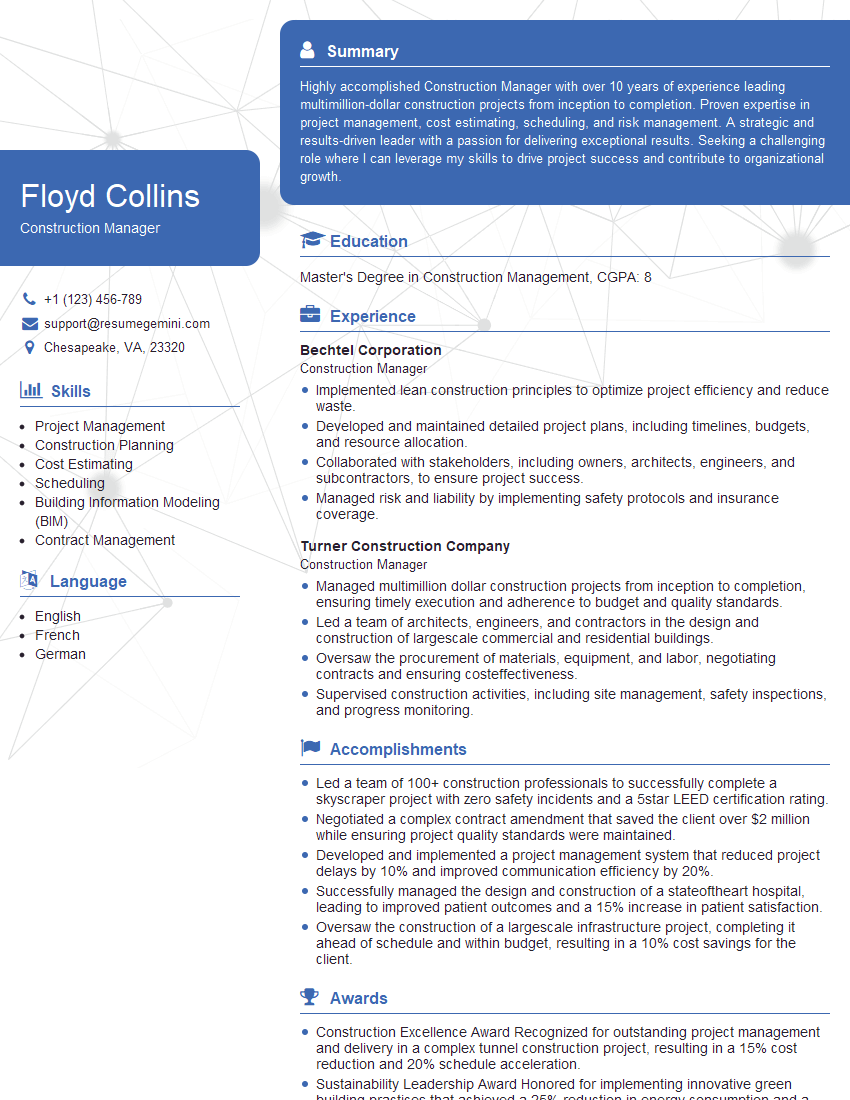
Construction Manager Resume Sample
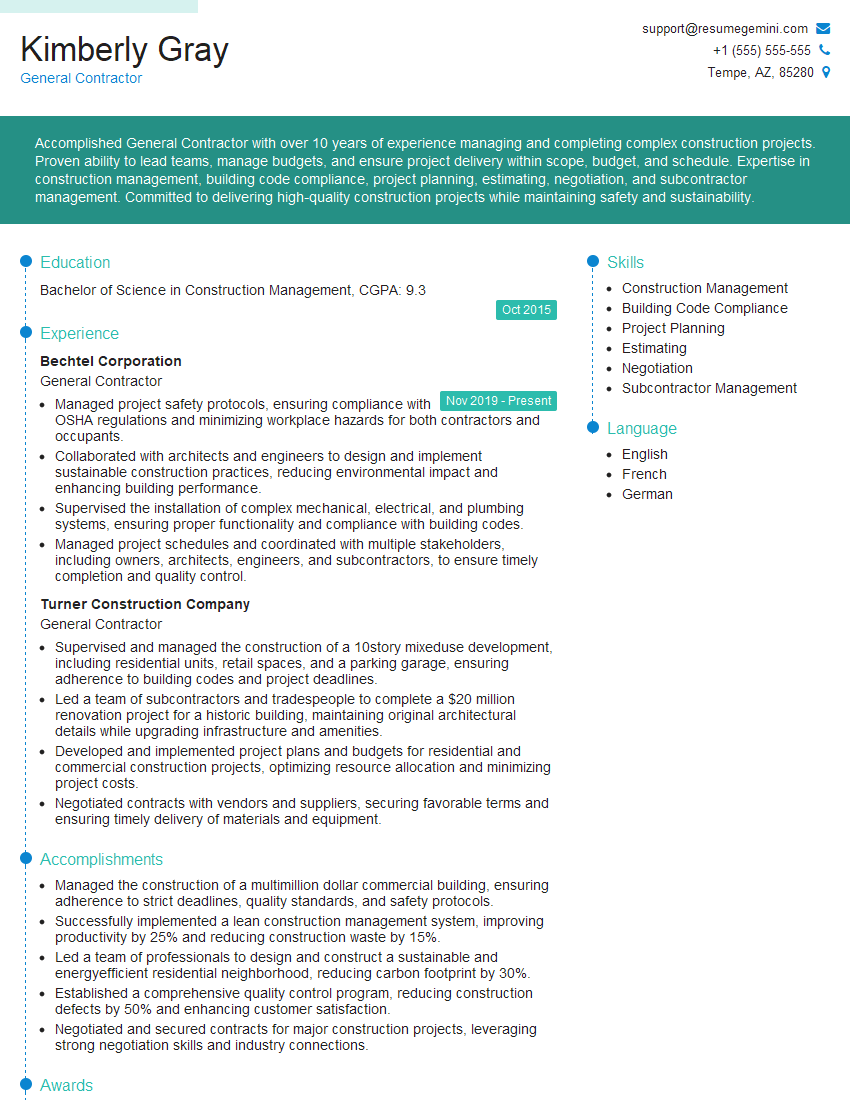
General Contractor Resume Sample
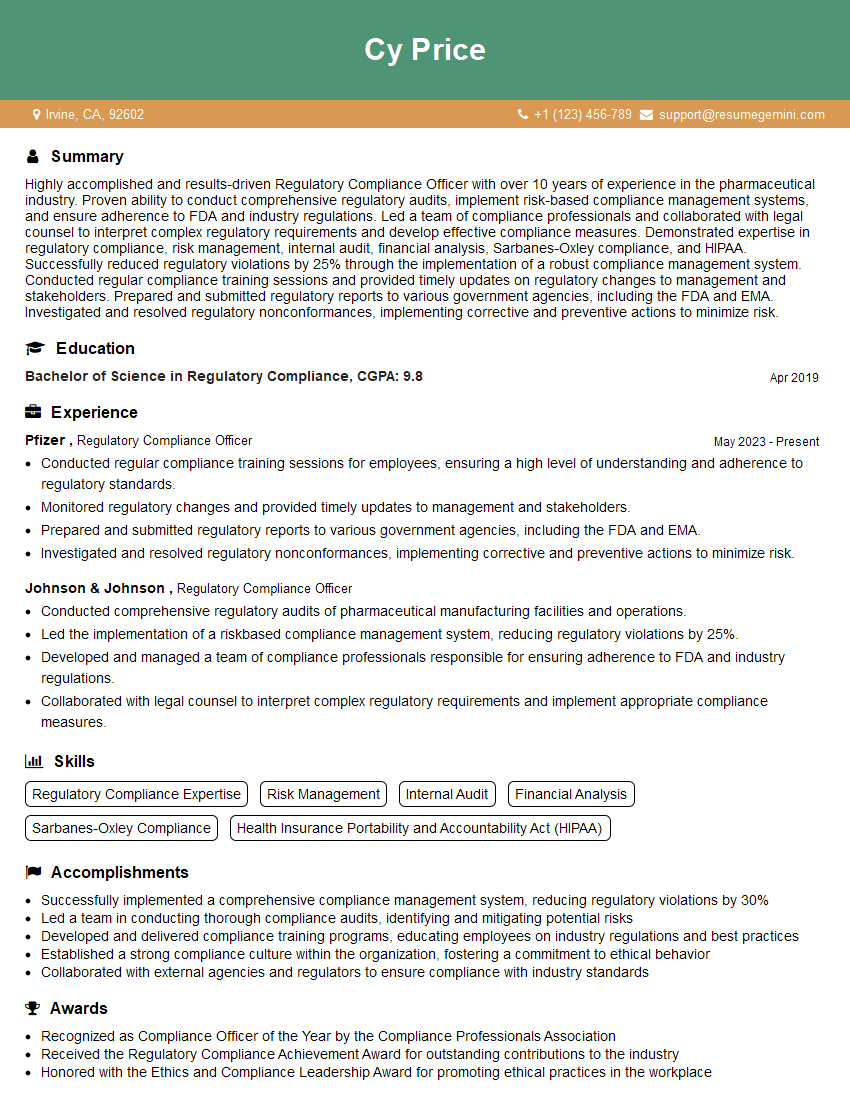
Regulatory Compliance Officer Resume Sample

Sustainability Consultant Resume Sample
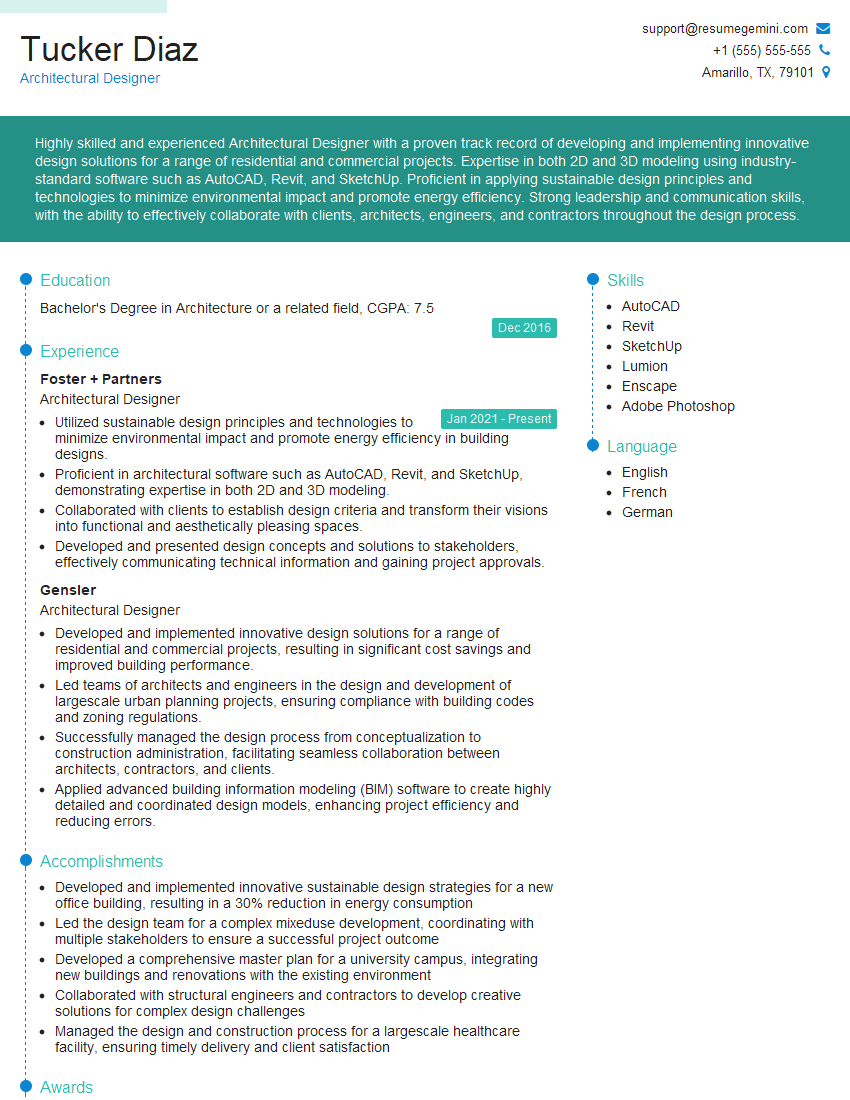
Architectural Designer Resume Sample
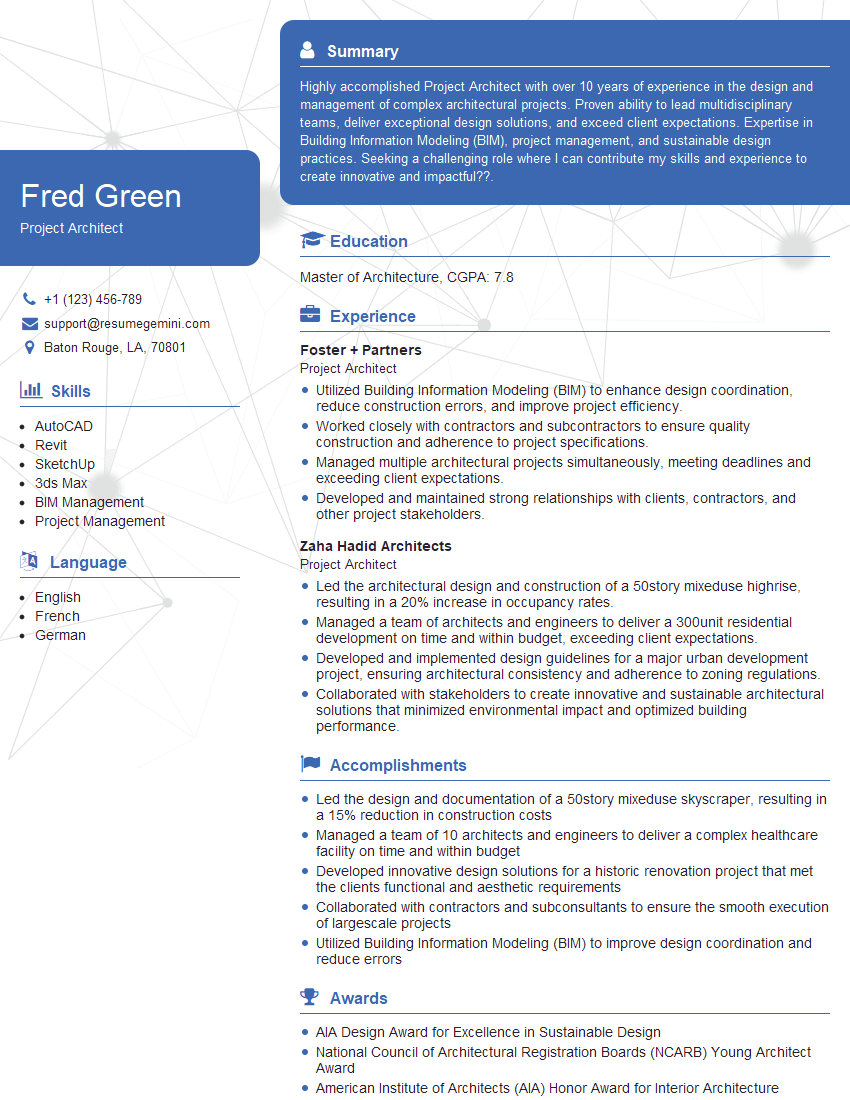
Project Architect Resume Sample
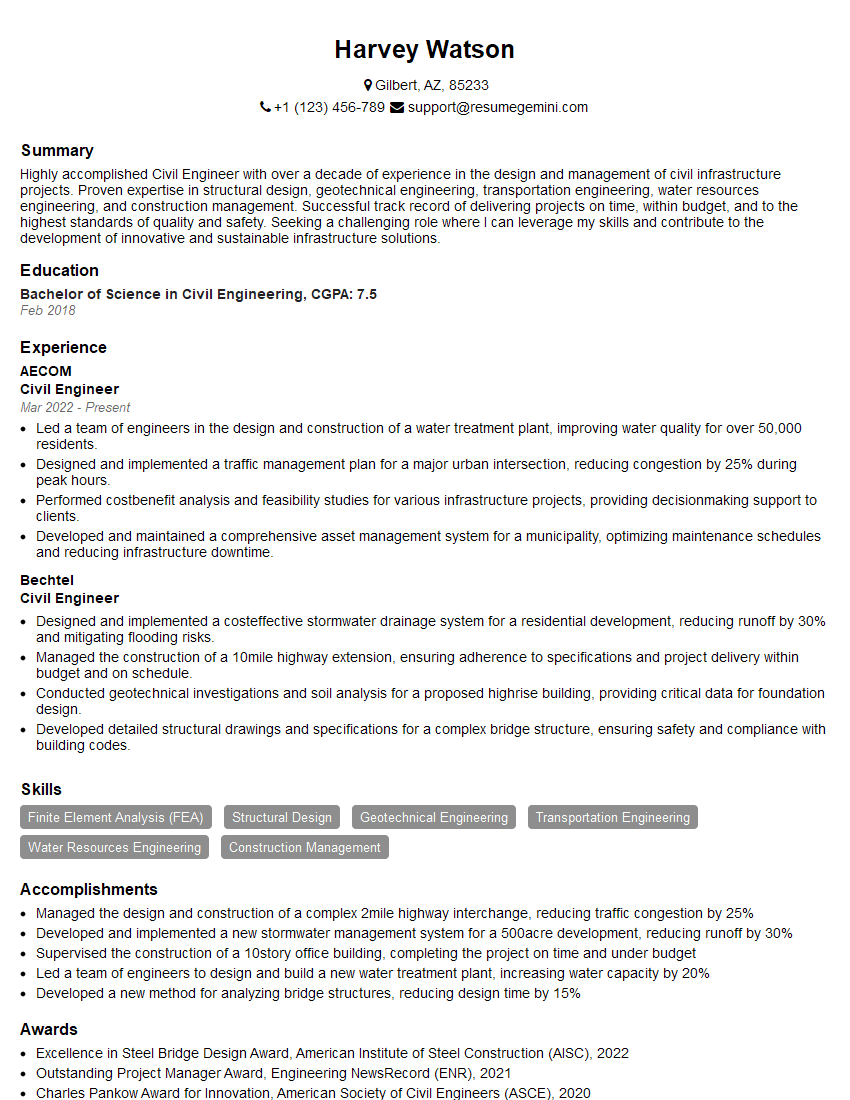
Civil Engineer Resume Sample
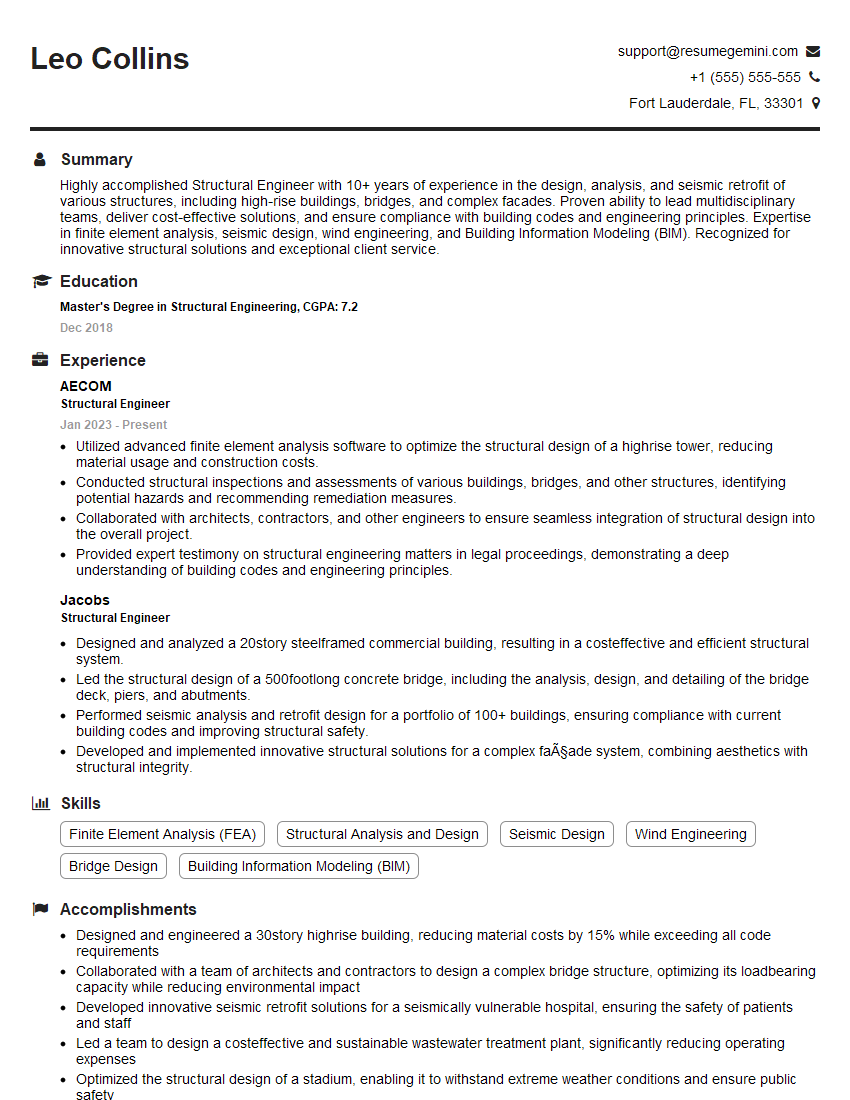
Structural Engineer Resume Sample
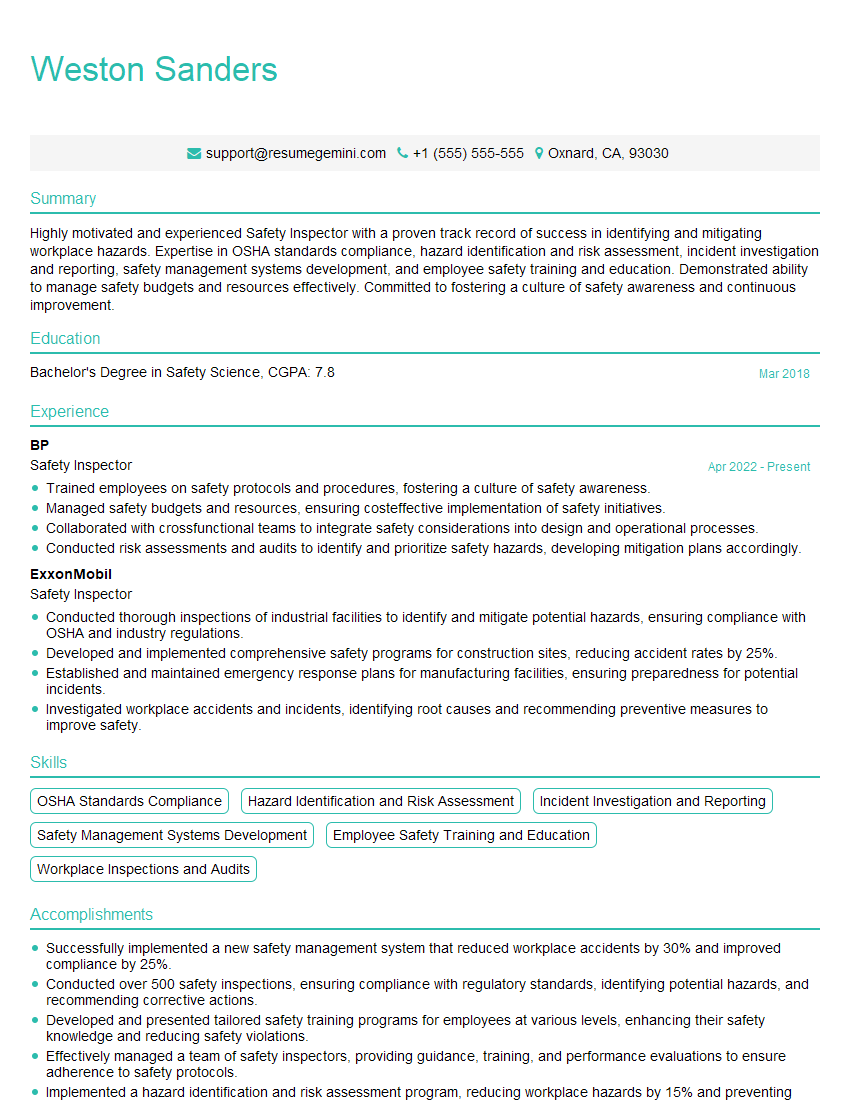
Safety Inspector Resume Sample
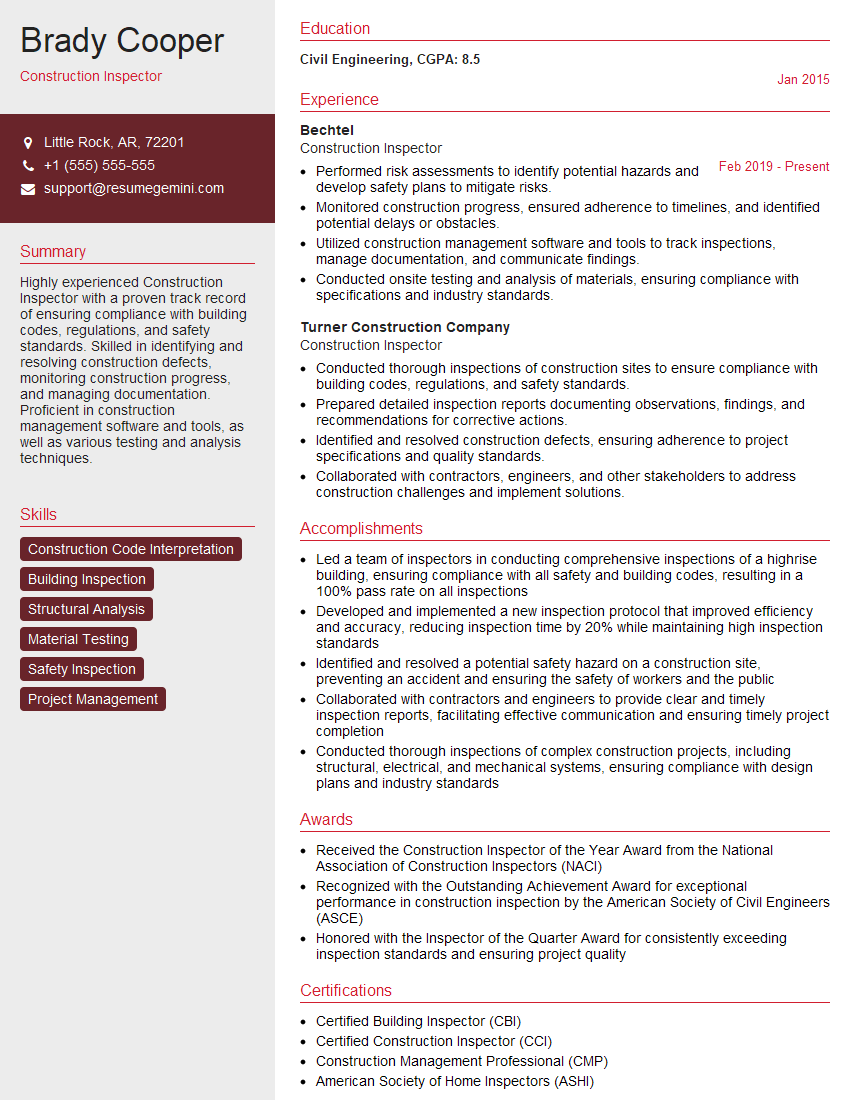
Construction Inspector Resume Sample
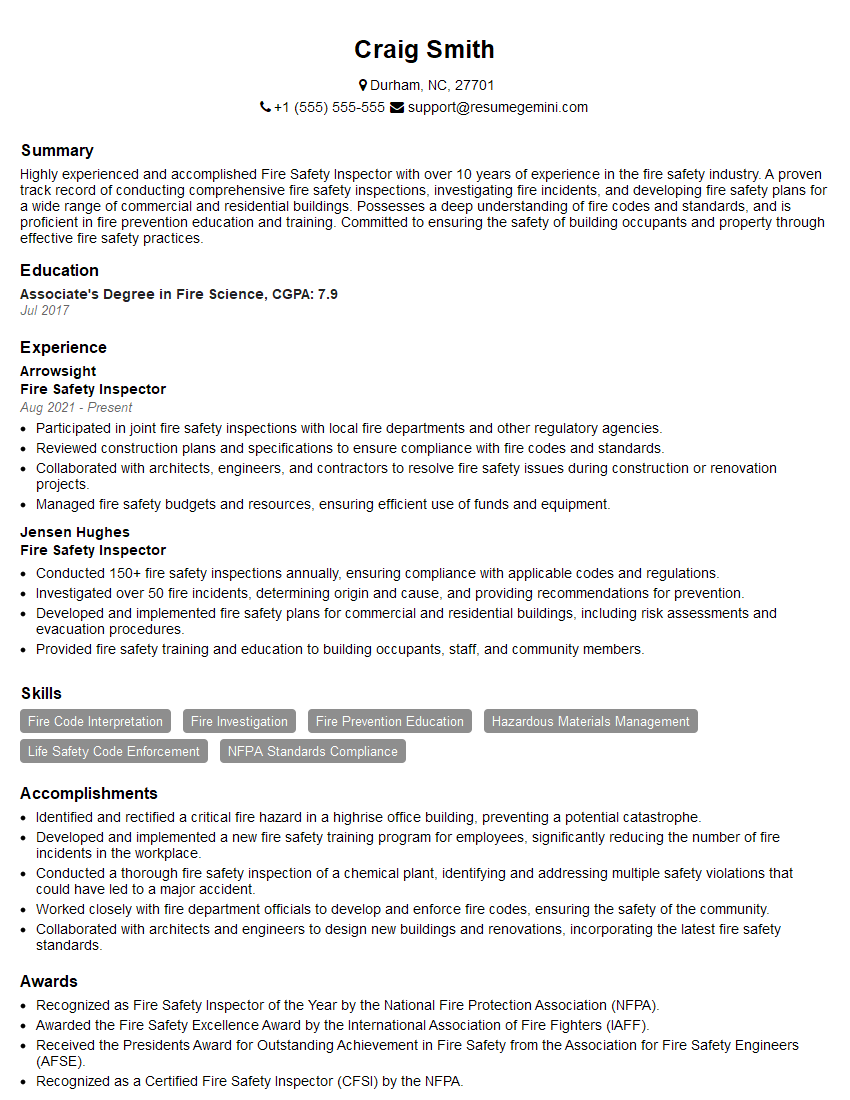
Fire Safety Inspector Resume Sample
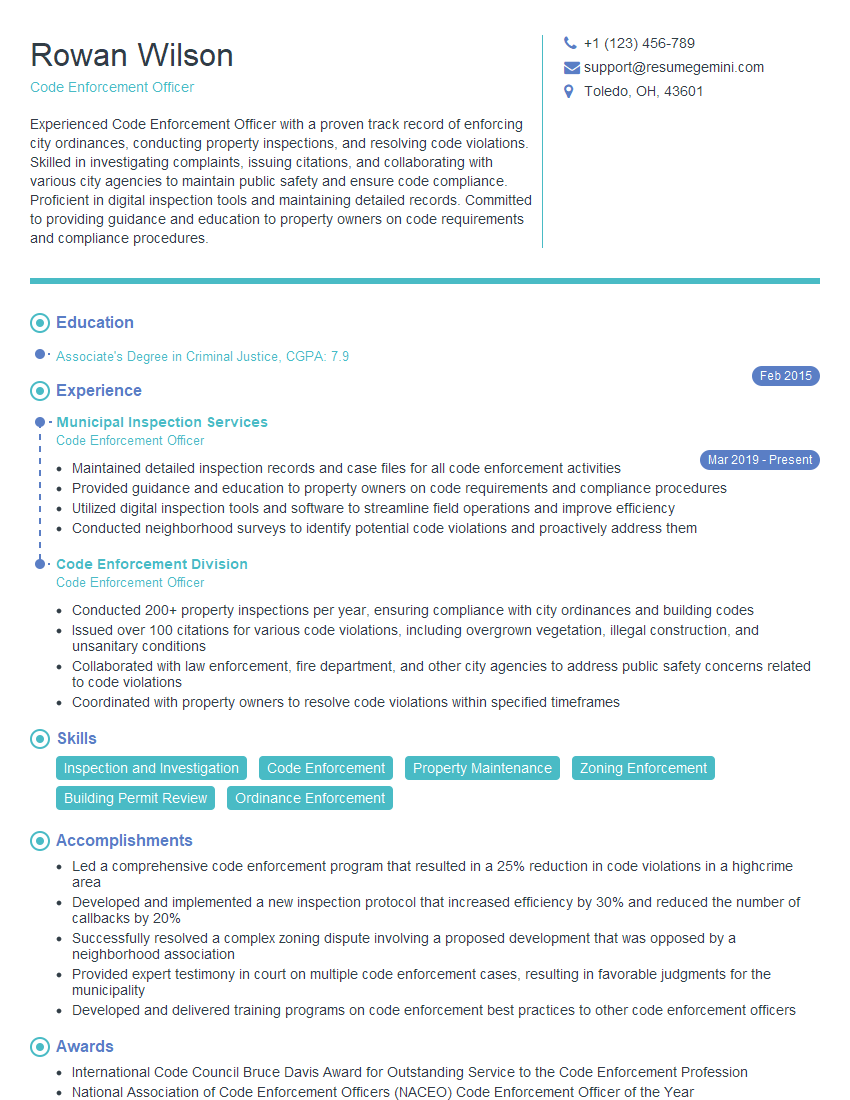
Code Enforcement Officer Resume Sample
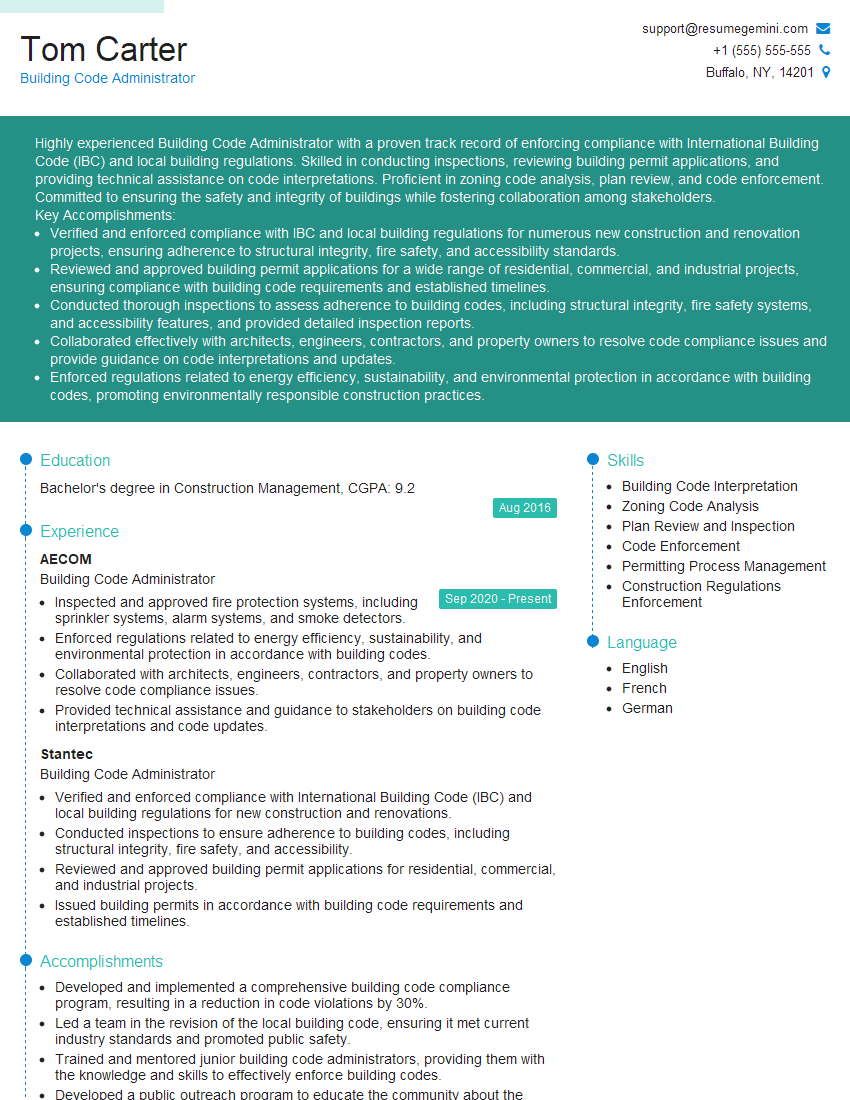
Building Code Administrator Resume Sample
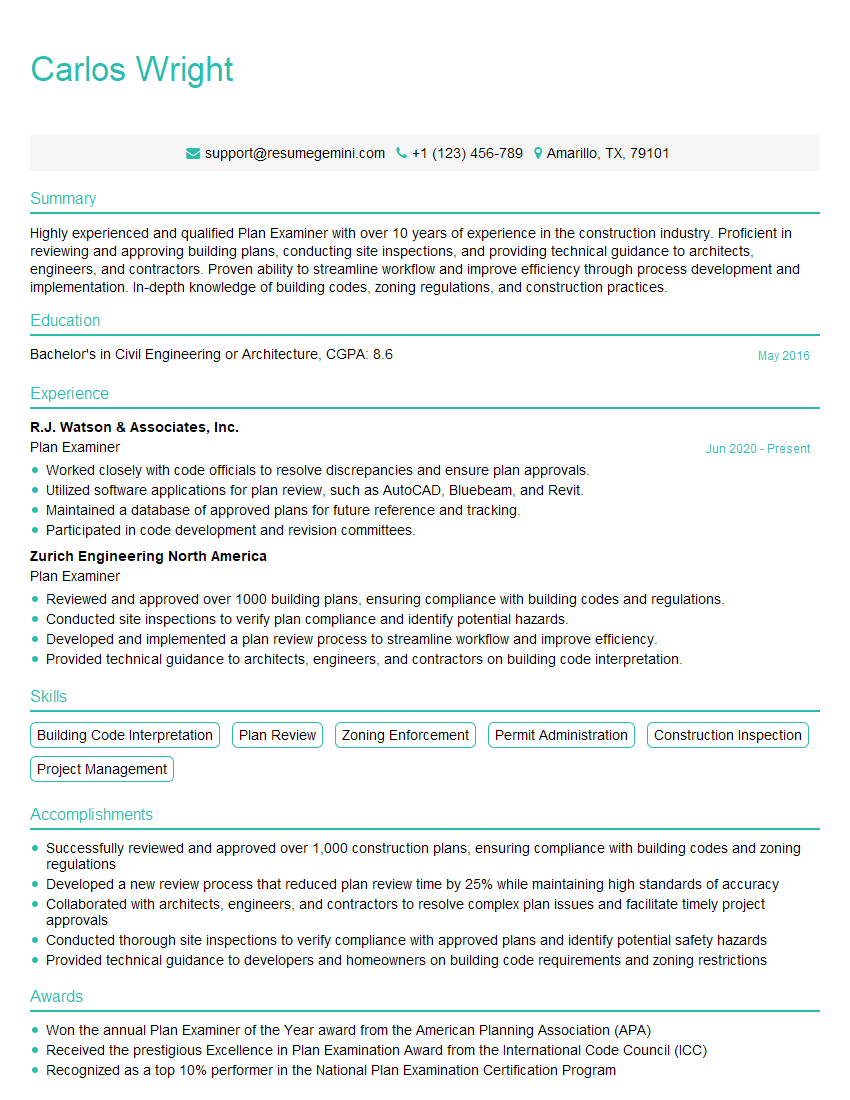
Plan Examiner Resume Sample
- Construction Manager
- General Contractor
- Regulatory Compliance Officer
- Sustainability Consultant
- Architectural Designer
- Project Architect
- Civil Engineer
- Structural Engineer
- Safety Inspector
- Construction Inspector
- Fire Safety Inspector
- Code Enforcement Officer
- Building Code Administrator
- Plan Examiner
Explore more articles
Users Rating of Our Blogs
Share Your Experience
We value your feedback! Please rate our content and share your thoughts (optional).
What Readers Say About Our Blog
Very informative content, great job.
good