Interviews are opportunities to demonstrate your expertise, and this guide is here to help you shine. Explore the essential Building Energy Analysis interview questions that employers frequently ask, paired with strategies for crafting responses that set you apart from the competition.
Questions Asked in Building Energy Analysis Interview
Q 1. Explain the difference between dynamic and steady-state energy modeling.
The core difference between dynamic and steady-state energy modeling lies in how they handle the time-dependent nature of building performance. Steady-state models simplify the analysis by assuming constant internal and external conditions throughout the simulation period. Think of it like taking a snapshot of the building’s energy use at a single point in time. They are computationally less demanding and quicker to run, making them suitable for preliminary assessments or when detailed hourly data isn’t critical. However, this simplification means they miss important variations in energy demand caused by changes in weather, occupancy patterns, and internal heat gains.
Dynamic models, on the other hand, simulate the building’s performance over time, typically hour by hour or even minute by minute, accounting for fluctuations in weather, internal loads, and equipment operation. Imagine watching a movie of the building’s energy use throughout a whole year. This level of detail allows for a more accurate representation of the building’s actual energy consumption, but requires significantly more computational power and time. For example, a dynamic model can accurately predict peak loads, which are crucial for sizing HVAC equipment.
In essence, steady-state models offer a quick overview, while dynamic models provide a detailed and realistic picture of building energy performance. The choice between them depends on the project’s specific requirements, budget, and desired level of accuracy.
Q 2. What are the key inputs required for an accurate energy simulation?
Accurate energy simulation requires a comprehensive set of inputs, categorized broadly as:
- Building Geometry and Construction: This includes the building’s dimensions, shape, orientation, window types and areas, wall and roof construction materials (with their thermal properties like R-value and U-value), and the presence of any shading devices.
- Building Systems: Detailed information about the HVAC system (type, efficiency, control strategies), lighting systems (type, wattage, control strategies), domestic hot water system, and any other energy-consuming equipment is crucial.
- Climate Data: Accurate weather data (temperature, humidity, solar radiation, wind speed) specific to the building’s location is essential. This is usually obtained from weather databases like TMY3 or EPW files.
- Internal Loads: Occupancy schedules (number of people, their activities), lighting schedules, equipment schedules, and internal heat gains from people, equipment, and appliances need to be carefully estimated. Incorrectly estimating these loads can significantly skew the results.
- Operating Schedules: The operation schedule of HVAC systems and other equipment (e.g., start and stop times, setpoints) significantly influences energy consumption. The model must accurately reflect the building’s actual operational patterns.
Missing or inaccurate inputs can lead to significant errors in the simulated energy consumption. Rigorous quality control is therefore paramount in input data preparation.
Q 3. Describe your experience with different energy modeling software (e.g., EnergyPlus, TRNSYS, eQUEST).
I have extensive experience with various energy modeling software, including EnergyPlus, TRNSYS, and eQUEST. Each has its strengths and weaknesses.
- EnergyPlus: This is a highly detailed and versatile engine, known for its accuracy and ability to model complex building systems and controls. I’ve used EnergyPlus extensively for whole-building energy simulations, incorporating detailed HVAC models and sophisticated control algorithms. One recent project involved using EnergyPlus to optimize the HVAC system design for a large office building, resulting in a 15% reduction in predicted energy consumption.
- TRNSYS: TRNSYS excels at modeling complex transient systems, making it particularly useful for advanced simulations involving solar thermal systems, district energy systems, or detailed thermal storage analyses. I used TRNSYS to simulate the performance of a geothermal heat pump system for a residential building, providing valuable insights into its seasonal efficiency.
- eQUEST: This software provides a user-friendly interface and quicker simulation times, making it suitable for preliminary energy assessments and design optimization in the early stages of a project. I often utilize eQUEST for comparative studies of different design options before investing the time and resources into more detailed simulations with EnergyPlus.
My familiarity with these tools allows me to select the most appropriate software based on the specific project requirements and the desired level of detail. I am also proficient in using input processing tools and post-processing software to streamline the modeling workflow.
Q 4. How do you account for uncertainty and variability in energy modeling?
Uncertainty and variability are inherent in building energy modeling. Ignoring them can lead to misleading results. To account for these uncertainties, I employ several strategies:
- Sensitivity Analysis: This systematically varies key input parameters (e.g., building materials’ thermal properties, occupancy schedules) to determine their impact on the predicted energy consumption. This helps identify the most influential parameters and their uncertainties.
- Probabilistic Modeling: Instead of using single-point estimates for input parameters, I use probability distributions (e.g., normal, uniform distributions) to represent the range of possible values. Monte Carlo simulations are then employed to generate a range of possible outcomes, providing a probabilistic assessment of the energy consumption.
- Uncertainty Quantification: This involves quantifying the uncertainty in the model’s predictions, typically using metrics such as confidence intervals or probability density functions. This provides a more realistic representation of the model’s predictive capabilities.
- Data Quality Control: Rigorous data quality checks are critical. This includes verifying the accuracy and completeness of all input data and conducting plausibility checks on the simulation results.
By systematically incorporating uncertainty analysis into the modeling process, I can provide more reliable and robust predictions and design recommendations.
Q 5. What are the common energy efficiency measures for buildings?
Common energy efficiency measures for buildings span various aspects of the design and operation:
- Building Envelope Improvements: Increased insulation in walls, roofs, and floors; high-performance windows; air sealing to minimize air leakage; use of thermal bridging mitigation techniques.
- High-Efficiency HVAC Systems: Heat pumps, energy-efficient air conditioners, variable-refrigerant-flow (VRF) systems, improved ventilation systems with heat recovery.
- Lighting Upgrades: Switching to LED lighting, occupancy sensors, daylight harvesting systems, and efficient lighting controls.
- Smart Building Controls: Building automation systems (BAS) that optimize HVAC operation based on occupancy and weather conditions; demand-controlled ventilation; predictive energy management systems.
- Renewable Energy Integration: Photovoltaic (PV) panels for electricity generation; solar thermal collectors for hot water heating; geothermal heat pumps.
- Water Heating Efficiency: Tankless water heaters, heat pump water heaters, efficient showerheads and faucets.
- Improved Appliance Efficiency: Using high-efficiency appliances and equipment (refrigerators, washing machines, etc.).
The selection of appropriate measures depends on various factors including the building’s type, climate, and budget. An integrated approach considering all building systems and their interactions is usually more effective.
Q 6. Explain the concept of building envelope performance and its impact on energy consumption.
The building envelope is the interface between the interior and exterior environments. Its performance—how well it resists heat transfer—significantly impacts energy consumption. A well-performing envelope minimizes heat loss in winter and heat gain in summer, reducing the load on the HVAC system and consequently reducing energy use. Think of it like a thermos: a good thermos keeps your drink hot or cold for a long time because of its insulation; similarly, a good building envelope keeps the interior at the desired temperature with less energy.
Key aspects of building envelope performance include:
- Thermal Resistance (R-value): A higher R-value indicates better insulation and reduces heat transfer.
- Thermal Transmittance (U-value): A lower U-value indicates better insulation and reduces heat transfer. It’s the inverse of R-value.
- Air Leakage: Air infiltration and exfiltration through cracks and gaps in the envelope lead to significant energy losses. Air sealing is crucial to minimize this.
- Solar Heat Gain: The amount of solar radiation that enters the building through windows and other openings can contribute significantly to cooling loads. Window shading and orientation can reduce this.
Poor building envelope performance can result in high energy consumption, discomfort for occupants, and increased operational costs. Improving building envelope performance is one of the most cost-effective ways to reduce building energy consumption.
Q 7. How do you validate the results of an energy model?
Validating an energy model is crucial to ensure its accuracy and reliability. This involves comparing the model’s predictions with real-world data. Several methods are used:
- Calibration: Adjusting the model’s inputs and parameters based on measured data from the building. This helps to refine the model and improve its accuracy. For example, if the model consistently over-predicts energy consumption, you might need to adjust the infiltration rate or HVAC system efficiency.
- Verification: Ensuring that the model is correctly programmed and runs without errors. This involves checking the model’s inputs, equations, and algorithms to identify and correct any inaccuracies or inconsistencies.
- Comparison with Measured Data: Once calibrated, the model’s predictions are compared with measured energy consumption data from the building. This can be done by comparing monthly or annual energy consumption, or even hourly data if available. Statistical metrics such as RMSE (Root Mean Square Error) or R-squared can be used to quantify the agreement between the model and measured data.
- Post-Occupancy Evaluation (POE): Collecting data on building energy performance after it is occupied. This helps to identify discrepancies between the design and actual operation and improve future models.
The validation process is iterative; the model may need to be refined multiple times until a satisfactory agreement between the model predictions and measured data is achieved. A thorough validation process ensures that the model’s results are reliable and can be used for informed decision-making.
Q 8. Describe your experience with building commissioning and retro-commissioning.
Building commissioning (Cx) and retro-commissioning (RCx) are crucial processes for optimizing building performance. Cx is the process of verifying that a building and its systems are designed, installed, tested, and operated to meet the owner’s project requirements. RCx, on the other hand, is the systematic process of identifying and correcting operational deficiencies in existing buildings to improve energy efficiency and system performance.
My experience encompasses both. In several projects, I’ve led commissioning teams, developing and implementing commissioning plans, overseeing testing and balancing of HVAC systems, and verifying that building systems comply with design specifications. For instance, I worked on a large office complex where Cx led to a 15% reduction in initial energy consumption compared to the baseline model. In other projects, I’ve spearheaded RCx efforts, conducting energy audits, identifying operational inefficiencies, and implementing cost-effective improvements, leading to energy savings of up to 20% in some cases. This often involved working with building operators to train them on optimized operation strategies for long-term energy savings.
A key aspect of both Cx and RCx is the development of a robust commissioning plan that outlines the scope of work, schedule, and responsibilities of all parties involved. I have extensive experience in developing such plans using industry best practices, ensuring that the process is systematic and comprehensive. The use of data-logging equipment, building automation system (BAS) analysis, and performance testing are essential components of my approach, allowing me to identify issues that might otherwise go undetected.
Q 9. What are the key indicators of building energy performance?
Key indicators of building energy performance provide a snapshot of a building’s energy efficiency and consumption. These indicators are crucial for tracking progress, identifying areas for improvement, and benchmarking against similar buildings. They can be broadly categorized into energy consumption metrics and environmental impact metrics.
- Energy Consumption Metrics: These metrics measure direct energy use. Examples include:
- Energy Use Intensity (EUI): Total energy consumption per square foot (or meter).
- kWh per square foot per year (or similar metric for different energy types).
- Peak demand (kW): The highest rate of energy consumption during a specific period.
- Specific energy consumption of equipment: Energy usage of key equipment like HVAC, lighting, and elevators.
- Environmental Impact Metrics: These metrics assess the environmental footprint of the building’s energy use.
- CO2 emissions (kg or tons): Greenhouse gas emissions from energy consumption.
- Water usage intensity: Water consumption per square foot (or meter).
Analyzing these indicators together provides a holistic picture. For example, a high EUI despite low peak demand suggests inefficiencies in overall operations, potentially related to poor scheduling or equipment performance. Conversely, a low EUI might mask high CO2 emissions if the energy source has a high carbon intensity. Benchmarking against similar buildings using standardized metrics facilitates performance comparisons and identifies improvement opportunities.
Q 10. Explain the principles of passive solar design.
Passive solar design utilizes the sun’s energy to passively heat, cool, and light buildings, thereby reducing or eliminating the need for active systems like mechanical heating and cooling. This approach is based on several key principles:
- Orientation and Shading: Placing buildings to maximize solar gain in winter (southern hemisphere in the Northern Hemisphere and vice-versa) while minimizing solar gain in summer through proper shading techniques like overhangs, awnings, and vegetation.
- Thermal Mass: Incorporating materials with high thermal mass (e.g., concrete, brick, stone) to absorb and store solar heat during the day and release it slowly at night, moderating indoor temperature fluctuations.
- Insulation and Air Sealing: Minimizing heat loss in winter and heat gain in summer through high-performance insulation and airtight construction techniques. This prevents thermal bridging and air leakage.
- Natural Ventilation: Employing design features that facilitate natural airflow to cool buildings, such as strategically placed windows and vents.
- Daylighting: Maximizing the use of natural light to reduce or eliminate the need for electric lighting. This involves careful window placement, light shelves, and light wells.
For example, a well-designed passive solar home might use south-facing windows to capture solar heat in winter, while deep overhangs provide shade in summer. The building’s thermal mass would then store and release heat, reducing the need for supplementary heating and cooling. This reduces reliance on active mechanical systems, resulting in lower energy costs and a smaller carbon footprint.
Q 11. How do you interpret ASHRAE standards related to building energy efficiency?
ASHRAE (American Society of Heating, Refrigerating and Air-Conditioning Engineers) standards are widely recognized and used for building energy efficiency. I interpret them as a framework to guide design, construction, and operation of energy-efficient buildings. Key standards relevant to building energy efficiency include:
- ASHRAE Standard 90.1: Energy Standard for Buildings Except Low-Rise Residential Buildings. This standard provides minimum energy efficiency requirements for various building types and systems. I use it to check compliance during design review and commissioning, ensuring that the building meets or exceeds the required performance level. For instance, I’d ensure HVAC system selection and sizing aligns with 90.1 requirements.
- ASHRAE Standard 62.1: Ventilation for Acceptable Indoor Air Quality. This standard sets minimum ventilation requirements to ensure good indoor air quality. I use this standard to check the adequacy of the ventilation system, balancing energy efficiency with occupant health and comfort. This might involve verifying appropriate air changes per hour and the effectiveness of filtration systems.
- ASHRAE Standard 189.1: Standard for the Design of High-Performance Green Buildings Except Low-Rise Residential Buildings. This standard offers more stringent energy efficiency requirements than ASHRAE 90.1, covering a broader range of sustainability considerations beyond energy alone. I use this standard for projects aiming for a higher level of sustainability, incorporating energy modeling and life cycle assessment techniques.
Understanding and applying ASHRAE standards requires detailed knowledge of their content and the ability to interpret them for specific building contexts. I regularly utilize the latest versions of these standards, taking advantage of advancements and updates in energy efficiency technologies and best practices.
Q 12. What are the benefits and limitations of using renewable energy sources in buildings?
Renewable energy sources offer a sustainable alternative to fossil fuels in buildings, but their implementation comes with certain benefits and limitations.
Benefits:
- Reduced Carbon Footprint: Renewable sources like solar, wind, and geothermal significantly reduce greenhouse gas emissions compared to fossil fuels.
- Lower Operating Costs: Once installed, renewable energy systems can significantly reduce or eliminate electricity bills, lowering long-term operating costs.
- Energy Independence: Buildings can become less reliant on the grid, improving energy security and reducing vulnerability to price fluctuations.
- Improved Building Image: Using renewable energy enhances a building’s sustainability profile, attracting environmentally conscious tenants or occupants.
Limitations:
- Intermittency: Solar and wind energy are intermittent, meaning they are not consistently available. This requires energy storage solutions or grid connections to ensure reliability.
- High Initial Costs: The upfront investment for renewable energy systems can be substantial, although government incentives and long-term cost savings can offset this.
- Space Requirements: Solar panels and wind turbines require significant roof or land area.
- Environmental Impacts: While generally cleaner, renewable energy sources can still have environmental impacts during manufacturing, transportation, and disposal.
- Technological Limitations: The efficiency and reliability of renewable energy technologies are constantly evolving; choosing the appropriate technology for a specific building requires careful consideration.
Careful planning and system design are essential for successful implementation of renewable energy in buildings. Factors such as site suitability, energy demands, and available incentives must be considered.
Q 13. Describe your experience with lifecycle cost analysis (LCCA).
Lifecycle cost analysis (LCCA) is a valuable tool for evaluating the total cost of ownership of a building or building system over its entire lifespan. It considers all costs associated with a project from initial design and construction through operation, maintenance, and eventual demolition or replacement. My experience involves using LCCA to compare different design options, evaluate energy efficiency upgrades, and justify investments in energy-saving technologies.
In a recent project involving a school renovation, I conducted an LCCA to compare replacing the existing HVAC system with a high-efficiency heat pump system versus simply repairing the existing system. The initial cost of the heat pump system was higher, but the LCCA showed significant long-term savings due to lower energy consumption and reduced maintenance costs, ultimately resulting in a lower total cost over the system’s lifespan. This analysis factored in energy prices, maintenance schedules, equipment lifespans, and the potential for future upgrades.
I use specialized software and detailed cost databases to perform LCCAs. The process typically involves: defining the system’s lifespan, identifying all relevant costs (including installation, operation, maintenance, replacement, and disposal), estimating the costs over time, and applying a discount rate to account for the time value of money. The outcome of an LCCA informs decision-making, ensuring that investments are justified based on their total cost and not just their upfront price.
Q 14. How do you identify and prioritize energy saving opportunities in a building?
Identifying and prioritizing energy-saving opportunities requires a systematic approach. I typically use a combination of methods:
- Energy Audits: Detailed assessments of a building’s energy consumption patterns, identifying areas of high energy use and potential inefficiencies. This includes reviewing utility bills, inspecting building systems, and performing on-site measurements.
- Building Automation System (BAS) Data Analysis: Analyzing data from the BAS to understand the actual operation of building systems. This can reveal operational inefficiencies or equipment malfunctions that are not immediately apparent.
- Walkthrough Inspection: Physical inspections to identify issues like air leaks, inadequate insulation, malfunctioning equipment, and inefficient lighting.
- Energy Modeling: Using software to simulate the performance of different energy-saving measures, predicting their impact on energy consumption and cost savings. This enables comparing various scenarios and optimizing strategies.
Once potential opportunities have been identified, I prioritize them based on several criteria:
- Cost-Effectiveness: Calculating the simple payback period (the time it takes for savings to cover the initial investment) and the return on investment (ROI) for each measure.
- Implementation Feasibility: Considering factors like ease of implementation, potential disruptions, and availability of resources.
- Impact: Assessing the potential energy savings and environmental benefits of each measure.
- Regulatory Compliance: Ensuring that all improvements meet relevant building codes and standards.
This prioritized list forms the basis for developing a comprehensive energy efficiency improvement plan, focusing on the most cost-effective and impactful measures first.
Q 15. Explain the concept of embodied carbon in building materials.
Embodied carbon refers to the greenhouse gas emissions generated throughout the entire lifecycle of a building material, from the extraction of raw materials to its manufacturing, transportation, installation, and eventual disposal or recycling. Think of it as the ‘carbon footprint’ of the material itself, as opposed to the operational carbon emissions from a building’s ongoing use.
For example, the embodied carbon in concrete is significant because of the energy-intensive cement production process. Producing cement involves heating limestone and other materials to extremely high temperatures in kilns, releasing large amounts of CO2. Steel production also contributes significantly to embodied carbon due to its energy-intensive manufacturing processes. Conversely, materials like sustainably harvested timber have lower embodied carbon footprints, making them more environmentally friendly choices.
Understanding embodied carbon is crucial for sustainable building design because it allows architects and engineers to make informed material selections that reduce the overall environmental impact of a project. This involves not only considering the material’s initial carbon footprint but also its durability and potential for reuse or recycling, which can significantly reduce its lifecycle carbon emissions.
Career Expert Tips:
- Ace those interviews! Prepare effectively by reviewing the Top 50 Most Common Interview Questions on ResumeGemini.
- Navigate your job search with confidence! Explore a wide range of Career Tips on ResumeGemini. Learn about common challenges and recommendations to overcome them.
- Craft the perfect resume! Master the Art of Resume Writing with ResumeGemini’s guide. Showcase your unique qualifications and achievements effectively.
- Don’t miss out on holiday savings! Build your dream resume with ResumeGemini’s ATS optimized templates.
Q 16. What is your experience with LEED certification or other green building rating systems?
I have extensive experience with LEED (Leadership in Energy and Environmental Design) certification, having worked on numerous projects achieving various LEED levels, from LEED Silver to LEED Platinum. My experience includes performing energy modeling and documentation to support LEED points in categories like Energy and Atmosphere, Materials and Resources, and Water Efficiency. I am also familiar with other green building rating systems such as BREEAM (Building Research Establishment Environmental Assessment Method) and Green Globes, understanding their various requirements and assessment methodologies.
In one project, we utilized a sophisticated energy model to optimize the building envelope and HVAC systems to achieve significant energy savings and secure LEED Platinum certification. This involved meticulous data collection, precise modeling, and iterative design adjustments to optimize performance.
My proficiency extends beyond certification attainment; I leverage my understanding of these systems to improve the sustainability and efficiency of projects even in contexts without formal certification requirements, as best practices should be consistently integrated.
Q 17. Describe a challenging energy modeling project you worked on and how you overcame the challenges.
One challenging project involved modeling a large, complex hospital with a highly sophisticated HVAC system and various operational modes. The challenge stemmed from the sheer complexity of the building’s systems, the need to accurately model patient load variability, and the limited availability of detailed operational data.
To overcome these challenges, I employed a phased approach. First, I created a simplified model to test the major system interactions and identify areas requiring closer scrutiny. Second, we collected additional data through site visits and communication with building operators. This helped us refine the model’s operational parameters. Third, I utilized advanced modeling techniques such as dynamic simulation to accurately capture the variable operational conditions of the hospital.
Through rigorous iterative modeling and validation against available data, we successfully developed an accurate energy model that enabled informed design decisions and significant energy savings compared to a baseline design. This project highlighted the importance of meticulous data gathering, phased modeling, and advanced simulation techniques in handling complex projects.
Q 18. How do you handle conflicting priorities in an energy efficiency project?
Conflicting priorities in energy efficiency projects are common. For example, we might need to balance energy savings with budget constraints, aesthetic considerations, or construction timelines. My approach involves facilitating open communication among stakeholders to identify and prioritize objectives.
I utilize a multi-criteria decision analysis (MCDA) framework to quantitatively assess the trade-offs between different objectives. This involves assigning weights to each objective based on stakeholder input, allowing for a rational comparison of various design alternatives. This process helps to find the optimal balance, often involving creative solutions and compromises to achieve maximum overall project value. Transparency and collaborative decision-making are crucial to ensuring project success and stakeholder buy-in.
For instance, we might choose a slightly less energy-efficient but more cost-effective HVAC system, compensating for the reduced savings through other energy-efficient measures in the building envelope.
Q 19. Explain your understanding of building codes and energy regulations.
My understanding of building codes and energy regulations is comprehensive, encompassing both national and local jurisdictions. I am familiar with codes like the International Energy Conservation Code (IECC) and ASHRAE standards, which provide minimum energy efficiency requirements for buildings. I understand how these codes and regulations impact design choices and energy modeling, requiring adherence to specific compliance calculations and documentation processes.
I regularly stay updated on the latest code revisions and energy regulations. This ensures our projects remain compliant and leverage the most current best practices. Knowing the nuances of these regulations helps optimize energy efficiency while ensuring cost-effective design and compliance.
For example, understanding the requirements for building envelope insulation levels and window U-factors directly influences the model’s input parameters and energy performance predictions. This ensures that the model accurately reflects the regulatory requirements and allows for informed design optimization.
Q 20. What are the different types of HVAC systems and their energy implications?
Several HVAC (Heating, Ventilation, and Air Conditioning) systems exist, each with different energy implications:
- Centralized systems: These use a central plant to produce and distribute conditioned air throughout the building. Examples include chillers and boilers with air handlers. Centralized systems can be efficient for large buildings but can also be expensive to operate and maintain.
- Decentralized systems: These use individual units located within zones or rooms, such as packaged units or VRF (Variable Refrigerant Flow) systems. Decentralized systems offer flexibility but can be less efficient overall.
- Air-source heat pumps: These systems use electricity to transfer heat between the indoor and outdoor environments, providing both heating and cooling. They are becoming increasingly popular due to their higher efficiency compared to traditional systems.
- Geothermal heat pumps: These systems use the earth’s relatively constant temperature to provide heating and cooling. They are highly efficient but require significant upfront investment for ground loop installation.
The energy implications depend on system efficiency (measured by metrics such as EER and SEER), control strategies, and operating schedules. A well-designed and controlled system, regardless of type, can significantly impact a building’s energy consumption.
Q 21. How do you determine the appropriate level of detail for an energy model?
Determining the appropriate level of detail for an energy model depends on several factors: the project’s goals, budget, and available data. A simple model might suffice for early-stage design or preliminary energy assessments, while a highly detailed model is often needed for detailed design optimization or compliance purposes. This requires careful consideration of different modeling techniques.
For example, a simple model might use a simplified representation of the building’s thermal characteristics and HVAC systems. In contrast, a detailed model would include highly accurate geometry, detailed HVAC system specifications and control algorithms, and possibly even dynamic occupancy and equipment schedules. The complexity should be justified, ensuring the investment in a detailed model will generate sufficient insights that inform the design. Using a overly detailed model for a simple application can be wasteful and unnecessary.
My process involves a thorough discussion with the stakeholders to establish project objectives. This clarifies the level of accuracy and detail required, allowing me to select the appropriate modeling tools and techniques and to ensure the model effectively supports decision-making. I always strive for a balance between model accuracy and practicality.
Q 22. Describe your experience with data analysis and visualization related to building energy data.
My experience with data analysis and visualization in building energy analysis is extensive. It involves much more than simply crunching numbers; it’s about extracting meaningful insights from complex datasets to drive impactful decisions. I’m proficient in using various software packages to process, clean, and analyze energy consumption data from Building Management Systems (BMS), utility bills, and on-site metering. This often involves handling large datasets with missing values or inconsistencies, requiring careful data cleaning and preprocessing techniques.
For example, I recently worked on a project analyzing energy consumption data from a large office building. The data included hourly readings from various meters, encompassing electricity, gas, and water usage. Using tools like Python with libraries such as Pandas and NumPy, I cleaned the data, identified anomalies, and performed statistical analysis to pinpoint areas of high energy consumption. This data was then visualized using tools like Tableau and Power BI to create interactive dashboards showing energy use patterns, allowing building managers to identify energy-saving opportunities.
My visualizations aren’t just static charts; they’re dynamic tools. I strive to create interactive dashboards that allow users to drill down into the data, explore different time periods, and compare energy use across different zones within the building. These visualizations are instrumental in communicating complex findings in an easily digestible format.
Q 23. How do you communicate complex technical information to non-technical audiences?
Communicating complex technical information to non-technical audiences requires a strategic approach. I avoid jargon and technical terms whenever possible, replacing them with plain language and relatable analogies. Think of explaining the concept of building envelope thermal performance – instead of talking about U-values and R-values, I might explain it as the building’s ‘clothing’: thicker clothing (higher R-value) keeps the inside warmer in winter and cooler in summer.
Visual aids are crucial. Charts, graphs, and even simple diagrams can make abstract concepts much easier to understand. For example, a pie chart showing the percentage of energy consumed by different building systems (HVAC, lighting, etc.) can effectively communicate the relative importance of each system to overall energy consumption. Storytelling is also important: I weave my analysis into narratives, using real-world examples and case studies to illustrate key points and make the information more engaging and memorable. Finally, I always encourage questions and make sure the audience has a chance to voice their concerns and clarify any uncertainties.
Q 24. Explain your experience with energy audits and energy assessments.
My experience with energy audits and assessments spans various building types, from small residential buildings to large commercial complexes. An energy audit is a systematic process of evaluating a building’s energy performance. This involves a thorough on-site inspection, reviewing utility bills, and analyzing building systems. The goal is to identify energy-saving opportunities and create a prioritized list of cost-effective improvements.
During an energy assessment, I’ll typically use specialized tools like infrared cameras to detect thermal bridges and air leaks, perform blower door tests to measure building airtightness, and review the building’s mechanical, electrical, and plumbing (MEP) systems. I’ll consider the building’s history, occupant behaviour, climate data, and the impact of different retrofit solutions. The assessment culminates in a detailed report with recommendations for energy efficiency improvements, cost estimates, and projected energy savings.
For instance, I once conducted an audit on an older school building. The audit revealed significant air infiltration through poorly sealed windows and doors, resulting in substantial heating and cooling losses. My recommendations included window caulking, door weatherstripping, and upgrades to the HVAC system. These improvements led to a significant reduction in the school’s energy consumption and lowered their operational costs.
Q 25. What are your thoughts on the future of building energy analysis and modeling?
The future of building energy analysis and modeling is exciting and rapidly evolving, driven by several key trends. Firstly, we’ll see a greater integration of data analytics and machine learning. This will allow for more predictive modeling, enabling proactive identification of energy efficiency issues and optimization of building operations.
Secondly, the increasing adoption of smart building technologies and the Internet of Things (IoT) will provide vast amounts of real-time data on building performance. This data can be used to refine energy models and improve their accuracy. We’ll also see greater use of digital twins – virtual representations of buildings – that can be used to simulate different scenarios and test the impact of various energy efficiency upgrades before implementation.
Finally, the growing focus on sustainability and decarbonization will drive the development of more sophisticated modeling tools that can assess the environmental impact of building designs and operations. Overall, the future of building energy analysis is heading towards more data-driven, predictive, and sustainable approaches.
Q 26. What software and tools are you proficient in using for building energy analysis?
My proficiency in building energy analysis software is quite broad. I’m highly skilled in using EnergyPlus, a widely recognized whole-building energy simulation program. I’m comfortable developing and running complex energy models, analyzing the results, and generating reports. I also have extensive experience with eQUEST, another powerful energy modeling tool known for its user-friendly interface.
Beyond simulation software, I’m proficient in using data analysis tools such as Python (with libraries like Pandas, NumPy, and Scikit-learn) and R for data processing, statistical analysis, and visualization. I also utilize data visualization tools such as Tableau and Power BI to create interactive dashboards and effectively communicate my findings.
Finally, I’m familiar with various building management system (BMS) software, which allows me to access and analyze real-time energy consumption data from buildings. This combination of simulation software, data analysis tools, and BMS expertise enables me to provide a comprehensive and data-driven approach to building energy analysis.
Q 27. Describe your approach to troubleshooting energy-related issues in buildings.
My approach to troubleshooting energy-related issues in buildings is systematic and data-driven. I begin by gathering data from various sources, including utility bills, BMS data, and on-site measurements. This helps to pinpoint areas of high energy consumption or unusual energy use patterns.
Next, I conduct a thorough site inspection, visually inspecting building components, equipment, and systems. I often utilize tools like infrared cameras to identify thermal bridges and air leaks, and data loggers to monitor temperatures, humidity, and other key parameters. This stage often reveals clues pointing to problems that aren’t immediately apparent.
Once potential issues are identified, I analyze the collected data using appropriate software and statistical techniques. This helps to quantify the impact of different factors and prioritize areas for improvement. The final step involves developing and implementing cost-effective solutions. This process includes preparing detailed reports, making recommendations, and tracking the impact of implemented measures to ensure that the solutions are effective and sustainable.
Q 28. Explain how you stay up-to-date on the latest trends and advancements in building energy analysis.
Staying current in the rapidly evolving field of building energy analysis requires a multi-pronged approach. I actively participate in professional organizations like ASHRAE (American Society of Heating, Refrigerating and Air-Conditioning Engineers) and attend conferences and workshops to learn about the latest advancements in energy modeling, simulation, and building technologies.
I regularly read industry publications, journals, and online resources, including ASHRAE Journal, Building Green, and various research papers. I also participate in online forums and discussions with other professionals in the field to share knowledge and stay abreast of current trends.
Furthermore, I continually seek opportunities for professional development, taking advanced courses and training programs to enhance my skills in areas such as advanced energy modeling, data analytics, and building automation systems. By combining these methods, I ensure I remain at the forefront of this ever-changing industry.
Key Topics to Learn for Building Energy Analysis Interview
- Building Envelope Performance: Understanding thermal bridges, insulation types, window U-values, and their impact on energy consumption. Practical application: Analyzing building designs to identify areas for energy efficiency improvements.
- HVAC Systems: Familiarity with various HVAC system types (e.g., VRF, chillers, heat pumps), their operating principles, and energy performance characteristics. Practical application: Selecting and sizing HVAC systems for optimal energy efficiency in different climates.
- Energy Modeling Software: Proficiency in at least one energy modeling software (e.g., EnergyPlus, TRNSYS, eQuest). Practical application: Creating and interpreting energy models to predict building energy performance and identify potential savings.
- Renewable Energy Integration: Knowledge of different renewable energy technologies (e.g., solar PV, solar thermal, wind) and their integration into building designs. Practical application: Designing buildings that maximize renewable energy utilization and minimize reliance on fossil fuels.
- Lighting and Electrical Systems: Understanding lighting design principles, energy-efficient lighting technologies, and the impact of electrical equipment on energy consumption. Practical application: Specifying energy-efficient lighting and electrical systems for new and existing buildings.
- Data Analysis and Interpretation: Ability to analyze energy consumption data, identify trends, and diagnose energy performance issues. Practical application: Using data to inform energy efficiency retrofits and optimize building operations.
- Energy Codes and Standards: Familiarity with relevant energy codes (e.g., ASHRAE 90.1) and sustainability standards (e.g., LEED). Practical application: Ensuring building designs meet regulatory requirements and achieve high sustainability ratings.
- Life-Cycle Cost Analysis (LCCA): Understanding the economic aspects of energy efficiency and renewable energy investments. Practical application: Evaluating the long-term cost-effectiveness of different energy-saving measures.
Next Steps
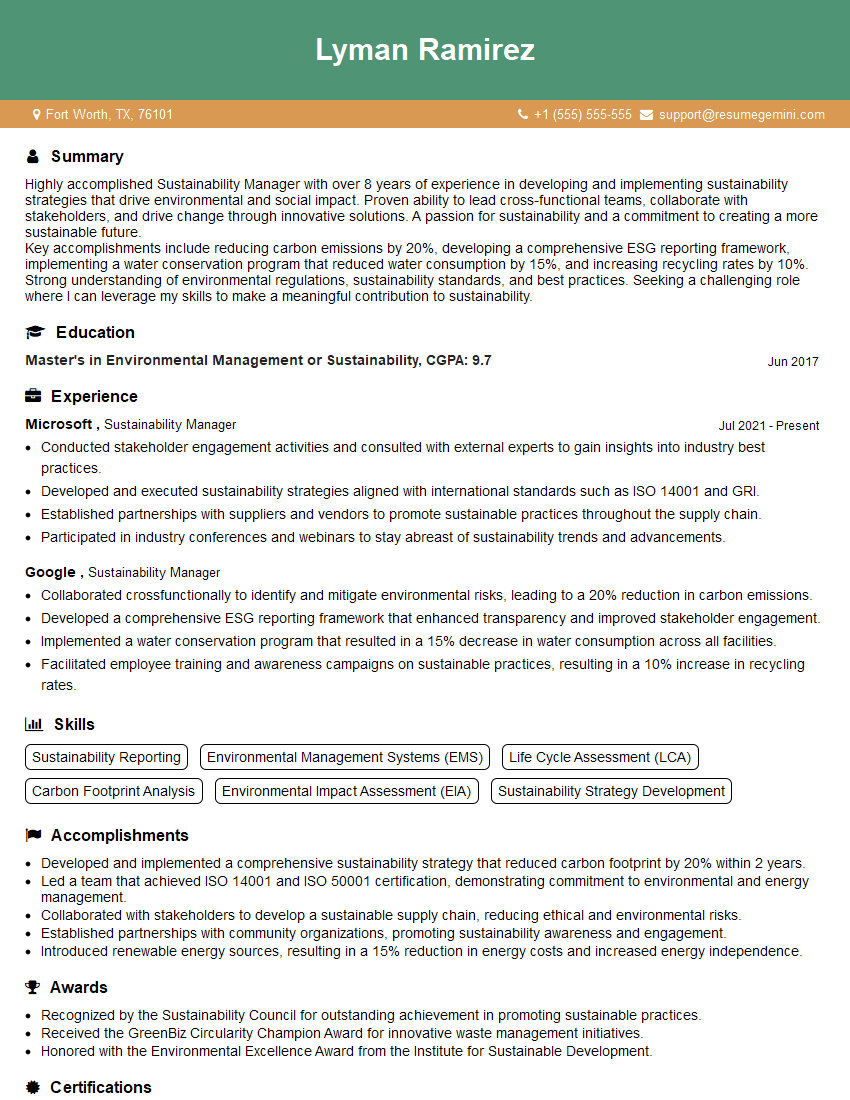
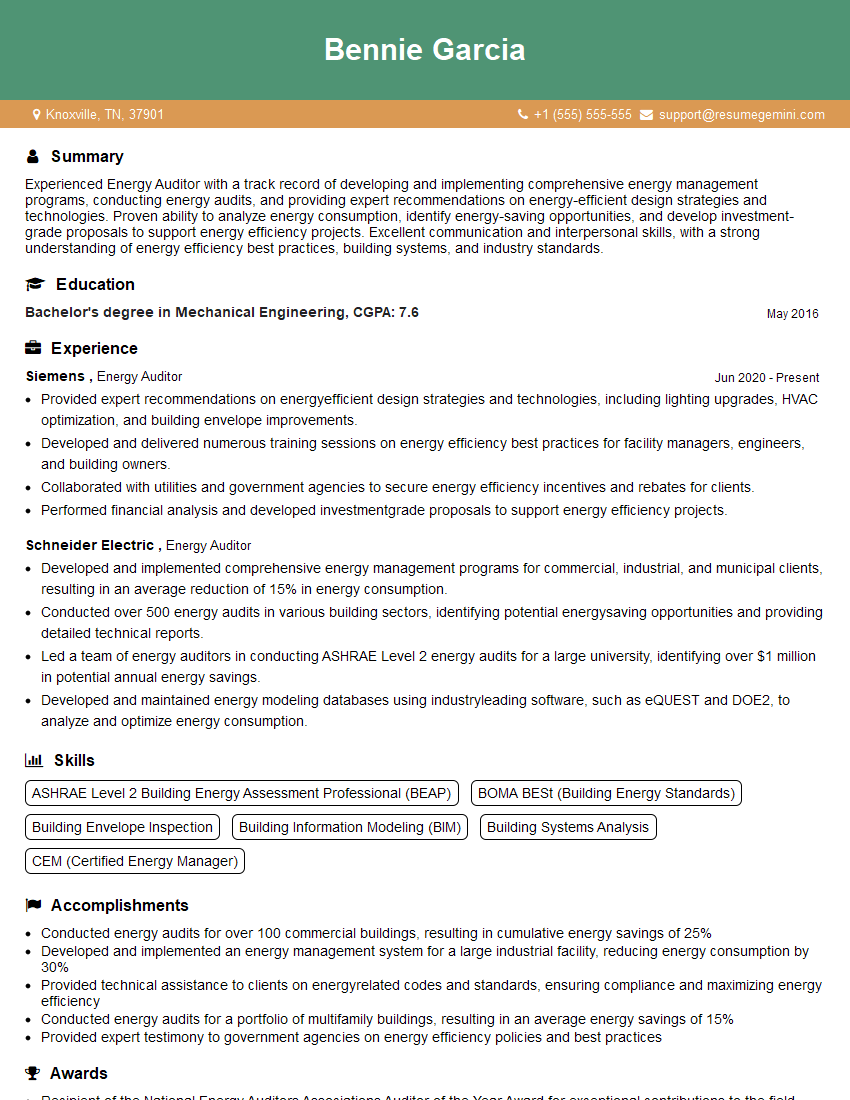
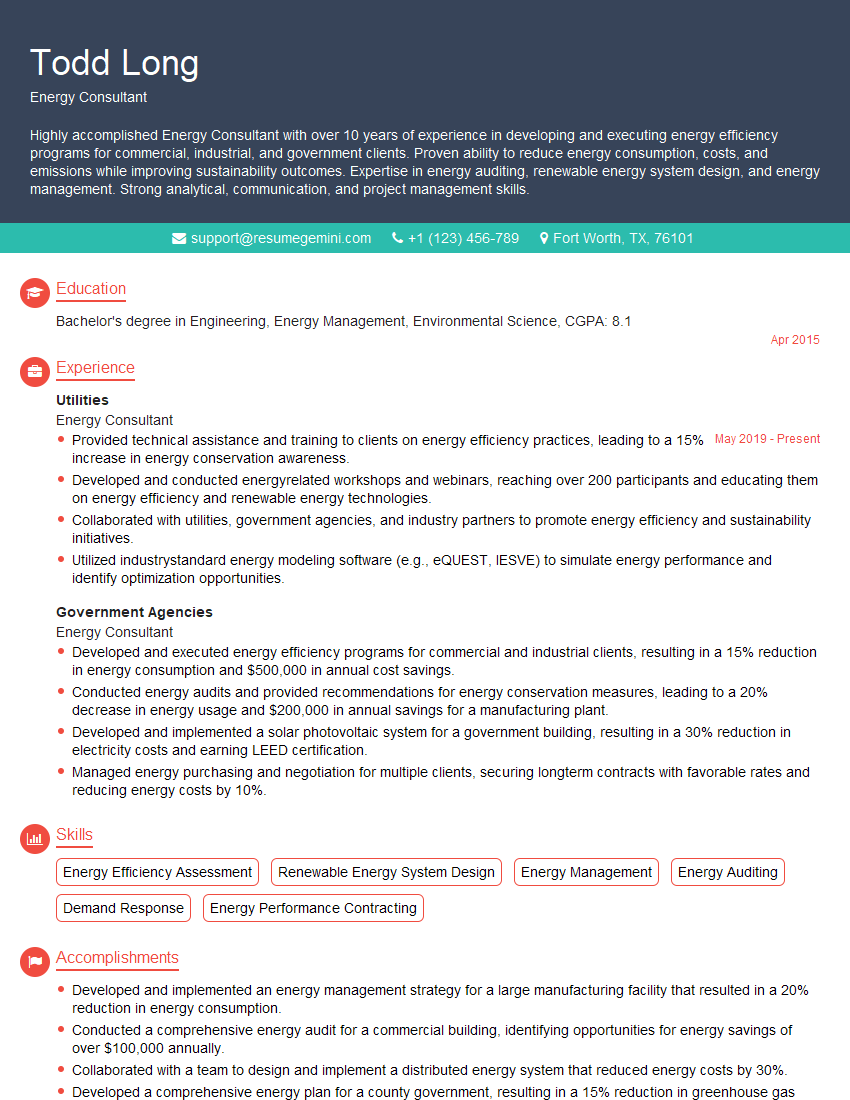
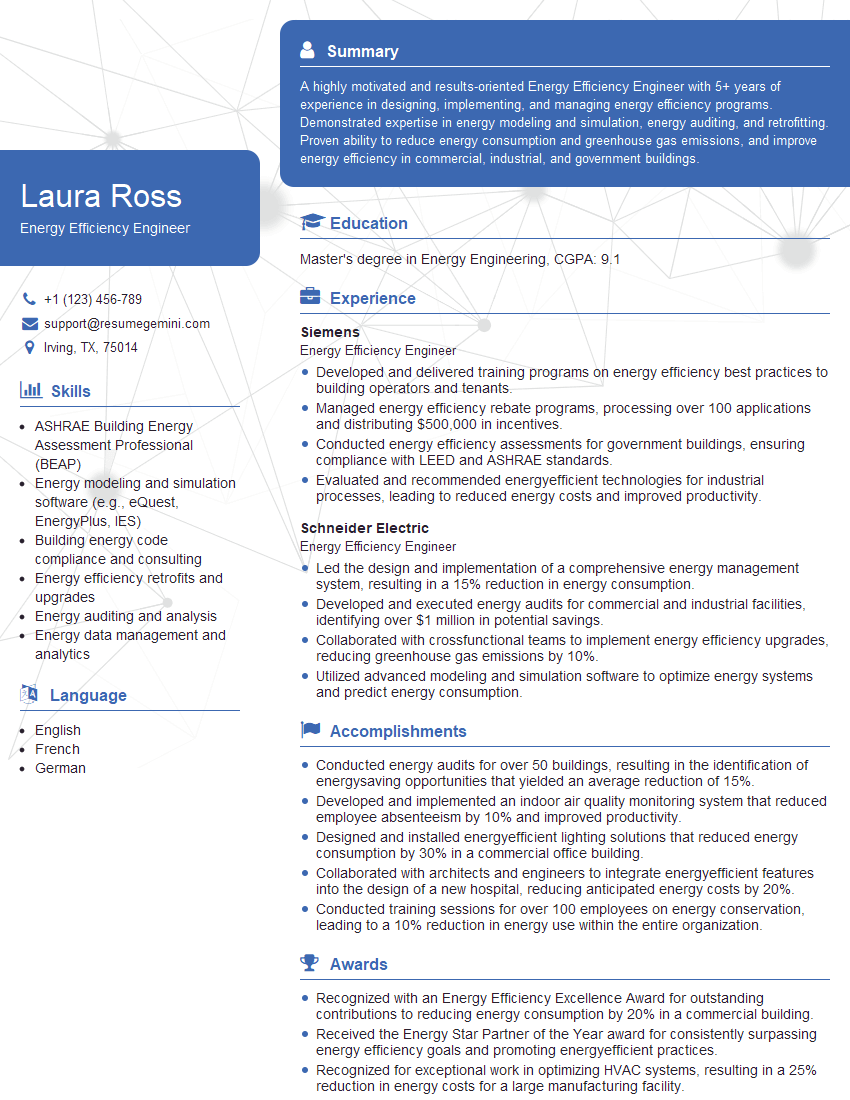
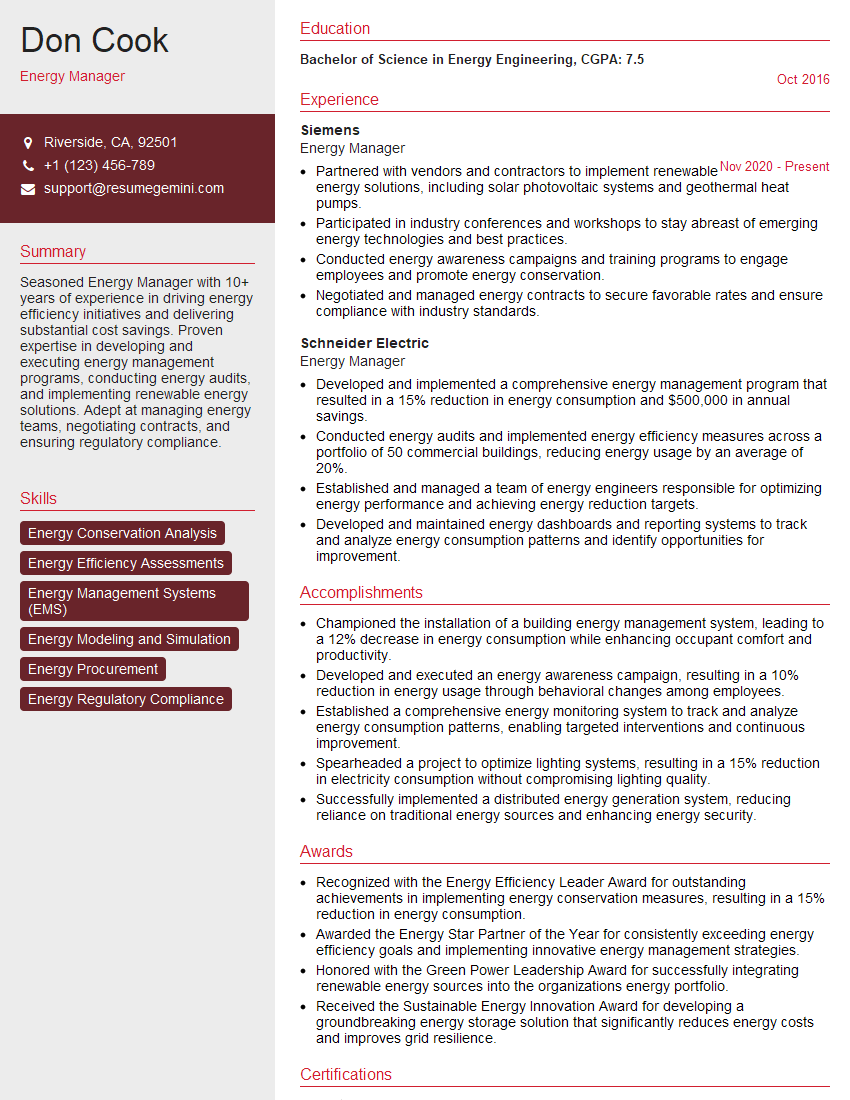
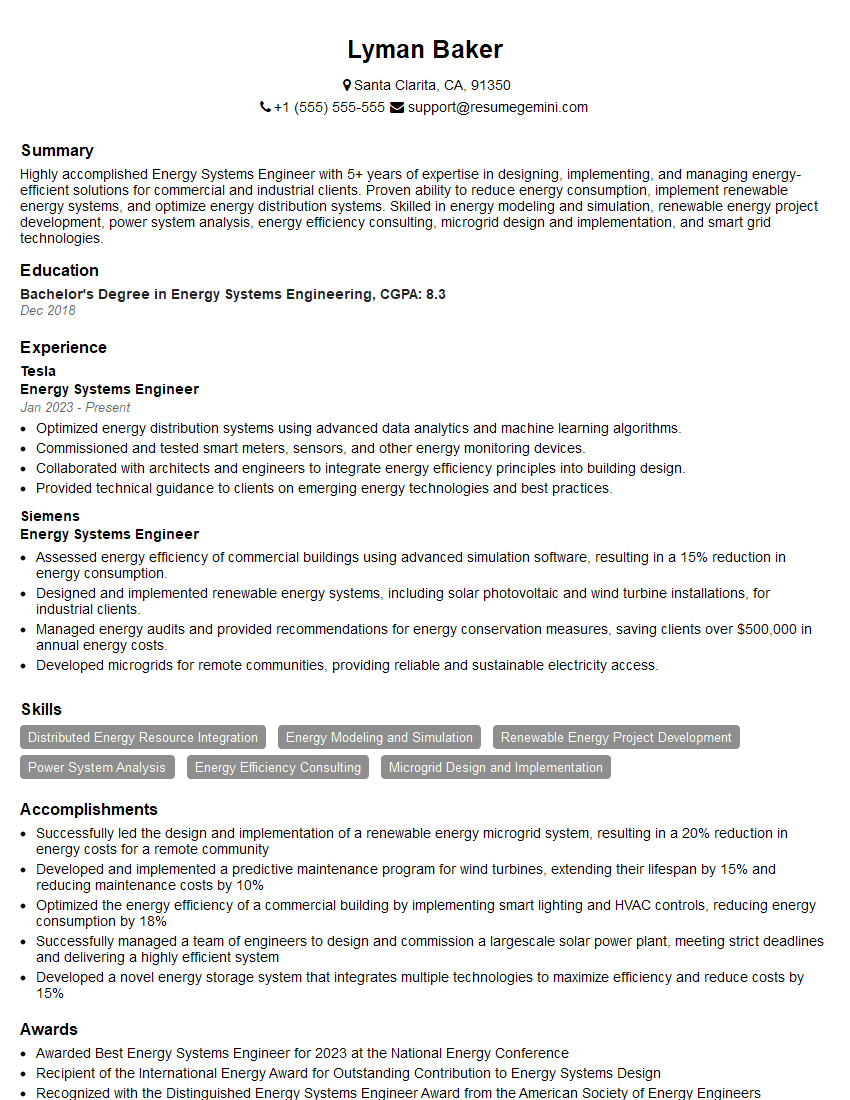
Mastering Building Energy Analysis is crucial for a successful and rewarding career in the sustainable building industry. It opens doors to exciting opportunities in design, consulting, research, and operations. To stand out, create an ATS-friendly resume that highlights your skills and experience effectively. We highly recommend using ResumeGemini to build a professional and impactful resume. ResumeGemini offers a user-friendly interface and provides examples of resumes tailored to Building Energy Analysis, giving you a head start in your job search.

Explore more articles
Users Rating of Our Blogs
Share Your Experience
We value your feedback! Please rate our content and share your thoughts (optional).
What Readers Say About Our Blog
Very informative content, great job.
good