Feeling uncertain about what to expect in your upcoming interview? We’ve got you covered! This blog highlights the most important Bulk Sealing Machine Operation interview questions and provides actionable advice to help you stand out as the ideal candidate. Let’s pave the way for your success.
Questions Asked in Bulk Sealing Machine Operation Interview
Q 1. Describe your experience operating bulk sealing machines.
My experience with bulk sealing machines spans over eight years, encompassing various industries like food processing, pharmaceuticals, and cosmetics. I’ve operated a wide range of machines, from simple hand-held sealers to fully automated, high-speed systems. This experience includes not only routine operation but also machine maintenance, troubleshooting, and operator training. For example, I was instrumental in optimizing the sealing process on a high-speed bagging line in a food processing plant, leading to a 15% increase in production efficiency and a significant reduction in product waste due to faulty seals. I’m adept at understanding machine specifications, adjusting parameters, and identifying potential issues before they impact production.
Q 2. What types of bulk sealing machines are you familiar with?
I’m familiar with several types of bulk sealing machines, categorized primarily by the sealing method and the type of packaging they handle. These include:
- Impulse Sealers: These are commonly used for sealing pouches and bags, employing heat and pressure for a short duration. They are versatile and relatively inexpensive.
- Continuous Band Sealers: Ideal for high-volume applications, these sealers continuously move product along a conveyor belt while sealing the bags or containers. Think of the machines sealing bags of chips in a factory.
- Vacuum Sealers: These machines remove air from the packaging before sealing, extending the shelf life of products, especially food items. They often are used in conjunction with other sealing methods for optimal product preservation.
- Induction Sealers: These employ electromagnetic induction to heat a foil liner on a container, creating a hermetic seal. They are commonly found in applications needing a tamper-evident seal, like pharmaceuticals or some food products.
- Heat Sealers (various types): This is a broad category including jaw sealers (for smaller pouches) and others using various heat-applying methods.
My expertise extends to both manual and automated systems within these categories.
Q 3. Explain the process of setting up a bulk sealing machine for a specific product.
Setting up a bulk sealing machine for a specific product requires a methodical approach, focusing on safety and achieving the optimal seal. The steps generally include:
- Inspecting the Machine: Checking for any damage, ensuring all components are functioning correctly, and verifying safety guards are in place.
- Selecting the Correct Seal Settings: This involves adjusting parameters such as temperature, pressure, and sealing time based on the product’s material (e.g., plastic, foil, paper) and thickness. These settings are often determined through testing and are usually provided by the machine manufacturer or through experience. For example, thicker plastic requires higher temperatures and longer sealing times.
- Preparing the Packaging: Ensuring the packaging is correctly loaded and positioned on the conveyor belt (if applicable). Incorrectly oriented pouches can lead to poor seals.
- Testing the Seal: Running a small test batch to verify the seal integrity. This involves visually inspecting the seals and, if necessary, testing the seals’ strength, e.g., by trying to manually open the seal.
- Adjusting Settings (if needed): Based on test results, fine-tuning settings to achieve optimal seal quality. This iterative process refines the setup to guarantee consistently reliable sealing.
Throughout the entire process, meticulous record-keeping of settings and outcomes is crucial for future reference and troubleshooting.
Q 4. How do you ensure the quality and integrity of seals?
Ensuring seal quality and integrity is paramount. This is achieved through a multi-pronged approach:
- Regular Machine Maintenance: Keeping the machine clean and properly lubricated prevents malfunctions that can lead to poor seals. This includes cleaning sealing elements to avoid residue buildup.
- Consistent Monitoring: Regularly checking seal integrity during operation by visually inspecting sealed products and performing occasional strength tests. A simple tug test can reveal weak seals.
- Calibration and Adjustment: Regularly calibrating the machine’s temperature and pressure sensors ensures consistent seal quality. Slight adjustments are frequently needed depending on ambient temperature or variations in the packaging material.
- Documentation and Traceability: Maintaining detailed logs of machine settings, production runs, and any observed anomalies aids in identifying issues and prevents recurrences. This is critical for quality control and compliance.
Using a combination of these methods creates a robust system to ensure highly reliable and consistent seals.
Q 5. What are the common causes of malfunctions in bulk sealing machines?
Common malfunctions in bulk sealing machines often stem from a few key areas:
- Improper Seal Settings: Incorrect temperature, pressure, or time settings are the most frequent cause of seal failures. This can result in weak seals, leaks, or incomplete seals.
- Mechanical Issues: Worn-out or damaged sealing elements (e.g., heating elements, belts, rollers), jammed conveyors, and malfunctioning sensors all contribute to operational problems.
- Power Fluctuations: Unexpected power surges or dips can disrupt the sealing process, leading to inconsistent seals or complete machine failure.
- Material Issues: Faulty or damaged packaging materials can also cause sealing problems. The packaging may be too thin, thick, or have inconsistent material properties.
- Operator Error: Incorrect loading of materials or improper machine operation can result in jams or sealing failures.
Understanding these common causes helps focus troubleshooting efforts effectively.
Q 6. How do you troubleshoot common issues, such as seal failures or jams?
Troubleshooting involves a systematic approach:
- Identify the Problem: Clearly define the issue – is it a weak seal, a jam, a complete machine stoppage, or something else?
- Check the Obvious: Look for simple solutions first. Is the packaging loaded correctly? Are the power cords plugged in securely? Are there any visible obstructions?
- Consult the Manual: Refer to the machine’s operating manual for troubleshooting guidance and diagrams.
- Check the Sensors: Verify that temperature and pressure sensors are functioning correctly. Many machines have diagnostic indicators that provide error codes.
- Inspect the Sealing Elements: Carefully examine the heating elements, belts, and rollers for damage or wear. Replace worn components as needed.
- Test Run: After making repairs or adjustments, perform a test run with a small batch of products to verify the issue is resolved.
If the problem persists after these steps, seeking assistance from a qualified technician or the machine manufacturer might be necessary.
Q 7. What safety procedures do you follow while operating bulk sealing machines?
Safety is paramount when operating bulk sealing machines. My procedures include:
- Lockout/Tagout: Before performing any maintenance or repair, always follow lockout/tagout procedures to prevent accidental startup. This is critical for preventing serious injury.
- Personal Protective Equipment (PPE): Wearing appropriate PPE, such as safety glasses, gloves, and hearing protection, is essential. Heat resistant gloves are particularly crucial when working with hot sealing elements.
- Machine Guards: Ensuring all safety guards are in place and functioning correctly before operating the machine prevents accidental contact with moving parts.
- Proper Training: Only trained and authorized personnel should operate the machine. Thorough training is required to understand all safety procedures and machine operation protocols.
- Emergency Shut-off: Knowing the location of the emergency stop button and how to use it is critical. It should be readily accessible to all operators.
Adhering to these safety protocols is not just a matter of compliance; it’s a fundamental aspect of responsible machine operation.
Q 8. How do you perform routine maintenance on a bulk sealing machine?
Routine maintenance on a bulk sealing machine is crucial for ensuring its longevity, efficiency, and safety. It’s akin to regularly servicing your car – preventing small issues from becoming major breakdowns. My routine involves a multi-step process:
Daily Checks: This includes visually inspecting the machine for any loose parts, leaks, or damage. I also check the sealing head temperature, pressure gauges, and the overall functionality of the conveyor system. I’d look for things like unusual noises or vibrations.
Weekly Maintenance: A more thorough cleaning is performed. This involves removing any accumulated debris or product residue from the sealing area and conveyor belt. I’ll also lubricate moving parts according to the manufacturer’s recommendations, preventing wear and tear.
Monthly Maintenance: This focuses on more in-depth checks and adjustments. I would check the alignment of the sealing jaws, ensuring consistent pressure and temperature across the sealing area. Calibration checks are also performed to maintain accuracy.
Quarterly/Annual Maintenance: These steps typically involve more extensive servicing, potentially requiring specialized tools or external technicians. This could involve replacing worn-out seals, belts, or other components. Preventive maintenance schedules are crucial here, following the manufacturer’s guidelines meticulously.
Documentation is key; I maintain detailed records of all maintenance activities, including dates, performed tasks, and any identified issues. This historical data is invaluable for predictive maintenance, helping to anticipate potential problems before they disrupt production.
Q 9. Describe your experience with different sealing methods (e.g., heat sealing, induction sealing).
I have extensive experience with both heat sealing and induction sealing methods, each suited for different applications and packaging materials. Heat sealing, a relatively simple and cost-effective method, uses heat to melt and fuse materials together. I’ve worked extensively with various types of heat sealers, from band sealers to impulse sealers. Think of sealing plastic bags – that’s often heat sealing.
Induction sealing, on the other hand, is more sophisticated. It uses electromagnetic induction to heat a sealing layer within a material, often a foil liner, creating a hermetic seal. This method is particularly suitable for tamper-evident closures and applications requiring high barrier protection, such as pharmaceuticals or food products needing extended shelf life. The ‘pop’ sound when you open a sealed jar is often an indication of induction sealing.
My experience encompasses the nuances of each method, including choosing the appropriate sealing parameters (temperature, pressure, dwell time) for optimal seal quality based on the material type and product characteristics. I’m also adept at troubleshooting issues related to each method, such as inconsistent seals or seal failures.
Q 10. How do you monitor the performance of the sealing machine?
Monitoring the sealing machine’s performance is continuous and involves a combination of visual inspection and data analysis. I regularly observe the sealing process itself, looking for signs of inconsistencies such as incomplete seals, wrinkles, or leaks. I also rely heavily on the machine’s built-in monitoring systems. Most modern machines have sensors and control systems that provide real-time data on parameters like temperature, pressure, sealing time, and cycle count.
I frequently check these parameters against pre-set limits and thresholds. Any deviations trigger alerts and require investigation. For instance, a sudden drop in sealing temperature could indicate a malfunctioning heating element, requiring immediate attention to prevent production issues and product damage. Additionally, I use statistical process control (SPC) charts to track key parameters over time and identify trends that might indicate a problem brewing. Think of these charts as a ‘health report’ for the machine.
Q 11. What are the key performance indicators (KPIs) you track?
The key performance indicators (KPIs) I track are crucial for assessing the efficiency and effectiveness of the sealing operation. The most important KPIs include:
Overall Equipment Effectiveness (OEE): This holistic metric considers availability, performance, and quality. It’s a powerful indicator of the machine’s overall efficiency.
Sealing Efficiency: Percentage of successfully sealed units versus total units processed. This directly reflects the quality of the sealing process.
Downtime Rate: The percentage of time the machine is not operational, helping pinpoint areas for improvement.
Rejection Rate: The percentage of sealed units that fail quality checks, indicating sealing inconsistencies or potential issues with the packaging material.
Production Rate: Units produced per hour or per shift, a straightforward measure of output.
By monitoring these KPIs regularly, I can identify areas for improvement, optimize the machine’s settings, and prevent potential production losses.
Q 12. How do you handle production bottlenecks or downtime?
Handling production bottlenecks or downtime requires a systematic approach. My first step is to identify the root cause. This often involves analyzing the machine’s data logs, inspecting the machine for any visible issues, and interviewing the operators to gather information. Is it a machine malfunction, a material issue, or an operator error?
Once the cause is identified, I implement the appropriate corrective action. This might involve repairing a broken component, adjusting machine settings, replacing faulty materials, or providing additional operator training. In cases of unexpected downtime, I prioritize repairs to minimize the disruption. I also utilize preventative maintenance to reduce the likelihood of future bottlenecks.
I find it effective to have a well-defined troubleshooting flowchart and checklist to guide the problem-solving process, streamlining this critical function.
Q 13. What is your experience with different types of packaging materials?
My experience encompasses a wide range of packaging materials, including various types of plastics (polypropylene, polyethylene, PVC), foil laminates, paper, and composite materials. Understanding the properties of each material is critical for selecting the correct sealing method and parameters. For example, thicker materials require higher temperatures and longer dwell times for a proper seal, while thinner materials are more prone to damage at higher temperatures.
Each material has its own unique characteristics which impact seal integrity, such as its melting point, heat conductivity, and sealability. I am adept at identifying potential challenges associated with specific materials and adjusting the machine settings accordingly to ensure optimal sealing performance. Experience has taught me that seemingly small variations in material properties can significantly impact seal quality, therefore detailed material specification and testing are essential.
Q 14. How do you ensure the machine is running at optimal efficiency?
Ensuring optimal efficiency involves a combination of strategies. Firstly, proper maintenance as detailed previously is paramount. A well-maintained machine runs smoothly, minimizing downtime and maximizing output. Secondly, regularly reviewing and optimizing machine settings based on the specific packaging material and product is crucial. This often involves fine-tuning parameters like temperature, pressure, and speed to find the sweet spot that maximizes output while maintaining high-quality seals.
Furthermore, operator training plays a significant role. Operators need to be well-versed in the machine’s operation and troubleshooting techniques. Regular training sessions and feedback mechanisms keep their skills sharp and improve operational efficiency. Finally, implementing preventative maintenance, monitoring KPIs diligently, and using data analysis to identify areas of improvement are vital in maintaining long-term optimal efficiency.
Q 15. Describe your experience with preventative maintenance programs.
Preventative maintenance (PM) is crucial for maximizing the lifespan and efficiency of a bulk sealing machine. My experience involves implementing and adhering to meticulously documented PM schedules. This includes regular inspections of all mechanical components like motors, belts, and sealing jaws, as well as the electrical systems, sensors, and PLC (Programmable Logic Controller).
- Lubrication: I regularly lubricate moving parts according to the manufacturer’s recommendations, preventing wear and tear and extending the lifespan of the machine.
- Cleaning: Thorough cleaning of the sealing area and product contact points is a vital part of my PM routine, preventing product contamination and ensuring consistent seal quality.
- Sensor Checks: I regularly verify the functionality of all sensors (proximity, photoelectric, etc.) to ensure accurate detection and control. A malfunctioning sensor could lead to faulty seals or production stoppages.
- Electrical System Checks: This includes inspecting wiring harnesses for damage, checking for loose connections, and verifying the correct voltage and current levels.
For example, during my previous role, I implemented a PM program that reduced machine downtime by 15% within the first quarter, largely due to the early detection and prevention of minor issues before they escalated into major problems. This saved the company significant time and money in repair costs and lost production.
Career Expert Tips:
- Ace those interviews! Prepare effectively by reviewing the Top 50 Most Common Interview Questions on ResumeGemini.
- Navigate your job search with confidence! Explore a wide range of Career Tips on ResumeGemini. Learn about common challenges and recommendations to overcome them.
- Craft the perfect resume! Master the Art of Resume Writing with ResumeGemini’s guide. Showcase your unique qualifications and achievements effectively.
- Don’t miss out on holiday savings! Build your dream resume with ResumeGemini’s ATS optimized templates.
Q 16. How do you interpret machine error codes and diagnostic messages?
Interpreting machine error codes and diagnostic messages is a critical skill for efficient troubleshooting. Bulk sealing machines typically display error codes on an operator panel or through a connected computer system. My approach is systematic:
- Identify the Error Code: Note the exact code and its corresponding description from the machine’s manual or troubleshooting guide.
- Analyze the Description: Understanding the description will give clues on the component or system experiencing the issue, e.g., ‘Sensor Failure,’ ‘Low Pressure,’ or ‘Overheat.’
- Check Associated Indicators: Look for other indicators like warning lights or alarm signals that might provide more context.
- Visual Inspection: Inspect the indicated component for physical damage, loose connections, or blockages.
- Test Functionality: Test the involved component to confirm the malfunction. For example, if the code points to a faulty sensor, I might test its output signal with a multimeter.
- Consult Documentation: Refer to the machine’s technical manuals, schematics, and any available diagnostic software for additional guidance.
For instance, a recurring code indicating ‘Sealing Jaw Misalignment’ would prompt me to check the alignment of the jaws, adjust their positioning according to the specifications, and then retest the machine’s function. Accurate interpretation of error codes enables fast resolution, reducing downtime and improving productivity.
Q 17. Explain your experience with cleaning and sanitizing the bulk sealing machine.
Cleaning and sanitizing a bulk sealing machine is essential to maintain hygiene standards and prevent product contamination, especially when dealing with food or pharmaceuticals. My cleaning process is thorough and follows strict hygiene protocols:
- Shut Down and Disconnect: Always ensure the machine is completely shut down and disconnected from power before commencing cleaning.
- Remove Product Residue: Carefully remove any product residue from the sealing area, conveyor belts, and other contact points using appropriate cleaning agents and tools.
- Disassemble Where Necessary: Some components might require disassembly for thorough cleaning. This should be done carefully following the manufacturer’s instructions and with proper safety precautions.
- Sanitizing: Apply an approved sanitizer to all contact surfaces according to the manufacturer’s instructions and allow sufficient contact time for effective disinfection.
- Rinse Thoroughly: Rinse all surfaces thoroughly with clean, potable water to remove any cleaning agent residues.
- Reassemble and Inspect: Reassemble components, ensuring all parts are correctly positioned and secured before restarting the machine. Conduct a final inspection to verify cleanliness and proper functionality.
Following these steps ensures that the machine is ready for the next production run, delivering consistent and safe products. Improper cleaning can lead to cross-contamination, product spoilage, and ultimately, costly recalls.
Q 18. How do you handle rejected or damaged products?
Rejected or damaged products are handled according to established quality control procedures. The process begins with identifying the cause of the rejection, whether it’s a machine malfunction, faulty raw materials, or operator error.
- Segregation: Rejected products are immediately segregated from acceptable products to prevent mixing and contamination.
- Root Cause Analysis: Investigating the cause of the rejection is critical. This could involve reviewing machine logs, checking sensor readings, inspecting the raw materials, or interviewing the operator.
- Corrective Actions: Based on the root cause analysis, corrective actions are implemented to prevent similar rejections in the future. This might involve adjusting machine parameters, replacing faulty parts, retraining operators, or improving raw material quality control.
- Disposal or Reprocessing: Depending on the nature of the damage and company policy, rejected products might be disposed of according to regulations or reprocessed if feasible.
- Documentation: All aspects of the rejection, including the cause, corrective actions, and the disposition of the rejected products, are meticulously documented.
For instance, if a batch of products is rejected due to inconsistent sealing, I might investigate the sealing pressure, the temperature of the sealing jaws, or the condition of the sealing film. This systematic approach ensures that product quality is consistently maintained.
Q 19. How familiar are you with PLC programming related to bulk sealing machines?
My familiarity with PLC programming extends to troubleshooting, modifying, and sometimes creating basic programs for bulk sealing machines. I understand ladder logic and the use of timers, counters, and various input/output modules. While I’m not a dedicated PLC programmer, I can effectively modify existing programs to address minor issues or implement small process improvements.
For example, I’ve successfully modified PLC programs to adjust sealing parameters based on real-time sensor data, optimizing the sealing process and reducing product rejection rates. This involved understanding the existing program logic, making targeted changes, thoroughly testing the modified program, and documenting all modifications. In more complex scenarios, I would collaborate with a dedicated PLC programmer.
Q 20. What is your experience with different types of sensors used in bulk sealing machines?
Bulk sealing machines utilize a variety of sensors for monitoring different aspects of the process. My experience encompasses various types:
- Proximity Sensors: These detect the presence or absence of products on the conveyor belt, triggering the sealing mechanism.
- Photoelectric Sensors: These are used to detect product features, ensure proper placement, and verify the quality of seals.
- Temperature Sensors: These monitor the temperature of the sealing jaws to ensure optimal sealing performance.
- Pressure Sensors: These measure the pressure applied during the sealing process to guarantee the quality of the seal.
- Level Sensors: In some cases, level sensors monitor the level of product in a hopper or feed system.
Understanding the function of each sensor is critical for troubleshooting. A malfunctioning sensor can lead to a variety of issues, including faulty seals, product damage, or machine stoppages. My experience includes replacing and calibrating these sensors to ensure accurate and reliable operation.
Q 21. Describe your experience with machine calibration and adjustments.
Calibration and adjustment of a bulk sealing machine are crucial for maintaining consistent and high-quality seals. This involves precise adjustments to ensure the machine’s parameters are within the manufacturer’s specifications.
- Sealing Jaw Alignment: This ensures a consistent seal across the entire length of the product.
- Sealing Temperature Calibration: This ensures the jaws reach the optimal temperature for creating a strong and reliable seal.
- Sealing Pressure Calibration: Correct pressure is crucial for forming a proper seal without damaging the product.
- Conveyor Speed Adjustment: Adjusting the conveyor speed optimizes the throughput while ensuring that products are properly presented to the sealing jaws.
- Sensor Calibration: Regular calibration of sensors ensures accuracy in detecting product presence, dimensions, and other important parameters.
For example, I’ve used specialized tools and procedures to calibrate the sealing pressure to ensure consistent seal strength, reducing the number of rejected products due to seal failure. Accurate calibration and adjustment are essential for maintaining high levels of product quality and operational efficiency.
Q 22. How do you maintain accurate production records?
Maintaining accurate production records on a bulk sealing machine is crucial for efficiency and quality control. I utilize a multi-pronged approach. Firstly, I ensure that the machine’s built-in counter is regularly checked and recorded at the beginning and end of each shift, noting any discrepancies. Secondly, I maintain a detailed logbook, manually recording production data such as the number of units sealed, any downtime (with reasons), and the type of material being sealed. This manual record acts as a backup and allows for more detailed observations, such as noting if a particular batch had unusually high rejection rates. Thirdly, I use a digital system, either a dedicated software or spreadsheet, to collate the data from the machine counter and logbook. This digital record provides an easy way to generate reports for analysis and tracking of overall performance over time. Any inconsistencies between the machine counter, the manual logbook, and the digital record are immediately investigated to identify and resolve the root cause. This method ensures accuracy and allows for easy identification of trends or issues in production.
Q 23. What is your experience working within a team environment?
I thrive in team environments. In my previous role, we were a small team responsible for maintaining the entire bulk sealing line. Effective communication was key; we used daily briefings to discuss production schedules, identify any potential bottlenecks, and coordinate maintenance tasks. I readily shared my expertise in troubleshooting and machine operation, training newer team members and assisting colleagues when needed. One example was when we had a sudden increase in rejected seals due to a faulty heat-sealing element. By collaborating with the maintenance technician, we quickly diagnosed the problem, ordered the replacement part, and worked together to minimize downtime while keeping production running as efficiently as possible. Successful teamwork, for me, is built on mutual respect, clear communication, and a shared commitment to achieving common goals.
Q 24. Describe a time you had to solve a complex problem on a bulk sealing machine.
During a particularly busy production run, we experienced a significant increase in defective seals. Initially, we suspected a problem with the sealing film, but thorough checks showed this was not the case. We systematically investigated other potential causes, including the sealing temperature, pressure, and conveyor speed. It turned out the problem was a subtle misalignment in the sealing jaws, causing uneven pressure distribution. This wasn’t immediately obvious because the machine still seemed to be operating normally. I used a precision measuring tool to carefully check the jaw alignment, and indeed found a minor discrepancy. Adjusting the alignment corrected the issue, and defective seal rates returned to normal. This experience taught me the importance of methodical troubleshooting, paying attention to even seemingly insignificant details, and thinking outside the box when dealing with complex machine problems. It also highlighted the benefit of using precise measuring tools to verify suspected issues.
Q 25. How do you prioritize tasks when dealing with multiple machine issues?
Prioritizing tasks when dealing with multiple machine issues requires a systematic approach. I use a combination of urgency and impact to determine the order. First, I assess each issue’s impact on overall production. For example, a complete machine shutdown would naturally take precedence over a minor cosmetic flaw. Secondly, I consider the urgency. A problem that will quickly lead to a complete production halt needs immediate attention, even if the long-term impact might be less significant than another issue. Finally, I consider the resources needed to fix each issue. If a particular problem requires specialized expertise or parts, I may need to prioritize other tasks that can be addressed more readily with available resources. I’ll document all issues, their priority, and the planned resolution steps, ensuring transparency and efficient management of resources. This approach ensures that critical issues are addressed promptly while maintaining a manageable workload.
Q 26. What are your strengths and weaknesses as a Bulk Sealing Machine Operator?
My strengths as a Bulk Sealing Machine Operator include my meticulous attention to detail, my proficiency in troubleshooting and maintenance, and my ability to work efficiently under pressure. I’m also a quick learner and adapt easily to new technologies or procedures. My weakness, if I had to identify one, is that I sometimes get overly focused on perfection and may spend slightly more time than necessary on smaller, less critical tasks. I’m actively working on improving time management techniques to address this, focusing on prioritizing tasks effectively to ensure all aspects of my work are completed to a high standard without sacrificing overall efficiency. I also regularly seek feedback to ensure that I maintain a balanced approach to detail and efficiency.
Q 27. What are your salary expectations?
My salary expectations are in line with the industry standard for experienced Bulk Sealing Machine Operators with my skill set and experience. I’m open to discussing a competitive compensation package that reflects my contributions and aligns with the company’s compensation structure. I would be happy to provide more specific figures once I have a clearer understanding of the overall compensation and benefits offered.
Q 28. Do you have any questions for me?
Yes, I have a few questions. Firstly, what are the company’s safety protocols and training programs for machine operators? Secondly, what opportunities are there for professional development and advancement within the company? Finally, what is the typical production volume and the range of products handled by the bulk sealing machines in this role?
Key Topics to Learn for Bulk Sealing Machine Operation Interview
- Machine Setup and Operation: Understanding the various components of the machine, including the sealing mechanism, conveyor system, and control panel. Knowing the proper startup and shutdown procedures is crucial.
- Safety Procedures and Protocols: Demonstrate a thorough understanding of safety regulations and best practices related to operating bulk sealing machinery. This includes lockout/tagout procedures, personal protective equipment (PPE) usage, and hazard identification.
- Troubleshooting and Maintenance: Be prepared to discuss common machine malfunctions and how to troubleshoot them effectively. Knowing basic preventative maintenance procedures will highlight your proactive approach.
- Material Handling and Packaging: Explain your understanding of different packaging materials and their compatibility with the sealing machine. Discuss efficient techniques for loading and unloading materials.
- Quality Control and Inspection: Describe your experience with quality control checks and procedures to ensure the integrity of sealed products. Understanding how to identify and address defects is essential.
- Production Efficiency and Optimization: Showcase your understanding of how to maximize production output while maintaining quality standards. This could involve optimizing machine settings, improving workflow, or suggesting process improvements.
- Data Recording and Reporting: Demonstrate familiarity with record-keeping procedures, including tracking production data, downtime, and maintenance activities. Explain how this data is used for performance analysis.
Next Steps
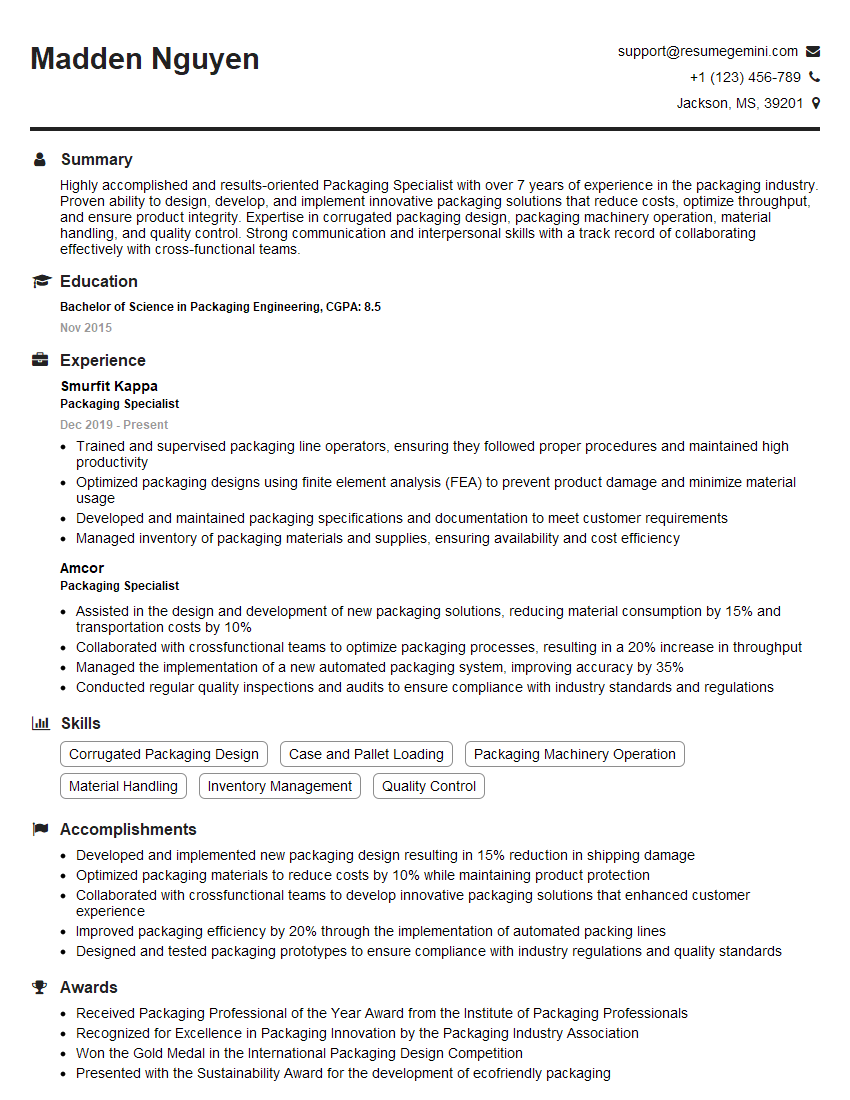
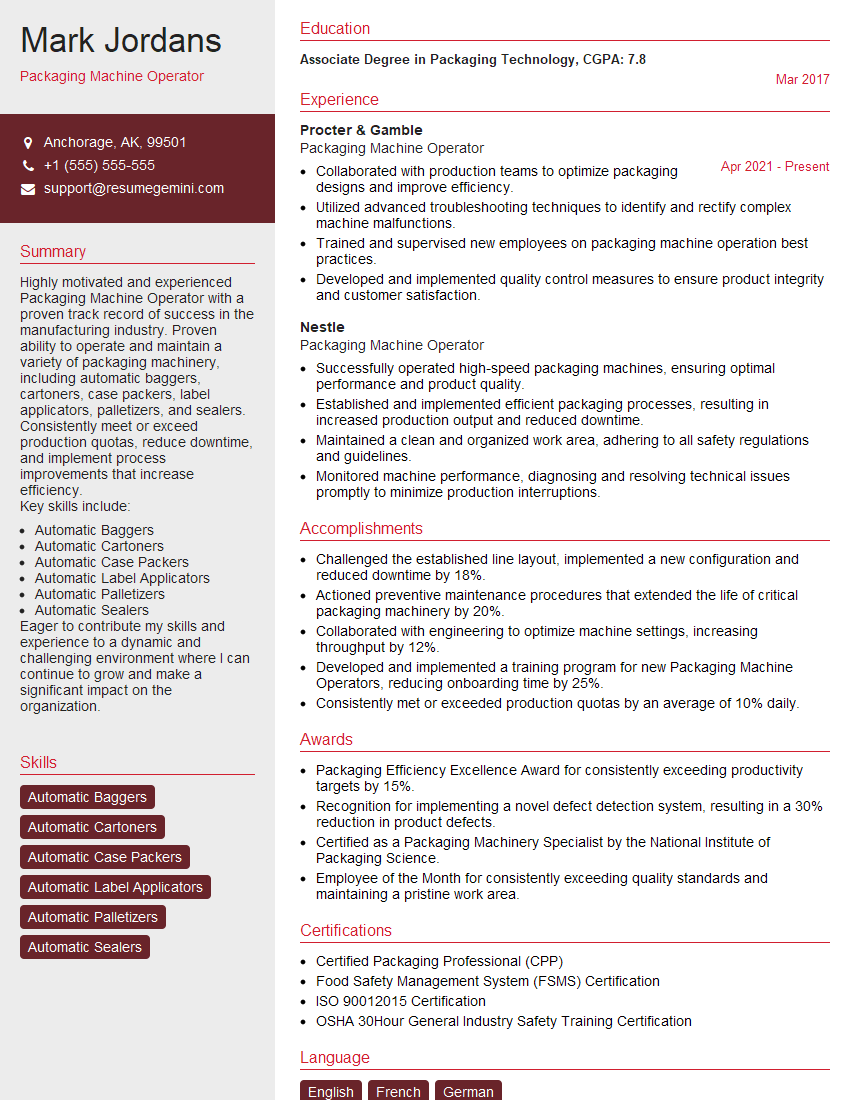
Mastering Bulk Sealing Machine Operation opens doors to rewarding careers in manufacturing and packaging industries, offering opportunities for growth and specialization. To make a strong impression on potential employers, it’s vital to present yourself with a professional and ATS-friendly resume that effectively highlights your skills and experience. ResumeGemini is a trusted resource to help you build a compelling resume that showcases your qualifications. We provide examples of resumes tailored specifically to Bulk Sealing Machine Operation to help guide you in creating a standout application.


Explore more articles
Users Rating of Our Blogs
Share Your Experience
We value your feedback! Please rate our content and share your thoughts (optional).
What Readers Say About Our Blog
Very informative content, great job.
good