Every successful interview starts with knowing what to expect. In this blog, we’ll take you through the top Bunion Surgery interview questions, breaking them down with expert tips to help you deliver impactful answers. Step into your next interview fully prepared and ready to succeed.
Questions Asked in Bunion Surgery Interview
Q 1. Describe the different surgical techniques used for bunion correction.
Bunion surgery, or bunionectomy, encompasses several techniques, each tailored to the severity and specific characteristics of the deformity. The choice depends on factors such as the patient’s age, activity level, and the degree of joint involvement.
- Osteotomy: This is a common procedure involving cutting and realigning the bone to correct the bunion’s angle. Different types exist, including base wedge, proximal, and distal osteotomies, each targeting different parts of the first metatarsal bone. Think of it like carefully reshaping a crooked piece of wood to make it straight again.
- Exostectomy: This involves removing the bony prominence (the bunion itself) without altering the underlying joint. It’s suitable for smaller bunions where the joint isn’t severely affected. Imagine shaving off an unsightly bump.
- Arthrodesis (Fusion): In severe cases where the joint is severely damaged and painful, arthrodesis permanently fuses the joint. It eliminates pain but sacrifices joint flexibility. Think of it as permanently connecting two bones together.
- Cheilectomy: This procedure involves removing excess bone and cartilage from the joint to improve motion and reduce pain. It’s often combined with other techniques.
- Minimally Invasive Bunion Surgery (MIBS): This approach utilizes smaller incisions and specialized instruments, aiming to minimize tissue trauma and recovery time. Several of the above techniques can be performed minimally invasively.
Q 2. What are the indications and contraindications for each bunionectomy technique?
Indications and contraindications vary depending on the specific surgical technique, but general principles apply.
- Osteotomy: Indicated for moderate to severe bunion deformities with relatively good joint health. Contraindicated in patients with severe arthritis, poor bone quality, or inadequate soft tissue coverage.
- Exostectomy: Indicated for mild bunion deformities without significant joint involvement. Contraindicated for severe deformity or underlying joint instability.
- Arthrodesis: Indicated for severe arthritis and pain unresponsive to conservative treatment. Contraindicated in patients who require a high degree of joint mobility for their activities.
- Cheilectomy: Indicated for cases of painful bunion-related arthritis. Contraindicated in cases where the joint is too severely damaged for simple debridement.
- MIBS: Indicated for select patients with specific types of bunion deformities and who might benefit from quicker recovery. Contraindicated in patients with severe deformities, significant joint arthritis or those with certain medical conditions precluding minimally invasive surgery.
A thorough clinical evaluation, including X-rays and physical examination, is crucial to determine the optimal surgical approach for each individual patient.
Q 3. Explain the principles of minimally invasive bunion surgery.
Minimally invasive bunion surgery (MIBS) emphasizes smaller incisions, reduced tissue trauma, and faster recovery. The principles include:
- Small Incisions: Using smaller incisions reduces damage to skin, soft tissues, and blood vessels.
- Specialized Instruments: Utilizing specialized instruments such as percutaneous osteotomy guides and small shavers allows for precise bone and soft tissue manipulation through minimal incisions.
- Reduced Soft Tissue Disruption: MIBS techniques aim to minimize disruption to the soft tissues surrounding the joint, reducing post-operative pain and swelling.
- Improved Cosmesis: Smaller scars are a key benefit, improving the cosmetic outcome.
- Faster Recovery: By minimizing tissue trauma, MIBS often leads to quicker healing and shorter rehabilitation periods.
While MIBS offers advantages, it’s not suitable for all patients. The suitability depends on the severity of the deformity and the surgeon’s expertise in these advanced techniques. A personalized assessment is crucial.
Q 4. How do you assess the severity of a bunion deformity?
Assessing bunion severity involves a combination of clinical examination and imaging studies. We consider several factors:
- Intermetatarsal Angle (IMA): This X-ray measurement quantifies the angle between the first and second metatarsals. An increased angle indicates a more severe bunion.
- Hallux Abductus Angle (HAA): This X-ray measurement assesses the angle of the big toe in relation to the second metatarsal. A larger angle indicates greater toe deviation.
- Sesamoid Position: The position of the sesamoid bones beneath the big toe joint is evaluated, as displacement indicates joint involvement.
- Clinical Examination: This includes assessing pain, range of motion of the big toe joint, and the presence of inflammation, swelling, and functional limitations.
- Patient-reported Outcome Measures: Using validated questionnaires, we gauge the patient’s perception of pain and functional limitations.
By integrating these findings, we establish a comprehensive assessment of the bunion deformity, helping to guide treatment decisions.
Q 5. Discuss the potential complications associated with bunion surgery.
Bunion surgery, like any surgical procedure, carries potential complications. It’s crucial to inform patients about these risks before surgery.
- Infection: Infection is a potential complication of any surgery, and antibiotics are used prophylactically.
- Nonunion or Malunion: Failure of the bones to heal properly (nonunion) or healing in an incorrect position (malunion) can require revision surgery.
- Nerve Damage: Damage to nearby nerves can cause numbness, tingling, or pain.
- Recurrence: The bunion can reoccur if the correction is incomplete or if the underlying biomechanical factors causing the deformity are not addressed.
- Stiffness: Post-operative stiffness is common but usually improves with physiotherapy.
- Pain: Some pain is expected, but persistent or severe pain is a concern.
- Delayed Healing: Slower healing can be caused by several factors such as diabetes or smoking.
- Hardware Problems: In surgeries where screws or plates are used, they can loosen, break, or become problematic.
While these are potential risks, many patients experience excellent outcomes with minimal complications. Pre-operative planning and careful surgical execution help minimize these possibilities.
Q 6. How do you manage post-operative pain and swelling after a bunionectomy?
Post-operative pain and swelling management is crucial for patient comfort and recovery. A multi-modal approach is usually implemented:
- Pain Medications: Prescription analgesics, including non-steroidal anti-inflammatory drugs (NSAIDs) and opioid medications (if necessary) are prescribed to control pain.
- Elevation: Elevating the foot reduces swelling by promoting fluid drainage.
- Ice Packs: Applying ice packs several times a day helps reduce inflammation and pain.
- Compression: Using a compression bandage helps minimize swelling.
- Early Mobilization: Gentle range of motion exercises are encouraged as tolerated, under the guidance of a physical therapist.
- Physical Therapy: A structured physical therapy program is essential to improve range of motion, strength, and overall functional recovery.
The pain management strategy is tailored to the patient’s individual needs and comfort level. Regular monitoring and adjustments are made as needed.
Q 7. What are the common post-operative complications and how do you manage them?
Common post-operative complications include infection, stiffness, persistent pain, and nerve irritation. Management strategies include:
- Infection: Treatment involves antibiotics, possibly surgical debridement (removal of infected tissue), and close monitoring.
- Stiffness: Physical therapy, including range-of-motion exercises and stretching, is crucial to address stiffness.
- Persistent Pain: If pain persists despite conservative management, further investigation might be needed to rule out underlying causes. This may include nerve studies or imaging studies.
- Nerve Irritation: If nerve damage is suspected, nerve decompression surgery may be needed. Symptoms may improve over time.
- Recurrence: If a bunion recurs, revision surgery may be considered.
Close follow-up appointments are scheduled to monitor healing progress, address any complications, and optimize the patient’s recovery.
Q 8. Describe your approach to patient selection for different bunion surgery techniques.
Patient selection for bunion surgery is crucial for optimal outcomes. It’s not a one-size-fits-all approach; the best technique depends on the severity of the deformity, the patient’s age, activity level, and overall health. For example, a young, active patient with a severe hallux valgus (bunion) might be a good candidate for an osteotomy, a procedure that involves reshaping the bones. This allows for a more precise correction. Conversely, an older, less active patient with a mild to moderate bunion might benefit from a less invasive procedure like a distal soft tissue procedure or even a conservative non-surgical approach focusing on pain management and custom orthotics. I carefully consider each patient’s individual circumstances and discuss the pros and cons of each surgical option to make the best decision together.
- Mild Bunions: Conservative treatment (orthotics, medication) may suffice.
- Moderate Bunions: Distal soft tissue procedures or osteotomies are often considered.
- Severe Bunions: More extensive procedures like arthrodesis (fusion) or even a total joint replacement (in more severe cases and older patients) may be necessary.
Q 9. Explain the role of pre-operative planning and imaging in bunion surgery.
Pre-operative planning and imaging are essential for successful bunion surgery. This isn’t just about identifying the bunion; it’s about understanding the entire foot’s biomechanics and the specific anatomical features contributing to the deformity. We utilize detailed weight-bearing X-rays and sometimes CT scans to assess the angles of the bones (metatarsal-phalangeal angle, intermetatarsal angle), the extent of joint damage, and the presence of any associated conditions like arthritis. These images are crucial for creating a precise surgical plan. We measure the degree of deformity precisely to decide on the appropriate osteotomy technique (e.g., scarf, chevron, base wedge) or other surgical approach. Planning also includes reviewing the patient’s medical history, assessing their risk factors, and discussing realistic expectations regarding post-operative recovery.
Q 10. What are the factors influencing patient recovery time after bunion surgery?
Recovery time after bunion surgery varies significantly depending on several factors. The complexity of the surgical procedure is a major determinant. A simple soft tissue procedure will result in much quicker recovery than a complex osteotomy with multiple bone cuts. The patient’s age, overall health, compliance with post-operative instructions (e.g., weight-bearing restrictions, physical therapy), and any pre-existing medical conditions all play a role. For example, patients with diabetes or circulatory issues may experience slower healing. Factors such as smoking, which impairs blood flow and healing, also significantly impact recovery time. Following the prescribed post-operative care regimen, attending physical therapy, and maintaining a healthy lifestyle are essential to optimal recovery. I always discuss realistic expectations and potential complications with patients upfront.
Q 11. How do you counsel patients about the risks and benefits of bunion surgery?
Counseling patients about the risks and benefits of bunion surgery is a crucial part of my practice. I start by explaining the procedure thoroughly, using clear, non-technical language. I discuss the potential benefits, such as pain relief, improved foot function, and improved cosmetic appearance. It’s essential to also clearly outline the potential risks and complications, including infection, nerve damage, stiffness, non-union (bone not healing properly), recurrence of the bunion, prolonged pain, and the need for revision surgery. I present them with realistic images and demonstrate the expected outcome using pre and post-operative pictures of previous patients with similar deformities. This shared decision-making process ensures informed consent and manages patient expectations.
Q 12. How do you address patient concerns and expectations regarding bunion surgery outcomes?
Addressing patient concerns and expectations is paramount. I actively listen to their concerns and anxieties, validating their feelings. I make sure to realistically address their expectations about the outcome. Some patients expect immediate perfection and pain-free walking; I explain that this is unrealistic. I show them realistic images, discuss the recovery timeline, and highlight the potential for some degree of lingering discomfort or stiffness. Ongoing communication and follow-up appointments are key to addressing any post-operative issues and adjusting expectations accordingly. I am honest about the limitations of the surgery and what can and cannot be achieved.
Q 13. Discuss your experience with different types of implants used in bunion surgery.
My experience with implants in bunion surgery encompasses various types, each with its own advantages and disadvantages. We often use screws and plates to stabilize bone fragments after osteotomies, particularly in complex corrections. These implants provide structural support while the bones heal. Bioabsorbable screws are also an option, eliminating the need for a second surgery to remove them. However, the bioabsorbable ones have a higher price point and can sometimes lead to more discomfort during the initial healing phase. The choice of implant depends on the specific surgical technique, bone quality, and patient factors. I carefully consider the pros and cons of each option to select the most appropriate implant for the individual patient.
Q 14. Describe your approach to managing post-operative infections.
Managing post-operative infections is a critical aspect of bunion surgery. Prophylactic antibiotics are routinely given before and sometimes after surgery to minimize the risk of infection. Close monitoring for signs of infection, such as increasing pain, redness, swelling, pus, or fever, is crucial. If an infection is suspected, immediate action is taken, which might involve wound cultures to identify the causative organism, drainage of the infected area, and intravenous antibiotics tailored to the specific bacteria. In severe cases, surgical debridement (removal of infected tissue) may be necessary. Prevention through meticulous surgical technique and sterile practices in the operating room is the most effective way to minimize infection risk.
Q 15. How do you handle patients with atypical or complex bunion deformities?
Managing atypical or complex bunion deformities requires a meticulous, individualized approach. These cases often involve significant bone deformities, muscle imbalances, or previous failed surgeries. My strategy begins with a thorough clinical examination, including gait analysis, to understand the patient’s specific functional limitations. This is supplemented by advanced imaging, such as weight-bearing radiographs and CT scans, to precisely assess the bony architecture and soft tissue involvement.
Surgical planning is crucial. For severe deformities, I may employ a combination of osteotomies (bone cuts) tailored to the specific deformity, including proximal, distal, or even base metatarsal osteotomies. Soft tissue procedures, such as capsulotomy (releasing the joint capsule) and tendon lengthening, are often necessary to restore proper alignment and improve joint mechanics. In some cases, we consider custom implants for better correction and stability, particularly in revision cases. Post-operative management emphasizes meticulous wound care, pain control, and a tailored physical therapy program to optimize functional recovery and prevent recurrence.
For instance, a patient presenting with a complex, severe hallux valgus (bunion) deformity combined with a significant metatarsus primus varus (inward turning of the first metatarsal bone) would necessitate a more extensive procedure perhaps including a chevron osteotomy with an Akin osteotomy. We would carefully consider the patient’s age, activity level, and overall health when choosing the best surgical technique.
Career Expert Tips:
- Ace those interviews! Prepare effectively by reviewing the Top 50 Most Common Interview Questions on ResumeGemini.
- Navigate your job search with confidence! Explore a wide range of Career Tips on ResumeGemini. Learn about common challenges and recommendations to overcome them.
- Craft the perfect resume! Master the Art of Resume Writing with ResumeGemini’s guide. Showcase your unique qualifications and achievements effectively.
- Don’t miss out on holiday savings! Build your dream resume with ResumeGemini’s ATS optimized templates.
Q 16. What are the common causes of recurrence after bunion surgery?
Recurrence after bunion surgery is unfortunately a possibility, and understanding the causes is vital for preventing it. Inadequate surgical correction is a major contributor. This can stem from insufficient bone resection, improper osteotomy alignment, or failure to address underlying soft tissue imbalances. Inadequate post-operative care also plays a significant role. Non-compliance with prescribed physical therapy, improper footwear, or early return to high-impact activities can disrupt healing and lead to recurrence.
Another crucial factor is the patient’s foot type and underlying biomechanics. Individuals with hypermobile feet or those with a predisposition to certain foot deformities are at a higher risk of recurrence. Sometimes, underlying conditions such as arthritis or rheumatoid arthritis can also contribute to bunion recurrence. Finally, it’s essential to acknowledge that some level of recurrence, even minimal, is sometimes unavoidable given the complex anatomy of the foot.
To minimize recurrence, I emphasize precise surgical techniques, meticulous attention to soft tissue balancing, and a robust post-operative rehabilitation program tailored to the individual’s needs and foot type. Patient education regarding proper footwear and activity modification is paramount.
Q 17. Describe your experience with revision bunion surgery.
Revision bunion surgery is a challenging but rewarding aspect of my practice. These cases often involve significant anatomical changes, scar tissue, and potential hardware from previous surgeries. My approach begins with a comprehensive evaluation of the prior surgery, including reviewing operative notes and radiographs, if available. This helps us understand the initial surgical approach and identify the reasons for failure.
The surgical technique for revision surgery is carefully selected based on the specific deformity and the prior surgical interventions. It often involves more extensive procedures to correct the deformity and address the complications from the previous surgery. We may need to utilize more complex osteotomies, bone grafting, or even arthrodesis (joint fusion) in severe cases. Careful planning and execution are crucial due to the risk of complications, such as infection, non-union, and malunion. We often rely on advanced imaging techniques, such as CT scans, to assist in preoperative planning.
For example, a patient who had a prior bunionectomy with an unsatisfactory outcome might require a more extensive procedure including a more significant osteotomy and potentially the use of internal fixation to ensure proper alignment and stability. Post-operative management is particularly crucial in these cases with meticulous monitoring for any complications.
Q 18. Explain your approach to addressing patient dissatisfaction with surgical outcomes.
Addressing patient dissatisfaction with surgical outcomes requires empathy, thoroughness, and a commitment to open communication. I begin by carefully listening to the patient’s concerns and conducting a complete physical examination, paying close attention to their subjective complaints. I then thoroughly review the pre-operative and post-operative imaging to assess the degree of correction achieved and identify any potential issues.
If there’s objective evidence of an unsatisfactory outcome—for instance, significant residual deformity or persistent pain—I discuss the options for revision surgery, explaining the potential risks and benefits. However, it’s important to remember that not all dissatisfaction stems from a surgical failure. Sometimes, patient expectations are unrealistic, or their perception of the outcome doesn’t align with the objective result. In those instances, I focus on managing the patient’s expectations, offering conservative treatment options such as custom orthotics, physical therapy, or injections to address any persistent pain or discomfort. Honest communication, empathy, and a commitment to providing the best possible care are essential regardless of the underlying cause of dissatisfaction.
Q 19. How do you evaluate surgical success after a bunionectomy?
Evaluating the success of a bunionectomy involves a multi-faceted approach incorporating clinical assessment, radiological evaluation, and patient-reported outcome measures. Clinically, we assess the correction of the hallux valgus angle (the angle between the first metatarsal and the proximal phalanx), the intermetatarsal angle (the angle between the first and second metatarsals), and the overall alignment of the forefoot. We also examine for any residual deformity, pain, or functional limitations.
Radiographic evaluation provides objective measurements of the bony alignment, confirming the success of the surgical correction. Weight-bearing radiographs are particularly valuable as they reflect the functional alignment of the foot under weight-bearing conditions. We compare these post-operative radiographs with pre-operative images to assess the degree of correction.
Patient-reported outcome measures, such as the Foot and Ankle Outcome Score (FAOS) or the Visual Analog Scale (VAS) for pain, provide valuable insights into the patient’s subjective experience. A successful outcome includes not only achieving optimal anatomical alignment but also restoring function and alleviating pain, resulting in improved quality of life for the patient. A combination of these factors provides a comprehensive assessment of surgical success.
Q 20. What are the common radiological findings in bunion deformities?
Radiological findings in bunion deformities typically reveal several characteristic changes. Weight-bearing anteroposterior and lateral radiographs are essential for assessment. Key findings include:
- Increased Hallux Valgus Angle (HVA): This is the primary radiological measurement, representing the angle between the long axis of the first metatarsal and the proximal phalanx. A normal HVA is typically less than 15 degrees; values significantly exceeding this indicate a bunion deformity.
- Increased Intermetatarsal Angle (IMA): This angle, formed between the long axes of the first and second metatarsals, is also increased in bunion deformities, reflecting the widening of the forefoot.
- Sesamoid Bone Displacement: The sesamoid bones, located beneath the first metatarsal head, are often displaced laterally (toward the outside of the foot) in bunion deformities.
- First Metatarsal Abduction: The first metatarsal itself might be significantly abducted (rotated outward) as visualized in weight-bearing views.
- Joint Space Narrowing: In advanced cases, joint space narrowing can be seen reflecting osteoarthritis in the first metatarsophalangeal (MTP) joint.
These measurements are crucial in preoperative planning and assessing the success of post-operative correction. In complex cases, CT scans can provide more detailed 3D information on bone morphology.
Q 21. What are the long-term functional outcomes of bunion surgery?
The long-term functional outcomes of bunion surgery are generally favorable for most patients. The majority experience significant improvement in pain, function, and quality of life. However, it’s crucial to understand that individual experiences can vary. Factors influencing long-term outcomes include the severity of the initial deformity, the surgical technique employed, the patient’s adherence to post-operative instructions, and the presence of any underlying conditions.
Long-term studies show that most patients maintain substantial improvements in pain relief and functional ability for several years post-operatively. However, some degree of arthritis might develop over time, especially in older patients or those with pre-existing arthritis. The possibility of recurrence, although typically minimal in well-performed surgeries and with appropriate patient compliance, is another factor to consider. Therefore, long-term follow-up, including regular clinical examinations and radiographic evaluations, is crucial for monitoring the long-term success of the surgery and addressing any potential issues promptly.
Q 22. Describe your approach to managing patients with associated foot pathologies like hallux rigidus.
Managing patients with concomitant foot pathologies like hallux rigidus (stiff big toe joint) alongside a bunion requires a holistic approach. Simply correcting the bunion deformity without addressing the hallux rigidus can lead to unsatisfactory outcomes. My approach involves a thorough clinical examination and imaging assessment (X-rays, sometimes CT scans) to understand the severity of both conditions. The treatment plan is then individualized. For instance, if the hallux rigidus is mild, we might focus primarily on bunion correction, potentially using a procedure that preserves the joint’s motion. However, if the hallux rigidus is severe and causing significant pain, I would likely recommend a combined procedure addressing both conditions simultaneously. This might involve a bunionectomy combined with a cheilectomy (removal of bone spurs) or even a fusion of the big toe joint, depending on the patient’s age, activity level, and overall health. Pre-operative patient education plays a crucial role in managing expectations and ensuring the patient understands the complexities of the combined procedure and potential recovery times.
For example, a 60-year-old active patient with both severe hallux rigidus and a significant bunion might benefit from a joint fusion to alleviate pain and improve stability, even though it limits range of motion. Conversely, a younger, more active patient might be better suited for a less invasive procedure to preserve joint motion, potentially with a longer recovery period.
Q 23. How do you incorporate advanced imaging techniques like CT scans or MRI in your practice?
Advanced imaging techniques like CT scans and MRIs play a crucial role in preoperative planning for complex bunion cases. While standard X-rays provide excellent views of bone alignment, CT scans offer superior visualization of bone structure, allowing for more precise measurements and assessment of bony abnormalities. This is particularly useful in cases of severe arthritis or complex deformities involving multiple bones. MRIs, on the other hand, provide detailed images of soft tissues, including ligaments, tendons, and cartilage. This is invaluable in evaluating the extent of soft tissue damage and inflammation, which can significantly impact the surgical approach and postoperative recovery. For example, an MRI might reveal significant tendon damage that necessitates a modified surgical technique to avoid further injury. I use this information to tailor the surgical plan to each individual patient’s specific anatomy and pathology, optimizing surgical precision and outcome.
Q 24. What are your preferred methods for pain management in post-operative patients?
Post-operative pain management is a critical aspect of ensuring patient comfort and a successful recovery. My approach is multimodal and tailored to each patient’s needs. It typically starts with a combination of regional nerve blocks (to provide prolonged pain relief) and oral analgesics (pain relievers) in the immediate postoperative period. I often supplement this with ice packs and elevation of the foot to reduce swelling and inflammation. As the patient progresses, we gradually transition to less potent analgesics, eventually weaning them off medication altogether as tolerated. Regular follow-up visits allow me to monitor pain levels and adjust the pain management plan accordingly. In cases of severe pain or unexpected complications, I may consider stronger analgesics or nerve blocks under careful monitoring. Patient education regarding pain management expectations and appropriate pain levels is critical, avoiding the need for excessive opioid use.
Q 25. Explain your experience with different types of anesthesia used in bunion surgery.
The choice of anesthesia for bunion surgery depends on several factors, including the complexity of the procedure, the patient’s overall health, and personal preferences. The most common options are regional anesthesia (nerve blocks) and general anesthesia. Regional anesthesia allows the patient to remain awake while the foot and lower leg are numbed, minimizing the risks associated with general anesthesia. This is often preferred for simpler procedures, particularly in patients with certain medical conditions. General anesthesia, on the other hand, induces a state of unconsciousness, allowing for more complex procedures and greater patient comfort. I carefully discuss the pros and cons of each option with the patient before surgery, tailoring the approach to individual patient needs. In some cases, a combination of regional and general anesthesia might be used.
Q 26. How do you ensure patient safety during and after bunion surgery?
Ensuring patient safety is paramount in my practice. This starts with a comprehensive preoperative evaluation, including a thorough medical history and physical examination to identify any potential risks. During the surgery, meticulous sterile techniques are followed to minimize the risk of infection. I use advanced surgical instruments and techniques to ensure precise and minimally invasive procedures. Postoperatively, I carefully monitor patients for any signs of complications, such as infection, bleeding, or nerve damage. Patients are given detailed instructions for postoperative care, including wound care, medication management, and appropriate activity levels. Regular follow-up appointments are scheduled to monitor healing and address any concerns. Early identification and management of potential complications are crucial to ensure the patient’s safety and a successful recovery.
Q 27. How do you stay up-to-date with the latest advancements in bunion surgery?
Staying abreast of the latest advancements in bunion surgery is crucial to providing the best possible care for my patients. I actively participate in professional organizations such as the American Orthopaedic Foot & Ankle Society (AOFAS), attending their conferences and engaging in continuing medical education courses. I regularly review peer-reviewed journals and relevant medical literature to stay informed about new surgical techniques, implants, and rehabilitation protocols. Collaboration with colleagues and participation in case discussions also contribute significantly to my professional development and knowledge base. Moreover, I remain engaged in clinical research to improve and contribute to our knowledge and understanding of bunion surgery.
Q 28. Describe a challenging case involving bunion surgery and your approach to resolving it.
One particularly challenging case involved a patient with a severe, recurrent bunion deformity after previous unsuccessful surgery. The patient had significant bone loss and soft tissue contractures, making it difficult to achieve optimal alignment and stability. My approach involved meticulous preoperative planning using CT scans and 3D modeling to assess the precise bone deformities and design a customized surgical plan. The surgery itself required extensive bone reconstruction techniques, including bone grafting and osteotomy (bone cutting) to achieve anatomical correction. Postoperatively, the patient required intensive physical therapy to regain range of motion and strength. The outcome was successful with significant improvement in both pain and function. This case highlighted the importance of careful preoperative planning, advanced surgical techniques, and a commitment to personalized post-operative care in managing complex bunion cases.
Key Topics to Learn for Bunion Surgery Interview
- Bunion Anatomy and Biomechanics: Understanding the structures involved in bunion formation and how they interact during gait and weight-bearing.
- Conservative and Surgical Treatment Options: Knowledge of non-surgical approaches (orthotics, medication) and various surgical techniques (osteotomy, arthrodesis, arthroplasty), including their indications, contraindications, and potential complications.
- Pre-operative Assessment and Planning: Detailed understanding of patient history taking, physical examination techniques, radiographic interpretation, and surgical planning protocols.
- Surgical Techniques and Instrumentation: Familiarity with different surgical approaches, instrumentation used, and the steps involved in each procedure. Practical experience is highly valuable here.
- Post-operative Care and Rehabilitation: Knowledge of wound management, pain control, mobilization protocols, and the importance of patient education in achieving optimal outcomes. Understanding potential complications and their management.
- Complications and Management: Thorough understanding of potential complications (infection, non-union, malunion, nerve damage) and effective strategies for their prevention and management.
- Advanced Imaging and Diagnostics: Proficiency in interpreting radiographs, CT scans, and MRI scans to assess bunion deformity and guide surgical planning.
- Current Research and Trends in Bunion Surgery: Staying updated with the latest advancements in surgical techniques, instrumentation, and rehabilitation protocols. This demonstrates a commitment to ongoing professional development.
Next Steps
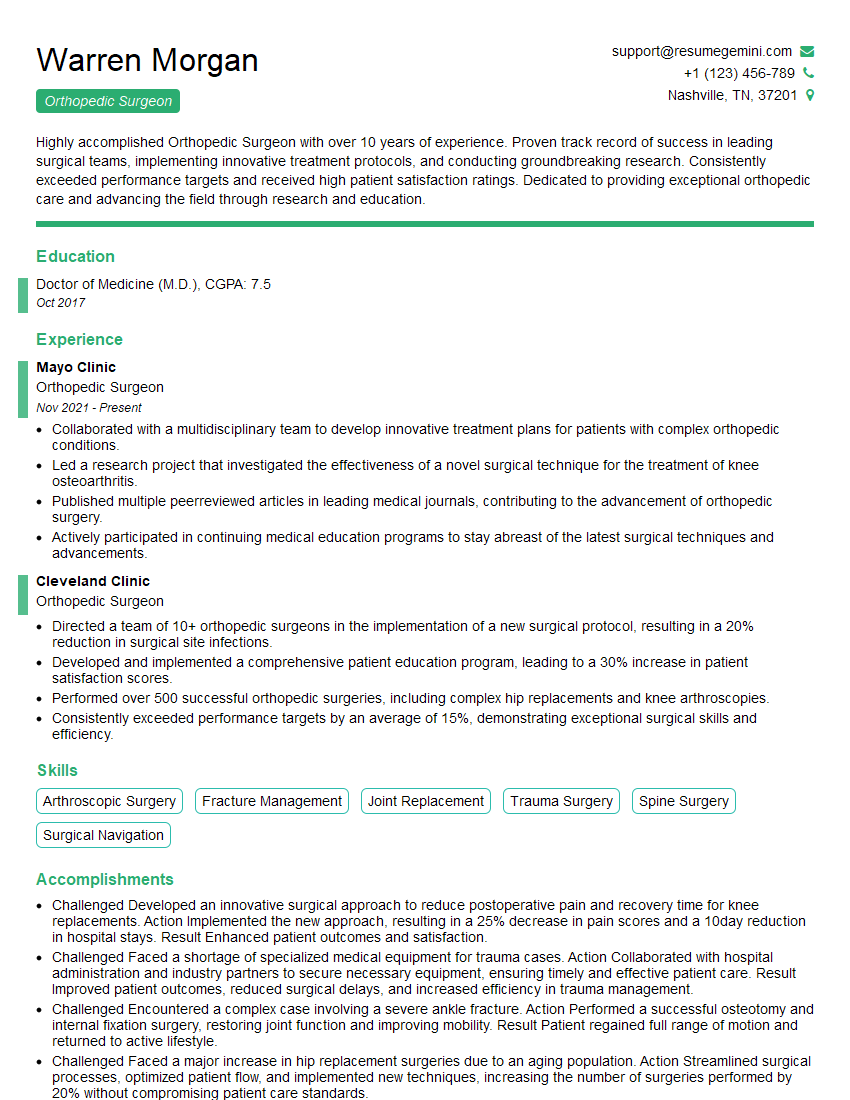
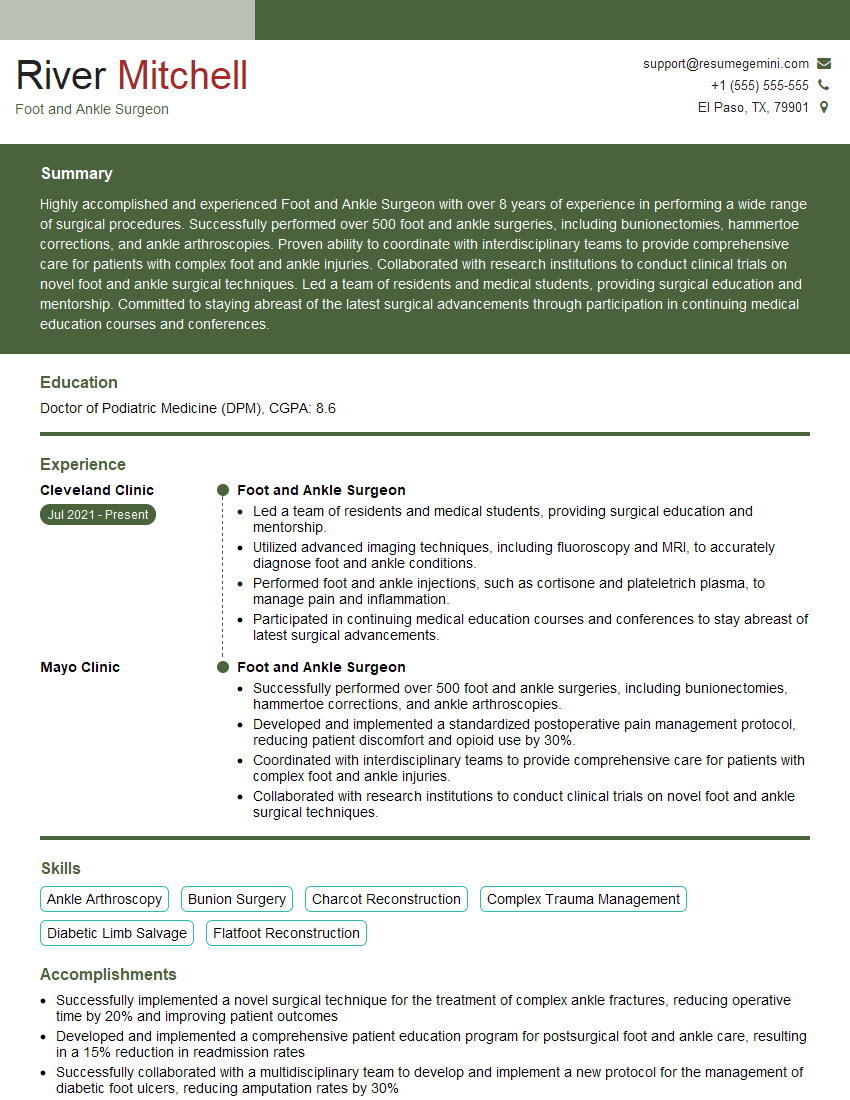
Mastering bunion surgery opens doors to a rewarding career with significant opportunities for specialization and advancement. A strong foundation in the key topics above will significantly enhance your interview performance. To maximize your job prospects, crafting an ATS-friendly resume is crucial. ResumeGemini is a trusted resource that can help you build a professional and impactful resume tailored to the specific demands of the Bunion Surgery field. Examples of resumes tailored to Bunion Surgery are available to guide you. Invest time in creating a compelling resume – it’s your first impression on potential employers.
Explore more articles
Users Rating of Our Blogs
Share Your Experience
We value your feedback! Please rate our content and share your thoughts (optional).
What Readers Say About Our Blog
Very informative content, great job.
good