Are you ready to stand out in your next interview? Understanding and preparing for Burning and Glazing interview questions is a game-changer. In this blog, we’ve compiled key questions and expert advice to help you showcase your skills with confidence and precision. Let’s get started on your journey to acing the interview.
Questions Asked in Burning and Glazing Interview
Q 1. Explain the process of flame polishing glass.
Flame polishing, also known as fire polishing, is a glassworking technique that uses a high-temperature flame to smooth the edges and surface of glass. It’s essentially melting the very surface of the glass, creating a smoother, more refined finish than simple grinding or sanding. Imagine taking a rough piece of clay and smoothing it with a hot tool – that’s the basic principle.
The process typically involves using a torch, often fueled by propane and oxygen, to direct a very hot flame onto the glass. The intensity of the flame and the duration of its application are critical for achieving the desired level of smoothness. Too little heat, and you won’t achieve the desired effect. Too much, and you risk deforming or cracking the glass. Skilled glassworkers carefully control the flame’s distance, angle, and duration to achieve even heating and a flawless finish.
Flame polishing is commonly used to refine the edges of cut glass, eliminating sharp points and creating a more aesthetically pleasing and safe surface. It’s also employed to smooth out minor imperfections or scratches on the surface of the glass.
Q 2. Describe different types of glass and their suitability for burning and glazing techniques.
Different types of glass react differently to burning and glazing techniques. The key factors are the glass’s composition and its melting point.
- Soda-lime glass: This is the most common type, used in everyday windows and containers. It’s relatively easy to work with in burning and glazing due to its lower melting point. It’s well-suited to most techniques, offering good color absorption and relatively easy fusion with glass frit.
- Borosilicate glass (Pyrex): Known for its high heat resistance, it requires higher temperatures for burning and glazing. Its higher melting point makes it more challenging to work with, requiring a more experienced hand and potentially different equipment. Its superior heat resistance means it’s ideal for applications where the finished product will be subjected to high temperatures.
- Lead glass (crystal): This type contains lead oxide, giving it a higher refractive index (brighter sparkle) and a lower melting point compared to borosilicate. While suitable for burning and glazing, its softness makes it prone to scratching if not handled carefully. It responds beautifully to certain glazes and colors, making it ideal for artistic applications.
- Fused silica: This high-purity glass has an extremely high melting point and is very difficult to work with for burning and glazing using standard techniques. Its specialized applications typically involve industrial processes rather than artistic ones.
The choice of glass significantly influences the achievable effects and the complexity of the process. For instance, a beginner might start with soda-lime glass before moving onto more challenging materials.
Q 3. What safety precautions are crucial during burning and glazing operations?
Safety is paramount in burning and glazing. Working with high temperatures and sharp glass requires meticulous attention to detail.
- Eye Protection: Always wear safety glasses or a face shield to protect against flying particles and intense heat radiation.
- Respiratory Protection: A well-ventilated workspace or respirator is crucial to avoid inhaling fumes and dust, especially when using fluxes or specific glazes.
- Heat-Resistant Gloves: Protect your hands from burns with appropriate heat-resistant gloves. Avoid cotton or other materials that can easily ignite.
- Proper Ventilation: Ensure adequate ventilation to eliminate harmful gases produced during the burning process.
- Fire Safety: Keep a fire extinguisher nearby and be aware of potential fire hazards, particularly when working with flammable fuels like propane.
- Appropriate Clothing: Wear flame-resistant clothing to minimize the risk of burns. Avoid loose clothing that can catch fire.
- Clean Workspace: Keep your workspace organized and clean to prevent accidents caused by clutter.
Never underestimate the risks. Treat every safety precaution as non-negotiable to protect yourself and others.
Q 4. How do you ensure the quality and consistency of your work in burning and glazing?
Maintaining quality and consistency in burning and glazing relies on several factors:
- Consistent Temperature Control: Precise temperature control is vital. Using reliable kilns and thermocouples for monitoring ensures uniform heating throughout the process.
- Careful Material Selection: Using high-quality glass and consistent glazes helps achieve predictable results. Experimentation and testing are essential to select the best materials for your specific needs.
- Standardized Procedures: Developing and following consistent procedures, from prepping the glass to the firing schedule, reduces variability.
- Regular Equipment Maintenance: Well-maintained kilns and tools ensure accurate and consistent performance.
- Thorough Cleaning: Cleaning tools and kilns regularly prevents contamination that could affect the final outcome.
- Careful Observation and Adjustment: During the firing process, careful monitoring and timely adjustments are needed to ensure uniform heating and the desired color and texture.
Documenting your processes, including kiln schedules and material choices, facilitates reproducibility and helps identify areas for improvement over time. Consider keeping a logbook or a digital record of each firing.
Q 5. Explain the difference between tempered and annealed glass.
The key difference between tempered and annealed glass lies in their heat treatment and resulting properties.
- Annealed glass: This is the standard, commonly used glass. It’s cooled slowly after manufacturing, resulting in a uniform internal structure. It’s relatively inexpensive but shatters into sharp shards upon breakage.
- Tempered glass (safety glass): This glass undergoes a special heat treatment where it’s heated to a high temperature and then rapidly cooled. This process creates compressive stresses on the surface and tensile stresses in the core. When tempered glass breaks, it shatters into many small, relatively blunt pieces, making it safer than annealed glass.
Tempered glass is significantly stronger than annealed glass and is commonly used in applications where safety is critical, such as car windows, shower doors, and oven doors. However, tempered glass cannot be cut or ground after tempering. This is an important distinction to keep in mind during the design and fabrication of any project incorporating it.
Q 6. What are the common causes of defects in glass after burning and glazing?
Several factors can contribute to defects after burning and glazing:
- Uneven Heating: Inconsistent temperature distribution during firing can lead to warping, cracking, or uneven color.
- Contamination: Dust, debris, or impurities on the glass surface can create discoloration or blemishes.
- Improper Glaze Application: Uneven glaze application, incorrect glaze thickness, or using incompatible glazes can result in defects.
- Too Rapid Cooling: Rapid cooling after firing can cause thermal shock and lead to cracking.
- Insufficient Firing Temperature: Failure to achieve the correct temperature may result in incomplete fusion of the glaze or poor color development.
- Excessive Firing Temperature: Overheating can soften or deform the glass.
- Poor Glass Quality: Using low-quality glass or glass with inherent flaws can result in problems during the firing process.
Careful attention to detail throughout the entire process, from material selection to firing and cooling, minimizes the risk of defects.
Q 7. How do you troubleshoot issues related to uneven heating during the burning process?
Troubleshooting uneven heating requires a systematic approach.
- Check Kiln Calibration: Ensure your kiln’s thermocouples and temperature control system are accurate and functioning correctly. Calibration is crucial for consistent results.
- Examine Kiln Placement: Make sure the glass is positioned correctly within the kiln. Uneven placement can result in uneven heating. Consider using kiln shelves and supports designed to promote even heat distribution.
- Inspect the Kiln Elements: Check the heating elements for damage or uneven distribution. Burned-out or faulty elements can create hot spots or cold spots in the kiln.
- Assess the Firing Schedule: Review the firing schedule to ensure it’s appropriate for the type and thickness of the glass being used. Adjust the ramp rates and soak times as needed to promote uniform heating.
- Monitor Temperature: Use multiple thermocouples or temperature sensors to monitor the temperature in different areas of the kiln. This provides valuable data for diagnosing heating problems.
- Preheating: Ensure the kiln is preheated to the correct temperature before placing the glass to prevent thermal shock.
- Consider Airflow: In some kilns, ensure proper airflow to aid in even heat distribution.
Keeping a detailed log of firing parameters and outcomes helps identify patterns and trends that can indicate underlying problems with your kiln or technique.
Q 8. Describe your experience with different types of glass cutting equipment.
My experience with glass cutting equipment spans a wide range, from traditional hand tools to automated systems. I’m proficient with various types of glass cutters, including:
- Wheel cutters: These are the most common, using a hardened steel wheel to score the glass. The precision depends heavily on the user’s skill and consistent pressure. I’ve used both manual and oil-fed wheel cutters, finding the latter to be more efficient and resulting in cleaner cuts, especially with thicker glass.
- Snap cutters: These use a carbide tip to create a very fine score line, requiring less pressure. They are particularly useful for intricate cuts and curved designs. I’ve found that maintaining the sharpness of the carbide tip is key to consistent performance.
- Automated glass cutting machines: These machines offer increased precision and speed, especially useful for high-volume production or complex cuts. My experience includes operating CNC (Computer Numerical Control) glass cutters, which allow for programming intricate patterns and minimizing waste.
- Water jet cutters: These use a high-pressure stream of water to cut glass, ideal for intricate shapes and materials that are difficult to cut with traditional methods. This is particularly beneficial for working with toughened or laminated glass.
The choice of equipment depends heavily on the project’s scale, the glass type, and the desired level of accuracy. For small-scale projects, manual tools are sufficient, while larger-scale jobs necessitate the precision and speed of automated systems.
Q 9. What are the best practices for handling and storing glass sheets?
Proper handling and storage of glass sheets are crucial to preventing damage and ensuring safety. Here are some best practices:
- Storage: Store glass sheets vertically, supported on their edges. This prevents warping and breakage. Use sturdy racks designed for glass, ensuring adequate spacing between sheets to prevent scratching.
- Handling: Always wear appropriate safety glasses and gloves. Lift glass sheets using suction cups or specialized lifting equipment for larger sheets, never by the edges. Avoid dragging or sliding the glass.
- Protection: Cover glass sheets with protective material like cardboard or plastic sheeting during transport and storage to prevent scratching and chipping. Properly labelled storage locations clearly indicate the glass type and thickness.
- Environment: Keep the storage area clean and dry, avoiding extreme temperature fluctuations. Exposure to excessive moisture or temperature changes can lead to cracking or warping.
Following these steps not only protects the glass but also minimizes the risk of accidents, especially with larger and heavier sheets. I’ve seen firsthand the costly consequences of neglecting these procedures – broken glass and potential injury. The importance of correct handling and storage cannot be overstated.
Q 10. How do you determine the appropriate temperature for different glazing techniques?
Determining the appropriate temperature for different glazing techniques requires a solid understanding of the glass type and the desired outcome. This is not a simple matter of applying a single temperature but involves careful consideration of several factors:
- Glass Type: Different glass types, such as annealed, tempered, or laminated, have different softening points and thermal properties. Tempered glass, for example, will shatter if reheated above its annealing point.
- Glazing Technique: Techniques like bending, slumping, or fusing require very specific temperature ranges. Bending, for instance, involves heating the glass to a specific temperature to make it malleable before shaping it into a mold. Fusing involves bonding multiple pieces of glass together at very high temperatures.
- Furnace Type: Different furnaces have different heating characteristics and temperature controls. Some offer precise digital control, others rely on manual adjustments and visual observation.
- Heating Rate: A slow, controlled heating and cooling cycle is crucial to minimize stress and prevent cracking. Rapid temperature changes can lead to thermal shock and breakage.
I typically rely on manufacturer’s specifications and established industry guidelines for ideal temperature ranges. I also frequently utilize specialized pyrometers to monitor the glass temperature during the process. For example, while slumping art glass, I’ll use a kiln with precise temperature control, starting low and gradually increasing to the ideal temperature for the glass composition before slowly cooling. Experience and careful monitoring are key to achieving optimal results.
Q 11. Explain the process of creating laminated glass.
Laminated glass is created by bonding two or more layers of glass together with a layer of polyvinyl butyral (PVB) interlayer. This process enhances safety and security, creating a product significantly stronger than single-pane glass.
The process typically involves these steps:
- Cleaning: The glass sheets are thoroughly cleaned to ensure optimal adhesion.
- Layering: The PVB interlayer is placed between the glass sheets. Multiple layers of PVB can be used for increased strength and sound insulation.
- Laminating: The assembly is placed in an autoclave, a pressurized oven. Heat and pressure are applied to fuse the glass and PVB together, creating a strong, monolithic unit. This is a critical step, as incorrect pressure and temperature can result in delamination or bubbles.
- Cooling: After the autoclave cycle, the laminated glass is slowly cooled to minimize internal stress.
- Quality Control: The finished product is inspected for flaws like bubbles, delamination, or imperfections.
Laminated glass finds extensive use in automotive windshields, architectural applications where safety is paramount, and security glazing. The PVB interlayer not only holds the glass fragments together in case of breakage, significantly reducing injury risk but also acts as a sound barrier and UV filter.
Q 12. Describe your experience with different types of glazing compounds and sealants.
My experience with glazing compounds and sealants encompasses a wide variety of materials, each with its unique properties and applications:
- Silicone Sealants: These are widely used for their flexibility, durability, and resistance to weathering. They offer excellent adhesion to various substrates and are suitable for both interior and exterior applications. I often use them in curtain wall installations.
- Polyurethane Sealants: These provide high strength and good adhesion, suitable for structural glazing applications. They offer excellent resistance to water ingress.
- Butyl Sealants: These are commonly used in the fabrication of insulated glass units (IGUs). They provide a good seal and are excellent at preventing moisture penetration.
- Glazing Putty: This traditional material is still used in certain applications, particularly for historic restorations. While it offers good adhesion and flexibility, it requires more maintenance and isn’t as weather-resistant as other options.
Selecting the appropriate sealant is vital for ensuring a durable and weather-tight seal. The choice depends on factors like the substrate materials, the environmental conditions, and the required performance characteristics. For example, choosing a silicone sealant for an exterior application would be more effective for resisting moisture than using a putty.
Q 13. How do you calculate the quantity of glass needed for a specific project?
Calculating the quantity of glass needed for a project involves careful measurement and consideration of waste. Here’s a step-by-step approach:
- Detailed Drawings: Obtain accurate drawings showing the dimensions of all glass elements. This is crucial to ensure precise calculations.
- Area Calculation: Calculate the area of each individual glass piece using standard geometric formulas (length x width for rectangular pieces, πr² for circular pieces, etc.).
- Total Area: Sum the areas of all glass pieces to obtain the total required glass area.
- Waste Factor: Add a waste factor to account for cutting losses, especially for complex shapes. This factor can vary between 5% and 20%, depending on the complexity of the cuts. The more intricate the cuts, the larger the factor will be.
- Sheet Size: Consider the standard sheet sizes available from the glass supplier. Optimizing cuts to minimize waste is key. Software that can optimise the layout of pieces on a sheet is helpful.
- Quantity: Based on the total area and standard sheet size, determine the number of sheets required.
I often utilize CAD (Computer-Aided Design) software to optimize glass layout on sheets and minimize waste, leading to cost savings. For example, in a recent project involving numerous irregularly shaped pieces, using CAD software allowed us to reduce waste by approximately 15%, compared to manual calculation.
Q 14. What are the different methods for edge finishing glass?
Edge finishing glass is crucial for safety and aesthetics. Several methods are available, each offering different benefits:
- Grinding and Polishing: This method produces a smooth, polished edge, ideal for high-end applications. It removes sharp edges, increasing safety and improving the visual appeal.
- Beveling: This involves creating a sloped edge, enhancing the aesthetic quality of the glass. Various bevel profiles are achievable depending on the desired look.
- Seaming: This creates a decorative edge treatment, useful for adding design elements to glass panels. This can involve creating grooves or patterns on the edge.
- Fire Polishing: This technique is used to slightly melt the edge of the glass, creating a smooth and rounded finish. It’s typically used for thicker glasses.
- Sandblasting: This method creates a frosted or matte finish on the glass edge, often employed for decorative purposes.
The best method depends on the project requirements. For safety glazing, grinding and polishing are usually preferred. For decorative purposes, beveling or sandblasting might be more appropriate. In the past, I have utilised all the methods listed depending on client specifications and the overall design.
Q 15. Describe your experience with automated glass handling systems.
My experience with automated glass handling systems spans over 10 years, encompassing various aspects from initial system design and integration to ongoing maintenance and optimization. I’ve worked extensively with robotic arms, conveyor systems, and automated loading/unloading mechanisms for processes like cutting, grinding, and tempering. For example, in one project, we integrated a fully automated system for handling large architectural glass panels, significantly reducing manual labor and improving safety. This system included sensors for precise positioning, vision systems for quality control, and a sophisticated control system to ensure smooth and efficient operation. Another project involved designing a custom robotic cell for handling curved glass, requiring advanced programming and precise calibration to account for the irregular shapes.
My expertise extends to troubleshooting system malfunctions, performing preventative maintenance, and optimizing system performance for maximum throughput and minimal downtime. I’m proficient in various PLC (Programmable Logic Controller) programming languages and have a strong understanding of robotic kinematics and control systems.
Career Expert Tips:
- Ace those interviews! Prepare effectively by reviewing the Top 50 Most Common Interview Questions on ResumeGemini.
- Navigate your job search with confidence! Explore a wide range of Career Tips on ResumeGemini. Learn about common challenges and recommendations to overcome them.
- Craft the perfect resume! Master the Art of Resume Writing with ResumeGemini’s guide. Showcase your unique qualifications and achievements effectively.
- Don’t miss out on holiday savings! Build your dream resume with ResumeGemini’s ATS optimized templates.
Q 16. How do you maintain and calibrate burning and glazing equipment?
Maintaining and calibrating burning and glazing equipment involves a multi-faceted approach focusing on both preventative maintenance and scheduled calibrations. Preventative maintenance includes regular cleaning, lubrication, and inspection of critical components like burners, pumps, and sensors. This is analogous to regularly servicing a car – keeping everything running smoothly prevents larger problems down the line.
For example, regular cleaning of burner nozzles ensures efficient fuel combustion and prevents soot buildup, crucial for consistent heat distribution. Similarly, checking and lubricating moving parts reduces wear and tear, extending the lifespan of the equipment. Calibration, on the other hand, ensures accuracy and precision. Temperature sensors, for instance, require regular calibration against traceable standards to ensure the furnace maintains the desired temperature profile. This is verified using calibrated thermocouples at specific points within the furnace. This process involves comparing the sensor’s readings to the known standard and adjusting the sensor accordingly. For glazing ovens, the conveyor speed and air circulation need to be regularly calibrated for consistent coating application. Detailed logs are maintained for all maintenance and calibration activities to ensure traceability and compliance.
Q 17. What are the environmental considerations for burning and glazing processes?
Environmental considerations in burning and glazing are paramount. The primary concern is emissions control. Burning processes, especially those utilizing fossil fuels, generate greenhouse gases and pollutants. To mitigate this, we employ various techniques, including the use of low-emission burners, optimized combustion control systems, and exhaust gas treatment technologies like scrubbers to remove particulate matter and harmful gases. These systems are crucial for compliance with environmental regulations and reducing the carbon footprint of the operation.
Another vital aspect is waste management. Glass production generates considerable waste, including broken glass, cullet (recycled glass), and packaging materials. We implement robust waste management programs to recycle as much material as possible, minimize landfill waste, and comply with relevant disposal regulations. Proper handling of chemicals used in the glazing process, such as solvents and cleaning agents, also plays a significant role in preventing environmental contamination. This includes responsible storage, handling, and disposal of these materials in accordance with safety and environmental regulations.
Q 18. How do you ensure compliance with relevant safety regulations and standards?
Ensuring compliance with safety regulations and standards is a top priority. This involves adhering to guidelines set by organizations like OSHA (Occupational Safety and Health Administration) and local authorities. Our procedures encompass detailed risk assessments, implementation of robust safety protocols, and comprehensive employee training programs. We emphasize personal protective equipment (PPE), including safety glasses, gloves, and hearing protection, in all operations. Regular safety inspections and audits are conducted to identify potential hazards and ensure compliance with all relevant standards.
For example, we implement lockout/tagout procedures to prevent accidental equipment start-up during maintenance. Emergency shut-off systems are regularly tested and maintained, and employees are trained on emergency procedures. Furthermore, regular maintenance and inspection of equipment minimizes the risk of malfunctions that could cause accidents. We meticulously document all safety procedures, training records, and inspection reports to demonstrate our commitment to safety and compliance.
Q 19. Describe your experience with different types of glass bending techniques.
My experience encompasses a range of glass bending techniques, including:
- Roller hearth bending: This technique utilizes a series of rollers to support and shape the glass as it passes through a heated furnace. It’s ideal for large, flat panels with gentle curves.
- Vacuum bending: This method uses a vacuum to pull the heated glass against a mold, allowing for precise shaping of complex curves.
- Gravity bending: This method relies on the weight of the glass to conform to a mold as it softens in a furnace. It’s often used for less complex shapes.
- Press bending: This method utilizes a mechanical press to shape the glass against a mold. It provides high control over the final shape and is commonly used for small, intricate parts.
The selection of a specific technique depends on several factors, including the desired shape, glass type, production volume, and cost considerations. Each technique demands precise temperature control, careful mold design, and skilled operation to achieve the desired results.
Q 20. How do you measure and control the thickness of glass after processing?
Measuring and controlling the thickness of glass after processing is crucial for quality control and ensuring the final product meets specifications. We employ several methods, including:
- Micrometers: These precision instruments are used to directly measure the thickness at various points across the glass sheet.
- Thickness gauges: Non-contact thickness gauges use ultrasonic or laser technology to provide quick and non-destructive thickness measurements.
- Inline measurement systems: Advanced processing lines incorporate inline measurement systems integrated into the production line to provide real-time thickness data and automatic adjustments to the process parameters.
Maintaining consistent thickness is critical, especially for applications where optical clarity or structural integrity are vital. Deviations from the target thickness can lead to issues such as distortion, stress fractures, or a compromised final product. To ensure consistent thickness throughout production, we monitor process parameters such as temperature, cooling rates, and pressure, making adjustments as needed.
Q 21. Explain the process of installing insulated glass units (IGUs).
Installing Insulated Glass Units (IGUs), also known as double- or triple-pane windows, is a precise process. It begins with preparing the cleaned and cut glass lites. A sealant, typically butyl, is applied to create a hermetic seal between the panes. Spacer bars, often containing desiccant to absorb moisture, are placed between the glass lites to create the air gap. The assembly is then carefully placed in a press to ensure uniform spacing and a tight bond. Next, the edges are sealed with a secondary sealant, typically polysulfide or polyurethane, to create a weathertight and airtight unit. Finally, the IGU is inspected for imperfections, including seal integrity and gas leakage. A high quality IGU contributes significantly to thermal performance and noise reduction in a building.
Proper installation is just as crucial as the IGU’s construction. The unit should be carefully installed in the window frame to avoid damage, and the installation needs to maintain the airtight seal to prevent moisture ingress which could lead to fogging or failure of the unit. This requires skilled workmanship and the use of appropriate tools and materials. The entire process necessitates meticulous attention to detail to ensure the long-term performance and longevity of the IGU.
Q 22. What are the different types of glass coatings and their applications?
Glass coatings significantly enhance the performance and lifespan of glass installations. They are applied to the surface of the glass to improve its properties. Different coatings cater to various needs. Let’s explore some key types:
- Low-E Coatings (Low-Emissivity): These coatings are designed to reduce the amount of heat transferred through the glass. They work by reflecting infrared radiation, keeping heat inside during winter and out during summer. This translates to improved energy efficiency and reduced heating/cooling costs. Think of them as a sophisticated sun reflector for your windows. There are various types of Low-E coatings, some focusing on solar control, others on thermal insulation.
- Self-Cleaning Coatings: These coatings contain titanium dioxide (TiO2), which acts as a photocatalyst. When exposed to sunlight, the TiO2 breaks down organic dirt and grime, making the glass easier to clean. Rainwater then easily washes away the loosened dirt. This reduces maintenance efforts and keeps your glass sparkling.
- Anti-Reflective Coatings: These coatings minimize light reflection, improving visibility and reducing glare. They’re particularly useful in applications like displays, eyeglasses, and solar panels, where clear vision without distortion is crucial. Imagine looking through a nearly invisible window.
- Decorative Coatings: These offer a wide range of aesthetic options, from frosted finishes to colorful designs. They enhance the visual appeal of the glass and can provide privacy while letting in light. They can be applied during the manufacturing process or as a post-production treatment.
The application of each coating depends on the project’s specific requirements. For example, Low-E coatings are commonly used in high-rise buildings and energy-efficient homes, while self-cleaning coatings are popular in areas with high pollution levels. Anti-reflective coatings are ideal for high-precision optical instruments, and decorative coatings can add style to any architectural project.
Q 23. How do you identify and repair damage to glass during the installation process?
Identifying and repairing glass damage during installation is crucial for ensuring a high-quality finish and preventing future issues. The first step is careful inspection. We use a range of tools, from simple magnifying glasses to specialized microscopes, to detect even minor imperfections like scratches, chips, or cracks. The location and severity of the damage determine the repair approach.
For minor scratches, polishing techniques may be sufficient. This involves using specialized abrasive compounds and polishing pads to carefully remove the surface imperfections. For more significant damage like chips or cracks, the options become more limited. Small chips might be filled using epoxy resins designed to match the glass color and refractive index. Larger cracks, unfortunately, often require replacing the entire glass pane to maintain structural integrity and avoid future problems. In some cases, we can use UV-cured resins to stabilize cracks, preventing further propagation.
Throughout the process, detailed documentation is vital. This includes photographs of the damage before and after repair, as well as a record of the repair methods used. This ensures accountability and allows for efficient problem-solving if issues arise later.
Prevention is always better than cure! Meticulous handling and proper storage of glass panels from the beginning minimize the risk of damage. Employing protective films and using specialized lifting equipment significantly reduces the chance of accidents during installation.
Q 24. Describe your experience with working on large-scale glass projects.
I have extensive experience working on large-scale glass projects, including high-rise buildings, commercial complexes, and expansive curtain wall systems. My involvement spans from the initial design phase, providing technical input and suggesting appropriate glass types, to overseeing the entire installation process and ensuring compliance with safety regulations. One notable project involved the glazing of a 50-story skyscraper. This required meticulous planning, coordination with multiple subcontractors, and stringent quality control measures to ensure the seamless integration of thousands of glass panels. Effective communication and proactive problem-solving were crucial to successfully manage the project timeline and budget. The complexity of such a project requires a detailed understanding of logistics, scheduling, and risk management.
Working on these large-scale projects has honed my skills in managing complex logistical challenges and coordinating large teams. It also demands a thorough knowledge of different glass types, their properties, and their appropriate applications within a specific architectural context.
Q 25. What are the key challenges in managing a team working on burning and glazing?
Managing a team working on burning and glazing projects presents unique challenges. Safety is paramount. Working at heights and handling heavy glass panels necessitate rigorous safety training and adherence to strict safety protocols. Effective communication between team members is critical, especially during complex installations. Clear instructions, regular briefings, and open channels for feedback prevent misunderstandings and ensure smooth workflow.
Another major challenge is coordinating the various trades involved. This includes glaziers, fabricators, riggers, and potentially structural engineers. Maintaining a coordinated schedule and efficient communication among these different teams is crucial for project success. Skilled conflict resolution is necessary to address potential disagreements or delays caused by overlapping responsibilities.
Finally, managing the inherent risks associated with glass breakage and potential injuries requires implementing robust safety procedures and conducting thorough risk assessments before commencing any work. A strong emphasis on continuous improvement and regular safety audits is key to mitigating these risks.
Q 26. How do you handle customer complaints or project delays?
Handling customer complaints and project delays requires a proactive and professional approach. For customer complaints, I believe in addressing them promptly and empathetically. Actively listening to the customer’s concerns, acknowledging their frustrations, and assuring them that their feedback is valued is the first crucial step. Next, a thorough investigation is necessary to understand the root cause of the complaint. This might involve reviewing project documentation, conducting site visits, or consulting with relevant team members. Based on the findings, we propose a solution that satisfies both the customer’s needs and adheres to project specifications. Transparent communication is essential throughout the process.
Project delays are an inevitable aspect of large-scale construction. The key is proactive identification of potential delays and a robust contingency plan. This might involve regular progress meetings, close monitoring of material deliveries, and careful resource allocation. If a delay occurs, transparent and honest communication with the client is crucial, explaining the reasons for the delay and outlining the revised schedule. We also leverage project management software to track progress, identify potential issues, and adjust our schedule proactively.
Q 27. Explain your experience with different types of glass cleaning and maintenance procedures.
Glass cleaning and maintenance procedures vary significantly depending on the type of glass, its coating, and its location. For instance, Low-E coated glass requires specialized cleaning solutions to avoid damaging the coating. Regular cleaning using soft cloths, deionized water, and appropriate cleaning agents prevents the buildup of dirt and grime, enhancing the glass’s aesthetic appeal and extending its lifespan. For high-rise buildings, specialized cleaning techniques like window washing using ropes or mechanized systems might be employed. The frequency of cleaning depends on environmental factors like pollution and proximity to construction sites.
Beyond regular cleaning, periodic inspections are crucial to identify any damage or deterioration. This might include checking for cracks, chips, or delamination. Prompt repair or replacement of damaged glass prevents further issues and maintains the building’s structural integrity. In addition, maintaining appropriate weather stripping and sealing around the glass prevents water infiltration, which can lead to premature deterioration and costly repairs.
Q 28. Describe your familiarity with relevant software used in the glass industry.
My familiarity with software used in the glass industry is extensive. I’m proficient in various CAD (Computer-Aided Design) software such as AutoCAD and Revit, which are essential for creating detailed drawings and models for glass installations. This proficiency allows for accurate estimations of material requirements and facilitates smooth communication with architects and engineers. Furthermore, I utilize project management software such as MS Project or Primavera P6 to track project progress, manage resources, and identify potential bottlenecks. These tools are essential for efficiently handling large-scale projects with multiple teams and complex timelines.
In addition, I’m familiar with specialized glass industry software for things like glass performance calculations (determining heat gain/loss and other properties) and fabrication management. These tools provide valuable insights into material selection, performance optimization, and efficient fabrication planning. The use of these software tools is integral to delivering projects on time and within budget, while ensuring top-quality results.
Key Topics to Learn for Burning and Glazing Interview
- Kiln Operations & Control: Understanding different kiln types, temperature control, fuel efficiency, and safety procedures. Practical application includes troubleshooting kiln malfunctions and optimizing firing schedules.
- Glaze Chemistry & Formulation: Knowledge of glaze components (e.g., silica, alumina, fluxes), their properties, and how they interact during firing. Practical application involves adjusting glaze recipes to achieve desired color, texture, and durability.
- Firing Techniques & Schedules: Mastering various firing techniques (e.g., oxidation, reduction, raku) and understanding the importance of carefully designed firing schedules to achieve optimal results. Practical application includes analyzing firing curves and identifying potential problems based on visual inspection of fired pieces.
- Quality Control & Troubleshooting: Identifying and resolving issues related to cracking, crazing, blistering, and other common defects in fired ceramics. Practical application includes implementing quality control measures throughout the process and analyzing defects to prevent future occurrences.
- Safety Procedures & Regulations: Understanding and adhering to safety protocols related to high-temperature environments, handling hazardous materials (e.g., glazes, chemicals), and using specialized equipment. Practical application includes demonstrating awareness of workplace safety and ability to mitigate potential risks.
- Material Science & Properties: Understanding the properties of different clay bodies and their behavior during firing. Practical application includes selecting appropriate clay bodies for specific applications and understanding how different materials react to heat and glazes.
Next Steps
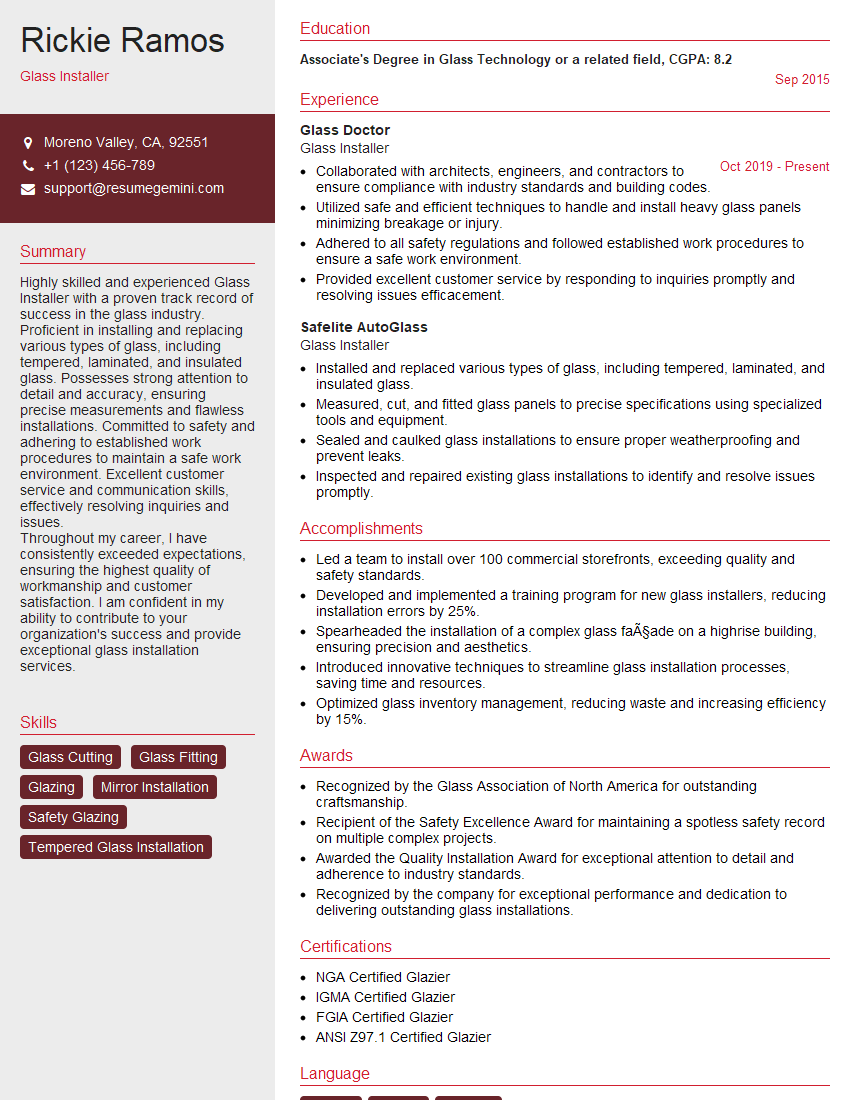
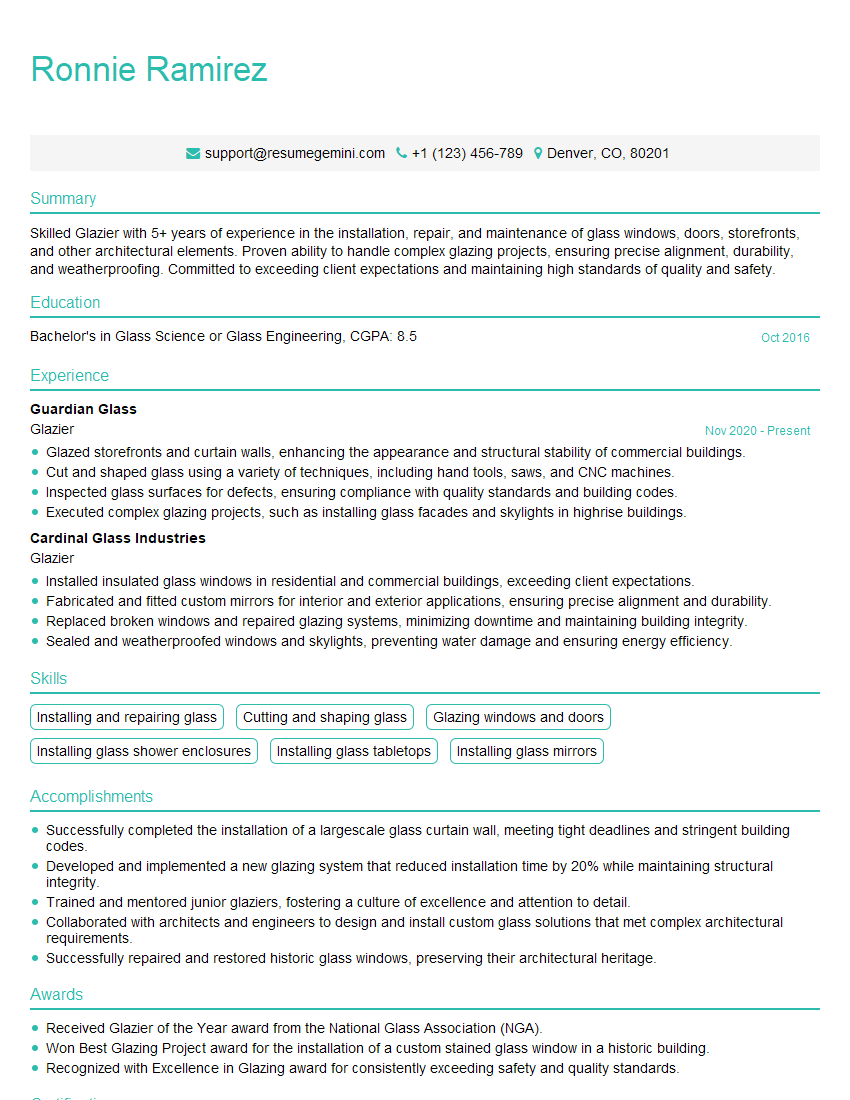
Mastering the art and science of Burning and Glazing opens doors to exciting career opportunities in ceramics, art, and manufacturing. To make the most of your job search, focus on building a strong, ATS-friendly resume that highlights your skills and experience. ResumeGemini is a trusted resource that can help you create a professional and impactful resume. We provide examples of resumes tailored to the Burning and Glazing field to help you showcase your qualifications effectively. Take the next step towards your dream career today!
Explore more articles
Users Rating of Our Blogs
Share Your Experience
We value your feedback! Please rate our content and share your thoughts (optional).
What Readers Say About Our Blog
Very informative content, great job.
good