Interviews are more than just a Q&A session—they’re a chance to prove your worth. This blog dives into essential Bus Protocols (I2C, SPI, CAN) interview questions and expert tips to help you align your answers with what hiring managers are looking for. Start preparing to shine!
Questions Asked in Bus Protocols (I2C, SPI, CAN) Interview
Q 1. Explain the difference between I2C, SPI, and CAN bus protocols.
I2C, SPI, and CAN are all popular communication protocols used in embedded systems, but they differ significantly in their architecture, capabilities, and applications. Think of them as different ways to send messages between electronic components.
- I2C (Inter-Integrated Circuit): A multi-master, multi-slave serial communication bus that uses a simple two-wire interface (SDA and SCL) for data and clock signals. It’s widely used for low-speed communication between microcontrollers and peripheral devices.
- SPI (Serial Peripheral Interface): A synchronous, full-duplex communication bus that uses four wires (MOSI, MISO, SCK, CS). It offers higher speed than I2C but generally requires a dedicated communication line for each peripheral device.
- CAN (Controller Area Network): A robust, multi-master serial communication protocol designed for automotive and industrial applications. It features prioritized message handling and sophisticated error detection mechanisms. It typically utilizes a differential signaling scheme for improved noise immunity.
In essence: I2C is simple and versatile, SPI is fast but needs dedicated lines, and CAN is robust and prioritizes message delivery, making it ideal for safety-critical systems.
Q 2. What are the advantages and disadvantages of I2C?
I2C offers several advantages, but also has some limitations.
- Advantages: Simple two-wire interface, low cost, relatively easy to implement, supports multiple devices on a single bus, and requires minimal hardware.
- Disadvantages: Lower data rate compared to SPI, susceptible to noise, only one device can transmit at a time (unless implementing specific arbitration mechanisms), and its open-drain nature can limit the maximum number of devices.
For instance, you might use I2C to control a temperature sensor, an LED driver, or an EEPROM memory chip on a low-power microcontroller-based application. However, it would be unsuitable for high-speed data transfer applications like video streaming or high-resolution sensor data acquisition.
Q 3. What are the advantages and disadvantages of SPI?
SPI provides high-speed communication but comes with trade-offs.
- Advantages: High data rate, full-duplex communication (simultaneous sending and receiving), simpler clock synchronization than I2C, relatively easy to implement, and can be daisy-chained but not ideal for many devices.
- Disadvantages: Requires more pins than I2C (four wires minimum), master-slave architecture (usually one master and multiple slaves), less robust to noise compared to CAN, and each slave requires a dedicated chip select (CS) line which limits the number of peripherals that can be connected efficiently.
SPI is a good choice for applications requiring fast data transfer, such as interfacing with high-speed ADCs, displays, and flash memories. However, its limited scalability and lack of inherent error detection mechanisms are drawbacks in certain contexts.
Q 4. What are the advantages and disadvantages of CAN bus?
CAN excels in robustness and reliability but involves more complexity.
- Advantages: High noise immunity due to differential signaling, prioritized message handling, collision avoidance through arbitration, built-in error detection and correction, and suitable for real-time applications.
- Disadvantages: More complex implementation than I2C or SPI, potentially higher cost due to the need for specialized CAN controllers, limited data rate compared to some other protocols, and can become complex to manage with a large number of nodes.
You would likely find CAN in automotive systems (controlling engine parameters, ABS, etc.), industrial automation (controlling motors, sensors, and actuators), and other safety-critical applications where reliable communication is paramount. The prioritization feature is vital in such scenarios, ensuring that crucial messages get delivered even under heavy network load.
Q 5. Describe the I2C clock stretching mechanism.
Clock stretching in I2C is a mechanism that allows a slave device to temporarily halt the clock signal (SCL). This happens when the slave needs more time to process a request from the master. Imagine a busy waiter (slave) needing more time to fulfill an order (data request) from a customer (master).
The slave pulls the SCL line low, effectively stopping the clock. Once the slave has completed its processing, it releases the SCL line, allowing the master to continue.
This mechanism is crucial for accommodating slow peripherals that might need additional processing time. It prevents data loss due to timing constraints.
//Example (Conceptual):
Master requests data
Slave pulls SCL low (clock stretching)
Slave processes data
Slave releases SCL
Data is transmitted
Q 6. Explain the concept of I2C arbitration.
I2C arbitration determines which master device gains control of the bus when multiple masters want to transmit simultaneously. It’s a crucial mechanism preventing data collisions.
I2C uses a wired-AND logic on the SDA line. When multiple masters attempt to transmit, the master that releases the SDA line last wins the arbitration. This is because the line will reflect a ‘1’ as long as at least one master is holding it high; the first master to release the line effectively drops out of the arbitration process.
The master that ‘wins’ can then transmit its data. The losing masters must wait until the bus is idle to try again. This ensures that only one master transmits at any given time, preventing data corruption.
Q 7. How does I2C handle multiple devices on the same bus?
I2C handles multiple devices on the same bus using unique 7-bit addresses. Each device on the bus has a predefined address, much like how houses have unique street addresses.
The master device initiates communication by sending the slave device’s address followed by the desired command and data. The slave device will only respond if the address matches its own. This ensures that only the intended device receives and processes the data.
This addressing scheme makes it possible to have many devices (up to 112 devices on the standard bus) share the same two wires without interference. It’s like having multiple conversations on the same telephone line – each conversation uses a different number (address) to avoid mixing things up.
Q 8. What is the maximum speed of I2C?
The maximum speed of I2C is not a fixed value; it depends heavily on several factors. These factors include the clock frequency (set by the I2C master), the capacitance of the bus, and the length of the bus. While the I2C specification defines various speeds like standard-mode (100 kbps), fast-mode (400 kbps), and fast-mode plus (1 Mbps), these are theoretical maximums. In practice, you often see significantly lower speeds, especially with longer bus lengths or higher capacitance. Think of it like this: imagine trying to send information down a long, thin rope. The longer and less taut the rope, the slower the information travels.
Achieving the maximum speeds requires careful consideration of the physical characteristics of the bus. This includes using low-capacitance wiring and minimizing noise. It’s crucial to consult the datasheets of the specific I2C devices involved to determine their supported speed and to ensure compatibility.
Q 9. Explain SPI modes (0, 1, 2, 3).
SPI modes define how the clock signal (SCLK) and data signals (MOSI and MISO) are related to each other during data transfer. Each mode represents a different combination of clock polarity (CPOL) and clock phase (CPHA).
- Mode 0 (CPOL=0, CPHA=0): The clock is idle low. Data is sampled on the rising edge of the clock.
- Mode 1 (CPOL=0, CPHA=1): The clock is idle low. Data is sampled on the falling edge of the clock.
- Mode 2 (CPOL=1, CPHA=0): The clock is idle high. Data is sampled on the rising edge of the clock.
- Mode 3 (CPOL=1, CPHA=1): The clock is idle high. Data is sampled on the falling edge of the clock.
It’s essential for the SPI master and slave to agree on the same mode for successful communication. Imagine two people trying to play catch; if one throws when the other expects to catch, the throw will be missed. Similarly, if master and slave operate in different SPI modes, data corruption will occur.
Q 10. How does SPI handle data transmission?
SPI (Serial Peripheral Interface) handles data transmission using four main lines: MOSI (Master Out Slave In), MISO (Master In Slave Out), SCK (Serial Clock), and SS (Slave Select).
The master device controls the clock and initiates communication by asserting the SS line low for a specific slave. Data is then shifted bit by bit on the MOSI line by the master, synchronized by the SCK pulses. Simultaneously, the slave shifts data out on the MISO line. The master and slave are working in a synchronous manner, like a well-rehearsed orchestra playing in perfect harmony. Once data transfer is complete, the master releases the SS line, making the slave inactive.
The directionality of data flow is strictly determined by MOSI and MISO lines – hence it is called a full duplex communication when both MOSI and MISO are used simultaneously.
Q 11. What is the difference between full-duplex and half-duplex communication in SPI?
In the context of SPI, the distinction between full-duplex and half-duplex is subtle, primarily related to how the MOSI and MISO lines are used.
- Full-duplex: Data can flow simultaneously in both directions (Master to Slave via MOSI and Slave to Master via MISO). This is the most common way SPI is used. Think of a two-lane highway where traffic can flow in both directions at the same time.
- Half-duplex: Only one direction of data transfer is possible at any given time. One device is the transmitter, and the other is the receiver. To switch directions, the devices need to change roles. This is less common and typically involves signaling or protocol management to ensure that only one device transmits at a time. Imagine a single-lane road where traffic can only go in one direction at a time.
Most SPI implementations operate in full-duplex mode, leveraging the parallel nature of MOSI and MISO lines for simultaneous data transfer. However, you can create a half-duplex system by managing the MOSI and MISO lines within a software protocol, but this is less efficient.
Q 12. Explain the concept of SPI slave select (SS).
The SPI Slave Select (SS) line, also known as Chip Select (CS), acts as an enable signal for each individual slave device connected to the SPI bus. It’s an active-low signal, meaning that pulling the SS line low selects the corresponding slave.
With multiple slaves on a single SPI bus, the SS line allows the master to communicate with only one slave at a time, preventing conflicts. Imagine a building with multiple apartments; the SS line is like the key that unlocks the door to a specific apartment (slave). The master can only communicate with one apartment at a time.
Each slave device requires its own SS line; otherwise, the master will not be able to individually address different devices on the bus.
Q 13. What is CAN bus arbitration?
CAN bus arbitration is the process by which multiple nodes on a CAN bus resolve contention when multiple nodes attempt to transmit messages simultaneously. It uses a deterministic collision resolution mechanism based on the message identifier (ID).
Nodes with lower message IDs (higher priority) win the arbitration process. The arbitration process is bit-by-bit: the nodes compare their message IDs one bit at a time. If a bit is different between competing nodes, the node with a dominant bit (0 is dominant) wins the arbitration. The losing node then stops transmitting.
This mechanism ensures that higher-priority messages are transmitted first, ensuring a fair and efficient communication on the bus. Think of it as a polite queuing system where more urgent tasks (lower message IDs) are addressed first.
Q 14. Describe the CAN bus message format.
The CAN bus message format consists of several fields, all crucial for efficient and reliable data transmission.
- Start of Frame (SOF): A single dominant bit (0) signaling the beginning of a message.
- Arbitration Field: Contains the message identifier (ID) which determines priority during arbitration. The length of this field depends on the specific CAN configuration (11-bit or 29-bit ID).
- Control Field: Specifies the message length (number of data bytes).
- Data Field: Holds the actual data being transmitted (0 to 8 bytes).
- CRC Sequence: A Cyclic Redundancy Check for error detection.
- CRC Delimiter: A single recessive bit (1) separating CRC sequence and ACK field.
- Acknowledgement (ACK): A single bit that all receiving nodes should send back to acknowledge successful message reception.
- End of Frame (EOF): Seven recessive bits (1s) marking the end of the message.
This structured format allows for robust and error-checked communication across the CAN bus. The fields work together, ensuring efficient message transmission and reception across various applications requiring high reliability.
Q 15. Explain the difference between CAN 2.0A and CAN 2.0B.
The main difference between CAN 2.0A and CAN 2.0B lies in their identifier formats. Both are variants of the Controller Area Network (CAN) bus protocol, used for robust communication in automotive and industrial applications. Think of the identifier as the address of a message. CAN 2.0A uses a standard 11-bit identifier, suitable for systems with fewer nodes needing simpler addressing. CAN 2.0B, on the other hand, uses an extended 29-bit identifier. This allows for significantly more unique message addresses, making it ideal for larger, more complex networks where many devices need to communicate simultaneously.
Imagine a small office (CAN 2.0A) needing only a few phone lines (message identifiers). A large corporation (CAN 2.0B) requires far more phone lines (message identifiers) to accommodate all its employees.
In essence: CAN 2.0A offers simplicity and is sufficient for smaller applications, while CAN 2.0B provides scalability and is preferred for large, complex networks.
Career Expert Tips:
- Ace those interviews! Prepare effectively by reviewing the Top 50 Most Common Interview Questions on ResumeGemini.
- Navigate your job search with confidence! Explore a wide range of Career Tips on ResumeGemini. Learn about common challenges and recommendations to overcome them.
- Craft the perfect resume! Master the Art of Resume Writing with ResumeGemini’s guide. Showcase your unique qualifications and achievements effectively.
- Don’t miss out on holiday savings! Build your dream resume with ResumeGemini’s ATS optimized templates.
Q 16. How does CAN bus handle error detection and correction?
CAN bus excels at error detection and handling, crucial for its reliability in safety-critical systems. It employs several mechanisms:
- Cyclic Redundancy Check (CRC): Each message includes a CRC code calculated from the message data. The receiver recalculates the CRC and compares it to the received value. A mismatch signals an error.
- Bit Stuffing: To prevent long sequences of identical bits (which can disrupt synchronization), CAN implements bit stuffing. This involves inserting an extra bit to break up consecutive identical bits (explained further in the next question).
- Error Frames: Upon detecting an error, a node sends an error frame, indicating the type of error. Other nodes acknowledge the error and may initiate retransmission.
- Error Counter: Each node maintains an error counter. Exceeding a threshold indicates a malfunctioning node, leading to it being temporarily or permanently bus-off to prevent further errors.
- Bus-Off: A node that accumulates too many errors is placed in bus-off state, preventing further transmissions until it recovers. This prevents a single faulty node from crippling the entire network.
This multi-layered approach ensures reliable communication even in noisy environments. For example, in an automotive setting, transient noise from electrical components won’t easily disrupt the communication between the engine control unit (ECU) and other sensors.
Q 17. What is CAN bus bit stuffing?
Bit stuffing in CAN is a clever technique to prevent long sequences of identical bits, which can lead to synchronization issues. The rule is simple: after five consecutive bits of the same value (0 or 1), a bit of the opposite value is inserted. This ‘stuffed’ bit is later removed by the receiver.
Let’s say we have the bit sequence 111111. With bit stuffing, it becomes 1111101. The receiver identifies and removes the ‘stuffed’ 0 to recover the original sequence. This clever technique enhances the bus’s robustness against noise and clock drifts.
Q 18. What are the different types of CAN bus frames?
CAN bus uses several frame types to manage communication efficiently. The main ones are:
- Data Frame: This is the most common frame type carrying actual data between nodes. It includes the identifier, data length, data, and CRC.
- Remote Frame: This frame requests data from a specific node, indicated by the identifier. It is used when one node needs information from another without having to transmit the entire data itself.
- Error Frame: These frames are used to signal errors detected on the bus, allowing other nodes to react accordingly.
- Overload Frame: Used to signal a node’s temporary inability to handle incoming messages; it essentially helps in preventing data loss during busy periods.
- Stuff bit: while not technically a frame, it is a crucial part of the communication process, as explained above.
These different frames provide a flexible framework for communication, allowing for efficient data exchange and error handling in a wide range of applications. For instance, in a modern vehicle, various ECUs use different frame types to coordinate functions and share data.
Q 19. Describe the process of initializing I2C on a microcontroller.
Initializing I2C on a microcontroller involves configuring the I2C peripheral and setting up the necessary pins. The steps generally include:
- Enable the I2C peripheral clock: This step usually involves setting a bit in the microcontroller’s clock control register. Think of this as turning on the power to the I2C communication module.
- Configure the I2C pins as alternate functions: The microcontroller’s GPIO pins need to be configured as I2C SDA (data) and SCL (clock) pins. This directs the pins’ signals to the I2C module instead of general-purpose I/O.
- Set I2C baud rate: This determines the communication speed. It’s a trade-off between speed and compatibility; different devices may have different maximum speeds.
- Set up the I2C address: If the microcontroller is acting as a master, it doesn’t need a fixed I2C address; but if it is acting as a slave, it needs to be given a unique I2C address for the other devices to communicate with it.
- Enable the I2C peripheral: This activates the I2C module and allows communication.
The exact steps vary depending on the microcontroller architecture. For example, using a STM32 microcontroller, you would use registers like RCC->APB1ENR (clock enable), GPIOx->MODER (GPIO mode configuration), and I2Cx->CR1 (I2C control register).
Q 20. Describe the process of initializing SPI on a microcontroller.
SPI initialization is similar to I2C, but involves different configuration steps. Here’s the general process:
- Enable the SPI peripheral clock: Just like with I2C, activate the power for the SPI module.
- Configure SPI pins: Set the MOSI (master out, slave in), MISO (master in, slave out), SCK (serial clock), and optionally SS (slave select) pins as SPI alternate functions.
- Set SPI mode: Choose the clock polarity (CPOL) and phase (CPHA), defining how the clock edge is used to latch data. There are four possible modes (Mode 0-3). Each has different timings.
- Set SPI baud rate: This defines the communication speed. Usually involves setting a prescaler value in the SPI control register.
- Enable the SPI peripheral: Start the SPI module.
For instance, on an AVR microcontroller, you’d use registers like SPCR (SPI control register) and DDRB (data direction register) to set up the SPI communication. The specific registers and their functions differ across different microcontrollers.
Q 21. Describe the process of initializing CAN bus on a microcontroller.
Initializing the CAN bus on a microcontroller is more involved compared to I2C or SPI, but follows a similar pattern:
- Enable the CAN peripheral clock: Supply power to the CAN module.
- Configure CAN pins: Set the CAN TX (transmit) and RX (receive) pins as CAN alternate functions.
- Configure CAN bit timing: This is the most critical step, setting the baud rate and other parameters to ensure successful communication. Incorrect bit timing can cause communication failures. The process involves choosing values for the bit rate prescaler, phase segments (BS1, BS2), and synchronization jump width (SJW). This often requires careful calculation based on the system clock frequency and the desired baud rate.
- Configure CAN filters (optional but highly recommended): CAN filters allow the microcontroller to selectively receive messages matching specific identifiers, saving processing power and reducing bus traffic. This involves setting up acceptance masks and code registers.
- Configure CAN interrupts: Setup interrupts for message reception and error conditions to improve the responsiveness of the system.
- Enable the CAN peripheral: Start the CAN module.
The process is microcontroller-specific. On a microcontroller like a PIC, you might work with registers like C1CTRL1 (CAN control register 1) and C1CFG1 (CAN configuration register 1). Careful attention to the bit timing configuration is crucial for successful CAN communication.
Q 22. How do you troubleshoot communication issues on an I2C bus?
Troubleshooting I2C communication problems involves a systematic approach. First, verify the basic hardware: check power supply voltage, ground connections, and the presence of pull-up resistors (crucial for I2C). A faulty power supply or poor grounding can lead to erratic behavior. Use a multimeter to check for proper voltage levels at the devices.
Next, inspect the I2C lines (SDA and SCL) with an oscilloscope to see if data is being transmitted and received correctly. Look for any unexpected voltage levels, noise, or slow clock speeds. A slow clock speed or no clock activity often points to problems with the clock line. A noisy SDA line suggests potential electromagnetic interference (EMI) issues. You can also use a logic analyzer for a more detailed view of the signals. This gives you precise timing and data content.
Software-wise, ensure that your I2C library is configured correctly for the device addresses and data rates. Incorrect addresses will prevent communication. Use a debugging tool (if available for your microcontroller) to monitor the I2C communication at the software level, checking for errors such as acknowledge failures (NAK). Examine device-specific registers and status bits to identify communication problems.
Finally, try to isolate the faulty component. If possible, remove devices one by one to identify the culprit. Replacing potentially faulty devices can also resolve persistent problems. Remember, I2C is sensitive to noise; carefully route the wiring to minimize EMI.
Q 23. How do you troubleshoot communication issues on an SPI bus?
SPI troubleshooting focuses on verifying the hardware and software configurations. First, confirm that the MISO, MOSI, SCK, and CS (chip select) lines are connected correctly to your microcontroller and peripheral devices. Incorrect connections can cause data corruption or no communication.
Use a logic analyzer or oscilloscope to inspect the SPI signals. A logic analyzer can easily display the data transmitted and received, while an oscilloscope allows for a detailed view of signal integrity. Look for signal distortions, clock glitches, or timing issues. These may point to wiring problems, EMI interference, or a faulty component.
Next, check your microcontroller’s SPI configuration: baud rate, clock polarity, phase, and data order. Incorrect configurations can lead to data corruption. Compare your configuration to the datasheet specifications of both your microcontroller and peripheral devices.
Software-wise, carefully check your SPI library or driver. Errors in data transfer protocols within your code can easily result in failed communication. Step-through your code with a debugger to verify that data is being written correctly to the SPI registers and transmitted to the peripheral device. If using DMA (Direct Memory Access), ensure it’s configured correctly.
Lastly, systematically remove devices to isolate a failing component. Remember to consult the datasheets of your devices for specifics on SPI operation and troubleshooting.
Q 24. How do you troubleshoot communication issues on a CAN bus?
CAN bus troubleshooting requires specific tools and techniques because of its sophisticated error detection and correction mechanisms. Start by verifying the CAN transceiver’s power supply and proper grounding. A faulty transceiver can cause numerous communication problems. Use a multimeter to check for correct voltages.
A CAN bus analyzer is essential for troubleshooting. This tool captures the CAN messages, allowing you to identify errors like bit stuffing errors, CRC errors, and acknowledgement failures. It provides vital insights into the overall health of the CAN bus and helps pin down problematic nodes. Analyze the bus activity for any dominant nodes or repeated error frames.
Check for proper termination resistors at both ends of the CAN bus. Incorrect or missing termination resistors cause reflections that corrupt signals. Also, check the bus wiring for any shorts or open circuits that can severely impede communication.
Software debugging on the node level is critical. Verify your CAN library and driver for proper operation, making sure that the baud rate and other parameters are accurately configured. Check the error counters in your CAN controller. High error counts often indicate a problem with a specific node or the bus itself.
Isolate potential problems by removing nodes from the bus one by one. This helps to narrow down the source of the issue. Remember that CAN bus protocols require careful attention to detail in both hardware and software.
Q 25. What are some common hardware components used with I2C, SPI, and CAN?
Hardware components frequently used with these bus protocols include:
- Microcontrollers (MCUs): The central brains of the system, they manage communication over all three bus types.
- Transceivers: These devices interface the MCU to the bus. For example, a CAN transceiver handles the differential signaling required by the CAN bus.
- Level Shifters: Used when the MCU’s voltage levels are incompatible with the bus or peripherals. Essential for situations with different voltage domains.
- Pull-up Resistors (I2C): Crucial for I2C; provide a stable high voltage level when the line is idle.
- Termination Resistors (CAN): Terminate the CAN bus, preventing signal reflections.
- Sensors and Actuators: The peripheral devices communicating through the buses, like temperature sensors, accelerometers, motors, etc.
- Logic Analyzers and Oscilloscopes: Debugging tools used to monitor signals on the bus.
Q 26. Explain the importance of pull-up resistors in I2C.
Pull-up resistors in I2C are essential because the bus operates in an open-drain configuration. This means that the devices do not actively drive the bus high. Instead, they pull it low to communicate.
Without pull-up resistors, the SDA and SCL lines would float at an undefined level when no device is actively driving them low. This results in unreliable communication. The pull-up resistors ensure that the lines are at a defined high voltage state (typically VCC) when no device is transmitting, providing a stable reference level for communication. They also help with noise suppression and ensure quick transitions between high and low states. Incorrect values (too high or too low) can lead to communication issues.
The value of the pull-up resistors is critical. Values that are too low can draw excessive current, while values that are too high may result in slow rise times, potentially causing communication problems. Datasheets generally specify the appropriate range for the pull-up resistor values, which need to be considered carefully in the design.
Q 27. How would you design a system using a combination of I2C, SPI, and CAN?
Designing a system using I2C, SPI, and CAN requires a clear understanding of each protocol’s strengths and weaknesses. A typical approach would be to leverage the advantages of each bus:
- I2C for low-speed, simple sensors: Ideal for interfacing sensors and actuators that require low data rates and fewer connections, such as temperature sensors, or less critical information like status flags.
- SPI for high-speed, dedicated peripherals: Use SPI for high-speed data transfer to peripherals requiring higher bandwidth, such as flash memory or displays.
- CAN for robust, real-time critical applications: Utilize CAN for applications that necessitate high reliability, error detection, and real-time communication, such as automotive control systems or industrial automation.
Consider the MCU’s capabilities when integrating different buses. Some MCUs have built-in peripherals for each bus type, simplifying the design. Careful consideration of the data rates, addressing schemes, and error handling of each bus is paramount. For example, it’s important to allocate sufficient processing power to manage the communication across all buses without introducing conflicts or delays. Proper signal routing and noise mitigation are crucial to ensure reliable communication.
Q 28. Describe a scenario where you had to debug a bus protocol issue.
In a previous project involving a robotic arm controlled by a microcontroller, we experienced intermittent communication failures on the CAN bus. The robot uses CAN for real-time control of the motors and position sensors. Initially, the error messages were sporadic and difficult to diagnose. We began using a CAN bus analyzer to monitor the bus traffic.
The analyzer revealed sporadic bit errors and error frames. After careful investigation, we discovered that the issue was caused by a faulty CAN transceiver. Replacing the transceiver immediately solved the communication failures. While the problem was eventually straightforward, the initial difficulty lay in the fact that these errors were sporadic, with an intermittent nature making it tricky to diagnose the cause. The systematic approach, using the right tools (CAN bus analyzer) and understanding the fundamentals of CAN communication, was vital in resolving this issue.
Key Topics to Learn for Bus Protocols (I2C, SPI, CAN) Interview
Landing your dream embedded systems role requires a solid grasp of communication protocols. This section outlines key areas to focus on for your upcoming interview on I2C, SPI, and CAN bus protocols.
- I2C:
- Understanding the master-slave architecture and its implications.
- Detailed knowledge of the I2C timing diagrams and specifications (clock stretching, acknowledge bits).
- Practical application: Designing an I2C based sensor interface for a microcontroller.
- Troubleshooting common I2C communication issues (bus collisions, clock synchronization problems).
- SPI:
- Master-slave configuration and the role of MOSI, MISO, SCK, and SS/CS lines.
- Different SPI modes (clock polarity and phase).
- Practical application: Implementing high-speed data transfer between a microcontroller and an external flash memory.
- Analyzing and resolving SPI communication errors (bit errors, data corruption).
- CAN:
- Understanding the CAN bus arbitration mechanism and its benefits (collision avoidance).
- Knowledge of CAN data frames (standard and extended frames), identifiers, and error handling.
- Practical application: Designing a robust CAN network for automotive or industrial control systems.
- Troubleshooting CAN bus faults (bus off, error counters, bit stuffing).
- Familiarity with CAN FD (CAN with Flexible Data-rate).
- Comparative Analysis:
- Comparing and contrasting the three protocols: data rate, complexity, error handling, application suitability.
Next Steps
Mastery of I2C, SPI, and CAN protocols significantly enhances your marketability in the embedded systems field, opening doors to exciting and challenging roles. A well-crafted resume is your first impression; make it count! Creating an ATS-friendly resume is crucial for getting your application noticed. ResumeGemini is a trusted resource to help you build a professional and impactful resume that highlights your skills and experience. Examples of resumes tailored to Bus Protocols (I2C, SPI, CAN) expertise are available to guide you.
Principal Engineer Resume Sample
Systems Architect Resume Sample
Firmware Engineer Resume Sample
Test Engineer Resume Sample
Systems Integration Engineer Resume Sample
Design Engineer Resume Sample
Integration Engineer Resume Sample

Hardware Engineer Resume Sample
Electrical Engineer Resume Sample
Product Engineer Resume Sample
Senior Engineer Resume Sample
Application Engineer Resume Sample
Automotive Engineer Resume Sample
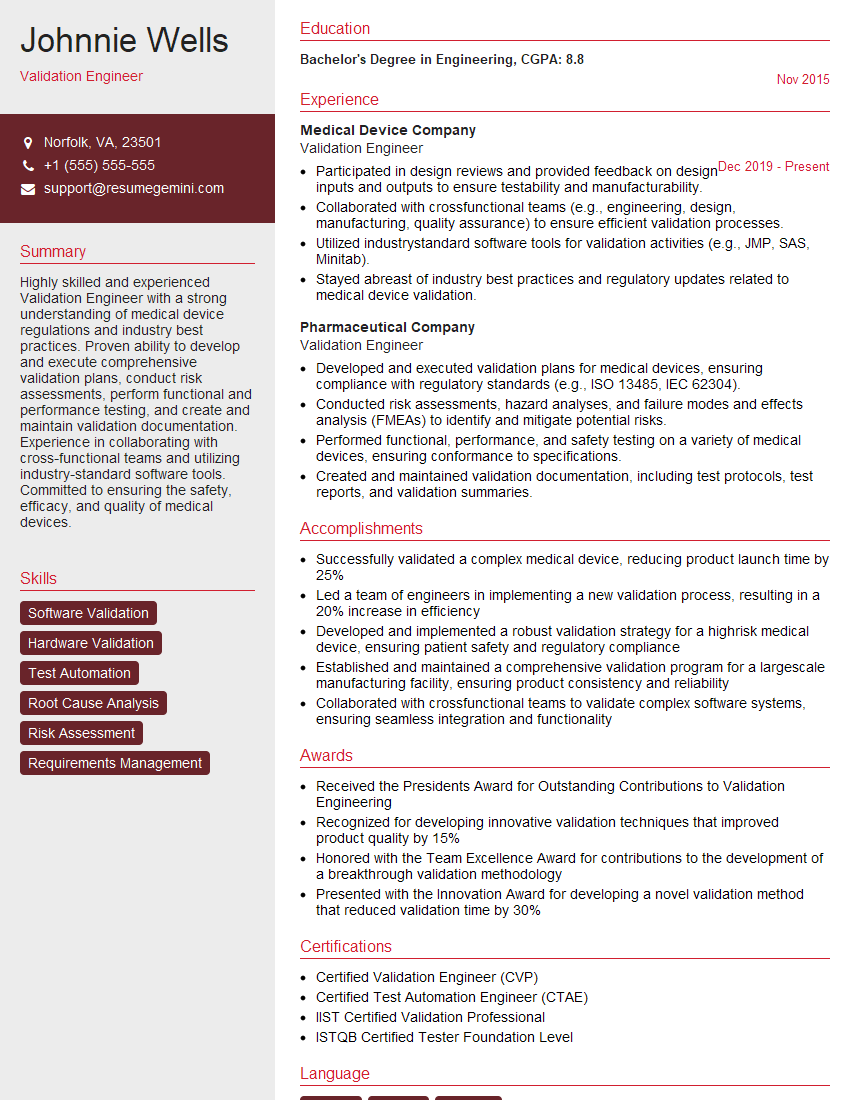
Validation Engineer Resume Sample
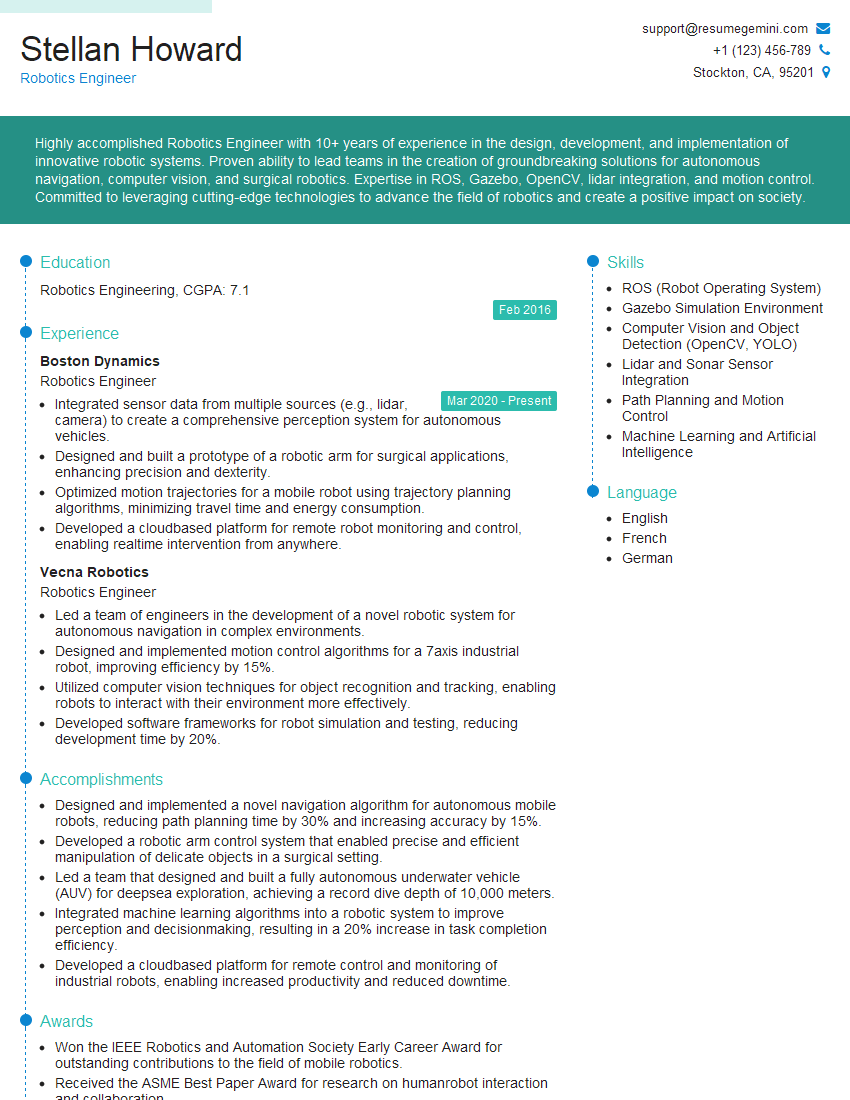
Robotics Engineer Resume Sample
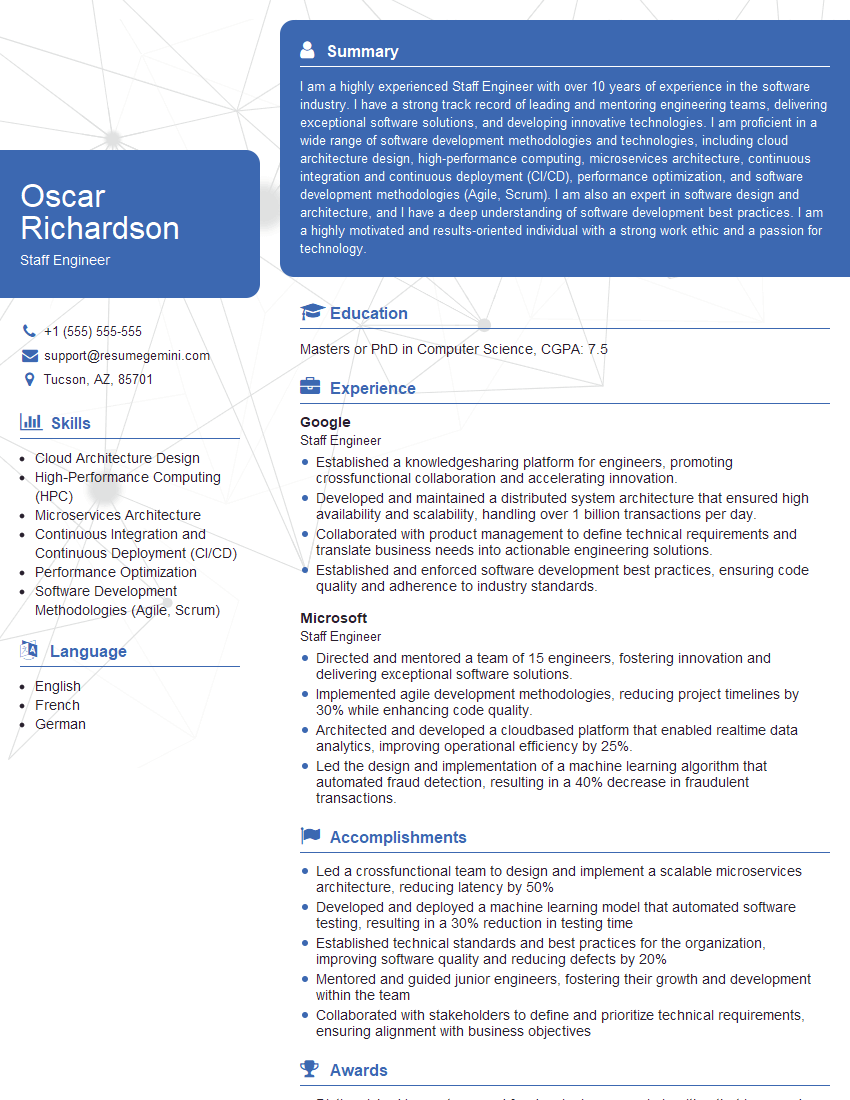
Staff Engineer Resume Sample
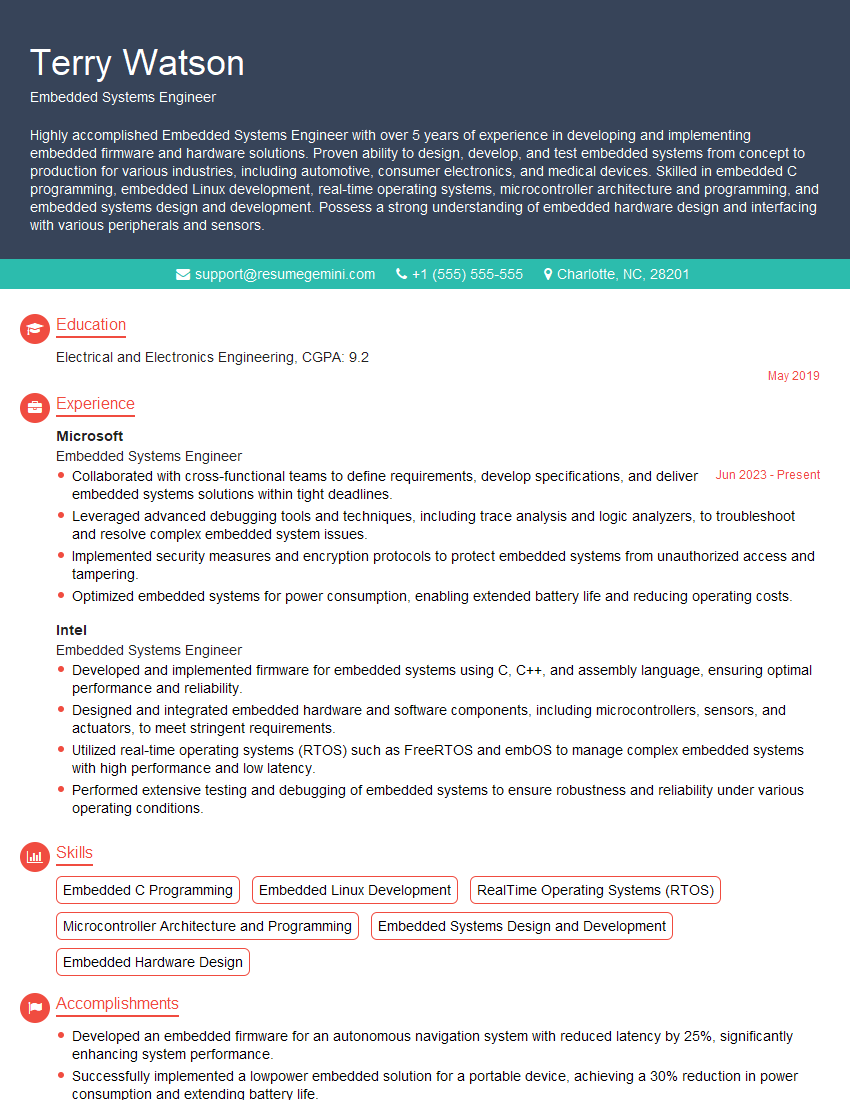
Embedded Systems Engineer Resume Sample
- Principal Engineer
- Systems Architect
- Firmware Engineer
- Test Engineer
- Systems Integration Engineer
- Design Engineer
- Integration Engineer
- Hardware Engineer
- Electrical Engineer
- Product Engineer
- Senior Engineer
- Application Engineer
- Automotive Engineer
- Validation Engineer
- Robotics Engineer
- Staff Engineer
- Embedded Systems Engineer
Explore more articles
Users Rating of Our Blogs
Share Your Experience
We value your feedback! Please rate our content and share your thoughts (optional).
What Readers Say About Our Blog
Very informative content, great job.
good