Interviews are more than just a Q&A session—they’re a chance to prove your worth. This blog dives into essential C-Class Driver License interview questions and expert tips to help you align your answers with what hiring managers are looking for. Start preparing to shine!
Questions Asked in C-Class Driver License Interview
Q 1. Describe your experience driving a vehicle requiring a C-Class license.
My experience driving vehicles requiring a C-Class license spans over eight years, encompassing a wide range of operations. I’ve driven everything from large box trucks for deliveries within urban areas to articulated lorries for long-haul transport across the country. This extensive experience has given me a deep understanding of vehicle dynamics, load management, and route planning for various cargo types and destinations. I’ve consistently maintained a clean driving record and have a thorough understanding of relevant safety regulations. For example, I once had to navigate a particularly challenging delivery to a remote construction site involving narrow, winding roads. Careful planning and precise maneuvering ensured the delivery was completed safely and on time.
Q 2. What are the weight and size restrictions for vehicles you are licensed to operate?
The weight and size restrictions for vehicles I’m licensed to operate vary depending on the specific endorsement on my C-Class license, but generally, I’m qualified to drive vehicles exceeding 3.5 metric tons Gross Vehicle Weight (GVW) and/or those exceeding a certain length and width. The exact figures are subject to regional regulations, but my experience covers vehicles significantly exceeding these minimums, frequently handling loads close to the maximum permissible weight for my vehicle type and license class. I always ensure I’m operating within the legal limits specified on my license and the vehicle’s documentation. Understanding weight distribution is crucial to avoid overloading and maintain vehicle stability, especially in challenging conditions.
Q 3. Explain the importance of pre-trip vehicle inspections.
Pre-trip vehicle inspections are paramount for ensuring roadworthiness and preventing accidents. They’re not just a checklist; they’re a crucial safety measure. I meticulously inspect tires (tread depth, pressure, condition), lights, brakes, mirrors, fluids (oil, coolant, brake fluid), steering, and the overall condition of the vehicle’s body and chassis. I also check the securement of any cargo. A thorough pre-trip inspection can identify potential issues like a low tire pressure or a faulty brake light before they become a major problem on the road. I recall one instance where a pre-trip inspection revealed a leak in the hydraulic system; addressing it beforehand prevented a potentially dangerous breakdown halfway through a long haul.
Q 4. How do you ensure the safety of your cargo during transportation?
Ensuring cargo safety involves proper securing and load distribution. This starts with understanding the nature of the cargo and choosing the appropriate securing methods. For fragile items, I use padding and bracing. For heavier items, I strategically position and secure them to prevent shifting during transit. I always use the correct straps, chains, or other securing devices, ensuring they’re appropriately tensioned and properly fastened to the vehicle’s designated securement points. Regular checks during transit are also essential to ensure the cargo remains securely fastened. I follow all relevant regulations and guidelines, always prioritizing safety to prevent accidents and damage. I once transported delicate machinery; meticulous planning and securing meant it arrived undamaged despite some harsh weather.
Q 5. What are your strategies for navigating challenging road conditions (e.g., snow, ice, heavy traffic)?
Navigating challenging road conditions requires adjusting driving techniques and maintaining a heightened level of awareness. In snowy or icy conditions, I reduce speed significantly, increase following distances, and avoid sudden braking or acceleration. I use lower gears to maintain control and gently steer to avoid skidding. In heavy traffic, I maintain a safe following distance, anticipate traffic flow, and signal my intentions clearly. I am always prepared for sudden stops and use my mirrors frequently to monitor surrounding vehicles. Patience and defensive driving are key in these scenarios. I’ve developed skills in recovering from minor skids, thanks to specialized training, enhancing my safety response during adverse situations.
Q 6. How do you manage your time effectively while on a delivery route?
Effective time management on delivery routes is crucial for efficiency. I meticulously plan routes before departing, considering traffic patterns, delivery windows, and potential delays. I utilize GPS and route optimization software to select the most efficient route. I also communicate proactively with dispatch and clients to inform them of my estimated arrival times and potential delays. Breaks are planned strategically to ensure adherence to driving regulations and prevent fatigue. I prioritize tasks based on urgency and make adjustments to the route as needed. I prioritize safety and legality above speed, knowing a delayed delivery is better than an accident.
Q 7. Describe your experience with using GPS and navigation systems.
My experience with GPS and navigation systems is extensive. I’m proficient in using various GPS devices and map applications to plan routes, track progress, and receive real-time traffic updates. I understand the limitations of GPS and utilize backup maps and road signs. I frequently re-route when traffic is heavy or road closures are encountered. The ability to quickly and efficiently interpret GPS data and adapt to unexpected changes has been vital in managing long and complex delivery routes. GPS integration with delivery management systems streamlines operations and allows for effective communication of my location to the dispatcher and client.
Q 8. Explain your understanding of hours of service regulations.
Hours of service (HOS) regulations are crucial for commercial drivers like myself, ensuring we don’t operate fatigued and enhance road safety. They dictate the maximum number of hours a driver can work within a specific timeframe, including driving time, on-duty time (but not driving), and off-duty time. These regulations vary slightly depending on the type of operation (e.g., property carrying, passenger transportation) and are strictly enforced by the Department of Transportation (DOT).
- Driving time limits: There are limits on how many hours a driver can be behind the wheel in a day and a week, aiming to prevent driver fatigue.
- On-duty time: This includes all time spent working, even if not actively driving, such as loading/unloading, pre-trip inspections, or waiting at delivery locations.
- Off-duty time: This is the time when drivers are completely relieved of work and can rest. Adequate rest is essential for safety.
- 30-minute break rule: After 8 hours of continuous driving, a driver must take at least a 30-minute break.
For example, I meticulously track my hours using electronic logging devices (ELDs) which automatically record my driving and on-duty time, ensuring I’m compliant. I plan my trips to incorporate sufficient breaks and adhere to the HOS regulations, prioritizing safety above all else. Understanding and respecting HOS regulations is not just a legal requirement; it’s a commitment to responsible driving and road safety.
Q 9. How do you handle stressful situations while driving?
Stressful driving situations are inevitable, so I’ve developed coping strategies. My approach is to proactively anticipate potential stressors and implement strategies to mitigate them. Deep breathing exercises help me stay calm in traffic jams or unexpected delays. I also ensure I get adequate sleep before long drives and maintain a healthy lifestyle to improve my ability to cope with pressure.
For example, if I encounter an aggressive driver, I avoid engaging and maintain a safe following distance. I also prioritize my safety and pull over if needed to compose myself before resuming my journey. I find it helpful to listen to calming music or podcasts to maintain a relaxed mental state during longer hauls.
Open communication with dispatch is vital. If I encounter unforeseen delays, I immediately notify them, allowing them to adjust schedules and avoid unnecessary pressure. By remaining calm, proactive, and communicative, I effectively navigate stressful situations.
Q 10. What is your approach to maintaining a clean driving record?
Maintaining a clean driving record is paramount for a professional driver. My strategy is based on defensive driving techniques and a proactive approach to safety. This includes strictly adhering to all traffic laws, consistently performing pre-trip and post-trip vehicle inspections, and always prioritizing safety over speed or deadlines.
- Defensive driving: I constantly scan my surroundings, anticipating potential hazards and reacting appropriately. This includes maintaining a safe following distance, signaling my intentions clearly, and avoiding distractions like cell phones.
- Vehicle maintenance: Regular maintenance prevents breakdowns and mechanical failures, reducing the risk of accidents. I diligently check tire pressure, fluid levels, and lights before each trip.
- Respecting traffic laws: This is foundational. I consistently obey speed limits, follow traffic signals, and avoid reckless driving behaviors.
I also keep a detailed log of my driving activities and any incidents, ensuring that I can accurately document my driving history. A clean driving record not only protects my livelihood but also reflects my commitment to responsible and safe driving.
Q 11. How do you handle customer interactions and deliveries?
Customer interaction and timely deliveries are crucial aspects of my job. I strive to provide excellent service through clear communication, professionalism, and punctuality. I always confirm delivery details before departure and maintain open communication with customers throughout the delivery process.
For instance, if a delivery is delayed due to unforeseen circumstances like traffic congestion, I immediately contact the customer, provide an estimated time of arrival (ETA), and keep them updated on my progress. I strive to be polite, helpful, and understanding, regardless of the circumstances. I also ensure all paperwork is completed accurately and efficiently.
Positive customer interactions build trust and foster repeat business. By combining efficient delivery with outstanding customer service, I ensure a smooth and positive experience for everyone.
Q 12. Describe your experience with loading and unloading cargo.
My experience with loading and unloading cargo encompasses various techniques and considerations for safety and efficiency. This includes understanding weight distribution, proper securing methods, and safe handling procedures to prevent damage or injury.
I always start by assessing the cargo type, weight, and dimensions to determine the most efficient loading pattern, prioritizing balance and weight distribution. I secure the cargo using appropriate straps, chains, or other restraints, adhering to all safety regulations. For example, when loading fragile items, I use protective padding and carefully place them to prevent shifting or breakage. Careful unloading using similar techniques ensures the safety of both the cargo and the receiving party.
Regularly using proper lifting techniques and equipment ensures my personal safety and efficiency. My focus remains on preventing accidents and maintaining the integrity of the cargo during transit.
Q 13. What are your strategies for fuel efficiency?
Fuel efficiency is a key concern for cost-effectiveness and environmental responsibility. My strategies focus on optimizing driving techniques and vehicle maintenance.
- Smooth acceleration and braking: Avoiding aggressive driving habits significantly reduces fuel consumption. I accelerate gradually and brake smoothly, anticipating traffic conditions.
- Maintaining consistent speed: Maintaining a steady speed, especially on highways, is more fuel-efficient than frequent acceleration and deceleration.
- Proper tire inflation: Under-inflated tires increase rolling resistance and fuel consumption. I regularly check and maintain proper tire pressure.
- Vehicle maintenance: Regular maintenance, including engine tune-ups and air filter changes, ensures optimal engine performance and fuel efficiency.
- Route planning: I plan my routes to avoid unnecessary idling and traffic congestion, optimizing the overall mileage.
For example, I often use GPS navigation to find the most fuel-efficient routes, avoiding unnecessary detours and traffic jams. By employing these strategies, I actively contribute to lowering fuel costs and minimizing the environmental impact of my driving.
Q 14. How do you maintain your vehicle’s log book and other essential documentation?
Maintaining accurate and up-to-date logbooks and documentation is vital for compliance and efficient record-keeping. I utilize electronic logging devices (ELDs) for recording hours of service, and I maintain paper backups of crucial information.
The ELD automatically records my driving time, on-duty time, and off-duty time, eliminating the need for manual record-keeping. I regularly check the ELD to ensure accuracy and address any discrepancies promptly. For documents like delivery receipts, bills of lading, and maintenance records, I use a secure filing system, either physical or digital, to ensure easy access and retrieval when needed.
All documentation is kept organized, easily searchable, and readily available for audits or inspections. This meticulous approach reflects my commitment to compliance and efficient record-keeping.
Q 15. What safety precautions do you take when operating a C-Class vehicle?
Operating a C-Class vehicle safely is paramount. It involves a multi-faceted approach encompassing pre-trip inspections, adherence to speed limits, and maintaining a safe following distance. My safety precautions begin before even starting the engine.
- Pre-Trip Inspection: I always conduct a thorough pre-trip inspection, checking tires, lights, brakes, fluids, and cargo securing mechanisms. Think of it like a pilot’s pre-flight checklist – essential for a safe journey. I’ll note any issues and report them before proceeding.
- Defensive Driving: I practice defensive driving, anticipating the actions of other drivers and being prepared for unexpected events. This includes scanning the road ahead, checking mirrors frequently, and maintaining a safe following distance – at least 3 seconds, more in adverse conditions.
- Speed and Road Conditions: I always adhere to posted speed limits and adjust my speed according to weather conditions (rain, snow, fog). Slippery roads require significantly reduced speed and increased following distance.
- Vehicle Maintenance: Regular maintenance is key. Ensuring the vehicle is in good mechanical condition prevents breakdowns and enhances safety. This includes regular oil changes, tire rotations, and brake inspections.
- Rest and Breaks: Fatigue is a significant safety risk. I take regular breaks during long drives, ensuring I’m well-rested and alert.
Career Expert Tips:
- Ace those interviews! Prepare effectively by reviewing the Top 50 Most Common Interview Questions on ResumeGemini.
- Navigate your job search with confidence! Explore a wide range of Career Tips on ResumeGemini. Learn about common challenges and recommendations to overcome them.
- Craft the perfect resume! Master the Art of Resume Writing with ResumeGemini’s guide. Showcase your unique qualifications and achievements effectively.
- Don’t miss out on holiday savings! Build your dream resume with ResumeGemini’s ATS optimized templates.
Q 16. How do you handle unexpected mechanical issues while on the road?
Unexpected mechanical issues can arise. My response is based on a calm, systematic approach prioritizing safety.
- Safety First: If the issue compromises safety (e.g., brake failure, steering problem), I pull over immediately to a safe location – away from traffic if possible.
- Assess the Situation: I assess the severity of the problem and determine whether it’s safe to attempt a temporary fix or if professional assistance is needed.
- Emergency Procedures: I utilize hazard lights, warning triangles (if available), and call for roadside assistance or my dispatcher immediately. I clearly communicate my location and the nature of the problem.
- Temporary Fixes (If Safe): If it’s a minor issue (e.g., flat tire) and I’m equipped and it’s safe to do so, I’ll attempt a temporary fix. However, safety remains my top priority – if I’m unsure, I wait for professional help.
- Documentation: I meticulously document the incident, including location, time, and description of the problem, for insurance and reporting purposes.
Q 17. Describe your experience with various types of cargo handling and securing methods.
My experience encompasses various cargo handling and securing methods, emphasizing safety and legal compliance. I understand the importance of weight distribution, proper securing techniques, and the potential hazards of improperly loaded cargo.
- Strapping and Chains: I’m proficient in using straps and chains to secure various types of cargo, ensuring they are tightly fastened and distributed evenly to prevent shifting during transit. This includes understanding tensioning techniques and proper placement of securing points.
- Tarps and Covers: I utilize tarps and covers to protect sensitive cargo from weather damage and prevent shifting. Proper securing is crucial to prevent the tarp from becoming a hazard.
- Weight Distribution: I’m aware of weight limits and the importance of even weight distribution across the vehicle to prevent instability and handling problems. I use load bars or other methods to properly distribute weight.
- Different Cargo Types: My experience includes handling various cargo types, from pallets and boxes to bulk goods and specialized items. I’m aware of the specific handling requirements for each type, including fragility, hazardous materials, and proper stacking procedures.
- Compliance: I’m fully aware of all relevant regulations related to cargo securement and transportation, ensuring compliance with all laws and safety guidelines.
Q 18. Explain your understanding of traffic laws and regulations.
My understanding of traffic laws and regulations is comprehensive. I am familiar with all relevant state and federal regulations and follow them meticulously. My knowledge encompasses speed limits, right-of-way rules, signaling, and driving in various conditions.
- Speed Limits and Traffic Laws: I adhere to all posted speed limits and traffic laws, understanding that they are in place to ensure safety for all road users.
- Right-of-Way: I am well-versed in right-of-way rules, including intersections, roundabouts, and merging onto highways.
- Vehicle Signals: I utilize my vehicle’s signals appropriately to indicate my intentions to other drivers.
- Adverse Weather Conditions: I am aware of and adapt my driving to various weather conditions, including rain, snow, fog, and extreme heat. This includes slowing down, increasing following distances, and using appropriate safety measures.
- Commercial Vehicle Regulations: I understand and comply with all regulations specific to commercial vehicles, including hours of service, weight restrictions, and vehicle maintenance requirements.
Q 19. How do you communicate effectively with dispatch or management?
Effective communication with dispatch or management is essential for efficient operations and safety. I prioritize clear, concise, and timely communication.
- Regular Updates: I provide regular updates on my location, estimated time of arrival (ETA), and any unexpected delays or issues encountered. This might include simple text updates or formal check-ins depending on company protocols.
- Clear Language: I use clear and concise language, avoiding jargon. For example, instead of saying ‘Experiencing significant congestion on I-95,’ I might say ‘Heavy traffic on I-95, ETA delayed by 30 minutes.’
- Professionalism: I maintain a professional demeanor in all communications, whether verbal or written.
- Problem Reporting: I promptly report any problems, such as mechanical issues, accidents, or delays, providing all necessary details to facilitate swift resolution.
- Confirmation of Instructions: I always confirm any instructions received to avoid misunderstandings and ensure I’m following the correct procedure.
Q 20. How do you deal with difficult customers or delivery situations?
Handling difficult customers or delivery situations requires patience, professionalism, and a problem-solving approach. My strategy focuses on de-escalation and finding mutually acceptable solutions.
- Active Listening: I listen carefully to the customer’s concerns, showing empathy and understanding. Often, simply hearing someone out can defuse a tense situation.
- Calm and Professional Demeanor: I maintain a calm and professional demeanor, even in stressful situations. Raising my voice or becoming defensive will only escalate the situation.
- Problem Solving: I work collaboratively with the customer to find a mutually acceptable solution. This might involve offering alternative solutions or explaining any constraints.
- Documentation: I carefully document all interactions and outcomes, including any special instructions or accommodations made.
- Escalation: If I’m unable to resolve the situation, I escalate it to my supervisor or manager, providing a clear and concise summary of the problem and attempted solutions.
Q 21. What are your strategies for staying alert and avoiding fatigue while driving long distances?
Staying alert and avoiding fatigue during long drives is critical for safety. My strategy incorporates several key elements.
- Adequate Rest: I prioritize getting enough sleep before and during a long journey. Long-haul driving requires adequate rest stops and planned breaks.
- Regular Breaks: I take regular breaks every 2-3 hours, getting out of the vehicle to stretch my legs and move around. Short walks or simple exercises can significantly improve alertness.
- Hydration and Nutrition: I maintain proper hydration and consume healthy snacks to prevent energy crashes. Avoid heavy meals that can cause drowsiness.
- Avoid Monotony: I avoid monotonous driving by changing routes, if possible, listening to engaging audio, and varying my pace (while maintaining safe driving practices).
- Awareness of Fatigue Signs: I am aware of the early signs of fatigue – yawning, difficulty concentrating, eye strain – and will pull over to rest immediately if I experience these.
- Teammate Support (if applicable): If I’m part of a team, I utilize the buddy system, sharing driving responsibilities to ensure adequate rest for both drivers.
Q 22. How do you prioritize safety over meeting deadlines?
Safety is paramount, always. It’s not a negotiable aspect of driving, especially with a Class C license where you may be transporting goods or people. While deadlines exist, compromising safety to meet them is unacceptable. I prioritize safety by adhering to speed limits, maintaining a safe following distance, and rigorously checking my vehicle’s condition before and during each trip. For instance, if I’m faced with a tight deadline and inclement weather develops, I won’t rush. I’ll prioritize safe driving practices, such as reducing speed and increasing following distance, even if it means a slight delay in my delivery. My commitment to safety is unwavering, because delays are far less consequential than an accident.
Q 23. Describe your experience with different types of driving environments (e.g., city, highway, rural areas).
My experience encompasses a wide range of driving environments. In city driving, I’m adept at navigating congested streets, managing traffic lights and pedestrians, and anticipating sudden stops. Highway driving requires a different skill set, focusing on maintaining consistent speeds, observing lane discipline, and being aware of larger vehicles and varying speeds. Rural driving presents its own challenges, such as unpredictable wildlife, uneven roads, and limited visibility. I’ve adapted my driving style to each environment, always prioritizing safety and defensive driving techniques. For example, in rural areas, I am more cautious and observant of my surroundings, as compared to my smoother and predictable driving pattern on highways.
Q 24. How do you handle vehicle maintenance and repairs?
Vehicle maintenance is a crucial aspect of safe driving. I conduct regular pre-trip inspections, checking tire pressure, fluid levels (oil, coolant, brake fluid), lights, and wipers. I’m also familiar with performing basic maintenance tasks like changing a tire or adding fluids. For more complex repairs, I have a trusted mechanic I work with. I maintain detailed records of all maintenance and repairs performed, ensuring compliance with regulations and minimizing the risk of mechanical failures. Think of it like this: preventative maintenance is cheaper than dealing with breakdowns.
Q 25. What are your strategies for preventing accidents?
Accident prevention is a multi-faceted approach. It begins with defensive driving techniques – anticipating the actions of other drivers, maintaining a safe following distance, and always being aware of my surroundings. I also prioritize alertness by avoiding distractions like cell phones, and ensuring I get adequate rest before driving. Regular vehicle maintenance and adhering to traffic laws are crucial elements as well. For example, I frequently check my blind spots before changing lanes, ensuring visibility for safe maneuvering.
Q 26. Describe your experience with using two-way radios or other communication devices.
I have extensive experience using two-way radios in various settings. I understand proper radio etiquette, including clear and concise communication, using appropriate terminology, and avoiding unnecessary chatter. I know how to communicate effectively in emergency situations, providing accurate and timely information to dispatch or other drivers. I’m proficient at receiving and interpreting instructions, ensuring I understand all directions given to me. For instance, when working with a team, clear communication about cargo location or delivery schedules prevents conflicts and ensures smooth operations.
Q 27. How do you comply with all relevant regulations and safety standards?
Compliance with regulations is essential. I’m familiar with all relevant state and federal regulations pertaining to Class C drivers, including hours of service, vehicle weight limits, and safety standards. I regularly review these regulations to stay updated on any changes. I maintain all necessary documentation, including my driver’s license, medical certificate (if applicable), and vehicle registration. This proactive approach minimizes risk and ensures I am always operating within legal parameters. It’s a responsibility I take very seriously, to protect myself and the public. Think of this like following a recipe: you need all the right ingredients and follow the instructions to the letter to get the best results.
Q 28. Explain your understanding of load distribution and weight balance.
Understanding load distribution and weight balance is critical for safe operation. Improperly distributed weight can lead to instability, reduced fuel efficiency, and increased risk of accidents. I ensure proper weight distribution by carefully planning loads, considering the center of gravity, and following the vehicle’s weight limits. This includes securely fastening cargo to prevent shifting during transit. For example, heavier items should be placed lower and towards the center of the vehicle. This knowledge prevents overturning and ensures safe driving conditions.
Key Topics to Learn for C-Class Driver License Interview
- Road Regulations and Traffic Laws: Understanding and applying all relevant traffic rules and regulations, including speed limits, right-of-way, and signaling.
- Defensive Driving Techniques: Demonstrating knowledge of proactive driving strategies to minimize risk and ensure safety in various driving conditions.
- Vehicle Maintenance and Safety Checks: Knowing how to perform basic vehicle inspections, identifying potential mechanical issues, and understanding the importance of regular maintenance.
- Load Securement and Handling: Understanding the proper techniques for securing various types of loads to prevent accidents and damage during transportation.
- Logbook Management and Compliance: Understanding and adhering to all relevant regulations concerning driver’s hours of service, logbook completion, and rest periods.
- Emergency Procedures and Response: Knowing how to react safely and effectively in emergency situations, such as breakdowns, accidents, or hazardous conditions.
- Communication and Professionalism: Demonstrating effective communication skills, professional conduct, and the ability to interact professionally with clients and colleagues.
- Practical Driving Skills and Experience: Be prepared to discuss your practical driving experience, highlighting safe driving habits and your ability to handle different driving situations.
- Understanding of GPS and Navigation Systems: Demonstrating familiarity with using navigation systems efficiently and safely.
Next Steps
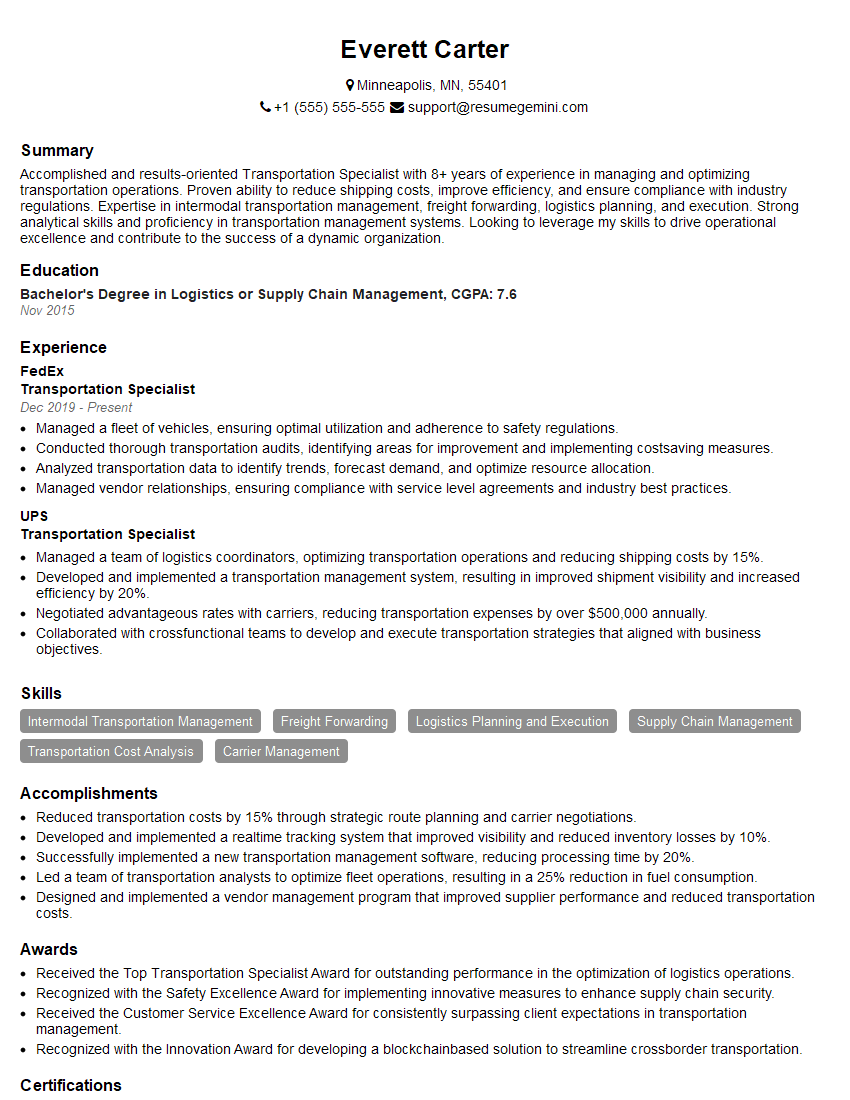
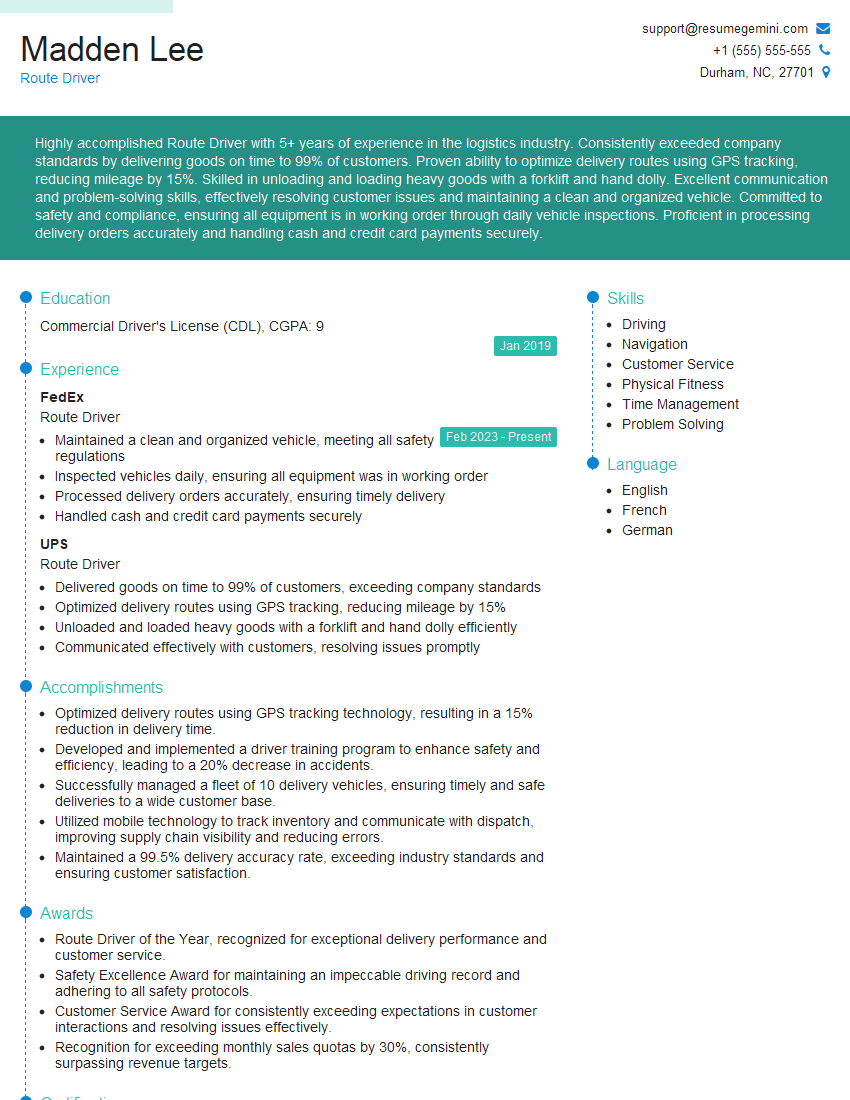
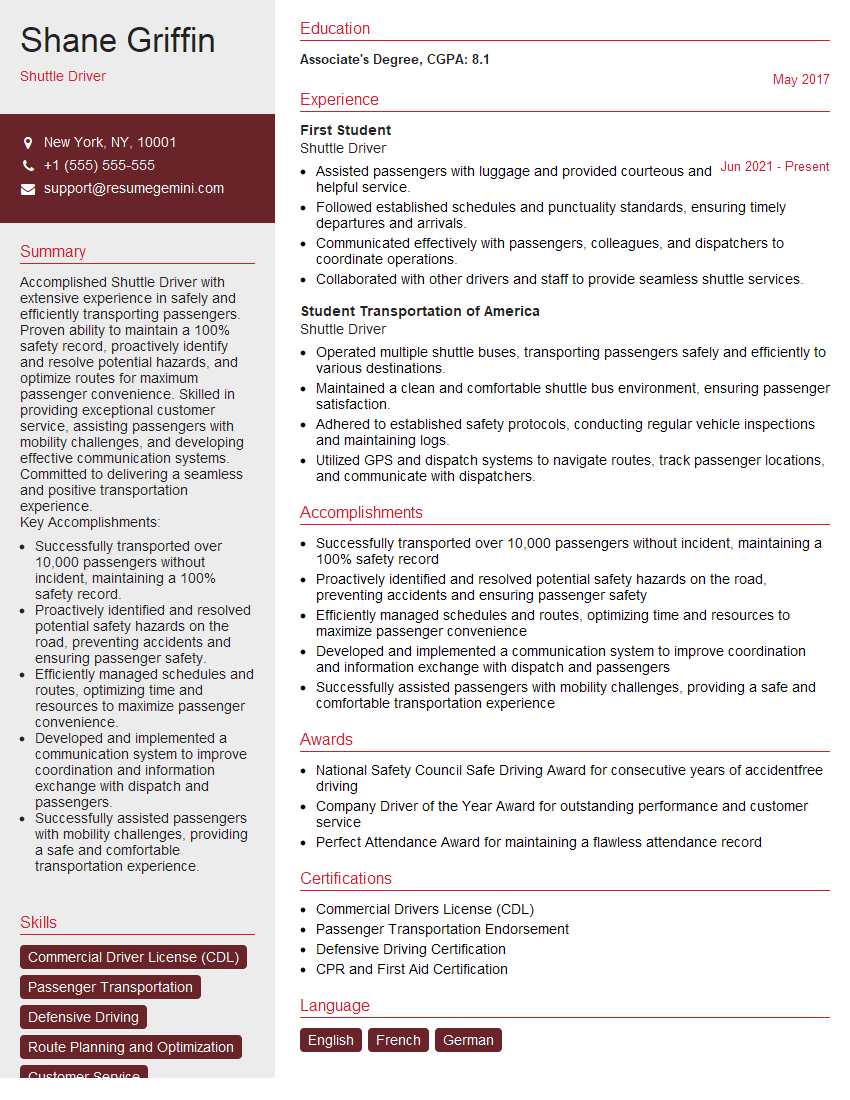
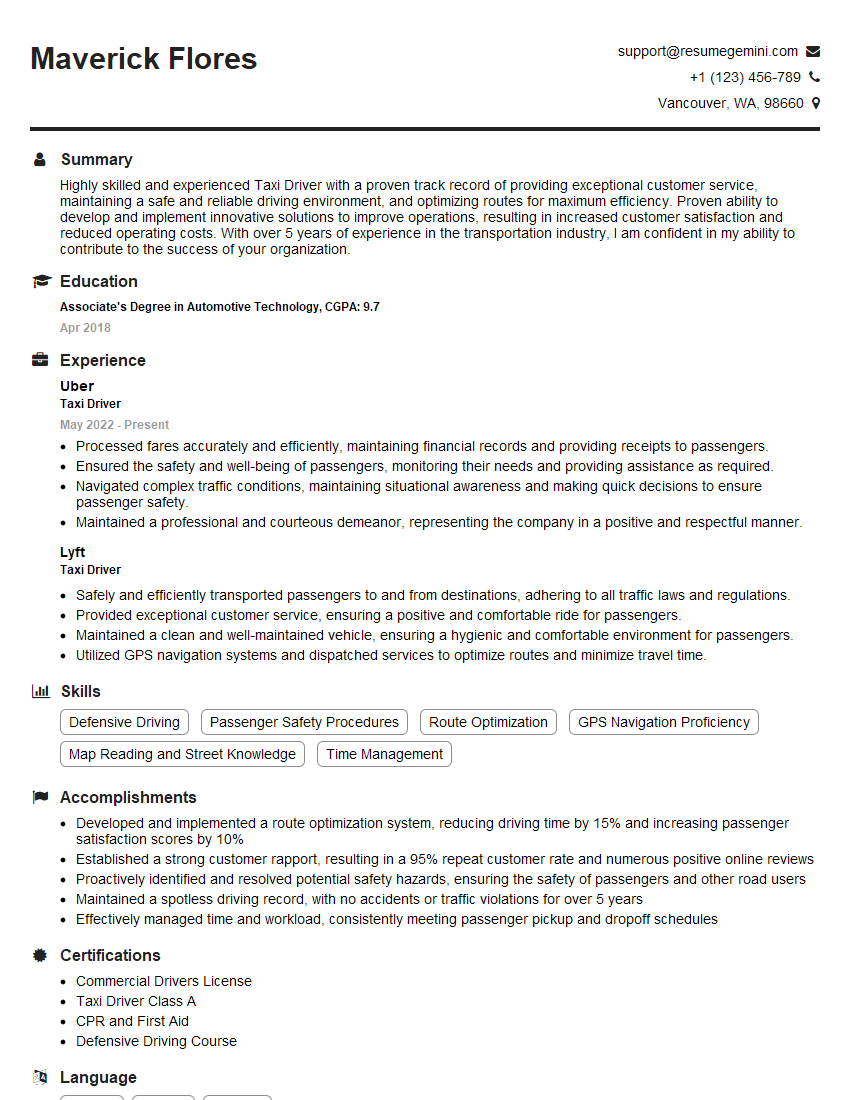
A C-Class Driver License opens doors to a wide range of rewarding career opportunities, offering increased earning potential and career progression. To maximize your chances of landing your dream job, it’s crucial to present yourself effectively. Crafting a strong, ATS-friendly resume is key. This is where ResumeGemini can help. ResumeGemini provides a trusted platform to build a professional resume that highlights your skills and experience. We offer examples of resumes tailored specifically for C-Class Driver License holders, giving you a head start in showcasing your qualifications to potential employers. Take the next step toward your career goals – build your winning resume with ResumeGemini today!

Explore more articles
Users Rating of Our Blogs
Share Your Experience
We value your feedback! Please rate our content and share your thoughts (optional).
What Readers Say About Our Blog
Very informative content, great job.
good