The thought of an interview can be nerve-wracking, but the right preparation can make all the difference. Explore this comprehensive guide to Cake Business Management interview questions and gain the confidence you need to showcase your abilities and secure the role.
Questions Asked in Cake Business Management Interview
Q 1. What are the key metrics you use to track the profitability of a cake shop?
Tracking a cake shop’s profitability relies on a combination of key metrics. It’s not just about total revenue; it’s about understanding where your money is coming from and where it’s going. Think of it like baking a cake – you need the right balance of ingredients to get the perfect result.
- Gross Profit Margin: This shows the profitability of your cakes before accounting for operating expenses. It’s calculated as (Revenue – Cost of Goods Sold) / Revenue. A high margin suggests efficient production and pricing. For example, if a cake sells for $50 and costs $20 to make, the gross profit margin is 60%.
- Net Profit Margin: This represents the overall profitability after all expenses are deducted. It’s (Net Profit / Revenue) * 100. This metric gives a holistic view of your business’s financial health. A healthy net profit margin demonstrates effective cost management across the board.
- Cost of Goods Sold (COGS): This includes all direct costs associated with producing cakes – ingredients, packaging, direct labor. Accurately tracking COGS is crucial for pricing and profit analysis. For instance, meticulously tracking flour, sugar, and labor costs per cake is key.
- Average Order Value (AOV): This shows the average amount spent per customer transaction. Increasing AOV through upselling (e.g., offering additional decorations or drinks) or cross-selling (e.g., suggesting custom cakes) boosts revenue.
- Customer Acquisition Cost (CAC): This measures the cost of acquiring a new customer. Analyzing CAC helps in evaluating the efficiency of marketing and advertising campaigns. If your CAC is higher than your customer lifetime value, your marketing needs a review.
- Inventory Turnover Rate: This metric indicates how efficiently you manage your inventory. A high turnover rate (meaning your inventory is selling quickly) suggests strong demand and minimal waste from spoilage.
By regularly monitoring these metrics, you can identify areas for improvement, make informed decisions, and ultimately increase profitability.
Q 2. Describe your experience managing inventory for perishable goods like cakes.
Managing inventory for perishable goods like cakes requires a meticulous and proactive approach. Think of it like a delicate balancing act – too much inventory leads to spoilage, too little leads to lost sales. My experience involves a multi-pronged strategy:
- Demand Forecasting: Analyzing historical sales data, seasonal trends, and upcoming events (like holidays) allows for accurate prediction of future demand. This helps determine optimal production quantities.
- FIFO (First-In, First-Out): Implementing a FIFO inventory management system ensures that the oldest cakes are sold first, minimizing spoilage. This requires careful labeling and rotation of stock.
- Inventory Tracking Software: Utilizing software to track stock levels, expiry dates, and ingredient usage provides real-time visibility into inventory status, allowing for timely ordering and production adjustments. This minimizes waste and ensures efficient stock control.
- Waste Reduction Strategies: Implementing practices like precise ingredient measuring, proper storage, and creative use of leftovers (e.g., incorporating day-old cake into other desserts) helps reduce waste and lower costs.
- Regular Stock Checks: Conducting frequent physical inventory checks verifies accuracy of stock records and identifies potential discrepancies or nearing expiry items. This could involve dedicated staff responsible for checking stock rotation on a daily basis.
Through these practices, I’ve successfully minimized waste, maintained optimal inventory levels, and ensured consistent product availability, leading to improved profitability and customer satisfaction.
Q 3. How do you handle customer complaints regarding cake quality or delivery?
Handling customer complaints is crucial for maintaining a positive reputation. My approach is centered around empathy, efficiency, and resolution. Think of it like baking a cake – if it’s not perfect, you need to make amends quickly and effectively.
- Active Listening: Patiently listen to the customer’s concerns without interruption. Acknowledge their feelings and validate their experience.
- Gather Information: Ask clarifying questions to fully understand the nature of the complaint (e.g., specific issues with quality, details about the delivery). Take thorough notes.
- Offer a Sincere Apology: Express genuine regret for the negative experience, regardless of who is at fault. A simple ‘I’m sorry’ goes a long way.
- Implement a Solution: Depending on the issue, offer appropriate compensation (e.g., a replacement cake, a refund, a discount on their next order). The goal is to restore customer trust and loyalty.
- Follow Up: After resolving the complaint, follow up with the customer to ensure their satisfaction. This shows you value their feedback and are committed to providing excellent service.
- Learn from Complaints: Analyze customer complaints to identify patterns and areas for improvement in your products, services, or processes. This allows for proactive adjustments and prevention of future problems.
By handling complaints professionally and efficiently, I turn negative experiences into opportunities to improve and strengthen customer relationships.
Q 4. Explain your approach to pricing cakes, considering both cost and market competition.
Pricing cakes requires a delicate balance between cost and market competitiveness. It’s like finding the sweet spot in a recipe – just the right amount of each ingredient to achieve the perfect flavor and texture.
- Cost Analysis: Accurately determine the cost of each cake, including ingredients, labor, packaging, and overhead costs (rent, utilities). This forms the foundation for your pricing strategy.
- Market Research: Analyze prices of similar cakes offered by competitors. Consider their size, ingredients, and level of customization to understand your competitive landscape.
- Value-Based Pricing: Price your cakes based on the perceived value they offer to customers. Unique designs, high-quality ingredients, and exceptional customer service justify higher prices.
- Pricing Strategies: Experiment with different pricing strategies, such as cost-plus pricing (adding a markup to the cost), value-based pricing (pricing based on perceived value), or competitive pricing (matching or slightly undercutting competitors’ prices). Monitor their success in influencing sales.
- Profit Margin: Ensure that your pricing allows for a healthy profit margin to cover operating costs and provide a return on investment. This margin will vary according to your cost structure and market positioning.
By carefully considering all these factors, I develop a pricing strategy that maximizes profitability while remaining competitive and appealing to my target market.
Q 5. What strategies do you employ to improve efficiency in a cake production facility?
Improving efficiency in a cake production facility is crucial for maximizing profitability and meeting customer demand. This involves streamlining processes and optimizing resource utilization. Think of it as orchestrating a well-oiled machine.
- Process Optimization: Analyze each stage of the cake production process (from baking to decorating) to identify bottlenecks or inefficiencies. Streamline workflows and eliminate unnecessary steps.
- Standardization: Develop standardized recipes and production methods to ensure consistency in quality and reduce production time. This may involve creating detailed work instructions to minimize variability.
- Technology Integration: Incorporate technology to improve efficiency. This could include automated mixing equipment, specialized baking tools, or software for inventory management and order tracking.
- Lean Manufacturing Principles: Adopt lean manufacturing principles to minimize waste (materials, time, effort) and improve overall efficiency. This includes identifying and removing non-value-added activities in the production process.
- Employee Training: Invest in employee training to improve skills and efficiency. Well-trained employees are more productive and less prone to errors.
- Layout Optimization: Optimize the facility layout to improve workflow and reduce movement of materials and staff. This could involve rearranging equipment or workspace to support efficient material flow.
By implementing these strategies, I create a more efficient and productive cake production facility, resulting in higher output, lower costs, and improved customer satisfaction.
Q 6. How do you manage staff scheduling and labor costs in a bakery environment?
Managing staff scheduling and labor costs in a bakery demands careful planning and efficient resource allocation. It’s a bit like creating a perfect cake – the right ingredients (staff) in the right proportions at the right time.
- Forecasting Demand: Accurately predict labor needs based on anticipated customer demand, considering factors like day of the week, time of year, and special events.
- Staff Scheduling Software: Utilize scheduling software to optimize staff allocation based on skill sets, availability, and demand. This helps ensure adequate coverage during peak hours while minimizing labor costs.
- Cross-Training: Cross-train employees to perform multiple tasks, increasing flexibility and adaptability to changing demand. This increases resilience to unexpected absences and workload fluctuations.
- Labor Cost Analysis: Regularly analyze labor costs to identify areas for improvement, such as overtime reduction or more efficient task assignment.
- Performance Monitoring: Monitor employee performance and productivity to identify areas for improvement or training needs. This helps optimize staff deployment and maximize output.
- Employee Engagement: Foster a positive work environment and encourage employee engagement to improve morale and reduce turnover. Happy employees are more productive employees.
By implementing these strategies, I effectively manage staff scheduling, minimize labor costs, and ensure optimal productivity, contributing to the overall profitability of the bakery.
Q 7. Describe your experience with implementing food safety regulations and hygiene protocols.
Implementing food safety regulations and hygiene protocols is paramount in a cake shop. It’s like creating a sterile environment for baking – everything needs to be clean, controlled, and precise to ensure the safety and quality of our products.
- HACCP (Hazard Analysis and Critical Control Points): Implement a HACCP plan to identify and control potential hazards at each stage of the production process. This requires a detailed understanding of potential risks from ingredient handling to cake display.
- Good Manufacturing Practices (GMP): Adhere to GMP guidelines to maintain a clean and sanitary production environment. This includes regular cleaning and sanitization of equipment, surfaces, and storage areas.
- Employee Training: Provide comprehensive training to all staff on food safety procedures, including handwashing, hygiene practices, and proper food handling techniques. Regular refresher courses are also necessary.
- Temperature Control: Maintain appropriate temperatures throughout the production process to prevent bacterial growth. This involves monitoring refrigeration and oven temperatures meticulously.
- Allergen Management: Develop procedures for managing allergens to prevent cross-contamination. This includes clearly labeling products, separating allergen-containing ingredients, and establishing dedicated equipment for allergen-free products.
- Pest Control: Implement a comprehensive pest control program to prevent infestation. This includes regular inspections, preventive measures, and professional pest control services.
- Record Keeping: Maintain detailed records of all food safety procedures, including temperature logs, cleaning schedules, and employee training records. These records are essential for audits and compliance demonstration.
By strictly adhering to these regulations and protocols, I ensure a safe and hygienic environment, protecting customer health and maintaining the highest standards of quality.
Q 8. What marketing techniques have you used successfully to promote cake sales?
Successful cake sales promotion relies on a multi-faceted marketing strategy. It’s not just about making a beautiful cake; it’s about getting the word out and building a loyal customer base. I’ve found success using a combination of strategies:
Social Media Marketing: Instagram and Facebook are crucial. High-quality photos and videos showcasing the cakes are essential. Engaging captions, running contests, and using relevant hashtags (#customcakes, #birthdaycakes, #weddingcakes etc.) boost visibility. I’ve also utilized Instagram stories and reels for behind-the-scenes glimpses and quick, engaging content.
Local Partnerships: Collaborating with local businesses, such as coffee shops or event planners, can significantly expand reach. Cross-promotion strategies, like offering discounts to their customers or featuring their products in my shop, work well. For example, I partnered with a local florist, and we both promoted each other’s services for wedding events.
Website and Online Ordering: A professional website with an online ordering system is vital for ease of access and convenience. It allows customers to browse, customize, and order cakes at their convenience, even outside of business hours. I’ve integrated online payment gateways for seamless transactions.
Email Marketing: Building an email list allows for targeted promotions, announcements of new flavors, and special offers. This helps nurture customer relationships and keeps my brand top-of-mind.
Local Events and Farmer’s Markets: Participating in local events and farmers’ markets provides direct interaction with potential customers and offers opportunities to showcase cakes and interact directly with customers. Sampling is also key here!
Q 9. How do you manage relationships with cake suppliers and ensure timely deliveries?
Managing supplier relationships and ensuring timely deliveries is crucial for a smooth bakery operation. I prioritize building strong, reliable relationships with my suppliers. This involves:
Careful Supplier Selection: I thoroughly vet potential suppliers, considering their reputation, quality of ingredients, reliability, and pricing. I look for suppliers who share my commitment to quality.
Clear Communication: Maintaining open and consistent communication is essential. I use a combination of email, phone calls, and regular meetings to discuss orders, delivery schedules, and any potential issues. This includes establishing clear communication protocols and order tracking systems.
Strategic Inventory Management: I use inventory management software to track stock levels and anticipate future needs, minimizing the risk of shortages or overstocking. This allows for timely ordering and prevents delays.
Contingency Planning: Unexpected delays can happen. Having backup suppliers and alternative delivery options helps mitigate the risk of disruptions. I always have a secondary supplier for critical ingredients.
Regular Performance Reviews: Periodically reviewing supplier performance, based on factors like on-time delivery, quality of ingredients, and responsiveness, allows for continuous improvement and ensures long-term reliability.
Q 10. Explain your experience with budgeting and financial forecasting for a bakery.
Budgeting and financial forecasting are critical for the long-term success of any bakery. My experience includes creating detailed budgets encompassing all aspects of the business, from ingredient costs and labor to marketing expenses and rent. I use a combination of:
Detailed Cost Analysis: This involves breaking down all costs into fixed costs (rent, utilities) and variable costs (ingredients, labor). Tracking these meticulously allows for accurate cost estimations.
Sales Forecasting: Forecasting future sales based on historical data, seasonal trends, and marketing initiatives is vital for accurate budgeting. This involves analyzing past sales data and taking into account external factors such as holidays and local events.
Profit Margin Analysis: Regularly analyzing profit margins helps identify areas for improvement, such as pricing strategies or cost reductions. This allows for optimizing pricing and managing costs effectively.
Financial Software: Using accounting software (e.g., QuickBooks) helps streamline financial management, track expenses, and generate reports. This allows for automated reporting and detailed financial analysis.
Regular Financial Reviews: Conducting regular reviews of the budget and financial statements, comparing actual performance to projections, allows for timely adjustments and helps ensure the business remains financially healthy. I typically conduct monthly reviews and quarterly projections.
Q 11. Describe a time you had to solve a significant operational challenge in a cake business.
One significant operational challenge involved a major oven malfunction right before a large wedding cake order. The oven was crucial for baking multiple layers in a timely manner, and the repair company couldn’t come for 24 hours. My solution involved a multi-pronged approach:
Immediate Communication: I immediately contacted the client and explained the situation, offering various options, including a partial refund, a smaller cake, or a slight delay. Transparency was key.
Resourcefulness: I reached out to a colleague with a spare oven and secured their assistance, negotiating a short-term rental. This involved quick negotiations and a willingness to work outside of normal hours.
Teamwork: I rallied my team, re-organizing our baking schedule to maximize the use of the borrowed oven. This required flexibility and excellent teamwork to meet the tight deadline.
Problem Prevention: After resolving the immediate crisis, I invested in regular oven maintenance and explored backup oven options to prevent similar situations in the future.
This experience taught me the importance of having a contingency plan, clear communication, and a strong, supportive team.
Q 12. How do you ensure the consistent quality and appearance of cakes across all orders?
Maintaining consistent cake quality and appearance is paramount. This is achieved through:
Standardized Recipes and Procedures: Detailed, precise recipes and baking procedures are crucial. This includes precise measurements, baking times, and cooling methods, all documented meticulously. Any deviation from the standard needs to be documented and carefully considered.
Quality Control Checks: Implementing regular quality control checks at each stage of the process (mixing, baking, decorating) helps identify and rectify issues early. This includes checking ingredients, baking temperatures and visual inspections.
Employee Training: Thorough training for all bakers and decorators is essential to ensure everyone follows the same procedures. This requires ongoing training and practice, ensuring consistency in the quality of products.
Ingredient Sourcing: Sourcing ingredients from reliable suppliers ensures consistent quality and minimizes variations. This is about selecting the right suppliers and maintaining those supplier relationships.
Regular Equipment Maintenance: Properly maintained equipment is crucial for consistency. Regular maintenance and calibration of ovens, mixers, and other tools ensures they function optimally, leading to consistent results. Regular cleaning and maintenance schedules should be in place.
Q 13. What software or systems have you used for managing cake orders and customer data?
I’ve used various software and systems for order and customer management. Previously, I relied on a combination of:
Spreadsheet Software (e.g., Excel): For smaller-scale operations, spreadsheets were helpful for tracking orders, customer details, and inventory. However, it became cumbersome with growing orders.
Customer Relationship Management (CRM) Software: As the business expanded, I implemented a CRM system (e.g., Zoho CRM) to manage customer data, track interactions, and personalize communications. This helped in building stronger customer relationships and understanding their preferences.
Order Management Software: More recently, we started using dedicated order management software designed for bakeries. This software integrates with our online ordering system, simplifying order processing, inventory tracking, and communication with customers.
The choice of software depends on the scale and complexity of the business, but a well-integrated system is crucial for efficient operations.
Q 14. How do you handle peak demand periods during holidays or special occasions?
Managing peak demand during holidays or special occasions requires careful planning and proactive strategies:
Accurate Forecasting: Analyzing historical sales data helps predict demand and allows for accurate inventory planning and staffing.
Pre-orders and Advance Bookings: Encouraging pre-orders and advance bookings helps manage workflow and avoids last-minute rushes.
Increased Staffing: Hiring temporary staff or extending the hours of existing employees helps meet increased demand without compromising quality.
Streamlined Processes: Optimizing baking and decorating processes to maximize efficiency is crucial. This may involve standardizing procedures, using time-saving techniques, and efficient task delegation.
Communication and Customer Management: Clear communication with customers regarding potential delays or limitations during peak periods is essential to manage expectations.
Proactive planning and a flexible approach are crucial for navigating peak demand periods successfully.
Q 15. Explain your understanding of different cake-making techniques and their applications.
Cake-making techniques are diverse, each contributing unique qualities to the final product. Understanding these techniques is crucial for producing cakes of varying textures, flavors, and visual appeal.
- Creaming Method: This classic technique involves creaming together butter and sugar until light and fluffy, incorporating air for a tender crumb. It’s ideal for cakes like butter cakes and pound cakes. For example, a classic vanilla buttercream cake uses this method for its light and airy texture.
- Whisking Method: This method relies on vigorously whisking eggs and sugar to create a foam that leavens the cake. It’s perfect for sponge cakes and angel food cakes, resulting in light and airy structures. A genoise sponge cake is a prime example of a cake relying on this method for its delicate texture.
- Reverse Creaming Method: This technique involves combining dry ingredients with softened butter before adding wet ingredients. It produces a slightly denser cake with a more tender crumb, well-suited for cakes needing to hold their shape, such as those with a lot of filling. A carrot cake, dense and moist, often employs this technique.
- One-Bowl Method: This convenient method combines all ingredients in a single bowl, simplifying the process. While it might not produce the most refined texture, it’s perfect for quick and easy cakes, like cupcakes. Many simple recipes will use this technique for convenience.
The choice of technique depends on the desired outcome. Understanding the science behind each method – how air incorporation, fat distribution, and protein denaturation impact the final result – allows for greater control and creativity in cake making.
Career Expert Tips:
- Ace those interviews! Prepare effectively by reviewing the Top 50 Most Common Interview Questions on ResumeGemini.
- Navigate your job search with confidence! Explore a wide range of Career Tips on ResumeGemini. Learn about common challenges and recommendations to overcome them.
- Craft the perfect resume! Master the Art of Resume Writing with ResumeGemini’s guide. Showcase your unique qualifications and achievements effectively.
- Don’t miss out on holiday savings! Build your dream resume with ResumeGemini’s ATS optimized templates.
Q 16. What is your experience with managing waste and reducing food spoilage in a bakery?
Managing waste and reducing food spoilage is paramount in a bakery’s profitability and sustainability. My approach involves a multi-pronged strategy focusing on forecasting, inventory management, and proper storage.
- Accurate Forecasting: I meticulously analyze past sales data to predict demand accurately. This minimizes overproduction, a major source of waste. For example, if a certain cake consistently sells out, while another underperforms, production needs to be adjusted. This data-driven approach helps us efficiently manage our inventory levels.
- FIFO (First-In, First-Out) System: Implementing a strict FIFO system for ingredients and finished goods ensures that older items are used first, preventing spoilage. Proper labeling and rotation are key elements of this system. This minimizes losses from expired items and keeps the bakery running efficiently.
- Strategic Storage: Utilizing appropriate storage methods, such as proper refrigeration and freezing for ingredients and cakes, is crucial. We also utilize airtight containers to maintain freshness and prevent cross-contamination. Temperature monitoring is crucial and regularly checked.
- Creative Upcycling: I actively explore ways to creatively utilize leftover ingredients. For example, leftover cake scraps can be used to create cake pops or crumbs for other desserts. This reduces waste and adds another revenue stream.
Regular audits of inventory and waste are conducted to refine our processes, ensuring continuous improvement and minimizing environmental impact.
Q 17. Describe your approach to employee training and development in a baking environment.
Employee training and development are cornerstones of a successful bakery. My approach focuses on both technical skills and customer service excellence. It is a continual process of evaluation, training and feedback.
- On-the-Job Training: New employees receive hands-on training from experienced bakers, shadowing them and gradually taking on more responsibilities. This includes everything from measuring ingredients and operating equipment to decorating cakes and handling customer orders.
- Formal Workshops and Courses: I organize regular workshops on advanced baking techniques, food safety, and hygiene. External training courses may also be arranged depending on team needs and budgetary allowance. For example, we might invest in sanitation courses or advanced cake-decorating classes.
- Mentorship Program: Experienced bakers mentor newer employees, providing personalized guidance and support, fostering a collaborative and supportive work environment. We conduct regular feedback sessions to gauge progress and identify areas for improvement.
- Cross-Training: I encourage cross-training to enhance employee versatility. This ensures that employees can support each other and fill in gaps during peak seasons or staff shortages. Team members gain new skills and experience, increasing their value.
Regular performance reviews provide feedback and identify opportunities for skill enhancement, allowing employees to progress and develop within the bakery.
Q 18. How do you maintain high standards of customer service in a busy cake shop?
Maintaining high customer service standards in a busy environment requires a proactive and well-organized approach.
- Efficient Ordering System: A streamlined ordering system, whether online or in-person, reduces wait times and keeps customers happy. Clear communication and order confirmation are vital, as is having systems to address order-related questions quickly.
- Friendly and Knowledgeable Staff: Well-trained staff who are friendly, approachable, and knowledgeable about our products are key to positive customer interactions. They are empowered to handle issues and resolve any complaints effectively.
- Clean and Organized Shop: A clean, well-organized shop creates a welcoming atmosphere and enhances the customer experience. This involves careful attention to presentation, hygiene, and efficient queue management.
- Prompt Service and Follow-up: Addressing customer needs promptly and efficiently is crucial. For custom orders, regular updates and proactive communication keep the customers informed and build trust.
- Feedback Mechanisms: Implementing systems to collect customer feedback, such as comment cards or online surveys, allows us to identify areas for improvement and address concerns quickly. This ensures continuous improvement and high standards of service.
By prioritizing excellent customer service, we create a loyal customer base and foster positive word-of-mouth marketing.
Q 19. What is your experience with managing different types of cake orders (custom, wholesale, etc.)?
Managing diverse cake orders requires a flexible and organized approach.
- Custom Orders: I work closely with customers to understand their vision and create personalized cakes. Detailed consultations, design sketches, and thorough communication are vital to ensure customer satisfaction. We utilize order management software to track progress and ensure timely delivery.
- Wholesale Orders: I manage wholesale orders through established contracts and regular delivery schedules. This involves forecasting demand, managing inventory, and ensuring consistent product quality. Efficient production techniques are key for large-scale orders, and communication with wholesale partners is crucial.
- Pre-made Cakes: Managing the inventory of pre-made cakes requires careful monitoring of stock levels and rotation to prevent spoilage. Pricing and promotional strategies are crucial for moving stock efficiently.
A robust order management system, strong communication, and a team capable of handling diverse requests are essential for successful management of all types of cake orders.
Q 20. How do you analyze sales data to identify trends and opportunities for improvement?
Analyzing sales data is crucial for identifying trends and areas for improvement. My approach involves a systematic process.
- Data Collection: We collect comprehensive sales data, including item-wise sales, customer demographics, and sales trends over time. Point-of-sale (POS) systems are invaluable in this process.
- Data Analysis: We use various analytical tools to identify key trends and patterns. This might involve comparing sales data across different periods, analyzing customer preferences, and identifying best-selling items and underperforming products.
- Trend Identification: We look for seasonal trends, emerging customer preferences, and any shifts in demand. This might reveal new product opportunities or changes to marketing strategy.
- Opportunity Identification: By analyzing data, we can identify opportunities to optimize pricing, improve inventory management, introduce new products, or enhance marketing efforts. For example, if sales of a particular flavor are consistently high, we might increase production or introduce variations of that flavor.
Data-driven decision-making is essential for continuous improvement and maximizing profitability.
Q 21. Describe your understanding of food cost control and portioning in cake production.
Food cost control and portioning are essential for maximizing profitability and maintaining consistent product quality.
- Recipe Costing: We meticulously track the cost of each ingredient used in our recipes to accurately determine the cost per cake. This involves regular updates to ingredient pricing and portioning.
- Portion Control: Accurate portioning of ingredients is crucial for consistent product quality and cost control. We utilize standardized recipes and measuring tools to ensure accuracy. This minimizes waste and maintains consistency.
- Waste Reduction: Minimizing waste through effective forecasting, FIFO practices, and creative upcycling directly reduces food costs. Regular inventory checks help to identify and address any spoilage issues promptly.
- Pricing Strategies: We set prices that reflect our costs, desired profit margins, and market competition. This requires careful analysis of our costs and customer demand.
By carefully managing food costs and portioning, we can ensure consistent profitability and high-quality products.
Q 22. What strategies do you use to attract and retain talented bakers and decorators?
Attracting and retaining top baking talent requires a multi-pronged approach focusing on compensation, culture, and career development. I begin by offering competitive salaries and benefits packages that reflect the skill and experience required. Beyond compensation, I cultivate a positive and supportive work environment where bakers and decorators feel valued and respected. This includes regular team-building activities, open communication channels, and opportunities for professional growth. I also invest in ongoing training and development, providing access to advanced cake decorating workshops, industry conferences, and mentorship programs. For example, I’ve successfully implemented a mentorship program where experienced decorators guide newer team members, fostering skill development and team cohesion. This approach ensures a consistent pipeline of skilled individuals while promoting loyalty and retention.
- Competitive compensation and benefits: This is crucial in a competitive market.
- Positive work environment: A supportive atmosphere fosters creativity and loyalty.
- Professional development opportunities: Investing in training keeps skills sharp and employees engaged.
- Mentorship programs: Facilitating knowledge transfer and skill development within the team.
Q 23. How familiar are you with different cake decorating techniques and trends?
My familiarity with cake decorating techniques and trends is extensive. I’m proficient in classic techniques such as buttercream frosting, fondant work, gum paste modeling, and airbrushing. I also stay abreast of current trends through industry publications, online communities, and attending cake decorating competitions and expos. For instance, I’ve recently incorporated the popular isomalt techniques and geometric designs into our cake offerings. I understand the nuances of different piping techniques, from simple rose swirls to intricate lace patterns, and I can adapt to various stylistic preferences, whether it’s a rustic, minimalist, or highly ornate design. Moreover, I’m well-versed in using a variety of tools and equipment, from basic spatulas to specialized airbrush systems and cake-decorating molds.
- Classic techniques: Buttercream, fondant, gum paste, airbrushing.
- Modern trends: Isomalt work, geometric designs, watercolor effects.
- Tool proficiency: Spatulas, piping bags, airbrush systems, molds.
Q 24. Explain your experience with managing health and safety regulations in a food preparation environment.
Managing health and safety in a food preparation environment is paramount. I meticulously adhere to all relevant food safety regulations, including those outlined by the [mention relevant regulatory body, e.g., FDA or equivalent]. This includes maintaining strict hygiene protocols, ensuring proper food storage temperatures, and implementing robust cleaning and sanitation procedures. We conduct regular staff training on food safety best practices, and I personally oversee the implementation and maintenance of a comprehensive HACCP (Hazard Analysis and Critical Control Points) plan. We utilize a first-in, first-out (FIFO) inventory system to manage perishable goods effectively. For example, our temperature logs are meticulously maintained and reviewed daily, and all staff members undergo regular food safety certification courses. We maintain detailed records of all supplier certifications and ingredient traceability. A clean and organized kitchen environment is prioritized to minimize risks.
- HACCP plan: A comprehensive system to identify and control food safety hazards.
- Hygiene protocols: Strict handwashing, surface cleaning, and personal hygiene practices.
- Temperature control: Accurate monitoring and logging of refrigeration and freezer temperatures.
- Staff training: Regular food safety training and certification.
Q 25. How do you balance the creative aspects of cake design with the operational needs of a business?
Balancing creativity with operational needs is a constant juggling act in cake design. I achieve this by using project management techniques. Each cake order is treated as a project with clearly defined timelines, budgets, and resource allocation. While I encourage creative freedom, designs are evaluated for feasibility based on time constraints, material availability, and skill sets within the team. For example, a highly complex design requiring specialized skills might be adjusted to incorporate elements that are simpler but still visually impressive, ensuring timely delivery without compromising quality. I utilize design software to create mock-ups and discuss them with clients, ensuring their vision aligns with our capabilities and operational realities. This process prevents costly mistakes and ensures client satisfaction.
- Project management: Defining timelines, budgets, and resource allocation for each order.
- Feasibility assessment: Balancing creative vision with operational constraints.
- Client communication: Clear communication throughout the design and production process.
- Design software: Using software to visualize and refine designs.
Q 26. What is your experience with different types of cake storage and preservation methods?
Cake storage and preservation is critical to maintaining quality and extending shelf life. Different cake types require different methods. For instance, buttercream cakes are typically stored in airtight containers at cool room temperature (around 4°C or 40°F) to prevent drying. Fondant-covered cakes also benefit from this, but extra care is needed to avoid moisture that could cause the fondant to soften. Cakes with fresh fruit fillings require refrigeration to maintain their freshness and safety. I use a variety of storage containers such as airtight plastic containers, cake boxes, and even humidity-controlled storage units for long-term preservation. Freezing is another option for cakes intended for future use. I always label cakes with the date of baking and relevant storage instructions for clients.
- Refrigeration: For cakes with fresh fruit fillings or those prone to spoilage.
- Cool room storage: For buttercream and fondant cakes.
- Freezing: For long-term preservation.
- Airtight containers: To maintain freshness and prevent drying.
Q 27. How do you handle situations where there are discrepancies between cake orders and customer expectations?
Discrepancies between cake orders and customer expectations are handled with diplomacy and a focus on finding mutually agreeable solutions. The first step is to listen attentively to the customer’s concerns and understand their perspective. I then review the original order documentation—including photos, sketches, and written notes—to identify any misunderstandings or omissions. If a genuine error occurred on our end, I take full responsibility and offer a reasonable remedy, which might involve remaking the cake or offering a significant discount. If the discrepancy stems from differences in interpretation, I work collaboratively with the customer to find a solution that meets their needs while also acknowledging the limitations and capabilities of our team. Open and honest communication is crucial throughout this process to build trust and restore satisfaction. For example, if a color is slightly different than what the customer envisioned, I might offer complimentary additions or adjustments to compensate.
- Active listening: Understanding the customer’s perspective.
- Order review: Comparing customer expectations with order documentation.
- Solution-oriented approach: Offering compensation, remakes, or adjustments.
- Transparency: Honest communication throughout the process.
Q 28. Describe your experience with using POS (Point of Sale) systems in a cake shop environment.
My experience with POS systems in a cake shop environment is extensive. I’m proficient in using various POS systems to manage sales transactions, inventory, and customer data. I have experience with both standalone POS terminals and cloud-based systems. I utilize POS systems to process orders efficiently, track sales data, manage inventory levels, generate reports, and handle customer loyalty programs. I can quickly learn and adapt to new POS systems and am comfortable training staff on their effective use. For instance, I’ve previously implemented a POS system that integrates with our inventory management software, allowing for real-time updates on stock levels and automated reordering of ingredients. This has significantly streamlined our operational efficiency and reduced waste.
- Sales transaction processing: Efficient handling of customer orders.
- Inventory management: Tracking stock levels and managing reordering.
- Reporting and analytics: Generating sales reports and identifying trends.
- Customer data management: Tracking customer preferences and loyalty information.
- System integration: Integrating POS with inventory management systems for improved efficiency.
Key Topics to Learn for Cake Business Management Interview
- Production & Operations Management: Understanding cake production processes, ingredient sourcing, quality control, and optimizing efficiency within a bakery setting.
- Financial Management: Budgeting, cost analysis (ingredients, labor, overhead), pricing strategies, profit margin analysis, and managing cash flow within a bakery business.
- Marketing & Sales: Developing effective marketing strategies for cake products, understanding customer segmentation, pricing strategies, managing sales channels (online, retail), and building brand loyalty.
- Supply Chain Management: Managing relationships with suppliers, inventory control, forecasting demand, and ensuring timely delivery of ingredients and supplies.
- Human Resources Management: Hiring, training, and managing bakery staff; understanding employment law and creating a positive work environment.
- Customer Relationship Management (CRM): Building and maintaining strong relationships with customers, handling customer inquiries and complaints effectively, and fostering customer loyalty.
- Strategic Planning & Business Development: Developing long-term business strategies, identifying new market opportunities, and adapting to industry trends.
- Legal & Regulatory Compliance: Understanding food safety regulations, licensing requirements, and other legal aspects of running a bakery business.
- Problem-Solving & Decision-Making: Applying critical thinking skills to address challenges related to production, sales, finances, and customer service.
Next Steps
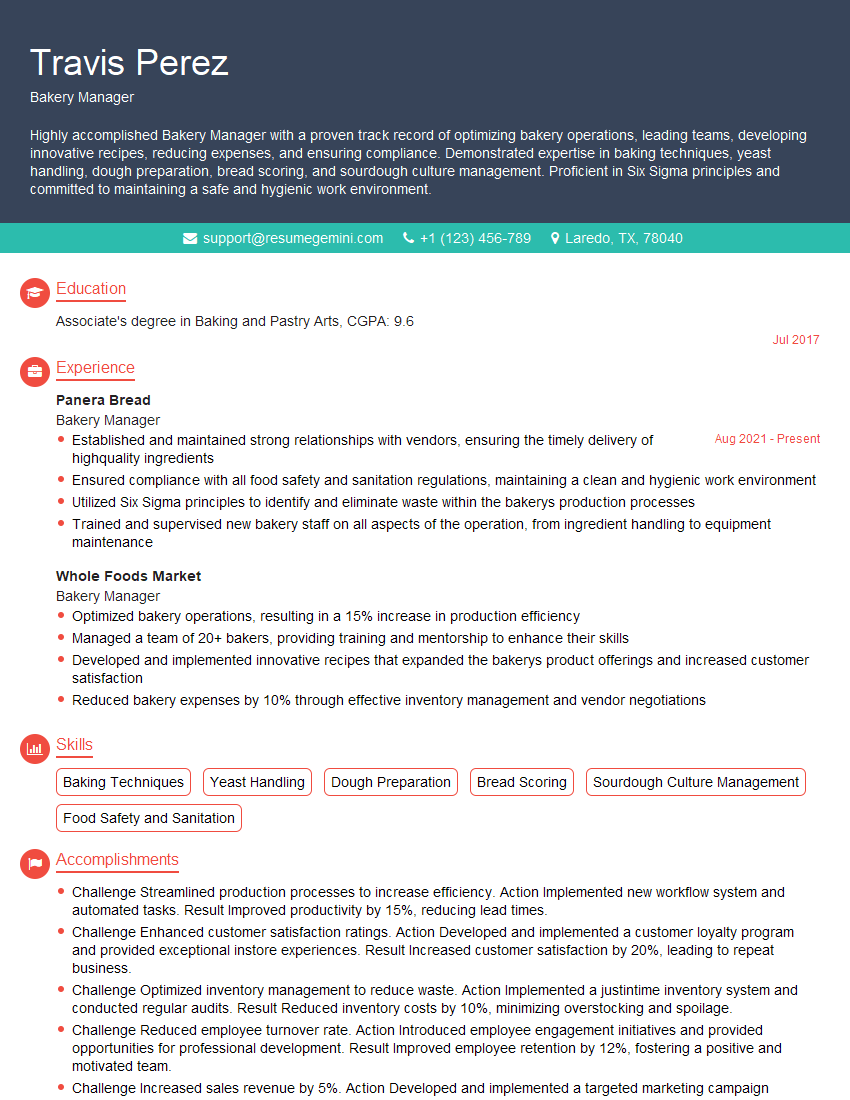
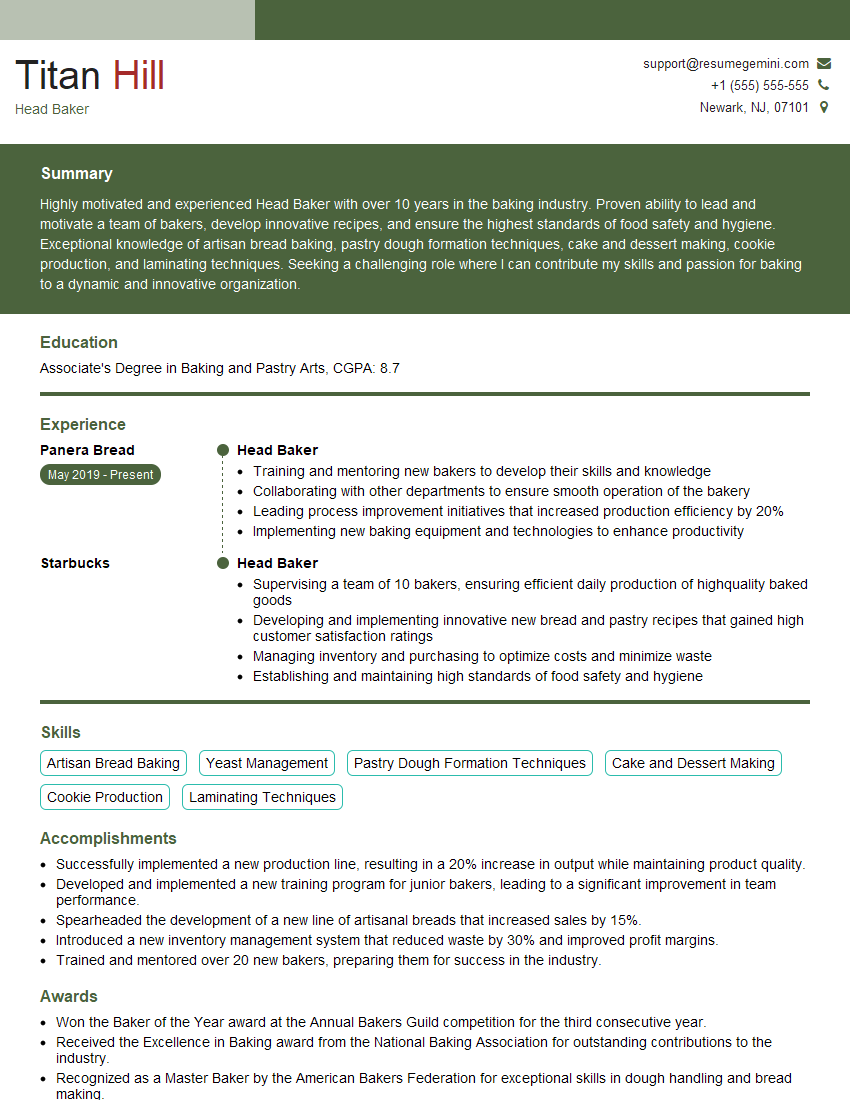
Mastering Cake Business Management opens doors to exciting career opportunities in the vibrant food industry. A strong understanding of these concepts demonstrates your capability to manage and grow a successful bakery. To significantly boost your job prospects, crafting an ATS-friendly resume is crucial. ResumeGemini is a trusted resource that can help you build a professional and impactful resume tailored to highlight your skills and experience in Cake Business Management. Examples of resumes specifically designed for this field are available to guide you. Take the next step towards your dream career today!
Explore more articles
Users Rating of Our Blogs
Share Your Experience
We value your feedback! Please rate our content and share your thoughts (optional).
What Readers Say About Our Blog
Very informative content, great job.
good