Are you ready to stand out in your next interview? Understanding and preparing for Cake Writing interview questions is a game-changer. In this blog, we’ve compiled key questions and expert advice to help you showcase your skills with confidence and precision. Let’s get started on your journey to acing the interview.
Questions Asked in Cake Writing Interview
Q 1. Describe your experience with different cake writing techniques (e.g., royal icing, buttercream).
My experience with cake writing encompasses a wide range of techniques, primarily focusing on royal icing and buttercream. Royal icing, known for its crisp, clean lines and ability to hold intricate details, is my preferred medium for delicate lettering and lace-like designs. I’ve mastered various consistencies of royal icing, from a stiff, almost meringue-like texture for piping crisp borders to a thinner consistency for delicate flooding and watercolor effects. Buttercream, on the other hand, offers a softer, more forgiving texture, perfect for creating dimensional flowers, textured surfaces, and bolder lettering styles. I’m adept at achieving different consistencies of buttercream – from a stable, firm consistency for writing and piping to a softer, more spreadable consistency for creating smooth bases. I’ve extensively explored techniques like wet-on-wet blending in buttercream to achieve seamless color transitions and ombre effects.
For example, I recently completed a cake featuring a cascading floral design crafted entirely from buttercream, showcasing my ability to manipulate the medium to create realistic three-dimensional elements. Another project highlighted my expertise in royal icing, where I meticulously hand-piped intricate lacework bordering a geometric design.
Q 2. What are the challenges of writing intricate designs on cakes of varying sizes and shapes?
Writing intricate designs on cakes of varying sizes and shapes presents unique challenges. Larger cakes require more stability; the weight of the icing can cause sagging or distortion if not properly supported. This often involves using dowels or supports inside the cake layers to ensure structural integrity. Conversely, smaller cakes present challenges in terms of precision and detail; the smaller the surface area, the more demanding the accuracy needed for intricate designs. Irregularly shaped cakes require careful planning and adaptation of techniques. I must consider the curvature and angles of the surface when planning the design to ensure it flows naturally and avoids distortion.
For instance, a tiered wedding cake demands meticulous planning for weight distribution and stability to prevent collapse. Conversely, a small, intricately shaped character cake requires a high level of precision and steady hand to avoid smudging or misplacing details.
Q 3. How do you ensure the stability and longevity of your cake writing?
Ensuring the stability and longevity of cake writing involves a multi-faceted approach. First, using high-quality ingredients is paramount. The right consistency of icing is crucial; too thin and it will bleed or run, while too thick can crack or become difficult to pipe. Properly storing the cake is also essential; I always recommend keeping the cake in a cool, dry environment to prevent icing from melting or softening. For long-term preservation, some designs can benefit from a light spray of edible sealant. However, this requires careful selection of the sealant to ensure it doesn’t affect the vibrancy of the colors or the texture of the icing.
For instance, for a cake needing transport, I’ll use extra support structures and carefully cover it to protect the delicate designs from damage. Once the cake arrives, advising the client on proper storage is a vital part of maintaining the cake’s integrity.
Q 4. What types of edible mediums are you proficient in using for cake writing?
My proficiency extends to a variety of edible mediums for cake writing, including royal icing (both stiff and flood consistency), various types of buttercream (American, Swiss meringue, Italian meringue), fondant, and edible food markers. Each medium offers unique properties and is chosen based on the desired effect and design intricacy. I’m also experienced in using luster dusts and edible paints to add shimmer, highlights, or subtle details to enhance the visual impact of the writing. I often combine these mediums; for example, I might use buttercream for a base color and then pipe delicate details with royal icing.
For example, I’ve used edible food markers to add fine details to a whimsical illustration on a child’s birthday cake and used fondant to create a raised design that is then enhanced with edible paints.
Q 5. Explain your process for translating a client’s vision into a cake writing design.
Translating a client’s vision into a cake writing design is a collaborative process. I begin by actively listening to their ideas, asking clarifying questions, and gathering visual references (photos, sketches, etc.). I then sketch out several design options, considering factors such as the cake’s size, shape, and the overall theme of the event. This ensures the design is both aesthetically pleasing and structurally feasible. We refine the design collaboratively, incorporating their feedback and my professional expertise to create a final design that perfectly reflects their vision while maintaining technical feasibility.
For example, a client might want a cake with a complex floral arrangement. I’ll work with them to choose specific flowers, colors and style, creating a mockup before moving to the actual cake.
Q 6. How do you handle design revisions or client feedback during the cake writing process?
Handling design revisions and client feedback is a crucial part of my process. I encourage open communication throughout the process. If a client requests changes, I’ll assess their feasibility within the project timeline and budget. I offer constructive feedback based on my experience, highlighting potential challenges or suggesting alternative solutions that still achieve the client’s desired aesthetic. Any changes are documented and confirmed before implementation. Open communication ensures we’re on the same page, leading to a satisfying outcome.
For example, if a client wants to add a complex element late in the process, I would discuss the time and cost implications before proceeding. This transparency builds trust and ensures a positive experience for both parties.
Q 7. Describe your experience with different piping tips and their applications in cake writing.
My collection of piping tips is extensive, encompassing a range of styles and sizes. I’m proficient in using various tips, including round tips for lettering and creating dots, star tips for creating borders and textured surfaces, leaf tips for creating realistic foliage, and petal tips for delicate flower petals. The choice of piping tip significantly influences the final look and texture of the writing. For instance, a small round tip (#2 or #3) is ideal for fine lettering, while a larger round tip (#10 or #12) is better suited for bolder lettering or outlining. I regularly experiment with different combinations and techniques to create unique effects.
For example, I might combine a star tip with a leaf tip to create a textured border with a floral accent or use multiple round tips in varying sizes for creating dimensional text.
Q 8. How do you maintain consistency in color and texture when writing on cakes?
Maintaining consistent color and texture in cake writing is crucial for a professional finish. It’s all about controlling your tools and your ingredients. For color consistency, I always use high-quality food-grade gel colors, as they offer the most vibrant and consistent hues without affecting the cake’s texture. I mix my colors meticulously, ensuring I have a consistent batch for the entire project. Think of it like painting – you wouldn’t start a masterpiece with uneven paint! For texture, the consistency of your icing is paramount. I use a recipe specifically designed for writing, ensuring it’s neither too thick (which leads to cracking and uneven lines) nor too thin (resulting in smudging and bleeding). I often test my icing on a separate piece of fondant or cake before starting the actual writing to check the consistency and color.
Example: For a vibrant red, instead of adding a large amount of red color all at once, I start with a small amount and gradually add more, mixing thoroughly until I achieve the desired shade. This gradual approach prevents accidentally making the color too dark or uneven.
Q 9. What are your strategies for preventing smudging or damage to your cake writing?
Preventing smudging and damage is key to preserving your cake writing’s integrity. Firstly, I always ensure the cake is properly chilled before decorating. A cold cake provides a firmer surface, making it less susceptible to damage. Secondly, I work in a cool, dry environment to prevent the icing from melting or becoming too soft. Humidity is the enemy! Thirdly, I use the right tools. A steady hand is essential, but the right piping tip makes all the difference. For delicate writing, I opt for fine tips, and for bolder lettering, I use larger ones. Finally, I avoid touching the icing unnecessarily once it’s applied to minimize smudging. Think of it like working with wet paint – gentle handling is critical.
Example: If I’m writing on a cream-cheese frosted cake, I’ll chill it for at least 30 minutes before writing to ensure the frosting is firm enough to support the decorating icing. After the writing is complete, I let the cake rest in the refrigerator for at least another 30 minutes before transportation.
Q 10. How do you incorporate different textures and elements into your cake writing designs?
Incorporating diverse textures and elements elevates cake writing from simple lettering to a true art form. I achieve this by using a variety of decorating mediums alongside my icing. For example, edible glitter adds sparkle and shimmer, while fondant cutouts provide depth and dimension. Isomalt work, with its beautiful crystalline structures, adds a unique textural element. I also utilize different piping techniques – such as using a variety of piping tips to create different line weights and textures – to add visual interest. It’s about creating a multi-sensory experience.
Example: For a whimsical design, I might use buttercream lettering, combined with fondant flowers and edible pearls, creating a contrast between the smooth cream and the slightly textured fondant elements. For a sophisticated cake, I might use metallic luster dust to add subtle shine to the lettering.
Q 11. Describe your approach to creating a 3D effect in cake writing.
Creating a 3D effect in cake writing requires careful planning and execution. It’s a matter of layering and shaping. I often use a combination of different icing consistencies and techniques to build up the illusion of depth. For example, I might use a thicker, denser icing for the base of the letters and a thinner icing for details and highlights. Contouring is crucial. By carefully adding shading and highlighting, I can make the lettering appear more dimensional. Sometimes, I even sculpt elements from fondant or gum paste and attach them to the cake to amplify the 3D effect.
Example: To create a 3D effect in a word like ‘Happy’, I will pipe the letters with a thick icing, then use a thinner icing to create shadows and highlights around each letter, making it appear to pop out of the cake.
Q 12. How do you adapt your cake writing style for different cake flavors and fillings?
Adapting my style to different cake flavors and fillings is essential. The type of frosting significantly impacts the writing process. A very moist cake or filling might make the icing too soft for intricate details; I adjust my icing recipe or choose a different decorating medium. For example, a rich chocolate cake might require a slightly thicker icing to prevent the chocolate from bleeding into the lettering. For cakes with delicate fillings, I might opt for a more delicate writing style to avoid any damage. I always consider how the flavors and colors of the cake will interact with the icing and choose complementary colors and designs.
Example: When writing on a light and airy sponge cake, I’d opt for a lighter, more delicate style of writing with a thinner consistency of icing, whereas a dense, rich fruitcake might necessitate a bolder style and a thicker icing to provide support.
Q 13. How do you price your cake writing services?
Pricing my cake writing services depends on several factors, including the complexity of the design, the size of the cake, the type of icing, and the time required. I typically offer a tiered pricing structure, with simpler designs costing less than intricate, custom creations. I also consider the cost of materials – high-quality icing, edible decorations, and so on – when setting prices. I usually provide clients with a detailed quote based on their specific requirements, including a breakdown of the costs involved. Transparency is key.
Example: A simple, single-word message in buttercream on a standard-sized cake might cost less than a multi-tiered cake with complex floral designs, custom lettering and edible image printing.
Q 14. Explain your experience with using stencils and templates for cake writing.
Stencils and templates are invaluable tools in my cake writing arsenal. They allow for precise and consistent lettering, particularly for larger projects or repetitive designs. I use them both for creating outlines and as guides for filling in shapes. For stencils, I prefer reusable ones made from food-safe materials like acetate. For templates, I can use printed designs transferred onto fondant or parchment paper. However, I don’t rely solely on them; I always add a personal touch by hand-piping details to make the design unique and avoid a purely mechanical look. It’s about finding the right balance between precision and artistry.
Example: When creating a logo or company name for a corporate cake, I often use a stencil to achieve crisp, uniform lettering. However, I’ll add some hand-piping details to personalize the design and make it look less mass-produced.
Q 15. What is your process for cleaning and maintaining your cake writing tools?
Maintaining clean cake writing tools is paramount for both hygiene and the quality of your work. My process is meticulous and follows these steps:
- Immediate Cleaning: After each use, I immediately wash my tools with warm, soapy water. This prevents paint or ink from drying and becoming difficult to remove. I use a soft sponge or brush to avoid scratching delicate tips.
- Thorough Rinse: A thorough rinse is crucial to ensure all traces of soap and paint are gone. Residual soap can affect the consistency of your edible paints.
- Drying: I let my tools air dry completely on a clean towel. This prevents rust and ensures they are ready for the next use. I avoid using harsh drying methods like ovens or direct sunlight which could damage some materials.
- Storage: I store my tools in a clean, dry, and dust-free environment. I use protective cases for delicate writing tips to prevent damage or bending.
- Periodic Deep Cleaning: Once a month, I perform a more thorough cleaning. This involves soaking the tools in a mild bleach solution (following the manufacturer’s instructions) to disinfect them and remove any stubborn residue.
Think of it like maintaining your artist’s brushes – the better you care for them, the longer they’ll last and the better your work will look!
Career Expert Tips:
- Ace those interviews! Prepare effectively by reviewing the Top 50 Most Common Interview Questions on ResumeGemini.
- Navigate your job search with confidence! Explore a wide range of Career Tips on ResumeGemini. Learn about common challenges and recommendations to overcome them.
- Craft the perfect resume! Master the Art of Resume Writing with ResumeGemini’s guide. Showcase your unique qualifications and achievements effectively.
- Don’t miss out on holiday savings! Build your dream resume with ResumeGemini’s ATS optimized templates.
Q 16. Describe your experience with different types of edible inks and paints.
I have extensive experience with various edible inks and paints, each with its own unique characteristics. My go-to options include:
- Food-Grade Gel Colors: These are highly versatile and can be diluted with vodka or lemon extract to achieve different consistencies for writing. They’re excellent for creating vibrant and richly saturated colors.
- Edible Ink Markers: These offer precision and are perfect for fine details and sharp lines. Different brands offer different levels of vibrancy and water resistance. I always test the ink on a scrap piece of fondant first.
- Powdered Food Coloring: These can be mixed with a liquid like vodka or lemon extract to create custom edible paints. The advantage is that you have complete control over the shade and intensity of the color.
- Airbrush Colors: I utilize airbrush colors for large-scale designs and shading. They offer smooth gradients and a professional finish. However, these require specialized equipment and a steady hand.
Choosing the right ink or paint depends on the specific design, the type of cake, and the desired effect. For example, I’d use edible markers for intricate lettering on a delicate buttercream cake, but airbrush colors for a broad, shaded landscape on a larger fondant cake.
Q 17. How do you troubleshoot common issues encountered during cake writing (e.g., cracking, bleeding)?
Troubleshooting is a key skill in cake writing. Here’s how I address common problems:
- Cracking: Cracking often occurs due to the cake’s surface being too dry or the icing being too thick. To prevent this, ensure the cake is properly hydrated and use a thin layer of icing as a base.
- Bleeding: Bleeding happens when the ink or paint is too watery or the surface is too porous. Using a high-quality, water-resistant edible ink, along with a light hand, minimizes this issue. Sometimes, a thin layer of edible glue or luster dust can prevent bleeding onto the icing.
- Smudging: Smudging happens if the ink is too wet or if you touch the design before it dries. Allow sufficient drying time, and always handle the cake carefully.
- Uneven Application: Practice makes perfect! If the lettering or design appears uneven, practice your technique on fondant scraps to perfect pressure and consistency before applying it to the actual cake.
The key is to understand the cause of the issue and make adjustments to your technique or materials. It’s always beneficial to practice on a sample cake to avoid any surprises on the final product.
Q 18. What are your strategies for creating unique and original cake writing designs?
Creating unique and original designs is a constant source of inspiration. My process involves:
- Research and Inspiration: I scour various sources such as magazines, websites, art books, and even nature for creative ideas. I keep a notebook filled with sketches and color palettes.
- Customization: I always tailor the design to the client’s specific requirements and the theme of the event. This adds a personal touch to each cake.
- Experimentation: I often experiment with different techniques and materials to create unique effects. For instance, I might combine hand-piping with stenciling or airbrushing.
- Personal Style: I’ve developed my own distinct style over time, incorporating elements from various artistic disciplines to create a cohesive brand.
- Client Collaboration: I work closely with clients to understand their vision and expectations. This collaborative approach ensures that the final design truly reflects their personality and preferences.
Imagine it as creating a bespoke painting – each piece is uniquely crafted to reflect the client’s personality and the occasion.
Q 19. Describe your understanding of food safety regulations as they apply to cake writing.
Food safety is a non-negotiable aspect of my cake writing practice. I strictly adhere to all relevant regulations, including:
- Using FDA-approved materials: I only utilize edible inks, paints, and decorations that comply with FDA regulations.
- Maintaining hygiene: I maintain a clean and sanitary workspace, following strict hand-washing protocols and using clean tools and equipment.
- Proper storage: I store all edible materials properly, according to the manufacturer’s instructions, to prevent contamination.
- Temperature control: I am careful to maintain proper temperature conditions to prevent bacterial growth.
- Allergen awareness: I am mindful of potential allergens and always inform clients about ingredients used in the cake and decorations.
My goal is not just to create beautiful cake writing but to do so responsibly, prioritizing the safety and well-being of my clients.
Q 20. How do you handle time constraints and deadlines when creating cake writing designs?
Managing time constraints is crucial, especially with tight deadlines. My strategy is:
- Detailed Planning: I create a detailed project plan that outlines all steps involved, from initial design to delivery. This includes realistic time estimations for each task.
- Prioritization: I prioritize tasks based on their urgency and importance. This ensures that critical steps are completed first.
- Efficient Workflow: I streamline my workflow to minimize wasted time. This includes having all necessary materials organized and readily available.
- Time Blocking: I allocate specific time blocks for each task, preventing multitasking and maintaining focus.
- Communication: Open communication with the client is critical. If unforeseen delays occur, I communicate them promptly and offer solutions.
It’s like conducting an orchestra – each instrument (task) needs to be played at the right time and with the right tempo to produce a harmonious (on-time) result.
Q 21. What software or tools do you use to design your cake writing patterns?
While I hand-draw many designs, I also utilize software to create intricate patterns and achieve precision:
- Adobe Illustrator: This vector-based software is invaluable for creating highly detailed designs. I use it to design intricate lettering, logos, and illustrations that can then be transferred to the cake.
- Procreate (iPad): For quicker sketches and more spontaneous designs, I use Procreate on my iPad. Its brush features allow for dynamic and expressive designs.
- Stencil-making Software: I use software to create custom stencils for various designs, ensuring accuracy and consistency.
These tools enhance my ability to create complex designs efficiently and accurately, improving the overall quality and detail of my cake writing.
Q 22. Describe a time you had to improvise or solve a problem during a cake writing project.
Improvisation is key in cake writing, especially when dealing with last-minute requests or unexpected challenges. For instance, I once received a frantic call from a client whose initial cake topper design – a complex sculpted figure – was damaged in transit. With only 24 hours until the event, I had to improvise. I immediately assessed the situation, understanding the client’s disappointment and the urgent need for a solution. I quickly sketched a few alternative designs, focusing on simpler, yet elegant elements that could be executed within the timeframe. We agreed on a beautiful floral arrangement that mirrored the original design’s color scheme but used readily available materials. Through clear communication and focused effort, I was able to create a stunning alternative that completely satisfied the client.
This experience highlighted the importance of adaptability, resourcefulness, and clear communication under pressure – essential skills for any cake writer.
Q 23. What are your strengths and weaknesses as a cake writer?
My strengths lie in my meticulous attention to detail, my ability to translate complex design concepts into stunning cake creations, and my proficiency in various writing techniques – from delicate script to bold, statement lettering. I’m adept at working with a wide array of mediums, including fondant, gum paste, and royal icing. My weakness, if I had to pinpoint one, would be my perfectionism. Sometimes, this drive for excellence can lead to spending extra time on a project, potentially impacting deadlines. However, I’m actively working on managing my time more effectively to balance quality with efficiency.
Q 24. How do you stay up-to-date with the latest trends in cake writing and design?
Staying current in cake writing involves a multifaceted approach. I regularly attend industry workshops and conferences, both in person and online. This allows me to network with other professionals and learn about new techniques, tools, and design trends firsthand. I also actively follow leading cake artists on social media platforms like Instagram and Pinterest, studying their work and seeking inspiration. Subscribing to relevant cake decorating magazines and blogs provides further insights into the latest developments in the field. Finally, I actively participate in online communities, forums, and masterclasses, facilitating continuous learning and professional development.
Q 25. What are your career goals as a cake writer?
My career goals involve establishing myself as a highly sought-after cake writer known for both innovative designs and impeccable execution. I aim to build a strong reputation within my community, expand my clientele through strategic partnerships and collaborations, and eventually open my own dedicated cake writing studio. I also aspire to teach and mentor aspiring cake writers, sharing my expertise and passion for the craft with others. Long-term, I envision myself designing cake writing tutorials and publishing a book showcasing my unique style and techniques.
Q 26. What is your preferred style of cake writing?
My preferred style leans towards a blend of modern elegance and classic sophistication. I particularly enjoy incorporating intricate details, delicate flourishes, and unique typography into my designs. I love the challenge of creating personalized messages that reflect the client’s personality and the overall theme of the event. Whether it’s a whimsical script for a child’s birthday cake or a refined monogram for a wedding cake, I strive to make each inscription a work of art in itself. I find inspiration in various sources, from vintage calligraphy to contemporary graphic design, constantly seeking ways to push creative boundaries within my chosen aesthetic.
Q 27. Describe your experience working with different types of fondant and gum paste.
Fondant and gum paste are both essential mediums in cake writing, but they offer distinct properties. Fondant, known for its smooth, pliable nature, is ideal for creating large lettering and flat designs. I often use it for larger cake toppers and banners. Gum paste, conversely, is firmer and holds its shape better, making it perfect for intricate detailing, delicate embellishments, and sculpted elements. For example, I might use gum paste for tiny flowers or delicate scrolls to complement fondant lettering. My experience includes working with various brands and types of each, learning their unique handling characteristics and adjusting my techniques accordingly. Mastering both allows for a broader range of creative expression and the ability to achieve the precise results required for any given design.
Q 28. How do you maintain a professional and organized workspace when creating cakes?
Maintaining a professional and organized workspace is paramount for efficient and high-quality cake writing. My workflow involves a designated area solely for cake decorating, ensuring a clean and clutter-free environment. I utilize clear containers and labeled storage for various tools, colors, and supplies. This prevents mix-ups and keeps everything readily accessible. Before each project, I lay out all the necessary materials, including stencils, writing tools, and color palettes, to minimize disruption during the creative process. Regular cleaning and sanitization are also crucial to maintain hygiene and prevent cross-contamination. A systematic approach to organization ensures a smoother, more enjoyable, and ultimately more successful cake writing experience.
Key Topics to Learn for Cake Writing Interview
- Understanding the Cake Writing Framework: Grasp the core principles and architecture of the Cake Writing system. Explore its design philosophy and underlying methodologies.
- Practical Application of Cake Writing Techniques: Learn how to apply Cake Writing principles to solve real-world problems. Practice implementing solutions using various Cake Writing tools and libraries.
- Data Structures and Algorithms in Cake Writing: Familiarize yourself with the data structures and algorithms commonly used in Cake Writing projects. Be prepared to discuss their efficiency and suitability for different tasks.
- Debugging and Troubleshooting Cake Writing Code: Develop strong debugging skills. Understand common errors and develop strategies for identifying and resolving them efficiently.
- Testing and Quality Assurance in Cake Writing: Learn best practices for writing unit tests, integration tests, and conducting thorough quality assurance for Cake Writing projects.
- Version Control and Collaboration: Understand the importance of version control (like Git) and collaborative development workflows in a Cake Writing environment.
- Performance Optimization in Cake Writing: Learn how to optimize the performance of Cake Writing applications. Understand profiling techniques and strategies for improving efficiency.
- Security Considerations in Cake Writing: Be aware of potential security vulnerabilities and best practices for securing Cake Writing applications.
Next Steps
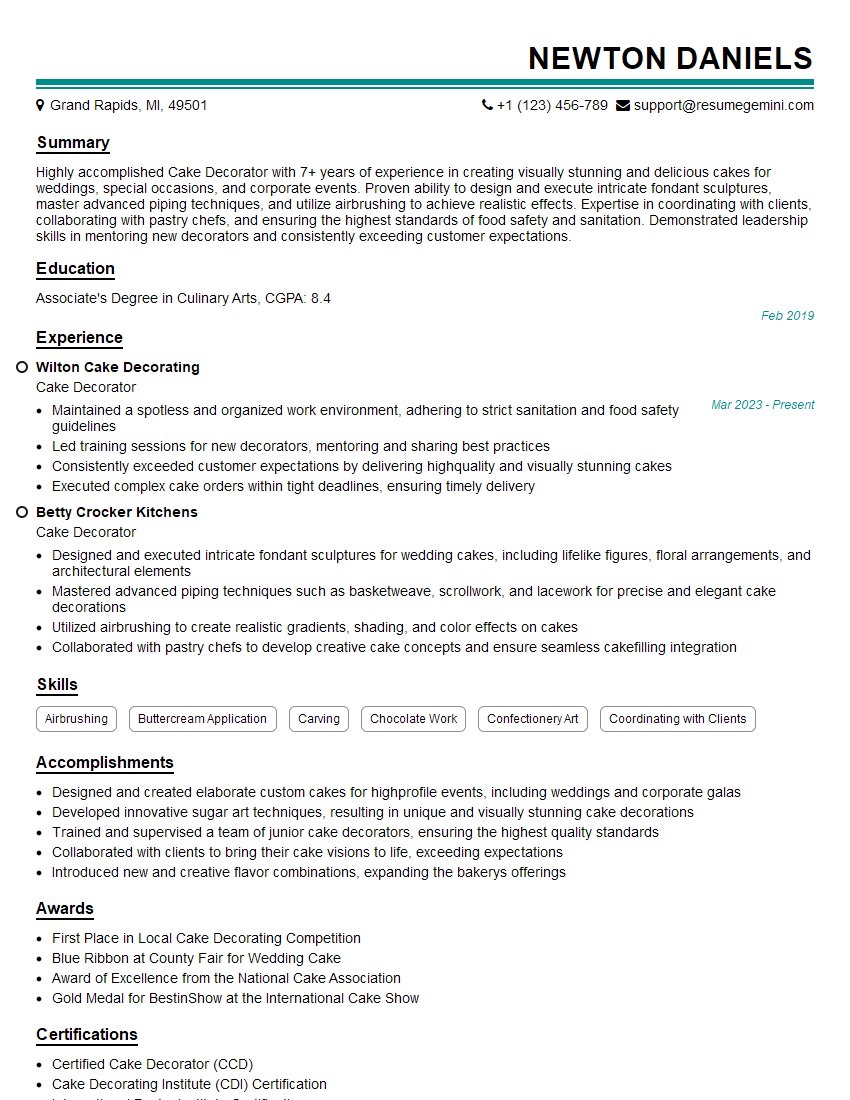
Mastering Cake Writing opens doors to exciting opportunities in software development and related fields. A strong understanding of this framework significantly enhances your value to potential employers. To maximize your job prospects, it’s crucial to have an ATS-friendly resume that highlights your skills and experience effectively. We strongly encourage you to leverage ResumeGemini, a trusted resource for building professional resumes, to create a compelling document that showcases your Cake Writing expertise. Examples of resumes tailored to Cake Writing are available to help guide your creation.
Explore more articles
Users Rating of Our Blogs
Share Your Experience
We value your feedback! Please rate our content and share your thoughts (optional).
What Readers Say About Our Blog
Very informative content, great job.
good