Cracking a skill-specific interview, like one for Calibration and Maintenance of Printing Equipment, requires understanding the nuances of the role. In this blog, we present the questions you’re most likely to encounter, along with insights into how to answer them effectively. Let’s ensure you’re ready to make a strong impression.
Questions Asked in Calibration and Maintenance of Printing Equipment Interview
Q 1. Explain the process of calibrating a CMYK printing press.
Calibrating a CMYK printing press ensures accurate color reproduction. It’s a multi-step process involving several crucial adjustments. Think of it like tuning a musical instrument – each component needs precise adjustment to create a harmonious whole. First, we perform a density calibration, using a densitometer to measure the ink density on printed test strips. This helps us fine-tune the ink delivery system for each color (Cyan, Magenta, Yellow, and Key/Black). We adjust the ink keys and metering rollers to achieve the target density values, which are usually pre-determined based on industry standards or client specifications. Next, we address color registration, ensuring that the four colors align perfectly to avoid misaligned images, often called ‘registration errors’. This requires careful adjustment of the press’s impression cylinders and print units. Finally, we perform gray balance calibration, aiming for neutral grays, which should appear even and devoid of color casts. This step often involves tweaking the ink curves on the press’s control system. The entire process is iterative, meaning we repeat measurements and adjustments until the desired color accuracy is reached. We use sophisticated software for accurate data analysis and feedback control to guide the adjustment process, minimizing waste and ensuring consistent quality.
Q 2. Describe your experience troubleshooting paper jams in different printing systems.
Troubleshooting paper jams is a common task that requires methodical approach. My experience spans various systems, from small office printers to large-format industrial presses. I always start by following established safety procedures, switching off the machine and unplugging it where necessary. Then, I carefully examine the paper path, looking for any obstructions. The type of jam dictates my next steps. For example, a jam in a laser printer might involve removing crumpled paper from the fuser unit, whereas a large-format printer might have a more complex paper path that requires checking for blockages in rollers, sensors, and transport belts. With high-volume digital presses, jams are often related to improper paper feeding or humidity affecting the paper’s properties. It requires systematically checking the feeding trays for correct paper alignment, and sometimes, adjusting the paper feed mechanism. In one instance, a recurring jam in a high-speed inkjet printer was traced to a faulty paper sensor; replacing the sensor solved the problem. Understanding the printer’s internal mechanisms and having access to troubleshooting guides and schematics is key to efficiently resolving these issues.
Q 3. How do you identify and resolve color inconsistencies in print output?
Color inconsistencies in print output can stem from many sources. My approach is systematic and starts with identifying the nature of the inconsistency. Is it a global shift in hue (e.g., everything is too blue), or localized variations (banding or blotching)? I use color measurement tools like spectrophotometers to quantify the deviations from the target color. This provides objective data to guide troubleshooting. Common causes include incorrect color profiles, issues with the color calibration of the printer itself, problems with ink consistency, or issues with the substrate (paper type). If it is an issue with the printer’s color calibration, then I would recalibrate the machine. Ink problems might involve replacing old or contaminated inks or cleaning the ink delivery system. Substrate problems might involve selecting a more appropriate paper type that produces consistent results. Addressing color inconsistencies requires a deep understanding of color management principles and the interplay between hardware and software components. Using a standardized color management workflow, such as ICC profiles, ensures that the color information is accurately translated from the digital file to the printed output.
Q 4. What are the common causes of banding in digital printing?
Banding in digital printing manifests as distinct horizontal stripes of varying color intensity in a printed image. This is often a visual defect that can seriously impact image quality. Several factors contribute to banding. One common cause is the printhead itself. Clogged nozzles or uneven ink ejection can create visible bands. This requires nozzle cleaning procedures specific to the printer type. Another contributor is insufficient print resolution. If the image resolution is too low relative to the printing resolution, banding can be observed. It’s a similar principle to low resolution images appearing pixelated or blocky on a screen. Inconsistent ink flow, caused by issues within the ink delivery system, can also be responsible for banding. It’s important to check the ink lines for blockages, and the ink pump for correct operation. Finally, variations in substrate surface can affect ink absorption leading to banding. Therefore, using a consistent type of paper is important. Thorough cleaning, careful monitoring of ink levels, and employing appropriate printer settings are vital in preventing banding.
Q 5. Explain your experience with maintaining different types of printing inks.
My experience encompasses a variety of printing inks, including solvent-based, UV-curable, water-based, and pigment-based inks. Maintaining these inks involves different procedures. For solvent-based inks, proper ventilation is crucial, as the solvents can be harmful if inhaled. Regular cleaning of the ink circulation system is vital to prevent clogging. With UV-curable inks, maintaining the UV lamps is essential for consistent curing. We regularly check the lamp’s intensity and replace lamps when necessary. Water-based inks require different considerations. We must prevent bacterial growth and make sure they are stored correctly to maintain viscosity. With pigment-based inks, sedimentation can be an issue, so regular shaking or stirring might be necessary. Regular monitoring of ink levels, proper storage conditions, and adherence to manufacturer’s recommendations for cleaning and maintenance are crucial for maintaining ink quality and ensuring print consistency. In practice, I utilize detailed maintenance logs and follow strict protocols to ensure the inks are handled safely and efficiently.
Q 6. How do you perform preventative maintenance on a large-format printer?
Preventative maintenance on a large-format printer is vital for maximizing uptime and ensuring high print quality. My routine starts with a visual inspection, checking for any loose parts, damage, or signs of wear and tear. Then, I clean the printheads thoroughly according to the manufacturer’s instructions, often involving specialized cleaning solutions and tools. I inspect and clean the capping station, ensuring that the printheads are properly capped when idle. The transport system, including rollers and belts, are carefully examined for wear and any buildup of debris, and cleaned or replaced if necessary. I also perform a test print to assess the overall print quality. Furthermore, we regularly inspect and replace worn parts proactively. I inspect and clean the media path to remove paper dust and debris. Finally, I check the printer’s internal components, such as the ink delivery system and any internal heaters, ensuring everything is working according to specifications. This systematic approach helps to identify and prevent potential problems before they escalate into costly breakdowns. The exact procedures vary based on the specific printer model, but the fundamental principles of cleanliness, inspection, and proactive part replacement remain the same.
Q 7. What safety procedures do you follow when working with printing equipment?
Safety is paramount when working with printing equipment. I always begin by reviewing the manufacturer’s safety manual and following all the prescribed safety procedures. Before working on any machine, I ensure it’s switched off and unplugged from the power source. I wear appropriate personal protective equipment (PPE), such as safety glasses, gloves, and sometimes a respirator depending on the type of ink or cleaning solvents used. When working with solvent-based inks, adequate ventilation is essential to prevent the inhalation of harmful vapors. I handle inks and cleaning solutions with care, following proper disposal procedures for waste materials. I am also vigilant about proper grounding to prevent electric shocks. In the case of large or heavy equipment, I utilize the appropriate lifting techniques to prevent injury during maintenance or repair tasks. Regular safety training and awareness are key to maintaining a safe work environment. I always prioritize safety to minimize the risk of accidents and injuries.
Q 8. Describe your experience with cleaning and maintaining print heads.
Print head cleaning and maintenance is crucial for consistent, high-quality output. It involves a multi-step process depending on the type of print head (inkjet, thermal inkjet, etc.). For inkjet print heads, I typically begin by performing a power-off cleaning, carefully removing any dried ink with specialized cleaning solutions and swabs. This prevents clogs. Then, I’ll use the printer’s built-in cleaning cycles, often multiple times, to flush the print head with cleaning fluid. For stubborn clogs, I might employ ultrasonic cleaning or a specialized print head cleaning kit. Regular preventative maintenance, such as ensuring proper ink levels and using dust covers, significantly reduces the frequency of deep cleaning. I’ve encountered situations where a simple cleaning cycle solved blurry prints, while others required more intensive methods, demonstrating the importance of a systematic approach.
For example, I once worked on a large format inkjet printer experiencing banding. After several cleaning cycles using the manufacturer’s recommended solution and a soft brush, the banding was resolved. In another instance, a thermal inkjet printer required more aggressive cleaning to remove a dried ink clog. I used a specialized cleaning solution and a syringe to gently flush the clog from the print head nozzles. Regular preventative maintenance, which I stressed to the client, proved critical in preventing further issues.
Q 9. How do you troubleshoot a printing press that is producing blurry output?
Troubleshooting blurry output on a printing press requires a systematic approach. I’d start by visually inspecting the print, noting the nature of the blurriness – is it consistent across the page, or localized? Is it a general softness or a more specific defect? This helps isolate the potential causes. Common culprits include:
- Ink Issues: Incorrect ink viscosity, incorrect ink mixing, or dried ink in the fountain solution (offset) can cause blurred images. I’d check the ink levels, viscosity, and the cleanliness of the fountain solution system.
- Print Head Problems (digital): Clogged nozzles, damaged print heads, or improper print head alignment will cause blurry output. I’d inspect the print head for visible damage or clogs, and run cleaning cycles. If necessary, replacement may be required.
- Mechanical Issues: Problems with the impression cylinder (offset), dampening system (offset), or rollers can all lead to blurry prints. I would meticulously check for wear and tear, misalignment, and proper pressure settings.
- Paper Issues: Low-quality paper, damp paper, or paper that is incompatible with the press can also result in blurry printing. I’d check the paper type and its condition.
- Imaging System Issues (offset): Problems with the plates, blanket, or impression cylinder can lead to blurry output. I’d inspect these elements for damage and ensure proper registration.
My approach involves eliminating possibilities one by one, documenting each step and the results. A detailed log is essential for effective troubleshooting and preventative maintenance. For instance, a recent blurry print job turned out to be caused by improperly mixed inks, easily resolved with proper color adjustments.
Q 10. What are the key differences between maintaining offset and digital printing presses?
Maintaining offset and digital printing presses differs significantly due to their fundamentally different printing mechanisms.
- Offset Printing: This involves a complex interplay of plates, blankets, and rollers. Maintenance focuses on cleaning the rollers, maintaining ink viscosity, balancing the dampening system, plate changing, and cleaning the impression cylinder. Regular cleaning and adjustments are critical to avoid image degradation, misregistration, and other print defects. Preventive maintenance plays a large role to prevent larger, more expensive repairs.
- Digital Printing: Maintenance centers on print head cleaning and maintenance (as previously discussed), toner replenishment (for toner-based systems), fuser unit cleaning, and ensuring paper handling is smooth. Calibration of color profiles is also essential for maintaining consistent color output. Digital presses often incorporate automated cleaning and diagnostic features, reducing manual intervention.
For example, offset requires daily cleaning and adjustments, while the print heads of digital presses require less frequent cleaning unless a clog happens.
Q 11. Explain your understanding of color profiles and their importance in printing.
Color profiles are digital representations of a device’s color output capabilities. They act as a translation layer between the colors on a digital file and the colors reproduced on the printing press. Each device (monitor, printer, scanner) has its own unique color profile, as their ability to reproduce color varies widely. Without proper color profiles, the printed output will likely differ significantly from the digital design, resulting in incorrect colors and inconsistencies. ICC (International Color Consortium) profiles are the standard.
In practice, I work with color management software to ensure accurate color reproduction. This involves creating or selecting appropriate color profiles for all devices involved in the printing process (scanner, monitor, printer). Color calibration – adjusting the printer’s color settings to match a standard – is crucial for ensuring the printed output adheres closely to the design intent. Proper color management minimizes costly reprints and ensures client satisfaction. For instance, a client once had a vital marketing campaign significantly delayed because of incorrect color reproduction. Using proper color profile matching avoided that happening on the next project.
Q 12. How do you handle a situation where a critical printing machine malfunctions during a high-volume job?
A critical machine malfunction during a high-volume job necessitates a rapid and organized response. My first step is to assess the situation – what exactly failed? What is the impact on production? I immediately prioritize safety, ensuring the machine is shut down properly to prevent further damage or injury. Then, I begin troubleshooting following the established procedures for that machine.
Simultaneously, I initiate the following actions:
- Contact Support: Reach out to the manufacturer’s support or a qualified technician if necessary.
- Assess Damage: Determine the extent of the malfunction and potential downtime.
- Alternative Solutions: Explore alternative solutions – can part of the job be moved to another machine? Can the remaining job be completed later? This requires careful planning and collaboration with the team.
- Inform Clients: Transparency with the client is crucial. I’ll inform them of the situation, the expected downtime, and the mitigation plans. Proactive communication helps manage expectations and maintain trust.
For example, during a large poster printing run, a key component failed. We immediately switched to a backup machine to complete the majority of the run, and the manufacturer sent a specialist to expedite the repair of the main machine. Open communication with the client kept the stress low while maintaining the schedule.
Q 13. Describe your experience with different types of printing substrates (paper, vinyl, etc.).
Experience with various printing substrates is essential for achieving optimal results. Each substrate demands specific settings and considerations to avoid issues like paper jams, poor ink adhesion, or undesirable surface effects.
- Paper: Different paper types (coated, uncoated, textured) require adjustments to ink density, drying time, and press settings. Coated papers typically offer better image quality but can be more prone to ink smudging if not properly dried. Uncoated papers absorb ink more readily.
- Vinyl: Vinyl presents different challenges. It requires specific inks designed for adhesion to vinyl surfaces. The printing process often involves a different approach, such as using a larger gap between the print head and the material to prevent scratching. Proper calibration of the press for the thickness and type of vinyl is crucial.
- Other Substrates: Canvas, textiles, and specialty media each require unique settings and precautions to avoid damage to the material or suboptimal output. I always consult the manufacturer’s recommendations for each specific substrate.
My experience spans various substrates and I always take the necessary precautions such as adjusting the pressure settings and checking the rollers for residue or damage. For instance, I once worked on a project involving textured paper, and using the correct pressure setting and drying time was crucial to ensure the ink adhered evenly without blotting.
Q 14. What are the common causes of registration issues in printing?
Registration issues, where different colors or elements are not perfectly aligned, are a common problem in printing. Several factors contribute to this:
- Mechanical Issues: Misalignment of rollers, cylinders, or other press components can lead to misregistration. Regular maintenance and calibration are vital to prevent this.
- Plate or Cylinder Wear: Wear and tear on printing plates or cylinders can cause registration problems over time. This necessitates replacement or maintenance.
- Paper Handling: Inconsistent paper feed or skew can cause registration issues. This can be due to improper paper handling or problems with the paper feed system. Paper condition also plays a role here.
- Temperature and Humidity: Changes in temperature and humidity can affect paper dimensions, leading to registration problems. Controlling the environment is crucial.
- Improper Setup: Incorrect setup of the printing press or plates can result in misregistration. Careful attention to detail during setup is critical.
Troubleshooting involves systematically checking each component and eliminating possible causes one by one. Using a registration target sheet is helpful to quickly identify and measure registration errors. For example, I resolved a misregistration issue by carefully realigning the rollers on an offset press. It was a minor adjustment, but it significantly improved the quality of the final product.
Q 15. How do you diagnose and repair problems with printing rollers and blankets?
Diagnosing and repairing printing rollers and blankets involves a systematic approach. First, I visually inspect the rollers and blankets for obvious signs of wear, such as scratches, abrasions, or gumming. I’d check for uneven ink distribution, which often points to roller inconsistencies. For blankets, I’d look for stretching, tears, or other damage that impacts image quality.
Next, I’d use precision measuring tools to check for roller diameter variations or blanket tension. Even minor discrepancies can cause significant printing defects. If a roller is damaged, I’d assess whether it can be cleaned, reground, or needs complete replacement. Similarly, a damaged blanket usually requires replacement. The cleaning process itself might involve specialized solvents and cleaning tools depending on the type of ink and roller material.
For example, I once encountered a problem with banding on a press, which pointed to a roller’s uneven surface. A close inspection revealed minor scoring on the roller surface. We reground the roller to restore its smooth consistency. After recalibrating the pressure and carefully cleaning the other rollers, the banding was completely eliminated. The key is meticulous observation and testing to pinpoint the root cause, not just treating the symptoms.
Career Expert Tips:
- Ace those interviews! Prepare effectively by reviewing the Top 50 Most Common Interview Questions on ResumeGemini.
- Navigate your job search with confidence! Explore a wide range of Career Tips on ResumeGemini. Learn about common challenges and recommendations to overcome them.
- Craft the perfect resume! Master the Art of Resume Writing with ResumeGemini’s guide. Showcase your unique qualifications and achievements effectively.
- Don’t miss out on holiday savings! Build your dream resume with ResumeGemini’s ATS optimized templates.
Q 16. What is your experience with using diagnostic software for printing equipment?
I have extensive experience using diagnostic software for various printing equipment brands, including Heidelberg, Xerox, and Komori. These programs provide real-time data on the press’s performance, enabling proactive identification of potential issues. They often offer features for monitoring ink levels, detecting sensor faults, and analyzing print quality metrics like density and color registration.
For instance, I’ve used diagnostic software to track the temperature of the fuser unit in a laser printer, helping to predict and prevent potential failures before they disrupt production. The software typically provides error codes that I can then cross-reference with the manufacturer’s manuals to pinpoint the exact problem. Using this diagnostic data allows for more effective preventative maintenance and reduces downtime.
Example Error Code: C-3003 (Low Fuser Temperature) This code immediately alerts me to a potential issue with the fuser unit’s heating element, allowing me to address it promptly before it leads to print quality issues or equipment malfunction.
Q 17. How do you ensure accurate color consistency across multiple printing runs?
Maintaining accurate color consistency across multiple printing runs requires a multi-faceted approach. This starts with careful color profile creation and management. We use spectrophotometers to measure and profile the colors of our inks, substrates (paper stock), and the printing press itself. These profiles help us precisely match colors across different print runs.
Beyond profiling, we implement strict quality control measures, including regular calibration of the printing press’s color settings, and frequent color checks throughout the printing process. This includes visual inspection by experienced press operators, as well as automated color measurement using densitometers or spectrophotometers to maintain consistency and accuracy. We also carefully control environmental factors such as temperature and humidity, as they can significantly affect color output.
In a recent large-scale project, we used a color management system (CMS) to ensure consistency across multiple printing presses located in different geographic areas. Regular communication and data sharing between the press operators and our quality control department helped to ensure that minor variations were identified and corrected promptly.
Q 18. Explain your experience with different types of printing finishing equipment (e.g., binding, cutting).
My experience with printing finishing equipment encompasses a wide range of technologies, including various types of binding (perfect, saddle-stitch, wire-o), cutting (guillotine, three-knife), folding, and lamination. I’m familiar with both manual and automated finishing equipment from various manufacturers.
I understand the intricacies of each process, from setting up the machines and adjusting parameters like blade pressure (for cutting) to troubleshooting common issues like misfeeds or jams. Regular maintenance tasks, such as blade sharpening and lubrication of moving parts, are crucial for optimal performance and product quality. I can effectively troubleshoot malfunctions and perform preventative maintenance to minimize downtime and optimize efficiency.
For example, in a recent job requiring saddle-stitch binding of a large publication, I identified a problem with the stitching head causing inconsistent binding. After systematically checking the settings and performing minor adjustments, the problem was solved and the process restored to full capacity without significant downtime.
Q 19. How do you maintain proper inventory of parts and supplies for printing equipment?
Maintaining proper inventory of parts and supplies is critical for minimizing downtime. I utilize a computerized inventory management system (CIM) that tracks all parts and supplies, from inks and toners to rollers, blankets, and other consumables. The system generates alerts when stock levels fall below predetermined thresholds, ensuring timely ordering of replacement parts.
We use a combination of methods for organizing physical inventory, including clearly labeled storage locations and regular physical inventory checks to verify accuracy against the CIM. This helps to prevent stockouts and ensures that we always have the necessary parts on hand to perform repairs quickly. We also utilize a ‘first-in, first-out’ (FIFO) inventory system for consumables like ink to prevent spoilage. This organized approach minimizes delays and keeps our printing operations running smoothly.
Q 20. What is your experience with various printing technologies (e.g., inkjet, toner, laser)?
I have extensive hands-on experience with various printing technologies including inkjet, toner, and laser printing systems. My expertise spans different printer types, from small office printers to large-scale industrial presses. Understanding the specific characteristics of each technology is crucial for effective maintenance and troubleshooting.
For example, inkjet printers require regular cleaning of print heads and precise ink management to prevent clogging, while laser printers require careful maintenance of the fuser unit and consistent toner supply to maintain print quality. Toner-based printers require attention to the drum unit and cleaning supplies. Laser printing, with its heat-based fuser, demands specific preventative maintenance to avoid overheating and malfunctions. I adapt my maintenance routines to the specific technology and the particular machine in question.
Q 21. Describe a time you had to troubleshoot a complex printing problem.
One time, we experienced a recurring problem with inconsistent color registration on a high-speed offset press. The problem was intermittent and difficult to diagnose because it didn’t occur consistently. Initial attempts to adjust the press settings yielded only temporary improvements.
My approach involved a systematic troubleshooting process. First, we carefully examined the entire printing process, inspecting rollers, blankets, and the paper feed system. We ruled out mechanical issues like roller wear and alignment. Next, we analyzed the print samples using a spectrophotometer to quantify the color variations. This data helped us isolate the problem to a specific section of the press.
It turned out that a small, almost imperceptible, misalignment in a crucial gear within the press’s registration system was the root cause. This gear was causing subtle shifts in timing, leading to inconsistent color registration. Replacing this single, relatively inexpensive part completely resolved the issue. The key was a combination of methodical investigation and using precision measurement tools to identify the source of the problem, rather than making general adjustments.
Q 22. How do you prioritize maintenance tasks based on urgency and importance?
Prioritizing maintenance tasks requires a balanced approach considering both urgency (how quickly something needs fixing) and importance (how critical the task is to overall operation). I typically use a matrix system. Tasks are categorized as:
- High Urgency, High Importance: Immediate action needed; e.g., a major paper jam halting production, a critical component failure.
- High Urgency, Low Importance: Needs attention quickly, but impact on overall printing operation is minor; e.g., minor toner leak that doesn’t affect print quality immediately.
- Low Urgency, High Importance: Preventative maintenance; e.g., scheduled cleaning of fuser unit to prevent future failures.
- Low Urgency, Low Importance: Can be deferred; e.g., minor cosmetic issues.
I use a scheduling tool incorporating these categories, assigning deadlines, and regularly reviewing the list to account for changing priorities. This ensures that critical problems are addressed swiftly while preventing major issues through preventative maintenance.
Q 23. What is your understanding of ISO standards related to printing quality?
ISO standards, particularly ISO 9001 (Quality Management Systems) and ISO 12647 (Graphic technology – Process control for the production of high-quality colour prints), are crucial for maintaining consistent print quality. ISO 9001 provides a framework for quality management throughout the entire printing process, from order placement to delivery. This includes aspects such as proper calibration procedures, documentation of processes, and addressing customer complaints. ISO 12647 focuses specifically on color management, defining procedures and metrics for ensuring color consistency across various printing methods and devices.
My understanding of these standards ensures that the printing process adheres to industry best practices, resulting in consistent, high-quality output. This involves understanding color profiles (e.g., ICC profiles), managing ink consistency, and regularly calibrating equipment to meet specific color standards outlined by the relevant ISO standards.
Q 24. Explain your experience working with different types of printing software (RIP software, etc.).
I have extensive experience with various RIP (Raster Image Processor) software, including but not limited to: EFI Fiery, Kodak Prinergy, and Agfa Apogee. My expertise covers color profile management, job ticket creation, and troubleshooting software related issues. For example, I’ve used EFI Fiery’s Command WorkStation to manage complex print jobs, optimizing color settings and adjusting parameters for specific substrates. With Kodak Prinergy, I’ve worked extensively with color calibration tools and job pre-flight capabilities to minimize errors.
Beyond RIP software, I’m familiar with a wide range of printer drivers and prepress software, enabling seamless integration and workflow management. My skills extend to optimizing print settings for different substrates, color spaces, and print modes to achieve optimal print quality and efficiency. I am also experienced in diagnosing and resolving software related issues, including connectivity problems, job submission errors, and unexpected software crashes.
Q 25. How familiar are you with preventative maintenance schedules and documentation?
Preventative maintenance schedules are crucial for maintaining the longevity and optimal performance of printing equipment. I’m highly familiar with developing and documenting these schedules, typically utilizing a Computerized Maintenance Management System (CMMS). These schedules detail routine checks, cleaning, and adjustments for every piece of equipment, ranging from daily checks of ink levels and paper jams to monthly calibrations and quarterly preventative maintenance tasks such as cleaning the fuser unit or replacing rollers.
My documentation includes clear descriptions of tasks, associated checklists, and logs detailing the date, time, and results of each maintenance activity. This meticulous approach not only reduces downtime and improves print quality but also provides valuable data for predictive maintenance, helping us anticipate future problems and plan accordingly.
Q 26. How do you maintain a clean and organized workspace in a printing environment?
Maintaining a clean and organized workspace in a printing environment is paramount for safety, efficiency, and quality. Think of it like a well-organized kitchen – if it’s messy, things get lost and tasks become significantly harder. My approach involves several key strategies:
- 5S Methodology: I employ the 5S methodology (Sort, Set in Order, Shine, Standardize, Sustain) to organize the workspace.
- Regular Cleaning: Daily cleaning of immediate work area, including ink spills, paper scraps, and dust removal. Weekly deep cleaning of the entire area including equipment exteriors.
- Designated Storage: Maintaining clear and labeled storage areas for supplies, tools, and parts.
- Waste Management: Proper disposal of ink cartridges, toner, and other waste materials following environmental regulations.
This systematic approach ensures a safe and efficient working environment, reducing the risk of accidents and ensuring that tools and materials are readily accessible. A clean workspace directly translates to less downtime and higher-quality prints.
Q 27. Describe your experience with interpreting and following technical manuals and diagrams.
Interpreting and following technical manuals and diagrams is an essential part of my job. My experience includes working with complex schematics, exploded diagrams, and troubleshooting guides provided by manufacturers. I have developed skills to decipher intricate information, using both textual explanations and visual representations. For instance, I’ve used exploded diagrams to understand the internal workings of a printer, allowing me to identify and replace faulty components.
I find that cross-referencing information across multiple sources (technical manuals, online forums, manufacturer websites) is essential. I am proficient in using troubleshooting guides, systematically eliminating potential causes of malfunctions using a logical approach. I believe the ability to accurately interpret and follow technical documentation is a key to successful equipment maintenance and repair.
Q 28. What are some common issues you’ve encountered with various types of printing devices and how did you resolve them?
Over the years, I’ve encountered a variety of issues with different printing devices. One common problem is banding in prints, often caused by worn rollers or incorrect toner density. I would systematically troubleshoot by: (1) Inspecting the rollers for wear and tear, replacing them if needed, (2) adjusting toner density settings, and (3) checking the drum unit for defects. Another frequent problem is paper jams, which are usually addressed by identifying the jam location, carefully removing the jammed paper, and cleaning any debris that might have caused the jam.
Other issues I’ve addressed include: color inconsistencies (often resolved through calibration and profile adjustments), communication errors between the printer and the computer (which often require checking cables and drivers), and fuser unit malfunctions (requiring cleaning or replacement). My approach always involves careful observation, testing, and methodical elimination of possible causes, making sure to properly document the issue and the solution for future reference.
Key Topics to Learn for Calibration and Maintenance of Printing Equipment Interview
- Understanding Color Management: Theoretical concepts like color profiles (ICC, etc.), color space transformations, and practical application in calibrating printing devices for accurate color reproduction. Troubleshooting color inconsistencies.
- Mechanical Adjustments and Repairs: Understanding the mechanical components of various printing equipment (e.g., rollers, gears, paper path). Practical application in identifying and resolving mechanical malfunctions, preventative maintenance schedules, and safety procedures.
- Electrical Systems and Troubleshooting: Familiarity with basic electrical principles relevant to printing equipment. Practical application in diagnosing electrical faults, using multimeters, and understanding safety precautions when working with electrical systems.
- Print Quality Assessment and Optimization: Understanding metrics like resolution, sharpness, density, and dot gain. Practical application in identifying and resolving print quality issues, optimizing print settings for different media types, and using various testing tools.
- Preventive Maintenance Procedures: Developing and implementing preventive maintenance schedules for different printing equipment. Practical application in cleaning, lubricating, and inspecting components to extend equipment lifespan and minimize downtime.
- Troubleshooting Common Printing Issues: Identifying and resolving common printing problems such as banding, streaking, jamming, and registration issues. Developing a systematic approach to troubleshooting, using diagnostic tools, and documenting solutions.
- Health and Safety Regulations: Understanding and adhering to relevant health and safety regulations when working with printing equipment and chemicals. Practical application in safe handling of materials, using personal protective equipment (PPE), and following established safety protocols.
- Software and Firmware Updates: Understanding the importance of keeping printer firmware and associated software updated. Practical application in performing firmware updates, troubleshooting software-related issues, and understanding the impact of software on print quality and functionality.
Next Steps
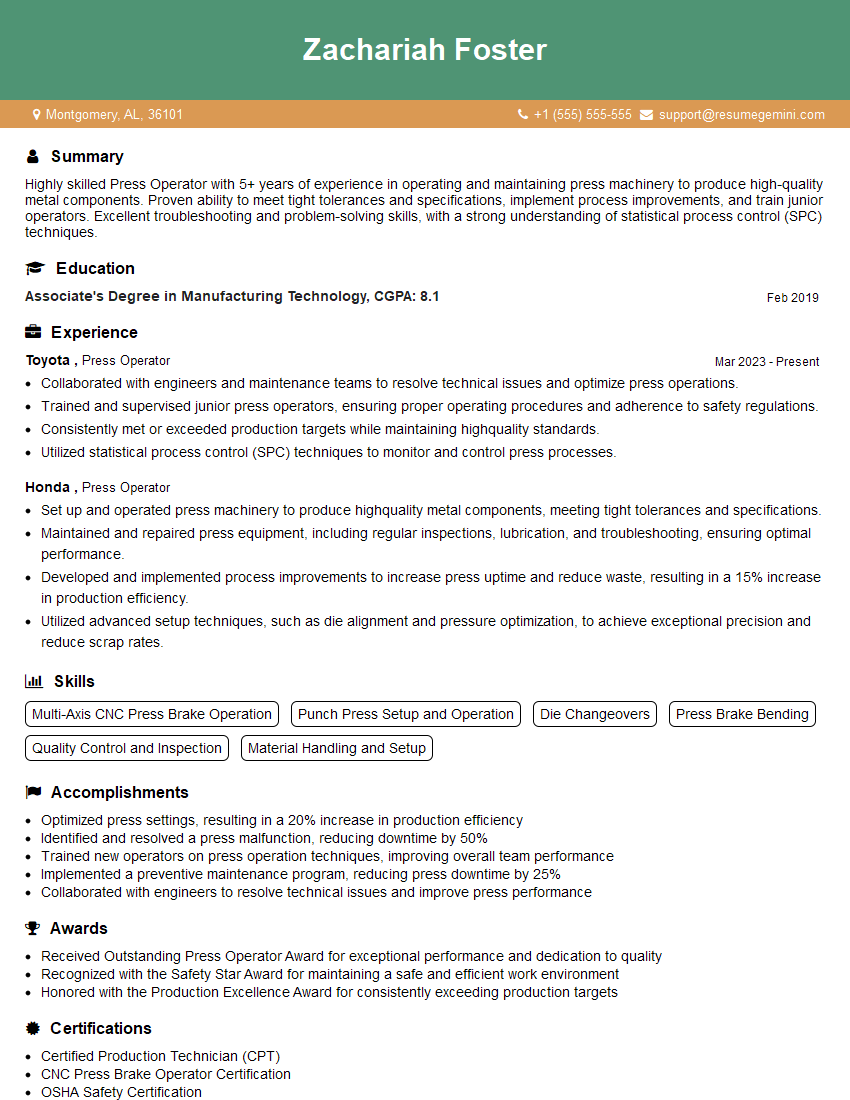
Mastering Calibration and Maintenance of Printing Equipment opens doors to rewarding careers with excellent growth potential. Your expertise will be highly valued in a competitive market. To maximize your job prospects, creating a strong, ATS-friendly resume is crucial. ResumeGemini is a trusted resource that can help you build a professional and impactful resume, showcasing your skills effectively. Examples of resumes tailored specifically to Calibration and Maintenance of Printing Equipment are available to guide you. Invest time in crafting a compelling resume—it’s your first impression on potential employers.


Explore more articles
Users Rating of Our Blogs
Share Your Experience
We value your feedback! Please rate our content and share your thoughts (optional).
What Readers Say About Our Blog
Very informative content, great job.
good