Interviews are more than just a Q&A session—they’re a chance to prove your worth. This blog dives into essential Camera and Lighting interview questions and expert tips to help you align your answers with what hiring managers are looking for. Start preparing to shine!
Questions Asked in Camera and Lighting Interview
Q 1. Explain the difference between hard and soft light.
The difference between hard and soft light lies in the size of the light source relative to the subject. Think of it like this: a tiny flashlight creates hard light – it casts strong shadows with sharply defined edges. A large softbox, on the other hand, produces soft light – shadows are softer, less defined, and have a gentler transition.
Hard light is characterized by high contrast, making textures and details more prominent. It’s often used for dramatic effects, creating a sense of intensity or mystery. Think of a film noir scene lit by a single streetlamp.
Soft light is more flattering and forgiving, minimizing imperfections and creating a more even illumination. It’s commonly used in portraits to soften wrinkles or blemishes. Think of the light on an overcast day – a naturally soft light source.
Q 2. Describe three-point lighting.
Three-point lighting is a fundamental lighting technique used in photography and filmmaking to illuminate a subject effectively and control shadows. It uses three light sources:
- Key Light: The main light source, providing the primary illumination. It’s usually the brightest and sets the overall tone. Think of it as the ‘hero’ light.
- Fill Light: A softer light positioned opposite the key light, reducing shadows and filling in the darker areas. It balances the key light’s intensity, preventing harsh contrasts.
- Back Light (Rim Light or Hair Light): Placed behind the subject, this light separates the subject from the background, adding depth and dimension. It subtly outlines the subject’s edges, creating a sense of separation and three-dimensionality.
For example, in a portrait, the key light might be placed slightly to the side and above the subject, the fill light opposite it, and the back light behind, slightly above the shoulders, to highlight the hair.
Q 3. What are the advantages and disadvantages of using natural light?
Natural light offers many advantages, but also presents challenges:
Advantages:
- Free and readily available: It eliminates the cost and hassle of setting up artificial lights.
- Aesthetically pleasing: Often considered more flattering and natural-looking than artificial light, especially for portraits.
- Dynamic and ever-changing: It allows for various moods and effects, depending on the time of day and weather conditions.
Disadvantages:
- Inconsistent and uncontrollable: Weather conditions and time of day can dramatically alter the light quality and intensity.
- Limited control: Difficult to precisely adjust the direction, intensity, and color temperature of the light.
- Availability issues: Not always available at the desired time or location.
For instance, while a sunny day provides bright light, it can cast harsh shadows unsuitable for portraits. Conversely, an overcast day provides soft, diffused light perfect for portraits but might be too dim for other types of shots.
Q 4. How do you choose the appropriate lighting for a specific scene?
Choosing appropriate lighting depends on several factors, including the scene’s mood, subject, and desired effect. I typically follow these steps:
- Define the mood and style: Determine the overall atmosphere you want to create – dramatic, romantic, playful, etc. This guides your lighting choices.
- Analyze the subject: Consider the subject’s features, textures, and colors. A detailed object will benefit from harder lighting highlighting its intricacies, while a portrait might require softer light.
- Choose the lighting type: Decide whether you’ll use natural or artificial light, or a combination. Consider the available resources and time constraints.
- Experiment with different light sources and modifications: Experiment with different light sources (softboxes, umbrellas, reflectors) and modify the light intensity and direction using gels, diffusers, and flags to achieve the desired effect.
- Refine through observation: Observe the lighting’s impact on your subject and adjust accordingly until you achieve the desired look.
For example, a dramatic scene might benefit from a chiaroscuro lighting style with a strong key light and deep shadows, while a product shoot might require even, diffused lighting to showcase details without harsh shadows.
Q 5. Explain the concept of color temperature and its importance in filmmaking.
Color temperature refers to the relative warmth or coolness of a light source, measured in Kelvin (K). Lower Kelvin values (e.g., 2700K) represent warmer light (orangish), while higher values (e.g., 5600K) represent cooler light (bluish). Sunlight changes color temperature throughout the day; sunrise and sunset are warm, while midday sun is cooler.
In filmmaking, consistent color temperature is crucial for maintaining visual harmony. Inconsistent color temperatures can lead to a jarring, unnatural look. Maintaining a consistent color temperature across different shots ensures visual unity and a professional, polished aesthetic. This might involve using color correction tools in post-production to match shots taken under different lighting conditions.
For example, if you shoot a scene using tungsten lights (around 3200K) and later film a scene using daylight (around 5600K) without proper color balancing, the two scenes will have visibly different color casts. This discrepancy needs to be addressed in post-production to make the scenes visually cohesive.
Q 6. What are the different types of camera lenses and their uses?
Camera lenses are categorized by their focal length, which determines the field of view and magnification. Common types include:
- Wide-angle lenses (e.g., 14-35mm): Offer a broad field of view, ideal for landscapes, architecture, and capturing a lot of scenery.
- Standard lenses (e.g., 50mm): Mimic human vision, providing a natural perspective suitable for portraits and everyday scenes.
- Telephoto lenses (e.g., 70-200mm): Provide magnification, excellent for wildlife photography, sports, and isolating subjects from the background.
- Macro lenses: Allow for extreme close-up photography, revealing intricate details of small objects.
- Zoom lenses: Offer a variable focal length, allowing for versatility without changing lenses.
- Prime lenses: Feature a fixed focal length, often known for their sharpness and fast aperture.
The choice of lens dramatically impacts the final image, from the perspective and field of view to the depth of field and image quality. For instance, a wide-angle lens will distort perspective and capture more of the surrounding environment, while a telephoto lens compresses perspective and magnifies details.
Q 7. Describe the depth of field and how it’s controlled.
Depth of field (DOF) refers to the area of the image that appears in focus. A shallow DOF means only a small portion of the scene is sharp, while a deep DOF means a large portion is in focus.
DOF is controlled primarily by three factors:
- Aperture: A wider aperture (smaller f-number like f/1.4) results in a shallow DOF, while a narrower aperture (larger f-number like f/16) results in a deep DOF.
- Focal length: Longer focal lengths (telephoto lenses) produce shallower DOF compared to shorter focal lengths (wide-angle lenses).
- Distance to subject: The closer you are to the subject, the shallower the DOF will be.
For example, a portrait shot with a wide aperture (f/1.8) and a 85mm lens will create a shallow DOF, blurring the background and emphasizing the subject. Conversely, a landscape shot with a narrow aperture (f/16) and a wide-angle lens will create a deep DOF, ensuring both foreground and background are sharply in focus.
Q 8. What is the relationship between aperture, shutter speed, and ISO?
Aperture, shutter speed, and ISO are the three elements that work together to determine the exposure of your image – how light or dark it is. Think of them as a tripod, each leg equally important for stability. They all affect the amount of light that hits the camera’s sensor.
- Aperture: This is the size of the opening in the lens diaphragm, measured in f-stops (e.g., f/2.8, f/5.6, f/11). A wider aperture (smaller f-number) lets in more light, resulting in a shallower depth of field (blurred background). A narrower aperture (larger f-number) lets in less light, resulting in a greater depth of field (more in focus).
- Shutter Speed: This is the length of time the camera’s shutter stays open, measured in seconds or fractions of a second (e.g., 1/200s, 1/60s, 1s). A faster shutter speed freezes motion, while a slower shutter speed allows motion blur. Faster shutter speeds require more light.
- ISO: This measures the sensitivity of the camera’s sensor to light. A lower ISO (e.g., ISO 100) is less sensitive, resulting in cleaner images but requiring more light. A higher ISO (e.g., ISO 3200) is more sensitive, allowing for shooting in low light but potentially introducing more noise (grain) into the image.
For example, if you’re shooting a fast-moving subject in bright sunlight, you might use a fast shutter speed (e.g., 1/500s), a narrow aperture (e.g., f/8), and a low ISO (e.g., ISO 100). Conversely, if you’re shooting a portrait in low light, you might use a wider aperture (e.g., f/1.4), a slower shutter speed (e.g., 1/60s), and a higher ISO (e.g., ISO 1600). The key is finding the right balance between these three elements to achieve the desired exposure and image quality.
Q 9. Explain the function of a neutral density filter.
A neutral density (ND) filter is a filter that reduces the amount of light entering the lens without affecting the color balance. Think of sunglasses for your camera lens. It’s particularly useful in bright conditions where you need to use a wider aperture or slower shutter speed than would normally be possible without overexposing the image.
For instance, if you’re shooting a video outdoors on a sunny day and want to use a shallow depth of field (wide aperture) and a slow shutter speed (for a cinematic look), an ND filter would allow you to do so without overexposing the shot. Different ND filters offer different levels of light reduction, usually expressed in stops (e.g., a 3-stop ND filter reduces light by 8 times).
ND filters are also used to create creative effects such as motion blur in daylight, allowing you to use a slower shutter speed to capture movement artistically, even in bright conditions.
Q 10. How do you adjust exposure in different shooting conditions?
Adjusting exposure in different shooting conditions involves understanding the interplay between aperture, shutter speed, and ISO, and adapting your settings accordingly. It’s a process of balancing these three elements to achieve a well-exposed image.
- Bright Sunlight: Use a fast shutter speed to freeze motion, a narrow aperture for greater depth of field, and a low ISO for clean images (e.g., 1/250s, f/8, ISO 100).
- Overcast Conditions: You might need a slower shutter speed, a wider aperture, and potentially a slightly higher ISO depending on the desired depth of field and motion blur (e.g., 1/60s, f/4, ISO 400).
- Low Light: Use a wide aperture to maximize light intake, a slower shutter speed (potentially requiring a tripod to avoid blur), and a higher ISO (be mindful of noise increase) (e.g., 1/30s, f/1.4, ISO 3200).
Your camera’s built-in light meter is a helpful guide, but it’s not always perfect. Learn to use your camera’s histogram to check for highlights and shadows, ensuring that your image isn’t overexposed or underexposed. Exposure compensation can also be used to fine-tune the exposure, making adjustments based on the scene’s brightness and your desired outcome. Practice and experience are key to mastering exposure adjustment in various lighting conditions.
Q 11. What are some common camera support systems and when would you use each?
Camera support systems are crucial for stability and achieving sharp images, particularly in low light or when using longer shutter speeds. Several systems exist, each suited to different needs:
- Tripods: The most common support system, providing exceptional stability for static shots and long exposures. Essential for landscape photography, astrophotography, and time-lapses.
- Monopods: Offer more portability than tripods, providing some stability for handheld shooting, especially helpful for sports or wildlife photography where quick movement is needed.
- Gimbal Stabilizers: Used for smooth, fluid video footage, especially handheld. They counteract shaky movements, creating professional-looking cinematic shots. Great for run-and-gun shooting styles.
- Slider/Dolly Tracks: Create smooth, controlled camera movements for videos, providing professional-looking panning or tracking shots.
- Steadicam/Gyroscopic Stabilizers: Advanced systems for extreme stability during handheld shooting, often used in professional filmmaking for smooth, fluid camera movement even while walking or running.
The choice of support system depends heavily on the type of photography or videography being undertaken, the level of stability required, and the level of portability needed. For instance, a tripod is ideal for a time-lapse but impractical for a fast-paced sporting event, where a monopod might be more suitable.
Q 12. Explain different types of lighting instruments (e.g., Fresnel, LED, HMI).
Lighting instruments are crucial for shaping the mood and look of a scene. Here are some common types:
- Fresnel: These lights use a lens to focus the beam, allowing for precise control of the light’s spread. They range from very tight spots to broad floods. Commonly used in film and television for their versatility and ability to create dramatic effects.
- LED: Light-emitting diodes are energy-efficient and produce less heat than traditional lights. They offer color temperature adjustability and are becoming increasingly popular due to their affordability and longevity. Versatile for various applications, from still photography to video production.
- HMI (Hydrargyrum Medium-arc Iodide): These are powerful lights that produce a daylight-balanced light, similar to sunlight. They’re known for their bright output and high color rendering index (CRI), but require significant power and cooling. Commonly used in high-end film and television productions.
- Tungsten/Incandescent: These produce a warm, amber light, but are less energy-efficient and generate a lot of heat. Still used in some applications for their color rendition, particularly for specific looks.
The choice of lighting instrument depends on factors such as budget, power availability, desired light quality, and the scale of the production. For example, LEDs are perfect for small-scale productions or location shoots due to their portability and low power consumption, whereas HMIs are often preferred for large-scale productions needing intense, daylight-balanced illumination.
Q 13. How do you handle lighting challenges on location?
Handling lighting challenges on location requires resourcefulness, planning, and a deep understanding of light. Challenges often include unpredictable natural light, lack of power, and difficult environments.
My approach involves:
- Pre-production scouting: Thorough location scouting is critical to assess existing light conditions, power availability, and potential obstacles. This helps in planning the lighting setup efficiently.
- Utilizing available light: Mastering the art of using natural light to your advantage is paramount. This might involve adjusting the shooting time to optimize the angle and quality of sunlight.
- Creative lighting solutions: When natural light isn’t sufficient, employing creative solutions like reflectors, diffusers, and bounce cards to modify existing light can be highly effective. Small, portable LED lights are also excellent for supplementing available light.
- Power management: In locations without readily available power, using battery-powered lights or generators is crucial. Careful power management and planning become essential.
- Problem-solving and adaptation: On-location shoots often present unexpected challenges. The ability to adapt quickly and find creative solutions to lighting problems, even with limited resources, is vital.
I once had to shoot a scene in a dimly lit forest with limited power. Instead of relying solely on artificial lights, which would have been cumbersome, I used a combination of available light, strategically placed reflectors, and small, battery-powered LED panels to enhance the ambiance while keeping the setup simple and efficient.
Q 14. Describe your experience with color correction and grading.
Color correction and grading are post-production processes used to enhance the visual appeal of images and videos. Color correction focuses on fixing inaccuracies and inconsistencies in color, while color grading aims to create a specific look and feel.
My experience encompasses using various software tools such as DaVinci Resolve and Adobe Photoshop to perform these tasks. Color correction involves adjusting white balance, fixing color casts, and ensuring consistent color throughout a sequence. I use color temperature, tint, and exposure adjustments to achieve accurate colors, creating a neutral and balanced image.
Color grading, on the other hand, is a more creative process. I use tools such as color wheels, curves, and color mixers to manipulate the overall color palette, enhancing mood, contrast, and saturation to achieve the desired stylistic effect. For example, I might use a cool palette to create a serene and calm feel, or a warm palette to create a dramatic and intense mood.
Understanding the nuances of color science and the tools used for color correction and grading is crucial. I constantly refine my techniques and stay abreast of the latest advancements in software and workflows to ensure high-quality results that match the creative vision.
Q 15. What are some common lighting modifiers and their effects?
Lighting modifiers are tools used to shape and control the quality and direction of light from a source. They dramatically alter the look and feel of an image. Think of them as sculpting tools for light.
- Softboxes: These are fabric-covered frames that diffuse light, creating a soft, even illumination ideal for portraits and minimizing harsh shadows. Imagine a cloudy day – that’s the soft light a softbox provides.
- Umbrella reflectors: These are lightweight and portable. They can be used as either a diffuser (when the light shines through the fabric) for soft light, or as a reflector (when light shines on the reflective surface) for a brighter, more directed light.
- Beauty Dishes: These create a flattering, slightly circular catchlight in the subject’s eyes and produce a smooth, even light with a gentle falloff. Think of it as providing a gentle, glamorous glow.
- Reflectors: These are used to bounce light back onto the subject, filling in shadows and adding brightness. They come in various materials like gold (for warm light) and silver (for cooler light), each producing a different effect.
- Snoots and Grids: Snoots and grids restrict the light’s spread, creating a more focused beam. Snoots create a more defined, circular shape, while grids offer more controlled spill.
- Gels: These colored sheets of plastic are placed in front of a light source to modify its color temperature and add creative effects like dramatic sunsets or moody nighttime scenes. Imagine adding a vibrant sunset color to your night scene.
The choice of modifier depends on the desired effect and the subject being lit. For a dramatic portrait, you might use a snoot to create a strong highlight; for a soft, romantic scene, a softbox is ideal.
Career Expert Tips:
- Ace those interviews! Prepare effectively by reviewing the Top 50 Most Common Interview Questions on ResumeGemini.
- Navigate your job search with confidence! Explore a wide range of Career Tips on ResumeGemini. Learn about common challenges and recommendations to overcome them.
- Craft the perfect resume! Master the Art of Resume Writing with ResumeGemini’s guide. Showcase your unique qualifications and achievements effectively.
- Don’t miss out on holiday savings! Build your dream resume with ResumeGemini’s ATS optimized templates.
Q 16. How do you maintain camera equipment and ensure its functionality?
Maintaining camera equipment is crucial for its longevity and performance. It’s akin to regularly servicing a car to ensure optimal function. My routine includes:
- Regular Cleaning: Gently cleaning the sensor (for digital cameras) with specialized cleaning tools and compressed air. The lens should be cleaned with microfiber cloths and lens cleaning solution.
- Proper Storage: Storing equipment in a dry, cool, and dust-free environment in protective cases or bags prevents damage and mold growth.
- Firmware Updates: Regularly checking for and installing firmware updates from the manufacturer improves functionality and addresses bugs.
- Calibration: For professional work, regular calibration of monitors and cameras is essential to ensure color accuracy.
- Careful Handling: Avoiding drops and bumps. Using camera straps and protective gear prevents accidental damage.
- Preventative Maintenance: Having equipment professionally serviced at regular intervals (depending on usage) ensures all components are functioning properly and prevents issues from escalating.
For example, I once experienced a faulty shutter mechanism due to neglecting regular maintenance. This resulted in a costly repair, highlighting the importance of consistent care.
Q 17. Explain your understanding of white balance and how to achieve it.
White balance refers to the process of adjusting the color temperature of your image to accurately reflect the true color of the scene. Essentially, it ensures that whites appear white and colors appear natural, rather than tinted.
Different light sources have different color temperatures. Incandescent light is warmer (yellowish), while daylight is cooler (bluish). If the camera doesn’t account for this, the resulting image will be too warm or too cool.
Achieving accurate white balance can be done in several ways:
- Auto White Balance (AWB): Most cameras have an AWB setting that automatically adjusts the white balance. It’s usually a good starting point, but can sometimes be inaccurate in unusual lighting conditions.
- Pre-set White Balance: Cameras offer presets for various light sources (daylight, shade, cloudy, tungsten, fluorescent). Choosing the appropriate preset helps improve accuracy.
- Custom White Balance: For precise control, a custom white balance can be set using a gray card or white balance tool. This involves taking a photo of the card under the same lighting conditions and telling the camera to use that as a reference point.
By using the correct white balance setting, you ensure your photos have a natural and accurate representation of color, leading to more realistic and pleasing images.
Q 18. Describe your experience with different camera formats (e.g., film, digital).
My experience encompasses both film and digital camera formats. Each has its own unique characteristics and challenges.
Film: Working with film requires a deeper understanding of exposure, development, and printing processes. The limitations of film, such as the limited number of shots per roll and the need for careful handling and processing, foster a more deliberate and thoughtful approach to photography. The grain and subtle color variations offer a unique aesthetic that many find appealing. I’ve worked extensively with 35mm and medium format film cameras, developing a keen eye for composing a shot within the constraints of the film format.
Digital: Digital cameras offer flexibility, instant feedback, and the ability to review and edit images extensively. The immediate access to images allows for rapid adjustments and experimentation with settings. High resolution, advanced features and post-processing capabilities are significant advantages. I have experience with various digital SLR and mirrorless systems, ranging from full-frame to APS-C sensors, mastering their individual strengths and weaknesses.
Both formats have their place, and the choice often depends on the artistic vision and project requirements. Film often evokes a timeless quality, while digital provides unparalleled speed and flexibility.
Q 19. What are some techniques to achieve specific lighting moods (e.g., dramatic, romantic)?
Achieving specific lighting moods is a crucial aspect of visual storytelling. Light is the primary tool to evoke emotion.
Dramatic Lighting: To create a dramatic mood, I often use high contrast lighting. This involves using strong directional light to highlight specific areas while leaving others in deep shadow. Think of film noir – strong backlighting, chiaroscuro effects, and deep shadows contribute to the dramatic atmosphere. Techniques include using a single light source, strategically placing reflectors to control shadows, and utilizing dark backgrounds.
Romantic Lighting: Romantic moods are generally achieved using soft, warm light. Softboxes, diffusers, and low-key lighting are often employed. Warm-colored gels can enhance the romantic ambiance. Think of candlelight – that soft, warm glow sets the scene for romance. Avoiding harsh shadows is key, and a slightly desaturated color palette can add to the romantic feel.
Experimentation with light placement, modifiers, and color temperature is essential to achieve the desired atmosphere. The use of light is not merely about technical proficiency; it is a creative language that requires artistry and a deep understanding of visual aesthetics.
Q 20. Explain your workflow for setting up and executing a lighting plan.
My lighting workflow follows a structured approach, ensuring efficient and effective lighting setups. This systematic approach reduces time and increases consistency:
- Planning and Pre-visualization: I begin by carefully studying the shoot’s requirements and pre-visualizing the desired lighting scheme. This often includes mood boards or rough sketches.
- Location Scouting (if applicable): If the shoot is on location, I assess the available light, potential challenges (e.g., harsh sunlight), and identify the best positions for lights and reflectors.
- Light Placement and Testing: Based on my plan, I position the lights, utilizing appropriate modifiers and gels. Thorough testing is crucial to ensure the lighting achieves the desired effect. This often involves adjusting light intensity, position, and modifiers.
- Metering and Adjustments: Light meters are used to ensure accurate exposure. I make fine adjustments to light placement and intensity to achieve balanced exposure and the desired mood.
- Execution and Monitoring: During the shoot, I continuously monitor the lighting to account for changes in conditions (e.g., ambient light variations). Small adjustments are often needed to maintain consistency.
This structured process ensures the lighting complements the overall aesthetic and enhances the visual narrative of the project.
Q 21. How do you troubleshoot technical issues with camera equipment or lighting rigs?
Troubleshooting technical issues requires a systematic approach and a deep understanding of the equipment. My approach involves:
- Identify the Problem: First, precisely define the issue. Is it a lighting problem, camera malfunction, or something else?
- Isolate the Cause: Methodically check each component in the system. Start with the obvious – are cables correctly connected? Is the power on? For camera issues, check the settings – are there any unexpected settings that may be causing a problem?
- Test Components: If a specific component is suspect, try to test it independently. For example, if you suspect a faulty light, try it with a different cable and outlet.
- Consult Documentation: Manufacturer manuals and online resources are invaluable for finding solutions to specific errors.
- Seek Expert Help: If unable to resolve the issue, don’t hesitate to consult with experienced technicians or professionals for support.
For instance, I once encountered a flickering light during a critical shoot. By systematically checking each component (cable, bulb, dimmer), I identified a loose connection in the power cable, easily resolved with a simple tightening.
Q 22. What software are you proficient in for image processing or lighting design?
For image processing, I’m highly proficient in Adobe Photoshop and Lightroom, utilizing their advanced tools for color correction, retouching, and non-destructive editing. I also have experience with DaVinci Resolve for color grading and more complex image manipulation. For lighting design, I use programs like Vectorworks Spotlight and Cinema 4D to create detailed lighting plots and visualize how lighting will interact with a set before shooting. This pre-visualization is crucial for efficiency and achieving the desired aesthetic.
In Photoshop, for example, I frequently utilize masking techniques to selectively adjust exposure and color, ensuring precise control over the final image. In Resolve, I leverage its node-based system to create complex color grades and match different shots seamlessly, a skill essential for maintaining consistency across a project.
Q 23. Describe your experience with various lighting setups (e.g., high-key, low-key).
My experience encompasses a broad range of lighting setups. High-key lighting, characterized by bright, even illumination, is perfect for creating a cheerful, optimistic mood, often used in comedies or romantic scenes. Think of a brightly lit daytime exterior scene. Conversely, low-key lighting utilizes deep shadows and strong contrasts, generating a more dramatic and mysterious atmosphere, commonly employed in thrillers or noir films. A dimly lit alleyway at night is a classic low-key example.
Beyond these extremes, I’m comfortable with Rembrandt lighting (creating a triangular highlight on the cheek), split lighting (illuminating only one side of the face), and butterfly lighting (creating a butterfly-shaped shadow under the nose). I adapt my approach based on the narrative and desired emotional impact of each scene.
Q 24. How do you collaborate effectively with other crew members (e.g., DP, gaffer)?
Effective collaboration is paramount. I believe in open communication and proactive problem-solving. With the DP (Director of Photography), I meticulously plan shots, discussing lighting styles, camera angles, and potential challenges beforehand. With the gaffer and their team, I ensure the lighting plot is precisely executed, offering technical assistance and addressing any on-set adjustments seamlessly.
For example, during a recent shoot, we encountered an unexpected sunlight change. By instantly communicating with the DP and gaffer, we adjusted our lighting plan, supplementing the natural light with additional fill lights to maintain consistent exposure and mood, avoiding costly reshoots.
Q 25. Describe your approach to problem-solving on set related to camera or lighting issues.
My problem-solving approach is systematic. First, I identify the specific issue – is it a camera malfunction, lighting failure, or an unexpected environmental factor? Then, I systematically rule out potential causes by checking equipment, settings, and environmental conditions.
For instance, if a light fixture malfunctions, I’ll first check the power supply, bulbs, and connections. If the problem persists, I’ll troubleshoot using a spare fixture or find a creative workaround, like adjusting the existing lights to compensate. Documentation and communication are key – I meticulously record solutions for future reference.
Q 26. What are some safety precautions you take when working with lighting equipment?
Safety is paramount. Before any lighting operation, I ensure all equipment is properly grounded and that cables are neatly organized and away from tripping hazards. I always use appropriate safety gear, such as safety glasses, when handling potentially hazardous equipment. Heavy lighting equipment is handled with care, using proper lifting techniques and securing it properly on stands. Regular equipment inspections help prevent accidents.
Furthermore, I always clearly communicate safety procedures to crew members and enforce safe work practices, ensuring everyone understands potential risks and how to mitigate them. This proactive approach minimizes the chances of accidents on set.
Q 27. How do you handle different camera angles and their impact on the overall scene?
Camera angles significantly impact the scene’s storytelling and emotional impact. A high angle can make a subject appear vulnerable or insignificant, while a low angle can make them seem powerful or threatening. A dutch angle (canted angle) adds a sense of unease or disorientation.
When planning shots, I consider how each angle interacts with the lighting. For example, a back light will create a dramatic silhouette when the camera is positioned to capture it. A front light illuminates the subject clearly, providing a sense of openness and visibility. The interplay of camera angle and lighting is essential for achieving the desired visual narrative.
Q 28. Explain your understanding of different aspect ratios and their implications.
Aspect ratios define the proportional relationship between the width and height of an image. Common ratios include 16:9 (widescreen, used in most TVs and films), 4:3 (traditional TV), and 2.39:1 (cinemascope, offering a wide, panoramic view).
The choice of aspect ratio significantly impacts the composition and visual storytelling. A wider aspect ratio, like 2.39:1, allows for more expansive landscapes and a grander scale. A narrower aspect ratio, like 4:3, can be more intimate and focused. I carefully consider the story’s visual needs when selecting the aspect ratio, ensuring it complements the overall aesthetic and narrative intent.
Key Topics to Learn for Camera and Lighting Interview
- Camera Fundamentals: Understanding sensor types (CMOS, CCD), image resolution, ISO, aperture, shutter speed, depth of field, white balance, and focusing techniques. Practical application: Explain how adjustments to these settings affect image quality in different shooting scenarios.
- Lighting Principles: Mastering three-point lighting, color temperature, light modifiers (softboxes, umbrellas, diffusers), and the impact of light on mood and atmosphere. Practical application: Describe how to light a scene for a specific mood (e.g., dramatic, romantic, intimate).
- Camera Systems and Workflow: Familiarity with various camera systems (DSLR, mirrorless, cinema cameras), file formats (RAW, JPEG), and post-production workflows (color grading, editing). Practical application: Discuss the advantages and disadvantages of different camera systems and file formats for specific projects.
- Lighting Equipment and Technology: Knowledge of different lighting types (continuous, strobe), lighting control (dimmer, power supplies), and the capabilities of various lighting fixtures (LED, HMI, tungsten). Practical application: Explain the selection criteria for lighting equipment based on budget, project needs, and aesthetic considerations.
- Color Theory and Cinematography: Understanding color palettes, color grading techniques, and the principles of composition and visual storytelling. Practical application: Discuss how color and composition can be used to enhance the narrative and emotional impact of a scene.
- Troubleshooting and Problem-Solving: Ability to diagnose and resolve common technical issues related to camera and lighting equipment. Practical application: Describe your approach to troubleshooting a malfunctioning light or a camera issue on set.
- Health and Safety: Understanding safety procedures related to camera and lighting equipment, including electrical safety and proper handling of heavy equipment. Practical application: Explain your approach to ensuring a safe working environment on set.
Next Steps
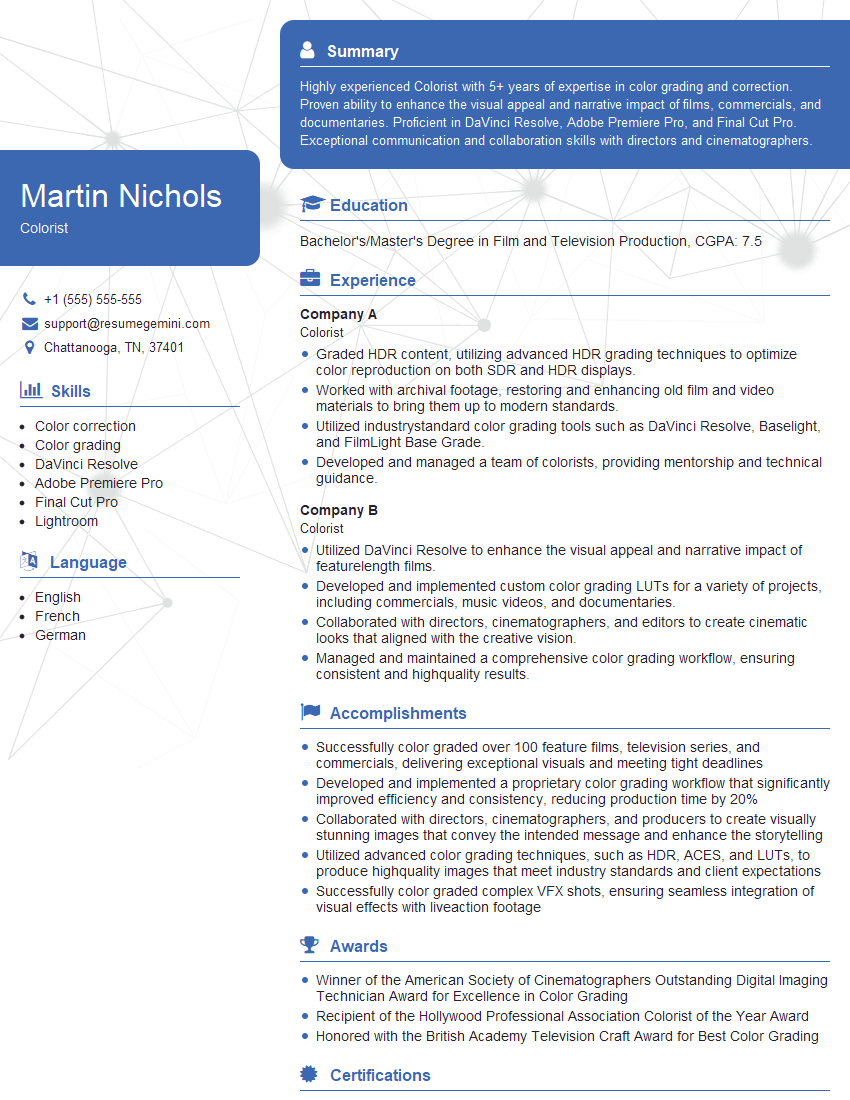
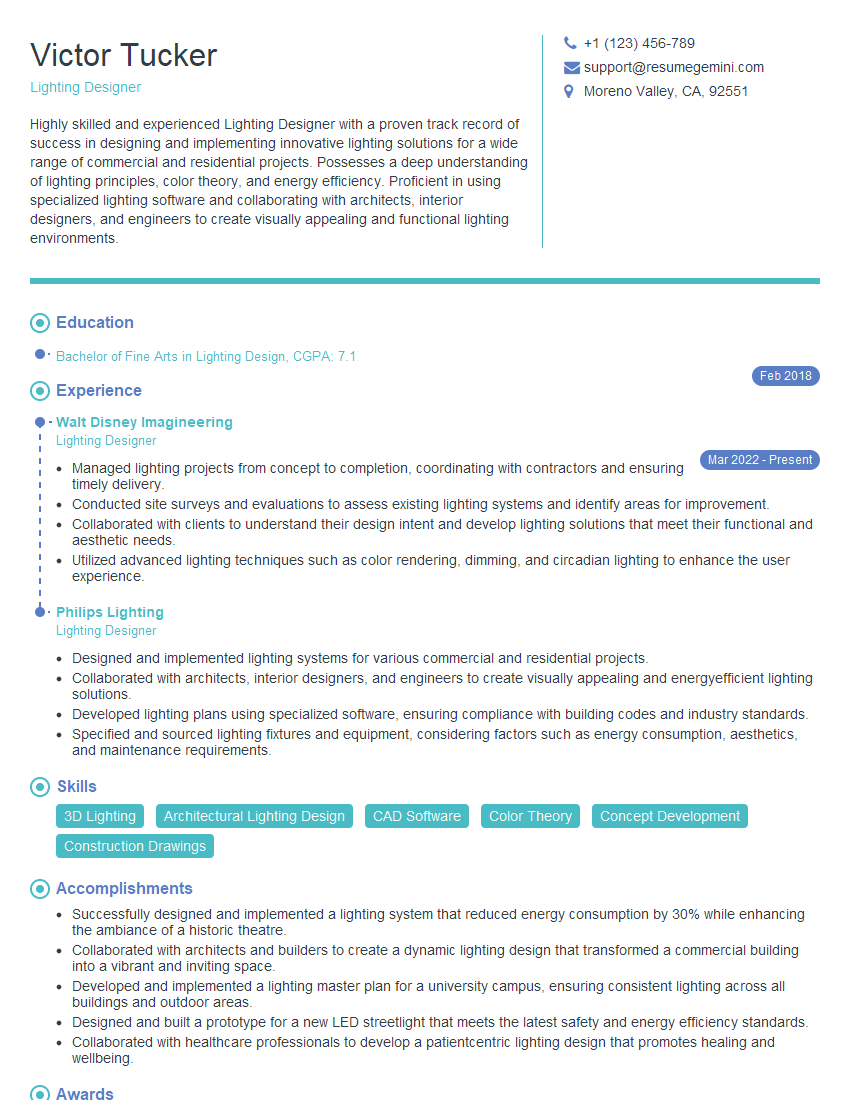
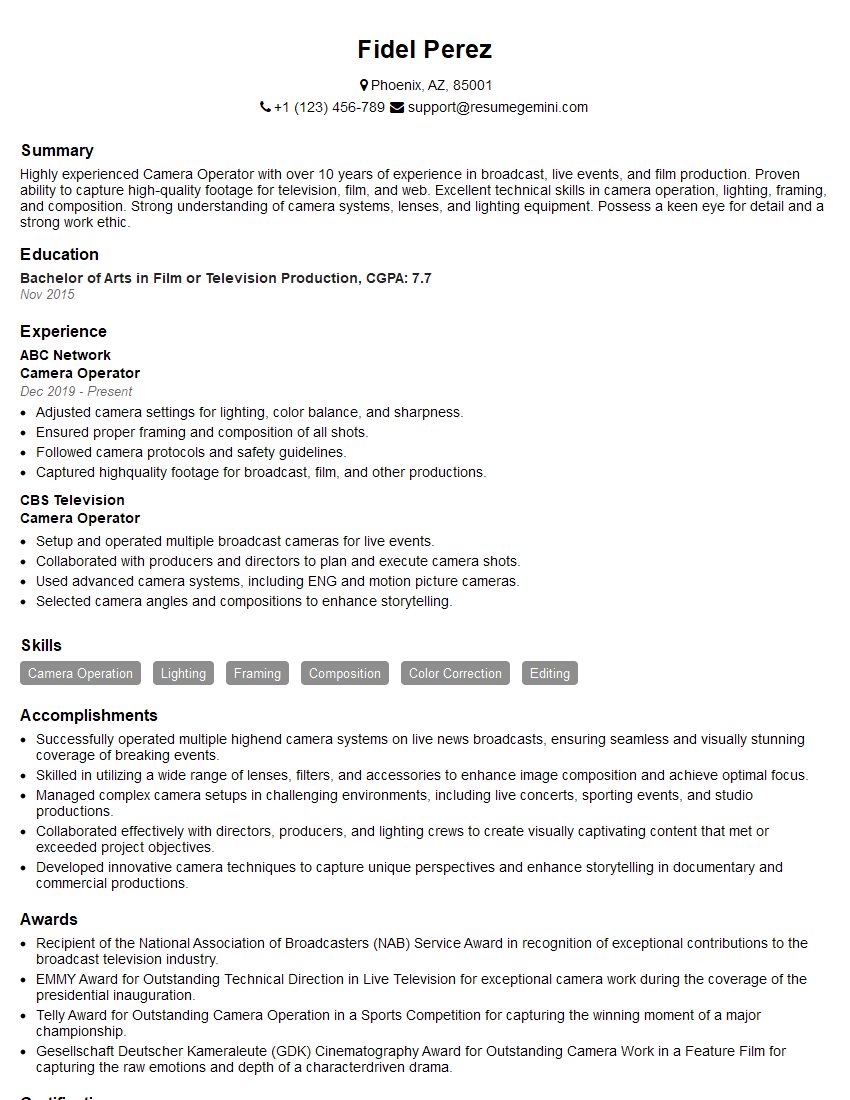
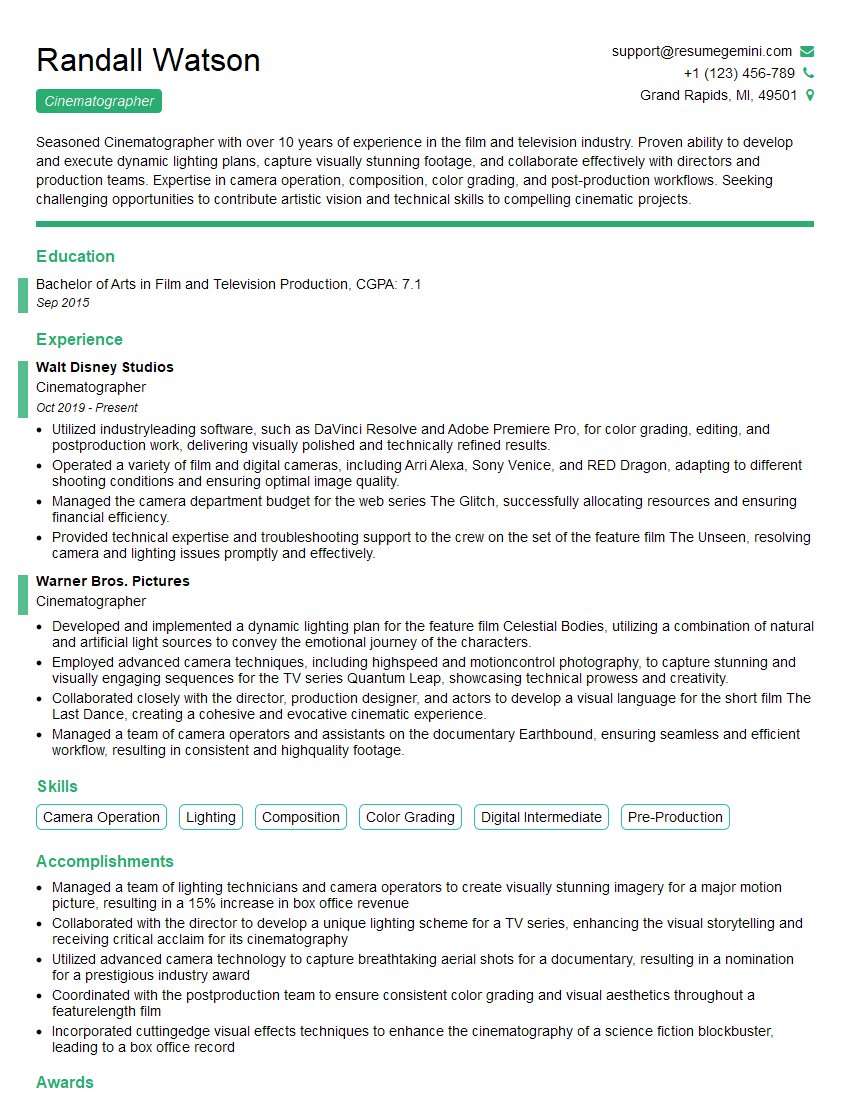
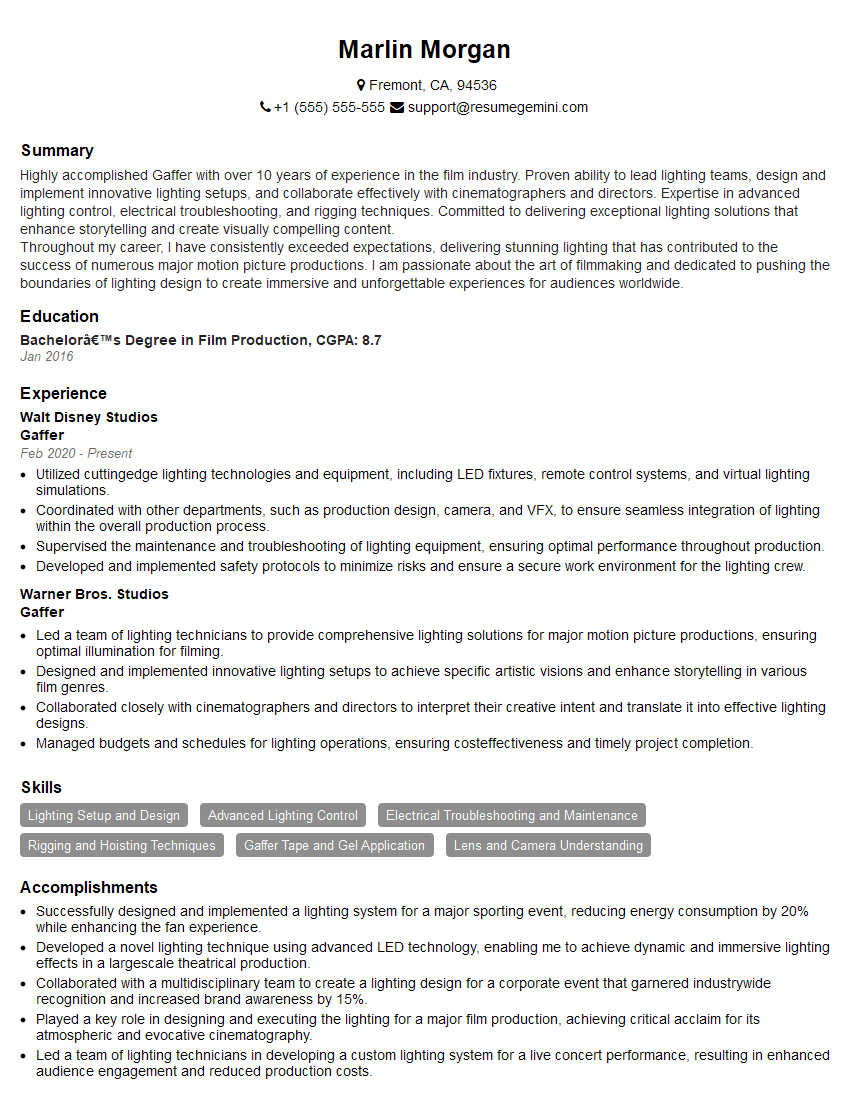
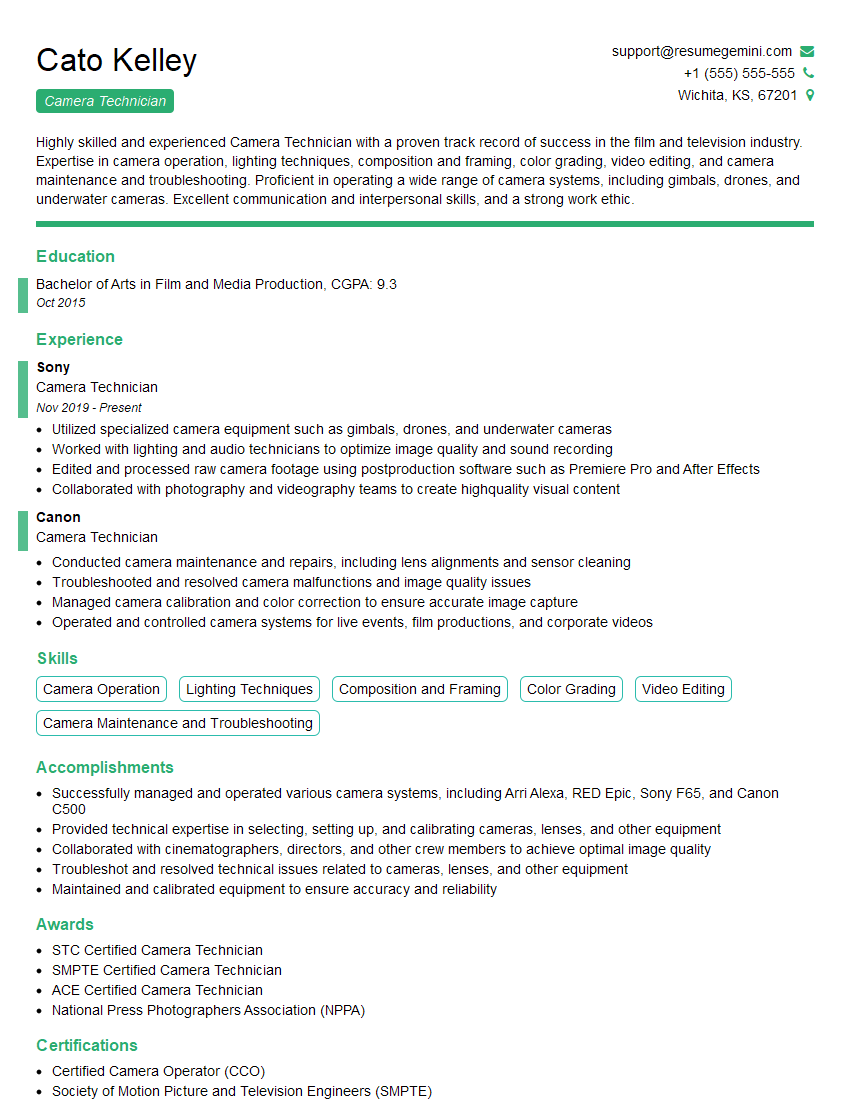
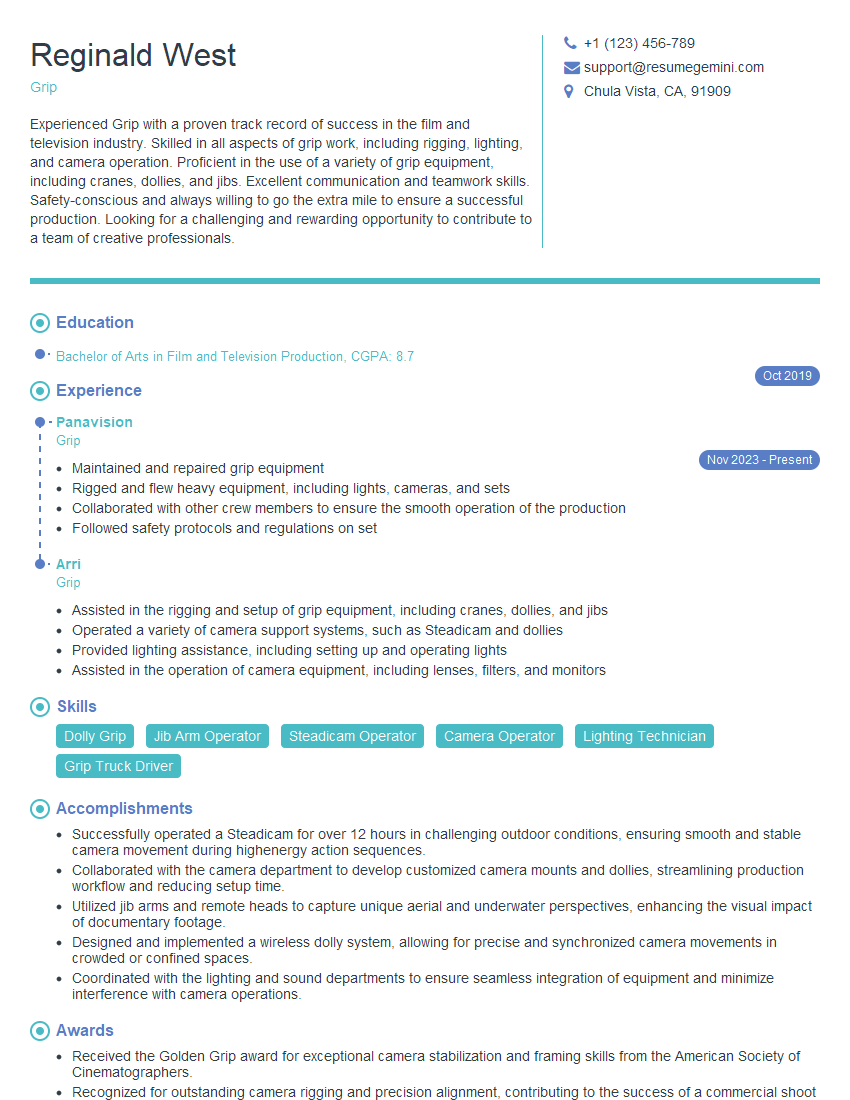
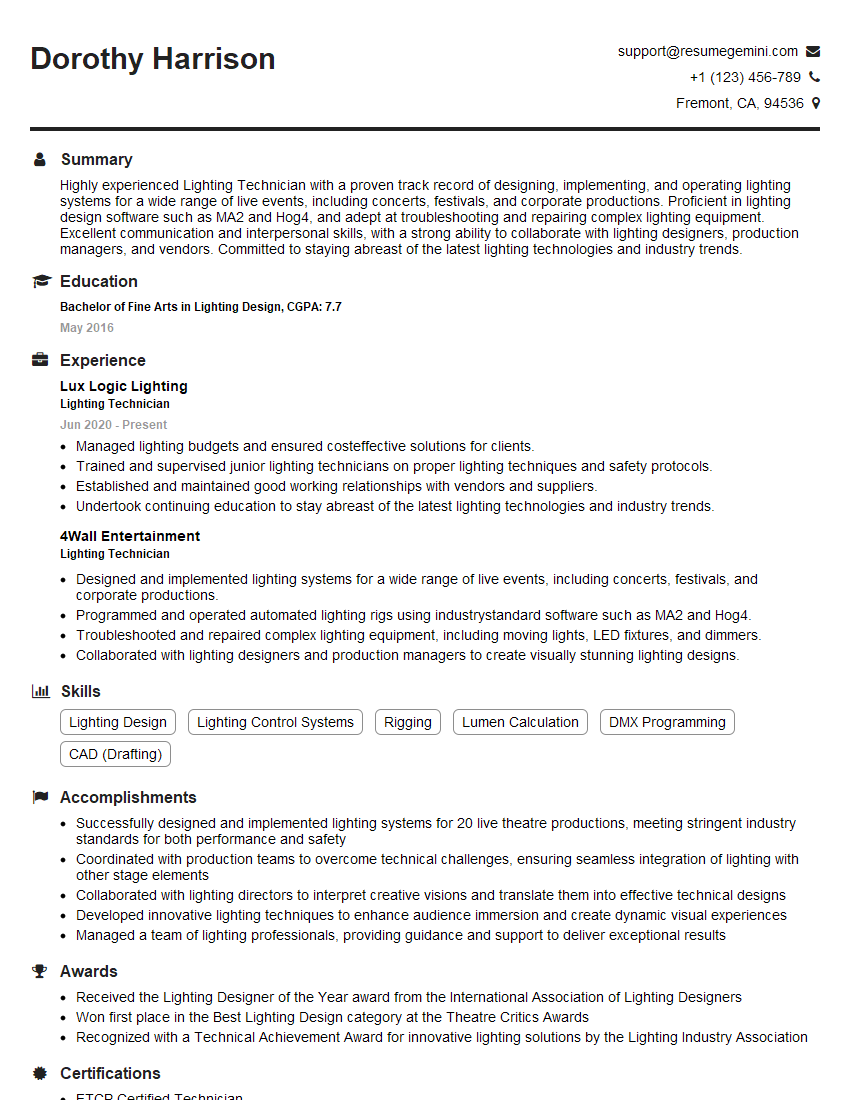
Mastering camera and lighting techniques is crucial for career advancement in film, photography, video production, and many other creative fields. A strong understanding of these skills significantly enhances your employability and opens doors to exciting opportunities. To increase your chances of landing your dream job, invest time in crafting an ATS-friendly resume that highlights your skills and experience effectively. ResumeGemini is a trusted resource that can help you build a professional and impactful resume. They offer examples of resumes tailored to Camera and Lighting professionals, providing a valuable template for your own application materials.
Explore more articles
Users Rating of Our Blogs
Share Your Experience
We value your feedback! Please rate our content and share your thoughts (optional).
What Readers Say About Our Blog
Very informative content, great job.
good