Unlock your full potential by mastering the most common Canvas Stretching and Framing interview questions. This blog offers a deep dive into the critical topics, ensuring you’re not only prepared to answer but to excel. With these insights, you’ll approach your interview with clarity and confidence.
Questions Asked in Canvas Stretching and Framing Interview
Q 1. What types of canvas are best suited for oil painting?
For oil painting, you want a canvas that’s absorbent enough to handle the paint’s thickness and won’t buckle under the layers, yet primed well enough to prevent the oil from sinking in and dulling the colors. Linen is the gold standard. Its tight weave and durability make it ideal for detailed work and longevity. It’s also incredibly absorbent, allowing the oil to penetrate and create a beautiful, rich depth of color. However, it’s more expensive and requires more preparation. Cotton canvas is a more budget-friendly alternative; it’s readily available and easier to stretch but might not hold up as well over time, especially with multiple layers of oil paint. Ultimately, the best canvas depends on your budget, artistic style, and the longevity you desire for your piece. For instance, a student might opt for cotton canvas for practice, while a professional artist often chooses linen for archival-quality paintings.
Q 2. Describe the process of stretching a canvas.
Stretching a canvas is the process of securing a raw canvas onto a wooden frame (stretcher bars) to create a taut, flat surface for painting. Think of it like creating a drumhead, but instead of a drum, you have a painting surface! First, you lay the canvas face down on a flat surface. Then you carefully fold over the edges of the canvas and staple or tack them to the back of the stretcher bars, working your way around the frame. The key is to maintain even tension; pulling too tightly in one area can cause wrinkles or distort the canvas. The process requires patience and a steady hand to ensure a smooth, wrinkle-free surface ready for your masterpiece. It’s a bit like building a puzzle – each staple is a piece of the puzzle, and if one is misplaced, the whole picture suffers.
Q 3. What tools are essential for canvas stretching?
Essential tools for canvas stretching include:
- Stretcher bars: These are the wooden frames that hold the canvas.
- Canvas pliers: These are specially designed pliers to help grip and stretch the canvas fabric, often with a rounded gripping surface to avoid damaging the canvas.
- Staple gun: A staple gun with appropriate staples for the thickness of your stretcher bars and canvas is crucial.
- Scissors or utility knife: To cut the canvas to the right size.
- Measuring tape or ruler: for accurate measurements and cutting.
- Hammer (optional): Useful if you’re using tacks instead of staples.
- Canvas stretcher (optional but highly recommended): This assists in maintaining even tension throughout the stretching process, and helps ensure squareness of the final product.
Q 4. How do you ensure a taut and wrinkle-free canvas?
Achieving a taut and wrinkle-free canvas requires careful attention to detail throughout the stretching process. Even tension is paramount. Begin by ensuring your stretcher bars are square and properly assembled. Then, start stapling in the center of one side, pulling the canvas taut as you go. Work your way outwards to the corners, ensuring consistent tension across the entire side. Repeat this process for each adjacent side, pulling the canvas evenly and checking for wrinkles. Once you are half way round, go back and check each side is equal before you complete the stretch. If wrinkles appear, carefully loosen the staples and re-stretch that section. It’s better to take your time and correct these wrinkles during this stage, rather than trying to deal with them once the canvas is fully stretched. For particularly stubborn wrinkles, gently dampening the canvas with a spray bottle (avoid excessive moisture) can help relax the fibers and allow for easier stretching. The result is a professional-quality canvas that’s perfectly prepared for your art.
Q 5. Explain the different types of stretcher bars available.
Stretcher bars come in various materials and profiles. The most common are made of wood, typically pine, kiln-dried to prevent warping. These can vary in thickness and profile. Thicker bars provide more stability for larger canvases and are often preferred for oil paintings because of the weight of the paint. The profile of the bar, whether it’s a simple rectangular bar or has a more complex design (like a rabbet for wrapping the canvas), affects how the canvas is secured and the overall look of the finished piece. There are also aluminum stretcher bars which are lighter and less prone to warping, but they can be less aesthetically pleasing to some artists. The choice ultimately depends on your budget, the size and weight of the canvas, and your personal preference. For example, thin bars are ideal for smaller watercolours, while deep bars are a must for thicker canvases and large scale oil paintings.
Q 6. How do you handle oversized canvases during stretching?
Stretching oversized canvases requires a different approach due to their weight and unwieldiness. You’ll need extra help; it’s best to have another person assist you, particularly when handling large pieces of linen which can be quite heavy. Stronger stretcher bars are essential to support the weight of the larger canvas, and using thicker canvas can also help maintain stability. You’ll likely need a larger workspace and stronger tools (like a more powerful staple gun). You might even consider using a canvas stretching machine for canvases beyond a certain size. This machine applies even pressure across the entire canvas, providing far more control for such large pieces which are more difficult to stretch by hand. It’s all about using the right tools and having extra support to prevent damage to the canvas or injury to yourself.
Q 7. What are the common problems encountered during canvas stretching, and how do you solve them?
Common problems during canvas stretching include:
- Uneven tension: Leading to wrinkles or a distorted canvas. This is solved by careful, even stretching and correcting wrinkles as you go.
- Warping stretcher bars: Often caused by using untreated wood. Choose kiln-dried wood to prevent warping and ensure the stability of your frame.
- Staple gun malfunctions: Ensure your staple gun is properly maintained and use appropriately sized staples.
- Tears in the canvas: Use caution when handling the canvas and stretching it. Employ canvas pliers to avoid tears.
- Corners not square: Use a stretcher that allows you to properly square off your canvas and check each side is at 90 degrees to one another.
Q 8. What are the different types of framing materials?
Framing materials offer a wide variety of choices, each impacting the final look and longevity of the artwork. The selection depends on factors such as budget, style, and the artwork itself.
- Wood: The most common material, offering diverse styles, from ornate baroque to minimalist modern. Wood frames can be solid wood (more expensive, durable) or composite wood (less expensive, often lighter).
- Metal: Aluminum, steel, and even brass frames provide a contemporary, sleek look. Metal frames are generally lightweight and resistant to warping, making them suitable for larger pieces.
- Plastic: A budget-friendly option, plastic frames come in a vast range of colors and styles. However, they might not have the same durability or aesthetic appeal as wood or metal.
- Polyurethane: This material is often used to create ornate, decorative frames that mimic the look of carved wood, but at a lower cost and weight.
- Resin: High-quality resin frames can be exceptionally durable and showcase unique textures and colors. They are often used for more modern or abstract artwork.
Choosing the right material is crucial; a heavy, ornate frame might overwhelm a delicate watercolor, while a minimalist frame might fail to complement a bold, vibrant painting.
Q 9. Explain the process of matting and glazing artwork.
Matting and glazing are essential steps in protecting and enhancing artwork. Matting provides a buffer between the artwork and the glass, preventing direct contact and reducing the risk of damage. Glazing protects the artwork from dust, UV light, and physical damage.
Matting: A mat is a piece of acid-free board cut to size, creating a border around the artwork. It enhances the visual appeal by providing a space for the eye to rest and helps to showcase the artwork. Different mat colors and textures can complement or contrast with the artwork’s style.
Glazing: Glazing involves covering the artwork with a protective layer of glass or acrylic. Glass offers superior clarity, while acrylic is lighter, safer, and less prone to breakage. Museums often opt for UV-protective glazing to minimize the fading caused by sunlight.
The process involves carefully measuring the artwork and mat, cutting the mat to the appropriate size using a mat cutter (a specialized tool ensuring clean, precise cuts), and then assembling the artwork, mat, and glazing within the frame.
Q 10. How do you choose the appropriate frame for a given artwork?
Selecting the appropriate frame is an art form in itself! It’s about finding a balance between the artwork and the frame, creating a harmonious whole, rather than competing elements. Consider these factors:
- Artwork Style: A bold, abstract piece might pair well with a minimalist frame, while a delicate watercolor might look better with an ornate, detailed frame.
- Artwork Color Palette: The frame should complement, not clash with, the artwork’s colors. You can choose a frame color that echoes a prominent color in the artwork or select a neutral tone for a subtle look.
- Artwork Size and Scale: A large, imposing artwork demands a substantial frame, while a small, intimate piece might be overwhelmed by a large frame. Proportion is key.
- Room Décor: The frame should ideally complement the overall decor of the room where the artwork will be displayed. Consider the existing color palette, furniture style, and overall ambiance.
- Personal Preference: Ultimately, the most crucial factor is your own aesthetic preference. Choose a frame that you find visually pleasing and that enhances the overall experience of viewing the artwork.
Sometimes, experimenting with different frames and observing how they interact with the artwork can lead to the perfect match. It’s not uncommon to try a few different options before deciding.
Q 11. Describe different types of frame joining techniques.
Frame joining techniques determine the frame’s structural integrity and aesthetic appeal. Several methods exist, each with its pros and cons:
- Miter Joints: This classic technique involves precisely cutting the frame pieces at a 45-degree angle and joining them with glue and sometimes small corner blocks. It’s clean and visually appealing when done correctly.
- Rabbet Joints: This method uses a groove (rabbet) cut into the ends of the frame pieces, creating a stronger joint than a simple miter. It’s less visible but offers greater structural support.
- Tongue and Groove Joints: Similar to rabbet joints, but with a more intricate interlocking design. This offers exceptional strength and stability, ideal for larger or heavier frames.
- Dovetail Joints: A highly skilled technique, dovetail joints are incredibly strong and aesthetically pleasing. They are often found in high-end custom frames.
- Mechanical Fasteners: Corner clamps, brads, or screws can be used, often in conjunction with glue, for a quicker, less labor-intensive join, though potentially less aesthetically pleasing.
The choice of technique depends on the frame material, size, and desired aesthetic. For instance, a delicate wood frame might benefit from a miter joint, while a large, heavy metal frame might require mechanical fasteners and a rabbet joint for extra strength.
Q 12. How do you handle fragile or delicate artwork during framing?
Handling fragile artwork requires meticulous care and attention to detail. The goal is to minimize stress and prevent any damage during the framing process.
- Use Acid-Free Materials: Avoid materials that can release harmful chemicals, leading to discoloration or degradation over time. Acid-free mat boards, backing boards, and glazing are crucial.
- Support the Artwork: Use archival-quality foam core or corrugated board for backing to provide additional support, especially for canvases or delicate prints. This prevents warping and reduces stress on the artwork during handling.
- Wear Gloves: Gloves prevent transferring oils and dirt from your hands to the artwork’s surface.
- Gentle Handling: Avoid harsh movements or sudden changes in temperature, which can damage the artwork. Always handle the artwork by its edges or by supporting its entire surface.
- Consider Conservation Framing: For particularly valuable or delicate pieces, consult a professional conservator for expert advice on framing methods and materials that ensure the longevity of the artwork.
Remember, prevention is key. Taking extra precautions during handling dramatically reduces the risk of damage.
Q 13. What safety precautions should be taken when working with sharp tools or chemicals?
Safety is paramount when working with framing materials and tools. Sharp tools and chemicals require careful handling and appropriate precautions.
- Sharp Tools: Always use sharp tools carefully and correctly. Keep blades sharp to reduce the risk of slipping. Use a cutting mat to protect your work surface and prevent accidental cuts. Store tools safely when not in use.
- Chemicals: Work in a well-ventilated area when using any chemicals, such as adhesives or solvents. Always read and follow the manufacturer’s safety instructions. Wear appropriate personal protective equipment, such as gloves, eye protection, and a respirator if necessary.
- Glass Handling: When handling glass, wear gloves and use caution to prevent cuts. Use appropriate tools for cutting glass, and always dispose of broken glass carefully.
- Proper Workspace: Keep your workspace clean, organized, and well-lit. Ensure you have ample space to work safely and comfortably.
By prioritizing safety procedures, you not only prevent accidents but also ensure the longevity of your work and health.
Q 14. How do you calculate the amount of matting needed for a specific frame size?
Calculating the matting needed involves precise measurements. Errors can lead to an incorrectly sized mat, compromising the visual presentation. Here’s a step-by-step process:
- Measure Artwork: Accurately measure the artwork’s height and width.
- Measure Frame Opening: Measure the inside dimensions (the opening) of the frame where the artwork and mat will be placed. This is crucial.
- Calculate Mat Overhang: Determine the desired overhang of the mat on each side (top, bottom, left, and right). This creates the visible mat border. A common overhang is about 1 to 2 inches, but it depends on the artwork and frame size.
- Mat Height Calculation: Artwork Height + (2 x Mat Overhang) = Mat Height
- Mat Width Calculation: Artwork Width + (2 x Mat Overhang) = Mat Width
Example: Artwork is 12” x 16”, desired overhang is 1.5” on each side. Mat Height: 12” + (2 x 1.5”) = 15”. Mat Width: 16” + (2 x 1.5”) = 19”. You would need a 15” x 19” mat.
Always double-check your measurements to avoid errors.
Q 15. Describe your experience with different types of framing hardware.
My experience with framing hardware encompasses a wide range, from basic ready-made frames to highly specialized conservation-grade materials. I’m proficient with various types of moulding profiles, including wood (e.g., hardwoods like oak and maple, softwoods like pine), metal (aluminum, ornate brass), and composite materials. I’m also familiar with different joining methods, such as mitered corners, rabbet joints, and spline joints. Understanding the strengths and weaknesses of each material is crucial for selecting the optimal frame for a piece of art. For example, wood offers warmth and versatility, while metal provides a modern, clean look and superior durability. My experience extends to working with different types of glazing, from standard glass to UV-protective acrylic and museum-grade glass. I also have expertise in choosing appropriate backing boards, spacers, and hanging hardware, considering factors like weight, size, and the artwork’s fragility.
Recently, I worked on a project requiring a custom frame for a large, delicate watercolor. The client specifically requested a lightweight yet sturdy frame. I selected a sustainably sourced, lightweight basswood moulding and paired it with UV-protective acrylic glazing to minimize weight and maximize protection. The result was a beautiful, functional frame that perfectly complemented the artwork’s delicate nature.
Career Expert Tips:
- Ace those interviews! Prepare effectively by reviewing the Top 50 Most Common Interview Questions on ResumeGemini.
- Navigate your job search with confidence! Explore a wide range of Career Tips on ResumeGemini. Learn about common challenges and recommendations to overcome them.
- Craft the perfect resume! Master the Art of Resume Writing with ResumeGemini’s guide. Showcase your unique qualifications and achievements effectively.
- Don’t miss out on holiday savings! Build your dream resume with ResumeGemini’s ATS optimized templates.
Q 16. How do you ensure the proper alignment of artwork within a frame?
Precise artwork alignment is paramount for a professional finish. I employ several techniques to ensure perfect centering and placement within the frame. Firstly, I carefully measure both the artwork and the frame’s inner dimensions. Then, I use acid-free matting boards to create a visual border and to further support and protect the artwork. The matting acts as a crucial buffer, preventing direct contact between the art and the glass or frame. Accurate mat cutting is key. For precise alignment, I use a combination of rulers, T-squares, and specialized cutting tools. Once the artwork is positioned on the mat, I check alignment from multiple angles to ensure its perfectly centered. Finally, I use archival-quality tape to secure the artwork to the mat, taking care not to damage the piece.
A recent project involved a client’s prized family portrait. By meticulously measuring and carefully applying the mat, we created a frame that not only enhanced the portrait’s beauty but also showed respect for its sentimental value.
Q 17. What methods do you use to protect artwork from UV damage during framing?
UV damage is a significant threat to artwork, causing fading and discoloration over time. My primary method of protection involves using UV-protective glazing. This glazing filters out harmful ultraviolet rays, significantly extending the artwork’s lifespan. I offer various options, including UV-protective acrylic (a safer, lighter alternative to glass) and museum-grade glass with high UV protection. In addition to glazing, I always use archival-quality matting boards and backing boards that are also UV resistant. These boards further act as a barrier against light exposure. Proper framing techniques also minimize exposure to direct sunlight, which is crucial for artwork conservation.
For a client with a collection of antique photographs, I recommended using museum-grade glass with high UV protection combined with archival matting. The difference in protection provided by this method compared to using standard glass is considerable and helps the client ensure long-term preservation of their photographs.
Q 18. What are the different types of conservation-grade framing materials?
Conservation-grade framing materials are designed to minimize damage and preserve artwork for generations. These materials must be acid-free, lignin-free, and buffered to prevent chemical reactions that could harm the artwork. Key materials include:
- Acid-Free Matting Boards: These boards provide a buffer between the artwork and the frame, preventing direct contact and minimizing potential damage. They are typically made from alpha-cellulose or cotton rag.
- Archival-Quality Backing Boards: These provide stability and support for the artwork, preventing warping and damage. They are similar in material to the matting boards.
- UV-Protective Glazing: As discussed earlier, this is crucial for protection from harmful UV rays.
- Conservation-Grade Framing Moulding: While less common, some mouldings are specifically treated to be acid-free and exhibit superior durability.
- Archival-Quality Adhesives and Tapes: These are specially formulated to avoid damaging the artwork during assembly.
Choosing conservation-grade materials is not just a best practice; it is often a requirement for valuable or historically significant pieces, ensuring their long-term preservation.
Q 19. Describe your experience with custom frame design and fabrication.
I have extensive experience in custom frame design and fabrication. This involves collaborating closely with clients to understand their vision and create unique frames that perfectly complement their artwork. I use CAD software to create detailed designs and to plan the exact measurements for various components. My skills encompass designing unique profiles for the framing, creating custom-sized matting, and incorporating specialized elements such as decorative inlay or custom-cut designs into the frames. This often requires hand-crafting specific parts of the frame, combining traditional joinery techniques with modern tools and machinery. I’m proficient in working with a diverse range of materials, adapting my techniques to suit the artwork and client’s specifications.
For instance, I once designed and fabricated a custom frame with intricate carvings for a client’s landscape painting. The frame’s design incorporated elements inspired by the painting’s natural theme, creating a harmonious and visually stunning presentation. This required precise craftsmanship and a deep understanding of wood carving techniques.
Q 20. How do you handle customer orders and specifications?
Handling customer orders involves a multi-step process focused on clear communication and precision. It begins with a detailed consultation, where I discuss the client’s preferences, the artwork’s specifications (size, medium, fragility), and their budget. We carefully select the appropriate framing materials, considering the style, the need for conservation, and cost effectiveness. I provide detailed quotes outlining the chosen materials and labor costs. Once the client approves, I create a detailed work order with all specifications to ensure accuracy throughout the process. Regular updates are provided to the client, and I personally supervise all stages of the framing process to ensure quality control. Finally, I carefully package and deliver the finished framed artwork.
I always emphasize open communication throughout the process, which helps avoid misunderstandings and ensures the client is completely satisfied with the final product.
Q 21. How do you maintain accurate inventory of framing materials?
Maintaining accurate inventory is essential for efficient operation and timely project completion. I utilize a computerized inventory management system to track all framing materials. This system allows me to record the quantity, type, and cost of each item. Regular physical inventory checks are conducted to verify the system’s accuracy. I employ a first-in, first-out (FIFO) system to manage stock rotation, ensuring that older materials are used first to minimize potential degradation. The system also generates alerts when stock levels fall below a predefined threshold, allowing for timely reordering. This prevents delays in fulfilling customer orders due to stock shortages.
Regular audits and reconciliation between the physical and digital inventory is performed to maintain accuracy and catch any discrepancies early on. This rigorous approach guarantees that I always have the necessary materials on hand to meet client demands without compromising quality.
Q 22. What experience do you have with different types of artwork (e.g., paintings, prints, photographs)?
Throughout my career, I’ve worked extensively with a diverse range of artwork, encompassing oil paintings, watercolors, acrylics, prints (giclée, lithographs, screenprints), photographs (both traditional and digital prints), and even delicate textiles. Understanding the unique characteristics of each medium is crucial for proper stretching and framing. For instance, oil paintings often require a more robust stretching process to handle their weight and potential for warping, while delicate watercolor paintings demand extra care to prevent damage. Prints may need specific attention to avoid creasing or scratching. Photographs, especially those on delicate paper, necessitate careful handling to minimize risk of damage during the stretching and mounting stages. My experience spans handling both very large canvases and extremely fragile pieces, requiring different techniques for each.
Q 23. How do you manage your time and workload effectively?
Effective time and workload management is key in this profession. I use a project management system that allows me to prioritize tasks based on deadlines and complexity. Large-scale projects are broken down into smaller, manageable steps, with realistic timelines assigned to each. I frequently communicate with clients to manage expectations and keep them informed of progress. I also utilize time-blocking techniques, allocating specific time slots for different tasks. For instance, one block might be dedicated to prepping canvases, another to mounting prints, and another to assembly and finishing. This prevents task-switching and promotes focused work. This system allows me to handle multiple projects simultaneously while maintaining quality and meeting deadlines. Prioritization of urgent orders and accurate estimation of time required are key.
Q 24. Describe a situation where you had to troubleshoot a problem during the framing process. What was the solution?
I once encountered a situation where a large canvas painting, stretched and ready for framing, developed a slight warp during the humid summer months. The wood cradling had expanded, causing the canvas to buckle. Instead of reframing, which would have been costly and time-consuming, I decided to try a solution involving controlled humidification. I placed the framed piece in a climate-controlled environment with carefully regulated humidity for several days. This allowed the wood to gradually adjust, releasing the tension on the canvas. The warp was almost completely corrected, and only minimal touch-up work was needed afterwards. This experience taught me the importance of considering environmental factors in both stretching and framing, especially with larger pieces.
Q 25. What is your experience with working on large scale framing projects?
I have considerable experience with large-scale framing projects. This includes working with canvases exceeding 8 feet in height or width, as well as multiple-panel works and large photographic prints. These projects require meticulous planning, specialized tools, and often a team effort to ensure safe handling and prevent damage. One large project involved framing a series of ten, 5ft x 7ft canvases for a gallery exhibition. We had to ensure proper support systems for the weight and potential for bowing during transport and hanging. Successful completion of such projects requires careful assessment of the artwork’s dimensions and weight, consideration of appropriate materials, and coordinated efforts during every stage of the process.
Q 26. Describe your familiarity with different types of glazing (e.g., acrylic, glass, museum glass)?
My familiarity with glazing options is extensive. I regularly use acrylic, glass, and museum glass. Acrylic glazing offers lighter weight and better protection against UV damage than standard glass. However, it can be more prone to scratching. Standard glass is more affordable but heavier and less protective against UV rays. Museum glass provides the best UV protection and minimizes reflection, preserving the artwork’s colours and vibrancy. The choice depends on the artwork’s value, the client’s budget, and the display environment. For instance, a high-value oil painting might benefit from museum glass in a brightly lit area, whereas a less expensive print displayed in a low-light setting might suffice with acrylic.
Q 27. What methods do you utilize for archival quality framing and preservation?
Archiving quality framing focuses on preserving the artwork for generations. I use acid-free mats and backing boards to prevent yellowing and deterioration. UV-filtering glazing is crucial to protect against fading caused by sunlight. The wood used in frames should be archival-quality, free from harmful chemicals. Furthermore, I avoid using adhesives that contain acids or harmful chemicals. Proper spacers and hinging methods are also essential to prevent direct contact between the artwork and the glazing or backing. Every step from canvas preparation to final assembly is approached with the goal of minimizing degradation and ensuring long-term preservation. I meticulously document each step of the framing process in case of future conservation or restoration needs.
Q 28. How would you advise a customer on choosing appropriate framing options for their artwork?
Advising customers on framing choices involves understanding their artwork, budget, and display preferences. I begin by discussing the artwork’s style, colours, and subject matter. A vibrant abstract painting might be complemented by a bold, modern frame, while a delicate watercolor might look best in a simple, understated frame. I will show them different frame materials (wood, metal, composite), profiles (width, depth, moulding style), and finishes (color, texture) to match the artwork. The budget is also a key factor in determining material choices and glazing options. Finally, the display location, such as a brightly lit living room or a dimly lit study, influences the choice of glazing to best preserve the piece. The process is collaborative; the customer’s vision and preferences are integrated with my expertise to achieve the perfect framing solution.
Key Topics to Learn for Canvas Stretching and Framing Interview
- Canvas Selection and Preparation: Understanding different canvas materials (cotton, linen, etc.), their properties, and how to choose the right canvas for a specific artwork and stretching method.
- Stretching Techniques: Mastering various stretching techniques, including using pneumatic stretcher bars, traditional wooden stretcher bars, and understanding the importance of proper tension and corner alignment.
- Framing Principles: Knowledge of different frame materials (wood, metal, etc.), frame styles, and their suitability for various artwork types and sizes. Understanding matting techniques and their purpose.
- Tools and Equipment: Familiarity with essential tools like staple guns, pliers, hammers, measuring tapes, and various types of stretchers. Understanding their proper usage and maintenance.
- Quality Control and Finishing: Inspecting stretched canvases for imperfections, ensuring even tension, and applying appropriate finishing touches for a professional look. Understanding how to address common issues like wrinkles or uneven stretching.
- Health and Safety: Adhering to safety protocols when using tools and handling materials, including proper disposal of waste.
- Production Efficiency and Workflow: Optimizing workflows to maximize productivity while maintaining high-quality standards. Understanding inventory management and production scheduling.
- Troubleshooting and Problem Solving: Diagnosing and resolving common issues encountered during canvas stretching and framing, such as damaged canvases or improperly fitted frames.
- Customer Service and Communication: Understanding the importance of clear communication with clients about their needs and expectations.
Next Steps
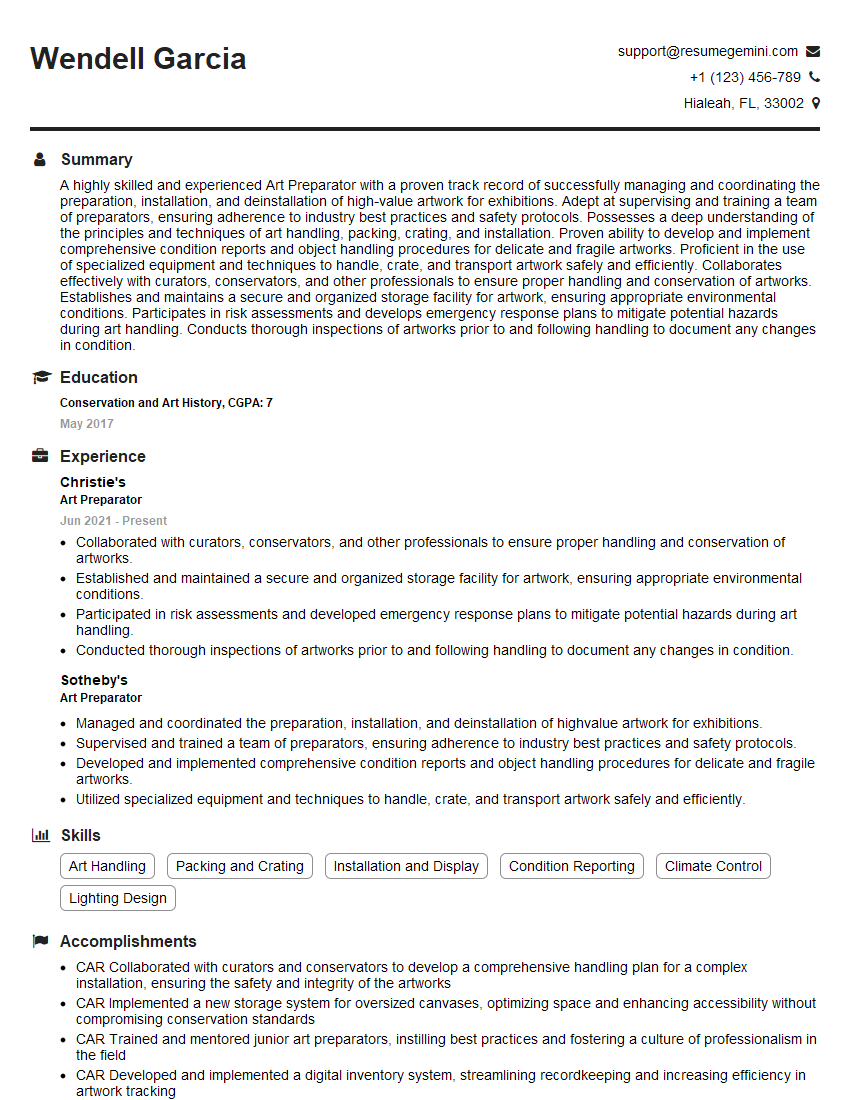
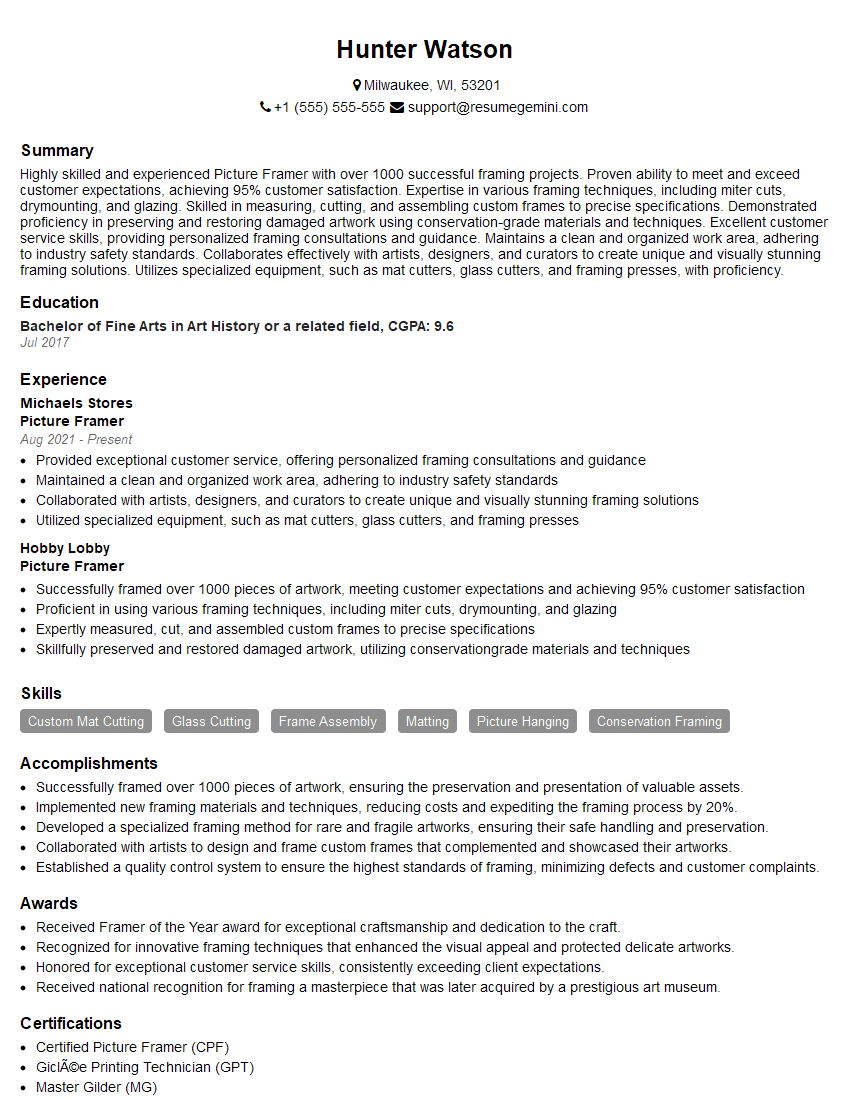
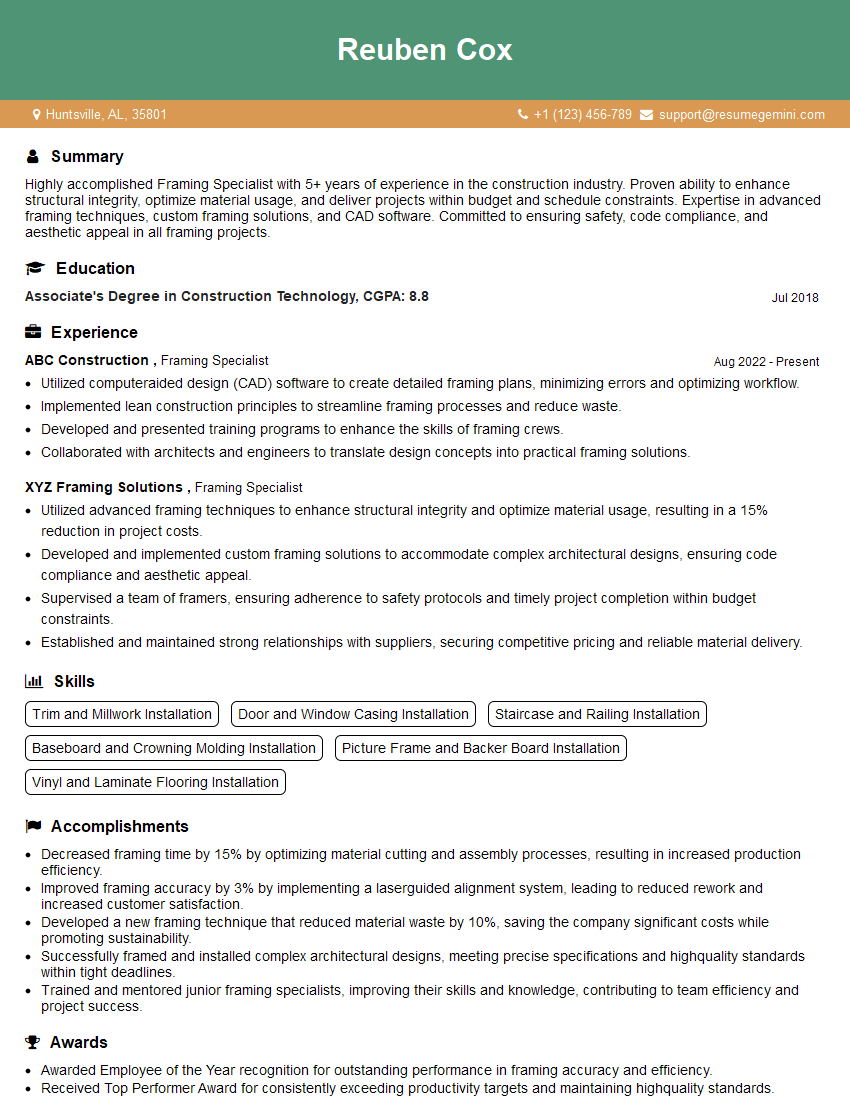
Mastering canvas stretching and framing opens doors to exciting career opportunities in art studios, galleries, and custom framing shops. A strong understanding of these techniques showcases your attention to detail, craftsmanship, and problem-solving skills – highly valuable assets in any professional setting. To elevate your job search, creating a compelling and ATS-friendly resume is crucial. ResumeGemini is a trusted resource that can help you build a professional resume that highlights your skills and experience effectively. Examples of resumes tailored to the Canvas Stretching and Framing field are available to help guide you. Invest time in crafting a strong resume – it’s your first impression on potential employers.
Explore more articles
Users Rating of Our Blogs
Share Your Experience
We value your feedback! Please rate our content and share your thoughts (optional).
What Readers Say About Our Blog
Very informative content, great job.
good