Cracking a skill-specific interview, like one for Cap Making, requires understanding the nuances of the role. In this blog, we present the questions you’re most likely to encounter, along with insights into how to answer them effectively. Let’s ensure you’re ready to make a strong impression.
Questions Asked in Cap Making Interview
Q 1. Describe your experience with different cap construction methods (e.g., 6-panel, 5-panel).
Cap construction methods vary, impacting the cap’s structure and overall look. My experience encompasses a wide range, including the prevalent 6-panel and 5-panel designs, as well as less common variations like trucker hats (often featuring a mesh back) and 5-panel unstructured caps.
- 6-panel caps: These are the classic baseball cap style. Six panels of fabric are sewn together to form the crown, offering good structure and durability. They allow for intricate designs and branding placements. I’ve worked extensively with both structured and unstructured 6-panel designs, adjusting the foam backing and lining material to achieve desired stiffness.
- 5-panel caps: These provide a slightly more relaxed fit, often preferred for streetwear styles. The construction process is similar but with one fewer panel, leading to a smoother, less structured crown. I’ve found that fabric choice is critical for 5-panel caps to maintain a clean look, as any imperfections are more visible due to the reduced number of seams.
- Trucker hats: My experience includes working with the unique construction of trucker hats, which typically combine a structured front panel with a breathable mesh back. This requires careful attention to the stitching techniques to ensure a secure and durable bond between the different fabric types.
I’m adept at selecting the most appropriate construction method based on the desired style, fabric, and budget.
Q 2. What fabrics are best suited for structured vs. unstructured caps?
Fabric selection is paramount for achieving the desired structure and drape in a cap. The choice directly influences the cap’s feel, longevity, and overall aesthetic.
- Structured Caps: For structured caps, which hold their shape firmly, heavier, more durable fabrics are ideal. Think twill cotton, canvas, or even denim. These materials are strong enough to withstand the addition of buckram or other stiffening interfacings, maintaining their form. I have often used high-quality twill cotton for its balance of durability and drape.
- Unstructured Caps: Unstructured caps, conversely, are designed to have a softer, more relaxed feel. Lighter fabrics like linen, jersey knit, or lightweight cotton are better suited. These fabrics drape naturally and offer a more casual appearance. The lack of stiffening allows for a comfortable, less rigid fit.
In my experience, carefully considering the fabric’s weight, drape, and breathability is essential to creating a cap that is both aesthetically pleasing and comfortable to wear.
Q 3. Explain your understanding of cap sizing and fitting.
Cap sizing and fitting are crucial for customer satisfaction. It’s not just about the circumference; the crown depth and overall shape also influence the fit.
Sizing is typically determined by measuring the head circumference. We commonly use standard sizing charts, which translate these measurements into cap sizes (e.g., S/M, L/XL). However, we also consider the cap style. A structured cap might require a slightly smaller size than an unstructured cap due to its firmness.
To ensure proper fitting, I’ve used adjustable closures like straps and snaps to accommodate varying head sizes. I’ve also developed techniques to tweak patterns slightly for custom fits. For example, I might adjust the crown depth slightly to accommodate specific facial features. Paying close attention to customer feedback and incorporating that into subsequent designs helps us refine our sizing and fitting.
Q 4. How do you ensure consistent quality throughout the cap production process?
Maintaining consistent quality requires a multi-faceted approach, starting with material selection and extending to the final inspection. I focus on implementing strict quality control measures throughout the entire production process.
- Material Inspection: We meticulously check all incoming materials for defects, ensuring consistent color, texture, and quality. Any substandard materials are rejected immediately.
- Process Monitoring: We utilize standardized procedures and regularly monitor all stages of production, from cutting and sewing to embroidery and finishing. This involves regular checks by skilled inspectors to identify potential problems early on.
- Quality Control Checks at Each Stage: Each step – cutting, stitching, embroidery, finishing – has its quality check. For instance, during stitching, inconsistencies in seam alignment are immediately rectified. This prevents defects from being passed on to the next stage.
- Final Inspection: Before packaging, every cap undergoes a thorough final inspection to ensure it meets our quality standards. Any cap with defects is rejected.
This rigorous approach, along with employee training and feedback, is key to ensuring consistent high quality in our cap production.
Q 5. What are the common challenges in cap manufacturing, and how do you address them?
Cap manufacturing presents unique challenges, primarily related to material consistency, production efficiency, and maintaining quality standards.
- Material Consistency: Variations in fabric color, texture, and weight can significantly impact the final product. To address this, we work with reliable suppliers and perform rigorous material inspections before production.
- Production Efficiency: Balancing speed and quality is a constant challenge. To optimize production, we use efficient production techniques and advanced machinery where appropriate. Lean manufacturing principles are applied to eliminate waste and improve workflow.
- Maintaining Quality Standards: Ensuring consistent quality across large production runs is always a concern. Our rigorous quality control procedures, as detailed earlier, are crucial in addressing this.
- Meeting Deadlines: Timely delivery is critical, particularly with seasonal demands. Effective project planning and proactive communication with clients are crucial in managing production schedules and ensuring timely delivery.
I’ve found that proactive problem-solving, leveraging technology where suitable, and fostering a culture of continuous improvement are vital in overcoming these challenges.
Q 6. What experience do you have with different types of cap embroidery or printing techniques?
My experience spans several embroidery and printing techniques, each with its unique strengths and applications.
- Embroidery: I’m proficient in various embroidery techniques, including flat embroidery, 3D puff embroidery, and appliqué. Embroidery offers a high-quality, durable, and visually appealing finish. The choice of thread type and stitching density can drastically affect the final result – I’ve worked with different thread weights to achieve various textures and looks.
- Screen Printing: Screen printing is ideal for large-scale production, offering cost-effectiveness for simple designs. I understand color separation techniques and have experience troubleshooting issues like screen clogging or color registration problems.
- Heat Transfer Printing: This technique is useful for detailed designs and allows for a softer, more flexible finish compared to screen printing. I’ve had experience managing the complexities of different heat transfer materials and ensuring proper application to avoid cracking or peeling.
- Digital Printing: For highly detailed, full-color designs, digital printing offers unparalleled precision and versatility. I understand the workflow for preparing artwork for digital printing and have experience with different fabric types and their suitability for digital printing techniques.
The choice of technique depends heavily on the design complexity, quantity required, budget, and desired final look. I select the optimal technique for each project.
Q 7. Describe your experience with pattern making and adjustments for cap production.
Pattern making is fundamental to cap production. A well-crafted pattern ensures consistent sizing and a well-fitting cap. My experience includes designing patterns from scratch and making adjustments to existing ones based on various factors, including fabric type, desired fit, and embellishments.
Creating a cap pattern typically begins with a basic block pattern, which is then modified to achieve the specific style and dimensions. I use specialized software (e.g., CAD programs) to create and manipulate patterns digitally, enabling efficient modifications and scaling.
Adjustments are often necessary. For example, I might need to adjust seam allowances to accommodate specific fabric types or add extra ease for a more relaxed fit. If we’re adding embroidery or other embellishments, adjustments to the pattern are often needed to accommodate the extra bulk. I’ve also had to adjust patterns to accommodate client requests for unique shapes or sizes.
The iterative process of pattern making and adjustment is essential in creating perfectly-fitted caps. It often involves sampling and fitting to ensure the desired look and feel are achieved before mass production.
Q 8. How do you maintain high production efficiency while adhering to quality standards?
Maintaining high production efficiency while ensuring quality in cap making is a delicate balancing act. It’s like conducting an orchestra – each section (process) needs to play in harmony and at the right tempo. This is achieved through a combination of optimized processes, skilled labor, and robust quality control.
- Process Optimization: This involves streamlining the workflow, identifying and eliminating bottlenecks, and using efficient equipment. For example, implementing a lean manufacturing approach can minimize waste and maximize output. We can analyze each step – from fabric cutting to stitching to finishing – to find areas for improvement.
- Skilled Workforce: Highly trained and experienced operators are crucial. Proper training on machinery and techniques ensures consistent quality and speed. Regular skill assessments and training programs maintain a high standard of workmanship.
- Quality Control: This is not just a final step, but integrated throughout the process. Regular inspections at each stage – material inspection, in-process checks, and final inspection – prevent defects from progressing further down the line. This saves time and resources in the long run.
For example, in my previous role, we implemented a new cutting technique that reduced fabric waste by 15%, directly boosting efficiency without compromising quality.
Q 9. How familiar are you with different types of stitching techniques used in cap making?
I’m very familiar with a wide range of stitching techniques used in cap making. The choice of technique often depends on the cap style, fabric type, and desired aesthetic. Some common ones include:
- Flat Felled Seam: A strong, durable seam ideal for stress points, often used in baseball caps.
- Overlock Stitch: A fast, versatile stitch commonly used for finishing edges and seams, offering a clean and professional finish.
- Blind Stitch: Creates an almost invisible seam, suitable for more delicate fabrics and designs.
- Chainstitch: A fast and economical stitch frequently used for attaching labels or embellishments.
- Topstitch: Decorative stitch used for adding visual appeal and reinforcing seams.
Understanding the strengths and weaknesses of each technique is vital for selecting the most appropriate one for a given project. For instance, a flat felled seam is ideal for a durable work cap, while a blind stitch might be preferred for a stylish fashion cap.
Q 10. What is your experience with using different sewing machines for cap production?
My experience encompasses various sewing machines used in cap production, from basic single-needle machines to advanced multi-needle, high-speed models. I am proficient in operating and maintaining:
- Single-needle machines: Excellent for detail work and smaller production runs.
- Multi-needle machines: Ideal for high-volume production, capable of stitching multiple seams simultaneously.
- Computerized sewing machines: Offer precise control and programmable stitch patterns, enhancing both efficiency and precision.
- Overlock machines: Used for finishing edges and creating professional seams quickly.
I understand the nuances of each machine, including their capabilities, limitations, and maintenance requirements. For example, I know how to adjust tension, stitch length, and needle type to achieve optimal results with different fabrics.
Q 11. How do you handle fabric defects during the cap making process?
Handling fabric defects is a crucial aspect of cap making. Identifying and managing them efficiently prevents wasted materials and ensures consistent product quality. My approach involves:
- Careful Inspection: Thorough inspection of the fabric rolls before cutting helps to identify and isolate defective areas.
- Strategic Cutting: Cutting patterns around defects whenever possible minimizes waste.
- Defect Documentation: Maintaining a record of defects helps to identify trends and potential issues with the fabric supplier.
- Quality Control Checks: Regular in-process checks ensure that defective pieces are identified and removed before proceeding to the next stage.
In a previous role, we implemented a system for classifying and documenting fabric defects, which led to a significant reduction in waste and improved overall efficiency.
Q 12. What is your experience with quality control procedures in cap manufacturing?
My experience with quality control procedures in cap manufacturing is extensive. I’m familiar with implementing and managing various QC measures, ensuring consistent quality throughout the entire production process. This includes:
- Incoming Material Inspection: Checking fabric for flaws, correct color, and meeting specifications.
- In-process Inspections: Regular checks at various stages (cutting, sewing, finishing) to catch defects early.
- Final Inspection: A thorough examination of the finished caps to ensure they meet quality standards and specifications.
- Statistical Process Control (SPC): Using data analysis to identify trends, root causes of defects, and implement corrective actions.
- Documentation and Reporting: Maintaining detailed records of inspections and findings to track quality and identify areas for improvement.
Using SPC, we once identified a consistent problem with a particular sewing machine, leading to a timely repair and preventing a large batch of defective caps.
Q 13. How do you interpret technical drawings and specifications for cap production?
Interpreting technical drawings and specifications is fundamental in cap making. It ensures that the final product accurately reflects the design intent. My process involves:
- Understanding the Design: Carefully reviewing the drawings to grasp the overall design, dimensions, and features of the cap.
- Material Specifications: Identifying the type of fabric, its weight, and other relevant material properties.
- Dimension Verification: Checking all dimensions and measurements to ensure accuracy.
- Stitch Specifications: Understanding the types of stitches required and their specifications.
- Tolerance Considerations: Account for acceptable variations in measurements.
I have a strong eye for detail and am adept at translating technical drawings into accurate production plans. I’m used to working with various formats including CAD drawings and detailed specifications.
Q 14. Explain your understanding of production scheduling and planning in a cap-making environment.
Production scheduling and planning in cap making require a structured approach to meet deadlines and optimize resource utilization. My understanding involves:
- Demand Forecasting: Estimating future demand based on historical data, sales projections, and market trends.
- Production Planning: Creating a detailed production schedule that allocates resources (machines, materials, labor) effectively.
- Material Procurement: Ensuring timely procurement of raw materials to avoid production delays.
- Capacity Planning: Matching production capacity to meet demand while optimizing resource utilization.
- Monitoring and Adjustment: Regularly tracking progress, identifying potential issues, and making necessary adjustments to the schedule.
Effective scheduling utilizes tools such as Gantt charts or specialized production management software to visualize and manage the production process. For instance, by optimizing the sequencing of tasks and utilizing efficient resource allocation, we can significantly minimize lead times and improve on-time delivery.
Q 15. How do you manage a team effectively in a cap making production setting?
Effective team management in a cap-making setting hinges on clear communication, delegation, and fostering a collaborative environment. I believe in a hands-on, supportive approach.
- Clear Roles and Responsibilities: I start by clearly defining each team member’s role and responsibilities, ensuring everyone understands their contribution to the overall production process. This minimizes confusion and overlaps.
- Delegation and Empowerment: I delegate tasks based on individual skills and strengths, empowering team members to take ownership of their work. This fosters a sense of responsibility and improves efficiency.
- Regular Feedback and Communication: Open and regular communication is vital. I conduct daily stand-up meetings to discuss progress, address challenges, and ensure everyone is on the same page. I also provide regular constructive feedback, both positive and negative, to facilitate continuous improvement.
- Training and Development: Investing in the training and development of my team is crucial. I identify skill gaps and provide opportunities for upskilling, leading to increased efficiency and improved quality of work. This might involve training on new sewing techniques or software.
- Motivation and Recognition: Recognizing and rewarding good performance boosts morale and productivity. I implement reward systems and celebrate team successes to maintain a positive and motivated work environment. For example, a team exceeding a production target might get a small bonus or team lunch.
For example, in my previous role, I implemented a system of daily target setting for each team member, with rewards for consistent achievement. This led to a 15% increase in overall productivity.
Career Expert Tips:
- Ace those interviews! Prepare effectively by reviewing the Top 50 Most Common Interview Questions on ResumeGemini.
- Navigate your job search with confidence! Explore a wide range of Career Tips on ResumeGemini. Learn about common challenges and recommendations to overcome them.
- Craft the perfect resume! Master the Art of Resume Writing with ResumeGemini’s guide. Showcase your unique qualifications and achievements effectively.
- Don’t miss out on holiday savings! Build your dream resume with ResumeGemini’s ATS optimized templates.
Q 16. What are your experience with different types of headwear materials (e.g., cotton, wool, polyester)?
My experience encompasses a wide range of headwear materials, each with its unique properties and challenges.
- Cotton: A popular choice due to its breathability, comfort, and affordability. It’s relatively easy to work with but can be prone to shrinkage if not pre-shrunk properly. I have extensive experience in managing cotton blends, assessing their quality, and ensuring consistent results in the finished product.
- Wool: Offers warmth and durability, making it ideal for winter hats. Working with wool requires specialized knowledge of its handling to prevent felting or damage. I understand the importance of proper needle selection and stitch settings for different wool weights.
- Polyester: A synthetic fiber that’s known for its durability, water resistance, and wrinkle resistance. It’s a versatile option, often used in blends to enhance the properties of other fabrics. I’m proficient in working with polyester blends, considering factors like the fiber content and its effect on sewing processes. For instance, using polyester thread when working with polyester fabrics ensures superior strength and durability.
I’ve worked with various blends and weights of these materials, and my experience allows me to select the most appropriate material for a given design and functionality, factoring in cost, durability, and aesthetic considerations.
Q 17. Describe your troubleshooting skills related to sewing machine malfunctions.
Troubleshooting sewing machine malfunctions is a key skill in cap making. My approach is systematic and involves a combination of practical experience and problem-solving techniques.
- Identify the Problem: The first step is to precisely identify the issue. Is the machine not stitching at all? Are the stitches inconsistent? Is the fabric feeding incorrectly?
- Visual Inspection: I carefully examine the machine for any obvious problems, such as broken needles, bent or damaged parts, or thread jams.
- Systematic Checks: I work through a checklist, checking thread tension, needle position, bobbin winding, timing, and power supply.
- Testing and Adjustments: Once a potential cause is identified, I test it by making adjustments to see if it resolves the problem. This may involve adjusting tension dials, replacing needles, or cleaning components.
- Maintenance and Preventative Measures: I regularly lubricate and clean the machines to prevent future malfunctions. This includes oiling moving parts and cleaning away lint and dust.
For example, if a machine is producing skipped stitches, I would first check the needle, then the thread tension, and finally look for any possible obstructions in the feed mechanism. I’m very familiar with different sewing machine models and their specific troubleshooting requirements.
Q 18. How familiar are you with industry-standard safety regulations for cap manufacturing?
I’m very familiar with industry-standard safety regulations for cap manufacturing. These regulations cover a wide range of aspects to ensure a safe working environment for all employees.
- Machine Safety: Proper machine guarding, regular maintenance checks, and employee training on safe machine operation are essential.
- Personal Protective Equipment (PPE): This includes the use of safety glasses, gloves, and hearing protection where appropriate.
- Fire Safety: Compliance with fire codes, including having appropriate fire extinguishers and emergency exits, is critical.
- Ergonomics: Designing the workspace and processes to minimize repetitive strain injuries and musculoskeletal problems is a priority.
- Hazardous Materials Handling: Safe handling and disposal of any hazardous materials used in the manufacturing process, such as certain dyes or adhesives, must be followed strictly.
I’ve worked in facilities that have achieved certifications reflecting adherence to these standards, and I’m committed to creating and maintaining a safe work environment at all times. My experience includes conducting regular safety inspections, leading safety training sessions, and ensuring that all employees are aware of and comply with safety protocols.
Q 19. What software or CAD programs are you proficient in for cap design or production?
While I don’t have extensive experience with highly specialized CAD programs for 3D hat design, my proficiency lies in using industry standard software for pattern making and design refinement.
- Adobe Illustrator: I’m highly proficient in Illustrator for creating and modifying cap designs, developing patterns, and preparing artwork for printing.
- Specialized Pattern-Making Software: I am experienced with industry standard pattern-making software, focusing on accurate scaling and grading patterns for various hat sizes.
- Microsoft Office Suite: I’m proficient in Excel for inventory management and production tracking, and in Word for creating documentation related to designs and production processes.
I’m always keen to learn new software, and I’m confident in my ability to quickly adapt to new CAD programs or design software as needed.
Q 20. Describe your experience with managing inventory and ordering materials for cap production.
Efficient inventory management and material ordering are critical for smooth cap production. My approach involves a combination of forecasting, tracking, and efficient ordering processes.
- Demand Forecasting: I analyze historical sales data and upcoming orders to accurately forecast demand for different cap styles and materials. This allows me to proactively order materials to avoid shortages and prevent production delays.
- Inventory Tracking: I maintain a detailed inventory system, using spreadsheets or dedicated inventory management software to track material quantities, usage rates, and order statuses.
- Supplier Relationships: I cultivate strong relationships with reliable suppliers to ensure timely delivery of high-quality materials at competitive prices. Negotiating favorable terms and building trust with suppliers is essential.
- Minimum Stock Levels: I set minimum stock levels for each material to avoid stockouts, while simultaneously minimizing storage costs.
- Waste Reduction Strategies: I actively seek ways to minimize material waste through careful planning, efficient cutting techniques, and proper storage to maintain the quality of the materials.
In my previous role, I implemented a new inventory management system that reduced material waste by 10% and improved order fulfillment times by 15%.
Q 21. How do you ensure compliance with ethical sourcing and manufacturing practices?
Ethical sourcing and manufacturing practices are paramount in my approach to cap making. I believe in creating a positive impact throughout the supply chain.
- Supplier Audits: I advocate for and actively participate in supplier audits to verify compliance with ethical labor standards, environmental regulations, and fair trade practices.
- Sustainable Materials: I prioritize the use of sustainable and eco-friendly materials wherever possible, including organic cotton, recycled fabrics, and materials sourced from responsible suppliers.
- Fair Labor Practices: I ensure that all our suppliers adhere to fair labor practices, providing safe working conditions, fair wages, and reasonable working hours for their employees. I’m actively involved in investigating and addressing any potential ethical concerns.
- Transparency and Traceability: I champion transparency throughout the supply chain, maintaining clear records of material sourcing and manufacturing processes. This ensures accountability and allows us to readily trace the origins of our materials.
- Continuous Improvement: I’m committed to continuous improvement in ethical sourcing and manufacturing. This means regularly reviewing our practices and seeking opportunities to further enhance our ethical and environmental performance.
For example, I’ve helped implement a system of tracking and verifying that all our cotton comes from certified organic farms, ensuring environmentally responsible and fair trade practices.
Q 22. What are your strategies for managing production costs in cap manufacturing?
Managing production costs in cap manufacturing requires a multi-pronged approach focusing on efficiency, material sourcing, and waste reduction. Think of it like running a tight ship – every detail matters.
Efficient Production Processes: Implementing lean manufacturing principles, such as optimizing workflow, minimizing downtime, and utilizing automation where feasible (e.g., automated stitching for high-volume orders), significantly reduces labor costs and material waste. For instance, we recently implemented a new cutting pattern that reduced fabric waste by 15%.
Strategic Sourcing: Negotiating favorable contracts with fabric suppliers and finding reliable sources for trims (like buckles and sweatbands) ensures we get the best possible prices without compromising quality. We actively explore alternatives like recycled or sustainable materials to potentially lower costs and boost brand image.
Waste Minimization: Implementing strict quality control measures minimizes defects, reducing the need for remakes and scrap. We also invest in proper waste disposal and recycling programs to reduce environmental impact and potentially recover some material costs.
Technology Integration: Employing Computer-Aided Design (CAD) software for pattern making and Computer-Aided Manufacturing (CAM) for cutting allows for precise measurements and minimizes material waste. This digital workflow also streamlines communication and reduces potential errors.
Q 23. How do you handle customer complaints or requests for modifications in cap designs?
Handling customer complaints and modification requests requires a customer-centric approach focused on clear communication and problem-solving. It’s about building trust and ensuring client satisfaction.
Active Listening: I start by carefully listening to the customer’s concerns, clarifying their needs, and documenting everything. Understanding their perspective is crucial.
Collaborative Problem Solving: We work with the customer to explore feasible solutions, whether it’s adjusting sizing, altering designs (within reasonable parameters), or offering alternative materials. For instance, a recent customer request for a more breathable fabric led us to propose a new material option which resulted in a successful outcome.
Transparent Communication: We keep the customer updated throughout the process, providing realistic timelines and addressing any potential roadblocks. This open communication helps manage expectations and build trust.
Documentation: Every interaction, agreement, and modification is meticulously documented to ensure clarity and accountability.
Q 24. What are your skills in identifying and resolving production bottlenecks?
Identifying and resolving production bottlenecks requires a systematic approach involving data analysis and process optimization. It’s like troubleshooting a complex machine – you need to find the weak link.
Data-Driven Analysis: We closely monitor production data (output, defect rates, machine downtime) to pinpoint areas with low efficiency or high error rates. This might involve analyzing time-motion studies or examining production reports.
Root Cause Analysis: Once a bottleneck is identified, a root cause analysis (RCA) is conducted to determine the underlying causes. This could involve interviewing operators, inspecting equipment, or reviewing workflow processes.
Process Improvement: Solutions might include optimizing machine settings, improving operator training, redesigning workflows, or investing in new equipment. For example, we once discovered that a poorly designed work station was slowing down stitching; redesigning the station significantly increased productivity.
Preventive Measures: After resolving a bottleneck, we implement measures to prevent its recurrence. This might involve regular equipment maintenance, improved training protocols, or stricter quality control checks.
Q 25. What are your experience with different types of headwear finishes (e.g., lining, interfacing)?
My experience with various headwear finishes is extensive, covering a wide range of materials and techniques. It’s like adding the finishing touches to a masterpiece – each element contributes to the final effect.
Linings: I’ve worked with various lining materials, including cotton twill, satin, polyester mesh, and fleece, each offering different properties in terms of comfort, breathability, and durability. The choice depends on the cap style and target market.
Interfacing: I’m proficient in using different interfacing materials to add structure and stability to the cap. These include fusible interfacings, sew-in interfacings, and woven interfacings, each affecting the cap’s drape and stiffness. For instance, a structured baseball cap needs a stiff interfacing, whereas a slouchy beanie might use a softer one.
Other Finishes: My experience also encompasses sweatbands, buckram reinforcement, and various stitching techniques used to achieve different aesthetics and durability. For example, using double-needle stitching for seams increases their strength and longevity.
Q 26. Explain your understanding of different cap styles and their construction techniques.
Understanding different cap styles and their construction techniques is fundamental to successful cap making. It’s like knowing the blueprints for different buildings – each requires a different approach.
Baseball Caps: These typically involve six panels sewn together, featuring a structured front, adjustable back strap, and a curved brim. The construction involves precise pattern cutting, careful stitching, and attention to detail in shaping the brim.
Beanies: These can range from simple, one-piece designs to more complex styles with ribbing, folded cuffs, and pom-poms. Construction methods vary depending on design complexity, but generally involve knitting or crocheting, or cutting and sewing panels together.
Trucker Hats: These feature a mesh back panel, a foam front, and an adjustable strap. Their construction involves combining different fabric types and carefully managing the fusion of materials.
Flat Caps: These typically involve multiple panels sewn together and shaped into a specific form. Accurate pattern making and shaping are crucial to achieving the desired look.
Each style has specific construction considerations, and understanding these nuances allows for efficient and high-quality production.
Q 27. Describe your experience in managing and training a team of cap makers.
Managing and training a team of cap makers involves fostering a collaborative environment, providing clear direction, and investing in skill development. It’s like leading an orchestra – each member plays a crucial part.
Team Leadership: I lead by example, encouraging open communication, teamwork, and mutual respect. I foster a positive work environment where team members feel valued and empowered.
Skill Development: I provide ongoing training on new techniques, equipment operation, and quality control procedures. This includes both formal training sessions and on-the-job mentoring. We recently implemented a training program focused on improving stitching techniques, which resulted in a noticeable reduction in defects.
Performance Management: I establish clear performance expectations and provide regular feedback. This involves setting realistic goals, monitoring progress, and providing constructive criticism to help team members improve their skills.
Delegation and Empowerment: I effectively delegate tasks based on individual skills and experience, empowering team members to take ownership of their work. This approach promotes responsibility and encourages growth.
Q 28. How do you stay updated on current trends and innovations in cap making?
Staying updated on current trends and innovations in cap making is vital for remaining competitive. It’s like staying ahead of the curve in any industry – continuous learning is key.
Trade Publications: I regularly read industry magazines and journals to stay informed about new materials, techniques, and technologies. I also attend industry trade shows and conferences to network with other professionals and see the latest innovations firsthand.
Online Resources: I actively follow relevant blogs, websites, and social media accounts to stay abreast of current trends in design and manufacturing. This helps us to identify potential opportunities for improvement and innovation.
Competitor Analysis: I regularly analyze the products and strategies of our competitors to identify best practices and potential areas for improvement. Understanding what others are doing helps us stay relevant and competitive.
Networking: I actively engage with other professionals in the industry, attending networking events and workshops to exchange ideas and learn about new developments.
Key Topics to Learn for Cap Making Interview
- Pattern Making & Design: Understanding different cap styles, crown shapes, bill designs, and the process of translating designs into patterns.
- Material Selection & Properties: Knowledge of various fabrics (cotton, wool, polyester, etc.), their suitability for different cap styles, and their impact on the final product’s quality and durability.
- Cutting & Sewing Techniques: Proficiency in using cutting tools, accurate fabric cutting, efficient stitching methods, and understanding seam allowances.
- Construction Methods: Familiarity with different cap construction techniques, including panel construction, foam-backed caps, and the use of various hardware (buckles, eyelets, etc.).
- Quality Control & Inspection: Understanding quality standards, identifying defects, and implementing quality control measures throughout the production process.
- Production Processes & Efficiency: Knowledge of production workflows, optimization techniques, and understanding factors impacting production speed and cost.
- Equipment & Machinery: Familiarity with common cap-making machinery (sewing machines, cutting machines, etc.) and their operation and maintenance.
- Problem-Solving & Troubleshooting: Ability to identify and resolve common issues during the production process, such as pattern discrepancies, stitching errors, or material defects.
- Industry Standards & Best Practices: Understanding relevant safety regulations, industry standards, and ethical considerations in cap manufacturing.
Next Steps
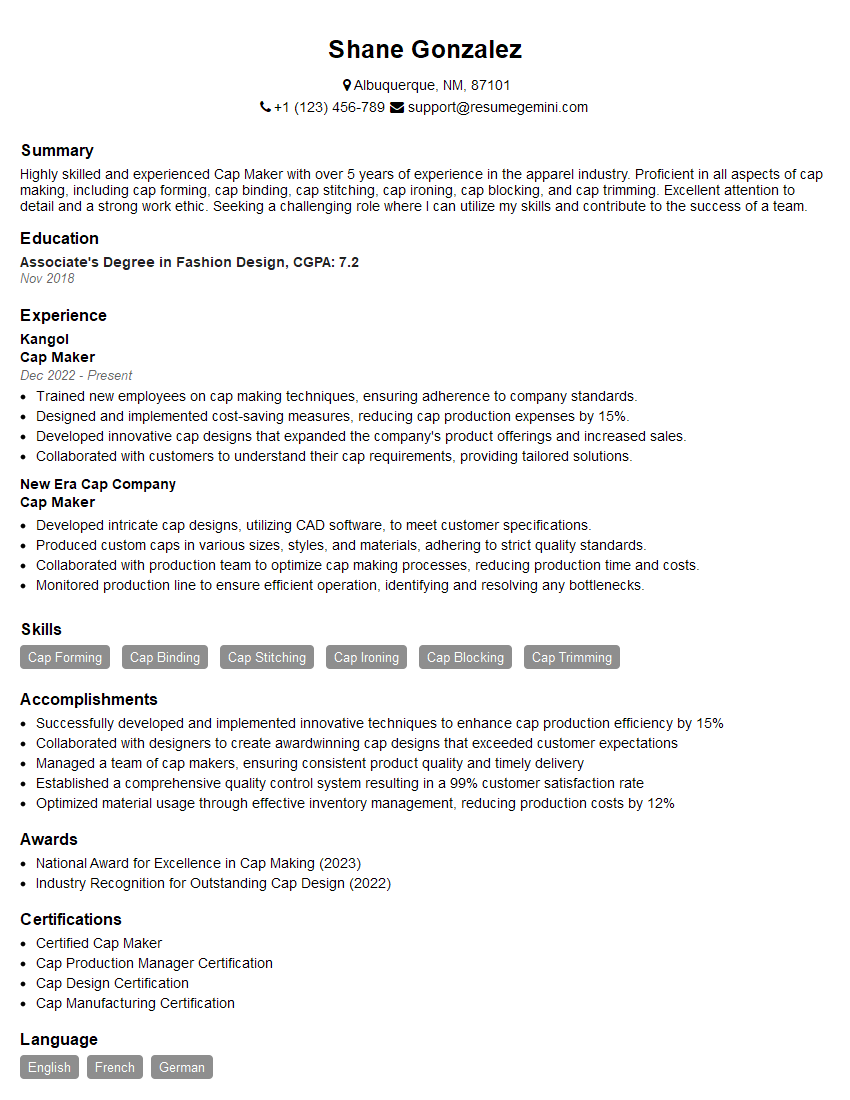
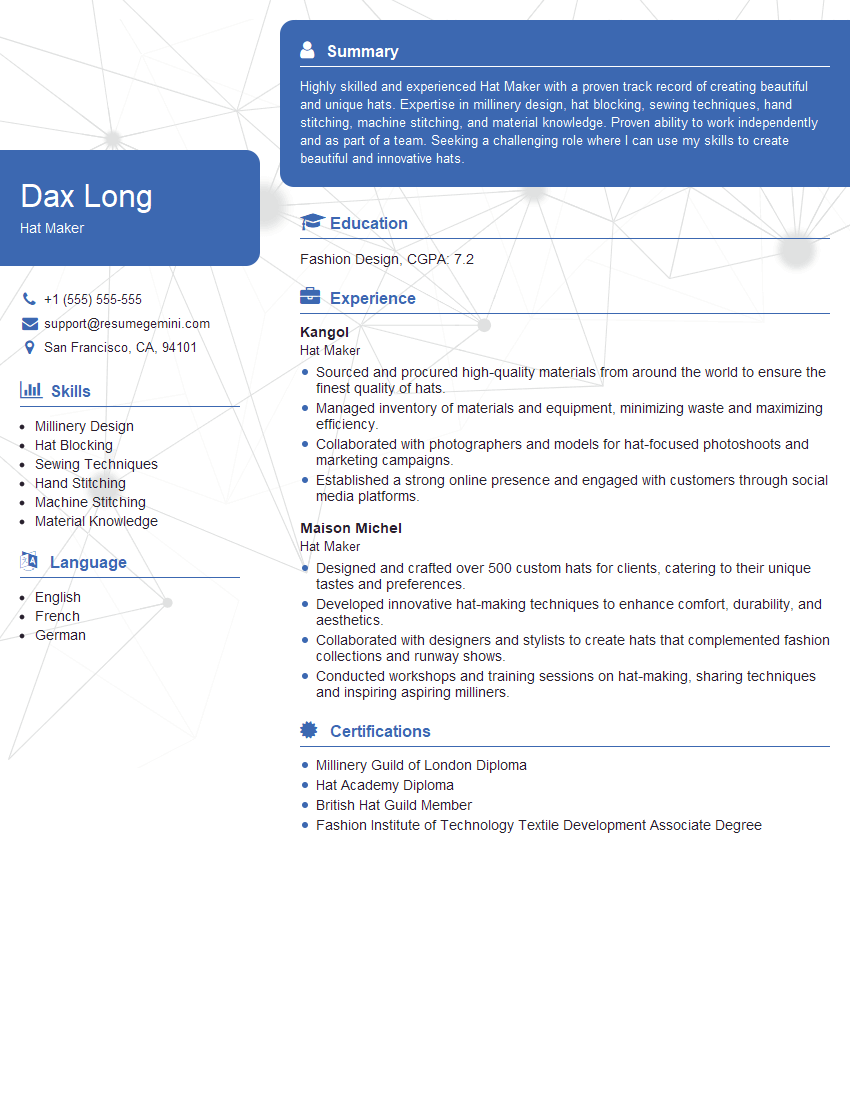
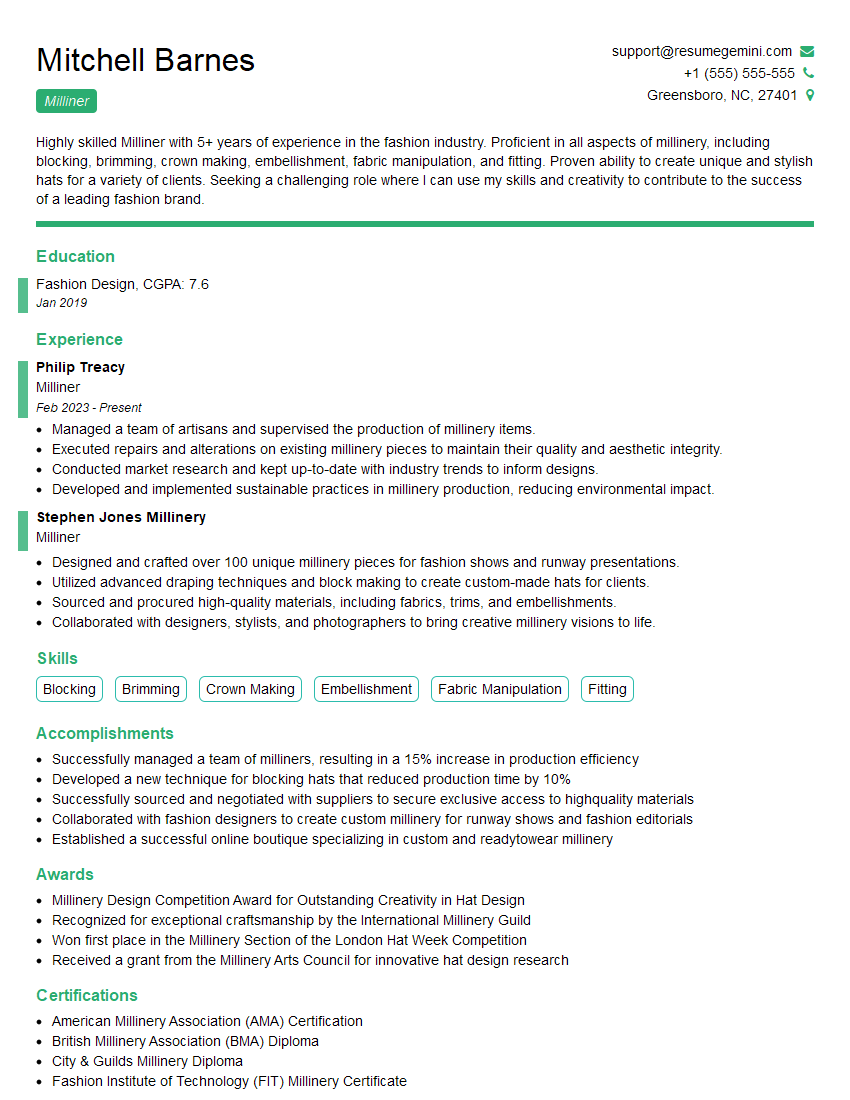
Mastering cap making opens doors to a rewarding career in the fashion and apparel industry, offering opportunities for growth and specialization. A well-crafted resume is crucial for showcasing your skills and experience to potential employers. An ATS-friendly resume, optimized for Applicant Tracking Systems, significantly increases your chances of getting noticed. We strongly encourage you to leverage ResumeGemini to build a professional and impactful resume that highlights your cap-making expertise. ResumeGemini offers examples of resumes tailored specifically to the Cap Making field to help guide your process.
Explore more articles
Users Rating of Our Blogs
Share Your Experience
We value your feedback! Please rate our content and share your thoughts (optional).
What Readers Say About Our Blog
Very informative content, great job.
good