Interviews are opportunities to demonstrate your expertise, and this guide is here to help you shine. Explore the essential Capture and Release Techniques interview questions that employers frequently ask, paired with strategies for crafting responses that set you apart from the competition.
Questions Asked in Capture and Release Techniques Interview
Q 1. Explain the difference between a blue-green deployment and a canary deployment.
Both blue-green and canary deployments are techniques for minimizing downtime and risk during software releases. They both involve deploying a new version alongside the existing one, but they differ in their approach to traffic routing.
Blue-green deployment: Imagine you have two identical environments: ‘blue’ (live) and ‘green’ (staging). You deploy the new version to the ‘green’ environment. Once testing confirms its stability, you switch all traffic from ‘blue’ to ‘green’, making ‘green’ the new live environment. ‘Blue’ remains as a backup, ready to be switched back to in case of problems. This is a complete switch; all traffic is redirected simultaneously.
Canary deployment: This is a more gradual approach. You deploy the new version to a small subset of your users (the ‘canaries’). You monitor its performance closely in this limited environment. If everything works as expected, you gradually roll out the new version to larger segments of your user base. If issues arise, you can quickly roll back to the previous version without affecting the majority of users.
In short: Blue-green is a complete switch, while canary is a phased rollout. The choice depends on the risk tolerance and the complexity of the application. A simple application might be suitable for blue-green, whereas a complex system with many dependencies might benefit from the more controlled rollout of a canary deployment.
Q 2. Describe your experience with CI/CD pipelines.
I have extensive experience with CI/CD pipelines, having designed, implemented, and maintained them for several projects throughout my career. My expertise spans various tools and technologies, from Jenkins and GitLab CI to Azure DevOps and AWS CodePipeline. I’m proficient in setting up automated build processes, integrating various testing stages (unit, integration, system, and performance), and configuring automated deployments using strategies like blue-green and canary releases mentioned earlier.
For example, in a recent project, we implemented a CI/CD pipeline that automated the entire release process, from code commit to production deployment, within minutes. This significantly reduced the deployment time and allowed for more frequent releases, leading to faster feedback cycles and quicker delivery of new features. The pipeline incorporated automated tests to ensure code quality and stability before deployment. We also integrated monitoring and logging to track the performance of the application post-deployment.
I’m also familiar with implementing infrastructure as code (IaC) within our CI/CD pipelines, using tools like Terraform and Ansible to manage and provision infrastructure automatically. This enhances consistency, reproducibility, and scalability across environments.
Q 3. What are some common challenges in release management, and how have you overcome them?
Common challenges in release management often revolve around testing, communication, and rollback strategies. Insufficient testing can lead to unforeseen issues in production. Poor communication between development, operations, and stakeholders can result in delays and conflicts. Finally, inadequate rollback plans can exacerbate problems in the event of a failed deployment.
To overcome these challenges, I prioritize comprehensive testing at every stage of the release process. This includes unit tests, integration tests, system tests, and performance tests. I also emphasize clear and consistent communication with stakeholders using regular updates and status reports. For rollback procedures, we always have well-defined and tested rollback strategies in place. This might include a readily available previous version of the application, and scripts to revert infrastructure changes automatically. In one instance, a failure in a new payment gateway highlighted the importance of a detailed rollback plan. We were able to swiftly switch back to the old gateway minimizing downtime and financial loss. This was only possible because we had regularly practiced and tested our rollback procedures.
Q 4. How do you handle rollback procedures in case of a failed deployment?
Handling rollback procedures is critical to minimizing the impact of failed deployments. My approach involves a combination of automated and manual steps. First, we have automated rollback scripts that can revert infrastructure changes (database updates, configuration changes) within minutes. These scripts are tested regularly as part of our CI/CD pipeline. Second, we maintain a readily available previous version of the application, deployed in a separate environment or easily accessible via version control. This allows for a quick switch back if needed. Third, we have detailed documentation and runbooks outlining the manual steps required for a rollback, should automated methods fail.
For example, if a deployment introduces a critical bug affecting a key functionality, our automated script will revert the database changes and restore the application to the previous version. The manual steps would involve verifying the rollback’s success and informing the stakeholders.
Q 5. What metrics do you use to track the success of a release?
Tracking release success involves a multi-faceted approach, using both quantitative and qualitative metrics. Quantitative metrics include:
- Deployment frequency: How often are releases deployed? Higher frequency often indicates a more streamlined process.
- Mean Time To Recovery (MTTR): How quickly can we recover from a failed deployment?
- Deployment success rate: Percentage of deployments that are completed without significant issues.
- Application performance metrics: Response times, error rates, throughput, etc., tracked using monitoring tools.
- User engagement metrics: Conversion rates, active users, session duration, etc. This shows the impact on user experience.
Qualitative metrics involve feedback from users and stakeholders, gathered through surveys, support tickets, and user reviews. By combining these quantitative and qualitative metrics, we gain a holistic understanding of the release’s success and identify areas for improvement.
Q 6. Explain your experience with automated testing in the release process.
Automated testing is an integral part of our release process, significantly reducing the risk of introducing bugs into production. We employ a multi-layered testing strategy that includes:
- Unit tests: Automated tests for individual components of the application.
- Integration tests: Tests that verify the interaction between different components.
- System tests: End-to-end tests that simulate real-world user scenarios.
- Performance tests: Tests that measure the application’s responsiveness, stability, and scalability under various load conditions.
These tests are integrated into our CI/CD pipeline, running automatically after each code commit. Test results are monitored closely, and failures trigger alerts to prevent deployments with known issues. We use tools like Selenium, JUnit, and pytest depending on the project’s requirements. A significant reduction in production bugs and improved release velocity are direct results of our commitment to comprehensive automated testing.
Q 7. What tools and technologies are you familiar with for release management?
My experience encompasses a wide range of tools and technologies for release management, including:
- CI/CD Platforms: Jenkins, GitLab CI, Azure DevOps, AWS CodePipeline, CircleCI
- Configuration Management: Ansible, Puppet, Chef
- Infrastructure as Code: Terraform, CloudFormation
- Containerization: Docker, Kubernetes
- Monitoring and Logging: Prometheus, Grafana, ELK stack, Datadog
- Testing Frameworks: JUnit, pytest, Selenium, Appium
- Version Control: Git
My familiarity extends beyond simply using these tools; I understand their underlying principles and can effectively integrate them into robust and efficient release pipelines tailored to specific project needs.
Q 8. How do you ensure code quality during the capture and release process?
Ensuring code quality throughout the capture and release process is paramount. It’s not a single action but a continuous cycle of checks and balances. We start with robust coding standards and practices, using linters and static analysis tools to catch potential issues early. This is followed by thorough unit and integration testing, ensuring individual components and their interactions work correctly. Automated testing is vital here, allowing for faster feedback cycles and identifying regressions promptly.
Beyond automated testing, code reviews are essential. Multiple developers scrutinize the code, identifying potential bugs, style inconsistencies, and design flaws. This collaborative approach ensures a shared understanding of the codebase and improves overall quality. We also employ continuous integration/continuous deployment (CI/CD) pipelines, automating the build, testing, and deployment processes. This allows us to quickly identify and address problems without manual intervention and reduces human error.
Finally, monitoring post-release is crucial. We track key metrics, such as error rates and user feedback, to identify and address any lingering issues, feeding this information back into our development and testing processes to continually improve quality.
Q 9. Describe your experience with different branching strategies (e.g., Gitflow).
I’ve extensive experience with various branching strategies, including Gitflow, GitHub Flow, and Trunk-Based Development. Gitflow, with its distinct branches for development, features, releases, and hotfixes, is well-suited for larger projects with complex release cycles. It provides a structured approach to managing different versions and features simultaneously, minimizing conflicts and ensuring stability. I’ve personally used Gitflow on projects involving multiple teams, where clear separation of concerns and controlled merging are crucial.
For smaller, faster-paced projects, GitHub Flow, with its simpler structure, focusing on a main branch and feature branches, proved more efficient. Trunk-Based Development, favoring frequent integration into the main branch, offers advantages in terms of continuous integration and faster feedback loops, but requires more rigorous testing and a robust CI/CD pipeline. The choice of branching strategy always depends on the project’s size, complexity, and team dynamics. It’s crucial to choose the method best adapted to the project’s needs.
Q 10. How do you manage dependencies between different applications during release?
Managing dependencies between applications during a release is a critical aspect of avoiding conflicts and ensuring successful deployments. We meticulously document all dependencies using tools like dependency management systems (e.g., Maven, npm, Gradle). This ensures transparency and allows us to understand the relationships between different components.
Versioning is key. Using semantic versioning (SemVer) allows us to understand compatibility between different versions of libraries and applications. We perform rigorous compatibility testing before releasing any updates, ensuring that changes in one application don’t negatively impact others. Containerization technologies like Docker can also help isolate dependencies and ensure consistent environments across different stages of the release process.
Finally, a well-defined release process ensures all interdependent applications are updated and tested together in a controlled environment before going to production. This minimizes the risk of cascading failures.
Q 11. What is your approach to managing risk during a software release?
Risk management during a software release involves a multi-faceted approach. We start with a thorough risk assessment, identifying potential problems – from technical issues like database failures to user acceptance issues. This is followed by developing mitigation strategies for each identified risk. This might involve having rollback plans, redundant systems, or detailed troubleshooting guides.
A staged rollout strategy is often employed; releasing to a small subset of users first allows us to monitor for any problems before wider deployment. This canary release approach helps identify and address issues early, minimizing their impact. Regular monitoring and logging throughout the release and post-release phases allows for real-time issue detection and enables quick responses. Post-release reviews help us understand what worked well, where things went wrong, and how to improve our processes in the future.
Q 12. How do you communicate release updates to stakeholders?
Communicating release updates effectively involves a multi-channel strategy, tailored to the audience. For technical teams, we use detailed release notes with technical specifications and change logs. These notes are accessible through our internal documentation system. For broader stakeholder communication (e.g., marketing, clients), we use simpler, more concise updates, focusing on the value and impact of the release. We might use email announcements, newsletters, or project management tools.
Transparency is key. We keep stakeholders informed throughout the entire process, from initial planning to post-release monitoring. A dedicated communication channel, such as a Slack channel or a project forum, allows for quick updates and responses to queries. We also proactively identify and address concerns before they escalate.
Q 13. Describe a time when a release went wrong, and how you resolved the issue.
During a recent release of a major e-commerce platform, we encountered an unforeseen issue with a third-party payment gateway. The integration, although thoroughly tested in our staging environment, failed in production due to an incompatibility with a recently deployed security patch. This led to payment failures and significant user disruption.
Our response involved immediate rollback to the previous stable version, followed by a rapid investigation. We discovered the incompatibility and coordinated with the payment gateway provider to resolve the issue. We then implemented more rigorous compatibility testing to prevent future occurrences of this type. We communicated transparently with affected users and stakeholders, providing regular updates on the progress, acknowledging the disruption, and emphasizing our commitment to restoring full functionality. The experience reinforced the importance of thorough third-party integration testing, robust monitoring, and proactive communication during crises.
Q 14. Explain your understanding of version control systems.
Version control systems (VCS) are fundamental to software development. They track changes to code over time, allowing developers to collaborate effectively, manage different versions of the software, and revert to previous states if necessary. Git is the most popular VCS, offering features like branching, merging, and conflict resolution. A VCS creates a repository, a central location where all code and its history are stored.
Using a VCS provides several key advantages: collaboration (multiple developers can work concurrently), version history (easily track changes and revert to previous versions), branching (allows parallel development without interfering with the main codebase), and code review (facilitates collaborative code review for improved quality). It is essential for managing codebases of any significant size and is an indispensable part of any professional software development workflow.
Q 15. How do you handle urgent bug fixes that require an immediate release?
Handling urgent bug fixes requiring immediate release demands a streamlined, yet rigorous process. Think of it like emergency surgery – speed is crucial, but precision is paramount. We prioritize the fix within a dedicated hotfix branch, isolating it from the main development line. This prevents the introduction of unintended side effects. The process involves a rapid cycle of: 1) Code Review & Testing: A thorough but expedited code review and testing process involving unit, integration, and potentially limited system testing. The focus is on validating the fix’s efficacy while mitigating risks associated with the urgency; 2) Build & Deployment: Creating a dedicated build specifically for the hotfix, with clear versioning to distinguish it; and, 3) Release & Monitoring: Deploying the hotfix to the affected environment, closely monitoring its performance and impact. Post-release monitoring ensures the bug is truly resolved and doesn’t introduce new issues. We use tools such as automated deployment systems and comprehensive monitoring dashboards to accelerate this process significantly. For instance, in a previous role, we were able to deploy a critical database connection fix within an hour of discovery, minimizing service disruption.
Career Expert Tips:
- Ace those interviews! Prepare effectively by reviewing the Top 50 Most Common Interview Questions on ResumeGemini.
- Navigate your job search with confidence! Explore a wide range of Career Tips on ResumeGemini. Learn about common challenges and recommendations to overcome them.
- Craft the perfect resume! Master the Art of Resume Writing with ResumeGemini’s guide. Showcase your unique qualifications and achievements effectively.
- Don’t miss out on holiday savings! Build your dream resume with ResumeGemini’s ATS optimized templates.
Q 16. How do you ensure the security of the release process?
Security in the release process is non-negotiable. We approach it with a multi-layered defense strategy. Think of it as securing a high-value vault: multiple locks, alarms, and guards. Firstly, Code Security Reviews are conducted rigorously, checking for vulnerabilities early. Then, Secure Deployment Pipelines are employed to prevent unauthorized access to code and deployment environments. This often includes techniques like code signing, role-based access control, and secure configuration management. We also utilize Automated Security Testing tools to scan the codebase and deployed applications for common vulnerabilities. Finally, Post-Release Monitoring includes security-specific checks, looking for any unusual activity or potential breaches. For example, we might use intrusion detection systems to monitor network traffic and alert us to any suspicious patterns. We utilize a principle of least privilege, meaning that only those who absolutely need access receive it. Furthermore, regular security audits and penetration tests further strengthen our security posture.
Q 17. What is your experience with infrastructure as code (IaC)?
Infrastructure as Code (IaC) is fundamental to our release process. It’s like having a blueprint for our infrastructure, ensuring consistency and repeatability. Instead of manually configuring servers and networks, we use tools such as Terraform and Ansible to define and manage our infrastructure in code. This allows for automated provisioning, configuration, and scaling, dramatically reducing human error and improving efficiency. Using IaC, we can easily replicate environments across different stages (development, testing, production), facilitating consistency and reducing the risks associated with deployment. It also improves version control, enabling us to track changes to our infrastructure over time, and easily revert to previous states if needed. For instance, In a recent project, migrating to a cloud-based infrastructure, IaC streamlined the process, allowing us to replicate our environment in multiple regions with minimal effort.
Q 18. How do you manage multiple concurrent releases?
Managing multiple concurrent releases requires a robust process and careful planning. It’s akin to orchestrating a complex symphony – each instrument (release) needs to play its part at the right time without causing dissonance. We employ a release train approach, which involves scheduling releases in a coordinated manner, ensuring that dependencies between different releases are considered and managed effectively. This could involve prioritizing releases based on business criticality or technical dependencies. Clear communication and collaboration are essential, as well as a detailed release calendar, making sure all teams are aware of timelines and potential conflicts. We also use feature flags to manage the rollout of features incrementally, reducing the risk associated with deploying multiple changes simultaneously. A solid issue tracking system helps us manage and prioritize bugs, ensuring appropriate addressing without hindering scheduled releases.
Q 19. Explain your experience with monitoring and logging in the release process.
Monitoring and logging are crucial for understanding the health and performance of our releases. Think of them as the vital signs of your application. We employ comprehensive monitoring solutions that provide real-time visibility into key metrics, such as CPU usage, memory consumption, response times, and error rates. We use tools such as Prometheus, Grafana, and ELK stack to collect, store, and visualize log data. These tools allow us to quickly identify and diagnose issues that might arise after a deployment. Effective logging also provides valuable insights into user behavior, enabling us to understand how users interact with the system and identify areas for improvement. In a past project, real-time monitoring allowed us to identify a memory leak shortly after deploying a new feature, preventing a significant performance degradation.
Q 20. What is your process for validating a release before deploying to production?
Validating a release before production deployment involves a multi-stage process designed to catch errors early and mitigate risks. We start with unit testing of individual code modules, followed by integration testing to ensure that different components work together correctly. Then, system testing verifies the overall functionality of the application, often using automated testing frameworks. We also conduct user acceptance testing (UAT) to ensure that the release meets the business requirements and user expectations. This often involves having representatives from the business side testing the system in a dedicated environment. A critical aspect is performance testing to ensure the application can handle expected load and does not experience performance degradation. Automated testing greatly accelerates this process, allowing for more thorough validation in less time.
Q 21. How do you handle release approvals and sign-offs?
Release approvals and sign-offs are a critical part of our release process, designed to ensure that releases are thoroughly vetted before deployment to production. We utilize a formalized approval workflow, typically involving several key stakeholders, such as developers, testers, and operations engineers. This may involve a formal checklist that needs to be completed and verified before a release proceeds. Each stakeholder signs off on their specific area of responsibility, confirming that all necessary checks and tests have been completed satisfactorily. We use specialized software like Jira to manage the approval workflows, ensuring accountability and audit trails. This methodical approach ensures all concerns are addressed before production deployment, enhancing the overall safety of the release. A documented and auditable approval process also helps to meet compliance requirements and demonstrates the rigorous nature of our release procedures.
Q 22. Explain your understanding of different deployment strategies (e.g., rolling deployment).
Deployment strategies determine how new software versions are rolled out to production. A rolling deployment, for instance, involves gradually updating instances of an application without causing complete downtime. This is achieved by updating one server at a time, allowing traffic to be shifted gradually to the updated servers. Other strategies include blue/green deployments (where two identical environments exist, with traffic switched between them), canary deployments (where a small subset of users are exposed to the new version), and phased rollouts (releasing the new version to different groups of users over time).
For example, imagine a large e-commerce website. A rolling deployment would allow us to update the site’s servers one by one. While one server is being updated, the others remain operational, ensuring minimal disruption to users. This is far less disruptive than taking the entire website offline for a complete update, which could lead to significant loss of revenue and customer frustration. In contrast, a blue/green deployment would involve having two identical environments. Once the new version is tested in the ‘green’ environment, traffic is seamlessly switched over, minimizing any downtime. The choice of strategy depends on factors like application architecture, risk tolerance, and recovery time objectives.
Q 23. Describe your experience with configuration management tools.
My experience with configuration management tools is extensive. I’ve worked extensively with Ansible, Chef, and Puppet, leveraging them to automate infrastructure provisioning and software deployments. These tools allow us to define desired states for servers and applications, ensuring consistency and repeatability across different environments (development, testing, production). This is crucial for capturing and releasing software reliably and reducing human error.
For example, using Ansible, I’ve automated the deployment of a complex microservices architecture, ensuring consistent configuration across dozens of servers. This automated approach significantly reduced deployment time and error rates compared to manual configurations. The ability to manage configurations as code via version control systems like Git also allows for easy rollback to previous versions if issues arise. Furthermore, I’m proficient in using these tools to manage configurations securely, utilizing encryption and access control mechanisms.
Q 24. How do you ensure compliance with regulatory requirements during release?
Ensuring compliance with regulatory requirements during a release process is paramount. This involves rigorous testing and validation against relevant standards (like HIPAA, GDPR, PCI DSS, etc.), thorough documentation of compliance procedures, and regular audits. We use automated security scanning tools and perform penetration testing to identify vulnerabilities early in the release cycle. We also maintain detailed records of all changes, configurations and approvals to provide an auditable trail. Our process always integrates risk assessment to identify potential issues related to compliance and address them proactively.
For instance, when deploying a healthcare application subject to HIPAA regulations, we’d meticulously test our release for compliance with data privacy and security rules. This includes verifying encryption of sensitive data, access control mechanisms, and data breach response plans. Our compliance documentation would detail each step of the process, including the tools and procedures used to meet the regulatory requirements, providing clear evidence of compliance during audits.
Q 25. What is your experience with disaster recovery planning for releases?
Disaster recovery planning is integrated into every release. This includes strategies for handling various failure scenarios, such as server outages, network issues, or data corruption. We employ techniques such as automated backups, failover mechanisms, and geographically redundant infrastructure. Regular disaster recovery drills are also performed to test our preparedness and refine our response plans.
For example, we might use a cloud-based backup system to replicate our production database to a geographically distant location. In case of a major outage in our primary data center, we can quickly failover to the secondary location, minimizing downtime. Our disaster recovery plan outlines detailed steps for each team, ensuring everyone understands their role and responsibilities in case of an incident. This plan is regularly reviewed and updated to reflect changes in our infrastructure and applications.
Q 26. How do you measure the efficiency of the release process?
We measure the efficiency of the release process using several key metrics: deployment frequency, lead time for changes, change failure rate, and mean time to recovery (MTTR). Deployment frequency tracks how often we release new versions; lead time measures the time from code commit to deployment; change failure rate indicates the percentage of releases that result in failures; and MTTR represents the average time it takes to resolve a failed deployment.
By tracking these metrics over time, we can identify bottlenecks and areas for improvement. For instance, a high change failure rate might indicate a need for more rigorous testing, while a long lead time could signal the need for process automation. We use dashboards and reporting tools to visualize these metrics and make data-driven decisions to optimize the release process. Continuous improvement is at the heart of our approach. We use these metrics to identify areas for automation, streamlining and risk mitigation.
Q 27. Describe your experience with capacity planning for releases.
Capacity planning for releases is crucial to ensure our systems can handle the increased load of new features or increased user traffic. We use historical data, performance testing, and forecasting models to estimate the required resources (CPU, memory, storage, network bandwidth). This planning incorporates both vertical scaling (increasing resources of existing servers) and horizontal scaling (adding more servers). We perform load testing to simulate real-world usage and identify potential bottlenecks before the release.
For example, before releasing a new feature that’s expected to increase user traffic by 20%, we’d conduct load tests to determine if our existing infrastructure can handle the increased load. If not, we’d plan for scaling up our servers or adding new ones. We also monitor resource utilization after the release to ensure the system remains stable and performs as expected. Capacity planning is an iterative process, requiring regular review and adjustments based on observed performance and anticipated growth.
Key Topics to Learn for Capture and Release Techniques Interview
- Capture Methodologies: Understanding various capture techniques (e.g., active vs. passive, physical vs. virtual), their strengths, weaknesses, and appropriate applications.
- Release Strategies: Developing and implementing effective release plans, including risk mitigation strategies and rollback procedures. Explore different release models (e.g., phased rollout, canary release).
- Data Integrity and Security: Ensuring data accuracy and security throughout the capture and release process. Consider data validation, encryption, and access control measures.
- Performance Optimization: Techniques for optimizing the speed and efficiency of capture and release processes. This includes identifying and resolving bottlenecks.
- Error Handling and Troubleshooting: Developing robust error handling mechanisms and strategies for troubleshooting issues that arise during capture and release.
- Testing and Validation: Implementing comprehensive testing strategies to ensure the quality and reliability of captured and released data or systems. This includes unit testing, integration testing, and user acceptance testing.
- Automation and Tooling: Familiarity with relevant automation tools and scripting languages used to streamline capture and release processes.
- Compliance and Regulations: Understanding relevant industry regulations and compliance standards impacting data capture and release.
Next Steps
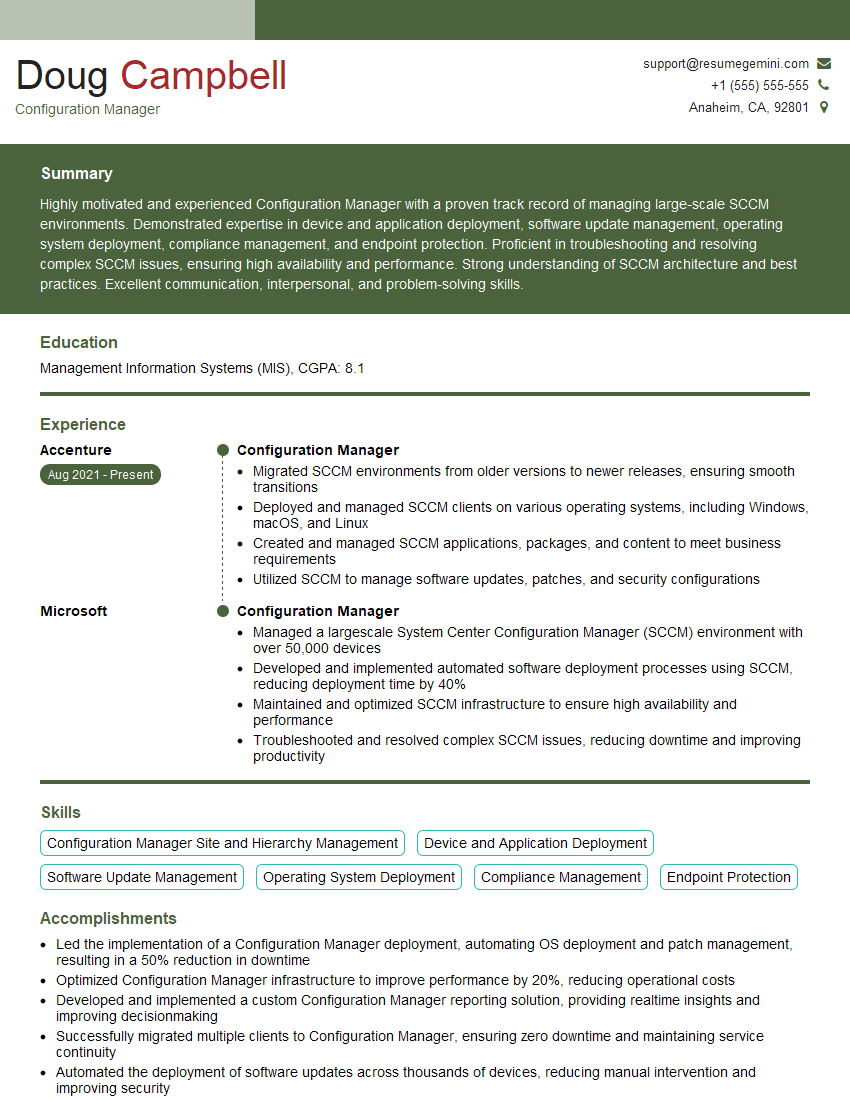
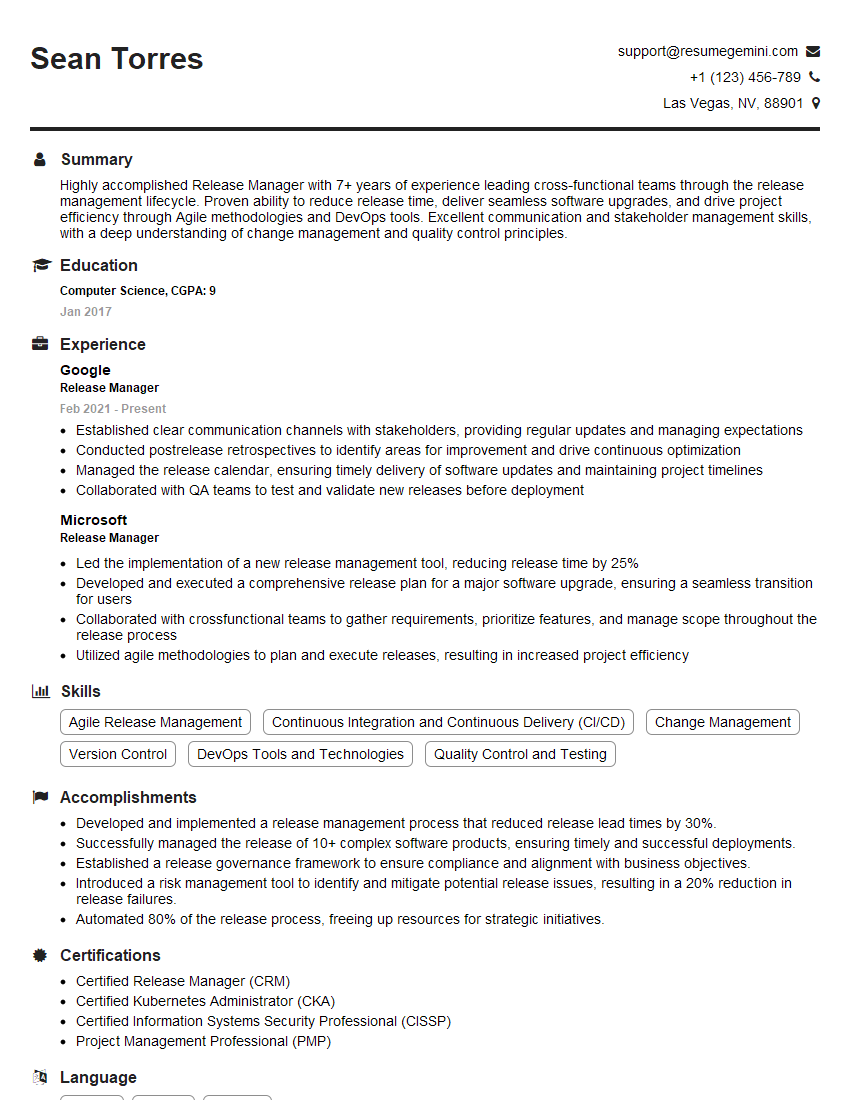
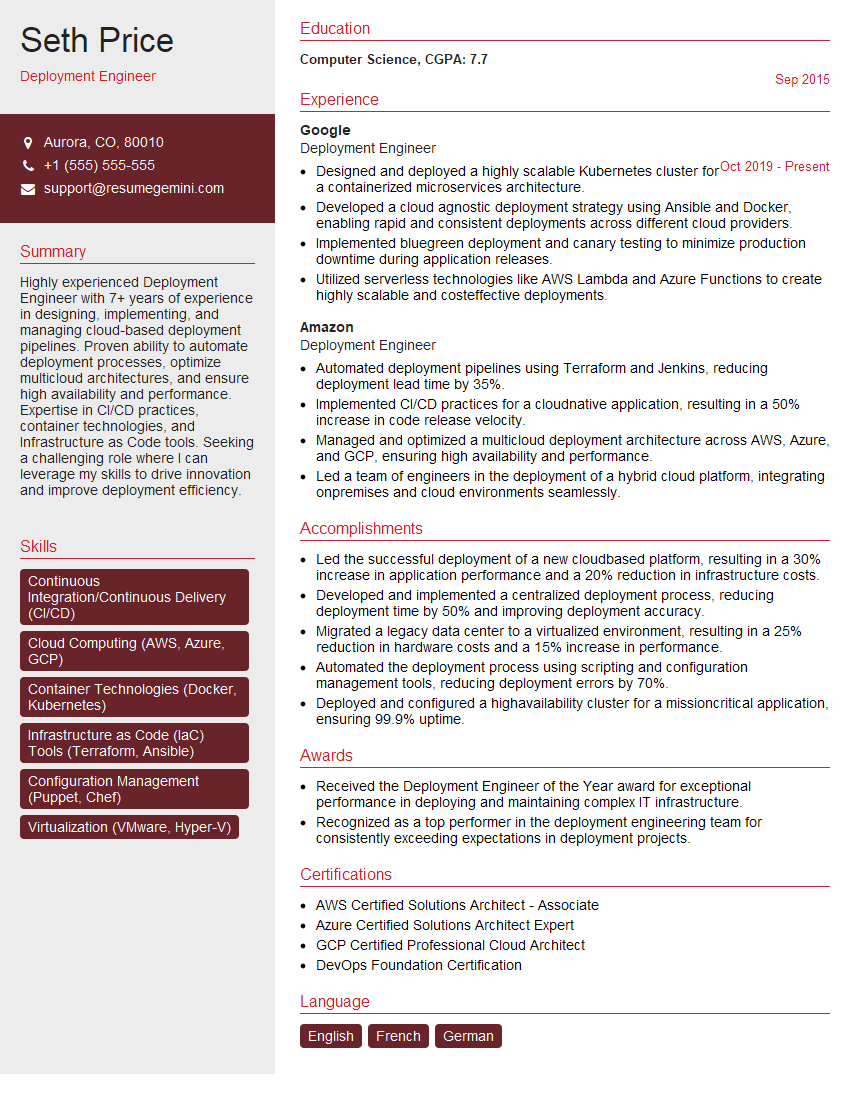
Mastering Capture and Release Techniques is crucial for career advancement in many technology sectors, opening doors to challenging and rewarding roles. A strong understanding of these techniques demonstrates a commitment to quality, efficiency, and security, highly valued by employers. To maximize your job prospects, create an ATS-friendly resume that highlights your skills and experience effectively. ResumeGemini is a trusted resource to help you build a professional and impactful resume. We provide examples of resumes tailored to Capture and Release Techniques to guide you in showcasing your expertise.
Explore more articles
Users Rating of Our Blogs
Share Your Experience
We value your feedback! Please rate our content and share your thoughts (optional).
What Readers Say About Our Blog
Very informative content, great job.
good