Are you ready to stand out in your next interview? Understanding and preparing for Car setup and maintenance interview questions is a game-changer. In this blog, we’ve compiled key questions and expert advice to help you showcase your skills with confidence and precision. Let’s get started on your journey to acing the interview.
Questions Asked in Car setup and maintenance Interview
Q 1. Explain the process of a tire rotation and balancing.
Tire rotation and balancing are crucial for maintaining even tire wear and a smooth ride. Rotation involves moving tires from one position on the vehicle to another according to a specific pattern (e.g., front-to-rear, crisscross). This ensures that all tires wear at a similar rate, maximizing their lifespan and preventing premature replacement. Balancing, on the other hand, involves adding or removing small weights to the wheel rims to counteract any imbalances. These imbalances can cause vibrations at certain speeds, affecting handling and causing premature wear on suspension components.
The process typically starts with removing the tires from the vehicle. Then, a technician measures the tire’s current wear and tear to decide on the rotation pattern. They then carefully remove and reposition the tires on the wheels. After rotation, each wheel undergoes balancing. A machine spins the wheel to detect any imbalances, and small weights are precisely added to counter these imbalances. This ensures that the wheel rotates smoothly, minimizing vibrations and improving handling and safety.
Example: A common rotation pattern is the ‘X’ pattern, where the front left tire moves to the rear right, the front right moves to the rear left, and the rear tires swap places. This ensures even wear across all four tires.
Q 2. Describe the different types of brake systems and their maintenance.
Modern vehicles use several brake systems, primarily disc and drum brakes. Disc brakes, commonly found on front wheels (and often rear wheels as well), use calipers that squeeze brake pads against a rotating disc, generating friction to slow the vehicle. Drum brakes, often found on rear wheels in older vehicles, use brake shoes that press against the inside of a rotating drum to create braking force. Both systems rely on hydraulic pressure generated by the master cylinder (activated by the brake pedal) to activate the calipers or brake shoes.
Maintenance involves regular inspections for wear and tear. Brake pads wear down with use and must be replaced before they wear to the metal, which could damage the discs or drums. Brake fluid should be flushed and replaced periodically (following manufacturer recommendations) to maintain its effectiveness and prevent corrosion. Regular inspection of brake lines, calipers, and drums/discs for leaks, cracks, or damage is also essential. A professional mechanic can conduct a thorough brake inspection and provide recommendations for service.
Example: Squealing sounds when braking are a common indicator of worn-out brake pads. A low brake fluid level might indicate a leak in the system.
Q 3. How do you diagnose a faulty engine component?
Diagnosing a faulty engine component requires a systematic approach combining visual inspection, diagnostic tools, and understanding of engine operation. It begins with identifying the symptoms, such as reduced power, strange noises, rough idle, or warning lights on the dashboard. A visual inspection may reveal leaks, broken parts, or loose connections. Then, a diagnostic scan tool, connected to the vehicle’s onboard diagnostics (OBD-II) system, retrieves trouble codes that indicate potential problems. These codes provide clues, but further testing may be needed for confirmation.
Further diagnosis might involve testing compression, checking fuel pressure, inspecting spark plugs and ignition coils, examining sensors (e.g., oxygen sensor, mass airflow sensor), or even performing a cylinder leak-down test. The process often involves interpreting data from various sensors and using your knowledge of the engine’s operating principles to pinpoint the faulty component. A trained mechanic uses their expertise to isolate the problem and recommend repairs.
Example: A misfire (rough running engine) could be caused by a faulty spark plug, ignition coil, fuel injector, or even a problem with the engine’s computer.
Q 4. What are the common causes of overheating in an engine?
Engine overheating is a serious issue that can lead to significant damage. Several factors can contribute to overheating: a malfunctioning cooling system (low coolant level, leaking radiator, faulty water pump, clogged radiator, broken thermostat), insufficient airflow (faulty fan or fan clutch), a faulty radiator cap, excessive idling or prolonged high-speed driving, and a malfunctioning engine component (such as a head gasket failure).
Example: A broken thermostat will prevent the engine from reaching its optimal operating temperature, leading to slow warm-up in cold weather, or overheating in warm weather when the thermostat should allow coolant to flow freely. A clogged radiator restricts coolant flow, hindering efficient heat dissipation.
Identifying the root cause requires a thorough inspection of the cooling system components, possibly including pressure testing the cooling system to detect leaks.
Q 5. Explain the importance of regular oil changes and filter replacements.
Regular oil changes and filter replacements are paramount for engine longevity and performance. Engine oil lubricates moving parts, reducing friction and wear. Over time, oil degrades and becomes contaminated with dirt and debris. This contaminated oil loses its lubricating properties and can cause increased engine wear, leading to reduced power, increased fuel consumption and eventual engine failure. The oil filter traps these contaminants, preventing them from circulating in the engine.
Regular oil changes remove the contaminated oil and replace it with fresh oil. The oil filter is replaced simultaneously to ensure maximum contaminant removal. Following the manufacturer’s recommended oil change intervals is crucial for maintaining optimal engine health. Using the correct oil grade (viscosity) is also essential.
Example: Neglecting oil changes can lead to sludge buildup within the engine, restricting oil flow and causing increased wear on critical engine components.
Q 6. Describe the different types of automotive fluids and their functions.
Several crucial automotive fluids maintain the vehicle’s functionality. Engine oil lubricates and cools engine components. Coolant (antifreeze) prevents the engine from overheating by circulating through the engine and radiator. Transmission fluid lubricates and cools the transmission components. Brake fluid transmits pressure from the brake pedal to the brakes. Power steering fluid assists in steering. Windshield washer fluid cleans the windshield.
Each fluid has specific properties and functions and should be checked and replaced according to manufacturer recommendations. Using the incorrect fluid can damage components.
Example: Using the wrong transmission fluid could lead to poor shifting performance or even transmission failure. Low brake fluid indicates a leak which needs immediate attention.
Q 7. How do you perform a vehicle pre-purchase inspection?
A pre-purchase vehicle inspection is crucial before buying a used car. It helps identify potential problems and prevents costly repairs later. A thorough inspection covers several areas. Exterior: Check the body for dents, scratches, rust, and signs of previous accidents. Inspect the tires for tread depth and condition. Interior: Assess the condition of upholstery, carpets, and other interior components. Test all electrical components, including lights, radio, and air conditioning. Mechanical: Check fluid levels (engine oil, coolant, brake fluid, power steering fluid, transmission fluid). Listen for unusual engine noises, check for smoke from the exhaust, and inspect belts and hoses for wear. Test the brakes for responsiveness. Inspect the suspension by bouncing on each corner of the vehicle. Undercarriage: Examine the undercarriage for rust, damage, or leaks.
A professional mechanic can perform a more comprehensive inspection using specialized tools and equipment, providing a detailed report of the vehicle’s condition. This report will highlight any significant problems that could influence the purchase decision.
Example: During the test drive, pay close attention to steering, braking, acceleration, and any unusual noises or vibrations. If a mechanic finds significant rust or damage under the car, this could indicate significant issues that need expensive repair.
Q 8. Explain the steps involved in a wheel alignment procedure.
Wheel alignment, also known as tracking, ensures your tires contact the road surface evenly. An improperly aligned vehicle will experience uneven tire wear, reduced fuel efficiency, and poor handling. The procedure involves adjusting the angles of your wheels – caster, camber, and toe – to manufacturer specifications.
- Preparation: The vehicle is placed on a wheel alignment rack which allows for precise measurement and adjustment.
- Measurement: Using specialized equipment, a technician measures the existing caster, camber, and toe angles of each wheel. Caster refers to the angle of the steering axis as viewed from the side, camber is the inward or outward tilt of the wheel when viewed from the front, and toe is the angle between the wheels as seen from above (toe-in or toe-out).
- Adjustment: Adjustments are made to the suspension components (tie rods, control arms, etc.) using specialized tools to bring the angles within the manufacturer’s recommended specifications. This often involves turning adjusting nuts or bolts.
- Verification: After adjustments, the angles are re-measured to ensure they’re within the acceptable range. The process is repeated until all angles are correct.
- Road Test (Optional): A short road test may be performed to confirm the alignment is correct and the vehicle handles properly.
Think of it like setting up a perfectly balanced chair – all legs must be at the correct angles for stability. A misalignment is like having one leg shorter, making the whole thing unstable and causing uneven wear.
Q 9. What tools and equipment are essential for automotive maintenance?
Essential automotive maintenance tools and equipment range from basic hand tools to more specialized equipment. The exact tools will vary depending on the task, but a well-stocked toolbox should include:
- Basic Hand Tools: Wrenches (metric and standard), sockets, screwdrivers (Phillips and flathead), pliers, adjustable wrench, hammer, pry bar.
- Specialized Tools: Torque wrench (crucial for tightening bolts to the correct specification), jack and jack stands, wheel chocks, tire pressure gauge, oil filter wrench, spark plug socket, multimeter.
- Safety Equipment: Safety glasses, gloves, work boots, jack stands (never work under a car supported only by a jack).
- Other Equipment: Drain pan, funnel, rags, shop towels, air compressor (for inflating tires).
For more advanced tasks like engine diagnostics, you might need a scan tool to read trouble codes and specialized tools related to specific systems (fuel injection, brakes, etc.). Investing in high-quality tools is important for safety and accuracy.
Q 10. How do you troubleshoot electrical problems in a vehicle?
Troubleshooting electrical problems requires a systematic approach. You can’t simply guess; you need to follow a diagnostic path. Think of it like solving a puzzle where each clue helps you find the next piece.
- Visual Inspection: Start by visually inspecting all wiring, connectors, fuses, and components for obvious damage, corrosion, or loose connections. Look for anything burnt, melted, or disconnected.
- Fuse Check: Check all relevant fuses using a multimeter to verify continuity (if the fuse has blown, it will show no continuity). Replace blown fuses with fuses of the same rating.
- Multimeter Testing: A multimeter is essential for testing voltage, current, and continuity. You can check for power at various points in the circuit, verify ground connections, and test components for proper operation.
- Wiring Diagram: Consult a wiring diagram for the specific system to trace the circuit and identify potential problem areas. Following a diagram is vital for correctly understanding the circuit path.
- Component Testing: Once a faulty component is identified (e.g., a faulty alternator, sensor, or switch), it needs to be replaced.
For example, if your headlights don’t work, you’d first check the fuse, then the headlight switch, and finally the wiring leading to the headlights themselves, using a multimeter to check for power at each point along the way. Never work on electrical systems while the battery is connected if you’re unsure of what you’re doing!
Q 11. Describe the function of a catalytic converter and how it’s maintained.
The catalytic converter is part of the exhaust system that reduces harmful emissions. It contains a catalyst, typically platinum, palladium, and rhodium, which converts harmful gases (carbon monoxide, hydrocarbons, and nitrogen oxides) into less harmful substances (carbon dioxide, water vapor, and nitrogen).
Maintenance is primarily preventative:
- Regular Maintenance: Ensure regular maintenance of other exhaust system components (e.g. exhaust manifold, muffler, etc.) to prevent issues that could damage the catalytic converter.
- Avoid Driving on Rough Surfaces: Protecting the exhaust system prevents damage that can affect the catalytic converter.
- Fuel System Issues: Address any issues with the fuel system promptly as a rich or lean fuel mixture can damage the catalytic converter.
The catalytic converter itself doesn’t require specific maintenance other than replacement if it fails. A failed converter can be identified by reduced engine performance, poor fuel economy, or a check engine light illuminated with a relevant trouble code.
Q 12. Explain how a vehicle’s suspension system works and its common issues.
The vehicle’s suspension system is responsible for absorbing shocks and vibrations from the road, providing a smooth ride, and maintaining tire contact with the road surface for optimal handling. It consists of various components working together.
- Springs/Coils/Air Springs: These absorb impacts from bumps in the road.
- Shocks/Struts: Dampen the oscillations of the springs, preventing excessive bouncing.
- Control Arms/Suspension Links: Locate and guide the wheels.
- Sway Bars (Anti-roll bars): Reduce body roll during cornering.
Common suspension issues include:
- Worn-out Shocks/Struts: Result in a bouncy ride, poor handling, and increased stopping distances.
- Broken Springs/Coils: Cause a noticeable drop in ride height on one side of the vehicle.
- Worn Suspension Bushings/Ball Joints: Produce clunking or knocking noises, especially when going over bumps.
- Misaligned Wheels: Can result from suspension component wear and impact handling and tire wear.
Regular inspection and replacement of worn components are crucial for maintaining a safe and comfortable ride.
Q 13. What are the signs of a failing transmission?
A failing transmission exhibits various symptoms, many of which are subtle initially. Early detection can prevent major and expensive repairs.
- Slipping or delayed engagement: The transmission struggles to engage gears smoothly, resulting in a slipping feeling or delayed response.
- Hard shifting: The transmission shifts gears roughly or with a noticeable jerk.
- Strange noises: Whining, grinding, humming, or clunking noises emanating from the transmission area.
- Fluid leaks: Transmission fluid leaks indicate a seal or gasket problem.
- Check engine light: The check engine light may illuminate, indicating a transmission-related fault code. A scan tool is needed to decipher this code.
- Overheating: Excessive heat buildup, often indicated by a smell of burning fluid, points to transmission issues.
These symptoms can vary based on the type of transmission (automatic or manual) and the nature of the failure. Ignoring these signs can lead to catastrophic transmission failure requiring a complete rebuild or replacement.
Q 14. How do you diagnose and repair a faulty fuel system?
Diagnosing and repairing a faulty fuel system requires a methodical approach. Fuel system problems can range from simple issues to complex ones requiring specialized tools and knowledge.
- Visual Inspection: Look for leaks in the fuel lines, fuel filter, fuel pump, and fuel injectors. Check fuel pressure with a fuel pressure gauge and compare the value with the manufacture’s specifications.
- Fuel Pressure Test: A fuel pressure gauge measures the pressure in the fuel rail. Low pressure indicates a problem with the fuel pump, fuel filter, or fuel pressure regulator.
- Fuel Filter Inspection/Replacement: A clogged fuel filter restricts fuel flow, impacting engine performance. A visual inspection might show discoloration or debris which indicate the need for replacement.
- Fuel Injector Testing: Faulty fuel injectors can cause poor engine performance, misfires, or rough idling. Testing usually involves checking the spray pattern and electrical resistance.
- Fuel Pump Testing: A faulty fuel pump can cause low fuel pressure and prevent the engine from starting. A pressure test is used to evaluate its performance.
- Oxygen Sensor Check: The oxygen sensor monitors the exhaust gases to regulate fuel mixture. A faulty sensor can lead to poor fuel economy and emissions issues.
Remember to always disconnect the battery’s negative terminal before working on any fuel system components to mitigate the risk of fire. If you’re unsure about any aspect of this process, it’s best to consult a qualified mechanic.
Q 15. Describe the different types of ignition systems.
Ignition systems are crucial for starting a vehicle’s engine. They deliver a high-voltage spark to ignite the air-fuel mixture in the cylinders. There are several types, each with its own evolution and characteristics:
Conventional (Breaker Point) System: This older system uses breaker points to interrupt the primary circuit of the ignition coil, generating the high voltage. It’s simple but prone to wear and requires regular adjustment. Think of it like an old-fashioned light switch—it’s mechanical and needs maintenance.
Electronic Ignition System: This modern system replaces the mechanical breaker points with an electronic module, offering greater reliability and improved spark energy. It’s more precise and requires less maintenance. Imagine this as a more advanced, computer-controlled switch—more efficient and longer-lasting.
Distributorless Ignition System (DIS): This system uses a separate ignition coil for each cylinder, eliminating the need for a distributor. This leads to improved performance, especially at high RPMs. Think of this as having individual, dedicated power sources for each cylinder instead of a single shared one. It’s far more efficient and precise.
Coil-on-Plug (COP) System: This advanced system integrates the ignition coil directly onto each spark plug. This is the most precise and efficient system, maximizing spark energy delivery. It’s the peak of ignition technology—direct, powerful, and highly reliable.
Career Expert Tips:
- Ace those interviews! Prepare effectively by reviewing the Top 50 Most Common Interview Questions on ResumeGemini.
- Navigate your job search with confidence! Explore a wide range of Career Tips on ResumeGemini. Learn about common challenges and recommendations to overcome them.
- Craft the perfect resume! Master the Art of Resume Writing with ResumeGemini’s guide. Showcase your unique qualifications and achievements effectively.
- Don’t miss out on holiday savings! Build your dream resume with ResumeGemini’s ATS optimized templates.
Q 16. Explain the principles of engine timing and its importance.
Engine timing refers to the precise synchronization of the ignition spark with the piston’s position in the cylinder. It’s absolutely critical for optimal engine performance, fuel efficiency, and emissions. The timing is controlled by the camshaft and crankshaft, which are precisely geared to control the opening and closing of valves and the spark timing.
Importance:
Power and Efficiency: Correct timing ensures the spark occurs at the ideal moment to maximize the combustion of the air-fuel mixture, producing the most power and fuel efficiency. Incorrect timing leads to incomplete combustion and wasted energy.
Emissions: Precise timing minimizes harmful emissions by optimizing combustion. Improper timing can result in increased pollutants like carbon monoxide and unburnt hydrocarbons.
Engine Longevity: Proper timing protects the engine from damage caused by detonation (uncontrolled combustion). Detonation can severely damage pistons and other engine components.
Think of it like a perfectly choreographed dance: every movement (piston, valve, spark) needs to happen at precisely the right time for the best outcome. Even a slight delay or advance can significantly impact the result.
Q 17. How do you diagnose and repair a faulty alternator or starter?
Diagnosing and repairing a faulty alternator or starter requires systematic troubleshooting.
Alternator:
Diagnosis: Check the battery voltage with a voltmeter. A low voltage while the engine is running indicates a faulty alternator. You can also check the alternator’s output using a clamp meter. A visual inspection for loose belts or damaged components is also crucial.
Repair: Repairing an alternator often involves replacing the alternator itself if internal components (diodes, stator) are damaged. If it’s a simple belt issue, replacing or tightening the belt is sufficient.
Starter:
Diagnosis: A clicking sound when trying to start the car points to a weak battery, faulty starter solenoid, or a bad starter motor. Testing the starter motor directly (with a jumper wire—be extremely careful!) can help determine if the motor itself is at fault.
Repair: Depending on the issue, a starter repair might involve replacing the solenoid, brushes, or the entire starter motor. A simple fix could be tightening loose connections.
Always disconnect the battery’s negative terminal before working on either component to prevent electrical shocks.
Q 18. What are the safety precautions you take when working on a vehicle?
Safety is paramount when working on a vehicle. My safety precautions always include:
Disconnect the battery: This prevents accidental short circuits and electrical shocks.
Use jack stands: Never rely solely on a jack to support the vehicle. Jack stands provide a stable and safe working platform.
Wear safety glasses and gloves: Protect your eyes from debris and your hands from cuts and chemicals.
Work in a well-ventilated area: Exhaust fumes are dangerous. Work outside or in a garage with proper ventilation.
Use appropriate tools: The right tools for the job are essential for safety and efficiency.
Never work under a vehicle supported only by a jack: This is a critical safety rule. Always use jack stands.
Be aware of your surroundings: Keep a clear workspace and be mindful of any potential hazards.
I treat every vehicle maintenance task as potentially hazardous and always prioritize safety procedures above all else.
Q 19. Explain the process of diagnosing and repairing a flat tire.
Diagnosing and repairing a flat tire involves a series of steps:
Safety First: Pull over to a safe location away from traffic. Turn on hazard lights.
Engage Parking Brake: Secure the vehicle firmly.
Gather Supplies: Locate your spare tire, jack, lug wrench, and owner’s manual.
Loosen Lug Nuts: Slightly loosen the lug nuts on the flat tire before jacking up the vehicle. This is easier to do while the tire is still on the ground.
Jack Up Vehicle: Position the jack correctly according to your vehicle’s manual and raise the vehicle until the flat tire is off the ground.
Remove Flat Tire: Unscrew the lug nuts completely and remove the flat tire.
Mount Spare Tire: Align the spare tire with the wheel studs and push it onto the wheel studs. Screw the lug nuts on by hand, ensuring even tightening.
Lower Vehicle: Slowly lower the vehicle using the jack.
Tighten Lug Nuts: Tighten the lug nuts firmly using the lug wrench in a star pattern (opposite nuts, then the next pair, etc.).
Check Tire Pressure: Inflate the spare tire to the correct pressure (check your owner’s manual).
Stow Flat Tire: Secure the flat tire and tools.
Remember: A spare tire is typically a temporary solution. Have the flat tire repaired or replaced as soon as possible.
Q 20. How do you check and adjust tire pressure?
Checking and adjusting tire pressure is essential for optimal vehicle handling, fuel economy, and tire longevity. Here’s how:
Locate the Recommended Pressure: Check your vehicle’s sticker located typically on the driver’s side doorjamb or in the owner’s manual. This indicates the recommended tire pressure (both for the front and rear tires).
Use a Tire Pressure Gauge: Unscrew the valve cap and press the gauge firmly against the valve stem. Note the reading.
Add or Release Air: If the pressure is too low, add air using a compressor or air pump until it reaches the recommended pressure. If it’s too high, carefully release air using the valve stem until it reaches the recommended pressure.
Check All Tires: Repeat the process for each tire.
Replace Valve Caps: Securely replace the valve caps to prevent dirt and moisture from entering.
It’s advisable to check your tire pressure at least once a month, or before long trips. Remember to check the pressure when the tires are cold (haven’t been driven for at least 3 hours).
Q 21. How do you perform a basic fluid check (oil, coolant, etc.)?
Regular fluid checks are crucial for maintaining your vehicle’s health. Here’s a basic procedure:
Park on a Level Surface: Ensure the vehicle is parked on a level surface to get accurate readings.
Warm Up Engine (Slightly): Run the engine for a few minutes to warm the oil slightly, making it easier to check the level. Don’t overheat the engine.
Check Engine Oil: Locate the dipstick (usually marked with a yellow handle). Remove it, wipe it clean with a rag, reinsert it fully, and then remove it again to check the oil level. The level should be between the minimum and maximum marks.
Check Coolant Level: Locate the coolant reservoir (usually a translucent plastic tank). The level should be within the marked range. Never open the radiator cap while the engine is hot!
Check Power Steering Fluid (If Applicable): Locate the power steering fluid reservoir and check the fluid level, ensuring it’s within the recommended range.
Check Brake Fluid (If Applicable): Locate the brake fluid reservoir and check the level. Low brake fluid can indicate a serious issue and should be addressed immediately by a mechanic.
Check Transmission Fluid (If Applicable): Consult your owner’s manual for the specific procedure for checking your transmission fluid. Some automatic transmissions do not have a dipstick.
Check Windshield Washer Fluid: Check the level in the windshield washer fluid reservoir and add fluid as needed.
Always consult your vehicle’s owner’s manual for specific fluid type recommendations and check intervals. Top off fluids as needed. Low fluid levels can indicate a leak or other problem requiring professional attention.
Q 22. What are the different types of batteries used in vehicles and their maintenance?
Vehicle batteries are crucial for starting the engine and powering accessories. The most common types are flooded lead-acid (FLA), absorbed glass mat (AGM), and gel cell batteries. Each has its own characteristics and maintenance requirements.
- Flooded Lead-Acid (FLA): These are the traditional, least expensive batteries. Maintenance involves periodically checking the electrolyte level (distilled water only!) and cleaning the terminals. Overfilling can cause acid leakage, so careful attention is crucial. They are susceptible to sulfation if left in a discharged state.
- Absorbed Glass Mat (AGM): AGM batteries use a fiberglass mat to hold the electrolyte, preventing spillage and making them more vibration-resistant than FLA batteries. They require less maintenance; typically, only terminal cleaning is needed. They also tolerate deeper discharges better than FLA batteries.
- Gel Cell: Similar to AGM, gel cell batteries use a gelled electrolyte. They are exceptionally durable and resistant to vibration, making them suitable for off-road vehicles or applications with significant shaking. Maintenance is minimal and similar to AGM batteries.
Regardless of the type, regular visual inspection for corrosion, cracks, or bulging is vital. A battery load test should be conducted periodically to assess its health and charge capacity. Early detection of issues prevents unexpected breakdowns.
Q 23. Describe the various types of engine configurations (V6, I4, etc.)
Engine configurations refer to the arrangement of cylinders within the engine block. Different configurations offer varying performance characteristics and packaging advantages.
- Inline (I4, I6): Cylinders are arranged in a straight line. I4 engines are common in smaller cars for their compact design and efficiency. I6 engines provide smooth power delivery but are longer, often found in larger vehicles.
- V6: Cylinders are arranged in two banks of three, forming a ‘V’ shape. V6 engines offer a good balance of power, smoothness, and compactness, making them popular across various vehicle segments.
- V8: Two banks of four cylinders. These engines are known for their substantial power output but are less fuel-efficient and often found in larger vehicles and performance cars.
- V12: Two banks of six cylinders. These offer immense power but are rarely seen in passenger vehicles due to their size, weight, and complexity.
- Flat (or Boxer): Cylinders are horizontally opposed. This configuration provides excellent balance and low center of gravity, often used in sports cars and some motorcycles.
- W12/W16: Essentially two V6 or V8s combined. Extremely powerful but extremely rare in passenger vehicles.
The choice of engine configuration is a crucial engineering decision considering factors like power needs, space constraints, cost, and fuel economy targets. Each configuration presents trade-offs that must be carefully balanced.
Q 24. Explain the importance of maintaining proper tire pressure.
Maintaining proper tire pressure is critical for safety, fuel economy, and tire longevity. Under-inflation leads to increased rolling resistance, meaning the tires have to work harder, thus reducing fuel efficiency. Over-inflation increases the risk of blowouts and reduces tire contact with the road, affecting handling and braking.
The recommended tire pressure is usually found on a sticker located inside the driver’s side doorjamb or in the owner’s manual. Always check the pressure when the tires are cold (before driving). Using a reliable pressure gauge, adjust the pressure to the recommended PSI. Regular checks, ideally weekly, are recommended to ensure optimal performance and safety. Ignoring proper tire pressure can significantly impact vehicle handling, fuel economy, and even lead to accidents.
Q 25. What are the common causes of poor fuel economy?
Poor fuel economy can stem from various factors, often interconnected. Identifying the root cause requires a systematic approach.
- Tire Pressure: Under-inflated tires significantly increase rolling resistance, consuming more fuel.
- Driving Habits: Aggressive acceleration and braking, excessive idling, and high speeds all negatively impact fuel efficiency.
- Vehicle Maintenance: Neglecting regular maintenance, such as air filter replacement, spark plug changes, and oxygen sensor checks, can lead to reduced engine efficiency and increased fuel consumption.
- Malfunctioning Components: Issues like a faulty oxygen sensor, mass airflow sensor, or clogged fuel injectors can disrupt the air-fuel mixture, impacting fuel economy.
- Vehicle Weight: Carrying excessive weight reduces fuel economy, and this is particularly pronounced on smaller cars.
- Aerodynamics: Poor aerodynamics, such as carrying extra luggage on the roof rack, increase air resistance, decreasing fuel efficiency.
Addressing these issues involves a combination of responsible driving habits and proactive vehicle maintenance. A thorough diagnostic check by a mechanic can pinpoint specific mechanical problems affecting fuel economy.
Q 26. How do you identify and address issues with vehicle emissions?
Vehicle emissions are monitored to ensure compliance with environmental regulations and to maintain engine health. Issues with emissions often manifest as a malfunctioning indicator lamp (MIL) on the dashboard.
Identifying the problem involves using a diagnostic scan tool (OBD-II scanner) to retrieve diagnostic trouble codes (DTCs). These codes point to specific systems or components experiencing issues. Common causes include faulty oxygen sensors, catalytic converters, mass airflow sensors, and problems within the ignition system. Addressing these issues may involve replacing faulty components, cleaning sensors, or performing more extensive repairs.
Regular emissions testing, as mandated by local regulations, is critical for identifying and rectifying potential problems early on. Ignoring emissions issues can lead to further damage to the vehicle’s engine, or result in penalties for non-compliance.
Q 27. Explain the role of different sensors in modern vehicle systems.
Modern vehicles rely on a network of sensors to monitor various parameters and ensure optimal performance and safety. These sensors constantly feed data to the engine control unit (ECU), which adjusts engine operation accordingly.
- Oxygen Sensor (O2 Sensor): Measures the oxygen content in the exhaust gases, allowing the ECU to adjust the air-fuel mixture for optimal combustion and emissions control.
- Mass Airflow Sensor (MAF Sensor): Measures the amount of air entering the engine, providing critical information for precise fuel injection.
- Throttle Position Sensor (TPS): Monitors the throttle position, informing the ECU about the driver’s demand for power.
- Crankshaft Position Sensor (CKP Sensor): Detects the position of the crankshaft, crucial for precise timing of fuel injection and ignition.
- Cam Position Sensor (CMP Sensor): Monitors the position of the camshaft, essential for valve timing control.
- Tire Pressure Monitoring System (TPMS): Measures tire pressure and alerts the driver if it falls below a safe level.
Sensor malfunction can significantly impact engine performance, fuel economy, and emissions. Regular checks and replacements when necessary are vital for maintaining vehicle health and safety.
Q 28. Describe your experience with diagnostic scan tools.
My experience with diagnostic scan tools is extensive. I’m proficient in using various OBD-II scanners, both basic and advanced, to diagnose vehicle issues. I’ve used them to retrieve and interpret diagnostic trouble codes (DTCs), monitor live data streams (like engine speed, fuel trim, and oxygen sensor readings), and perform actuator tests to verify component functionality.
In my work, I utilize these tools to identify the root cause of mechanical problems, reducing guesswork and ensuring efficient repairs. For instance, a customer’s complaint of poor fuel economy might lead to a scan revealing a faulty oxygen sensor, immediately directing the repair process. I also utilize more specialized diagnostic tools for manufacturer-specific systems and advanced analysis, allowing for precise diagnosis and troubleshooting even in complex scenarios. My familiarity with these tools enables me to provide accurate diagnoses and efficient, cost-effective solutions for my customers.
Key Topics to Learn for Car Setup and Maintenance Interviews
- Vehicle Diagnostics: Understanding diagnostic tools (OBD-II scanners), interpreting trouble codes, and troubleshooting common automotive issues. Practical application: Explaining your experience diagnosing and resolving a specific vehicle problem.
- Preventive Maintenance: Knowledge of routine maintenance schedules (oil changes, filter replacements, fluid checks), and the importance of adhering to manufacturer recommendations. Practical application: Describing a systematic approach to preventative maintenance and its benefits.
- Tire Care and Safety: Understanding proper tire inflation, rotation, and tread depth. Recognizing signs of tire wear and tear and their implications for vehicle handling and safety. Practical application: Explaining how to assess tire condition and recommend necessary actions.
- Brake Systems: Familiarity with brake components, brake fluid, and the importance of proper brake maintenance for safety. Practical application: Describing the process of checking brake pad wear and explaining the consequences of neglecting brake maintenance.
- Suspension and Steering: Basic understanding of suspension and steering components and their function. Identifying signs of wear and tear and the impact on vehicle handling. Practical application: Explaining how to assess the condition of suspension components and recommend necessary repairs or replacements.
- Electrical Systems: Basic understanding of automotive electrical systems, including batteries, alternators, and starting systems. Troubleshooting common electrical problems. Practical application: Describing your experience troubleshooting a vehicle electrical issue.
- Engine Components and Operation: Fundamental knowledge of internal combustion engines, their components, and their function. Practical application: Explaining the basic principles of engine operation and common engine maintenance procedures.
Next Steps
Mastering car setup and maintenance is crucial for career advancement in the automotive industry. A strong understanding of these concepts demonstrates your technical skills and commitment to safety. To increase your job prospects, focus on building an ATS-friendly resume that highlights your relevant experience and skills. ResumeGemini is a trusted resource for creating professional resumes that get noticed. We provide examples of resumes tailored to car setup and maintenance to help you present your qualifications effectively. Take the next step and craft a resume that reflects your expertise and secures your dream job.
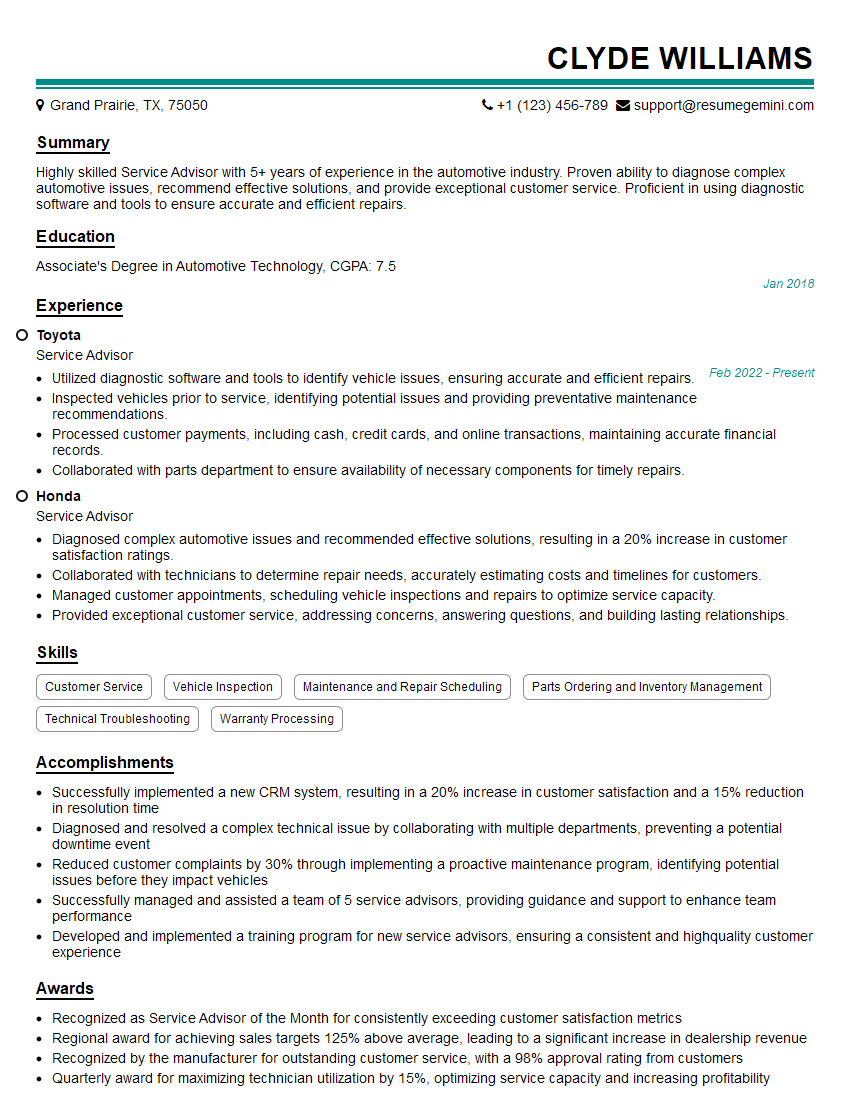
Service Advisor Resume Sample

Service Manager Resume Sample
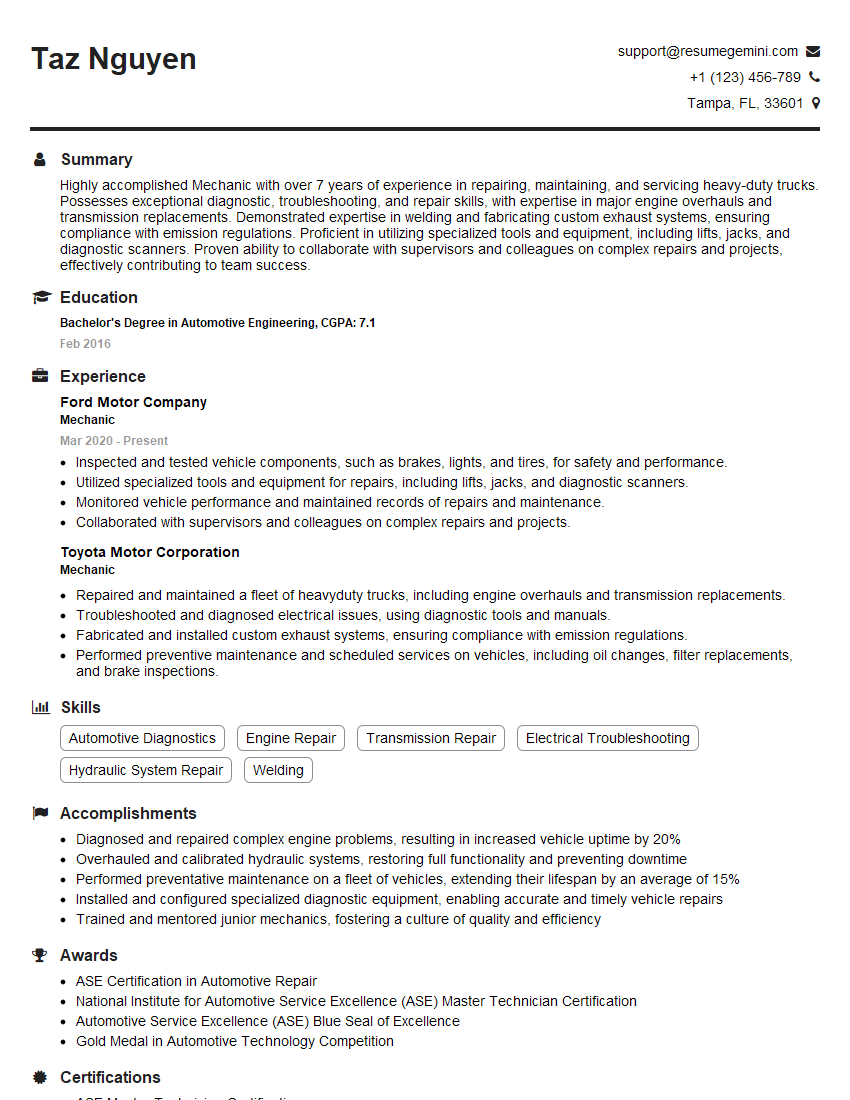
Mechanic Resume Sample

Shop Foreman Resume Sample
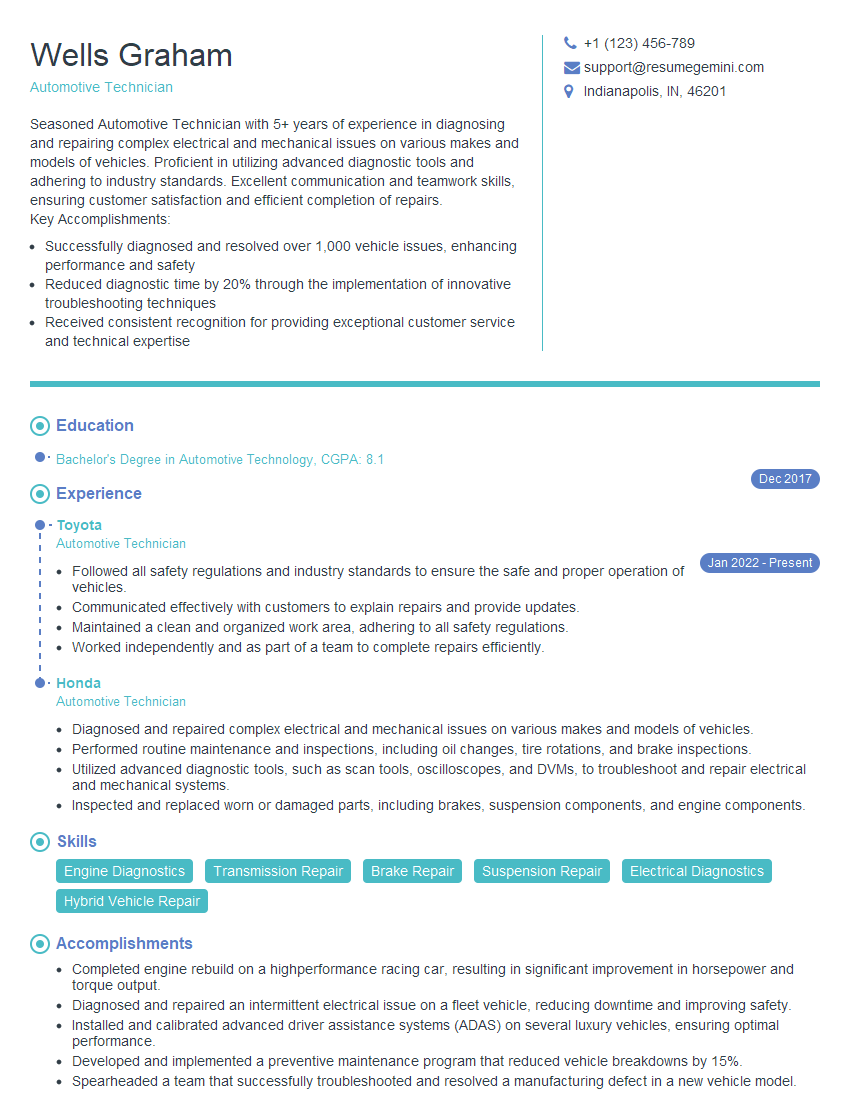
Automotive Technician Resume Sample
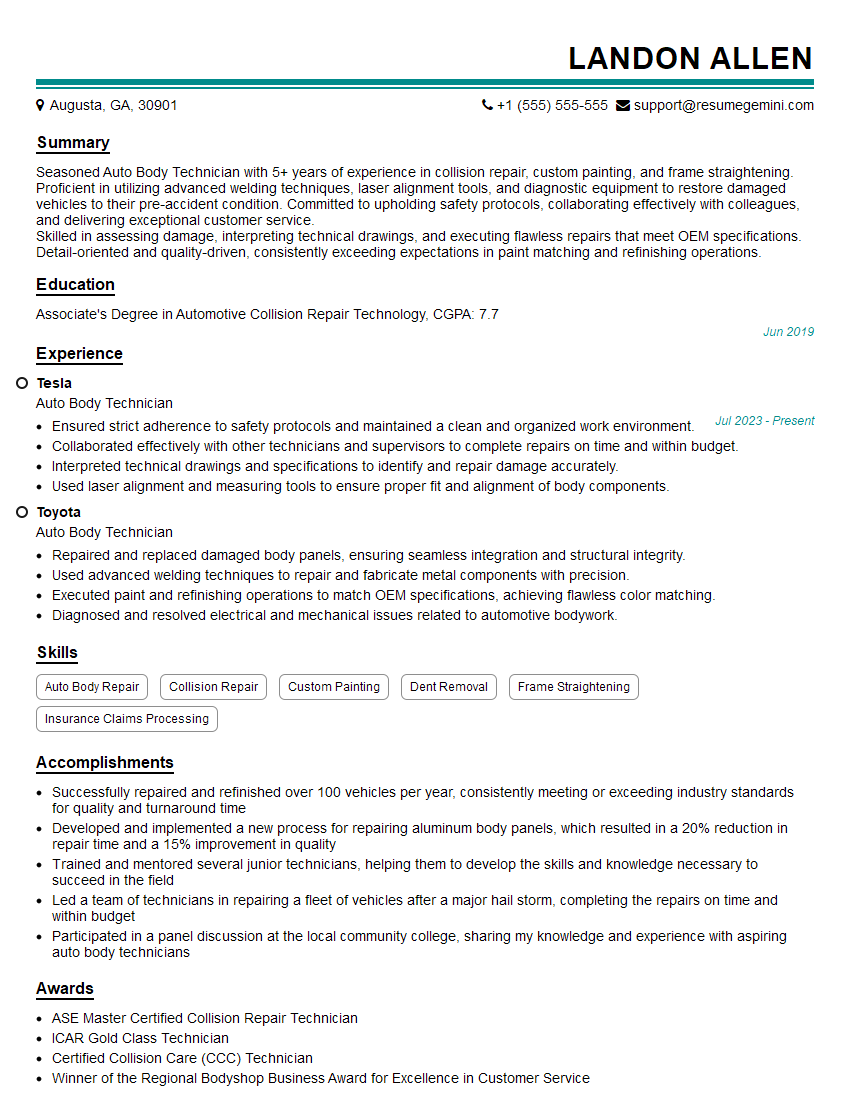
Auto Body Technician Resume Sample
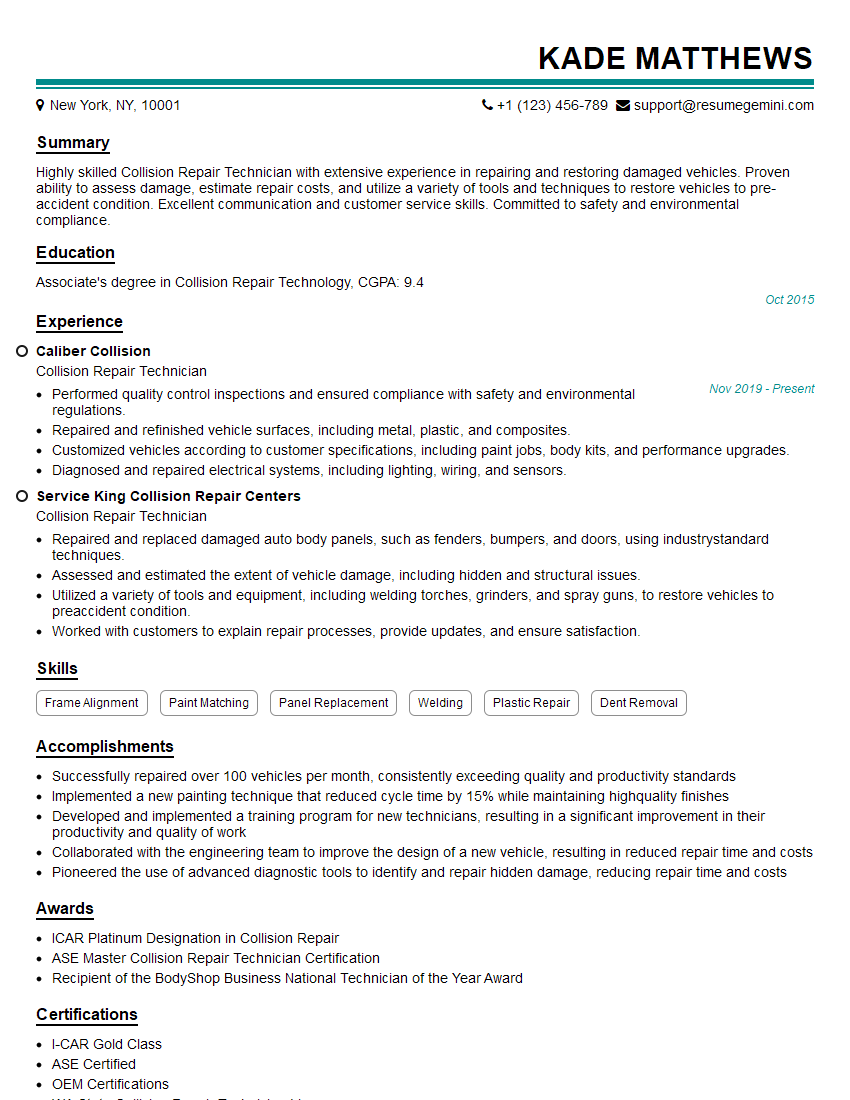
Collision Repair Technician Resume Sample
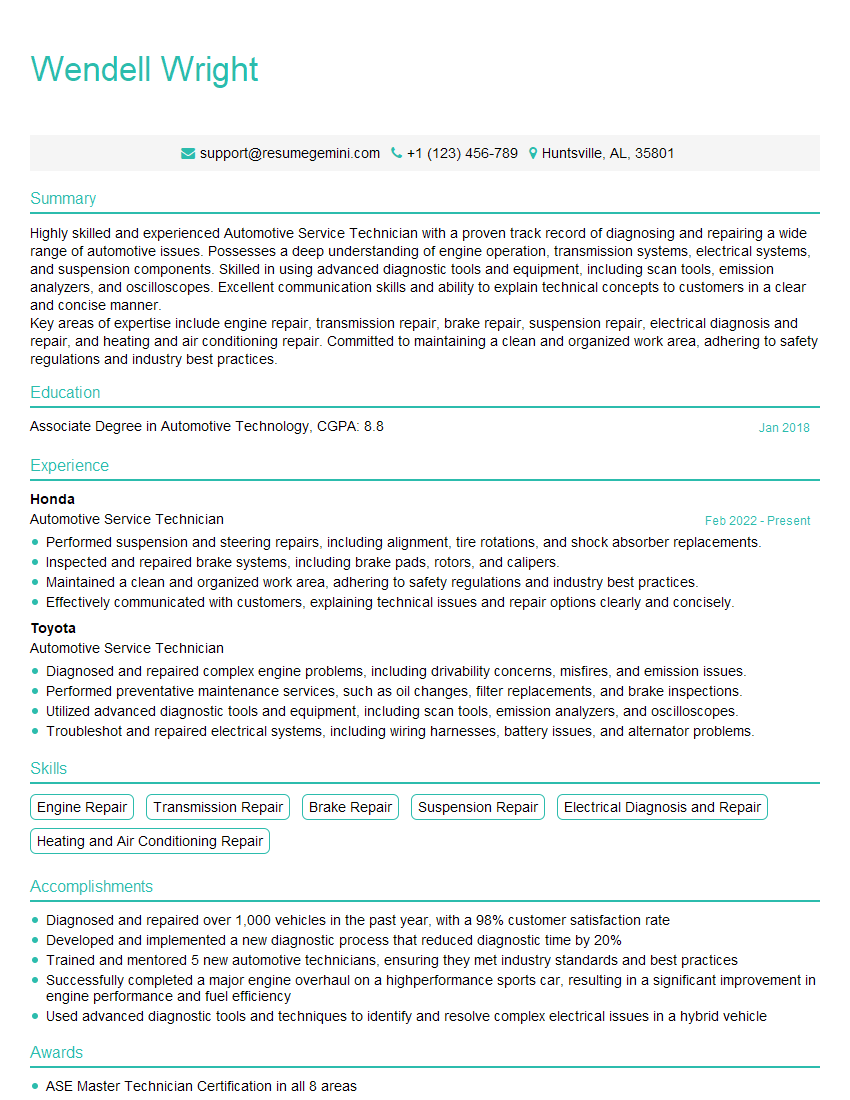
Automotive Service Technician Resume Sample
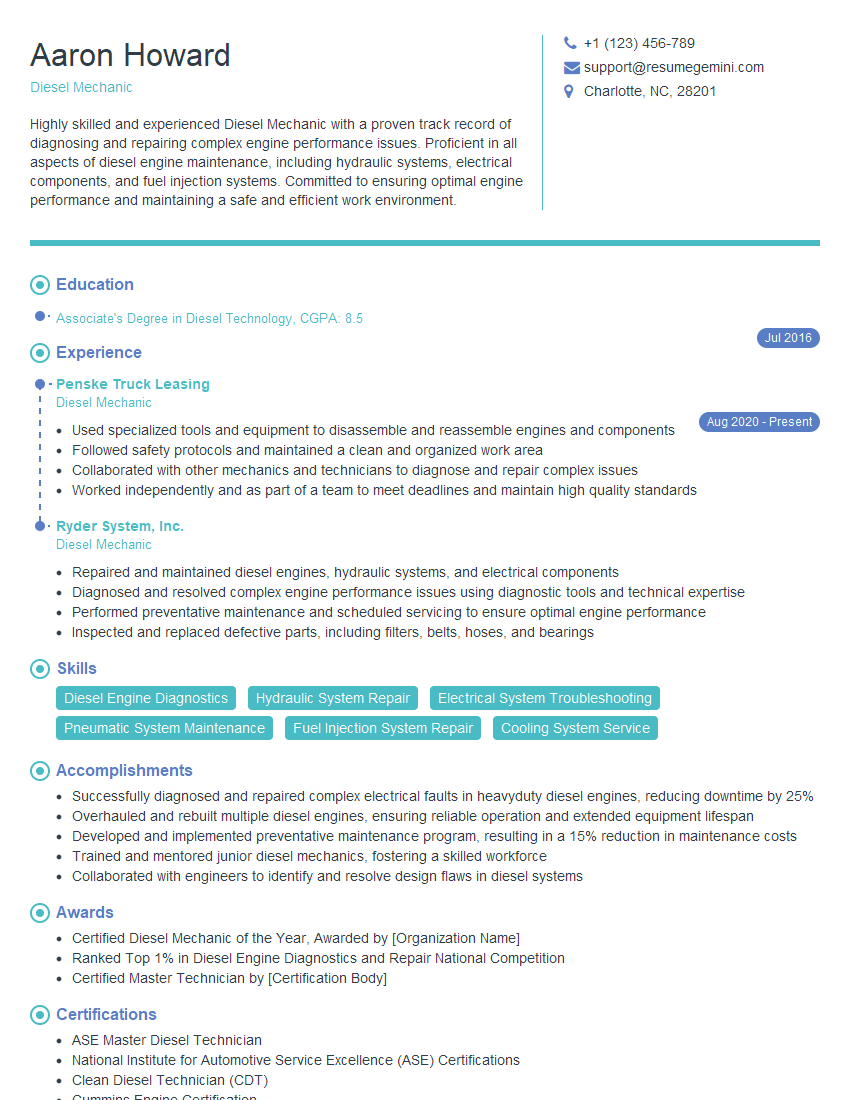
Diesel Mechanic Resume Sample
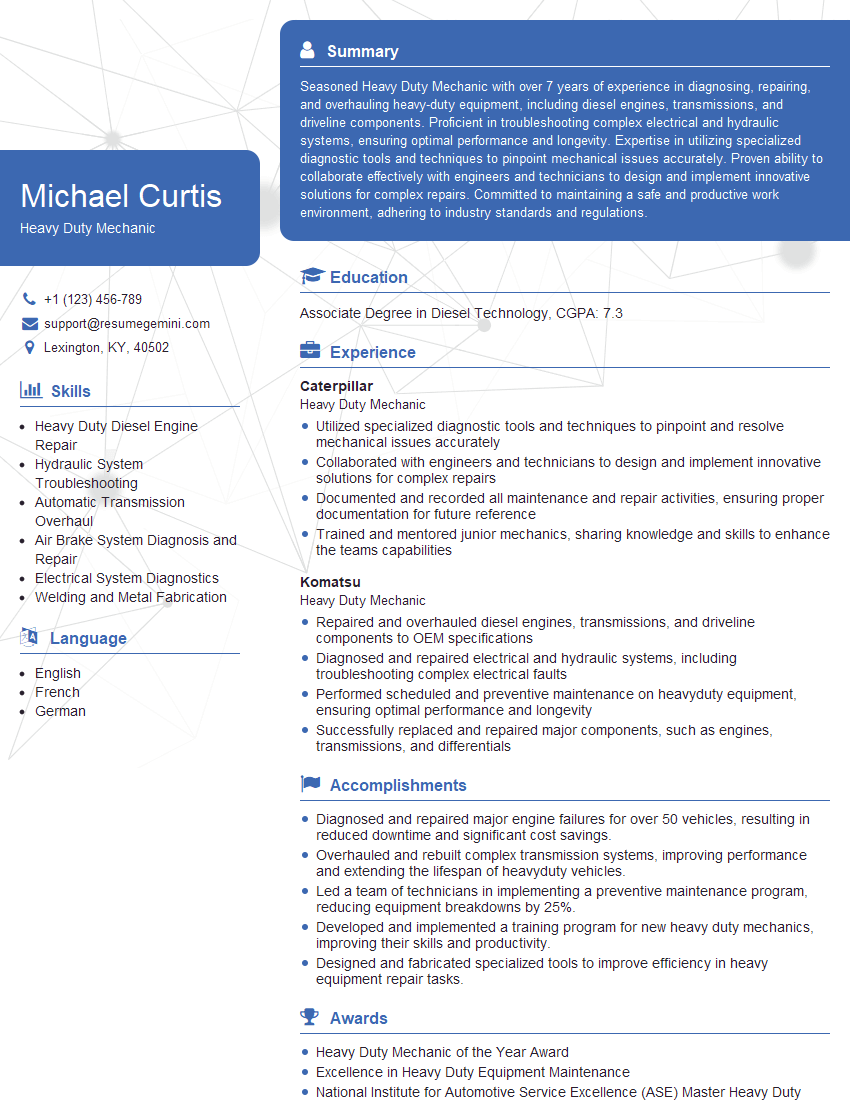
Heavy Duty Mechanic Resume Sample
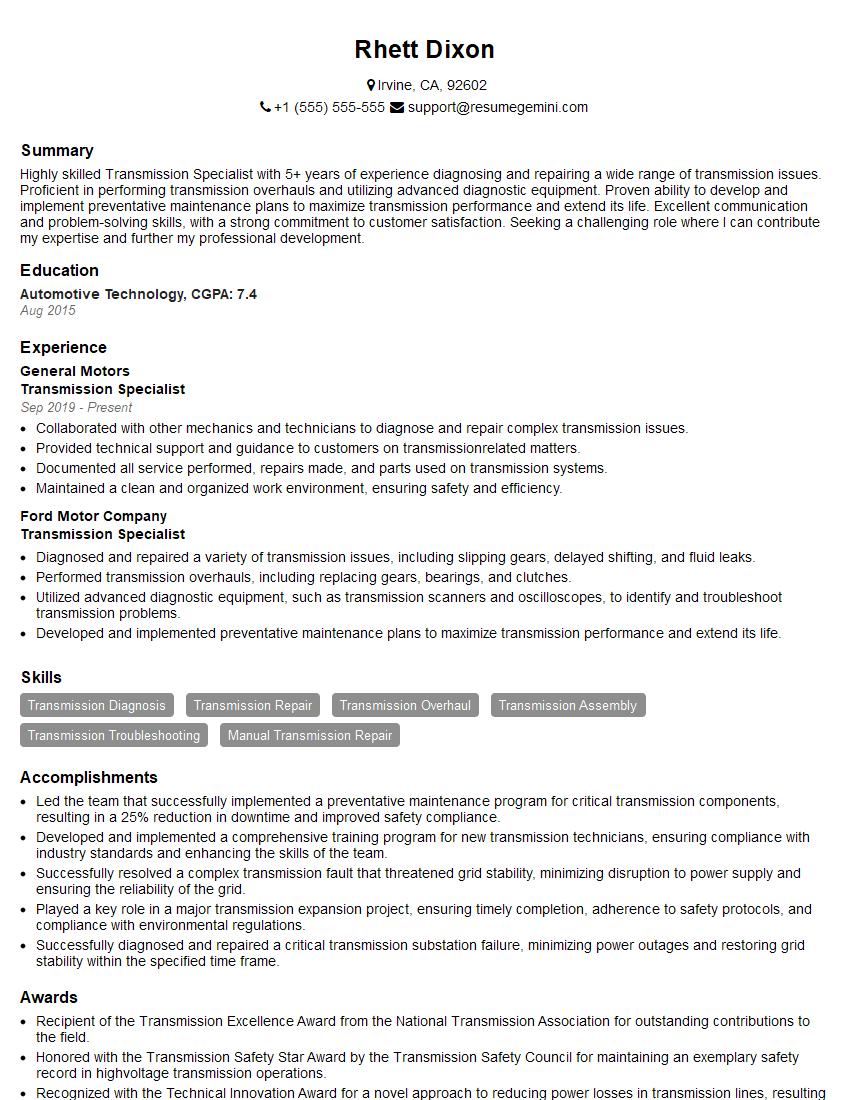
Transmission Specialist Resume Sample

Brake Specialist Resume Sample
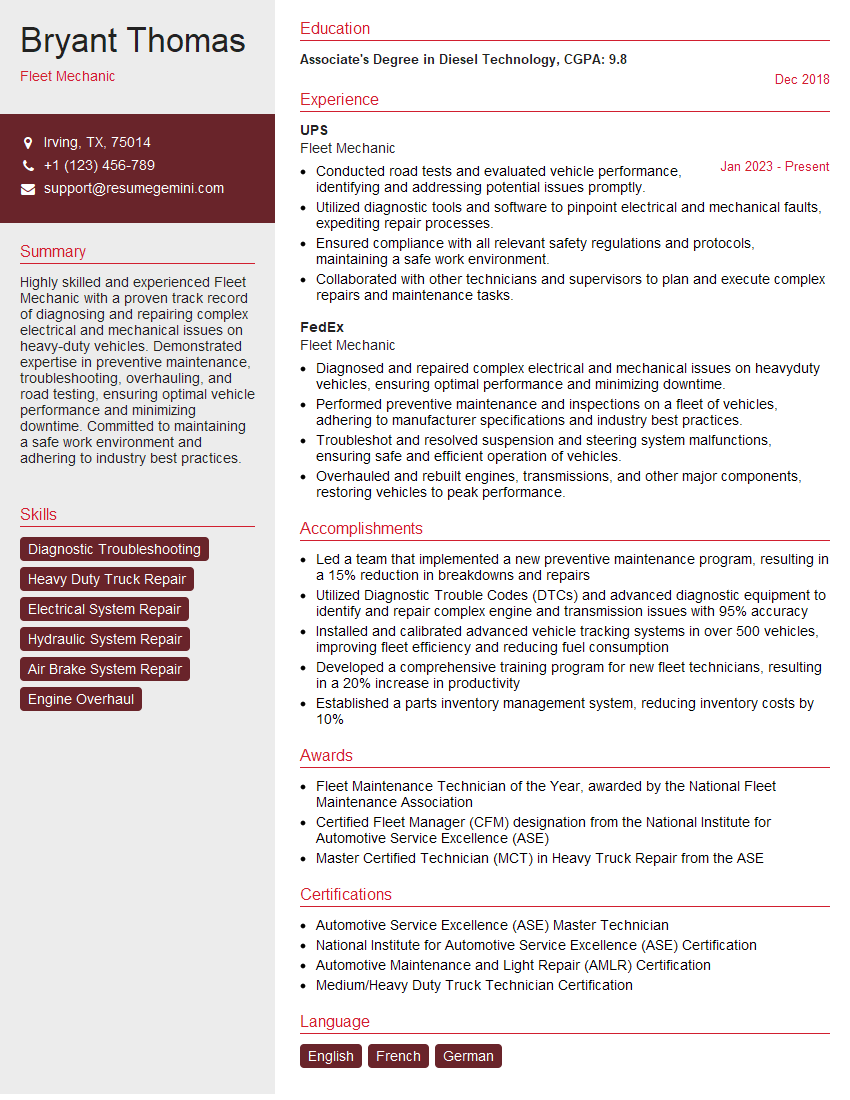
Fleet Mechanic Resume Sample

Master Mechanic Resume Sample
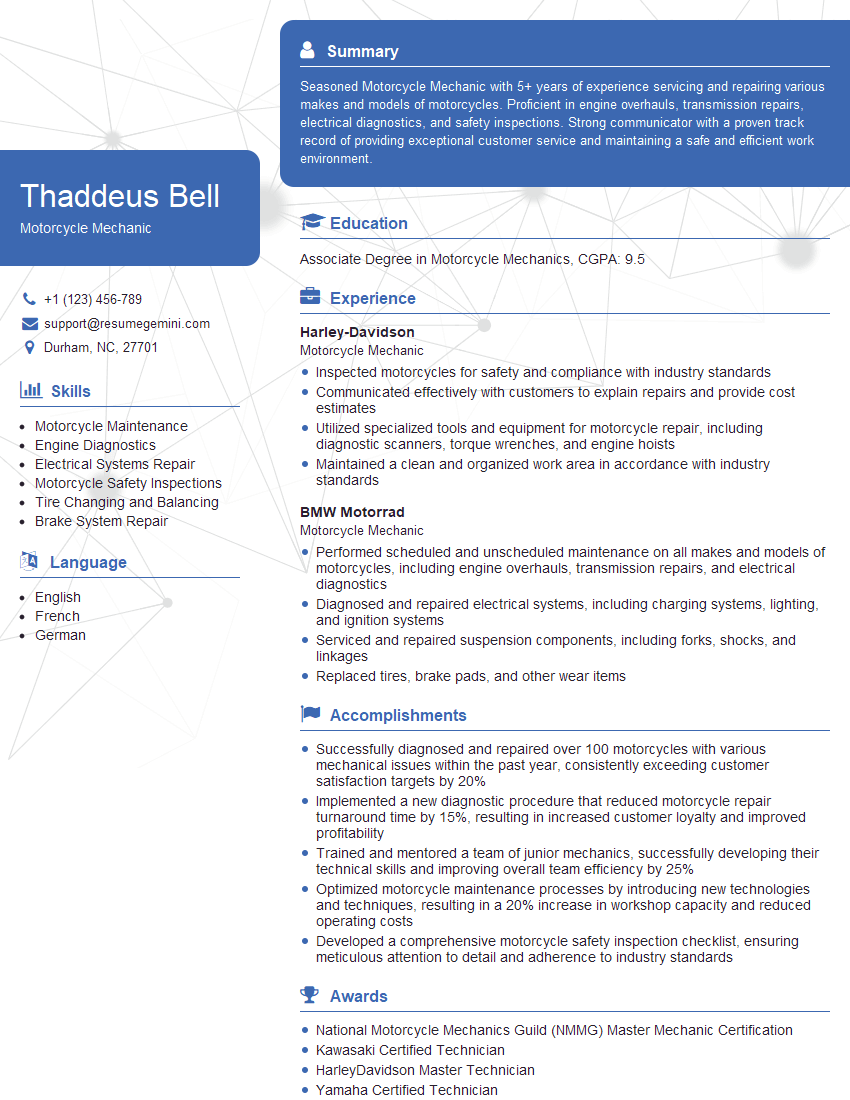
Motorcycle Mechanic Resume Sample

Tire Technician Resume Sample
Explore more articles
Users Rating of Our Blogs
Share Your Experience
We value your feedback! Please rate our content and share your thoughts (optional).
What Readers Say About Our Blog
Very informative content, great job.
good